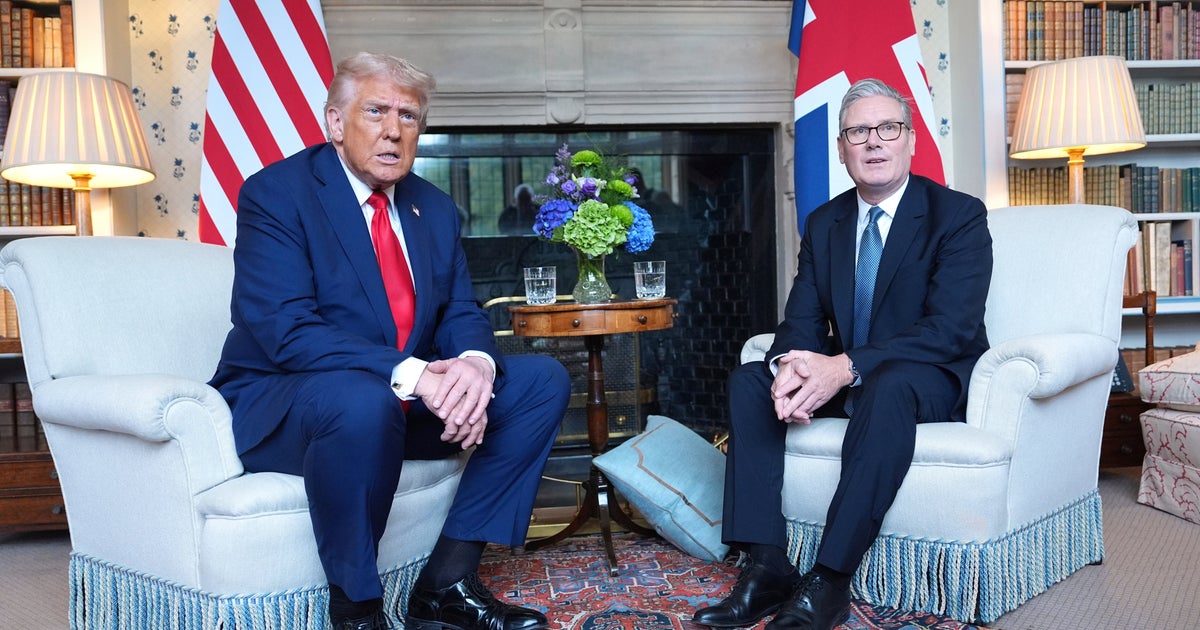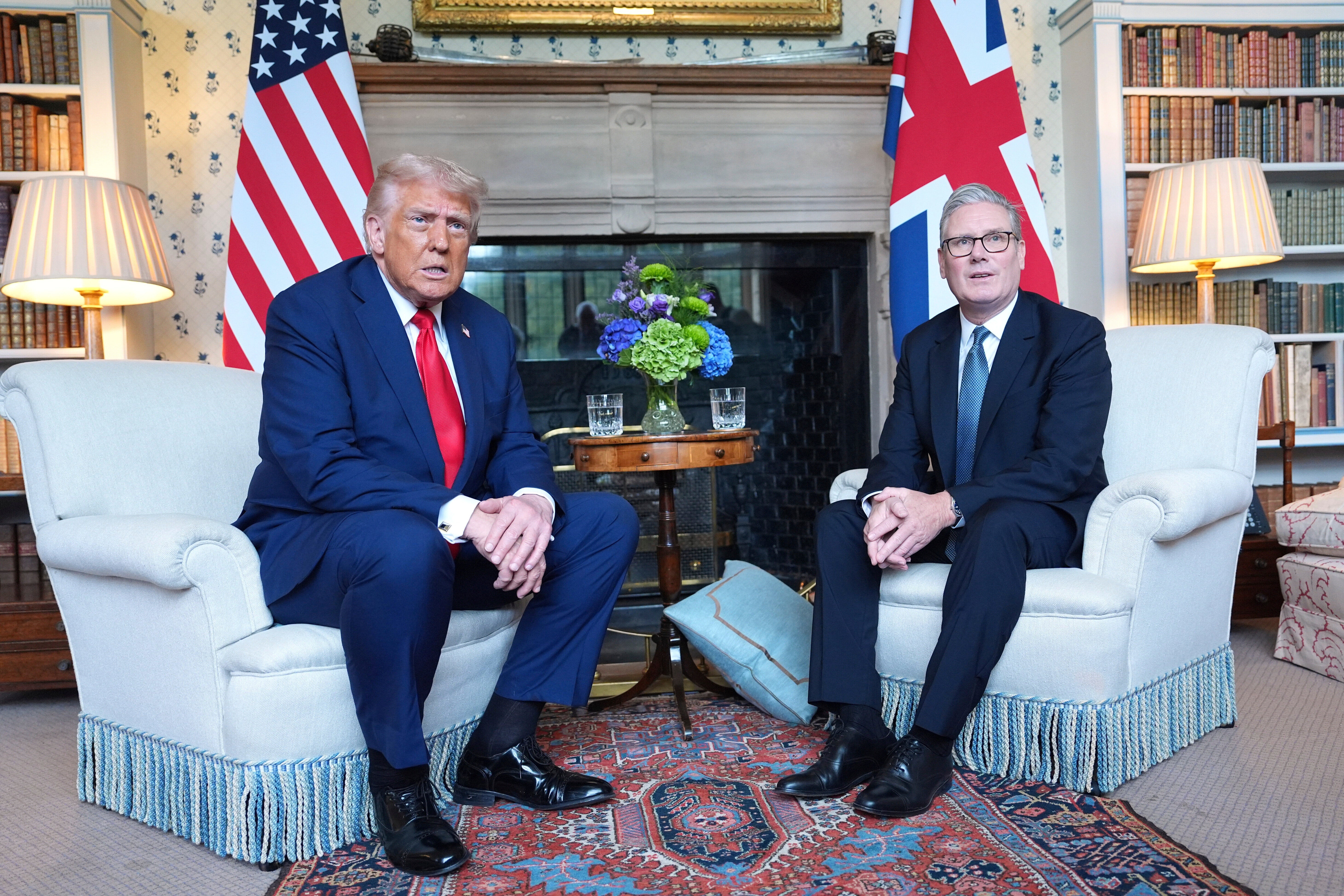
The UK could provide military support to America if Donald Trump decides to join Israel in bombing Iran, it has emerged.
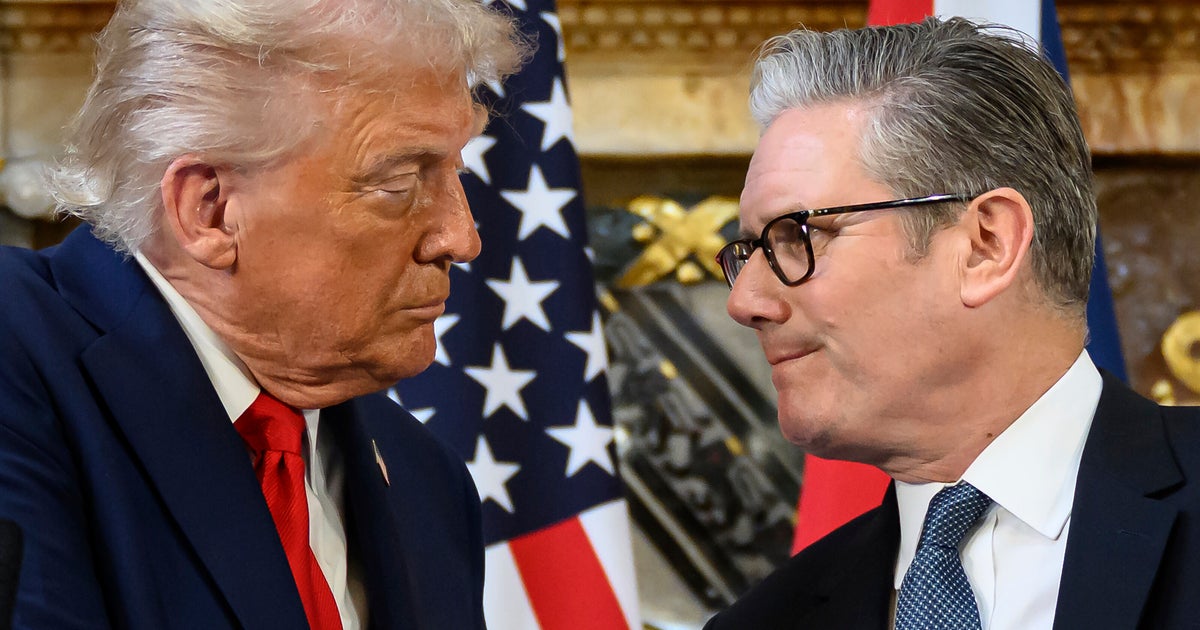
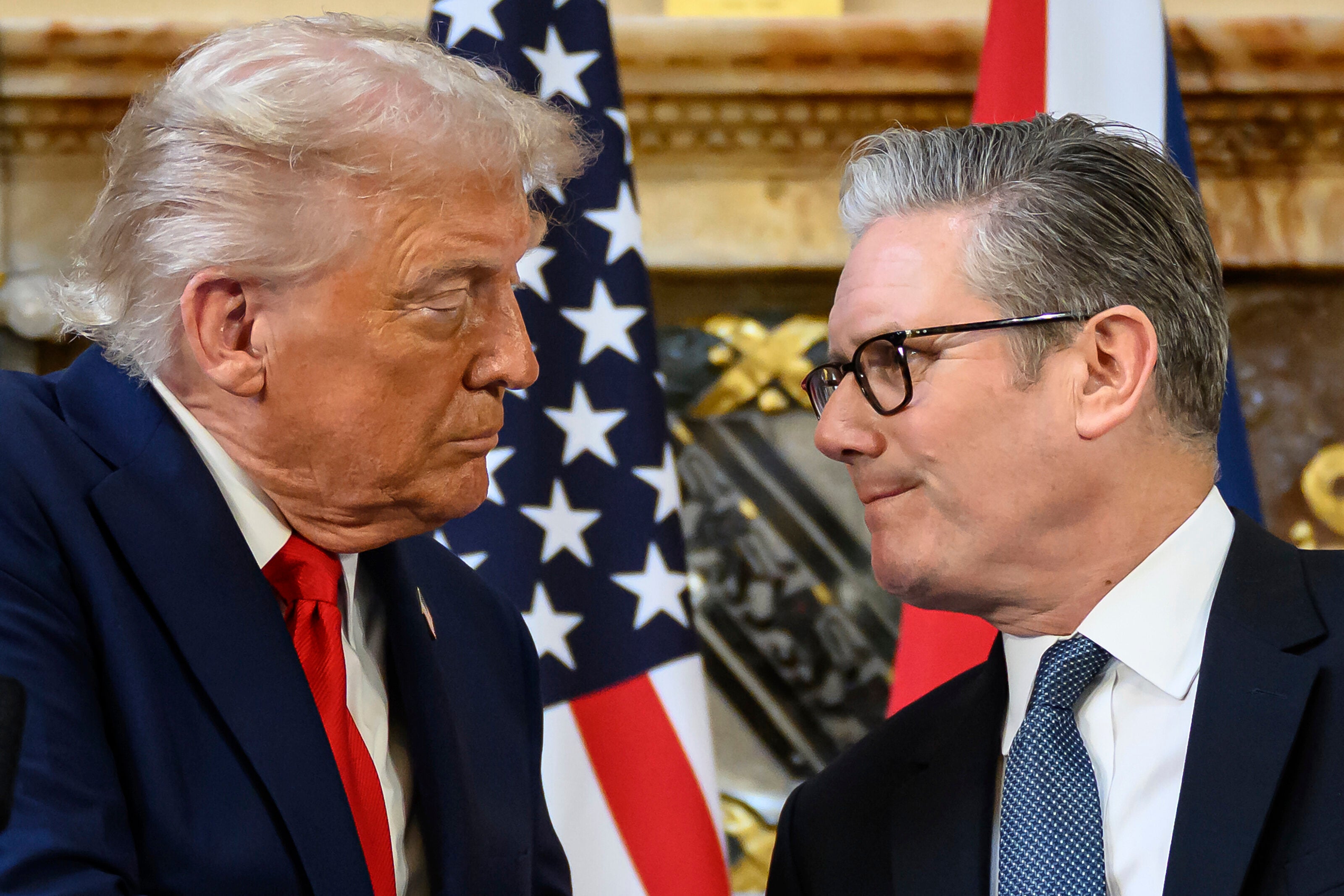
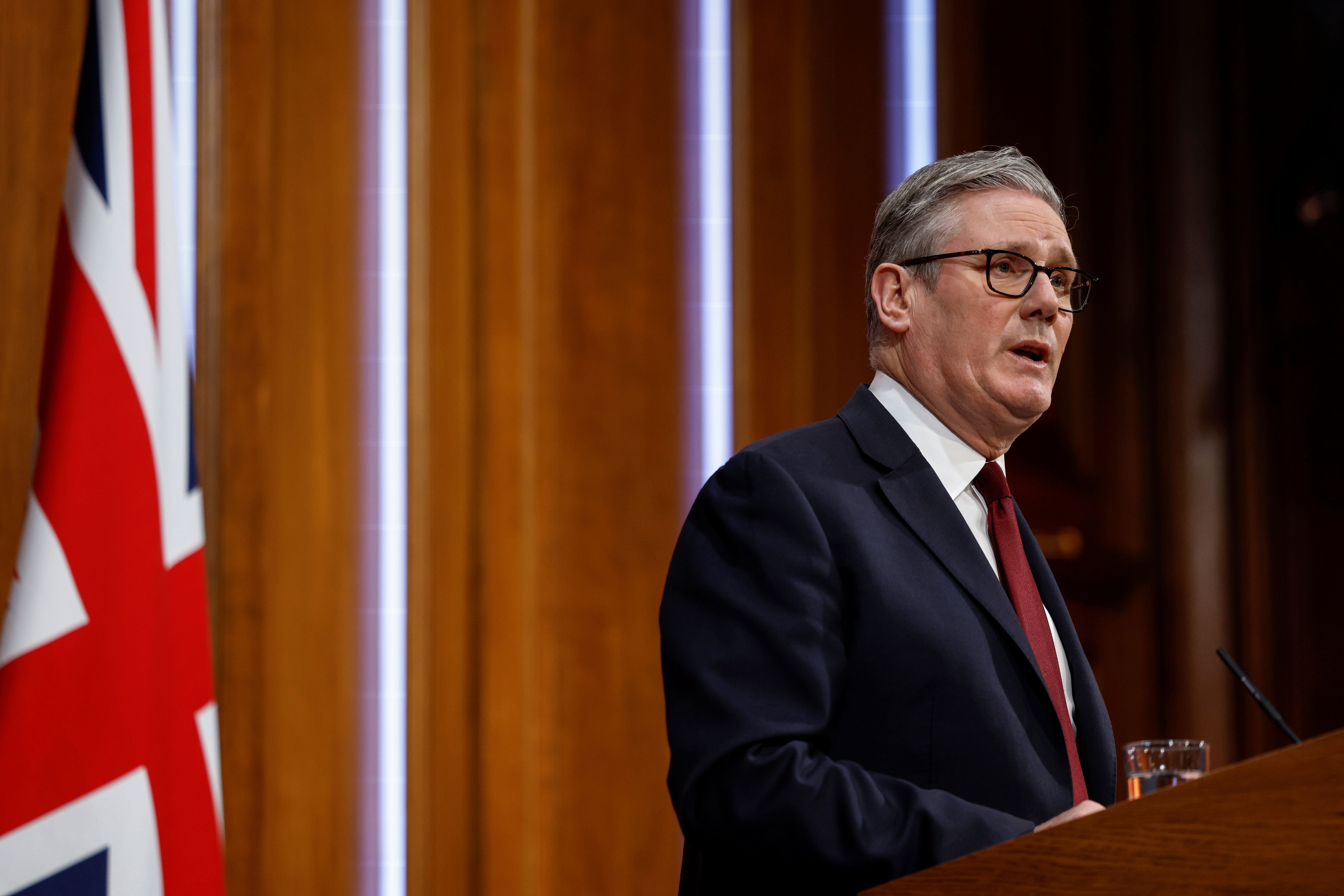
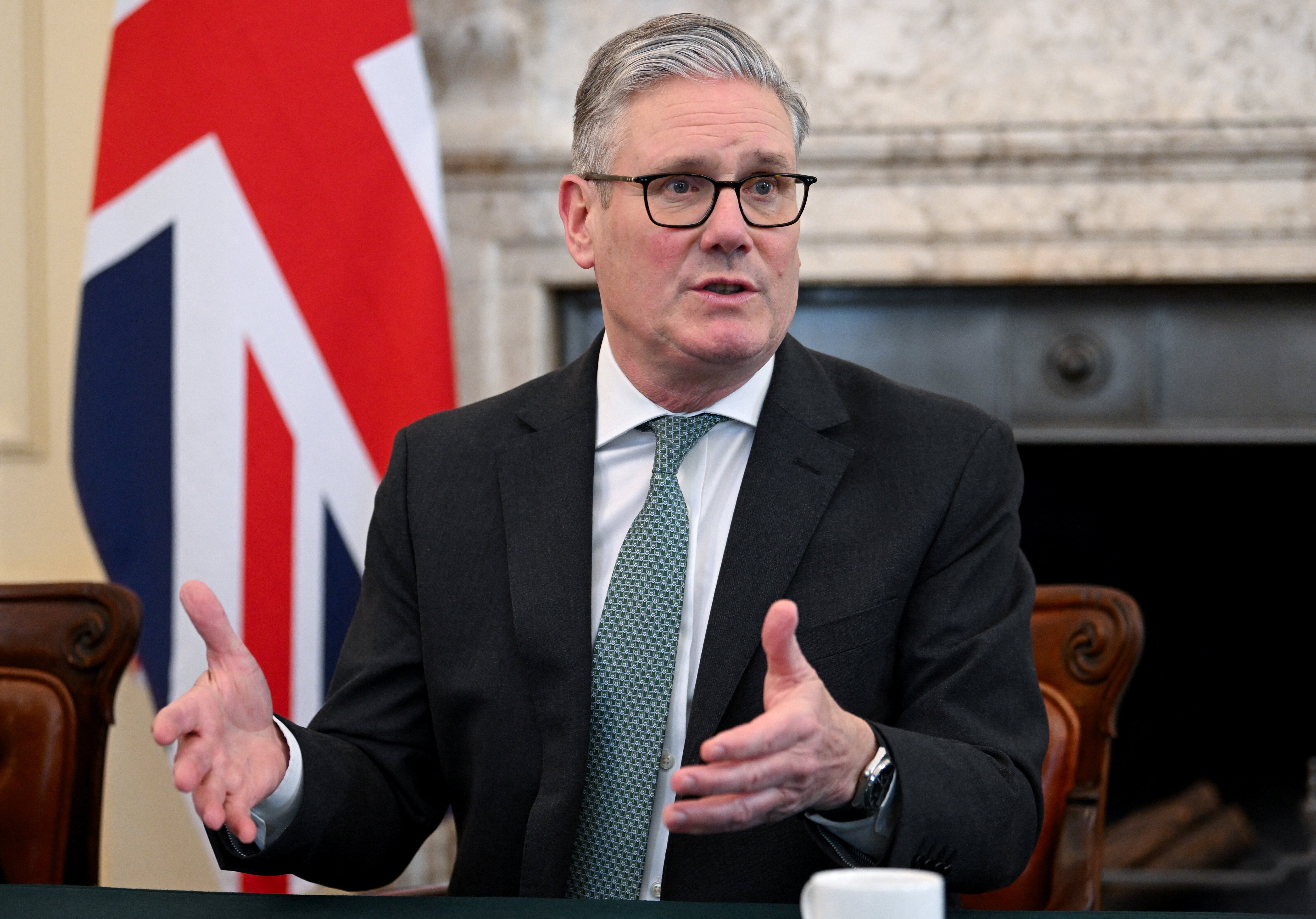
Keir Starmer chaired a meeting of the government’s emergency Cobra committee on Wednesday afternoon as the US president dropped a huge hint that he will send US bombers to the Middle East.
Advertisement
Among the topics discussed was whether American planes should be able to take off from the joint UK-US airbase at Diego Garcia in the Chagos Islands.
After the Cobra meeting, a Downing Street spokesperson said: “Ministers were updated on efforts to support British nationals in the region and protect regional security, as well as ongoing diplomatic efforts.”
Israel began bombing Iran nearly a week ago, claiming Tehran was about to develop its own nuclear bomb.
Advertisement
Both countries have continued launching missile strikes on each other ever since, leading to fears of a wider war throughout the Middle East.
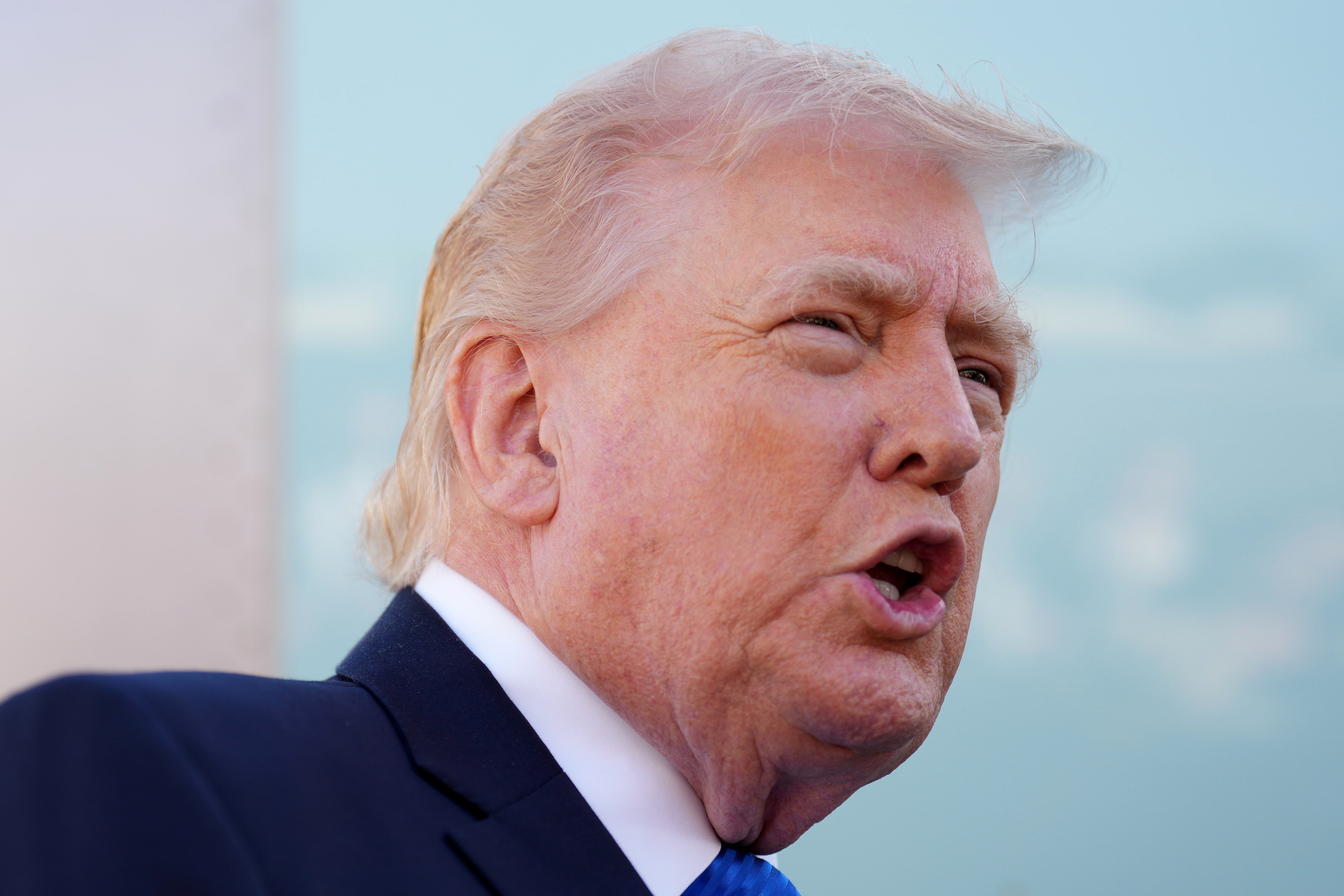
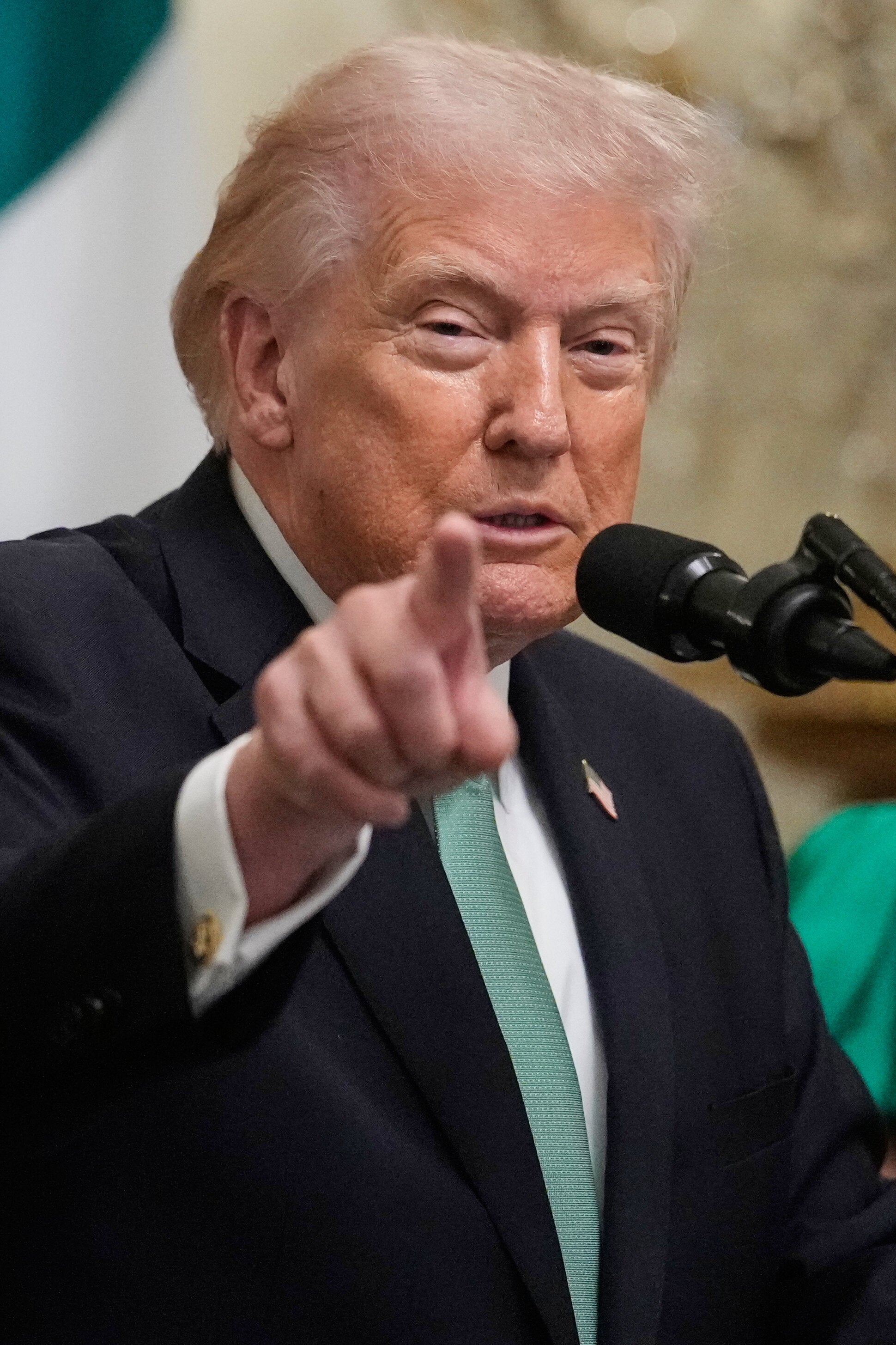
Trump – who yesterday called for Iran’s “unconditional surrender” _ dropped his biggest hint yet that the US will join Israel in bombing nuclear sites in the country within days.
He said: “Unconditional surrender, that means I’ve had it, that means no more. That means we go blow all the nuclear stuff.”
Advertisement
He added: “The next week is going to be big, very big, maybe less than a week.”
Declining to answer reporters’ questions on whether the US was planning to strike Iran, Trump said: “There’s a big difference between now and a week ago. Nobody knows what I’m going to do.”
Earlier on Wednesday, deputy prime minister Angela Rayner had appeared to hint that the UK would not take part in any military action in Iran.
Standing in for Starmer at prime minister’s questions, she said: “The one thing I will say is that we agree with President Trump that Iran must never have nuclear weapons.
Advertisement
“But we’ve been consistent in urging Iran to engage in the diplomatic process and work with the United States and we continue to support that diplomatic approach.”
As war in the Middle East rages, President Donald Trump found time to supervise the installation of a giant flagpole on the White House grounds.
The president watched construction workers raise the new structure on the South Lawn and turned the event into an impromptu press conference.
Advertisement
Trump had announced on Truth Social on Tuesday that he would be “putting up two beautiful Flag Poles on both sides of the White House,” and described it as “a GIFT from me.”
The erection of new flagpoles comes as the president weighs up whether to send US warplanes to bomb Iran in a move that would significantly escalate the conflict with Israel.
In rambling comments to reporters that essayed the tensions in the Middle East, interest rates and immigration, the president appeared pleased with the new addition to the White House.
Advertisement
“It’s such a beautiful pole,” he said of the first pole to be put up, noting he has one at his Doral golf resort in Miami, Florida.
“These are the best poles anywhere in the country, or in the world, actually,” added Trump, before saying to no one in particular he wanted to “wish you a lot of luck with the new flagpole.”
The president also suggested he was barred from using the word “erect” as he described the installation as a “lifting.”
Advertisement
“They also use another word, but I’m not gonna use that word,” he said. “Do you know what that word is? It starts with an E. Do you know what the word is? If I ever used it, I would be run out of town by you people.”
When asked about whether he would sanction air strikes on Iranian nuclear facilities, Trump replied: “I may do it. I may not do it. I mean, nobody knows what I’m going to do.”
Britons have been advised not to travel to Israel as the country’s war with Iran continues.
The Foreign Office changed its official advice amid fears the conflict will continue to escalate as both countries continue to bomb each other.
Previously, the FCO had advised against all but “essential” travel to Israel and the occupied Palestinian territories.
The new advice says: “We recognise this is a fast-moving situation that poses significant risks. The situation has the potential to deteriorate further, quickly and without warning.”
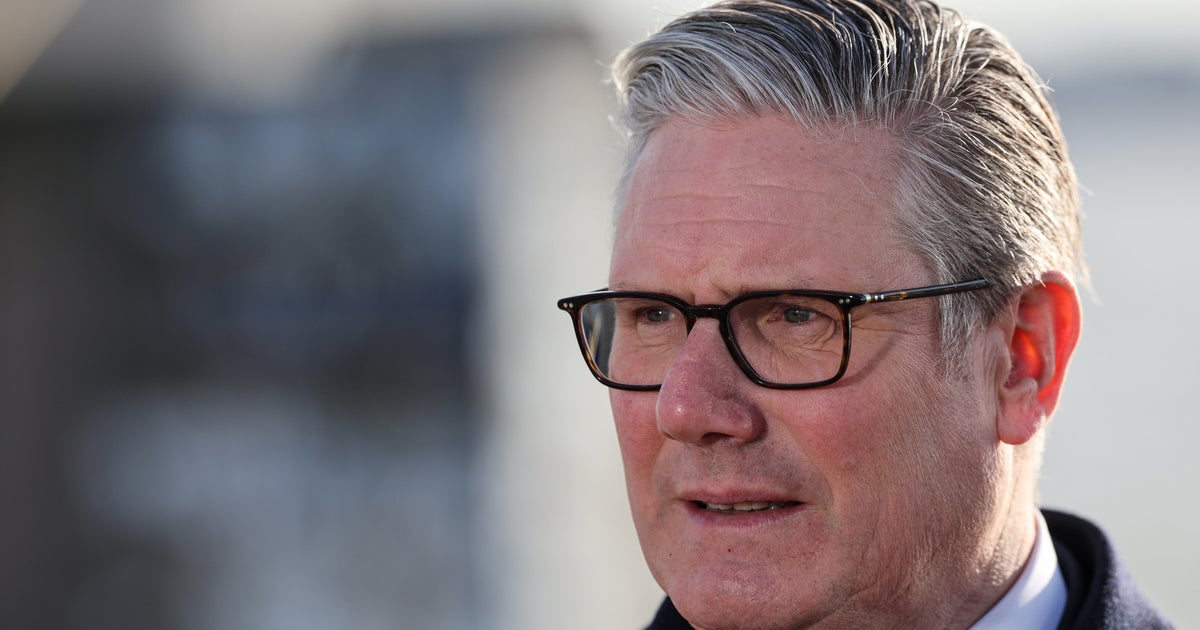
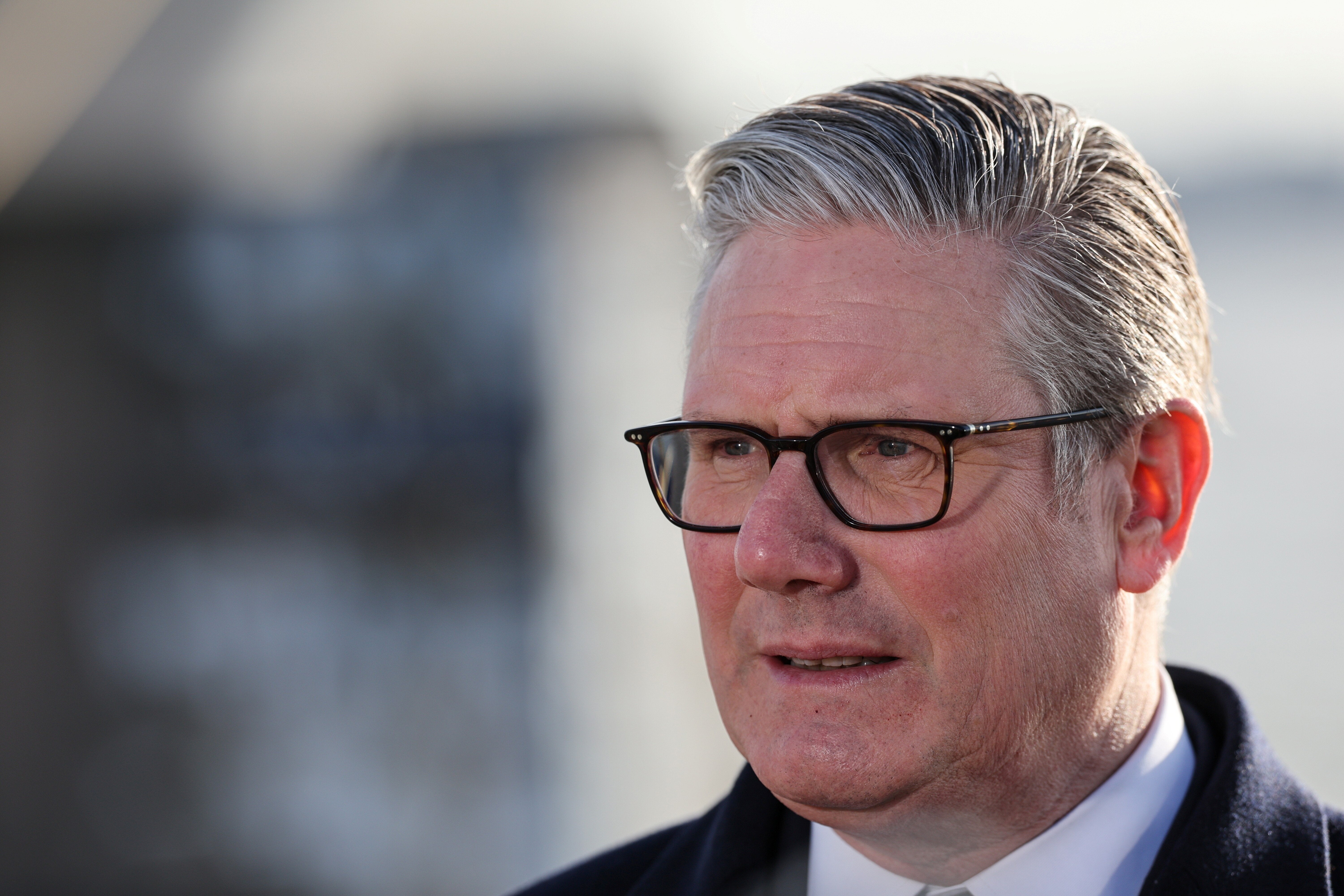
It comes after Keir Starmer confirmed RAF jets were being sent to the region to provide “contingency support across the region”.
Additional refuelling aircraft have been deployed from UK bases and more fast Typhoon jets will be sent over, it is understood.
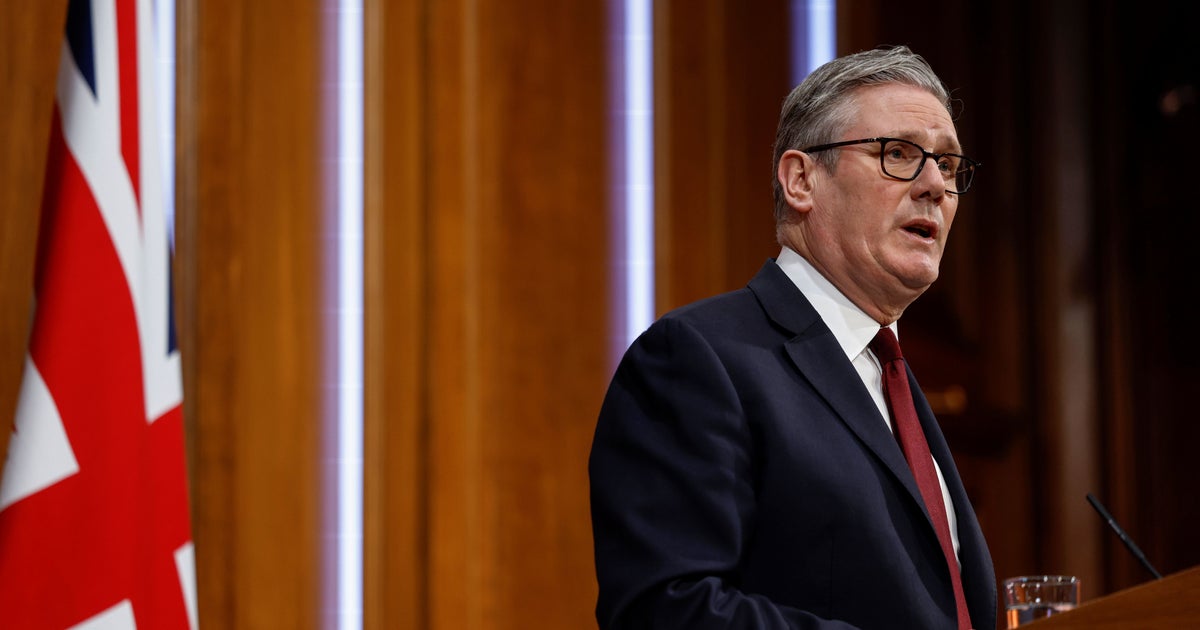
Speaking to reporters travelling with him on a visit to Canada, Starmer said: “We are moving assets, we’ve already been moving assets to the region, including jets, and that is for contingency support across the region. So that is happening.”
The PM added: “Our constant message is de-escalate, and therefore everything we’re doing, all discussions we’re having are to do with de-escalation.”
With an ongoing attack on high-profile targets in Iran that began on Thursday, Israel has presented President Donald Trump with his most significant foreign policy crisis yet. Trump now has to decide how — and whether — to prevent an all-out war across the Middle East that could spiral, endangering millions of people, drawing in US forces and worsening the global economic slowdown fuelled by Trump’s trade policies.
Israeli jets have already struck more than 100 sites, including in the Iranian capital of Tehran, killing at least three military commanders and two nuclear scientists, as well as civilians including children, according to Iranian state media. Israeli officials have told their US counterparts they plan to continue strikes for “several days or up to two weeks,” a US official, speaking on condition of anonymity, told HuffPost.
Advertisement
Israeli officials call their offensive “preemptive,” noting that Iran, a longtime foe of Tel Aviv, is closer than ever to being able to develop a nuclear weapon. There was no sign of an imminent Iranian attack on Israel, however, and Iran denied it intends to build a bomb.
For months, Washington and Tehran have been discussing a possible agreement to limit Iranian nuclear development in exchange for easing sanctions on the country.
On Friday morning, Trump appeared to call for diplomacy on his social media platform Truth Social: “There is still time to make this slaughter, with the next already planned attacks being even more brutal, come to an end. Iran must make a deal, before there is nothing left.”
Advertisement
The Trump administration may struggle to shape what comes next, given its limited policy-making circle, the president’s unpredictability and its hollowing out of government expertise. The administration recently slashed staff at the National Security Council at the White House, has urged thousands of professional diplomats to resign and plans to fire hundreds more as early as next week, and top positions at the Pentagon and State Department are lying empty.
Still, some leading officials, like White House chief of staff Susie Wiles and Vice President JD Vance, have previously questioned those who wanted the US to help Israel attack Iran, like the demoted former national security adviser Mike Waltz. The administration may decide it must take the reins from Israeli Prime Minister Benjamin Netanyahu — defying him as Trump has notably done on Syria, and as some conservative voices, like commentator Tucker Carlson, have urged him to.
“The split on the right is already obvious,” said Reid Smith, the vice president of foreign policy at Stand Together, an organisation founded by the right-wing billionaire Charles Koch.
Advertisement
“Friends of Israel, and I number myself among them, should tread warily, as a casualty of this conflict could be essentially unanimous support for Israel on not just a bipartisan but a conservative basis,” Smith told HuffPost.
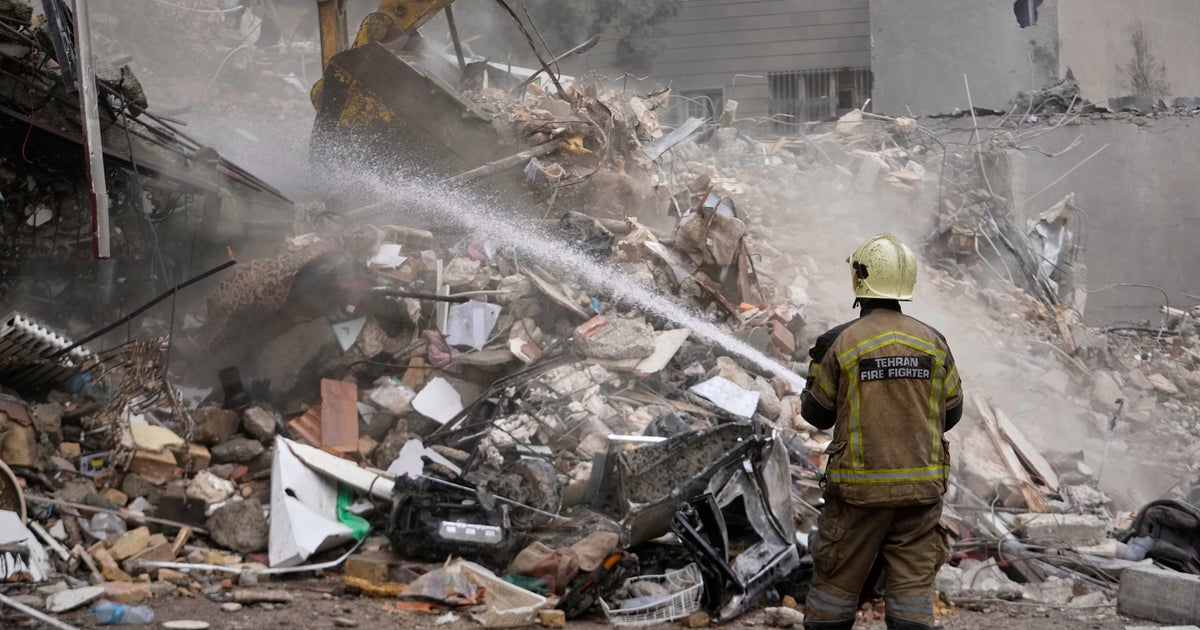
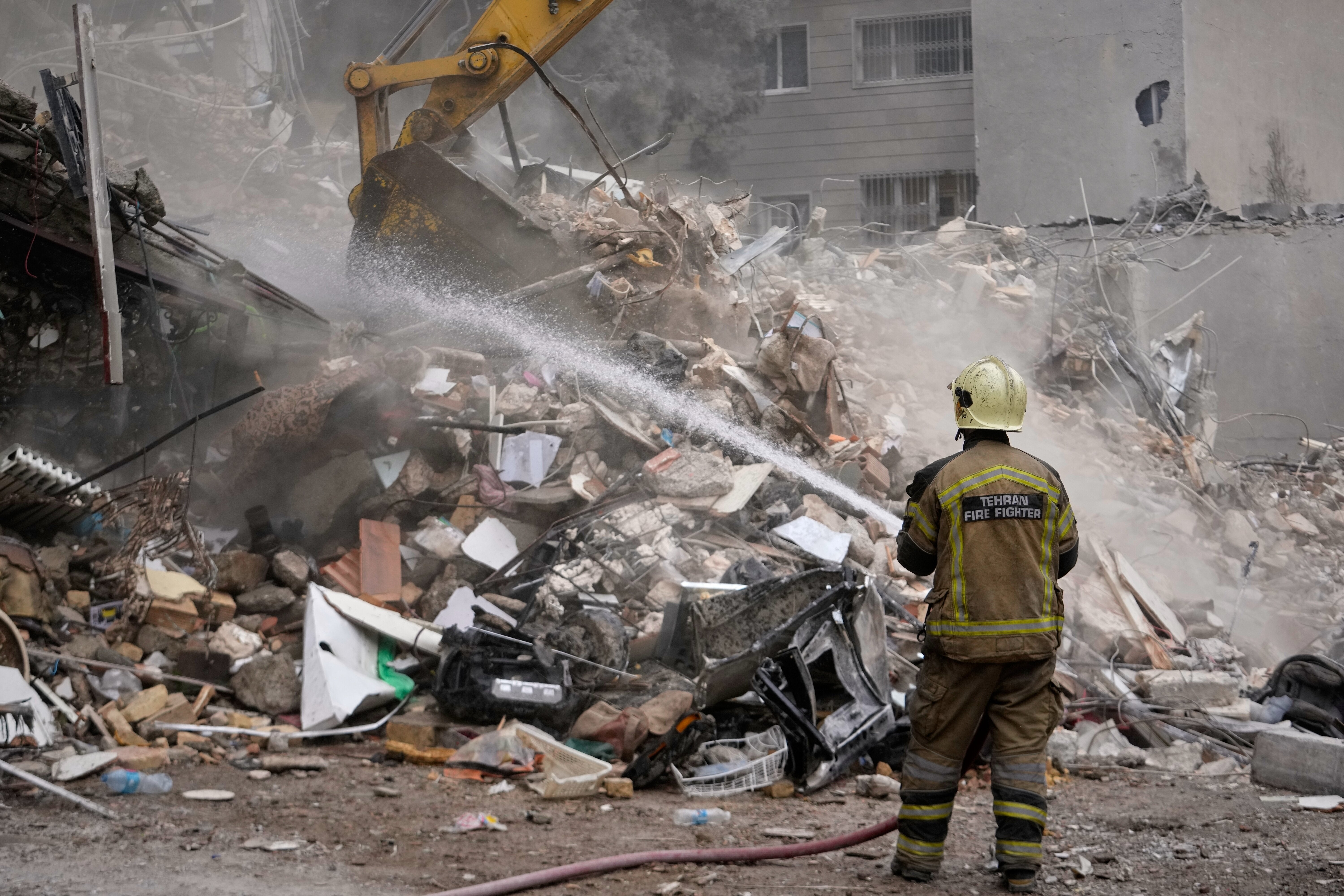
This picture shows a building damaged in an Israeli strike on Tehran on June 13, 2025.
ATTA KENARE via Getty Images
While Trump’s preference for an agreement has been relatively consistent, so has Netanyahu’s opposition to one. He is joined by some influential foreign policy hawks in the US, including leading Republican lawmakers, who argue Iran cannot be trusted and insist the only possible compromise would include a clause that Tehran calls unacceptable: a ban on any uranium enrichment. Those voices say force is the only way to cripple Iran’s nuclear program and pressIran to make concessions.
Advertisement
Since Trump abandoned the last international deal to limit Iranian nuclear development, negotiated by President Barack Obama, Iran’s capabilities have dramatically increased.
As Israel’s chief military backer and the key player in enforcing sanctions on Iran, the US is deeply implicated in the dispute. Trump is convening national security officials at the White House on Friday and calling Netanyahu to discuss next steps.
Meanwhile, developments outside the U.S. control may shape his choices, the US official told HuffPost, pointing to the chance that Iran’s plan for “severe” retaliation kills one of the tens of thousands of American troops deployed in the Middle East or prompts Israel to request additional US military involvement in the region, creating even more tension. Iran has already launched drones at Israel, which were intercepted. The US evacuated some personnel from the region earlier this week.
Advertisement
American and Israeli officials say they coordinated on the barrage against Iran, which hit sensitive figures and military sites, demonstrating extensive and effective Israeli espionage. Anti-Iran hard-liners who have long sought regime change in Tehran are, for now, echoing Trump’s line that the Israeli attack is linked to his diplomacy.
Still, a fundamental disconnect between the goals of Trump and Netanyahu persists, and will make it hard for the administration to de-escalate. The situation reflects a contest within Trump-linked foreign policy circles that has been significant in shaping policy throughout the administration and may no longer be tenable.
Trump has, for years, claimed he will limit global conflict, promising “peace through strength” and accusing his political rivals of enabling bloodshed in contexts like Ukraine and Gaza, while questioning deployments of American troops abroad. That political brand seemed reflected in the State Department’s Thursday night statement about the Israeli attack, which emphasized that it was “unilateral” and urged Iran not to “target US interestsor personnel.”
Advertisement
On Friday, the president told CNN “hard-liners” in Tehran had been killed, boosting chances for diplomacy. And Tom Barrack, the US ambassador in Turkey and one of the personal friends Trump is relying on as a top Middle East deal-maker, posted on X: “Even in tension, there’s always a moment for dialogue to weave peace.”
Barrack and Steve Witkoff, another business figure who is leading the US–Iran negotiations for Trump, are seen as more pragmatic than many in the traditional Republican national security establishment — and their influence has grown as Trump has repeatedly fired officials whom members of his MAGA movement say are too bellicose and tied to the so-called “deep state.”
“Trump has, for years, claimed he will limit global conflict, promising ‘peace through strength’ and accusing his political rivals of enabling bloodshed in contexts like Ukraine and Gaza.”
Advertisement
But Netanyahu and influential hawks are openly speaking of increasing pressure on Iran, not of compromise.
The Israeli leader appears to be betting that, as he did under President Joe Biden, he can treat the US as primarily an enabler of his goals through military support, reacting to Israeli moves rather than being the force driving events.
Netanyahu has been able to do that with his ongoing, devastating US-backed offensive in the Gaza Strip, pummelling Palestinians and avoiding a settlement with the Gaza-based militant group Hamas even as Trump has repeatedly expressed frustration. Under the Biden administration, Israel was able to use continued claims of interest in diplomacy and dramatic PR-focused moments — like its deadly pager attack in Lebanon — to sustain US backing and defuse criticism as it pursued sweeping military campaigns.
Advertisement
Now, George Washington University professor Marc Lynch wrote on Friday, “Israel’s attack on Iran is best understood neither as pre-emptive nor preventive, but as a continuation of its attempt to remake the Middle East through force.”
“The pattern of attacks in the first day of Israeli strikes actually suggests that the target of the attack is the regime itself, not necessarily the nuclear programme,” Lynch continued.
It’s unclear if Netanyahu’s playbook will work under Trump and against a far more capable opponent than Hamas or Hezbollah. As Iran faces greater pain and reputational damage, it could deploy a wide range of tactics, across the Middle East or even globally, to push back against Israel and the U.S. as its patron. That could create painful, unexpected consequences and a mounting, deadly, tit-for-tat cycle of violence.
Advertisement
Some observers claim a military-focused approach is the way to achieve Trump’s stated goal of preventing a nuclear Iran. “Israel should be hailed by nonproliferation organisations,” Jonathan Conricus, a former spokesperson for the Israel Defense Forces who now works at the hawkish Foundation for Defense of Democracies think tank in Washington, wrote on X.
Yet experts have, for years, said force alone cannot destroy Iran’s expertise in nuclear technology, and could instead spur its leaders to see developing weapons as the only way to protect their rule.
“If the Trump administration truly wants to avoid Iran’s path to a bomb, it should clarify its involvement in these strikes and work to strike a deal. This will be exponentially more difficult if strikes continue,” Nicole Grajewski, a fellow at the Carnegie Endowment for International Peace think tank, wrote on Bluesky.
As open fighting between two of the Middle East’s best-armed players worsens, more than a million Palestinian lives hang in the balance.
Israel on Thursday attacked Iran, in retaliation for an April 13 attack from Iranian drones and missiles, which was itself a retaliation for the Israeli bombing of an Iranian consulate on April 1.
Advertisement
Iran downplayed the significance of the strike, with state media saying it caused no major damage. The US, Israel’s military lifeline, did so too. Secretary of State Antony Blinken told reporters the Biden administration “has not been involved in any offensive operations” and seeks “de-escalation and [to] avoi[d] a larger conflict.”
The state-on-state strikes between Israel and Iran, a prospect that risks sparking an all-out war, are “over,” a regional government source argued to CNN after the latest Israeli strike, saying Iran was unlikely to respond. Multiple national security analysts agreed Israel’s move seemed carefully calibrated, ostensibly in line with the priorities of the US and of anxious neighbouring countries.
Still, the two countries indisputably moved closer to head-on conflict through their unprecedented tit-for-tat in recent weeks. “The US will celebrate a small success. But the spiral is still spinning downward: rules are being rewritten on the battlefield,” wrote Emile Hokayem, an analyst at the International institute for Strategic Studies, a think tank, on X.
As the potential for extremely costly miscalculation persists, questions remain open: Is this the full extent of Israel’s response to Iran? Will the two now continue their longstanding bids to weaken each other through clashes elsewhere, perhaps in already bruised Lebanon?
Advertisement
It’s hard to see how the spiral stops until another question is answered: What about Palestine?
Rafah, the town in southern Gaza where nearly 1.5 million Palestinians are sheltering, is the only section of the strip Israel has yet to invade its sweeping, hugely controversial campaign.
Israeli Prime Minister Benjamin Netanyahu says an attack on Rafah is vital to shield Israel from the Gaza-based militant group Hamas.
Washington says it cannot support that plan without a serious strategy for evacuating and helping civilians — a strategy Israel has yet to provide, the White House confirmed in a Thursday statement, after a high-level meeting between US and Israeli officials.
The Biden administration is casting its attempt to temper the Rafah operation as distinct from its bid to prevent an Israel-Iran war. But to other observers, it’s impossible to separate the two. President Joe Biden is simultaneously the only outside world leader with the power to force a change in course for Israel, and a longtime ally of Israeli leadership who may be loath to seek their restraint, particularly as the country is in active conflict with Iran.
Calling the resurgent Israeli-Palestinian conflict “the beating heart of this increasingly regional problem,” Monica Marks, a professor at New York University’s Abu Dhabi campus, told HuffPost on Friday: “The thing to watch for … is whether Netanyahu bought more wiggle room on the Biden administration’s expectation for Israel to make humanitarian plans regarding Rafah’s civilians.”
Advertisement
Israel’s actions suggest it continues to see moving on Rafah as inevitable. Sources told multiple media outlets preparations had already begun, with leaflets directing civilians to flee already printed and scheduled to be dropped on Monday, though Israeli sourced told CNN the Iran attack had caused a delay. On Monday night, Israeli defence minister Yoav Gallant held a military briefing on Rafah, and at Thursday’s US-Israeli summit, both sides agreed discussions about the offensive would continue.
The prolonged uncertainty is chilling for civilians in Rafah, which constitutes the last remotely functional section of Gaza. The vast majority of Palestinians are barred from leaving the territory for neighbouring Egypt.
Describing widespread anticipation of an Israeli ground invasion and “constant anxiety due to the ongoing airstrikes,” Ghada Alhaddad told HuffPost she has witnessed panicked civilians Rafah to try to return to other parts of Gaza, only to find little but wreckage there.
“The lingering sense of fear has left many unsure of where to go next,” said Alhaddad, who works for the charity Oxfam.
Displaced Palestinian children line up to receive food in Rafah on April 19, 2024.
MOHAMMED ABED via Getty Images
Advertisement
As decision-makers in governments remain vague about their plans, the outside players helping Palestinians survive amid food shortages, bombardment and displacement fear the worst. Representatives of five major aid groups told HuffPost this week that even the meager support they are able to currently provide to Palestinians would plummet if Rafah is attacked, and they have yet to see either realistic plans for addressing the civilian toll of an assault or effective Israeli steps to bolster humanitarian relief for Gaza. Biden has pushed harder for increased aid since an Israeli attack killed seven relief workers on April 1.
“The conditions for us to provide an adequate humanitarian response are not there right now – let alone if the conditions become more challenging because we don’t have access to Rafah and people are put into a catastrophic situation,” said Tess Ingram, a UNICEF spokesperson who returned from a visit to Gaza on Monday.
Scott Paul of Oxfam America told HuffPost he and his colleagues fear geopolitical discussions will distract from measures to protect Palestinians, at least 34,000 of whom have been killed since Israel’s offensive began.
“There’s a widespread concern that it will be difficult to deescalate regional tensions and keep the focus on a population on the brink of famine,” Paul said. “We’re very worried that Palestinians will get the short end of the stick.”
Seeking anonymity to discuss sensitive internal deliberations, a source at a humanitarian organisation said they had little faith in the US to moderate Israel’s approach to Rafah.
Advertisement
“You just can’t look to the Biden administration for signals, because the Israelis have proven time and again that just because assurances are given to the US side doesn’t mean they’re going to be held to them,” said the source. They described aid groups as in “purgatory” as conditions for Palestinians decline and as the trajectory of the conflict remains unclear, and said Israel is deploying “a purposeful level of ambiguity.”
Spokespeople at Israel’s embassy in Washington and for the White House National Security Council did not respond to requests for comment for this story.
Known Knowns
Experts surveyed by HuffPost this week described three certainties for Israel, the Biden administration and the prospects of limiting Palestinian suffering.
Israel remains determined to pursue Hamas in Rafah beyond the attacks it has already launched on the town — most recently, an airstrike on April 18 that killed 10 members of a family, including five children.
Within Israel, there is popular dissatisfaction with Netanyahu over issues like his failing to bring home Israeli hostages captured in the Hamas-led attack on October 7, that initiated the current fighting. But worsening tensions with Iran could bolster Israelis’ feeling that security should be the country’s top priority.
Advertisement
Tackling the group’s remaining forces in Rafah is “necessary,” argued Neomi Neumann, the former head of research at the Israeli Security Agency, or Shin Bet.
“If we don’t deal with this, Hamas will manage every time to revitalise and become strong — this is the oxygen for Hamas,” said Neumann, now a visiting fellow at the Washington Institute for Near East Policy think tank, referring to Israel’s fears that Hamas will resupply itself through Gaza’s southern border region with Egypt.
Iran is a “danger,” she said, but “at the same time, we need to finish the Gaza issue.”
To “demilitarise the Gaza Strip,” Israel could use non-military means, Neumann noted, like using political agreements and technological safeguards along with Egypt and the US, and bringing in the Palestinian Authority (PA), which governs parts of the occupied West Bank.
Netanyahu and Israeli hardliners see PA rule in Gaza as unacceptable, casting the body as corrupt and Palestinian autonomy in the region as a “reward for terror,” but Neumann called it “the least bad option,” compared to Hamas or direct Israeli control of the strip.
The Biden administration has pinned its hopes on the PA and argues it can be reformed.
There’s a reason to be skeptical of how firm the US will be on the PA and related American plans for the region: its track record.
Advertisement
Throughout his career, and particularly since October 7, Biden has prioritised backing Israel. Critics say this has made him unwilling to deploy US leverage to prevent Israeli violations of human rights and other destabilising actions. But as Israel enters a new level of conflict with Iran — widely seen in American politics as an enemy country — Biden may prove especially deferential to Netanyahu.
“I think the US will have to sit harder on Israel to totally prevent any Rafah invasion,” said Marks of NYU.
The revival of hawkish talk about Tehran since its strike on Israel has already made it “that much harder to push the Israelis toward compliance” with international law “and to create pressure” on aid-related issues, argued the humanitarian organisation source.
“Can the Biden administration and Congress find a way to stop Israel’s war in Gaza and scale a humanitarian response in Gaza while enabling [Israelis] to defend themselves against Iran? Sure, if they properly staffed up and stopped half-measures, they could walk and chew gum,” the source said. “For now, it looks like the latter may take priority over the former.”
But Biden’s oft-stated resistance to a regional conflict could yet convince his team they must halt an Israeli offensive.
Advertisement
“The administration has been pretty consistently holding the line on Rafah because they know it’s a game-changer,” said Matt Duss, the executive vice president of the Center for International Policy think tank. “Biden’s policy has been to try and keep the catastrophe contained within Gaza. It’s an indefensibly callous and dangerous policy, but they’ve been consistent about it.”
Egypt, which worked with Israel to impose a years-long blockade on Gaza, has repeatedly warned Israel and the US about a Rafah assault, fearing it would push Palestinians to cross the Egyptian border en masse. Other US-aligned governments in the region, like Jordan, are facing domestic pro-Palestinian activism that has made some officials worried about the stability of their regimes.
The third reality: Too little humanitarian aid is getting to people who need it in Gaza, and the flow is increasing too slowly, despite some claims of progress.
Israeli authorities have touted an increase in how many trucks of supplies they permitted into Gaza this month through the two currently open crossings into the region, at which Israeli personnel inspect all incoming material.
On Friday, top White House Middle East official Brett McGurk told a public briefing with Jewish Americans there have been “pretty significant changes” in Israel’s treatment of aid — an assessment that was not shared by any of the aid workers HuffPost for this story.
Advertisement
“We’re interested in outputs, not inputs, which to say is the lowering of malnutrition. … We’re interested in no civilian casualties, we’re interested in no indiscriminate bombing. Those are the outputs we’re interested in, and the administration signalled they’re also interested in those things,” said Bill O’Keefe of the charity Catholic Relief Services. “We want to make sure they don’t just get caught up in inputs: there have been some increased trucks, that’s great, but there have been increased trucks before, and then that comes down.”
And on April 9, United Nations spokesperson Jens Laerke told reporters that Israel was counting half-full trucks that enter its screening sites — not the number of repacked, fully-loaded trucks that actually enter Gaza, which aid workers believe to be lower.
Meanwhile, multiple humanitarian officials told HuffPost they have no more details about plans for two additional points for supplying aid to Palestinians — the Erez land crossing and the Ashdod port — two weeks after Netanyahu’s cabinet approved their use.
The road leading from Erez to populated parts of northern Gaza requires extensive repairs before it can be used, and Israel has not greenlighted the opening of another land route, at Karni, Marks said. Meanwhile, Israel’s one currently open crossing into Gaza, Kerem Shalom, is closed on weekends. Calls for increased staffing and screening capacity there have yet to be answered, several aid workers said; neither have appeals for Israel to ease its policy of refusing to let in many aid supplies on the grounds that they’re “dual-use” and could also be used by militants.
Global attention “needs to be not on volume but types of aid and services: Can you get in tubing to do nasal feeding, the right types of food, staff to access clinics?” Marks added. “We still haven’t had that kind of results-based response, as opposed to volume-based.”
Advertisement
Israel could, for instance, make an immediate difference by restarting electricity supplies to Gaza, Paul noted.
Several humanitarian officials also described continued challenges in transporting equipment and personnel to northern Gaza, where famine is already underway.
UNICEF struggled to send fuel and food north from Rafah last week in convoys Ingram participated in, she said, as authorities delayed trucks in holding areas and directed them to a heavily congested route. Israeli officials also maintain extremely limited hours at the checkpoint separating southern Gaza from the north.
“These curfews, we run up against them all the time,” Ingram continued. Once she did reach the north on Sunday, she was appalled: “People were approaching our vehicles, fingers to the mouth. We went to Kamal Adwan hospital, which is treating malnourished children. … It is cruel that this is being inflicted on children when there is food and nutrition treatments and other aid.”
‘Undo Everything’
An Israeli attack on Rafah would force many traumatised Palestinians to abandon what little refuge they have found.
Advertisement
Abood Okal, a Palestinian American who spent weeks in Rafah with his wife and child before being permitted to leave on November 2, told HuffPost his sister Eman, her husband and their three children are now living in the space where the Okals had been staying.
They share a bathroom with 40 other people in a distant family friend’s house and can only communicate with their relatives every 3-4 days, when Eman is able to get a network signal.
Conditions in the other places Palestinians could flee to resemble those where Okal’s other sister, Asma, is staying: in a small tent in Al Mawasi, an overwhelmed coastal community where thousands of families from Rafah may move amid an Israeli offensive. Her children have contracted hepatitis A, one of many diseases that are spreading rapidly in Gaza, and she can only communicate with the outside world around once every two weeks, Okal said.
Soraya Ali of Save the Children, who visited Gaza earlier this month, told HuffPost she saw how people are living beyond Rafah in Deir Al Balah, in central Gaza. She witnessed a makeshift toilet facility shared by 200 people, dozens of people living in “unbearably hot” improvised “tents” crafted from plastic, sticks and tarpaulin and children spending their days roaming the streets seeking food and water.
In Khan Yunis, another town north of Rafah, the streets are full of unexploded bombs and Israeli attacks have destroyed infrastructure that was functioning a few months ago, said Ingram, who visited last week. “It is unrealistic to imagine that somebody could move back there and be safe,” she told HuffPost.
Advertisement
Additionally, people who have been living in Rafah and would now consider moving have already endured overcrowding and shortages of essentials for months. Oxfam’s Alhaddad mentioned one example: She has run out of heart medication for her mother.
“You’re starting already weakened,” O’Keefe said. Relocating civilians, he said, is a matter of providing not just food or shelter (which the Israeli military appears to be working on, by ordering tens of thousands of tents) but also water, sanitation and health equipment.
“We do not see how to safely provide for those people in order to allow for some sort of invasion of Rafah,” he added.
For humanitarian groups, major fighting in Rafah would make providing assistance to Palestinians nearly impossible.
It’s the “only place there is a semblance of an aid response,” Ali said. “If a ground incursion happens in Rafah, it would undo everything.”
Advertisement
Since the start of the war, aid organisations have developed storage and distribution facilities there, as well as accommodations for visiting staff serving Gaza’s population.
Between the added disruption to civilians’ lives and the worsening lack of aid supplies, full-on fighting in Rafah “would be the deadliest chapter of this conflict yet,” Ali said.
Explosions were heard near the Iranian city of Isfahan, according to an Iranian news agency.
However, an official told the Reuters news agency this was caused by the country’s air defence system, which allegedly destroyed three drones.
Early reports suggest the strike was relatively small. None of the military sites were hit and all nuclear facilities are safe, according to Iran.
Israel’s leadership and military had not commented as of early Friday morning.
UK foreign secretary David Cameron previously warned that it was clear Israel “is making a decision to act” despite international attempts to de-escalate.
Israel’s military chief of staff Herzi Halevi promised Saturday’s launch would be “met with a response” although he provided no details at the time.
The Israeli foreign minister, Israel Katz, also said he was “leading a diplomatic attack” on Iran earlier this week.
He said he had asked 32 countries to sanction Iran’s missile programme and follow Washington in listing the Revolutionary Guards Corps as a terrorist organisation.
Advertisement
What is the relationship between Israel and Iran?
Tensions between Israel and Iran have been brewing since the latter’s Islamic Revolution in 1979.
Relations then took a turn for the worse when Israel’s war with in the Palestinian territory of Gaza (against the Iran-backed militants of Hamas) began last October.
Hamas killed 1,200 people on Israeli soil on October 7 and took 253 hostages.
Israel declared war on the militants. More than 33,000 Palestinians have been killed in the subsequent Israeli offensive, according to Hamas-run health ministry in Gaza.
Then, on April 1, an air strike – suspected from Israel – killed two Iranian generals and 11 others in an Syria-based Iranian consular building.
While Israel has still not commented on the attack, Tehran vowed to exact revenge.
Have there been efforts to de-escalate?
The West was urgently trying to deter any further attacks in the run-up to Israel’s retaliation.
UN general secretary Antonio Guterres warned an emergency meeting of the security council that the Middle east was “on the brink”.
Rishi Sunak called for “calm heads to prevail” while Cameron said Israel should be “smart as well as tough” and not retaliate.
Advertisement
White House national security spokesman John Kirby said: “We don’t want to see a war with Iran. We don’t want to see a regional conflict.”
However, he added that it was up to Israel to decide “whether and how they’ll respond”.
Joe Biden also told Israeli PM Benjamin Netanyahu at the weekend that the US would not be joining in with any counter-strike, and that Israel should “take the win”.
Sunak revealed that the major democracies of the G7 were working on taking measures against Iran, too.
Russia, an ally of Iran, has also urged against further escalation, although it stopped short of any direct criticism of Tehran.
Yet, after meeting with Israeli politicians days after Iran’s attack, Cameron said: “It’s right to have made our views clear about what should happen next, but it’s clear the Israelis are making a decision to act.
Advertisement
“We hope they do so in a way that does as little to escalate this as possible.”
Israeli PM Benjamin Netanyahu appeared to dismiss diplomatic interventions amid Cameron’s meeting.
While thanking the “friends” who stepped in to support the defence of Israel against Iran, he said: “I want to make it clear: we will make our own decisions, and the state of Israel will do everything necessary to protect itself.”
What happens next?
Iran may look to hit back.
Iranian Deputy foreign minister Ali Bagheri Kani told state TV on Monday that Tehran would retaliate “in a matter of seconds, as Iran will not wait for another 12 days to respond”.
On Thursday – the day before the attack – Iran’s foreign minister Hossein Amir-Abdollahian also warned that Iran’s response to any attack from Israel would be “immediate and at maximum level”.
The 2022 World Cup in Qatar has been mired in controversy from the moment it was announced the tiny Persian Gulf country would be hosting the tournament 12 years ago. But while the football has now started, the negative headlines have yet to subside.
In the build-up, thousands of migrant workers died in the nation’s extreme heat and construction accidents building the stadiums for what The Times called the “biggest sportswashing coup” in history – referring to nations that host sporting events to distract from their human rights records.
Advertisement
At the last minute, all alcohol was banned in the stadiums – not surprising in a Muslim nation, but the wealthy can down whatever they want in their luxury stadium suites. What’s more, prior World Cup hosts Brazil and Russia also prohibited drinking in stadiums – but governing body FIFA successfully pressured both countries to lift those rules for the 2014 and 2018 tournaments respectively.
In a bizarre speech on Saturday, FIFA head Gianni Infantino defended Qatar’s human rights record, as he called Europeans hypocrites for complaining about it. He indicated he knew just how the oppressed in Qatar felt because he had been bullied as a boy – in Switzerland – for having red hair and freckles.
All this before a ball was kicked. And little more than 24 hours since the opening game, the action on the pitch has yet to provide much of a distraction.
1. Iran team send a message home
<img class="img-sized__img landscape" loading="lazy" alt="Iran players Ehsan Hajsafi, Alireza Beiranvand and Morteza Pouraliganji do not sing the national anthem before the World Cup match versus England.” width=”720″ height=”479″ src=”https://www.wellnessmaster.com/wp-content/uploads/2022/11/5-embarrassing-moments-for-the-qatar-world-cup-in-its-first-24-hours-4.jpg”>
Iran players Ehsan Hajsafi, Alireza Beiranvand and Morteza Pouraliganji do not sing the national anthem before the World Cup match versus England.
Sebastian Frej/MB Media via Getty Images
Advertisement
Against the backdrop of two months of protests in Iran, the country’s players didn’t sing their national anthem and didn’t celebrate their goals in the match against England – a brave act of solidarity given the repercussions they could receive from the hardline regime at home.
The protests in Iran were sparked by the death of a young woman in the custody of the morality police, and marks one of the boldest challenges to Iran’s clerical leaders since the 1979 Islamic Revolution. It has resulted in the deaths of at least 419 people, according Human Rights Activists in Iran, a group that has been monitoring the protests.
Meanwhile, in the stands, many Iranian fans showed solidarity with the protest movement – holding signs and flags at odds with the image the tournament hosts want to project.
Before international matches, Iran’s players usually sing the national anthem with the right hands on their heart. On Monday they stood silently, their arms draped around each other’s shoulders, prompting Iran’s state TV to cut from a close-up of the players’ faces to a wide shot of the pitch.
Advertisement
During the match, the players didn’t celebrate their two goals, something that has become common in Iranian league matches since the protests began.
2. Armband showdown
A stand-off over armbands is another flashpoint organisers of the tournament would rather have avoided.
The football associations of England and Wales, along with other European countries, announced they would not wear the rainbow-coloured One Love anti-discrimination armband in their World Cup matches after FIFA threatened them with sporting sanctions at the last minute. They feared a yellow card being issued for their captain.
LGBTQ+ people face the death penalty just for existing but some footballers can’t risk getting a yellow card for making a small token gesture towards our community.
The former Lioness defender was seen wearing a One Love armband on air as she presented the the BBC’s coverage in Doha.
The 38-year-old former wore the anti-discrimination symbol as England played Iran in their opening match.
Scott received praised for wearing the band from many.
Pride in Football, which represents LGBT+ fan groups in the UK, wrote on Twitter: “England may not be wearing the #OneLove armband, but @AlexScott is right now on BBC.
“This is more than just LGBTQ+ rights, this is Human Rights.”
Even the basic logistics were not running smoothly.
Several fans heading to the Enngland v Iran fixture endured ticketing problems as they attempted to enter the stadium, with some missing part of the game.
Concerns were also raised about the availability of food within the stadium and at the main fan park in central Doha.
<img class="img-sized__img landscape" loading="lazy" alt="Empty seats are seen inside the stadium after ticketing problems outside the stadium prior England v Iran.” width=”720″ height=”480″ src=”https://www.wellnessmaster.com/wp-content/uploads/2022/11/5-embarrassing-moments-for-the-qatar-world-cup-in-its-first-24-hours-6.jpg”>
Empty seats are seen inside the stadium after ticketing problems outside the stadium prior England v Iran.
Catherine Ivill via Getty Images
With the 4pm local time kick-off approaching, some supporters were frantically refreshing the official ticketing mobile app on their phones in a bid to have their QR code load.
This left them enduring some stressful and frustrating moments, with a group of England fans also seen arguing with officials as they kept being told entry to the queue was closed and repeatedly moved down to another entrance.
Advertisement
4. Rainbow bucket hats confiscated
First it was armbands, then it was headwear.
Female Wales supporters wearing rainbow bucket hats had them confiscated in Qatar ahead of the clash with the USA, according to fans.
Wales’ Rainbow Wall, a group of LGBTQ+ supporters, said male supporters wearing the hats were allowed to keep them but the items were taken from women.
Former Wales international footballer Laura McAllister, now a professor at Cardiff University, wrote on Twitter: “So, despite fine words from @FIFAWorldCup before event, @Cymru rainbow bucket hats confiscated at stadium, mine included.
“I had a conversation about this with stewards – we have video evidence. This #WorldCup2022 just gets better but we will continue stand up for our values.”
Advertisement
The bucket hat has become the must-have accessory for Wales fans over the past decade.
The yellow, green and red hats are worn in their thousands by the so-called Red Wall, with a rainbow version also produced.
Wales’ Rainbow Wall wrote: “Our rainbow bucket hat. We are so proud of them, but news on the ground tonight is our welsh female supporters wearing them in #Qatar are having them taken off them, not the men, just women.”
5. Qatar embarrassed on the pitch
On the pitch, things weren’t much better for the hosts.
Despite more than a decade of hothousing players for this moment, Qatar’s national team lost 2-0 in the tournament curtain-raiser against Ecuador on Sunday before more than 67,000 soccer fans.
It’s the most eye-catching group in the most controversial men’s World Cup ever.
On Friday, the draw for the tournament in Qatar – plagued to corruption and human rights allegations and to be held in winter for the first time – delivered potential match-ups that satisfied social media’s appetite for the farcical.
Advertisement
And most of them were in Group B.
England, USA, Iran and one of Scotland, Wales or Ukraine will make take each other on in the opening stage of the finals, and Twitter quickly seized on the historical and political ramifications.
Advertisement
England, USA, Iran and Scotland or Wales. Now that is something to look forward to.
If looking from a UK perspective, the prospect of a first-ever ‘Battle of Britain’ at a World Cup finals is a dream for the country’s newspaper editors.
Advertisement
England has never faced off against Scotland or Wales at this tournament, but they do have recent European Championship experience against both sides.
Scotland and England played out a goalless draw at Wembley in the group stage of Euro 2020 last June, while Wales and England came together at Euro 2016.
If either Scotland or Wales qualify, expect the contest to spark domestic grievances, references to everything from Braveheart to Offa’s Dyke, and petty one-upmanship driven by London-based tabloids.
The Meghan Markle derby
Advertisement
Gareth Southgate’s team will face the US in their second game. The teams have met twice in the World Cup finals – in 1950 and 2010 – and England won neither of them.
Apart from the underlying historical tensions – the revolutionary war, both country’s record of imperialism – the 1950 clash is infamous. The US beat England 1-0 at Belo Horizonte, Brazil, with Joe Gaetjens’ 38th-minute goal marking one of the great football upsets.
The last World Cup clash was also memorable. England’s “golden generation” were over-whelming favourites, as witnessed by The Sunnewspaper’s hubristic front page when the group was drawn: “England, Algeria, Slovenia, Yanks’ (EASY)”.
In the event, the 1-1 helped both the US and England to advance to the knockout rounds – but with the unfavoured Americans topping the group. The Stateside tabloids appeared to have as much fun as their English counterparts pre-tournament.
Politically-charged US v Iran
Just like in 1998, the US will play Iran with diplomatic relations yet to be restored between the nations. The Guardian called the game 24 years ago the “most politically charged match in World Cup history”, and the delicate geopolitics were underlined by a pre-game ceremony that saw Iranian players gifting white roses to the Americans as a symbol of peace.
On the pitch, Iran upset the US 2-1, eliminating the Americans after their second game of the tournament. It was Iran’s first-ever victory at a World Cup finals.
Tensions between England and Iran – note the British-Iranians recently released by Tehran after a historical debt was paid – are unlikely to be much better.
<img class="img-sized__img landscape" loading="lazy" alt="Iranian fans in the grandstand celebrate their 2-1 victory over the US in the 1998 World Cup.” width=”720″ height=”485″ src=”https://www.wellnessmaster.com/wp-content/uploads/2022/04/england-wales-and-scotland-world-cup-group-b-has-has-football-fans-talking-6.jpg”>
Iranian fans in the grandstand celebrate their 2-1 victory over the US in the 1998 World Cup.
Ben Radford via Getty Images
Will Ukraine play?
It is unclear whether it is Scotland, Wales or Ukraine who will make up the fourth team in the group.
Advertisement
The continued invasion of Ukraine means FIFA is yet to establish a date in June for their qualifier against Scotland, and the subsequent match against Wales.
Oleksandr Petrakov, the manager of Ukraine’s men’s national football team, said in an interview with Ukrainian TV station Football 1: “As long as people in my country continue to die, I cannot think about playing the game in Scotland.
“We still have April and May to come, and we will see what happens then, but we are supposed to playing Scotland in June as well as Nations League games.
“But we can’t think about them at the moment given the current situation.”
A fatherfreed from a prison in Iran after a five-year ordeal has said he feels “angry” the UK government took so long to secure his release.
Anoosheh Ashoori, 68, a retired civil engineer, accused Boris Johnson of “opportunism” after the prime minister ignored his request for an intervention two years ago, and is now offering a meeting.
Ashoori, a British-Iranian dual national, was arrested in August 2017 while visiting his elderly mother in Tehran.
Advertisement
He was detained in the notorious Evin prison for almost five years, having been accused of spying. He consistently and vigorously denied the allegations.
Ashoori was released at the same time as charity worker Nazanin Zaghari-Ratcliffe, and came after months of intensive diplomatic negotiations between London and Tehran.
Advertisement
The UK finally agreeing to settle a £400 million debt dating back to the 1970s appeared to break the deadlock.
British-US national, Morad Tahbaz, remains imprisoned in Iran.
The mother-of-one said she was let down by successive foreign secretaries before she was finally freed last week.
Speaking at a press conference in the House of Commons, Zaghari-Ratcliffe said she disagreed with her husband, Richard, who had thanked the government for finally reaching a deal over a £400 million debt owed to Iran by the UK over an order for Chieftain tanks more than 40 years ago.
The British-Iranian said there had been five different foreign secretaries over the course of her six years in jail.
She said: “How many foreign secretaries does it take for someone to come home? Five?
“What’s happened now should have happened six years ago.”
When asked on Beth Rigby Interviews on Sky News whether, after being held for nearly five years under four different foreign secretaries, he felt forgotten, Ashoori replied: “I agree with Nazanin 100%. She in fact put her finger on the right button by saying that. She should have been here years ago, if that debt was paid. That wasn’t a ransom, that was a debt that the British government owed. It should have been paid, and if it was paid perhaps none of this would have happened. So yes, I feel a bit angry.”
He added the prime minister had written to him “eager to see us”, despite Johnson previously snubbing a 2020 voicemail from Ashoori that attempted to get his case heard (his wife, Sherry, did not hear back).
Advertisement
5 years ago he was a polite civil engineer from suburban south London. Then, on holiday in Iran, he was snatched from the street & imprisoned in what he calls “the valley of hell”. A privilege to sit down with Anoosheh Ashoori in his only TV interview. Hear his story 9pm @SkyNewshttps://t.co/IpEh2rI28G
Ashoori said: ”I think that it’s a bit of opportunism involved in it, at the same time as all of this has happened under his command. So one could argue that it was the British government, the present British government, that succeeded in doing that, which is correct. At the same time you could say that why didn’t you contact us, my family, and now you are eager to do that.
“How would you expect us to absorb that? How would you expect us to think of you with this letter now? Why couldn’t this letter be sent five months ago, a year ago, two years ago? Why now?”
Ashoori said he was “not sure” whether he would see Johnson now.
In an interview with the Guardian, Ashoori questioned whether ministers would have acted earlier if they had spent just a day in Evin.
He told the newspaper: “Is it such a big job to pay this debt? Would those ministers be able to stand even one day of their life in Evin? If they could feel what it is like maybe they would have made the right decision much earlier. You cannot imagine yourself in that hell, that cesspool.”
Nazanin Zaghari-Ratcliffe has been praised for “speaking her mind” after some “vile” Twitter attacks were launched following her criticism of the government.
On Monday, the charity worker was outspoken about Conservative ministers for taking six years to secure her release from prison in Iran.
The mother-of-one said she was let down by successive foreign secretaries before she was finally freed last week.
Speaking at a press conference in the House of Commons, Zaghari-Ratcliffe said she disagreed with her husband, Richard, who had thanked the government for finally reaching a deal over a £400 million debt owed to Iran by the UK over an order for Chieftain tanks more than 40 years ago.
The British-Iranian said there had been five different foreign secretaries over the course of her six years in jail.
“That is unprecedented given the politics of the UK,” she said. “I love you Richard, respect whatever you believe, but I was told many, many times that ‘Oh we’re going to get you home’. That never happened.”
She said this resulted in her finding it difficult to place trust in them, adding: “How many foreign secretaries does it take for someone to come home? Five?
“What’s happened now should have happened six years ago.”
Advertisement
Following the press conference, the word “ungrateful” trended on Twitter – which appears to have largely been driven by anonymous accounts.
But David Bannerman, a former Conservative MEP for the East of England, and a one-time deputy leader of the UK Independence Party, was among the verified Twitter users to weigh in. He wrote: “I do hope she’s not biting the hand that saved her. Does she bear no responsibility for being in a country with such a nasty regime?”
Advertisement
He also retweeted an anonymous account which said: “The words you’re desperately searching for are ‘many thanks to the British government and taxpayers for paying the £400 million ransom…’”
Many negative tweets can be found in the replies to a post by Sky News which said: “Nazanin Zaghari-Ratcliffe has disagreed with her husband who thanked the foreign secretary for securing her release, saying that her release ‘should have happened six years ago’.’
Advertisement
But the attacks on Zaghari-Ratcliffe appeared to be far outstripped by those praising the 43-year-old.
Channel 4 News host Cathy Newman wrote: “Ridiculous (but sadly predictable) that people are cross with Nazanin for speaking her mind. She was plenty grateful for being released (and spent quite some time exhaustively thanking people) but justifiably angry that she lost six precious years in jail. Wouldn’t you be?”
Ridiculous (but sadly predictable) that people are cross with #Nazanin for speaking her mind. She was plenty grateful for being released (and spent quite some time exhaustively thanking people) but justifiably angry that she lost six precious years in jail. Wouldn’t you be?
Massive respect to Nazanin Zaghari-Ratcliffe for not sugar-coating what she thought, and absolutely zero respect to people telling her what she should be thinking or feeling after being locked up for six years
The comments levelled at Nazanin are vile. We should be thankful to her for speaking out & trying to ensure something like this never happens again. A woman imprisoned because her country refused to pay an owed debt. She’s speaking out for you. Braver than a social media bandit.
Personally, if I’d been held prisoner for 6 years by Iran for something I didn’t do, while the British govt refused to pay a debt they owed, I wouldn’t moan about it at a press conference.
On April 3, 2016, the mother-of-one was detained by the Iranian Revolutionary Guard at Imam Khomeini airport after a holiday visit to Iran where she showed her daughter Gabriella to her parents.
Advertisement
Gabriella, now 7, was just 22 months old when her mother was arrested on trumped up charges of plotting against the regime – which she has always denied.
The charity worker was sentenced to five years in the notorious Evin Prison and was detained in Iran ever since.
While Nazanin’s release appears now to have hinged on the repayment of the historic debt, the government long dismissed this was the case – despite husband Richard Ratcliffe telling ministers otherwise.
“Nazanin’s interrogators told her five or six months into her arrest that they were astonished that this had lasted so long,” Ratcliffe insisted.
Despite current foreign secretary Liz Truss latterly acknowledging the link, foreign office minister James Cleverly told the commons only in March last year that historic debts between the two countries are “unrelated” to Nazanin’s detention.