Can Boris Johnson Win His Game Of Covid Chicken Over Vaccine Passports?

UK ParliamentPA

Boris Johnson

“Do you want me to have another go?” Boris Johnson’s plaintive plea in PMQs was directed at the Speaker, as a Zoom glitch cramped his usually combative style. David Cameron famously once said his Christianity was like “Magic FM in the Chilterns, it comes and goes”, and the PM’s volubility suffered similarly from his remote access to the Commons.

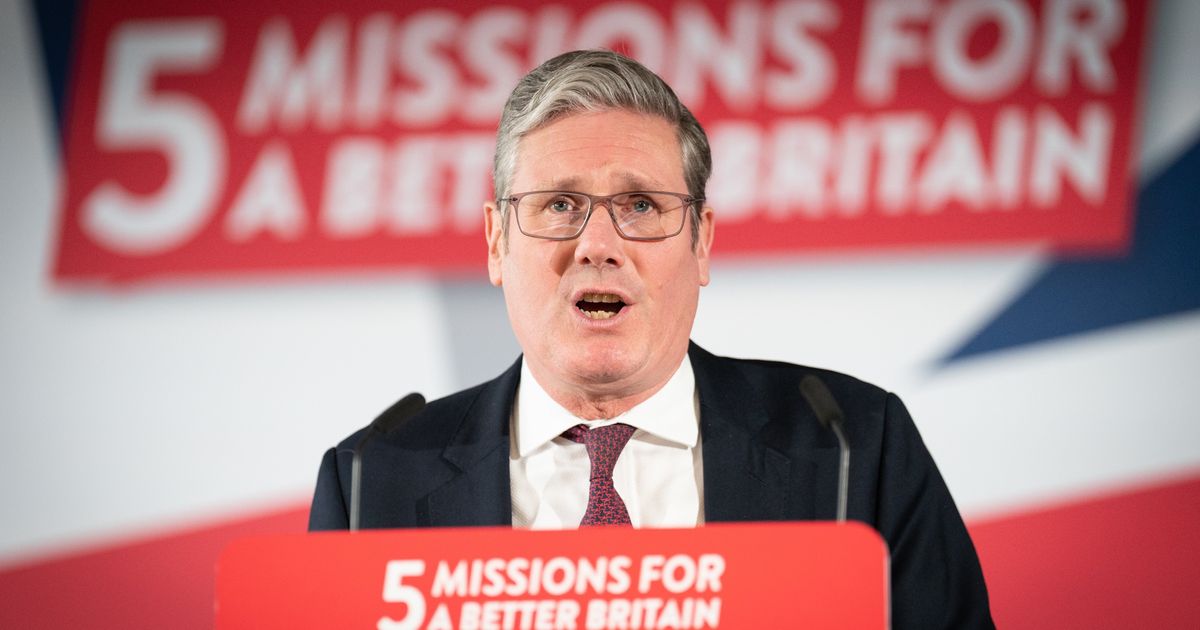
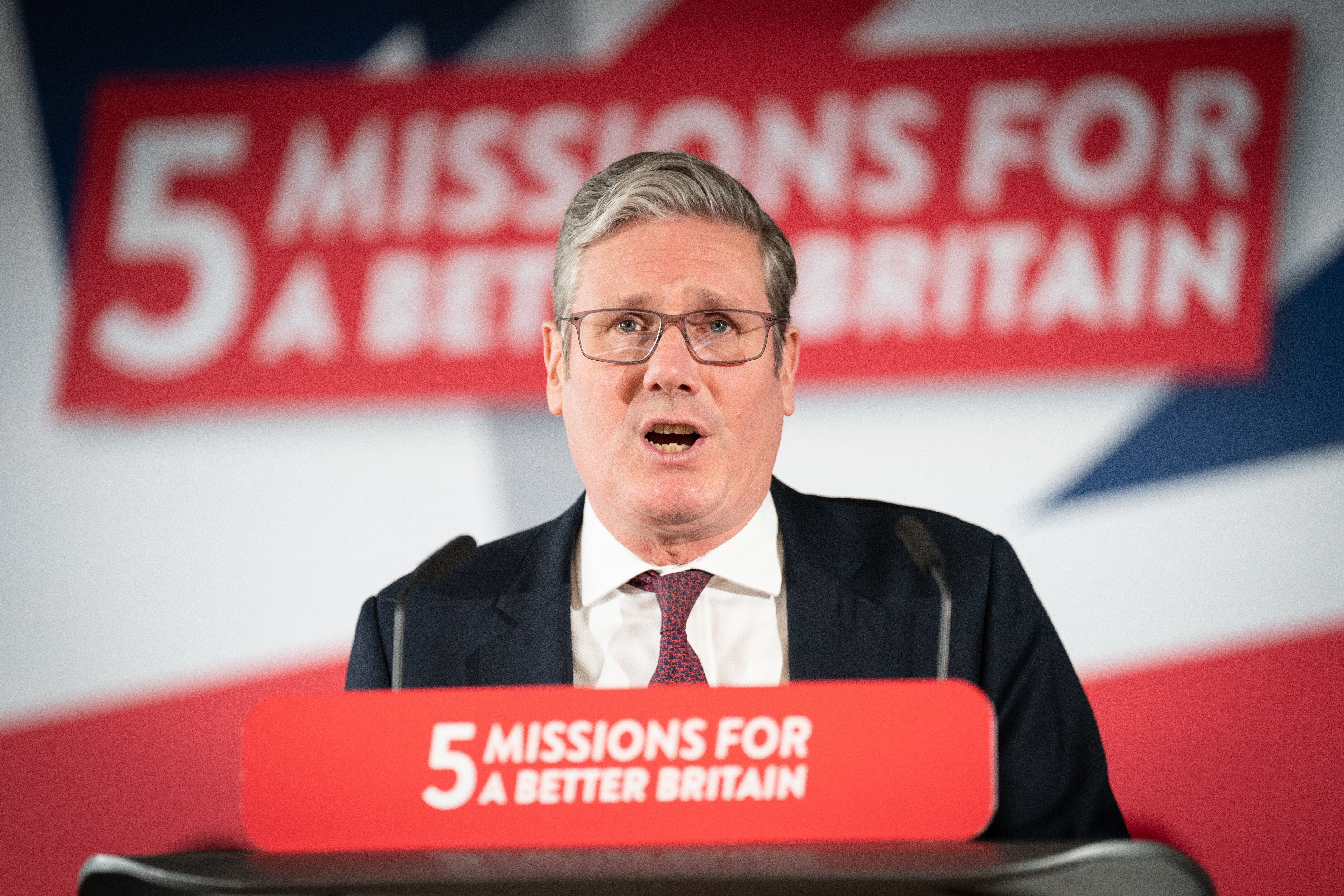
The erratic nature of Johnson’s contributions turned out to be uncannily apt as it matched yet another chaotic day for the government. Keir Starmer was relentless about ministerial mixed messaging on use of the NHS app. He also ridiculed No.10’s failure to define which “critical workers” (clearly the PM wasn’t one of them) would be exempt from being pinged into isolation.

Johnson tried to hit back by stressing that his own forced quarantine in Buckinghamshire just proved how important it was to comply with requests to stay at home, even if not everyone has use of a country home.

But while the PM was playing Chequers, Starmer was playing chess. His attack on Johnson’s WhatsApp messages (joking about leaving the over-80s to die from Covid) prompted the PM to let slip that “we were thinking in those ways” last year – damning admission that is sure to haunt him in any public inquiry.

Starmer also put the opportunist into Opposition, seizing on Tory backbench unease about Johnson’s U-turn over Covid “passports” by ridiculing his previous vow to eat any ID card he was forced to carry. Later, Labour announced it would not support compulsory use of double-jabbed certificates for entry to nightclubs, creating the prospect of a government defeat on any such legislation.

It was perhaps that realisation that prompted the PM to later tell the backbench 1922 Committee that basically his threat on nightclubs was all about jolting the young into getting vaccinated. If enough came forward, he wasn’t ruling out ditching the plan. Playing a game of chicken with the under-30s seems to be where his pandemic policy is right now.

What Johnson didn’t do was read the riot act to those MPs, like Commons leader Jacob Rees-Mogg, who opted not to wear face masks in PMQs. At one point I counted only a quarter of Tory MPs following the Speaker’s clear guidance, and at most just under half. With his backbenches restive over other Covid curbs, that suggested who is really calling the shots right now.

With more non-mask wearers on trains and buses this week despite government “encouragement”, the sight of senior MPs doing the same is yet another corrosive bit of message indiscipline. The bare-faced cheek of both is the public health equivalent of tailgating on the Tube, when fare dodgers ride the slipstream of those who do the right thing. The division and resentment it can breed can only get worse.

The Speaker is likely to be even more unhappy about the farcical way in which the 3% NHS pay rise was non-announced to parliament, before being announced finally in the form of a press release. Labour’s Rosena Allin-Khan, who is a part time A&E doctor, could hardly contain her anger as health minister Helen Whately said the pay rise was merely “considering” the rise.

Perhaps taking to heart the PM’s request to have “another go” at things, the department of health took just three hours to reveal the 3% was indeed happening after all. I understand the reason for the delay was not an admin error or anything to do with the fact that Sajid Javid and Rishi Sunak are themselves isolating. It feels like there was serious tension over where and when the funding might come from.

With non-NHS staff like police and teachers being told their pay was frozen (a tactic perhaps designed to make nurses think their deal was a king’s ransom in comparison), the overall impression was not one of end-of-term good news for key workers who were once clapped for their public service in the pandemic.

And it’s that U-turn, the U-turn in sentiment towards those who helped everyone else over the past year, and the suspicion that a pay rise has been dragged out of him for the NHS and is non-existent for others, that could cause the government serious trouble. The Tories are still ahead in the polls but there’s a sense that the ‘vaccine bounce’ may be coming to its natural end.

The upside of the vaccine programme is it touched nearly everyone. The downside of the ‘pingdemic’ is that it too appears to be touching nearly everyone. Calmer heads in government think the sense of disruption, confusion and chaos can’t last much longer. But as MPs head for the metaphorical beaches this summer, some Tories worry that the PM’s flip flops may linger in the public memory.

Share Button

Labour Will Oppose Boris Johnson Plan for Compulsory Covid Passports For Nightclubs

Boris Johnson’s plans to force nightclubs to make Covid ‘passports’ a condition of entry are hanging in the balance after Labour came out against the idea.

The PM’s proposal, which would from the end of September restrict entry to people who have been double-jabbed, has met with a backlash from club owners.

It is already opposed by a number of Tory MPs, who fear it would open the way for similar curbs on pubs, and Labour’s opposition now means that the government cannot be sure of getting it passed by parliament.

Even though the PM has a majority of more than 80, more than 40 Tory MPs have come out against the idea of compulsory ‘Covid passports’ at a time when most other restrictions have been lifted.

Keir Starmer prefers a rival plan to immediately mandate clubbers to get a negative Covid test before entry, believing it would offer better health protection at a time when the Delta variant of the virus is ripping through younger age groups.

Labour believes that proof double-jabbing is no guarantee that people don’t carry the virus, as the forced isolation of health secretary Sajid Javid underlined last weekend.

“We oppose the use of Covid vaccination status for everyday access to venues and services. It’s costly, open to fraud and is impractical,” a spokesperson for Starmer said.

“Being double-jabbed doesn’t prove you aren’t carrying the virus. Testing for access to venues would be more efficient, and would give people and businesses more certainty.”

Under surprise plans announced by the PM on Monday, the day when most restrictions were lifted in England, nightclubs have until the end of September to comply with a new scheme to restrict entry to the double-jabbed.

So far, some 42 Tory MPs have signed a cross-party declaration by the Big Brother Watch lobby group, which states they are against “Covid status certification to deny individuals access to general services, businesses or jobs”.

Several Conservatives are furious because ministers ruled out the idea of compulsory ‘Covid passports’ after a review by Michael Gove’s Cabinet Office.

But this week, neither the PM nor No.10 ruled out introducing mandatory passports for other crowded indoor venues such as pubs – even though Johnson said he was ”keen” to avoid the need to provide “papers for a pint”.

Labour believes that waiting until the end of September means the risk of clubs acting as ‘super spreader’ venues is too high and it wants immediate testing as a condition of entry.

The issue surfaced in prime minister’s question time, when Starmer pointed out that the PM had once promised to “eat an ID card if he ever had to produce one”.

“When it comes to creating confusion, the Prime Minister is a super spreader. Why is it okay to go to a nightclub for the next six weeks without proof of a vaccine or a test, and then from September it will only be okay to get into a nightclub if you’ve’ got a vaccine ID card?”

Johnson hit back: “Everybody can see that we have to wait until the end of September, by which time, it is only fair to the younger generation when they will all have been offered two jabs before we consider something like asking people to be double jabbed before they go into a nightclub.

“That is blindingly obvious to everybody. It is common sense, and I think most people in this country understand it. Most people in this country want to see younger people being encouraged to get vaccinations.”

Shadow domestic violence minister Jess Phillips told TimesRadio: “I just don’t think it will work. I just don’t think that businesses – like your local nightclub or local pub – would be able to police it, and I don’t think it’s fair on them.”

Downing Street confirmed that legislation would be needed to make the passports compulsory.

In a clue to government nervousness over the forthcoming vote on the plans, PoliticsHome reported that cabinet minister Simon Hart had on Wednesday pleaded with rebels to back the PM.

“As far as a rebellion is concerned, if I was in a position to talk to colleagues who are uncomfortable about these proposals [I’d say] that absolutely none of these things are ever done with any degree of enthusiasm or glee,” the Welsh Secretary said.

“It’s always done with the heaviest of hearts and on the basis of what we think is really compelling advice and evidence. I very much hope that if we get to a vote on this that we can take as many colleagues with us as possible.”

Starmer was himself forced to enter self-isolation after one of his children tested positive for coronavirus around the time he was in the Commons for Prime Minister’s Questions.

The Labour leader tested negative on Wednesday morning ahead of his appearance in parliament where he grilled Johnson over his isolation policy.

Share Button

Keir Starmer Expels Far-Left Corbyn Supporters From Labour

Jonathan Brady – PA Images via Getty Images

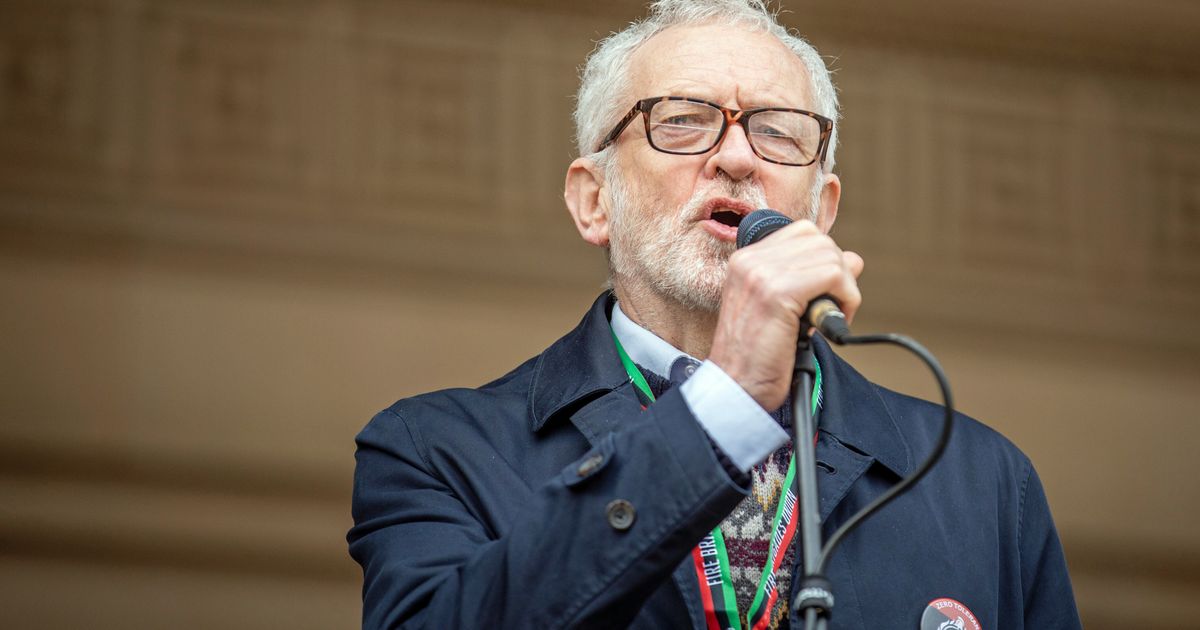
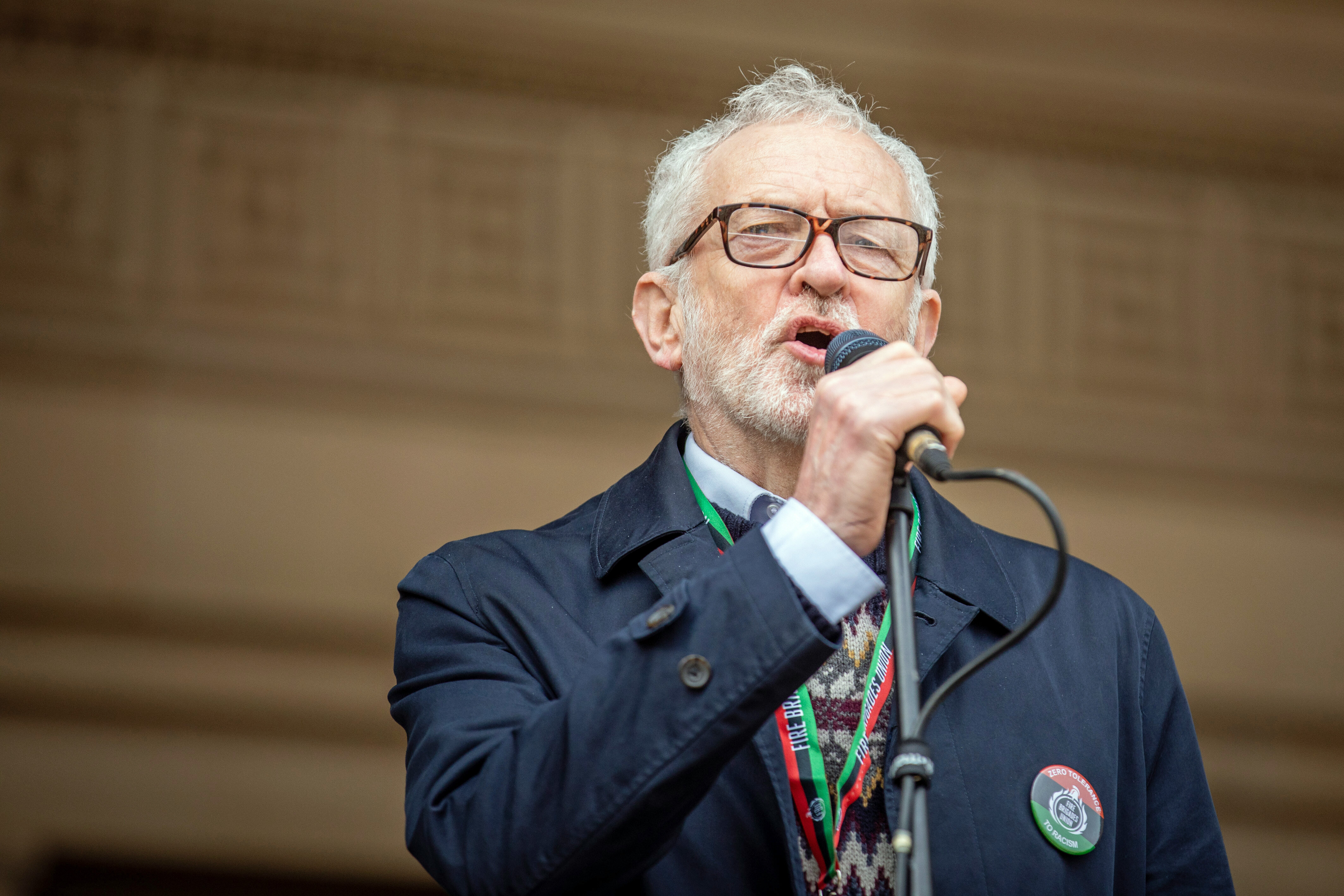
Hundreds of far Left supporters of Jeremy Corbyn will be expelled from Labour within days after its ruling body agreed to ban four groups accused of promoting a “toxic culture” within the party.

The ruling National Executive Committee (NEC) decided on Tuesday to proscribe ‘Resist’ and ‘Labour Against the Witchhunt’, factions which both claim anti-Semitism allegations have been politically motivated.

‘Labour In Exile’, which actively welcomes expelled or suspended members, was banned. Another group, ‘Socialist Appeal’, which describes itself as Marxist, was also proscribed.

HuffPost UK understands that letters of “auto-exclusion”, informing members they have effectively expelled themselves by being members of any of the groups, will be sent by the end of this week.

The NEC approved the proscription with a big majority, insiders said.

Many of the members of the four factions were strong supporters of former leader Corbyn, who remains suspended from the party whip following his reaction to an equalities watchdog finding of institutional anti-Semitism.

The NEC also agreed to set up a new panel which would look assess whether other fringe groups operating within the party should also be proscribed.

The panel will be drawn from the Organisation Sub-Committee of the NEC, but insiders said that it would not operate as a “Star Chamber” because once it ruled which groups should be banned, expulsion was automatic.

In one concession to critics, it was agreed that the full NEC would have to ratify any decisions by the “Org Sub” committee.

As the lengthy NEC meeting took place, members of the far-Left groups and others – including Corbyn’s brother Piers – demonstrated outside Labour’s HQ in London.

Grassroots group Momentum and Unite the union had both warned that the attempt to “purge” the groups was an act of “machismo” that was unnecessary.

And former shadow chancellor John McDonnell had tweeted that it was a “standard Blairite” tactic to try and show how strong a leader Starmer was.

Corbyn too had expressed strong opposition to the plan.

But one member of the NEC told HuffPost UK that the move was “morally important” because members of the groups had supported those who had been expelled for anti-Semitism.

‘Socialist Appeal’ has also been described as an “entryist” group and some MPs believe its expulsion had echos of the booting out of Militant under Neil Kinnock in the 1980s.

The margins of the proscription votes on the NEC underlined the strength of support Starmer now has on the ruling body, with two-to-one majorities for most of them.

The narrowest vote was to ban ‘Socialist Appeal’, by a margin of 20 votes to 12.

Share Button

After Keir Starmer’s Batley Bounceback, Labour Is Talking About Brexit Again

Jeff OversPA

Emily Thornberry

You’re reading The Waugh Zone, our daily politics briefing. Sign up now to get it by email in the evening.

It’s taken quite a while, but Labour is talking about Brexit again. In her first big intervention as shadow chancellor, Rachel Reeves started the week by unveiling a new ‘Made in Britain’ policy under which the party would change procurement rules to boost home-grown firms.

As she set out details of how the plan would secure supply chains by “reshoring jobs” as the US and French have done, Reeves uttered the B-word. “It’s about sorting out some of the problems with our Brexit deal that the government signed last year,” she told me on TimesRadio.

That deal had “short-changed our creative industries, our professional services and our farming and food businesses. where we have seen a 47% drop in exports to the EU”, she added. New blue passports being made in France, just one UK firm winning HS2 contracts, overseas firms supplying PPE in the pandemic, all are examples of the government’s failures, she said.

For Labour the political benefits of this new policy are obvious. This week’s latest GDP figures showed that while professional services and construction were picking up again, manufacturing and farming were not. The former are concentrated in London and the south east, the latter are crucial in the ‘Red Wall’ seats (many of which have a mix of urban and rural) in the north and midlands.

And while Reeves is careful not to suggest Labour would reverse Brexit, she is determined to highlight the flaws in the Johnson deal. By focusing on how to make, sell and buy more British products, she has followed through on her very first Commons appearance in her new role. Add in examples of Labour metro mayors plugging the idea this week and you can see it’s no one-off strategy.

Labour’s win in Batley and Spen seems to have helped fuel this attempt to get on the front foot. And further proof of a new-found confidence on the issue comes in our latest Commons People podcast with Emily Thornberry. The shadow international trade secretary told us: “Six months out from the deal we can now start saying: ‘when you say this is a teething problem it obviously isn’t’,” 

Liz Truss was like the “secretary of state for a doughnut”, because she focused on all trade apart from the great glaring hold of trade with the EU, Thornberry said. “She will take no responsibility for patching the deal that we really need, which is the biggest trade deal, which is the trade deal with the EU, which has great glaring holes…We need to repair this really thin deal. It’s like gossamer.” 

Strong stuff, but Thornberry is clearly unafraid of taking the fight to her opposite number. In the podcast, she says Truss has become “a Margaret Thatcher tribute act”. And she reveals the gossip in the Department of International Trade is that Truss has a habit of writing on documents in her ministerial red box: “Too long, didn’t read”.

Thornberry also underscored Labour’s tougher lines on China, revealing she had been in talks with Taiwan’s UK representative today and calling for British firms to reveal if they use products made by Uighurs. This follows Lisa Nandy’s call earlier this week for the UK to stage a political, but not sporting, boycott of the Beijing Winter Olympics.

The ‘Made in Britain’ policy itself has echoes of Gordon Brown’s “British jobs for British workers”, without using that exact phrase. I remember David Cameron was so outraged by the slogan he once said in PMQs it was “borrowed off the National Front”. And in a reminder of how politics has come since, Cameron even complained the policy would contravene EU free movement rules.

Yet focusing on British manufacturing and procurement perhaps also shows that Labour is also getting more comfortable with the idea of “progressive patriotism”, a phrase that Rebecca Long-Bailey road-tested in the leadership campaign but quickly backed away from.

Gareth Southgate’s calm, inclusive leadership of the England football team has embodied that concept better than most politicians (particularly Tory backbencher Lee Anderson, who will amazingly boycott England’s big game this weekend because the team continues to take the knee).

As Boris Johnson wraps himself in bunting, while curiously wearing his England top under a suit jacket, Labour is edging its way into criticising his skinny trade deal with the EU. I wonder if Keir Starmer will go the whole way and promise at the next election “a better Brexit”?

Share Button

Can Keir Starmer Use Batley To Bounce Back Against The Tories?

You’re reading The Waugh Zone, our daily politics briefing. Sign up now to get it by email in the evening.

It was at just after dawn, at 5.14 am, that Keir Starmer was passed the intel that his party was close to winning its first new MP under his leadership. Already wide awake at his north London home, he got the news from the local campaign team in Batley and Spen that the Tories had called for a “bundle check” of votes at the by-election count.

“That was the puff of white smoke that we’d pulled off a big win,” one insider tells me. That feeling that this was indeed a big win, albeit with a small majority (323 votes), summed up the mix of joy and relief among Labour MPs, volunteers and staffers who had thrown everything into the seat in the past week. It was the dawn chorus they needed.

When the result was confirmed at 5.27am, Starmer swiftly tweeted that Kim Leadbeater was a “brilliant and brave” candidate who had run a “positive campaign of hope”. And when he joined her in the constituency, he repeated the main messages of the day: “Labour is back”, “Kim is Labour at its best” and “this is just the start”.

But Starmer now needs to answer the question: start of what? On one simple level, it’s the start of getting into the habit of winning again. If the Hartlepool by-election was the political equivalent of electric shock therapy, Batley felt to some MPs like their party was waking up from a coma. Many felt it had been a mistake to let Hartlepool obscure other successes on May 6 in big city mayoralties and southern councils.

For several MPs, however, the most important “start” will be a new confidence from Starmer himself, coupled with a fresh strategy for reconnecting with lost voters. When he addresses the parliamentary Labour party of MPs and peers on Monday night, he is expected to set out just how determined he is to change the party’s perceptions among the public.

When Leadbeater takes her seat in the Commons chamber, just metres from the shield dedicated to her late sister Jo, there will be more than a few tears on both sides of the House. The PLP meeting will be held by Zoom, but if it were held on Committee Room 14, one can imagine the cheers would be heard far away down the corridor.

Leadbeater is in some ways the answer to the definitional questions that Starmer has himself struggled to provide over recent months. Her overriding message of unity over division, of a sense of healing the nation after both Brexit and the Covid pandemic, will have to be Labour’s main pitch at the next election.

Starmer has tried his own version of that message at various points recently, not least as Boris Johnson pushes his “Red Wall, red meat” strategy of fuelling “culture war” grievances (real and imagined) alive. But Leadbeater is the living embodiment of the idea that there is common ground among much of the public, if only politicians have the bravery to embrace it.

And it’s somehow fitting that the new MP for Batley and Spen may well owe her victory to the viral video clip that many in Labour feel was the real turning point in the contest. Not the grainy CCTV of Matt Hancock’s “hypocrisy hug”, but the footage of Leadbeater standing up to an anti-LGBT activist who tried to shout her down in the street.

Tory voters in more rural parts of the constituency gave the feedback that they were struck by her courage, and her message that she was a real local. Older Asian voters were similarly impressed, I’m told. Leadbeater had never lived anywhere other than the constituency (she had lived in eight different homes in the same seat, which is quite something) and it showed.

Similarly, her focus on potholes and policing resonated. We’ve seen in both Hartlepool (where the Labour council was blamed for poor public services) and Chesham (where the Tory council was blamed for national planning reforms) that the local/national dynamic can swing by-elections. In Batley, Labour pinned the blame for the police station closure on national cuts.

Naturally, when such fine margins are involved, there will always be multiple reasons found for the result (the Greens losing a candidate, Galloway winning some former Heavy Woollen District independents instead of the Tories, Labour’s huge ground operation, Conservative near-silence, a string of right-wing candidates). Yet in our first-past-the-post system, a win is always a win, and no more so than in a by-election.

Starmer signalled today that instead of facing a summer leadership challenge, he would now carry out his plan for a summer meet-the-voters campaign. “As we come out of the pandemic and out of restrictions..the space finally opens up for me to make the arguments about the future,” he said. I’m told that jobs and crime will be the focus, tying together economic and physical security.

Labour MPs certainly hope that there will be a new energy and directness to Starmer’s leadership, and say that even a narrow win in Batley can create the momentum (with a small ‘m’) he has long needed. They hope that he can follow-through with bolder messaging to use party conference as a platform for finally showing the public who he really is.

The danger is that Starmer just banks the win, and repeats what he’s been doing the past six months. The opportunity is that Batley proved, like Chesham, the PM has lost his invincibility cloak. It also highlights the perils of complacency, both on the part of local Tory campaign and on the part of the PM in not sacking Matt Hancock.

The hard fact is that Labour had just 198 MPs before Batley and it still has just 198 MPs after it. Though it may be hoping for a return to ‘normal’ politics after the pandemic, there’s nothing normal about the huge challenge the party still faces. Edging it in a by-election is not the same as the real confidence boost of being consistently ahead in the national polls.

Most of all, to become the ‘change’ candidate at the next election, some of his MPs believe Starmer has to do more to show he has changed Labour and will change Britain. But at least Kim Leadbeater has provided a glimmer of hope that he can win back some of the Tory votes he needs.

Share Button

What Level Of Covid Deaths Will The Public Be Prepared To Tolerate This Summer?

Jeff J MitchellPA

Prime Minister Boris Johnson during his visit to Nissan plant in Sunderland

Brace, brace, brace. That’s the mood among Labour MPs as they face what many believe will be another by-election defeat, this time in Batley. But it’s also the mood among some Tory MPs right now, as they prepare for the much more important prospect of a Covid third (or is it fourth?) wave.

 You always know something is up when our prime minister strikes a cautious tone, and today he carefully planted the seed of the idea that ‘Freedom Day’ may not in fact mean the total liberty that many had been hoping for.

In one of those not-scripted-honest pool TV ‘clips’ he does to avoid press conferences, the PM said there may be “extra precautions that we have to take” after July 19. New health secretary Sajid Javid refused to say this week that he would lift all restrictions and here was apparent confirmation.

What form these extra precautions will take is still unclear, though it sounds like mask-wearing and social distancing rules will be eased. The extension of the ‘work from home if you can’ edict is a prime candidate to continue, however. With the measure the R or reproduction number of the virus rising, No.10 has long known that home working helps take a chunk of that R value out of the game. 

The other clue the PM gave to his current state of mind came when he gently dismissed hopes of urgent action to stop schools from sending kids home in blanket year group ‘bubbles’. Instead, we have to be “cautious” ahead of the “natural firebreak of the summer holidays when the risk in schools will greatly diminish and just ask people to be a little bit patient”.

Rob Halfon, the chair of the Commons education select committee, tells our CommonsPeople podcast this week that he would like to see more widespread use of East Asian-style ‘micro-targeting’ of Covid cases and their contacts in the classroom. The schools that operate such policies certainly seem to make it work effectively.

The PM may be trying to sound cautious about easing some restrictions right now because he knows the scary rise in case numbers will be a presentational problem that makes any unlocking look counterintuitive. We all know by now to focus on hospitalisations rather than case numbers, but the worrying thing is today is that hospital admissions went up by 56% on last week.

No.10 was keen to stress today that case numbers were “not feeding through into big rises in hospitalisations and deaths”. Yet while the vaccination programme has weakened the link between Covid and severe illness, it has not yet broken it. And some of the data is undeniably worrying.

Almost everyone around Johnson believes he will go ahead with the July 19 ‘freedom day’. So far, it seems that his medical and scientific advisers believe that is a credible timetable too. As Chris Whitty hinted a few weeks ago, and as No10 reminded us today, that doesn’t mean there won’t be a third wave. The test is whether that wave has the impact that some fear.

One advantage Downing Street has is the wriggle room that stems from its refusal to set specific benchmarks or thresholds for the levels of case numbers, hospital numbers and, most tellingly, for the level of deaths. But the PM’s line that his roadmap will be “irreversible” does suggest that all the pressure will be on keeping things open.

The risk calculus is something that the PM is grappling with. I’ve asked before what level of deaths he is prepared to tolerate in coming months. Yet in fact it is the general public who will be facing some big questions too: what level of deaths and hospitalisations are they prepared to tolerate? Brace yourself for the answer to that one.

Share Button

Do Boris Johnson’s PMQs Show He Just Can’t Handle The Truth?

Another PMQs, another tone deaf performance from Boris Johnson. Last week, he appeared to belittle Keir Starmer’s concern over low rape conviction rates as mere “jabber”. This week, he seemed to dismiss anger over Matt Hancock’s Covid rule breach as “Westminster bubble” chatter.

In both cases, allies of Johnson say such attacks are unfair as it was clear he was hitting back at Starmer rather than the issues he raised. Well, upto a point, Lord Copper. In failing to separate out the issues, with the change in register needed for each, the PM has no one to blame but himself for the criticism.

Starmer has long been advised by older hands on the Labour benches to mix up his bowling speed, shifting from fast balls to slower off-spin, and it worked today. By contrast, Johnson stuck to his usual attack-as-best-form-of-defence tactic, and it failed.

First, the Labour leader ridiculed Johnson’s claim to have sacked Hancock a day after keeping him (Starmer must have been tempted to accuse the PM of being ‘Captain Hindsight’ on that one). Then he changed the tone to raise the fury of the parents of a dying cancer patient who was denied hospital visits the week before Hancock broke the social distancing rules with his mistress.

When Starmer quoted Ollie Bibby’s mother – “I’m livid. We did everything we were told to do and the man that made the rules didn’t” – Johnson should have spotted it was time to change gear himself and issue a heartfelt apology. If indeed he had sacked Hancock, as he implied, surely it wouldn’t be difficult to condemn his former health secretary’s actions?

Instead, the tone deaf PM gave a perfunctory answer about sharing the grief of families like Ollie’s, before launching swiftly into his charge that Starmer was raising matters that were the stuff of the ‘Westminster bubble’. Yet the whole point about the Hancock story was its reach went way beyond that bubble, that’s precisely why Tory MPs successfully pressured him to quit.

It wasn’t just the jaw-dropping photos and video of Hancock in a clinch that ensured this story cut through outside SW1 (the test is always whether the WhatsApps of MPs’ non-political friends pick it up and boy did they in spades). It was the simple, rank hypocrisy of the man who set the rules breaking them.

Add in the contrast between his workplace affair and the deadly seriousness of people forced to miss funerals, and this was way bigger than a bit of bubble trouble. The PM sounded like a man who believed the political wound had healed after just four days, but Starmer picked at the scab to reveal what lay beneath.

All those couples whose weddings have been reduced to small events, or whose family and friends have been barred from hugging or dancing at a reception, won’t have seen the Hancock clinch as hilarious. Wrecking your own marriage is a personal car-crash, wrecking thousands of other marriages while snogging your lover is public policy suicide.

The Hancock hypocrisy charge is also attaching to Johnson too. Brides-to-be are furious that the PM can have a garden party to watch the football but they can’t have a proper wedding reception. You can’t sing in church, but you can sing Three Lions in a stadium. You can’t go on holiday, but rich businessmen can arrive from abroad without quarantine.

Johnson’s failure to adapt his PMQs responses will fuel Labour’s charge that his complacency proves the Tories are a tired party that have been in power for too long. But it also risked a total lack of empathy that will worry his MPs more, especially when the PM’s X-factor has been his ability to channel and give voice to voters’ concerns.

And given he already has a reputation for being economical with the actualite (to quote the late Alan Clark), trying to spin his way out of an obvious failure to sack Hancock was ill-advised.

On Tuesday, the SNP’s Ian Blackford got into trouble with the Speaker when he declared: “The truth and this government are distant strangers, and that should come as no surprise when we remember the prime minister has been sacked not once but twice for lying.”

Now it’s demonstrably true that Johnson was fired from the Times for making up a quote and later as a shadow minister for denying he had an affair. So when Speaker Hoyle urged a retraction from Blackford, saying “as we know, hon. Members would never lie”, it’s no wonder the SNP leader in Westminster ignored the plea and carried on regardless.

The other problem for the PM is that he’s now made a habit of using misleading statements in PMQs. Refusing to correct the record over his false claim that Labour voted against an NHS pay rise is one thing. But his consistent misuse of statistics is another entirely. And today there was yet another warning from the statistics watchdog about his statements about child poverty.

As we revealed on Wednesday, the UK Office for Statistics Regulation (OSR) has written once more to get Johnson to use the right definitions, after he claimed last month that “we are also seeing fewer households now with children in poverty than 10 years ago”. The watchdog pointed out that while this may apply to ‘absolute’ poverty, the figures for relative poverty had got worse.

Most embarrassing to No.10 is that the regulator revealed it had raised this topic privately with the PM’s Downing Street briefing team, and still he kept on making statements that failed to show the full picture. There are clearly lies, damned lies and child poverty statistics.

It may just be down to Johnson’s slapdash nature, or to his failure to shift out of attack mode. Either way, he gives the impression of a PM who just can’t handle the truth. If he’s not careful, over time, the voters may decide on a sacking of their own.

Share Button

How Long Can Boris Johnson’s ‘Not Me, Govt’ Trick Keep On Working?

UK ParliamentPA

UK Parliament/Jessica Taylor/PA Wire

Like a striker lacking confidence from a goal drought (Harry Kane springs to mind), Keir Starmer was badly in need of a PMQs win. And thanks to Boris Johnson’s unique combination of complacency and tone deafness, he got one.

The Labour leader came in for some stick last week for failing to pick up on a late Dominic Cummings rant about Matt Hancock (I still think it was smarter to focus on the PM’s border policy and the Delta variant spike). But this week it appeared he was taking to heart the Substack Svengali’s latest advice to “Kick Tories up and down the street on violent crime.”

As it happens, I’m told Starmer wasn’t aware of that particular Cummings line and in fact the focus this week on criminal justice was part of his new strategy of picking a few topics and ramming them home. Asking Johnson, repeatedly with increasing cold anger, why 98.4% of reported rapes don’t end in a criminal charge left the PM stumbling and mumbling.

Johnson’s attempt to accuse Labour of being soft on sentencing looked as lame as it was obvious, with Starmer ridiculing the idea that sentencing was even relevant when so few rapists ended up in court in the first place.

The PM was the one who sounded like a quibbling lawyer when he cited “considerable evidential problems, particularly in recovering data from mobile phones” in his defence. “There is not a good enough join-up across the criminal justice system,” he then admitted, before claiming he was “addressing” the problem.

This was classic Johnson, distancing himself from previous Tory cuts as if this was the second year not the 11th year of Conservative rule. A mix of ‘not me, guv’ and ‘not my govt’, the tactic has worked effectively whenever the austerity charge is levelled at him. What the PM calls “the blessed sponge of amnesia” certainly worked a treat in the general election.

Often it feels like a Blairite trick, updated for the 2020s, a kind of ‘New Tories, new Britain’. One Labour MP tells me he attended a social event with some very confident Tory ministers recently, “and to hear them you would think it was like us in 1998, at the peak of our powers, not 11 years in”.

But for once, this was a social distancing too far. Johnson tried to cite a recent rise in Crown Prosecution Service staffing, but when set against the decade of failure it felt superfluous. Starmer was merciless in response, pointing out that years of cuts to the CPS, 25% cuts to the Ministry of Justice and closing half the courts collectively dwarfed a small increase in budget of late.

Starmer’s best line however was when he said: “I spent five years as Director of Public Prosecutions, prosecuting thousands of rape cases.” That’s a line his allies want him to say again and again and again, replacing ‘rape cases’ with ‘terrorist cases’, ‘violent crime cases’ and more.

Some around him have been frustrated at the lack of emphasis on his security credentials, especially when contrasted with Johnson’s own decadent life politics. In the coming months, the public may get to hear a lot more about the ex-DPP’s record (though he can’t give the full detail of the terror plots he managed to foil).

Starmer was also canny enough to use evidence to the Home Affairs committee just minutes before PMQs, when victims’ commissioner Vera Baird said the government’s current plans to improve rape conviction rates was “underwhelming”. It was Baird’s previous quote – “in effect, what we are witnessing is the decriminalisation of rape” – that Labour deployed with a Cummings-like brutality earlier this year.

When Johnson used his prepared line that “they jabber, we jab”, he invited further charges that he was dismissive of the lived experience of women up and down the land. And when he finally apologised for the way “the trauma” suffered by rape victims in the criminal justice system, it felt cursory and dragged out of him. Imagine if he had opened with a heartfelt apology instead.

Street security, national security and job security are key themes Labour believes it can use to prove the party really has changed, together with a “tough on the causes of crime” style approach to youth services and “preventive public services”. In coming months the party will need such sharp definition, and so will Starmer.

But the biggest task is to use every opportunity to tell the public this is not a ‘new’ government but an old government – with form as long as your arm.

Share Button

Can Keir Starmer Learn From Johnson’s Message Discipline?

The long-lens of Downing Street snapper Steve Back has caught out many people over the years. Today, he captured a rare image of the “lines to take” briefing notes used by the PM’s official spokesman in his encounters with political journalists.

And this particular document was all about Dominic Cummings. Given that one of Cummings’ arguments is that Boris Johnson is too obsessed with newspaper headlines, there was some measure of irony in seeing No.10′s stonewalling defence against his criticisms.

To be fair, the note correctly anticipated media interest in Cummings’ latest claims that the PM ‘lacks focus’, doesn’t care about the Union, governs like ‘a pundit who stumbled into politics’ and runs an administration summed up as ‘the blind leading the blind’.

What was striking was that the answer to every single question was the same: we’re not going to engage with every allegation made, and anyway “the PM is entirely focused on recovering from the pandemic, moving through the roadmap, distributing vaccines and delivering on the public’s priorities”.

Now of course it’s blatant baloney to claim the PM is entirely focused on the pandemic, not least as he not too long ago took time out to ring newspaper editors to blame Cummings for leaks against him. It also lacks credibility to claim, as Matt Hancock did on Radio 4 this morning, that the government was delivering on the PM’s promise on social care.

But Hancock, just like No.10, does know the merit of repeating again and again the same political position. The government had delivered Brexit, delivered on its pledge to protect the NHS, delivered on its programme for vaccines.

One can pick apart each element of that formulation: the Brexit brake on trade with the EU is a sleeper problem that businesses and individuals in both Britain and Northern Ireland are waking up to; the NHS didn’t collapse but the cost in lives and frontline trauma has been huge; the vaccine delivery is really the NHS’s triumph not Johnson’s.

Yet each element definitely has a ‘delivery’ bonus that is proving highly popular with the public, as the latest polls show (SavantaComRes has the Tories increasing their lead over Labour to a whopping 14 points). With every single voter directly affected by the vaccination programme, its success has an impact like no other public policy in living memory, with massive goodwill on its side.

Still, the Conservatives’ handling of what new Labour used to call “message discipline” is also having an impact. By contrast, Keir Starmer has struggled with that very concept over the past six months. Micro-policies have come and gone, and lines-to-take have too.

Those who know him well will admit that his lawyer’s brain finds it difficult to parrot soundbites. He’s always keen to read an entire brief, then focus on crafting the right arguments rather than being ‘on message’.

In interviews, he struggles to stick to a line, partly because he finds it unnatural to speak like a politician. Yet as [George] ‘Bush’s brain’ Karl Rove once said, it’s only once journalists are heartily sick of the same soundbite that the public are probably just starting to listen.

However, the Labour leader has been disciplined of late in one area, on Johnson’s “lax borders” that allowed the Delta variant into the UK from India. And there are tentative signs that it is paying off. A new YouGov poll finds that 35% of people think the rise in Covid cases is the government’s fault, up from 28% in January. 45% still blame the rise on their fellow public, but that’s down from 58% in January.

There are other impacts of the Covid spike of course, and today there were figures showing nearly a quarter of a million pupils missed school because of outbreaks, the highest figure since kids went back in March. Add that to the lack of a funded plan for catch-up education and Starmer could deploy it in PMQs on Wednesday. Delays caused by the ‘Johnson variant’ are affecting jobs, schooling and travel abroad, he may argue.

As I’ve written before, the pitfall for Labour would be to be seen as almost wishing the cases to rise further, just to prove how right its analysis was of Johnson’s mistakes. The latest figures have the first glimmers of a plateauing of hospitalisations (particularly in London), so expect the PM to revive his own line-to-take of Starmer “talking the country down”. Similarly, Labour opposing all overseas travel may prove unpopular if double jabs can ‘save the summer’.

But MPs and aides from all wings of Labour want their man to punch harder. Those punches may land if he does indeed deliver the soundbites needed. Just as the government’s public health messages rely on repetition, an Opposition’s political health relies on effective comms. Words are all Starmer has, and they can help him prove he’s got the “focus” that Cummings claims the PM lacks.

There was one caveat in those No.10 briefing notes, which departed slightly from the script. Referring to the claim that Johnson runs a blind-leading-the-blind government, the PM’s spokesman was advised: “if pushed – we reject this characterisation”. That charge of lacking focus clearly worries Team Johnson.

Starmer’s problem ahead of the Batley by-election is that his own leadership is seen as the bland leading the bland. This summer, if the unlockdown goes well and Labour lose another northern seat, it won’t be the party’s message that dominates. It will be the message from the voters.

Share Button

Does Chesham And Amersham Show The Political Tectonic Plates Are Shifting?

On the day of the Chesham and Amersham by-election on Thursday, one voter couldn’t quite believe just who was captured on the video on their ‘Ring’ doorbell. Theresa May, the former prime minister, was door-knocking in a last-ditch attempt to get the vote out. It looked desperate and it was.

In fact, May was already well known to the electorate precisely because her face had been plastered all over election leaflets. But she wasn’t on Tory campaign material, she was quoted on Lib Dem leaflets for her opposition to the planning reforms proposed by Boris Johnson. This was a 2021 redux of the 2017 classic, ‘the Maybot wot lost it’, but in a very different way.

It was those controversial planning reforms to build more homes without local consent, plus a vehement opposition to the HS2 rail line (embodied by building works currently causing road chaos in the seat), that created an overall narrative that the Conservatives were going to rip up the Chilterns countryside.

Add in the much bigger picture of Johnson’s constant focus on the ‘red wall’ of northern seats and the Lib Dems’ spectacular success was in sending a message that this seat was sick of being “taken for granted”. In that sense, and perhaps the only sense, the Home Counties upset mirrored Labour’s Hartlepool defeat a few weeks ago.

So in many ways, there were almost textbook conditions for a Lib Dem by-election upset. The seat was so close to London, a mere Metropolitan Line tube ride away, the party could easily flood it with activists. In HS2 and planning, there were two perfectly local issues to exploit. Crucially, this was also a classic sleeper operation, a LibDem ‘quiet revolt’ with the party deliberately not shouting about its progress to avoid alerting the sleepy Tories.

All the old tricks were deployed too. One Labour figure whose mother lives in the seat confided she’d told him how nice it was the Lib Dem candidate had actually sent her a personal, hand-written letter (even though it was pro-forma, and cleverly printed to look hand-written). Getting a candidate in place early, hiding the party’s national support for HS2, all worked.

Moreover, the Tory campaign was as inept as the Lib Dems’ was impressive. One Tory MP told me how the party had been far too slow to get a candidate, had produced ‘insipid’ leaflets (“Where was the image of the PM getting his vaccine jab? Nowhere.”) and crazily focused on swing voters rather than its core vote. Despite May’s last minute doorknocks, I was told the Tories didn’t even have tellers at polling stations for large parts of the day.

As one shrewd Lib Dem old hand told me, the genius of the party’s campaign was it managed to both attract the younger more liberal voters forced out of London by expensive house prices AND the older NIMBYs who don’t want the extra housing needed to support even more of these newcomers.

And while this was in many ways a classic, localised by-election win, the Lib Dems are hoping that they can capitalise more broadly in the south. It’s certainly true that anger over planning was a factor in the party capturing other seats in the local elections (there were literal ‘disgusted of Tunbridge Wells’ vote shifts over the issue in May)

But are the tectonic plates of our politics shifting? Well, the demographic shifts of an influx of younger, graduate class to Tory seats are reflected in other seats across the south. Some in Labour firmly believe that while they should shout more about successes in places like Peterborough, West of England and Worthing in May, the fact is in parliamentary seats it’s the Lib Dems who can capitalise most.

As one Labour insider put it to me, the long term trends are good but in the short term the number of marginal winnable seats for 2023/4 in the north and midlands far outweigh the potential gains of the odd upset like Canterbury. Others in the party see it as a comforting fantasy to believe that a hipster coffee shop appearing in a Tory town somehow signals a revolution.

Labour polled its lowest ever vote share of any by-election, with just 1.6% of the vote, but those around Keir Starmer were utterly relaxed, seeing that as the inevitable squeeze of tactical voting (it’s worth pointing out that under Corbyn, Richmond Park saw a lower vote score for Labour than membership of the local Labour party, precisely because voting Lib Dem removes a Tory).

“Keir didn’t go to Amersham and Chesham, we didn’t pour resources into it. We absolutely stepped back, actively said we are not keen to engage in this. So we stepped back and allowed that squeeze message to work,” one source said. If the party does the same at the next general election in seats where the Libs are the main challenger, it would simply be repeating the Blair-Ashdown tactics of 1997.

For some around Starmer, the big, tantalising prize after Chesham is that it shows not only are voters less tied than ever to party loyalty but also that the Tories can be routed if Labour isn’t seen by southern voters as a threatening presence in No.10.

I remember joining Johnson on the campaign trail in south west London in 2015 and he correctly predicted the anti-Lib Dem landslides in seats like Ed Davey’s and Vince Cable’s, partly because of a fear that Ed Miliband would ally with Alex Salmond.

Older Lib Dem-Tory switchers are at heart liberal conservatives but they are still conservatives. As academic Paula Surridge points out today, Tory Remain voters had a tremendously low opinion of Jeremy Corbyn.

Some Starmer supporters believe that’s the main reason he can never allow  himself to be depicted as ‘Miliband-lite’, let alone ‘Corbyn-lite’. He may currently have major problems with clarity for what he stands for (which have to be solved), but Starmer’s huge asset to date has been that he doesn’t scare those southern horses.

Johnson’s two biggest problems are complacency and confusion. Today, he appeared in west Yorkshire, clearly having anticipated a cakewalk victory in Chesham that he could use to help him in Batley and Spen. The date of the Batley by-election, July 1, was clearly also designed to be a victory lap after June 21’s unlocking. So much for complacency.

As for confusion, the PM today also started talking once more about uniting and levelling up because “that’s what One nation Conservatism is all about”. That unity message was certainly his line the morning after the 2019 election, but within days he squandered it with endless culture wars on the BBC, political reporters, the judiciary, even cuts to overseas aid.

One Nationism has instead been replaced by Two Nationism, and his messages to the ‘red wall’ have often conflicted with ‘blue wall’ values. It’s not just Labour that has difficulty keeping a working class and middle class voter coalition together.

Batley (which I’ll write more about soon) is a very different seat from Chesham. Still, some Tories think one read-across is they chose their candidate too late and are still failing to target the right voters. Starmer has a brilliantly local candidate, but faces ‘headwinds’ still from the vaccine rollout and George Galloway’s targeting Asian voters. 

The biggest lesson for both Starmer and Johnson is that it’s only by trying to unify the country, not split it into different groups or regions or coloured walls, that politicians can win big majorities. In a first past the post election system, that remains more important than demographic shifts or tweaks to campaigns. Oh, and never take your base for granted.

Share Button