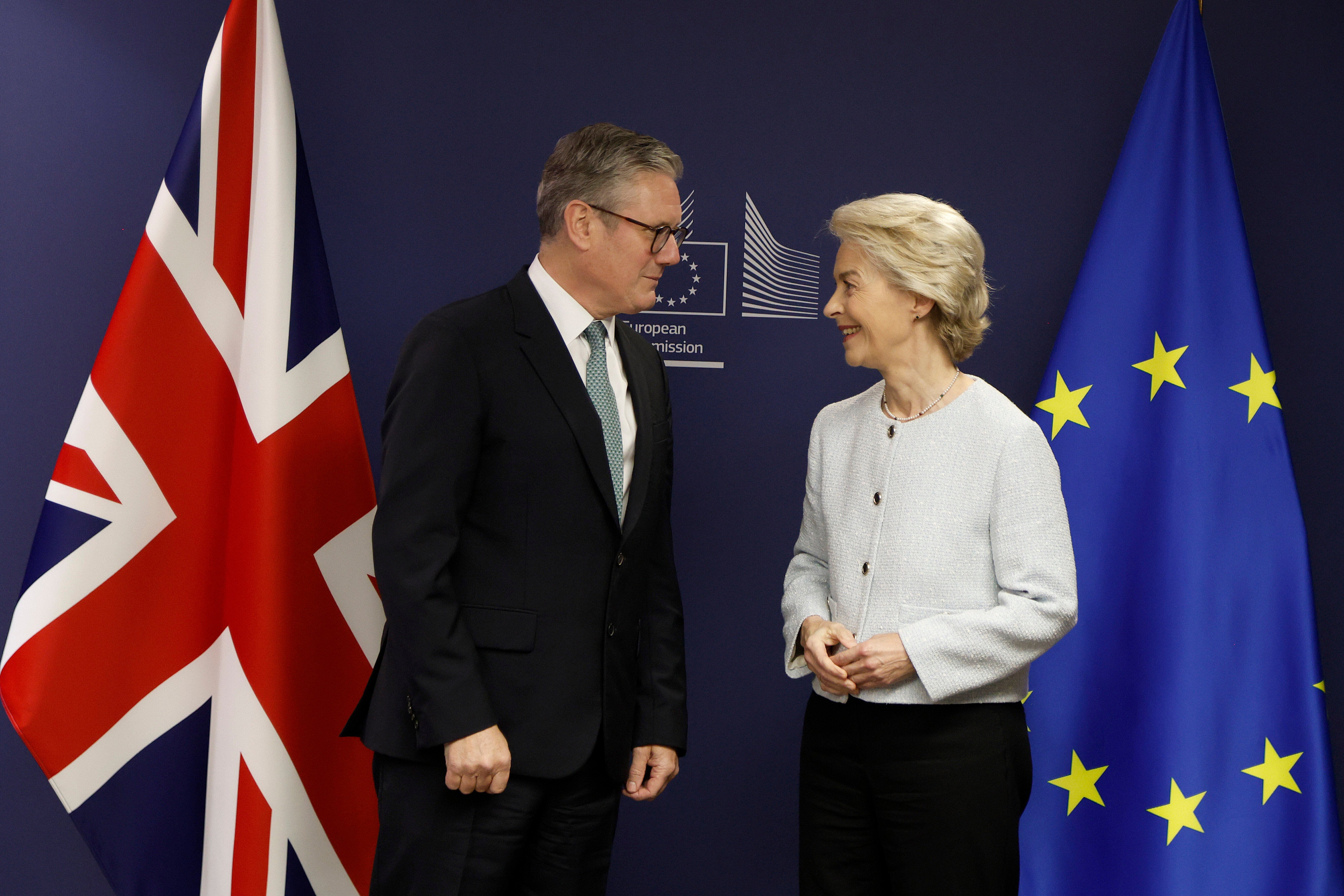
Britain needs to eventually rejoin the European Union, according to a report published today by a leading think-tank.
The Institute for Public Policy Research (IPPR) said reversing Brexit “is the best way for the UK to cope with “Russian aggression, American unreliability and Chinese coercion”.
Advertisement
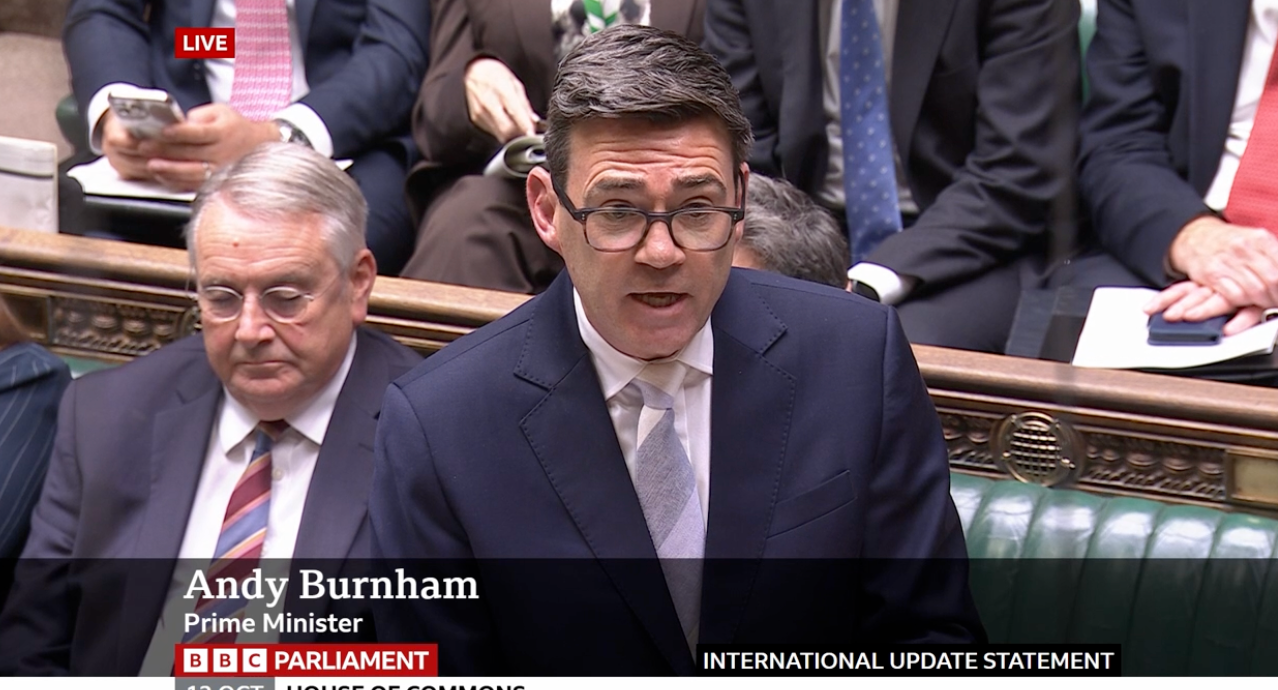
Andy Burnham has said he wants to agree closer ties with the EU to help boost economic growth at a summit next month.
The prime minister has also said he wants a national conversation on the UK’s long-term relationship with the EU, which will include the option of rejoining the bloc.
Burnham has previously said he would like to see the UK back in the EU in his lifetime.
The IPPR report says becoming an EU member again should be Britain’s “medium-term goal”.
Harry Quilter-Pinner, the IPPR’s executive director, said: “The world Britain built its post-Brexit strategy for no longer exists.
Advertisement
“We are entering an age in which economic strength, security and political influence increasingly depend on scale, and Britain cannot manufacture that scale on its own.”
The UK voted 52% to 48% to quit the EU in the 2016 Brexit referendum, and formally left the block in January, 2020.
But polling released by the IPPR found that 52% of voters now want to join the EU, compared with 29% who want to stay out.
Advertisement
IPPR associate director Laura Chappell said: “Whether it’s protecting households from swings in the cost of living, restarting industry, or keeping us secure, we lack the weight to act alone.
“In today’s world, we can’t take back control while being an outsider in Europe.”
The think-tank said the government would need to take time to build a case for membership, suggesting working with the EU on defence, manufacturing and democratic resilience as steps on the way to full membership.
Quilter-Pinner said: “There is one option which is best for the UK’s relationship with Europe – membership of the EU.
Advertisement
“That does not mean announcing another referendum tomorrow. But this means starting work to move towards this destination, building political support at home and in Europe.”
Listen to Commons People, the podcast that makes politics easy. Every week, Kevin Schofield and Kate Nicholson unpack the week’s biggest stories to keep you informed. Join us for straightforward analysis of what’s going on at Westminster.
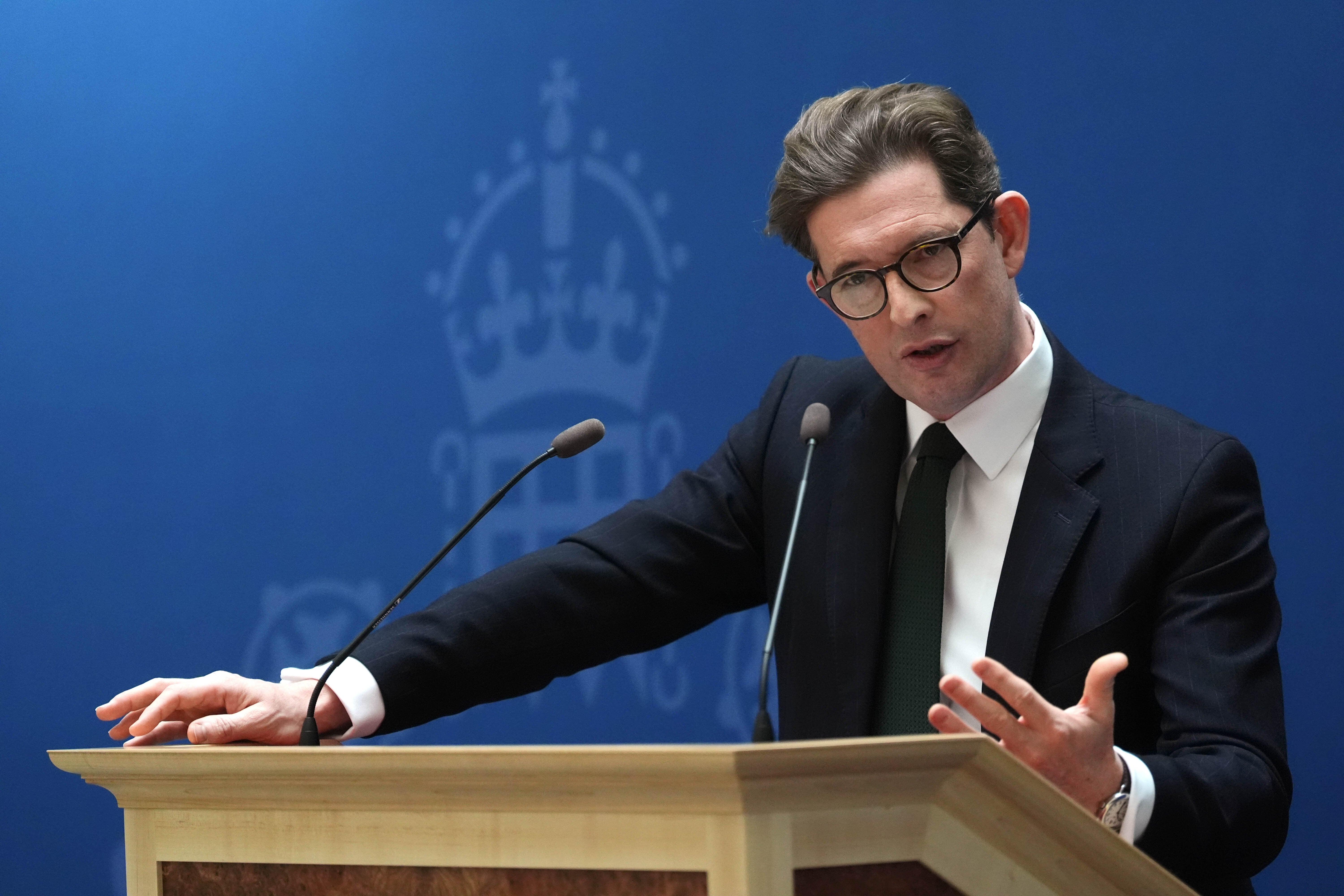
The chief of MI5 has urged Andy Burnham to stop talking about Russia’s attempted interference in the Brexit referendum.
Head of the security services Ken McCallum spoke out just days after the prime minister raised the issue on the Rest Is Politics podcast.
Advertisement
In remarks that led to a fresh political row, the PM said: “I asked the question coming to Downing Street, was there interference in the 2016 referendum from Russia?
“And I’ve had the clear answer that yes, there was.”
Just a day later, 10 Downing Street was forced to admit that the Russian interference had made no difference to the Leave vote.
Reform UK’s Nigel Farage called Burnham a “liar” over the remarks while the Tories’s shadow communities secretary Katie Lam accused the PM of peddling “conspiracy theories”.
Advertisement
McCallum did confirm that Russia had tried to influence the outcome of the referendum – but said raising the issue a decade later was counter-productive.
In his annual speech outlining the security threats facing the UK, he said Moscow had spread Eurosceptic content via Kremlin-backed media outlets RT and Sputnik, and by using social media troll accounts.
However, the spy chief said there was a significant difference between “what may have been attempted and what actually resulted”.
Advertisement
He said that any Russian impact on the campaign would have been marginal at best – and expressed concern about letting this debate rage once again.
He said: “There is a really important difference between interference attempted and outcome swayed.
“It’s quite important to focus on the difference between what may have been attempted and what actually resulted.”
“It is up to us how far we allow our adversaries to divide us,” he continued.
“I’m a little bit worried that if we all stay in this debate for another few days, the Russian trolls who didn’t appear to do all that much at various points over the years, they’ll be delighted they are front page news once again despite the comparative unimpressed-ness of what they do at all points along the journey.
Advertisement
“I’m a little bit interested that we don’t play into our adversaries’ hands by making these trolls look ten feet tall. That is not our experience here.”
McCallum also described Russia as “aggressor number one as Putin’s Kremlin continues to lash out at the UK and its allies”.
He said Moscow was attempting to intimidate Britain for its support over Ukraine.
Listen to Commons People, the podcast that makes politics easy. Every week, Kevin Schofield and Kate Nicholson unpack the week’s biggest stories to keep you informed. Join us for straightforward analysis of what’s going on at Westminster.
Andy Burnham has denied that he ever suggested Russia successfully interfered in the 2016 Brexit referendum days after appearing to say the opposite.
The prime minister told the Rest is Politics podcast at the weekend: “I asked the question coming to Downing Street, was there interference in the 2016 referendum from Russia?
Advertisement
“And I’ve had the clear answer that yes, there was.”
Minister Stephen Doughty then told Sky News Russia did not succeed in any suspected attempts to interfere with Brexit.
The prime minister’s official spokesperson later told reporters, “it is inconceivable [Russia] did not seek to use the referendum to their benefit”.
However, he said. that added that the result was unsuccessful and Burnham still thinks the end result was legitimate.
Advertisement
Tory leader Kemi Badenoch then asked Burnham about this confusion in the Commons on Monday.
She said: “Where has this come from? We all remember in 2018, the head of MI5 said that there was no evidence that Russia had influenced the EU referendum result.”
She suggested that the PM therefore does not think the result is legitimate.
Burnham replied: “I implied no such thing in my comments on the Rest is Politics podcast. I think she should go back and look again.
“It is a matter of record, that Russian actors sought to interfere in the 2019 general election, and we think it is inconceivable that this was the first time.”
Advertisement
When asked to present evidence of Russian interference in full, the PM said: “I think it’s really important in this moment to be open with people about everything that we’ve lived through in the last decade.
“I have been open, but I am also making sure that Britain is in a position where we do not face the same again.”
🚨 WATCH: Andy Burnham says he “implied no such thing” that Russia swung the EU referendum
“It is a matter of record that Russian actors sought to interfere in the 2019 general election. And we think it is unconceivable that this was the first time” pic.twitter.com/6auGHuYdLT
Burnham also insisted he is not “reopening” the national Brexit conversation after he called for closer ties with the EU.
The prime minister told MPs this afternoon that “the status quo is not good enough” for Britain and that he will be looking to secure a stronger relationship with the EU.
However, Tory MP and father of the House, Edward Leigh, noted that Burnham previously promised not to “re-run those arguments” on Brexit just earlier this year.
Advertisement
Burnham hit back: “I am not reopening the referendum. I respect the referendum result.
“But I will take a pragmatic approach when I can boost growth in the British economy.
“When I can increase cooperation to get a grip on the boat crossings across the Channel.
“I will do those things where I believe it can be in the country’s best interest.
“The deal that I have inherited coming into office represents an opportunity to secure progress on both of those things.”
He said: “It is a dereliction of duty to turn away from that possibility when we can support the food industry we can support farmers, we can get Britain growing more strongly again. That is our responsibility in this house, to serve this country’s best interest, and that is what I will do.”
Burnham said his upcoming summit with EU partners – set to be held next month – “presents an opportunity to make progress on two crucial issues: boosting UK growth and controlling illegal immigration”.
Advertisement
He said deals on the table for the summit could provide a £10 billion-a-year boost to the British economy.
The prime minister also said he would not revisit Labour’s red lines on the EU, telling MPs: “As much as I want to improve growth in the UK, I also want to maintain trust in politics, and I’m afraid I’m not prepared to revisit the red lines in our manifesto,”
Advertisement
Listen to Commons People, the podcast that makes politics easy. Every week, Kevin Schofield and Kate Nicholson unpack the week’s biggest stories to keep you informed. Join us for straightforward analysis of what’s going on at Westminster.
Brexit has been “an unmitigated disaster” and the UK would vote to rejoin the European Union “in a landslide”, Piers Morgan has said.
The broadcaster’s comments come as Britain marks the 10th anniversary of the 2016 referendum, which Leave won by 52% to 48%.
Advertisement
Since then, an astonishing six prime ministers have quit as British politics has lurched from one crisis to another in a period of unprecedented political turmoil.
On BBC One’s Sunday With Laura Kuenssberg programme, Morgan put that down to the country having “a succession of terrible governments”.
He added: “What happened in 2016, 10 years ago? We voted to leave the European Union.
“I had an open mind, I voted to Remain, but I said ‘OK, Brexit is the brave new world, if it’s going to change our fortunes for the better I’d be the first to say great’.
Advertisement
“And it’s been a pretty well unmitigated disaster. Every prime minister, every government, has to deal with events. This was a self-inflicted injury.
“When David Cameron called that Brexit referendum, he assumed he was going to win it. And who was it sold this to the country? Nigel Farage, the snake oil salesman.
“I hope he comes on your show next week and I hope you properly grill him about why should we believe you now?”
Advertisement
Morgan added: “The first thing Andy Burnham should do [when he becomes PM], apart from call an election [and if he] calls it and wins it, have another referndum.
“Ask the British public whether they still believe that Brexit has been a great success. And I think this country would vote in a landslide to go back into the European Union, albeit in a leading role to reform the EU.”
Piers Morgan: “Brexit has pretty much been an unmitigated disaster… & I think this country would vote in a landslide to go back into the European Union.”#bbclaurakpic.twitter.com/TO5fLbvNPn
Listen to Commons People, the podcast that makes politics easy. Every week, Kevin Schofield and Kate Nicholson unpack the week’s biggest stories to keep you informed. Join us for straightforward analysis of what’s going on at Westminster.
Two-thirds of Brits think Brexit has made every single issue they care about worse, a new survey has found.
A poll from YouGov and Mandate Research for the European Council on Foreign Relations (ECFR) has revealed that 66% of the general public think leaving the EU was “negative” for the UK.
Advertisement
They believe leaving the bloc has made issues such as the cost of living,economic growth, opportunities for young people, trade and managing illegal immigration harder.
Three-quarters (75%) of Brits now want a closer relationship with the EU, according to the poll, including 49% of Reform UK voters.
A further 63% of Brits, including a large proportion of Reform UK and 2016 ‘Leave’ voters, would now accept return of freedom of movement in return for a closer trading relationship with the EU.
Advertisement
Even opposition to UK involvement in a European army has decreased, with 43% of respondents supporting the idea.
Almost two-thirds (63%) want the government to focus on improving relations with the EU over links with the US.
Only 66% of Leave voters say they would vote to stay out of the EU in any new referendum.
It’s been almost exactly a decade on from the 2016 referendum on the UK’s membership in the EU.
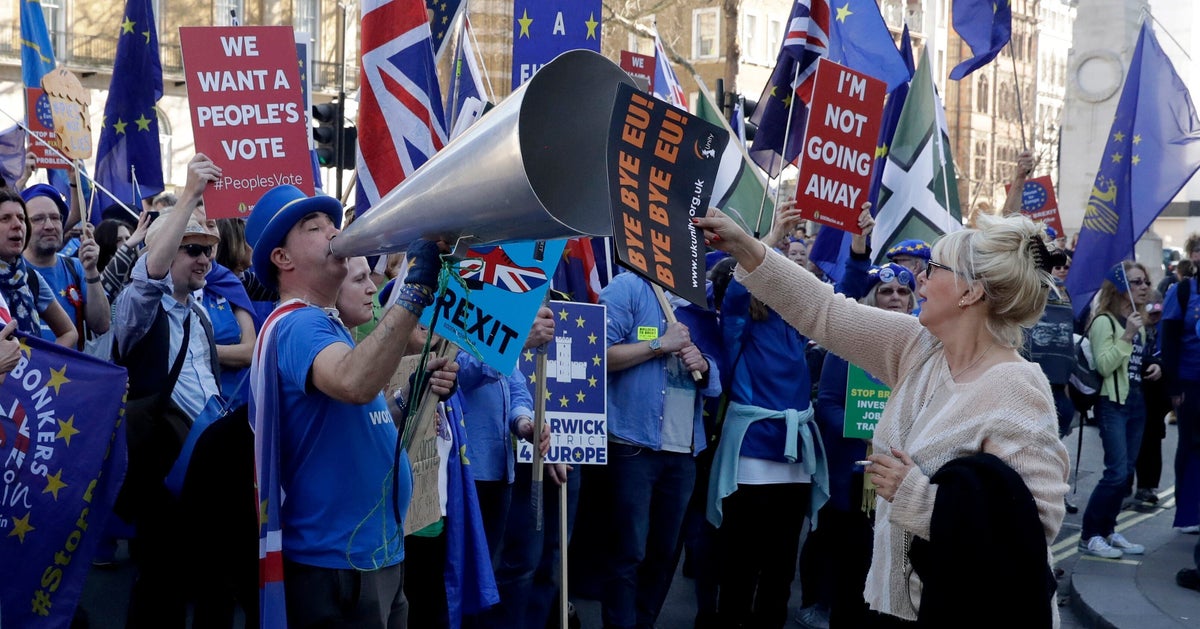
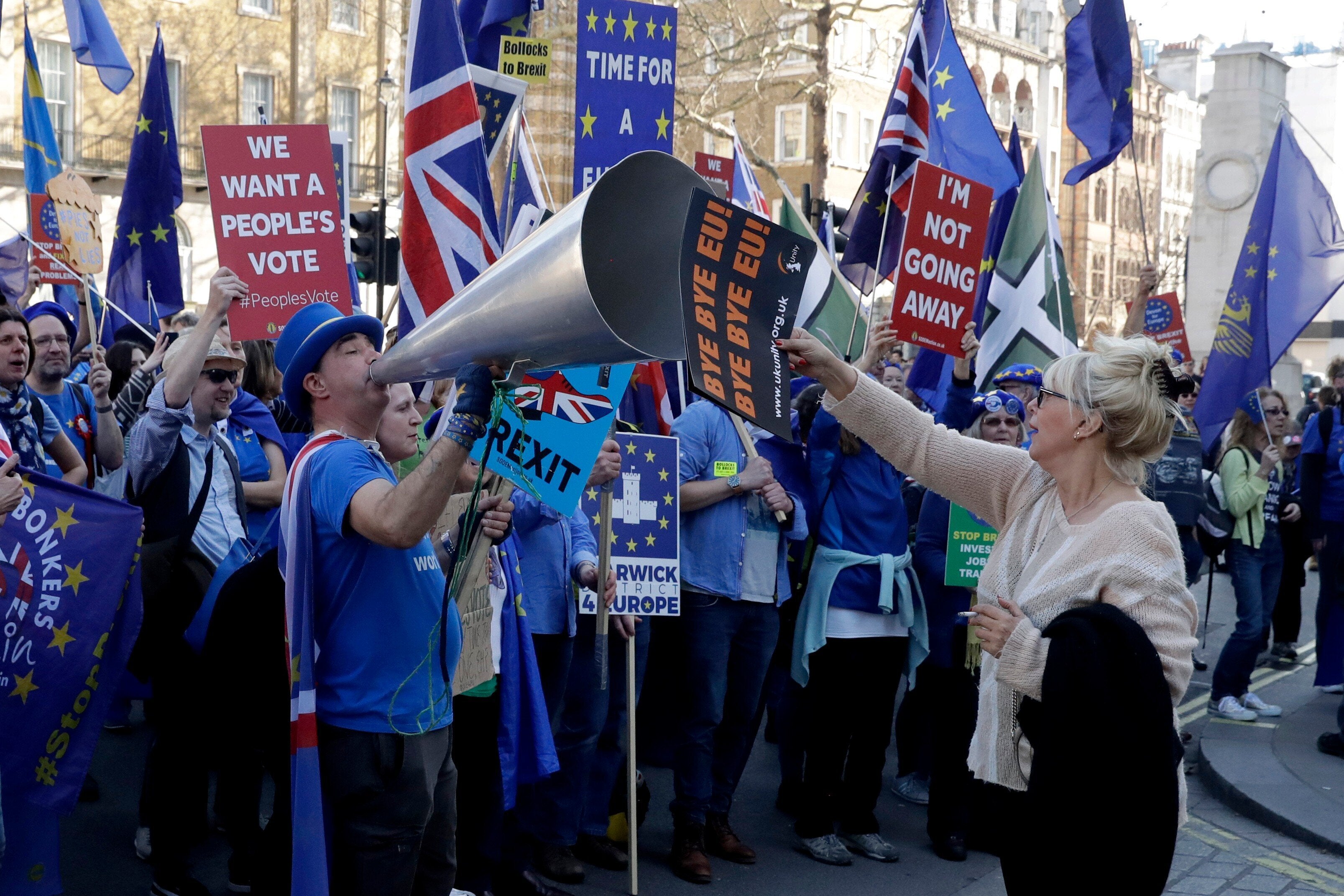
Hundreds also marched through London on Saturday calling to rejoin the EU.
The survey comes as Andy Burnham is expected to challenge Keir Starmer’s leadership in the coming days after winning the Makerfield by-election.
Advertisement
He said last September that he wanted to see the UK back in the EU within his lifetime, but he has since pledged not to “re-run” Brexit arguments.
Co-founder and director of the European Council on Foreign Relations, Mark Leonard, said Brits are realising Brexit has “undermined” the UK’s ability to respond to other pressing issues.
He said: “Ten years ago, Brexit was the insurgent vehicle for a nation rejecting the status quo.
“However, a decade on, Brits realise their hopes for a better life outside the EU are going unfulfilled and that Brexit is undermining the UK’s ability to manage the issues voters care about most.
Advertisement
“This data shows that the vast majority of citizens is open to a closer relationship.
“Rather than refighting the battles of 2016 the government must push or a new relationship with Europe that speaks directly to the everyday concerns of citizens on cost of living, migration and security.
“Rather than talking about red lines we should have a green light to a debate about how Europe can help rebuild the UK and its global influence for the 2030s and 2040s.”
Advertisement
Listen to Commons People, the podcast that makes politics easy. Every week, Kevin Schofield and Kate Nicholson unpack the week’s biggest stories to keep you informed. Join us for straightforward analysis of what’s going on at Westminster.
The former health secretary, who quit the cabinet last week in protest at Keir Starmer’s leadership, said the decision to quit the EU had been a “catastrophic mistake”.
Advertisement
He told an event run by the centre-left thing-tank Progress: “The biggest economic opportunity we have is on our doorstep.
“We need a new special relationship with the EU, because Britain’s future lies with Europe – and one day back in the European Union.”
His comments are potentially awkward for Andy Burnham, who he could face in a battle for the Labour leadership within weeks.
Advertisement
Burnham, the mayor of Greater Manchester, has said in the past that he wants to rejoin the EU.
However, he is set to be Labour’s candidate in the upcoming by-election in Makerfield, where the majority of voters backed Brexit in the 2016 referendum.
Asked by ITV on Saturday whether he was still in favour of rejoining the EU, Burnham dodged the question.
He said: “I’ve said in the long term there is a case for that, but I’m not advocating that in this by-election.
Advertisement
“In fact, what I am saying is focus now domestically, Britain has got to focus very much on the here and now and the issues that are affecting people.”
Tory chairman Kevin Hollinrake said: “Whilst Labour relitigate Brexit, Britain is not being governed.
“This is yet another distraction from the day job at a time when families and businesses want the Government focused on the cost of living, the economy, public services and Britain’s defence.”
Advertisement
Liberal Democrat leader Sir Ed Davey meanwhile said Mr Streeting must “offer something more than the same failed red lines as Keir Starmer” if he is to succeed the Prime Minister, and called for negotiations on a customs union with the EU to be opened.
Starmer has said he wants to see much closer ties with Europe, but insisted Labour will stick to its manifesto red lines of not rejoining the EU single market and customs union, or bringing back freedom of movement.
Culture secretary Lisa Nandy slapped down Streeting over his comments.
She told Sky News: “If rejoining the EU is the answer to what we were just told loud and clear by the country and parts of the country like mine, where we lost 25 out of 25 wards, 24 of them to Reform.
Advertisement
“If rejoining the EU is the answer, then essentially what we’re saying to people is life was fine in 2015, we just need to go back there. I know Wes is coming up to campaign in the by-election quite soon.
“He will hear loud and clear from people in places like Wigan, Ashton, Winstanley, across Makerfield, that that is absolutely not the case.”
Subscribe to Commons People, the podcast that makes politics easy. Every week, Kevin Schofield and Kate Nicholson unpack the week’s biggest stories to keep you informed. Join us for straightforward analysis of what’s going on at Westminster.
The Labour leadership hopeful added: “Britain’s future lies with Europe – and one day back in the European Union.”
But on Sky News on Sunday, Wigan MP Nandy described Streeting’s comments as “a bit odd”.
“If rejoining the EU is the answer to what we were just told loud and clear by the country and parts of the country like mine, where we lost 25 out of 25 wards, 24 of them to Reform,” the culture secretary said.
“If rejoining the EU is the answer, then essentially what we’re saying to people is life was fine in 2015, we just need to go back there. I know Wes is coming up to campaign in the [Makerfield] by-election quite soon.
“He will hear loud and clear from people in places like Wigan, Ashton, Winstanley, across Makerfield, that that is absolutely not the case.
“The answer has to be bigger, it has to be the sort of things this government is focusing on around good jobs, housing, living standards, cost of energy, opportunities for young people and that’s why the prime minister is right. We need to get on with it.”
Subscribe to Commons People, the podcast that makes politics easy. Every week, Kevin Schofield and Kate Nicholson unpack the week’s biggest stories to keep you informed. Join us for straightforward analysis of what’s going on at Westminster.
Few, if any, MPs did more to overturn the result of the 2016 Brexit referendum than the member for Holborn and St. Pancras.
As Labour’s shadow Brexit secretary, Starmer led the charge – often against intense resistance from his own party colleagues – for a second referendum, and made no secret of the fact he would campaign to stay in the EU if it ever happened.
Advertisement
In the end, Jeremy Corbyn’s decision to support Boris Johnson’s call for a snap election in 2019 put paid to Starmer’s dream.
Johnson won a landslide victory and took the UK out of the bloc on January 31, 2020.
This neatly coincided with the Labour leadership contest, which Starmer won with a promise to “defend free movement as we leave the EU”.
That pledge, alongside the other nine he made during that campaign, were all quickly ditched once he was in post.
Advertisement
Indeed, the return of free movement remains a “red line” the government says it will not cross, alongside a return to the EU’s single market and customs union.
These positions were seen as a tactical necessity ahead of the 2024 election, for fear of angering the millions of previously-Labour voters who backed Brexit in 2016 and then Johnson’s Tories three years later.
Nevertheless, the prime minister and other senior government figures now feel emboldened enough to criticise Brexit and openly talk about seeking closer ties with the EU.
Advertisement
On Wednesday, Starmer was unequivocal.
Brexit “did deep damage to our economy”, the PM said, adding that the economic turmoil caused by the Iran war meant “the opportunities to strengthen our security and cut the cost of living…. are simply too big to ignore”.
Donald Trump’s relentless attacks on the UK, and Starmer, have weakened the trans-Atlantic alliance, giving Starmer more political cover to pursue a deeper relationship with Brussels.
“It is increasingly clear that as the world continues down this volatile path, our long-term national interest requires closer partnership with our allies in Europe and with the European Union,” he said.
Advertisement
His comments echo those of Rachel Reeves, who set out her aim of “breaking down trade barriers and deepening alliances with our European partners” as she delivered the Spring Statement a month ago.
Negotiations between the UK and EU are already taking place on youth mobility, food and drink, and the emissions trading scheme, with agreement set to be reached in time for a summit to be held in the summer.
A government source said: “The lightbulb moment happened for Europe with Trump’s Greenland stuff. He wound up the Danes and all of us with that stuff. Iran has made it all the more prescient.
Advertisement
“It gives us an opportunity to step up a programme that will help resilience across the EU, but which will also be in the UK national interest and benefit Britain.”
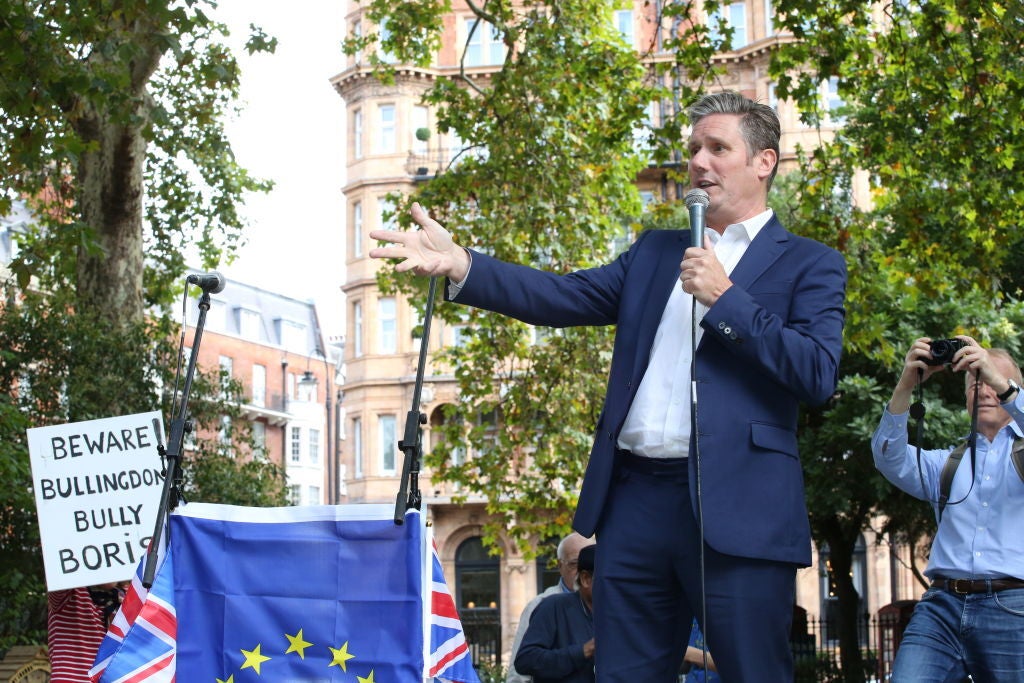
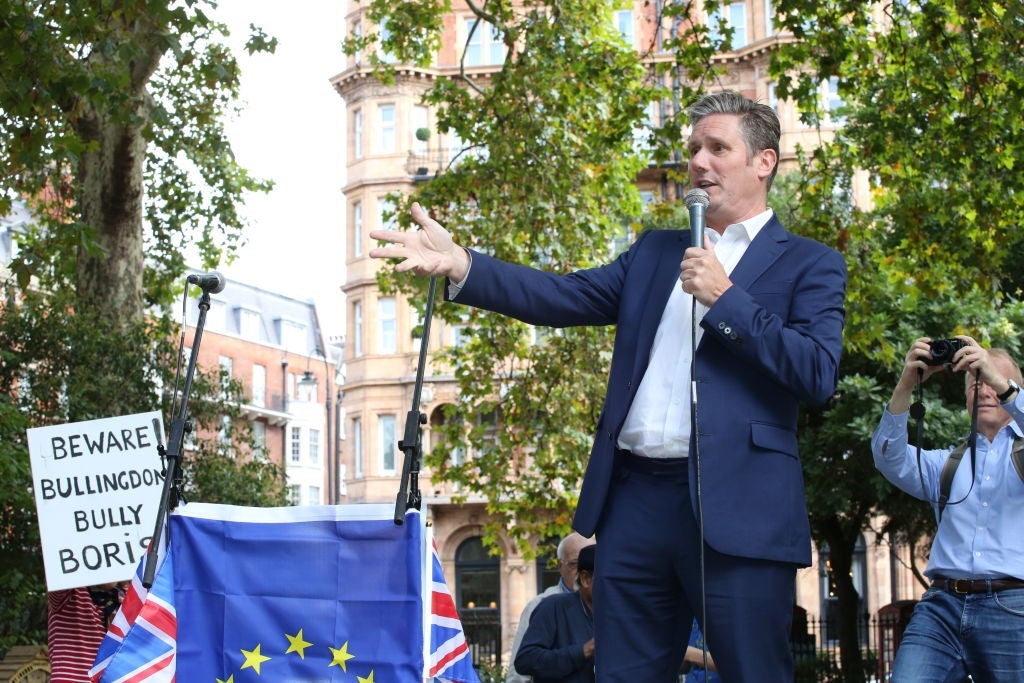
Keir Starmer speaking at the Russell Square Rally against Brexit on August 31, 2019.
Nicola Tree via Getty Images
However, some in Labour believe the race to improve relations with the EU could come at a political cost, with the elections on May barely a month away.
Advertisement
One senior party figure told HuffPost UK: “I can see this appearing on every Reform leaflet in the country.
“Why do it about a week or two before the postal votes go out? Election day is not on May 7, it’s in a couple of weeks time when the postal votes go out, and all the Reform Facebook groups will be featuring this strongly.”
But a government insider rejected the suggestion that voters will seek to punish Labour for trying to cosy up to the EU.
Advertisement
“What we’ve tried to do since the general election is take voters on a bit of a journey and show that we are making deals that help our economy while still being true to spirit of Brexit.
“We’re sticking to our red lines on the single market and customs union, and getting a bespoke relationship with the EU while making use of our Brexit freedoms as well.
“People are not happy with the deal Johnson agreed, and can can make that link between issues at the border and prices on the shelves.
Advertisement
“People want to see the UK to go out and make deals with the EU while sticking to our red lines. Voters have moved on from 2016, they don’t want to relitigate the Brexit debate all over again.”
This view was supported by one Labour MP, who said: “Brexit was ten years ago. The government’s been firm in its EU red lines and is doing nothing which would undermine them.
“It’s the cost of living, precipitated by Trump’s war on Iran, which is fore of people’s minds. Set against the backdrop of increasing global uncertainty, striking a closer relationship with the EU is all the more important if it can bring down the cost of the weekly shop and reduce barriers for British businesses.”
Advertisement
Unsurprisingly, Reform UK have sought to capitalise, accusing the PM of betraying the 2016 result.
Deputy leader Richard Tice said it was “ludicrous” to suggest Britain should have closer ties to “a failing economic bloc that also has a long track record of failing to invest in defence”.
But Nick Thomas-Symonds, the Cabinet Office minister leading the EU negotiations told HuffPost UK: “Reform is betraying the future of young Brits.
Between Robert Jenrick axing EU travel for young people and Farage shredding trade deals, they’d rather pick a fight with Europe than protect people’s household finances.
Advertisement
“They’re obsessed with a harder Brexit that hits every household with a massive paperwork tax.”
Subscribe to Commons People, the podcast that makes politics easy. Every week, Kevin Schofield and Kate Nicholson unpack the week’s biggest stories to keep you informed. Join us for straightforward analysis of what’s going on at Westminster.
Emmanuel Macron has blamed Brexiteers for the small boats crisis as he agreed a “groundbreaking” migrant returns deal with Keir Starmer in a bid to solve the issue.
The French president said British voters had been “sold a lie” before the EU referendum in 2016.
He made his comments at a press conference marking the end of his three-day state visit to the UK.
Starmer had earlier announced a “one in one out” agreement which will see illegal immigrants who arrive in Dover in small boats being detained and then returned to France.
Advertisement
In return, the UK will accept the same number of immigrants whose asylum claims have been processed in France.
The PM hopes that the scheme will act as a deterrent to stop asylum seekers making the perilous journey across the Channel.
An initial pilot scheme will start within weeks and will initially see 50 migrants per week being sent to France.
Advertisement
However, that is only one in 17 of the total number who cross the Channel.
The prime minister said: “There is no silver bullet here, but with a united effort, new tactics and a new level of intent, we can finally turn the tables.”
But Macron – a fierce critic of Brexit – used the press conference to launch an outspoken attack on those who had campaigned for the UK to leave the EU with promises that it would lead to a fall in immigration.
He said: “Since Brexit, and I’m saying all this quite honestly – I know this is not your case prime minister – but many people in your country explained that Brexit would make it possible to fight more effectively against illegal immigration, but since Brexit the UK has no migratory agreement with the EU.”
Advertisement
Macron said that meant those crossing the Channel know that they will not automatically be returned to France.
He added: “That makes an incentive to make the crossing, precisely the opposite of what the Brexiters promised.”
The French president later said the British people were “sold a lie…which is that the problem was Europe, but the problem has become Brexit”.
He said: “I am not totally convinced that both the European Union and France and the UK are in the best possible position today.
“I am very respectful for the voice of the people and the choice your country made nine years ago, and I’m lucid about the solemnity of the state visit being the first one of a European head of state post-Brexit.
Advertisement
“But I have to say the European Union was stronger with you and you were stronger with the European Union.”
Reacting to the UK-France migrant deal, shadow home secretary Chris Philp said: “Labour’s deal will only return one in every 17 illegal immigrants arriving.
“Allowing 94% of illegal immigrants to stay will make no difference whatsoever and have no deterrent effect.
Advertisement
“This is the latest catastrophic example that when Labour negotiates, the UK loses.”
The prime minister has said the agreement – which ensure closer ties with the bloc – will be “good for our jobs, good for our bills and good for our borders”.
But Johnson used typically flowery language to condemn the agreement, which rips up the deal his own government negotiated with the bloc.
In a post on X, Johnson said Starmer was “the orange ball-chewing manacled gimp of Brussels”.
He added: “Starmer promised at the election that he would not go back on Brexit. He has broken that promise as he broke his promise on tax.
“This deal should not be signed, should not be ratified and should never come into force and if it is, the next Conservative government should kick it out forthwith.”
Unfortunately for Johnson, the internet has not forgotten the role he played in the disastrous implementation of the 2016 Brexit referendum result.