Black tongue: Causes and what to do

Black tongue is a harmless and temporary oral condition. Despite its name, black tongue does not always cause the tongue to turn black. In fact, the primary symptom is that the tongue appears hairy with visible growths.

Black tongue usually occurs due to a buildup of the protein keratin on the tongue’s surface.

However, an overgrowth of bacteria or fungi within the mouth can also cause the tongue to appear black. Black tongue is temporary and tends to clear up without treatment.

Read on to find out more about the causes of black tongue. We also outline some home remedies and treatments that may help clear black tongue and prevent its recurrence.

There are two main types of black tongue: black hairy tongue and pseudo-black hairy tongue. Each has a different cause, which the following sections will cover in more detail.

Black hairy tongue

a doctor looking in a womans mouth to see if she has a black hairy tongue. Share on Pinterest
A buildup of the protein keratin may cause a black tongue.

The skin of the tongue is covered in a protein called keratin.

Normally, keratin sheds when skin cells shed. Sometimes, however, keratin accumulates on the tongue. This can cause the tongue to look black and discolored. Doctors refer to this as black hairy tongue.

The following factors increase the risk of keratin building up on the tongue:

Pseudo-black hairy tongue

Some people may experience pseudo-black hairy tongue.

This refers to a black, furry tongue resulting from a fungal infection, a bacterial infection, or another oral disease.

Black tongue may cause different symptoms depending on its underlying cause.

Black tongue does not always cause the tongue to turn black. Instead, the primary symptom is that the tongue looks hairy due to the presence of long, thread-like growths.

People with black tongue usually do not experience any other symptoms. However, some people may experience the following:

  • a discolored tongue that is black, brown, gray, or yellow
  • a tongue that feels fuzzy or sticky
  • a bad taste in the mouth
  • bad breath
  • a burning sensation
  • gagging

Black tongue is harmless. However, it can indicate that a person is at risk of developing an oral health issue.

Maintaining good oral hygiene can help clear black tongue. People can try:

  • regularly brushing the tongue with a fluoride toothpaste
  • using a tongue scraper to remove plaque, bacteria, and other debris from the tongue
  • rinsing the mouth with warm salt water to improve cleanliness and reduce bad tastes and odors
  • brushing the tongue after every meal, and not eating after brushing at night
  • applying baking soda or hydrogen peroxide to the tongue
  • drinking plenty of water to help keep the mouth clean
  • eating more raw fruits and vegetables, which can help clean the tongue

If black tongue does not clear on its own within a few days, a person should seek medical treatment.

A doctor or dentist may recommend the following treatments for a person who presents with a black tongue:

  • Antibiotics: These medications will help treat bacterial infections of the tongue.
  • Switching medications: A person who develops black tongue as a result of antibiotic use may need to switch antibiotics.
  • Antifungal treatment: These medications can help treat fungal causes of a black tongue.
  • Other medications or supplements: Anecdotal evidence suggests that certain medications — including salicylic acid, retinoids, and B complex vitamins — may ease symptoms of black tongue. However, people should not use these treatments without first talking to a doctor.
  • Surgical treatment: If other treatment options do not work, a doctor or dentist can perform a procedure to remove the long, thread-like growths on the tongue. This clipping procedure is safe and effective. However, black tongue may return following the procedure.

Black tongue can be alarming, but it is not a medical emergency.

It is safe to wait a few days and try some home remedies before seeing a doctor or dentist. However, people should seek help from a healthcare provider if their symptoms persist or worsen.

Sometimes, black tongue occurs with other symptoms of an oral health problem, such as:

People should see a doctor or dentist as soon as possible if their black tongue is accompanied by any of the following symptoms:

  • pain
  • swelling
  • visibly damaged teeth

Noticing a black tongue can be alarming, but it is not a sign of a serious illness. In some cases, however, it can indicate that a person needs to improve their oral hygiene.

It is generally safe to wait a few days before seeking treatment for a black tongue. In the meantime, people can try home remedies such as tongue brushing or scraping and saltwater rinses.

A person should see a doctor or dentist if their symptoms persist or worsen, or if they are accompanied by pain and swelling. The doctor or dentist will work to diagnose the cause of black tongue and will provide appropriate medical treatments.

Share Button

Can apple cider vinegar treat ear infections?

You have chosen to share the following article:

How elderberries can help you fight the flu

To proceed, simply complete the form below, and a link to the article will be sent by email on your behalf.
Note: Please don’t include any URLs in your comments, as they will be removed upon submission.

We do not store details you enter into this form. Please see our privacy policy for more information.

Message sent successfully

The details of this article have been emailed on your behalf.

Click here to return to the Medical News Today home page.

Share Button

Olive oil for ears: Everything you need to know

You have chosen to share the following article:

How elderberries can help you fight the flu

To proceed, simply complete the form below, and a link to the article will be sent by email on your behalf.
Note: Please don’t include any URLs in your comments, as they will be removed upon submission.

We do not store details you enter into this form. Please see our privacy policy for more information.

Message sent successfully

The details of this article have been emailed on your behalf.

Click here to return to the Medical News Today home page.

Share Button

How to relieve laryngitis symptoms at home

You have chosen to share the following article:

How elderberries can help you fight the flu

To proceed, simply complete the form below, and a link to the article will be sent by email on your behalf.
Note: Please don’t include any URLs in your comments, as they will be removed upon submission.

We do not store details you enter into this form. Please see our privacy policy for more information.

Message sent successfully

The details of this article have been emailed on your behalf.

Click here to return to the Medical News Today home page.

Share Button

What to do about bad breath

You have chosen to share the following article:

How elderberries can help you fight the flu

To proceed, simply complete the form below, and a link to the article will be sent by email on your behalf.
Note: Please don’t include any URLs in your comments, as they will be removed upon submission.

We do not store details you enter into this form. Please see our privacy policy for more information.

Message sent successfully

The details of this article have been emailed on your behalf.

Click here to return to the Medical News Today home page.

Share Button

Earwax color chart: What to know

You have chosen to share the following article:

How elderberries can help you fight the flu

To proceed, simply complete the form below, and a link to the article will be sent by email on your behalf.
Note: Please don’t include any URLs in your comments, as they will be removed upon submission.

We do not store details you enter into this form. Please see our privacy policy for more information.

Message sent successfully

The details of this article have been emailed on your behalf.

Click here to return to the Medical News Today home page.

Share Button

How to treat tonsillitis symptoms at home

You have chosen to share the following article:

How elderberries can help you fight the flu

To proceed, simply complete the form below, and a link to the article will be sent by email on your behalf.
Note: Please don’t include any URLs in your comments, as they will be removed upon submission.

We do not store details you enter into this form. Please see our privacy policy for more information.

Message sent successfully

The details of this article have been emailed on your behalf.

Click here to return to the Medical News Today home page.

Share Button

What to know about ear irrigation

You have chosen to share the following article:

How elderberries can help you fight the flu

To proceed, simply complete the form below, and a link to the article will be sent by email on your behalf.
Note: Please don’t include any URLs in your comments, as they will be removed upon submission.

We do not store details you enter into this form. Please see our privacy policy for more information.

Message sent successfully

The details of this article have been emailed on your behalf.

Click here to return to the Medical News Today home page.

Share Button

What to do if you’ve lost your voice

You have chosen to share the following article:

How elderberries can help you fight the flu

To proceed, simply complete the form below, and a link to the article will be sent by email on your behalf.
Note: Please don’t include any URLs in your comments, as they will be removed upon submission.

We do not store details you enter into this form. Please see our privacy policy for more information.

Message sent successfully

The details of this article have been emailed on your behalf.

Click here to return to the Medical News Today home page.

Share Button

What to know about black earwax

Earwax is a naturally produced yellow substance that helps keep a person’s ears clean and free of debris. Black earwax can sometimes appear, but it is usually the result of an excessive buildup of earwax and is rarely a cause for concern.

Earwax protects the ear canal from things that may enter it, including:

  • water
  • shampoo and conditioner
  • dirt
  • viruses, fungi, and bacteria

Several glands in the outer part of the ear produce earwax, which is sometimes called cerumen. Earwax also includes the old skin cells of the ear canal, which shed into it. In most cases, earwax is a sticky, yellow substance. However, it occasionally has a darker color, such as brown or black.

By knowing some of the potential causes, most of which are benign, a person can take steps to prevent and treat black earwax.

Causes and risk factors

Woman having ear examined by doctor with otoscope
Earwax can build up and become black.

When earwax is in the ear for long periods, its color will start to darken. The longer the wax remains there, the darker it will appear.

Research on the effects of earwax accumulation shows that males and older adults are more likely than other people to experience buildups of earwax.

In general, as a person ages, the earwax becomes drier and does not clear the ear canal as quickly or easily. As a result, earwax can build up and change from yellow to black.

However, black earwax can affect anyone. The following are some of the most common causes of black earwax.

Excessive earwax buildup

In most people, earwax naturally and regularly exits a person’s ears. However, if this does not happen quickly enough or the glands produce too much earwax, it can build up in the ear canal and become darker.

Insertion of foreign objects

People who use earbuds, earplugs, hearing aids, or any other object that they routinely place in the ear have a higher chance of developing black earwax. These foreign objects can both push earwax back into the ear canal and block earwax from exiting the ear.

Compressed earwax

The insertion of foreign objects into the ear can also lead to compressed earwax. People who regularly clean their ears with cotton buds run the risk of pushing the earwax back into the ear and compressing it against the eardrum.

In addition to becoming darker, compressed earwax can cause various symptoms, such as earaches, hearing loss, and dizziness.

Home remedies

Man having ear irrigation performed
Performing ear irrigation can help dislodge black earwax.

In most cases, black earwax does not pose a health concern or risk. However, if it becomes a problem, a person can usually treat it with home remedies. Anyone who experiences additional symptoms may also wish to speak to a doctor.

People can try the following home remedies for black earwax. It is important to note that these treatments are not suitable for those who have a hole in the eardrum, including one that is due to tube placement or a tear.

Ear irrigation

Ear irrigation involves the use of warm water, sometimes with an essential oil or hydrogen peroxide.

To irrigate the ear, a person should:

  • Fill a small, rubber syringe or bulb with warm water or a mixture of warm water and a few drops of an essential oil or hydrogen peroxide.
  • Tilt the head so that the affected ear is facing toward the ceiling and place the head over the sink.
  • Insert the syringe tip just over the opening of the ear canal.
  • Gently squirt the water into the ear and let it drain out.
  • Repeat with the other ear if necessary.

A person may also want to try positioning the ear toward the sink while irrigating it to allow the water and wax to drain with gravity from the ear.

Ear irrigation is generally a safe and effective way to remove a buildup of earwax from the ears.

Ear drops

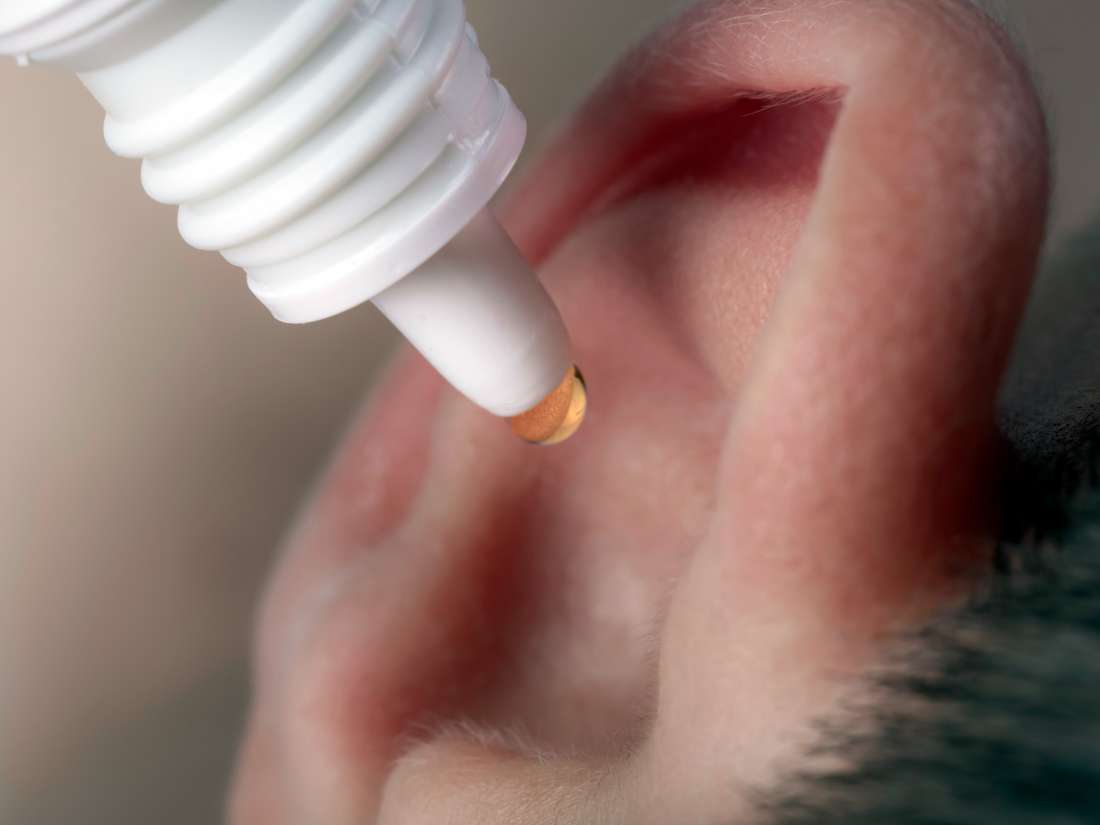
Ear drops are another at-home treatment option. The most common over-the-counter (OTC) ear drops are:

  • hydrogen peroxide
  • natural oils, such as olive oil, mineral oil, and baby oil
  • ear drop solutions

When a person drops the solution into the opening of the ear, hard and dry wax absorbs it. This absorption should soften the earwax and make it easier to clear from the ear canal. It may help to take a shower a few minutes after applying ear drops to help rinse out the softened earwax.

Earwax removal drops are available to purchase online. Some drops contain peroxide.

Medical treatments

If at-home treatments are not successful or pain accompanies the black earwax, a person should speak to their doctor about potential treatments. A doctor may check for underlying conditions if this is the person’s first visit for this symptom.

Some methods that a doctor may try include:

  • irrigation with a special tool for cleaning out earwax
  • suction using a vacuum tool
  • removing earwax with a specialized tool called a curette

Prevention

Regular showers can help loosen earwax.
Taking regular showers can help loosen earwax.

Often, simply leaving the ears alone may help prevent excess wax from building up. Most of the time, with showers and jaw movement, the ears are self-cleaning and require no interference.

People should avoid cleaning their ears with long objects. Anyone with a history of wax buildups may also want to consider avoiding or limiting the use of earbuds and other devices that require insertion into the ears.

A doctor may prescribe medication to help soften a person’s earwax over time. This medication can help prevent the accumulation of earwax that can lead to black earwax and other side effects.

When to see a doctor

A person should speak to a doctor if this is their first time experiencing black earwax. A doctor may refer a person to an ear, nose, and throat specialist or check for underlying conditions before treatment.

A person should also seek medical attention if they experience any additional symptoms, including:

  • pain in the ear
  • nausea
  • dizziness
  • a feeling of fullness in the ear
  • itchiness in the ear
  • a cough
  • discharge from the ear canal
  • ringing in the ears
  • difficulty hearing

Finally, a person should speak to their doctor before they start an at-home treatment and let them know if the treatment does not work.

Takeaway

Black earwax is rarely a cause for concern. Additional symptoms tend to be mild, and people can usually treat them with home remedies.

Most people should leave their ears alone and practice good hygiene, and they will not experience an excessive buildup of earwax.

Anyone experiencing bothersome symptoms alongside black earwax should speak to a doctor.

Share Button