Pressure points to help you fall asleep

Acupressure is a component of traditional Chinese medicine that may help ease some symptoms of health issues, including insomnia.

Acupressure is a relatively new subject of scientific research. However, a handful of studies suggest that it may be a safe way to get more or better sleep.

To use a pressure point, apply gentle but firm pressure with the hand, fingers, fist, or a massager. Some people incorporate acupressure into a soothing massage.

Try using other sleep strategies, too, such as darkening the room, playing soothing music, using relaxing lotions, or meditating before bed.

The following acupressure points may help with sleep. A person could try each individually or together as part of a routine.
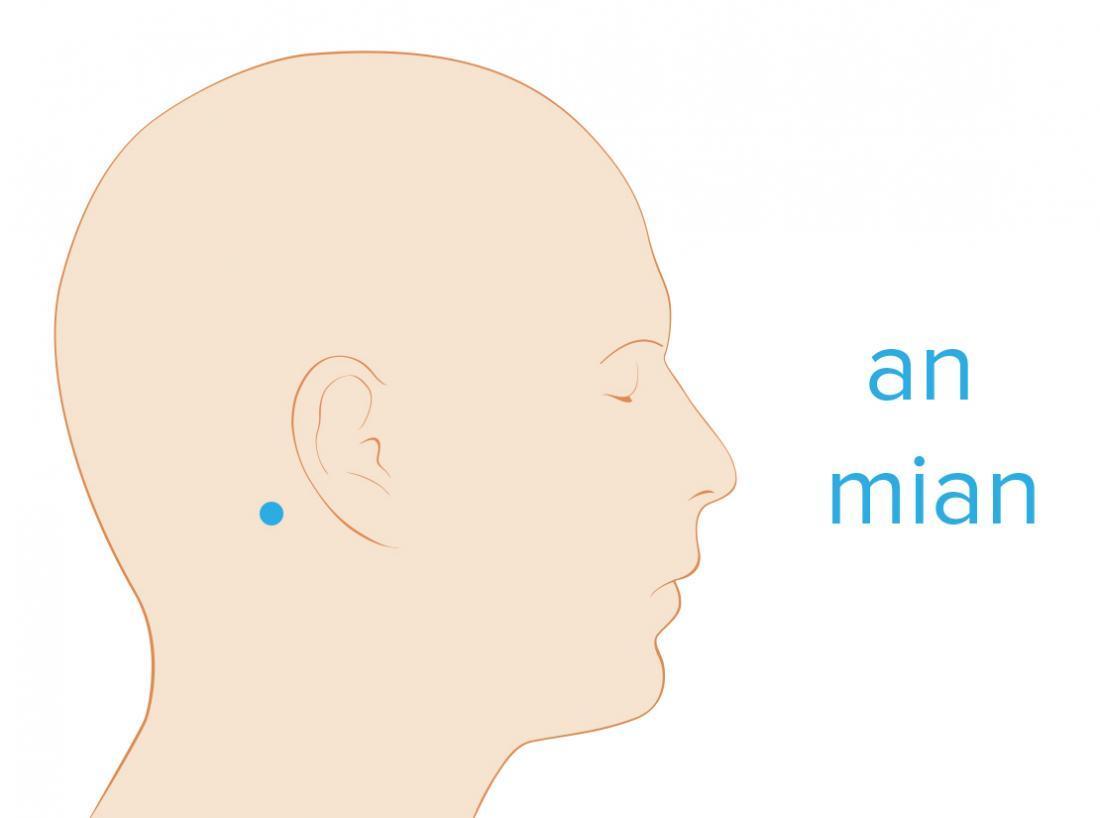
diagram of An Mian pressure point Share on Pinterest

In acupressure and acupuncture, An Mian are traditional points for treating insomnia. Some practitioners also use these points to reduce anxiety, vertigo, and headaches.

The An Mian points are on either side of the neck. To find them, place a finger behind each earlobe, and move the fingers just behind the bony protrusion. Light pressure is sufficient.

While some research has found that using these points in combination with others may help treat insomnia caused by depression, further investigation is necessary.
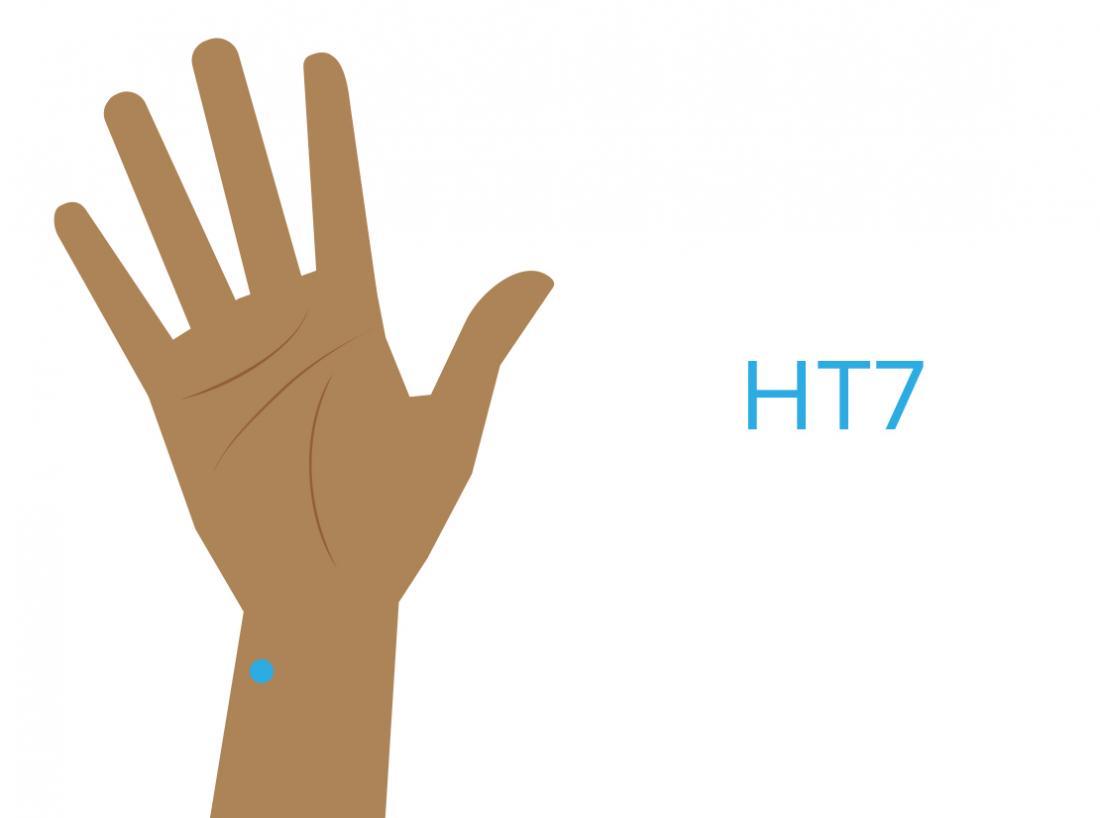
diagram of HT7 pressure pointShare on Pinterest

HT7, also called Shen Men, is on the underside of the wrist, just under the bottom of the hand.

Bend the hand forward slightly and look for the crease. Then, apply pressure to the outermost part of this crease, on the side closest to the pinky finger.

An older study, from 2010, found positive results when using HT7 to help relieve insomnia. The study included 50 older adult residents at a long-term care facility who experienced the sleep disorder.

One group received acupressure on the HT7 point on both wrists for 5 weeks. The control group received only a light touch in the same place.

The group that received acupressure had significantly better sleep scores, not only during the trial, but for up to 2 weeks afterward.

Another study, involving adults with Alzheimer’s disease and sleep disorders, found that daily acupressure on the HT7 point improved the length and quality of sleep and otherwise reduced sleep disorder symptoms.

The scientists cautioned, however, that their study was small. More research is necessary to confirm these effects.

Share on Pinterest

Point SP6, which practitioners also call San Yin Jiao, may help with insomnia, menstrual cramps, urinary issues, and some other pelvic problems.

To access the point, find the highest point of the ankle on the inside of the leg. Beginning at the top of the ankle, measure four finger-widths up the leg. Apply deep pressure just behind the bone above the ankle.

A 2016 investigation into the effects of acupressure on fatigue and sleep quality in breast cancer survivors used SP6 as part of a relaxing acupressure routine. The participants applied pressure to each point in the routine, including SP6, for 3 minutes.

This routine improved the participants’ sleep and quality of life, compared with other acupressure routines and usual care.

However, according to acupressure researchers, pregnant women should avoid using the SP6 point.

Share on Pinterest

LV3, which practitioners also call Tai Chong, may help with unexplained insomnia, as well as stress and anxiety-related sleeplessness.

Find it by locating the spot where the skin of the big toe and the next toe connect. The pressure should be firm and deep.

Applying pressure to the LV3 point was part of the relaxation routine in the previous study about fatigue and sleep quality in breast cancer survivors. The researchers found that applying pressure to each point for 3 minutes improved sleep.

Share on Pinterest

Research suggests that stimulating the KD3 point, which is also called Taixi, can help ease insomnia. This point is located just above the heel on the inside of the foot.

2014 research into the use of KD3 and HT7 found that acupressure on these points improved sleep quality in middle-aged and older adult participants with hypertension. It also helped lower their blood pressure to healthy levels.

Moreover, acupressure seemed to be more effective than traditional interventions and wellness education among this cohort.

However, like many other investigations into acupressure, this study was small, including just 75 participants.

Share on Pinterest

The Yin Tang point is in the center of the eyebrows, just above the nose. Applying pressure to this point may help relieve insomnia and other issues, including:

  • fear
  • agitation
  • restlessness

While this point is a common element of acupuncture and acupressure, little research has delved into its effectiveness.

Acupressure practitioners work with a concept called Qi, pronounced “chi.” It refers to vital energy that circulates throughout the body in pathways called meridians.

Acupressure practitioners believe that blockages in these meridians can cause imbalances in the flow of Qi, leading to chronic illness, pain, sleeplessness, and other symptoms.

Pressure on certain meridian points, they believe, restores the balance of Qi. Each pressure point has an assigned number and organ.

Acupressure and acupuncture rely on similar principles. Acupuncture uses needles to stimulate acupressure points, while acupressure relies on massage and firm touch.

Beyond the studies above, other research suggests that acupressure may help ease difficulties sleeping.

A 2017 study involving 112 participants with insomnia compared sleeping medication to acupuncture. While acupuncture uses needles, it relies on the same general principles as acupressure.

Both interventions led to significant improvements in sleep after 1 month, but analysis revealed that acupuncture had been more effective.

Still, investigations into the efficacy of acupressure are usually small, and researchers cannot say with certainty whether the practice is more beneficial than other relaxation techniques.

It is crucial to speak with a doctor about chronic sleeplessness — too little sleep can have a significant impact on overall health.

Studies suggest that 10–30% of people experience insomnia, though in some areas more than 50% of people report symptoms.

A lack of sleep can affect a person’s long-term health and well-being. Sleep medications work for some people, but they can cause adverse effects.

Acupressure is a low-risk alternative that is safe for most people to try.

Anyone planning to add acupressure to their routine would likely benefit from consulting a knowledgeable doctor, an acupuncturist, or a massage therapist with acupressure experience.


Share Button

The science behind lucid dreaming

In lucid dreams, the dreamer realizes they are dreaming even as they remain asleep. What is the science behind this intriguing consciousness phenomenon? This special feature looks at the current research.
image of a boat and the night sky
Can scientists explain lucid dreams? Read this special feature to find out what researchers have learned so far.

Typically, when we dream, we are not aware that we are dreaming, and the most unlikely events, characters, and environments seem real to us.

But now and again, some of us realize that we are in a dream as we are dreaming. This phenomenon is called “lucid dreaming,” and it has stirred the interest of researchers and the public alike.

Learning to control aspects of your dreams can be a great way of exploring activities you could never do in real life, facing and overcoming fears, and learning more about your subconscious.

In a previous special feature on Medical News Today, we have explained what lucid dreams are, talked about some techniques you can apply to achieve them, and looked at whether there are any risks associated with this practice.

In this article, we take that discussion a step further, looking at some of the science behind lucid dreaming.

So if you are interested in finding out how common lucid dreams are, who is more prone to having them and why, and what happens in the brain during a lucid dream, read on.

How common are lucid dreams?

It remains unclear how many people experience lucid dreams, but researchers have provided rough estimates based on personal reports they accessed through their studies.

image of dream catcher
Around 50% of people have had a lucid dream at least once in their lives.

A 2017 study published in the journal Imagination, Cognition and Personality: Consciousness in Theory, Research, and Clinical Practice referred to estimates suggesting that in a representative population, 51% of the individuals had experienced a lucid dream at least once in their lives, and about 20% experienced lucid dreams at least once a month.

The same study notes that people are more likely to experience spontaneous lucid dreams in their childhood, starting at about 3 and 4 years old. However, the likelihood of lucid dreaming begins to decline in early adolescence.

“After the age of 25, spontaneous onset of lucid dreaming appears to be very infrequent,” the study authors write.

The researchers — who hail from the Universities of Mannheim and Heidelberg, both in Germany — investigated whether or not personality traits could help predict a person’s likelihood of experiencing lucid dreams.

The study found that openness to an experience correlates positively with lucid dreaming frequency. However, agreeableness —a personality trait that often indicates a person’s level of friendliness and tact in interpersonal relationships — does not.

The study also identified that neuroticism — a personality factor that often presents as strong moods, anxiety, and depression — had associations with a higher frequency of lucid dreams.

Lucid dreams and sleep disturbances

Denholm Aspy, Ph.D., who researches lucid dreaming, spoke to MNT and suggested that certain neurophysiological or neurochemical factors may also render a person more likely to experience spontaneous lucid dreams.

person lying across the bed
Some studies have found a correlation between lucid dreaming and sleep paralysis.

More often than not, lucid dreaming occurs during the REM (rapid eye movement) phase of sleep, which is also when many regular dreams occur. It is possible that neurochemical peculiarities may play a role in “switching on” parts of our consciousness when they would generally be “switched off.”

“I’m speculating a little bit here, but some people might just tend to produce more of the neurotransmitters that pause REM sleep, typically acetylcholine,” Aspy told us.

“You might have some random variation in neurology or neurochemistry […] I know that people with narcolepsy tend to have a lot more lucid dreams than the average person, and they’re having a lot of sleep disturbances,” he went on to say.

Some anecdotal experiences, as well as some studies, suggest that lucid dreaming may have more in common with the experience of sleep paralysis than that of regular dreaming.

In sleep paralysis, the mind awakens to a certain degree, while the body remains asleep and unable to move. When that happens, individuals usually experience very realistic hallucinations, as though the content of a dream had “leaked” into the real world.

For instance, a 2017 study — featured in the Journal of Sleep Research — found a significant positive correlation between sleep paralysis and lucid dreaming frequency in a cohort of 1,928 adult participants.

“It is […] likely that these sleep experiences are underlined by similar neurophysiology,” the study authors write.

They also note that “[d]issociative experience was the only common predictor of both sleep paralysis and lucid dreaming frequency, indicating that individuals who experience both unusual sleep experiences also experience greater dissociative experiences in daily life.”

The role of diet and meditation

person meditating at sunset
People who meditate may find it easier to have lucid dreams.

Besides neurochemical and neurophysiological factors, Aspy told us, there may also be other unexpected contributors to whether or not a person is likely to experience lucid dreams. One factor, he explained, could simply be nutrition.

“People that are low in certain vitamins […] they tend to have poor dream recall and not have lucid dreams at all,” Aspy said, “whereas, for example, in my study that I published [in 2017], I found that giving people vitamin B-6 supplements caused them to remember more of their dreams, and that could be useful for having lucid dreams as well.”

In that study — which he previously covered on MNT — Aspy and colleagues found that individuals who took 240 milligrams (mg) of vitamin B-6 for four nights before going to bed found it much easier to remember their dreams when they woke up.

“[G]eneral dream recall is the most important predictor of lucid dreams,” Aspy told MNT. This means that certain changes to the diet might make it more likely that people not only recall their regular dreams when they wake up but also that they can turn regular dreams into lucid dreams more easily.

Another factor that may play a role in a person’s likelihood to experience lucid dreams is meditation. A 2015 study found that people who had practiced meditation for a long time tended to have more lucid dreams.

This, the researchers explain, makes sense because “[a]ttention to the present state of consciousness in wakefulness and contemplating whether the current experience might be a dream is one of the core techniques […] in modern lucid dream practice.”

What happens in the brain?

But what happens in the brain when a person experiences a lucid dream? “Lucid dreaming is a hybrid state of consciousness with features of both waking and dreaming,” write Julian Mutz and Amir-Homayoun Javadi in a review they published in Neuroscience of Consciousness in 2017.

concept image of a frightening silhouette
Some lucid dreams are actually lucid nightmares, and researchers are still unsure why those occur.

That makes this sleep experience particularly intriguing, all the more so considering that scientists are still unclear about all the brain mechanisms related to regular dreaming.

In their review, Mutz and Javadi looked at previous studies concerning brain activity during sleep and, more specifically, during periods of regular dreaming versus lucid dreaming.

The two researchers found that during lucid dreaming, there is increased activity in the dorsolateral prefrontal cortex, the bilateral frontopolar prefrontal cortex, the precuneus, the inferior parietal lobules, and the supramarginal gyrus.

These are all brain areas related to higher cognitive functions, including attention, working memory, planning, and self-consciousness.

By looking at the research on lucid dreaming and states of consciousness, the researchers also found that during a lucid dream, “levels of self-determination (i.e., the subjective experience of acting freely according to one’s will)” were similar to those that people experienced during states of wakefulness. During regular dreams, however, self-determination was significantly reduced.

Mutz and Javadi also note that by further studying lucid dreaming, scientists could learn more about different types of consciousness, which are less easy to separate and study at other times.

Tadas Stumbrys, Ph.D. — a researcher from Vilnius University in Lithuania, who specializes in the science of dreams — notes that perfecting the art of lucid dreaming is tempting for many people, who often use it for “wish fulfillment, such as flying or engaging in sex.”

While it is certainly possible to become better at lucid dreaming, lucid dreamers can only control limited aspects of their dream at once. “I’ve never heard of anyone who can control everything about a lucid dream at the same time,” Aspy told us.

Many features of lucid dreaming remain a mystery, such as details about the brain mechanisms behind it. Another unknown is why lucid dreams can sometimes turn ominous — about 7% of them are, surprisingly, lucid nightmares, according to Stumbrys.

These are avenues for future research, which is yet to understand what lucid dreams can achieve for the dreamer, and where they fit on the map of sleep experiences.

Share Button

When’s the best time to take a warm bath for better sleep?

Taking a warm shower or bath before bedtime is a known way to improve sleep, but when’s the perfect time to do it? A new study has the answer.
woman relaxing in hot tub
Research finds the perfect time to take that warm bath before bedtime.

For those who struggle to get a decent amount of sleep each night, there are a number of tips to try to improve the chance of falling asleep and the quality of our rest.

For example, we know that exercising regularly, keeping the bedroom cool, and avoiding alcohol before going to sleep are some great ways to ensure we get a good night’s rest.

Taking a bath or shower before bedtime is also a well-known sleep remedy.

This is partly because a warm bath can help us relax, but also because our body temperature tends to drop after a warm bath, which can induce better sleep.

However, does it make any difference to sleep quality exactly when we bathe? Researchers led by Shahab Haghayegh, a doctoral researcher in the Department of Biomedical Engineering at the University of Texas at Austin, set out to investigate.

Analyzing bathing time and sleep quality

To find out, Haghayegh and colleagues searched through a total of 5,322 studies from databases such as PubMed, CINAHL, Cochran, Medline, PsycInfo, and Web of Science.

They have published the results of their meta-analysis in the journal Sleep Medicine Reviews.

The researchers analyzed the effects of “water-based passive body heating” on several indicators of sleep quality: “sleep onset latency (SOL), wake after sleep onset, total sleep time, sleep efficiency, slow-wave sleep, and subjective sleep quality.”

A longer SOL — that is, how long it takes to fall asleep — is a standard measurement of sleep satisfaction. Sleep efficiency is also a conventional way of measuring sleep that divides the time a person is asleep by the total time they spend in bed minus the SOL.

Finally, slow-wave sleep describes the deepest phase of sleep, which many believe to be critical for learning and memory consolidation.

Bathe 1–2 hours before bed for best sleep

The results of the analysis revealed that the best time for taking a shower or a bath is 1–2 hours before going to bed. The duration of the shower or bath does not need to be longer than 10 minutes for a person to reap the benefits.

This cools the body down by improving the blood circulation from the core of the body to its periphery — that is, to the hands and feet.

Taking a warm shower or bath at this time improves the “temperature circadian rhythm,” helping people fall asleep more quickly and improving sleep quality, explain the study authors.

“When we looked through all studies, we noticed significant disparities in terms of the approaches and findings,” explains Haghayegh. “The only way to make an accurate determination of whether sleep can, in fact, be improved was to combine all the past data and look at [them] through a new lens.”

“Yes, the data [prove] that a warm shower or bath before bed does make a huge difference in your overall sleep quality,” says Haghayegh, adding, “I shower every night before bed now.”

Share Button

What to know about sleep aids

You have chosen to share the following article:

How elderberries can help you fight the flu

To proceed, simply complete the form below, and a link to the article will be sent by email on your behalf.
Note: Please don’t include any URLs in your comments, as they will be removed upon submission.

We do not store details you enter into this form. Please see our privacy policy for more information.

Message sent successfully

The details of this article have been emailed on your behalf.

Click here to return to the Medical News Today home page.

Share Button

Melatonin for sleep: What to know

Melatonin is a natural hormone that the brain releases in response to changes in light. It helps regulate the body’s internal clock, signaling that it is time to go to sleep.

Melatonin supplements may help with a wide range of sleep issues, including insomnia, shift work sleep disorder, and sleep problems in children.

In this article, learn more about melatonin for sleep, including its side effects, the right dosage, and how it works.

What is melatonin?

person holding a melatonin pill for sleep
Melatonin supplements may improve sleep.

Melatonin is a hormone that tells the body that it is time to sleep. In people who do not have problems sleeping, the body follows an internal clock of roughly 24 hours called a circadian rhythm.

Changes in light and temperature help tell the body when to feel tired. The brain releases melatonin when it is dark, suggesting that melatonin helps regulate sleepiness in these conditions.

Exposure to light may block the production of melatonin, which is why it is important to sleep in a dark room.

A 2015 study examined zebrafish with a rare mutation that stopped them from producing melatonin. These fish slept very little, even when researchers ensured that they had adequate exposure to darkness.

These findings suggest that the body depends on melatonin, not just changes in light, to help it get to sleep.

How does it work?

Melatonin supplements may improve sleep by boosting melatonin levels in people whose bodies do not produce enough of this hormone.

These supplements may also improve sleep in people who produce enough melatonin but still struggle to sleep for other reasons.

Melatonin changes how the body responds to darkness, helping it enter a rhythm of nighttime drowsiness.

Exposure to light at night — including light from computer and television screens — may suppress the body’s natural melatonin production and disrupt sleep.

Likewise, people who sleep during the day because they work at night may not produce melatonin when it is time to sleep. Melatonin supplements can help counteract this effect.

Research consistently shows that melatonin can help people sleep longer and fall asleep more quickly.

A 2013 meta-analysis that included 1,683 study participants found that melatonin decreased the amount of time that it took the participants to fall asleep compared with a placebo. It also increased the duration of their sleep.

Other research has suggested that melatonin can improve sleep in people with:

Dosage

The ideal dosage for melatonin varies from person to person. Various factors, such as body weight, metabolism, and overall health, may also influence the way that the body responds to melatonin.

The National Sleep Foundation recommend a dosage of between 0.2 milligrams (mg) and 5 mg for adults each day, which it is best to take 1 hour before going to bed.

People can try starting with a low dose and looking for any adverse side effects. They can then gradually increase the dose until their sleep improves, if necessary. It is important not to take more than 5 mg unless a doctor recommends a higher dose.

Side effects

One of the most common side effects of melatonin is drowsiness. Some people may notice that they feel sleepy or groggy the morning after taking melatonin.

Taking melatonin earlier in the evening or reducing the dose may help a person wake up feeling refreshed.

Other possible side effects include:

In some people with dementia, melatonin may trigger a bad mood.

Although melatonin is a natural chemical, it is important to treat it the same as any other medication. It is possible for melatonin to interact harmfully with other drugs by reducing their effectiveness, triggering negative side effects, or changing the way that the body metabolizes the drug. People who take other medications should talk to a doctor before trying melatonin.

As with any medication, an allergic reaction is possible. People with a history of allergic reactions to supplements should avoid melatonin.

Anyone who notices signs of an allergic reaction, such as itching or hives, should contact a doctor. If a person has trouble breathing or feels as though they are choking, they should go to the emergency room or call 911.

Risks

Very limited data suggest that melatonin might increase the risk of seizures, but other studies have found that it may actually lower this risk.

People with seizure disorders or a family history of seizures should consult a doctor before trying melatonin.

Some research involving children also suggests that melatonin could alter the function of the hypothalamic-pituitary-gonadal axis. In turn, this could change how the body produces or metabolizes hormones, potentially affecting the child’s growth. However, this research is inconclusive.

For children

Doctor speaking with patient and child
A person should speak to a doctor before giving melatonin to children.

Short-term studies of melatonin in children show that it is safe, including in children with autism.

Before trying melatonin, parents and caregivers should help a child adopt good sleep practices, such as:

  • maintaining a regular, predictable sleep routine
  • scheduling dinner at least 2 hours before bedtime
  • avoiding caffeine and other stimulant drugs
  • keeping the sleep environment quiet, dark, and cool
  • not using screens for at least an hour before bedtime

Choosing the right melatonin dosage for children can be challenging as the drug is a supplement with no approved dosing guidelines. When in doubt, it is best to consult a doctor.

The authors of a paper on the use of melatonin in Canada noted that typical doses were 0.75 mg to 1 mg in children younger than 6 years, 1.5 mg to 3 mg in older children, and 5 mg to 10 mg in adolescents. It is best for children to take it between 30 and 60 minutes before bedtime.

They also stated that there was no evidence to support the use of melatonin in children younger than 2 years.

A small 2011 study of children with autism found that a lower dose could be effective. Just 1 mg or 3 mg of melatonin was beneficial for most children in the study.

Although there is no reason to suspect that melatonin might cause long-term harm, no research has established that it is safe to use for extended periods.

For this reason, parents and caregivers should use melatonin for the shortest possible period and consult a doctor before giving their child melatonin or any other supplement.

Summary

Sleep difficulties are common. While some people only experience occasional sleeplessness, others deal with chronic sleep problems. Melatonin offers a natural solution that mimics the hormone that the brain already produces.

For many people, melatonin is an effective alternative to prescription medications for sleep. However, people should treat melatonin the same as any other medication and carefully watch for side effects.

Melatonin supplements for sleep are available in pharmacies, some natural health stores, and online.

Share Button