Has Trump Finally Lost It? How The President Caused More International Chaos This Week Than Ever

Donald Trump may actually have finally lost it this week.

While the US president already has a reputation for being unpredictable, mercurial and chaotic – to say the least – he seems to have taken it to a new level in the last few days.

The maverick Republican picked a fight with Canada by starting a trade war and then rubbed salt in the wound by renaming Lake Ontario, one of the Great Lakes on the border between their countries, Lake America.

He upped the pettiness by sharing AI videos showing Canadian geese with his trademark blonde hair and carrying machine guns patrolling the shores of “Lake America”.

Trump is also all over the place with the Iran war, a conflict he started in February.

The US-Israeli strikes against Tehran gave the Iranians the chance to seize control of the major oil shipping lane, the Strait of Hormuz.

They have let almost no trade through the major waterway in the last six months and the global economy continues to suffer.

America’s allies in the Gulf are suffering the real-world consequences as Iran has retaliated by hitting US military bases in the region.

But the president seems to be in denial about the reality of the war.

He even posted an AI video of a US attack on an Iranian oil hub which never actually happened.

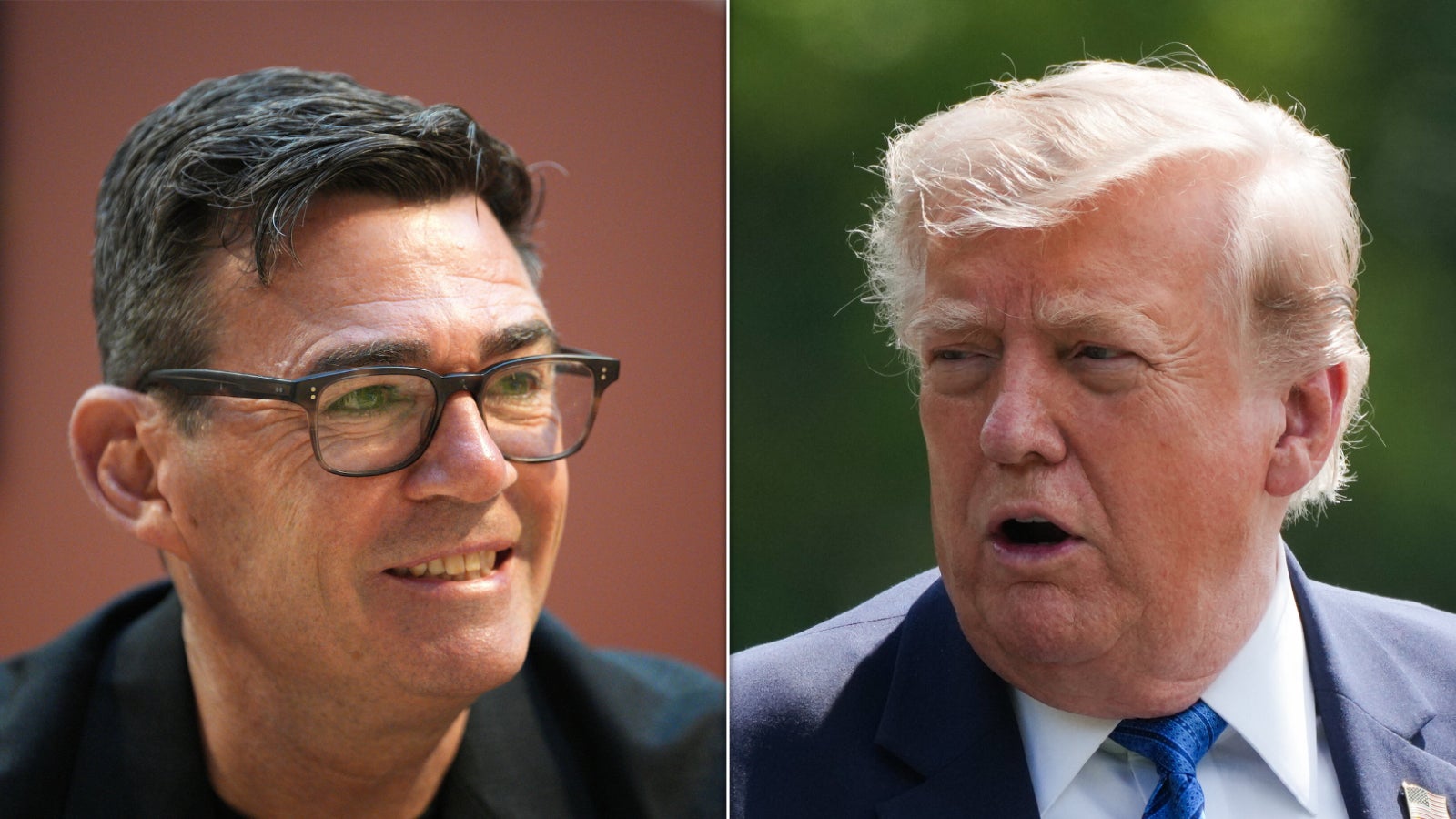
Trump appears to be testing new UK prime minister Andy Burnham, too.

The president has refused to deny reports America could stop supporting Britain’s claims to the Falkland Islands.

If the States did withdraw its backing for the British Overseas Territory – and instead start supporting Argentina’s claim to the archipelago – then it would spell major trouble for the UK-US “special relationship” and trigger Burnham’s first international crisis.

Could Trump be looking to punish the UK for not supporting his offensive on Iran, as a leaked Pentagon email from April suggested?

Or is it his way of forcing the government to spend more money on defence. With Trump, you simply can never tell.

This is not the first time the president has upended international diplomacy, of course – his insistence Greenland belongs to him continues to rile Nato members – but his behaviour does appear even more illogical than usual.

It hardly seems politically savvy to focus on the international stage when Americans are preparing to elect members to Congress in the November midterm elections.

The president may not be on the ballot paper but he needs Republicans to hold the Senate and the House of Representatives to get key legislation passed.

Current predictions suggest the electorate are poised to deliver a brutal blow to Trump and his party by handing control of Congress to the Democrats.

Americans are concerned about the cost of living and elected Trump on the promise that he would put “America First” and bring prices down.

Instead, his war in Iran has led to a spike in oil prices and pushed up the cost of living both in the US and around the world.

There is growing anger that he rarely seems focused on the everyday problems of the very people who voted him into the White House.

So why is he still doubling down on that bizarre decision this week?

Listen to Commons People as we unpack the fallout from the recent Trump drama and why he cannot continue to ignore his domestic problems.

Listen to Commons People, the podcast that makes politics easy. Every week, Kevin Schofield and Kate Nicholson unpack the week’s biggest stories to keep you informed. Join us for straightforward analysis of what’s going on at Westminster.

Share Button

Trump And Burnham: A Budding Bromance Or A Disaster Waiting To Happen?

“Terrific.” That was the word Donald Trump used to describe Andy Burnham this week.

It’s a far cry from the belittling way the US president played down the prime minister’s past job in Greater Manchester by calling him a “mayor of a town” just last month.

Clearly their one and only conversation over the phone on Burnham’s first day in No.10 won Trump over. So could a bromance be brewing?

The president appears to be delighted over what he saw as the PM’s more open-minded attitude towards drilling in the North Sea.

Keir Starmer refused to expand fossil fuel extraction on Trump’s instruction when he was in power while Burnham has vowed to take a “more pragmatic approach”.

The president also loves a winner, and Burnham is still popular within Labour and the wider country right now – while Starmer became the most unpopular PM on record.

However, like Starmer, Burnham is bound by Labour’s 2024 manifesto not to issue any more oil and gas exploration licences.

That means any expansion of the North Sea will likely fall short of Trump’s hopes of “opening up” the whole area.

The PM has avoided talking about the president at length so far, but claimed he won’t be afraid to call him out when he feels it is necessary.

He also refused to say he trusts the president during a BBC interview, though he did invite him to Manchester.

Burnham is perhaps wise to be cautious.

He would not be the first UK prime minister to eventually incur Trump’s wrath over domestic policies – even if they started out on the right foot.

Trump fell out with Theresa May over her “foolish” approach to Brexit, calling her EU deal a “disaster” – despite initial warmth between them.

Boris Johnson was described as “Britain Trump” by the president himself, but they faced some frictions over Chinese company Huawei’s involvement in Britain’s 5G network.

Starmer, initially described as the “Trump whisperer”, bent over backwards to appeal to the president, even inviting him for a historic second state visit to the UK.

But they came to blows over the former PM’s refusal to get involved in the Iran war.

They also clashed over immigration, Nato, Greenland, tariffs, wind turbines and North Sea drilling, meaning they were barely on speaking terms when he left office.

And Burnham – at least, for now – is further to the left than any of those three predecessors, meaning the Republican president is even more likely to disagree with him.

The prime minister’s decision to appoint Ed Miliband as foreign secretary might also be a major obstacle in their relationship.

The Trump administration has reportedly nicknamed him “Miliwatt” already in an apparent dig to his enthusiasm for net zero.

The UK-US relationship may also be put to the test when, as is expected, Trump’s domestic power diminishes when his American supporters turn on him during the US midterms.

That could mean Burnham – if he is still propped up in the UK polls – might be more outspoken if he believes the president looks weaker.

Alternatively, Trump could turn on the prime minister as soon as his honeymoon period is over.

In this week’s Commons People, we look at whether this really could be a strong alliance – and unpick all the potential pitfalls which could undo their relationship altogether.

Listen to Commons People, the podcast that makes politics easy. Every week, Kevin Schofield and Kate Nicholson unpack the week’s biggest stories to keep you informed. Join us for straightforward analysis of what’s going on at Westminster.

Share Button

More Schools ‘Should Be Able To Run Targeted Asian-Style Isolation Systems’

More schools should be able to run Asian-style isolation systems for Covid contacts to ensure fewer people are sent home, a senior Tory has said.

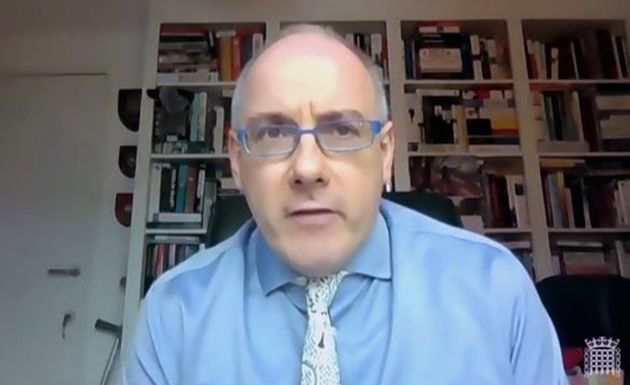
Rob Halfon, who chairs the Commons education committee, suggested that official guidance for schools could be cleared up to allow targeted approaches, rather than forcing whole school “bubbles” to go into isolation if there is a virus case.

With around 385,000 pupils in England absent from school as a result of Covid, Halfon stressed: “We are damaging their mental health”.

The government has suggested it will scrap so-called “bubbles” of schoolchildren, who often all have to isolate if one catches Covid, from autumn.

But Boris Johnson is resisting pressure to move quicker, insisting summer holidays would act as a “natural firebreak” to infections.

Halfon spoke to HuffPost UK’s Commons People podcast during a visit to the Ashcroft Technology Academy in south London, which he said was running a much more targeted Asian style model of isolation.

“When they have a Covid outbreak they do not send the whole school year groups or whole bubbles home,” Halfon said.

“They microtarget the students who have been affected, so they only send a few [home] at a time, a bit like the Asian model in some ways, what goes on in South Korea and so on.

“When I asked them how come you do this, they said they speak to Public Health England, they speak to the Department for Education every time there is such an outbreak and they are advised that they are able to do this.

“So if they are, why are 385,000 kids being sent home?

“I appreciate of course it is very difficult for teachers and support staff absolutely and they are doing a remarkable job considering.

“But clearly the guidance is confusing and schools may be being told different things by different arms of PHE or the DfE.”

House of Commons/PA

Rob Halfon, Conservative chair of the Commons education committee

Halfon acknowledged that it would be difficult to roll out a similar system across the whole country. 

But he said it would be beneficial if more pupils could benefit from the approach.

“Obviously there’s very different circumstances in some schools, the outbreaks may be greater, they may have many staff off sick for Covid or for Covid-related reasons or shielding, so I get that it’s not possible to replicate it.

“But if one school can do it, there must be others who can do it.

“It doesn’t mean every school can do it, but just because every school can’t do it doesn’t mean that… even if five more schools did it.

“It’s got to stop, sending kids home.

“We are damaging their mental health.”

Halfon added: “We are damaging these children by [them] being at home because inevitably they are not learning as much as they would do at school.

“But their wellbeing and mental health is really suffering and it’s putting huge pressure on the parents.

“This has just got to stop, we need our kids back into school.

“People have been vaccinated now, I’m not a lockdown-sceptic, I’m a ‘schooldown-sceptic’.”

Asked why the government did not just scrap the bubble system now, the prime minister told reporters on Thursday: “I understand people’s frustration when whole classes, whole bubbles, are sent home and people are asked to isolate.

“So what’s happening now is Public Health England and the scientists are looking at the advantages, the possibilities, of going to testing rather than isolation.

“They haven’t concluded yet so what I want to do is just to be cautious as we go forward to that natural firebreak of the summer holidays when the risk in schools will greatly diminish and just ask people to be a little bit patient.”

Share Button

Tories Should ‘Manage Expectations’ On ‘Levelling Up’, MP Says

Boris Johnson should “manage expectations” on how long it will take to complete his plan to “level up” left behind communities across the UK, a Tory MP has said.

Kevin Hollinrake, who is Michael Gove’s parliamentary private secretary, said the economic gap between the north and the south-east was comparable to the disparity between East and West Germany before reunification.

He told HuffPost UK’s Commons People podcast that, as in Germany, it would take 30 years to complete the levelling up agenda, which was front and centre in the Queen’s Speech this week but is still posing questions about how the prime minister sees it progressing and how its success can be measured.

Hollinrake suggested that average wages in different regions could be a reasonable measure of the success of levelling up, but warned that it was “dangerous measuring outcomes rather than opportunities”.

The Thirsk and Malton MP also stressed that levelling up was a “huge task” that could take decades to be completed.

Ian Forsyth via Getty Images

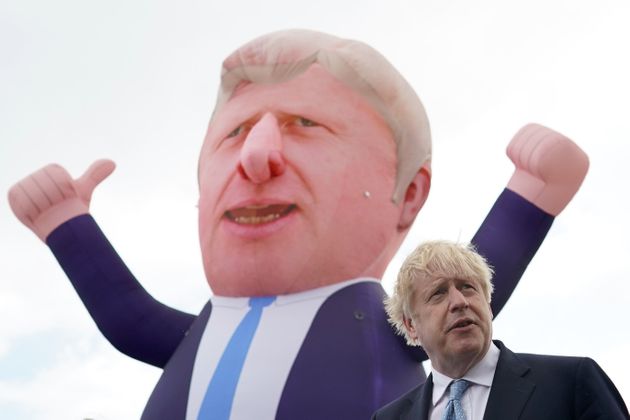
Johnson visits Hartlepool, where the Tories toppled Labour in a by-election last week and a target area for ‘levelling up’ policies

He told Commons People: “Levelling up is really exciting, it’s a big ambition, it’s a huge task.

“The economy disparity between London and the south-east and the north-east in relative terms is as big as it was between East and West Germany prior to reunification – two-and-a-half times – a phenomenally big gap.

“So this is going to take three decades to resolve it, that’s what it took Germany and they haven’t narrowed it completely yet.

“It’s going to take three decades and – two trillion dollars Germany spent on narrowing that gap, we’ve got to be in it for the long haul.”

Hollinrake went on: “I think it’s important to manage expectations, that this isn’t going to happen overnight.

“There are some things you can do really quickly – so yes building a road, a railway or a railway station takes a while to have an economic effect.

“But other things can happen more quickly, such as relocation of civil service jobs – Treasury north coming to Darlington, Cabinet Office going to Glasgow, Michael Gove was there this week, you’ve got the UK Investment Bank coming to Leeds.

“So things can happen pretty quickly and that’s all there now, or just about being put in place now.

“Freeports as well, these tax-free zones will attract a lot of private sector investment.”

One of the quickest ways to deliver on levelling up would be reform of the tax system, Hollinrake suggested.

“There’s some things in-built in the tax system that aren’t particularly fair, council tax is one of them for example. There’s a proportionately higher burden on parts of the country,” he said.

“Very expensive properties in London for example pay a fraction of the council tax we pay in a much smaller house in the north, it just can’t be fair.

“There’s ways you can do things like that, I’m not going to pre-empt what the chancellor might do.

“Business rates I think again are due for reform.

“There are lots of different things we could do to make it a fair and more level playing field, which would then encourage investment in different parts of the country.”

Hollinrake suggested there may be value in measuring the success of levelling up by looking at average wages across regions.

But he stressed that ultimately the agenda’s success should be judged by how much it creates equality of opportunity across regions.

Asked how the success of levelling up should be measured, he said: “Average wages, for example, would be a good measure that we should use.

“But it’s very dangerous measuring outcomes rather than opportunities because clearly not everybody makes the best of their opportunities and it’s got to be about the individual as well as the state.

“In fact, it’s much more about the individual than the state.

“For me, you create a fair and level playing field, a stable framework that encourages investment, and things like infrastructure are really important to do that as well as the tax breaks, and then let people get on with it.”

Share Button