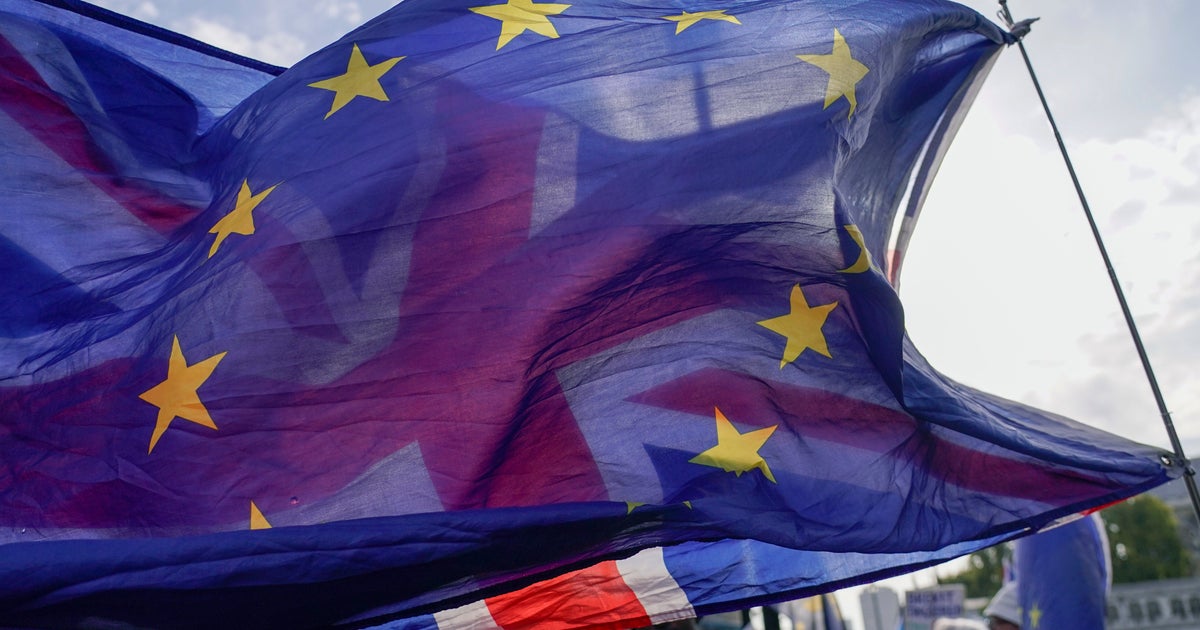
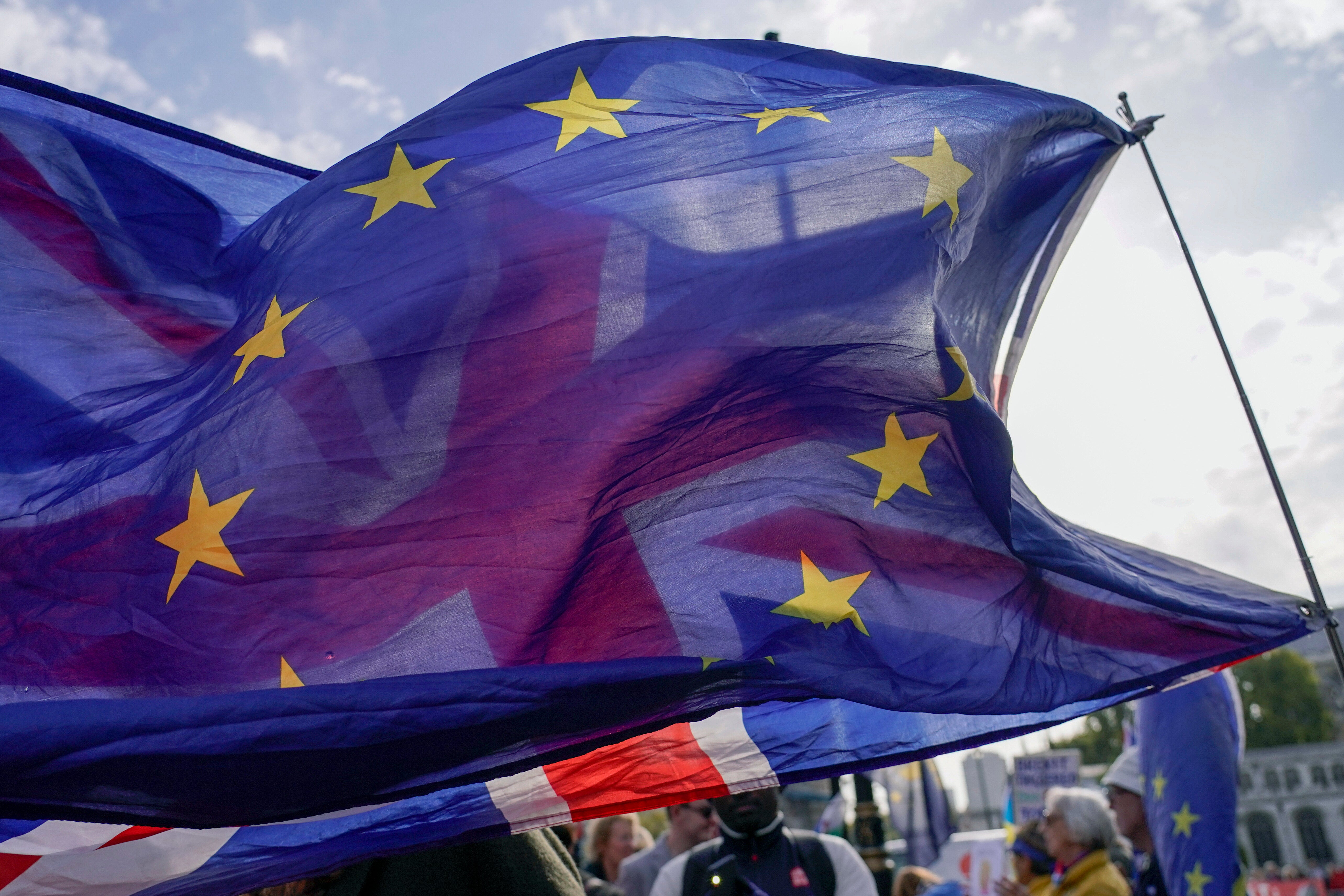
Britain needs to eventually rejoin the European Union, according to a report published today by a leading think-tank.
The Institute for Public Policy Research (IPPR) said reversing Brexit “is the best way for the UK to cope with “Russian aggression, American unreliability and Chinese coercion”.
Advertisement
Andy Burnham has said he wants to agree closer ties with the EU to help boost economic growth at a summit next month.
The prime minister has also said he wants a national conversation on the UK’s long-term relationship with the EU, which will include the option of rejoining the bloc.
Burnham has previously said he would like to see the UK back in the EU in his lifetime.
The IPPR report says becoming an EU member again should be Britain’s “medium-term goal”.
Harry Quilter-Pinner, the IPPR’s executive director, said: “The world Britain built its post-Brexit strategy for no longer exists.
Advertisement
“We are entering an age in which economic strength, security and political influence increasingly depend on scale, and Britain cannot manufacture that scale on its own.”
The UK voted 52% to 48% to quit the EU in the 2016 Brexit referendum, and formally left the block in January, 2020.
But polling released by the IPPR found that 52% of voters now want to join the EU, compared with 29% who want to stay out.
Advertisement
IPPR associate director Laura Chappell said: “Whether it’s protecting households from swings in the cost of living, restarting industry, or keeping us secure, we lack the weight to act alone.
“In today’s world, we can’t take back control while being an outsider in Europe.”
The think-tank said the government would need to take time to build a case for membership, suggesting working with the EU on defence, manufacturing and democratic resilience as steps on the way to full membership.
Quilter-Pinner said: “There is one option which is best for the UK’s relationship with Europe – membership of the EU.
Advertisement
“That does not mean announcing another referendum tomorrow. But this means starting work to move towards this destination, building political support at home and in Europe.”
Listen to Commons People, the podcast that makes politics easy. Every week, Kevin Schofield and Kate Nicholson unpack the week’s biggest stories to keep you informed. Join us for straightforward analysis of what’s going on at Westminster.
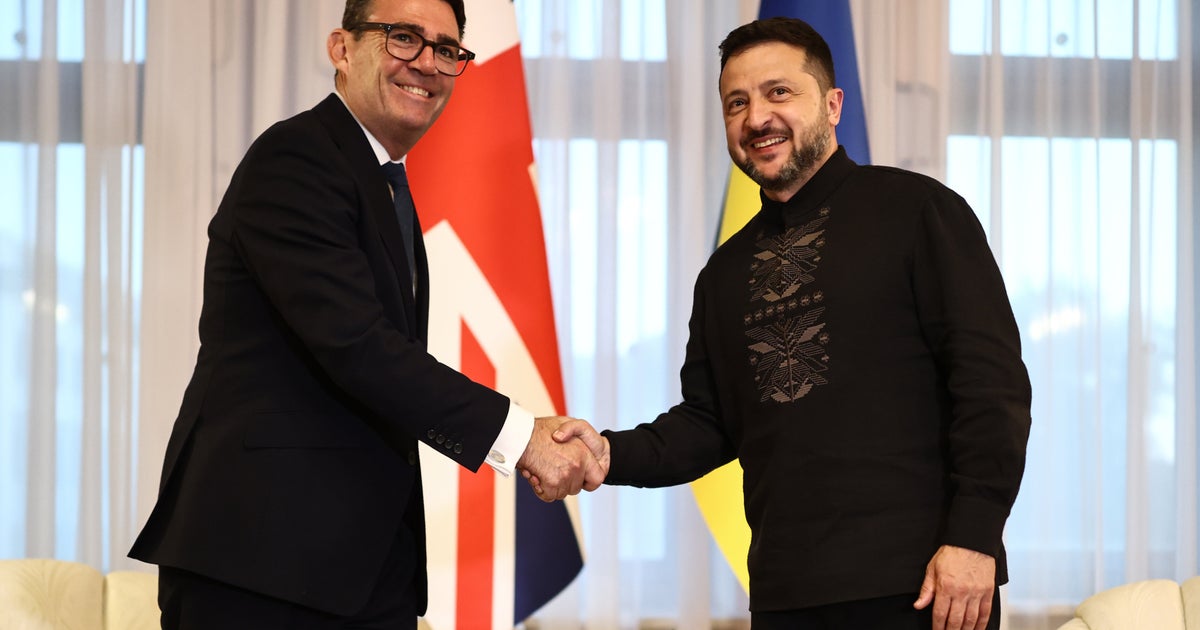
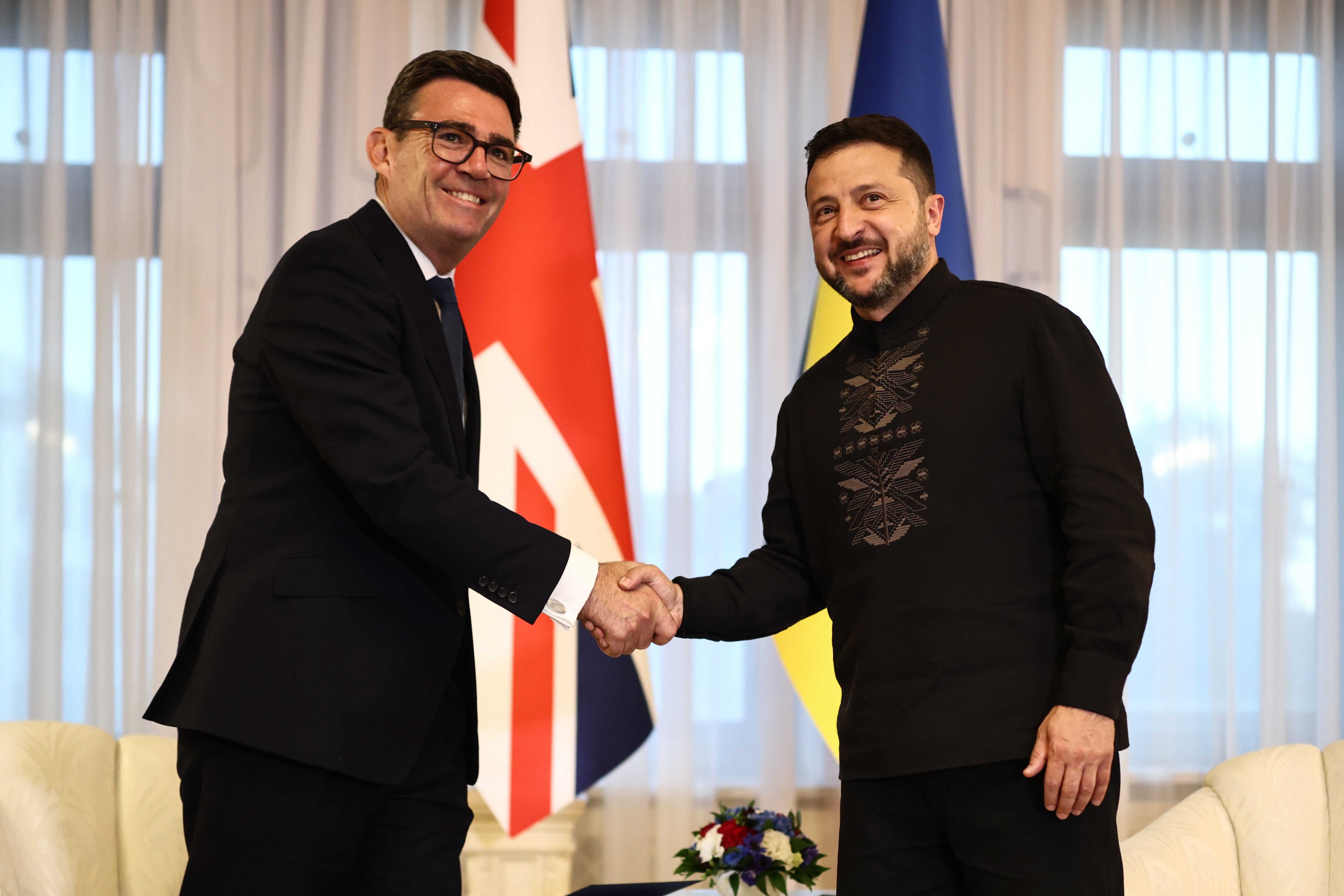
Andy Burnham said that the UK is ready to go “further and faster” in its backing for Kyiv.
That will include £45 million-worth of surface-to-air missiles and urging other countries to join the UK in banning Russian liquefied natural gas (LNG) exports.
Advertisement
On Wednesday, the PM will welcome Zelenskyy to Downing Street for the first time time since he replaced Keir Starmer in July.
Burnham’s invitation for the Ukrainian president to visit No.10, made in a phone call between the pair on Saturday, will be seen as a direct riposte to Trump.
Advertisement
The PM said: “Our rock-solid support to Ukraine is vital for keeping us safe here in the UK and ensuring those on the frontlines have the equipment they need to push back Russia.
“My message to the Ukrainian people could not be clearer, we are with you for as long as it takes, and we will go further and faster in our support to back your courageous fight for peace in Europe.
“It is not just the right thing to do, but it’s the necessary thing to do. Russia’s aggression cannot be allowed to succeed on our continent.”
Advertisement
Chancellor John Healey said: “Conflict in the Middle East and in Europe is hitting people across the world.
“As the full-scale invasion of Ukraine by Putin continues, our commitment to the Ukrainian people is unshakeable.
“I urge partners to back the ban on Russian LNG, like we have done in the UK, to curtail the war chest funding Putin so desperately wants.”
Advertisement
Listen to Commons People, the podcast that makes politics easy. Every week, Kevin Schofield and Kate Nicholson unpack the week’s biggest stories to keep you informed. Join us for straightforward analysis of what’s going on at Westminster.
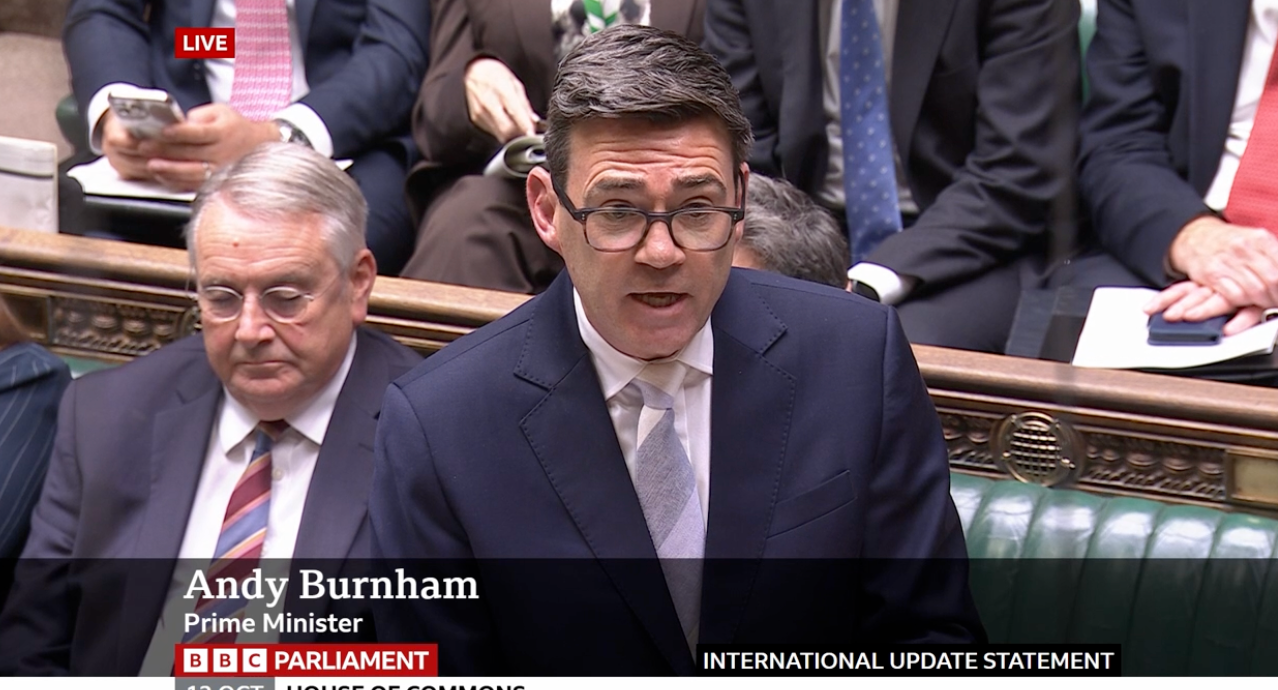
Andy Burnham has denied that he ever suggested Russia successfully interfered in the 2016 Brexit referendum days after appearing to say the opposite.
The prime minister told the Rest is Politics podcast at the weekend: “I asked the question coming to Downing Street, was there interference in the 2016 referendum from Russia?
Advertisement
“And I’ve had the clear answer that yes, there was.”
Minister Stephen Doughty then told Sky News Russia did not succeed in any suspected attempts to interfere with Brexit.
The prime minister’s official spokesperson later told reporters, “it is inconceivable [Russia] did not seek to use the referendum to their benefit”.
However, he said. that added that the result was unsuccessful and Burnham still thinks the end result was legitimate.
Advertisement
Tory leader Kemi Badenoch then asked Burnham about this confusion in the Commons on Monday.
She said: “Where has this come from? We all remember in 2018, the head of MI5 said that there was no evidence that Russia had influenced the EU referendum result.”
She suggested that the PM therefore does not think the result is legitimate.
Burnham replied: “I implied no such thing in my comments on the Rest is Politics podcast. I think she should go back and look again.
“It is a matter of record, that Russian actors sought to interfere in the 2019 general election, and we think it is inconceivable that this was the first time.”
Advertisement
When asked to present evidence of Russian interference in full, the PM said: “I think it’s really important in this moment to be open with people about everything that we’ve lived through in the last decade.
“I have been open, but I am also making sure that Britain is in a position where we do not face the same again.”
🚨 WATCH: Andy Burnham says he “implied no such thing” that Russia swung the EU referendum
“It is a matter of record that Russian actors sought to interfere in the 2019 general election. And we think it is unconceivable that this was the first time” pic.twitter.com/6auGHuYdLT
Burnham also insisted he is not “reopening” the national Brexit conversation after he called for closer ties with the EU.
The prime minister told MPs this afternoon that “the status quo is not good enough” for Britain and that he will be looking to secure a stronger relationship with the EU.
However, Tory MP and father of the House, Edward Leigh, noted that Burnham previously promised not to “re-run those arguments” on Brexit just earlier this year.
Advertisement
Burnham hit back: “I am not reopening the referendum. I respect the referendum result.
“But I will take a pragmatic approach when I can boost growth in the British economy.
“When I can increase cooperation to get a grip on the boat crossings across the Channel.
“I will do those things where I believe it can be in the country’s best interest.
“The deal that I have inherited coming into office represents an opportunity to secure progress on both of those things.”
He said: “It is a dereliction of duty to turn away from that possibility when we can support the food industry we can support farmers, we can get Britain growing more strongly again. That is our responsibility in this house, to serve this country’s best interest, and that is what I will do.”
Burnham said his upcoming summit with EU partners – set to be held next month – “presents an opportunity to make progress on two crucial issues: boosting UK growth and controlling illegal immigration”.
Advertisement
He said deals on the table for the summit could provide a £10 billion-a-year boost to the British economy.
The prime minister also said he would not revisit Labour’s red lines on the EU, telling MPs: “As much as I want to improve growth in the UK, I also want to maintain trust in politics, and I’m afraid I’m not prepared to revisit the red lines in our manifesto,”
Advertisement
Listen to Commons People, the podcast that makes politics easy. Every week, Kevin Schofield and Kate Nicholson unpack the week’s biggest stories to keep you informed. Join us for straightforward analysis of what’s going on at Westminster.
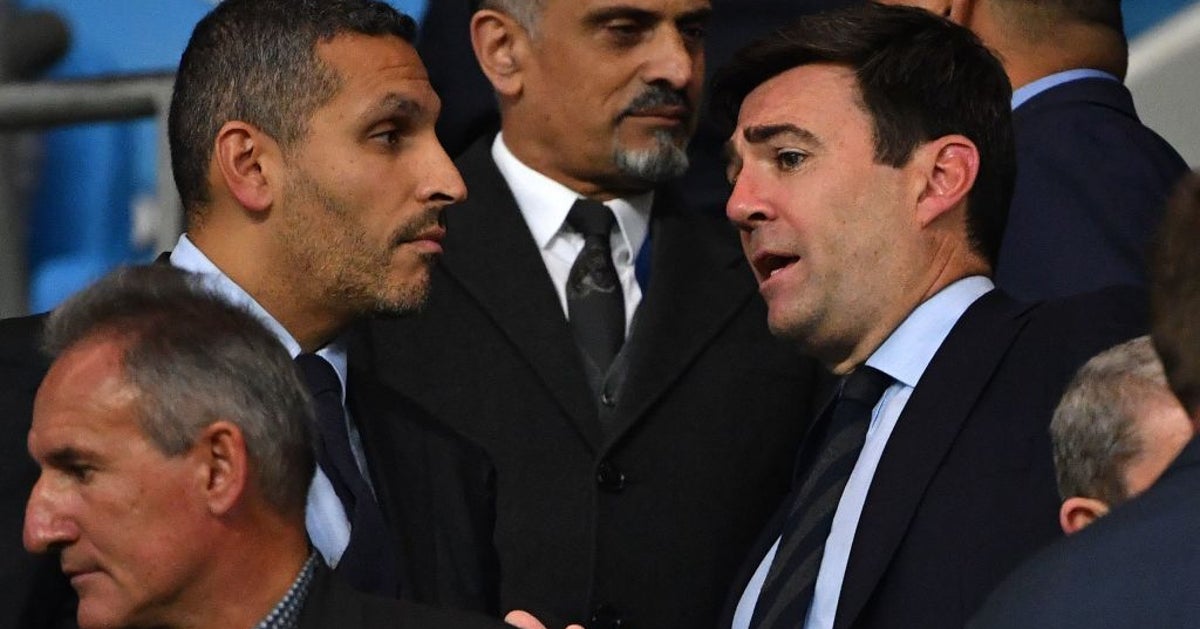
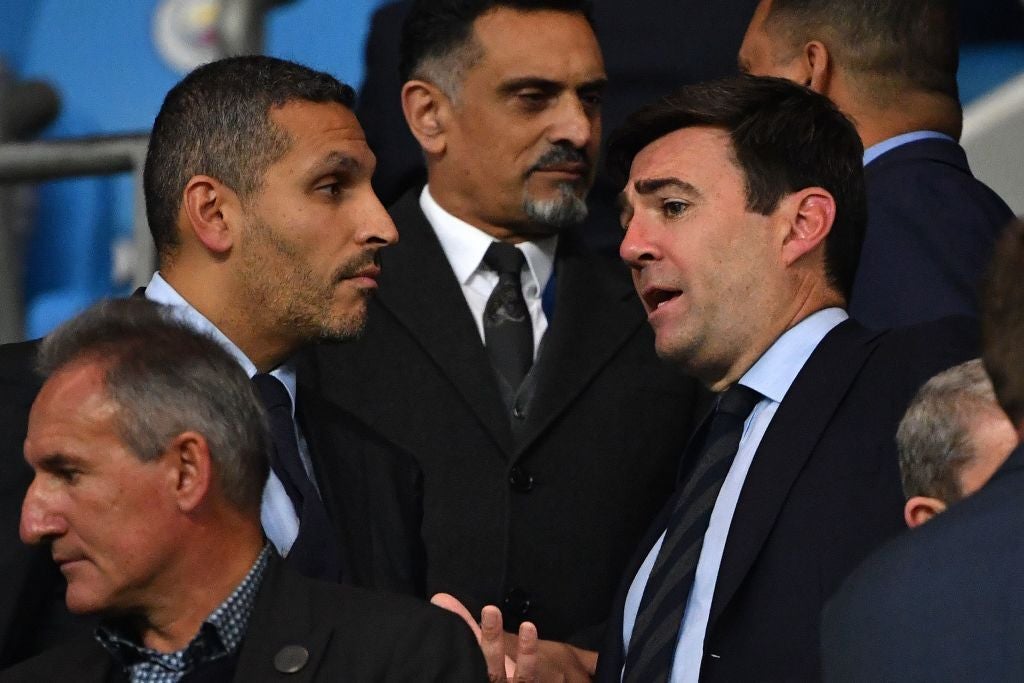
Andy Burnham has been forced to clarify his views on Manchester City after he triggered an angry backlash by saying he was “really concerned” the club’s owners could quit English football.
The prime minister gave his views after City were found guilty of multiple breaches of the Premier League’s financial rules.
Advertisement
Club officials have denied any wrongdoing and are set to appeal against the decision, which was handed down by an independent commission.
If they lose, they face a massive fine and possible relegation from the league.
Asked by the BBC if he was worried the owners could sell the club, Burnham – the former mayor of Greater Manchester – said: “I would be really concerned to lose them.
“They’ve been such a huge partner in the building of modern Manchester. Obviously, the building of Manchester City into the global force that it is.”
Advertisement
Asked if all his dealings with City while he was mayor will stand up to scrutiny, Burnham said: “Oh indeed. I do actually thank the City Football Group and the wider ownership for the money that they didn’t just put into the Etihad and the campus around it but also into the city, but yes of course.”
The PM said there was “a lot at stake … for the football club, for city supporters, for the city of Manchester”.
His comments were condemned by politicians, supporters of other clubs as well as senior figures within football.
Advertisement
Green Party deputy leader Mothin Ali said: “Andy Burnham’s comments are staggering, just one day after saying people should come before profit, he sides with big money over the integrity of a sport that belongs to the people.
“It’s a shame the prime minister appears to agree there should be one rule for the rich and one for everyone else.”
In an attempt to take the sting out of the row, a No.10 spokesman said: “As the prime minister made clear, the initial judgement is serious and there can’t be any suggestion that anyone is above the rules. He also stressed that it is an ongoing independent process.
Advertisement
“It is essential that it is allowed to run its course and the outcome respected. If wrongdoing is established, those responsible should face the appropriate consequences.”
However, the PM was praised by high-profile City fan and Oasis lead singer Liam Gallagher, who posted on X: “There’s only 1 Andy Burnham.”
Listen to Commons People, the podcast that makes politics easy. Every week, Kevin Schofield and Kate Nicholson unpack the week’s biggest stories to keep you informed. Join us for straightforward analysis of what’s going on at Westminster.
In his first Labour conference speech as party leader, the prime minister would leave voters in no doubt that “hope comes from honesty”.
Burnham would be “saying the things politicians usually avoid” because there was no other way to turn around 40 years of failure.
Advertisement
So when he announced that he would “adjust” the pensions triple lock to pay for a new National Care Service, it seemed fairly obvious that he was scrapping a policy which was introduced by the Tories and most MPs now privately admit is unaffordable.
At the moment, the state pension goes up every year by either the rate of inflation, average wages or 2.5%, whichever is greater.
Under Burnham’s plan, from 2030 the inflation and 2.5% element will be maintained, but the wage link dropped.
Advertisement
However, he insisted that the pension would still “hold its value relative to earnings over time”.
That, according to No.10 sources, meant that it was “still a triple lock”. Confused? You’re not the only one.
Burnham’s aides afterwards struggled to explain the nuance of the policy, but insisted it would still save taxpayers £15 billion by 2040.
Even if that is the case, it is some way short of the amount needed to set up a “fully funded” care service.
Advertisement
“This is the deal – a state pension that rises every year, no care charges and a high quality national care service to give peace of mind in later life,” Burnham said.
The PM insisted it was “a good deal for our pensioners and for older people in the 21st century”, but Reform UK were quick to – erroneously – claim it would mean a cut to the state pension.
Burnham also unveiled eye-catching ambitions to replace the current voting system with a system of proportional representation and scrap Margaret Thatcher’s privatisation of the water industry.
Advertisement
Unsurprisingly, the speech was meat and drink to those in the conference hall, who gave Burnham multiple standing ovations and roared with approval as he gave an impassioned defence of the union between England, Scotland, Wales and Northern Ireland.
“You may disagree with some or all of what I’ve said today but I have given you what you often say is missing from politics – honesty, ideas and a clear direction for the country we all love,” the PM said in summing up.
A battle of ideas will ensue between now and the next general election, whenever it takes place.
But the confusion over Burnham’s state pension changes shows he has a fight on his hands to convince the country that he deserves his own five-year term in Downing Street.
Advertisement
Listen to Commons People, the podcast that makes politics easy. Every week, Kevin Schofield and Kate Nicholson unpack the week’s biggest stories to keep you informed. Join us for straightforward analysis of what’s going on at Westminster.
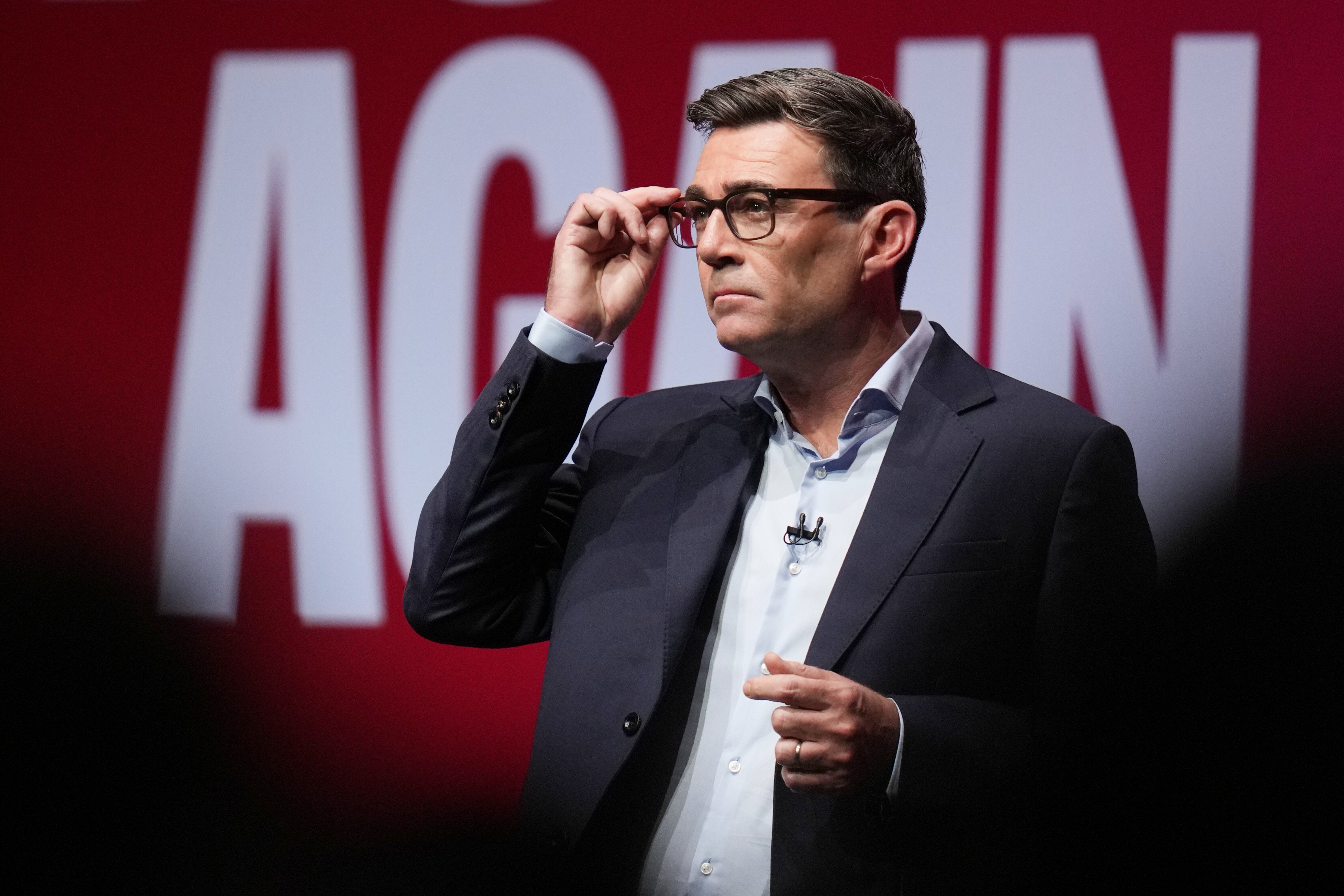
Labour activists queued for hours to take their seats for Andy Burnham’s first party conference speech as leader.
Some were even left locked outside, such was the demand to see the prime minister in the flesh.
Burnham had promised to be “honest” with voters about the challenges which lie ahead as he sets about changing the country.
Advertisement
Burnham did not disappoint as he set out a raft of policy plans he hopes to will carry Labour to victory at the next election.
The PM said: “You may disagree with some or all of what I’ve said today but I have given you what you often say is missing from politics – honesty, ideas and a clear direction for the country we all love.”
Here, HuffPost UK looks at six things we learned from Burnham’s 70-minute speech.
Under plans introduced by David Cameron’s government, the pension currently goes up by whichever is higher out of the rate of inflation, average earnings or 2.5%.
Under Burnham’s reforms, the link to inflation or 2.5% will remain.
But he would only pledge that the pension will “hold its value relative to wages over time”.
No.10 sources later said that meant in some years, the pension would go up by more than inflation and 2.5%.
Burnham said “this change will generate significant savings that we will use to build up our national care service”, although it is still unclear how much that will be.
Advertisement
The new “fully funded” care service, the PM said, would ensure free nursing care for all elderly people in the country once it is up and running.
He said: “This is the deal – a state pension that rises every year, no care charges and a high quality national care service to give peace of mind in later life.
“I am going to go out and argue for that – a good deal for our pensioners and for older people in the 21st century.”
Advertisement
Water In Public Hands
Mr Burnham vowed to strengthen public control of the water system with a Bill that will repeal “Margaret Thatcher’s ideological ban on public ownership of water companies”.
He said that will “start a 10-year journey to a very different water system”, giving local leaders new powers to hold water companies to account and closing loopholes used to pay big bonuses.
The Labour leader described the water industry as a “symbol of what has gone wrong with Britain” in which “shareholders never lose and the public never win, from which some have syphoned out easy money while the public picked up the bill for the sewage in our seas”.
Advertisement
Voting Reform
The next Labour election manifesto will contain a pledge to overhaul the electoral system “so everyone’s vote counts and everyone’s voice is heard”, Burnham declared.
He said the first past the post system is no longer fit for purpose as he slammed the “political turbulence” which has seen Britain have seven PMs in 10 years.
Replacing it with a system of proportional representation will be fairer, Burnham insisted.
In a clear reference to Reform UK, he said: “We will all have failed in our public duties if we carry on as we are and open the door of No.10 to a divisive government on 30% of the vote or less.”
He said SNP leader John Swinney’s claim that Burnham would be the last prime minister of the UK made him “utterly determined to prove him wrong”.
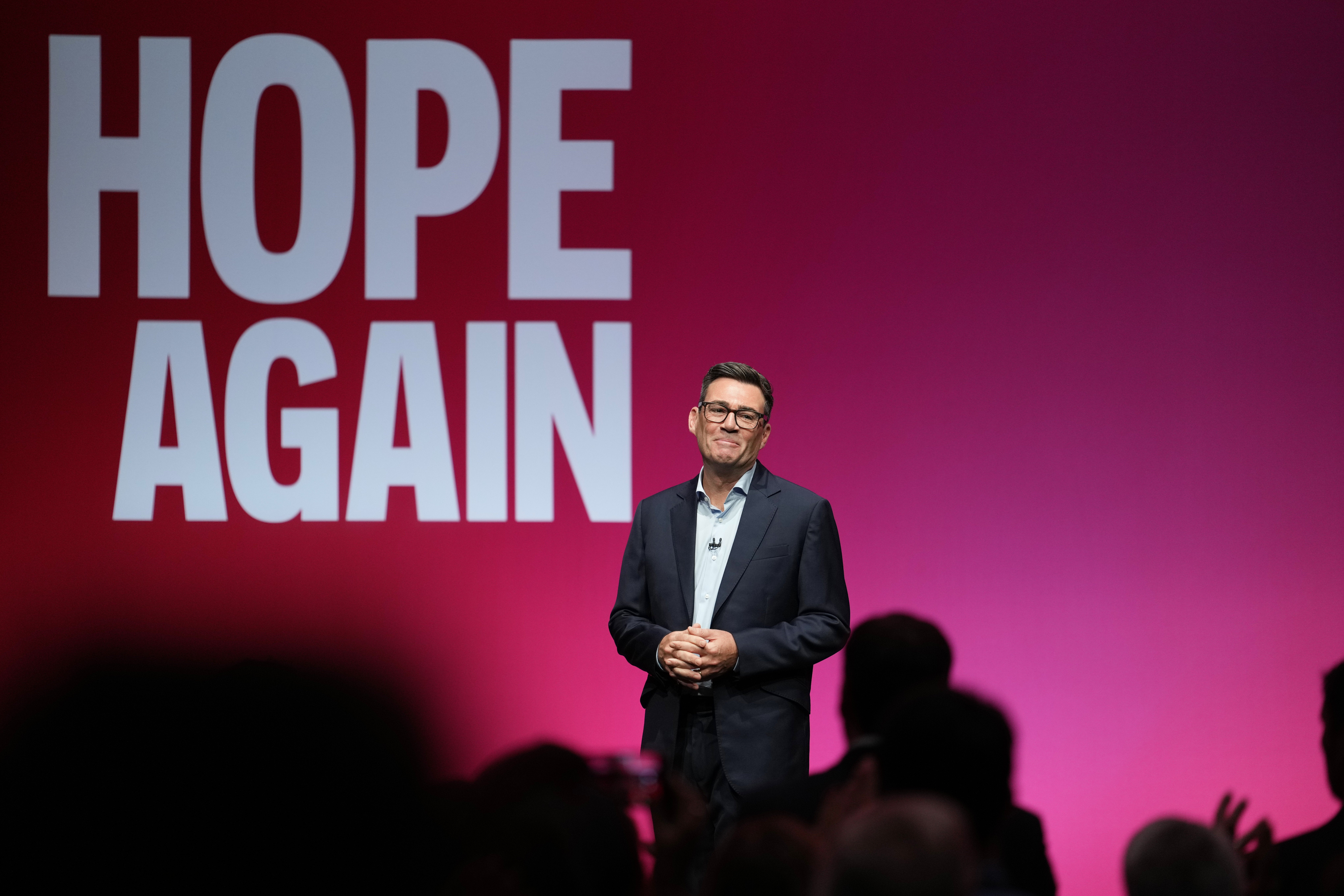
Fighting back tears, Burnham said: “Whatever its flaws, this country gave my dad a good life. And it has given his sons opportunities he didn’t get for himself.
Advertisement
“He recognised that and was grateful for it and so proud of what Nick, John and I did with them.
“If only, if only, he had been able to appreciate that moment with the family on Downing Street.
“The son of a man who failed the 11-plus becoming prime minister.”
… But Hates Brexit (And Plans To Fix It)
The PM included the vote to leave the European Union among a list of decisions which he said had damaged the country, alongside “deindustrialisation, deregulation, privatisation and austerity”.
Brexit, he said, “hasn’t given us control”, instead “we’ve lost some of the control we had over our economy, as a decade of low growth has put us in a weaker position”.
“Brexit has done more harm than good,” Burnham said.
Later in the speech, the prime minister said he wanted to explore much closer ties with Brussels.
He promised to set out different options for the UK’s relationship with the EU in the future “and I will see if we can find consensus around one which will give us clarity about our position and the future of the continent that we live in”.
Advertisement
Great British Grid
As part of his attempts to bring down the cost of living, the PM said the government will set up a publicly-owned Great British Grid to improve competition in the energy sector, speed up connections for businesses and drive down bills.
Burnham said: “Within 10 years, I want our energy costs to be in line with other nations in Europe. That means we must reform a broken energy market so it serves the public interest.”
Listen to Commons People, the podcast that makes politics easy. Every week, Kevin Schofield and Kate Nicholson unpack the week’s biggest stories to keep you informed. Join us for straightforward analysis of what’s going on at Westminster.
Labour members will start gathering in Liverpool this weekend for their annual conference with a noticeable spring in their step.
The party now has a confirmed, if slight, lead in the opinion polls as Andy Burnham continues to enjoy a honeymoon period after replacing Keir Starmer as Labour leader and prime minister in July.
Advertisement
His optimistic talk of putting “hope in every heart” appears to have resonated with a beleaguered electorate weighed down by more than a decade of austerity, stagnant economic growth, rising prices and political turmoil.
The so-called “Burnham Bounce” has also coincided with a downturn in the fortunes of Reform UK, whose own poll numbers have fallen since May, when the party enjoyed election success in England, Scotland and Wales.
Investigations into the financial affairs of Nigel Farage and his party have cut through with a public who, just a few months ago, seemed to be preparing to elect a Reform government.
Advertisement
It is all a far cry from 12 months ago, when the Labour conference was a downbeat affair as Starmer’s government lurched from scandal to disaster.
Deputy PM Angela Rayner had been forced to quit just weeks before over her tax affairs, forcing Starmer into a clumsily-handled and deeply unpopular reshuffle.
That was swiftly followed by the sacking of Lord Mandelson as the UK’s ambassador to Washington over his friendship with the convicted paedophile, Jeffrey Epstein.
Advertisement
Ironically, the high point of last year’s conference for Starmer was his success in seeing off Burnham’s own failed attempt to seize the initiative.
The then mayor of Greater Manchester was relentlessly attacked by Starmer loyalists for saying in a pre-conference interview that the UK must “get beyond this thing of being in hock to the bond markets”.
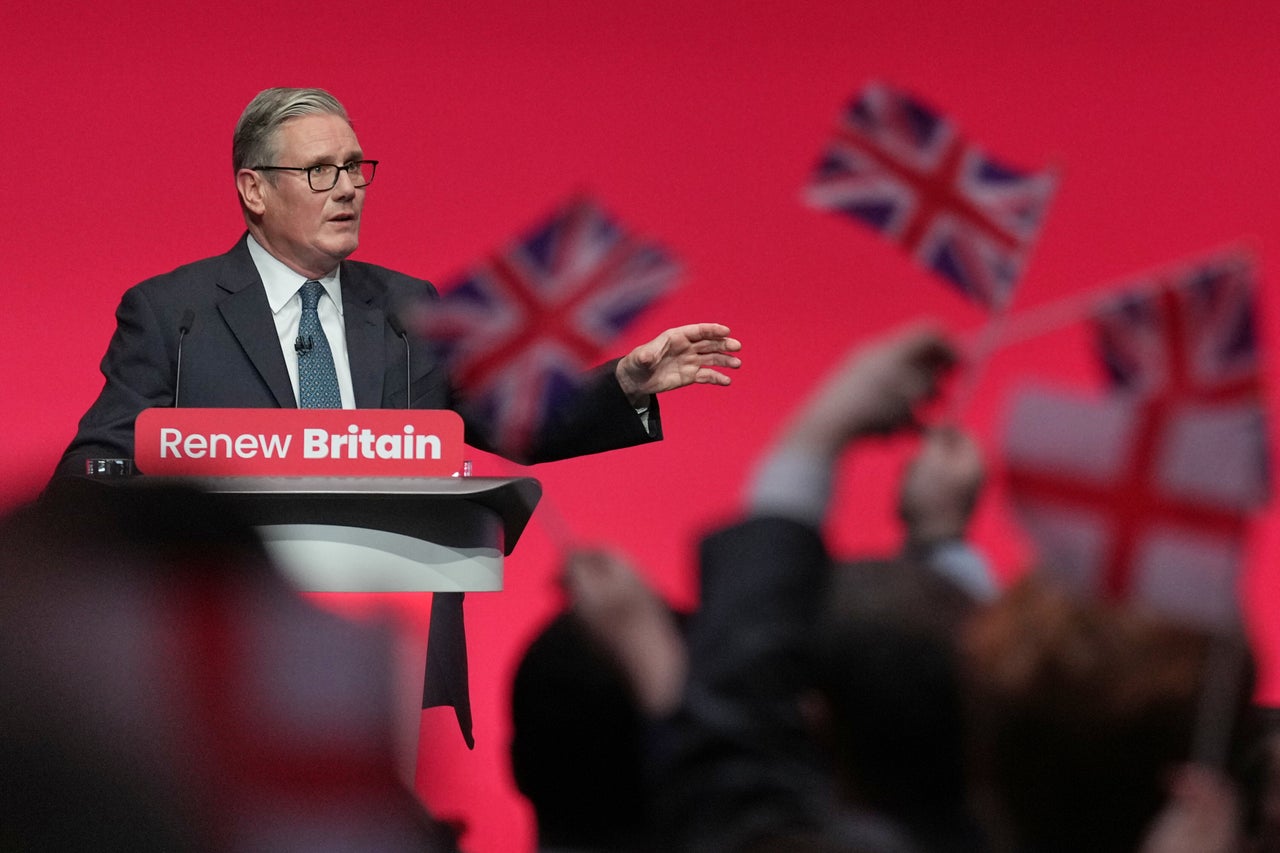
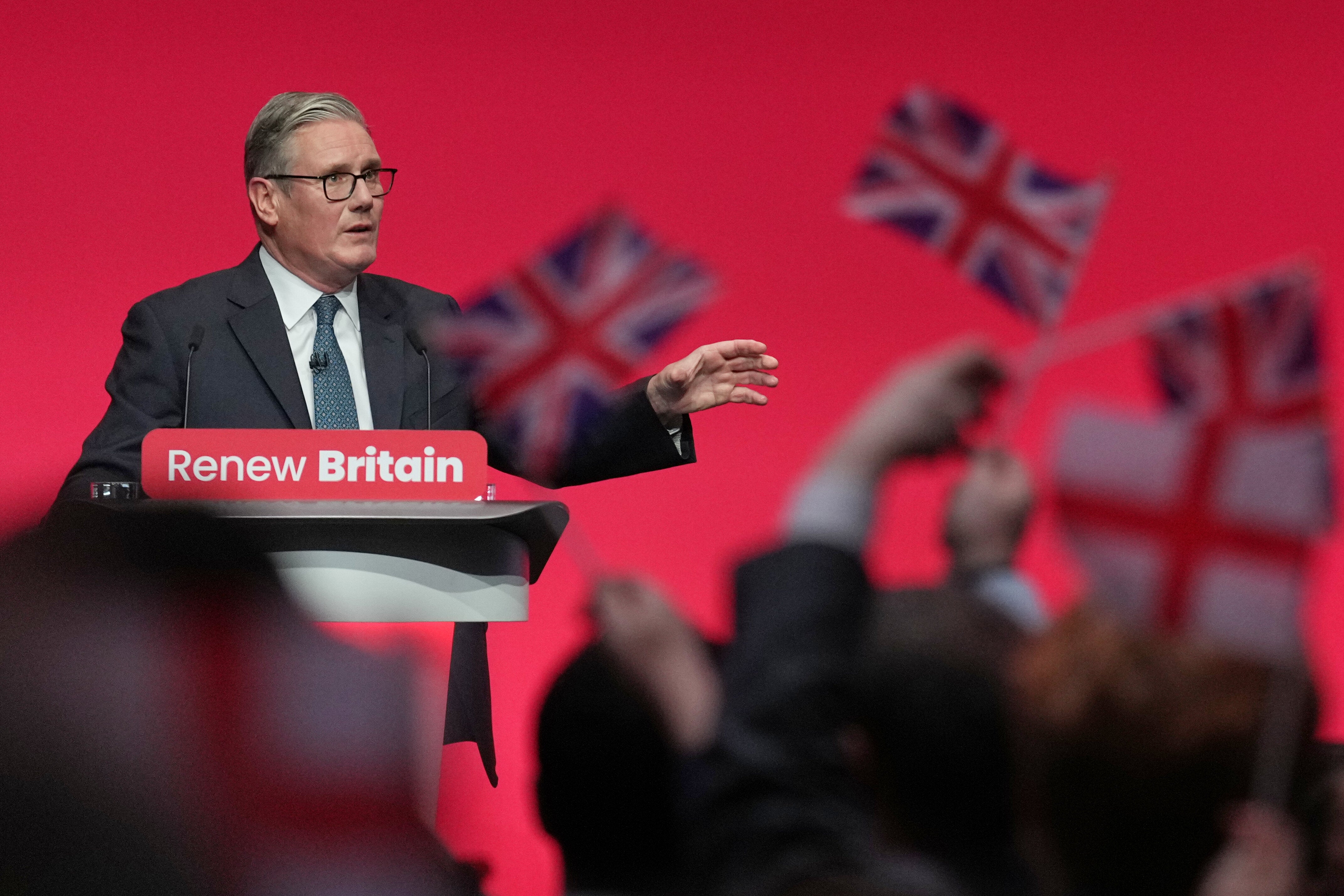
Keir Starmer gives his keynote speech at last year’s Labour Party conference in Liverpool.
via Associated Press
Advertisement
Although a chastened Burnham ended up leaving the conference early, just six months later he became MP for Makerfield and the PM-in-waiting.
Now, much of the talk going into this year’s event is not whether Burnham will become prime minister, but whether he would attempt to secure his own five-year mandate from the public by calling an early general election.
Nevertheless, that is unlikely to stop some from urging Burnham to go the country either next year or in 2028, should Labour’s poll lead grow.
According to the Telegraph, several of the PM’s No.10 advisers believe he should go to the country in the spring, but that was disputed by others in his inner circle.
“Utter bollocks,” said one senior Downing Street source when asked by HuffPost UK if an early election is on the cards.
Advertisement
“The PM is a man focused and determined to change the country. The only people raising the prospect of an early election are those conducting as a subtle-as-an-elephant Tory whispering campaign.”
Another No.10 source said reports of an early election were “worse than bollocks, it’s embarrassing clickbait”.
Those pushing an early election point to two mega-polls published in recent days which show Labour emerging from an early election as easily the largest party, ahead of the Tories and Reform.
Advertisement
However, in both scenarios, the party would lose its majority, leaving Burnham reliant on the support of the Lib Dems and other left-of-centre parties to get his programme through parliament.
Chris Hopkins, political research director at pollsters Savanta, told HuffPost UK: “Labour going for an early election based on these latest polls means two things: Labour loses hundreds of seats compared to 2024, and it’s an admission from Andy Burnham that he doesn’t think he can further improve Labour’s fortunes.”
Perhaps unsurprisingly, Labour MPs – many of whom have only been in the Commons for a little over two years – are less-than enthusiastic about the prospect of an snap election that would see at least 100 of them lose their seats.
Advertisement
One Cabinet minister said: “If I was Andy, I would be very reluctant to call an election because right now he’s got 400 Labour MPs.
“No matter that happens, if you wake up every morning and you’ve got 400 MPs and a big guaranteed majority, you’re in a good place.
“If you look at the sweep of Labour history being in this position doesn’t happen very often, so I’d be very careful about gambling with that.”
Advertisement
A Labour backbencher was equally clear in his opposition to an election now.
“I don’t want to hear him announce a general election,” the MP said. “I don’t think the country’s ready for it and voters certainly wouldn’t thank us for it.”
Another minister said: “The polls are simply too volatile right now to justify an early election.”
A Labour source added: “I can see why an early election would be tempting when you’re caught up in party conference.
“But the public don’t want one, and voters wouldn’t thank Andy for calling one.”
Burnham is still writing his conference speech, which he will deliver to the party faithful on Tuesday afternoon.
Advertisement
He has been writing it himself “in snatched moments on trains, planes and in his car,” according to one No.10 aide.
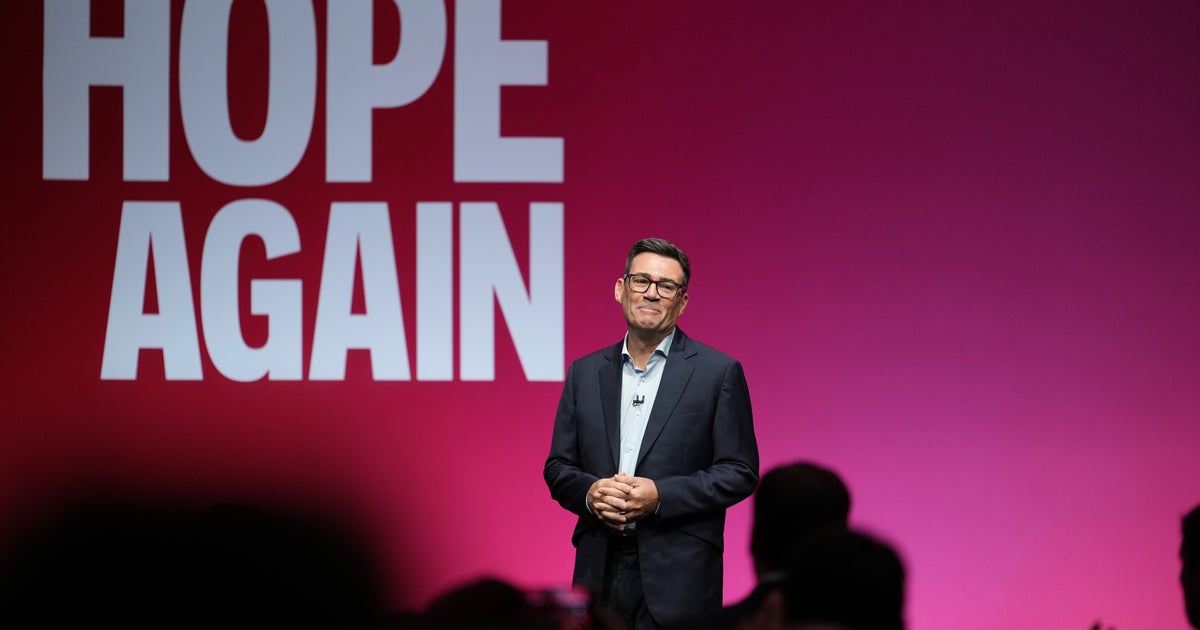
The conference slogan is ‘Hope Again’, and the PM plans to deliver a message of optimism to the country, explaining how he plans to get a solve long-standing problems like youth unemployment and the housing crisis.
“People know what the problems are facing the country, but they want to know what the government is going to do about it,” said one Downing Street insider.
Advertisement
“They want to be given hope about the way forward and this is the PM’s opportunity to set that out.”
But a senior Labour figure warned that the real challenges for Burnham will come when the political caravan has packed up for conference season and gone back to Westminster.
“There’s no doubt Andy will have a great conference,” he said. “It’s in Liverpool, it’s his first one as leader and he’ll make a good speech.
“But the real business will happen when he gets back to Westminster the week after. That’s when things will get real for him.
Advertisement
“There’s the Budget next month, defence spending, the growing threat from Russia, and his 10-year plan.
“His diagnosis of the country’s problems has been good, but voters will judge him on how he plans to fix them.
“The danger of conference is that the party gets too high on its own supply. They shouldn’t mistake the conference hall for the country, because there’s a world of a difference between the two.”
Advertisement
Listen to Commons People, the podcast that makes politics easy. Every week, Kevin Schofield and Kate Nicholson unpack the week’s biggest stories to keep you informed. Join us for straightforward analysis of what’s going on at Westminster.
Andy Burnham has insisted the next general election will not take place until 2029.
The prime minister moved to kill off mounting speculation that he was preparing to call a snap poll next spring.
Under parliamentary rules, the next election must take place in 2029 at the latest.
In an interview with ITV Calendar, Burnham was asked if that was when it would happen.
He said: “Well, yes, that’s that’s when the next election will be. All of this speculation on an early election, I can knock that dead.
Advertisement
“You know people want me, new in office, to be getting on with the job of delivering on the things that we’ve discussed in this interview rather than putting self-serving politics before that, which was what I would be doing if I call an election. I’m not going to do that.”
In a separate interview with BBC East Midlands, the PM also ruled out the chances of a general election taking place at the same time as local elections scheduled for next May.
Labour has enjoyed a boost in support since Burnham replaced Keir Starmer as prime minister in July, fuelling rumours that he is tempted to call an election to secure his own five-year mandate.
Advertisement
Two mega-polls published this week showed Labour winning most seats at an election held now, but they would also lose more than 100 MPs and their Commons majority.
Listen to Commons People, the podcast that makes politics easy. Every week, Kevin Schofield and Kate Nicholson unpack the week’s biggest stories to keep you informed. Join us for straightforward analysis of what’s going on at Westminster.
Listen to Commons People, the podcast that makes politics easy. Every week, Kevin Schofield and Kate Nicholson unpack the week’s biggest stories to keep you informed. Join us for straightforward analysis of what’s going on at Westminster.
Andy Burnham has accused anti-migrant protesters who took to the streets of Dover and Portsmouth at the weekend of representing “the politics of poison”.
The prime minister told a meeting of Labour MPs and peers that the party must “bring hope to a divided country”.
Advertisement
His comments are the strongest yet in response to the demonstrations against asylum seekers crossing the English Channel from France.
On Sunday night, another protest took place after around 140 migrants in a single dinghy were rescued in the English Channel as it headed for the Hampshire coast.
Advertisement
The protesters, many of them wearing masks, said they were determined to prevent authorities from transporting the migrants to the Manston processing centre in Kent.
They blocked traffic along the road leading away from Eastney Marina, with photos showing police carrying riot shields forming a line and protecting a number of coaches that were parked up.
Addressing a meeting of the Parliamentary Labour Party (PLP), Burnham said: “There’s a lot at stake and it requires us to counter fear with positivity and hope. We have a responsibility in the times that we’re living in. It’s a solemn responsibility to prevent the politics of poison seeping into our streets.
Advertisement
“We are here to speak to the politics of hope and of positivity.”
He added: “We have to fulfil our historic mission all over again and bring hope to a divided country. To lift people and make them feel that things are possible. That we can make people’s lives better. Make them feel that politics can work.
“We can give people a sense of positivity again. We can change this country for the better. Never accept the narrative that there’s nothing we can do.”
Listen to Commons People, the podcast that makes politics easy. Every week, Kevin Schofield and Kate Nicholson unpack the week’s biggest stories to keep you informed. Join us for straightforward analysis of what’s going on at Westminster.