The COVID Omicron Surge (and Why I Got Vaccinated)

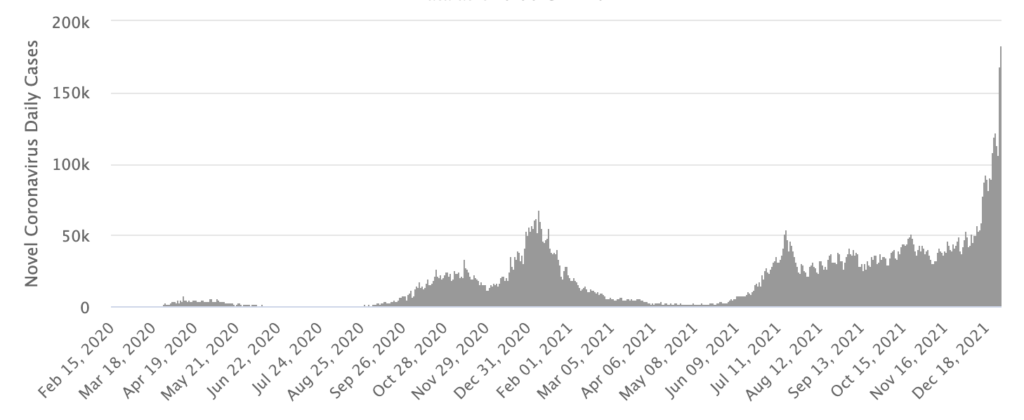
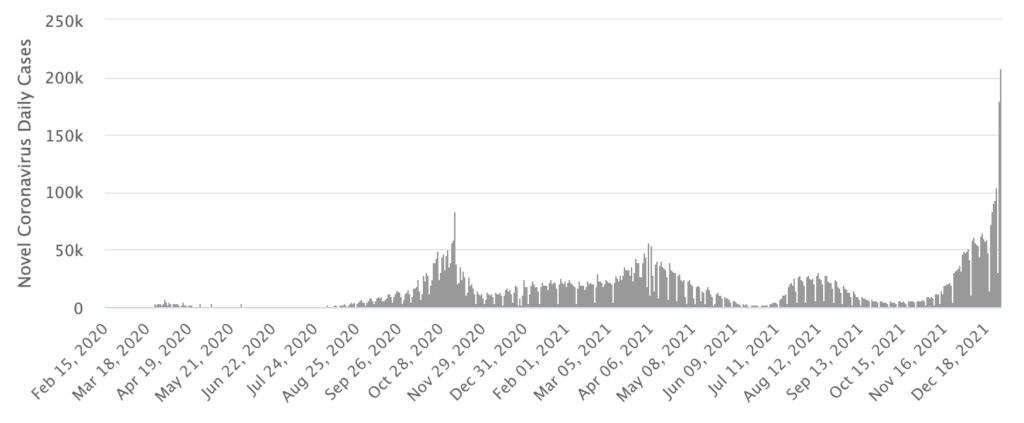
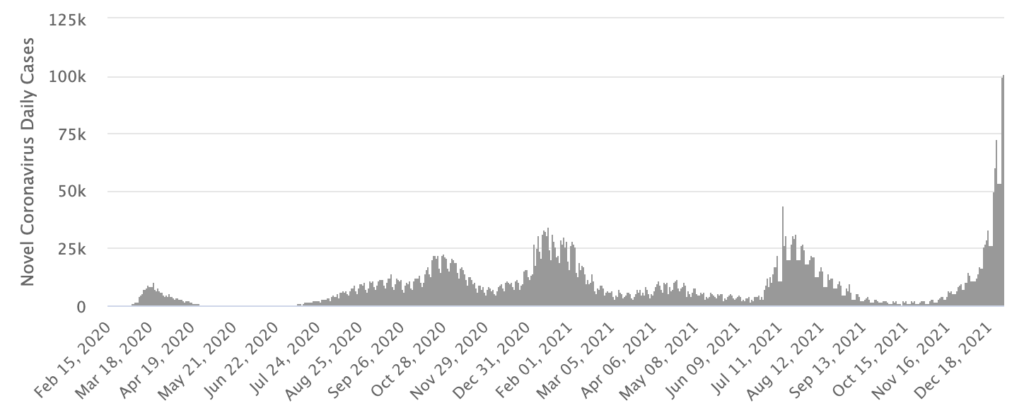
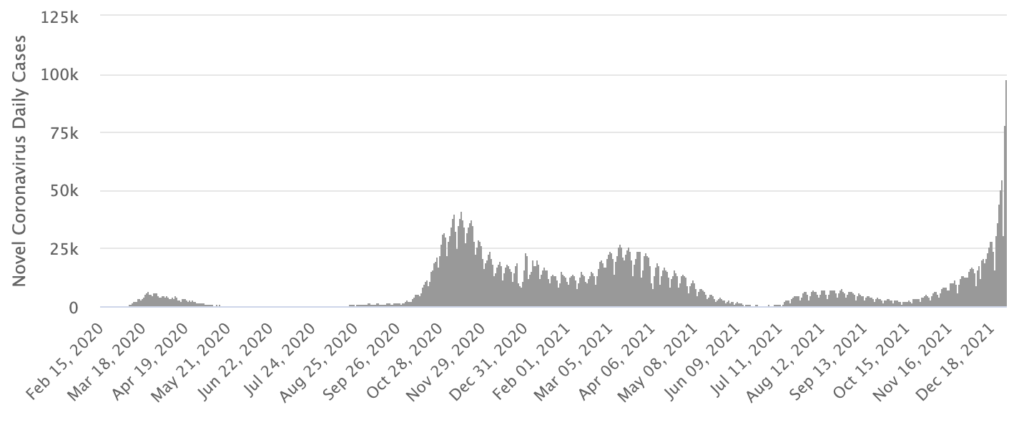
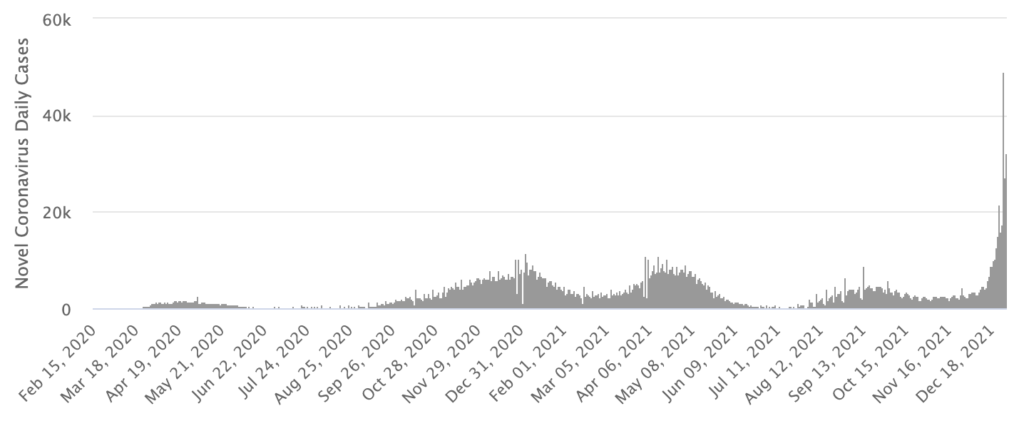
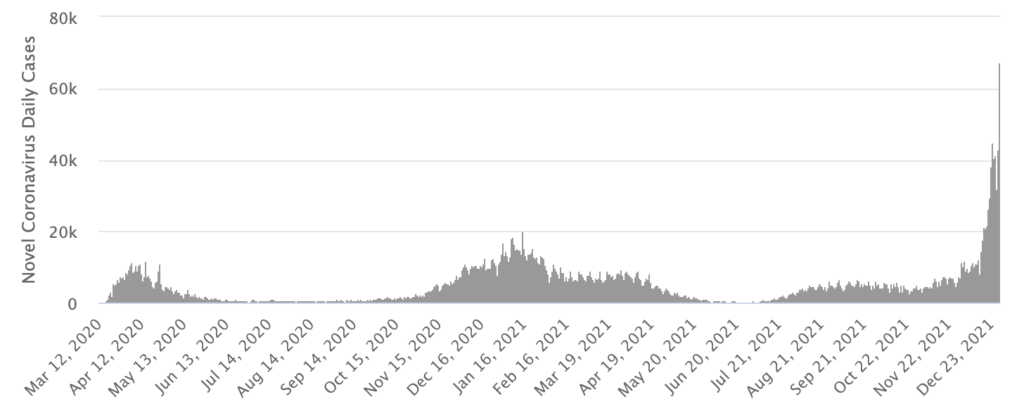
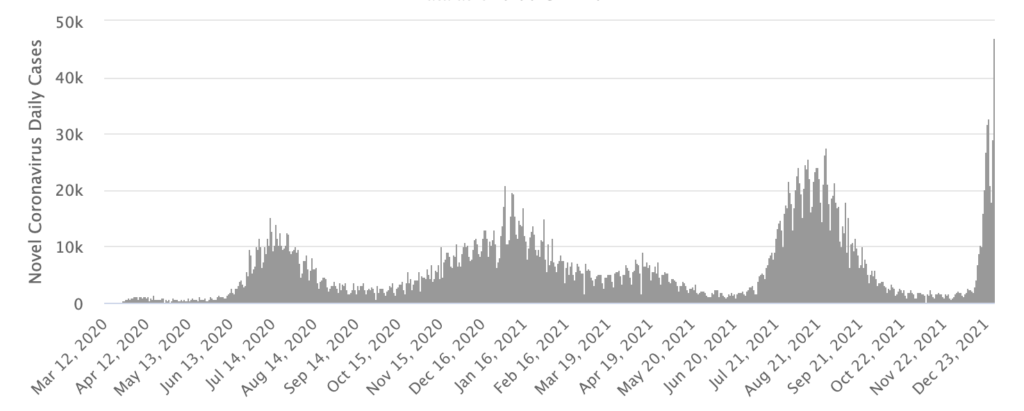
The current COVID surge is bigger than ever by a lot, particularly in Europe and North America. The daily infections rate blew previous records away yesterday in many places.

Here are some telling graphs showing daily new cases in some countries. Note how quickly the latest spike has shot up.

United Kingdom
France
Spain
Italy
Canada
USA
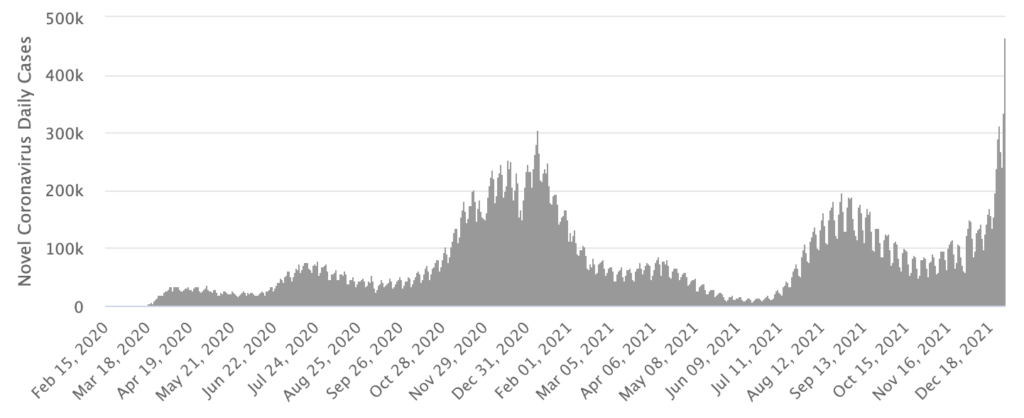
COVID is especially rampant in New York and Florida right now. The current surge makes New York’s previous surges look like little speed bumps. Those two states combined added more than 114K new cases yesterday, both hitting all-time records.

New York
Florida
Nevada

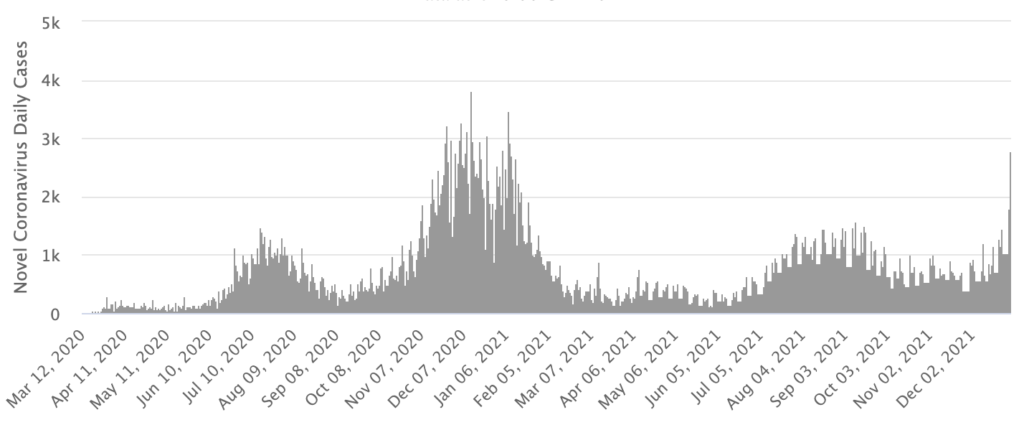
My home state of Nevada is starting to surge again as well.
California

Here’s neighboring California, which has a similar pattern to Nevada, except they have almost 40M people while Nevada has about 3M.
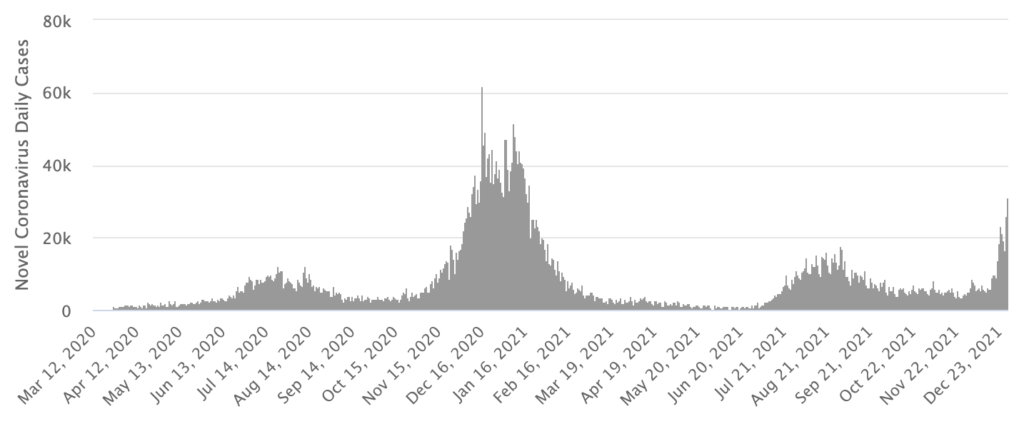
So in many places, there’s more contagious COVID out there right now than ever, and it’s still increasing rapidly.

Vaccination

Rachelle and I got our first vaccine shots on April 10 and May 8 (basically as soon as we could), and we got the booster on December 22. All three were the Moderna version.

The first shot was the easiest. I only had a little bit of arm soreness.

The second shot was the worst, with each of us being knocked out energy-wise for about 24 hours, except that Rachelle was laid up for the first day while my worst day was the second day. Within 48 hours though, we both felt fine.

We also had some fatigue from the booster shot, but it was milder than after the second shot.

As far as we know, neither of us has gotten COVID, but a lot of people we know have gotten it, including some CGCers. Some have had pretty mild cases while others had a really rough time. Some friends have lost family members to COVID.

Why I Got Vaccinated

I like to make decisions based on looking at the objective and the subjective sides. Normally I find the most clarity on the subjective side, so I’ll share a little about how I made this decision.

The objective arguments for and against vaccination are already pretty well presented by society, so I’m sure you’ve encountered an abundance of that by now. I’m not going to rehash those arguments here, partly because I don’t find that side the most interesting to consider.

What I did consider was which of the objective stories I found to represent the most interesting invitation to explore. Since I don’t have the means to personally prove or disprove anything about vaccination – it’s not like I have a bio lab in my garage – I could frame it as a question of whom to trust. But that type of framing is still too objective and not particularly helpful. I could spend weeks investigating and still not have a clear winner. It would be exhausting to try to make every meaningful decision that way.

A better subjective framing is to consider which story invitation looks most interesting or appealing. Which potential storyline do I want to personally participate in? Where do I want to take my story next?

One story aspect that appealed to me was regarding vaccination as a form of biological education. I’d be giving my body a taste of what’s coming up, so it can prepare itself. I was curious to see what the vaccine would feel like and how my body would respond to it. I liked the idea of pre-teaching my body something about the virus. I’d rather be biologically more prepared than less prepared. I like to explore, and vaccination seemed like an interesting way to let my body explore how it wants to relate to the virus.

By contrast I found the potential unvaccinated story lines to be unappealing. I probably would have gone that route in my 20s since it would have appealed to my rebellious side back then. I’d have gladly pushed back against society’s demands. Today I feel that that the rebel part of my story has run its course, so I don’t consider that to be interesting story today. I find that kind of story pathway too boring, predictable, and cliché. These days I prefer invitation into more refined and interesting storylines. I don’t have the same story tastes that I did when I was younger.

One reason I choose vaccination is that it quickly moves me through potentially boring parts of the story, so I can focus more attention on the interesting bits. By getting vaccinated I put the vaccination question to rest quickly. There’s nothing more to decide about it since I’ve already done it. I don’t have to waste any energy on fussing over whether or not to do it. This frees up mental and emotional resources that I can invest elsewhere.

Then I can look deeper into the big picture storyline that’s playing out in the world. The simulation is making a big, disruptive move here. Why? What’s the invitation in this shift? These are questions I find fascinating and very worthy of consideration. I’ve made numerous shifts in my life by pondering them, and I’ve been seeing a great deal of cooperative flow from reality in response.

One way I like to assess how well my story is doing is by how much life seems to be cooperating with my decisions. If I’m out of sync with life, my progress gets bogged down, and it feels like I’m swimming against the current. I felt that if I went the unvaccinated route, I’d be swimming against the tide. Reality was dropping plenty of hints that this would be an invitation into a very resistance-filled story path, and we’re seeing that play out today, such as with vaccine mandates. I looked at that branch of storylines and thought, “Blech! No thanks!”

On an objective level, the world seems like it’s been going kittywampus. But I have a deep and abiding trust in the flow of life since that’s the most permanent relationship I can invest in. I know that the objective story is just the surface, and there are much deeper happenings beneath that layer. The subjective layer of life has been unfolding in some really fascinating ways lately. I love where the story flow is going there. I’m glad that I didn’t choose to thrash around with the surface story in this case. I found much juicer invitations beneath that layer.

For example, since Rachelle and I have been spending a lot of time at home, we’ve invested more social time in Conscious Growth Club. There have been CGC Zoom activities pretty much every day this month, including playing games online, watching movies, and doing various activities together.

This week we’ve just begun putting together a mastermind group of members who want to invest in building up their YouTube channels for 2022 and beyond. That aligns nicely with many members’ lifestyle and business goals.

There’s a lot of interesting story playing out socially within CGC, and it feels like we’re getting better at coordinating our growth experiences, like our stories are synchronizing more than usual.

I feel like the COVID situation has been a gift. It blocked some avenues but presented an invitation to go deeper in different directions. In order to properly invest in these other storylines, I felt it was wise to speed through the vaccination chapter, so I could get to the good parts of the story sooner.

Subjective Decisions

I find that when I give a lot of thought to the subjective aspect of life, pondering the meaning and story aspects of key decisions, the overall flow of life is so much better, and I find beauty even in chaos.

When you get hung up trying to make decisions by weighing objective factors, I recommend flipping over to the subjective side. Consider that you’re living in a simulation and that your relationship with the simulation is the most important relationship of all because it’s your #1 most enduring relationship. Hence you’ve got to do your best to keep that relationship strong and healthy no matter what happens objectively.

What binds the objective and subjective viewpoints together is the lens of story. A story has objective events, and it also includes the inner experience of the characters. So a great shortcut to making good decisions is to consider how your decisions will affect the story flow of your life.

How will your decisions affect events? How will your decisions affect your inner experience? How will your decisions affect your overall relationship with life?

I felt that if I remained unvaccinated, it would likely cause issues in my relationship with life, like it would restrict the flow. I think I made the right call there since the flow has been excellent.

If you’re in the flow too, keep doing what you’re doing because it’s obviously working for you. But if you feel that life has become stunted or restricted, that’s an invitation to reconsider how you’ve been making decisions. Look especially at which decisions have been straining your relationship with reality, and set the intention to put that relationship first in your life and to keep moving towards greater harmony and meaningful story. Lean towards invitations to trust life even more.


Share Button

COVID-19 can trigger self-attacking antibodies

Infection with the virus that causesCOVID-19 can trigger an immune response that lasts well beyond the initial infection and recovery — even among people who had mild symptoms or no symptoms at all, according to Cedars-Sinai investigators. The findings are published in the Journal of Translational Medicine.

When people are infected with a virus or other pathogen, their bodies unleash proteins called antibodies that detect foreign substances and keep them from invading cells. In some cases, however, people produce autoantibodies that can attack the body’s own organs and tissues over time.

The Cedars-Sinai investigators found that people with prior infection with SARS-CoV-2, the virus that causes COVID-19, have a wide variety of autoantibodies up to six months after they have fully recovered. Prior to this study, researchers knew that severe cases of COVID-19 can stress the immune system so much that autoantibodies are produced. This study is the first to report not only the presence of elevated autoantibodies after mild or asymptomatic infection, but their persistence over time.

“These findings help to explain what makes COVID-19 an especially unique disease,” said Justyna Fert-Bober, PhD, research scientist in the Department of Cardiology at the Smidt Heart Institute and co-senior author of the study. “These patterns of immune dysregulation could be underlying the different types of persistent symptoms we see in people who go on to develop the condition now referred to as long COVID-19.”

To conduct their study, the Cedars-Sinai research team recruited 177 people with confirmed evidence of a previous infection with SARS-CoV-2. They compared blood samples from these individuals with samples taken from healthy people prior to the pandemic. All those with confirmed SARS-CoV-2 infection had elevated levels of autoantibodies. Some of the autoantibodies also have been found in people with diseases in which the immune system attacks its own healthy cells, such as lupus and rheumatoid arthritis.

“We found signals of autoantibody activity that are usually linked to chronic inflammation and injury involving specific organ systems and tissues such as the joints, skin and nervous system,” said Susan Cheng, MD, MPH, MMSc, director of the Institute for Research on Healthy Aging in the Department of Cardiology at the Smidt Heart Institute and co-senior author of the study.

Some of the autoantibodies have been linked to autoimmune diseases that typically affect women more often than men. In this study, however, men had a higher number of elevated autoantibodies than women.

“On the one hand, this finding is paradoxical given that autoimmune conditions are usually more common in females,” Fert-Bober said. “On the other hand, it is also somewhat expected given all that we know about males being more vulnerable to the most severe forms of COVID-19.”

The research team is interested in expanding the study to look for the types of autoantibodies that may be present and persist in people with long-haul COVID-19 symptoms. Because this study was in people infected before the advent of vaccines, the researchers will also examine whether autoantibodies are similarly generated in people with breakthrough infections.

“If we can better understand these autoantibody responses, and how it is that SARS-CoV-2 infection triggers and drives these variable responses, then we can get one step closer to identifying ways to treat and even prevent these effects from developing in people at risk,” Cheng said.

Story Source:

Materials provided by Cedars-Sinai Medical Center. Note: Content may be edited for style and length.

Share Button

High-resolution lab experiments show how cells ‘eat’

A new study shows how cell membranes curve to create the “mouths” that allow the cells to consume things that surround them.

“Just like our eating habits basically shape anything in our body, the way cells ‘eat’ matters for the health of the cells,” said Comert Kural, associate professor of physics at The Ohio State University and lead author of the study. “And scientists did not, until now, understand the mechanics of how that happened.”

The study, published last month in the journal Developmental Cell, found that the intercellular machinery of a cell assembles into a highly curved basket-like structure that eventually grows into a closed cage. Scientists had previously believed that structure began as a flat lattice.

Membrane curvature is important, Kural said: It controls the formation of the pockets that carry substances into and out of a cell.

The pockets capture substances around the cell, forming around the extracellular substances, before turning into vesicles — small sacs one-one millionth the size of a red blood cell. Vesicles carry important things for a cell’s health — proteins, for example — into the cell. But they can also be hijacked by pathogens that can infect cells.

But the question of how those pockets formed from membranes that were previously believed to be flat had stymied researchers for nearly 40 years.

“It was a controversy in cellular studies,” Kural said. “And we were able to use super-resolution fluorescence imaging to actually watch these pockets form within live cells, and so we could answer that question of how they are created.

“Simply put, in contrast to the previous studies, we made high-resolution movies of cells instead of taking snapshots,” Kural said. “Our experiments revealed that protein scaffolds start deforming the underlying membrane as soon as they are recruited to the sites of vesicle formation.”

That contrasts with previous hypotheses that the protein scaffolds of a cell had to go through an energy-intensive reorganization in order for the membrane to curve, Kural said.

The way cells consume and expel vesicles plays a key role for living organisms. The process helps clear bad cholesterol from blood; it also transmits neural signals. The process is known to break down in several diseases, including cancer and Alzheimer’s disease.

“Understanding the origin and dynamics of membrane-bound vesicles is important — they can be utilized for delivering drugs for medicinal purposes but, at the same time, hijacked by pathogens such as viruses to enter and infect cells,” Kural said. “Our results matter, not only for our understanding of the fundamentals of life, but also for developing better therapeutic strategies.”

Emanuele Cocucci, an assistant professor in Ohio State’s College of Pharmacy, co-authored this study, along with researchers from UC Berkeley, UC Riverside, Iowa State University, Purdue University and the Chinese Academy of Sciences.

Story Source:

Materials provided by Ohio State University. Original written by Laura Arenschield. Note: Content may be edited for style and length.

Share Button

Leveraging space to advance stem cell science and medicine

The secret to producing large batches of stem cells more efficiently may lie in the near-zero gravity conditions of space. Scientists at Cedars-Sinai have found that microgravity has the potential to contribute to life-saving advances on Earth by facilitating the rapid mass production of stem cells.

A new paper, led by Cedars Sinai and published in the peer-review journal Stem Cell Reports, highlights key opportunities discussed during the 2020 Biomanufacturing in Space Symposium to expand the manufacture of stem cells in space.

Biomanufacturing — a type of stem cell production that uses biological materials such as microbes to produce substances and biomaterials suitable for use in preclinical, clinical, and therapeutic applications — can be more productive in microgravity conditions.

“We are finding that spaceflight and microgravity is a desirable place for biomanufacturing because it confers a number of very special properties to biological tissues and biological processes that can help mass produce cells or other products in a way that you wouldn’t be able to do on Earth,” said stem cell biologist Arun Sharma, PhD, research scientist and head of a new research laboratory in the Cedars-Sinai Board of Governors Regenerative Medicine Institute, Smidt Heart Institute and Department of Biomedical Sciences.

“The last two decades have seen remarkable advances in regenerative medicine and exponential advancement in space technologies enabling new opportunities to access and commercialize space,” he said.

Attendees at the virtual space symposium in December identified more than 50 potential commercial opportunities for conducting biomanufacturing work in space, according to the Cedars-Sinai paper. The most promising fell into three categories: disease modeling, biofabrication, and stem-cell-derived products.

The first, disease modeling, is used by scientists to study diseases and possible treatments by replicating full-function structures — whether using stem cells, organoids (miniature 3D structures grown from human stem cells that resemble human tissue), or other tissues.

Investigators have found that once the body is exposed to low-gravity conditions for extended periods of time, it experiences accelerated bone loss and aging. By developing disease models based on this accelerated aging process, research scientists can better understand the mechanisms of the aging process and disease progression.

“Not only can this work help astronauts, but it can also lead to us manufacturing bone constructs or skeletal muscle constructs that could be applied to diseases like osteoporosis and other forms of accelerated bone aging and muscle wasting that people experience on Earth,” said Sharma, who is the corresponding author of the paper.

Another highly discussed topic at the symposium was biofabrication, which uses manufacturing processes to produce materials like tissues and organs. 3D printing is one of the core biofabrication technologies.

A major issue with producing these materials on Earth involves gravity-induced density, which makes it hard for cells to expand and grow. With the absence of gravity and density in space, scientists are hopeful that they can use 3D printing to print unique shapes and products, like organoids or cardiac tissues, in a way that can’t be replicated on Earth.

The third category has to do with the production of stem cells and understanding how some of their fundamental properties are influenced by microgravity. Some of these properties include potency, or the ability of a stem cell to renew itself, and differentiation, the ability for stem cells to turn into other cell types.

Understanding some of the effects of spaceflight on stem cells can potentially lead to better ways to manufacture large numbers of cells in the absence of gravity. Scientists from Cedars-Sinai will be sending stem cells into space early next year, in conjunction with NASA and a private contractor, Space Tango, to test whether it is possible to produce large batches in a low gravity environment.

“While we are still in the exploratory phase of some of this research, this is no longer in the realm of science fiction,” Sharma said. “Within the next five years we may see a scenario where we find cells or tissues that can be made in a way that is simply not possible here on Earth. And I think that’s extremely exciting.”

Share Button

Possible chemical leftovers from early Earth sit near the core

Let’s take a journey into the depths of the Earth, down through the crust and mantle nearly to the core. We’ll use seismic waves to show the way, since they echo through the planet following an earthquake and reveal its internal structure like radar waves.

Down near the core, there are zones where seismic waves slow to a crawl. New research from the University of Utah finds that these enigmatic and descriptively-named ultra-low velocity zones are surprisingly layered. Modeling suggests that it’s possible some of these zones are leftovers from the processes that shaped the early Earth — remnants of incomplete mixing like clumps of flour in the bottom of a bowl of batter.

“Of all of the features we know about in the deep mantle, ultra-low velocity zones represent what are probably the most extreme,” says Michael S. Thorne, associate professor in the Department of Geology and Geophysics. “Indeed, these are some of the most extreme features found anywhere in the planet.”

The study is published in Nature Geoscience and is funded by the National Science Foundation.

Into the mantle

Let’s review how the interior of the Earth is structured. We live on the crust, a thin layer of solid rock. Between the crust and the iron-nickel core at the center of the planet is the mantle. It’s not an ocean of lava — instead it’s more like solid rock, but hot and with an ability to move that drives plate tectonics at the surface.

How can we have any idea what’s going on in the mantle and the core? Seismic waves. As they ripple through the Earth after an earthquake, scientists on the surface can measure how and when the waves arrive at monitoring stations around the world. From those measurements, they can back-calculate how the waves were reflected and deflected by structures within the Earth, including layers of different densities. That’s how we know where the boundaries are between the crust, mantle and core — and partially how we know what they’re made of.

Ultra-low velocity zones sit at the bottom of the mantle, atop the liquid metal outer core. In these areas, seismic waves slow by as much as half, and density goes up by a third.

Scientists initially thought that these zones were areas where the mantle was partially melted, and might be the source of magma for so-called “hot spot” volcanic regions like Iceland.

“But most of the things we call ultra-low velocity zones don’t appear to be located beneath hot spot volcanoes,” Thorne says, “so that cannot be the whole story.”

So Thorne, postdoctoral scholar Surya Pachhai and colleagues from the Australian National University, Arizona State University and the University of Calgary set out to explore an alternate hypothesis: that the ultra-low velocity zones may be regions made of different rocks than the rest of the mantle — and that their composition may hearken back to the early Earth.

Perhaps, Thorne says, ultra-low velocity zones could be collections of iron oxide, which we see as rust at the surface but which can behave as a metal in the deep mantle. If that’s the case, pockets of iron oxide just outside the core might influence the Earth’s magnetic field which is generated just below.

“The physical properties of ultra-low velocity zones are linked to their origin,” Pachhai says, “which in turn provides important information about the thermal and chemical status, evolution and dynamics of Earth’s lowermost mantle — an essential part of mantle convection that drives plate tectonics.”

Reverse-engineering seismic waves

To get a clear picture, the researchers studied ultra-low velocity zones beneath the Coral Sea, between Australia and New Zealand. It’s an ideal location because of an abundance of earthquakes in the area, which provide a high-resolution seismic picture of the core-mantle boundary. The hope was that high-resolution observations could reveal more about how ultra-low velocity zones are put together.

But getting a seismic image of something through nearly 1800 miles of crust and mantle isn’t easy. It’s also not always conclusive — a thick layer of low-velocity material might reflect seismic waves the same way as a thin layer of even lower-velocity material.

So the team used a reverse-engineering approach.

“We can create a model of the Earth that includes ultra-low wave speed reductions,” Pachhai says, “and then run a computer simulation that tells us what the seismic waveforms would look like if that is what the Earth actually looked like. Our next step is to compare those predicted recordings with the recordings that we actually have.”

Over hundreds of thousands of model runs, the method, called “Bayesian inversion,” yields a mathematically robust model of the interior with a good understanding of the uncertainties and trade-offs of different assumptions in the model.

One particular question the researchers wanted to answer is whether there are internal structures, such as layers, within ultra-low velocity zones. The answer, according to the models, is that layers are highly likely. This is a big deal, because it shows the way to understanding how these zones came to be.

“To our knowledge this is the first study using such a Bayesian approach at this level of detail to investigate ultra-low velocity zones,” Pachhai says, “and it is also the first study to demonstrate strong layering within an ultra-low velocity zone.”

Looking back at the origins of the planet

What does it mean that there are likely layers?

More than four billion years ago, while dense iron was sinking to the core of the early Earth and lighter minerals were floating up into the mantle, a planetary object about the size of Mars may have slammed into the infant planet. The collision may have thrown debris into Earth’s orbit that could have later formed the Moon. It also raised the temperature of the Earth significantly — as you might expect from two planets smashing into each other.

“As a result, a large body of molten material, known as a magma ocean, formed,” Pachhai says. The “ocean” would have consisted of rock, gases and crystals suspended in the magma.

The ocean would have sorted itself out as it cooled, with dense materials sinking and layering on to the bottom of the mantle.

Over the following billions of years, as the mantle churned and convected, the dense layer would have been pushed into small patches, showing up as the layered ultra-low velocity zones we see today.

“So the primary and most surprising finding is that the ultra-low velocity zones are not homogenous but contain strong heterogeneities (structural and compositional variations) within them,” Pachhai says. “This finding changes our view on the origin and dynamics of ultra-low velocity zones . We found that this type of ultra-low velocity zone can be explained by chemical heterogeneities created at the very beginning of the Earth’s history and that they are still not well mixed after 4.5 billion years of mantle convection.”

Not the final word

The study provides some evidence of the origins of some ultra-low velocity zones, although there’s also evidence to suggest different origins for others, such as melting of ocean crust that’s sinking back into the mantle. But if at least some ultra-low velocity zones are leftovers from the early Earth, they preserve some of the history of the planet that otherwise has been lost.

“Therefore, our discovery provides a tool to understand the initial thermal and chemical status of Earth’s mantle,” Pachhai says, “and their long-term evolution.”

Share Button

Scientists retool CAR T cells to serve as ‘micropharmacies’ for cancer drugs

Immunotherapies called chimeric antigen receptor (CAR) T cells use genetically engineered versions of a patient’s own immune cells to fight cancer. These treatments have energized cancer care, especially for people with certain types of blood cancers. Now, scientists at Memorial Sloan Kettering Cancer Center’s Sloan Kettering Institute (SKI) have developed new CAR T cells that can do something their predecessors cannot: Make drugs.

Standard-issue CAR T cells are designed in the lab to recognize specific markers on cancer cells. When these CAR T cells are given back to a patient, they proliferate and go on the attack, acting as a kind of “living drug.”

Despite their usefulness for treating blood cancers, there are several limitations of current CAR T models. One is that the CAR T cells can only kill cancer cells that contain the marker they are designed to recognize. But it is not uncommon for cancer cells to stop making this marker and thus to “escape” from the therapy.

A second problem is that CAR T cells can become “exhausted” — and even inhibited by the cancer cells themselves. Lastly, existing CAR T cells work well only against blood cancers that the CAR T cells can easily reach. Against dense solid tumors in the lung or breast, they are mostly powerless.

To overcome these hurdles, a team of SKI researchers has designed an entirely new type of CAR T cell that acts as a “micropharmacy”: It can deliver a toxic drug payload directly to a tumor, killing both tumor cells that contain the cancer marker as well as those cancer cells nearby that do not. What’s more, the engineered cells can produce the drug even after they become exhausted, and the drug is not suppressed by the cancer.

“We call them SEAKER cells,” says physician-scientist David A. Scheinberg, Chair of the Molecular Pharmacology Program in SKI who also directs the Center for Experimental Therapeutics. “SEAKER stands for Synthetic Enzyme-Armed KillER cells. These cells combine the target-seeking power of immune cells with the ability to locally generate a potent anticancer drug for double effect.”

The cancer-fighting molecule is one that SKI Chemical Biology Program Chair Derek Tan — Dr. Scheinberg’s collaborator on the project — discovered previously while developing antibiotics. The molecule, called AMS, is so powerful that it cannot be injected directly into an animal’s bloodstream. But when it is produced locally just at the site of a tumor, it is effective at safely killing cancer cells in mice. The scientists have not yet tested the technology in people.

Details about the SEAKER platform, which the scientists say has applicability to both cancer and other diseases, were published on December 30, 2021, in Nature Chemical Biology.

A Unique Drug-Delivery Approach

The idea of using CAR T cells to deliver additional therapeutic agents isn’t brand new. Several research groups have shown it’s possible to get them to make immune proteins like antibodies and cytokines. But getting CAR T cells to produce a small-molecule cancer drug is a trickier prospect.

“Human cells cannot normally make this type of compound,” Dr. Tan says.

To find a work-around, the team devised a clever approach. They linked the cancer drug to another chemical that “masks” its function. Then, they genetically engineered the T cells to make an enzyme that cuts the masking molecule from the drug.

“In contrast to small-molecule drugs, human cells are very good at making enzymes, so CAR T cells are able to produce it effectively,” Dr. Tan adds.

When the inactive version of the drug, called a prodrug, is injected into the bloodstream, it circulates through the body. The enzyme produced by the CAR T cells acts like a scissor, releasing the active part of the prodrug at the site of the tumor.

The scientists tested their SEAKER cells on both cancer cells growing in a dish and in mouse models. In both cases, the SEAKER cells performed better than regular CAR T cells at killing the cancer cells.

The SKI team also showed that their SEAKER cells work with several different prodrugs and several different cleaving enzymes — hence their referring to this technology as a “platform.”

A Risky Bet That Paid Off

The scientists emphasize the “high risk, high reward” nature of their research.

“It’s one of the wildest ideas I’ve ever worked on,” Dr. Tan says. “It’s very exciting that we got it to work.”

Thanks to seed funding from MSK’s Center for Experimental Therapeutics and philanthropy, they were able to take a risk and eventually get the idea off the ground. Later, the National Institutes of Health (NIH) provided additional funding.

Dr. Tan adds that this project is a good example of how the pursuit of noncancer-related basic science at MSK can spawn new discoveries with relevance to cancer.

‘SEAKING’ Out Cancer and Other Diseases

Now that the scientists have shown that their SEAKER cells work in mice, there has been a lot of interest in the approach. In fact, a company called CoImmune has already licensed the technology from MSK to develop the CAR T cell technology for human trials.

“There is an opportunity to better understand the limitations of CAR T cells and specifically engineer new treatment options that have the potential to address challenges with eliminating tumor masses and toxicity,” says Charles Nicolette, PhD, chief executive officer of CoImmune. “This exciting collaboration positions us to evaluate this completely novel approach that may provide a new treatment option for patients with solid tumors.”

“The collaboration with CoImmune is exciting because we need a company to take this on to scale up and manufacture a standardized product,” Dr. Scheinberg adds.

Another part of the appeal of the SEAKER technology is that it has more than one possible application.

“You could imagine it being used to produce drugs to fight other conditions, such as autoimmune diseases and infections,” Dr. Scheinberg says.

But for now, the focus of the MSK researchers and CoImmune will be on cancer. Dr. Scheinberg speculates that a clinical trial in cancer is about two to three years away.

Share Button

Cancer deaths rose to 10 million worldwide in 2019

Cancer deaths rose to 10 million and new cases jumped to over 23 million globally in 2019, according to a new scientific study from the Institute for Health Metrics and Evaluation (IHME) at the University of Washington School of Medicine.

At the start of the decade in 2010, total cancer deaths numbered 8.29 million worldwide and new cancer cases were at 18.7 million; the counts by the end of the decade in 2019 represent increases of 20.9% and 26.3%, respectively.

The paper was published on December 30, 2021 in JAMA Oncology, and is part of the Global Burden of Diseases, Injuries, and Risk Factors Study 2019 (GBD 2019).

The researchers estimated cancer burden and trends globally for 204 countries and territories. They found that cancer was second behind only cardiovascular diseases in the number of deaths, disability-adjusted life years (DALYs), and years of life lost (YLLs) among 22 groups of diseases and injuries globally in 2019. Within the total cancer burden, the five leading causes of cancer-related DALYs for both sexes combined were tracheal, bronchus, and lung (TBL) cancer; colon and rectum cancer; stomach cancer; breast cancer; and liver cancer. TBL cancer was the leading cause of cancer deaths in 119 countries and territories for males and 27 countries and territories for females.

Although the absolute burden of cancer increased in both deaths and new cases from 2010 to 2019, the global age-standardized mortality and incidence rates decreased by 5.9% and 1.1%, respectively. From a country perspective, the age-standardized mortality rate decreased in 131 countries and territories and the age-standardized incidence rate lessened in 75 countries and territories. The small percentage declines globally are promising, but the researchers caution that there may be setbacks in cancer care and outcomes due to COVID-19. The effects of the pandemic on cancer morbidity, mortality, and prevention and control efforts were not accounted for in this GBD study, which analyzed global cancer burden through 2019.

The authors also analyzed cancer burden based on Socio-demographic Index (SDI), a composite measure of income per capita, average years of education, and total fertility rate for people younger than 25 years of age.

While the global trend for age-standardized mortality and incidence rates is encouraging, the reduction in rates appears to be driven by higher SDI locations. For mortality, age-standardized rates decreased in the middle, middle-high, and high quintiles and increased in the low and low-middle quintiles. Similarly, for incidence, the age-standardized rates decreased in the high-middle and high quintiles — with the largest decrease in the high SDI quintile — while increasing in the low, low-middle, and middle SDI quintiles.

“Ensuring that global progress against cancer burden is equitable is crucial,” said Dr. Jonathan Kocarnik, lead author on the study and Research Scientist at IHME. “This will require efforts to reduce disparities in cancer prevention, treatment, and survival, and the incorporation of local needs and knowledge into tailored national cancer control plans.”

Dr. Kocarnik and his co-authors suggested that the larger increases in the lower SDI quintiles likely reflect ongoing epidemiological transitions, demographic shifts, and disparities in cancer prevention, care, and control. Even without accounting for the COVID-19 pandemic, the absolute burden of cancer is already growing substantially worldwide.

Some additional findings from the study:

  • Breast cancer was the leading cause of cancer-related deaths among females worldwide, including for 119 countries.
  • On a global scale, 96.9% of cancer-related DALYs, which is the sum of YLLs and years lived with disability, can be attributed to YLLs or premature death.
  • Of the 22 groups of diseases and injuries in the GBD study, total cancer is the leading cause of DALYs for the high SDI quintile and among the top five causes of DALYs for three of the remaining four SDI quintiles.
Share Button

Covid: Wales’ self isolation period cut from 10 days to seven

It will drop from 10 days to seven, providing people have two negative lateral flow tests.

Share Button

Covid: Nightingale surge hubs to be set up in eight hospitals, NHS England says

It comes as the UK saw record daily case numbers of 183,000 on Wednesday.

Share Button

MND: Northampton mum determined to beat the odds

Emma Moss is determined to beat the odds, having been diagnosed with a fatal disease three years ago.

Share Button