In a huge study analysing the self-reported pain data of over 6 million people has found that women experience more pain on average than men do in 11 body parts.
Speaking to Medical News Today, author Matt Fillingim, PhD, a postdoctoral researcher at McGill University in Montreal, Canada said: “The difference probably reflects a combination of biological and social factors, including sex hormones, immune function, nervous-system pain processing, stress, reproductive burdens, occupational exposures, healthcare use, and differences in how symptoms are reported.”
The sharpest increases in self-reported pain tend to occur before the age of 55
Advertisement
The areas where women reported more pain than men
According to the study, women experience more pain in the head, face, neck and shoulder area, hand and wrist area, elbows, foot and ankle sites, the knees, the chest, the back, abdominal area, and the hips. The highest prevalence was for back pain, at 40%.
Shuchita Garg, MD, an associate professor of clinical medicine in the Department of Anesthesia/Division of Chronic Pain, and the medical director of the University of Cincinnati Medical Center Pain Clinic commented on the findings.
She said: “The reasons why women have a higher prevalence of pain are complicated and include biological, hormonal, and psychosocial elements, the greatest differences being found in the case of facial and abdominal pain, headaches as well as in instances of severe symptoms.
Advertisement
“The differences are greatest in the case of migraine, temporomandibular, and visceral pain — conditions which correspond with the reproductive years. It is believed that pubertal development and sex hormones cause the difference between adolescent boys and girls.”
Interestingly, pain across all the studied anatomical sites, across genders, increased in prevalence most rapidly before the age of 55.
It’s worth noting that men are less likely to report pain
While this report offers damning facts about the pain women experience, it’s also worth noting that in the UK at least, men are less likely to report pain or get much-needed treatment for symptoms than women are.
Advertisement
According to the Department of Health and Social Care: “Evidence shows that across the NHS Health Check, a cardiovascular disease prevention programme, men are less likely to attend a health check (45.3%) compared with women (54.7%).
“As a result, fewer men than women are provided with the necessary advice, signposting and onward referral available through the NHS Health Check to manage and reduce their risk of heart attack, stroke and related conditions, such as type 2 diabetes, kidney disease and some forms of dementia.”
If you are experiencing pain, seek treatment
If you are experiencing chronic or unexplained pain, speak to your GP or pharmacist for support. There is no shame in getting the treatment that you need and it could even prevent worsening of symptoms.
Advertisement
Dr Karan Rajan, an NHS surgeon advises being as specific as possible when explaining your symptoms, explaining that instead of saying something like “I get dizzy a lot”, you should instead go into detail with phrasing such as “I get dizzy when I stand up, especially in the morning. It’s worse after eating or after I’ve been sitting for a long period of time.”
If there are times that your pain is worse or anything that exacerbates it, be sure to note this to your GP.
Research into menopause and perimenopause is vastly improving. This means that while we may have always associated mood swings and hot flushes with these life changes, we have learned that they can actually fundamentally change the body.
While this is very hopeful for future generations of women, a new survey conducted by Holland and Barrett in partnership with Menopause Mandate has found that 46% of women are still having perimenopause and menopause symptoms dismissed by other women.
Additionally, the research found an age disparity with younger women entering perimenopause feeling the most isolated. Over half (51% of 30–44-year-olds have reported symptom doubt, compared to 40 per cent of those aged 55 or over.
Advertisement
Women are dedicating an average of 2.3 hours a week to ‘menopause admin’
Beyond managing their symptoms, women are dedicating on average over two hours a week to menopause admin. This includes:
Menopause comes with a range of symptoms including difficulty concentrating, electric shocks on the skin, vaginal atrophy and recurring urinary tract infections (UTIs).
A full range of potential menopause symptoms can be found on The Menopause Charity’s website but it’s fair to say, we are likely dismissing one another’s symptoms because we simply don’t know the extent of the changes menopause can bring.
Laura Biggs, Founding Director at Menopause Mandate, comments: “Perimenopause and menopause can affect women in very different ways, and symptoms can change over time. It’s so important that women know what they might experience and can find help and support when they need it.
Advertisement
“Since launching in 2022, the Menopause Mandate nurse helpline has offered free advice from trained professionals.”
For many women, perimenopause, or the period that leads up to menopause, begins in their 40s. This happens when your body is getting ready to stop having periods for good.
Often, the process changes your menstrual cycle. It can make your periods irregular, longer, or shorter. And it can lead to heavier periods, too.
Here, HuffPost UK spoke to Dr Ghazala Aziz-Scott, a specialist in women’s health at the Marion Gluck Clinic, to work out why this happens, what’s normal, and when you should speak to a GP.
Advertisement
Why do some people’s periods get heavier in their 40s?
During this decade, Dr Aziz-Scott explained that the amount of progesterone women produce during the second half of their menstrual cycle (the luteal phase) can decline.
Meanwhile, some women actually start to produce more oestrogen in perimenopause.
Progesterone “is a hormone that stabilises the endometrial lining and oestrogen has the opposite effect of stimulating the endometrial lining,” the doctor stated.
If your progesterone declines while your oestrogen rises, you might become what Dr Aziz-Scott calls “oestrogen dominant”.
Advertisement
This “imbalance leads to the endometrial lining being less stable and a greater blood loss”. Some people don’t ovulate at all for certain menstrual cycles during perimenopause (anovulation), which can also make periods heavier.
What is normal for periods in perimenopause?
Irregular ovulation and changes to hormones in our pituitary gland, like FSH (follicle-stimulating hormone) and LH (luteinising hormone), can make periods “erratic”, the expert advised.
The perimenopause “can go on for many years, with initially the odd anovulatory cycle to periods of amenorrhoea [having no periods at all] for several months,” she continued.
Advertisement
“Perimenopausal periods tend to be closer together, and much heavier; for example, a 28-day cycle might be 22 days. Periods can be clotty, and flooding may occur”.
But this can vary from woman to woman. Some might find that they see a sudden stop to their periods, “and it is also very common to have several months of no periods and experience spotting or very light bleeds”.
How can I make periods in menopause easier?
Eating well, including consuming more cruciferous vegetables (like broccoli and cabbage), milled flax seeds, and “a wide variety of colourful fruit and vegetables” might go some way towards balancing oestrogen dominance, the specialist said.
Advertisement
Hormonal treatments, including those which include progesterone or the Mirena coil, are “popular” among those with very heavy periods, she added.
“If periods are very heavy, medications such as mefenamic acid and tranexamic acid can reduce the blood flow while menstruating, as one of the common patterns of perimenopause is iron deficiency anaemia due to the heavy blood loss,” Dr Aziz-Scott told us.
In some cases, “a small dose of synthetic progesterone directly onto the lining of the womb [can] make periods much lighter or disappear altogether, restoring quality of life and decreasing the risk of anaemia”.
Advertisement
But in general, she added, you should speak to your doctor to work out what’s going on with your hormones.
When should I see a GP about heavy periods in my 40s?
The NHS said that you should see your doctor if you notice any menopause or perimenopause symptoms for the first time and want to know what you can do about them.
And Dr Aziz-Scott shared that you should speak to your GP if your periods are affecting your quality of life – you might also want to go for “education and reassurance about what is going on in your body”.
Advertisement
Sometimes, your doctor may prescribe appropriate treatments like mefenamic acid.
“It is also helpful to discuss any symptoms you may be experiencing and how to manage these,” the expert ended.
“Iron deficiency anaemia is a very common occurrence, and many women don’t realise this until they are really feeling unwell, with low energy, weakness and even breathlessness. So if you do have very heavy periods, checking your haemoglobin and iron levels is very important.”
It’s happening again. The tissues have started coming out in force on my bus rides. Friends send stuffy voice notes to apologise – “I can’t make it,” they sniff pitifully. “There’s something going round”.
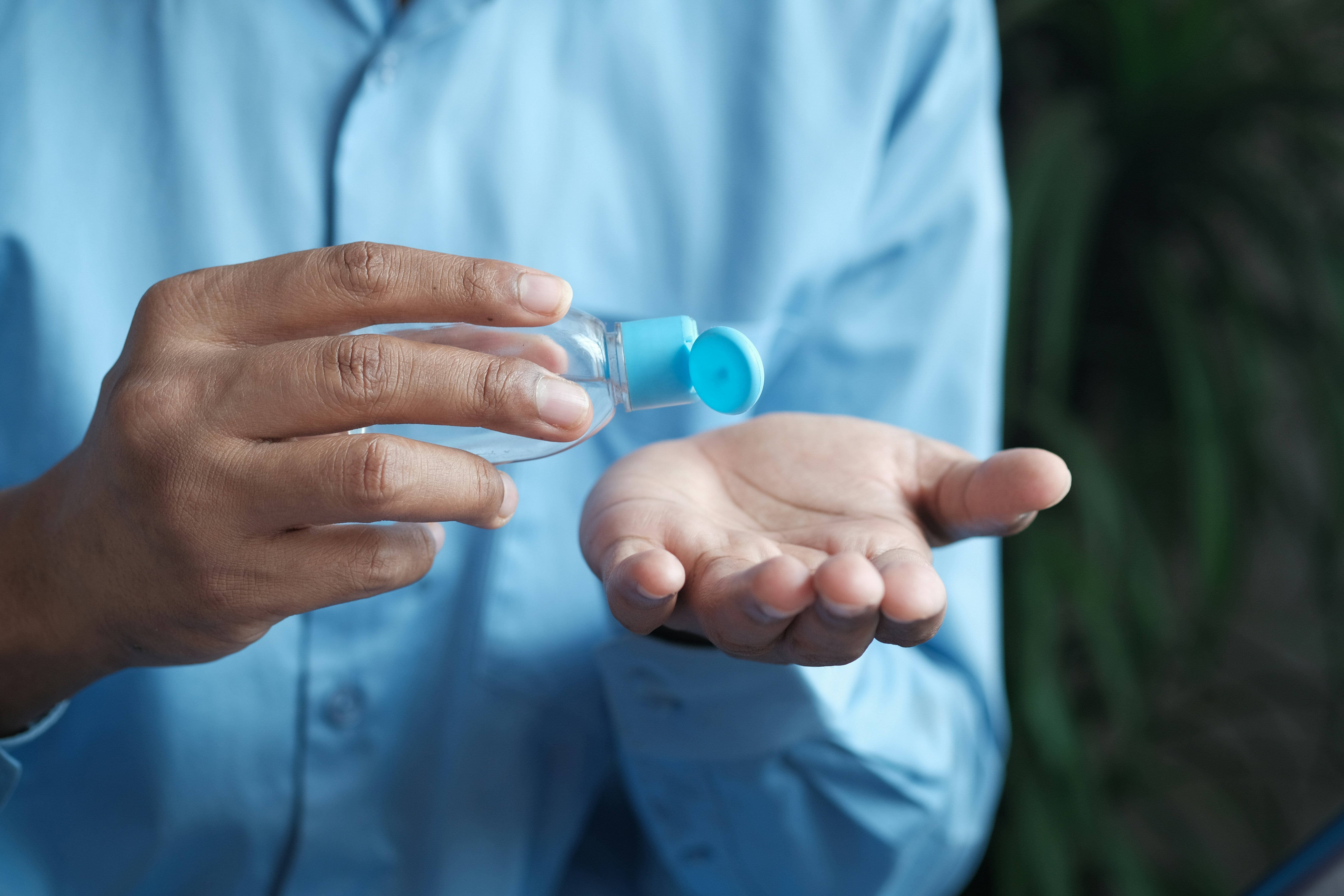
The NHS recommends common-sense advice, like washing your hands often and not sharing personal items like towels with sick people, to keep colds at bay. And if you don’t have access to soap and warm water (the most effective hand-washing method), alcohol-based hand sanitiser is a great tool too.
Advertisement
Here, HuffPost UK asked Dr Donald Grant, a GP and senior clinical advisor at The Independent Pharmacy, where he brings hand sanitiser during flu season (and when you can leave it at home).
Where should I use hand sanitiser?
1) Public transport
This, he said, is an “obvious” pick.
“Handrails, poles, seat backs, and ticket machines are touched by hundreds of people a day, and buses and trains are often crowded and poorly ventilated in autumn and winter, giving flu viruses plenty of opportunity to spread”.
Keeping a bottle of hand sanitiser in your coat pocket or handbag gives you a chance to “clean your hands once you get off, before you touch your face, eat or check your phone”.
Advertisement
This transfer of germs – from hands to eyes, nose, or mouth – can make cold transmission especially likely, as it delivers germs almost directly to your mucous membranes.
2) Supermarkets
Not only are these filled with both people and things multiple people have touched, but self-service checkout screens can be a real bug-fest, too.
3) Gyms
Think of all those sweaty weights and unwiped surfaces, not to mention the pools and saunas whose warm, damp environments provide the perfect breeding ground for bacteria.
Advertisement
Not only that, but we breathe more heavily when working out, potentially expelling more disease-carrying saliva.
4) Cafés
Basically, Dr Greenyer said, we should bring hand sanitiser “anywhere with shared touchscreens, such as self-checkouts and cash machines”.
5) Hospitals, GP surgeries, and care homes
These places are filled with people who are 1) already likelier to be sick and 2) packed tightly together in an enclosed space. Therefore, it’s best to use an alcohol-based hand sanitiser in these places, “both to protect yourself and the vulnerable people around you”.
Advertisement
However, the doctor stressed that hand sanitiser “should never be used as a replacement for handwashing, as [soap and warm water] is still the most effective option for limiting the spread of bacteria”.
Where don’t we need to bring hand sanitiser?
With that said, Dr Greenyer told us that “There’s no need to sanitise constantly”.
Outdoor areas, like
Parks,
Open-air markets, or
The high street
are much safer, he added. This is because “viruses disperse more easily in fresh air and you’re touching far fewer shared surfaces”.
The GP ended: “It’s also worth remembering that flu spreads mainly through droplets from coughs and sneezes, so good hand hygiene works best alongside other simple habits, like catching sneezes in a tissue, staying home when you’re unwell and getting the flu vaccine if you’re eligible”.
Advertisement
And when needed, a little bottle of hand sanitiser could help to protect you on the go.
If you answered “no”, you have every reason. Even though it was discovered and described in humans over 150 years ago (drawings of it appear in early copies of Grey’s Anatomy, an anatomy reference book that’s been running since 1858), scientists quickly dubbed it purposeless.
The structure, which lies near the ovaries, became so ignored that it was eventually removed from textbooks altogether. It was considered a “functionless vestige” of the adult ovary, meaning experts decided it was a useless evolutionary holdover.
But a study from Duke University suggests that the body part might play a role in fertility and ovarian health and maintenance for those with wombs.
Advertisement
While the research was conducted on mice, researchers think the findings could apply to humans too; the structure has been seen in lots of other mammals, and our sex organs develop in a manner very similar to those of a mouse.
What is the rete ovarii?
Sometimes shortened to RO, the rete ovarii is a horseshoe-shaped “network of tubules and cords” that is attached to the ovary.
As it happens, those with penises have an equivalent: the rete testis, which we know helps to transport sperm.
Advertisement
What does the rete ovarii do?
We don’t know yet – but new imaging technology has offered exciting suggestions which would render the rete ovarii far from useless.
The “rediscovered” rete ovarii was found to have three distinct regions in both living mice and animals’ dissected tissue:
The intraovarian rete (IOR), found in the ovary
The extraovarian rete (EOR), made up of that network of tubes we mentioned earlier
The connecting rete (CR), which joins up the IOR and CR
The EOR seems to contain and produce proteins like insulin-like growth factor-binding protein 2 (IGFBP2), which may play a role in ovary function.
And after placing fluorescent dye in the EOR, they found it seemed to propel liquid towards the ovary, too. That suggests it may have a role in how the appendage operates or maintains itself.
Not only that, but experiments pointed to the possibility that the rete ovarii might switch on genes that affect how hormone receptors work.
Advertisement
The paper reads: “The direct proximity of the RO to the ovary suggests that it is functionally linked to the ovary and may play an important role in ovary development and homeostasis [self-regulation].
“Based on the cell biology, transcriptome and proteome of the RO, I hypothesise that the RO acts as an antenna for the ovary and plays an important role in ovary homeostasis and fertility.”
This could prove a springboard for further studies
More research is needed to confirm or disprove that hypothesis, or indeed to find any other possible uses of the rete ovarii.
Advertisement
Speaking to Live Science, the study’s lead author, Dilara Anbarci, said: “There’s still so much we can’t even begin to comprehend about female anatomy.
“I hope this encourages more investigation in reevaluating what we don’t already know about the ovary.”
“Where does the time go?” and “time goes by too quickly” are common refrains at the end of a weekend or calendar year.
While there is no way to actually slow down time, there may be a reason why it flies by so fast – and your strict weekly routine may be the culprit. Rigidity and a lack of novelty can actually make it feel like your life is going by faster than you want.
In a viral post on X, retired neurosurgeon Dr. Brian Hoeflinger shared insight on routine’s impact on the passage of time and ways to make it feel like it’s moving slower.
Advertisement
“Repetitive daily routines stop the brain from recording clear detailed memories,” Hoeflinger wrote on X. “When every day looks the same, your brain does not track time the same as a clock does. It tracks change. If nothing new happens then days, months, and years start to blur together.”
“This is known as time compression. When life lacks variety, your brain compresses past days together, making it feel like time is sped up,” he continued.
To make time feel like it’s passing more slowly – and like your days are not so mundane – you can simply try new things “or change up your routine,” Hoeflinger told HuffPost.
Advertisement
Novelty is the answer to “time compression”
According to Hoeflinger, the best way to disrupt time compression is by doing new things. This could be trying a new hobby, travelling to a bucket-list destination, taking a new route home or simply making a different recipe for dinner.
“You’ve got to change things up in your life a little bit … so it’ll stick in your brain and be put into your permanent memory,” he said.
When you do something different, “it makes an incident in your brain, so you remember it. And by remembering that, it helps you feel like your day was longer, like there was more going on in your day,” Hoeflinger said.
Advertisement
Think about it: When you look back on a year with lots of events and travel, you probably say something like “wow, I did so much” versus a year of nothing where the days melt into each other.
It may sound counterintuitive since days that involve more activity tend to fly by in the moment, but these days seem slower when you look back because your brain makes a note of each of the occurrences, Hoeflinger explained.
Compare this to when you do the same things again and again. There is no individual memory that sticks out, which makes it feel like the day went by and you weren’t even in it.
Advertisement
“When you experience something new … your brain responds with a release of dopamine, and that can help us focus in and pay more attention to the experience that we’re having,” added Tim Bono, a lecturer in psychological and brain sciences at Washington University in St. Louis. “So, you can think of novelty [as] interrupting the daily schema or expectation of life.”
You’ll also have more memories of your life if you take an active role in it, Hoeflinger said. “The day will feel slower and more meaningful as opposed to if you’re not actively doing new things.”
Bono said, “We can’t change the actual passage of time. The days and months are going to go by … but we do have some agency and control over the depth and meaning of the experiences of how that time feels to us, especially when we were looking back.”
Advertisement
You don’t need to do anything drastic to infuse more novelty into your days
The first step to creating more memories and slowing down the passage of time is to simply break up your routine.
“Try to do something different – go to a different restaurant or try new meals at home … change up your wardrobe instead of dressing the same,” Hoeflinger suggested.
Any amount of novelty will create new memories and make your days feel longer and more action-packed, even if that new memory is simply joining a different gym class or working from a coffee shop instead of your home office.
Advertisement
“I think that the most important way to increase our happiness is to savor whatever time we do have,” Bono said.
Maki Nakamura via Getty Images
Never breaking from routine can make time feel like it blends together and goes by quickly.
Instead of sticking to your weekly routine of errands, chores and work, be sure to add in time with family and friends.
Advertisement
“That’s the kind of novelty that allows you to slow down and savor life versus feeling like you’re on this treadmill and that you’re just constantly having to run from one thing to the next,” Bono said. “Those are usually the mundane things that we’re chasing.”
“We have to give ourselves permission to … get a little bit behind on those, so that we can prioritize the stuff that’s more important. And I would put social connection and social experiences at the top of that list,” Bono added.
This may look like making happy hour plans with a co-worker instead of immediately rushing home or inviting your cousin and their kids over for dinner and a playdate.
Advertisement
Mindfulness and relaxation can also help slow time.
Focusing on the moment in front of you is an important way to savor time, too. This is true whether you are trying something new or not.
It isn’t easy. Many of us are on our phones while watching TV or thinking about a long to-do list as we play with our kids and grandkids – “but I think if you find that you focus on that moment more … that’ll form a memory in your mind that will stick with you more, and it’ll make your day more meaningful,” Hoeflinger said.
Focusing on a moment allows your brain to create an incident in your day, which then makes your day feel longer and like you accomplished something, he said.
Advertisement
This type of focus is a form of mindfulness, which allows you to slow down and home in on what’s happening now.
Along those same lines is relaxation. If you are always rushing around, the day flies by, Hoeflinger said. “So, slow down.”
Switching up your routine and trying new things helps it feel like you have more time in a very finite life, and it also helps you live a more enjoyable life.
Advertisement
“Just do something exciting or something different,” Hoeflinger stressed. “That all helps you feel like time’s not slipping by so fast because those incidents, those memories, will stick in your mind. And when you look back upon it, you’ll go, ‘Wow, that was a great day.’”
“I heard some quote a long time ago – ‘the biggest lie we can tell ourselves is that we’ll always have more time,’” said Bono.
The reality is we don’t always have more time. You likely think you can visit that new restaurant next month (and then never go) or you can see that friend in the winter instead of the fall (and then never do that, either). “Being reminded that time is a scarce resource, as uncomfortable as that might feel, is actually good for our mental health,” Bono said.
Advertisement
This helps inspire people to get out and do the thing they’ve been putting off.
“Being reminded of that reminds us that life is precious, and there’s no time like the present to seize the opportunities to reach out and have those meaningful experiences in our lives,” said Bono.
Menopause and perimenopause – the lead-up to losing your period, which can last for years – are linked to symptoms like hot flushes, palpitations, poor sleep, stiff joints, and many more.
All in, the entire process can take over a decade. But less is said about the next life stage – postmenopause – in which women remain for the rest of their lives.
The Cleveland Clinic points out that this is not always a neutral or symptomless state. Some menopause symptoms can continue years into postmenopause, and low oestrogen levels increase the risk of heart conditions and osteoporosis.
Advertisement
Postmenopause is also linked to depression, urinary incontinence, changes in sex drive, and dry skin.
Nonetheless, there are some benefits to the life stage, too.
Compared to those in menopause, women in postmenopause have better memory. In general, over-70s sleep better, and following a lull in our mid-50s, life satisfaction rates seem to rise again soon, peaking at about 69.
So what do postmenopausal women themselves say about the experience?
On Reddit’s r/Menopause, site user u/wlftnasked: “when menopause is finally over do you feel better mentally, physically?”
Advertisement
Here are some of the top responses:
1) It’s “different”, but symptoms are “never over” for some
For poster u/leftylibra, the experience of menopause never really felt “over”, even though she found her mood swings settled as her hormones stopped fluctuating as “wildly”.
“We are led to believe that all other symptoms stop once we reach post-menopause, and this simply isn’t true,” she wrote.
“For instance, according to Harvard Health, studies indicate that 30% of women still had hot flashes 10 to 19 years after menopause, and 20% had hot flashes more than 20 years after menopause.”
Advertisement
Postmenopausal symptoms, including aches, the thinning and drying of the vaginal lining, and bone and muscle loss, continue, the poster added.
She saw some benefits from lifting weights (which has been described as “critical” for maintaining muscle mass and improving bone health after menopause).
Advertisement
“Menopause is a time to look inward and figure out how we want to spend the next 40-50 years of our lives, and that means taking an active role in our health by managing exercise, sleep, stress, dietary needs, etc. Overall, we do feel better without the nagging cycles, but it’s a whole new different way of being,” the Redditor ended.
2) “My years of insomnia left”
Site user u/curiously71 said that her long-standing issues with sleeplessness seem to have stopped after menopause. Early postmenopause seems a particularly good period for sleep, especially compared to menopause.
But this poster added that for her, a “lack of energy and motivation” has continued three years after menopause.
Advertisement
One study found that “postmenopausal women endorsed higher levels of anxiety, as well as lower levels of vitality and overall mental wellbeing compared to perimenopausal women”.
Another showed that early postmenopausal women were about two to four times more likely to experience a major depressive episode than women who hadn’t experienced menopause yet.
“I think there is a sense of relief that the ‘ride’ of peri[menopause] has concluded,” writes u/citychickindesert.
Advertisement
“Once you know the periods are over, for example, there is some sense of calm – there is for me anyway.”
The Cleveland Clinic notes on its site that while issues remain for some, many women feel relief from menopause symptoms during postmenopause.
4) “I feel 1000% better”
Though postmenopause can bring its own challenges, one survey showed that about 65% of women feel happier than they did before menopause.
Advertisement
This seems to be the case for u/HelicopterJazzLike73, who shared that leaving menopause “was like a weight being lifted from my shoulders and 30 lbs from my body.
“I feel a lot less angry, and the hot flashes are once every six months now. I’m so glad it’s over”.
5) Hormones feel more “balanced”
Redditor u/Secretvault-tH20 added, “I actually do not feel like any hormones are out of balance. The only problem I have is less tolerance to being hot.”
Some experts think changes in temperature tolerance like these are down to differences in vascular function, which is controlled in part by oestrogen.
Advertisement
6) “We are all different”
A now-deleted user said that for her, things did get better after menopause.
“Some symptoms may stay, but they are way less intense. My insomnia is almost gone; I get hot flashes maybe once or twice a week, but less intense,” the poster stated.
“Anxiety got… better, but [I] still sometimes feel the waves. It’s definitely better than in the midst of it.”
Still, she pointed out that everyone is “different”.
Perhaps unsurprisingly, research has her back here. The NHS says that some women will see a complete cessation of menopause symptoms once it’s done, but for others, they can remain for years.
Physically and mentally, the postmenopause experience can vary from person to person. The NHS says you should speak to your GP if you experience vaginal bleeding after sex and/or recurring or chronic UTIs, and if your mental health is suffering, reach out to a qualified expert.
A healthy diet, strength training, and attending scheduled screenings can also help to keep you well during postmenopause.
While we have made some strides in tacking taboos surrounding women’s health, there are still some topics that many of us are uncomfortable discussing even with our doctors.
In fact, according to new research conducted by Femtech health brand Daye, a quarter of people surveyed said they would feel too ashamed to raise concerns about discharge with their GP and almost half wouldn’t speak to their pharmacist about it, either.
Advertisement
This research was commissioned by Daye for their ‘Discharge The Taboo’ campaign, which aims to challenge misconceptions around vaginal discharge and reframes discharge as data. For the most part, discharge is a sign of a healthy body doing its job, and when it changes, it’s one of the clearest early signals that something may be wrong.
We need to crack down on the shame around vaginal discharge
According to Daye, health experts say delaying conversations about changes in vaginal discharge could mean infections and other gynaecological conditions take longer to be diagnosed, underlining the importance of recognising changes and seeking advice when something doesn’t seem right.
To help break down this taboo, Daye has launched The Stains Explained series featuring gynaecological expert, founder, and CEO of the brand Valentina Milanova. In this series, the brand have created videos which explain the difference between normal vaginal discharge and the warning signs, helping women build confidence in understanding their bodies and encouraging more open conversations.
Advertisement
Commenting on the shame surrounding discharge, Milanova added: “Vaginal discharge is a normal, healthy part of the body’s natural defence system, yet generations of women have grown up believing it’s something to hide.
“Schools hardly educated us on it, doctors rarely bring it up unprompted, and a lack of funding into women’s health research has only widened the gap. Social media has also stepped into that gap with misinformation and widespread women’s health content censorship.”
When to worry about vaginal discharge
According to their guide:
Yellow or green discharge could signify an STI such as chlamydia – a condition that must be treated promptly to prevent long-term health issues
Grey discharge, especially if watery or fishy, often indicates bacterial vaginosis and usually requires antibiotics
Pink or red discharge can be a result of irritation or cervical bleeding, while red outside of a period could indicate infection or in rare cases, cervical cancer
Milanova says: “Too many women are suffering in silence, and that’s not their failure; it’s the failure of a healthcare system that continuously neglects female physiology.
“Better body literacy helps women know that there’s nothing to be ashamed of, and enables them to seek medical advice sooner when needed and avoid unnecessary worry when they don’t.”
Daye’s at-home testing solutions are designed to help remove some of the barriers created by stigma and access, giving women objective health information they can take into clinical conversations with healthcare professionals to support earlier and more informed care.
Without thinking about it, most people default to using their dominant hand when picking up a fork or mug, as they do when picking up a pen or pencil.
Recently, though, chatter on social media suggests that using your non-dominant hand (for example, using your left hand if you’re right-handed) when eating or doing other tasks can be a way to challenge your brain. In turn, this may lower your risk of dementia.
Research shows learning new skills is good for your cognition. But can simply eating with your non-dominant hand impact dementia?
Advertisement
Here’s what experts say:
Using your non-dominant hand isn’t going to lower your risk of developing dementia, but continually learning new skills can be good for your brain.
When it comes to using your non-dominant hand as a way to lower dementia risk, “the brass tacks is that there is no direct evidence,” said Dr David Gonzalez, a neuropsychologist at Rush University Medical Center in Chicago.
Dr Benjamin Rosenstein, an assistant professor at the University of Minnesota Medical School, agreed. “There’s no evidence that using your non-dominant hand for activity is going to help prevent dementia.”
Advertisement
But that doesn’t mean this habit is all bad. Staying engaged in hobbies and interests and learning new things can help lower dementia risk, Rosenstein noted, which is where this idea likely comes from.
Gonzalez said he appreciates the idea of challenging your brain.
“There is some literature suggesting that individuals who have more lifelong challenge, whether that is challenging work, more challenging or intellectually stimulating hobbies, or being an autodidact and just learning and going through things, that there does tend to be a lower risk for developing dementia later in life,” he said.
Gonzalez explained that the evidence for this is weaker than for other lifestyle changes that can lower dementia risk. (More on that in a second.) The impact that learning new things has on dementia risk is a little more mixed.
Advertisement
Learning one specific new hobby or skill won’t in itself help lower your chance of developing dementia, according to Rosenstein. Instead, “it’s more that if you are learning something new, you are keeping yourself [engaged],” Rosenstein added. “If you’re trying to learn something new, you’re staying engaged with things, you’re challenging yourself, you’re keeping yourself active.”
More than even the learning itself, staying engaged and keeping your brain active are good for cognition.
According to Gonzalez, trying something new is good for the brain, but you need to consider the “quality and quantity of mental activity to have some sort of neuroprotective benefit.”
Advertisement
“When we talk about quality, what I mean is sort of like Goldilocks’ principle of not too easy … but not too hard towards frustrating,” he said.
You want the “just right” amount of challenge and novelty.
“In this case, for someone who is right-hand-dominant trying to use their left hand for a task, there is a smidge of truth there,” Gonzalez said, because you are challenging your brain to a new task.
“But it’s less about using the hand itself because once you are able to use it for a task, it’s no longer a challenge,” Gonzalez added. Meaning, you may teach yourself this skill over several days, but once you master the skill, it’s no longer a mental challenge and no longer has a protective effect on the brain.
Advertisement
Doing something different once or a few times isn’t going to do much for your brain, either. Instead, it’s the continual dedication to trying a variety of new things, Gonzalez explained, whether a new language, recipe, sport, hobby or leveling up a home improvement project.
“Individuals for whom doing a variety of challenging things is most protective are doing a variety. They’re not just doing one thing,” he said.
Yagi Studio via Getty Images
A viral social media video claimed that eating with your non-dominant hand can help lower your dementia risk, but doctors say that isn’t entirely true.
Advertisement
To learn something new, the brain needs to make new connections. This is good for our cognition.
“Our brains, more than any other organ, are reciprocal,” Gonzalez said. “They respond to our worlds.”
Lifestyle habits can help lower your dementia risk
There isn’t one magic pill, food or activity that will prevent dementia. Instead, it’s “these whole entire practices that can be protective over time,” said Rosenstein, and can help lower your risk of developing the condition.
Again and again, the factors that protect your brain health as you age are regular exercise and a nutritious diet such as the Mediterranean-diet-inspired MIND diet or the DASH diet, which aims to lower blood pressure, Rosenstein said.
Advertisement
“If we’re thinking about midlife … protecting your heart health, so things like managing blood pressure, blood sugar, cholesterol, reducing smoking, trying to watch your weight,” Gonzalez said. Getting enough high-quality sleep is also important.
“And actually, we’re seeing a lot on social engagement. So individuals who are isolated or lonely … being disconnected from others or feeling disconnected is related to dementia, and the inverse of that, being connected, fostering connection, has been shown to help reduce that risk,” Gonzalez added.
If you are someone who wants to try out the non-dominant-hand eating habit, there is nothing wrong with that. But don’t let it be the only way you’re challenging your brain.
Advertisement
“What’s more important is approaching life with that zest, that curiosity and that spice,” Gonzalez said.
Be curious about new things; try new hobbies, make different crafts, learn an instrument, meet different people – all of these are great ways to keep your brain engaged as you age.
According to the International Association for Premenstrual Disorders UK (IAPMD UK), around a million people in the UK suffer with Premenstrual Dysphoric Disorder (PMDD). PMDD is a more intense version of premenstrual syndrome, characterised by symptoms such as depression, extreme irritability or anger, joint and muscle aches and sharp mood swings, just to name a few.
While we still have a long way to go with awareness, according to Google Trends data, the condition has grown in Google searches since 2024 and this year, the IAMPD was launched, marking it the first charity dedicated to PMDD research in the UK.
Advertisement
According to the NHS, treatments for PMDD can include antidepressants, anti-inflammatory medicines, hormonal treatments such as the pill and talking therapies such as CBT. Anecdotally, increasing my Citalopram prescription by 10mg made a world of difference to my own symptoms.
Strangely, though, according to Dr Suzanne Wylie, GP and medical adviser for IQdoctor, people are increasingly suggesting that antihistamines may be the answer to tackling PMDD symptoms.
Why more women are turning to antihistamines for PMDD
Dr Wylie says: “The growing interest in antihistamines for symptoms associated with PMDD reflects a much wider issue in women’s health, rather than a treatment approach currently supported by robust clinical evidence.
Advertisement
“Increasingly, women are sharing experiences online of using medications traditionally prescribed for allergies in the hope of relieving symptoms including anxiety, mood changes, flushing, headaches and fatigue. While some individuals report subjective improvements, there is currently insufficient high-quality evidence to recommend antihistamines.”
However, while there isn’t enough evidence to recommend them, there is some logic as to why people have turned to them and potentially found relief.
Dr Wylie says: “There are plausible biological theories that may help explain why this approach has attracted attention. Sex hormones such as oestrogen and progesterone interact with the immune system and may influence histamine release and mast cell activity in some individuals.
Advertisement
“Histamine can affect blood vessels, the nervous system and inflammatory pathways, prompting researchers to investigate whether these mechanisms could contribute to some symptoms experienced during hormonal fluctuations. However, these are still areas of scientific investigation, and a plausible biological mechanism”
So, should we take antihistamines for PMDD?
Dr Wylie advises speaking to your GP if you think you may have PMDD, saying: “Symptoms attributed to PMDD can sometimes have other causes. Persistent fatigue, headaches, changes in mood, sleep disturbance or palpitations, for example, may warrant assessment rather than being assumed to be hormonal.
“Seeking appropriate medical advice can help ensure that other conditions are considered and that patients are offered treatments with a stronger evidence base.”