The phase two trial results raise hopes the jab can protect age groups most at risk from Covid-19.


The phase two trial results raise hopes the jab can protect age groups most at risk from Covid-19.

Erin Wegener was a tiny baby facing enormous challenges.
Born at 29 weeks’ gestation, she weighed only 1 pound, 14 ounces (0.5kg). Her first three months were lived in the neonatal intensive care unit. Family photos show her covered in gauze, sustained by too many tubes to count. Her entire hand just about fit inside her father’s wedding ring.
Her parents were warned she could face a lifetime of mental and physical challenges. But today, she’s working as a music therapist in the same hospital system in Grand Rapids, Michigan, where she was born.
The doctors’ most dire warnings didn’t come true, and her premature birth has never been much of a factor in her adult life. “I feel very thankful that I have not had a lot of health issues growing up,” she said.
Cardiovascular health score
Wegener was born in 1985, just a few years before breakthroughs in treatment allowed many more extremely low birth weight babies to survive. As that wave of children enters adulthood, a new study is revealing details about possible risks to their heart health.
Research published in the American Heart Association journal Hypertension compared cardiovascular health among two groups of Australians born in 1991 and 1992, as they turned 25 years old. The 165 participants in the first group were born extremely preterm (earlier than 28 weeks’ gestation) or with an extremely low birth weight (below 2.2 pounds). The 127 participants in the second group were born at term and at normal weights.
Researchers looked at several factors related to heart health and calculated a cardiovascular health score for each person. Overall, the extremely premature/low birth weight group had a less favourable rating than the term-born group, specifically for blood pressure, exercise capacity, fasting blood glucose (a marker of diabetes) and visceral abdominal fat (“belly fat”, which has been linked to heart disease, cancer and more).
It was known that people born early are prone to such problems, said the study’s lead author Dr Jeanie Cheong, a professor at the Royal Women’s Hospital in Melbourne, Australia. But the new research sought to tie the risks together for an overall view, she said. “We looked at all these factors cumulatively, rather than individually, thus providing a holistic view to health.”
Her work is part of the ongoing Victorian Infant Collaborative Study, which has been monitoring a group of Australians since their birth in 1991 or 1992. That’s the era when some treatments became widespread – such as corticosteroids for at-risk pregnant women to accelerate lung growth of babies in utero or using wetting-like agents called surfactants to treat immature lungs in premature babies.
Gender differences
Those treatments led to what Cheong called an exponential rise in survival over a short period for preemies. Before the 1970s, the survival rate of extremely preterm babies was below 10%, she said. By the early 1990s, that rate had soared to nearly 70%. It’s now at 87%, according to a separate study published recently in BMJ Open that Cheong led.
But the new study confirms other investigations about preemies’ long-term cardiovascular risk and adds details, said Dr Anne Monique Nuyt, a professor of paediatrics at the University of Montreal and head of neonatology at CHU Sainte-Justine hospital in Montreal. She was not involved in the new research.
“It’s one of the very first reports showing changes during adult years in individuals who were born very preterm.” Because they evaluated the participants at age 18, researchers discovered, for example, that the preterm group gained more weight between 18 and 25 than the normal birth weight group.
Nuyt, co-leader of a separate long-term study of premature infants, said the new work also confirmed earlier findings of gender differences in preemies’ future heart risks. Males scored worse for blood pressure, exercise tolerance and belly fat.
Cheong said the findings shouldn’t worry individuals born early. But “it is even more important for them to have close health surveillance and adopt healthy lifestyle choices, something that we all should do regardless,” she said.
Miracle of survival
The new study also showed the rate of smoking among former preemies is as high as in the general population, which Nuyt called worrisome. After all, many required oxygen right up until their parents took them home.
“We know smoking is very bad for the lungs. And it’s very bad for the heart, and it’s very bad for blood pressure. So if there’s one group that should not at all smoke, it’s these extremely low birth weight or extremely preterm individuals,” said Nuyt, who co-wrote a review paper published recently in Hypertension that called for greater awareness of the links between premature birth and heart problems.
“All physicians, all health care providers should be asking their patients, ‘Do you know your birth weight? Do you know whether you were born very tiny or very premature?'” she said.
Wegener, now 35, isn’t aware of any heart issues. And as the mother of three – with another baby due in April – she’s grateful for what she considers the miracle of her survival and long-term health. “I feel very fortunate.”
American Heart Association Newscovers heart and brain health. Not all views expressed in this story reflect the official position of the American Heart Association. Copyright is owned or held by the American Heart Association, Inc., and all rights are reserved.
Image credit: iStock

Since the early days of the pandemic, questions have been raised about the link between smoking and Covid-19, the disease caused by SARS-CoV-2.
In June this year, the World Health Organization stated that, based on existing literature assessing the association between smoking and Covid-19, there was “insufficient information to confirm any link between tobacco or nicotine in the prevention or treatment of Covid-19”.
However, more recent studies have shown that while smokers are not at risk of contracting infection, their risk of severe disease and death, once infected, is higher than that of non-smokers, although the ways that cigarette smoke exposure affects airway cell infection by SARS-CoV-2 have not been very clear.
A new study by scientists at the Eli and Edythe Broad Center of Regenerative Medicine and Stem Cell Research at the University of California has helped understand how this happens by investigating SARS-CoV-2 infection on a cellular and molecular level – using a model of airway tissue created from human cells.
Their report was published in Cell Stem Cell.
The study
To perform their study, the scientists employed a platform known as an air-liquid interface culture. Essentially, this is grown from human airway stem cells and closely replicates how the airways behave and function in humans.
The airways carry air breathed in through the nose and mouth to the lungs, also functioning as the body’s first line of defence against airborne pathogens, such as viruses, the authors noted.
“Our model replicates the upper part of the airways, which is the first place the virus hits,” said Brigitte Gomperts, a professor of pulmonary medicine and member of the UCLA Jonsson Comprehensive Cancer Center.
“This is the part that produces mucus to trap viruses, bacteria and toxins and contains cells with finger-like projections that beat that mucus up and out of the body.”
This type of model, Gomperts explained, has previously been used to study lung diseases for over a decade and has been shown to mimic the changes in the airway that can be seen in someone that smokes.
‘Smoking cigarettes is like creating holes in these walls’
The air-liquid cultures used in the study were grown from airway stem cells that were taken from the lungs of five young, healthy, non-smoking tissue donors.
To replicate the effects of smoking, the researchers exposed these airway interface cultures to cigarette smoke for three minutes per day over four days.
They then infected the cultures exposed to cigarette smoke (along with identical cultures that had not been exposed) with live SARS-CoV-2 viruses.
The two groups were compared. In the models exposed to smoke, the researchers saw between two and three times more infected cells.

A more in-depth analysis led to the conclusion that smoking resulted in more severe infection, at least in part, by blocking the activity of interferons (which play a critical role in the body’s early immune response to fight the virus).
“If you think of the airways like the high walls that protect a castle, smoking cigarettes is like creating holes in these walls,” Gomperts said.
“Smoking reduces the natural defences, and that allows the virus to set in.”
READ | Covid-19 deaths: Surprise findings on smoking and other insights from study of 17m patients
READ | Covid-19 is more severe in smokers, an analysis of 19 studies show
READ | Why the cigarette ban during lockdown? Five medical experts weigh in
Image: Basil MK/Pexels


Since the early days of the pandemic, questions have been raised about the link between smoking and Covid-19, the disease caused by SARS-CoV-2.
In June this year, the World Health Organization stated that, based on existing literature assessing the association between smoking and Covid-19, there was “insufficient information to confirm any link between tobacco or nicotine in the prevention or treatment of Covid-19”.
However, more recent studies have shown that while smokers are not at risk of contracting infection, their risk of severe disease and death, once infected, is higher than that of non-smokers, although the ways that cigarette smoke exposure affects airway cell infection by SARS-CoV-2 have not been very clear.
A new study by scientists at the Eli and Edythe Broad Center of Regenerative Medicine and Stem Cell Research at the University of California has helped understand how this happens by investigating SARS-CoV-2 infection on a cellular and molecular level – using a model of airway tissue created from human cells.
Their report was published in Cell Stem Cell.
The study
To perform their study, the scientists employed a platform known as an air-liquid interface culture. Essentially, this is grown from human airway stem cells and closely replicates how the airways behave and function in humans.
The airways carry air breathed in through the nose and mouth to the lungs, also functioning as the body’s first line of defence against airborne pathogens, such as viruses, the authors noted.
“Our model replicates the upper part of the airways, which is the first place the virus hits,” said Brigitte Gomperts, a professor of pulmonary medicine and member of the UCLA Jonsson Comprehensive Cancer Center.
“This is the part that produces mucus to trap viruses, bacteria and toxins and contains cells with finger-like projections that beat that mucus up and out of the body.”
This type of model, Gomperts explained, has previously been used to study lung diseases for over a decade and has been shown to mimic the changes in the airway that can be seen in someone that smokes.
‘Smoking cigarettes is like creating holes in these walls’
The air-liquid cultures used in the study were grown from airway stem cells that were taken from the lungs of five young, healthy, non-smoking tissue donors.
To replicate the effects of smoking, the researchers exposed these airway interface cultures to cigarette smoke for three minutes per day over four days.
They then infected the cultures exposed to cigarette smoke (along with identical cultures that had not been exposed) with live SARS-CoV-2 viruses.
The two groups were compared. In the models exposed to smoke, the researchers saw between two and three times more infected cells.
A more in-depth analysis led to the conclusion that smoking resulted in more severe infection, at least in part, by blocking the activity of interferons (which play a critical role in the body’s early immune response to fight the virus).
“If you think of the airways like the high walls that protect a castle, smoking cigarettes is like creating holes in these walls,” Gomperts said.
“Smoking reduces the natural defences, and that allows the virus to set in.”
READ | Covid-19 deaths: Surprise findings on smoking and other insights from study of 17m patients
READ | Covid-19 is more severe in smokers, an analysis of 19 studies show
READ | Why the cigarette ban during lockdown? Five medical experts weigh in
Image: Basil MK/Pexels

When Covid-19 started spreading across the globe, the World Health Organisation (WHO) and the Centers for Disease Control and Prevention recommended that the best way to prevent Covid-19 infection is through physical distancing, wearing cloth masks, as well as frequent and proper handwashing and surface decontamination.
The call for regular handwashing led to an exponential rise in the use of alcohol-based hand sanitisers, which has increased the incidence of hand eczema in healthcare workers as well as the general population.
Two kinds of hand eczema
Hand eczema characteristically presents as a red itchy, sometimes burning or even tender, rash. The rash may be dry with cracked and scaly skin, or wet with blisters, oozing and crusting. Certain individuals, such as those with underlying atopic (a general disposition to develop) eczema, are at greater risk of developing alcohol rub hand eczema due to the inherent impaired barrier function of the skin characterising this condition.
In a study from Hubei province in China, 434 healthcare workers were interviewed, with 321 (74%) reporting that they sanitise their hands more than 10 times per day. Of those healthcare workers, 246 (76.6%) reported symptoms of hand eczema, with the most common being irritant contact hand eczema and less commonly allergic contact hand eczema.
Another study from Milan reported that from 9 March to 4 May 2020 there were 24 new cases of hand eczema in the general population related to the use of alcohol-based sanitisers.
Some of the issues with alcohol-based hand sanitisers include the use of non-standard formulae (meaning that methanol is used instead of ethanol); types of alcohol such as isopropyl alcohol vs. ethanol; as well as varying amounts of alcohol (<60%). The various recipes making the rounds on social media in the early days of lockdown illustrate this point.
“Irritant” contact hand eczema may develop in anyone whose hands are exposed to irritants such as water, soap, or alcohol hand sanitisers. “Allergic” contact hand eczema, on the contrary, will only develop in those who have been primed to develop skin irritation to certain substances such as nickel, latex or colophony (found in adhesives, cosmetics and printing ink).
Debilitating and painful disease
An intact skin usually deters from the development of the latter form of hand eczema. Irritants assist in disrupting the skin barrier, improving the likelihood of developing allergic contact hand eczema.
Alcohol rub hand eczema can become a debilitating and painful disease, resulting in work absenteeism which can severely impair the delivery of essential services. The increased frequency of handwashing and use of alcohol hand sanitiser associated with Covid-19 prevention dramatically increases the likelihood of developing allergic contact hand eczema, which may greatly impact quality of life as well as cause occupational difficulties in the long run.
Apart from the discomfort of dry, itchy skin, the breaks in the skin can serve as a point of entry for Covid-19 because of viral receptors in the blood vessels of the skin. Painful, dry skin could also inadvertently decrease hand hygiene compliance which further increases the risk of disease transmission in these individuals. Prevention is therefore essential.
It has become clear that the Covid-19 pandemic will persist for the foreseeable future. Equally clear has been the gargantuan impact of this viral infection. Therefore, the importance of following protective guidelines, such as outlined by health and government organisations, is undeniable and should be closely adhered to.
The WHO has recommended a 60% alcohol-containing hand sanitiser with 1.45% glycerol as a moisturising agent to protect healthcare workers, and now the frequently sanitising public, from the complications of excessive alcohol hand rub usage. The minimum amount of glycerol required to decrease the risk of hand eczema is not known, although studies have shown that even lower levels than the recommended 1.45% glycerol were effective to protect the skin from excessive drying.
Moisturisers few and far between
Further recommendations include the use of an emollient-containing hand cream immediately after sanitising. Although this is a useful measure to prevent alcohol rub dermatitis, one study showed that only approximately one in five healthcare workers did so after using alcohol hand rub. This figure is highly unlikely to be higher among the general public.
Sanitising stations are located everywhere in hospitals and public areas and have been an important means of combating the spread of Covid-19. However, moisturisers are few and far between, hence the increased incidence of alcohol rub hand eczema during the pandemic.
Adequate skin care could increase hand hygiene compliance and should therefore be prioritised, especially among healthcare workers. Furthermore, preventative measures are critical to allay the next, albeit completely different wave, that of allergic contact hand eczema – another unintended health consequence of Covid-19.
*Dr Suretha Kannenberg is a Consultant Dermatologist in the Division of Dermatology at Stellenbosch University. Sergio Alves and Allison Arendse are 5th-year medical students in the same division. This is a revised version of their article recently published in the South African Medical Journal.
Image credit: Unsplash

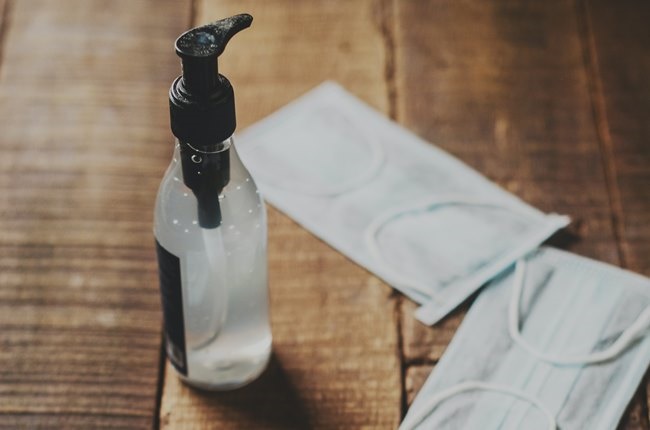
When Covid-19 started spreading across the globe, the World Health Organisation (WHO) and the Centers for Disease Control and Prevention recommended that the best way to prevent Covid-19 infection is through physical distancing, wearing cloth masks, as well as frequent and proper handwashing and surface decontamination.
The call for regular handwashing led to an exponential rise in the use of alcohol-based hand sanitisers, which has increased the incidence of hand eczema in healthcare workers as well as the general population.
Two kinds of hand eczema
Hand eczema characteristically presents as a red itchy, sometimes burning or even tender, rash. The rash may be dry with cracked and scaly skin, or wet with blisters, oozing and crusting. Certain individuals, such as those with underlying atopic (a general disposition to develop) eczema, are at greater risk of developing alcohol rub hand eczema due to the inherent impaired barrier function of the skin characterising this condition.
In a study from Hubei province in China, 434 healthcare workers were interviewed, with 321 (74%) reporting that they sanitise their hands more than 10 times per day. Of those healthcare workers, 246 (76.6%) reported symptoms of hand eczema, with the most common being irritant contact hand eczema and less commonly allergic contact hand eczema.
Another study from Milan reported that from 9 March to 4 May 2020 there were 24 new cases of hand eczema in the general population related to the use of alcohol-based sanitisers.
Some of the issues with alcohol-based hand sanitisers include the use of non-standard formulae (meaning that methanol is used instead of ethanol); types of alcohol such as isopropyl alcohol vs. ethanol; as well as varying amounts of alcohol (<60%). The various recipes making the rounds on social media in the early days of lockdown illustrate this point.
“Irritant” contact hand eczema may develop in anyone whose hands are exposed to irritants such as water, soap, or alcohol hand sanitisers. “Allergic” contact hand eczema, on the contrary, will only develop in those who have been primed to develop skin irritation to certain substances such as nickel, latex or colophony (found in adhesives, cosmetics and printing ink).
Debilitating and painful disease
An intact skin usually deters from the development of the latter form of hand eczema. Irritants assist in disrupting the skin barrier, improving the likelihood of developing allergic contact hand eczema.
Alcohol rub hand eczema can become a debilitating and painful disease, resulting in work absenteeism which can severely impair the delivery of essential services. The increased frequency of handwashing and use of alcohol hand sanitiser associated with Covid-19 prevention dramatically increases the likelihood of developing allergic contact hand eczema, which may greatly impact quality of life as well as cause occupational difficulties in the long run.
Apart from the discomfort of dry, itchy skin, the breaks in the skin can serve as a point of entry for Covid-19 because of viral receptors in the blood vessels of the skin. Painful, dry skin could also inadvertently decrease hand hygiene compliance which further increases the risk of disease transmission in these individuals. Prevention is therefore essential.
It has become clear that the Covid-19 pandemic will persist for the foreseeable future. Equally clear has been the gargantuan impact of this viral infection. Therefore, the importance of following protective guidelines, such as outlined by health and government organisations, is undeniable and should be closely adhered to.
The WHO has recommended a 60% alcohol-containing hand sanitiser with 1.45% glycerol as a moisturising agent to protect healthcare workers, and now the frequently sanitising public, from the complications of excessive alcohol hand rub usage. The minimum amount of glycerol required to decrease the risk of hand eczema is not known, although studies have shown that even lower levels than the recommended 1.45% glycerol were effective to protect the skin from excessive drying.
Moisturisers few and far between
Further recommendations include the use of an emollient-containing hand cream immediately after sanitising. Although this is a useful measure to prevent alcohol rub dermatitis, one study showed that only approximately one in five healthcare workers did so after using alcohol hand rub. This figure is highly unlikely to be higher among the general public.
Sanitising stations are located everywhere in hospitals and public areas and have been an important means of combating the spread of Covid-19. However, moisturisers are few and far between, hence the increased incidence of alcohol rub hand eczema during the pandemic.
Adequate skin care could increase hand hygiene compliance and should therefore be prioritised, especially among healthcare workers. Furthermore, preventative measures are critical to allay the next, albeit completely different wave, that of allergic contact hand eczema – another unintended health consequence of Covid-19.
*Dr Suretha Kannenberg is a Consultant Dermatologist in the Division of Dermatology at Stellenbosch University. Sergio Alves and Allison Arendse are 5th-year medical students in the same division. This is a revised version of their article recently published in the South African Medical Journal.
Image credit: Unsplash

The sector has combined debts in excess of £100m, raising fears for the future.

Scientists have been scurrying to understand immunity against reinfection with SARS-CoV-2 (the virus that can lead to Covid-19).
It is still not entirely clear how long contracting the virus confers immunity, with early studies suggesting a period of a few months, which, therefore, means that it may only provide temporary protection against reinfection.
One of these studies, for instance, found that antibody levels “waned quite rapidly” after infection in the British population, suggesting a risk of multiple infections, Health24 reported.
However, newer studies indicate immunity could last longer.
Some protection against reinfection
According to a study published in the renowned journal Nature Medicine, people who have recovered from Covid-19 have powerful and protective killer immune cells, even when antibodies are not detectable.
This, the authors wrote, “represents major determinants of immune protection on an individual as well as population level”.
In this study, a research team at the Medical Center – University of Freiburg in Germany found that after recovery from SARS-CoV-2 infection, immune cells are formed which remain in the body and could mediate a rapid immune response in case of reinfection.
“These so-called memory T-cells after SARS-CoV-2 infection look similar to those after a real flu,” said study co-author Dr Maike Hofmann, a scientist at the Department of Medicine II at the Medical Center – University of Freiburg.
“We are therefore confident that the majority of people who have survived SARS-CoV-2 infection have some protection against reinfection with SARS-CoV-2,” he added.
Study co-author, Dr Christoph Neumann-Haefelin, Head of the Gerok Liver Center at University Hospital Freiburg, also expressed optimism about their results, suggesting that immunity against the new coronavirus can be achieved after an infection, and that, “similarly, vaccines currently being tested in trials could provide significant protection against SARS-CoV-2″.
What another recent study shows
Another, perhaps more hopeful, study shows that immunity might last years, possibly even decades.
In this study, the team of researchers at the La Jolla Institute of Immunology in California, and the Icahn School of Medicine at Mount Sinai in New York, investigated multiple compartments of circulating immune memory to SARS-CoV-2 in 185 Covid-19 cases, including 41 cases more than six months post-infection.
They found that eight months after infection, most people who recovered still had enough immune cells to fight off the virus and prevent illness.
In other words, there was a very slow rate of decline of these cells, demonstrating that they persist in the body for a very long time.
Although the research, published online in pre-print server bioRxiv, has not been peer-reviewed nor published in a scientific journal, the New York Times refers to it as “the most comprehensive and long-ranging study of immune memory to the coronavirus to date”.
“That amount of memory would likely prevent the vast majority of people from getting hospitalised disease, severe disease, for many years,” said Shane Crotty, a virologist at the La Jolla Institute of Immunology, with Dr Deepta Bhattacharya, an immunologist at the University of Arizona, believing that it’s not an unreasonable prediction to think that these immune memory components would last for years.
The Times also points to another recent study that showed that survivors of SARS, also caused by a coronavirus, still carry important immune cells 17 years after being infected. The results of this study have led scientists to be hopeful that studying antibodies may be largely beneficial in an effort to develop drugs to prevent or treat Covid-19.
While scientists continue in the global race to develop a Covid-19 vaccine to help bring the pandemic under control, these findings that immunity to the virus might not be so short-lived after all are likely to come as a relief to experts.
READ | Coronavirus and the immune system: SA study to shed light
READ | What if we don’t find a vaccine for Covid-19?
Image: Getty

Mayo Clinic does not endorse companies or products. Advertising revenue supports our not-for-profit mission.
Advertising & Sponsorship
Check out these best-sellers and special offers on books and newsletters from Mayo Clinic.
Rules could be relaxed for a few days, with people urged to travel by car and not hold big gatherings.
