England, Wales And Scotland: World Cup Group B Has Has Football Fans Talking

It’s the most eye-catching group in the most controversial men’s World Cup ever.

On Friday, the draw for the tournament in Qatar – plagued to corruption and human rights allegations and to be held in winter for the first time – delivered potential match-ups that satisfied social media’s appetite for the farcical.

And most of them were in Group B.

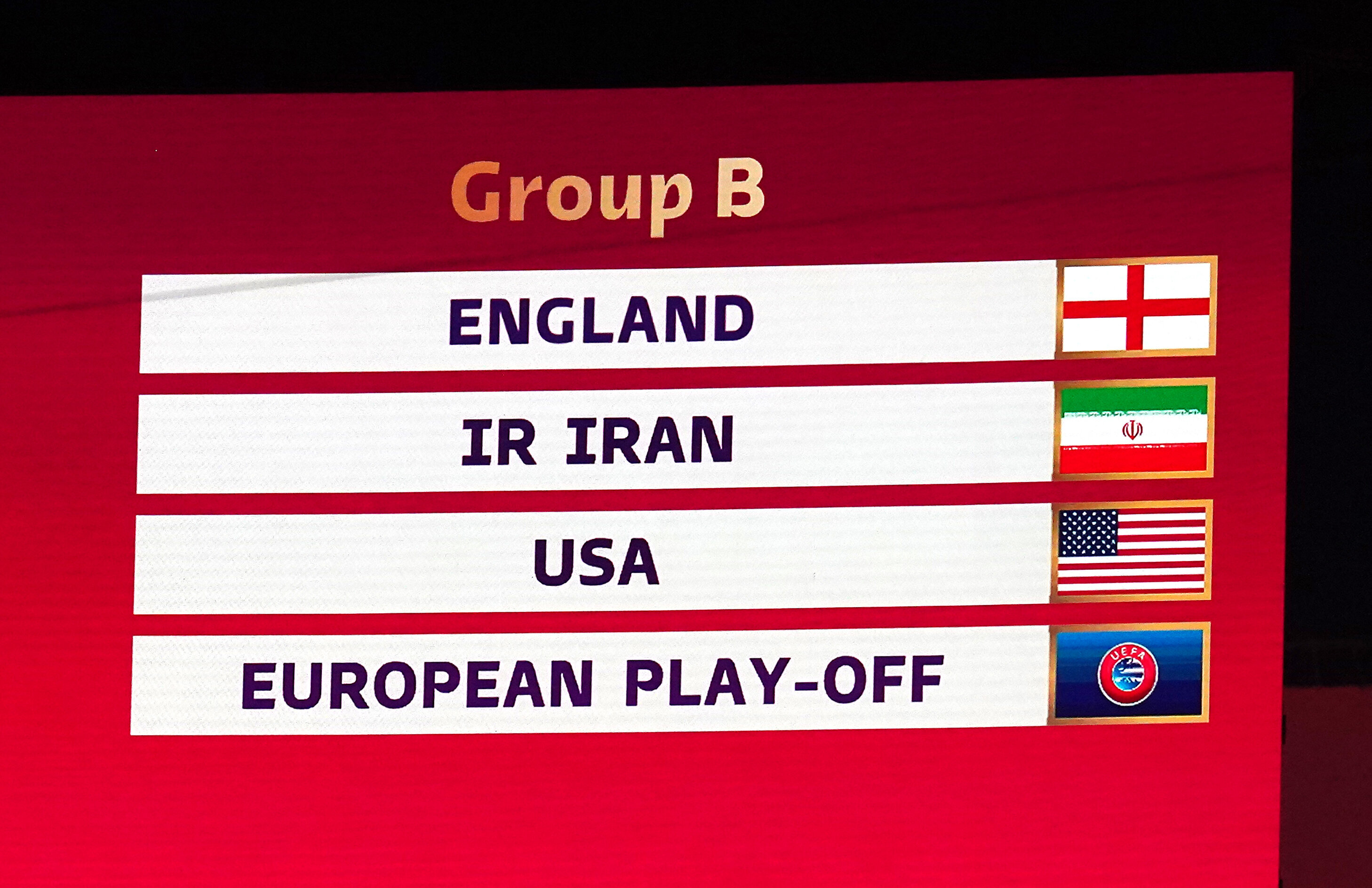
England, USA, Iran and one of Scotland, Wales or Ukraine will make take each other on in the opening stage of the finals, and Twitter quickly seized on the historical and political ramifications.

A battle of Britain?

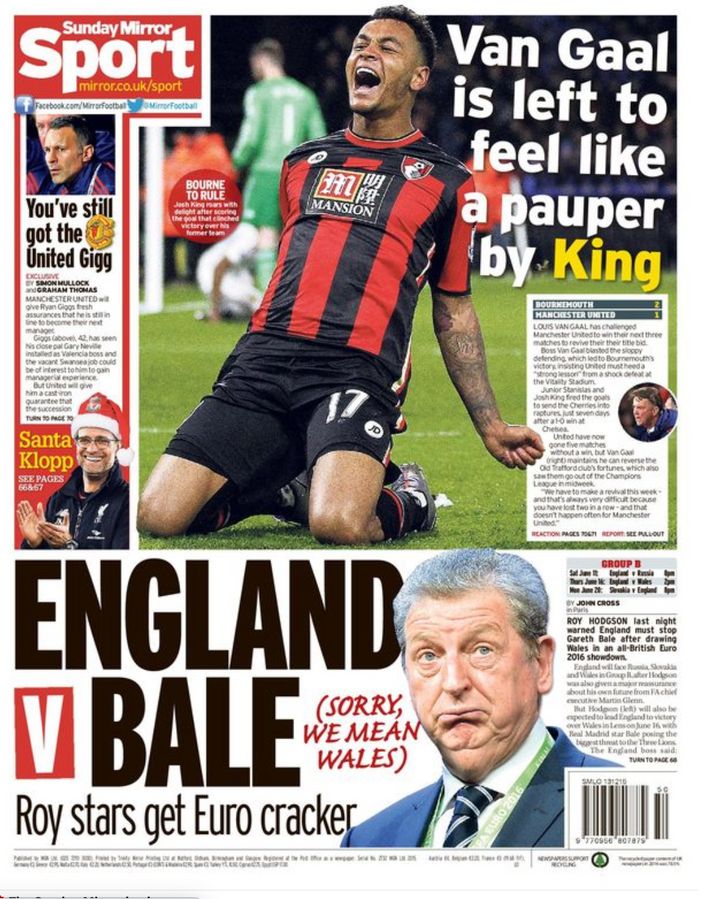
If looking from a UK perspective, the prospect of a first-ever ‘Battle of Britain’ at a World Cup finals is a dream for the country’s newspaper editors.

England has never faced off against Scotland or Wales at this tournament, but they do have recent European Championship experience against both sides.

Scotland and England played out a goalless draw at Wembley in the group stage of Euro 2020 last June, while Wales and England came together at Euro 2016.

If either Scotland or Wales qualify, expect the contest to spark domestic grievances, references to everything from Braveheart to Offa’s Dyke, and petty one-upmanship driven by London-based tabloids.

.

The Meghan Markle derby

Gareth Southgate’s team will face the US in their second game. The teams have met twice in the World Cup finals – in 1950 and 2010 – and England won neither of them.

Apart from the underlying historical tensions – the revolutionary war, both country’s record of imperialism – the 1950 clash is infamous. The US beat England 1-0 at Belo Horizonte, Brazil, with Joe Gaetjens’ 38th-minute goal marking one of the great football upsets.

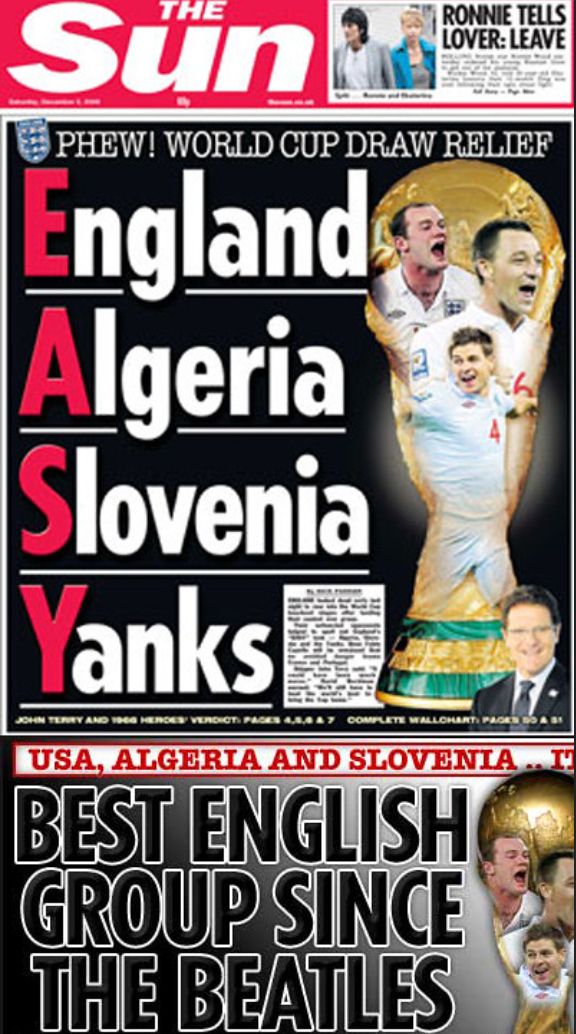
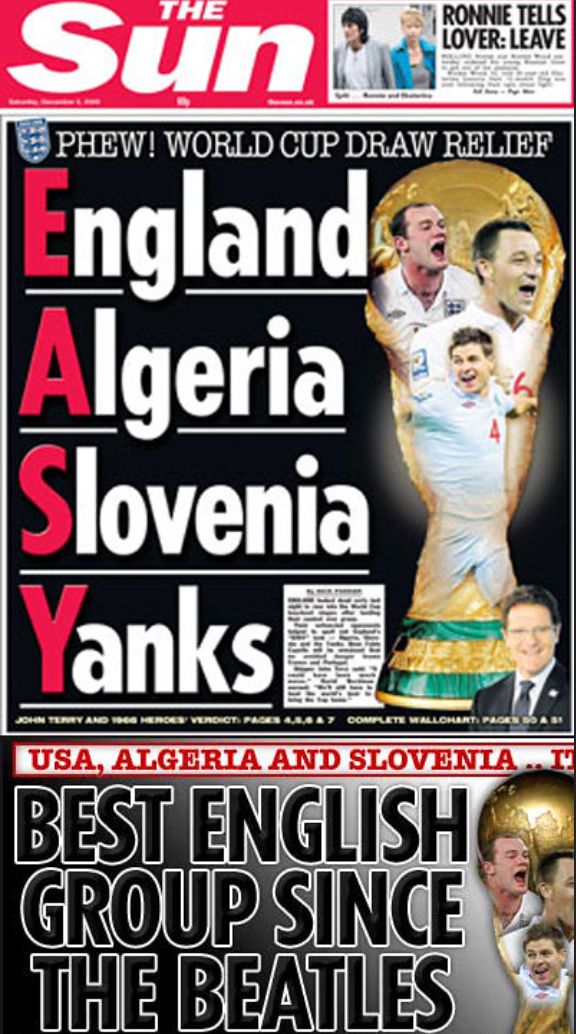
The last World Cup clash was also memorable. England’s “golden generation” were over-whelming favourites, as witnessed by The Sun newspaper’s hubristic front page when the group was drawn: “England, Algeria, Slovenia, Yanks’ (EASY)”.

.

In the event, the 1-1 helped both the US and England to advance to the knockout rounds – but with the unfavoured Americans topping the group. The Stateside tabloids appeared to have as much fun as their English counterparts pre-tournament.

Politically-charged US v Iran

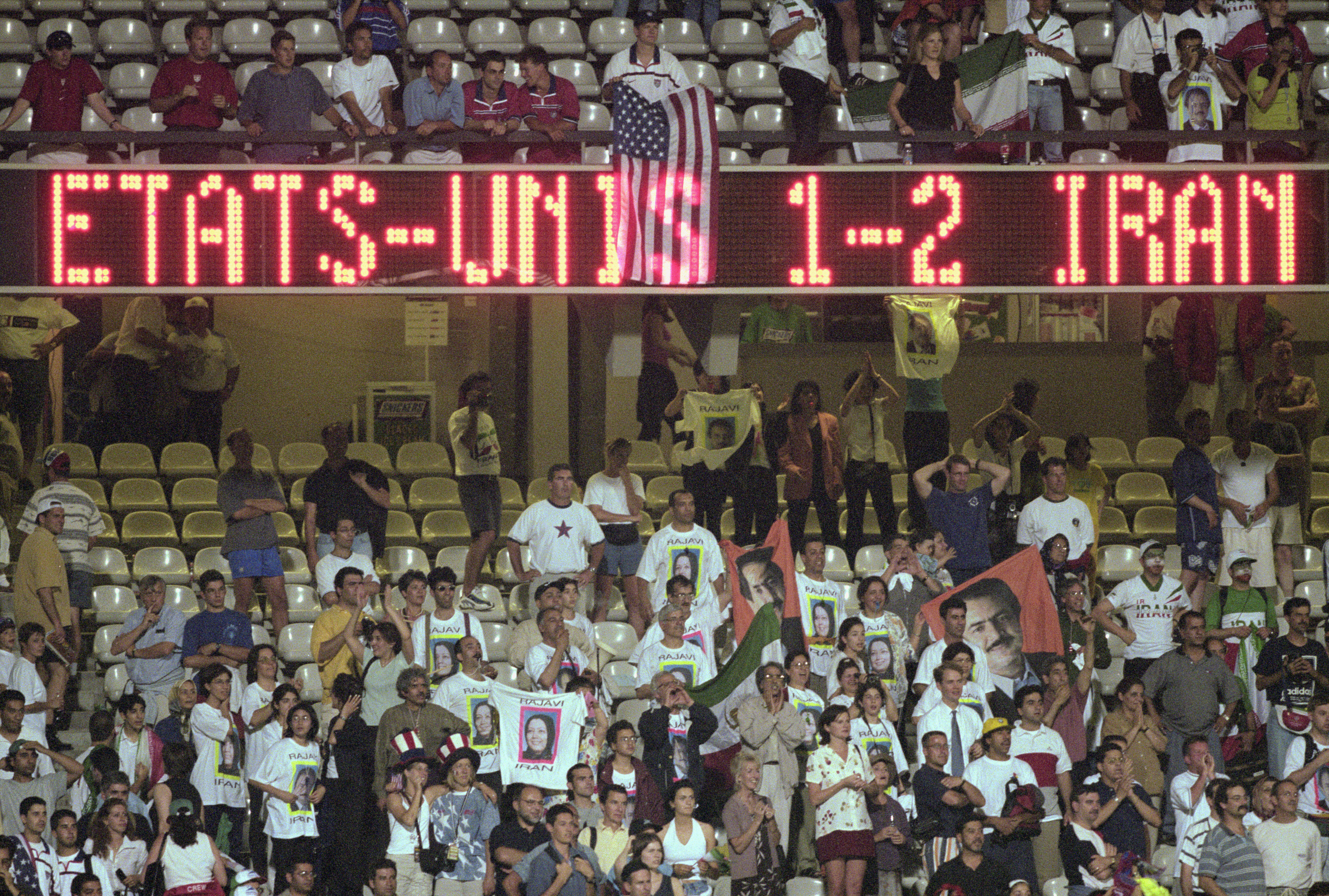
Just like in 1998, the US will play Iran with diplomatic relations yet to be restored between the nations. The Guardian called the game 24 years ago the “most politically charged match in World Cup history”, and the delicate geopolitics were underlined by a pre-game ceremony that saw Iranian players gifting white roses to the Americans as a symbol of peace.

On the pitch, Iran upset the US 2-1, eliminating the Americans after their second game of the tournament. It was Iran’s first-ever victory at a World Cup finals.

Tensions between England and Iran – note the British-Iranians recently released by Tehran after a historical debt was paid – are unlikely to be much better.

<img class="img-sized__img landscape" loading="lazy" alt="Iranian fans in the grandstand celebrate their 2-1 victory over the US in the 1998 World Cup.” width=”720″ height=”485″ src=”https://www.wellnessmaster.com/wp-content/uploads/2022/04/england-wales-and-scotland-world-cup-group-b-has-has-football-fans-talking-6.jpg”>
Iranian fans in the grandstand celebrate their 2-1 victory over the US in the 1998 World Cup.

Ben Radford via Getty Images

Will Ukraine play?

It is unclear whether it is Scotland, Wales or Ukraine who will make up the fourth team in the group.

The continued invasion of Ukraine means FIFA is yet to establish a date in June for their qualifier against Scotland, and the subsequent match against Wales.

Oleksandr Petrakov, the manager of Ukraine’s men’s national football team, said in an interview with Ukrainian TV station Football 1: “As long as people in my country continue to die, I cannot think about playing the game in Scotland.

“We still have April and May to come, and we will see what happens then, but we are supposed to playing Scotland in June as well as Nations League games.

“But we can’t think about them at the moment given the current situation.”

Share Button

Zelenskyy Removes 2 Ukrainian Generals After Accusing Them Of Being ‘Traitors’

Ukrainian President Volodymyr Zelenskyy announced Thursday he is sacking two Ukrainian military generals for allegedly being “traitors.”

“Those servicemen among senior officers who have not decided where their homeland is, who violate the military oath of allegiance to the Ukrainian people as regards the protection of our state, its freedom and independence, will inevitably be deprived of senior military ranks,” Zelenskyy said during his nighttime address to the nation posted on Telegram, according to the English translation included in the video.

Zelenskyy named the two individuals as Naumov Andriy Olehovych, ex-chief of the Main Department of International Security of the Security Service of Ukraine, and Kryvoruchko Serhiy Oleksandrovych, former head of the Office of the Security Service of Ukraine in the Kherson region.

The Ukrainian president did not spell out what actions prompted the generals’ dismissal, but pledged to root out any more “antiheroes” in the future.

“Now I do not have time to deal with all the traitors,” he said. “But gradually they will all be punished.”

Over recent months, Zelenskyy has taken steps to tighten his control in Ukraine and steer the country away from Russia. In early February, before the war, he decided to shut down three TV channels owned by Viktor Medvedchuk, an ally to Russian President Vladimir Putin, claiming they aired “propaganda.” Following the invasion, he declared martial law, which he recently extended until late April, and eliminated 11 political parties with ties to the Kremlin.

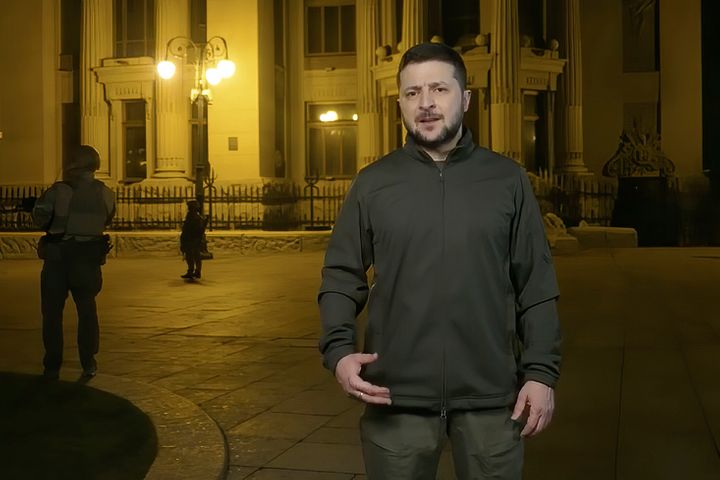
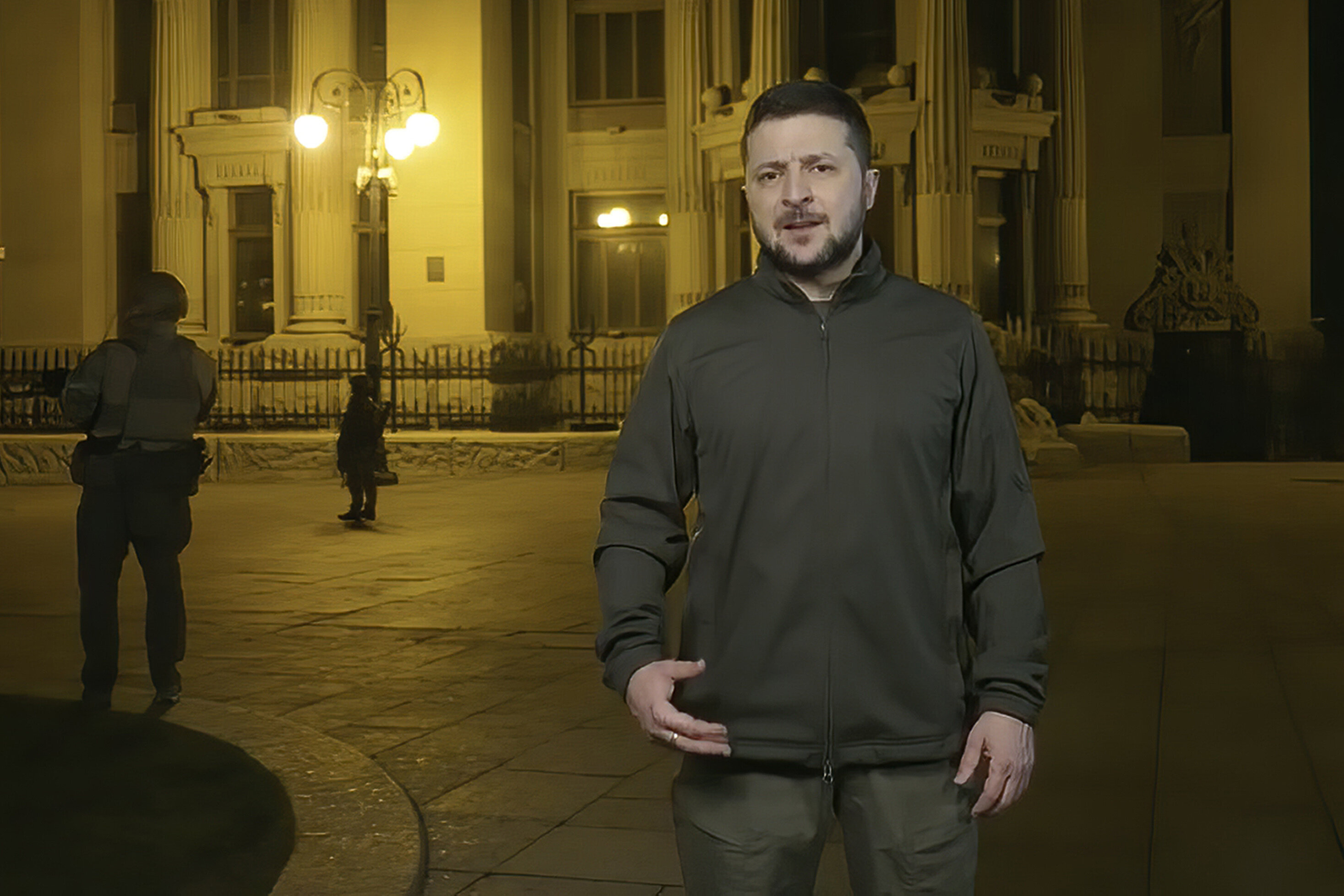
Ukrainian President Volodymyr Zelenskyy speaks from Kyiv, Ukraine, on March 31.

Ukrainian Presidential Press Office via Associated Press

Ukraine and the West have been warning that Russia is regrouping its forces despite promising to scale back to “increase trust” in peace talks, which are set to resume Friday.

Russia’s defense minister told military officials Tuesday the country was now turning its attention to the “main goal — the liberation of Donbas,” according to The Associated Press .

“What we don’t believe is that [Putin’s] planning to send them home,” John Kirby, Pentagon’s press secretary told MSNBC on Thursday. “What we think he’s going to do is refit these troops, resupply them and put them back into Ukraine for offensive operations somewhere else.”

Young Russian men of draft age are also worried that Putin will send them to fight on the front lines in Ukraine as annual spring conscription is set to start Friday, despite officials ruling that out.

Jeremy Fleming, the head of British intelligence agency GCHQ, echoed U.S. intelligence warnings Thursday that Putin is “misinformed” on Russia’s military failings in Ukraine, adding that at one point the Russians accidentally shot down one of their own aircraft.

“Even though we believe Putin’s advisers are afraid to tell him the truth, what’s going on and the extent of these misjudgements must be crystal clear to the regime,” Fleming said.

Share Button

Ukraine War: Putin’s ‘Massively Misjudged’ Invasion Plagued By Blunders, Says UK Spy Chief

Vladimir Putin has made a “strategic miscalculation” over his assault on Ukraine, the head of Britain’s GCHQ spy agency said as he claimed demoralised Russian troops are in such disarray they are even shooting down their own aircraft.

In a rare public address during a visit to Australia, Sir Jeremy Fleming will say the Russian president has “massively misjudged” the situation in Ukraine, from the impact of sanctions to the strength of the resistance and the ability of his forces to deliver a rapid victory.

And he will paint a picture of a faltering military campaign plagued by blunders.

“We’ve seen Russian soldiers – short of weapons and morale – refusing to carry out orders, sabotaging their own equipment and even accidentally shooting down their own aircraft,” he will say.

“And even though we believe Putin’s advisers are afraid to tell him the truth, what’s going on and the extent of these misjudgments must be crystal clear to the regime.

“It all adds up to the strategic miscalculation that Western leaders warned Putin it would be. It’s become his personal war, with the cost being paid by innocent people in Ukraine and, increasingly, by ordinary Russians too.”

Earlier on Wednesday, British intelligence suggested Russian forces appear to have conceded that its strategy to overwhelm the Ukrainian capital of Kyiv has so far failed.

The ministry of defence tweeted: “Russian units suffering heavy losses have been forced to return to Belarus and Russia to reorganise and resupply.

“Such activity is placing further pressure on Russia’s already strained logistics and demonstrates the difficulties Russia is having reorganising its units in forward areas within Ukraine.

“Russia will likely continue to compensate for its reduced ground manoeuvre capability through mass artillery and missile strikes.

“Russia’s stated focus on an offensive in Donetsk and Luhansk is likely a tacit admission that it is struggling to sustain more than one significant axis of advance.”

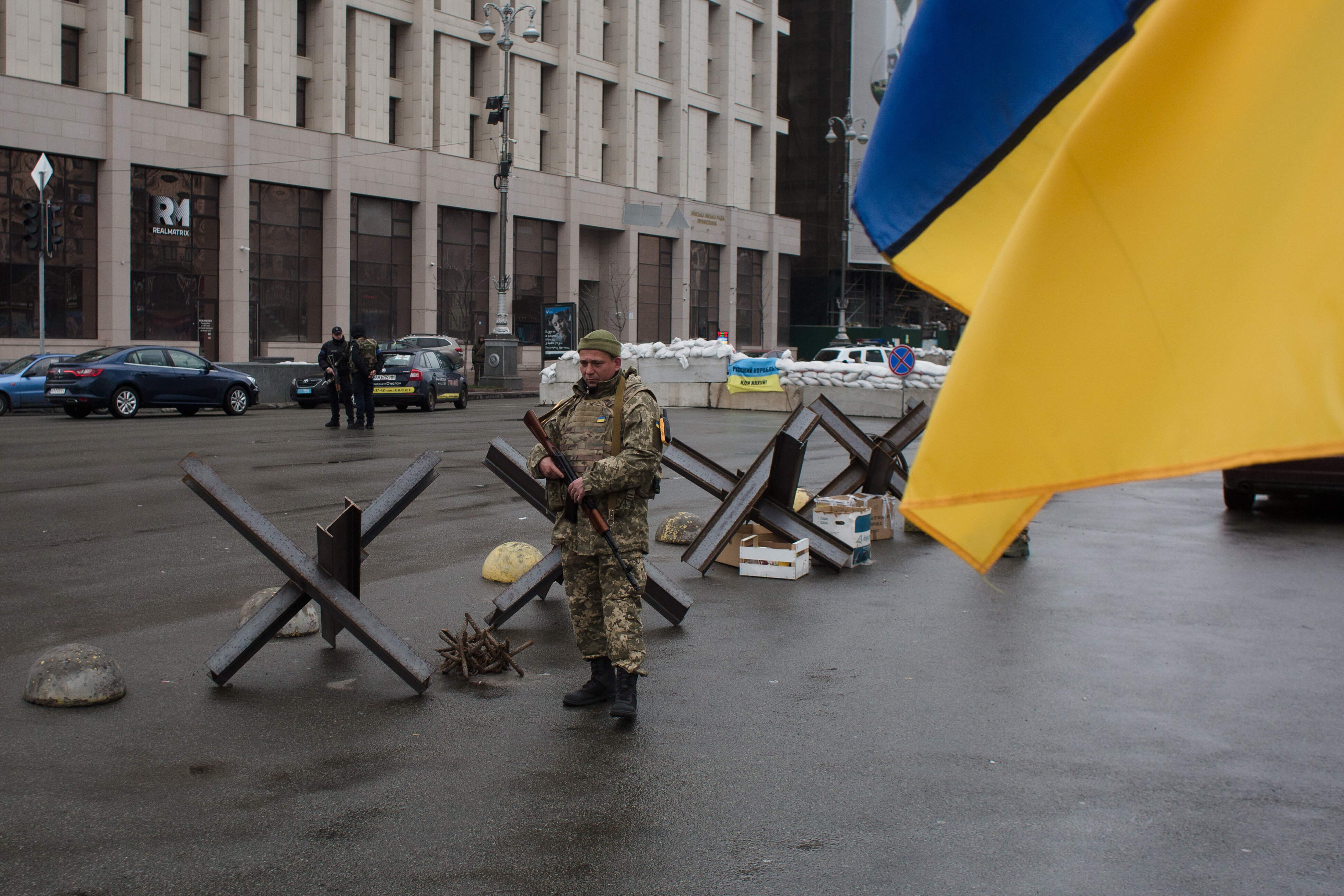
<img class="img-sized__img landscape" loading="lazy" alt="Ukrainian serviceman as seen on the checkpoint in the Independence Square in Kyiv, Ukraine.” width=”720″ height=”479″ src=”https://www.wellnessmaster.com/wp-content/uploads/2022/03/ukraine-war-putins-massively-misjudged-invasion-plagued-by-blunders-says-uk-spy-chief-3.jpg”>
Ukrainian serviceman as seen on the checkpoint in the Independence Square in Kyiv, Ukraine.

Anastasia Vlasova via Getty Images

Fleming is also warning China not to become “too closely aligned” with Russia as it continues to pursue its path of aggression against Ukraine.

And he will say that China’s long-term interests are not well served by an alliance with a country that “wilfully and illegally” ignores the international “rules of the road”.

His intervention comes after Prime Minister Boris Johnson last week directly confronted President Xi Jinping over Beijing’s stance on the conflict in Ukraine in what was described as a “frank and candid” discussion.

Speaking at the Australian National University in Canberra, Fleming will say that Putin has made a clear “strategic choice” to align with China as it grows more powerful in direct opposition to the United States.

From the Kremlin’s point of view, it regards China in the current crisis as a supplier of weapons, a provider of technology, a market for its oil and gas and a means to circumvent sanctions.

However, Fleming will say President Xi – who has not publicly condemned the invasion – has a “more nuanced” view of the relationship.

With “an eye on retaking Taiwan”, he would not want to do anything which might constrain his actions in future, while he may calculate that it actually helps him oppose the US.

At the same time, Beijing is taking the opportunity to purchase cheap Russian hydrocarbons while Moscow provides additional impetus and support to its digital markets and technology plans.

Fleming will however argue that there are risks for both sides – but particularly China – in becoming “too closely aligned”.

“Russia understands that, long term, China will become increasingly strong militarily and economically. Some of their interests conflict; Russia could be squeezed out of the equation,” he will say.

“And it is equally clear that a China that wants to set the rules of the road – the norms for a new global governance – is not well served by close alliance with a regime that wilfully and illegally ignores them all.”

On Ukraine, Fleming will say GCHQ’s National Cyber Security Centre has seen “sustained intent” from Russia to disrupt Ukrainian government and military systems.

He will say there is the potential for a spillover into neighbouring countries, suggesting Russia’s “cyber actors” are looking for targets in states that oppose their actions.

Share Button

Ukrainian Soldier Who Told Russian Warship To ‘Go F*** Yourself’ Given Medal

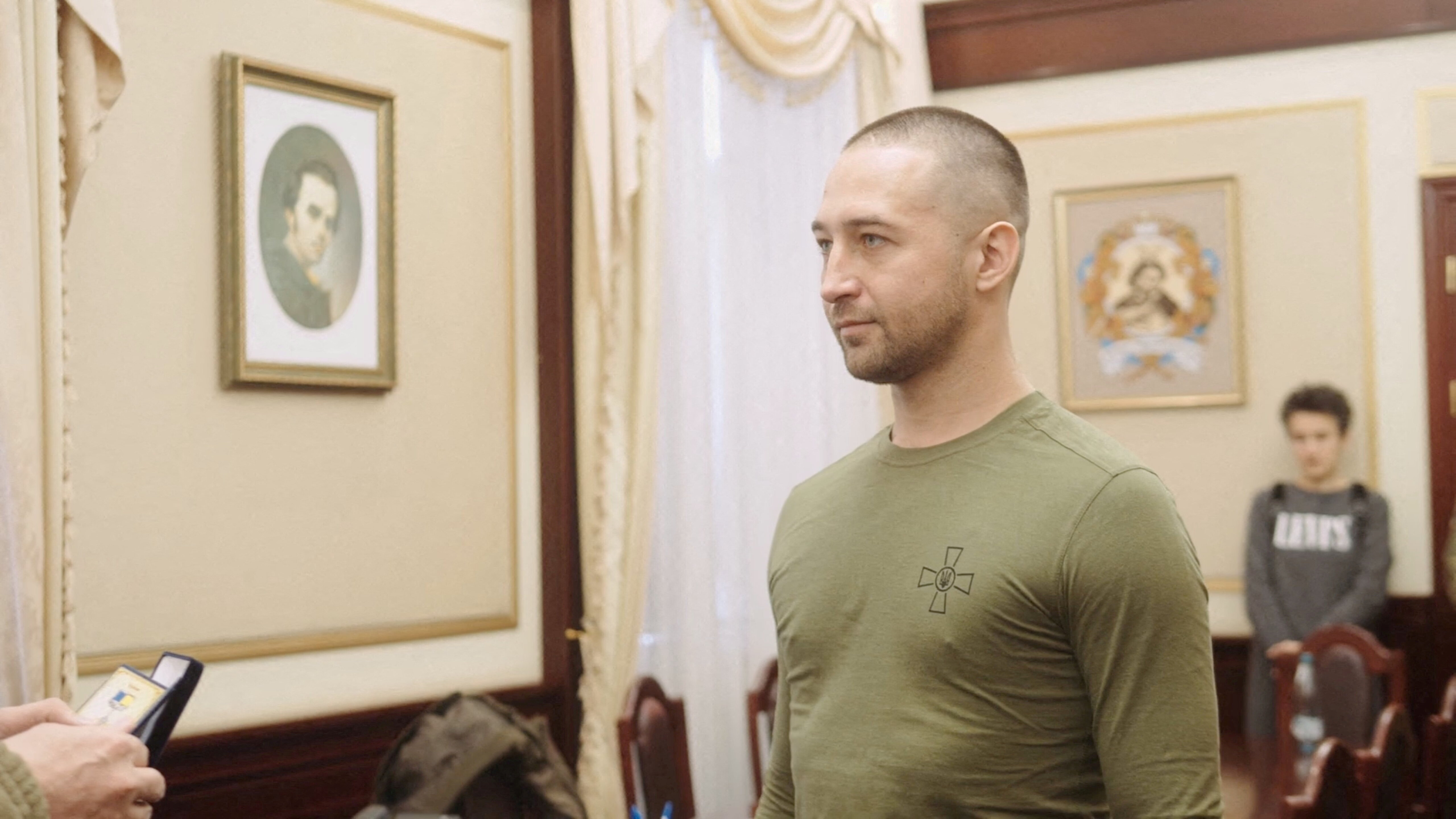
A Ukrainian soldier who defiantly told a Russian warship to “go fuck yourself” before being captured has been awarded a civic medal, his country’s ministry of defence said on Tuesday.

Roman Gribov, a Ukrainian border guard, was told to surrender while defending the tiny Snake Island in the Black Sea on the first day of Russia’s invasion into Ukraine in February.

A Ukrainian official at the time said 13 of the border guards had been killed defending the island south of the port of Odessa, on February 24, after losing contact with the garrison, which was targeted by the Russian military in an artillery attack.

In fact, the soldiers did surrender to the Russians and a few weeks later they were returned to Ukraine in a prisoner swap.

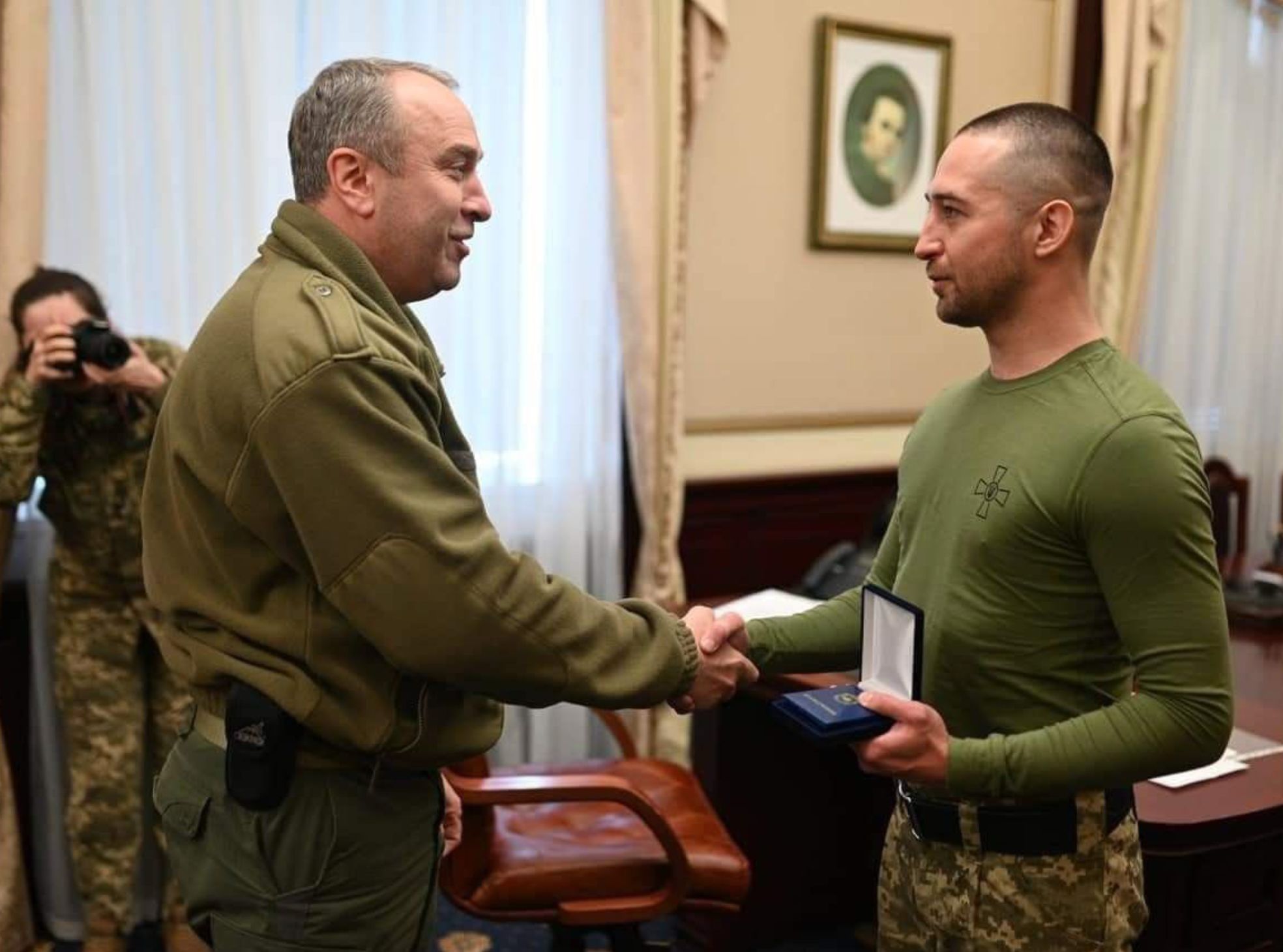
In footage published on Tuesday, Gribov was called a “hero” as he received the award from the head of Cherkasy regional administration, Reuters reported.

“I want to say a big thank you to the Ukrainian people for such support,” Gribov said. “We strongly feel this support, it inspires us.”

Share Button

One Month On From Russia’s Invasion Of Ukraine, Here’s Where The War Stands

For weeks there had been warnings, but many serious people could not believe it: Russia would never invade neighbouring Ukraine. Would they?

Then, on February 24, it happened. Tanks and soldiers streamed across the border, scenes more reminiscent of the Second World War than the remote cyber warfare that modern conflict was supposed to be dominated by.

The capital, Kyiv, was targetted. But Vladamir Putin appears to have under-estimated heavily-armed Ukrainian soldiers and volunteers, and Russia’s lightning strike appears to be nothing of the sort. A month on, here’s where the war stands.

What has happened in Ukraine?

As Putin’s frustration has grown, so has the brutality of Russian forces – killing civilians as well as soldiers and repeatedly accused of war crimes. But in the month since Moscow launched its invasion of Ukraine, Russian troops have met stiff resistance and failed to capture any major city.

They have instead been bombarding and encircling cities, laying waste to residential areas and driving around a quarter of Ukraine’s 44 million people from their homes. More than 3.7 million of them have fled abroad, half to neighbouring Poland.

Ukraine cities have been flattened by Putin in a manner similar to the way he destroyed the Chechen capital Grozny at the turn of the century. Among them is the besieged city of Mariupol, where authorities on Friday said about 300 people died in a Russian airstrike earlier this month on a theatre where hundreds of people were sheltering.

Mariupol, a city of 400,000 before the war, has been among the worst hit by the Russian bombardment. Tens of thousands of people are still believed to be trapped with little access to food, power or heat.

The cities of Chernihiv, Kharkiv and Sumy in the east have also endured devastating bombardment. The United Nations said it had confirmed 1,081 civilian deaths and 1,707 injuries in Ukraine since the February 24 invasion, adding that the real toll was likely higher.

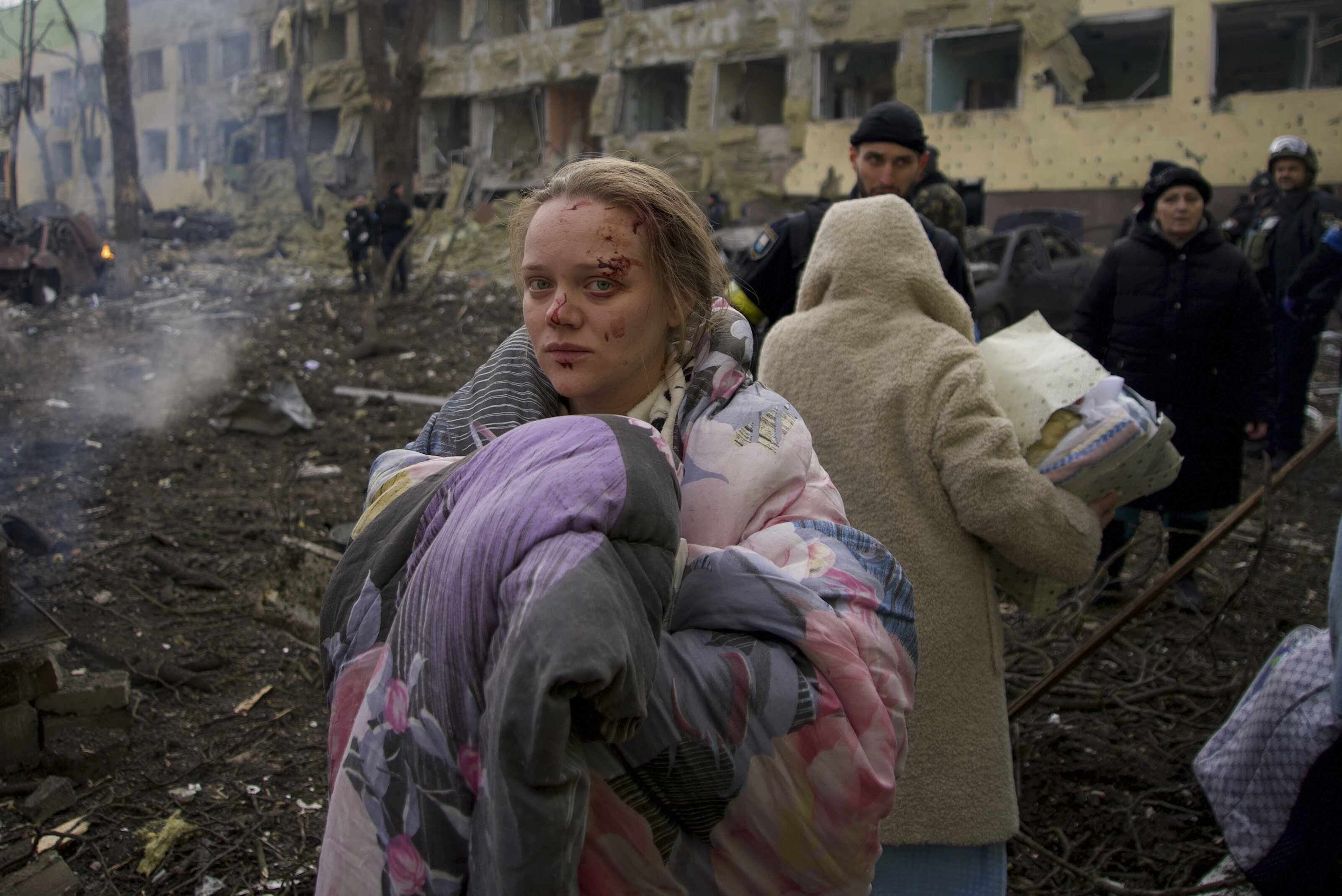
<img class="img-sized__img landscape" loading="lazy" alt="Mariana Vishegirskaya stands outside a maternity hospital that was damaged by shelling in Mariupol, Ukraine.” width=”720″ height=”480″ src=”https://www.wellnessmaster.com/wp-content/uploads/2022/03/one-month-on-from-russias-invasion-of-ukraine-heres-where-the-war-stands-4.jpg”>
Mariana Vishegirskaya stands outside a maternity hospital that was damaged by shelling in Mariupol, Ukraine.

Mstyslav Chernov via AP

The rise of Volodymyr Zelenskyy

Now cutting a familiar figure the world over – rallying his people from fortified bunkers, unshaven in olive-coloured T-shirt – little was known about Volodymyr Zelenskyy outside his homeland a month ago.

The former TV comic and actor has become the symbol of Ukraine’s resistance, deploying his oratory and presentational skills on social media and in defiant speeches.

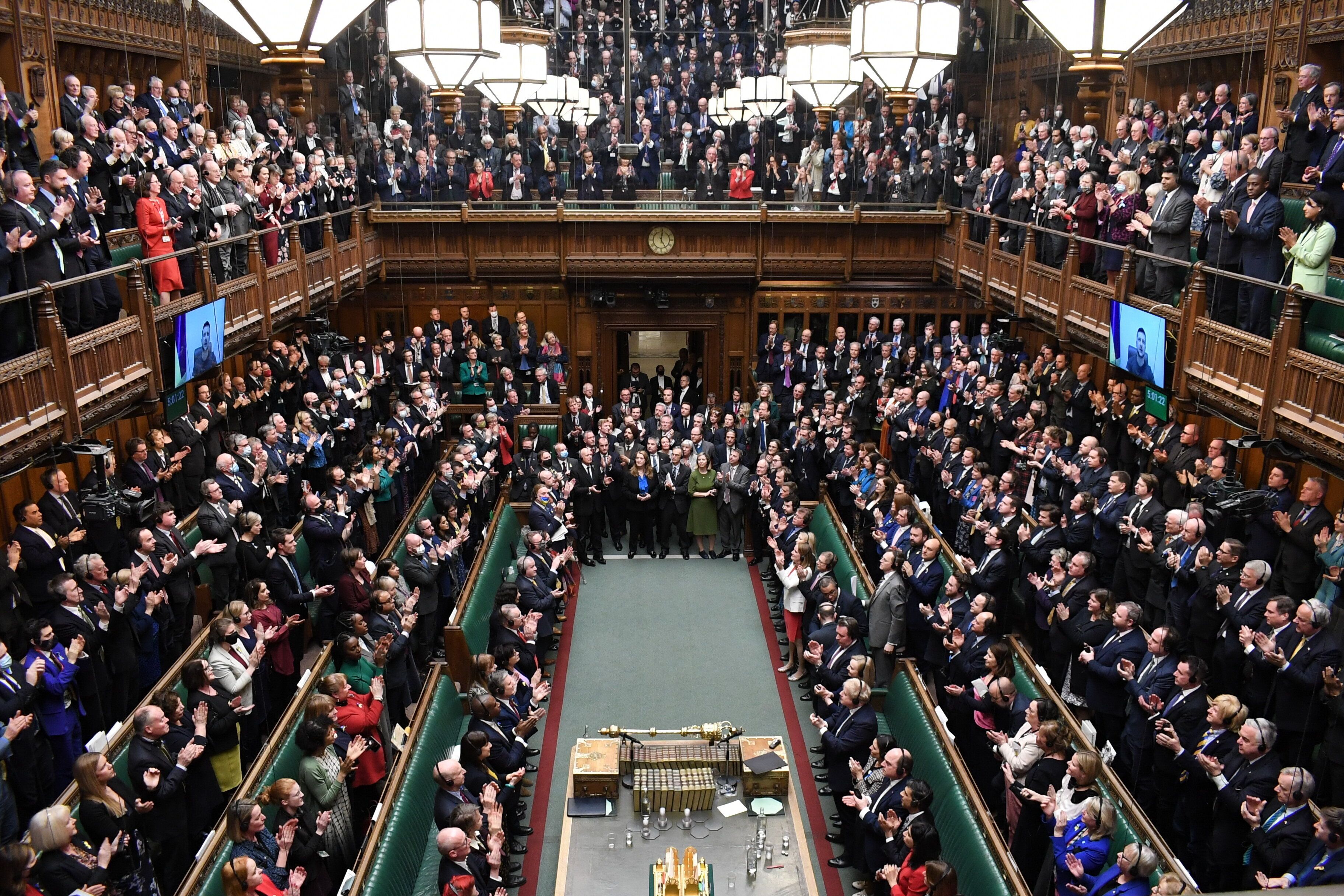
The 44-year-old’s wartime leadership has even been compared to Winston Churchill by British politicians. Boris Johnson, who has written a book on Churchill, said: “I think that president Zelenskyy has proved to be a quite remarkable leader of his people – he’s rallied them and he’s been their voice. He knows, as Churchill said of himself, he may not have been the lion but he’s been privileged to give the roar.”

The UK parliament giving a standing ovation after to Volodymyr Zelenskyy.

UK Parliament/Jessica Taylor via PA Media

Zelenskyy’s leadership help explain the massive support from Western allies by way of “defensive” artillery. But he has been frustrated. His biggest request since the outbreak of war – a so-called no-fly zone to prevent bombings from Putin’s planes – has been rejected time and again, with the US and its allies fearing the move would trigger a wider world war with Russia.

Russia struggling

Russia’s invasion remains largely frustrated by the dogged resistance of Ukrainians, and there are signs Putin could be scaling back his ambitions.

On Friday, the defence ministry said that having accomplished the “first phase” of their military operations, Russian forces would concentrate on “liberating” the Donbas region which is part-held by Moscow-backed separatist rebels.

Western officials said it was a recognition that Russian forces were overstretched and may have to “pause” operations around Kyiv and other cities while they focus on the east of the country.

Russia’s defence ministry said 1,351 Russian soldiers had been killed 3,825 wounded, the Interfax news agency reported. Ukraine says 15,000 Russian soldiers have died.

PA Graphics via PA Graphics/Press Association Images

What is the West doing?

Western powers have been urged to step up military support for the Ukrainian forces. But, since Ukraine is not a member of Nato, the US, the UK and its allies are limited in what they can do.

The military alliance called the North Atlantic Treaty Organisation – or Nato – and its 30 member nations are bound by Article 5 of its constitution. They agree to mutual defence – military action – in response to an enemy attack. The principle goes: “An attack against one ally is considered as an attack against all allies.”

Nato is anxious about further escalating tensions between the world’s two biggest nuclear powers – the US and Russia – and edging everyone closer to the “World War III” scenario many fear.


But the region is on edge. On Friday, US president Joe Biden visited Poland – which is a Nato member and shares a border with Ukraine – to underscore his commitment to the country. The US has said that it will defend “every inch” of Nato territory, and Warsaw is keen to see even more US troops stationed on the alliance’s eastern flank.

<img class="img-sized__img landscape" loading="lazy" alt="Joe Biden meets service members from the 82nd Airborne Division in the city of Rzeszow in southeastern Poland, around 62 miles from the border with Ukraine.” width=”720″ height=”518″ src=”https://www.wellnessmaster.com/wp-content/uploads/2022/03/one-month-on-from-russias-invasion-of-ukraine-heres-where-the-war-stands-7.jpg”>
Joe Biden meets service members from the 82nd Airborne Division in the city of Rzeszow in southeastern Poland, around 62 miles from the border with Ukraine.

BRENDAN SMIALOWSKI via Getty Images

How does it end?

Four rounds of peace talks between Russia and Ukraine have yet to result in anything close to a diplomatic resolution.

Russia wants legal assurances that Ukraine will never join Nato, and for Ukraine to take a so-called neutral status and change its constitution to guarantee this.

The Kremlin has also demanded that Ukraine acknowledges Crimea, which Putin annexed in 2014, as Russian territory. It also wants recognition of the independence of pro-Russian separatists in Donetsk and Luhansk in Ukraine’s eastern industrial heartland of Donbas. The conflict in the region, which has claimed at least 14,000 lives, was Russia’s fabricated pretext to invade Ukraine last month.

Ukraine is seeking a ceasefire and a troop withdrawal. It has said it is willing to negotiate, but not to surrender or accept any ultimatums.

Ukraine has said it is prepared to accept security guarantees that stop short of joining Nato – a compromise on its part. But giving up the Crimea and the Donbas could be a bridge too far, and gaining that territory now seems to be Putin’s over-riding objective. Stalemate could beckon.

Share Button

Putin Tries To Stoke Culture Wars By Citing JK Rowling Being ‘Cancelled’

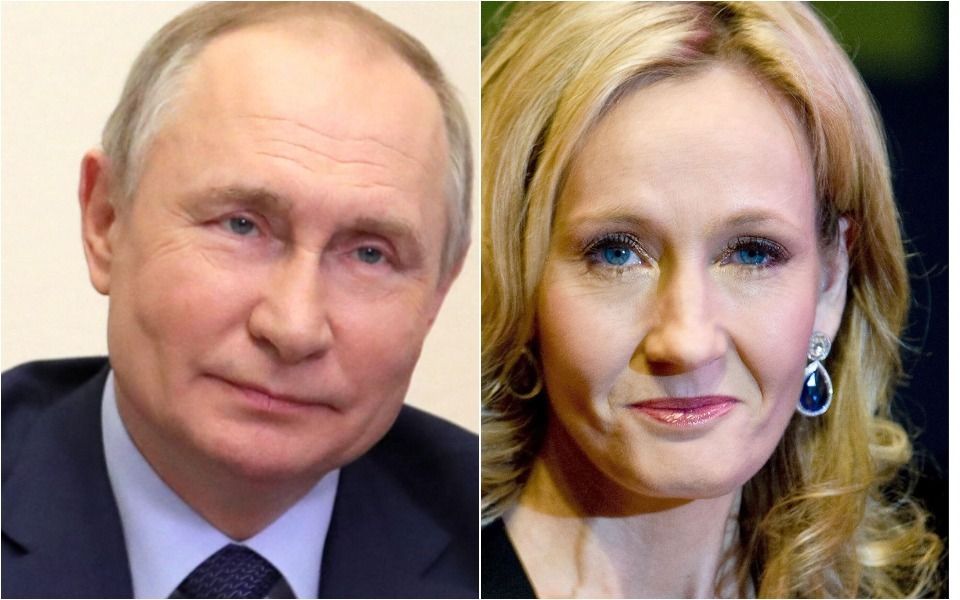
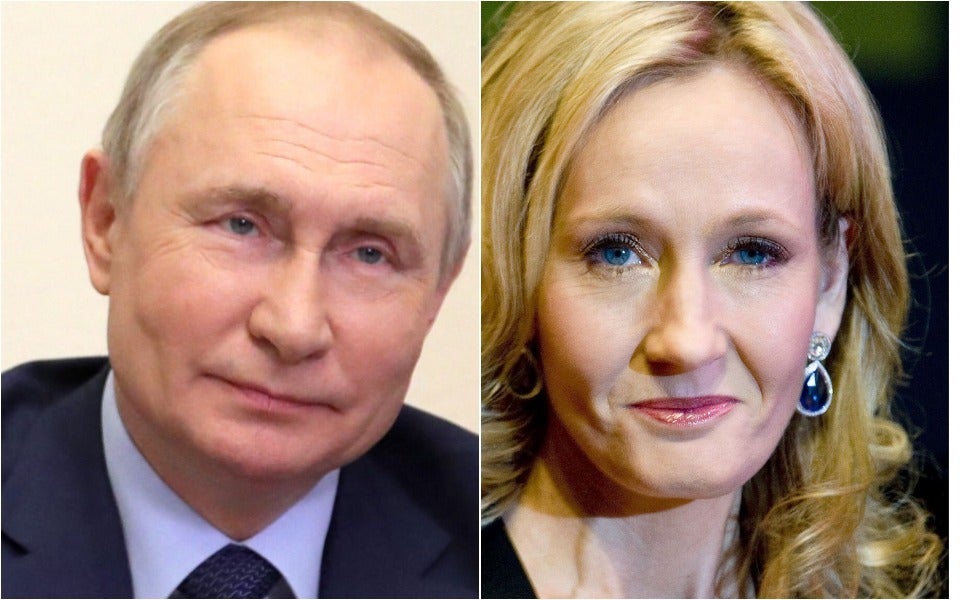
Russian president Vladimir Putin has been accused of a thinly-veiled attempt to divide the West by claiming his country was being victimised by “cancel culture” after its invasion of Ukraine.

Putin likened the world’s condemnation of Russia to the backlash that Harry Potter author JK Rowling received for controversial comments about the transgender community. Rowling was “cancelled”, Putin said, “just because she didn’t satisfy the demands of gender rights”, according to an interpreter’s translation.

He also claimed Western countries were trying to cancel the works of composers Tchaikovsky, Shostakovich and Rachmaninoff.

On Twitter, Rowling responded to Putin’s suggestion, and shared an article about incarcerated Kremlin critic Alexei Navalny.

She wrote: “Critiques of Western cancel culture are possibly not best made by those currently slaughtering civilians for the crime of resistance, or who jail and poison their critics.”

The writer also shared the hashtag #IStandWithUkraine.

Liberal Deocrat MP and ex-leader Tim Farron led the chorus urging people to avoid “amplifying (Russian) propaganda just because they affirm things that you already think”.

In a subsequent tweet, Rowling detailed the work her Lumos charity is doing in Ukraine.

“Children trapped in orphanages and other institutions are exceptionally vulnerable right now,” she said.

“Thank you so, so much to everyone who has already donated to Lumos’s Ukraine appeal.”

Rowling said she was personally matching all donations to the Lumos emergency appeal up to £1 million.

Putin is reported as saying: “They cancelled Joanne Rowling recently, the children’s author.

“Her books are published all over the world. Just because she did not satisfy the demands of gender rights.

“They are trying to cancel our country. I am talking about the progressive discrimination of everything to do with Russia – this trend that is unfolding in a number of Western states.”

Rowling in June 2020 wrote an essay explaining how she was partly motivated to speak about transgender issues because of her experience of domestic abuse and sexual assault.

Critics have accused the writer of being transphobic, an allegation she strongly denies.

Her critics have included Harry Potter stars Daniel Radcliffe, Emma Watson and Rupert Grint.

But other commentators, including journalist Owen Jones, argued Putin was not be especially sophisticated.

Share Button

BBC Question Time: Comedian Dom Joly Blasts Government’s ‘Disgusting’ Treatment Of Ukrainian Refugees

Comedian Dom Joly has condemned the government’s “disgusting” treatment of Ukrainian refugees as he blasted the visa requirement and ministers’ fears of letting in spies.

Speaking on BBC’s Question Time, the Save the Children ambassador also criticised Conservative policies that tried to deter the “wrong sort of refugee”.

Joly took issue with the bureaucracy around the Homes for Ukraine scheme, with the government yet to say how many visas have been issued via the programme.

He also spoke out against ministers warning that women fleeing Ukraine could be Russian spies coming to Britain to launch Salisbury-style attacks.

Joly said: “Firstly, this government seems to … well, its supporters mainly, seem to have an anti-refugee, anti-immigrant feeling and so I think they feed off that, they feel that is the way to go.

“And certainly they have been incredibly confused by the fact that people seem to be incredibly sympathetic towards Ukrainian refugees and I cannot, for the life of me, see what the difference is between Ukrainian refugees and Syrians and Afghans. Well, actually, I can and I think that is one of the reasons, for instance, that there were no visa offices set up at Calais, because they did not want the wrong sort of refugee or immigrant turning up.”

He said the apparent sluggishness in issuing visas via the Homes for Ukraine scheme spoke to the “ludicrous amount of complications”.

“Why are we the only country asking people to have visas?,” he said, referring to the European Union, by contrast, granting temporary residency to Ukrainians fleeing the invasion and giving them access to employment, social welfare and housing for up to three years.

“There was this ridiculous excuse that somehow some of these people might be spies or they might be secret agents coming to do that. Well, that does not seem to affect any other country, so why are we so special?”

He finished: “I think it is disgusting the way we treat it, I really do.”

Almost a week after its launch, the government has not confirmed how many Homes for Ukraine applications have been successful. On Question Time, government minister Damian Hinds said a report detailing the figures has yet to be published, but “thousands” of Ukrainians with family links have been given visas.

He said: “Everybody recognises that there is the most enormous humanitarian emergency going on. We are a warm-hearted, kind-hearted nation, and we must do not only our share, but we want to do more than our share.”

Share Button

UK Sends 6,000 More Missiles To Ukraine In Johnson Push To ‘Keep Flame Of Freedom Alive’

The UK is to send 6,000 more missiles to Ukraine to bolster Kyiv’s fight against Russia’s invasion as Boris Johnson urged Western allies to help “keep the flame of freedom alive”.

The British prime minister will use as summit of Nato and G7 leaders to detail a new support package for the Ukrainian military, including thousands of missiles comprising anti-tank and high-explosive weaponry.

In addition, the UK is providing £25 million from the Foreign Office’s conflict security and stabilisation fund to help pay the salaries of Ukrainian soldiers and pilots battling the Russians.

Ahead of his visit to Brussels on Thursday for talks, a month on from the Russian invasion, Johnson called on other Western leaders to step up the supply of military hardware to Kyiv as well as doubling down on sanctions against Russia.

“Vladimir Putin is already failing in Ukraine. The Ukrainian people have shown themselves to be extraordinarily brave and tenacious in defending their homeland, in the face of an unprovoked onslaught,” he said.

“But we cannot and will not stand by while Russia grinds Ukraine’s towns and cities into dust. The United Kingdom will work with our allies to step up military and economic support to Ukraine, strengthening their defences as they turn the tide in this fight.

“One month into this crisis, the international community faces a choice. We can keep the flame of freedom alive in Ukraine, or risk it being snuffed out across Europe and the world.”

Britain has already sent more than 4,000 anti-tank weapons to Ukraine, including next-generation light anti-tank weapons systems (Nlaws) and Javelin missiles.

The UK is also supplying and training Ukrainian troops in the use of Starstreak high-velocity anti-air missiles as well as providing body armour, helmets and combat boots.

In a further move, the government is to provide an additional £4.1 million to the BBC World Service to counter disinformation in Russia and Ukraine as well as new support for the International Criminal Court (ICC).

Justice secretary Dominic Raab will chair a meeting of justice and foreign ministers in The Hague to coordinate support for the ICC’s war crimes investigations.

He is expected to announce an additional £1 million in funding for the court, as well as new support from UK soldiers with expertise in intelligence gathering and Scotland Yard’s War Crimes Team.

Volodymyr Zelenskyy’s predecessor told ITV News on Tuesday: “Please, no comparison.”

“How many citizens of the United Kingdom died because of Brexit? Zero,” he said, pointing to “only today” 150 Ukrainian children were killed by the Russian military and that whole cities have been completely destroyed.

Johnson also faced a backlash on Wednesday for pulling faces in the Commons as chancellor Rishi Sunak described Ukrainians huddled in basements.

The latest UK military intelligence suggests Russia is failing to break the spirit of the Ukrainian population as its invasion continues to stall.

In an intelligence briefing on Tuesday night, the ministry of defence said attempts to use media manipulation, propaganda and install pro-Kremlin local leaders have so far been unsuccessful.

Share Button

Ukrainian Media Sounds The Alarm On Missing Photojournalist Maks Levin

A Ukrainian war journalist who has worked for several local and international media outlets has been missing for over a week, according to his friends, colleagues and multiple Ukrainian publications.

Maks Levin is a photojournalist and documentary filmmaker who disappeared while working on the front lines near Kyiv, his friend and colleague Markiian Lyseiko said on Tuesday. On March 13, Levin apparently drove in his own car to photograph the fighting in the Vyshhorod district — an area facing intense Russian violence.

The journalist reportedly left his car near the village of Guta-Mezhigirska and went south toward the village of Moschchun. His last communication was apparently from that morning, after which his phone went offline. Levin “may have been injured or captured by Russian troops,” Lyseiko said.

“Me, I will stay on the front line as long as I am physically able,” Levin told VICE in an interview published on March 9. “These soldiers are my friends.”

Ukrainian soldiers practice shooting during a military drill in the village of Schastya, near the eastern Ukrainian town of Luhansk, on Sept. 20, 2014. The journalist who took this photo, Maks Levin, has been missing since March 13, 2022, when he was covering the Russian invasion of Ukraine in an area near Kyiv.

Maks Levin via Reuters

Levin has been covering war in Ukraine since the 2014 revolution and the fight with Russian-backed separatists in the Donetsk region in the east. He and Lyseiko were on the front lines covering the Battle of Ilovaisk in August 2014, which became one of the largest military operations in Ukraine and a turning point in Russia’s war with the independent country.

During the battle, 400 Ukrainians who were promised a safe corridor out of the city were slaughtered. Despite being injured, Levin was one of four journalists who managed to escape. He and Lyseiko later created the documentary “After Ilovaisk.”

“The war has affected me personally: in October 2014, Viktor Gurnyak, my good friend, colleague, and volunteer of the Aidar Battalion was killed in a battle at the 31st checkpoint. There were guys in Ilovaisk that I became friends with, some of whom died or went missing,” Levin said of his experience on the front lines.

“We still keep connections with so many people who survived the battle. This story united us forever. And now it is my inner obligation to tell about Ilovaisk survivors.”

Levin was born in Kyiv and has worked with Ukrainian publications like LB.ua and Hromadske, as well as international outlets like Reuters, BBC and The Associated Press. His photos have been published in media ranging from TIME to Ukraine Crisis Media Center to The Moscow Times. He’s also shot projects for organizations like the United Nations, the World Health Organization and UNICEF.

“Max has four children, boys,” Levin’s friend and fellow Ukrainian journalist Tetiana Bezruk tweeted. “Max, we are praying for you and we hope you are alive and in touch.”

Lyseiko has asked the public to contact him with any information on Levin’s whereabouts.

“We are deeply concerned about the disappearance of Ukrainian journalist Maks Levin, and call on anyone with information on his whereabouts to come forward immediately,” said Gulnoza Said, an official with the Committee to Protect Journalists.

“Far too many journalists have gone missing while covering Russia’s invasion of Ukraine, and all parties to the conflict should ensure that the press can work safely and without fear of abduction.”

Levin is the latest journalist in Ukraine to either go missing or be killed. Yevhenii Sakun died March 1, Brent Renaud died March 13, and Pierre Zakrzewski and Oleksandra Kuvshynova both died March 14.

Oleg Baturyn and Victoria Roschina both disappeared on March 12. Russian occupiers released Baturyn on Sunday and Roschina on Monday. Roschina was forced to release a video saying Russian troops saved her life.

“The Russians were hunting us down. They had a list of names, including ours, and they were closing in,” wrote Mstyslav Chernov and Evgeniy Maloletka, who were the only remaining international journalists in the bombarded city of Mariupol. The two AP journalists escaped on March 15.

Share Button

Is Russia Losing The War? Putin’s Army Suffers ‘Considerable Losses’ As Invasion Stalls

Vladimir Putin’s forces in Ukraine are increasingly relying on the “indiscriminate shelling” of urban areas as they fail to capture key cities, the UK government has warned.

In its latest update on the crisis situation in Ukraine, the Ministry of Defence (MoD) said Russia had suffered “considerable losses” since launching its invasion more than three weeks ago.

As a result, Russia has “increased its indiscriminate shelling of urban areas resulting in widespread destruction and a large number of civilian casualties”, the MoD said.

“It is likely Russia will continue to use its heavy firepower to support assaults on urban areas as it look to limit its own already considerable losses, at the cost of further civilian casualties.”

The UK assessment comes as Ukraine accused Russia of further atrocities in the besieged city of Mariupol, where the city council says an art school that was sheltering around 400 people has been attacked.

The latest assault follows Russia’s bombing of a theatre earlier this week that was thought to be sheltering more than 1,000 people.

Ukrainian president Volodymyr Zelensky has condemned Russia’s relentless targeting of Mariupol, calling the bombardment a “terror that will be remembered for centuries to come”.

Pope Francis also used his Sunday address in Vatican City to call on world leaders to “stop this repugnant war”.

“The violent aggression against Ukraine is unfortunately not slowing down,” he said.

“It is a senseless massacre where every day slaughters and atrocities are being repeated.”

The MoD also warned that it was likely that Russia would continue to use heavy firepower to attack urban areas as a means to limit its own “already considerable losses”.

There were reports on Sunday that a senior Russian Navy officer had been killed.

Share Button