President Donald Trumpfiled an emergency motion in his $10 billion defamation lawsuit against the BBC to prevent the disclosure of his financial records in court — and withdrew allegations that the network had damaged his brand and businesses.
The emergency stay granted Thursday in the Southern District of Florida by US Magistrate Judge Enjoliqué Lett temporarily blocks the BBC from obtaining detailed financial information on the Donald J. Trump Revocable Trust, which is managed by the president’s son Donald Trump Jr.
Advertisement
“Counsel for the Plaintiff—who also represents the Trust—testified at the July 27, 2026, discovery hearing that the Plaintiff no longer intends to pursue a damages theory premised on injury to the plaintiff’s brands and businesses,” Lett wrote in her motion-granting order.
Trump argued in his lawsuit that the program caused economic damage to his businesses, but dropped that particular claim ahead of a deadline Thursday to produce financial records corroborating this — which would have included tax returns, financial statements and ownership records.
Advertisement
A lawyer for Trump said during the hearing last month that Trump’s attorneys “don’t want to acknowledge that the brand has or has not suffered any injury,” and are “not pursuing that as part of our damages,” concluding, “It is simply the reputational injury to the President, full stop.”
The president is still seeking $10 billion in damages from the broadcaster.
Attorneys for the BBC denounced the fact that Trump is still seeking damages without financial disclosure.
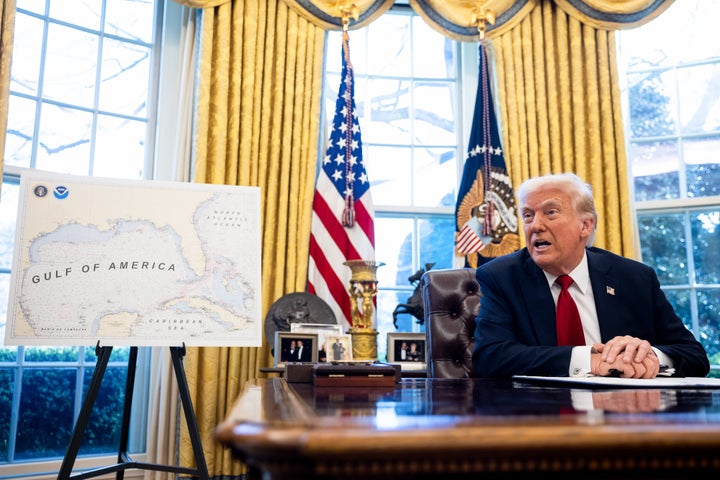
Alex Brandon/Associated Press
Attorneys for the BBC argued Wednesday in a memorandum opposing the motion that Trump could have focused only on his supposed reputational harm when he first filed the lawsuit, and decried that he is still seeking damages without providing any actual disclosure.
Advertisement
“In fact, claiming $10 billion in harm while purporting to disclaim damage to Plaintiff’s business and professional interests renders it all the more implausible that Plaintiff will ever be able to show such damages,” the attorneys wrote Wednesday in the memo.
Trump’s lawyers on Wednesday had called the BBC’s request for disclosure “shockingly broad,” arguing it would cause irrevocable harm to the trust overseeing his companies. While Trump succeeded Thursday, the emergency stay does not necessarily shield his records forever.
The court could still decide that the BBC is entitled to obtain relevant financial information. The emergency stay itself will remain in effect until Lett rules on whether or not to lift it — following updated filings from Trump and his attorneys regarding the ongoing lawsuit.
“I told Rupert Murdoch it was a Scam, that he shouldn’t print this Fake Story,” Trump posted on Truth Social, the social media app he owns. “But he did, and now I’m going to sue his ass off, and that of his third rate newspaper.”
Advertisement
“Mr. Murdoch stated that he would take care of it but, obviously, did not have the power to do so,” Trump wrote in another post.
The story in question reported that Trump had apparently sent a crude letter to Epstein on his 50th birthday in which he alluded to things the two men had in common and included the phrase, “may every day be another wonderful secret.” When the paper didn’t kill the story as Trump had asked, the president filed a libel lawsuit claiming that the story would cause him “overwhelming financial and reputational harm” and demanding $10 billion in compensation.
Not even Murdoch, whose media empire (which includes Fox News) has been of great political benefit to Trump, is safe. He, along with the Journal and the reporters who worked on the story, were named in the suit.
Advertisement
It’s no secret that the president is notoriously thin-skinned and can’t handle even mild criticism, nor does he hide that he’s particularly litigation-happy — Trump has long filedlawsuits, including spurious ones, against negative media coverage. But this time is different.
“It’s unprecedented to have a sitting president file a lawsuit against a newsroom,” said Tim Richardson, the journalism and disinformation program manager at PEN America, an organisation that advocates for free speech rights.
If Trump can control the media, he will be free to enact whichever policies he wants — without anyone to hold him accountable for the harm they may do. It’s all a part of his effort to control what Americans can say, think, or engage with.
“Trump is throwing a temper tantrum and saying if I shout loudly enough, maybe the people who criticise me will go away,” Peter Loge, a professor of media and public affairs at George Washington University, told HuffPost. “But if you don’t want to get yelled at about what you think, don’t be President of the United States.”
Because of the First Amendment, it’s a standard of American law that people have the right to speak about and critique their government, and that includes news publications. What’s more, public figures have a higher bar to clear than a regular person when it comes to claiming defamation, or that a story or criticism damages them. It’s understood, and courts have supported, that if you are in public life, the public has an interest in your doings, even if they are not flattering.
Advertisement
Well, it’s understood, except apparently by Trump himself.
“Trump is basically saying, if you say something I don’t like, I’m going to punish you,” Jenna Leventoff, senior policy counsel at the American Civil Liberties Union, told HuffPost.
It is, in fact, something Trump has been saying to other institutions for a long time. Since January, Trump has signed executive orders threatening big law firms that have championed issues he doesn’t like, hamstringing their ability to bring legal challenges against his administration. The president demanded that the firms provide him with pro-bono services — and many, though not all, of them capitulated.
He has also turned the screws on colleges and universities, traditionally sites of political protest and civil disobedience. Through executive orders and policy demands, he has pushed to swing higher education to the political right: prioritizing enrolling conservative-leaning students, hiring faculty that support Trump, and demanding they end programs that focus on race and justice. If colleges fail to adhere to the Trump agenda, he threatens them with loss of federal funding.
Trump’s war with the press is a holdover from his first administration, and he picked it up almost immediately after returning to the White House. In this administration, he has begun to openly use threats and the power of the federal government to exercise pressure on his critics.
“The tactics that have been used have been ratcheted up from what we saw [during his first term],” Richardson said.
But Trump has used the move since. After The Wall Street Journal published its story about the Epstein birthday card, Trump blocked a WSJ reporter from coverage of official events. The White House had also previously blocked a HuffPost reporter from the group of journalists covering the president, although the reporter, S.V. Date, was later reinstated.
Brendan Carr, the FCC chair, said it was because the station reported on the live location of the vans of federal immigration officers. The radio station, Carr said, needed to “explain how this could possibly be consistent with their public interest obligations.”
“Every elected official complains that the press is unfair,” Loge noted. “The difference with this administration is that Trump is actively trying to threaten and shut down the free press.”
Advertisement
Francis Chung/Politico/Bloomberg via Getty Images
Trump began a feud with CBS when he falsely accused the network of “deceptively” editing a 60 Minutes interview with Harris during the 2024 presidential race to “tip the scales” in her favour. Trump filed a lawsuit against Paramount, which owns CBS. The company said the interview was simply edited for time, which is typical, rather than doctored. Still, Paramount settled for $16 million.
After Paramount agreed to thesettlement, Stephen Colbert, the host of the Late Show With Stephen Colbert on CBS, lampooned the company’s decision to genuflect before the president, calling the settlement a “big fat bribe.”
Advertisement
Paramount was in the middle of an upcoming merger with Skydance Media, for which it needed FCC approval.
Colbert, a longtime critic of the right wing in general and Trump in particular, even seemed to acknowledge that the jokes put a target on his back.
“Some of the TV typers out there are blogging that once Skydance gets CBS, the new owners’ desire to please Trump could ‘put pressure on late-night host and frequent Trump critic Stephen Colbert,’” the host said, quoting a Puck News article. “OK, OK, but how are they going to put pressure on Stephen Colbert… if they can’t find him,” he joked.
Advertisement
Three days after Colbert skewered the settlement, CBS announced it was cancelling his show. Executives stressed that it was a purely financial decision. Trump, however, took a victory lap.
“I absolutely love that Colbert got fired,” Trump said on Tuesday in a Truth Social post. He also alluded to other late-night hosts who make fun of him. “It’s really good to see them go, and I hope I played a major part in it!”
“Trump’s goal is to have a chilling effect,” Leventoff said. Advocates worry that if he’s able to threaten and punish media outlets, companies and universities with no repercussions, it’ll send a signal to other institutions that fighting back isn’t worth it.
It’s not just those who examine Trump’s policies who are subject to intimidation.
On Wednesday’s episode of the daytime talk show “The View,” co-host Joy Behar discussed Trump’s regular attempts to turn criticisms back to former President Barack Obama. “The thing about [Trump] is he’s so jealous of Obama. Because Obama is everything that he is not — trim, smart, handsome, happily married, and can sing Al Green’s song ‘Let’s Stay Together’ better than Al Green,” Behar said. “And Trump cannot stand it. It’s driving him crazy.”
Behar “should self-reflect on her own jealousy of President Trump’s historic popularity before her show is the next to be pulled off air,” the White House statement read.
Advertisement
“This is intimidation,” Richardson said. “The View is not standard news, but it all follows the same line of thinking. If there’s criticism or dissent, he wants to quash it.”
In both those countries, cracking down on press freedom is routine. In Russia, journalists have been arrested for negative coverage of the government, and dozens of reporters have been killed. Orbán’s far-right party has proposed laws that would penalise groups that receive foreign donations, including journalism outlets. He has been accused of rewarding loyal news outlets with government subsidies.
Advertisement
“These are certainly tactics that have been used in other countries to muzzle the press,” Richardson said.
In such a quelling environment, even questionable situations can contribute to a sense that dissent runs the risk of punishment.
“People are agreeing with Trump because they’re too afraid to oppose him,” Loge said.
When the approval of the Paramount merger was announced, Anna Gomez, the only Democrat on the FCC, blasted the decision.
Advertisement
“The Paramount payout and this reckless approval have emboldened those who believe the government can — and should — abuse its power to extract financial and ideological concessions, demand favored treatment, and secure positive media coverage,” she said.
“It is a dark chapter in a long and growing record of abuse that threatens press freedom in this country. But such violations endure only when institutions choose capitulation over courage. It is time for companies, journalists, and citizens alike to stand up and speak out, because unchecked and unquestioned power has no rightful place in America.”
Media capitulations will only further harm free speech rights and embolden Trump. “It’s setting a dangerous precedent,” Richardson said. “And it’s hard to say where this ends.”
A Ukrainian war journalist who has worked for several local and international media outlets has been missing for over a week, according to his friends, colleagues and multipleUkrainian publications.
Maks Levin is a photojournalist and documentary filmmaker who disappeared while working on the front lines near Kyiv, his friend and colleague Markiian Lyseiko said on Tuesday. On March 13, Levin apparently drove in his own car to photograph the fighting in the Vyshhorod district — an area facing intense Russian violence.
Advertisement
The journalist reportedly left his car near the village of Guta-Mezhigirska and went south toward the village of Moschchun. His last communication was apparently from that morning, after which his phone went offline. Levin “may have been injured or captured by Russian troops,” Lyseiko said.
“Me, I will stay on the front line as long as I am physically able,” Levin told VICE in an interview published on March 9. “These soldiers are my friends.”
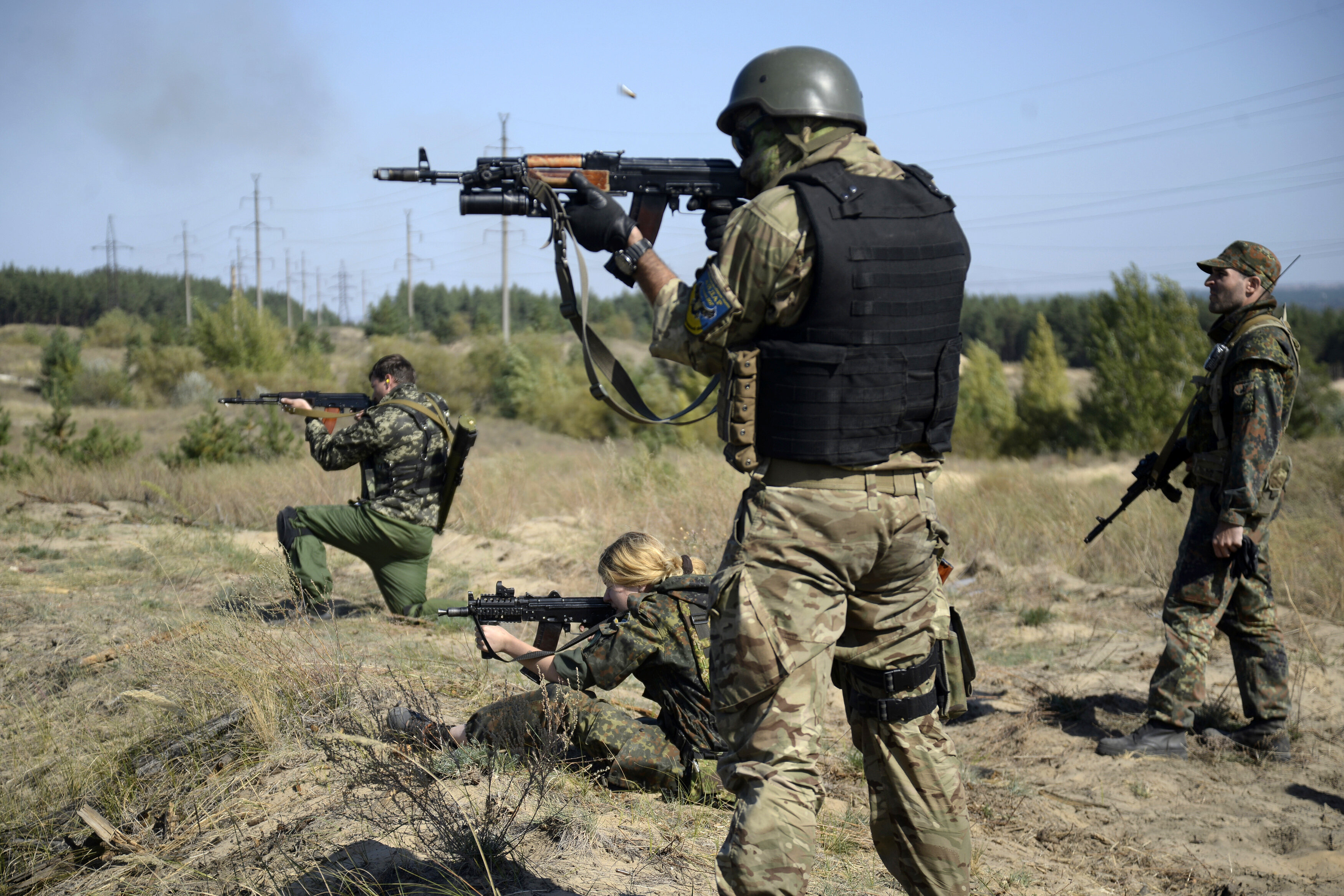
Ukrainian soldiers practice shooting during a military drill in the village of Schastya, near the eastern Ukrainian town of Luhansk, on Sept. 20, 2014. The journalist who took this photo, Maks Levin, has been missing since March 13, 2022, when he was covering the Russian invasion of Ukraine in an area near Kyiv.
Maks Levin via Reuters
Levin has been covering war in Ukraine since the 2014 revolution and the fight with Russian-backed separatists in the Donetsk region in the east. He and Lyseiko were on the front lines covering the Battle of Ilovaisk in August 2014, which became one of the largest military operations in Ukraine and a turning point in Russia’s war with the independent country.
During the battle, 400 Ukrainians who were promised a safe corridor out of the city were slaughtered. Despite being injured, Levin was one of four journalists who managed to escape. He and Lyseiko later created the documentary “After Ilovaisk.”
Advertisement
“The war has affected me personally: in October 2014, Viktor Gurnyak, my good friend, colleague, and volunteer of the Aidar Battalion was killed in a battle at the 31st checkpoint. There were guys in Ilovaisk that I became friends with, some of whom died or went missing,” Levin said of his experience on the front lines.
“We still keep connections with so many people who survived the battle. This story united us forever. And now it is my inner obligation to tell about Ilovaisk survivors.”
Levin was born in Kyiv and has worked with Ukrainian publications like LB.ua and Hromadske, as well as international outlets like Reuters, BBC and The Associated Press. His photos have been published in media ranging from TIME to Ukraine Crisis Media Center to The Moscow Times. He’s also shot projects for organizations like the United Nations, the World Health Organization and UNICEF.
“Max has four children, boys,” Levin’s friend and fellow Ukrainian journalist Tetiana Bezruk tweeted. “Max, we are praying for you and we hope you are alive and in touch.”
Advertisement
Lyseiko has asked the public to contact him with any information on Levin’s whereabouts.
“We are deeply concerned about the disappearance of Ukrainian journalist Maks Levin, and call on anyone with information on his whereabouts to come forward immediately,” said Gulnoza Said, an official with the Committee to Protect Journalists.
“Far too many journalists have gone missing while covering Russia’s invasion of Ukraine, and all parties to the conflict should ensure that the press can work safely and without fear of abduction.”
Oleg Baturyn and Victoria Roschina both disappeared on March 12. Russian occupiers released Baturyn on Sunday and Roschina on Monday. Roschina was forced to release a video saying Russian troops saved her life.
“The Russians were hunting us down. They had a list of names, including ours, and they were closing in,” wrote Mstyslav Chernov and Evgeniy Maloletka, who were the only remaining international journalists in the bombarded city of Mariupol. The two AP journalists escaped on March 15.