A researcher for Anthropic resigned from the company on Tuesday, warning that “the people building AI earnestly believe that it could kill us all by the end of the decade.”
In a series of posts on X, Jacob Coxon, who said he has worked for both Anthropic and OpenAI on pretraining research, claimed neither AI giant is “acting responsibly.”
Advertisement
“They are racing straight to self-improving superintelligence and gambling with our lives,” he said.
Coxon warned that Americans cannot afford to “underestimate this technology.”
“These will soon be superhuman systems that can hack anything, revolutionize any field overnight, and acquire real power and resources. We have all witnessed the progress in each of these domains, and progress is not slowing,” he said.
“The people building AI earnestly believe that it could kill us all by the end of the decade,” he added. “No other human activity poses this level of danger.”
Advertisement
Evan Hubinger, alignment science lead at Anthropic, said Coxon’s assessment was valid, adding that he believes there is an over 10% chance the technology could wipe out all humans.
Jacob is correct here—we really do earnestly believe AI could kill all humans! I personally think it is >10% within the next decade. I believe Anthropic is trying its best, but we do not yet have a plan to solve alignment for superintelligence and are not clearly on track to. https://t.co/QAIHiFP3QZ
In a follow-up post on X, Hubinger reiterated that the risk from currently available models is low.
“What I am worried about is superintelligence arising from recursive self-improvement,” Hubinger added.
Advertisement
Another Anthropic employee, scalable oversight lead Samuel Marks, said, “AI developers believe their technology could cause human extinction.”
“This could happen in the next few years. In general, the more senior the employee, the more concerned they are,” Marks added, while noting that many AI developers are keen “to slow down to figure out how to build AI more safely.”
This is not the first time those working closely with AI have sounded the alarm on the technology’s expanding capabilities.
Advertisement
Even some of the top AI companies’ bosses, including Dario Amodei of Anthropic and Sam Altman of OpenAI, signed a statement in 2023, declaring that “mitigating the risk of extinction from AI should be a global priority alongside other societal-scale risks such as pandemics and nuclear war.”
Still, Coxon’s social media post amplified fears about the possibility of humans losing control of AI following a series of recent hacking incidents, including Anthropic’s disclosure that some Claude AI models hacked into the systems of three companies during testing.
Microsoft co-founder Bill Gates recently echoed concerns about AI in a lengthy statement posted on his website, remarking that “even under the best circumstances, the transition to this new AI era will be one of the most turbulent times in human history.”
Advertisement
“Unfortunately, right now we are not preparing for it. I don’t see evidence that leaders, experts, and communities are confronting the challenges adequately. There is no plan to ease the entry into the AI era,” he continued.
Despite the threats, the Trump administration has been wary of placing stronger guardrails on AI for fear of giving foreign countries an edge.
“We can’t pause. You can’t, because the Chinese won’t pause. Even the North Koreans, they won’t pause,” Treasury Secretary Scott Bessent said Tuesday.
Advertisement
Meanwhile, the Financial Times reported that Anthropic refused to give the U.K. AI Security Institute access to testing ahead of its release, as the tech giant appears to have ceded to the Trump administration’s demands to not make models available to foreign nationals.
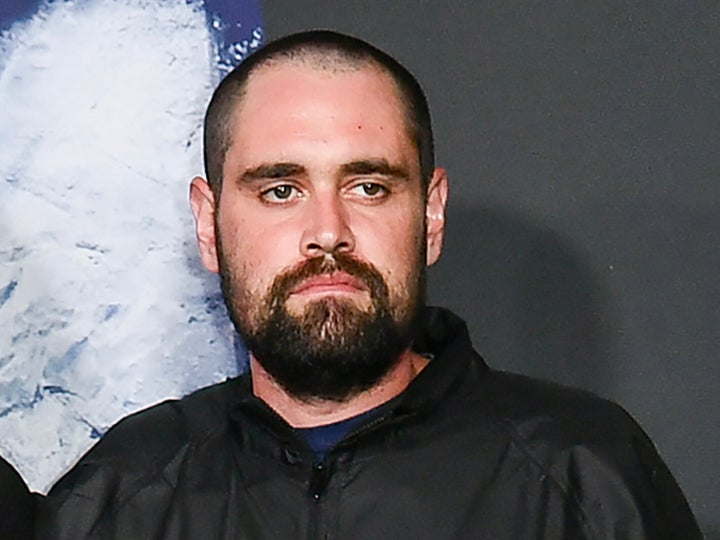
Nick Reiner pleaded not guilty to the killings of his parents, Hollywood director Rob Reiner and producer Michele Singer Reiner, in a Los Angeles court Monday.
The 32-year-old’s plea to charges of two counts of first-degree murder, with the special circumstance of multiple murders, was entered by his public defender, Kimberly Greene.
Advertisement
The charges carry a maximum sentence of life without possibility of parole or the death penalty.
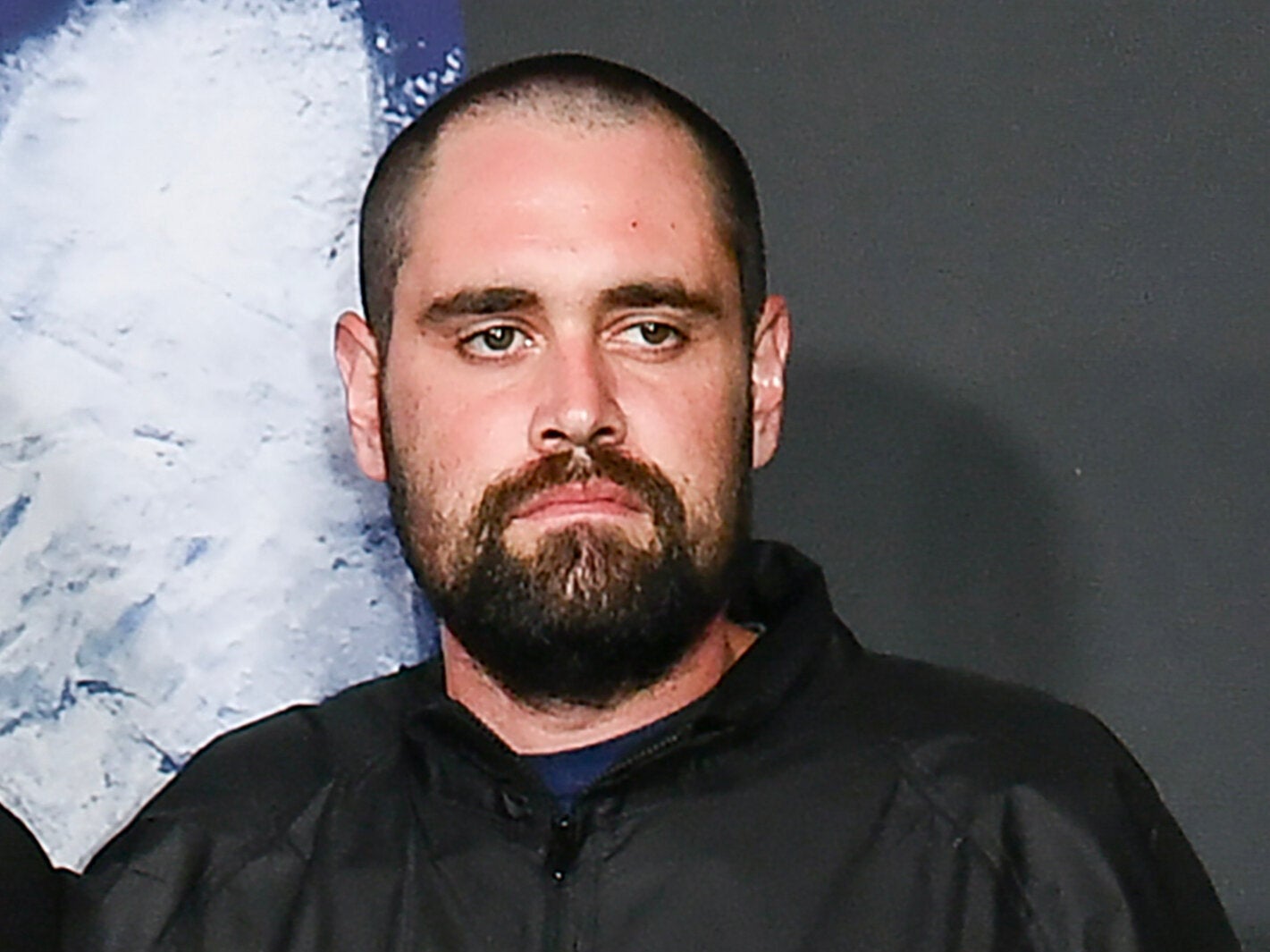
Nick Reiner is seen at a movie premiere in September of last year.
via Associated Press
A not-guilty plea is common for criminal defendants at this stage of the case, as The Associated Press reported.
He had been set to enter a plea last month in the December stabbings but his defense attorney withdrew from the case during his last court hearing. Nick Reiner, who has since been represented by a public defender, waived his right to a speedy arraignment.
Advertisement
He is being held without bail.
Nick Reiner is the third of Rob Reiner’s four children. He’s seen here, right, with his parents and siblings Jake and Romy in 2014.
via Associated Press
Nick Reiner’s parents were found stabbed to death in their Los Angeles home on December 14. He was taken into custody hours later without incident, authorities said at the time.
Nick Reiner, who is the third of Rob Reiner’s four children, has a history of substance use. Authorities have not said anything about possible motives.
Where will the northern lights be visible tonight?
The Met Office said parts of northern UK (and similar geomagnetic latitudes) will get the best view. There’s also a chance of sightings for those further south across England and Wales.
That said, cloud cover might make it tricky to see the phenomenon in some parts. You can check your forecast here.
The BBC reported it’s looking like the strongest aurora will happen before midnight, so at least you won’t have too long to wait.
Advertisement
Why will the auroras be visible?
Coronal mass ejections (CMEs) – eruptions of plasma and magnetic field structures from the sun’s atmosphere – are currently reaching earth.
When this happens, it can result in a geomagnetic storm, which can cause disruptions to satellite navigation and even power grids.
But a pleasant effect of such a storm is that it can also cause auroras to show up vividly in the sky.
Advertisement
What causes auroras?
Per Nasa, auroras are natural light shows caused by magnetic storms that have been triggered by solar activity. Due to the coronal mass ejections, “energetic charged particles from these events are carried from the Sun by the solar wind”.
“When these particles seep through Earth’s magnetosphere, they cause substorms. Then fast moving particles slam into our thin, high atmosphere, colliding with Earth’s oxygen and nitrogen particles.
“As these air particles shed the energy they picked up from the collision, each atom starts to glow in a different colour.”
His remarks come after the former prince was completely stripped of his royal status on Thursday and kicked out his home, Royal Lodge.
Advertisement
It means he will effectively live as a private citizen.
He denies all accusations of wrongdoing.
It comes after the publication of Epstein’s self-described “sex slave” Virginia Giuffre’s post-humous memoirs earlier this month.
The book restated her previous claims that Andrew had sex with her on three separate occasions when she was a teenager.
Reports from the Mail on Sunday also suggested Andrew had remained in contact with Epstein for longer than he had once claimed – including for months after the disgraced financier spent time behind bars for soliciting prostitution from a minor.
Advertisement
Speaking on the BBC’s Sunday with Laura Kuenssberg, presenter Vine said: “I wonder whether the Americans will now think, OK, we can go for him.
“I would reckon in the next five years, he’ll be in an American jail.
“I think they’ll start some extradition proceedings on him – because now he has no protection.
“So they look at everyone who is involved in this – Ghislaine Maxwell is in jail, Epstein is dead – you go through the list, and Andrew has had this royal protection which is now gone.
“That must be a signal to the FBI and others that they can now look into him properly.”
Ghislaine Maxwell was once Epstein’s closest associate. She is now a convicted sex offender serving a 20-year sentence.
Advertisement
Sat on the panel besides Vine was royal author Valentine Low called it an “apocalyptic scenario” which cannot be ruled out.
“Who will protect him?” He said, while noting: “There are an awful lot of high profile American figures who have not been investigated with the same assiduousness that Andrew has been looked at.”
But he speculated that scenario of possible prison time for Andrew “probably hasn’t even occurred” to the Palace.
Advertisement
“They are sincerely hoping all of this will go away,” he added.
Vine also compared the former prince to “asbestos.
He said: “He’s like asbestos, and with asbestos, you have to sometimes live within it in place because moving it is too dangerous.”
His remarks come after defence secretary John Healey confirmed the government were working with the Palace to remove Andrew’s last military title, Vice-Admiral in the Royal Navy.
(Warning: Distressing photos and graphic medical details throughout.)
Dr. Razan Al-Nahhas just returned to Chicago from a volunteering stint in Gaza, where for two months the emergency physician mostly treated visibly malnourished Palestinian children at Al-Ahli Baptist Hospital ― an increasingly common sight since Israel began attacking the territory 19 months ago, and stopped all food and aid deliveries 70 days ago.
Al-Nahhas said she initially felt confused when she didn’t see improvement in the health of her paediatric patients within days, or even weeks, of treatment. The doctor recalled a 9-year-old girl who came in with lung injuries from an explosion, and was extubated days into being at the ICU.
Advertisement
“Anywhere else, she would have been out of the ICU within a few days. She was intubated and extubated and intubated and extubated, I think four or five times,” she told HuffPoston Thursday. “When I left [Gaza], she was still in the ICU. She had been there for almost three weeks. And this was a consistent theme I was experiencing with patients that I would see in the ER.”
The doctor realised that paediatric patients were not improving because they are severely malnourished and dehydrated ― lacking the carbohydrates for energy, the fats to reduce inflammation, and the protein to build and repair tissue, skin and muscles.
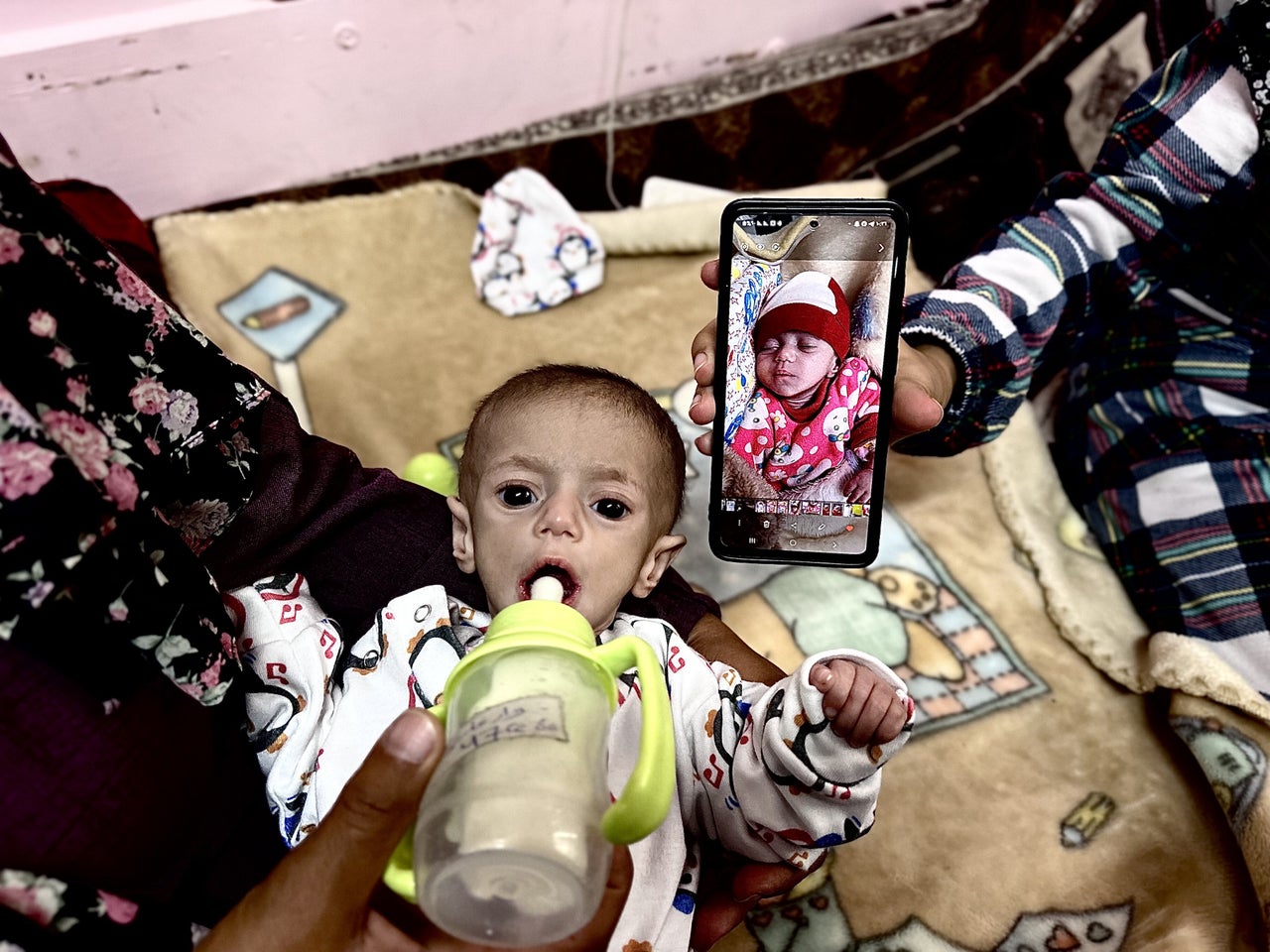
Suwar Ashur, 5 months, is being treated for malnutrition at Nasser Hospital in Khan Younis, Gaza, on May 1. Suwar is one of thousands of children experiencing malnutrition as a result of Israel’s total blockade of food and humanitarian assistance.
Doaa Albaz/Anadolu via Getty Images
For this story, HuffPost heard from more than a dozen health care workers ― most of whom are physicians ― who have either recently volunteered or are currently working in Gaza’s hospitals.
“I witnessed Gaza’s health care workers handle mass casualty incidents with competence and preparedness that surpasses the best trauma centers in this country,” said Dr. Brennan Bollman, who recently returned to the U.S. from volunteering in Gaza. “But they cannot heal people without supplies and medicines. And no matter how skilled they are in caring for the horrific wounds caused by bombs, the human body cannot heal without food.”
Advertisement
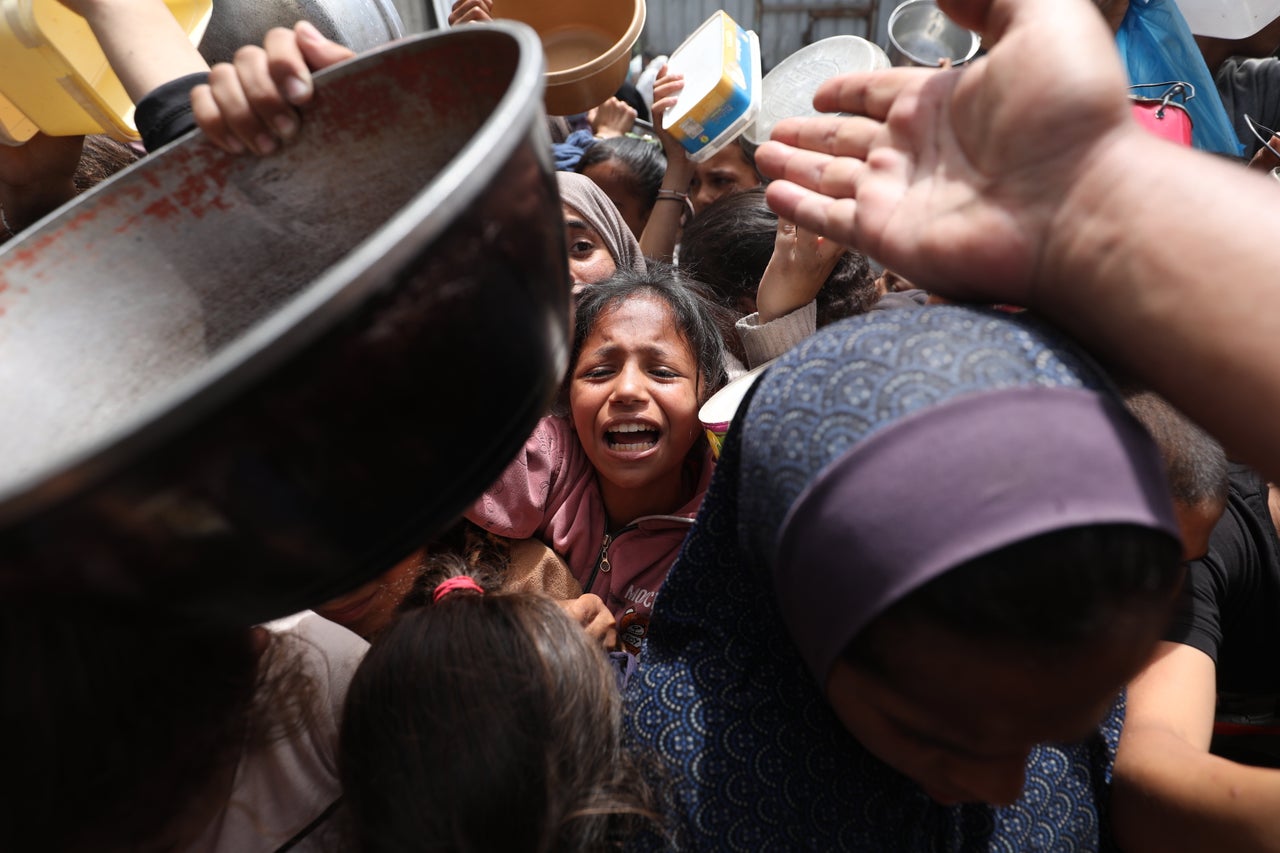
Ten weeks ago, Israel launched its blockade preventing all aid ― including food, water, shelter and medical supplies ― from entering the territory that has been destroyed to the point where the population of 2.3 million is forced to rely entirely on humanitarian assistance for their survival. Scenes documented by Palestinians on the ground show crowds tightly packed at food distribution centres, while difficult photos and videos of starving children circulate online.
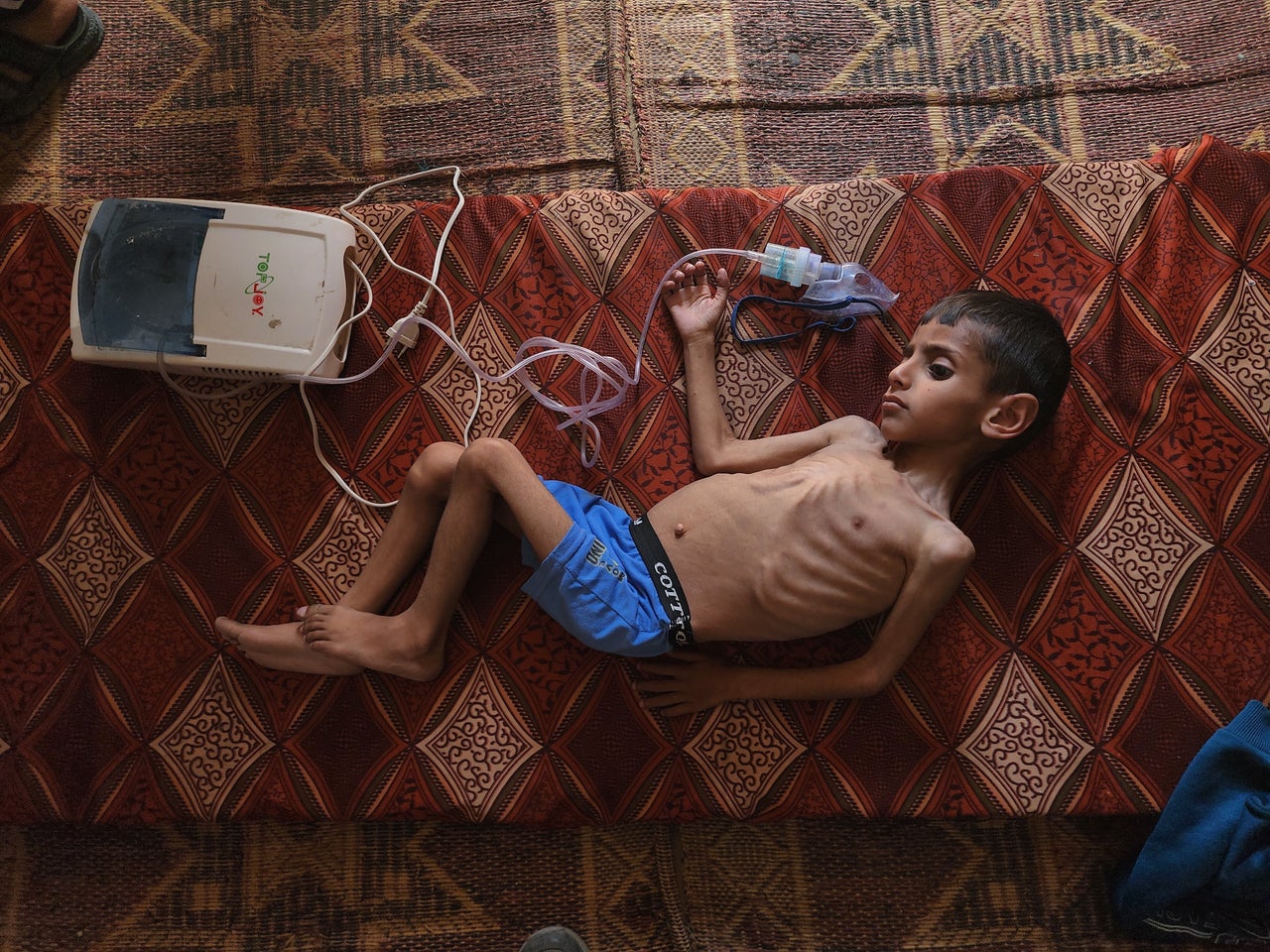
The food and aid scarcity has doctors and experts begging for Israel to reopen Gaza’s humanitarian corridors before more Palestinian families starve to death. More than 9,000 children have been admitted for treatment of acute malnutrition since the beginning of the year, according to UNICEF, with hundreds more unable to access help due to displacement. At least 57 children have died from the effects of malnutrition since the blockade began, according to the Gaza Health Ministry.
“I’ve seen children who are dying from starvation. I will tell you, children who die from starvation do not even cry toward the end, they don’t have the energy,” said Dr. Mohammed Kuziez, a paediatrician who volunteered in Gaza. “And eventually their heart rate just slows down until their heart eventually gives out.”
Advertisement
“Children who die from starvation do not even cry toward the end, they don’t have the energy.”
– Dr. Mohammed Kuziez
The World Food Program’s rations ran out weeks ago, and the World Central Kitchen closed most of its community soup kitchens because it has no more food. The World Health Organization only has enough supplies to treat 500 children with acute malnutrition ― “a fraction of the urgent need,” Dr. Rik Peeperkorn, WHO’s representative in Palestine, said on Tuesday.
“Believe it or not, people no longer care about bombs, rockets or even death. What consumes them now is food, how to find it, how to feed their children,” said Areej, a member of aid group Mercy Corps in Gaza who remains anonymous out of safety concerns. “It’s impossible to describe how hard life has become. People walk around in a daze, dizzy from malnutrition and despair.”
Three indicators of famine must rise above specific thresholds before qualifying as IPC5, the group’s most severe rating: food consumption, acute malnutrition in children and non-trauma mortality, primarily from malnutrition and disease. Experts stress that Gaza’s lack of a formal famine label from the IPC does not mean the people in the region aren’t already starving, nor does it mean governments should wait to act until such a label is given.
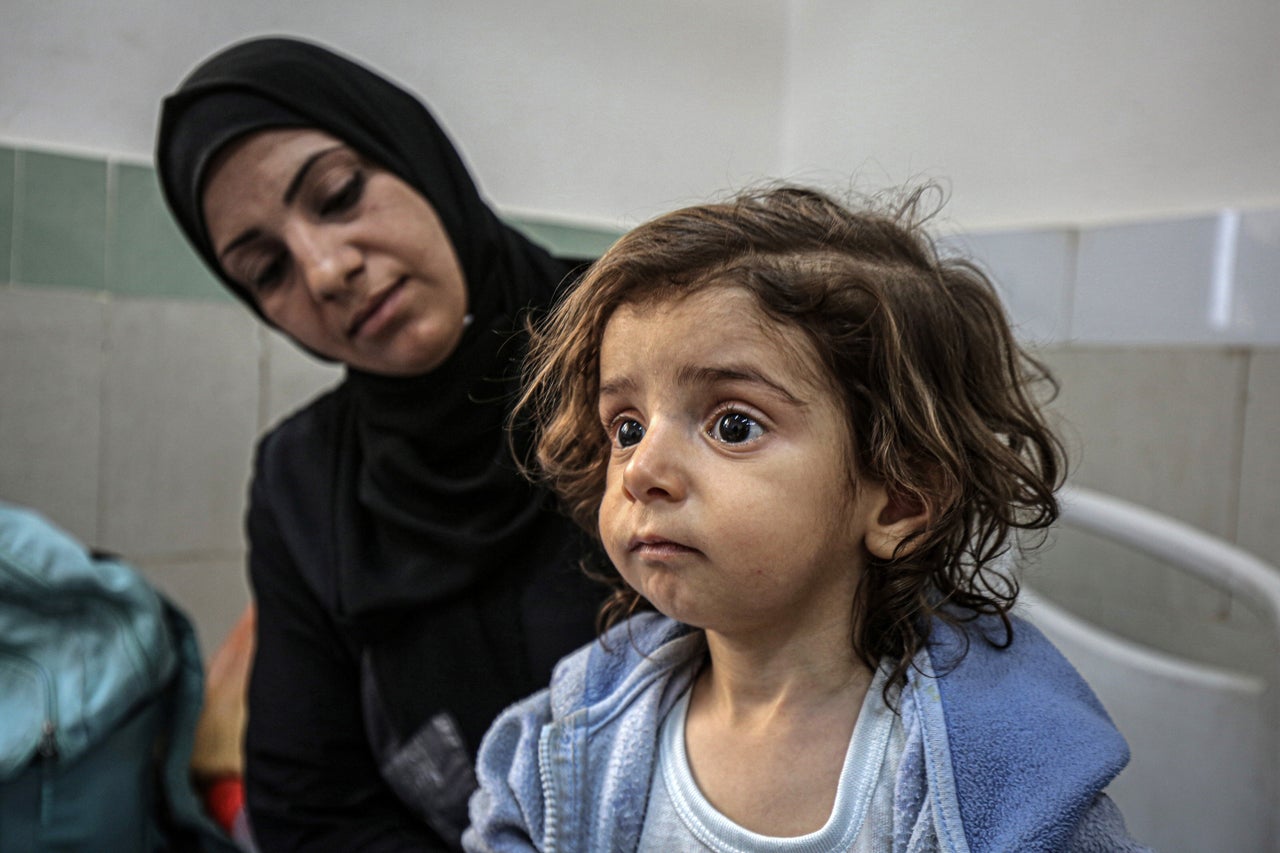
“We are seeing … children who cannot get even one full meal a day, and mothers forced to split one piece of bread among five kids. People walk for hours just to reach food distribution points, and many go back empty-handed because there simply isn’t enough,” said Rana Soboh, nutrition officer in North Gaza for aid group MedGlobal. “We are seeing children with wasted bodies and swollen bellies from malnutrition.”
Advertisement
Jihad Saad sits at the Al-Rantisi Children’s Hospital in Gaza City, on May 4. Saad is one of dozens of children inside the hospital suffering from severe malnutrition due to Israel’s total blockade of food and aid.
Rizek Abdeljawad/Xinhua News Agency via Getty Images
COGAT, the Israeli agency overseeing Gaza’s humanitarian aid, called the IPC report “alarmist” and “misleading,” claiming it does not account for the “massive volume of aid, especially food, that entered Gaza during the ceasefire.” Data has shown the aid that entered Gaza during the ceasefire earlier this year was still dramatically lower than what was required.
“At any given moment at Rafah crossing, there is a lineup of trucks, a convoy worth, that extends three to five miles on any given day. And them being held up at Rafah crossing results in the spoilage of the materials and goods you’re trying to move through,” said Dr. Marybeth Brownlee, whose experience includes field feeding operations in threatening environments.
Advertisement
“So even if you get these trucks through, if they were to encounter things that I call bureaucratic warfare ― where crossing through they get to the checkpoint and it’s like, you need to fill out this form in triplicate, and you used a staple instead of a paper clip ― these are things that do happen,” she continued. “This further delays the aid delivery.”
The Israeli military’s relentless bombing on Gaza’s people and infrastructure means Palestinians are constantly at risk of injury, sickness and death. But hospitals are either under siege, or lack enough fuel and medical supplies, making it difficult to receive adequate treatment. Al-Nahhas recalled trying, unsuccessfully, to save the lives of four babies killed by one explosion. Bollman witnessed children “severely burned, broken apart, blown open.” Dr. Hamza Nabhan said most of the children he treats at Indonesian Hospital have intracranial hemorrhaging or subdural hematomas. Dr. Ahmed Al-Farah said rockets caused children to suffer burns, as well as injuries to their liver and bowels.
“I really think that we’re getting to that point where these people are just going to start dying in the thousands very soon, of starvation [and] lack of access to proper medical care,” Al-Nahhas said.
Advertisement
Palestinians crowd together in hopes of receiving a hot meal, in Nuseirat refugee camp, in Gaza on May 13. Israel’s total blockade on food and humanitarian assistance has led to the mass starvation of Palestinian children.
Moiz Salhi/Anadolu via Getty Images
The doctors themselves also face starvation, working for 24-48 hours straight with, usually, just a little rice in their stomachs. Hospital staff are fatigued, working at a quarter of their capacity while struggling to maintain morale, Al-Nahhas told HuffPost.
Al-Farah said that his hospital in Khan Younis asked the community to donate blood to help save lives during mass casualty events. But when staff conducted blood tests, they found that all of the donors were themselves anemic from lack of nutrition.
Advertisement
The doctor, who heads the paediatric and maternity building at Nasser Hospital, added that the intense stress facing thousands of malnourished and displaced pregnant women often result in premature births, with many of the babies struggling with sepsis, respiratory issues and congenital abnormalities. If the children are lucky enough to survive infection, Al-Farah said they will still likely develop neurological conditions.
“Babies in the first three years need amino acids, need free fatty acids, need essential amino acids, need a trace element, need iron, need everything,” he said. “So we are talking about a miserable situation that affects this generation of Palestinian children.”
Severe vitamin deficiencies in starving children can result in what the doctors said are micronutrient disorders like night blindness, anemia, rickets, nerve-related illnesses and scurvy. Kuziez said that people in Gaza were already experiencing vitamin deficiencies because the blockade banned fresh foods like fruits and vegetables.
Advertisement
“I really think that we’re getting to that point where these people are just going to start dying in the thousands very soon.”
– Dr. Razan Al-Nahhas
Several doctors also stressed that malnourished Palestinian children will also experience poor brain development and mental health. Without enough nutrients, children may become nonverbal, find it difficult to concentrate and struggle with information processing.
“Our children are suffering from nightmares, memory loss, involuntary urination and severe symptoms of post-traumatic stress disorder, PTSD,” Nabhan said. “Over 95,000 children are trapped in this invisible agony, wounds that can’t be seen are far deeper than any physical injury.”
Advertisement
Children “historically have the ability to heal and recover from things like PTSD a lot better than adults do,” Kuziez said before adding that the trauma they’re facing first has to stop. And as Israel’s blockade shows no sign of opening, the doctor warned that more Palestinians will die from the effects of severe acute malnutrition.
“Even if today this blockade was to end, a significant portion of these children are still liable to suffer severe long-term effects and death because of the lack of a strong medical infrastructure,” he said. “Kids who have been starved and deprived, when you provide food to them, develop something called refeeding syndrome. We saw this with people who were freed from the death camps after the Holocaust, that’s how we know about this condition.”
Osama Kamal Al Rakab suffers from malnutrition in the town of Beni Suheyl, in Khan Yunis, Gaza, on April 14. Israel’s total blockade of food and humanitarian assistance has led to the mass starvation of Palestinian children.
“To think this is happening again ― how could we be repeating the same genocidal behavior of the starvation that was perpetrated?” said Dr. Dannie Ritchie, a Brown University professor whose Jewish father fought in World War II. “This is a humanitarian disaster and crime, and it must be stopped. We need to let the children eat. We need to be able to take care of the families so that they can take care of the children. Let the children eat, let the people eat. Stop this genocide.”
HuffPost turns 20 this year. To celebrate, we’re looking back at some of our most iconic work — the pieces that shocked us, surprised us and truly made us see the world in a different way. Take a look below. And if you have an all-time favourite story we’ve published over the years, share it in the comments!
I Don’t Know How To Explain To You That You Should Care About Other People
By Kayla Chadwick
@SpeakerRyan
Advertisement
Like many Americans, I’m having politics fatigue. Or, to be more specific, arguing-about-politics fatigue.
I haven’t run out of salient points or evidence for my political perspective, but there is a particular stumbling block I keep running into when trying to reach across the proverbial aisle and have those “difficult conversations” so smugly suggested by think piece after think piece:
I don’t know how to explain to someone why they should care about other people.
FML: Why Millennials Are Facing The Scariest Financial Future Of Any Generation Since The Great Depression
By Michael Hobbes
We’ve all heard the statistics. More millennials live with their parents than with roommates. We are delaying partner-marrying and house-buying and kid-having for longer than any previous generation. And, according to The Olds, our problems are all our fault: We got the wrong degree. We spend money we don’t have on things we don’t need. We still haven’t learned to code. We killed cereal and department stores and golf and napkins and lunch. Mention “millennial” to anyone over 40 and the word “entitlement” will come back at you within seconds, our own intergenerational game of Marco Polo.
This is what it feels like to be young now. Not only are we screwed, but we have to listen to lectures about our laziness and our participation trophies from the people who screwed us.
Dying To Be Free: There’s A Treatment For Heroin Addiction That Actually Works. Why Aren’t We Using It?
By Jason Cherkis
The last image we have of Patrick Cagey is of his first moments as a free man. He has just walked out of a 30-day drug treatment center in Georgetown, Kentucky, dressed in gym clothes and carrying a Nike duffel bag. The moment reminds his father of Patrick’s graduation from college, and he takes a picture of his son with his cell phone. Patrick is 25. His face bright, he sticks his tongue out in embarrassment. Four days later, he will be dead from a heroin overdose.
‘For The Record, I Am Not Pregnant. What I Am Is Fed Up’
By Jennifer Aniston
Michael Buckner via Getty Images
Let me start by saying that addressing gossip is something I have never done. I don’t like to give energy to the business of lies, but I wanted to participate in a larger conversation that has already begun and needs to continue. Since I’m not on social media, I decided to put my thoughts here in writing.
Advertisement
For the record, I am not pregnant. What I am is fed up. I’m fed up with the sport-like scrutiny and body shaming that occurs daily under the guise of “journalism,” the “First Amendment” and “celebrity news.”
“I used to get so excited when the meth was all gone.”
This is my friend Jeremy.
“When you have it,” he says, “you have to keep using it. When it’s gone, it’s like, ‘Oh good, I can go back to my life now.’ I would stay up all weekend and go to these sex parties and then feel like shit until Wednesday. About two years ago I switched to cocaine because I could work the next day.”
Last weekend, my family traveled to attend my oldest niece’s Sweet Sixteen party. My brother and sister-in-law planned this party for many months and intended it to be a big surprise, and it included a photo booth for the guests.
I showed up to the party a bit late and, as usual, slightly askew from trying to dress myself and all my little people for such a special night out. I’m still carrying a fair amount of baby weight and wearing a nursing bra, and I don’t fit into my cute clothes. I felt awkward and tired and rumpled.
Advertisement
Beyond The Battlefield: HuffPost’s Pulitzer Prize-Winning Series On Soldiers Severely Wounded In Iraq And Afghanistan
By David Wood
David Wood
Advertisement
Starting today, The Huffington Post begins a ten-part series, Beyond the Battlefield ― an exploration of the physical and emotional challenges, victories and setbacks that catastrophically wounded soldiers encounter after returning home from the battlefields of Iraq and Afghanistan.
Beyond the Battlefield is the result of several months of reporting and scores of interviews by the HuffPost’s veteran military correspondent, David Wood. It is a deeply-felt, hard-won and wide-ranging exploration of what it means for a soldier to suffer extraordinary, disabling wounds ― and how friends, families, and hometowns, as well as the military and medical communities, adjust and respond to the physical and emotional struggles these wounded warriors endure.
Which brings us to one of the largest gaps between science and practice in our own time. Years from now, we will look back in horror at the counterproductive ways we addressed the obesity epidemic and the barbaric ways we treated fat people — long after we knew there was a better path.
The 21st Century Gold Rush: How The Refugee Crisis Is Changing The World Economy
By Malia Politzer and Emily Kassie
Emily Kassie
The biggest refugee crisis in recorded history has engulfed continents, swung elections and fueled the rise of nativism. It has also made a lot of people very, very rich. These are the stories of the CEOs, criminal masterminds, pencil-pushers and low-flying vultures who have figured out how to profit from global instability, also known as human suffering.
The first thing Dr. Amy Goldberg told me is that this article would be pointless. She said this on a phone call last summer, well before the election, before a tangible sensation that facts were futile became a broader American phenomenon. I was interested in Goldberg because she has spent 30 years as a trauma surgeon, almost all of that at the same hospital, Temple University Hospital in North Philadelphia, which treats more gunshot victims than any other in the state and is located in what was, according to one analysis, the deadliest of the 10 largest cities in the country until last year, with a homicide rate of 17.8 murders per 100,000 residents in 2015.
Over my years of reporting here, I had heard stories about Temple’s trauma team. A city prosecutor who handled shooting investigations once told me that the surgeons were able to piece people back together after the most horrific acts of violence. People went into the hospital damaged beyond belief and came walking out.
Existing While Black: What Does It Feel Like When Every Move You Make Is Policed?
Edited by Taryn Finley
Jo Etta M. Harris was nursing her child in her car before a family outing. Gil Perkins was talking on the phone outside of his home. Kelly Shepard’s boys were shopping for video games. And in each instance, someone saw them as suspicious or a threat and called the police.
This isn’t new. It happens every day. The experiences of Harris, Perkins, Shepard – and so many others – are reminders that black people don’t have the privilege to simply exist in peace.
Every week, American employers hire labor consultants to prevent their workers from organizing. Known legally as “persuaders,” these consultants play a crucial role in keeping U.S. union membership near a historic low — and they are well rewarded for their efforts. Many now earn more than $2,000 per day.
HuffPost has produced a series of stories revealing who these consultants are, where they come from and what they do. The reporting is based primarily on documents obtained through dozens of public record requests. We hope these stories shed light on a trade that’s plied primarily in the shadows but impacts workplaces around the country.
This Is Why Poor People’s Bad Decisions Make Perfect Sense
By Linda Tirado
Linda Tirado
There’s no way to structure this coherently. They are random observations that might help explain the mental processes. But often, I think that we look at the academic problems of poverty and have no idea of the why. We know the what and the how, and we can see systemic problems, but it’s rare to have a poor person actually explain it on their own behalf. So this is me doing that, sort of.
DOHA, Qatar ― Six months into a war Hamas started ― with more than 33,000 Palestinians dead, more succumbing to famine daily and Israel determined to continue its aggressive campaign against the organization with robust American military support ― the militant group says it is confident it will wield significant influence in the future, come what may in Gaza.
Sandra Bland Died One Year Ago: And Since Then, At Least 810 People Have Lost Their Lives In Jail
By Dana Liebelson & Ryan J. Reilly
Sandra Bland/Facebook
What made Bland’s death so shocking — the reason that millions of people watched the dash-cam footage of her arrest or closely examined her mugshot—was the mystery at its heart. What had really happened inside the Waller County jail? If Bland had taken her own life, how could she have reached a state of irreversible despair so suddenly?
That image of Kinkel has remained frozen in time: the dangerous child people point to as the reason some kids need to be locked up for life. For decades, Kinkel never tried to correct it. He refused every interview request and even avoided being photographed in group activities inside the prison. He worried that reemerging publicly would only further traumatize his victims. But last year he agreed to speak to HuffPost.
Advertisement
The Super Predators: When The Man Who Abuses You Is Also A Cop
By Melissa Jeltsen and Dana Liebelson
All Sarah Loiselle wanted was a carefree summer. There was no particular reason she was feeling restless, but she’d been single for about a year and her job working with cardiac patients in upstate New York could be intense. So when she learned that a Delaware hospital needed temporary nurses, she leapt at the chance to spend a summer by the beach. In June 2011, the tall, bubbly 32-year-old drove her Jeep into the sleepy coastal town of Lewes. She and her poodle, Aries, moved into a rustic apartment above a curiosity shop that once housed the town jail. The place was so close to the bay that she could go sunbathing on her days off. It didn’t bother Loiselle that she’d be away from her friends and family for a while: She felt like she’d put her real life on hold, that she was blissfully free of all her responsibilities.
On a recent trip to Target, Lorena Bobbitt struggled to use the computer at the digital photo center. She was trying, unsuccessfully, to put her 11-year-old daughter’s picture on a Christmas card. A young male employee came over to help. When they were done and she was typing in her first name for payment, he audibly gasped.
Advertisement
“I thought the machine must be broken,” she recalled. “But he said, ‘I know who you are!’”
Jerry And Marge Go Large
By Jason Fagone
Gerald Selbee broke the code of the American breakfast cereal industry because he was bored at work one day, because it was a fun mental challenge, because most things at his job were not fun and because he could—because he happened to be the kind of person who saw puzzles all around him, puzzles that other people don’t realise are puzzles: the little ciphers and patterns that float through the world and stick to the surfaces of everyday things.
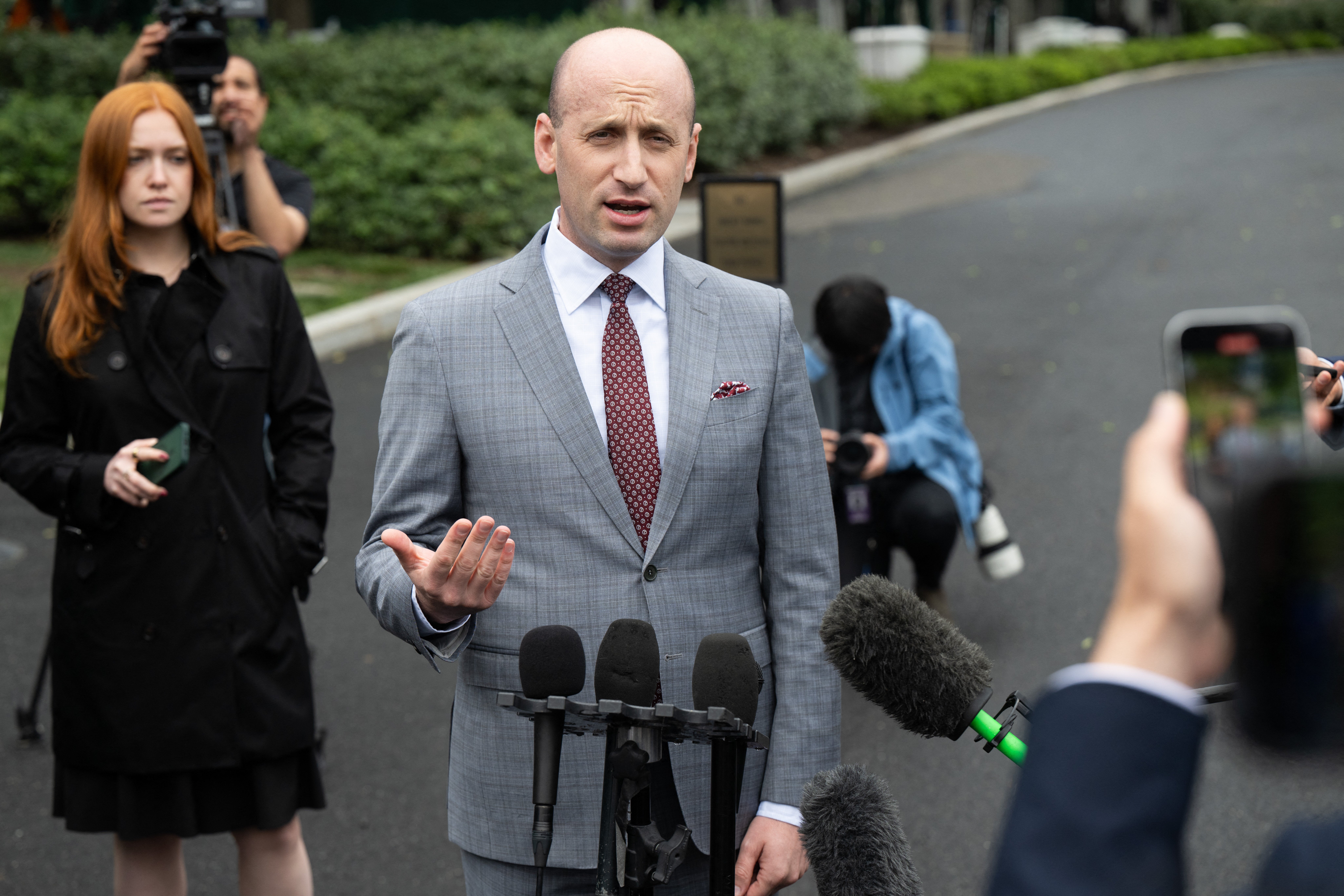
During a press appearance on Friday, Trump senior adviser Stephen Miller detailed another possible prong of the White House’s attempts to target unauthorised immigrants: suspending habeas corpus.
“The Constitution is clear — and that of course is the supreme law of the land — that the privilege of the writ of habeas corpus can be suspended in a time of invasion,” Miller said. “So it’s an option that we’re actively looking at.”
Habeas corpus – as enshrined in the Constitution – helps shield people from unlawful detention, and ensures that they’re able to contest their incarceration in court. It translates to “you should have the body” in Latin and guarantees that individuals are able to physically appear in front of a judge if they are detained.
Any suspension of habeas corpus would further undercut due process protections for individuals who are detained by the Trump administration as the White House seeks to ramp up immigrant deportations.
The administration has already tried to invoke the Alien Enemies Act – a law that allows the White House to remove immigrants from the US without a hearing – in order to justify the deportation of alleged Venezuelan gang members to a maximum security prison in El Salvador.
Miller’s comments on Friday signalled an openness to expanding upon these actions if the courts – which have thus far blocked a number of Trump’s immigration policies – continue to stymie the White House’s goals.
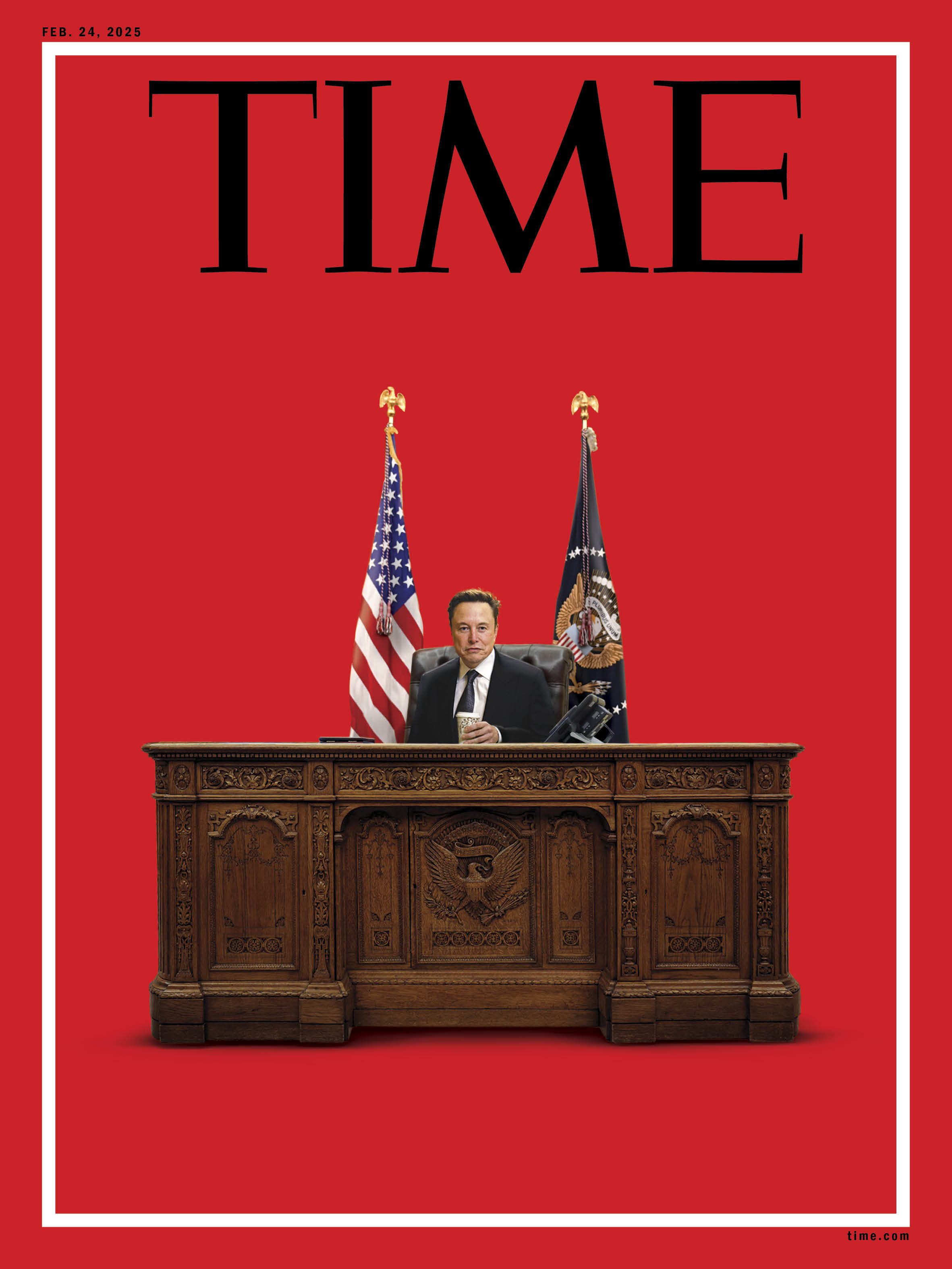
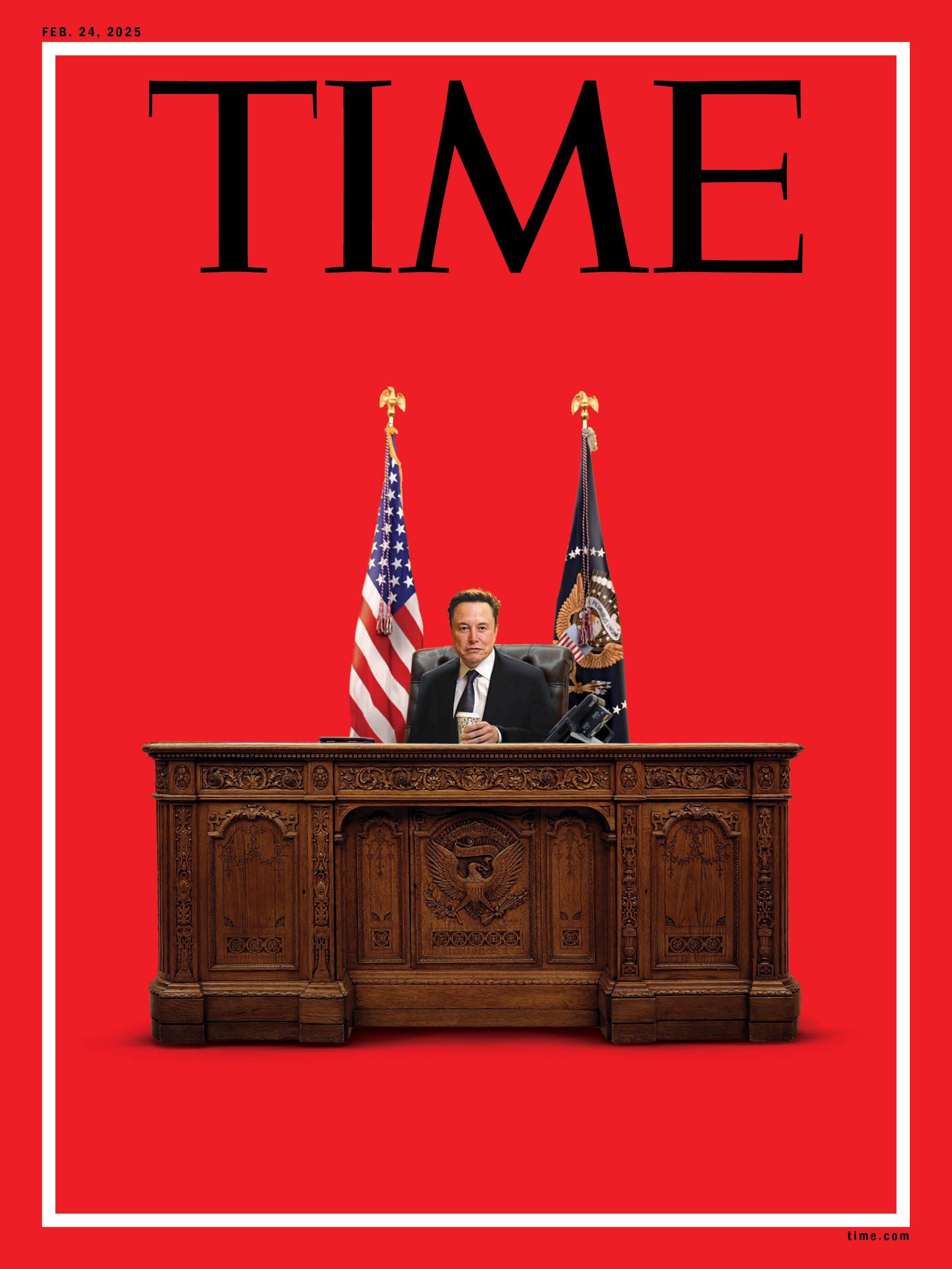
Time magazine has revealed the cover of its latest edition, showing billionaire Elon Musk sitting behind the Resolute Desk in the White House’s Oval Office.
Musk, the wealthiest person on earth, is seen holding a beverage in one hand as he peers out from behind the iconic desk, used by U.S. presidents since the late 1880s.
Advertisement
An accompanying article titled “Inside Elon Musk’s War on Washington” covers Musk’s reshaping of America’s government since his appointment as the head of President Donald Trump’s Department of Government Efficiency (DOGE).
Elon Musk, the world’s richest person, is seen sitting behind the White House’s Resolute Desk in Time magazine’s latest cover.
“No single private citizen, certainly not one whose wealth and web of businesses are directly subject to the oversight of federal authorities, has wielded such power over the machinery of the U.S. government,” the article states.
Advertisement
The multibillionaire tech and media mogul “has been deputised to dismantle vast swaths of the federal bureaucracy — slashing budgets, gutting the civil service, and stripping independent agencies of the ability to impede the President’s objectives,” it goes on.
This extreme appointment of power follows Musk being a loyal supporter and campaign donor to Trump, spending at least $288 million to help secure his reelection, according to a recent analysis by The Washington Post.
Since his election success, Trump has granted Musk widespread access to his inner orbit and the federal government’s spending, raising numerous ethics questions, including about the multibillion-dollar contracts that Musk’s businesses have with the federal government.
Advertisement
In the weeks since his arrival, Musk has assisted with the dismantling of the U.S. Agency for International Development, which he has publicly called “a criminal organisation,” and he has been given access to the Treasury Department’s federal payment system and the Small Business Administration.
Musk has been labeled by the White House as a “special government employee.” He is not paid and is not full time, according to the ethics rules of such a title, but he does have top secret security clearance, a source told CNN.
Billy Ray Cyrus’ ex-wife Firerose has joined the country musician’s family in sharing her concerns for his well-being.
“What’s being seen in public now reflects much of what I experienced in private during our relationship,” Firerose ― née Johanna Hodges ― told People and the New York Post in a statement issued Friday.
Advertisement
“It’s very sad to see those same struggles continue for him, but I’m glad the truth is coming to light — for his potential good because healing is only possible when you confront the truth and accept there’s a problem,” she added.
The musician’s remarks come just two days after Billy Ray Cyrus’ son, Trace Cyrus, posted an open letter on Instagram urging his father to “seek help” following a widely panned performance at President Donald Trump’s inauguration.
Billy Ray Cyrus and Firerose split last year after about seven months of marriage. Their divorce filings included accusations of abuse from both sides.
NBC via Getty Images
Advertisement
After taking the stage at the Liberty Ball in honor of Trump’s return to the White House, the “Achy Breaky Heart” singer sounded hoarse and appeared unable to get his guitar synced with the venue’s audio system, despite the assistance of crew members. He later blamed “technical difficulties.”
In his letter, Trace Cyrus hinted that he and other family members ―including sisters Miley Cyrus and Noah Cyrus ― had been estranged from his father for some time.
“We are all hanging on to memories of the man we once knew & hoping for the day he returns,” he wrote. “You’re not healthy Dad & everyone is noticing it.”
Advertisement
“I don’t know what you’re struggling with exactly but I think I have a pretty good idea & I’d love to help you if you would open up and receive the help. You know how to reach me,” he added.
Billy Ray Cyrus’ performance at Trump’s inaugural festivities Monday was widely panned by critics and fans.
Joe Raedle via Getty Images
Billy Ray Cyrus filed for divorce from Firerose in May of last year after about seven months of marriage, citing irreconcilable differences and “inappropriate marital conduct.”
Advertisement
Firerose issued a divorce filing of her own in which she accused Billy Ray Cyrus of “extreme verbal, emotional and psychological abuse.” About a week after that, Billy Ray Cyrus responded with new documents in which he denied Firerose’s claims and alleged it was he, “in fact, [who had] been abused.” Their divorce was finalized in August.
An Australian native, Firerose has continued to release music in the wake of the split. Her latest single, “War Is Won,” was unveiled this week.
In her statement, she suggested that her work had given her an outlet for her grief.
“For me, I remain focused on my faith, my music, my healing and using my story to encourage others to find strength and hope,” she said.
US President Joe Biden on Thursday expressed hope that President-elect Donald Trump will reconsider his pledge to apply tariffs on Mexico and Canada, saying the move would be “counterproductive.”
Earlier this week, Trump said he would impose a 25% tariff on all goods from Mexico and Canada as soon as he takes office.
“I hope he rethinks it. I think it’s a counterproductive thing to do,” Biden said of Trump. “We have an unusual situation in America. We’re surrounded by the Pacific Ocean, the Atlantic Ocean, and two allies, Mexico and Canada. The last thing we need to do is begin to screw up those relationships. I think we’ve got them in a good place.”
Trump has previously suggested tariffs would motivate Mexico and Canada to address some of the issues he repeatedly complained about during his White House bid — undocumented immigrants crossing into the US through the southern border and the fentanyl crisis. Trump said the two countries could “easily solve” those issues.
“We hereby demand that they use this power, and until such time that they do, it is time for them to pay a very big price!” Trump said Monday.
Advertisement
Biden, for his part, noted that border crossings have decreased significantly since Trump’s last term in office.
Trump has also said he will levy an additional 10% tariff on Chinese goods in January.
As Biden wraps up his final months in office, he spoke to reporters about what he is grateful for this Thanksgiving season.
“I’m thankful for my family. I’m thankful for the peaceful transition of the presidency,” he said.
He added that he is thankful for the US-backed ceasefire agreement between Israel and Hezbollah in Lebanon. The deal does not cover the war in Gaza.
In a statement released by the White House addressing another major foreign policy concern for his administration, Biden slammed Russia for its Thursday attacks on several Ukrainian cities, including Kyiv, targeting the country’s energy infrastructure as the winter months approach.
“This attack is outrageous and serves as yet another reminder of the urgency and importance of supporting the Ukrainian people in their defense against Russian aggression,” Biden said.
Advertisement
Trump’s impending return to the White House has prompted concern among Ukraine allies about the future of US support for Kyiv given the president-elect has previously refused to say whether it would be in the United States’ interest for Ukraine to win the war.
But during his remarks to reporters, Biden said he will work to ensure the transition to the Trump administration “goes smoothly,” while seeming to express hope that Trump may walk back some of his controversial campaign pledges.
“I want to make sure it goes smoothly. All the talk about what he’s going to do or not do — I think there may be a little bit of an internal reckoning on his part,” he said of Trump. “So it remains to be seen.”
Biden added that the makeup of the incoming Congress with Republicans having a thin majority in both the House and the Senate will require “some real compromise.”
“But we’ll see,” Biden said. “On Thanksgiving, I am hopeful.”