Nadhim Zahawi owed the tax man £5 million while he was chancellor, according to a government minister.
Chris Philp’s comments, in a radio interview, are the first time any government official has confirmed the size of the settlement the Tory party chairman reached with HMRC.
It is unclear how much of the total payment was the penalty Zahawi was given for failing to pay his taxes on time.
But appearing on Radio Four’s Today programme this morning, Philp took issue with the presenter, Mishal Husain, when asked about the scandal.
In a statement at the weekend, Zahawi said HMRC had agreed that his error had been “careless and not deliberate”.
Philp said: “I don’t know precisely what form that carelessness took – neither do you.”
Presenter Mishal Husain replied: “He paid a penalty for it, the settlement was in the region of £5 million.”
Philp then replied: “I think that was the amount of tax owed, wasn’t it?”
Nokes, chairwoman of the Commons women and equalities committee, told TalkTV she welcomed the investigation.
“I think there are too many unanswered questions,” Nokes said.
“The challenge for Nadhim is – look at the front pages, he’s leading too many of them.
“When you become the story it’s a distraction from anything else that the government is trying to do.
“There are countless examples of good, competent Cabinet colleagues who’ve got themselves in a mess, who have resigned quickly and come back, really in some instances just a few months later.
“In order to get this cleared up Nadhim should stand aside and let the investigation run its course.”
Advertisement
However, home office minister Chris Philp hit back, saying he did not think Zahawi should have to step aside while the investigation takes place.
Philp told BBC Breakfast: “I think it is reasonable that where there is an investigation, the person concerned is allowed to continue serving while that investigation continues.
“We do have a principle, don’t we in this country, innocent until proven guilty. That applies to a whole range of different circumstances.
“The investigation has been launched by the prime minister, that is the right thing to do. It will get to the bottom of this and then the prime minister will make his decision.
Advertisement
“But I don’t think it is fair to jump to any conclusions before the investigation has concluded.”
Pushed on Nokes’ call for Zahawi to stand aside, the minister added: “I don’t take that view, I think we should let the investigation play out.”
Zahawi is facing calls to quit after it emerged he resolved a multimillion-pound tax dispute with HMRC by paying a penalty while serving as chancellor.
Claims started emerging when Zahawi was made chancellor, with reports suggesting Cabinet Office officials alerted the then-prime minister Boris Johnson to a HMRC dispute.
Zahawi has admitted he paid what HMRC said “was due” after it “disagreed about the exact allocation” of shares in YouGov, an error he said was “careless” not deliberate.
Nadhim Zahawi’s Taxes Explained
The allegations surround Zahawi’s links to a Gibraltar-based trust called Balshore Investments Limited – of which his father Hareth is a director.
When YouGov was co-founded by Zahawi, the trust was allocated shares equalling the number given to his co-founder Stephan Shakespeare.
Asked about this last year, the then chancellor said neither he nor his wife benefitted from the trust and denied it was used to avoid tax, saying it was because his father “lived abroad”.
The stake in the company owned by Balshore was eventually sold by 2018 for about £27 million.
Experts said that if Zahawi benefitted from that transaction he should owe tax on it.
They point to a document from 2005 that suggests he benefitted from the trust when Balshore at least partially covered a loan.
Zahawi has not disclosed the size of the settlement – reported to be an estimated £4.8 million including a 30% penalty – or confirm whether he paid a fine.
Zahawi released a statement to “address some of the confusion about my finances”.
He said: “Following discussions with HMRC, they agreed that my father was entitled to founder shares in YouGov, though they disagreed about the exact allocation. They concluded that this was a ‘careless and not deliberate’ error.
“So that I could focus on my life as a public servant, I chose to settle the matter and pay what they said was due, which was the right thing to do.”
The new commander of the Russian army in Ukraine has faced pushback over his attempt to clamp down on “non-standard haircuts” among his troops, the UK has claimed.
General Valery Gerasimov, Russia’s Chief of the General Staff and the newly appointed commander in Ukraine, has reportedly started off his new job by trying to “improve deployed troops’ day-to-day discipline”.
Advertisement
In its daily update, the UK’s ministry of defence (MoD) alleged that Gerasimov was looking to target “non-regulation uniform, travel in civilian vehicles, the use of mobile phones, and non-standard haircuts”.
However, the MoD claimed: “The measures have been met with sceptical feedback.”
The UK officials suggested that “some of the greatest derision has been reserved for attempts to improve the standard of troops’ shaving”.
It continued: “Officials in the Donetsk People’s Republic described the prioritisation of a ‘farce’ that would ‘hamper the process of destroying the enemy’.”
A proxy private military company, the Wagner group, perceived as an informal arm of the Russian state, also pushed back against the new rules.
The MoD claimed Wagner owner, Yevgeny Prigozhin, lashed out at the official advice from the Kremlin, saying: “War is the time of the active and courageous, and not of the clean-shaven.”
The UK officials also pointed out: “The Russian force continues to endure operational deadlock and heavy casualties; Gerasimov’s prioritisation of largely minor regulations is likely to confirm the fears of his many sceptics in Russia.
“Along with Defence Minister Sergei Shoigu, he is increasingly seen as out of touch and focused on presentation over substance.”
Advertisement
This is just the latest sign that all is not well within the Russian army ranks.
According to previous claims from the MoD, Russia is even using “poorly-training convicts” to bolster its armed forces.
And by February 24, the war – which the Kremlin expected to last just a matter of days – will have stretched out to a year, with just 15% of Ukrainian land under Russian control.
The appointment of Gerasimov to lead the campaign in Ukraine was seen as a sign that Russia was trying a new tactic to turn the war in its favour.
He replaced General Sergei Surovikin, nicknamed General Armageddon for his brutal strategies, who will now serve as Gerasmiov’s deputy.
Advertisement
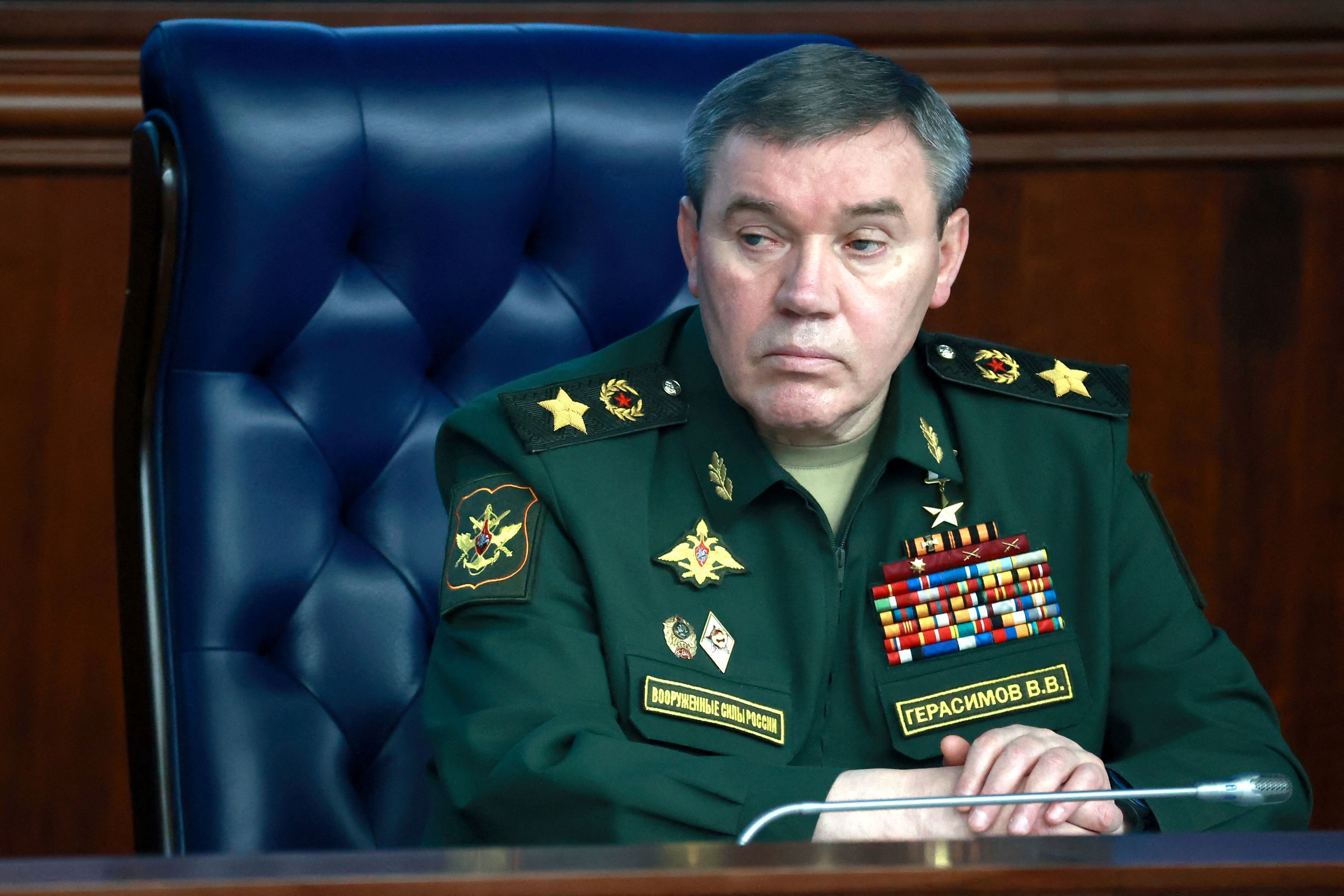
Russia’s army Chief of General Staff Valery Gerasimov
James Cleverly has insisted that tax affairs are “private matters” during a grilling over the finances of the Tory party chairman.
The foreign secretary stressed that Nadhim Zahawi made a “careless error” after it was revealed he paid a settlement to HM Revenue & Customs in relation to a shareholding in YouGov.
Advertisement
Zahawi is under pressure over allegations that he tried to avoid tax and has now had to pay it back as part of a multi-million pound settlement.
Cleverly said he did not know the size of the tax settlement with HMRC or whether Zahawi paid a penalty.
“I don’t know more than is in his statement,” Cleverly said.
Pressed on whether Zahawi should reveal more information, Cleverly said: “People’s taxes are private matters. I know that as politicians we, quite rightly, are expected to have a higher level of disclosure than perhaps other people might do.
Advertisement
“Nadhim has issued a statement where he has admitted that he made a careless error, that this is now resolved.”
Cleverly also swerved questions over whether Zahawi negotiated his tax settlement while he was chancellor, or what Rishi Sunak knew when he appointed him party chairman.
“I’m not an investigator,” he added when it was put to him that he was there to speak on behalf of the government.
Asked whether Zahawi will survive in his role until Wednesday, Cleverly said: “What else am I going to say other than yes, because he’s a very, very effective minister.”
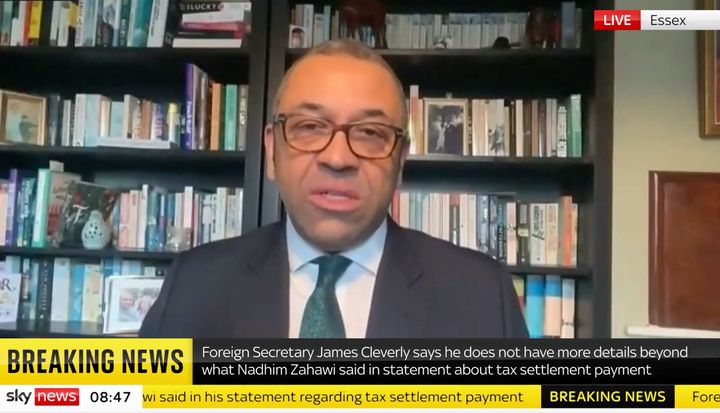
Foreign Secretary James Cleverly faced a grilling
Advertisement
Zahawi, who attends Sunak’s Cabinet, released a statement to “address some of the confusion about my finances”.
However, the statement raised further questions, including whether Zahawi negotiated the settlement when he was chancellor and in charge of the country’s taxation.
Claims started emerging when Zahawi was made chancellor by Boris Johnson last summer, with reports suggesting Cabinet Office officials had alerted the then-prime minister to the HMRC dispute.
Zahawi did not disclose the size of the settlement – reported to be an estimated £4.8 million including a 30% penalty – or confirm whether he paid a fine.
Tax lawyer Dan Neidle, who has been working to expose the minister’s tax affairs, estimated that he owed £3.7 million.
Advertisement
In an unusual move, Zahawi did not take founder shares when he set up YouGov, saying in his statement that his father took shares “in exchange for some capital and his invaluable guidance”.
He continued: “Twenty one years later, when I was being appointed chancellor of the Exchequer, questions were being raised about my tax affairs. I discussed this with the Cabinet Office at the time.
“Following discussions with HMRC, they agreed that my father was entitled to founder shares in YouGov, though they disagreed about the exact allocation. They concluded that this was a ‘careless and not deliberate’ error.
“So that I could focus on my life as a public servant, I chose to settle the matter and pay what they said was due, which was the right thing to do.”
He added that the matter was resolved and that all his tax affairs were “up to date” when he was appointed Tory party chairman by Sunak in October.
Advertisement
But the prime minister is facing questions over what he knew about the matter and when, as well as calls to sack Zahawi.
Sunak’s promise of a premiership of “integrity” was already thrown into disarray this week after he was fined by police for not wearing a seatbelt and criticised for the allocation of levelling-up funding.
Downing Street said it had nothing to add to Zahawi’s statement and confirmed that the prime minister had confidence in him as Tory chairman.
Opposition parties have demanded an independent probe as well as the publication of all of Zahawi’s correspondence with HMRC.
Labour party chairwoman Anneliese Dodds said Sunak needs to remove Zahawi as party chair, adding: “Zahawi still needs to explain when he became aware of the investigation, and if he was chancellor and in charge of our tax system at the time.
Advertisement
“He needs to explain why his legal representatives said his affairs were up to date in December last year only for him to settle a million-pound fine this month.”
Lib Dem deputy leader Daisy Cooper said: “Zahawi and his Conservative Cabinet colleagues are arrogantly trying to brush this under the carpet.
“There are facts that still need to be established so there must be an independent investigation to get to the bottom of this.”
Former Cabinet minister Simon Clarke has been criticised for telling nurses on a £35,000 annual salary that something was “wrong” with their budgeting if they were reliant on foodbanks.
Unions have warned that nurses are increasingly turning to foodbanks as the cost of living crisis bites into their wages, which they argue have decreased in real terms over the past decade.
Asked by Kay Burley on Sky News whether he agreed that nurses were “excellent at saving lives but hopeless with their finances”, Gove replied: “No, I would never put it that way.
“I think we appreciate that nurses, everyone who’s working on the front line in the national health service, is doing an amazing job, and my thanks and gratitude to nurses today is something I want to express very deeply and personally.”
Advertisement
“I also think that when we’re looking at the pay claims that are being made by people within the national health service, and also people in other parts of the public sector, we have to balance making sure we do everything we can to reward them for their hard work with recognising that we also have to be careful stewards of public money overall.”
Gillian Keegan, the education secretary, has also faced a backlash after suggesting that people could be turning to foodbanks because “something will have broken down – either a relationship or boiler or anything”.
Pressed on whether his colleagues had been wrong to criticise nurses for the way they manage their money, the levelling up secretary replied: “I would never criticise nurses for something like that.
“I think the most important thing to do is to recognise that people who are working in the NHS are people who’ve dedicated their lives to a caring profession, they’re doing everything they can to support us.”
Advertisement
Clarke, himself a former levelling up secretary, said on Twitter this morning that he “100%” stood behind his comments.
The MP for Middlesbrough South and East Cleveland told BBC Radio Tees on Wednesday that the debate over nurses’ pay is now “way out of hand”.
“I’m afraid if you are using a food bank and you are earning the average nurse’s salary of £35,000 a year then something is wrong with your budgeting, because £35,000 a year is not a salary on which you ought to be relying on a food bank.”
Citing the Nursing Times as his source, he told the station £35,000 is the median nurse’s salary and added: “My message is everyone needs to take responsibility in their lives.
Advertisement
“I don’t believe people on an average salary of £35,000 a year need to be using food banks.”
As well as the strikes this week, the Royal College of Nursing (RCN) has also announced that its members will walk out on February 6 and 7 unless progress is made on pay talks with the government.
Asked whether it was responsible for nurses and ambulance staff to strike on the same day, Gove said: “Naturally we would prefer for there not to any strikes at all and we prefer there not to be co-ordinated strike action of this kind.
“I just say two things, the first is that I am conscious ambulance workers, nurses and others, when they do go on strike action, and I don’t approve of it, I have to say, but they do take steps in order to ensure they can look after the most urgency emergency cases.
“The second thing I would say is we are introducing legislation to make sure that there is a minimum service level, that should provide people with peace of mind that there will always be an NHS there for them, and indeed other blue light services that they need.”
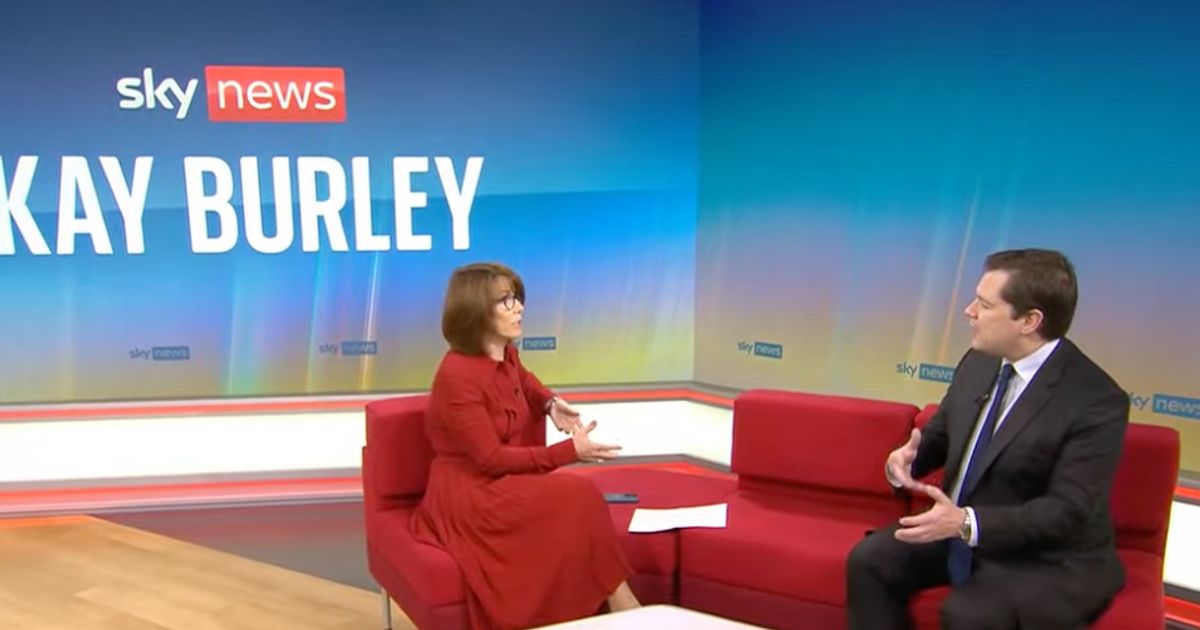
Kay Burley clashed with a Tory minister as she urged the government to increase their pay offer to NHS workers.
The Sky News presenter told Robert Jenrick “a nurse if for life not just for Covid” as it was confirmed inflation his 10.5% last month – down from 10.7% in November.
Advertisement
Nurses are striking once again today and also announced earlier this week that they are to hold two more days of industrial action next month in their long-running dispute over pay.
Jenrick, the immigration minister, said “international factors are beginning to tentatively work in the right direction” to bring inflation down from its peak last autumn.
He added: “The worst thing that we could do domestically would be to significantly increase public sector pay and then entrench inflation in the British economy and get into a wage spiral.”
But Burley told him: “To that end you can take on the rail unions, you can take on the civil servants’ unions, but when it comes to taking on the nurses, you don’t have the support of the British people.
Advertisement
“I’ve seen the banners that say ‘a nurse is for life, not just for Covid’.”
Jenrick replied: “Well, we have great respect for nurses, of course we do.”
But Burley hit back: “Well give them more money then.”
The minister went on: “It’s not always as simple as that in life Kay, because what we have to judge is not only how we motivate and respect nurses – and there is a serious challenge with retention and recruitment within the NHS.
“We have to balance that, however, with general affordability to the tax payer, what can the NHS afford. Secondly, the point about inflation, which is so critical to everybody in this country, and thirdly how can we handle this in a sensible and appropriate manner.
“The way that’s done is through independent pay review bodies, and there was an independent pay review last year which concluded that curses should get the pay rise that they have.”
Rishi Sunak has performed yet another U-turn after he caved in to Tory rebels over the government’s online harms bill.
The prime minister has agreed that social media bosses could face jail over harmful content posted on their platforms after more than 50 Conservative backbenchers backed an amendment demanding the change.
The government had been concerned that the move would put tech firms off investing in the UK.
But Sunak was facing an embarrassing Commons defeat over the issue if he had not shifted his position.
Following talks with culture secretary Michelle Donelan, the rebels dropped the amendment, which will be brought back in the House of Lords “in a more workable format” by the government.
It is the third time the PM has been forced into a humiliating climbdown in the face of pressure from his own MPs.
He has already ditched plans to make it easier to build new homes and dropped his opposition to new onshore wind farms.
Ian Russell, the father of schoolgirl Molly Russell, who killed herself after viewing harmful material on social media, said the threat of imprisonment is “the only thing” that will make the bosses “put safety near the top of their agenda”.
“I think that’s a really important thing in terms of changing the corporate culture at these platforms,” he told BBC’s Newsnight.
The new law would make it easier for trans people to change gender by reducing the time the process takes and lowering the age at which it can happen to 16.
Asked if she would be content for children in schools at 16 to say whether they want to change their gender, Keegan told Sky News: “We have to be very sensitive to children. We are actually going to publish some guidance and consult because it is a very tricky area to get right.
“It has to be age-appropriate, but children have to be supported as well.”
Pressed on her personal view, the minister was asked if 16 was too young.
“No I don’t actually. “I was working at 16, I was paying tax at 16, I was making decisions for myself at 16,” she replied.
Advertisement
“But it’s not really about what I think, it’s how we make sure we get that right balance of supporting children, but also making sure that what they’re getting taught in schools is age-appropriate.”
Labour leader Keir Starmer said he has “concerns” over Scotland’s gender recognition law because he considers 16 to be too young to decide to change gender.
It is the first time Westminster has used the power since devolution came into being nearly 25 years ago.
Scottish secretary Alister Jack wrote to Scottish first minister Nicola Sturgeon to inform her that he was making a so-called “section 35 order” vetoing the bill which was passed at Holyrood before Christmas.
Advertisement
It followed advice from government lawyers that the bill would cut across the UK-wide Equality Act.
In a statement, Jack said: “Transgender people who are going through the process to change their legal sex deserve our respect, support and understanding. My decision today is about the legislation’s consequences for the operation of GB-wide equalities protections and other reserved matters.”
Responding to the news, Sturgeon accused the UK government of “a full-frontal attack” on the Scottish parliament.
Rishi Sunak received a brutal grilling from a Scottish journalist last week, and the clip has now gone viral online.
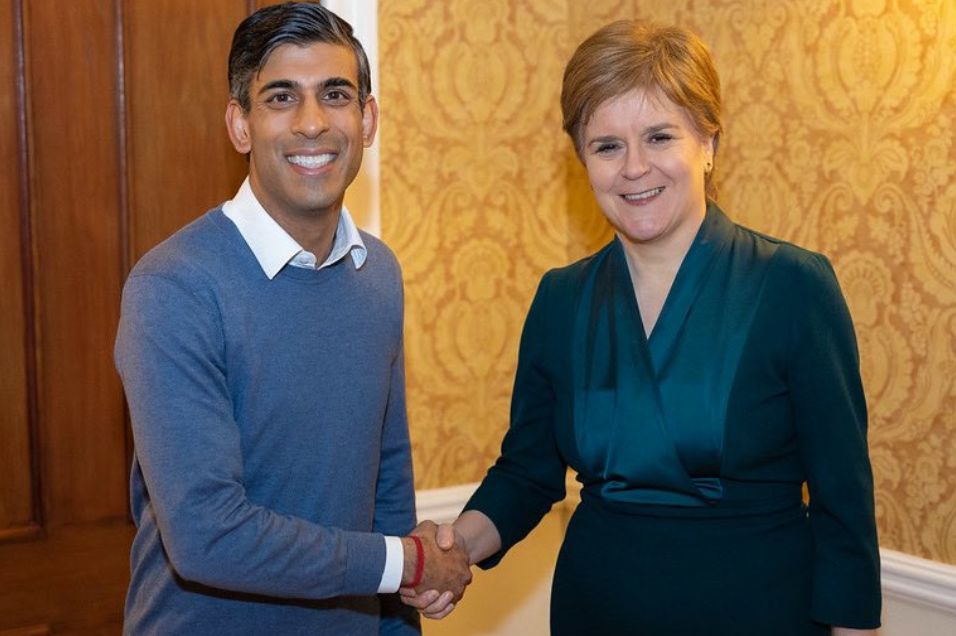
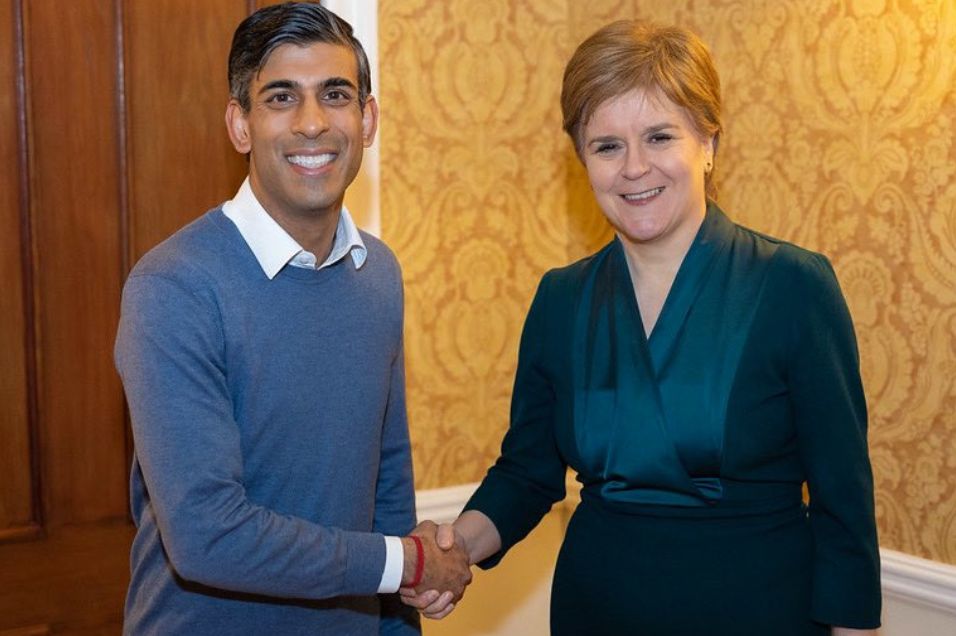
On a visit to Scotland, the prime minister met with Scotland’s first minister Nicola Sturgeon as tensions over the country’s constitutional future (and it’s gender recognition reform bill) continue to bubble away in the background.
Advertisement
In November, the Supreme Court ruled that the Scottish government did not have the legal power to hold its own referendum on whether Scotland should leave the UK.
Sturgeon has since said that she would instead make the next general election a “de facto referendum” – so votes for her (or her party the SNP) would effectively be votes for independence.
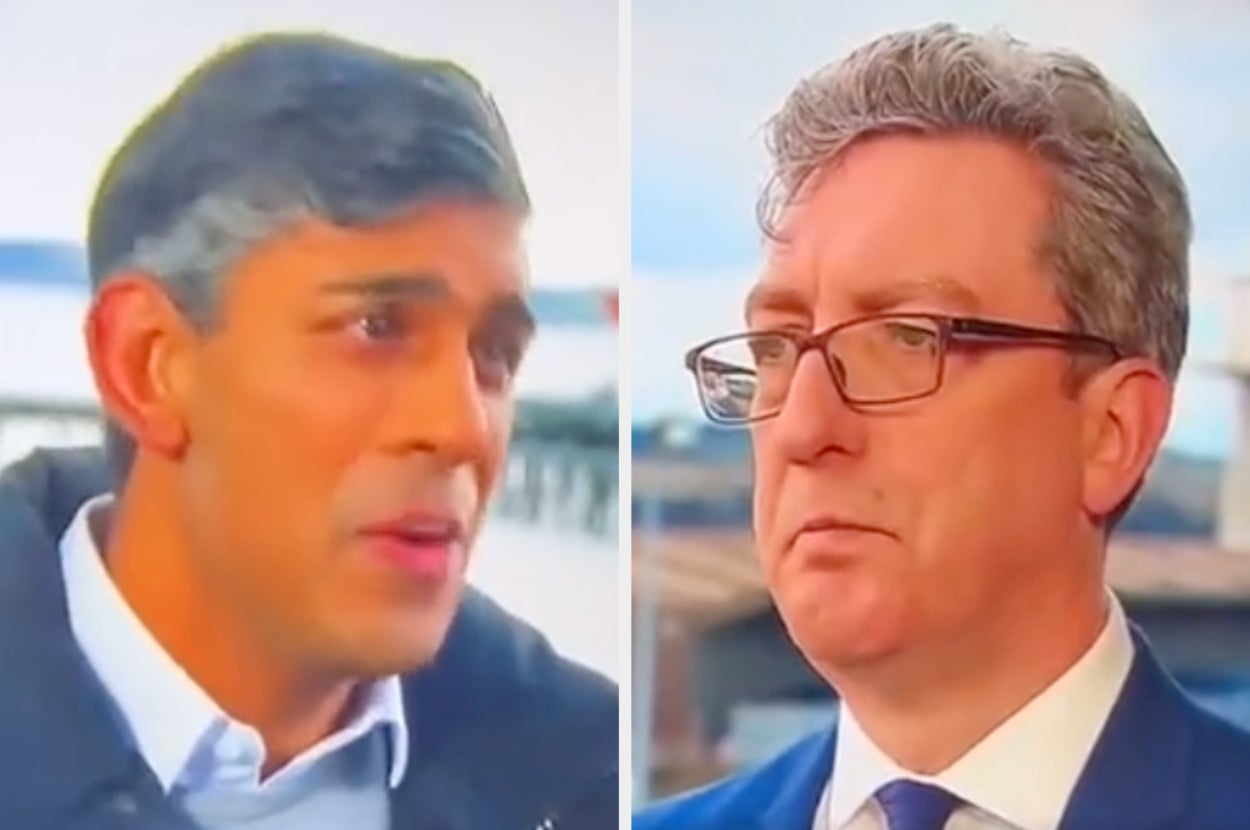
During their tense interview on Friday morning, STV’s political editor Colin Mackay asked Sunak: ″Would you accept the result of that de facto referendum?”
″What I’m focused on is delivering for the people of Scotland,” Sunak began. “Today’s announcement –”
Advertisement
“That’s not what I’m asking you,” Mackay cut him off. “I’m asking you about the possibility of a de facto referendum at the next general election, which the first minister proposed.”
Sunak just said that he and the first minister of Scotland did not talk about the next general election during their meeting on Thursday night.
Mackay asked again: “You’re completely ignoring my question, which is about the possibility of the next general election being a de facto referendum.
″Would you accept the outcome of that?”
“What I’m focused on,” Sunak said, but was cut off once again.
Mackay replied: “That’s not what I’m asking you, I’m asking you to focus on this because a lot of people in Scotland are very interested in this, would you accept the outcome of a de facto referendum?”
The PM said: ″Do you know what, I’ve been out all of yesterday evening, I’ve been out all of today, and what people are talking to me about is what we are doing to actually make their lives better.”
Advertisement
″So you’re just not going to talk about what they’re talking about?” Mackay pushed. “You’re just going to ignore my question about Scotland’s constitutional future, is that what you’re doing? You clearly are.”
“When it comes to a general election people will make up their own minds on what they want to vote on,” Sunak said. ″It’s not really for me to talk about that.”
“Well it is because that’s what I’m asking you about. ”
The STV journalist then asked Sunak if he was “ignoring democracy”.
“No, absolutely not, what we are doing is delivering for people here in Scotland,” the prime minister replied.
“Obviously the Scottish government tried to put forward something which the Supreme Court said was not appropriate, I respect the decision of the Supreme Court.
“In the here and now, I think what the people in Scotland want is for us to make a difference to their lives.”
Advertisement
McKay added: “So, they have no democratic right to express their own opinion in the Scottish future.”
Sunak repeated that he respects the view of the Supreme Court, adding that the two free ports being unveiled in Scotland will bring “jobs, investment and opportunity” to the regions.
Writing for STV after their meeting, Mackay said Sunak dodged some of his questions “as skilfully as some of his predecessors, and much better than he did before he was prime minister”.
Mackay also noted: “What was notable was he was much more open to media access than some of his predecessors, and that really is progress.”
Rishi Sunak returns to London this morning after spending two days in Scotland.
His visit included a private dinner with Nicola Sturgeon on Thursday evening, during which the pair discussed, among other things, the many issues that divide them.
Nevertheless, the prime minister said he wanted the pair to “strengthen our working relationship and continue discussing our shared challenges and our joint efforts to deliver for people in Scotland”.
Advertisement
But that laudable intention will be blown to pieces next Wednesday if, as HuffPost UK understands, Sunak’s government takes the unprecedented step of blocking a bill passed at Holyrood from becoming law.
The legislation in question is the Gender Recognition Reform Act, which was passed by the Scottish Parliament before Christmas after a fierce debate which highlighted splits on the issue in the main parties.
In simple terms, the new law would make it easier for trans people to change gender by reducing the time the process takes and lowering the age at which it can happen.
The Westminster government has no intention of bringing in a similar bill, giving rise to potential legal problems over how the Scotland-only law would affect the application of the Equalities Act across the UK.
Advertisement
Ministers in London can block Holyrood legislation in such circumstances by triggering section 35 of the Scotland Act — which brought the Scottish Parliament into being in 1999.
That would prevent the presiding officer of the Scottish Parliament from sending the bill to the King for royal assent.
Whitehall sources say Alister Jack, the secretary of state for Scotland, will announce on Wednesday that the UK government will block the bill.
Coming at a time when the SNP are already accusing Westminster of “denying democracy” by not allowing another referendum on independence, this would be the political equivalent of throwing a match into a box of fireworks.
Sunak held “constructive” talks with Nicola Sturgeon in Scotland on Thursday.
10 Downing Street
Advertisement
Asked about the issue while in Scotland, Sunak was giving little away.
“Obviously this is a very sensitive area and I know there were very robust debates and exchanges on it as the bill was passing in in Scotland,” he said.
“What I’m concerned about is the impact of the bill across the United Kingdom.
“There may be impacts across the UK that we need to be aware of and understand the impact of them, and that’s what we’re doing, and once the government has received final advice it will set out next steps.”
Stephen Flynn, the SNP leader at Westminster, gave a foretaste of what his party’s reaction will be if the UK government does indeed veto the Gender Reform Recognition Act.
He said: “This goes to the heart of Scotland’s democracy because Scotland’s democratically elected parliament has approved legislation in relation to gender recognition and the UK government is potentially going to try and undermine that. That’s simply not on.”
It’s not a straightforward issue for the SNP, however.
The debate in the Scottish Parliament saw the biggest rebellion against the party leadership since it came to power in 2007, with some SNP MSPs voting against what they see as an attack on women’s sex-based rights.
Advertisement
The SNP’s Westminster group is also split, with Edinburgh South West MP Joanna Cherry one of the most vocal opponents of the Scottish government’s position.
Will those SNP rebels back the UK government blocking a law they hate, or will they row in behind Sturgeon over what their party claims is an attack on devolution itself?
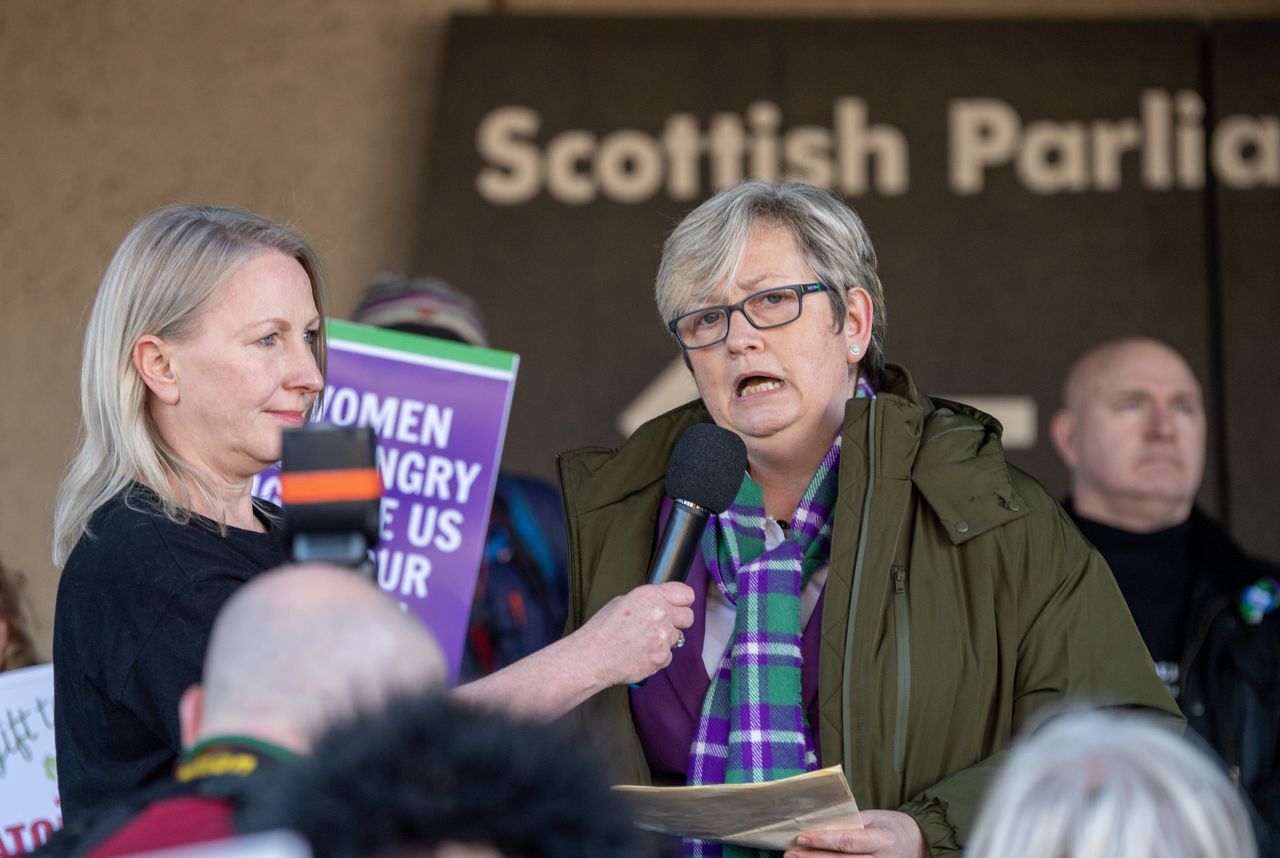
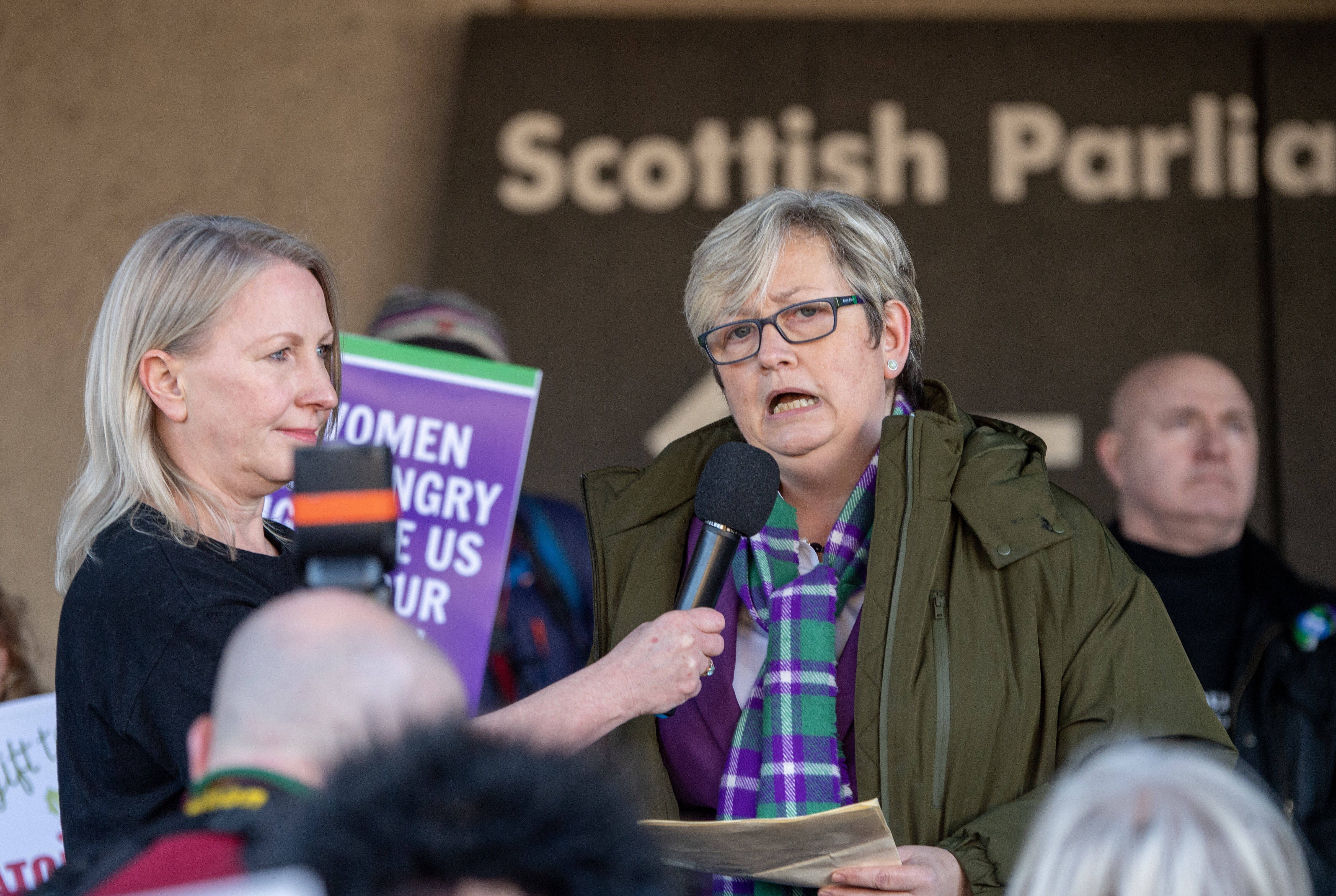
Joanna Cherry speaking at the For Women Scotland and the Scottish Feminist Network demonstration outside the Scottish Parliament ahead of last month’s vote on the Gender Recognition Reform Act.
“Using such a radical mechanism as a veto power does rather play into the SNP narrative that Westminster is denying democracy, which seems to me to be politically risky,” they said.
Advertisement
“As we approach the 25th anniversary of devolution, it is a big moment.”
For all his warm words about co-operation with the Scottish government, it seems all-but certain that Sunak is just days away from a constitutional crisis which could end up defining the very future of the United Kingdom.