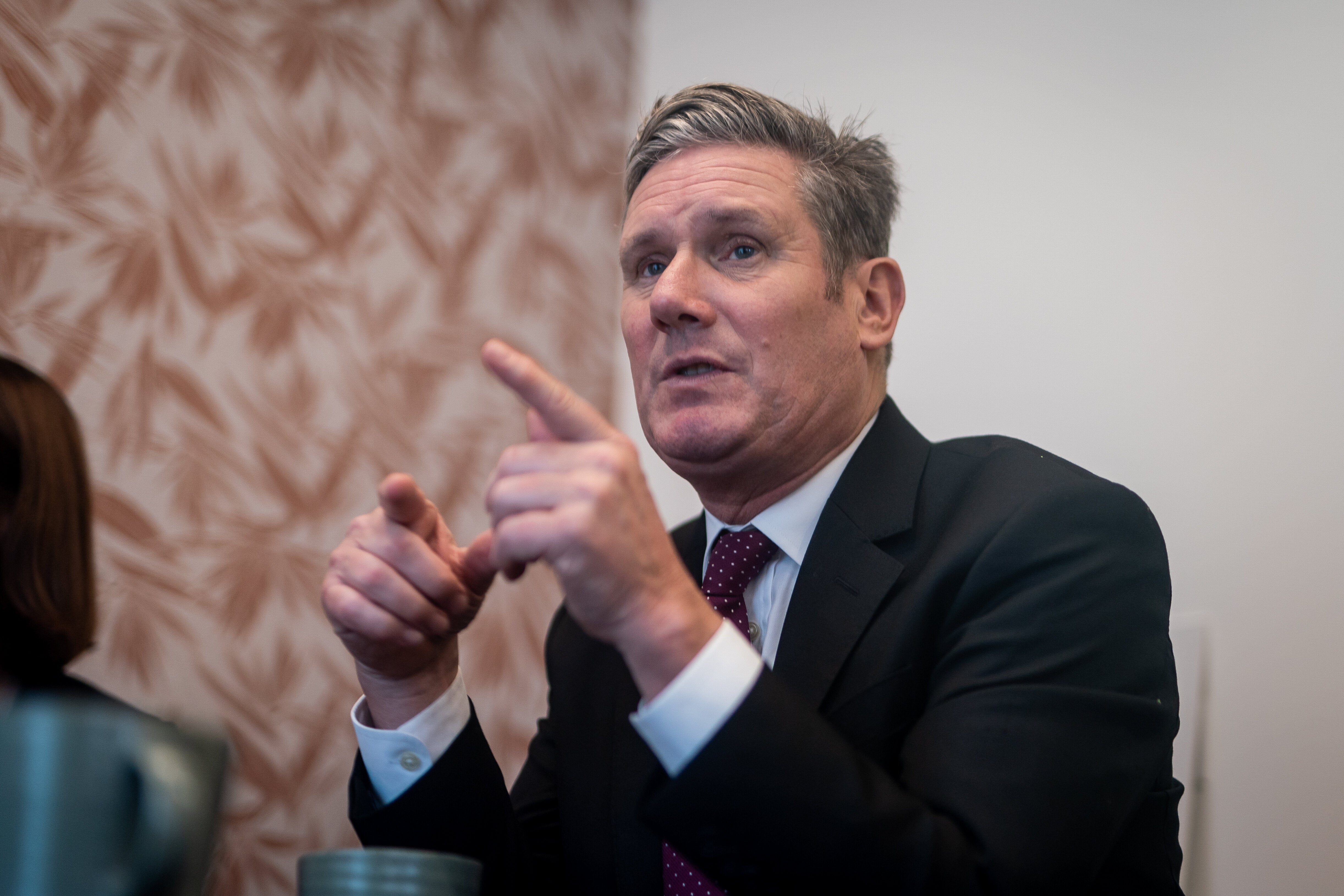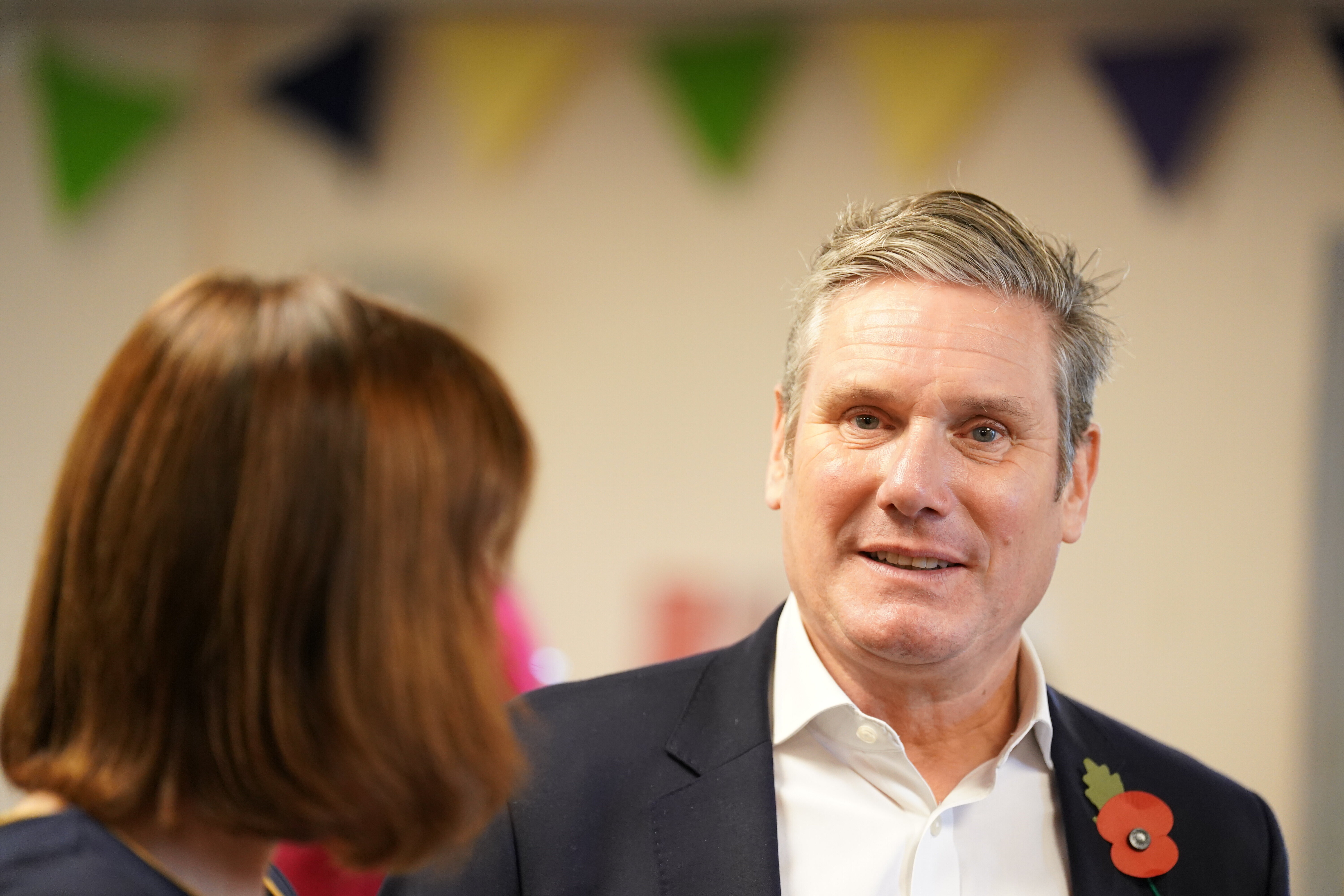
Scottish Union Leader Quits In Protest At Sacking Of Sam Tarry

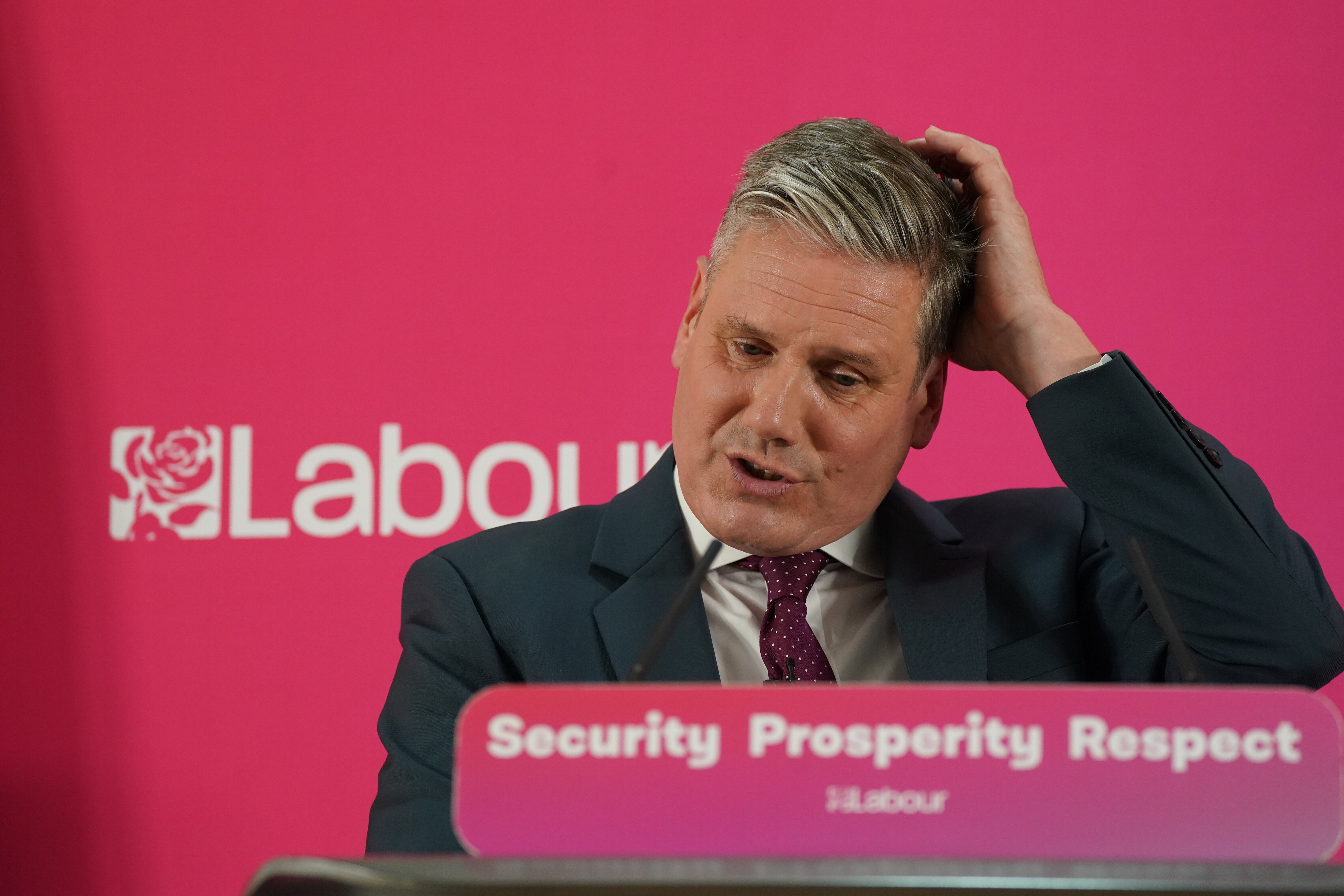
A Scottish union leader has quit the Labour party in protest at the sacking of shadow minister Sam Tarry.

Kevin Lindsay, an organiser for the Aslef train drivers’ union in Scotland, said Tarry’s sacking was “a step too far” and a sign the party is “moving to the right and is becoming unrecognisable”.

Tarry, a shadow minister in the transport team, was sacked on Wednesday evening for a joining striking rail workers on the picket line.

The Labour Party said it had no choice but to sack Tarry because he had also done a round of broadcast interviews without permission of party HQ and had also “made up policy on the hoof”.

In response, Tarry told LBC Radio his sacking was a “catastrophic mistake” and warned that other colleagues could quit in protest.

“I think it’s wrong to state that any Labour politician — whether it be a councillor, whether it be an MP, whether it be a shadow minister — shouldn’t be showing solidarity,” he said.

“If it isn’t tackled properly, there’s going to be a real danger that it won’t just be me that’s sacked, I think you’ll see dozens and dozens of shadow ministers sacked across the whole country.” Speaking to Times Radio, he called Starmer’s decision to ban his team from joining the picket line a “catastrophic mistake.”

Lindsay is one of a number of union bosses to express anger at Tarry’s sacking.

Sharon Graham, the general secretary of Unite, described the sacking as “another insult to the trade union movement” while Mick Lynch, the head of the RMT union, accused Starmer of “playing up to the agenda of Liz Truss and the right wing press”.

In a letter to the party confirming his resignation, Lindsay wrote: “The Labour Party was and is meant to be the political wing of the trade union movement but now it’s more interested in trying woo Tory voters in the shires of England than representing working people.

“As a democrat, I respect that Keir Starmer has been elected the leader but I truly believe his performance and policies are making it impossible for the Labour Party to return to power and that he should be removed from his position immediately.

“There needs to be a change in leadership and political direction but I sadly can’t see this happening and we will end up with PM Truss for several years.

“Therefore I have made the decision not only to resign from the Labour Party but now also support the proposal for Aslef to disaffiliate from the party.”

Share Button

Factional In-Fighting Under Jeremy Corbyn Left Labour ‘Dysfunctional’, Report Finds

A long-awaited inquiry has found that bitter in-fighting between Labour moderates and Jeremy Corbyn supporters left the party “dysfunctional” and undermined its ability to hold the government to account.

The probe by Martin Forde QC said the party spent more time “occupied by factional differences than working collaboratively to demonstrate that the party is an effective opposition”.

His investigation was ordered by Keir Starmer after the leaking of an internal report into how the party handled accusations of anti-semitism, which laid bare the tensions that existed in the party under its former leader.

The leaked report, which ran to 860 pages, “quickly morphed into a wide-ranging critique of the factional attitude of senior professional party staff to the Jeremy Corbyn leadership”, Forde wrote.

It was pulled together when former general secretary Jennie Formby was in charge and was leaked in full shortly after Starmer became leader in 2020.

The leaked report contained hundreds of private WhatsApp messages between former officials, many of them derogatory, about Labour staff, members and pro-Corbyn MPs.

Among some of the accusations central to the report was that staff opposed to Corbyn deliberately sabotaged the 2017 general election campaign.

But Forde found that while there was an “increasingly bitter and factional rift in the party” there was no evidence to support claims that staff in Labour HQ wanted to the party to “do badly” in the election.

Forde’s report acknowledged that there was a “disagreement” over strategy between Corbyn’s office and the party’s campaigning headquarters but that he had not seen evidence of “bad faith”.

Those in the leader of the opposition’s office (Loto) wished to pursue a more “aggressive” strategy to win more seats, whereas those in the party’s HQ felt there should be a “defensive” strategy aimed at minimising losses and “shoring up” good MPs.

But Forde said: “We find that HQ staff genuinely considered that a primarily defensive strategy would secure the best result for the party, and we have not seen evidence to suggest such a strategy was advanced in bad faith.

“More broadly the evidence available to us did not support claims that HQ staff wanted the party to do badly in the 2017 general election.”

The claim that party staff scuppered efforts to win the 2017 poll was one of several made in the leaked report.

Among the more damaging claims were that party officials used a number of insults to describe senior Black MPs and officials including Diane Abbott, Dawn Butler and Clive Lewis.

And today Forde’s report concluded that MPs of colour and female MPs were “not always treated during the relevant period in the same way as their white/male counterparts — not just in terms of the abuse they received, but in terms of the level of instinctive respect they were afforded within the party and within parliament”.

“It is incumbent on party staff to recognise this failure and to continue to work to ensure that it does not persist,” Forde said.

On racism in the party more widely, Forde found that the “fundamental problem” was that “people who are committed to progressive politics find it difficult if not impossible to accept that they might have acted in a way which was discriminatory”.

He continued: “There seems to us to be a tendency among party staff to believe that they are insulated from the ills of their society — the same dynamic which was, in our view, behind the failure of the elected leadership to countenance that (as lifelong anti-racists) they could be behaving in a way which perpetuated anti-Semitism.

“The evidence clearly demonstrated that a vociferous faction in the party sees any issues regarding anti-Semitism as exaggerated by the right to embarrass the left.

“It was of course also true that some opponents of Jeremy Corbyn saw the issue of anti-Semitism as means of attacking him. Thus, rather than confront the paramount need to deal with the profoundly serious issue of anti-Semitism in the party, both factions treated it as a factional weapon.”

The Forde report found that the disciplinary process in the Labour Party was also “potentially prone to factional interference”.

“We found a disciplinary process not fit for purpose during the period we investigated and therefore one that was potentially prone to factional interference,” he said.

Moving forward, Forde also called for “constructive engagement” with the findings contained in the 138-page review.

“There is a culture of intellectual smugness which exists at the extremes of the political spectrum the party represents. In the past this has led to the dismissal of valid, albeit sometimes uncomfortable, views. It must now come to an end.”

A Labour Party spokesperson said: “The Forde report details a party that was out of control.

“Keir Starmer is now in control and has made real progress in ridding the party of the destructive factionalism and unacceptable culture that did so much damage previously and contributed to our defeat in 2019.”

Share Button

Keir Starmer Urges Tory MPs To ‘Put Country First’ And Boot Boris Johnson Out Of No.10 Now

Keir Starmer has called on Tory MPs to back his bid to have Boris Johnson removed from No.10 immediately.

The prime minister is set to stay in post until the Conservatives elect a new leader in eight weeks’ time on September 5.

But Labour have tabled a motion of no confidence in the government which, if it was passed by the Commons, would see Johnson booted out of office straight away.

If the Conservatives were then unable to form a government under a different prime minister, a general election would be held.

Starmer said: “The Tory party has at last concluded that the prime minister is unfit for office, that was blindingly obvious a very, very long time ago. He is leaving because his own party has concluded that he can’t be trusted.

“They can’t now let him cling on for weeks, and weeks, and weeks until the 5th of September. It would be intolerable for the country.

“Since the Tories have failed to act in the national interest, Labour will. We have put down a vote of no confidence, and challenged any Tory MP who in the last few days has said ‘I can’t serve Boris Johnson because you can’t trust a word the man says’, ‘I can’t go on the media because the lines he gives us always unravel’.

“Can they really vote to say he should stay in power for another few weeks We’re challenging them to put their constituents first, and put the country first.”

If the government makes time for it to be debated, MPs will vote on the confidence motion tomorrow.

It is almost certain to be defeated because it will not be supported by Conservative MPs.

But a Labour source said: “It will put the squeeze on backbench Tories to either vote for him, and be hypocrites, or back Labour, admitting we were right.

“Do all those Tory leadership candidates really want to be answering that question next week? They know he needs to go.”

Share Button

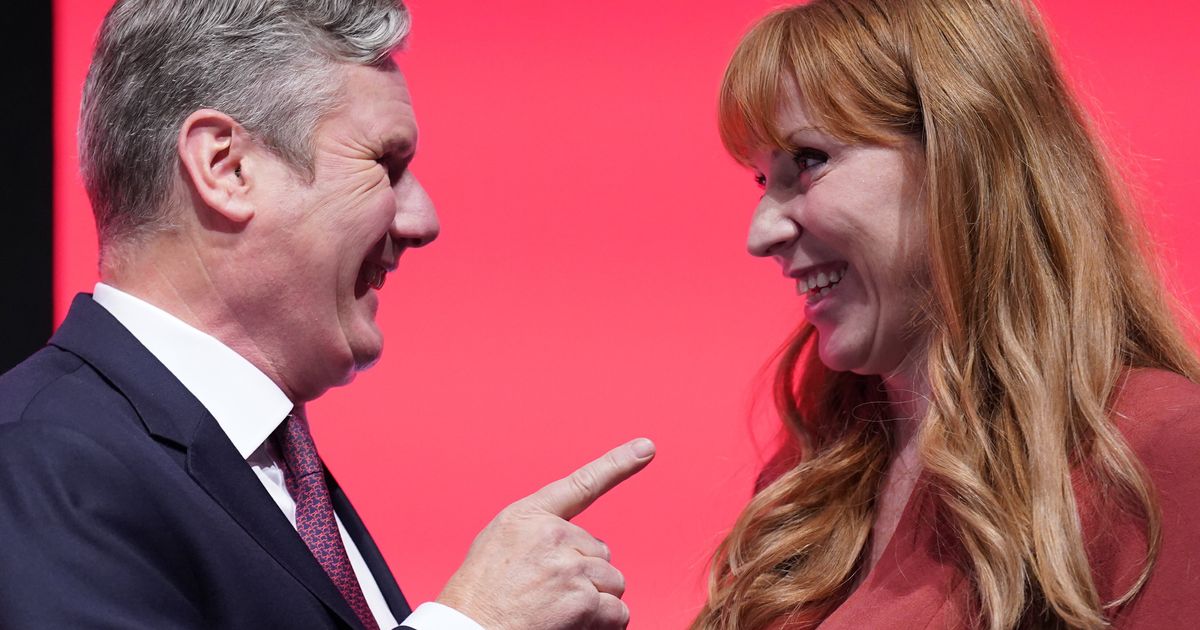
Keir Starmer and Angela Rayner Avoid Police Fines Over ‘Beergate’

Keir Starmer and Angela Rayner will not be fined by police following an investigation into whether he broke lockdown rules.

Durham police, which was investigating allegations the pair broke Covid rules last year, confirmed the Labour leader and his deputy have not been issued with fixed penalty notices.

They had both pledged to resign if they had been fined for eating curry and drinking beer at an event in the town last year, when lockdown rules were still in place.

In a statement, Durham police said their investigation found that the event was “reasonably necessary work” and therefore allowed under the rules.

“Accordingly, Durham Constabulary will not be issuing any fixed penalty notices in respect of the gathering and no further action will be taken,” the force said.

In a tweet, Starmer said: “I’ve always said no rules were broken when I was in Durham.

“The police have completed their investigation and agreed: there is no case to answer.

“For me, this was always a matter of principle. Honesty and integrity matter. You will always get that from me.”

A Labour Party spokesperson said: “Keir Starmer and Angela Rayner have always been clear that no rules were broken in Durham. The police have completed their investigation and have agreed saying that there is no case to answer.”

Durham Constabularly re-opened their investigation into whether Starmer breached anti-Covid laws by eating a curry and drinking beer with Labour staff in the constituency office of City of Durham MP Mary Foy on April 30, 2021.

Starmer has said he was “confident no rules were broken” and that there was “no equivalence” between the accusations levied at him and the parties that took place in Downing Street during the pandemic.

Both he and Rayner stated that they would stand down from their posts if they had received a fine in a move that was seen as a massive political gamble.

The news will be greeted with relief in Labour circles that the party will not have to endure a leadership election just as the Conservatives begin electing Boris Johnson’s successor following his dramatic resignation yesterday.

Share Button

Lisa Nandy Rejects Rumours Of Keir Starmer Succession Planning As ‘Absolute Nonsense’

Lisa Nandy has dismissed speculation that Keir Starmer is lining up a successor to lead the party if he is forced to quit as “absolute nonsense”.

Nandy, the shadow levelling up secretary who is often touted as a future Labour leader, said she had not spoken to Starmer about plans to secure a replacement if Durham Constabulary fine him for breaching Covid rules.

Although he has insisted he did not break any rules, the Labour leader has promised to step down if he is issued with a fixed penalty notice over a takeaway beer and curry he ordered with campaigners in the city last year.

Nandy was responding to reports in the Sunday Times that Starmer — who has been battling days of negative headlines and briefing — has told potential rivals to put campaign teams in place to continue to ensure his work in rebuilding the party does not go to waste.

According to the newspaper, Starmer told allies: “I will not let this party become a basket case again. I will not let our hard-won gains be squandered so we will need to be ready in the unlikely event that the worst comes to the worst.”

But asked about the report on Sky News, Nandy said she had only spoken to Starmer twice in the last couple of days about “how we persuade this government to lift a finger to avert a crisis on the railways”.

Presenter Sophy Ridge joked: “Are you a bit worried he’s been talking to Wes Streeting and not you?”

Nandy replied: “No, I’m not worried that he’s been talking to anybody about succession planning, because I know that he’s been talking to all of us about how we rid this country have a government that has held us back for the last 12 years and finally start to deliver for working people — that is the conversation that we’re having in the Labour Party at the moment.”

And asked separately on Times Radio whether she was plotting her own leadership bid behind the scenes, Nandy said: “Not true. Not true at all. I’ve not been having fundraising dinners, I haven’t been launching some kind of leadership bid.

“The only job that I am going after right now is Michael Gove’s and I am determined that I’m going to get it. Not because of my wishes for myself, but because I’m ambitious for this country. And I know that we could do better than this.”

The Labour Party confirmed on Friday that both Starmer and deputy leader Angela Rayner have now returned their questionnaires to Durham Constabulary.

The prospect of a looming fine is just the latest headache for Starmer.

The Labour leader has endured days of negative headlines and briefings from members of his own shadow cabinet who have accused him of “boring voters to death”.

One told the Times: “Is he exciting? No, of course not — that isn’t why we ended up with him.

“But there is a big difference between not being Mr Razzmatazz and boring everyone to death . . . to loads of my constituents he just doesn’t exist in their minds at all.”

In return Starmer was forced to tell his shadow cabinet not to brief the press that he was boring, in an exchange one colleague described as “ironically very boring”.

However, Starmer has been defended by former prime minister Gordon Brown, who told him to “ignore” the negative briefings against him.

Asked by the BBC’s Sunday Morning programme what his advice would be to the Labour leader, Brown replied: “To ignore this because what’s exciting about the possibility of Keir Starmer’s leadership is he will have a plan for Britain.

“He will show how we can get back growth, he will show how we can get living standards rising again and he will show how we can have a fairer society that deals with climate change.

“Keir Starmer was the director of public prosecutions. He’s been a great public servant over many years and I think he will make a great prime minister.”

Next week Starmer will be put to the test in a key by-election in Wakefield, West Yorkshire, where the former Tory MP was forced to stand down following his conviction for sexually assaulting a 15-year-old boy.

Recent polls have put Labour 20 points ahead of the Tories for the contest on June 23.

However, internal polling cited in the Sunday Times suggests that lead could in fact only be around eight points.

Share Button

Keir Starmer Under Investigation By Parliamentary Standards Watchdog

Keir Starmer is under investigation by the Parliamentary Commissioner for Standards over potential breaches of rules on earnings and gifts.

The Labour leader is being probed by Kathryn Stone over whether he broke two sections of the MPs’ code of conduct on registering interests on employment and earnings.

Stone is also looking at whether Starmer potentially breached rules in the section regarding gifts, benefits and hospitality from UK sources.

Asked about the issue on Monday, the Labour said he was confident he had not broken the MPs’ code of conduct.

“My office is dealing with it and will be replying in due course,” he told reporters while on a visit to Wakefield ahead of the by-election.

Asked if he was sure he had done nothing wrong, he said: “Absolutely confident, there’s no problem here.”

Share Button

Exclusive: Labour Accused Of Blocking Corbyn Supporter From Crunch By-Election

In response to the report, Corbyn said allegations about anti-Jewish racism on his watch had been “dramatically overstated” by his political opponents.

Corbyn was reinstated as a Labour member in November 2020 but he still does not have the party whip, meaning he sits as an independent MP.

Hemingway told HuffPost UK: “I’m a committed anti-racist and I think anti-Semitism is a scourge that should be eradicated.

“I’ve never hid the fact that I supported Jeremy Corbyn for leader and I voted for Rebecca Long-Bailey to be deputy…but I have always respected Keir’s right to lead the party.”

Hemingway also pointed out that as soon as the EHRC report was published he called for the party to adopt the IHRA definition of anti-Semitism in full.

HuffPost UK understands that Loto wants either Kate Dearden, who works for the Community union, or Simon Lightwood, a former staffer for ex-Wakefield MP Mary Creagh, to be the party’s by-election candidate.

Both are known to have supported Remain in the EU referendum, which some local sources say may be a disadvantage in a seat that voted to leave the EU by 66.3 per cent.

When Dearden confirmed via Twitter that she was standing in the by-election, her post was retweeted by Deborah Mattinson, Starmer’s director of strategy. The retweet was later undone.

Other candidates who have confirmed they want to stand for Labour in Wakefield include Sam Howarth, who used to work for Starmer’s ex-political secretary Jenny Chapman, and who now works for Dan Jarvis MP.

Wakefield councillor Michael Graham has also confirmed he is seeking the Labour nomination, as is law student Jakob Williamson.

One Labour insider told HuffPost UK: “Loto have seen Jack’s tweets and they are not happy.

“They are going to put it down to two names: Kate and Simon. And they are going to keep Jack off.”

A local source said: “The most important thing is that we have a candidate that can withstand a by-election.

“You’ve got to have a candidate that is fireproof.

“Keir Starmer simply cannot afford to lose this — end of. He’s got to win, and he’s got to be very, very careful that he gets the right candidate.

“Keir is trying to put out a particular image and he cannot afford to take any risks.”

A Labour source with knowledge of the region said there was a perception within the local constituency Labour party (CLP) that the candidate shortlist would be a stitch-up.

“The CLP are convinced that their local choices are going to be blocked,” they said.

“It’s pretty clear that the leaders’ office want Dearden, and a screen grab of Deborah Mattinson retweeting her launch has spread like wild fire as proof of that.

“Locally there’s a feeling that the higher ups have made their mind up of who is acceptable and who isn’t.

“Everyone is really worried that it’ll be a shortlist of non local people foisted on us so we have to choose the lesser of the evils not who we really want.

“Kate is not from Wakefield and doesn’t know the membership. There’s going to be a big push back against anyone seen as being parachuted in.

“It’s not the sort of place that will take kindly to it.”

A local party member added: “The CLP have made it clear they want someone who has a genuine connection to the area and not someone who has been flown in.”

The NEC drew up its longlist on Wednesday, with shortlisting and interviews taking place on Thursday.

Hustings will be held on Sunday May 15, when local members will choose the candidate.

A Labour Party spokesperson said: “Working people in Wakefield have been badly let down by Boris Johnson’s Conservatives, who ignored serious allegations of child sexual assault against their paedophile former MP Imran Ahmad Khan before his election.

“Wakefield deserves better and our selection process is now underway.

“Party members in the constituency will consider a shortlist in the coming days and be able to choose the Labour candidate to be Wakefield’s new MP.”

Labour lost Wakefield to the Tories by 3,358 votes at the 2019 general election after holding the seat since 1932.

Imrad Ahmad Khan tendered his resignation on May 3, three weeks after he was found guilty of sexually assaulting a 15-year-old boy.

A date for the by-election has yet to be announced.

Share Button

UK Elections 2022: 5 Takeaways As Tories Suffer ‘Shattering Night’

1. Boris GONE-son?: Tories in trouble

Make no bones about it, the Conservative Party has lost more than 400 seats and that is not good. For all the talk of a mid-term protest vote against the governing party, the Tories had already been duffed-up the last time the councils were contested four years ago, so hundreds more councillors going on a like-for-like basis should not be glossed over.

It’s telling the gloss that Boris Johnson’s outriders are painting with focuses on Labour’s lack of gains, not its own deficit. But there was scathing criticism from within the party, including this damning tweet from ex-MP and former Theresa May adviser Gavin Barwell, who called it a “wake up call”.

But, with Johnson facing a leadership challenge if 53 Tory MPs demand a vote of no confidence, there was little sign they were more prepared to wield the axe. With most critics in Westminster keeping their heads down, it was left it to grassroots Tories to speak out.

John Mallinson, leader of Carlisle City Council, hit out after Labour took control of the new Cumberland authority which will replace it, saying: “I think it is not just partygate, there is the integrity issue. Basically I just don’t feel people any longer have the confidence that the prime minister can be relied upon to tell the truth.”

Johnson himself said it had been a “mixed set of results” for the Tories. “It is mid-term,” he said, sticking to the script.

As the losses notched up, and edged towards 500 seats, a Labour Party spokesperson said: “This is a shattering result for the Conservatives.

“Boris Johnson was on the ballot paper and the British public has rejected him.

“The question every decent Conservative will be asking themselves is how much further are they willing fall for a man who never fails to put his own interest above his councillors, his MPs, his party, and his country.”

Next stop: tricky by-elections in Tiverton and Honiton and Wakefield.

2. Keir, there, everywhere: Labour’s contrasting fortunes

Labour’s performance is open to interpretation, and interpret is what commentators have spent much of the last 12 hours doing.

There were the headline grabbing wins in London – flagship Tory councils Wandsworth, Westminster and Barnet fell – and a majority on the newly-created council in Cumberland, which Labour leader Keir Starmer said showed his party could win anywhere. The traditional county-wide authority includes ‘Workington Man’, a voter demographic that gets pollsters very excited in terms of who might win a general election.

There’s also something happening for Labour on the coast – it took control of Southampton and Worthing – and the “sea wall” appears to have entered the political lexicon, joining the “red wall” and “blue wall” stolen from US politics.

But Labour has gained 252 councils seats – a reflection of the party not pocketing all the Conservative losses. The Tories were briefing how Labour has gone backwards in Sunderland, Tyneside, Hartlepool, Nuneaton, Sandwell and Amber Valley – former heartlands areas in the north and midlands that will be essential to getting back into power in Westminster.

But it’s progress. An analysis for the BBC by Professor Sir John Curtice calculated that if the whole country had been voting Labour would have gained 35% of the vote – five points ahead of the Tories on 30% – the party’s biggest lead in local elections for a decade.

Starmer, who is now facing a fresh “beergate” investigation, proclaimed clear evidence of a Labour revival following its crushing defeat in the 2019 general election. “This is a big turning point for us,” he told cheering supporters in Barnet. “We’ve sent a message to the prime minister: Britain deserves better.”

3. Ravey Davey: The Lib Dem ‘comeback’

The toxicity surrounding the Liberal Democrats following five years of power sharing with the Conservatives, and hiking tuition fees, seems to be a fading memory. Ed Davey’s party have compounded the success in recent Westminster by-elections by taking Hull council and the newly-created Somerset unitary authority. Other wins included Westmorland and Furness and dislodging the Tories in West Oxfordshire.

The party has gained 189 seats, which in part explains why Labour’s haul looks meagre. The Green Party, too, made substantial progress – gaining 81 councillors.

The “third party” success raises questions over splitting the “progressive” vote three ways, and whether that would let the Tories back in at a general election by default. Expect to hear more talk about electoral pacts and “lending” votes.

“What began as a tremor in Chesham and Amersham, became an earthquake in North Shropshire, and is now an almighty shockwave that will bring this Conservative government tumbling down,” Davey said.

4. One love: The SNP march on in Scotland

Scotland is increasingly a one-party nation. The SNP claimed its 11th successive national victory, and the number of councillors it boasts has risen in every ballot since 2004.

Perhaps more interesting was the race for second place. After years of decline, Labour has made gains and leap-frogged the Conservatives, whose strong performances under Ruth Davidson have gone in reverse now the former party leader in Scotland has left the stage.

Improvements in Scotland – coupled with the Lib Dems nibbling away at the Tories in southern England – is part of a complicated route back to Westminster power for Labour.

Scottish Tory leader Douglas Ross described the results as “very disappointing”, adding that Johnson “can’t ignore the message” from voters.

He said: “The Conservatives lost Westminster Council last night, that’s a council that even in the peak Labour years under Tony Blair the party held on to, so there’s been a very strong message from the public to the prime minister and to the party.”

The actual big story?: Sinn Fein closes in on history

While the local elections in England, Scotland and Wales make for good sport for armchair analysts, they may not lead to anything of substance changing. But Northern Ireland’s ballot could lead to a seismic shift for the whole of the United Kingdom.

Sinn Fein is on the brink of political history if it emerges as the largest party in Northern Ireland following Assembly elections.

After years of lagging behind its rival the Democratic Unionist Party, with whom it shares power, the nationalist party has now emerged on top with the potential to change the political landscape.

<img class="img-sized__img landscape" loading="lazy" alt="Sinn Fein’s Michelle O’Neill, centre, reacts with party colleagues after being elected in Mid Ulster at the Medow Bank election count centre in Magherafelt, Northern Ireland.” width=”720″ height=”501″ src=”https://www.wellnessmaster.com/wp-content/uploads/2022/05/uk-elections-2022-5-takeaways-as-tories-suffer-shattering-night-2.jpg”>
Sinn Fein’s Michelle O’Neill, centre, reacts with party colleagues after being elected in Mid Ulster at the Medow Bank election count centre in Magherafelt, Northern Ireland.

via Associated Press

With counting for the 90 Stormont seats continuing on Friday evening, the republican party had won 16 seats, well ahead of the Alliance on four and the DUP and UUP on three.

Sinn Fein’s position as the largest party would means a poll on the reunification of Ireland is far more likely – and the debate around Northern Ireland withdrawing from the United Kingdom of England, Scotland and Wales would intensify.

Share Button

Keir Starmer Under Pressure To Capitalise on Tory Woes As Voters Go To The Polls

The received Westminster wisdom is that the local elections are do-or-die for Boris Johnson.

After months of awful headlines about partygate, and with the mood among Tory MPs once again turning fractious, a bad night for the Conservatives next Thursday may well be the trigger for a move to unseat the prime minister.

What is less discussed, however, is how the elections are also a key test for Keir Starmer and whether he has what it takes to lead Labour to victory at the general election in two years’ time.

With a new poll yesterday giving Labour a nine-point lead over the Conservatives, expectations are high that the party is set to make sweeping gains on Thursday.

But Starmer’s internal detractors are looking for any signs that the party is stalling to confirm their suspicions that he is failing to seal the deal with voters.

Here, HuffPost UK assesses where the main parties are ahead of a crucial night on May 5.

The State Of The Parties

A total of 6,812 council seats in England, Wales and Scotland are up for grabs on Thursday.

In addition, there are also mayoral elections in South Yorkshire, Hackney, Lewisham, Newham, Tower Hamlets, Watford and Croydon, as well as the Northern Ireland Assembly election.

In England, the Tories are defending 1,404 seats, Labour 2,222 and the Lib Dems 517. The rest are held by independents.

In Wales, Labour hold 462 council seats, with Plaid Cymru on 208, the Conservatives on 197 and the Lib Dems on 59. More than 300 seats are held by independents.

And in Scotland, the SNP have 432 seats, with the Tories second on 277, Labour on 262 and the Lib Dems on 67. Nearly 200 of Scottish councillors are independents.

What’s At Stake?

An awful lot more than which parties will be responsible for your bin collections for the next four years.

With a general election expected in 2024, this is likely to be the last big electoral test that Labour and the Tories will face before then.

As such, it will act as an important barometer of the national mood and indicate which parties, if any, are starting to build up momentum as the general election draws nearer.

Johnson needs to prove to his restive MPs that he is still the election winning-machine who delivered an 80-seat majority in 2019, and that the damage done to his reputation by partygate is not terminal.

The stakes are arguably even higher for Starmer who, two years after becoming Labour leader, has still to convince the public that he has what it takes to lead the country.

Is Starmer’s Labour Working?

While Labour has established a consistent poll lead in recent months, there remains a strong suspicion that it owes more to the public’s dissatisfaction with the Conservatives than any great enthusiasm for the Starmer project.

HuffPost UK revealed this week that the Labour leader is facing internal pressure to show voters how the party would tackle the cost of living crisis rather than focusing on the partygate scandal.

At a shadow cabinet meeting, communities spokesperson Lisa Nandy said Labour risked looking “out of touch” at a time when families across the country are struggling to make ends meet.

One senior frontbencher said: “Lisa’s not alone on this. There was strong agreement in the room to focus on the cost of living.”

It’s clear, therefore, that Starmer’s critics will be scrutinising Thursday’s results to try and assess whether the public support the leader’s strategy or are yet to be convinced.

Lisa Nandy has questioned Keir Starmer's strategy
Lisa Nandy has questioned Keir Starmer’s strategy

Christopher Furlong via Getty Images

What Does Success Look Like?

The main problem facing Labour is that the last time these council seats were up for grabs four years ago, the party did very well, making it harder for them to make sweeping gains this time around.

That said, a failure to pick up a significant number of council seats, and at least show progress in the Red Wall areas the party needs to win back if it’s to stand any chance of winning in 2024, will constitute a disappointing evening for Starmer.

“It’s a strange set of elections,” said one Starmer ally. “2018 was a bad night for the Tories and a very, very good one for Labour.

“So another bad night for the Tories and a good night for us isn’t going to result in a lot of exciting change.”

As polling gurus Colin Rallings and Michael Thrasher summed up the situation in a recent article: ”[Labour] will do well to avoid making standing still rather than picking up gains seem rather underwhelming when the post-mortem takes place.

“For the Conservatives, by contrast, the less dramatic the results, the more they can claim not to be suffering traditional ‘mid-term blues’.”

Labour sources are attempting to play down the prospect of the party seizing totemic Tory councils like Westminster and Wandsworth, but they admit that winning back Barnet is a distinct possibility.

Beating the Tories into second place behind the SNP is also essential if the party is to have any hope of re-establishing an electoral foothold in its former Scottish heartland.

Just as important as winning more council seats, insiders say, are signs of progress in seats currently held by the Tories in England and the SNP north of the border.

“We are also tracking where we are in about about 50-70 constituencies that would put us in government at a general election, so we will be keeping an eye on them on Thursday,” said a Labour source. “Places like Stevenage, Wakefield, Bury and Glasgow.

“We need to beat the Tories and SNP in them.”

The Tory View

Unsurprisingly, the Conservatives are keen to raise the bar as high as possible for what would constitute a good night for Labour in the hope they will come nowhere near clearing it.

One Tory source told HuffPost UK: “Labour are obviously saying how difficult it’s going to be to improve on 2018, but the reality is they are ahead in the polls and so should be doing well.

“It’s going to be very difficult for us in certain places, especially central London and in places like Wandsworth, Westminster and Kensington and Chelsea, where the demographics are turning against us.

“Outer London is a bit better, but things are also going to be difficult in the affluent south – places like Surrey and West Oxfordshire, where Labour are doing well.”

Significantly, however, the Tories are more confident of holding off Labour in the Red Wall, where partygate is not the major political issue many at Westminster believe it is.

“The question for Labour is whether they can make adequate progress in the places they lost in 2019 and need to win back next time,” the source said.

“While those voters are bothered about partygate, they’re more concerned with bread and butter issues such as the cost of living. They’re pissed off with the PM about partygate, but they also like what we did on vaccines and furlough.”

Winning Here?

Like Labour, the Lib Dems performed well in 2018, making further progress more difficult this time around.

“What we’re really looking to is consolidate the gains we made in places like South Cambridgeshire, Richmond and Kingston,” a source told HuffPost UK. “If we hold our ground and edge forward a little in other areas, it should spook a few Tory MPs.”

These include Stephen Hammond in Wimbledon, where the Lib Dems launched their local election campaign. The party also wants to make progress in Wokingham, where the local MP is one Dominic Raab.

The source added: “The big picture is we’re going after the Conservatives and laying the groundwork for the next election.”

The Pestminster Factor

In the past week alone, unnamed Tory MPs have smeared Angela Rayner by accusing her of using her legs to distract Boris Johnson, while another has been suspended by the party for allegedly watching porn in the Commons.

The timing could hardly have been worse for the Conservatives. Will voters use their ballots to register their disgust at the latest examples of Tory sleaze? Keir Starmer and Labour certainly hope so.

Share Button

‘Low Taxation’ Rishi Sunak Derided As Tories And Labour Square Off Over The Economy

Labour has questioned Rishi Sunak’s attempt to portray himself as a low taxation Conservative as both parties stake their claims to being the most trusted on the economy.

The chancellor and Labour leader Keir Starmer will on Tuesday both deliver speeches that make their cases to be the next prime minister.

Sunak, seen as the most likely Tory to succeed Boris Johnson if the PM is brought down by the partygate scandal, will insist he wants to create a “lower tax economy” in an appeal to traditional Conservatives.

Meanwhile, Starmer will evoke the spirit of former Labour prime minister Harold Wilson by promising the “white heat” of a new technological revolution will deliver prosperity for all.

But in an attempt to thwart Sunak’s ambitions, Labour will claim the chancellor has slapped 15 tax rises on households and businesses in the last two years – and that he has raised the most tax on average per budget than any chancellor in the last 50 years.

Amid the cost of living crisis, the chancellor and the prime minister have been refusing to back down on the 1.25 percentage point hike to National Insurance for April despite pressure from numerous Tory MPs.

Delivering a lecture to the Bayes Business School in London, Sunak is to insist he will make “difficult and often unpopular arguments” on spending, hinting at his determination to resist calls from cabinet colleagues for fresh money.

He will argue that cutting taxation in the future needs to be done in a “responsible way”, following a row with health secretary Sajid Javid over funding the “living with Covid” plan.

Sunak is expected to say: “I firmly believe in lower taxes.

“The marginal pound our country produces is far better spent by individuals and businesses than government.

“I am going to deliver a lower tax economy but I am going to do so in a responsible way, and in a way that tackles our long term challenges,” he is due to add.

But in comments that will be seen as a challenge to ministers demanding increased spending, he is expected to say: “Cutting tax sustainably requires hard work, prioritisation, and the willingness to make difficult and often unpopular arguments elsewhere.”

He will also say that he is “disheartened” when he hears the “flippant claim” that tax cuts always pay for themselves, adding: “They do not.”

In response, shadow chancellor Rachel Reeves used the speech to brand the Conservatives the party of “high tax” as a result of being “the party of low growth”.

“Over a decade of Tory government, the economy has grown far slower than when Labour was in power, and it is set to go even slower in the coming years,” she said, citing research suggesting the £27.3bn raised by Sunak per year is higher than that brought in by 12 Tory and Labour predecessors at the Treasury since 1970.

Elsewhere, Starmer will promise to build a “new economy of security” as he borrows from Wilson’s 1963 pledge to harness “the white heat of technological change”. At the time, Wilson was seeking to become the first Labour prime minister for more than a decade.

Speaking in Wilson’s home town of Huddersfield in West Yorkshire, Starmer will say that after 12 years of a Conservative government, it will fall to Labour to deal with the next generation of change.

“Our country and our economy are entirely different now, but we too are going through the white heat,” he is expected to say.

“We face our own revolutions in technology and industry, and it will fall to the next Labour government to shape that change so it works for all.”

It marks the latest stage of his effort to restore the party’s economic credibility in the eyes of voters following the controversy over Jeremy Corbyn’s plans.

Starmer will declare his determination to end the “economic fatalism” of the Tories, who he will accuse of lacking a clear plan for business.

“Britain cannot rise to the great challenges of the day without the innovation of business,” he will say.

“A political party without a clear plan for making sure businesses are successful and growing … which doesn’t want them to do well and make a profit … has no hope of being a successful government.”

He will argue that if the Tories had matched Labour’s record on growth, people would have enjoyed higher incomes while an additional £30 billion a year would have been available for public services without raising taxes.

“We will build a new economy of security, where stable employment will be the bedrock of a better future for the next generation,” he will say.

“We will build an economy of prosperity, in which the places that once powered Britain flourish again. We will build a new economy of respect, where the contribution of every worker and employee is given its due.”

Share Button