New ‘whirling’ state of matter discovered in an element of the periodic table

The strongest permanent magnets today contain a mix of the elements neodymium and iron. However, neodymium on its own does not behave like any known magnet, confounding researchers for more than half a century. Physicists at Radboud University and Uppsala University have shown that neodymium behaves like a so-called ‘self-induced spin glass,’ meaning that it is composed of a rippled sea of many tiny whirling magnets circulating at different speeds and constantly evolving over time. Understanding this new type of magnetic behaviour refines our understanding of elements on the periodic table and eventually could pave the way for new materials for artificial intelligence. The results will be published on 29th of May, in Science.

“In a jar of honey, you may think that the once clear areas that turned milky yellow have gone bad. But rather, the jar of honey starts to crystallize. That’s how you could perceive the ‘aging’ process in neodymium.” Alexander Khajetoorians, professor in Scanning probe microscopy, together with professor Mikhail Katsnelson and assistant professor Daniel Wegner, found that the material neodymium behaves in a complex magnetic way that no one ever saw before in an element on the periodic table.

Whirling magnets and glasses

Magnets are defined by a north and south pole. Dissecting a regular fridge magnet, one finds many atomic magnets, so-called ‘spins’, that are all aligned along the same direction and define the north and south pole. Quite differently, some alloy materials can be a ‘spin glass,’ randomly placed spins point in all kinds of directions. Spin glasses derive their name-sake from the amorphous evolving structure of the atoms in a piece of glass. In this way, spin glasses link magnetic behaviour to phenomena in softer matter, like liquids and gels.

Spin glasses have been known to sometimes occur in alloys, which are combinations of metals with one or more other elements and with an amorphous structure, but never in pure elements of the periodic table. Surprisingly, Radboud researchers found that the atomic spins of a perfectly ordered piece of the rare-earth element neodymium form patterns that whirl like a helix but constantly change the exact pattern of the helix. This is the manifestation of a new state of matter called a ‘self-induced spin glass’.

Seeing the magnetic structure

“In Nijmegen, we are specialists in scanning tunnelling microscopy (STM). It allows us to see the structure of individual atoms, and we can resolve the north and south poles of the atoms,” Wegner explains. “With this advancement in high-precision imaging, we were able to discover the behaviour in neodymium, because we could resolve the incredibly small changes in the magnetic structure. That’s not an easy thing to do.”

A material that behaves like neurons

This finding opens up the possibility that this complex and glassy magnetic behaviour could also be observed in uncountable new materials, including other elements on the periodic table. Khajetoorians: “It will refine textbook knowledge of the basic properties of matter. But it will also provide a proving ground to develop new theories where we can link physics to other fields, for example, theoretical neuroscience.”

“The complex evolution of neodymium may be a platform to mimic basic behaviour used in artificial intelligence,” Khajetoorians continues. “All the complex patterns which can be stored in this material can be linked to image recognition.”

With the advancement of AI and its large energy footprint, there is increasing demand to create materials that can perform brain-like tasks directly in hardware. “You could never build a brain-inspired computer with simple magnets, but materials with this complex behaviour could be suitable candidates,” Khajetoorians says.

Story Source:

Materials provided by Radboud University Nijmegen. Note: Content may be edited for style and length.

Share Button

About 7% have had coronavirus, says ONS survey

The estimate is based on blood tests on 885 people in England as part of a household survey by the ONS.

Share Button

Coronavirus: Dental practices to reopen from 8 June

Dental practices in England have been told they can reopen from Monday, 8 June.

Share Button

Create and Share

Many people who want to earn a living from creative work get stuck trying to figure out a business model. Meanwhile they’re not actually doing much creating. They’re waiting for clarity.

Waiting for clarity is a waste of time. So is trying to figure out the perfect transition plan in advance. It’s easier to find clarity when you’re in motion.

I suggest that you start simpler. Focus on getting into the rhythm of creating and sharing. Don’t worry about monetization. Don’t worry about the business model – not if that’s a cause of stuckness for you.

If you’re going to focus on anything, seek to find the people who will appreciate what you can create and share. Appreciation is a sign that value is being received and acknowledged. If there’s no appreciation, such as thank you’s and other forms of acknowledgement coming back to you, chances are that little value is being delivered. Don’t mistakenly assume that this implies you’re not creating value. It’s more likely that you’re not sharing with the right people.

If you create something and share it, and the people you share it with don’t appreciate it, stop sharing with them. Someone else will appreciate it, so share it somewhere else – anywhere else. Even if you bop around randomly trying to find the right people, it’s better than wasting your life sharing with misaligned people who will whine at you or ignore ou.

If you’re sharing on social media, I’d go so far as to drop the people who don’t like what you’re sharing or who go out of their way to criticize you. They’ll only slow you down. Clear them out, and make some room for aligned people to get through.

It’s fine if some people in your audience are neutral, but if they’re dead weight as far as appreciation goes, then don’t invest in trying to please them. Just let ’em go.

Trust that you’ll find your audience. You’ll find your real audience faster by quickly firing the wrong audience members.

Seek to create in tune with appreciation, at least if you want to make your creating and sharing sustainable. Money is a form of appreciation, and if the appreciation is there, it isn’t that hard to turn that into income. But it’s pretty damned hard to do that if there’s little or no appreciation.

You can still work on business models. You can still experiment with income generation along the way. But the fundamental piece to get working early on is creating and sharing. No one can stop you from doing that. You can start on that today.

Once you find people who appreciate your work, you can even co-create your business model with them. That’s how I got started. People who appreciated my work shared ideas and suggestions for how I could monetize it. Some gave me examples of how other people were monetizing work that I might adopt as well. All I had to do was follow that flow, and it was the regular creating and sharing that made it sustainable.

You’ll probably have some objections to doing this. That’s fine. My counter-objection is that creating and sharing, even without much of a plan, works a lot better than vacillating, delaying, second-guessing yourself, and perhaps the most popular lament of all: I don’t know how. So if your objections are keeping you stuck, maybe they don’t amount to a hill of beans. If you create and share regularly and you move towards people who appreciate what you share, you can eventually have lots of hills with lots of beans.

Remember how easy it was to create stuff when you were a kid. Just grab some colored paper, glue, scissors, and make a mess with it. Someone will appreciate it if you show it to enough people. I’ve seen displays in modern art museums that look no better than what a five-year old could create, and there are still people who appreciate it. So get your crusty, whiny, cowardly AF adult brain out of your way, and just create and share stuff. If you don’t know where to start, pretend that you’re five years old, and start anyway.

Share Button

Coronavirus: R number ‘very similar’ across UK

Scientists say there are no significant regional differences in coronavirus rates across the UK.

Share Button

Coronavirus: Test and trace system kicks off in England and Scotland

Thousands of contact tracers are tracking down close contacts of people with coronavirus.

Share Button

Health24.com | So you’re coughing, what next? It could be for a number of reasons

Since the beginning of the novel coronavirus pandemic, a dry cough has remained one of the main symptoms listed on all the guidelines and symptom checkers, including those of the World Health Organization (WHO), the South African Government and the National Institute for Communicable Diseases (NICD).

But coughing is common and can happen for many reasons, including seasonal allergies and irritation. The main purpose of a cough is to dispel foreign particles, irritants or mucus from the airways. A cough itself is never an illness, but rather a symptom of an illness – usual allergies, asthma, a viral infection such as influenza, or a common cold.

Coughing and Covid-19

While symptoms in Covid-19 patients differ from person to person, the most common symptoms are described as fever, flu-like fatigue, trouble breathing and a dry, persistent, unpleasant cough.

As the illness progresses, your lungs may fill with more fluid and you may feel shortness of breath and discomfort as you cough. This cough usually doesn’t produce any phlegm at first, but if Covid-19 progresses to pneumonia, your lungs may fill up with secretions, which can make your sputum frothy.

Why else am I coughing?

If you are battling a cough, you may be worrying that you have been infected with the coronavirus, but, as mentioned above, a cough may occur for many reasons, such as:

  • Seasonal allergies, where the airways are irritated by pollen and dust
  • Household irritants such as dust, mould, pet dander or chemicals
  • Cigarette smoke
  • Certain chronic medications such as ACE inhibitors
  • Post-nasal drip, where mucus drips back into the airways, causing irritation
  • Chronic lung diseases such as asthma or COPD
  • Common cold or seasonal influenza

How do I diagnose my cough?

Coughs can be classified according to their duration:

  • Acute cough, usually because of influenza or a cold, lasting for less than three weeks
  • Sub-acute cough, usually because of a secondary infection such as bronchitis, lasting between three and eight weeks
  • Chronic cough, when a cough persists for more than eight weeks

When trying to determine the cause of your cough, ask yourself the following:

  • When did you start coughing?
  • When does it occur (at night, early morning)?
  • Is it exacerbated by certain foods, smoke, standing up or lying down?
  • Are there any other symptoms such as fever?

If you are currently coughing, remember to practice good coughing hygiene – cover your mouth with the crook of your elbow or a handkerchief, wear a mask when you are out in public for essential errands or work, and wash your hands frequently, especially before touching your face.

When should I head to the doctor with a cough?

You should consult your healthcare practitioner if your cough doesn’t clear up by itself within about a week.

You should also see your doctor immediately if your cough produces blood, causes pain or difficulty breathing. There are some cases where a doctor will refer you to a pulmonologist if any serious underlying conditions are suspected.

What if I suspect Covid-19?

If you are concerned about Covid-19 and suspect that you have been in contact with someone who might have been infected, live or work in a hotspot area, or you are presenting with symptoms, the NICD recommends that you contact your doctor immediately. They will refer you for a test.

According to the South African Department of Health, you can also call the NICD helpline (0800 029 999), where you will be advised on testing facilities on your area. You might have to be referred by a health professional.

Image credit: iStock

Share Button

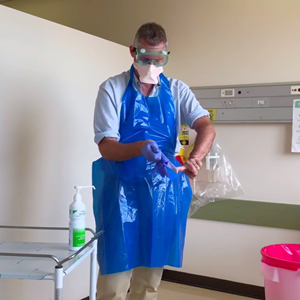
Health24.com | WATCH | Covid-19: How healthcare professionals should be putting on and removing PPE

The information on Health24 is for educational purposes only, and is not intended as medical advice, diagnosis or treatment. If you are experiencing symptoms or need health advice, please consult a healthcare professional. See additional information.

Share Button

Health24.com | Coronavirus morning update: Global demand for test kits, clarity on hotspots, and soldiers cleared

WHAT’S HAPPENING IN SA

Cases update: 

The latest number of confirmed cases is 25 937.

According to the latest update, 552 deaths have been recorded in the country.

There have been 13 451 recoveries

So far, just short of 635 000 tests have been conducted, with more than 29 000 new tests.

READ MORE | All the confirmed cases of coronavirus in SA

Latest news:

South Africa is doing everything it can to keep up with the required level of testing for Covid-19, but there are “constraints beyond our control”, Health Minister Zweli Mkhize said.

Mkhize was answering questions in the first hybrid, virtual sitting of the National Assembly on Wednesday.

The day before, he briefed the National Council of Provinces, where he expressed his concern about the global shortage of test kits, which could create a backlog.

Mkhize also noted this in his daily Covid-19 press release on Tuesday: “As a country, we are now facing a challenge with the global shortage of testing reagents. We understand it’s becoming a challenge to many other countries.”

News24 reported on Wednesday that both public and private sectors were showing a sharp decline in the number of tests conducted.

Mkhize told the National Assembly on Wednesday that testing is a “major weapon in our arsenal”.

READ MORE | Mkhize: Global demand for Covid-19 kits hampering testing in SA

The Ministry of Health has clarified that the entire country will move to a Level 3 lockdown on 1 June after a presentation Health Minister Zweli Mkhize made on Tuesday appeared to contradict President Cyril Ramaphosa’s announcement on Sunday evening.

In a statement released on Wednesday, the minister said there would be constant assessment of every area, as well as its rate of infection, and further containment measures and restrictions might be considered.

“If the spread of the infection is not contained despite interventions, government will make a determination on whether to return that specific area (i.e. metropolitan, district, sub district, ward) to Alert Level 4 or 5,” Mkhize clarified in the statement.

The presentation the minister made to the National Council of Provinces on Tuesday included an old slide that stated that “hotspots would remain at Level 4”.

READ MORE | Lockdown: Whole of SA moves to Level 3, hotspot areas to be constantly assessed, says Mkhize

A SA National Defence Force (SANDF) inquiry has found soldiers, who are accused of killing Alexandra resident Collins Khosa, cannot be held liable for this death as there is no link between the injuries he sustained due to their actions and him dying.

The findings of the inquiry are attached to an explanatory affidavit filed with the Gauteng High Court in Pretoria by the SANDF’s legal adviser, Elvis Hobyana, on Tuesday.

The affidavit was filed to update the court on what steps had been taken to adhere to Judge Hans Fabricius’ orders after he ruled in favour of the Khosa family earlier this month.

Khosa and Thabiso Muvhango, his brother-in-law, got into an altercation with SANDF and Johannesburg metro police officers at his Alexandra house on Good Friday.

READ MORE | SANDF probe clears soldiers of killing Collins Khosa, saying he was only ‘pushed and clapped’

Hundreds of thousands of domestic workers who are not registered with the Unemployment Insurance Fund (UIF) can now claim special Covid-19 payouts.

As part of the Covid-19 Temporary Relief scheme (TERS), workers who are put on unpaid leave, have been laid off temporarily, or whose employers can’t afford to pay their full salaries are all entitled to the special payout from the UIF.

The minimum amount paid is R3 500 a month during the lockdown period.

Until now, only employees who were registered by their employers for UIF could receive these payments. The UIF has paid out TERS benefits to only 11 113 registered domestic workers since last month.

READ MORE | Domestic workers can now get coronavirus cash from the UIF – even if they’re not registered

WHAT’S HAPPENING IN THE REST OF THE WORLD 

Cases update:

For the latest global data, follow this interactive map from Johns Hopkins University & Medicine.

Late on Wednesday night, positive cases worldwide were more than 5.65 million, while deaths were more than 353 000.

The United States had the most cases in the world – more than 1.69 million, as well as the most deaths – close to 100 000.

READ MORE | All the confirmed cases worldwide

Latest news:

Face masks are too dangerous for young children to wear, a Japanese medical group has warned, as governments around the world begin advising their citizens to wear facemasks to combat the spread of the coronavirus.

The Japan Pediatric Association has warned that children under two years old shouldn’t wear face coverings because they can make breathing difficult and increase the risk of choking, according to a report.

“Masks can make breathing difficult because infants have narrow air passages,” the group said in a statement.

“Let’s stop the use of masks for children under 2-years-old.”

READ MORE | Japanese scientists warn toddlers should not wear face masks – they could choke, struggle to breathe

LATEST RESEARCH

In an effort to better understand the new coronavirus, ongoing research and clinical trials for Covid-19 treatments and vaccines are happening globally. Among them, a non-invasive, highly accurate, disposable breath test that could hit the market before the end of 2020.

The trial is a collaboration between US-based Canary Health Technologies and South Africa based Ezintsha research group at the University of Witwatersrand (WITS). The test, which involves a handheld device with disposable sensors, is set to deliver results on-site in under five minutes. The human trial is due to start in South Africa by the end of June, and trials in the UK and US are also planned.

Using exhaled Volatile Organic Compounds (VOC’s) found in human breath, which are biomarkers of the virus, this newly-developed diagnostic test, named Covid-19 RT BAP, could potentially identify those who are infected with the disease.

More than this, the test will greatly assist in identifying those who have not yet developed clinical symptoms, or are asymptomatic (infected but displaying no symptoms). Asymptomatic cases have been reported as part of contact tracing efforts, reports the World Health Organization (WHO). The test could therefore quickly detect those at risk and help reduce transmission.

READ MORE | Trial for Covid-19 rapid breath test – that delivers results in under 5 minutes, to start in SA

Influenza, also known as the flu, is one of the most common viral diseases in the world. It, however, took a backseat when the new coronavirus, SARS-CoV-2, rapidly took over earlier this year.

Now, new research, published in BMJ, shows that governments’ implementation of lockdowns and physical distancing measures, in an effort to curb the spread of SARS-CoV-2, have shortened the flu season – by up to six weeks, and that tracking infectious disease cases “could be a complementary approach to assessing the effectiveness of general infection control measures against Covid-19”.

Flu viruses circulate worldwide at different times of the year. Seasonal flu usually peaks in February and dies down by the end of May in the northern hemisphere, and runs from April to September in the southern hemisphere, often peaking during August.

Statistics from the World Health Organization (WHO) indicate that the seasonal flu typically kills around 290 000 to 650 000 people annually and causes as many as five million cases of severe illness. According to Nature, the 2020 flu season was set to be the most severe in decades, until Covid-19 crossed borders and was declared a pandemic.

READ MORE | Some countries seeing fewer flu cases due to coronavirus lockdown measures, research shows

HEALTH TIPS (as recommended by the NICD and WHO)

• Maintain physical distancing – stay at least one metre away from somebody who is coughing or sneezing

• Practise frequent hand-washing, especially after direct contact with ill people or their environment

• Avoid touching your eyes, nose and mouth, as your hands touch many surfaces and could potentially transfer the virus

• Practise respiratory hygiene – cover your mouth with your bent elbow or tissue when you cough or sneeze. Remember to dispose the tissue immediately after use.

Image credit: Getty Images

Share Button

Ear infections discovered in remains of humans living in Levant 15,000 years ago

Researchers at Tel Aviv University have discovered evidence of ear infections in the skull remains of humans living in the Levant some 15,000 years ago.

“Our research seeks to determine the impact of our environment on illnesses in different periods,” says lead author Dr. Hila May of the Department of Anatomy and Anthropology at TAU’s Sackler Faculty of Medicine and the Dan David Center for Human Evolution and Biohistory Research at the Faculty of Medicine, located at the Steinhardt Museum of Natural History. “Using advanced technologies and unique methods developed in our lab, we have been able to detect signs of prolonged inflammation in the middle ear.”

Dr. Katrina Floranova of the Dan David Center and Sackler Faculty of Medicine and Dr. Ilan Koren of the Sackler Faculty of Medicine also contributed to the study, which was published on March 25 in the International Journal of Osteoarchaeology.

The researchers found a decline in morbidity as a result of ear infections following the transition from hunting and gathering to farming because of changes in living conditions. But a peak in morbidity was observed in a sedentary population living about 6,000 years ago, in the Chalcolithic period.

Dr. May says the reason for this is twofold: social and environmental. “We know from archaeological excavations of this period, similar to preceding periods, that people lived in a communal area where all activities, from cooking to raising livestock, took place. As a result, the population density in the ‘home’ was high, hygiene was poor and they suffered from indoor air pollution. Two other factors known about this period — dietary change, the advent of dairy consumption; and climate change, a dip in temperature and a rise in rainfall — also contributed to the prevalence of ear infections.”

Until the advent of antibiotics in the 20th century, ear infections developed into chronic conditions. They could also lead to permanent loss of hearing or even death.

“Ear infections are still a very common childhood ailment, with over 50 percent of young children today still suffering from an ear infection at one point or another,” explains Dr. May. “The tubes that channel fluid from the middle ear to the pharynx are underdeveloped in young children, so fluids that accumulate in the ear ultimately cause inflammation.

“A prolonged ear infection would cause permanent damage to the bony wall of the middle ear, which is preserved into adulthood. So when we sought to investigate changes in communal health over time in our region, we chose to focus on ear infections, developing a special method for doing so,” she adds.

Scientists inserted a videoscope, a tiny camera mounted at the end of a flexible tube, through the skull’s ear canal to the middle ear to observe its bony walls. In addition, they scanned skull remains with a high-resolution micro-CT and examined the middle ear’s bony wall using a light microscope.

As living conditions improved, morbidity as a result of ear infections dropped, according to the study. “Houses were larger and featured several rooms, including separate areas for specific activities, i.e. the kitchen was set up in a separate room or outside, and livestock were kept in a separate area,” Dr. May says. “The change in lifestyle and climate is reflected in a decline in morbidity.

“Our study deals with the impact of the environment and social behavior on morbidity rates. To explore this, we examined a common disease that has accompanied humanity since inception — the ear infection,” Dr. May continues. “Understanding how diseases appear, spread and disappear throughout human history can help prevent and find solutions to contemporary illnesses. The study clearly points out risk factors and shows how lifestyle changes can affect the incidence of the disease.

“In both ear infections and COVID-19, social distancing and adherence to hygiene reduced the spread of infection, while close quarters and unhygienic living conditions saw infections spike,” Dr. May concludes.

Share Button