Low-cost ‘smart’ diaper can notify caregiver when it’s wet

For some infants, a wet diaper is cause for an instant, vociferous demand to be changed, while other babies may be unfazed and happy to haul around the damp cargo for lengthy periods without complaint. But if worn too long, a wet diaper can cause painful rashes, and miserable babies — and parents.

Now MIT researchers have developed a “smart” diaper embedded with a moisture sensor that can alert a caregiver when a diaper is wet. When the sensor detects dampness in the diaper, it sends a signal to a nearby receiver, which in turn can send a notification to a smartphone or computer.

The sensor consists of a passive radio frequency identification (RFID) tag, that is placed below a layer of super absorbent polymer, a type of hydrogel that is typically used in diapers to soak up moisture. When the hydrogel is wet, the material expands and becomes slightly conductive — enough to trigger the RFID tag to send a radio signal to an RFID reader up to 1 meter away.

The researchers say the design is the first demonstration of hydrogel as a functional antenna element for moisture sensing in diapers using RFID. They estimate that the sensor costs less than 2 cents to manufacture, making it a low-cost, disposable alternative to other smart diaper technology.

Over time, smart diapers may help record and identify certain health problems, such as signs of constipation or incontinence. The new sensor may be especially useful for nurses working in neonatal units and caring for multiple babies at a time.

Pankhuri Sen, a research assistant in MIT’s AutoID Laboratory, envisions that the sensor could also be integrated into adult diapers, for patients who might be unaware or too embarrassed to report themselves that a change is needed.

“Diapers are used not just for babies, but for aging populations, or patients who are bedridden and unable to take care of themselves,” Sen says. “It would be convenient in these cases for a caregiver to be notified that a patient, particularly in a multibed hospital, needs changing.”

“This could prevent rashes and some infections like urinary tract infections, in both aging and infant populations,” adds collaborator Sai Nithin R. Kantareddy, a graduate student in MIT’s Department of Mechanical Engineering.

Sen, Kantareddy, and their colleagues at MIT, including Rahul Bhattacharryya and Sanjay Sarma, along with Joshua Siegel at Michigan State University, have published their results today in the journal IEEE Sensors. Sarma is MIT’s vice president for open learning and the Fred Fort Flowers and Daniel Fort Flowers Professor of Mechanical Engineering.

Sticker sense

Many off-the-shelf diapers incorporate wetness indicators in the form of strips, printed along the outside of a diaper, that change color when wet — a design that usually requires removing multiple layers of clothing to be able to see the actual diaper.

Companies looking into smart diaper technology are considering wetness sensors that are wireless or Bluetooth-enabled, with devices that attach to a diaper’s exterior, along with bulky batteries to power long-range connections to the internet. These sensors are designed to be reusable, requiring a caregiver to remove and clean the sensor before attaching it to each new diaper. Current sensors being explored for smart diapers, Sen estimates, retail for over $40.

RFID tags in contrast are low-cost and disposable, and can be printed in rolls of individual stickers, similar to barcode tags. MIT’s AutoID Laboratory, founded by Sarma, has been at the forefront of RFID tag development, with the goal of using them to connect our physical world with the internet.

A typical RFID tag has two elements: an antenna for backscattering radio frequency signals, and an RFID chip that stores the tag’s information, such as the specific product that the tag is affixed to. RFID tags don’t require batteries; they receive energy in the form of radio waves emitted by an RFID reader. When an RFID tag picks up this energy, its antenna activates the RFID chip, which tweaks the radio waves and sends a signal back to the reader, with its information encoded within the waves. This is how, for instance, products labeled with RFID tags can be identified and tracked.

Sarma’s group has been enabling RFID tags to work not just as wireless trackers, but also as sensors. Most recently, as part of MIT’s Industrial Liason Program, the team started up a collaboration with Softys, a diaper manufacturer based in South America, to see how RFID tags could be configured as low-cost, disposable wetness detectors in diapers. The researchers visited one of the company’s factories to get a sense of the machinery and assembly involved in diaper manufacturing, then came back to MIT to design a RFID sensor that might reasonably be integrated within the diaper manufacturing process.

Tag, you’re it

The design they came up with can be incorporated in the bottom layer of a typical diaper. The sensor itself resembles a bow tie, the middle of which consists of a typical RFID chip connecting the bow tie’s two triangles, each made from the hydrogel super absorbent polymer, or SAP.

Normally, SAP is an insulating material, meaning that it doesn’t conduct current. But when the hydrogel becomes wet, the researchers found that the material properties change and the hydrogel becomes conductive. The conductivity is very weak, but it’s enough to react to any radio signals in the environment, such as those emitted by an RFID reader. This interaction generates a small current that turns on the sensor’s chip, which then acts as a typical RFID tag, tweaking and sending the radio signal back to the reader with information — in this case, that the diaper is wet.

The researchers found that by adding a small amount of copper to the sensor, they could boost the sensor’s conductivity and therefore the range at which the tag can communicate to a reader, reaching more than 1 meter away.

To test the sensor’s performance, they placed a tag within the bottom layers of newborn-sized diapers and wrapped each diaper around a life-sized baby doll, which they filled with saltwater whose conductive properties were similar to human bodily fluids. They placed the dolls at various distances from an RFID reader, at various orientations, such as lying flat versus sitting upright. They found that the particular sensor they designed to fit into newborn-sized diapers was able to activate and communicate to a reader up to 1 meter away when the diaper was fully wet.

Sen envisions that an RFID reader connected to the internet could be placed in a baby’s room to detect wet diapers, at which point it could send a notification to a caregiver’s phone or computer that a change is needed. For geriatric patients who might also benefit from smart diapers, she says small RFID readers may even be attached to assistive devices, such as canes and wheelchairs to pick up a tag’s signals.

This research was supported in part by Softys under the MIT Industry Liaison Program.

Share Button

Device mimics brain cells used for human vision

University of Central Florida researchers are helping to close the gap separating human and machine minds.

In a study featured as the cover article appearing today in the journal Science Advances, a UCF research team showed that by combining two promising nanomaterials into a new superstructure, they could create a nanoscale device that mimics the neural pathways of brain cells used for human vision.

“This is a baby step toward developing neuromorphic computers, which are computer processors that can simultaneously process and memorize information,” said Jayan Thomas, an associate professor in UCF’s NanoScience Technology Center and Department of Materials Science and Engineering. “This can reduce the processing time as well as the energy required for processing. At some time in the future, this invention may help to make robots that can think like humans.”

Thomas led the research in collaboration with Tania Roy, an assistant professor in UCF’s NanoScience Technology Center, and others at UCF’s NanoScience Technology Center and the Department of Materials Science and Engineering.

Roy said a potential use for the technology is for drone-assisted rescues.

“Imagine a drone that can fly without guidance to remote mountain sites and locate stranded mountaineers,” Roy said. “Today it is difficult since these drones need connectivity to remote servers to identify what they scan with their camera eye. Our device makes this drone truly autonomous because it can see just like a human.”

“Earlier research created a camera which captured the image and sent it to a server to be recognized, but our group created a single device that mimics the eye and the brain function together,” she said. “Our device can observe the image and recognize it on the spot.”

The trick to the innovation was growing nanoscale, light-sensitive perovskite quantum dots on the two-dimensional, atomic thick nanomaterial graphene. This combination allows the photoactive particles to capture light, convert it to electric charges and then have the charges directly transferred to the graphene, all in one step. The entire process takes place on an extremely thin film, about one-ten thousandths of the thickness of a human hair.

Basudev Pradhan, who was a Bhaskara Advanced Solar Energy fellow in Thomas’ lab and is currently an assistant professor in the Department of Energy Engineering at the Central University of Jharkhand in India, and Sonali Das, a postdoctoral fellow in Roy’s lab, are shared first authors of the study.

“Because of the nature of the superstructure, it shows a light-assisted memory effect,” Pradhan said. “This is similar to humans’ vision-related brain cells. The optoelectronic synapses we developed are highly relevant for brain-inspired, neuromorphic computing. This kind of superstructure will definitely lead to new directions in development of ultrathin optoelectronic devices.”

Das said there are also potential defense applications.

“Such features can also be used for aiding the vision of soldiers on the battlefield,” she said. “Further, our device can sense, detect and reconstruct an image along with extremely low power consumption, which makes it capable for long-term deployment in field applications.”

Neuromorphic computing is a long-standing goal of scientists in which computers can simultaneously process and store information, like the human brain does, for example, to allow vision. Currently, computers store and process information in separate places, which ultimately limits their performance.

To test their device’s ability to see objects through neuromorphic computing, the researchers used it in facial recognition experiments, Thomas said.

“The facial recognition experiment was a preliminary test to check our optoelectronic neuromorphic computing,” Thomas said. “Since our device mimics vision-related brain cells, facial recognition is one of the most important tests for our neuromorphic building block.”

They found that their device was able to successfully recognize the portraits of four different people.

The researchers said they plan to continue their collaboration to refine the device, including using it to develop a circuit-level system.

Share Button

Coronavirus: UK conference attendees warned over case

Two MPs cancel public engagements after attending a summit where an attendee was diagnosed with the illness.

Share Button

Health24.com | Could high-tempo tunes help maximise your workout?

Gyms are bustling with regulars and resolutioners, all working up a sweat. But what’s the secret to an easy, effective workout? It may be in the music.

A new study found that listening to music at a higher tempo reduces the perceived effort of exercise. For endurance exercises, such as walking on a treadmill, the effects were greatest.

Effect of tempo

“We found that listening to high-tempo music while exercising resulted in the highest heart rate and lowest perceived exertion, compared with not listening to music,” said study author Luca Paolo Ardigo, from the University of Verona in Italy. “This means that the exercise seemed like less effort, but it was more beneficial in terms of enhancing physical fitness.”

The benefits of listening to music during a workout have been documented by previous studies. Music can serve as a distraction from the unpleasant parts of exercise. Understanding which properties and types of music are optimal for enhancing exercise could be the key to a better workout, Ardigo and his colleagues noted.

They analysed the effect of the tempo of music on 19 women performing endurance exercises or high-intensity exercises, such as lifting weights. The volunteers exercised in silence or while listening to music at a range of tempos.

The effects were less pronounced in those performing the high-intensity exercises. These results suggest that those performing endurance exercises may get more out of listening to high-tempo music.

The findings were published in the journal Frontiers in Psychology.

The researchers hope to study larger groups to explore how the nuances of music affect training.

“In the current study, we investigated the effect of music tempo in exercise, but in the future we would also like to study the effects of other music features such as genre, melody or lyrics, on endurance and high-intensity exercise,” Ardigo said in a journal news release.

Image credit: iStock

NEXT ON HEALTH24X

Share Button

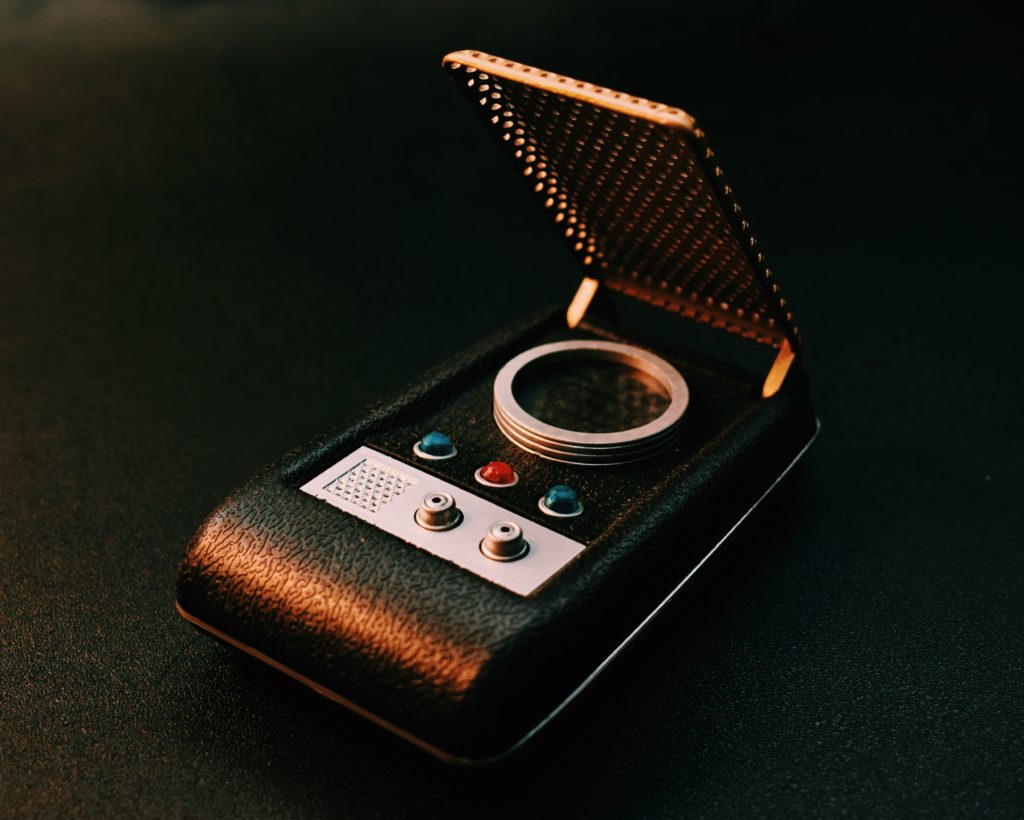
Early Impressions of Star Trek: Picard

After seeing the first 4 episodes of the new series Star Trek: Picard, I think it’s just okay so far. It seems to be setting up a potentially interesting story arc, but in other ways I find it disappointing.

The acting feels a bit off, as if Picard has consumed a few too many cups of Earl Grey and is overly caffeinated. It feels more like the dorky movie version of Picard while I was hoping for more of the chill version of his character from The Next Generation. It doesn’t feel like a believable future version of Picard, at least not yet.

I also remind myself that Star Trek: The Next Generation took a while to get its footing, especially with Deanna Troi’s first season character, who’d cry whenever they ran out of chocolate.

The main thing I dislike about ST: Picard is the show’s approach to visual editing, with camera angles switching every 1-2 seconds during many scenes. I can understand doing this during fast-paced action scenes, but it happens even when characters are just sitting around talking. It feels like they’re following some odd rule to keep the camera moving at all times, so when it’s not cutting around rapidly, it’s panning or doing the Ken Burns effect.

This is visually annoying. It’s harder to pay attention to what’s being said and to absorb a setting when the visuals are flipping around like someone is playing Whack-a-mole with the camera selection. It makes the show feel more shallow, like they’re trying to artificially make it punchier than it is.

I noticed that Star Trek: Discovery does the ADHD camera thing as well in many scenes, especially when characters are talking on the bridge. I’m curious why someone thinks it’s a good idea to switch camera angles every second or two, sometimes with every line of dialog. I can imagine some value in doing that now and then to convey a rushed or stressed vibe, but it just seems so overdone. It feels like the camera is buzzing from a raktajino overdose and can’t calm down.

I haven’t studied modern filming and editing techniques, so I imagine that someone must be teaching that this constant camera motion is a good idea. There is one reason I think it shouldn’t be used so much though. And that reason is that it’s stupid.

I liked it better when Star Trek was more visually chill but mentally ponderous. Now it feels visually chaotic and mentally shallow.

My visual cortex is only about 0.5% of my brain. Overstimulating this part isn’t going to satisfy the other 99.5%.

Instead of flipping the camera around so much, which seems like it’s being done mainly to punch up weak dialog scenes, maybe just let the camera rest on a scene for a while. Let the characters speak. Don’t force added stress and motion by overdoing this goofy camera technique. Let the actors do their jobs to create more tension if it’s important to the scene. Save the ADHD camera technique for when it’s more appropriate, like maybe during an occasional space battle.

What does this post have to do with personal growth? I’ll leave that as an exercise for the reader. We can’t stay on this scene for too long since the camera wants to move. 😉

Share Button

Health24.com | Stricter clean air laws could save thousands of lives a year

Daily exposure to ground level ozone increases city residents’ risk of early death, researchers warn.

Ground level ozone – commonly found in cities and suburbs – forms when pollutants react in sunlight.

New study findings suggest that thousands of ozone-related deaths “could be potentially reduced under stricter air quality standards,” according to study co-author Ana Vicedo-Cabrera and her colleagues. She is with the Institute of Social and Preventive Medicine in Bern, Switzerland.

For the study, the researchers analysed data gathered between 1985 and 2015 from 406 cities in 20 countries. They concluded that thousands of deaths could have been avoided each year in those cities if their countries had stronger air pollution laws.

The investigators determined daily average ozone levels (above a maximum background level of 70 µg/m3), particulate matter, temperature, and relative humidity at each location to estimate the daily number of deaths attributable to ozone.

More than 45 million deaths were analysed. On average, a 10 µg/m3 increase in ozone during the current and previous day was associated with a 0.18% increased risk of death, suggesting evidence of a potential direct association, according to the researchers.

Current air quality thresholds (in micrograms per cubic meter of ambient air) are: 100 µg/m3 – World Health Organization (WHO); 120 µg/m3 – European Union directive; 140 µg/m3 – U.S. National Ambient Air Quality Standard; and 160 µg/m3 – Chinese Ambient Air Quality Standard.

Additional health benefits

The findings suggest that more than 6 260 deaths each year (or 0.2% of all deaths) in the 406 cities may have been prevented if countries had air quality standards in line with WHO guidelines, according to the authors. The study was published online in the BMJ.

Data suggest that 80% of the world’s population in urban areas are exposed to air pollution levels above the WHO threshold, the study authors noted in a journal news release.

The study can’t prove a direct cause-and-effect relationship. Still, reducing ozone pollution “would provide additional health benefits, even in regions that meet current regulatory standards and guidelines,” the researchers noted.

“These findings have important implications for the design of future public health actions,” particularly in relation to strategies to reduce the impacts of climate change, the study authors concluded.

Image credit: iStock

Share Button

Health24.com | Baby born with ‘one-of-a-kind’ heart receives transplant

When a test showed a dangerous drop in the heart rate of Courtney Agnoli’s unborn daughter, the doctor who urgently admitted her to the hospital said, “You aren’t leaving here without a baby.”

Doctors had already identified two critical congenital heart defects that would require surgery shortly after birth. The girl, named Tessa, was delivered by Caesarean section and immediately taken to the neonatal intensive care unit, where additional testing was done on her heart.

Life was hectic

“They told me Tessa was ‘one of a kind’ because they’d never seen a heart like hers,” Courtney said. “You want your kids to be unique, but not in this way.”

Nearly 1% of all births in the United States each year – or 40 000 – are affected by congenital heart defects. About 25% of those are critical, requiring surgery or other procedures in the first year of life.

Among Tessa’s many complications: Her great arteries were switched. She had a large hole in the wall dividing her ventricles. Her pulmonary valve wasn’t formed properly. And she had narrowing in her aorta.

Tessa’s first open-heart surgery was to divert blood to her lungs. It had to be repeated a day later to get the blood flowing properly.

The Agnolis brought Tessa to their home in Hampstead, Maryland, when she was 2 1/2 months old. Life was hectic as they juggled caring for Tessa as well as her 2-year-old sister, Noelle.

At 4 months, Tessa underwent an exploratory heart procedure to help doctors decide what to do about the large hole between the bottom chambers of her heart, which is called a ventricular septal defect. Shortly after the procedure, Tessa went into cardiac arrest and had to be resuscitated with CPR.

A risky procedure

Doctors discovered Tessa was in heart failure. One doctor described her heart as being one big chamber with no reliable way to get blood flow to her lungs. She was placed on an artificial heart pump and went on the heart transplant waiting list.

On Feb. 25, 2019, Courtney got a pre-dawn call that a donor heart had been found. The family and members of the hospital team spent the day with the “Princess of the PICU” (paediatric intensive care unit).

“We had people who came in even though they weren’t working that day so they could see her,” Courtney said.

The transplant went well. But hours later, there was a problem with the blood flow into her pulmonary arteries, which were significantly smaller than the donor’s. She was put on a heart-lung machine while doctors prepared for a risky procedure that involved placing stents into her arteries without severing the sutures from her transplant.

Three months later, Tessa returned home. Challenges remain, such as using a ventilator, a tracheotomy tube and a feeding tube.

“This has been – and still is – the most stressful and emotional time of our lives,” Courtney said. “There are no words to describe how it feels to know you could lose your child at any time. With each surgery, you kiss your baby goodbye and wonder, ‘Will this be the last time I see her?'”

Catching up on milestones

After a friend shared Tessa’s story on social media, the Agnolis connected with the American Heart Association. Their story was told at the local Heart Ball. At the time, Tessa was still on the transplant waiting list. They got the call two days later.

The family also found support as they connected with other families grappling with congenital heart defects.

“It’s so nice to meet people who really understand what it’s like to be in the hospital with your child every day or have someone say, ‘If this doesn’t work, there isn’t anything else we can do,'” Courtney said.

Having turned 2, Tessa continues to catch up on milestones. She sits in a highchair, babbles a few words, waves and claps her hands.

“Minus all the equipment that comes with Tessa, she’s the easiest baby, always happy and smiling,” Courtney said. “For all that she’s been through, she really is a miracle child.”

Tessa’s dad, John Agnoli, said the experience has given him a greater appreciation for each day.

Many living with congenital heart disease

“It’s hard, but you have to just keep going and have faith in your medical team because so much is out of your control,” he said. “You can’t give up.”

According to the Centers for Disease Control and Prevention, about 67% of infants with critical CHDs survived between 1979 and 1993, a figure that rose to 83% between 1994 and 2005. As of 2010, researchers estimated there were about 1 million US children and about 1.4 million US adults living with congenital heart disease.

“Tessa’s doctor told us that if this happened five years earlier, she wouldn’t have survived,” John said. “Medical technology really saved her life.”

Image credit: iStock

Share Button

Mumps cases hit decade high in England

People are urged to get two doses of the MMR vaccine to maximise protection against the viral illness.

Share Button

Dentists threatened by coronavirus face-mask shortage

Some may have to “down drills” following curbs on how many they can order, the dentists’ union says.

Share Button

NASA flights detect millions of Arctic methane hotspots

The Arctic is one of the fastest warming places on the planet. As temperatures rise, the perpetually frozen layer of soil, called permafrost, begins to thaw, releasing methane and other greenhouse gases into the atmosphere. These methane emissions can accelerate future warming — but to understand to what extent, we need to know how much methane may be emitted, when and what environmental factors may influence its release.

That’s a tricky feat. The Arctic spans thousands of miles, many of them inaccessible to humans. This inaccessibility has limited most ground-based observations to places with existing infrastructure — a mere fraction of the vast and varied Arctic terrain. Moreover, satellite observations are not detailed enough for scientists to identify key patterns and smaller-scale environmental influences on methane concentrations.

In a new study, scientists with NASA’s Arctic Boreal Vulnerability Experiment (ABoVE), found a way to bridge that gap. In 2017, they used planes equipped with the Airborne Visible Infrared Imaging Spectrometer — Next Generation (AVIRIS — NG), a highly specialized instrument, to fly over some 20,000 square miles (30,000 square kilometers) of the Arctic landscape in the hope of detecting methane hotspots. The instrument did not disappoint.

“We consider hotspots to be areas showing an excess of 3,000 parts per million of methane between the airborne sensor and the ground,” said lead author Clayton Elder of NASA’s Jet Propulsion Laboratory in Pasadena, California. “And we detected 2 million of these hotspots over the land that we covered.”

The paper, titled “Airborne Mapping Reveals Emergent Power Law of Arctic Methane Emissions,” was published Feb. 10 in Geophysical Research Letters.

Within the dataset, the team also discovered a pattern: On average, the methane hotspots were mostly concentrated within about 44 yards (40 meters) of standing bodies of water, like lakes and streams. After the 44-yard mark, the presence of hotspots gradually became sparser, and at about 330 yards (300 meters) from the water source, they dropped off almost completely.

The scientists working on this study don’t have a complete answer as to why 44 yards is the “magic number” for the whole survey region yet, but additional studies they’ve conducted on the ground provide some insight.

“After two years of ground field studies that began in 2018 at an Alaskan lake site with a methane hotspot, we found abrupt thawing of the permafrost right underneath the hotspot,” said Elder. “It’s that additional contribution of permafrost carbon — carbon that’s been frozen for thousands of years — that’s essentially contributing food for the microbes to chew up and turn into methane as the permafrost continues to thaw.”

Scientists are just scratching the surface of what is possible with the new data, but their first observations are valuable. Being able to identify the likely causes of the distribution of methane hotspots, for example, will help them to more accurately calculate this greenhouse gas’s emissions across areas where we don’t have observations. This new knowledge will improve how Arctic land models represent methane dynamics and therefore our ability to forecast the region’s impact on global climate and global climate change impacts on the Arctic.

Elder says the study is also a technological breakthrough.

“AVIRIS-NG has been used in previous methane surveys, but those surveys focused on human-caused emissions in populated areas and areas with major infrastructure known to produce emissions,” he said. “Our study marks the first time the instrument has been used to find hotspots where the locations of possible permafrost-related emissions are far less understood.”

More information on ABoVE can be found here:

https://above.nasa.gov/

Story Source:

Materials provided by NASA/Jet Propulsion Laboratory. Original written by Esprit Smith. Note: Content may be edited for style and length.

Share Button