Nurses union says long waits and corridor care having a devastating impact on paitents.


Nurses union says long waits and corridor care having a devastating impact on paitents.
West Yorkshire Trading Standards says it receives a “high number of allergen complaints”.
Lucy Buckle says she was told by NHS 111 to attend A&E and says the hospital was “very chaotic”.
Guy’s and St Thomas’ NHS Trust says online videos falsely show clinicians promoting weight loss patches.
Lesson 19 explores how to finish what you start without killing your creative spark. You’ll learn how to work with different energy phases – inspiration, staging, and completion – so projects flow forward naturally instead of stalling or burning out.
This approach helps you move projects across the finish line while preserving enthusiasm, clarity, and momentum, so you can enjoy a richer and more consistent flow of completed projects and treasured experiences in your life.
You’ll find the rest of the Engage course videos in the Video section.
Join the Engage notification list to get an email whenever a new Engage lesson is published. I also encourage you to subscribe to my YouTube channel to follow the course there.
Enjoy!

Many people who are prescribed statins to lower cholesterol end up stopping the medication because of muscle pain, weakness, or ongoing fatigue. These symptoms are among the most common reasons patients abandon the drugs.
New research from Columbia University suggests a possible explanation for why this happens in some individuals. The study indicates that certain statins can attach to a protein inside muscle cells, triggering a leak of calcium ions that disrupts normal muscle function.
“It is unlikely that this explanation applies to everyone who experiences muscular side effects with statins, but even if it explains a small subset, that’s a lot of people we could help if we can resolve the issue,” says Andrew Marks, chair of the Department of Physiology and Cellular Biophysics at the Vagelos College of Physicians and Surgeons.
Statins are widely used in the United States. Roughly 40 million adults take them to control cholesterol levels, and about 10 percent develop muscle related side effects.
“I’ve had patients who’ve been prescribed statins, and they refused to take them because of the side effects. It’s the most common reason patients quit statins, and it’s a very real problem that needs a solution,” Marks says.
A Longstanding Puzzle Around Statin Muscle Pain
Scientists have been trying to understand statin related muscle problems since the drugs first became available in the late 1980s. Statins work by binding to an enzyme involved in cholesterol production, but they can also attach to other unintended targets in the body.
Earlier research hinted that muscle side effects might occur when statins interact with a specific protein in muscle tissue. Until now, the details of that interaction were unclear.
Using cryo-electron microscopy, a powerful imaging method that allows researchers to see structures down to individual atoms, the Columbia team was able to directly observe how a statin interacts with muscle cells.
Calcium Leaks Inside Muscle Cells
The images showed that a commonly prescribed statin, simvastatin, binds to two specific sites on a muscle protein known as the ryanodine receptor. This binding opens a channel in the protein, allowing calcium to leak into areas of the cell where it does not normally flow.
According to Marks, this calcium leak may explain muscle pain and weakness linked to statins. The excess calcium can weaken muscle fibers directly or activate enzymes that gradually break down muscle tissue.
Toward Safer Cholesterol Drugs
The findings point to new possibilities for reducing statin side effects. One approach would be to redesign statins so they continue to lower cholesterol but no longer bind to the ryanodine receptor in muscle cells.
Marks is currently working with chemists to develop statins that avoid this unwanted interaction.
Another potential strategy focuses on stopping the calcium leak itself. The researchers showed that in mice, statin related calcium leaks can be closed using an experimental drug created in the Marks laboratory for other disorders involving abnormal calcium flow.
“These drugs are currently being tested in people with rare muscle diseases. If it shows efficacy in those patients, we can test it in statin-induced myopathies,” Marks says
Study Details and Disclosures
Andrew Marks is also the Clyde and Helen Wu Professor of Medicine at Columbia University Vagelos College of Physicians and Surgeons, a professor of biomedical engineering, and director of the Wu Center for Molecular Cardiology.
The study was published Dec. 15 in “Structural basis for simvastatin-induced skeletal muscle weakness associated with RyR1 T4709M mutation,” in the Journal of Clinical Investigation.
The full author list includes Gunnar Weninger, Haikel Dridi, Steven Reiken, Qi Yuan, Nan Zhao (University of Rochester), Linda Groom (University of Rochester), Jennifer Leigh (University of Rochester), Yang Liu, Carl Tchagou, Jiayi Kang, Alexander Chang, Estefania Luna-Figueroa, Marco C. Miotto, Anetta Wronska, Robert T. Dirksen (University of Rochester), and Andrew R. Marks.
Funding for the research came from the NIH (R01HL145473, R01DK118240, R01HL142903, R01HL140934, R01NS114570, R01AR070194, R01AR078000 , R25HL156002, R25NS076445, P01HL164319, and T32HL120826.
Marks owns stock in RyCarma Therapeutics Inc., which is developing compounds that target the ryanodine receptor, and is a coinventor on U.S. patent nos. US8022058 and US8710045. Gunnar Weninger, Haikel Dridi, Marco Miotto, and Marks are also inventors on the patent application titled “STATIN INNOVATION FOR MUSCLE-FRIENDLY CHOLESTEROL MANAGEMENT” [Invention Report (IR) #CU24350], which will be filed by Columbia University.
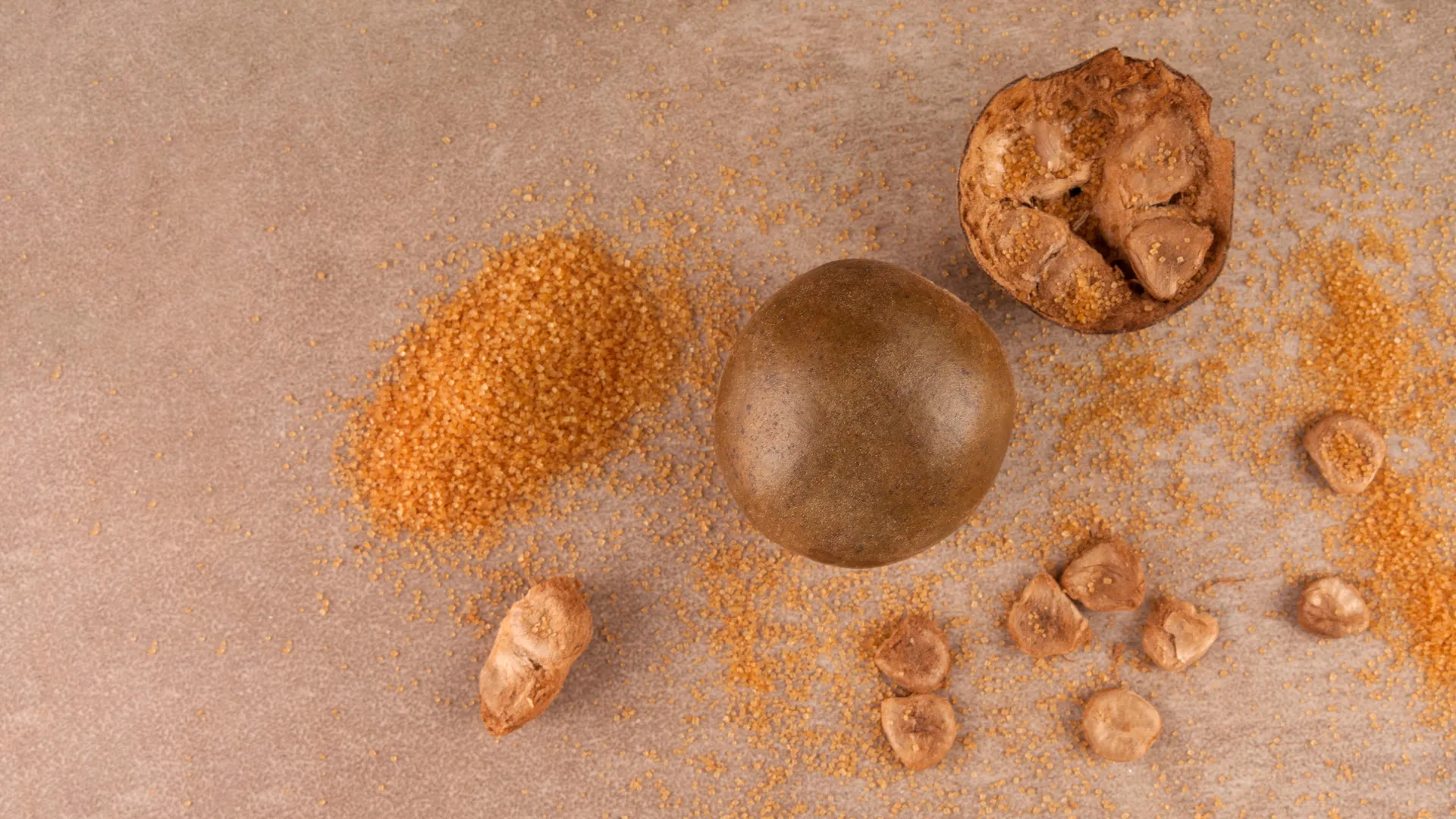
Luo Han Guo (Siraitia grosvenorii), more commonly known as monk fruit, is a long living vine that belongs to the gourd family, the same plant group as cucumbers and squash. It is native to southern China, where it has been used for centuries in traditional foods and remedies. In recent years, monk fruit has drawn modern scientific attention because it contains high levels of antioxidants. Antioxidants are substances that help protect cells from damage caused by unstable molecules known as free radicals, which are linked to aging and many chronic diseases.
New findings published in the Journal of the Science of Food and Agriculture take a closer look at what makes this fruit biologically active. The research focuses on the specific chemical compounds inside Luo Han Guo and how they may support health.
The Compounds Inside Monkfruit
One of the most important features of Luo Han Guo is its abundance of what scientists call secondary metabolites. These are natural plant chemicals that are not required for basic growth, but often play a role in defense, color, flavor, and health effects in humans. In this case, researchers concentrated on three major groups: terpenoids, flavonoids, and amino acids.
Terpenoids are compounds commonly found in plants that can have antioxidant and anti inflammatory properties. Flavonoids are another large class of plant compounds known for their ability to neutralize free radicals and support heart and metabolic health. Amino acids, which are the building blocks of proteins, are essential for many processes in the body, including tissue repair and immune function.
The scientists examined both the peel and the pulp of four different Luo Han Guo varieties. By doing so, they were able to identify where these compounds are concentrated and how they behave biologically.
How These Compounds Interact With the Body
Beyond simply identifying these substances, the study explored how they interact with antioxidant receptors and other biological targets. Receptors are structures in cells that receive chemical signals and trigger responses in the body. These interactions influence various biological pathways, which are step by step processes that help regulate functions such as inflammation, metabolism, and cellular protection.
Understanding these pathways helps explain why monk fruit may have health promoting properties beyond its use as a natural sweetener.
Why Researchers Studied Multiple Varieties
The researchers emphasized that not all monkfruit is chemically identical. Different varieties can contain different levels and combinations of active compounds. As the authors explained, “it is crucial to conduct an in-depth investigation on the high-resolution metabolic profiles of different Luo Han Guo varieties, providing valuable insights into the nutritional and health characteristics as well as the manufacturing suitability of the various resources available from this plant.”
This type of detailed chemical mapping helps scientists determine which varieties may be best suited for food products, supplements, or other uses.
Monk Fruit at a Glance
Monk fruit is a perennial vine native to China and a member of the gourd family. It is best known today as a zero calorie natural sweetener, but research shows it also contains a wide range of bioactive compounds. These include antioxidants, plant metabolites, and amino acids that interact with important biological systems in the body. As scientists continue to study its chemistry, monk fruit is emerging as more than just a sugar substitute, offering potential nutritional and health benefits rooted in its unique natural makeup.
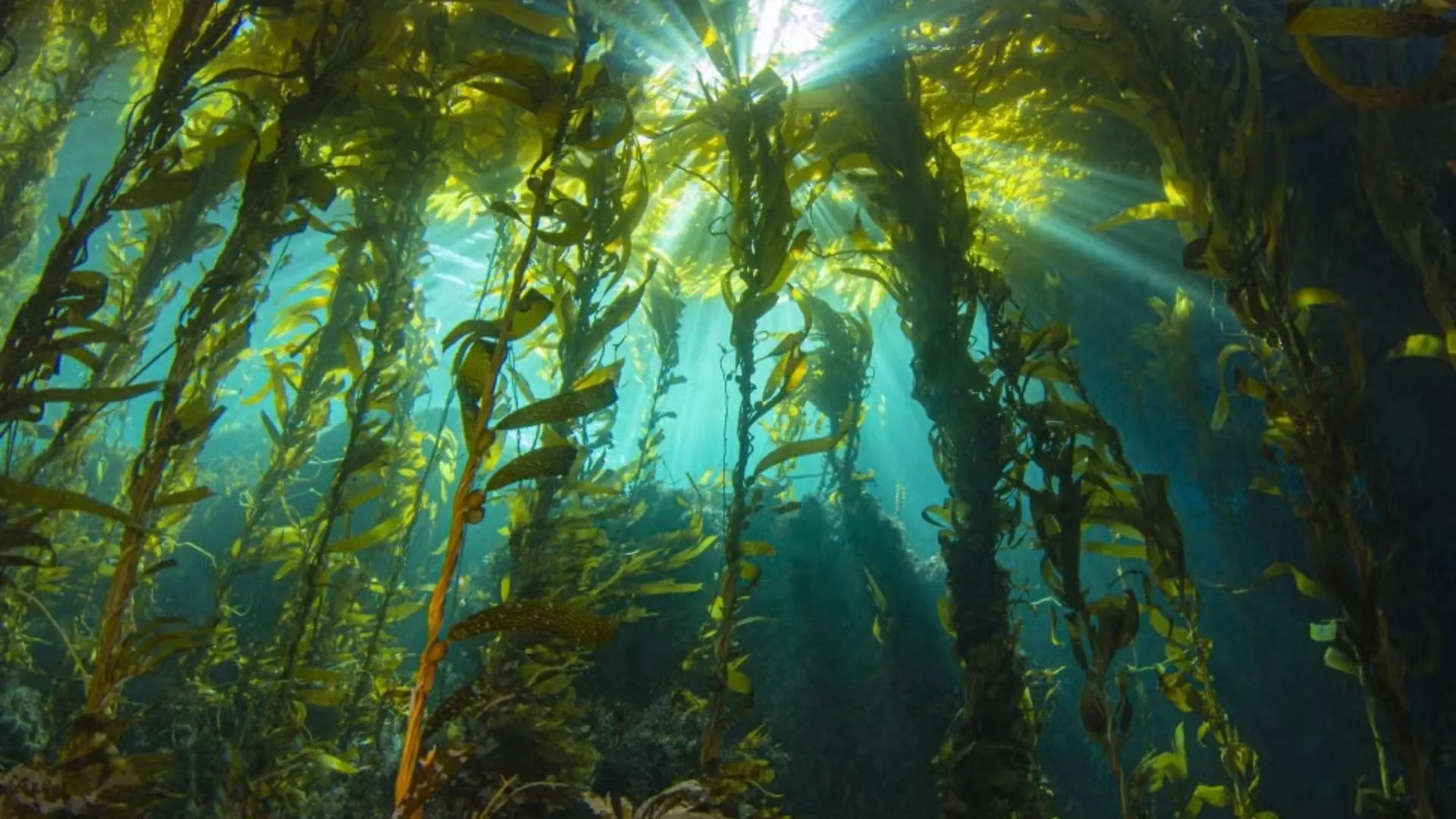
Clouds, smoke, and fog can block sunlight in the sky, but beneath the ocean surface, very different forces can plunge the seafloor into darkness. Sediment runoff, algae blooms, and organic debris can sharply reduce underwater light, sometimes transforming bright coastal waters into near night. To better understand these events, an international team of scientists has developed the first system designed to identify and compare what they call marine blackouts.
The research, published in Communications Earth & Environment, introduces the concept of a marine darkwave. These events are short-lived but intense periods of underwater darkness that can seriously disrupt kelp forests, seagrass meadows, and other marine organisms that depend on light to survive.
Why Light Matters in the Ocean
“We have long known that light levels are critical for photosynthetic organisms — like algae, seagrasses and corals — and that factors that reduce light to the seafloor can impact them,” said co-author Bob Miller, a research biologist at UC Santa Barbara’s Marine Science Institute. “This study creates a framework for comparing such events, which we call darkwaves.”
Until now, scientists lacked a shared method for evaluating extreme losses of underwater light across different regions. The goal of the new framework is to make these events measurable and comparable worldwide.
“Light is a fundamental driver of marine productivity, yet until now we have not had a consistent way to measure extreme reductions in underwater light,” said lead author François Thoral, a postdoctoral fellow at the University of Waikato and Earth Sciences New Zealand.
Decades of Data Reveal a Hidden Pattern
To build the framework, researchers analyzed long-term data from multiple coastal regions. The study used 16 years of measurements from the Santa Barbara Coastal Long Term Ecological Research Site (LTER) and 10 years of observations from New Zealand coastal locations in Hauraki Gulf/Tīkapa Moana, in the Firth of Thames. The team also examined 21 years of seafloor light estimates derived from satellite data along New Zealand’s East Cape.
Across these areas, marine darkwaves ranged from brief events lasting only a few days to prolonged episodes that persisted for more than two months. In some cases, light reaching the seabed was almost completely eliminated.
The researchers identified between 25 and 80 darkwave events along the East Cape since 2002. Many were associated with powerful storms and large-scale weather systems, including Cyclone Gabrielle.
Short-Term Darkness With Lasting Consequences
For years, scientists have focused on slow, long-term declines in water clarity as a major threat to coastal ecosystems. The new findings suggest that sudden darkwave events may be just as damaging.
“Even short periods of reduced light can impair photosynthesis in kelp forests, seagrass and corals,” Thoral said. “These events can also influence the behaviour of fish, sharks and marine mammals. When darkness persists, the ecological effects can be significant.”
A New Tool for Tracking Ocean Stress
The marine darkwave framework adds to existing tools used to monitor marine heatwaves, ocean acidification, and deoxygenation. Together, these systems offer coastal communities, conservation groups, and resource managers a clearer way to recognize when marine ecosystems are under intense and immediate stress.
Because the Santa Barbara Coastal LTER is one of the few programs worldwide that collects long-term measurements of light on the seafloor, Miller and his colleagues at UCSB plan to expand their work. They aim to investigate how sedimentation and turbidity — which are influenced by fires and mudslides — affect California’s kelp forests.
Oscar Murphy has an aggressive form of the blood cancer and is the first to get CAR-T therapy in the UK.
Oscar Murphy has an aggressive form of the blood cancer and is the first to get CAR-T therapy in the UK.
