In Birmingham hospitals knives are regularly found, with one produced by a patient ready for an MRI.


In Birmingham hospitals knives are regularly found, with one produced by a patient ready for an MRI.
According to the Royal College of Obstetricians and Gynaecologists, 59,733 women in NI are now on waiting lists.
The firm says its chatbot sees health and wellbeing questions from 230 million people every week.
The health secretary had made it his personal mission to banish the fax machine from the NHS.

In 1887, a landmark experiment reshaped our understanding of the universe. American physicists Albert Michelson and Edward Morley attempted to detect Earth’s motion through space by comparing how fast light traveled along different directions. Their experiment found no difference at all. This unexpected null result became one of the most influential outcomes in scientific history. It led Albert Einstein to propose that the speed of light is constant, a cornerstone idea behind his theory of special relativity.
Special relativity rests on the principle that the laws of physics remain the same for all observers, regardless of how they are moving relative to one another. This idea is known as Lorentz invariance. Over time, Lorentz invariance became a foundational assumption in modern physics, especially within quantum theory.
Why Question a Principle That Works So Well
Quantum theory evolved with Lorentz invariance at its core. This is especially true for quantum field theory and the Standard Model of Particle Physics, which is the most thoroughly tested scientific theory ever created and has passed experimental checks with extraordinary precision. Given this track record, it may seem strange to question Lorentz invariance after more than a century of success.
The motivation comes from another of Einstein’s breakthroughs. His theory of general relativity explains gravity as a bending of spacetime itself. Like special relativity, it has been confirmed with remarkable accuracy across many environments, from weak gravitational fields to extreme cosmic conditions.
The Clash Between Quantum Theory and Gravity
Despite their individual successes, quantum theory and general relativity do not fit together smoothly. Quantum physics describes reality using probability wave functions, while general relativity describes how matter and energy shape the geometry of spacetime. These two approaches struggle to coexist when particles move through curved spacetime while also influencing that curvature.
Efforts to combine the two theories into a single framework known as quantum gravity often run into the same obstacle. Many proposed solutions require small violations of Lorentz invariance. These violations would be extremely subtle but could offer clues about new physics beyond current theories.
Testing Einstein With Light From the Cosmos
One prediction shared by several Lorentz-invariance-violating quantum gravity models is that the speed of light may depend slightly on a photon’s energy. Any such effect would have to be tiny to match existing experimental limits. However, it could become detectable at the highest photon energies, specifically in very-high-energy gamma rays.
A research team led by former UAB student Mercè Guerrero and current IEEC PhD student at the UAB Anna Campoy-Ordaz set out to test this idea using astrophysical observations. The team also included Robertus Potting from the University of Algarve and Markus Gaug, a lecturer in the Department of Physics at the UAB who is also affiliated with the IEEC.
Their approach relies on the vast distances light travels across the universe. If photons of different energies are emitted at the same time from a distant source, even minuscule differences in their speeds could build up into measurable delays by the time they reach Earth.
Sharper Limits on New Physics
Using a new statistical technique, the researchers combined existing measurements of very-high-energy gamma rays to examine several Lorentz-invariance-violating parameters favored by theorists within the Standard Model Extension (SME). The goal was ambitious. They hoped to find evidence that Einstein’s assumptions might break down under extreme conditions.
Once again, Einstein’s predictions held firm. The study did not detect any violation of Lorentz invariance. Even so, the results are significant. The new analysis improves previous limits by an order of magnitude, sharply narrowing where new physics could be hiding.
The search is far from over. Next-generation observatories such as the Cherenkov Telescope Array Observatory are being designed to detect very-high-energy gamma rays with far greater sensitivity. These instruments will allow scientists to continue testing the deepest foundations of physics and to keep pushing Einstein’s ideas to their limits.
Researchers are looking to see if there is a link between hormonal fluctuations and gambling addiction.
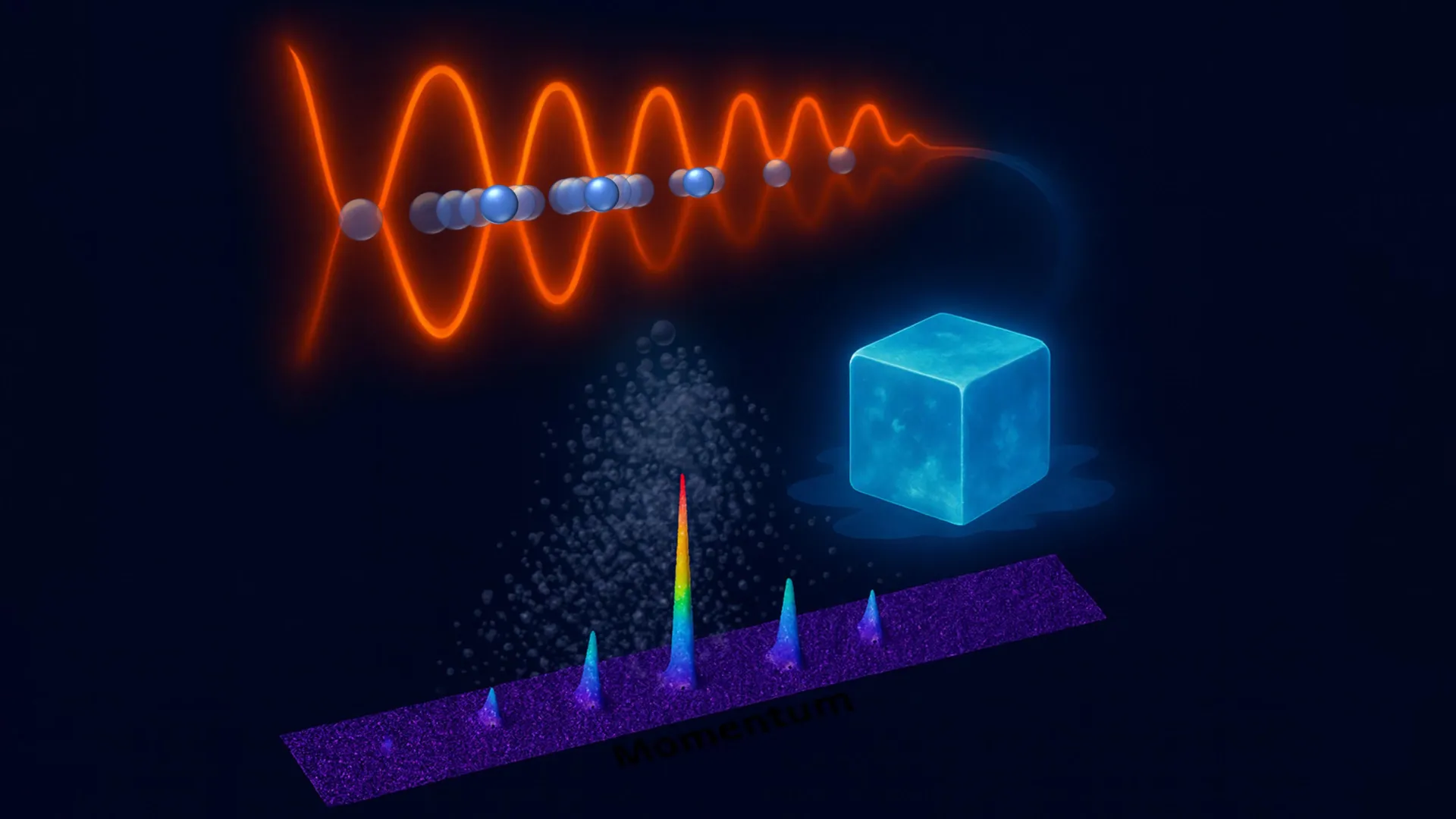
In everyday experience, applying repeated force almost always leads to heating. Rubbing your hands together warms your skin. Striking metal with a hammer makes it hot to the touch. Even without formal physics training, people quickly learn a basic rule: when you keep driving a system by stirring it, pressing it, or hitting it, its temperature rises.
Physicists expect the same behavior at much smaller scales. In quantum systems made up of many interacting particles, continuous excitation is normally assumed to cause steady energy absorption. As energy builds up, the system should heat. But a recent experiment suggests that this intuition does not always apply at the quantum level.
Researchers from Hanns Christoph Nägerl’s group at the Department of Experimental Physics at the University of Innsbruck set out to test whether a strongly driven quantum system must inevitably heat up. Their answer was unexpected.
A Quantum Gas That Stops Absorbing Energy
The team created a one dimensional quantum fluid made of strongly interacting atoms cooled to just a few nanokelvin above absolute zero. Using laser light, they subjected the atoms to a lattice potential that switched on and off rapidly and repeatedly. This setup created a regularly pulsed environment that effectively kicked the atoms over and over again.
Under these conditions, the atoms should have absorbed energy continuously, similar to how motion builds on a trampoline when someone keeps jumping. Instead, the researchers saw a surprising change. After a short initial period, the spread of the atoms’ momentum came to a halt. The system’s kinetic energy stopped increasing and leveled off.
Even though the atoms were still being driven and continued to interact strongly with one another, they no longer absorbed energy. The system had entered a state known as many body dynamical localization (MBDL). In this state, motion becomes locked in momentum space rather than spreading freely.
“In this state, quantum coherence and many-body entanglement prevent the system from thermalizing and from showing diffusive behavior, even under sustained external driving,” explains Hanns Christoph Nägerl. “The momentum distribution essentially freezes and retains whatever structure it has.”
An Orderly Outcome That Defied Expectations
The result surprised even the scientists involved. Lead author Yanliang Guo admitted the behavior ran counter to what they had predicted. “We had initially expected that the atoms would start flying all around. Instead, they behaved in an amazingly orderly manner.”
Lei Ying, a theory collaborator from Zhejing University in Hangzhou, China, shared that reaction. “This is not to our naïve expectation. What’s striking is the fact that in a strongly driven and strongly interacting system, many-body coherence can evidently halt energy absorption. This goes against our classical intuition and reveals a remarkable stability rooted in quantum mechanics.”
Ying also pointed out that recreating this behavior using classical computer simulations is extremely challenging. “That’s why we need experiments. They go hand in hand with our theory simulations.”
Why Quantum Coherence Matters
To see how robust this unusual state really was, the researchers altered the experiment by adding randomness to the driving sequence. The effect was immediate. Even a small amount of disorder was enough to destroy the localization.
Once coherence was disrupted, the atoms behaved more conventionally. Their momentum spread out again, kinetic energy increased rapidly, and the system resumed absorbing energy without limit. “This test highlighted that quantum coherence is crucial for preventing thermalization in such driven many-body systems,” says Nägerl.
Implications for Future Quantum Technologies
The discovery of MBDL has implications that extend well beyond basic physics. Preventing unwanted heating is one of the biggest challenges facing the development of quantum simulators and quantum computers. These devices rely on maintaining delicate quantum states that can easily be lost through energy buildup and decoherence.
“This experiment provides a precise and highly tunable way for exploring how quantum systems can resist the pull of chaos,” says Guo. By showing that heating can be halted entirely under the right conditions, the findings challenge long held assumptions about how driven quantum matter behaves.
The study opens new paths for understanding how quantum systems can remain stable even when pushed far from equilibrium.
The research has been published in Science and received financial support from the Austrian Science Fund FWF, the Austrian Research Promotion Agency FFG, and the European Union, among others.
Cases up after two weeks of decline, as hospitals report rise in slips and falls because of cold snap.

As people return to gyms or start new fitness routines in the new year, new research suggests that even a short burst of intense exercise could play a role in protecting against cancer. Scientists report that as little as 10 minutes of hard physical activity may help slow cancer growth.
The study found that brief, vigorous exercise quickly changes the mix of molecules circulating in the bloodstream. These rapid shifts appear to suppress bowel cancer cell growth while also speeding up the repair of damaged DNA.
How Exercise Changes the Bloodstream
Researchers at Newcastle University discovered that exercise raises the levels of several small molecules in the blood. Many of these molecules are known to reduce inflammation, support healthy blood vessels, and improve metabolism.
When scientists exposed bowel cancer cells in the lab to blood containing these exercise-driven molecules, they observed widespread genetic changes. More than 1,300 genes shifted their activity, including genes involved in DNA repair, energy production, and cancer cell growth.
Published in the International Journal of Cancer, the findings help clarify how physical activity may lower bowel cancer risk. The research shows that exercise sends molecular signals through the bloodstream that influence genes controlling tumor growth and genetic stability.
The results add to growing evidence that staying physically active is an important part of cancer prevention.
New Possibilities for Cancer Treatment
Dr. Sam Orange, Senior Lecturer in Clinical Exercise Physiology at Newcastle University and lead author of the study, said: “What’s remarkable is that exercise doesn’t just benefit healthy tissues, it sends powerful signals through the bloodstream that can directly influence thousands of genes in cancer cells.
“It’s an exciting insight because it opens the door to find ways that mimic or augment the biological effects of exercise, potentially improving cancer treatment and, crucially, patient outcomes.
“In the future, these insights could lead to new therapies that imitate the beneficial effects of exercise on how cells repair damaged DNA and use fuel for energy.”
Slowing Cancer Growth at the Cellular Level
The research team found that exercise increased the activity of genes that support mitochondrial energy metabolism. This helps cells use oxygen more efficiently.
At the same time, genes linked to rapid cell division were turned down, which may make cancer cells less aggressive. Blood collected after exercise also boosted DNA repair, activating a key repair gene known as PNKP.
The study included 30 volunteers, both men and women between the ages of 50 and 78. All participants were overweight or obese (a risk factor of cancer) but otherwise healthy.
Each volunteer completed a short but intense cycling test that lasted about 10 minutes. Researchers then collected blood samples and examined 249 proteins. Thirteen of those proteins increased after exercise, including interleukin-6 (IL-6), which plays a role in repairing damaged DNA.
Why Even One Workout Matters
Dr. Orange, a Clinical Exercise Physiologist at The Newcastle upon Tyne Hospitals NHS Foundation Trust, said: “These results suggest that exercise doesn’t just benefit healthy tissues, it may also create a more hostile environment for cancer cells to grow.
“Even a single workout can make a difference. One bout of exercise, lasting just 10 minutes, sends powerful signals to the body.
“It’s a reminder that every step, every session, counts when it comes to doing your best to protect your health.”
Bowel Cancer Rates and Physical Activity
Bowel cancer is the 4th most common cancer in the UK, after breast, prostate and lung cancer.
In the UK, one person is diagnosed with bowel cancer every 12 minutes, adding up to nearly 44,000 cases each year. Someone dies from the disease every 30 minutes.
Researchers estimate that regular physical activity lowers bowel cancer risk by about 20%. Exercise does not have to mean gym workouts or sports. Walking or biking to work, along with everyday activities such as gardening or cleaning, can also contribute.
Looking ahead, the research team plans to examine whether repeated exercise sessions lead to long-lasting biological changes. They also aim to study how exercise-related effects interact with common cancer treatments such as chemotherapy and radiotherapy.
Lesson 18 of the free Engage course explores how stretch goals can serve as catalysts for inner growth rather than pressure-filled achievements. You’ll learn how to approach ambitious goals by expanding your identity, working through internal limitations, and becoming someone who can step into those experiences with confidence and ease.
You’ll find the rest of the Engage course videos in the Video section.
Join the Engage notification list to get an email whenever a new Engage lesson is published. I also encourage you to subscribe to my YouTube channel to follow the course there.
Enjoy!
