A BBC Arabic journalist reported on the distressing conditions inside an overwhelmed Gaza hospital that he said contained many of his friends and neighbours.
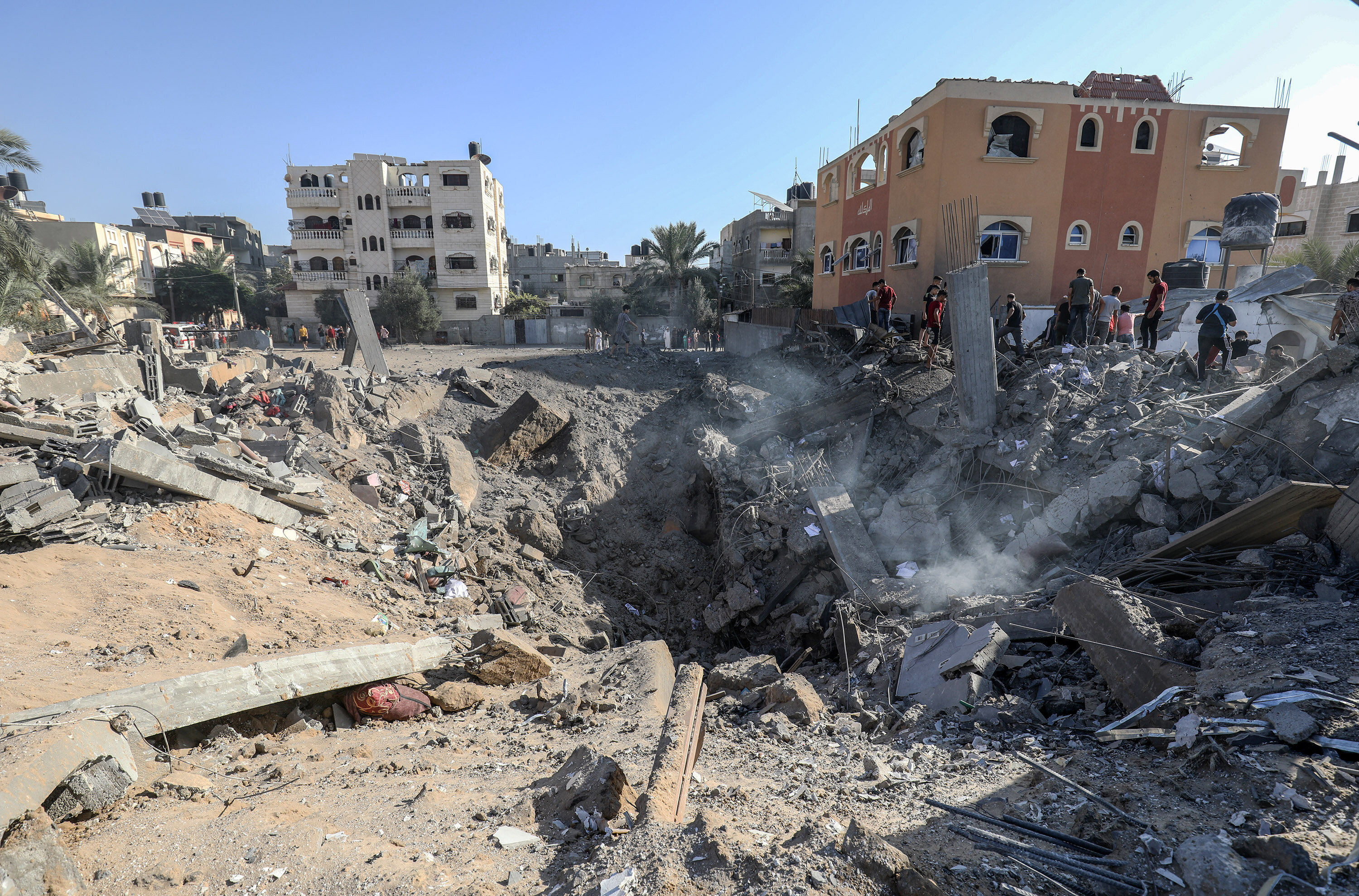
“Today has been one of the most difficult days in my career. I have seen things I can never unsee,” BBC’s Adnan Elbursh, a Gaza resident, said in the report from Al Shifa, Gaza City’s main hospital, posted late on Thursday.
Advertisement
“Bodies lay everywhere. The injured scream for help. You can never forget the sounds,” he reported.
Among the dead and wounded, his cameraman had spotted his friend Malik, Elbursh said.
“Malik has managed to survive, but his family have not,” Elbursh said over footage of his tearful colleague.
Elbursh said bodies were being placed outside the hospital on the ground after the morgue reached capacity.
“You never want to become the story. Yet, in my city, I feel helpless as the dead were given no dignity and the injured are left in pain,” he said.
Advertisement
Hamas, the militant group that controls Gaza, launched a devastating surprise attack on Israel on Saturday, massacring hundreds of people and taking scores of hostages.
Israel declared war on Hamas in response. It has since laid siege to Gaza, which has a dense population of more than 2 million, bombarding the Palestinian enclave with airstrikes and preparing for a possible ground invasion. It has also shut off access to electricity, food, fuel and water in Gaza.
The conflict has already claimed over 2,800 lives on both sides. Thousands more are injured.
At least 10 journalists — nine Palestinians and one Israeli — are among the dead, according to the Committee to Protect Journalists. Several others are wounded or missing.
It has become increasingly difficult for journalists in Gaza to cover the situation on the ground, as fuel, electricity and internet access become more and more scarce.
Israel’s ongoing conflict with Palestinian militants may be far away, but it’s having a profound impact on life around the world – including the UK.
At the moment, despite voicing support for the Israelis after Hamas’ brutal attacks and sorrow for the suffering in Gaza, none of the Western powers are directly involved yet.
Advertisement
In fact, UK PM Rishi Sunak has said he is keen to prevent “further escalation” in the region, and the US secretary of state Anthony Blinken has promised “intensive diplomacy” to stop more nations wading into the conflict.
But, the horrendous eruption of violence in the Middle East has still triggered ripples all around the world. Here’s how.
1. International citizens likely to be hostages
When Hamas launched its surprise attack on Israel on Saturday, it took at least 150 people, including women and children, hostage – and it has killed more than a thousand people in the days since.
The majority of those taken are believed to be Israeli, but US President Joe Biden said on Monday that it was “likely” American citizens were among them.
Advertisement
UK defence secretary Grant Shapps also said it was “highly likely” that there were British civilians among the hostages on Thursday.
However, there’s been no confirmation about the hostages’ nationalities yet.
They are currently being hidden by Hamas in Gaza, and Israel does not plan to stop its siege of the region until they are released.
According to the Washington Post, people from 23 countries outside of Israel and Palestinian territories have been killed in the conflict. That includes Europeans, those from North and South America, Africa and Asia.
The UK is in the process of organising flights out of Israel for vulnerable Brits and diplomats, although it will cost £300 per passenger.
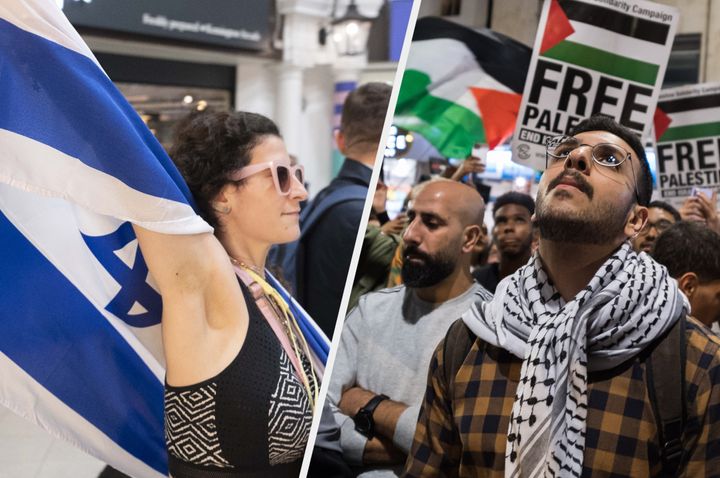
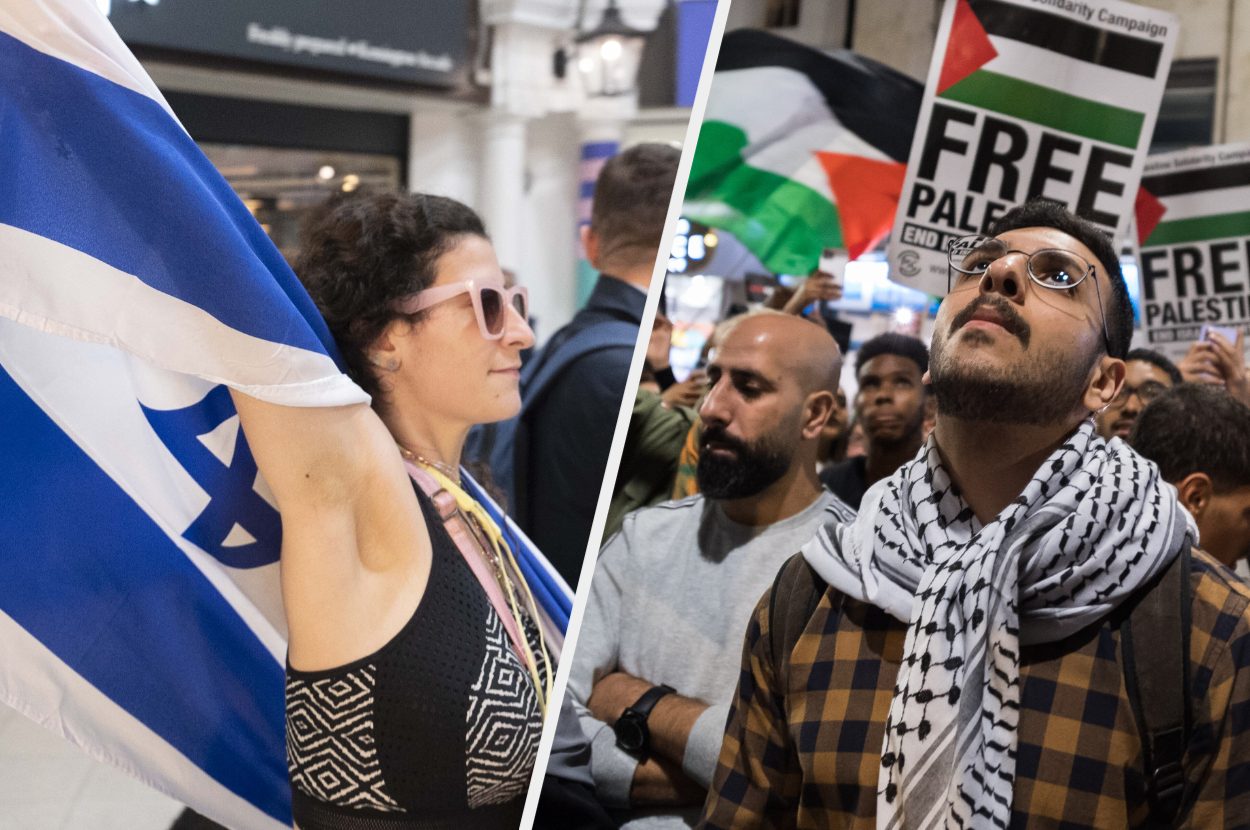
Protesters in solidarity with Israel and in solidarity with Palestine have popped up across the UK recently
Only flags supporting the two teams playing on Friday will be permitted into the stadium, too, while players will be wearing black armbands to show support for all the victims of the war.
The UK’s culture secretary Lucy Frazer posted on X (formerly Twitter) to say she was “disappointed” by the FA’s decision.
Advertisement
Police around the UK won’t stop people waving Palestinian flags either, while France has banned pro-Palestinian protests – and arrested anyone who defies them.
I am extremely disappointed by the FA’s decision not to light up the Wembley Stadium arch following last weekend’s horrific terrorist attacks in Israel, and have made my views clear to the FA.
The BBC has been dragged into a row about bias over its reluctance to use the word “terrorist” to describe any Hamas fighter.
Following a widespread backlash, it justified the decision on Wednesday, saying it was following its editorial guidelines.
The broadcaster’s head of editorial policy and standard, David Jordan, said: “It’s a policy that’s been applied to conflicts around the world and indeed conflicts in our own country.
Advertisement
“We didn’t have a policy of describing the IRA as terrorists throughout the Troubles in Northern Ireland. To this day, we don’t call republican splinter groups, for example, and others terrorists in that context.”
However, defence secretary Shapps clashed with a BBC presenter over its decision on Friday, while the PM has said that it is “incumbent” on the BBC – as the UK’s national broadcaster – to refer to the militants as terrorists.
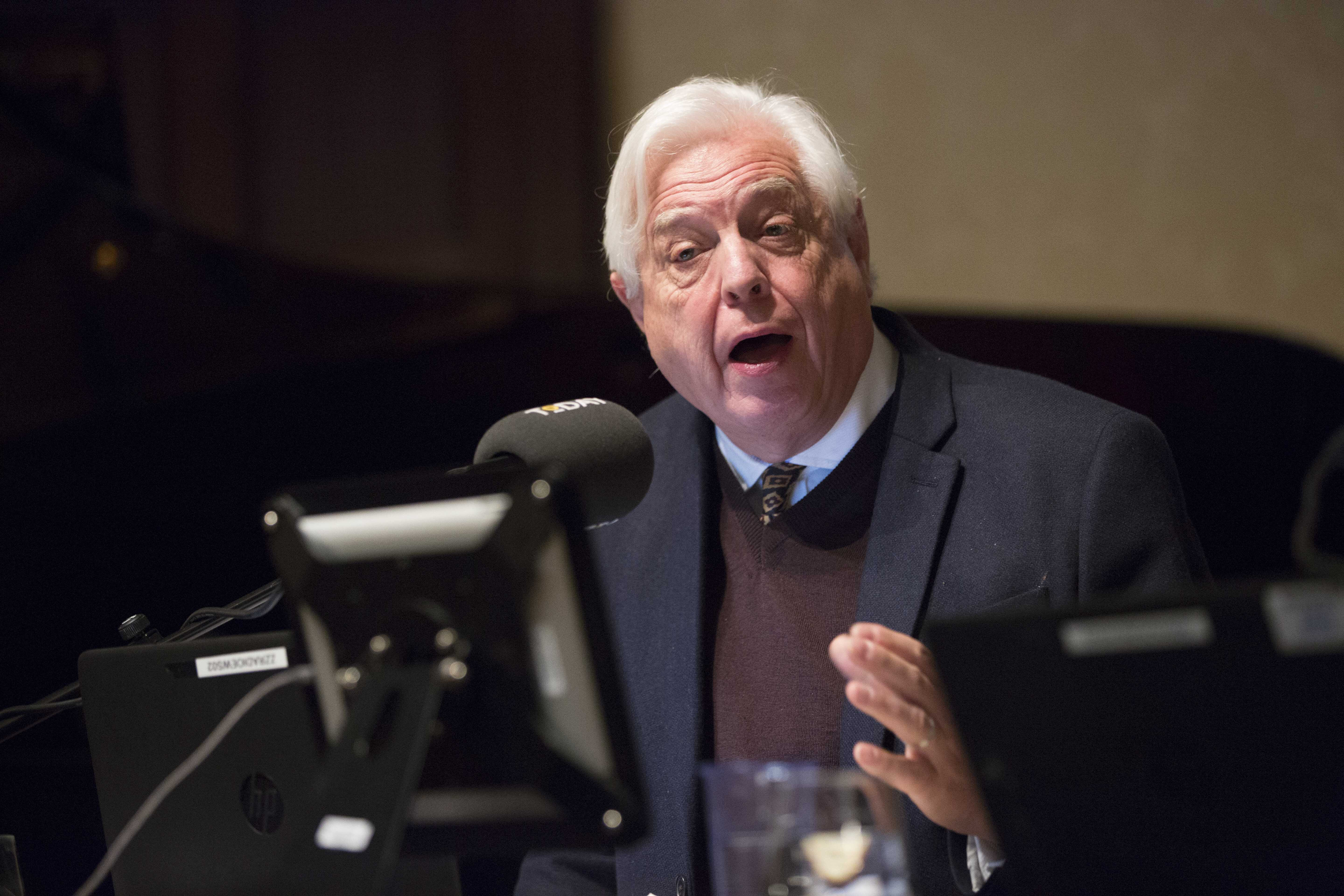
The BBC’s John Simpson released a robust defence of his employer yesterday after the broadcaster was heavily criticised for not using the word “terrorist” to describe Hamas fighters.
The Palestinian militant group launched a surprise attack on Israel on Saturday, in what has been condemned as the deadliest day in the state’s history.
Advertisement
Israel subsequently declared war on Hamas, calling them “human animals” while announcing a complete siege of the Palestinian territory of Gaza.
More than a thousand people in total are said to have been killed by the brutal conflict so far.
While covering the war, the BBC has refrained from using the word “terrorist”, instead usually referring to them as “militants”.
This has prompted intense criticism from former employees and senior politicians – especially as Hamas was denounced as a terrorist group by the UK government back in 2021.
On Tuesday evening, Simpson – the BBC’s world affairs editor – jumped to the broadcaster’s defence.
Writing on X, formerly Twitter, he said: “British politicians know perfectly well why the BBC avoids the word ‘terrorist’ and over the years plenty of them have privately agreed with it.
Advertisement
“Calling someone a terrorist means you’re taking sides and ceasing to treat the situation with due impartiality.
“The BBC’s job is place the facts before its audience and let them decide what they think, honestly and without ranting.
“That’s why, in Britain and throughout the world, nearly half a billion people watch, listen to and read us. There’s always someone who would like us to rant. Sorry, it’s not what we do.”
British politicians know perfectly well why the BBC avoids the word ‘terrorist’, and over the years plenty of them have privately agreed with it. Calling someone a terrorist means you’re taking sides and ceasing to treat the situation with due impartiality. The BBC’s job is to…
About half an hour later, Simpson followed up with another post, which read: “In September 1939, when Britain’s very survival was at stake, the BBC issued rules to its staff how to broadcast about the coming war.
Advertisement
“You must be frank and honest, it said — and above all there must be no room for ranting. Wise words, entirely applicable today.”
Simpson’s remarks came after the BBC’s former North America editor Jon Sopel criticised his ex-employer, saying that its current editorial guidelines were “no longer fit for purpose”.
The BBC’s editorial guidelines read: “We should not use the term ‘terrorist’ without attribution.
“We should convey to our audience the full consequences of the act by describing what happened.”
It suggests journalists use words which specifically describe the perpetrator, such as “bomber”, “attacker” or “gunman” instead.
It concluded: “We should not adopt other people’s language as our own; own responsibility is to remain objective and report in ways that enable our audiences to make their own assessments about who is doing what to whom.”
On Wednesday morning, the defence secretary Grant Shapps also weighed into the debate.
He said it was not the right time for the bradocaster to get “the moral compass out”, saying it was “disgraceful” for the BBC to dodge the word “terrorists”.