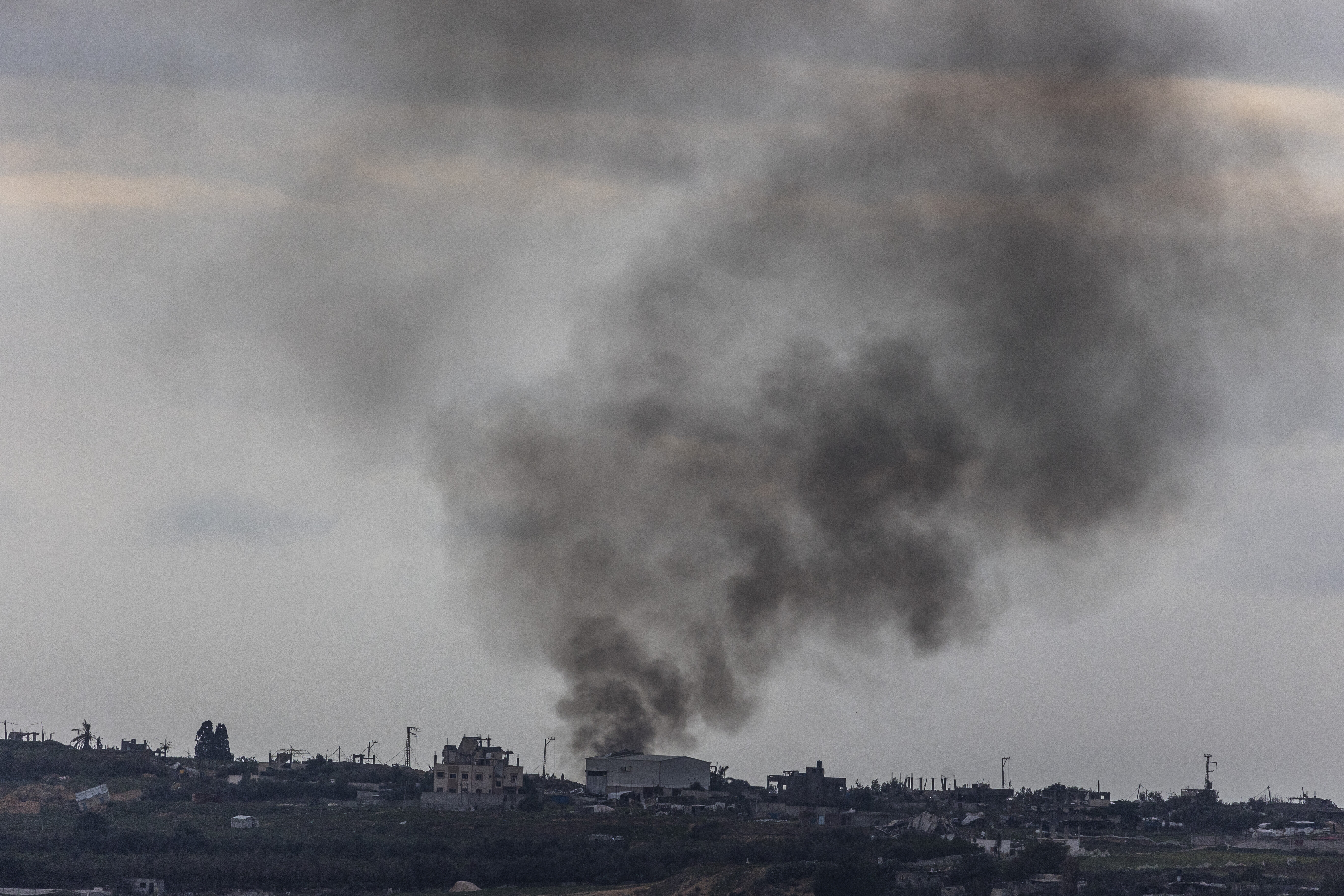
Donald Trump is clearly not happy with Israel after it chose to launch missile strikes into Qatar.
While Israeli prime minister Benjamin Netanyahu said he was trying to hit Hamas militants in the Qatari capital of Doha, striking a country which has act as a mediator in the Middle East has sent shockwaves around the world.
To make matters even worse, it appears Netanyahu pushed ahead with the attack without giving the US – or Qatar – significant advance notice.
Advertisement
Israel’s international alliances have already been put under intense strain by its war on Gaza – only the Trump administration has consistently stood by Netanyahu.
But could Israel’s surprise attack on Doha change all that?
Here’s what we know – and why it matters.
What happened between Israel and Qatar?
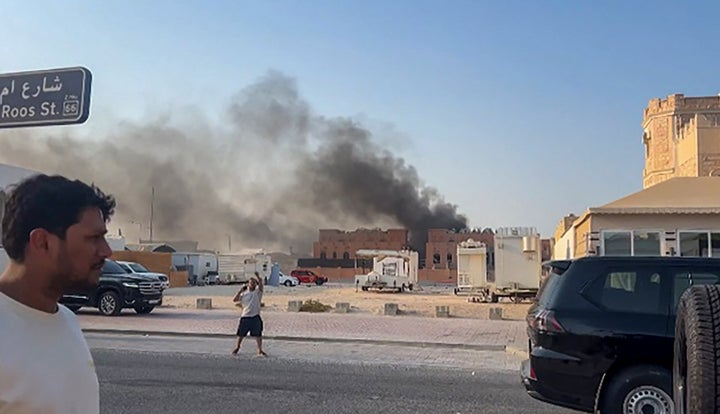
Israel launched 10 missile strikes at the Hamas headquarters in Qatar – where the militants have been offered immunity – on Tuesday night.
Several key figures within the militant group had gathered to discuss Trump’s latest peace plan for Gaza.
Advertisement
Hamas claimed its leader had survived the attack, although his son and four others were killed along with a member of the Qatari security forces.
If this is true, the strike could turn out to be a huge miscalculation for Netanyahu, considering the international reaction and the knock-on impact for peace talks.
The UK’s prime minister Keir Starmer said the attacks “violate Qatar’s sovereignty and risk further escalation across the region”, while French president Emmanuel Macron said the strikes were “unacceptable”.
Advertisement
The UN’s secretary general Antonio Guterres also echoed their concerns, saying: “I condemn this flagrant violation of the sovereignty and territorial integrity of Qatar. All parties must work towards achieving a permanent ceasefire, not destroying it.”
Smoke billowing after explosions in Qatar’s capital Doha on September 9, 2025.
JACQUELINE PENNEY via AFPTV/AFP via Getty Images
Qatar’s prime minister, Mohammed bin Abdulrahman bin Jassim bin Jaber Al Thanil, also alleged Israel had used missiles in the attack which air defence systems could not detect.
Advertisement
He claimed Israel’s “treacherous attack” had sabotaged ceasefire efforts for Gaza, that mediation efforts were “part of Qatari identity”, and that a legal team was considering his country’s response to the attack.
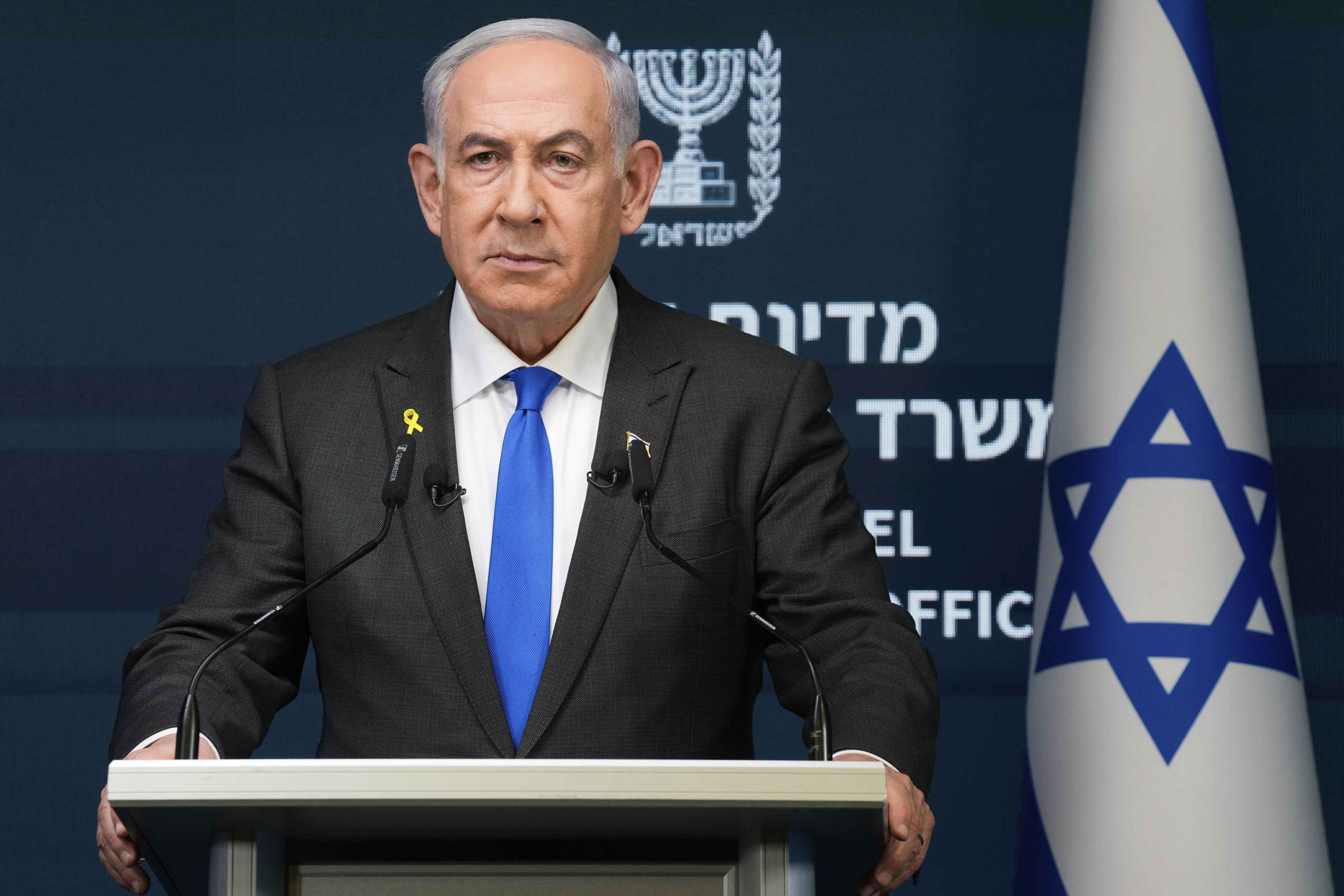
But Netanyahu has so far doubled down. Speaking at the US embassy in Jerusalem, he said: “The days when terrorist leaders can enjoy immunity anywhere are over.”
He claimed that attack was “fully justified” because it targeted the senior leaders who organised Hamas’s raid on Israeli soil on October 7, 2023.
Advertisement
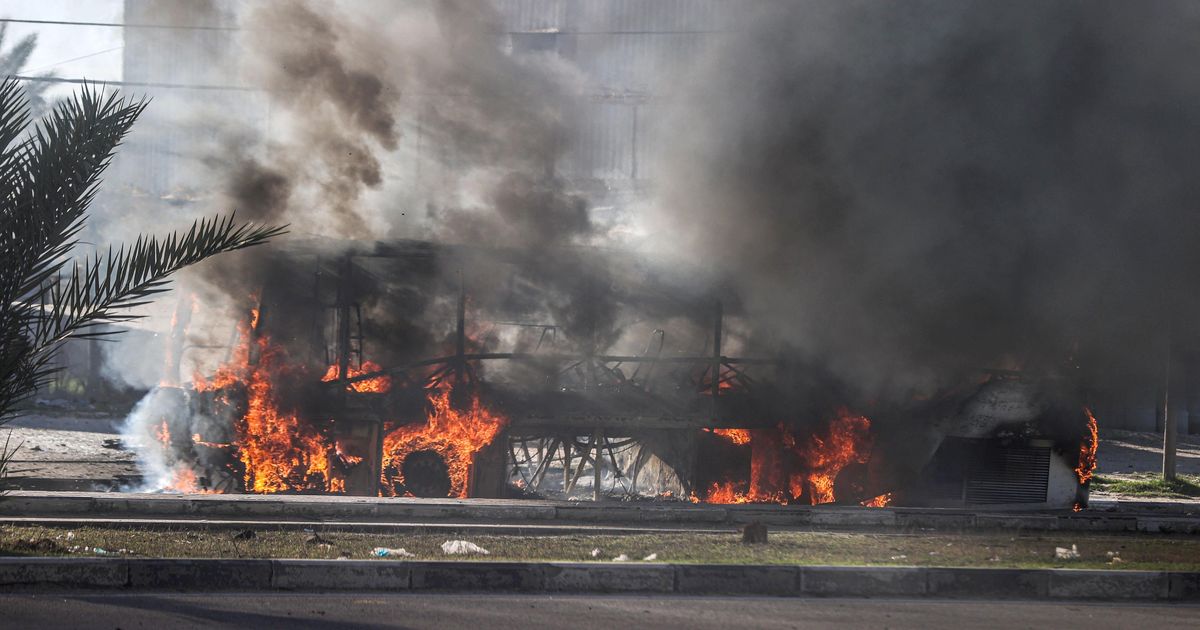
Other officials described the strike as a response to the Hamas attack on Jerusalem bus stop on Monday where six Israelis were killed.
However, Netanyahu did also insist that Israel had acted on its own, saying: “Israel initiated it, Israel conducted it, and Israel takes full responsibility.”
The strike comes after the chief of staff of the Israeli military Lieutenant General Eyal Zamir said Hamas leadership would be targeted across “the entire Middle East” with “no place to hide from us”.
Advertisement
What did the US say about Netanyahu’s latest attack?
The US is allied with Qatar, and even has a huge airbase stationed in the country.
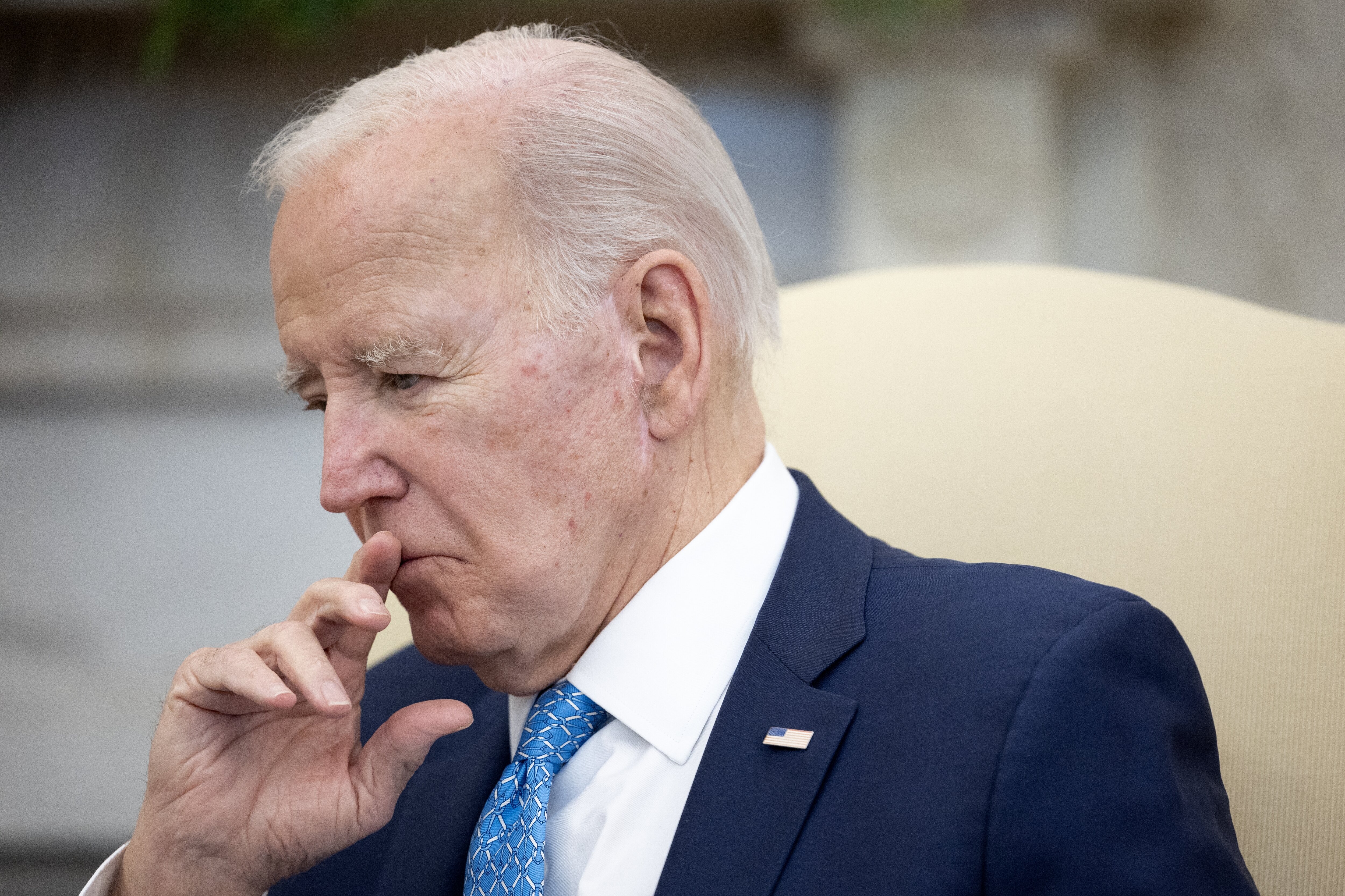
Trump’s press secretary Karoline Leavitt said the attack on the soil of a close ally “does not advance Israel or America’s goals”.
She said the US president had been alerted to the strike by the US military, not Israel, and that Trump’s special envoy Steve Witkoff then notified the Qataris – only it was too late.
Trump “feels very badly” about the strikes, according to Leavitt, and “made his thoughts and concerns about this very clear” when he later spoke to Netanyahu.
Advertisement
The US president himself later told reporters that he was “very unhappy about the way that went down” and that he would offer a full statement on Wednesday.
What does this all mean?
Israel’s strikes pour cold water on the US’s ongoing attempts to end the war in Gaza.
Trump had been championing a US peace proposal for Israel and Hamas which would include the release of all Israeli hostages in exchange for an unspecified number of Palestinian prisoners.
Advertisement
But his plan did not include a permanent end to the war – a condition Hamas has demanded, but Israel has declined.
This new attack on Qatari soil suggests Netanyahu is clearly no longer willing to wait for America’s backing – and evidently giving up with the talks.
The decision to act without Trump’s stamp of approval also makes the US president look weak and flies in the face of Trump’s deal-making skills, something he has boasted about for years.
Advertisement
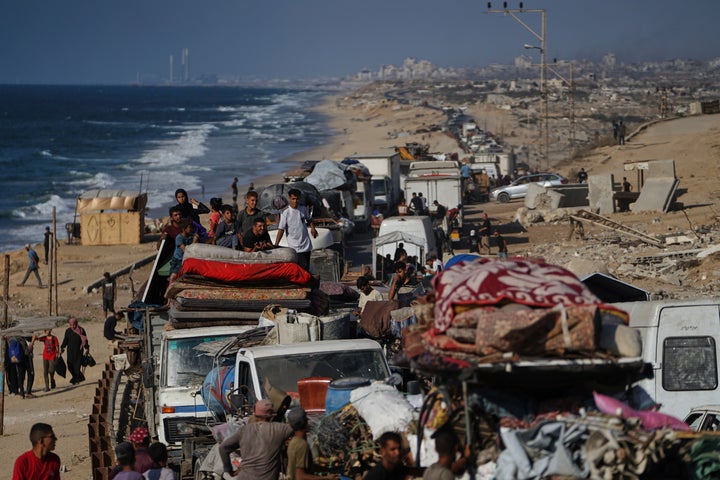
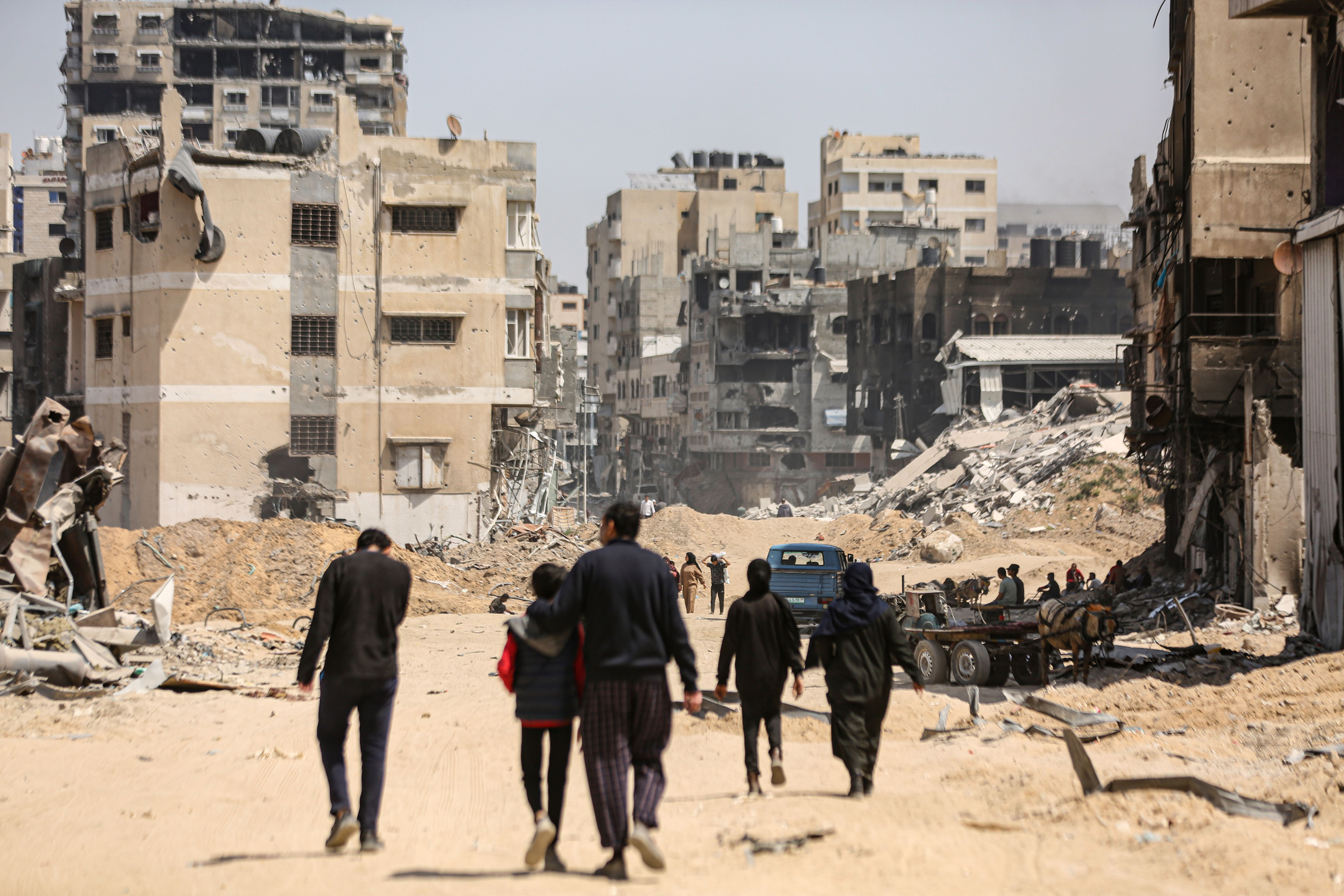
Displaced Palestinians fleeing northern Gaza carry their belongings along the coastal road toward southern Gaza, Tuesday, Sept. 9, 2025, after the Israeli army issued evacuation orders from Gaza City.
via Associated Press
This will all really rile a man so keen to secure the Nobel Peace Prize, especially as he has stood by Netanyahu’s side consistently while other allies in the west have started to question the catastrophic effects of Israel’s actions in the Middle East.
The BBC’s international editor Jeremy Bowen even suggested Trump has been “played” by Netanyahu.
Israel’s strikes could provoke further tensions in the Middle East too, particularly between Iran and Israel who have been holding a ceasefire since late June.
Advertisement
Iran’s foreign ministry said the attack was a “blatant violation of international law” and an “infringement upon the national sovereignty of Qatar and the Palestinian negotiators”.
It also stokes wider fears that Israel intends to continue a campaign of “score settling” for the October 7 raid – especially as the Qatari PM has said his country “reserves the right” to respond.
One thing is for sure: this is precisely the opposite of what Trump was hoping for.
While negotiators in Qatar announced an agreement had been reached on Wednesday evening, it is not yet set in stone as the Israeli cabinet have still to vote in favour of it.
Advertisement
Here’s what you need to know.
Recap: How did the Israel-Hamas war start?
While tensions between the two sides have been high ever since the state of Israel was established in 1948, this particular war started on October 7, 2023.
Hamas militants, backed by the Iranian regime, crossed into Israeli land and killed 1,200 people and took a further 251 others hostage.
Israel declared war on Gaza – where Hamas is based – and launched a land offensive, locking down the Palestinian territory borders and bombarding the territory with missiles.
Advertisement
The Hamas-run health ministry in Gaza says there have been more than 46,600 deaths in the region since the war began.
But, according to an independent study published in The Lancet, this is an underestimate. The researchers claim Israeli forces have killed more than 64,000 people in Gaza since October 2023.
The vast majority of the territory’s 2.3 million population has also been displaced due to the war, with little food, fuel, medicine or shelter due to the Israeli obstruction of aid at Gaza’s borders.
Advertisement
As of January 15, it is believed there are 94 Israeli people still being held in Gaza, 34 of whom are presumed dead.
The war also increased tensions between Israel and other Iranian proxies across the Middle East, including Lebanon-based Hezbollah and the Houthis in Yemen.
Israel and Lebanon reached a ceasefire deal in November 2024.

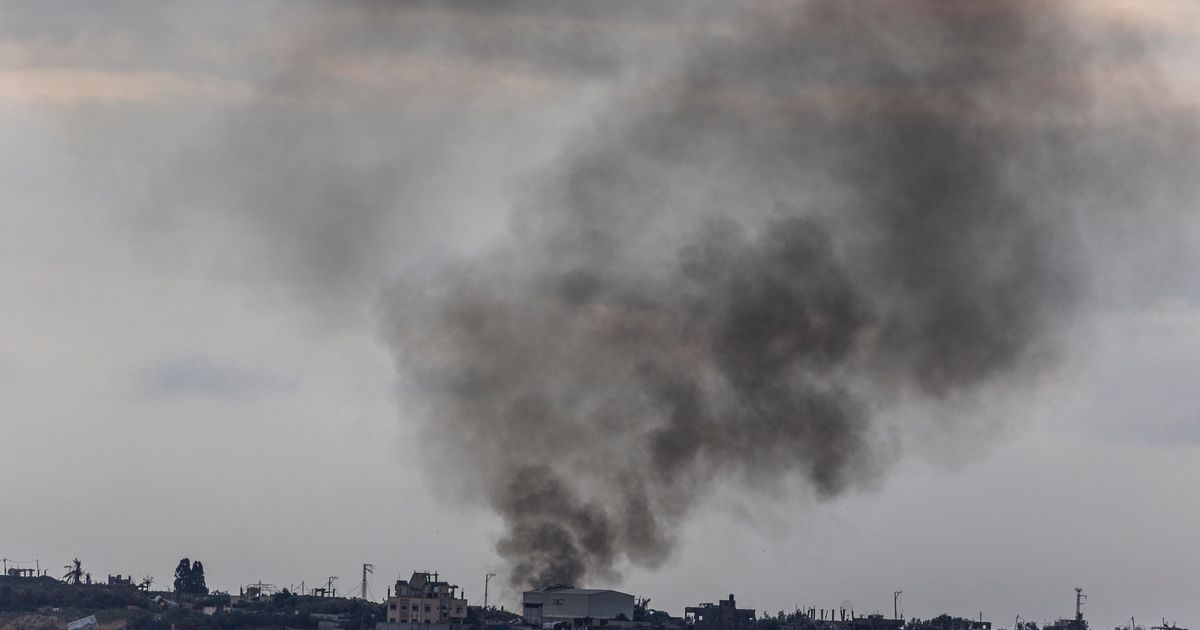
Smoke rises following an explosion in the Gaza Strip, as seen from southern Israel, Wednesday, Jan. 1, 2025.
via Associated Press
Advertisement
What are the terms of the new ceasefire agreement?
If signed off, the deal will come into effect from Sunday – meaning fighting continues on the ground right now – and there will be three phases.
The first six-week phase will see 33 Hamas hostages – children, women, the elderly, the sick and injured – released.
In exchange, Israel will free a large number of Palestinian prisoners, including around 1,000 who were detained after the October 7 attacks.
Advertisement
Once the deal is agreed to, the names of all those due for release – some of whom are serving time for murder or terrorism – will be published and the families of any victims will have 48 hours to appeal.
Israeli troops will then begin withdrawing from built up urban areas and relocating to buffer zones which are no more than 700 metres inside Gaza’s border with Israel.
However, that could exclude Israel’s 4km militarised belt across the middle of the territory which is meant to control movement in Gaza. That withdrawal will be staggered.
Advertisement
Israel will also allow displaced Palestinians in the south to head north again, and up to 600 trucks of aid may be permitted into the area, which is currently in the throes of a major humanitarian crisis.
It’s not clear if displaced Gazans will be screened before returning to their homes, as Israeli negotiators had asked.
Wounded civilians will also be allowed to leave the territory for treatment.
The Rafah crossing with Egypt will be opened a week after the first phase begins.
Israeli forces would be able to stay near the Gaza-Egypt border in the Philadelphi Corridor temporarily, but will have to withdraw completely by the 50th day after the deal comes into effect.
Advertisement
The subsequent two stages would be negotiated once the first stage of the ceasefire has started – meaning sustained peace is still pretty precarious.
It’s thought Hamas may agree to release the remaining living captives and Israel would free further Palestinian prisoners while also completely withdrawing from Gaza.
They have been agreed to in principle and mediators in Egypt, Qatar and the US promised Hamas the subsequent stages would be agreed to before stage 1′s six weeks is up.
Advertisement
However, Israel has refused to offer a written guarantee that it would not resume its attacks after the first phase, when the Hamas captives are returned.
The far-right members of Israeli PM Benjamin Netanyahu’s cabinet could also refuse to any such further agreements, as they have previously called for the PM to push his troops forward in Gaza until Hamas are fully defeated.
Israeli Prime Minister Benjamin Netanyahu speaks during a news conference in Jerusalem, Sept. 2, 2024.
via Associated Press
Advertisement
This is yet to be hashed out, but will most likely see all the remaining bodies of the Hamas hostages who died in captivity returned.
A three to five year reconstruction plan for Gaza may also be on the cards, overseen by international authorities.
It remains unclear exactly who would rule Gaza after the ceasefire as it is currently under Hamas’ control.
Advertisement
The US want to reform the Palestinian Authority – which is in control in the West Bank – to take over.
Top US diplomat Antony Blinken said Arab states should provide security in the short term, although many such countries may only agree if there is a scheme for Palestinian statehood outlined.
Israel is opposed to Palestinian statehood, but is yet to offer an alternative.
Who put forward the final plan?
The US, Qatar and Egypt developed the plan and presented it to both Israel and Hamas.
Envoys for both Joe Biden and Donald Trump have tried to take credit for any success, although it was the outgoing Democrat president who first outlined the plan eight months ago.
Advertisement
In a press conference on Wednesday, he said: “The result [is] not only of the extreme pressure Hamas has been under and the changed regional equation after a ceasefire in Lebanon and the weakening of Iran – but also of dogged and painstaking American diplomacy.”
But Biden also gave his successor a nod of recognition during his speech, acknowledging that Trump pressured both parties earlier this month and demanded the release of hostages before the president’s inauguration.
The president-elect posted on social media that the deal “could have only happened as a result of our historic victory in November”.
Advertisement
Netanyahu thanked them both, while Hamas’ chief negotiator Khalil al-Hayya said the deal was a “milestone in the conflict with the enemy” – although he warned the Palestinians “will not forget, and we will not forgive”.
Why did they reach an agreement now?
US secretary of state Anthony Blinken said the deal is similar to the one put forward last May but it’s thought the upcoming change in the White House was the biggest driver.
Trump’s inauguration (January 20) has applied pressure to the talks – and it’s thought Benjamin Netanyahu was hoping to seal the deal as a welcome present for the president-elect’s return.
Advertisement
According to the Israeli media, Trump’s envoy told the Israeli PM over the weekend that a peace deal had to happen.
Representatives from Israel and Hamas then started to conduct indirect talks in the same building for the first time.
Blinken also pointed to regional changes, saying in a press conference on Tuesday: “Hamas has been decimated. Iran is on its back foot.”
Advertisement
He said Hezbollah is also a “shadow of its former self” and pointed out that the Assad regime in Syria had also fallen.
President Joe Biden said in a new interview he does not agree with Israel Prime Minister Benjamin Netanyahu’s ongoing attacks in Gaza, issuing some of his harshest critique of the country’s war with Hamas so far.
“I will tell you, I think what he’s doing is a mistake,” Biden said of his Israeli counterpart in an interview with Univision’s Enrique Acevedo that aired Tuesday. “I don’t agree with his approach.”
Advertisement
The change in tone represents a dramatic shift in the US policy following Hamas’ October 7 attack in Israel that left 1,200 people dead. Israel’s assault in Gaza has since stretched more than six months, leaving at least 32,000 Palestinians dead.
The White House had resisted outright criticism of Netanyahu’s efforts while urging Israel and Hamas to reach a cease-fire agreement, despite the war’s growing civilian toll. But that support changed last week following the deaths of seven aid workers with World Central Kitchen, who were killed in an Israel air strike after delivering food in Gaza.
","type":"video","meta":{"author":"Univision Noticias","author_url":"https://www.youtube.com/channel/UC32TdiIsh_5X8tKr_9rKQyA","cache_age":86400,"description":"In an exclusive interview, President Joe Biden meets with Enrique Acevedo in the Oval Office to talk about immigration, the economy, and ongoing international conflicts. #BidenEntrevista\n\nUnivision Noticias\nSuscríbete: https://www.youtube.com/@univisionnoticias\nInfórmate: http://univisionnoticias.com\n#UnivisionNoticias \n\nSigue a Univision Noticias en: \nFacebook: https://www.facebook.com/univisionnoticias\nInstagram: https://www.instagram.com/uninoticias\nTikTok: https://www.tiktok.com/@uninoticias\nX: https://twitter.com/uninoticias\nWhatsApp: https://bit.ly/3ZE7koB \n\nUnivision Noticias es el lugar donde encontrarás la información más relevante para la comunidad hispana en Estados Unidos, América Latina y el resto del mundo.","options":{"_cc_load_policy":{"label":"Closed captions","value":false},"_end":{"label":"End on","placeholder":"ex.: 11, 1m10s","value":""},"_start":{"label":"Start from","placeholder":"ex.: 11, 1m10s","value":"1840"},"click_to_play":{"label":"Hold load & play until clicked","value":false}},"provider_name":"YouTube","thumbnail_height":720,"thumbnail_url":"https://i.ytimg.com/vi/DsAmO2QwTfI/maxresdefault.jpg","thumbnail_width":1280,"title":"Exclusive interview with Joe Biden on Univision","type":"video","url":"https://www.youtube.com/watch?v=DsAmO2QwTfI","version":"1.0"},"flags":[],"enhancements":{},"fullBleed":false,"options":{"theme":"news","device":"desktop","editionInfo":{"id":"uk","name":"U.K.","link":"https://www.huffingtonpost.co.uk","locale":"en_GB"},"originalEdition":"uk","slideshowAd":{"scriptTags":[],"otherHtml":""},"slideshowEndCard":{"scriptTags":[],"otherHtml":""},"isMapi":false,"isAmp":false,"isVideoEntry":false,"isEntry":true,"isMt":false,"entryId":"66162268e4b035c82d27557f","entryPermalink":"https://www.huffingtonpost.co.uk/entry/president-biden-says-netanyahu-is-making-a-mistake-in-gaza_uk_66162268e4b035c82d27557f","entryTagsList":"joe-biden,israel,hamas,gaza,benjamin-netanyahu,@sensitive,@us_huffpost_now,@widget-imported","sectionSlug":"politics","deptSlug":null,"sectionRedirectUrl":null,"subcategories":"","isWide":false,"headerOverride":null,"noVideoAds":false,"disableFloat":false,"isNative":false,"commercialVideo":{"provider":"custom","site_and_category":"uk.politics","package":null},"isHighline":false,"vidibleConfigValues":{"cid":"60afc140cf94592c45d7390c","disabledWithMapiEntries":false,"overrides":{"all":"60b8e525cdd90620331baaf4"},"whitelisted":["56c5f12ee4b03a39c93c9439","56c6056ee4b01f2b7e1b5f35","59bfee7f9e451049f87f550b","5acccbaac269d609ef44c529","570278d2e4b070ff77b98217","57027b4be4b070ff77b98d5c","56fe95c4e4b0041c4242016b","570279cfe4b06d08e3629954","5ba9e8821c2e65639162ccf1","5bcd9904821576674bc55ced","5d076ca127f25f504327c72e","5b35266b158f855373e28256","5ebac2e8abddfb04f877dff2","60b8e525cdd90620331baaf4","60b64354b171b7444beaff4d","60d0d8e09340d7032ad0fb1a","60d0d90f9340d7032ad0fbeb","60d0d9949340d7032ad0fed3","60d0d9f99340d7032ad10113","60d0daa69340d7032ad104cf","60d0de02b627221e9d819408"],"playlists":{"default":"57bc306888d2ff1a7f6b5579","news":"56c6dbcee4b04edee8beb49c","politics":"56c6dbcee4b04edee8beb49c","entertainment":"56c6e7f2e4b0983aa64c60fc","tech":"56c6f70ae4b043c5bdcaebf9","parents":"56cc65c2e4b0239099455b42","lifestyle":"56cc66a9e4b01f81ef94e98c"},"playerUpdates":{"56c6056ee4b01f2b7e1b5f35":"60b8e525cdd90620331baaf4","56c5f12ee4b03a39c93c9439":"60d0d8e09340d7032ad0fb1a","59bfee7f9e451049f87f550b":"60d0d90f9340d7032ad0fbeb","5acccbaac269d609ef44c529":"60d0d9949340d7032ad0fed3","5bcd9904821576674bc55ced":"60d0d9f99340d7032ad10113","5d076ca127f25f504327c72e":"60d0daa69340d7032ad104cf","5ebac2e8abddfb04f877dff2":"60d0de02b627221e9d819408"}},"connatixConfigValues":{"defaultPlayer":"8b034f64-513c-4987-b16f-42d6008f7feb","clickToPlayPlayer":"5a777b9b-81fe-41a6-8302-59e9953ee8a2","videoPagePlayer":"19654b65-409c-4b38-90db-80cbdea02cf4"},"topConnatixThumnbailSrc":"https://img.connatix.com/985fafd2-dbe9-436d-a2d4-dae96eb13c79/1_th.jpg?crop=629:354,smart&width=629&height=354&format=jpeg&quality=60&fit=crop","customAmpComponents":[],"ampAssetsUrl":"https://amp.assets.huffpost.com","videoTraits":null,"positionInUnitCounts":{"buzz_head":{"count":0},"buzz_body":{"count":0},"buzz_bottom":{"count":0}},"positionInSubUnitCounts":{"article_body":{"count":6},"blog_summary":{"count":0},"before_you_go_slideshow":{"count":0}},"connatixCountsHelper":{"count":1},"buzzfeedTracking":{"context_page_id":"66162268e4b035c82d27557f","context_page_type":"buzz","destination":"huffpost","mode":"desktop","page_edition":"en-uk"},"tags":[{"name":"Joe Biden ","slug":"joe-biden","links":{"relativeLink":"news/joe-biden","permalink":"https://www.huffingtonpost.co.uk/news/joe-biden","mobileWebLink":"https://www.huffingtonpost.co.uk/news/joe-biden"},"relegenceId":3519431,"section":{"title":"News","slug":"news"},"topic":{"title":"2020 US Election","slug":"2020-us-election","overridesSectionLabel":false},"url":"https://www.huffingtonpost.co.uk/news/2020-us-election/"},{"name":"Israel","slug":"israel","links":{"relativeLink":"news/israel","permalink":"https://www.huffingtonpost.co.uk/news/israel","mobileWebLink":"https://www.huffingtonpost.co.uk/news/israel"},"relegenceId":3989007,"url":"https://www.huffingtonpost.co.uk/news/israel/"},{"name":"Hamas","slug":"hamas","links":{"relativeLink":"news/hamas","permalink":"https://www.huffingtonpost.co.uk/news/hamas","mobileWebLink":"https://www.huffingtonpost.co.uk/news/hamas"},"url":"https://www.huffingtonpost.co.uk/news/hamas/"},{"name":"gaza","slug":"gaza","links":{"relativeLink":"news/gaza","permalink":"https://www.huffingtonpost.co.uk/news/gaza","mobileWebLink":"https://www.huffingtonpost.co.uk/news/gaza"},"url":"https://www.huffingtonpost.co.uk/news/gaza/"},{"name":"Benjamin Netanyahu","slug":"benjamin-netanyahu","links":{"relativeLink":"news/benjamin-netanyahu","permalink":"https://www.huffingtonpost.co.uk/news/benjamin-netanyahu","mobileWebLink":"https://www.huffingtonpost.co.uk/news/benjamin-netanyahu"},"relegenceId":3459425,"url":"https://www.huffingtonpost.co.uk/news/benjamin-netanyahu/"}],"isLiveblogLive":null,"cetUnit":"buzz_body","bodyAds":["
The president re-upped his calls for a cease-fire in the Univision interview, which was recorded last week just days after the aid workers were killed. Israel has taken responsibility for their deaths.
“I think it’s outrageous that those … vehicles were hit by drones and taken out on a highway where it wasn’t like it was along the shore, it wasn’t like there was a convoy moving there,” he said. “What I’m calling for is for the Israelis to just call for a cease-fire, allow for the next six, eight weeks total access to all food and medicine going into the country.”
The president added the US had spoken to countries in the region who were prepared to move in food and other humanitarian aid.
“And I think there’s no excuse to not provide for the medical and the food needs of those people,” Biden added. “It should be done now.”
Israel approved the opening of a border crossing in northern Gaza for the first time since October 7 following Biden’s call with Netanyahu.
Advertisement
Secretary of State Antony Blinken said Hamas needed to accept a new cease-fire deal brokered by the U.S. that would include the release of hostages. But Hamas has yet to respond to the proposal, and U.S. officials have said the group’s public statements so far “have been less than encouraging.”
In the Univision interview, Biden also slammed his predecessor and 2024 Republican rival, former President Donald Trump, calling him the greatest threat to the nation. He pointed to Trump’s behaviour surrounding the January 6, 2021, insurrection at the U.S. Capitol, which has resulted in a multi-pronged federal indictment.
“The idea that he would sit in the office … and watch for hours the attack on the capitol and the destruction and the mayhem and the people who were killed, the police officers who died, and call them political heroes? Call them patriots…” Biden said. “I can’t think of any other time in my lifetime that you’ve had somebody who’s had this kind of attitude.”
Six months into a war Hamas started ― with more than 33,000 Palestinians dead, more succumbing to famine daily and Israel determined to continue its aggressive campaign against the organisation with robust American military support ― the militant group says it is confident it will wield significant influence in the future, come what may in Gaza.
Hamas believes its shock October 7 attack on Israel achieved its goal of reigniting global concern for decades-long Palestinian subjugation, and it views the Israelis and Americans as intent on deepening the fighting rather than taking genuine steps toward an Israeli-Palestinian settlement. Additionally, it does not see itself as responsible for civilian deaths during that assault, in which Hamas-led fighters killed about 1,200 Israelis, more than half of them civilians, and took up to 240 hostages in violation of international law.
Advertisement
That’s how Mousa Abu Marzouk and Basem Naim, two senior Hamas leaders, presented their group’s current thinking in two lengthy, separate recent interviews with HuffPost, providing extremely rare hours-long, in-person access to a Western media outlet after complex negotiations and amid an extraordinarily delicate time in the war.
The group acknowledged it still holds dozens of captives ― including about 40 people Hamas counts in a humanitarian category as noncombatants, among them some civilians, and likely five Americans (the number of U.S. citizens a State Department spokesperson said remain unaccounted for since October 7). But the Hamas leaders expressed little faith in negotiations for a pause in combat involving the release of those hostages in exchange for Palestinians held by Israel, the stated goal of President Joe Biden, who in recent days has pushed Israel and intermediaries with Hamas to successfully reach an agreement.
Both Hamas leaders said their group remains committed to a 2017 political document that represented a tempering of its hard-line historic views ― a manifesto that claims Hamas has no quarrel with the Jewish people or Judaism broadly, instead opposing only aggressive actions fueled by Zionism. That suggests Hamas would accept a Palestinian state limited to territories Israel did not control before 1967, aligning it with the idea of a two-state solution.
Like the assertions of any player, particularly actual combatants, in this most sensitive of conflicts, their portrayal of the situation deserves to be taken with a large grain of salt.
Advertisement
Abu Marzouk’s own comments cast doubt on whether Hamas would tolerate a Palestinian state coexisting with Israel, particularly after Israeli-Palestinian bloodshed more extensive than any since the establishment of Israel in historic Palestine in 1948.
“The Israelis are creating generation after generation full of hatred, full of rage, full of a feeling of taking revenge, by killing Palestinians on a daily basis… I think that the Palestinians would not accept Israel in any case, but the Palestinians have no other option: The only option for the Palestinians is to live in this land to resist the occupation,” Abu Marzouk told HuffPost via a translator. Claiming most Israelis have dual citizenship ― an assertion that is not borne out by publicly available evidence and was rejected by an Israeli official who said the government does not have statistics on the matter ― he added: “They have a lot of options. And they can leave the land of Palestine at any time when they feel that it’s not beneficial anymore.”
Meanwhile, international opprobrium over and research on Hamas’ October 7 violence is still growing.
HuffPost this week obtained new information about one major forthcoming report. Belkis Wille, an associate director at Human Rights Watch who has spent months working on an in-depth investigation of the attack, told HuffPost her organisation has verified photo and video evidence of fighters with the al-Qassam Brigades, the military wing of Hamas, “targeting and killing civilians,” citing the attackers’ uniforms and bandannas. Some attackers who were in civilian clothing were also clearly coordinating with al-Qassam fighters, she added.
Still, Western and Arab governments, along with most outside experts, believe Hamas will remain relevant to the future of Israel-Palestine regardless of how the current war concludes. Abu Marzouk and Naim clearly agree.
Advertisement
In speaking with HuffPost about ideas being considered by the U.S., Israel and other players about what comes next for the region, the Hamas leaders expressed deep opposition to proposals that are currently under discussion and a determination to scuttle particular plans.
Abu Marzouk responded to reporteddiscussions about a new military force in Gaza comprising troops from various countries, including Arab states, by saying: “As a movement, we will fight against any force, whether it was from any nationality, in the Gaza Strip.”
Few people would have presumed Hamas to align with American and Israeli goals. However, Abu Marzouk’s reference to nationalities is striking, given the assumption in some circles that Hamas and other militants in Gaza would be loath to fight forces from countries like Egypt due to Palestinians’ links with other Arab nations. His remarks suggest that although Hamas is not outright challenging Arab governments, it does not see a red line in attacking their soldiers.
No Arab country “would participate with the Israeli occupation” or with American policy in Gaza, even if those states are unable to openly confront U.S. or Israeli policies, Abu Marzouk said. “No one has the right to subjugate the Palestinians for slavery or for oppression.”
He and Naim also challenged hopes around the March 14 appointment of economist Mohammed Mustafa as the new prime minister of the U.S.-backed Palestinian Authority, or PA, which controls parts of the occupied West Bank and from which Hamas wrested control of Gaza in 2007. Significantly, they framed their rejection not as a product of factionalism among Palestinians ― Hamas has long despised PA President Mahmoud Abbas, who tapped Mustafa ― but as a reaction to U.S.-driven interference in intra-Palestinian discussions.
Advertisement
“To continue imposing policies and governments and figures on Palestinians, this will never lead to sustainable security or stability or prosperity in the region, not only in Palestine,” argued Naim, who was previously a minister in Hamas’ administration in Gaza. “Hamas is an inherent part of the political fabric of the Palestinians and is a strong power, and no one can easily decide to overcome it or to avoid it. Any agreement with any other party will not lead to stability or a solution.”
This story draws on HuffPost’s interviews and conversations about Hamas over months with dozens of officials and analysts.
Securing access to Abu Marzouk, deputy head of Hamas in the Palestinian diaspora and a prominent politburo member, and Naim, chief of Hamas’ political and foreign relations department and a member of its Gaza bureau, was not easy.
It involved tapping a range of trusted sources to make contact, investing in costly travel and tactfully operating in a sensitive location, given Qatar’s interest in being the chief mediator between Hamas and the outside world and pressure from some in the U.S. over its links to the Palestinian group.
When HuffPost visited Abu Marzouk at a large, beige compound in a suburb of the Qatari capital of Doha ― a world away from the Persian Gulf state’s ritzy sea-front hotels ― a Qatari police officer stationed outside repeatedly challenged the idea that a meeting was scheduled. Inside, another Qatari security official subjected HuffPost to an extensive search, a step Abu Marzouk’s Hamas aides apologized for, seemed embarrassed about and made sure to say was due to Qatar’s requirements. (Notably, Israel has tried to assassinate senior Hamas figures, such as Khaled Meshal, a close associate of Abu Marzouk.)
Advertisement
We also did not take the prospect of hearing and sharing Hamas’ views lightly.
Still, HuffPost assessed that interviewing Abu Marzouk and Naim provided an uncommon opportunity to inform our audience and to question Hamas about global concerns and its actions on matters including harming civilians and the handling of humanitarian relief desperately needed in Gaza.
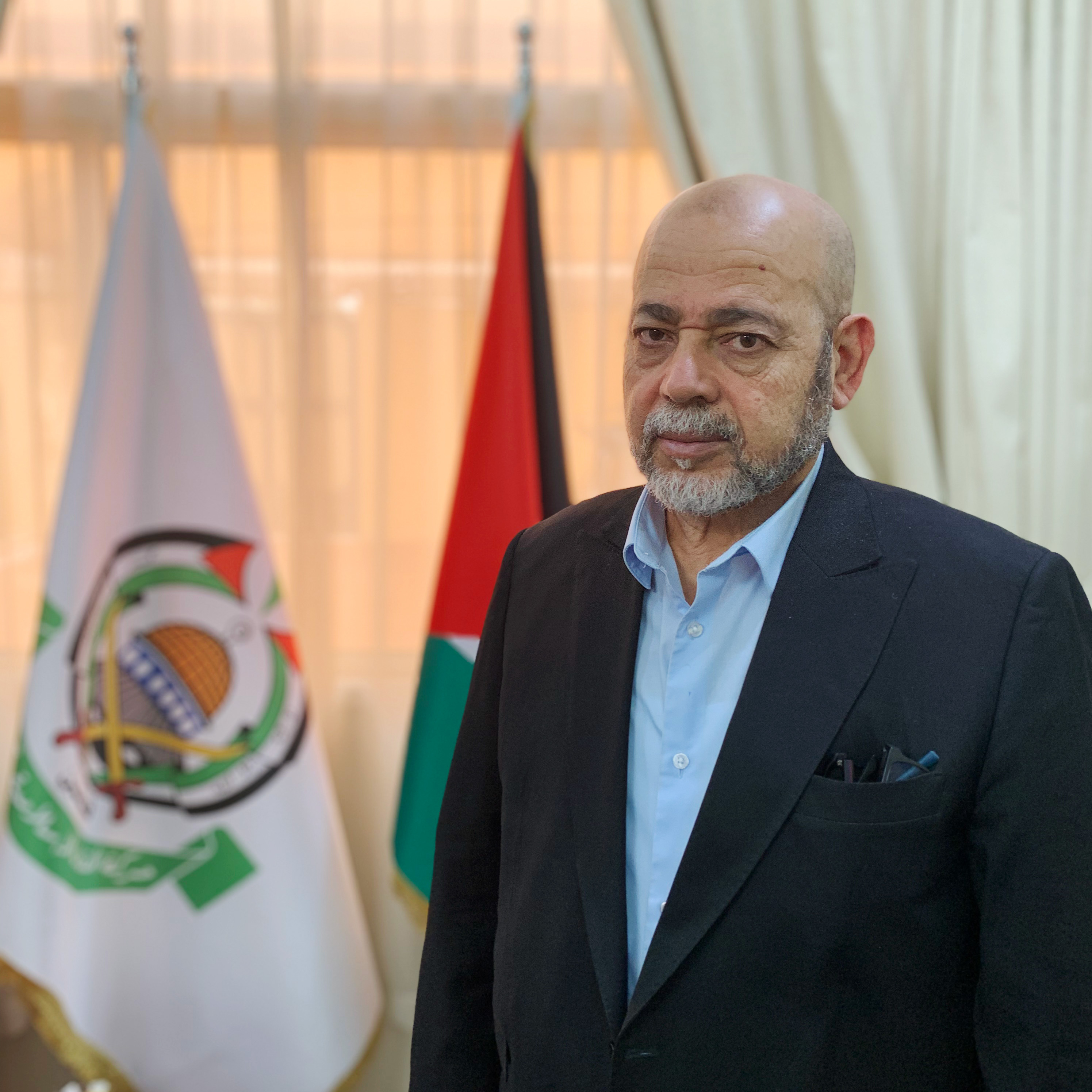
Senior Hamas figure Mousa Abu Marzouk, seen here in Doha, Qatar, on March 30, is the group’s deputy leader outside its base in Gaza.
Akbar Shahid Ahmed/HuffPost
HuffPost this week shared key Hamas statements included in this article with spokespeople at the US State Department, the National Security Council at the White House and Israel’s embassy in Washington.
Only a State Department spokesperson responded, reaffirming the US stance against dealing with Hamas, which it lists as a terrorist group, beyond limited indirect communications through third parties, such as Egypt and Qatar, as it makes plans for a territory where Hamas is deeply ingrained.
“We do not engage in public debates with terrorist organisations like Hamas,” the spokesperson wrote in an email. “The US remains committed to advancing the realization of an independent Palestinian state, standing side by side with Israel in peace and security.”
Advertisement
October 7 Bloodshed And The Hostage Crisis
In Israel, where thousands of anxious people await reunions with the hostages still in Gaza, and in Washington, where Biden administration officials daily promise to help those hostages and the US-Israel alliance is sacrosanct, October 7 is a constant touchstone, so devastating and unprecedented a wound that it feels almost as fresh six months later.
In discussing the assault with Hamas leaders, it is clear it’s not a matter they want to linger on, both because they do not want to dissect responsibility for atrocities committed that day, which are undeniable even for them, and because they see Gaza’s current conditions and their long-term goals as more important.
“History didn’t start on October 7. Before October 7, we were besieged,” Naim said. He said he was out of “the open-air prison” of Gaza “accidentally” because he had traveled to Turkey for meetings prior to the attack; his wife and children remain in Gaza, which Israel and then Egypt blockaded after Hamas took over in 2007, tightly limiting entry and exit.
Naim listed additional developments in the Israeli-Palestinian conflict that Hamas has cited as inspiring the assault: attacks by Israeli extremists on the Haram al-Sharif, or Temple Mount, sacred to Jews and Muslims alike; Israeli steps toward annexing the occupied West Bank; and the “Judaization” of Jerusalem.
“Therefore, we consider this an act of defense. We were squeezed; we were suppressed,” he continued.
Pressed on the brutality of the Hamas incursion, Naim said Hamas told its fighters to avoid noncombatants. He attempted to shift blame for civilian deaths away from the attackers and onto the attacked, saying the Palestinian group was surprised Israel’s defensive lines collapsed so quickly, enabling many people not associated with Hamas to cross from Gaza into Israel.
Advertisement
“There was chaos…. We cannot be responsible for the chaos that has taken place after one, two hours,” he said, pointing to reports that Israeli troops responding to the violence killed some civilians, which the Israel Defense Forces have confirmed and continue to investigate.
“There was no intention to harm or to attack any of the civilians,” Naim claimed. “This operation was designed and conducted and launched only to attack military bases and maybe to take some soldiers hostage to exchange with thousands of Palestinians, some of whom have now spent 44 years in jail, like Nael Al-Barghouti,” whom Israel arrested in 1978, released in 2011 and re-arrested in 2014.
Of the more than 760 casualties on October 7 who were civilians, at least 36 were children, according to Israeli government reports. Hamas’ claim that its fighters did not target civilians is contradicted by Human Rights Watch, Amnesty International and numerous newsreports. Amanda Klasing, the national director for government relations at Amnesty USA, told HuffPost her group has verified footage of “Palestinian fighters shooting at civilians on 7 October.”
“Hamas and other armed groups also took civilians as hostages and have repeatedly fired indiscriminate rockets into Israel, killing and injuring civilians. These attacks are war crimes,” Klasing added.
Did Hamas anticipate the sweeping response to its foray from Biden and Israeli Prime Minister Benjamin Netanyahu?
Advertisement
Abu Marzouk told HuffPost: “We thought that America [would] allow for a partial aggression against Gaza, especially given that most of the victims are civilians.”
“We didn’t expect this brutality of America,” he said, citing an article in The Washington Post published the day before that revealed Biden greenlighted additional bombs and fighter jets for Israel. In the 1990s, the U.S. detained Abu Marzouk for more than a year over terrorism allegations; it deported him and continues to list him as a “specially designated national” under U.S. sanctions.
In Hamas’ view, they have sought negotiations and an end to fighting since soon after the attack. On October 17, an unnamed senior Hamas official told NBC News that the group was willing to release all civilians ― Israelis and foreigners ― if Israel stopped bombing Gaza.
Through intermediaries, Israel and Hamas did a month later agree on a weeklong pause in combat that allowed more than 100 hostages to be released and increased humanitarian aid for Palestinians in Gaza. But that bargain fell apart on Dec. 1, and efforts to secure a similar deal in months since, which intensified in February and March and which Biden has described as a priority, have not borne fruit.
The Hamas leaders described having little optimism over negotiations, which are continuing and have evolved since HuffPost’s interviews and international outrage over Israel’s Monday killing of aid workers associated with the World Central Kitchen nonprofit.
Advertisement
“We cannot say that we have reached common ground… to talk about details,” Naim said on March 29, referring to matters like the timeline and the process of releases or steps toward a possible Israeli withdrawal from Gaza.
In recent days, Israeli officials told reporters that they were becoming flexible on one question: letting displaced Gazans return to the northern part of the territory. On Monday, however, an Israeli source downplayed hopes of a deal in speaking with the Haaretz newspaper. On Thursday, Hamas rejected a framework approved by Israel and the intermediaries, blaming Netanyahu; separately, Biden urged Netanyahu “to empower his negotiators to conclude a deal without delay to bring the hostages home.”
Both Hamas figures argued Netanyahu is personally unwilling to halt the war because it would mean his political collapse ― echoing an assessment that is now widely shared in global capitals. They described frustration with Biden’s continued support for his Israeli counterpart despite that position and deep distrust in the role of the U.S., which has historically attempted to be an intermediary in Israeli-Palestinian negotiations.
“The problem with the Americans is they want to support Israel regardless of the Israeli policies, and this is against the American policies through history,” Abu Marzouk said, describing Americans as “vital collaborators” for Netanyahu rather than “mediators.”
Citing U.S. talk of pausing the Israeli offensive to enable hostage releases and what he cast as Washington’s assessment that Israel had “failed” to achieve its aims, Naim argued: “America is in line strategically with Israel about the war and the goals. No differences. What we observe sometimes is a tactical difference; it is not a strategic difference.”
Advertisement
“During the negotiations, yes, we have seen sometimes that they are pressuring [Israel] to reach something. At the beginning [of the war], we have seen what we called identical positions. … There is a clear shift, but again it is a tactical shift, and I think this is because of the internal pressures [on Biden] in the year of the election; this is because of the fear that the war might be broadened in the region and the Americans want to go out of the region, not to go back to the region; and thirdly, that they see that this is not serving the security and stability of Israel itself in the long run,” he added. “All this together led them to exercise some pressure, but … they have all the cards to end this aggression.”
While CIA Director William Burns is involved in the Israel-Hamas bargaining, and is traveling to Cairo this weekend looking to advance those discussions, the primary players are various Hamas leaders ― notably commanders still in Gaza, led by October 7 planner Yahya Sinwar ― and Israel’s Mossad intelligence agency. On Saturday, Hamas said it would send a new delegation to the discussions but would not abandon its demands for a full cease-fire and Israeli troop withdrawal from Gaza.
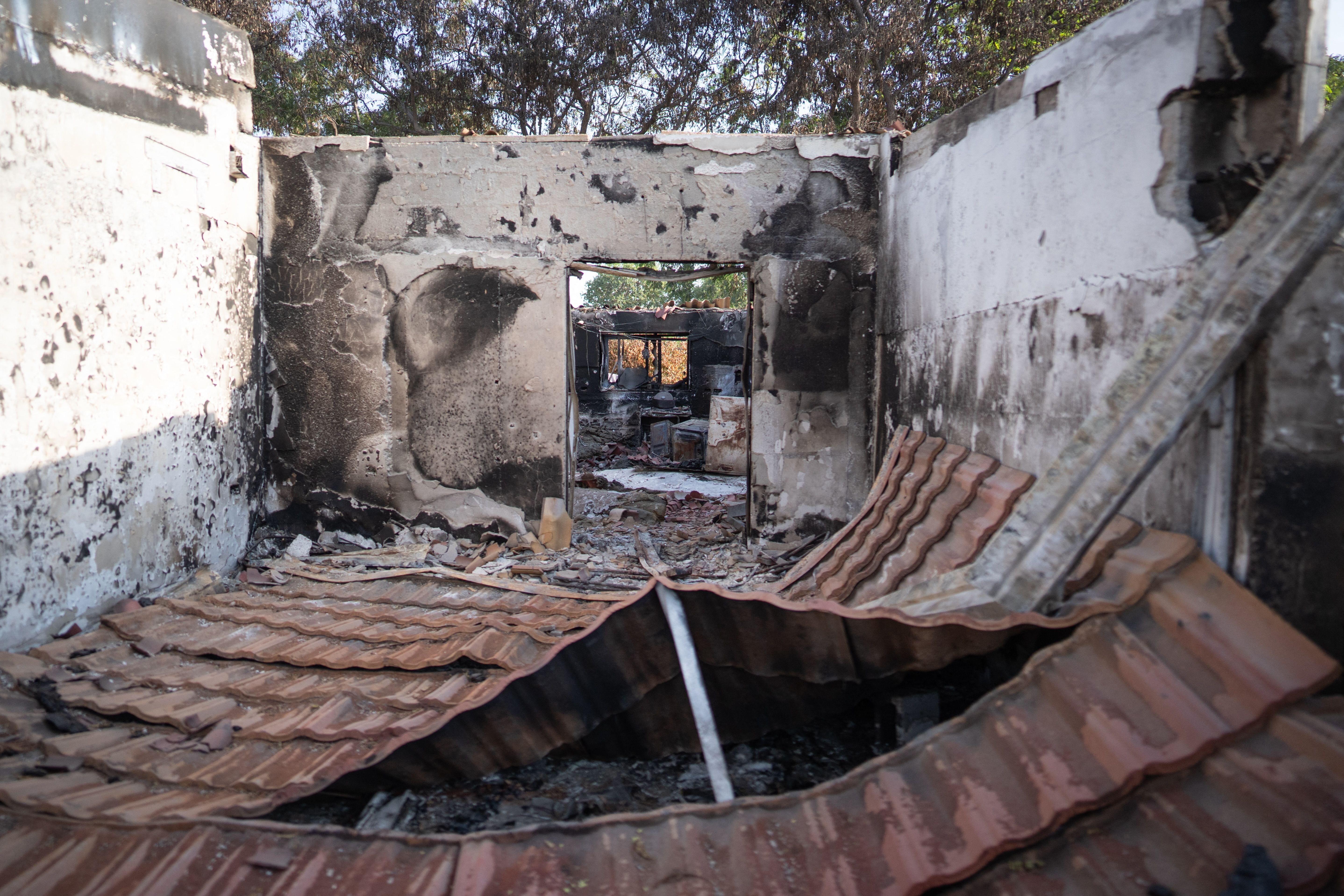
Burned-out houses in Kibbutz Kfar Aza, Israel, where Hamas-led militants massacred and kidnapped residents on Oct. 7, 2023.
DIMA VAZINOVICH/Middle East Images/AFP via Getty Images
Mossad officials had in previous rounds of talks indicated they were keen to reach a deal and viewed Netanyahu as the barrier to a possible agreement, a separate source familiar with the talks told HuffPost.
Naim said Hamas “partially” shares that assessment but added some potential insight into Hamas’ calculus in dealing with Israel’s deeply divided political scene and what may be driving Hamas to accept or reject possible deals.
Advertisement
“I don’t think that is the only cause,” he told HuffPost. He cited polls showing most Israelis support the campaign in Gaza. He also noted fractures within Israel’s society over a judicial power grab by Netanyahu and the question of whether ultra-Orthodox men should perform military service, which drew the Israeli military into polarizing debates.
“After all these discussions, the army started to lose some of its holiness,” Naim said. Then, “when October 7 came, all the security apparatus failed. They are not so eager to end the aggression because they themselves feel that, ‘We have failed and this is our duty.’”
An Israeli official disputed the Hamas version of the negotiations to HuffPost, saying: “Despite what’s being publicly written, Hamas is the one that brings conditions that cannot be met.”
HuffPost asked Naim, in relation to negotiations about halting the fighting, how Hamas sees the possibility of an Israeli attack on the Palestinian town of Rafah, where Netanyahu says he intends to invade, close to 1.5 million Palestinians have taken shelter and the Biden administration says it cannot support an Israeli advance without a meaningful plan to shield civilians.
“We believe that now it is part of the pressure on the negotiators, but at the same time we are preparing ourselves for the worst,” Naim responded.
Advertisement
Then he alluded to a theme that both Hamas figures frequently, and hopefully, referenced: forceful Israeli actions sparking worldwide furor.
Noting Rafah’s location on Gaza’s border with Egypt, which has a 45-year-old peace treaty with Israel but also a population wary of the Jewish state, Naim said Netanyahu’s “mistakes here could flare a bigger war.”
He added: “We have now international awareness about the whole conflict, especially Rafah. It’s totally different from the beginning.”
On Friday, White House spokesperson John Kirby told reporters that the Biden administration plans to continue conversations with Israel about a possible Rafah mission in the coming weeks.
Who Speaks For The Palestinians?
Netanyahu has regularly pledged to “destroy” Hamas, an outcome Biden has repeatedly endorsed.
U.S. intelligence and most independent analysts do not see that as achievable on the battlefield. Last week, the Israeli newspaper Haaretz quoted Israeli military officials as saying their government has overestimated how many Hamas fighters it has eliminated so far, since it is in some zones logging any Palestinian killed, including civilians, as Hamas combatants.
Advertisement
But some outside opponents of the armed Palestinian group describe another way to undercut Hamas: boosting misery and frustration among Gaza’s residents so they fully reject their former rulers, blaming them for a collapse in living standards in the strip that U.S. aid officials describe as “unprecedented in modern history.”
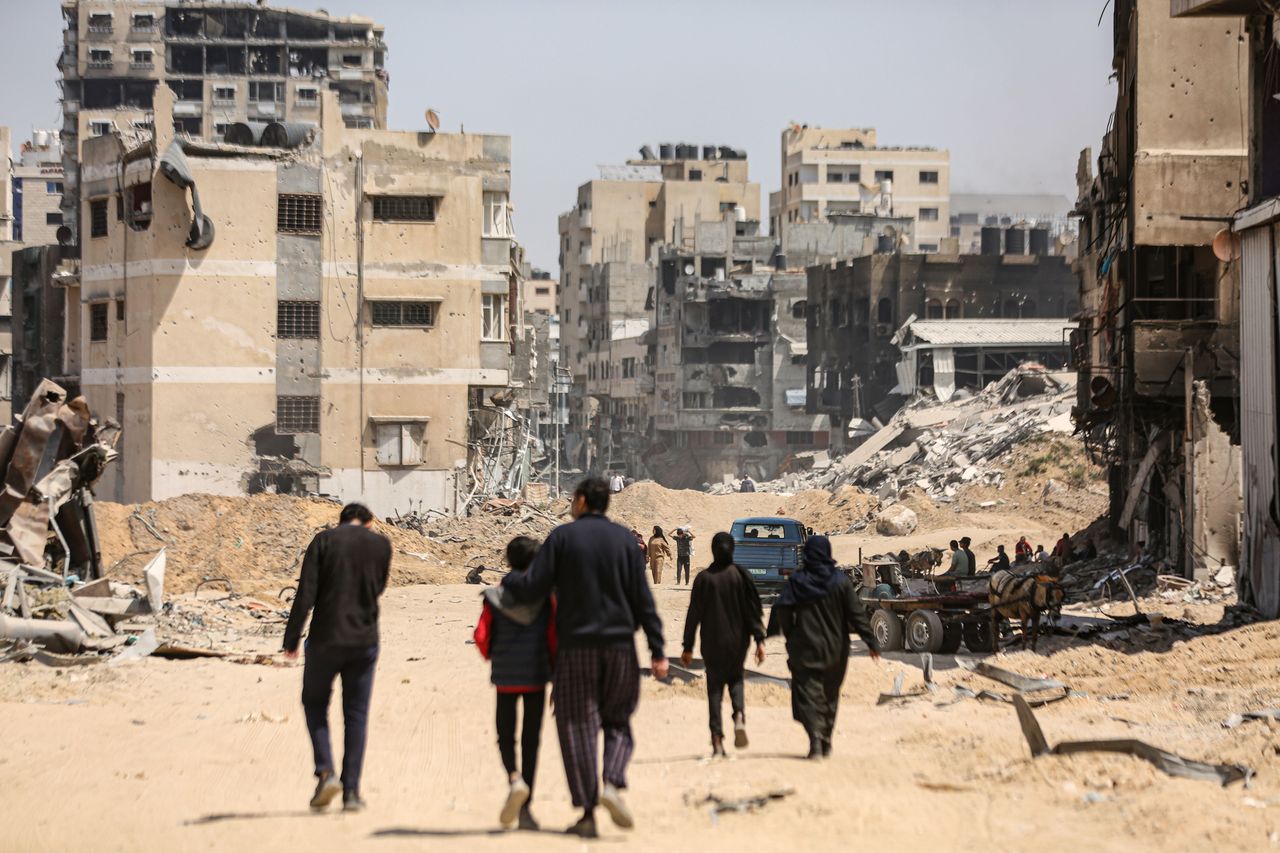
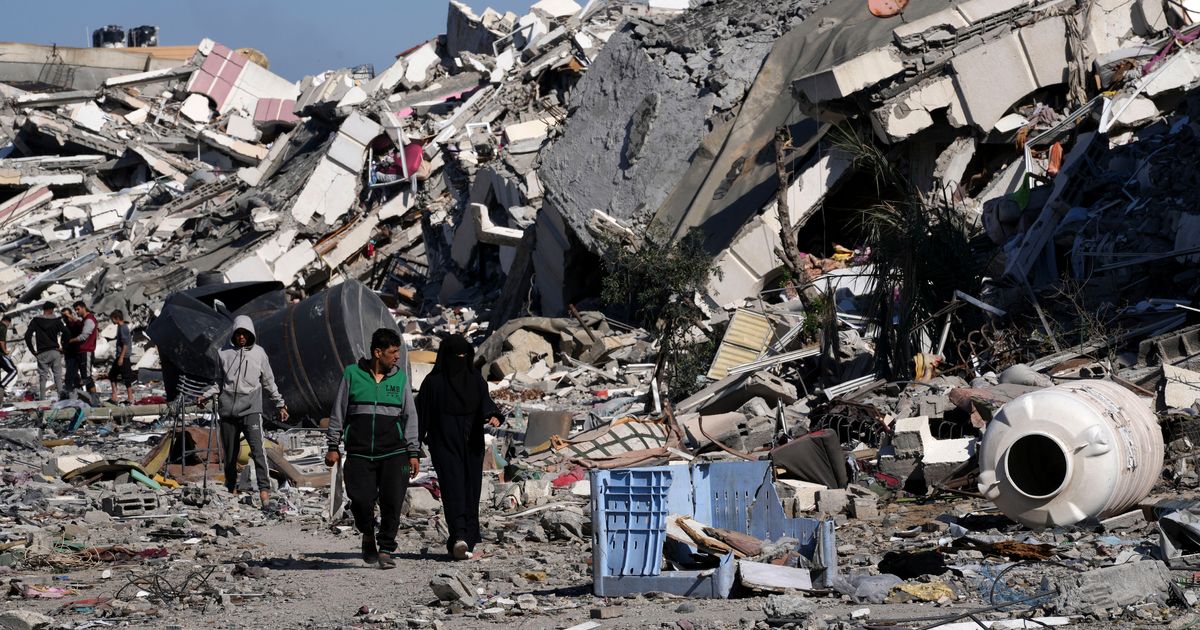

Palestinians walk among extensive destruction Tuesday after the Israeli army withdrew from the Al-Shifa Hospital and the surrounding areas west of Gaza City.
Dawoud Abo Alkas/Anadolu via Getty Images
HuffPost asked the two Hamas leaders about two recent polls of Palestinians that suggested their group is losing some sway.
Amid conversations in Washington and beyond about post-war planning, the question of who can actually speak for the community and build stability amid the envisioned reconstruction of Gaza and renewal of diplomatic negotiations is crucial. It’s even more consequential as various Palestinian groups ― from Abbas’ Fatah party, which runs the PA, to Hamas ― hold first-of-their-kind consultations among themselves.
On March 20, the respected Palestinian pollster Khalil Shikaki published his latest survey of Palestinians in both Gaza and the occupied West Bank, conducted March 5 to 10. He reported “a significant change” compared with his previous poll, in December, in terms of an 11% drop in support for Hamas. Separately, polling over a similar period by a West Bank-based think tank called the Institute for Social and Economic Progress said more than 78% of Gazans want to be governed by the PA or a Palestinian unity government, with only 3% preferring Hamas rule, and it noted Hamas leaders were “very unpopular” in the Gaza Strip.
Advertisement
Abu Marzouk and Naim were immediately familiar with the Shikaki statistics.
Abu Marzouk, who has been central to Hamas since its founding in the 1980s, argued his faction’s support has only increased over time and would understandably fall given Israel’s pummeling of Palestinians. “We know the amount of suffering which has hit the people in Gaza, but this is the occupation’s policy through history,” Abu Marzouk said.
Both he and Naim cast the question of how many Palestinians support Hamas as less significant than what they claimed the organisation represents: the fiercest force for Palestinian rights.
Saying “we are following this closely,” Naim told HuffPost: “I usually refuse to portray this conflict as if it is between Hamas and Israel. It is between Palestinians and Israel…. Today it is with Hamas, 20 years ago it was with Fatah, 30 years ago it was with the old [Popular Front for the Liberation of Palestine or PFLP].”
“There is a small decrease in the popularity of Hamas, but when you look to questions like, for example, supporting resistance in general…. When it comes to how much Palestinians are still supporting the operation of October 7, you will find a huge majority,” Naim said. “When you ask about a political affiliation, there are a lot of people who are supporting Hamas as a resistance movement, but they are not affiliated ideologically to Hamas; they are secular.”
Shikaki’s report said 71% of Palestinians currently support Hamas’ October 7 attack (a similar proportion as in his December poll) and 55% saw armed resistance as the way to break “the stalemate” with Israel, though he noted a drop in overall support for “armed struggle.”
Advertisement
In the Hamas leaders’ telling, their group is aiming not to rule but to work with other Palestinians for a new setup uniting the community.
Both Abu Marzouk and Naim pointed to a summit last month in Moscow that drew 14 Palestinian factions together to discuss establishing a nonpartisan, widely acceptable government ― an outcome Abu Marzouk claimed the U.S. and Abbas sought to stymie by trying “to end any Palestinian internal understanding” through the new PA appointment shortly after the summit.
“America does not want unity among the Palestinians…. Many times the U.S. has claimed that they don’t want the participation of terrorists in any body of the [Palestine Liberation Organisation, the internationally recognized official representative of the Palestinian people], and they are meaning the active factions in the Palestinian arena: Hamas, Palestinian Islamic Jihad and the PFLP,” Abu Marzouk said.
In extensive remarks, Naim promoted Hamas’ evident desire to no longer be perceived globally as overly extreme or too intolerant of other Palestinian forces.
“No one has to be afraid that if the Palestinians sit together, they will go far and extreme to choose, for example, a radical leadership or a radical political track ― I’m sure you will find a very balanced leadership,” he argued. Naim claimed his group is prioritizing Palestinian elections and a way “to launch, with the aid of the international community, a political track which can end with an independent Palestinian state on 1967 borders.”
Advertisement
He asserted these professed goals show Hamas is thinking “rationally,” despite its horror over Israeli actions in Gaza. “It reflects that generally the Palestinian leadership, starting with Hamas and ending with Fatah and in between, they know what’s feasible and what’s not feasible,” he said.
To give credence to its talk of a truly inclusive new Palestinian regime, Hamas will likely need to go beyond rhetoric to address suspicions about its willingness to share power and rule transparently. The group cracked down onprotesters,political opponents and alleged Israeli collaborators when it ruled Gaza, human rights groups say, and outside analysts haveurged it to be more open about its processes of selecting leaders and policies (though, unlike Abbas and the PA, it has had regular leadership changes). It also boycotted PA-organized municipal elections for Palestinians, saying it would only accept elections at all levels, including for Abbas’ post.
The Hamas figures maintained the refusal to achieve Israeli-Palestinian peace comes not from them but from Biden and Netanyahu.
“America is now claiming that they are supporting the two-state solution, but …they are doing their best to undermine the Palestinian side, especially in this open conflict with Hamas, by supporting the weak Palestinian side of the PA in front of the most powerful side, which is Israel supported by the U.S.,” Abu Marzouk said.
Rather than debate the sincerity of his group, he continued, “at least they should put Hamas under the test by allowing the Palestinians to create a state. The ones who are refusing a Palestinian state are the Israelis.”
Advertisement
There’s significant evidence for that final claim.
Netanyahu’s far-right government has long decried the prospect of Palestinian statehood, and earlier this year, more than 80% of Israel’s parliament voted to reject international recognition of a Palestinian state without a deal with Israel, a possibility the U.S. and European states are considering. On Thursday, the same day he held a tense call with Biden, Netanyahu told Republican members of the U.S. Congress that he perceives “an attempt to force, ram down our throats, a Palestinian state, which will be another terror haven.”
The Players On The Board
The Hamas figures’ reading of the politics of their adversaries seemed to temper their expectations of an Israeli-Palestinian settlement soon while making them wary of what might happen if that process is delayed much longer.
Pointing to the rightward shift in Israeli politics, Naim called the trend “so huge and so deep and radical that it is clearly converting this conflict from a political conflict about land and independence and United Nations resolutions into a religious conflict.”
“If we reach this point, this conflict will not be solvable,” he added, contrasting current players with “wiser leaders” of Israel’s past, whom he described as more pragmatic and concerned with at least, as he put it, “pretending” to comply with international norms.
Netanyahu’s coalition government is objectively the most conservative in Israel’s 76-year existence. Experts believe even administrations led by likely alternatives, such as retired Gen. Benny Gantz or Israeli opposition leader Yair Lapid ― both well-liked in Washington, where Gantz visited last month before calling for a fresh Israeli election and where Lapid will go next week ― are likely to be hawkish on Palestinian affairs.
Advertisement
When Lapid was in power in 2021, Naim noted, his administration approved what the European Union deemed an “exponentially high” number of Israeli settlements in occupied Palestinian territory.
Naim expressed interest in nuances of U.S. politics, asking HuffPost whether newly widespread pro-Palestinian sentiment seemed likely to last or to fade away. He viewed Biden’s reelection bid as partially shaping U.S. policy. “Maybe they are still trying in the year of the election to balance the internal pressure because of Muslims, Arabs and leftists, and on the other side, the Jewish lobbies,” Naim said.
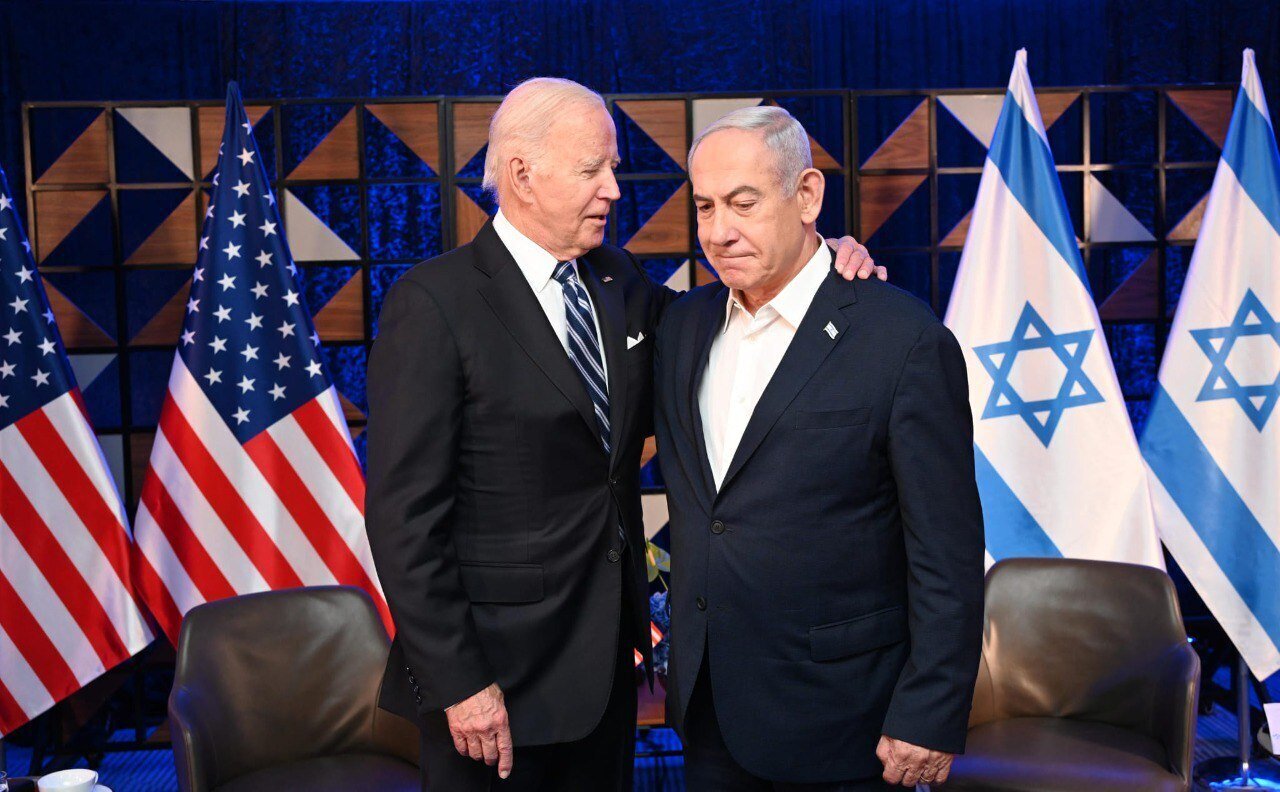
U.S. President Joe Biden, left, and Israeli Prime Minister Benjamin Netanyahu meet in Tel Aviv, Israel, on Oct. 18, 2023.
ISRAELI GOVERNMENT PRESS OFFICE (GPO) / HANDOUT via Getty Images
HuffPost additionally asked the Hamas figures about the role in the war and Israel-Palestine affairs played by the two behemoths in their neighborhood: Iran and Saudi Arabia.
Iran, a US antagonist, has been a Hamas ally for decades, seeking to build popularity in the Muslim-majority world through its links to the Palestinian cause. Saudi Arabia, a U.S. partner, was before October 7 rapidly moving toward establishing diplomatic relations with Israel after decades of shunning the state. But Palestinians said the process — still the chief Middle East focus of the Biden administration — ignored their concerns and risked marginalizing them for good by convincing Israel it could secure Arab allies without resolving its conflict with Palestinians.
Advertisement
Abu Marzouk was careful in discussing both players.
Though disrupting so-called Israel-Saudi “normalisation” is widely seen as one purpose for the war, and though Hamas has had strained ties with the Saudis, Abu Marzouk did not criticise the kingdom, which is trying to combat claims it was willing to sacrifice Palestinian interests. He noted that Saudi Arabia has re-emphasised its 2002 position that all Arab nations would make peace with Israel if it withdrew from Palestinian territories it captured in 1967, recognized a Palestinian state within them and offered a plan for Palestinian refugees displaced by its founding.
Then he offered a narrative that blames Israel for hurting both the Saudis and the Americans ― bolstering Hamas’ overall argument that it’s the Jewish state that is unreasonable and a liability, with an eye toward winning over a U.S. audience.
Washington and Riyadh seek to develop links between the entire Islamic world and Israel, and “to empower the American position in the region to confront China and Russia,” Abu Marzouk argued. “But it’s obvious that the Israeli doings are now eliminating all the American efforts in the region. The big question is to what extent Americans will keep supporting Israel even if it is undermining their strategies… they are destroying the image of the Americans with the whole region.”
In addressing the subject of Iran, the Hamas leader struck a similar note by suggesting Israel is endangering the U.S., telling HuffPost it is “very obvious … Israeli government practices are actually pushing a war between Iran and America.”
Western officials have expressed similar fears to HuffPost, with one U.S official recently saying American intelligence has for months given policymakers “warnings and alarm bells” about Israel pursuing a broader conflict, likely beginning in Lebanon, which, according to The Wall Street Journal, Netanyahu sought to launch a campaign in soon after October 7. An Israeli airstrike killed Iranian officials in Syria this week, and on Friday, CBS News reported that U.S. intelligence agencies believe an Iranian retaliation could come by early next week, potentially fueling a spiral of escalation that ultimately forces the U.S. to become militarily involved in defense of Israel.
Advertisement
Yet Abu Marzouk was circumspect about how Iran itself has stoked regional tensions, in part through its support for Hamas.
“Saying that the Palestinians are resisting the occupation because of Iranian support is false,” he said. “We were confronting the English occupation from 1919 to 1947…. Iranian support came late, after 1990. We are talking about 70 years of resisting occupation before Iranian support.”
Though Naim acknowledged that Hamas receives weapons from other countries, Abu Marzouk claimed the group “is using homemade weapons.”
“If the weapons or assistance came from Iran, the Palestinian resistance would not remain steadfast for six months” amid Israel’s near-total siege on Gaza, he said.
Well before October 7, however, Iran gave Hamas tens of millions of dollars for arms and for training and technical assistance, current and former intelligence officials told The Washington Post.
Advertisement
White House Deputy National Security Advisor Jon Finer has called Iran “broadly complicit” in the attack. Iran rejected that depiction, and Naim rebutted it to HuffPost, saying, “For us, October 7 is a pure Palestinian operation: planning, implementing and paying also the price of the repercussions of the response.”
‘Putting Them On Notice’
HuffPost discussed Hamas’ statements and its role in Israeli-Palestinian developments with two longtime analysts of the conflict.
Both described Abu Marzouk’s comment warning that Hamas would battle any possible multinational force for Gaza as especially noteworthy.
“Any nation that is even considering ― or being pressured by the US to consider ― participating is going to take that seriously… [The comments are] basically putting them on notice that they’re going into what’s still a contested area,” said Lara Friedman, the president of the Foundation for Middle East Peace think tank. “This is the kind of statement which underscores what a big ask that would be and the risk that the members would face.”
Khaled Elgindy, a senior fellow at the Middle East Institute think tank, called Abu Marzouk’s remark “a pretty bold statement intended to dissuade people moving in that line.”
Advertisement
Even if Hamas strategically decided not to attack soldiers sent by Arab states or other Muslim-majority countries, such as Turkey, the group could quietly facilitate attacks by other militants in Gaza, he noted.
Despite Israeli claims of fighting until Hamas is destroyed, “I don’t know anyone who considers the argument that Israel will eradicate Hamas as credible,” Friedman told HuffPost. “Even Israel’s own intelligence and national security forces have weighed in that that is unrealistic… [and] resistance is not merely card-carrying Hamas members.”
Asked whether to take Hamas seriously about its apparent openness to a two-state settlement, the analysts suggested the U.S., long the chief broker in Israeli-Palestinian negotiations, has never done so. America’s approach has been to pursue a peace settlement with parties it defines as “good Palestinians” while seeing little value in Palestinian unity or engaging all parts of the community, said Elgindy, a former adviser to the Palestinian leadership in Ramallah.
Given Hamas’ own interests and its limited capacity, a two-state solution ― requiring the organisation to tolerate Israel regardless of likely deep lingering disdain for it ― might be the only good outcome for the group.
“I don’t see any other way for Hamas to be politically relevant. They’re not going to be the ones who liberate Palestine ‘from the river to the sea,’” Elgindy said. “Like all political movements, they want to lead and govern, and their only hope of doing that is in the context of a state in the West Bank, Gaza and East Jerusalem.”
Advertisement
To Friedman, Hamas’ 2017 statement had represented an opportunity “if someone is looking for a partner and for an offramp that involves, genuinely, two states.”
“I’m not suggesting that Hamas is a good actor here. I’m suggesting we’ve never tested it,” added Friedman, a former State Department official.
But it’s hard to see how all parties involved would shift their positions in the way experts believe necessary for an effective renewed bid to secure an agreement on a mutually coexisting Israel and Palestine.
Israel would need to be convinced to reject the easy-to-sell view that Palestinian statehood after Oct. 7 represents what hard-liners there, like current Finance Minister Belazel Smotrich, describe as “a prize for the terrible massacre.”
Hamas would need to acknowledge how its actions make peace harder to secure ― and cultivate trust in its willingness to cease violence. Though the group is correct to see a rightward trend in Israeli politics, it must see it “helped contribute to that trend,” Elgindy said, and may have “all but guaranteed it.”
Advertisement
“Even though they didn’t invent the trend, the operation of October 7 definitely accelerated and strengthened that trend, so there needs to be a little bit more self-awareness,” he added.
Meanwhile, Abbas would have to allow Palestinian society to evolve a new political dialogue by softening his grip on power, a step he has resisted despite huge pushback. It’s apt to read Mustafa’s appointment as a gambit by Abbas, Elgindy said, a way to send the message: “I have full authority to appoint whomever I want, and it’s not up to Hamas.”
Though that may be true procedurally, “politically it’s a nonstarter,” the analyst said. “Eventually [Abbas] is going to need Hamas approval one way or another. If he’s expecting that Hamas will disappear and therefore he will have a free hand to do whatever he wants, that’s just silly.”
And finally, Washington would need to reconsider a range of policies ― some dating back decades and supported by politicians from both parties, others firmly tied to Biden.
The U.S. has worked for years to block the establishment of a Palestinian administration that includes all factions, Friedman said, using steps such as legislation barring American aid to the PA if it included individuals whom Washington saw as unsuitable to signal “we would put in place all sorts of obstacles to that happening.”
Advertisement
Elgindy honed in on the president’s six-month-old decision to adopt Israel’s war plans wholesale, which many Biden allies now see as a mistake.
“We’ve never had a U.S. administration openly and explicitly working toward the defeat of a particular Palestinian group,” he said. Elgindy noted that President Ronald Reagan did not share Israel’s 1980s goal of destroying the Palestine Liberation Organisation and that President George W. Bush pushed Israel to stop targeting PA leader Yasser Arafat.
“That’s a problem for the U.S. having any kind of role in a peace process or even as a stabilizing force in Gaza going forward,” he told HuffPost.
“I can’t think of any U.S. administration that has been this unconditional in its support for Israeli war aims and actions on the ground,” Elgindy said. “I’ve never seen anything like it.”
A cabinet minister has agreed to pay damages after wrongly accusing a senior academic of supporting Hamas.
Michelle Donelan, the secretary of state for science, innovation and technology, suggested on X that Professor Kate Sang had expressed sympathy for the militant group.
Advertisement
In fact, the top Tory had misinterpreted a post on the social media platform in which Professor Sang linking to a Guardian article on the aftermath in the UK to Hamas’ attack on Israel on October 7 last year.
The academic took out a libel action, which has now been settled – with the taxpayer picking up the bill.
Ms Donelan also wrote to the UK Research and Innovation government agency suggesting that Professor Sang and a second academic, Dr Kamna Patel, had shared extremist material.
The pair, who had both appointed to the Equality, Diversity and Inclusion board, were then subjected to a months-long investigation by the UKRI.
Advertisement
In a post this afternoon on X, Donelan said she had withdrawn her allegations.
She said: “I have never thought or claimed that Professor Sang, or any member of the Board, committed a criminal offence.
“I fully accept that she is not an extremist, a supporter of Hamas or any other proscribed organisation and I note that an independent investigation has concluded that there is no evidence that she is. I have deleted my original post to my X account.”
My statement on recent correspondence relating to Research England’s Equality, Diversity and Inclusion Expert Advisory Group. pic.twitter.com/Fn3xRdwjxX
— Michelle Donelan MP (@michelledonelan) March 5, 2024
Tamsin Allen, who represented Professor Sang in her libel complaint, said: “Michelle Donelan has now withdrawn her false allegations and agreed to pay damages and costs to Professor Sang.”
Professor Sang said: I am delighted that this matter has now concluded, but very disturbed by the way in which Michelle Donelan and UKRI behaved.
Advertisement
“Had they asked me at the start, I would have explained the true position. Instead, Michelle Donelan made a cheap political point at my expense and caused serious damage to my reputation. I propose to donate part of the damages she has paid to a charity.”
Shadow science, innovation and technology secretary Peter Kyle said: “The secretary of state must prove she still has the confidence of the research community after using her department to make false allegations against academics.
“Accusing researchers of sharing extremist material and sympathising with a proscribed group, without any proof, is a new low in government standards.”
Experts have a grim prediction for what might happen in Gaza unless a ceasefire is called – and soon.
MPs have been ripping into each other over parliamentary procedure surrounding different parties’ motions around calling for a ceasefire or a pause in the fighting.
Advertisement
The row has now escalated into a major challenge to speaker Sir Lindsay Hoyle’s job, spinning away from the original matter at hand – the crisis in Gaza.
So it’s worth looking at an independent report which came out this week, from the John Hopkins’ Centre for Humanitarian Health and the London School of Hygiene & Tropical Medicine, which was funded by the government.
Even if there’s a ceasefire, the academics predict around 6,550 people will die between February 7 and August 6.
That’s because malnutrition, infectious diseases like cholera and a lack of care for those who have chronic conditions will continue to drive the numbers of deaths in the Palestinian territory.
Advertisement
If there’s no ceasefire, and the “status quo” stays the same as it is now, the academics believe 58,260 people will die over the next six months.
And if there’s an escalation of violence, up to 74,290 people will die in the same time frame, according to their predictions.
Traumatic injuries will make up the majority of excess deaths in the territory in these two latter scenarios, according to the independent researchers.
The academics’ projected scenario looks even worse if a health epidemic of some kind breaks out.
With a ceasefire and an epidemic, the academics believe there will be a further 11,580 deaths; without a ceasefire, this goes up to 66,720; and if there’s an escalation of violence, it skyrockets to 85,750 extra deaths.
The academics who worked on the report said it did not include Israel because its health system is still functioning.
Advertisement
Experts have been warning about the deteriorating health conditions in Gaza for months now.
A sixth of children under the age of two in the north of Gaza are also acutely malnourished.
According to the Hamas-run health authorities in Gaza, more than 29,000 people have been killed since the war began. The officials do not differentiate between civilians and militants.
Speaking on LBC’s Tonight with Andrew Marr, the Palestinian ambassador to the UK, Dr Hasam Zumlot, said that the scenes in the Commons last night were “disgraceful”, especially considering the state of Gaza right now.
‘It’s disgraceful…today we’ve seen British politics at its worst.’
Palestinian ambassador Dr Husam Zomlot tells @AndrewMarr9 ‘politicians are trying to save themselves rather than saving an entire nation from genocide’, as he condemns today’s arguments in the House of Commons. pic.twitter.com/FB94L3xLJX
He said on Wednesday night: “This is unthinkable, what is happening in Westminster today is simply unthinkable.”
Advertisement
He also predicted that if Israel does invade Rafah in southern Gaza – one of the last places of refuge in the Palestinian territory – “what will follow is World War III”.
He added: “It is as blunt and as simple as that because you have millions of people who will be scattered and dispersed. You will have a regional situation that is already at the brink.”
His comments came after a member of Israel’s war cabinet suggested this offensive would occur on March 10, the start of Ramadan, unless Hamas handed the remaining hostages back.
Zumlot warned: “If we don’t act in the next few days, this is going to be a regional war and a global war.”
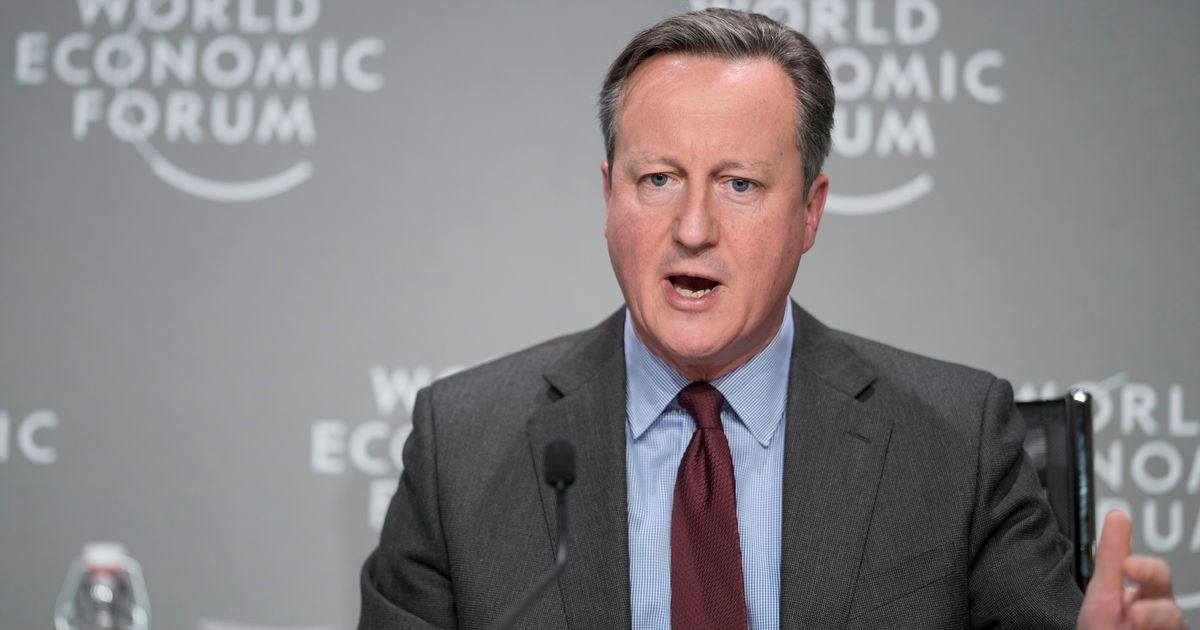

Foreign secretary Lord David Cameron has expressed concern over the next phase of the Israeli military operation in Gaza, as troops may move to the southern part of the Palestinian territory.
Israeli soldiers are expected to advance into the southern city of Rafah, which borders Egypt.
One of the last remaining areas in Gaza not yet infiltrated by Israeli troops in the four months since the war began, approximately half of Gaza’s 2.3 million population is thought to be sheltering in Rafah.
Advertisement
In a post on X (formerly Twitter) on Saturday evening, Cameron wrote: “Deeply concerned about the prospect of a military offensive in Rafah – over half of Gaza’s population are sheltering in the area.
“The priority must be an immediate pause in the fighting to get aid in and hostages out, then progress towards a sustainable, permanent ceasefire.”
Israeli PM Benjamin Netanyahu rejected Hamas’ proposals for a ceasefire last week, and said in a recent interview that “victory is within reach”.
Advertisement
He added: “Those who say that under no circumstances should we enter Rafah are basically saying, ‘Lose the war. Keep Hamas there.’”
Israel claims Rafah is the last remaining stronghold for the Palestinian militants Hamas.
Netanyahu has called for the evacuation of people in Rafah but it is not clear where any civilians could move to, as Israeli evacuation orders cover two-thirds of Gaza.
There are fears about the general conditions in Gaza are growing, too.
The UN secretary-general Antonio Guterres called for a humanitarian ceasefire before a “gigantic tragedy” develops in Rafah last week.
Joe Biden, president of Israel’s greatest ally the US, also released his strongest rebuke of the country yet on Thursday, saying the country’s recent actions were “over the top”.
Israel declared war on Hamas after the group killed an estimated 1,200 people on Israeli soil on October 7.
Israel has been bombing Gaza for the past three months in retaliation for the terrorist attack on the country by Hamas on October 7.
Advertisement
Tens of thousands of civilians have died as a result of the bombardment, which has led to a humanitarian crisis.
But appearing on Sunday Morning with Trevor Phillips today, Lord Cameron rejected South Africa’s accusations.
The foreign secretary said: “I think the South African action is wrong, I think it’s unhelpful, I think it shouldn’t be happening.
“I’m not a lawyer, but they are talking here about genocide. To prove that, you’ve got to prove that there was intent.
Advertisement
“I take the view that Israel is acting in self defence after the appalling act on October 7. But even if you take a different view to my view, to look at Israel – a democracy, a country with the rule of law, a country with armed forces that are committed to obeying the rule of law – to say that they have the intent to commit genocide, I think that is nonsense, I think that’s wrong.”
Phillips told him: “You can’t know that, you can only judge on the basis of what they’ve done.”
But Lord Cameron insisted that “to say there’s the intent to commit genocide, I do believe that’s wrong”.
South Africa has called for the emergency suspension of Israel’s aerial and ground offensive, claiming it was looking to induce “the destruction of the population” of Gaza.
But Israel has rejected these claims, accusing South Africa of playing “advocate of the devil” for Hamas. It says it is not targeting any civilians, but the militants.
The Israel-Hamas war has spilled out into the wider Middle Eastern region recently, with at least three areas now where violent skirmishes could escalate.
While the focal point of the crisis is still the Palestinian territory of Gaza, friction between Israel and its neighbouring nations have sparked fears that the whole region could be embroiled in war.
Advertisement
The EU’s foreign policy chief Josep Borrell has even warned that unless this war ends soon, “the entire Middle East might end up in flames”.
As the complex crisis is about to head into its third month, here’s a look at where hostilities have risen – and why.
Lebanon
According to Beirut, an Israeli drone strike targeted a Hamas office in the Lebanese capital on Tuesday, killing seven people.
The deputy leader of Hamas’ political bureau who was also involved Hamas’ military, Saleh al-Arouri, was killed.
Advertisement
However, Israel has not taken direct responsibility for the attack. Senior advisor to Netanyahu Mark Regev just referred to “whoever did this” and said it was “not an attack on the Lebanese state”.
Back in November, the Israeli PM Benjamin Netanyahuwarned in November that Israel would “operate against Hamas leaders wherever they are”.
But, after Tuesday’s attack, he only described the move as a “surgical strike” against Hamas – and stopped short of actually taking responsibility for it.
It comes as tensions between Israel and the Lebanese militant group Hezbollah have been increasing for months.
Hezbollah, known to be sympathetic to Hamas, has been designated a terrorist organisation by Western countries, Israel, the Gulf Arab countries and the Arab League.
Advertisement
Hezbollah said that it was a “serious assault on Lebanon” and a “dangerous development in course of the war between the enemy and the axis of the resistance” which will “not go without a response or punishment”.
Lebanon’s PM, Najib Mikati, said the explosion was a “crime” which “aims to drag Lebanon into a new phase of confrontation with Israel” – but discouraged Hezbollah from responding themselves.
Former UK ambassador to Lebanon Tom Fletcher told the BBC this was a “moment of real jeopardy” as al-Arouri was a “big fish” and “taking him out in the heart of Hezbollah territory is a big deal”.
Some reports have suggested that Egypt, a key mediator in the Israel-Hamas negotiations along with Qatar, has suspended mediations due to the attack but there’s been no official confirmation.
Advertisement
Red Sea
The Red Sea shipping route is still too dangerous for many companies to use after a spate of attacks by Houthi rebels in Yemen who support Hamas – and have Iran’s backing.
The rebels claim to only aim to disrupt ships going to and from Israel, but some civilian vessels have been under threat.
The US also says Houthi rebels have fired two missiles at commercial vessels recently.
There is also a chance there global prices could rise in a few weeks because of the cost of re-routing vessels around the southern-most tip of Africa if the Red Sea becomes completely inaccessible.
Iran
Today’s unexplained explosions in the Middle Eastern country, which supports militant groups Hamas and Hezbollah, have raised further concerns that the crisis is going to escalate.
Explosions killed more than 100 people during a ceremony to mark the four year anniversary of the killing of an Islamic Revolutionary Corps general, Qassem Soleimani. He was assassinated by a US drone strike in Iraq in 2020.
Advertisement
There is no evidence yet to suggest Israel was behind these attacks, but as the BBC’s security correspondent Frank Gardner suggested, it will “inevitably raise tensions in the region”.
Iranian officials have also weighed in on the killing of the top Hamas official, blaming Israel for its “cowardly terrorist operations”.
Gaza
This is still the main focal point for the war and the death toll continues to rise.
According to the Hamas-run health ministry in Gaza, more than 22,000 people have been killed since October 7, when the war began.
Although some Israeli troops have been withdrawn from Gaza, the adviser to Israeli PM Benjamin Netanyahu, Mark Regev, suggested this did not mean the violence was winding down. He told Sky News on Tuesday that the war is “a marathon not a sprint”.
Comments from the Israeli finance minister Bezalel Smotrich, that emigration from Gaza needs to be encouraged so that Israeli settlers can return to the area and “make the desert bloom” have added to fears that the government wants all Palestinians to leave Gaza.
Advertisement
According to UN estimates, 85% of the Gaza population – 1.9 million people – have been internally displaced since the war broke out.
Meanwhile, Hamas is still holding more than 100 hostages in Gaza.
Hamas’ leader Ismail Haniyeh has said that the remaining captives taken in October will only be released under conditions set by the militants.
They have previously said no hostages will be released until the war ends, while Israel do not want a permanent ceasefire.
Israeli Prime Minister Benjamin Netanyahu was heckled Monday by family members of hostages who are believed to still be in captivity in Gaza.
In an address to the country’s parliament, Netanyahu spoke about the ongoing Israeli offensive in the territory and said that “we will not stop until victory.” As he spoke, families in the gallery held up photos of the hostages who have not yet been freed and chanted for them to be released “now.”
Advertisement
“We wouldn’t have succeeded up until now to release more than 100 hostages without military pressure,” Netanyahu said. “And we won’t succeed at releasing all the hostages without military pressure.”
He also said Monday that the fight against Hamas “isn’t close to finished,” despite growing calls from some of Israel’s allies for a cease-fire.
Around 240 people were taken hostage during Hamas’ Oct. 7 attack on Israel, with the country saying that the assault killed around 1,200 as well. After a short period in which some hostages were released, more than 100 are thought to remain in captivity, according to The Associated Press. Earlier this month, the Israeli military said that it had mistakenly killed three of the hostages.
Advertisement
Israel’s retaliation against Hamas has killed more than 20,000 people in Gaza, according to officials in the Palestinian enclave. Around 2 million people have been displaced there, and more than half a million people are starving following Israel’s siege of the territory, according to a report released this month by the United Nations and other agencies.
The AP reported Tuesday that Israeli forces had made moves signaling an expanded ground offensive.