Health24.com | OPINION | Needed: Kindness

The last time it was Friday 13th, it was an ominous one. It was Friday, 13 March. The Friday before that Sunday, 15 March, when our president declared a state of disaster. To be followed a week later with the announcement of Lockdown Level 5, starting on 26 March.

That 15 March speech still reverberates as our very own “Beware the Ides of March”. The Ides of March, 15 March, was made famous in Shakespeare’s Julius Ceasar, with the soothsayer warning the emperor to “Beware the Ides of March”.

Which did not help, as he was assassinated on 15 March. One of the assassins was one his allies, Brutus, which in turn led to the “et tu, Brute” phrase when a close ally is part of your undoing.

But let’s move from our own last gloomy Friday 13th and our Ides of March to a happier Friday 13th, namely Friday November 13: World Kindness Day.

And don’t we just need a bit of kindness. Or rather, for the sake of humanity, make that a super-duper dose of kindness, what with a pandemic that has deepened existing societal cracks into Rift Valleys, with accompanying human and economic tragedies.

Add to this already existing mental strain and unbearable insecurities, the mountains of corruption, state capture, as well as left and right extremism, and racism. No wonder it is just too much for already suffering human beings to bear.

And if that is not enough, throw in what is playing out on the world stage: An instable global political and social order, led by a destabilised, divided America due to a (now thankfully outvoted) president that demonised everything not partial to him. Which in turn led to a bizarre, brutal Trumpian dystopia in which everything and everyone could be offended with no sign of human kindness whatsoever, forget about presidential statesmanship.

And then, still add to that, two overarching global factors: the pandemic that has become politicised, plus the radicalisation of society in almost every respect.

It’s Stress on Steroids. Yes, in capital letters.

Schtum, and utterly fatigued, we stumble from one incredulous world event to the next. While silently sending out an SOS: please, please, we need some kindness. Some gentleness, some compassion, some sympathy, some kind-heartedness.

Please, can the kindness index move up a little? Please, can we all calm down and give our so frayed nerve endings some relief?

World Kindness Day could not come one day too soon. And seeing that 13 November is on a Friday, let’s supercharge it with positivity and forget about those doomsday superstitions around Friday 13th.

Let’s make sure this Friday 13th is our best Friday 13th in a long, long time.

So, switch on your kindness sensors and see how just one small gesture of kindness to a fellow human being will start an avalanche of kindness. Or show some kindness to a four-legged creature – Covid has also exposed our animal friends to the deepest depths of unkindness.

The World Kindness Movement was launched in 1998, after a number of “kindness NGOs” gathered in 1997 in Japan. Not affiliated to any religious or political movement, its mission is to “create a kinder world by inspiring individuals and nations towards greater kindness”.

Kindness therapy

This year’s theme is simply “Acts of Kindness”. And the smallest of gesture will help. The benefit? It will make you feel much better, because it is known that despite waves of grief and despair breaking in their ruthless violence over you, when you pick yourself up and do something good for someone else, it is actually you that benefits most. So apply some kindness therapy to yourself while you make the world a little bit better for someone else.

Because kindness is all about the positive power of that common thread that binds us, compassion. Make kindness your life philosophy – it bridges all those just too human polarisations that are caused by race, religion, politics, gender, class, education, and nationality.

In fact, the World Kindness Movement wants the United Nations to have World Kindness Day officially recognised. And doesn’t our world need such a “Declaration for World Kindness”.

It is argued that simple acts of kindness – small things, all do-able by you and me – can have a huge impact on the general feeling of despair engulfing our poor planet.

Of course, the kindness movement starts with you. And fortunately, there are so many things you can do. Imagine how kindness will vibrate around our globe this Friday if you do just one act of kindness towards someone else.

Fortunately, the ideas are as many as there are souls upon this earth – all 7,8 billion of us.

Here are just some: You can get some friends together to pick up litter (remember: 1,5 m apart). Or leave a note of kindness in a restroom – it might just be what the next person needs. Google “kindness quotes”, and you’ll find too many to choose from.

Make little cards from the ones you like: Maya Angelou’s “Try to be a rainbow in someone else’s cloud”, or the Dalai Lama’s “Be kind whenever possible. It is always possible.” Or: “We rise by lifting others”, or “Kindness begins with understanding we all struggle”.

Other ways of simply trying to be kind? An easy one is “paying forward” a cup of coffee at your coffee take-away so that the next customer gets a nice surprise.

Or, well, refrain from posting something hurtful. Too many of us do it just too many times. In that sense social media is the most unsocial media there ever have been, bringing out homo sapiens’s unkindest asocial behaviour.

Another kindness act: Bake a batch of cupcakes (yes, you can use that tried and tested Lockdown-banana bread recipe), and deliver them to your neighbours, or, if you’re lucky enough that you can go back to the office, to colleagues, or hand out to municipal workers if it is bin day, or take them to your friendly vet. And tell all of them: Today is World Kindness Day.

Most of all: Let’s make every day Kindness Day. Just as we should not only be aware of no violence against women and children during the campaign of 16 Days of Activism for No Violence Against Women and Children (starting on 25 November), but every single day, we should also, please, not reserve kindness to one World Kindness Day.

So, let’s generate kindness and see how it starts to generate itself, especially in a divided, divisive society. We need empathy, we need goodness, we need compassion. We are human beings: Our hearts beat to the rhythm of kindness. Start your own Kindness Movement today.

Lizette Rabe is professor at Stellenbosch University and founder of the non-profit Ithemba Foundation. Ithemba means hope and has two public benefit goals: to raise awareness of the importance of mental health, and to support research. Ithemba’s registration number is 2012/171250/08 and its SARS PBO Number 930/048/019.
Image credit: Dee Copper and Wild, Unsplash

NEXT ON HEALTH24X

Share Button

Health24.com | Our average body temperature has dropped over the last two centuries – scientists wanted to know why

  • The average temperature for healthy persons used to be around 37°C
  • Over the last two centuries, it seems there has been a drop in temperature
  • Researchers are puzzled as to why this may be the case

In 1868, German physician Carl Wunderlich reported that a healthy body temperature reading was 37°C. Now, almost two centuries later, researchers have noticed that the average body temperature in healthy individuals is declining. 

According to a paper compiled by researchers from Stanford University, temperatures of adults in the United States has decreased 0.03°C per decade, which led the authors to believe that people in higher-income countries now have an average body temperature that is 1.6°C lower than in 1868. Researchers attributed this drop in body temperature to reductions in infectious diseases.

Lower temperatures in high-income countries

A more recent study conducted by a group of physicians, anthropologists and local researchers found similar results when studying the Tsimane Amerindians of the Bolivian Amazon.

The existing hypothesis – that people have lower temperatures in high-income countries – led to researchers further hypothesizing that people in lower-income areas would have higher temperatures. The researchers, led by Michael Gurven (professor of anthropology at University of California Santa Barbara), wanted to test the hypothesis in this population.

Why choose the Tsimane?

The Tsimane are indigenous people of lowland Bolivia who have a minimalistic lifestyle, without access to running water and sanitation.

Researchers found that the Tsimane were exposed to many disease-causing agents, “indicated by elevated immune activation biomarkers throughout life”.

The majority of deaths among the Tsimane was due to infection, and they also exhibit endemic polyparasitism (natural infestation by two or more parasites).

They also have a high resting metabolism, which means when they are not moving their bodies they still burn a high number of calories, leading to an increase in temperature. These reasons further led researchers to believe that they would have higher body temperatures.

Predictions contradicted

Body temperatures collected by the Tsimane Health and Life History Project (THLHP) since 2002 were used in the study. Researchers found that contrary to their predictions, there has also been a rapid decrease in average body temperature in the Tsimane population.

According to researchers, during the earliest study period from 2002 to 2006, unadjusted mean BTs for adult women and men were 37.02°C. However, between 2012 to 2018, body temperature dropped by 0.45°C for women and 0.49°C for men. 

This drop in temperature happened over two decades, whereas the drop in body temperature in the US population was observed over almost two centuries. Surprisingly, researchers could not find the reasons behind this drop in temperature. 

Image credit: Unsplash

NEXT ON HEALTH24X

Share Button

Health24.com | Good news for potato lovers – especially diabetics

  • People with type 2 diabetes are often told to avoid potatoes because they have a high glycemic index (GI)
  • This is especially true at night when sugar levels are higher
  • A recent study found that type 2 diabetes sufferers do, however, not need to avoid potatoes 

People with type 2 diabetes are often warned against the consumption of high GI foods, such as white potatoes, especially at night as they tend to make it more difficult to control blood sugar levels.

Glycaemic Index (GI) is a measurement used to determine how certain foods raise our blood sugar. This is called our glycaemic response.

Traditional guidelines for type 2 diabetes sufferers involve avoiding potatoes in order to avoid a sharp rise in blood sugar levels after eating. However, a recent study has shown that sufferers of type 2 diabetes need not avoid potatoes, as eating potatoes might in fact result in a desired glycaemic response.

Researchers investigated the impact of potato consumption as part of a mixed evening meal on nocturnal glycaemic response.

Favourable results

Researchers undertook a study involving 24 males and females with type 2 diabetes in four experimental trials after consuming breakfast, lunch and dinner.

Each meal consisted of 50% carbohydrates, 30% fat and 20% protein. Dinner included potatoes that were either boiled, roasted, boiled and cooled, or basmati rice. Blood samples were consistently taken before and after eating to monitor the participants’ glycaemic response and control. They also wore monitors overnight to observe their blood sugar levels while sleeping.

Potatoes do no harm

The study concluded that there was no significant difference in glycemic response after eating high GI boiled or roasted potato-based meals compared to low GI basmati rice. On the contrary, it was found that eating potato-based meals at night had more favourable results than the low GI basmati rice.

Corresponding author Dr Brooke Devlin stated, “Our study shows high GI foods, like potatoes, can be consumed as part of a healthy evening meal without negatively affecting [glycemic response] … while delivering key nutrients in relatively few calories, which is essential for people with [type 2 diabetes].”

Image credit: Unsplash

Share Button

Covid: Learning disability death rates ‘six times higher’

The government announces a review following the findings of Public Health England’s report.

Share Button

Health24.com | Coronavirus morning recap: ‘Hidden gene’, SA’s tracing app, and black market for Covid tests

LATEST SCIENCE AND RESEARCH

READ | ‘Hidden’ gene discovered in Covid-19 virus could give more insight into its ability to spread

Researchers from the American Museum of Natural History have identified a new “hidden” gene in SARS-CoV-2, the virus that causes Covid-19, and say this may explain why it is so highly infectious.

The discovery of the “overlapping gene”, named ORF3d, could have a significant impact on how we combat the virus, the research team wrote. Overlapping genes (OLGs) are a type of ‘gene within a gene’, effectively concealed in a string of nucleotides, ScienceAlert explains.

“Overlapping genes may be one of an arsenal of ways in which coronaviruses have evolved to replicate efficiently, thwart host immunity, or get themselves transmitted,” said lead author Chase Nelson, a postdoctoral researcher at Academia Sinica in Taiwan and a visiting scientist at the American Museum of Natural History.

“Knowing that overlapping genes exist and how they function may reveal new avenues for coronavirus control, for example through antiviral drugs.”

Their findings were published in the journal eLife.

According to the team’s findings, the newly discovered gene is present in a previously discovered pangolin coronavirus. This, they say, possibly reveals repeated loss or gain of this gene during the evolution of the new coronavirus, as well as related viruses.

READ | OPINION: Unpacking the legal and ethical aspects of South Africa’s Covid-19 track and trace app

The most effective way to stop the spread of a virus is to prevent contact with everyone who is infected. Those who are infected can be isolated and treated if necessary. To determine who they are, it’s necessary to actively look for and manage cases.

During the Covid-19 pandemic, emerging technologies are being repurposed to help trace whoever has been in contact with an infected person.

Some of these technologies, such as the Global Positioning System (GPS), wi-fi and Bluetooth, are not new. GPS has been used to find accident victims at precise geographic locations. Some of the uses of wi-fi are oxygen monitoring devices, smart beds, access to electronic medical records and real-time access to X-rays and magnetic resonance imaging scans.

Now these tools can also help do one of the most important jobs in the pandemic: track and trace. They allow people some movement and economic activity, with the ability to manage their own risk of being exposed to possible infection or spreading any infection.

The South African government recently introduced a mobile application, COVID Alert SA, to help people notify their close contacts if they are infected.

The app is based on smartphone technology enabled by readily available functions developed by Apple or the Google Exposure Notification System. It uses a phone’s signal to generate a random code. The code is then exchanged with other users of the same app within a two metre radius. These codes are stored on the respective devices for two weeks.

CORONAVIRUS CASES LATEST

SA cases update: 

The latest number of confirmed cases is 744 732.

According to the latest update, 20 076 deaths have been recorded in the country.

There have been 690 903 recoveries.

So far, 5 063 457 tests have been conducted, with 25 675 new tests reported.

Global cases update:

For the latest global data, follow this interactive map from Johns Hopkins University & Medicine.

Early on Friday morning, positive cases worldwide were 53 001 867, while deaths were 1 289 474.

The United States had the most cases in the world – 10 488 531, as well as the most deaths – 242 248.

WHAT’S HAPPENING IN SA

Latest news:

READ | Covid-19: ‘Incomprehensible’ to extend state of disaster, says DA leader

Newly elected DA leader John Steenhuisen has come out guns blazing following President Cyril Ramaphosa’s extension of the national state of disaster by another month, to 15 December, in order to keep Covid-19 prevention measures in place.

Ramaphosa made a number of announcements on Wednesday evening.

South Africa will be allowing tourists from all countries across its borders under an upcoming amendment to the Level 1 Covid-19 lockdown regulations, ending the controversial red-list travel system.

Trading hours will also be normalised, “for instance for the sale of alcohol for retail outlets”.

But Steenhuisen said it was “incomprehensible” that the state of disaster has been extended by yet another month.

“Government cannot keep managing South Africa around a single risk when our nation is so imperilled by far greater risks, such as poverty, hunger and unemployment,” the DA leader said in a statement following Ramaphosa’s address.

WHAT’S HAPPENING IN THE REST OF THE WORLD 

Latest news:

READ | There’s a global black market for negative Covid test results, with fakes starting around R3,000

As the coronavirus pandemic continues around the world, some people are turning to an emerging black market for fake negative test results.

In France, at Paris’ Charles de Gaulle Airport in September, a group of seven people were arrested for selling falsified digital certificates intended to prove negative coronavirus results, the AP reported last week.

The group was discovered following an investigation sparked by a traveler leaving France for Ethiopia. The traveler reportedly had a fake digital certificate that claimed they tested negative for the virus.

The group in Paris was reportedly selling the fake test results for $180 (R2,800) to $360 (R5,600) apiece.

In another case, in late October, a group of travelers in Brazil was found with falsified negative test results in an attempt to enter the Fernando de Noronha island group, the AP reported.

Rather than buying fake test results, the group is accused of altering their own results.

READ | A Biden Covid-19 advisor called for a national lockdown in the US lasting up to 6 weeks

Dr. Michael Osterholm, an influential Covid-19 advisor to President-elect Joe Biden, on Wednesday called for a four- to six-week nationwide lockdown to help drive down infection numbers.

Osterholm, part of Biden’s 13-person Covid-19 advisory panel announced Monday, told Yahoo Finance on Wednesday that the US had a “big pool of money” to help pay for people’s lost wages and get the economy back on track during a lockdown while a vaccine was being rolled out.

Osterholm said a national lockdown would drive the number of new cases down, “like they did in New Zealand and Australia.”

“We could pay for a package right now to cover all of the wages, lost wages for individual workers, for losses to small companies, to medium-sized companies or city, state, county governments. We could do all of that,” he said. “If we did that, then we could lock down for four to six weeks.”

He added: “We could really watch ourselves cruising into the vaccine availability in the first and second quarter of next year while bringing back the economy long before that.”

Over the last seven days, the US has recorded an average of more than 112,000 daily cases. Cases reached an all-time peak of more than 132,000 on Friday.

HEALTH TIPS (as recommended by the NICD and WHO)

• Maintain physical distancing – stay at least one metre away from somebody who is coughing or sneezing

• Practise frequent hand-washing, especially after direct contact with ill people or their environment

• Avoid touching your eyes, nose and mouth, as your hands touch many surfaces and could potentially transfer the virus

• Practise respiratory hygiene – cover your mouth with your bent elbow or tissue when you cough or sneeze. Remember to dispose the tissue immediately after use.

Image credit: Getty Images

Share Button

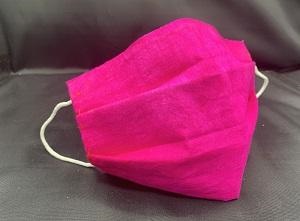
Health24.com | Researchers develop special cotton face mask that can be disinfected by the sun

  • A new type of cloth face mask that can be disinfected by the sun has been created by researchers from AMS.
  • The mask is close to 100% effective at killing bacteria and viruses.
  • It can also be hand washed several times without losing its antimicrobial activity.

It’s been proven in several studies that face masks help to limit the spread of the new coronavirus as the virus is mainly transmitted through respiratory droplets (when people cough, sneeze, or talk) and personal contact.

Although masks protect the people wearing them by reducing the number of droplets from others reaching their respiratory tract, evidence suggests that different types of masks yield different results.

More than this, live bacteria and viruses can easily stick to the surfaces of masks, and be transferred elsewhere as soon as the wearer touches or removes it.

Taking this into consideration, researchers from the American Chemical Society developed a special kind of cotton face mask that kills up to 99.9999% of bacteria and viruses within 60 minutes of daylight exposure.

Their findings were recently published in the journal ACS Applied Materials & Interfaces.

The process of creating the mask

Peixin Tang, Gang Sun, Nitin Nitin, and colleagues aimed to develop a new cotton fabric that would release reactive oxygen species (ROS) when exposed to daylight, killing microbes attached to the fabric’s surface.

They also wanted the fabric to be washable, reusable, and safe to  wear.

This invention would also be convenient as wearers could disinfect the mask during their lunch hour outside in the sun. The same effect could also be achieved by spending longer periods of time under office or building lights, which are much less intense than sunlight.

“Cotton fabrics with durable and reusable daylight-induced antibacterial/antiviral functions were developed by using a novel fabrication process,” the researchers wrote.

The process, they explained, involved attaching positively charged chains of 2-diethylaminoethyl chloride (DEAE-Cl) to ordinary cotton.

Following this, they dyed the modified cotton in a solution of a negatively charged photosensitiser (a compound that releases ROS upon exposure to light), which attached to the DEAE chains by strong electrostatic interactions.

A fabric made with a dye called rose Bengal as the photosensitiser was found to kill 99.9999% of bacteria added to the fabric within 60 minutes of daylight exposure, and inactivated 99.9999% of T7 bacteriophage (a virus thought to be more resistant to ROS than some coronaviruses) within 30 minutes. 

face mask

Image credit: CS Applied Materials & Interfaces 2020

Can be hand washed several times

Even greater news is that, based on additional testing, the material can be hand washed at least 10 times and constantly exposed to daylight for at least seven days without losing its antimicrobial activity.

“This work demonstrated that… the resulting fibre materials could inspire the development of reusable and sustainable PPE with significant bioprotective properties to fight the Covid-19 pandemic as well as the spread of other contagious diseases,” the researchers said.

READ | Here are the best and worst materials for face masks

READ | A simple experiment can determine which fabric face masks are most effective

READ | Face masks, yes, but don’t forget hand-washing too

Image: Getty/Lyubov Ivanova

Share Button

NaNoWriMo – Days 6-12

I just finished my 12th day of novel writing for NaNoWriMo. Since I started on November 1st, my novel has grown from 0 to 21,087 words. I’ve written 17 scenes so far, so I’m averaging 1240 words per scene.

While I had some aspects figured out before I began, I’m mostly pantsing it as I go.

I’m not writing the scenes in order, preferring to jump around a lot. So far I’ve written 4 scenes for Act 1, 10 scenes for Act 2, and 3 scenes for Act 3.

Words Are Cheap

I can usually write a draft of one scene in 30-60 minutes, depending on how long it is. Since it doesn’t take much investment to write a scene, throwing some words onto the screen is an easy way to explore possibilities. I don’t feel attached to a scene that took less than an hour to write.

It would be easy to overthink a scene by planning it out in detail, but I could easily spend more time planning a scene instead of just writing it. I’m also likely to discover a few things while writing that I wouldn’t have anticipated during planning.

Writing without much planning is a discovery process. I don’t always know where a scene will go when I begin it. I like to listen to the characters to see where they naturally want to take the scene.

I’ve written a few scenes that are inconsistent with other parts of the story, so they couldn’t all co-exist in the same book. I’m doing this deliberately since I want to explore alternative ways of telling different pieces of the story. It’s like writing a Choose Your Own Adventure book and then collapsing it into a linear story when I can see what the most interesting path is.

Motives and Subtext

The writing is getting easier, especially as I get to know the characters better. As I deepen my understanding of a character’s motives and desires, the character basically writes their own dialogue for me.

When I first started writing but didn’t know the characters very well, it was harder to write dialogue that sounded natural because I didn’t really know what each character wanted. At first I would just have them talk for the sake of talking, which led to bland, stiff, and lifeless dialogue. When the characters aren’t clear in my mind, their dialogue is very “on the nose,” meaning that it’s too direct.

When I read back this type of dialogue, it reminds me of what I commonly see in very amateurish fiction, where every character pretty much speaks the same way.

A scene feels very different when characters speak with an agenda in mind. Having a clear agenda makes it easier for a character to convey details through subtext. It also makes it easier to differentiate characters.

In good stories characters communicate a great deal through subtext. People don’t say what they really mean.

Building Fiction Circuits

I feel like the more dialogue I write, the more my brain is building out the circuitry and algorithms for this particular skill set. Whereas in the beginning this type of writing feel like pushing through mud, now it’s flowing more easily, which makes it more enjoyable too. It’s really so much nicer in Week 2 than it was in Week 1.

To pace myself to reach 50K words on November 30th, I should be at 20,004 words today, so I’m now 1083 words ahead of schedule. My goal when I began was to get ahead a little and stay there, and that’s what I’ve done, padding the buffer but a little more each day. Framing this as a daily commitment to write 1667 words per day (plus a little extra) is working nicely.

Share Button

Teacher quality scores change depending on students, school

School districts across the U.S. are increasingly using student test scores to rate the effectiveness of teachers, but a new Portland State University study found that the scores have less to do with individual teachers and more to do with their students and schools.

Dara Shifrer, the study’s author and assistant professor of sociology at PSU, said these findings are especially salient now as the public education system is dismantled by a pandemic, fundamentally altering the lives of children and their parents.

The study looked at the value-added scores of 4,500 teachers in a large urban district as they moved between schools between 2007 and 2013. The idea of value-added models is to measure the impact a teacher has on student learning by comparing new test scores to previous ones, and comparing test score gains across teachers. Supporters of the approach say looking at how much a student has progressed in a year, regardless of where they started from, captures the effectiveness of a teacher.

Shifrer said that if that’s true, then a teacher’s score should remain constant regardless of the school they work in or the type of students they teach.

Instead, when she tracked individual teachers, she found that their scores increased when they switched into high-performing (often low-poverty) schools and decreased when they switched into low-performing (often high-poverty) schools.

“If the teacher moved to a school where there were more poor students, more English language learners, or generally more challenging teaching environments, then their scores dropped,” Shifrer said. “The changes in individuals’ teachers’ scores over time were consistent with shifts in the economic status and race of students in their classrooms and schools.”

The study focused on scores from the Education Value-Added Assessment System (EVAAS), which is used in a dozen states, including Arkansas, California, Delaware, Georgia, Indiana, North Carolina, Ohio, Pennsylvania, South Carolina, Tennessee, Texas and Virginia.

Shifrer said the study is more evidence that factors beyond a teacher’s control — socioeconomic background, the impact of social inequality, racial segregation — affect students’ learning and whether we view teachers and schools as ‘effective.’

For example, the COVID-19 pandemic forced schools nationwide to pivot to online learning, which left behind many students who didn’t have computers or home internet access or whose families had to deal with health issues, layoffs and other concerns.

“These value-added scores haven’t solved the problem of how to evaluate teacher quality and they limit our ability to understand how students learn and what affects it,” she said. “Policymakers need to recognize how powerfully social inequality outside of schools affects what’s happening inside of schools.”

Shifrer said that educational disparities will be most effectively addressed by targeting inequality in society. The study recommends that teachers who work in high-poverty schools be paid a higher salary and schools should be sufficiently funded to provide the social services that are necessary to support their students. She said the pandemic has only made it more clear how society relies on schools not just for educating children but also for facilitating parents’ ability to work, and by providing children with food and other social supports.

Story Source:

Materials provided by Portland State University. Original written by Cristina Rojas. Note: Content may be edited for style and length.

Share Button

Once-discounted binding mechanism may be key to targeting viruses

“Position 4” didn’t seem important until researchers took a long look at a particular peptide.

That part of the peptide drawn from a SARS-CoV virus turned out to have an unexpected but significant influence on how it stably binds with a receptor central to the immune system’s ability to attack diseased cells.

In a study published by the Proceedings of the National Academy of Sciences, researchers at Rice University’s Brown School of Engineering and the University of Texas MD Anderson Cancer Center revealed models at atomic resolution that detail not only the binding but also, for the first time, the unbinding mechanisms that underlie a key component of the immune system.

They say better understanding of the entire mechanism could lead to advancements in immunotherapy that boosts the body’s ability to fight disease.

Rice computer scientist Lydia Kavraki, alumnus Jayvee Abella and postdoctoral researcher Dinler Antunes, led the study.

“Finding good targets to trigger a protective immune response is very challenging, especially in cancer research,” Antunes said. “The fact that this particular peptide was predicted not to bind to HLAs (human leukocyte antigens) by sequence-based methods highlights a blind spot in our current prediction capacity.

“By incorporating structural analysis, we can detect the contribution of these secondary interactions to peptide binding and stability, hopefully enabling us to find better targets for antiviral vaccine development and T-cell-based cancer immunotherapy,” he said.

The researchers used their simulations to illuminate details of how the intracellular SARS peptide, QFKDNVILL, binds to an MHC receptor protein known as HLA-A?24:02, primarily at dominant anchors on both ends of the peptide (at positions 2 and 9) and presents them for inspection to the immune system’s T cells.

Stable binding of a peptide and MHC is a prerequisite to the activation of T cells, which look for peptides not normally found in healthy cells. If the peptide and protein don’t bind, the T cell is not prompted to attack.

“That much was known from previous studies of the bound and unbound states of many such complexes,” Kavraki said. “What they didn’t capture was the intermediate states and the transitions that lead from one state to another, especially the unbinding.

“I think this is the only analysis that shows the unbinding of peptides from the MHC with atomic resolution,” Kavraki said. “Other peptides have similar characteristics and we think they would have similar behaviors.”

All of these interactions were revealed in great detail through Markov state models that analyze how systems change over time. In this case, the models revealed the importance of secondary sites that support the peptide’s primary anchors. That’s where position 4 stood out.

“There are the main, canonical anchors that people know, but there are these secondary interactions that contribute to the binding and the stability,” Antunes said. “These are harder to capture, but in this study, it seems that position 4 plays a very important role. When you mutate it, it affects the behavior of the peptide as it unbinds from the molecule.”

The researchers modeled mutations of the MHC to see how they would influence binding and found they supported the importance of position 4 to the stability of the complex.

“Our computational approach was able to make predictions on the effect of mutations that are then experimentally verified,” said co-author Cecilia Clementi, a former Rice professor who recently became Einstein Professor of Physics at the Free University of Berlin.

The researchers developed a two-stage process to simplify the computational complexity of atom-scale analysis of large molecules. The first stage used a technique called umbrella sampling to accelerate the initial exploration of the molecules. The second, exploratory stage used adaptive sampling, in which simulations are driven to accelerate the construction of the Markov model.

“The challenge is that these MHCs are pretty large systems for computational chemists to simulate,” said Abella, whose research on the topic formed much of his doctoral thesis. “We had to make some approximations and leverage advances in these classes of methods to move forward.

“We’re not the first one to study unbinding, but what characterizes our work over others is that we keep full atomic resolution in our simulations,” he said. “Other works use a technique known as a Markov chain Monte Carlo, whereas we use molecular dynamics, which lets us incorporate time into our computation to capture the kinetics.”

Their methods can be applied to other peptide-MHC complexes with existing 3D models. “This was, in some sense, a feasibility study to show we can use molecular dynamics and build a Markov state model of a system this size,” Abella said.

The researchers also noted the study’s relevance to the current fight against COVID-19, as the SARS peptide they viewed, QFKDNVILL, is highly similar to the NFKDQVILL peptide in SARS-CoV-2, with the same binding pockets in positions 2, 4 and 9.

“These results suggest that both peptides can bind to HLA-A*2402 and provide targets for anti-viral T-cell responses, which are of great interest in light of the current pandemic,” said co-author Gregory Lizée, a professor in the Department of Melanoma Medical Oncology at MD Anderson. “But these results also shed light on many other potential immune targets, including those of other viruses and even human cancers.”

Kavraki noted that experimental work by longterm collaborator Lizée and Kyle Jackson, a graduate research assistant at Lizée’s lab who produced the mutant proteins, were critical to validate their simulations. Kavraki’s own lab won a National Science Foundation (NSF) Rapid Response Research grant to help identify fragments of SARS-CoV-2 viral proteins as possible targets for vaccine development.

Kavraki is the Noah Harding Professor of Computer Science and a professor of bioengineering, mechanical engineering and electrical and computer engineering.

The Cancer Prevention and Research Institute of Texas, the Gulf Coast Consortia, the NSF, the Einstein Foundation Berlin and the Welch Foundation supported the research.

Share Button

Novel insights on cellular suicide could provide new avenues for cancer therapies

When it comes to complex life — that of the multicellular variety — cell death can be just as important as survival. It allows organisms to clean house and prevent the proliferation of damaged cells that could compromise tissue function.

Several years ago, biologist Denise Montell, a distinguished professor at UC Santa Barbara, found that sometimes cells survive after what was considered the critical step in cellular suicide. Now, she and her lab have identified two key factors involved in this remarkable recovery.

The findings, published in Nature Communications, indicate that this survival mechanism may be critical to normal tissue recovery from extreme stress rather than a fluke occurrence. Understanding its nuances could also provide new strategies for treating cancers.

Apoptosis is the most common way cells commit suicide, and this process is critical in maintaining an organism’s wellbeing. Living things need a way to terminate cells when they are badly injured or their DNA is damaged. Apoptosis is also part of natural turnover, especially in blood cells, skin cells and the lining of the gut.

“Before our work, people really thought that apoptosis was an all-or-nothing decision,” said Montell, Duggan Professor in the Department of Molecular, Cellular, and Developmental Biology. “You either committed to suicide and went through with it, or you didn’t.”

Scientists considered the activation of an enzyme appropriately called “executioner caspase” to be the point of no return. This enzyme essentially slices and dices many of the cell’s proteins. But it turns out apoptosis is more nuanced than previously known, and sometimes cells survive the executioner caspase via another process — anastasis.

Back from the brink

This phenomenon first came to Montell’s attention around 2010. Generally, scientists studying apoptosis use extreme conditions that cause all the cells in their sample to die. A doctoral student in her lab at the time was curious whether cells could survive the activation of caspase if he removed the substance that induced apoptosis. To everyone’s surprise, many of them did.

Since then scientists have observed anastasis in cells from many different organisms, including humans, mice and fruit flies. Montell and her team decided to search for genes that would either enhance or inhibit the ability of cells to undergo this process.

To this end, the researchers applied a technique they developed in 2016. By breeding transgenic fruit flies that express a specific protein that is cut by the executioner caspase, they initiated a series of events that ultimately makes the cells fluoresce green. That permanently identifies any cell that has survived through this phase of apoptosis.

With this tool on hand, the team, led by former postdoctoral fellow Gongping Sun, set out to identify the genes involved in anastasis. Given they couldn’t investigate all 13,000 genes in the fruit fly genome, the researchers combed their own data as well as the literature to identify candidate genes, eventually settling on about 200 to investigate further.

Sun and her lab mates took hundreds of fruit flies and knocked out the expression of a different gene in half of the cells of each animal. This enabled them to control for other factors that might influence the results.

In the paper published in 2016, the team found that some cells undergo anastasis during normal development of the fruit fly. In the new paper, they therefore looked for changes in the percentage of cells that went through this process during development. They also tested the genes for their ability to affect anastasis in response to stresses like radiation and heat.

Distinguishing between genes involved in anastasis and those that are simply necessary for basic survival was a challenge. “Because if it’s necessary for survival, period, then it’s also going to be necessary for recovery from the brink of death,” Montell said.

So, the team looked not only at how many cells in a sample fluoresced green after the experiment, but the ratio of green cells to non-green cells. If the gene in question was necessary for basic survival, but not involved in anastasis, it affects all cells equally. This would impact the overall number of fluorescent cells, but leave the ratio unchanged.

The researchers found two proteins, and the genes that coded for them, were instrumental in anastasis. The first, AKT1, is a well-studied and renowned survival protein that is activated in response to growth factors, essentially telling the cell to grow and divide. Scientists were aware that it can block the activation of executioner caspase, but the team discovered it can also make the difference between survival and death after caspase has been triggered.

The other protein, CIZ1, is not as well-studied, and shows up in a number of unrelated papers across the literature. In nearly all these instances it appears that CIZ1 also promotes survival from stress. For instance, a decreased amount of CIZ1 is associated with increased age-dependent neurodegeneration in mice.

The involvement of these two proteins in anastasis indicates that it is probably a very ancient process. “Not just the phenomenon of cells recovering from the brink of death, but even the mechanism — the molecules involved — are so deeply conserved in evolution that flies and mice are using the same molecules,” Montell said.

Apoptosis and fighting cancer

These findings are a huge step forward in understanding apoptosis on a fundamental level. They also suggest possible applications — especially in efforts to combat cancer.

Apoptosis serves an important function in maintaining stable equilibrium within complex organisms. Under normal circumstances — say UV damage to a skin cell — the body wants the injured cell to die so that it doesn’t develop into a condition like melanoma.

“However, if you were subjected to extreme stress you might not want every cell to commit apoptosis,” Montell said. “That might result in permanent tissue damage from which it would be very hard to recover.”

In response to severe but temporary trauma, it could be beneficial for some of the cells to be able to bounce back. Montell suspects this is the primary reason that organisms evolved a way to circumvent apoptosis.

The temporary nature of the stress seems to be the critical factor both in the role anastasis plays in promoting healing and in the mechanism itself. When a cell is under extreme stress, like radiation or chemical exposure, two things happen simultaneously: The cell activates the apoptosis response — including executioner caspase — while also activating pro-survival responses.

“It’s like putting on the accelerator and the brake at the same time,” Montell said.

The apoptotic factors reinforce themselves, so if the stressful conditions persist, the process crosses a threshold and the cell dies. But if the stress is only transient, the pro-survival pathway is already poised to kick in and help the cell recover. Researchers don’t fully understand how the cell turns off the apoptotic pathway, but proteins like AKT1 and CIZ1 are likely involved.

There is, however, a dark side to this survival mechanism. “Anastasis could be a good thing if you’re trying to repair a damaged tissue, but it could be a bad thing in that it might promote the growth of tumors,” Montell pointed out, “especially in response to chemotherapy and radiation treatments, which are extreme temporary stresses.”

This matches the experience of many physicians, Montell explained. A lot of cancer patients initially respond well to treatments; their tumors shrink and their condition improves. But unfortunately, the tumors often grow back. And scientists aren’t certain why this is.

Some think the resurgence could be the result of drug-resistant cells that exist in the tumor, which then seed the relapse. This paper provides another hypothesis — “the idea that the treatment itself could induce the cancer cells to undergo this stress-dependent survival process,” Montell said.

This notion could fundamentally change the way doctors think about preventing relapse. There isn’t much you can do against drug-resistant cells, Montell said, but if the relapse is due to this survival mechanism, these findings could inform new therapies.

Drugs that inhibit AKT1 are currently in clinical trials. These could be combined with other therapies to increase their effectiveness, potentially enabling doctors and researchers to inhibit anastasis in cancer cells while promoting it normal cells.

What’s more, successful cancer cells can actually induce apoptosis in the T cells that the immune system sends to attack them, according to Montell. This presents another target for anastasis therapies.

“There’s this ongoing war between the immune system and cancer,” Montell said, “and if you can tip the balance even a little bit, you can start to win.”

Share Button