Calling for nursing support amid COVID-19 pandemic

There are close to 28 million nurses around the world who comprise a global workforce that delivers about 90 percent of primary healthcare, including frontline response to the COVID-19 pandemic. Ensuring their optimal contribution and continued well-being amid the myriad consequences of COVID-19 will increase the potential for measurable and improved health outcomes.

In an editorial published in the International Journal of Nursing Studies, researchers, including two from the University of Pennsylvania School of Nursing (Penn Nursing), call for rapid policy reform and investment in nurses and nursing in order to leverage the skills of this global workforce. The editorial outlines multisectoral investments to redesign and innovate existing health services, expand nursing scopes of practice, forge supportive regulations and legislation for nurses, and optimize nursing contributions to best meet global public health needs and increase the potential to contain and manage the pandemic and future public health and humanitarian crises.

“The far-reaching consequences of COVID-19 have shown that we need widespread, rapid, and intelligent investment in nursing through informed action that fully leverages the healthcare workforce. Our communities and the health of populations worldwide depend on these urgently needed policy reforms and increased investment in nursing now more than ever,” write the two Penn Nursing authors, William E. Rosa, PhD, MBE, NP-BC, FAANP, FAAN, a Robert Wood Johnson Foundation Future of Nursing Scholar; and Linda H. Aiken, PhD, RN, FAAN, FRCN, the Claire M. Fagin Leadership Professor; Director of the Center for Health Outcomes and Policy Research; and Senior Fellow at the Leonard Davis Institute of Health Economics.

The recommendations in the editorial are based on a 2018 World Innovation Summit for Health report and include implications for nurses and advanced practice nurses, policy makers, governmental and nongovernmental health partners, and those working in research, clinical practice, and education settings. The editorial, “Rapid Investment in Nursing to Strengthen the Global COVID-19 Response” is available online.

Co-authors of the article include Agnes Binagwaho, MD, M(Ped), PhD, Vice Chancellor of University of Global Health Equity and Paul E. Farmer, MD, PhD, both are from the Harvard Medical School; Howard Catton, MA, BScEcon (Hons) of the International Council of Nurses; Sheila Davis, DNP, ANP-BC, FAAN, John C. Welch, DNP, MS, CRNA and Viola Karanja, BSN, RN, all of Partners In Health; Elizabeth Iro, MHSc, MBA, RN, RM of the World Health Organization; Judy Khanyola, MSc, RCHN of the University of Global Health Equity; and Patricia J. Moreland, PhD, CPNP, FAAN of Emory University.


Share Button

Mindfulness combined with hypnotherapy aids highly stressed people, study finds

A new treatment for stress which combines mindfulness with hypnotherapy has shown positive results in a Baylor University pilot study.

The intervention is called “mindful hypnotherapy.”

“Mindfulness is a type of meditation that involves focusing attention on present moment awareness. It can help people cope with stress, but can require months of practice and training,” said researcher Gary Elkins, Ph.D., director of the Mind-Body Medicine Research Laboratory at Baylor University. “Hypnosis also involves focusing attention, but it includes mental imagery, relaxation and suggestions for symptom reduction.”

Hypnosis interventions are typically brief and have been used in pain and symptom management in clinical practice.

The study’s basic premise is that using hypnosis to deliver mindfulness goals could have many advantages, Elkins said.

“Combining mindfulness and hypnotherapy in a single session is a novel intervention that may be equal to or better than existing treatments, with the advantage of being more time-effective, less daunting and easier to use,” he said. “This could be a valuable option for treating anxiety and stress reduction.”

As a brief intervention, mindful therapy could be widely disseminated and is an innovative new mind-body therapy, he said.

The study is published in the International Journal of Clinical and Experimental Hypnosis.

Elkins noted that while mindfulness by itself can be an effective treatment for stress and anxiety for some people, it typically is provided in eight weekly sessions that last two hours or more each week and include an all-day retreat of eight or more hours. That amount of time — more than 24 therapy hours — may be a burden in cost and time for some people. Also, research has not shown that mindfulness-based treatments are consistently superior to standard cognitive behavioral therapy, he said.

For the study of mindful hypnotherapy, the Baylor research team recruited 42 individuals with self-reported high stress. Half took part in an intervention of one-hour weekly individual sessions that included hypnosis inductions and suggestions for greater mindfulness. Participants also were given self-hypnosis audio recordings lasting about 20 minutes, each with suggestions for a hypnotic induction, relaxation and greater mindfulness.

The second group did not take part in the intervention.

Intervention material focused on present-moment awareness, nonjudgmental awareness of the five senses, nonjudgmental awareness of thoughts and feelings, self-hypnosis, compassion for self and others, awareness of personal values and meaning in life and transition to long-term practice of mindful hypnotherapy, Elkins said.

At study’s end, the intervention group reported a large decrease in stress and a significant increase in mindfulness. Most were highly satisfied with the number of sessions, the ease of home practice and the clarity of content, Elkins said. The average participant practiced almost every day, and overall satisfaction with the intervention was 8.9 on a scale of 10.

In comparison, those who did not participate in the intervention reported no significant difference between pre- and post-study stress level.

A limitation of the study was its small sample size, Elkins said. Future studies of a larger number of people could be of value, as well as testing mindful hypnotherapy for such concerns as anxiety, depression or chronic pain, he said.

Story Source:

Materials provided by Baylor University. Note: Content may be edited for style and length.

Share Button

Coronavirus: US withdraws emergency use of hydroxychloroquine

President Trump defends promoting hydroxychloroquine as the FDA says there is no evidence it works.

Share Button

Committing Before You See the Solution

A simple yet common common difference I’ve repeatedly seen between various friends could be described like this:

  • Some friends commit themselves to a problem before they’ve figured out the solution.
  • Some friends try to figure out the solution before they commit themselves to the problem.

By and large the first group makes significantly faster progress while the second group so often gets bogged down and stuck.

Consider on which side you normally fall here.

Are you able to commit yourself to tackling a problem or undertaking a lifestyle transition before you have it all figured out?

Or do you need to have all of the major pieces figured out first before you can get moving?

I like committing to challenges where I don’t know how everything will work out in advance. Life feels more fun and adventurous that way. Risk adds some nice edginess to life.

Another advantage to committing first is that it upgrades your motivation. When you feel committed to a problem, you push yourself harder to solve it versus when you’re still in pre-commitment. And so you come up with more creative solutions because you have more pressure to do so.

Some people fear and avoid this kind of pressure, but used judiciously it can be a tremendous ally. You find out what you’re really made of when you have to come up with a solution or suffer some significant consequences. You’ll do a lot more to figure out the how-to details once you’re in motion.

Will you always pull through and avoid failure? Probably not. I sure didn’t. Sometimes I over-committed myself and failed. But I still prefer that option because the more I commit first, the more I can fine-tune my calibration. I get better at figuring out when I’m really over-committing and when I should lean in, stretch, and trust myself more.

There’s still uncertainty and risk though. You could always guess wrong. But it’s okay to have some failures. You can recover and learn a lot from a spectacular failure.

Note that there’s a character sculpting effect here too. Each option causes you to develop into a different type of character. It takes more trust and self-confidence to commit before you can see the full solution, so the first option is good if you want to play that kind of character. If, however, you’d prefer to play a slower moving and more cautious character who skips a lot of opportunities and is very selective, the second option might be a better fit for you.

Just be aware that you do have options. Some problems can be pre-solved before you commit to them. Some problems are way too difficult to pre-solve until you’re fully committed, especially when the details or circumstances keep fluctuating.

Many times when people pre-solve a problem, they have to throw out their solution when it doesn’t actually work. But at least it may get them moving towards and eventual solution.

Especially take note of any areas in your life where you’ve been trying to figure out a solution for such a long time, and you’ve gotten stuck because you really haven’t committed yourself yet. Do you think it’s time to commit first and just move forward before you’ve figured out the details, trusting that you’ll solve whatever needs to be solved along the way? Remember that you always have that option, and it’s a powerful one.

Share Button

Coronavirus: 2m review to be completed in the ‘coming weeks’

No 10 declines to say if it will be done by the time hospitality venues in England are due to reopen.

Share Button

Health24.com | How to train safely outdoors during winter

  • Runners and walkers are exposed to cold air when exercising outside
  • This can increase your chances of getting a cold or flu 
  • Safety while training in the dark is also a concern

If you’re one of the many runners who jumped for joy when allowed to exercise outdoors again, you do, however, need to be aware that you’ll be braving the cold during your daily run now that it’s winter.

Winter weather brings its own risks – being exposed to cold air and rain, running out in the dark and dealing with wet, slippery sidewalks and paths can set us up for sniffles, coughs and injuries if we aren’t careful. Here are some tips to stay healthy and safe during training without setting yourself up for a trip to the emergency room or doctor’s office.

1. Layer up

Avoid being exposed to the cold by dressing the part. Long-sleeve tops and leggings from made from moisture-wicking fabric will keep your limbs covered and protected against the rain, while also absorbing sweat. If you’re cold and wet, you ‘re more likely to catch the common cold or seasonal flu. While the weather isn’t directly responsible for making you sick, the colder weather can weaken your body’s immune system, making you more prone to getting ill, which you want to avoid, especially during the Covid-19 pandemic.

2. Boost your immune system

A strong immune system is key to staying healthy, but even more so in winter, when you want to ward off unwelcome colds and flu. Viruses such as influenza tend to survive longer outside in colder air, ready to pounce on a human host.

Boost your immune system by eating plenty of fruit and vegetables. Eating healthy might not be high on your agenda during cold weather, when comfort food sounds more attractive, but be creative with your vegetables and enjoy nutritious vegetable soups, curries, or stir fries packed with flavour. Stuck for ideas? These 11 healthy and warming winter recipes from Food24 may be a good start.

3. Mind your breathing

You have to wear a mask or buff over your mouth and nose while exercising outdoors under the latest regulations. Your lungs and ears might, however, thank you for this extra measure of protection when it’s cold outside.

According to Dr Craig Jones, an ear, nose and throat specialist from the Harvard-affiliated Massachusetts Eye and Ear institute, cold air can disrupt the protective moisture layer that lines your lower airways by causing it to evaporate faster than it can be replaced. This effect can be even worse in those prone to respiratory illnesses such as bronchitis and those who are suffering from conditions such as asthma.

When covering your neck, mouth and nose with a buff, it can reduce respiratory risk by warming the face, warming the air you breathe and increasing moisture, especially if you live in a cold, dry climate.

If you still feel uncomfortable running with a mask or buff, practise breathing through your nose as your mask will remain dryer for longer and it will cause less disruption in the airways. Dr Jones explains that when you breathe through your nose, cold air is warmed and moisturised as it passes through the nose, throat and upper airway, so, by the time it reaches the lower airway, it is usually warm enough not to disrupt the moisture layer there.

4. Stay safe

Colds and flu are unfortunately not your only winter worries when training outside. As we are currently not allowed to train in organised groups, we have to venture outside on our own. This can be more dangerous when it gets darker earlier and stays darker outside until later for several reasons. Not only are you a softer target for potential attackers, but you are also more at risk of injuring yourself when there is limited visibility. Combine this with wet, slippery leaves on sidewalks and you can almost guarantee yourself a stumble.

Dress in reflective clothing and wear a headlamp if you are training early in the morning. This will make it easier for drivers on their way to work to spot you. Always let members of your household know when you are going out, which route you will be taking and how long you will be away. Many runners prefer not to take a mobile phone with them as it raises their risks for being mugged, but if you’re able to call someone for help in case of an injury, this can reduce your risk of more danger. Keep your phone hidden by stashing it into a runner’s belt or pocket.

Music may motivate us, but keep the volume down if you wear earphones. This will allow you to be more aware of your surroundings and potential risks such as oncoming cars.

READ | Why do you cough after exercise?

READ | How to boost your immune system while training during winter

READ | Yes, you can still exercise if you have lung disease. Here’s how

Image credit: Burst from Pexels

NEXT ON HEALTH24X

Share Button

Health24.com | Coronavirus in children: Could blood vessels explain the low number of complicated cases?

  • Little is known about how the new coronavirus specifically affects children
  • Recent research looked at adult Covid-19 patients’ arteries
  • Researchers believe differences in blood vessels between adults and children may help shed light  

Children have mostly had mild cases of the coronavirus – the elderly and those who have pre-existing chronic conditions and weakened immune systems seem to have more severe cases of Covid-19. Scientists have been trying to unravel this mystery for months.

One of the proposed reasons is that with age, comes a deterioration of the immune system, and with that, as a previous Health24 article explains, chronic diseases such as high blood pressure and diabetes, ultimately make it harder to fight off infections.

A recent study, published in The Lancet, states that increasing evidence points to the difference in the condition of blood vessels between adults and children. The study was carried out by 10 researchers who studied the arteries of adults infected with Covid-19, and said that this may shed further light on why children are at extremely low risk of becoming ill when contracting the virus.

Clotting and a malfunctioning endothelium

The team of researchers looked at three Covid-19 adult patients, aged 71, 58 and 69, two of whom died. They found that the virus infected one of the patients’ endothelium, and led to inflammation and signs of clotting. Endothelial cells participate in several physiological functions, and are known for acting as a barrier between blood and body tissue and work to prevent blood clotting. 

According to a 2012 study published on IntechOpen, ageing influences endothelial cells and cause a progressive deterioration of their function, which may explain why children are more protected from serious effects of Covid-19, such as stroke.

Lead researcher of the study, Frank Ruschitzka, a cardiologist at the University Hospital Zurich in Switzerland told Nature that many adults who present with severe Covid-19, experience clotting in their blood vessels, which can lead to heart attacks or strokes, and explained that the clotting appeared to be linked to a malfunctioning endothelium.

The role of blood clot formation

Blood clots usually form when triggered by a cut or injury, for example, and work to stop the bleeding. However, they can also form due to a damaged endothelium. Through their study results, the research team suggests that issues with the endothelium have commonly presented in many severe or fatal adult Covid-19 cases.

For people with conditions that compromise the endothelium, such as diabetes and hypertension, this may possibly explain why they are also at a high risk of experiencing severe Covid-19, Marcel Levi, a haematologist at University College Hospital told Nature.

However, because the recent study involved just three adults, further investigation into these complications is needed, Ruschitzka said.

Children and ‘healthy blood vessels’

Paul Monagle, paediatric haematologist at the Melbourne Children’s Campus told Nature that scientists believe children’s blood vessels are better able to withstand a viral attack than adults, and added that the fact that case studies show few children with Covid-19 present with excessive clotting and damaged vessels may support this.

However, Monagle is trying to determine what exactly occurs when SARS-CoV-2 enters the endothelial cells, and has, therefore, launched two experiments to see if there may be something “protective” about children’s blood vessels that causes an unlikelihood of excess clot production in response to a viral infection.

Lung damage in paediatric Covid-19

Another recent study, reported by Health24, involved a case investigation published in the American Journal of Roentgenology (AJR) that showed that most (77% of patients studied) young Covid-19 patients have negative chest CT findings. Simply put, their lungs present as normal and no damage is found.

Professor Eugene Weinberg, a paediatric allergologist who was on the News24 Frontline panel discussion on Wednesday, also stressed that in children who contract the virus, only 1% have severe symptoms and the rest mild or no symptoms.

Statistics further indicate that in South Africa, out of a total of 1 210 deaths (recorded on 10 June), only six occurred in people under the age of 20.

Share Button

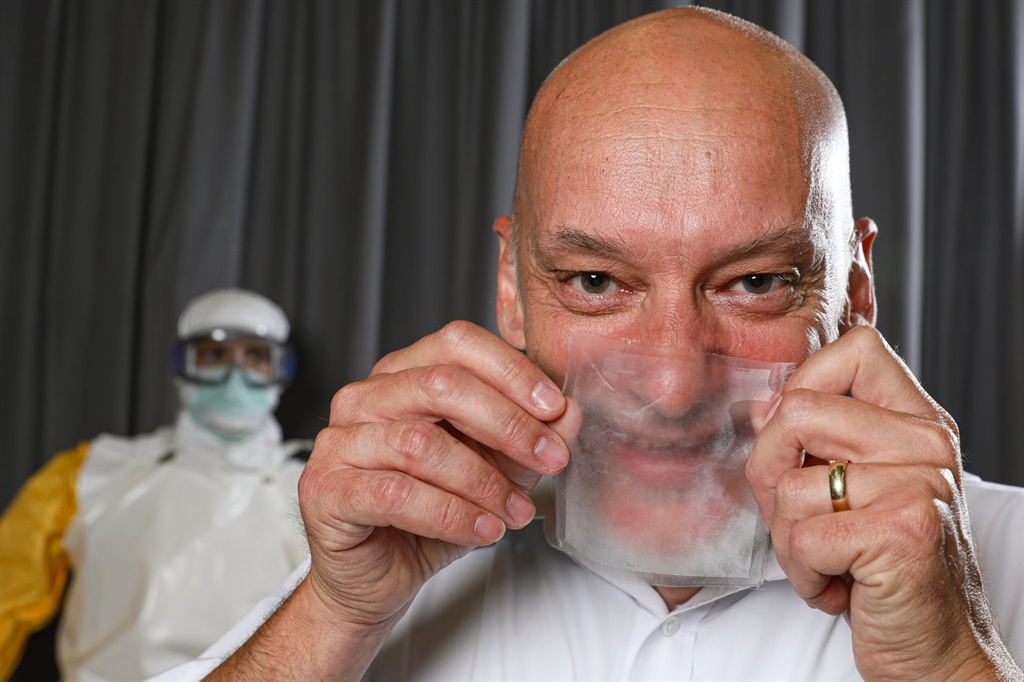
Health24.com | Swiss researchers have created a transparent, breathable surgical mask

  • A Swiss research centre developed a new material that can be make into transparent, breathable masks for healthcare professionals
  • The idea was to make it easier for health workers to communicate with their patients
  • They have already raised around R17.6 million to start the manufacturing process 

Breathable and transparent – this could be the face of future surgical masks thanks to Swiss researchers from science and technology university EPFL.

Dreamed up by the EssentialTech Centre of the university, they created a disposable surgical mask where patients can see the whole face of healthcare professionals while being treated.

Called HelloMasks, they also founded the startup HMCare to market it. There has been a boom in mask production around the world, and this surge in demand helped them to easily raise around R17.6 million to start the manufacturing process. 

READ: Masks and Covid-19: How, when and why – the latest guidelines

transparent mask

Their timing couldn’t be better. They started working on the mask two years ago – before the start of the pandemic – because they saw a need for medical practitioners to better communicate with their patients while keeping their masks on. This is especially useful for children, patients that have hearing issues, and the elderly – all who depend on visual cues for communication.

A smile from a healthcare worker also goes a long way to comfort patients. 

This was the general spirit behind the idea for the masks. Klaus Schönenberger, head of the centre, worked during the Ebola outbreak in West Africa in 2015, and saw nurses pinning photos of themselves to their chests so that patients could tell what they looked like under all the protective gear. 

He got together with Thierry Pelet, now the CEO of the start-up, and Sacha Sidjanski, a project manager at EPFL’s School of Life Sciences, who were both inspired by a storyteller at a hospital who was saddened that ill children couldn’t see her facial expression while she was entertaining them. 

READ: Running with a mask – what you should know, and how to choose the right one

[embedded content]

“Looking online, you can find prototypes of masks that are partly transparent, but they’re just normal masks with some of the fabric replaced by clear plastic,” says Pelet. These masks also fog up because the plastic isn’t breathable. 

The transparent membrane material made from polymer is biomass-based, eco-friendly, and better yet, breathable. 

[Photo of mask material]Sample of the mask’s material. (Photo: EPFL)

While designed originally for healthcare professionals – to whom it will be sold first – with the pandemic they may start marketing it to the public at large. This would be especially useful for the deaf community during the pandemic. 

They are hoping to launch in 2021

Image credit: Photo courtesy EPFL

Share Button

Coronavirus: Face coverings compulsory on public transport in England

Thousands of extra staff are deployed as passengers are told to cover their faces or risk being fined.

Share Button

Coronavirus: Blood clots targeted in treatment trial

Scientists from Imperial College London believe a hormone imbalance could be responsible.

Share Button