Scientists tried to break Einstein’s speed of light rule

In 1887, a landmark experiment reshaped our understanding of the universe. American physicists Albert Michelson and Edward Morley attempted to detect Earth’s motion through space by comparing how fast light traveled along different directions. Their experiment found no difference at all. This unexpected null result became one of the most influential outcomes in scientific history. It led Albert Einstein to propose that the speed of light is constant, a cornerstone idea behind his theory of special relativity.

Special relativity rests on the principle that the laws of physics remain the same for all observers, regardless of how they are moving relative to one another. This idea is known as Lorentz invariance. Over time, Lorentz invariance became a foundational assumption in modern physics, especially within quantum theory.

Why Question a Principle That Works So Well

Quantum theory evolved with Lorentz invariance at its core. This is especially true for quantum field theory and the Standard Model of Particle Physics, which is the most thoroughly tested scientific theory ever created and has passed experimental checks with extraordinary precision. Given this track record, it may seem strange to question Lorentz invariance after more than a century of success.

The motivation comes from another of Einstein’s breakthroughs. His theory of general relativity explains gravity as a bending of spacetime itself. Like special relativity, it has been confirmed with remarkable accuracy across many environments, from weak gravitational fields to extreme cosmic conditions.

The Clash Between Quantum Theory and Gravity

Despite their individual successes, quantum theory and general relativity do not fit together smoothly. Quantum physics describes reality using probability wave functions, while general relativity describes how matter and energy shape the geometry of spacetime. These two approaches struggle to coexist when particles move through curved spacetime while also influencing that curvature.

Efforts to combine the two theories into a single framework known as quantum gravity often run into the same obstacle. Many proposed solutions require small violations of Lorentz invariance. These violations would be extremely subtle but could offer clues about new physics beyond current theories.

Testing Einstein With Light From the Cosmos

One prediction shared by several Lorentz-invariance-violating quantum gravity models is that the speed of light may depend slightly on a photon’s energy. Any such effect would have to be tiny to match existing experimental limits. However, it could become detectable at the highest photon energies, specifically in very-high-energy gamma rays.

A research team led by former UAB student Mercè Guerrero and current IEEC PhD student at the UAB Anna Campoy-Ordaz set out to test this idea using astrophysical observations. The team also included Robertus Potting from the University of Algarve and Markus Gaug, a lecturer in the Department of Physics at the UAB who is also affiliated with the IEEC.

Their approach relies on the vast distances light travels across the universe. If photons of different energies are emitted at the same time from a distant source, even minuscule differences in their speeds could build up into measurable delays by the time they reach Earth.

Sharper Limits on New Physics

Using a new statistical technique, the researchers combined existing measurements of very-high-energy gamma rays to examine several Lorentz-invariance-violating parameters favored by theorists within the Standard Model Extension (SME). The goal was ambitious. They hoped to find evidence that Einstein’s assumptions might break down under extreme conditions.

Once again, Einstein’s predictions held firm. The study did not detect any violation of Lorentz invariance. Even so, the results are significant. The new analysis improves previous limits by an order of magnitude, sharply narrowing where new physics could be hiding.

The search is far from over. Next-generation observatories such as the Cherenkov Telescope Array Observatory are being designed to detect very-high-energy gamma rays with far greater sensitivity. These instruments will allow scientists to continue testing the deepest foundations of physics and to keep pushing Einstein’s ideas to their limits.

Share Button

I stopped paying for food and heating to spend it gambling – my period made it worse

Researchers are looking to see if there is a link between hormonal fluctuations and gambling addiction.

Share Button

A quantum discovery that breaks the rules of heating

In everyday experience, applying repeated force almost always leads to heating. Rubbing your hands together warms your skin. Striking metal with a hammer makes it hot to the touch. Even without formal physics training, people quickly learn a basic rule: when you keep driving a system by stirring it, pressing it, or hitting it, its temperature rises.

Physicists expect the same behavior at much smaller scales. In quantum systems made up of many interacting particles, continuous excitation is normally assumed to cause steady energy absorption. As energy builds up, the system should heat. But a recent experiment suggests that this intuition does not always apply at the quantum level.

Researchers from Hanns Christoph Nägerl’s group at the Department of Experimental Physics at the University of Innsbruck set out to test whether a strongly driven quantum system must inevitably heat up. Their answer was unexpected.

A Quantum Gas That Stops Absorbing Energy

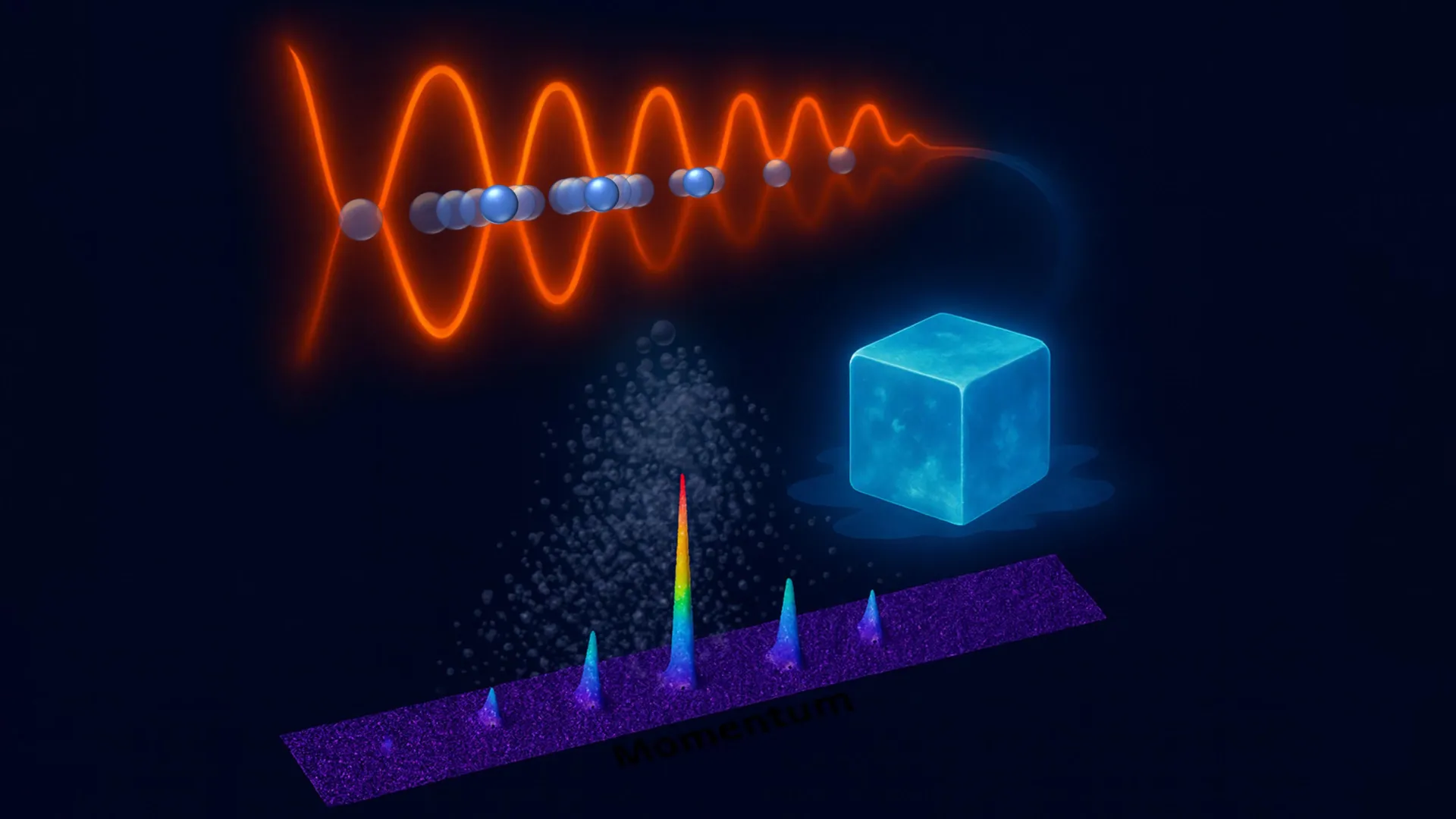
The team created a one dimensional quantum fluid made of strongly interacting atoms cooled to just a few nanokelvin above absolute zero. Using laser light, they subjected the atoms to a lattice potential that switched on and off rapidly and repeatedly. This setup created a regularly pulsed environment that effectively kicked the atoms over and over again.

Under these conditions, the atoms should have absorbed energy continuously, similar to how motion builds on a trampoline when someone keeps jumping. Instead, the researchers saw a surprising change. After a short initial period, the spread of the atoms’ momentum came to a halt. The system’s kinetic energy stopped increasing and leveled off.

Even though the atoms were still being driven and continued to interact strongly with one another, they no longer absorbed energy. The system had entered a state known as many body dynamical localization (MBDL). In this state, motion becomes locked in momentum space rather than spreading freely.

“In this state, quantum coherence and many-body entanglement prevent the system from thermalizing and from showing diffusive behavior, even under sustained external driving,” explains Hanns Christoph Nägerl. “The momentum distribution essentially freezes and retains whatever structure it has.”

An Orderly Outcome That Defied Expectations

The result surprised even the scientists involved. Lead author Yanliang Guo admitted the behavior ran counter to what they had predicted. “We had initially expected that the atoms would start flying all around. Instead, they behaved in an amazingly orderly manner.”

Lei Ying, a theory collaborator from Zhejing University in Hangzhou, China, shared that reaction. “This is not to our naïve expectation. What’s striking is the fact that in a strongly driven and strongly interacting system, many-body coherence can evidently halt energy absorption. This goes against our classical intuition and reveals a remarkable stability rooted in quantum mechanics.”

Ying also pointed out that recreating this behavior using classical computer simulations is extremely challenging. “That’s why we need experiments. They go hand in hand with our theory simulations.”

Why Quantum Coherence Matters

To see how robust this unusual state really was, the researchers altered the experiment by adding randomness to the driving sequence. The effect was immediate. Even a small amount of disorder was enough to destroy the localization.

Once coherence was disrupted, the atoms behaved more conventionally. Their momentum spread out again, kinetic energy increased rapidly, and the system resumed absorbing energy without limit. “This test highlighted that quantum coherence is crucial for preventing thermalization in such driven many-body systems,” says Nägerl.

Implications for Future Quantum Technologies

The discovery of MBDL has implications that extend well beyond basic physics. Preventing unwanted heating is one of the biggest challenges facing the development of quantum simulators and quantum computers. These devices rely on maintaining delicate quantum states that can easily be lost through energy buildup and decoherence.

“This experiment provides a precise and highly tunable way for exploring how quantum systems can resist the pull of chaos,” says Guo. By showing that heating can be halted entirely under the right conditions, the findings challenge long held assumptions about how driven quantum matter behaves.

The study opens new paths for understanding how quantum systems can remain stable even when pushed far from equilibrium.

The research has been published in Science and received financial support from the Austrian Science Fund FWF, the Austrian Research Promotion Agency FFG, and the European Union, among others.

Share Button

Flu on the rise again after Christmas mixing, says NHS

Cases up after two weeks of decline, as hospitals report rise in slips and falls because of cold snap.

Share Button

Just 10 minutes of exercise can trigger powerful anti-cancer effects

As people return to gyms or start new fitness routines in the new year, new research suggests that even a short burst of intense exercise could play a role in protecting against cancer. Scientists report that as little as 10 minutes of hard physical activity may help slow cancer growth.

The study found that brief, vigorous exercise quickly changes the mix of molecules circulating in the bloodstream. These rapid shifts appear to suppress bowel cancer cell growth while also speeding up the repair of damaged DNA.

How Exercise Changes the Bloodstream

Researchers at Newcastle University discovered that exercise raises the levels of several small molecules in the blood. Many of these molecules are known to reduce inflammation, support healthy blood vessels, and improve metabolism.

When scientists exposed bowel cancer cells in the lab to blood containing these exercise-driven molecules, they observed widespread genetic changes. More than 1,300 genes shifted their activity, including genes involved in DNA repair, energy production, and cancer cell growth.

Published in the International Journal of Cancer, the findings help clarify how physical activity may lower bowel cancer risk. The research shows that exercise sends molecular signals through the bloodstream that influence genes controlling tumor growth and genetic stability.

The results add to growing evidence that staying physically active is an important part of cancer prevention.

New Possibilities for Cancer Treatment

Dr. Sam Orange, Senior Lecturer in Clinical Exercise Physiology at Newcastle University and lead author of the study, said: “What’s remarkable is that exercise doesn’t just benefit healthy tissues, it sends powerful signals through the bloodstream that can directly influence thousands of genes in cancer cells.

“It’s an exciting insight because it opens the door to find ways that mimic or augment the biological effects of exercise, potentially improving cancer treatment and, crucially, patient outcomes.

“In the future, these insights could lead to new therapies that imitate the beneficial effects of exercise on how cells repair damaged DNA and use fuel for energy.”

Slowing Cancer Growth at the Cellular Level

The research team found that exercise increased the activity of genes that support mitochondrial energy metabolism. This helps cells use oxygen more efficiently.

At the same time, genes linked to rapid cell division were turned down, which may make cancer cells less aggressive. Blood collected after exercise also boosted DNA repair, activating a key repair gene known as PNKP.

The study included 30 volunteers, both men and women between the ages of 50 and 78. All participants were overweight or obese (a risk factor of cancer) but otherwise healthy.

Each volunteer completed a short but intense cycling test that lasted about 10 minutes. Researchers then collected blood samples and examined 249 proteins. Thirteen of those proteins increased after exercise, including interleukin-6 (IL-6), which plays a role in repairing damaged DNA.

Why Even One Workout Matters

Dr. Orange, a Clinical Exercise Physiologist at The Newcastle upon Tyne Hospitals NHS Foundation Trust, said: “These results suggest that exercise doesn’t just benefit healthy tissues, it may also create a more hostile environment for cancer cells to grow.

“Even a single workout can make a difference. One bout of exercise, lasting just 10 minutes, sends powerful signals to the body.

“It’s a reminder that every step, every session, counts when it comes to doing your best to protect your health.”

Bowel Cancer Rates and Physical Activity

Bowel cancer is the 4th most common cancer in the UK, after breast, prostate and lung cancer.

In the UK, one person is diagnosed with bowel cancer every 12 minutes, adding up to nearly 44,000 cases each year. Someone dies from the disease every 30 minutes.

Researchers estimate that regular physical activity lowers bowel cancer risk by about 20%. Exercise does not have to mean gym workouts or sports. Walking or biking to work, along with everyday activities such as gardening or cleaning, can also contribute.

Looking ahead, the research team plans to examine whether repeated exercise sessions lead to long-lasting biological changes. They also aim to study how exercise-related effects interact with common cancer treatments such as chemotherapy and radiotherapy.

Share Button

Engage 18: Stretch Goals Reshape Your Identity

Lesson 18 of the free Engage course explores how stretch goals can serve as catalysts for inner growth rather than pressure-filled achievements. You’ll learn how to approach ambitious goals by expanding your identity, working through internal limitations, and becoming someone who can step into those experiences with confidence and ease.

You’ll find the rest of the Engage course videos in the Video section.

Join the Engage Email List

Join the Engage notification list to get an email whenever a new Engage lesson is published. I also encourage you to subscribe to my YouTube channel to follow the course there.

Enjoy!

Share Button

People who come off slimming jabs regain weight four times faster than dieters

Overweight people shed large amounts on jabs but gain 0.8 kg a month on average once off them, study shows.

Share Button

This weight loss option beats Ozempic by 5 times

A new real-world comparison finds that bariatric surgery leads to dramatically more weight loss than popular injectable medications. After two years, people who underwent sleeve gastrectomy or gastric bypass lost about five times more weight than those using weekly GLP-1 receptor agonists such as semaglutide or tirzepatide,* according to research presented at the American Society for Metabolic and Bariatric Surgery (ASMBS) 2025 Annual Scientific Meeting.

The study, conducted by researchers at NYU Langone Health and NYC Health + Hospitals, showed that surgery patients lost an average of 58 pounds over two years. In contrast, patients who were prescribed a GLP-1 drug for at least six months lost about 12 pounds. That translates to 24% total weight loss for surgery patients compared with 4.7% for those using medication. Even among patients who stayed on GLP-1 therapy continuously for a full year, average weight loss reached only 7%, still far below the results seen with surgery.

Real-World Results Fall Short of Clinical Trials

“Clinical trials show weight loss between 15% to 21% for GLP-1s, but this study suggests that weight loss in the real world is considerably lower even for patients who have active prescriptions for an entire year. We know as many as 70% of patients may discontinue treatment within one year,” said lead author Avery Brown, MD, a surgical resident at NYU Langone Health. “GLP-1 patients may need to adjust their expectations, adhere more closely to treatment or opt for metabolic and bariatric surgery to achieve desired results.”

The findings highlight a key gap between controlled clinical trials and everyday use, where side effects, costs, and long-term adherence can limit the effectiveness of medication-based weight loss.

How the Study Compared Surgery and GLP-1 Medications

Researchers analyzed electronic medical record data from patients treated between 2018 and 2024 within the NYU Langone Health and NYC Health + Hospitals systems. All participants had a body mass index (BMI) of at least 35 and either underwent bariatric surgery (sleeve gastrectomy or Roux en-Y gastric bypass) or received a prescription for injectable semaglutide or tirzepatide.

After adjusting for factors such as age, BMI, and co-morbidities using average treatment effect weighting, the team compared outcomes for 51,085 patients across both groups. The study was supported by NYU CTSA grant KL2 TR001446 from the National Center for Advancing Translational Sciences at the National Institutes of Health (NIH).

Future Research and Treatment Decisions

“In future studies we will aim to identify what healthcare providers can do to optimize GLP-1 outcomes, identify which patients are better treated with bariatric surgery versus GLP-1s, and determine the role out-of-pocket costs play in treatment success,” said senior author Karan R. Chhabra, MD, MSc, a bariatric surgeon and Assistant Professor of Surgery and Population Health at NYU Grossman School of Medicine.

GLP-1 drugs have gained widespread attention, with about 12% of Americans reporting they have taken one at some point and 6% saying they currently use them. However, persistence remains a major challenge. Recent research shows that 53.6% of patients with overweight or obesity stop GLP-1 therapy within one year (53.6%), and that figure rises to 72.2% by two years.

At the same time, bariatric surgery remains underused. According to the ASMBS, more than 270,000 metabolic and bariatric procedures were performed in 2023, representing only about 1% of people who meet BMI eligibility criteria.

“While both patient groups lose weight, metabolic and bariatric surgery is much more effective and durable,” said ASMBS President Ann M. Rogers, MD, FACS, FASMBS, who was not involved in the study. “Those who get insufficient weight loss with GLP-1s or have challenges complying with treatment due to side effects or costs, should consider bariatric surgery as an option or even in combination.”

Obesity Remains a Major Health Challenge

According to the U.S. Centers for Disease Control and Prevention (CDC), obesity affects 40.3% of adults in the United States, while severe obesity impacts 9.4%. Research shows obesity can impair immune function, drive chronic inflammation, and raise the risk of many serious conditions, including cardiovascular disease, stroke, type 2 diabetes, and certain cancers.

*Semaglutide is the active ingredient in Ozempic and Wegovy and tirzepatide is the active ingredient in Zepbound and Mounjaro.

Share Button

A global cancer surge is underway and the world is not ready

Cancer cases are exploding worldwide — and nearly half of the deaths could be prevented with better prevention, early detection, and access to care.

  • New cancer cases worldwide have more than doubled since 1990, reaching 18.5 million in 2023. Over the same period, annual cancer deaths rose by 74 percent to 10.4 million (both excluding non-melanoma skin cancers), with most cases now occurring in low- and middle-income countries.
  • More than 40 percent of cancer deaths globally are linked to 44 modifiable risk factors, including tobacco use, unhealthy diets, and high blood sugar. This means a large share of cancer deaths could be prevented through proven public health measures.
  • Looking ahead, researchers predict global cancer cases will increase by 61 percent over the next 25 years, reaching 30.5 million new diagnoses a year by 2050. Annual cancer deaths are forecast to rise by nearly 75 percent to 18.6 million, largely driven by population growth and aging populations.
  • While age-adjusted cancer death rates have declined worldwide, this progress has not reached everyone. In several low- and middle-income countries, both cancer rates and total deaths continue to rise.
  • The researchers stress that responding to this growing cancer burden will require stronger action from governments and policymakers, including expanded prevention efforts, earlier diagnosis, and better access to effective treatment at national, regional, and global levels.

A Rapid Global Rise in Cancer

The global burden of cancer has grown dramatically over the past three decades. Since 1990, the number of newly diagnosed cancer cases worldwide has more than doubled, reaching 18.5 million in 2023. Over the same period, annual cancer deaths rose by 74 percent to 10.4 million (both excluding non-melanoma skin cancers). Most of those affected now live in low- and middle-income countries.

A significant share of this burden is linked to preventable causes. More than 40 percent of cancer deaths worldwide are associated with 44 modifiable risk factors, including tobacco use, poor diet, and high blood sugar. This connection highlights major opportunities to reduce cancer deaths through prevention.

Looking ahead, researchers project that new cancer cases will climb another 61 percent over the next 25 years, reaching 30.5 million annually by 2050. Cancer deaths are forecast to rise by nearly 75 percent over the same period, reaching 18.6 million per year. These increases are largely driven by population growth and the continued aging of populations worldwide.

While age-adjusted global cancer death rates have declined overall, this progress has not been evenly shared. In several low- and middle-income countries, both the number of cancer deaths and the rates themselves are still increasing. The authors stress that meeting this growing challenge will require stronger efforts from governments and policymakers to prevent cancer, expand early diagnosis, and improve treatment access at national, regional, and global levels.

Projections Warn of a Growing Crisis

Between 1990 and 2023, global cancer cases and deaths rose sharply despite advances in treatment and expanded efforts to address cancer risk factors. Without urgent action and increased funding, researchers estimate that by 2050, 30.5 million people will receive a new cancer diagnosis each year and 18.6 million will die from the disease. More than half of new cases and nearly two-thirds of deaths are expected to occur in low- and middle-income countries (LMICs), according to a major analysis by the Global Burden of Disease Study Cancer Collaborators published in The Lancet.

Although the total number of cancer cases and deaths is projected to increase significantly between 2024 and 2050, age-adjusted incidence and mortality rates are not expected to rise globally. This suggests that most of the growth in cancer burden will be driven by demographic changes rather than worsening individual risk.

Even so, the projected improvements fall well short of the United Nations Sustainable Development Goal (SDG) to cut premature deaths from non-communicable diseases, including cancer, by one-third by 2030.

Experts Call for Greater Global Action

“Cancer remains an important contributor to disease burden globally and our study highlights how it is anticipated to grow substantially over the coming decades, with disproportionate growth in countries with limited resources,” said lead author Dr. Lisa Force from the Institute for Health Metrics and Evaluation (IHME), University of Washington, USA. “Despite the clear need for action, cancer control policies and implementation remain underprioritized in global health, and there is insufficient funding to address this challenge in many settings.”

She added, “Ensuring equitable cancer outcomes globally will require greater efforts to reduce disparities in health service delivery such as access to accurate and timely diagnosis, and quality treatment and supportive care.”

The analysis draws on data from population-based cancer registries, vital registration systems, and interviews with family members or caregivers of people who died from cancer. It provides updated global, regional, and national estimates covering 1990 to 2023 across 204 countries and territories, examining 47 cancer types or groupings and 44 attributable risk factors.[1] The study also projects the global cancer burden through 2050 and evaluates progress toward the UN SDG target for reducing non-communicable disease deaths between 2015 and 2030.

Uneven Cancer Burden Across Countries

In 2023, global cancer deaths reached 10.4 million, while new cases climbed to 18.5 million (both excluding non-melanoma skin cancers). Compared with 1990, this represents increases of 74 percent in deaths and 105 percent in new cases.

Despite an overall 24 percent decline in age-standardized cancer death rates worldwide between 1990 and 2023, this improvement has largely occurred in high- and upper-middle-income countries. In contrast, age-standardized cancer incidence increased by 24 percent in low-income countries and by 29 percent in lower-middle-income countries, highlighting growing disparities in regions with fewer resources (see table 1 in paper).

From 1990 to 2023, Lebanon recorded the largest percentage increase in age-standardized cancer incidence and mortality rates for both sexes combined. Over the same period, the United Arab Emirates experienced the greatest decline in age-standardized incidence, while Kazakhstan saw the largest decrease in age-standardized death rates.

Breast cancer was the most commonly diagnosed cancer worldwide in 2023 for both sexes combined. Tracheal, bronchus, and lung (TBL) cancer remained the leading cause of cancer deaths globally (see table 2 in paper).

Preventable Risks Drive Millions of Deaths

The study estimates that 42 percent (4.3 million) of the 10.4 million cancer deaths in 2023 were linked to 44 modifiable risk factors, pointing to significant opportunities for prevention.

Behavioral risk factors accounted for the largest share of cancer deaths across all income levels in 2023. Tobacco use alone contributed to 21 percent of cancer deaths worldwide. Tobacco was the leading risk factor in every income group except low-income countries, where unsafe sex was the primary risk factor, linked to 12.5 percent of cancer deaths.

Men were more likely than women to die from cancers associated with modifiable risks. In 2023, 46 percent of cancer deaths in men were linked to factors such as tobacco use, unhealthy diet, high alcohol consumption, occupational risks, and air pollution. Among women, 36 percent of cancer deaths were associated with modifiable risks, with tobacco, unsafe sex, unhealthy diet, obesity, and high blood sugar playing the largest roles (see appendix 2 table 6).

“With four in 10 cancer deaths linked to established risk factors, including tobacco, poor diet, and high blood sugar, there are tremendous opportunities for countries to target these risk factors, potentially preventing cases of cancer and saving lives, alongside improving accurate and early diagnosis and treatment to support individuals who develop cancer,” said co-author Dr. Theo Vos from IHME. “Reducing the burden of cancer across countries and worldwide demands both individual action and effective population-level approaches to reduce exposure to known risks.”

Equity and Prevention as Global Priorities

The researchers emphasize that cancer prevention must be integrated into health policies in LMICs and that equitable cancer control efforts are essential to ensure timely and effective care for all patients.

“The rise of cancer in LMICs is an impending disaster,” said co-author Dr. Meghnath Dhimal from the Nepal Health Research Council. “There are cost-effective interventions for cancer in countries at all stages of development. These cancer burden estimates can help broaden the discussion around the importance of cancer and other non-communicable diseases in the global health agenda. To control the growth of non-communicable diseases including cancer in LMICs, an interdisciplinary approach for evidence generation and multi-sectoral collaboration and coordination for implementation are urgently needed.”

Dr. Force noted that the findings can help guide future policy. “These new estimates and forecasts can support governments and the global health community in developing data informed policies and actions to improve cancer control and outcomes around the world. They can also support tracking of progress towards global and regional cancer targets.”

She added, “Our analysis also highlights the need for more data from sources such as cancer and vital registries, particularly in lower resource settings. Supporting cancer surveillance systems is crucial to informing both a local and global understanding of cancer burden.”

Study Limitations and Data Gaps

The authors acknowledge several limitations. The estimates rely on the best available data but are constrained by gaps in high-quality cancer data, especially in resource-limited countries. Current Global Burden of Disease estimates do not account for several infectious diseases known to increase cancer risk in some lower-income regions, including Helicobacter Pylori and Schistosoma haematobium, which may lead to underestimation of cancer deaths linked to modifiable risks.

The projections also do not incorporate the effects of the COVID-19 pandemic, recent conflicts, or future medical breakthroughs that could significantly alter cancer trends.

In a linked Comment, Dr. Qingwei Luo and Dr. David P Smith from The University of Sydney and Cancer Council NSW, who were not involved in the study, wrote: “To ensure meaningful progress in reducing the global cancer burden, it is imperative that governments prioritize funding, strengthen health systems, reduce inequalities, and invest in robust cancer control initiatives and research on prevention, intervention, and implementation — because the future of cancer control depends on decisive, collective action today.”

Notes

  1. Modifiable Risk Factors
    • Level 1: Behavioral, Environmental / Occupational, Metabolic
    • Level 2: Air pollution, Dietary risks, Drug use, High alcohol use, High body-mass index, High fasting plasma glucose, Low physical activity, Occupational risks, Other environmental risks, Tobacco, unsafe sex.
    • Level 3: Chewing tobacco, Diet high in processed meat, Diet high in red meat, Diet high in sodium, Diet low in calcium, Diet low in fibre, Diet low in fruits, Diet low in milk, Diet low in vegetables, Diet low in whole grains, Occupational carcinogens, Particulate matter pollution, Residential radon, Second-hand smoke, Smoking
    • Level 4: Ambient particulate matter pollution, Household air pollution from solid fuels, Occupational exposure to arsenic, Occupational exposure to asbestos, Occupational exposure to benzene, Occupational exposure to beryllium, Occupational exposure to cadmium, Occupational exposure to chromium, Occupational exposure to diesel engine exhaust, Occupational exposure to formaldehyde, Occupational exposure to nickel, Occupational exposure to polycyclic aromatic hydrocarbons, Occupational exposure to silica, Occupational exposure to sulfuric acid, Occupational exposure to trichloroethylene

The study was funded by the Gates Foundation, St Jude Children’s Research Hospital, and St Baldrick’s Foundation. It was conducted by the GBD 2023 Cancer Collaborators.


Share Button

Wildfires are polluting the air far more than thought

As wildfires move across forests, grasslands, and peatlands, they release large amounts of gases and particles into the air. Scientists now say the pollution from these fires may have been underestimated. A study published in ACS’ Environmental Science & Technology reports that wildfires and prescribed burns (i.e., wildland fires) around the world likely emit much higher levels of gases that contribute to air pollution than earlier estimates suggested. The research also highlights several regions where emissions from fires overlap with pollution from human activities, creating especially difficult air quality challenges.

“Our new estimates increase the organic compound emissions from wildland fires by about 21%,” says Lyuyin Huang, the first author of the study. “The inventory provides a foundation for more detailed air-quality modeling, health-risk assessment, and climate-related policy analysis.”

Each year, wildfires burn through vast areas of vegetation, sending a complex mixture of water vapor, ash, and carbon-based chemicals into the atmosphere. Some of these chemicals are volatile organic compounds (VOCs), which readily exist as gases. Others only evaporate and become gases at warmer temperatures and are classified as intermediate- and semi-volatile organic compounds (IVOCs and SVOCs, respectively). Once in the air, these partially volatile compounds more easily form fine particles that can be harmful if breathed in, compared with VOCs.

Overlooked chemicals in wildfire smoke

Despite their importance, IVOCs and SVOCs are often missing from wildfire emission studies. Their large numbers and chemical complexity make them difficult to measure, leading many past assessments to focus mainly on VOCs. Researchers led by Shuxiao Wang aimed to include IVOCs and SVOCs alongside VOCs to better capture how wildland fires affect air quality, human health, and climate.

To do this, the team first examined a global database tracking burned land from forest, grass, and peatland wildland fires between 1997 and 2023. They then gathered information on the VOCs, IVOCs, SVOCs, and other extremely low volatility organic compounds released as different types of vegetation burn. When direct field measurements were not available, the researchers relied on laboratory experiments to estimate the chemicals produced. These data were combined to calculate yearly wildfire emissions worldwide.

Global totals and pollution hotspots

Using this approach, the researchers estimated that wildland fires released an average of 143 million tons of airborne organic compounds each year during the study period. This figure is about 21% higher than previous estimates, indicating that wildfire emissions, particularly IVOCs and SVOCs, contribute more to air pollution than scientists had recognized.

When wildfire emissions were compared with earlier estimates of pollution from human activities, the researchers found that human sources produced more airborne compounds overall. However, both sources released similar amounts of IVOCs and SVOCs. The comparison also revealed shared emission hotspots, including Equatorial Asia, Northern Hemisphere Africa, and Southeast Asia. According to the researchers, air pollution in these regions is especially complex and will require different strategies to reduce emissions from both wildfires and human activities.

The authors acknowledge funding from the National Natural Science Foundation of China, National Key R&D Program of China, the Samsung Advanced Institute of Technology, and the Center of High Performance Computing at Tsinghua University.

Share Button