Men with advanced prostate cancer can now take highly targeted hormone therapies at home.


Men with advanced prostate cancer can now take highly targeted hormone therapies at home.
The role that atmospheric water vapor plays in weather is complex and not clearly understood. However, University of Arizona researchers have started to tease out the relationship between morning soil moisture and afternoon rainfall under different atmospheric conditions in a new study in the journal Geophysical Research Letters.
“The prevailing wisdom on the relationship between soil moisture and rainfall is that if you have wetter soil in the morning, you’ll have a greater occurrence of rainfall in afternoon, but it’s more complicated than that,” said lead author Josh Welty, a UArizona doctoral student in the Department of Hydrology and Atmospheric Sciences. “On a global scale, we see evidence that you can have greater chances of afternoon rainfall over both wet and dry soil conditions, depending on atmospheric moisture.”
The team, which also included researchers from the Desert Research Institute in Nevada and NASA’s Goddard Space Flight Center, used satellite-based observations of soil moisture and afternoon rainfall in the northern hemisphere from the last five years. The work was supported by NASA and is based on NASA satellite data from the Global Precipitation Measurement mission and the Soil Moisture Active Passive satellite, as well as atmospheric moisture and movement data from the Modern-Era Retrospective analysis for Research and Applications Version 2, or MERRA-2, model, which incorporates satellite observations.
The researchers found that on days when wind blows in little atmospheric moisture, afternoon rainfall is more likely to occur over wetter soils or higher relative humidity. On days when wind introduces lots of atmospheric moisture, afternoon rainfall is more likely over drier soils or lower relative humidity. The team also found that for both conditions, afternoon rainfall occurrence is more likely with warmer morning soil or air temperature.
The researchers focused on days in which afternoon rainfall occurred and noted the difference between the number of rainfall days that occurred over wetter-than-average soil and the number of rainfall days that occurred over drier-than-average soil. They then grouped their results into three categories: high, mid and low atmospheric moisture transport by wind.
This research builds on a 2018 study that identified soil moisture’s role in afternoon rainfall amount in the Southern Great Plains of Oklahoma. The new findings show that the relationship between soil moisture, afternoon rainfall and atmospheric moisture in Oklahoma doesn’t apply across the entire northern hemisphere.
“Over the Southern Great Plains, we found that when the wind brings less moisture, dry soils are associated with increases in rainfall amount; and when the wind brings greater moisture, wet soils are associated with increases in rainfall amount. In the current study, we find that, actually, in many regions, the opposite is true for the likelihood of afternoon rainfall,” Welty said.
Understanding the role of water vapor in weather is important because its effects are felt everywhere, according to Welty’s thesis adviser and paper co-author Xubin Zeng, Agnese N. Haury Endowed Chair in Environment and director of the Climate Dynamics and Hydrometeorology Center and Land-Atmosphere-Ocean Interaction Group.
“For example, for the Southern Great Plains there are many tornado activities because there is water vapor moving in from the Gulf of Mexico. Also, on the California coast you talk about severe flooding from atmospheric rivers,” which are corridors of concentrated water vapor that can quickly precipitate once hitting a mountain range, causing mass flooding,” Zeng said.
“Water vapor brought in by the winds is an important source to understand. In the past, people didn’t pay enough attention to it in studying how land conditions affect rainfall, potentially making their results misleading. Once we consider the wind’s movement of water vapor, the results become more robust,” Zeng said.
Understanding this relationship is even more important as global warming changes patterns of atmospheric moisture, soil moisture and more. Such changes will not only have effects on weather and natural disasters, but also on agriculture, Zeng said.
“The results really show the complexity of the land’s influence on weather and climate,” said physical scientist and paper co-author Joe Santanello from NASA’s Goddard Space Flight Center, who chairs the NASA-supported Local Land-Atmosphere Coupling working group to improve weather and climate models. “When you add in the human factor of irrigation or land use that changes the dryness or wetness of the soils, which we currently don’t represent well in the models, we potentially have additional downstream effects on weather and climate that we haven’t foreseen.”
The next step is to assess how these relationships play out in global climate and weather forecasting models.
“Our findings are observational, but now, we want to use computer modeling to help us understand why drier or wetter soil could enhance rainfall likelihood,” Zeng said. “We know it’s true, but we don’t quantitatively know why.”
A molecular biologist at the University of Massachusetts Amherst who has for decades studied the nightmarish group of fatal diseases caused by prions — chronic wasting disease in deer, mad cow in cattle and its human analog — credits a middle-of-the-night dream for a crucial insight, a breakthrough she hopes could lead to a cure.
In a new paper in Nature Structural and Molecular Biology by Tricia Serio, dean of the College of Natural Sciences and professor of biochemistry and molecular biology at UMass Amherst, and others, report an unanticipated role for prion nucleation seeds that enhances their ability to appear and resist curing. Nucleation seeds are molecule clusters that form when prions attach to one another and change shape. “Once that change occurs, it creates a very stable aggregate known as amyloid that was thought to be impossible to inactivate by normal means,” Serio notes.
The infectious prion is an unusual pathogen, a protein without nucleic acid, she explains. Prion diseases were first described in the 1800s, and include scrapie in sheep and other neurodegenerative diseases such as mad cow disease and in humans, Creutzfeldt-Jakob disease, fatal familial insomnia and kuru from ritual cannibalism in Papua, New Guinea.
Serio says, “These diseases are always fatal,” but she and colleagues including first author Janice Villali work with natural yeast prions that can’t be transmitted to humans or cause disease. “It’s a good model system that is not infectious, and it grows really fast.”
It has been known for decades that prion protein (PrP) misfolding is a key part of the disease process, she adds. In these diseases, proteins fold into 3D shapes that cause disease. In mammals, the protein quality control system responds to folding mistakes with “chaperone” molecules that seek out misfolds and try to refold and correct mistakes.
But prions misfold so quickly that chaperones can’t keep up, Serio says. “That part was known,” she adds, but scientists still could not figure out what was limiting the chaperone system, allowing prions to persist. “One key factor controlling the transition from harmless protein to invincible disease menace was so hidden and obscure that it had not been previously proposed,” she says.
Then, after a conference where she had talked intensely all day about prions, Serio had the crucial dream. “It came to me that the size of the aggregate nucleation seed mattered,” she recalls. “So we went back and designed experiments to test the minimum size idea by mathematical modeling with co-first author Jason Dark, and it worked. That led to this investigation and why we’re really excited about this paper.”
The first revelation was a surprise, Serio recalls — prion aggregates come in different sizes. “Everybody knew of the nucleation seed, but no one knew they could be different sizes for the same protein.” As prion proteins physically attach and the complex switches from one state to another, this minimum size is really important — but why?
It turns out, Serio says, that the seed complex must double in size for the disease to persist. It it starts with four molecules, it must reach eight. “This minimum size determines whether the chaperone can win. Four has to get to eight, but if you catch it early enough, if you pull out one side of the square, the amyloid structure can’t double. Chaperones prevent the disease by preventing it from doubling in that first round.”
Another discovery is that if the minimum nucleation seed starting size is 10 and it must reach 20 to create two amyloids, that complex is an easier problem for chaperones to nip, Serio points out. “In yeast, the bigger the initial seed, the more difficult it is for the disease to resist chaperones and take hold because these protein quality controls have more time to act; the smaller seed is harder to cure because it doubles more quickly.”
She adds, “We realized that if we could control this transformation, we could stop the disease from arising, but we also realized that the same barrier would control going backwards and unfolding an established amyloid. The literature says that’s a silly idea because prions survive and resist killing so well. But once we figured out this minimum size, we showed that it could also predict the frequency of prion curing under different growth conditions. Looking back, we can’t figure out how we missed it.”
Serio says she and her team now know there are at least three nucleation sizes possible, and, “I suspect that it will turn out to be an infinite number,” she adds. “In fact, we have shown that we can shift the nucleation size by changing the shape of the prion or by expressing a mutant form of the protein, opening the door to therapeutic intervention to reverse this process.”
Pu Zhang likes to compare his team’s research on liquid metals to the Terminator — specifically 1991’s Terminator 2: Judgment Day, in which a killer robot sent from a grim future can transform into anyone and anything in pursuit of its human prey.
When told maybe that’s not the best comparison, Zhang laughed and made a confession: “To be honest, I’ve never watched that movie!”
Zhang — an assistant professor of mechanical engineering at Binghamton University, State University of New York — has much more benign plans for his latest study, which will be published in the May issue of the journal Additive Manufacturing.
Working with PhD students Fanghang Deng and Quang-Kha Nguyen, Zhang developed what he calls “the first liquid metal lattice in the world,” which is made from Field’s alloy. The mix of bismuth, indium and tin — named after its inventor, Simon Quellen Field — becomes liquid at the relatively low melting point of 62°C (144°F).
Field’s alloy is currently used as a liquid-metal coolant in nuclear engineering, among other applications, but the Watson team demonstrates other potential applications. They combined the metal lattice material with a rubber shell through a hybrid manufacturing process. This novel process integrates 3D printing, vacuum casting and conformal coating (which is used on electronic circuitry to protect against moisture, dust, chemicals and temperature extremes).
“Without the shell, it won’t work, because the liquid metal will flow away,” Zhang said. “The shell skeleton controls the overall shape and integrity, so the liquid metal itself can be confined in the channels. We spent over half a year developing this manufacturing process, because this new lattice material is very hard to process. You need to find the best materials and processing parameters.”
The Watson team made a series of prototypes that regain their shapes after being heated to the melting point, including “spider web”-like mesh antennas, honeycombs and soccer balls, as well as the letters BUME (for Binghamton University mechanical engineering, of course). Perhaps the most Terminator-like one, though, is a hand that slowly opens as the metal lattice melts.
These prototypes offer remarkable visuals, but the properties behind them could inspire myriad uses. When the liquid metal is in a solid state, it is very safe and strong. It absorbs a lot of energy when crushed; then, after some heating and cooling, it returns to its original shape and can be reused.
Zhang has studied lattice materials since his PhD work at the University of Pittsburgh in 2012, and he sees in this new liquid metal research many possibilities for NASA or private space-faring companies. For instance, satellite designers could pack the “spider web” into a small package and then unfold it as an antenna when in orbit. Perhaps structures for future settlements on the moon or Mars could take up less room onboard an exploration vessel and then be expanded when astronauts reach their destination.
It might even make sense to build an interplanetary ship using a metal lattice material, he said: “A spacecraft may crash if it lands on the moon or Mars with some kind of impact. Normally, engineers use aluminum or steel to produce the cushion structures, but after you land on the moon, the metal absorbs the energy and deforms. It’s over — you can use it only once.”
“Using this Field’s alloy, you can crash into it like other metals, but then heat it up later to recover its shape. You can use it over and over again.”
The Watson team is already exploring how to build on this metal lattice research, including different structure types and improved coating materials. Zhang still has a final goal in mind: “Our dream is to build a liquid metal lattice robot, and now we have a hand, so we’re one step further.”
Just as long as it’s a friendly robot.
This morning while running, I started listening to The Art of Possibility audiobook, which is about stepping outside of our mental boxes.
The first tool in the book is to acknowledge that whatever story you tell yourself is all an invention anyway, so you may as well create your own story. If your old story is keeping you stuck, change it.
Sometimes it’s hard to see what your old story actually is. I’ve found that a good way to see the limitations of my old story is to consider a stretch goal and then pay attention to my objections. Why do I see that goal as being a stretch? Why do I think it would be difficult to achieve?
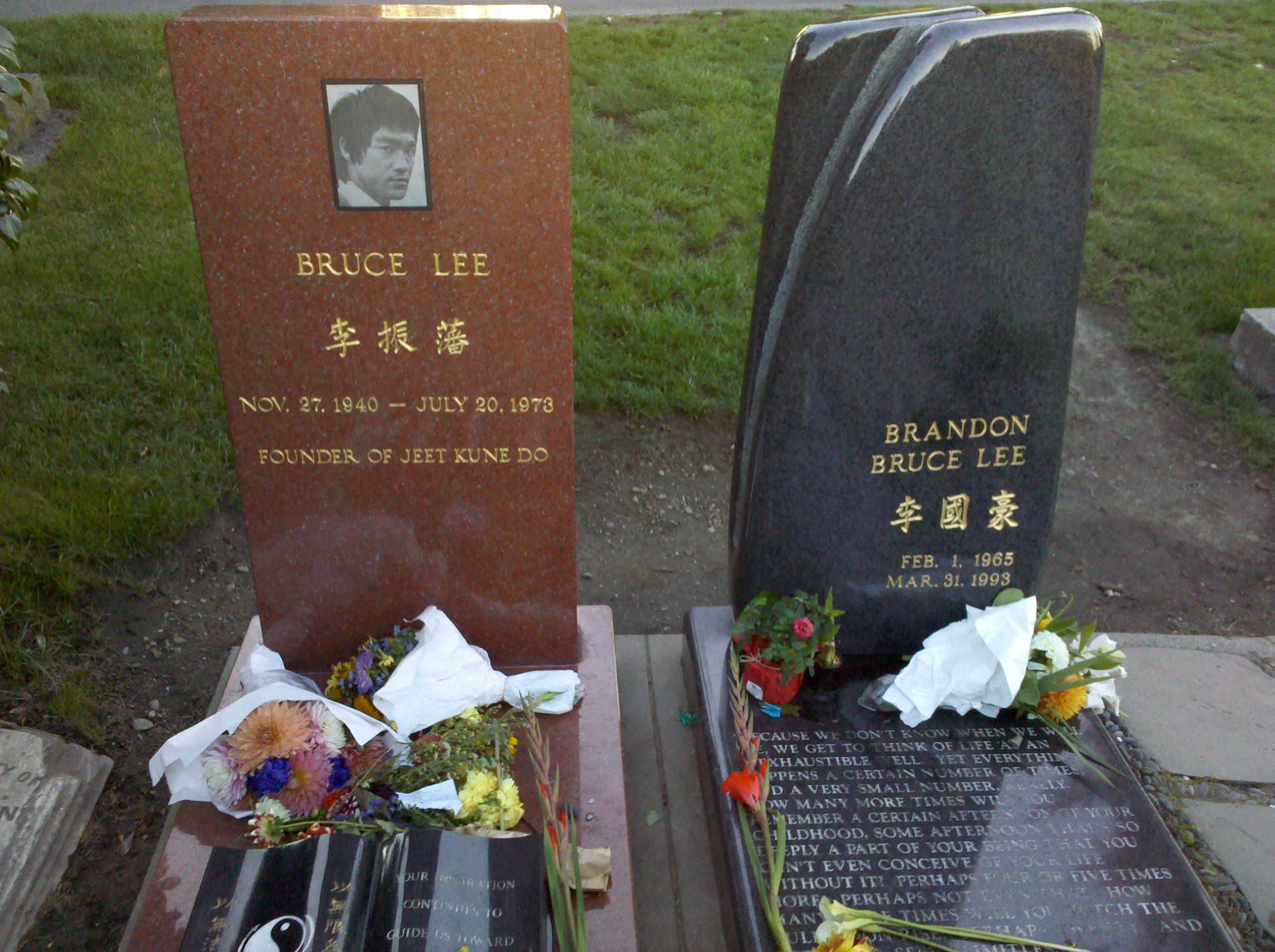
When I learned that Bruce Lee used to run 10 kilometers (6.2 miles) per day, I thought, Wow… that’s a lot of running. Then I wondered if I could do that too someday and what it would be like to run that much every single day.
I immediately started thinking of the obstacles, like the fact that I live in a very hilly neighborhood, and running 10K of these hills is a lot harder than running on a flat route. I could drive to a flatter area in less than 10 minutes, but then that would add some driving time for every run. Or I could go to a closer but fairly short semi-flat stretch and just run back and forth, which would be pretty boring to do every day.
I’ve done a lot of distance running, mostly in my 20s, including running a marathon. But running 10K per day seems like a lot to maintain as an ongoing habit.
I can easily run 5K of hills every day. That would be in my comfort zone. But 10K feels like it’s across some imaginary boundary line. What makes it a lot though? There are people who wouldn’t consider 10K per day a big deal, but my mindset frames it as being a big deal, which makes it seem harder than it has to be.
I’ve surely crossed into areas that other people would see as being beyond their own imaginary lines. Going 40 days without food might be one example. Being vegan for 23+ years could be another.
For some people making a living without a job would be a big deal to them. To me it’s just normal life. Why would I ever need a job? Making someone the boss of me seems silly and unnecessary. I’d rather choose my own projects.
Our stories define our boundaries. When we make something a big deal, we push it away. By defining 10K per day as a big deal, I push it away.
Could I actually do it though? Physically yes. I ran more than 10K on Sunday, then 7K yesterday and 7K this morning. So I’m in the vicinity. The barrier isn’t physical because I can physically run 10K no problem – all hills too. The barrier to doing it daily is mental. The mind gets in the way.
Is 10K per day a super important goal for me? Not really. But I’d like to keep leaning in that direction for a while and push through that mental barrier to see what it’s like on the other side. I’m used to 5K runs, so bumping to 7K daily runs already feels like a bit of a stretch. Eventually 7K will start to feel normal. I want to reach the point where after running 7K of hills each morning, it doesn’t feel like I did a long run; it just feels like I did a run. Then I can work up to 8K, 9K, and see if I can hold at 10K for a while, like for at least a month.
When my mind says, “You can’t do that. That’s too far, too much, too excessive,” another part of my mind wants to prove it wrong. It wants to push through that limited mindset to make sure it doesn’t define me.
What matters most is the ongoing practice of identifying personal limitations and busting them up, so they can’t hold you back. It’s not that any one limitation is that big of a deal, but what is a big deal is letting those limitations box you in you when you might want something more from life.
What personal limitation would you like to demolish? Is it financial? Physical? Social? Creative?
Realize that it’s all mental. Financially it’s possible. Physically it’s possible. Socially it’s possible. Creatively it’s possible. The invitation is to bust up the mental patterns that make it seem impossible. And to do that you must cross some of those lines that you’re framing as uncrossable.
Strengthen protection for high-risk people while easing restrictions for others, scientists say.

As we know by now, those with underlying conditions and chronic health issues are more likely to suffer serious consequences should they become infected with the new coronavirus.
According to a study reported in the journal Cell Metabolism, there is evidence that those with type 2 diabetes are more likely to suffer serious complications, should they be infected with the new coronavirus.
Luckily, if blood sugar is well-controlled, this might not be the case, according to experts.
“We were surprised to see such favourable outcomes in well-controlled blood glucose groups among patients with Covid-19 and pre-existing type 2 diabetes,” says senior author Hongliang Li of Renmin Hospital of Wuhan University in a news report.
“Considering that people with diabetes had a much higher risk for death and various complications, and there are no specific drugs for Covid-19, our findings indicate that controlling blood glucose well may act as an effective auxiliary approach to improve the prognosis of patients with Covid-19 and pre-existing diabetes.”
According to Dr Zweli Mkhize, the South African Minister of Health, data from patients who have been hospitalised suggest that co-morbidities do exacerbate the symptoms and cause a more negative outcome during the Covid-19 pandemic. He specifically referred to diabetes, hypertension and cardiac disease in his report.
According to the latest figures, about four million South African adults have diabetes – a prevalence of 12.8%. Li’s study also shows that those admitted to hospital with Covid-19 and have type 2 diabetes as a co-morbidity are more likely to require more medical interventions and are generally higher at risk of more serious symptoms.
Li also mentioned that those with better-controlled blood sugar levels and a generally healthier lifestyle are less likely to suffer serious consequences from Covid-19, and are less likely to die from complications. He says that this highlights the importance for those with diabetes to keep on monitoring their condition throughout the pandemic.
Li pointed to three new findings:
While diabetes should be controlled all-year-round, it’s especially important during the Covid-19 epidemic. Here are some more tips from a previous Health24 article:
READ | Why is coronavirus a bigger worry for people with diabetes?
READ | Understanding the risky combination of diabetes and the coronavirus

A Paris doctor says a patient first diagnosed with pneumonia is now confirmed as having had Covid-19.

Hundreds of millions of Americans heeded recent government advice and rushed to wear cloth face masks, hoping they might prevent transmission of the new coronavirus.
But there’s another option: The clear plastic face shield, already in use by many healthcare personnel.
Now, a team of experts say face shields might replace masks as a more comfortable and more effective deterrent to Covid-19.
“Face shields, which can be quickly and affordably produced and distributed, should be included as part of strategies to safely and significantly reduce transmission in the community setting,” said a trio of physicians from the University of Iowa.
Reporting in the Journal of the American Medical Association, experts led by Dr Eli Perencevich, of the university’s department of internal medicine, and the Iowa City VA Health Care System, said the face shield’s moment may have come.
While the US Centers for Disease Control and Prevention began advocating the use of cloth masks to help stop Covid-19 transmission in April, laboratory testing “suggests that cloth masks provide [only] some filtration of virus-sized aerosol particles”.
According to Perencevich’s group, “face shields may provide a better option”.
To be most effective in stopping viral spread, a face shield should extend to below the chin. It should also cover the ears and “there should be no exposed gap between the forehead and the shield’s headpiece,” the Iowa team members said.
Shields have a number of advantages over masks, they added. First of all, they are endlessly reusable, simply requiring cleaning with soap and water or common disinfectants. Shields are usually more comfortable to wear than masks, and they form a barrier that keeps people from easily touching their own faces.
When speaking, people sometimes pull down a mask to make things easier – but that isn’t necessary with a face shield. And “the use of a face shield is also a reminder to maintain physical distancing, but allows visibility of facial expressions and lip movements for speech perception,” the authors pointed out.
And what about the ability of a face shield to prevent coronavirus transmission?
According to the Iowa team, large-scale studies haven’t yet been conducted. But “in a simulation study, face shields were shown to reduce immediate viral exposure by 96% when worn by a simulated healthcare worker within 18 inches of a cough.”
“When the study was repeated at the currently recommended physical distancing distance of 6ft (1.8m), face shields reduced inhaled virus by 92%,” the authors said.
No studies have yet been conducted to see how well face shields help keep exhaled or coughed virus from spreading outwards from an infected wearer, Perencevich and his colleagues said, and they hope that studies on that issue will be conducted.
And they stressed that face shields should only be one part of any infection control effort, along with physical distancing and hand-washing.
There will never be any intervention – even a vaccine – that can guarantee 100% effectiveness against the coronavirus, the authors said, so face shields shouldn’t be held to that standard.
Dr Robert Glatter is on the front lines of the Covid-19 pandemic in his role as emergency physician at Lenox Hill Hospital in New York City. Reading over the new report, he agreed that “common sense” measures are crucial in curbing infections.
“One approach that makes the most sense, especially in light of the limitations of face masks and face coverings, is the use of face shields,” Glatter said.
“While we don’t have hard trials or data on the efficacy of face shields at this time, early data from their use in patients with influenza [which is droplet-spread] is promising,” he noted. “What’s clear is that their success in hospital settings provides the basis for their utility in the community setting as we relax physical distancing going forward.”
READ | You’re wearing a face mask – are you wearing it correctly?
READ | What material is best for your DIY face mask? The answer may surprise you
READ | If you’re making a DIY face mask, these are the best materials to use according to science

If the Isle of Wight trial is successful, the app could be ready nationwide within weeks, ministers say.
