Will The Ridiculing Of Matt Hancock Skewer Him, Or Spare Him?

One of the tabloid-tastic details of The Sun’s jaw-dropping scoop on Matt Hancock was that “the office where the tryst happened is where Mr Hancock famously hangs his Damien Hirst portrait of the Queen”.

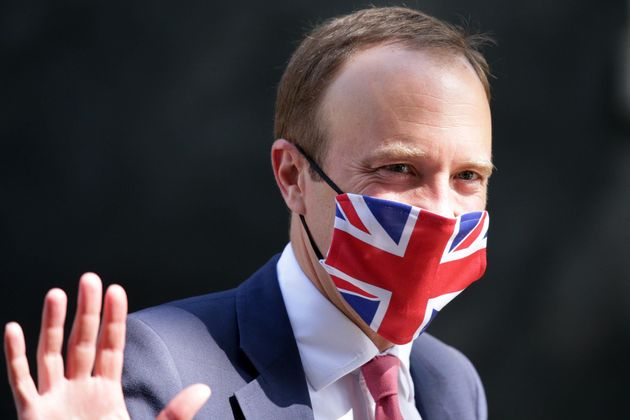
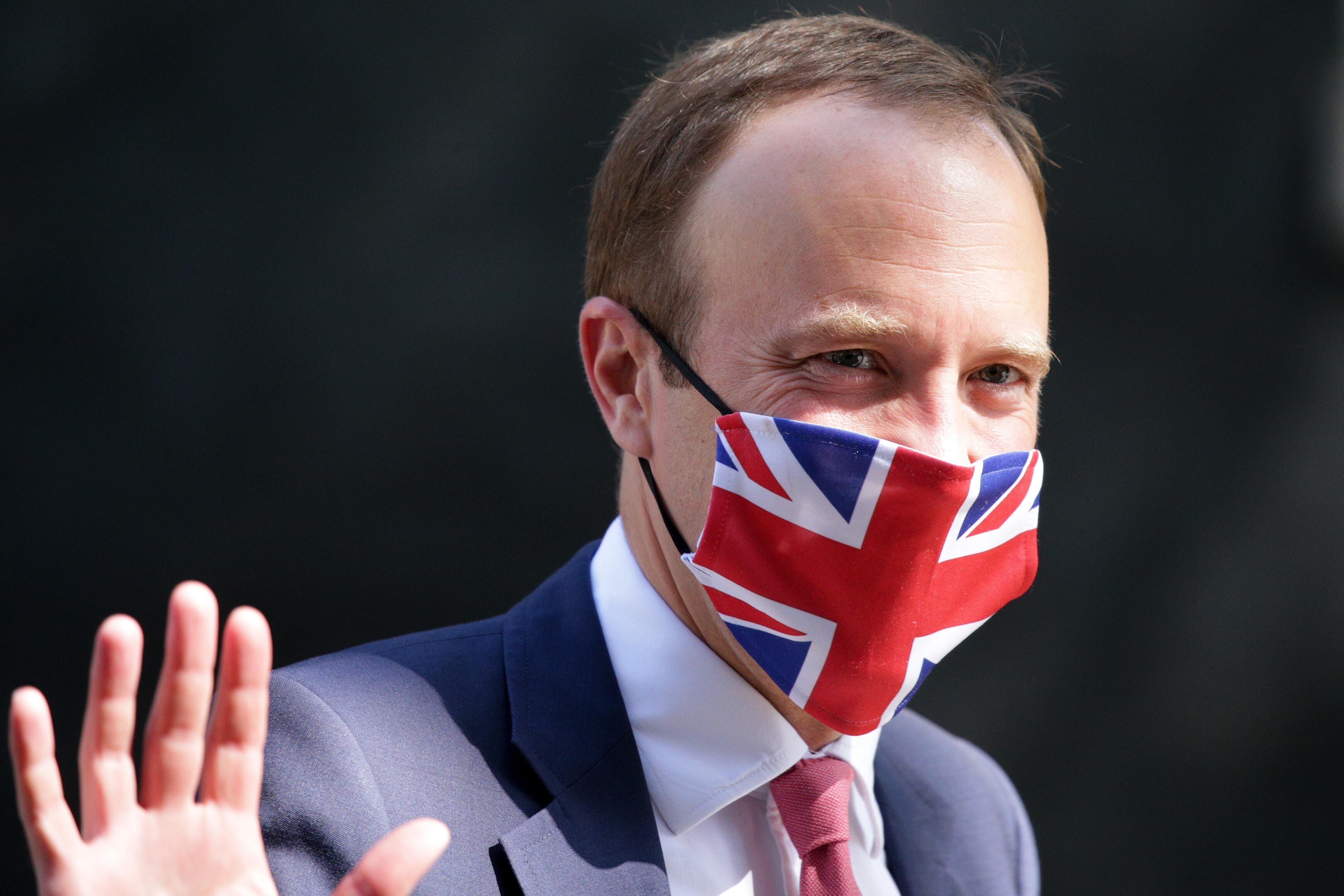
He committed adultery in front of Her Majesty, has the man no shame? Or did he dangle a facemask over the painting to spare her eyes? As one parliamentary source put it to me [in a phrase that now adorns LadBible, of all places]: “Matt Hancock’s new guidance: Hands. Face. A**e.”

The Queen of course namechecked Hancock herself this week, during that audience with Boris Johnson, pitying “the poor man” for his workload in the pandemic. One can only imagine how arched the Royal eyebrow will be when a courtier (or the PM) dares inform her of the news about his latest troubles.

So, yes, the jokes have taken off and the health secretary’s clinch has inevitably become a meme. Within minutes, his reputation was hung, drawn and slaughtered and it can only get worse in coming days. The forbidden snog has the potential to become a new Barnard Castle moment, which itself spawned every possible quip about eye tests.

No.10 will be hoping that the ridicule is where this ends, and that it somehow reduces the seriousness of the breach of Covid rules. Johnson himself knows all too well that being a figure of fun on ‘Have I Got News For You’ is hardly career-ending.

For satire to bite it has to carry an edge of cold anger, rather than offer just titillating laughs. The Thick Of It was superb, but Armando Iannucci had to cancel it when he saw politicians revelling in it, rather than being stung by it. The idea of a minister who banned grandparents from hugging their grandchildren then hugging his mistress is beyond parody.

Still, Cummings’ case showed that sheer fury can accompany mockery. Lots and lots of Tory MPs were emailed by constituents who didn’t find it funny at all that the PM’s former chief adviser had treated strict lockdown rules like the Pirates of the Caribbean code (“more what you’d call ‘guidelines’ than actual rules”).

Hancock has a rhinoceros-like political hide. He has proved in many ways he’s beyond embarrassment, just as his boss has proved he’s often beyond shame. Opposing prorogation of parliament only to back the idea later, brazening out the PM’s “hopeless Hancock” description, defending his claim that he threw a “protective ring” around care homes, all prove that.

Hancock’s statement today – “I accept that I breached the social distancing guidance in these circumstances. I have let people down and am very sorry” – was a masterclass in chutzpah masquerading as contrition. It felt very much like he knew Johnson could never sack any minister over an affair, and that vaccination success was all the public have focused on anyway.

Sorry used to be the hardest word for this government, but this was an apology without action. With the public and businesses suffering from lockdown fatigue, that may have consequences. Any pub that now lets people order at the bar, any shop that allows face masks to be ditched, any nightclub that illicitly opens to snogging couples, may now just say sorry. Then keep on keeping on.

The real difficulty for Hancock will be the one that dogs “beleaguered” ministers through history: the clamour around this affair may make it impossible for him to do his day job.

Whenever he is next putting out a good news story about the vaccine progress, or even trying to keep in place some remaining restrictions, he will face a barrage of questions. Did he share an illegal hotel room stay with ‘another household’ at any point in the past year? Did he breach travel rules to meet that household? Did he have a relationship he failed to declare when hiring her?

A large chunk of the public may be unfazed, and un-outraged, by all this. The danger of the jokes is that they obscure perhaps the bigger failings of the health secretary, not least his Test and Trace service.

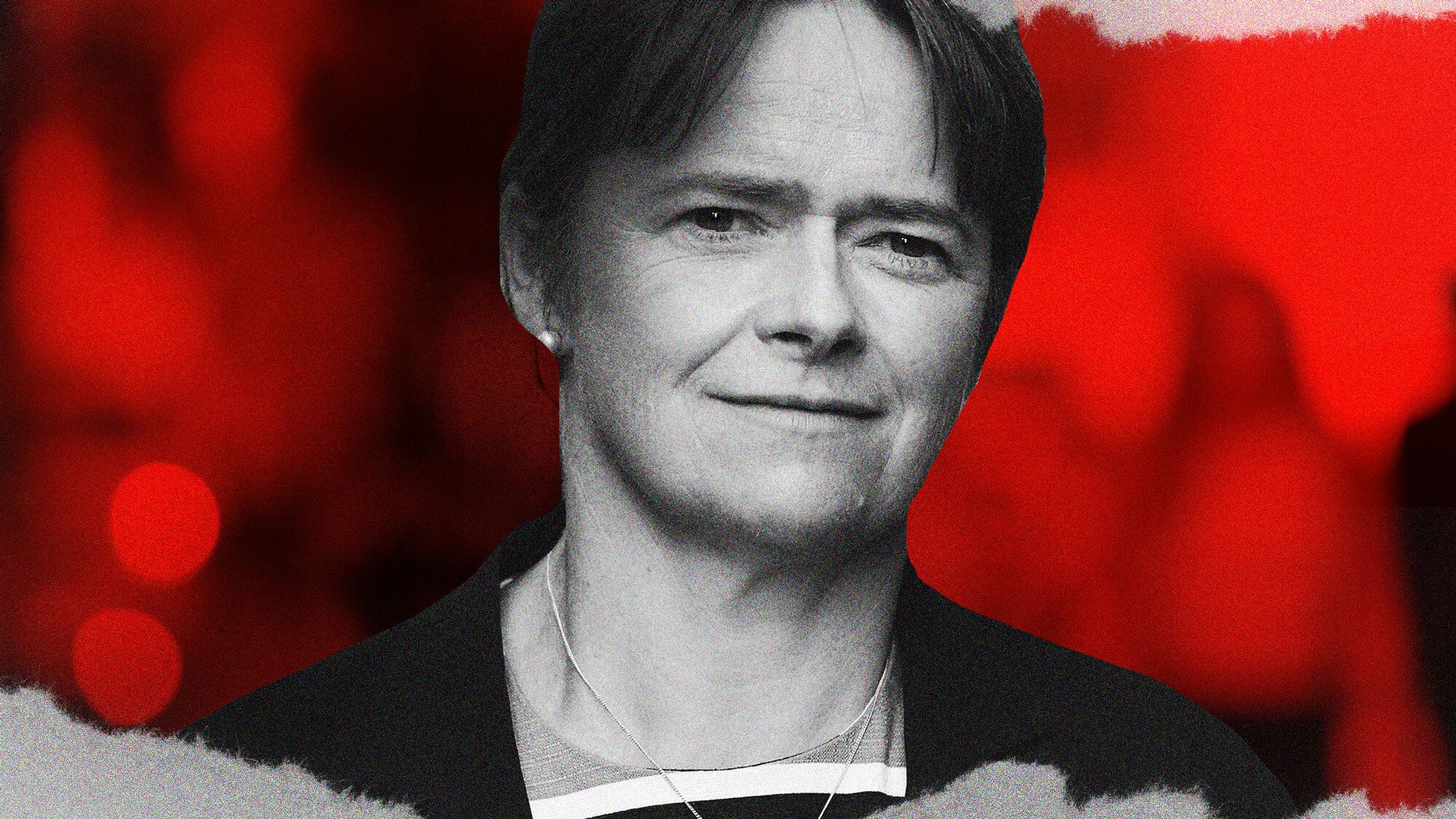
One irony of the Sun story is that the truly damning National Audit Office report into Dido Harding’s organisation was rapidly knocked off the headlines. Ministers in the Lords face questions on Monday about that report, and surely Hancock will face an Urgent Commons Question on it too.

In his latest blog, Cummings tried to twist the knife with yet more revelations about testing and tracing failures last year. And for all his tortuous stream-of-consciousness approach (I mean, who would want to read that stuff, rather than a short set of bullet points?), he had some important new revelations.

We learned that Cummings rightly warned that “quarantine must happen fast” and that it should be monitored. He correctly worked out that testing and even tracing was pointless unless people were actually isolating. He also stressed that testing asymptomatic cases was even more valuable than testing those with symptoms.

He also revealed a new Johnson message that confirmed these concerns, but left them unresolved: “The whole track and trace thing feels like whistling in the dark. Legions of imaginary clouseaus and no plan to hire them…And above all no idea how to get new cases down to a manageable level or how long it will take”.

In PMQs next week, Keir Starmer must surely quote Johnson’s own verdict that the lack of a viable test and trace system meant the “uk may have secured double distinction of being the European country w the most fatalities and the biggest economic hit”. Expect that to appear on every Labour leaflet and poster ahead of the next election.

The PM looks like he wants to brazen out the Hancock row as much as Hancock himself. He will try to make a virtue out of his dogged loyalty to his ministers and say “vaccines, vaccines, vaccines” a lot. Yet today’s No.10 stonewalling of Lobby journalists’ questions laid bare a contempt for not just the media but for the public.

That felt like the bullishness of a government with a big polling lead, but it also felt like the complacency of a party that has been in power so long that it thinks the normal rules really don’t apply to it. They may be right for now, but in the long run, that way lies ruin.

Share Button

‘Dragon man’ fossil may replace Neanderthals as our closest relative

A near-perfectly preserved ancient human fossil known as the Harbin cranium sits in the Geoscience Museum in Hebei GEO University. The largest of known Homo skulls, scientists now say this skull represents a newly discovered human species named Homo longi or “Dragon Man.” Their findings, appearing in three papers publishing June 25 in the journal The Innovation, suggest that the Homo longi lineage may be our closest relatives — and has the potential to reshape our understanding of human evolution.

“The Harbin fossil is one of the most complete human cranial fossils in the world,” says author Qiang Ji, a professor of paleontology of Hebei GEO University. “This fossil preserved many morphological details that are critical for understanding the evolution of the Homo genus and the origin of Homo sapiens.”

The cranium was reportedly discovered in the 1930s in Harbin City of the Heilongjiang province of China. The massive skull could hold a brain comparable in size to modern humans’ but had larger, almost square eye sockets, thick brow ridges, a wide mouth, and oversized teeth. “While it shows typical archaic human features, the Harbin cranium presents a mosaic combination of primitive and derived characters setting itself apart from all the other previously-named Homo species,” says Ji, leading to its new species designation of Homo longi.

Scientists believe the cranium came from a male individual, approximately 50 years old, living in a forested, floodplain environment as part of a small community. “Like Homo sapiens, they hunted mammals and birds, and gathered fruits and vegetables, and perhaps even caught fish,” remarks author Xijun Ni, a professor of primatology and paleoanthropology at the Chinese Academy of Sciences and Hebei GEO University. Given that the Harbin individual was likely very large in size as well as the location where the skull was found, researchers suggest H. longi may have been adapted for harsh environments, allowing them to disperse throughout Asia.

Using a series of geochemical analyses, Ji, Ni, and their team dated the Harbin fossil to at least 146,000 years, placing it in the Middle Pleistocene, a dynamic era of human species migration. They hypothesize that H. longi and H. sapiens could have encountered each other during this era.

“We see multiple evolutionary lineages of Homo species and populations co-existing in Asia, Africa, and Europe during that time. So, if Homo sapiens indeed got to East Asia that early, they could have a chance to interact with H. longi, and since we don’t know when the Harbin group disappeared, there could have been later encounters as well,” says author Chris Stringer, a paleoanthropologist at the Nature History Museum in London.

Looking farther back in time, the researchers also find that Homo longi is one of our closest hominin relatives, even more closely related to us than Neanderthals. “It is widely believed that the Neanderthal belongs to an extinct lineage that is the closest relative of our own species. However, our discovery suggests that the new lineage we identified that includes Homo longi is the actual sister group of H. sapiens,” says Ni.

Their reconstruction of the human tree of life also suggests that the common ancestor we share with Neanderthals existed even further back in time. “The divergence time between H. sapiens and the Neanderthals may be even deeper in evolutionary history than generally believed, over one million years,” says Ni. If true, we likely diverged from Neanderthals roughly 400,000 years earlier than scientists had thought.

The researchers say that findings gathered from the Harbin cranium have the potential to rewrite major elements of human evolution. Their analysis into the life history of Homo longi suggest they were strong, robust humans whose potential interactions with Homo sapiens may have shaped our history in turn. “Altogether, the Harbin cranium provides more evidence for us to understand Homo diversity and evolutionary relationships among these diverse Homo species and populations,” says Ni. “We found our long-lost sister lineage.”

Story Source:

Materials provided by Cell Press. Note: Content may be edited for style and length.

Share Button

No major outbreaks found at government mass pilot events

However, virus levels were low at the time and about a third of people returned tests afterwards.

Share Button

Covid cases return to early-April levels

The Delta variant has become even more dominant, but vaccines are making a difference.

Share Button

Covid-19: NHS Test and Trace weaknesses remain, says watchdog

National Audit Office says winter test results took too long in England and too many consultants are used.

Share Button

A&Es ‘overwhelmed’ by children with mild winter viruses, doctors warn

Winter viruses are flourishing as more people mix, and a doctor’s chief says A&Es are struggling to cope.

Share Button

Test And Trace Has Lost Track Of Nearly 600 Million Covid Tests

HuffPost/Getty Images

Test and Trace, which was run by Tory peer Dido Harding, has already come under fire for its use of private firms.

Boris Johnson’s £37bn Test and Trace service is facing fresh criticism after a damning new report found that it had lost track of nearly 600 million Covid tests.

The National Audit Office spending watchdog concluded that the system was still failing to “deliver value for taxpayers”, with a lack of any targets for self-isolation by the public and a continued reliance on private consultants.

Test and Trace, which was run by Tory peer Dido Harding, has already come under fire for its use of private firms Serco and Deloitte and its repeated failures in 2020 to track down contacts of people who had Covid.

The latest report sets out a raft of problems, including paying for tracing staff it does not use, the use of emergency procurement powers that dole out contracts without competition and a lack of data sharing with local public health chiefs that hinders efforts to tackle outbreaks.

In the six months from November last year to April this year, it failed to reach nearly 100,000 people who had tested positive for Covid and as result failed to identify their contacts who could potentially infect others.

The NAO also criticised Matt Hancock’s decision to absorb its functions into a new UK Health Security Agency, saying there was “a risk that the restructuring will divert NHST&T’s attention away from efforts to contain the spread of the virus”.

It has given the government until October to sort out the problems, including how it will “best support citizens to come forward for tests and comply with self-isolation requirements” – a clear signal that the watchdog believes the public need higher payments to home quarantine.

Labour pounced on the report and suggested that it ought to kill off the chances of former Test and Trace chief Harding’s bid to become the next chief executive of the NHS.

Shadow health minister Justin Madders said: “I would suggest this is essential reading for the interview panel in case there is even the slightest possibility that they are considering her appointment.

“This report is damning. The government has been told time and again that if we are going to bring down cases, it needs to ensure people can afford to self-isolate, but it has refused to listen.

“If lateral flow tests are going to play their part in helping society reopen, ministers need to make sure results are registered – it’s astounding that 550,000,000 tests have gone missing.”

Anadolu Agency via Getty Images

Health secretary Matt Hancock

The report found that only a small proportion of the Covid tests distributed have been registered as used.

Test and Trace had forecast that between March and May 2021, 655 million lateral flow tests would be used in the UK.

But up to 26 May, just 96 million (14%) of the 691 million tests distributed in England had been registered. “NHST&T does not know whether the tests that have not been registered have been used or not,” it said.

NAO head Gareth Davies said Test and Trace had introduced a lot of changes since its last withering report, including mass testing, closer working with local authorities and initiatives to identify and contain variant forms of Covid.

“However, some pressing challenges need to be tackled if it is to achieve its objectives and deliver value for taxpayers, including understanding how many lateral flow devices are actually being used and increasing public compliance with testing and self-isolation,” he said.

Public Accounts Committee chair Meg Hillier pointed out that the report had found that 45% of Test and Trace staff at its head office were still private consultants, despite Harding’s promises to reduce their number and to replace them with civil servants.

“Test and Trace employed more consultants in April 2021 than it did in November 2022. Despite being nearly a year old, nearly half the central staff are consultants,” Hillier said.

“Testing and tracing are likely to be around for some time yet and it’s hard to understand why these roles are not now permanent or fixed term contracts. The danger is that institutional memory will disappear as consultants walk off with their fat pay cheques.”

The latest report shows that although Test and Trace has introduced more flexibility into its contact centre contracts, across its testing and tracing activities it is “still paying for capacity it does not use”.

It’s “utilisation rate” – the proportion of time someone actively worked during their paid horse – had a target of 50% but in reality rates have been well below this since November 2020, peaking at 49% in January and falling to just 11% in February.

The unit cost per contact traced went up from around £5 in October to £47 in February.

The NAO found that Test and Trace had used £13.5 billion of its £22.2 billion budget in 2020-21, an underspend of £8.7 billion. Of this, £10.4 billion went on testing, £1.8 billion on identifying and containing local outbreaks and £900 million on tracing.

Test and Trace told the NAO that the underspend is because a predicted high level of demand for testing in January and February 2021 did not materialise due to the national lockdown.

A spokesperson for the Department of Health and Social Care said it had started a programme of research to understand the low rate of test registration and was working to increase public awareness of the need to register results and improve the ability to track tests.

“NHS Test and Trace has played an essential role in combating this pandemic and the NAO has recognised many of the rapid improvements we have made in the short lifespan of this organisation.

“The testing and tracing being delivered across the country is saving lives every single day and helping us send this virus into retreat by breaking chains of transmission and spotting outbreaks wherever they exist.

“While NHS Test and Trace continues to be one of the centrepieces of our roadmap to return life to normal, our new UK Health Security Agency is going to consolidate the enormous expertise that now exists across our health system so we can face down potential future threats and viruses.”

The government insists that the system has successfully identified over 3.4 million positive cases and notified a further 7.1 million contacts, to tell them to self-isolate, since 28 May 2020. Rapid tests have picked up over 213,082 Covid cases without symptoms.

It claims that the high number of consultants was critical for accessing specific skills and abilities in order to deliver operationally. DHSC is also evaluating several pilot approaches to improve compliance with self-isolation.

Pascale Robinson, campaigns officer at We Own It said: “It’s abundantly clear now that despite millions upon millions of pounds being handed to private companies, they have demonstrably failed to deliver a functioning system, leaving us without a crucial defence against Covid transmissions and needlessly putting lives at risk.

“With new variants spreading through our communities, it’s clear that even with the vaccination programme we desperately need a properly functioning contact tracing system.”

Share Button

Can The Two-Jabs-And-You’re-Outta-Here Policy Help Boris Johnson Save The Summer?

Woah, we’re going to Ibiza. Okay, I’m not, obviously. But if you want to, from next week you can jet off to the fun-loving island, along with a raft of places beginning with ‘M’ (Malta, Madeira, Mallorca, Menorca), without fear of that dreaded return quarantine that kills dead any holiday vibe.

There was, as ever, a catch. And this was that most of the countries on the new “green list” were simultaneously put on a “green watchlist” (keep up at the back). Nations or islands on the watchlist are “at risk of moving from green to amber”, we’re told. In other words, you’re rolling the dice when you dare book a trip there.

Just how many airlines, hotels and insurance companies think that system is viable will depend on whether they are prepared to offer refunds on a destination that could at very short notice flip from paradise to pariah. That won’t stop some people who are desperate for a bit of beach after a hard winter’s slog.

The idea of replacing the third wave of Covid for actual waves of the Med is clearly tempting. And while the greenlist/watchlist looks skinnier than the PM’s Brexit trade deal, it was the other big news from transport secretary Grant Shapps that was more significant: allowing double-jabbed travellers to avoid 10-day quarantine on return from “amber” list countries.

The plan is tentative and vaguely timetabled, and it was notable that the Department for Transport press release stated “our intention” is that “later in the summer” the two-jabs freedom could kick in. Still, getting high protection from Covid and being able to travel abroad is just the kind of cake-and-eat-it outcome this PM finds mouthwatering. Cake-and-vaxx and get your freshness back, Boris Johnson must be tempted to chirrup.

Even before the formal announcement, Johnson himself let slip that he wanted vaccinations to “open up” travel. And while warning this summer would be “different”, he sounded hopeful that he’d get his own sea-and-sangria (though in his case, it’s often a Croatian red) break, saying “my plans at this stage are at the unformed stage…I’m certainly not ruling it in or ruling it out”.

The shift to double-jabbed travel freedoms would effectively abolish the current amber-flashing green classification system, leaving just “red” list nations as the real danger spots. Pfizer or AstraZeneca would become the biological equivalent of Piz Buin and Ambre Solaire of our foreign travel, offering even better protection without any sticky sand downside.

In public health terms, there’s a virtuous circle effect too. Although lots of young people queuing up for jabs are indeed doing it out of a sense of communal duty as well as personal interest, there’s no question that the prospect of being allowed to go on holiday is a huge magnet too. Not for nothing have fiftysomething mums’ Whatsapp groups been exploding whenever a new walk-in vaccination centre opens for over-18s: the whole family could possibly go on hols in the first week of September.

For the majority who are resigned to holidaying at home, all this will look bizarrely risky. Yet it’s worth mentioning that there are plenty of Brits with family and friends overseas who have not seen them in more than a year. Overseas travel does not always mean beach holidays, it means real face time with your loved ones (five million EU citizens now make up nearly one in ten of our population, and there are millions more with family ties to Asia, Africa and the Americas).

Stil, the fact that neither Shapps nor the PM trumpeted this apparent good news in a major televised press conference told its own story. Both are very wary of sending out a premature signal that life is back to normal, particularly when we are still a way off the July 19 Freedom Day in the amended roadmap out of lockdown.

The race to get as many people second-jabbed as possible is also not done, as vaccines minister Nadhim Zahawi made clear on Wednesday. (Curiously, he revealed he had had to take a lateral flow test for England’s match against Croatia “because I hadn’t had enough time for my second vaccination”. The June 13 date of that match suggests Zahawi, who’s 54, had failed to follow the PM’s edict on May 14 for over-50s to get a new dose after eight weeks not 12, but that’s another story.)

The vague “later in the summer” timetabling of the two-jabs-and-you’re-outta-here policy points to its dependence on the path of the Delta variant. Fortunately, hospitalisations look like they are beginning to flatten in some parts of the UK, but the rise in cases can still look pretty scary to a hard-pressed NHS already coping with a backlog of non-Covid treatments. That’s why this announcement felt like the PM dipping a toe in the water, rather than risking a belly flop.

Johnson is under pressure from cabinet ministers like George Eustice and Jacob Rees-Mogg to use July 19 to implement total unlockdown. Eustice went public to call for “all of the legal requirements to do things, to be taken away completely”. Rees-Mogg again sounded like the Tory backbench lockdown sceptics’ tribune, saying “terminus is Paddington not Crewe. It is the end of the line, it is not an interchange”.

The PM knows more than anyone that he’s taking a political gamble with July 19, and removal of all restrictions may not be the advice of his scientists. Having tried to shrug off any link between the G7 and Cornwall’s spike in Delta cases, he could be on the ropes again if admitting thousands of UEFA bigwigs causes a fresh import just because he wants Wembley to host the Euros final.

The pressure to prove Brexit Britain is literally open for business, and pleasure, is strong. Yet the stakes are particularly high for a man who has promised the public that any move out of lockdown will be “irreversible”. He will be crossing his fingers that the second jabs really can squash the sombrero of hospitalisations in coming weeks.

Share Button

Parents of children with complex medical conditions more likely to have mental health issues

Parents of children with the most complex medical conditions are more likely to report poor or fair mental health and struggle to find community help, according to a study completed by researchers at University of Rochester Medical Center (URMC) and Golisano Children’s Hospital. The study was published in Pediatrics, the journal of the American Academy of Pediatrics (AAP).

The study, “A National Mental Health Profile of Parents of Children with Medical Complexity,” examined parent-reported data from the National Survey of Children’s Health, and compared three groups: households of children with medical complexity (CMC), households of noncomplex children with special health care needs, and households of children without special health care needs.

CMC are defined as the 1 percent of children with the most complex medical conditions. They tend to have multiple chronic health conditions and disabilities, and frequently utilize health care services. Examples of CMC include those with cerebral palsy, serious congenital heart defects, or genetic disorders. Given these children’s significant needs, their caregivers are challenged to balance treating their child with completing other family responsibilities.

The study found the following:

-About 20 percent of parents of CMC reported poor or fair mental health, more than 5 times the proportion of parents of children who did not have medical problems.

-In addition, 36 percent of parents of CMC reported not knowing where to go for help in their community when they encounter difficulties, which was more than 2 times the proportion of parents of children who did not have medical problems.

These findings indicate that health care systems should be proactive in trying to serve parents of CMC and provide support resources, and that mental health should be prioritized, according to Nathaniel Bayer, M.D., assistant professor and pediatric hospitalist at Golisano Children’s Hospital in the URMC Department of Pediatrics and lead author of the study.

“As we partner with these families, we need to make sure we’re taking care of the parents as well as the children,” said Bayer, “It is our job as pediatricians and health care teams to recognize the parents’ needs and connect them to services.”

Only 15 percent of parents of CMC reported access to peer support groups, which are critical for families to be able to exchange ideas and support each other, according to Bayer. To help address these gaps, hospitals should offer peer-to-peer support groups and grow family advisory councils to support the health and emotional wellness of caregivers of CMC.

“Having a child with this level of needs affects families in so many different ways. With the right support, these families thrive and fulfill their goals,” said Bayer. “Without enough support, these families often struggle with the emotional and physical demands of constant caregiving, financial stressors, and employment issues. They may also be unable to find assistance from community services and home nurses, which are under-funded and under-reimbursed.”

Research on families and parents of CMC is an emerging field, because kids with complex conditions are living longer as healthcare interventions have improved in the 21st century. “In the last decade, there’s a heightened interest in discussing and focusing on these children and their families because we are increasingly recognizing that they need more support to successfully navigate the complicated health, education, and community systems.”

The study also found that families of lower socio-economic status (SES) reported feeling significantly more isolated and unaware of how to seek support. “Families of lower SES often do not have the resources to easily access services. They may lack the transportation to travel to the clinic or struggle to find community resources in their area. If your family is also struggling to put food on the table or keep the lights on, it’s harder to manage your child’s medical needs and take care of yourself,” said Bayer.

In addition to health care systems providing more peer-to-peer services, more federal and state support of CMC parents — including greater reimbursement for home-health services and caregivers, expanded services and access for kids with disabilities, and improved early intervention support — can all help parents of CMC, according to Bayer. Behavioral health and wellness services — both for children and parents — should also be expanded.

“Mental health is a part of health,” said Bayer, “Parent and caregiver mental health is a major issue that has a significant impact on children’s health. We need to talk more about parent mental health, screen for it more, and proactively support it.”

Bayer and his research team plans to continue studying the mental health of CMC parents, the resilience of their families, and their abilities to adapt to challenges. The team is currently surveying and interviewing local families of CMC in the Rochester region to examine these topics. After studying how resilience and emotional wellness develop in families of children with complex medical conditions, he is planning to build family support programs and study their impact on child and caregiver health.

Additional study co-authors include Justin Yu, M.D., M.S. of University of Pittsburgh; Dennis Kuo, M.D., M.H.S. of University at Buffalo; and Hongyue Wang, Ph.D., Jill Halterman, M.D., M.P.H., and Yue Li, Ph.D. of URMC.

Share Button

Tracking data show how the quiet of pandemic-era lockdowns allowed pumas to venture closer to urban areas

New research from the University of California, Santa Cruz shows how regional shelter-in-place orders during the coronavirus pandemic emboldened local pumas to use habitats they would normally avoid out of fear of humans. This study, published in the journal Current Biology, is part of a growing wave of research working to formally document the types of unusual changes to wildlife movements and behaviors that people around the world reported during pandemic lockdowns.

Golden jackals, for example, were spotted foraging in broad daylight in urban Tel Aviv, Israel, and mountain lions were seen strolling through downtown Santiago, Chile. Urban environments had suddenly become quiet and empty as shelter-in-place orders brought human movement to a grinding halt — an effect some researchers have called the “anthropause.” Wildlife seemed to be taking advantage. The new study shows this was certainly true for pumas in the Santa Cruz Mountains. Researchers were able to clearly connect changes in the cats’ habitat use with reduced human mobility during shelter-in-place orders.

Chris Wilmers, an environmental studies professor at UC Santa Cruz, led this research. Wilmers is the principal investigator for the Santa Cruz Puma Project, and he has been studying local mountain lion populations for over a decade. In particular, his research uses data from GPS tracking collars placed on wild pumas to show how fear of humans affects mountain lion behavior and ecology. When the pandemic hit, his team was already tracking data from several collared cats, and he recognized a unique research opportunity.

“When the shelter-in-place orders started, it was immediately clear that things were very different,” Wilmers said. “You’d go outside and there were very few cars. Entire neighborhoods were completely quiet. So we wondered how this might affect the mountain lion population. Would they respond this quickly to reduced human presence?”

To answer that question, the team analyzed about two years worth of mountain lion tracking data for a set of six collared cats to see where the pumas roamed and what types of habitats they used. Researchers compared these tracks with the distribution of housing density and the geographic boundaries of the “urban edge,” which indicates where vehicle and pedestrian traffic is heightened. During regional shelter-in-place orders, they found that cats were significantly more likely to move into or closer to the urban edge. And these changes happened rapidly: within days or weeks of the beginning of COVID-19 lockdowns.

In an effort to hone in on the cause of this change, the team ruled out any influence of natural factors — like topography, vegetation cover, or distance to the nearest water source — that might affect the cats’ choice of habitats. They also compared year-over-year tracking data to show that seasonal variability wasn’t affecting the results. Pumas do have a strong preference for habitats with lower housing density, but this factor did not change significantly during the study period. The key difference that appeared to be driving the trend of mountain lions moving into urban areas was reduced human mobility during the pandemic.

After regional shelter-in-place orders went into effect on March 17, 2020, local human mobility declined more than 50 percent, according to Apple mobility data, which show the number of navigation requests for driving and walking trips received through Apple Maps. During this time period, when people confined themselves in their homes, the data showed a strong relationship between declining levels of human mobility and pumas’ increased willingness to venture closer to or into urban areas.

“We found that they totally relaxed their fear of the urban edge,” Wilmers said. “It’s not that they weren’t scared of cities; they were still scared, but only of high housing density, not the extra impact of human mobility. If you take all the car trips and pedestrian trips and human mobility out of it, then, all of a sudden, mountain lions don’t fear the city as much.”

Wilmers says this finding helps to build understanding of the unique impacts of human mobility on wildlife. Conservation efforts often focus on the ways that humans are destroying habitats — through development and pollution, for example — but the mere presence of people moving across a landscape also takes a toll on animals that fear humans. And this too is a conservation challenge.

“It’s important because our mobility just keeps increasing,” Wilmers explained. “In the early part of the 20th century, we got cars, and that really increased our mobility. Now we have things like ride-sharing apps, mountain bikes, and electric bikes, and these are all ways that we’re becoming more and more mobile across more types of landscapes. It’s an important thing to think about as we try to conserve and manage ecosystems.”

Another key point this research illustrates is that fear, or the removal of a source of fear, can bring about rapid changes in animal behavior that ripple out through ecosystems. Ecologists call this concept the “landscape of fear.” And the pandemic showed just how integrated into this landscape humans really are. People are usually the ones exerting the influence of fear upon other animals, but there are some things that even we fear.

“Humans have always been the top dog in landscapes of fear, but this study shows that those influences of humans can be reversed relatively quickly by a pathogen, particularly a pandemic-causing pathogen,” Wilmers said. “It’s interesting from a theoretical perspective, and it’s also important in a practical sense because it shows that, not only are pandemics going to have major health consequences for people, but there are also going to be important ecological impacts.”

Share Button