Covid Vaccines Have Prevented 44,500 People Being Hospitalised

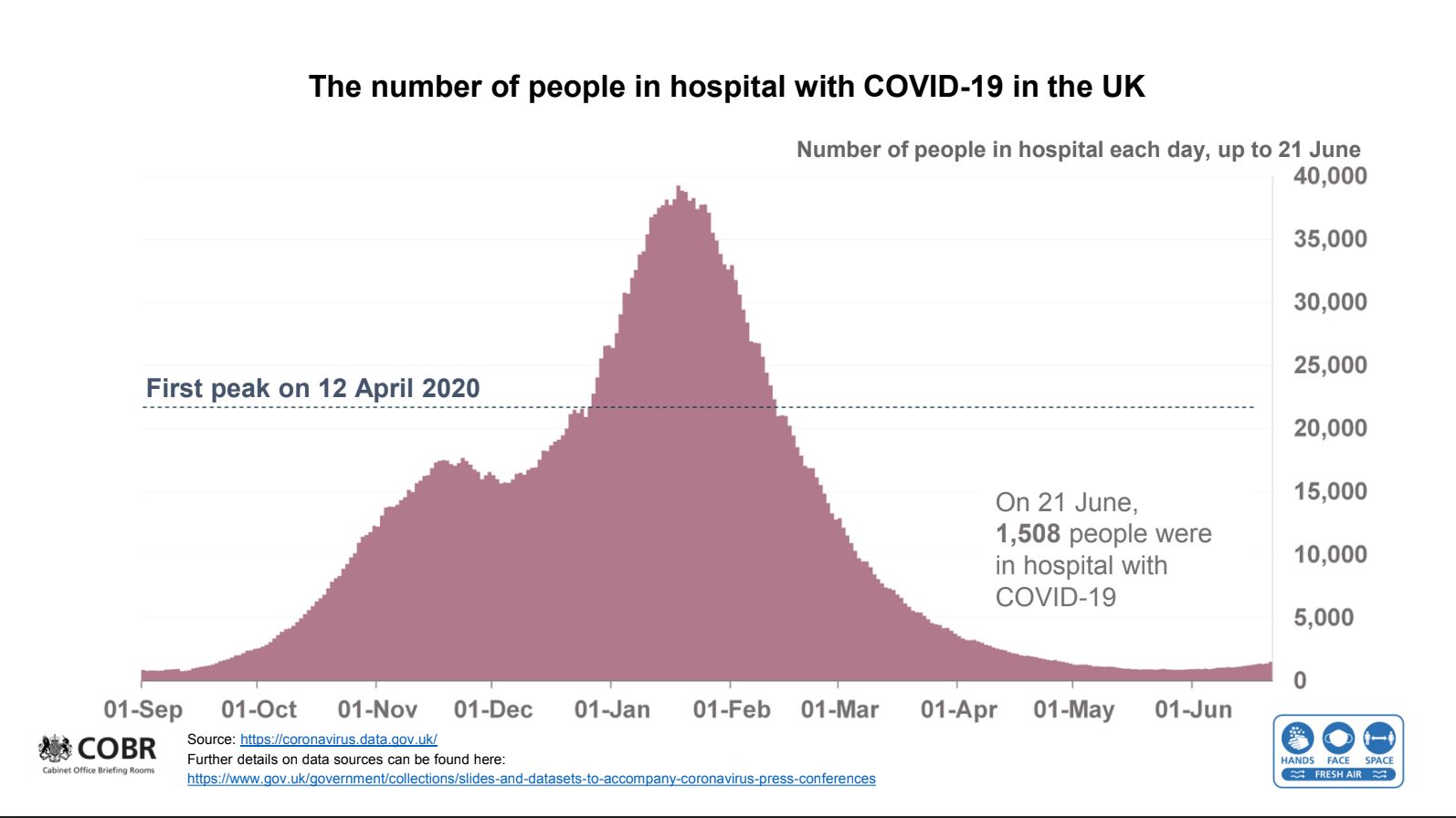
Vaccines have prevented 44,500 people being hospitalised with coronavirus, Nadhim Zahawi has said.

The vaccines minister hailed the rollout of the jabs, also revealing that they have saved 14,000 lives, according to government figures.

As part of a final push to get more adults vaccinated, Zahawi told a Downing Street media briefing: “Thanks to our vaccination programme, our incredible NHS, this country is getting a little bit safer every day.

“Whatever your age, whatever your background, the vaccine will protect you, it will protect your family and all the people that you care about.

“So please come forward and get both doses so we can take that final step on the road to recovery.” 

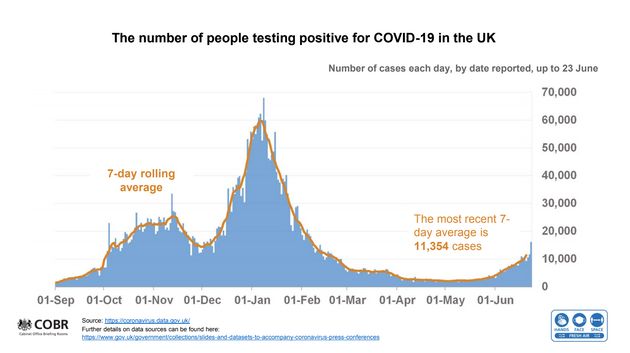
UK government

UK government Covid data

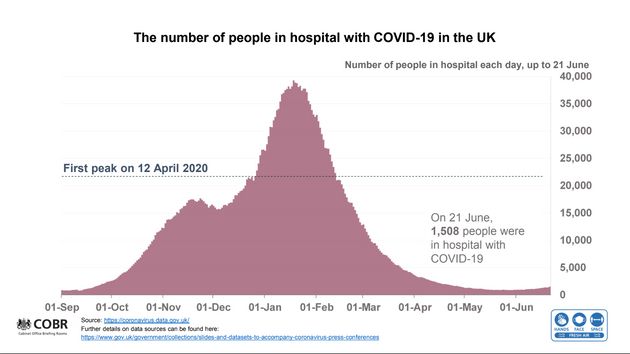
UK government

UK government Covid data

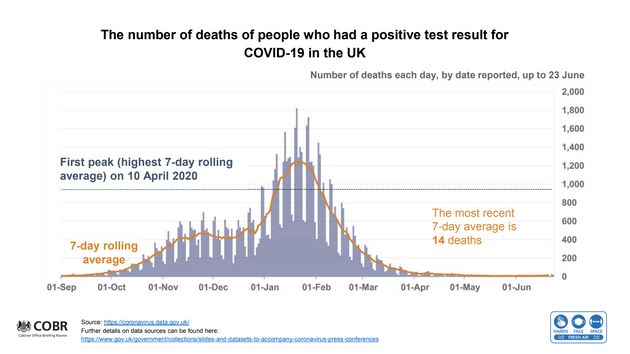
UK government

UK government Covid data

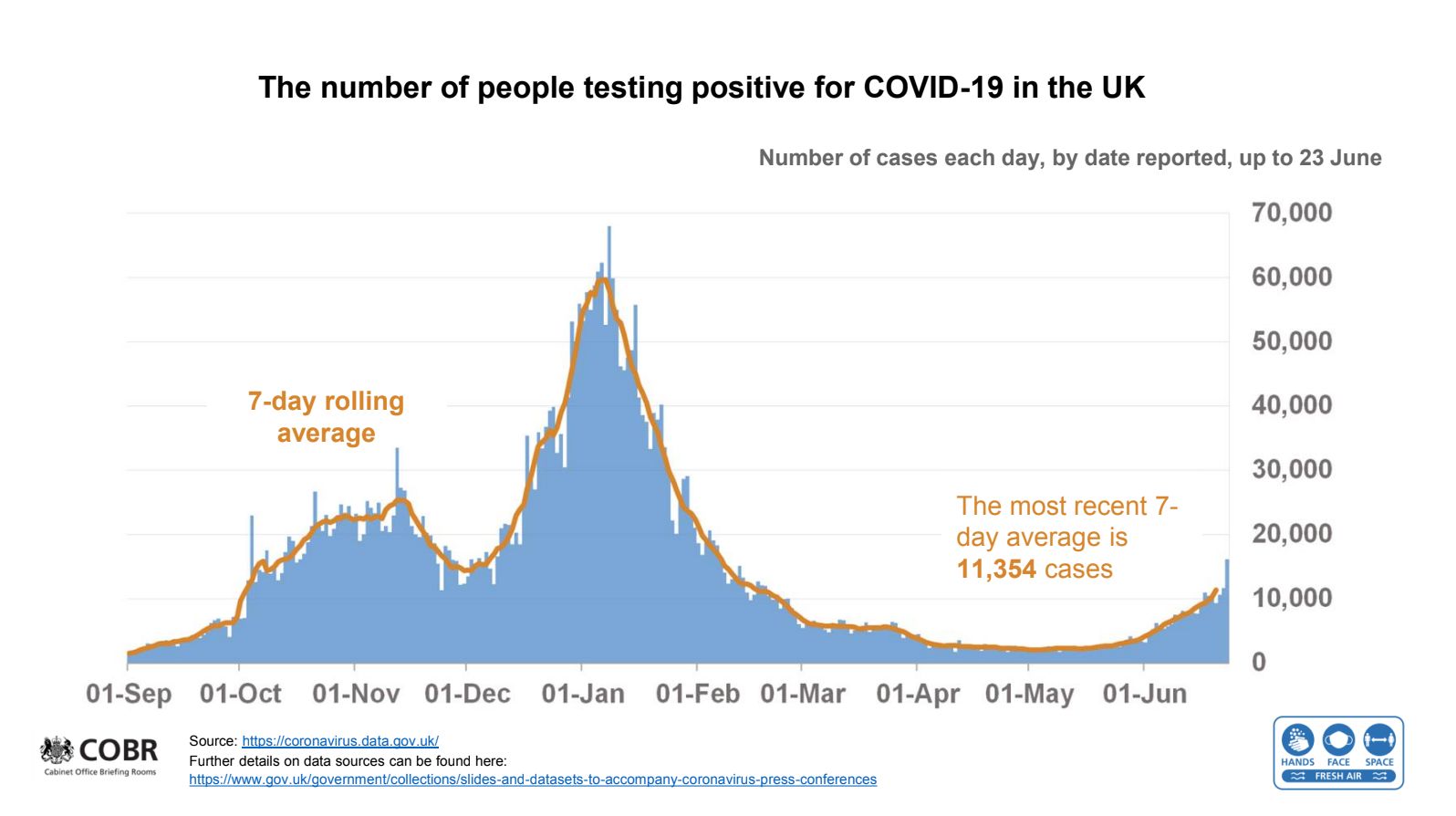
UK government

UK government Covid data

The decision to delay the final easing of restrictions in England from June 21 to July 19 is also helping the NHS give more potentially vulnerable people their second vaccine dose, Zahawi added.

Two weeks ago, more than two million over-50s had not had a second dose of the jab – crucial to provide protection against the Delta variant.

But that number has been more than halved to 900,000, with some restrictions remaining in place.

Zahawi said: “Last week we took the difficult but I think essential decision to pause Step 4 in our road map for four weeks with a review of the data after two weeks – and we will absolutely have that review and share the data with the nation.

“This pause has saved thousands of lives and will continue to do so by allowing us to get more of the second doses into arms of those most vulnerable to Covid before the restrictions are eased further.”

He added: “We’re going to use these four weeks to give our NHS that bit more time so we can get those remaining jabs in arms of those who really do need them.”

The minister also hailed the government’s efforts at cutting vaccine hesitancy, particularly in ethnic minority communities.

Office for National Statistics (ONS) figures show vaccine hesitancy halving amongst Black, Black British, Asian and Asian British people since February, Zahawi said.

But he stressed there is “much more to do” and that the government was “intensifying” efforts to get vaccines rolled out in places like Bolton where there is still some hesitancy.

“We’re honing in on areas where uptake is lower,” he said.

Government data up to June 22 show that of the 75,188,795 jabs given in the UK so far, 43,448,680 were first doses – a rise of 299,837 on the previous day.

Some 31,740,115 were second doses, an increase of 250,875.

The figures include all vaccinations reported by midnight on June 22, including those recorded on pen and paper by NHS England following an IT system crash.

Share Button

Should schoolchildren still have to self-isolate?

More than a quarter of a million children are absent from school in the UK because of coronavirus.

Share Button

Covid: Ivermectin to be studied as possible treatment in UK

Scientists begin to give the drug to people at home with symptoms to see if it can keep them out of hospital.

Share Button

Keira Bell: NHS trust appeals against puberty blockers ruling

The appeal centres around whether under-16s can consent to using puberty blockers.

Share Button

Can Keir Starmer Learn From Johnson’s Message Discipline?

The long-lens of Downing Street snapper Steve Back has caught out many people over the years. Today, he captured a rare image of the “lines to take” briefing notes used by the PM’s official spokesman in his encounters with political journalists.

And this particular document was all about Dominic Cummings. Given that one of Cummings’ arguments is that Boris Johnson is too obsessed with newspaper headlines, there was some measure of irony in seeing No.10′s stonewalling defence against his criticisms.

To be fair, the note correctly anticipated media interest in Cummings’ latest claims that the PM ‘lacks focus’, doesn’t care about the Union, governs like ‘a pundit who stumbled into politics’ and runs an administration summed up as ‘the blind leading the blind’.

What was striking was that the answer to every single question was the same: we’re not going to engage with every allegation made, and anyway “the PM is entirely focused on recovering from the pandemic, moving through the roadmap, distributing vaccines and delivering on the public’s priorities”.

Now of course it’s blatant baloney to claim the PM is entirely focused on the pandemic, not least as he not too long ago took time out to ring newspaper editors to blame Cummings for leaks against him. It also lacks credibility to claim, as Matt Hancock did on Radio 4 this morning, that the government was delivering on the PM’s promise on social care.

But Hancock, just like No.10, does know the merit of repeating again and again the same political position. The government had delivered Brexit, delivered on its pledge to protect the NHS, delivered on its programme for vaccines.

One can pick apart each element of that formulation: the Brexit brake on trade with the EU is a sleeper problem that businesses and individuals in both Britain and Northern Ireland are waking up to; the NHS didn’t collapse but the cost in lives and frontline trauma has been huge; the vaccine delivery is really the NHS’s triumph not Johnson’s.

Yet each element definitely has a ‘delivery’ bonus that is proving highly popular with the public, as the latest polls show (SavantaComRes has the Tories increasing their lead over Labour to a whopping 14 points). With every single voter directly affected by the vaccination programme, its success has an impact like no other public policy in living memory, with massive goodwill on its side.

Still, the Conservatives’ handling of what new Labour used to call “message discipline” is also having an impact. By contrast, Keir Starmer has struggled with that very concept over the past six months. Micro-policies have come and gone, and lines-to-take have too.

Those who know him well will admit that his lawyer’s brain finds it difficult to parrot soundbites. He’s always keen to read an entire brief, then focus on crafting the right arguments rather than being ‘on message’.

In interviews, he struggles to stick to a line, partly because he finds it unnatural to speak like a politician. Yet as [George] ‘Bush’s brain’ Karl Rove once said, it’s only once journalists are heartily sick of the same soundbite that the public are probably just starting to listen.

However, the Labour leader has been disciplined of late in one area, on Johnson’s “lax borders” that allowed the Delta variant into the UK from India. And there are tentative signs that it is paying off. A new YouGov poll finds that 35% of people think the rise in Covid cases is the government’s fault, up from 28% in January. 45% still blame the rise on their fellow public, but that’s down from 58% in January.

There are other impacts of the Covid spike of course, and today there were figures showing nearly a quarter of a million pupils missed school because of outbreaks, the highest figure since kids went back in March. Add that to the lack of a funded plan for catch-up education and Starmer could deploy it in PMQs on Wednesday. Delays caused by the ‘Johnson variant’ are affecting jobs, schooling and travel abroad, he may argue.

As I’ve written before, the pitfall for Labour would be to be seen as almost wishing the cases to rise further, just to prove how right its analysis was of Johnson’s mistakes. The latest figures have the first glimmers of a plateauing of hospitalisations (particularly in London), so expect the PM to revive his own line-to-take of Starmer “talking the country down”. Similarly, Labour opposing all overseas travel may prove unpopular if double jabs can ‘save the summer’.

But MPs and aides from all wings of Labour want their man to punch harder. Those punches may land if he does indeed deliver the soundbites needed. Just as the government’s public health messages rely on repetition, an Opposition’s political health relies on effective comms. Words are all Starmer has, and they can help him prove he’s got the “focus” that Cummings claims the PM lacks.

There was one caveat in those No.10 briefing notes, which departed slightly from the script. Referring to the claim that Johnson runs a blind-leading-the-blind government, the PM’s spokesman was advised: “if pushed – we reject this characterisation”. That charge of lacking focus clearly worries Team Johnson.

Starmer’s problem ahead of the Batley by-election is that his own leadership is seen as the bland leading the bland. This summer, if the unlockdown goes well and Labour lose another northern seat, it won’t be the party’s message that dominates. It will be the message from the voters.

Share Button

Switching from Western diet to a balanced diet may reduce skin, joint inflammation

The secret to healthier skin and joints may reside in gut microorganisms. A study led by UC Davis Health researchers has found that a diet rich in sugar and fat leads to an imbalance in the gut’s microbial culture and may contribute to inflammatory skin diseases such as psoriasis.

The study, published in the Journal of Investigative Dermatology, suggests that switching to a more balanced diet restores the gut’s health and suppresses skin inflammation.

“Earlier studies have shown that Western diet, characterized by its high sugar and fat content, can lead to significant skin inflammation and psoriasis flares,” said Sam T. Hwang, professor and chair of dermatology at UC Davis Health and senior author on the study. “Despite having powerful anti-inflammatory drugs for the skin condition, our study indicates that simple changes in diet may also have significant effects on psoriasis.”

What is psoriasis?

Psoriasis is a stubborn skin condition linked to the body’s immune system. When immune cells mistakenly attack healthy skin cells, they cause skin inflammation and the formation of scales and itchy red patches.

Up to 30% of patients with psoriasis also have psoriatic arthritis with symptoms such as morning stiffness and fatigue, swollen fingers and toes, pain in joints and changes to nails.

Diet affects the microbial balance in the intestines and skin inflammation

Food is one of the major modifiable factors regulating the gut microbiota, the community of microorganisms living in the intestines. Eating a Western diet can cause rapid change to the gut’s microbial community and its functions. This disruption in microbial balance — known as dysbiosis- contributes to gut inflammation.

Since bacteria in the gut may play key roles in shaping inflammation, the researchers wanted to test whether intestinal dysbiosis affects skin and joint inflammation. They used a mouse model to study the effect of diet on psoriasis and psoriatic arthritis. They injected mice with Interleukin-23 (IL-23) minicircle DNA to induce a response mimicking psoriasis-like skin and joint diseases.

IL-23 is a protein generated by the immune cells responsible for many inflammatory autoimmune reactions, including psoriasis and inflammatory bowel disease (IBD).

Hwang and his colleagues found that a short-term Western diet appears sufficient to cause microbial imbalance and to enhance susceptibility to IL-23-mediated psoriasis-like skin inflammation.

“There is a clear link between skin inflammation and changes in the gut microbiome due to food intake,” Hwang said. “The bacterial balance in the gut disrupted shortly after starting a Western diet, and worsened psoriatic skin and joint inflammation.”

One critical finding of their work was identifying the intestinal microbiota as a pathogenic link between diet and the displays of psoriatic inflammation. The study also found that antibiotics block the effects of the Western diet, reducing skin and joint inflammation.

Is the damage caused by an unhealthy diet reversible?

The researchers wanted to test if switching to a balanced diet can restore the gut microbiota, despite the presence of IL-23 inflammatory proteins. They fed mice a Western diet for six weeks before giving them an IL-23-inducing agent to trigger psoriasis and psoriatic arthritis features. Then, they randomly divided the mice into two groups: a group that continued the Western diet for another four weeks and a group that switched to a balanced diet for the same duration.

Their study showed that eating a diet high in sugar and fat for 10 weeks predisposed mice to skin and joint inflammation. Mice that were switched to a balanced diet had less scaling of the skin and reduced ear thickness than mice on a Western diet. The improvement in skin inflammation for mice taken off the Western diet indicates a short-term impact of the Western diet on skin inflammation.

This suggests that changes in diet could partially reverse the proinflammatory effects and alteration of gut microbiota caused by the Western diet.

“It was quite surprising that a simple diet modification of less sugar and fat may have significant effects on psoriasis,” said Zhenrui Shi, visiting assistant researcher in the UC Davis Department of Dermatology and lead author on the study. “These findings reveal that patients with psoriatic skin and joint disease should consider changing to a healthier dietary pattern.”

“This work reflects a successful collaboration among researchers, especially with Professor Satya Dandekar and her team at the Department of Medical Microbiology and Immunology and Professor Yu-Jui Yvonne Wan at the Department of Medical Pathology and Laboratory Medicine,” Hwang said.

Share Button

Antelope’s fate shrouded by social, political forces

If only it were as simple as finding more grassland for an antelope.

The story of efforts to conserve the endangered oribi in South Africa represent a diaspora of issues as varied as the people who live there. On its surface, like many threatened species, you have conflict between a need for habitat and private landownership.

But dig a little deeper and you’ll uncover a seedy underbelly of political corruption, gambling, struggles over land, and racial tensions. No matter how much success is made through more traditional conservation efforts, says a new study by a University of Georgia researcher, the species will continue to be threatened until the human conflicts can be mitigated or resolved.

“It’s an interesting case study because the oribi is so dependent on habitat that’s on private lands,” said Elizabeth Pienaar, an associate professor at the University of Georgia Warnell School of Forestry and Natural Resources. “But it’s also a species that has gotten trapped in much larger political and social conflicts. … This is the dark side of conservation. We can say, look, the species needs X, Y and Z to survive and recover, but in cases like this, conservation efforts are mired in a complex political, social and historical framework. These much larger issues remain unresolved.”

For the oribi (OR-uh-bee), said Pienaar, solutions start with access to native grassland that has rapidly disappeared on the South African landscape. This means education for farmers who own land where oribi graze, but quickly scales up to include enforcement to prevent illegal poaching and even de-escalation of racial tensions during a time when land reform (the return of white-owned farmland to Black residents) is causing considerable conflict.

Meeting with farmers can help

Threatened or endangered species in other parts of the world face different issues, but the success of their conservation is likely tied up in socio-political webs, said Pienaar. The study, published recently in the journal Endangered Species Research, is the first of two parts that aim to provide insights for conservation agencies and organizations navigating similar waters. It was co-authored by master’s student Adrienne Louw and professor Adrian Shrader of the University of Pretoria.

Often, landowners want to conserve species because it’s part of their cultural heritage or because they care about wildlife and land stewardship. But a misunderstanding of the animals’ needs, a lack of outreach from government agencies due to budget constraints and a general mistrust of the government stemming from years of political conflict and corruption work against even the most basic education and outreach efforts.

“The farmers don’t want to be told what to do, but you can give them advice and they will implement it as they see fit,” added Pienaar. “That could be one of the most impactful things: somebody who is seen as a neutral third party going out there and just meeting with them. And the farmer will try a few things and if it doesn’t affect their profit margin, they’ll do it. That’s what they’re looking for — some advice.”

Separately, said Pienaar, local communities require employment and food security to reduce the need for illegal hunting. Poverty is a serious problem in South Africa, where 65.4% of the population lives below the poverty line, and infrastructure and service delivery in rural areas is poor. Improved economic and social security, including options to purchase meat at affordable prices, may reduce conflicts and poaching pressures. But poverty extends beyond financial insecurity, she added. Poverty is a lack of voice, an inability to define one’s future.

In addition, communities resent the loss of their traditional hunting rights under neocolonial management of wildlife. Poaching becomes a means of political protest against landowners and the government, particularly if the government is perceived to have failed communities by not providing needed services.

Underground gambling rings exacerbate the issue

These solutions only address a portion of the problem, though. Improving access to habitat and community services won’t stop a serious threat to oribi: illegal hunting at night, with trained greyhounds and hunting dogs, which sustains underground gambling rings.

Called “taxi hunting,” greyhound owners — who have the income or wealth to purchase these expensive hunting dogs — arrive at the edge of a farm under cover of night. The dogs, trained to run and capture the small antelopes, are fast and silent. Whoever’s dog catches the oribi wins the pot of money, as does the dog that kills the most antelope.

If a farm owner can’t stop the taxi hunt before the dogs are released, they are almost powerless to prevent it. It’s illegal for them to shoot a hunting dog that is with its handler, even if it’s on the farmer’s land. And if they do, there could be retribution in the form of arson, property damage or arrest of the farmer for shooting the dogs.

Then, add race into the mix: Farm owners are white, while the taxi hunters are black. “So, the farmers feel threatened because not only is there a push for land reform, but they are dealing with increased rural crime while also trying to prevent poaching by people who are not at risk of poverty,” said Pienaar. “It’s not just about protecting the oribi. It’s about protecting their family’s safety, their property and their heritage.”

And then there’s the oribi, stuck in the middle.

“But it’s not just the oribi. The oribi is a case study that is consistent with other species at risk, like rhinos and pangolins,” said Pienaar. “Biologists and ecologists are fantastic in terms of what these species need in terms of habitat or maintaining viable populations. But if you cannot resolve larger socio-political conflicts, the animal is still at risk. Most conservation issues, that I’m aware of, are about people and the pressures they face.”


Share Button

Some seafloor microbes can take the heat: And here’s what they eat

It’s cold in the depths of the world’s oceans; most of the seafloor is at a chilly 4°C. Not so the seafloor of Guaymas Basin in the Gulf of California. Here, tectonic plates drift apart and heat from Earth’s interior can rise up — so far up that it bakes large areas of the seafloor sediments, turning buried organic matter into methane and other energy-rich compounds.

What kinds of organisms thrive in this oceanic hotspot? In two new studies, MBL Assistant Scientist Emil Ruff and collaborators show that distinct regions within the Basin harbor specially adapted microorganisms; discover new microbial inhabitants of this deep-sea community; and suggest how the community may be dramatically influencing carbon cycling in the hot seafloor sediments.

Right at the seafloor where the geothermal heat meets the cold deep ocean, the sediments often have a cozy 30-60 °C, ideal temperatures for heat-loving microbes (thermophiles). These exotic heat-lovers can use methane as an energy source and thrive in seascapes that are so different from most other ecosystems on Earth that they could well exist on another planet entirely (see photo 1). The methane munchers and other organisms that use the chemical energy of the hydrothermal fluids are the base of the food web, without which the ecosystem would not be possible. In the first study, Teske et al. show that these methane munchers and other microbes are specially adapted to distinct thermal and geochemical regimes within the Basin.

The microbial communities in these hydrothermal sediments are very diverse, yet only a few organisms can use methane as an energy source. So, what is everyone else doing?

A large part — or most — of the microbial diversity seems to consist of organisms, which — like humans — can only use reduced organic compounds for energy (such as sugars, proteins and fatty acids). These organisms, called heterotrophs, must live in some way off the biomass that rains down from the surface ocean or is produced by the methane munchers and other primary producers.

It is a long-standing question what compounds these heterotrophs use to make a living and why so many different species can live side-by-side without outcompeting each other. In the second study, Sherlynette Pérez Castro, a postdoctoral scientist in Ruff’s lab at MBL, and collaborators show that certain heat lovers specialize in degrading the “debris” that is released to the environment when other cells perish: organic polymers and macromolecules.

Every cell, be it a microbial or a human cell, mainly consists of four types of macromolecules: protein, nucleic acids (DNA, RNA), lipids (fatty acids) and polysaccharides (sugars). The researchers used each one of these four compounds successively as the sole energy and carbon source to grow and identify those deep-sea organisms that can make a living on the respective compound.

They found that all of the organisms that they could cultivate in their lab experiments belonged to previously uncultivated microbial species. The experiments also showed that each polymer was nutrition for a whole food web of organisms, which explains how a single molecule can sustain a zoo of organisms, suggesting a reason for the high diversity of coexisting heterotrophs.

To their surprise, none of the 48 different cultures produced methane, a common end product of heterotrophic organisms. This could mean that the methane that is emitted at the seafloor is completely removed from the ecosystem by the microbial communities, which has implications for the deep-sea carbon cycle that remain to be explored.

Story Source:

Materials provided by Marine Biological Laboratory. Original written by Diana Kenney. Note: Content may be edited for style and length.

Share Button

Covid-19: Aim for double-jabbed arrivals to avoid quarantine – Hancock

Ministers are “working on” plans for quarantine-free travel from amber list countries if vaccinated.

Share Button

Having coil fitted should not hurt, say experts

But they say pain relief should be part of the discussion when fitting this type of contraceptive.

Share Button