Tory MP Charged With Sexually Assaulting 15 Year-Old Boy

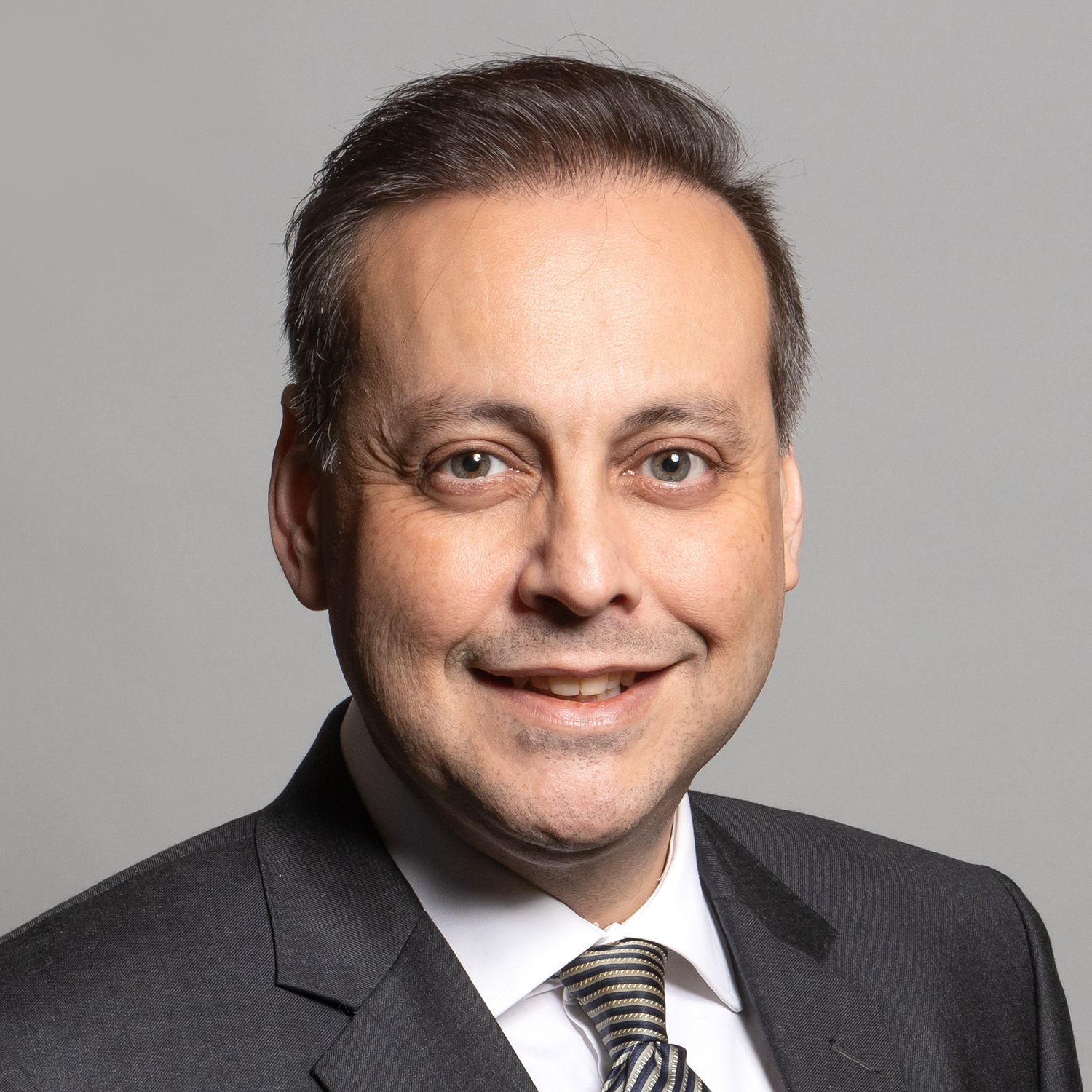
Richard Townshend/UK Parliament

Imran Ahmad Khan, Conservative MP for Wakefield

A Tory MP has been charged with sexually assaulting a 15 year-old boy in 2008.

Imran Ahmad Khan, 47, the Conservative MP for Wakefield, West Yorkshire, is alleged to have groped the teenager in Staffordshire.

He was named on Friday after reporting restrictions were lifted and is now facing trial on a single count of sexual assault against the teenager, who cannot be identified because he is an alleged victim of a sexual offence in 2008.

Khan, who was elected at the 2019 general election, pleaded not guilty while appearing at Westminster Magistrates’ Court via video link from his lawyers’ office.

He now faces trial at the Old Bailey on July 15 at 9.30am, and was granted unconditional bail.

Khan was stripped of the Tory whip.

It is understood that he has not visited the parliamentary estate since the charge.

A Tory whips spokesperson said: “Imran Ahmed Khan has had the whip suspended.

“As there is an ongoing court case we will not be commenting further.” 

The Crown Prosecution Service said it made the decision to charge after reviewing a file of evidence from Staffordshire Police.

Stressing the need for a fair trial, Rosemary Ainslie of the CPS said: “It is extremely important that there should be no reporting, commentary or sharing of information online which could in any way prejudice these proceedings.”

Khan’s lawyer David Janes said in a statement: “The requisition against our client Imran Khan MP relates to a sole allegation of touching which was allegedly sexual, on a single occasion, said to have taken place in… 2008.

“Our client is shocked that he has been requisitioned with this alleged offence. He strenuously denies the accusation and it will be vigorously defended.”

In a statement released on Friday, Khan said: “It is true that an accusation has been made against me.

“May I make it clear from the outset that the allegation, which is from over 13 years ago, is denied in the strongest terms.

“This matter is deeply distressing to me and I, of course, take it extremely seriously.

“To be accused of doing something I did not do is shocking, destabilising and traumatic. I am innocent.

“Those, like me, who are falsely accused of such actions are in the difficult position of having to endure damaging and painful speculation until the case is concluded.

“I ask for privacy as I work to clear my name.”

Share Button

PM’s Planning Reforms In ‘Tatters’ After By-Election Defeat, Tory Rebel Says

Boris Johnson’s planning reforms have been left in “tatters” following the Tories’ humiliating by-election defeat in Chesham and Amersham, a veteran MP has said.

Sir Roger Gale told HuffPost UK the defeat was a “wake up call” for the prime minister amid a significant backbench rebellion over the plans, which MPs fear would concentrate house building in the party’s southern heartlands.

The Liberal Democrats took the Buckinghamshire seat for the first time in its history, winning a majority of 8,028 over the Tories on a stunning 25% swing.

The party focused heavily on the planning reforms in leaflets the seat, quoting Tory rebels including Theresa May attacking the policy.

The defeat has now intensified the rebellion, as MPs fear the pattern could be repeated across so-called “blue wall” southern traditional Tory seats.

Gale said that on Tory WhatsApp groups on Friday “the only thing anybody is talking about is planning”.

“The common theme is ‘me too, me too, me too’ – right across the south of England,” he told HuffPost UK.

“They are worried about the policy.

“But of course they’ve got an eye on their reelection chances.”

Johnson on Friday stressed that there has been “misunderstanding” about the reforms, insisting the government would not build on green belt land.

“What we want is sensible plans to allow development on brownfield sites,” he said. 

“We’re not going to build on green belt sites, we’re not going to build all over the countryside.”

But Gale said the rebels were concerned about building on greenfield sites like agricultural land, stressing: “We’re not talking about green belt.”

He backed calls for the government to instead focus on building houses on brownfield sites, empty commercial properties, and forcing developers to build on around a million unused planning consents.

On the upcoming planning bill, he said: “My personal view is: the policy is in tatters.

“They’ve got to wake up and smell the coffee.”

It came as leading rebel Bob Seely said the by-election result was “the start of a significant push-back from communities on planning”.

“Relentless housing targets – very often the wrong housing in the wrong areas – just feeds the hamster wheel of planning doom,” he told the BBC.

“We need a better way of doing things. 

“We want to work with government to make this a success.  

“But more of them same will be political suicide, and, as Winston Churchill said, the problem with political suicides is that you live to regret them.”

Johnson is facing fresh rebellion over planning after MPs on his own side last year effectively killed off a so-called “mutant algorithm”, which would have dramatically increased house-building in southern Tory cities and shires.

But the PM is believed to think home ownership is key to cementing the party’s gains in the so-called “red wall” in the north and Midlands and returned with fresh proposals to overhaul planning in last month’s Queen’s Speech.

The government has said it wants to speed up the planning process to deliver new homes and infrastructure more quickly, at the same time as protecting the environment, as part of efforts to hit Johnson’s target of building 300,000 homes a year by the mid-2020s.

But Tory rebels and countryside campaigners have warned that the bill will divide places into areas earmarked for either growth or protection, and that growth areas would undermine local democracy and give developers a green light to build on rural land.

Share Button

UK Covid infections rise as Delta variant dominates

There is some regional variation in infection rates and some good news on vaccine efficacy.

Share Button

Paul Lamb: Assisted suicide campaigner dies aged 65

Paul Lamb leaves a “fierce legacy” of fighting for patients and the right to die, supporters say.

Share Button

Man from Windsor to have ‘record-breaking’ kidneys removed

Warren Higgs says doctors believe he might have the heaviest kidneys in the world.

Share Button

Christian Eriksen: Defibrillator sales soar after Denmark footballer’s collapse

The device – which gives a high-energy electric shock to the heart – helped save the player’s life.

Share Button

Covid: Disruption to surgery ‘will affect millions’

There were 1.5 million fewer procedures in 2020 than expected, a study in England and Wales suggests.

Share Button

Are Asia’s Covid ‘winners’ entering shaky new territory?

The places that were best at keeping Covid at bay are now struggling with their exit strategies.

Share Button

Covid: All adults able to book coronavirus vaccination in England

People aged 18 and over are being invited to make an appointment for their first vaccination.

Share Button

Will Rishi Sunak Realise That Covid Isolation Is Just As Vital As Vaccination?

When it emerged today that Dido Harding had indeed applied for the top job to run NHS England, the verdict from Labour’s Justin Madders was drier than the Sahara.

“I would hope that all candidates’ applications are judged on the basis of their recent performance in public sector roles, which in her case speaks for itself,” the shadow health minister said. “Failing which, Dominic Cummings WhatsApp ought to provide a candid assessment.”

Trying to replace NHS chief exec Sir Simon Stevens is certainly a bold move by the former head of Test and Trace. The litany of failures is well documented, but it’s worth a swift recap of some. The Commons Public Accounts committee said there was “no clear evidence” her organisation had cut Covid rates despite its huge cost (£22bn last year, £37bn over two years).

Former Treasury permanent secretary Nick Macpherson said Test and Trace “wins the prize for the most wasteful and inept public spending programme of all time”. The National Audit Office discovered the DHSC’s business case for the spending last year was “the avoidance of a second national lockdown”. (Narrator: a second, and third, national lockdown took place).

Harding is characteristically unabashed, however. She recently told Radio 4’s Woman’s Hour that her “one regret” was that the expectations for the service were “set too high”. She suggested that the big mistake at its conception was the hope that “testing and tracing and isolating, on its own, would stop the course of the disease”.

Part of the problem, almost certain to be highlighted in the forthcoming “lessons learned” report by the joint health and tech committees inquiry, was the lack of local expertise in contact tracing. While testing capacity was hugely expanded, much of that progress was undermined if each person’s contacts were not being tracked down quickly or effectively enough.

Yet the real clue to the problem lay in the organisation’s very name. It was always ‘Test and Trace’, never ‘Test, Trace and Isolate’. And all the tests in the world, and all the contact tracing in the world, count for nothing if at the end of the process there are large chunks of people failing to stay at home in self-quarantine.

As Jeremy Hunt has pointed out, there was such an obsession about the numbers of tests done per day that the government failed to focus on the metric that mattered: how many potentially infectious people were isolating. At times, the proportion of those who were not doing so was upto 40%.

To be fair to Harding, she eventually grasped this and admitted in February that perhaps as many as 20,000 people a day were ignoring calls to isolate. There are lots of reasons, from boredom to lack of shopping and childcare, for people breaking 10-day isolation. But lack of cash is certainly a key one, as many in public health will attest.

The Tory peer did manage to get some more state support, notably in offering £500 isolation payments for people on low incomes, often administered locally. But as with most means testing, the take up is far less than it would be if there was a universal, across the board, salary replacement system.

And the blame for that may ultimately lie with chancellor Rishi Sunak. When a flat-rate payment was floated earlier this year, the Treasury ruled it out on the grounds that the cost would be too high because of the sheer numbers who were getting Covid. That ignored both just how dynamic the situation was (the cost reduces as cases reduce) and also the huge savings to the public purse achieved by avoiding lengthy lockdowns.

This whole issue reignited today when Politico revealed emails from senior civil servants complaining that the furlough scheme was being used to help those temporarily off work because of Covid isolation. The most telling line, written in January at the height of the third wave, was this: “Incentive payments are too low to incentivise employees to take tests due to risk of loss of income.”

Even aside from using furlough more flexibly to cope with illness, the chancellor has refused repeated requests to increase statutory sick pay (the UK has one of the lowest rates in Europe).

That seems to be partly because of a fear (possibly misplaced given the government’s majority) that such a hike could not be reversed in future. Yet the sums needed for isolation payments are minor compared to the £37bn earmarked for Test and Trace.

Of course, surge testing still matters (and Test and Trace should get credit for its ability to help councils rapidly boost testing). So too does surge vaccination, although as Blackburn’s public health director today pointed out, jabbing the over-12s is desperately needed particularly in areas with high Asian populations, many of them young.

But it’s the lack of a surge in sick pay that is perhaps the most baffling part of the government’s response. With vaccine protection taking two weeks, getting the infected to swiftly stay at home arguably matters more even than getting them jabbed.

And with Chris Whitty warning today of an “exit wave” that will follow the July 19 unlocking, and “winter surge” later this year, the need for higher levels of self-isolation is as pressing as ever.

The economic risks of further possible lockdowns ought to be enough to prompt a rethink on isolation payments from Sunak, before he’s inevitably urged to do so by the parliamentary inquiry.

If not, he may just gift Keir Starmer the present he desperately needs to tie both No.10 and No.11 in a joint enterprise on Covid failures.


Share Button