Beneficial bacteria can be restored to C-section babies at birth

Babies born by cesarean section don’t have the same healthy bacteria as those born vaginally, but a Rutgers-led study for the first time finds that these natural bacteria can be restored.

The study appears in the journal Med.

The human microbiota consists of trillions of bacteria, viruses, fungi and other microorganisms — some beneficial, some harmful — that live in and on our bodies. Women naturally provide these pioneer colonizers to their babies’ sterile bodies during labor and birth, helping their immune system to develop. But antibiotics and C-sections disturb this passing of microbes and are related to increased risks of obesity, asthma and metabolic diseases.

The researchers followed 177 babies from four countries over the first year of their lives — 98 were born vaginally and 79 were born by C-section, 30 of which were swabbed with a maternal vaginal gauze right after birth.

Lab analysis showed that the microbiota of the C-section babies swabbed with their mother’s vaginal fluids was close to that of vaginally born babies. Also, the mother’s vaginal microbiomes on the day of birth were similar to other areas of their bodies (gut, mouth and skin), showing that maternal vaginal fluids help to colonize bacteria across their babies’ bodies.

This was the first large observational study to show that restoring a C-section baby’s natural exposure to maternal vaginal microbes at birth normalizes the microbiome development during their first year of life. The researchers said the next step is conducting randomized clinical trials to determine if the microbiota normalization translates into disease protection.

“Further research is needed to determine which bacteria protect against obesity, asthma and allergies, diseases with underlying inflammation,” said senior author Maria Gloria Dominguez Bello, a professor in the Department of Biochemistry and Microbiology in the School of Environmental and Biological Sciences at Rutgers University-New Brunswick. “Our results support the hypothesis that acquiring maternal vaginal microbes normalizes microbiome development in the babies.”

According to the World Health Organization, C-section is needed in about 15 percent of births to avoid risking the life of the mother or child, but in many countries such as in Brazil, the Dominican Republic, Iran and China, C-section is performed in more than 70% of urban births.

Story Source:

Materials provided by Rutgers University. Note: Content may be edited for style and length.

Share Button

Thin, stretchable biosensors could make surgery safer

A research team from Los Alamos National Laboratory and Purdue University have developed bio-inks for biosensors that could help localize critical regions in tissues and organs during surgical operations.

“The ink used in the biosensors is biocompatible and provides a user-friendly design with excellent workable time frames of more than one day,” said Kwan-Soo Lee, of Los Alamos’ Chemical Diagnostics and Engineering group.

The new biosensors allow for simultaneous recording and imaging of tissues and organs during surgical procedures.

“Simultaneous recording and imaging could be useful during heart surgery in localizing critical regions and guiding surgical interventions such as a procedure for restoring normal heart rhythms,” said Chi Hwan Lee, the Leslie A. Geddes Assistant Professor of Biomedical Engineering and Assistant Professor of Mechanical Engineering and, by courtesy, of Materials Engineering at Purdue University.

Los Alamos was responsible for formulating and synthesizing the bio-inks, with the goal of creating create an ultra-soft, thin and stretchable material for biosensors that is capable of seamlessly interfacing with the surface of organs. They did this using 3D-printing techniques.

“Silicone materials are liquid and flow like honey, which is why it is very challenging to 3D-print without sagging and flowing issues during printing,” Kwan-Soo Lee said. “It is very exciting to have found a way to create printed inks that do not have any shape deformation during the curing process.”

The bio-inks are softer than tissue, stretch without experiencing sensor degradation, and have reliable natural adhesion to the wet surface of organs without needing additional adhesives.

Craig Goergen, the Leslie A. Geddes Associate Professor of Biomedical Engineering at Purdue University, aided with the in vivo assessment of the patch via testing in both mice and pigs. The results showed the biosensor was able to reliably measure electrical signal while not impairing cardiac function.

The research was published today in Nature Communications. It was funded by Science Campaign 2.

Story Source:

Materials provided by DOE/Los Alamos National Laboratory. Note: Content may be edited for style and length.

Share Button

If you ride an e-scooter, take safety precautions

As pandemic restrictions begin to loosen around the country and summer temperatures rise, more people will be moving about on public rideshare electric scooters. With that comes this warning: Ride with safety.

A Henry Ford Health System study published in The Laryngoscope, shows that head and neck injuries caused by use of e-scooters have been on the rise since rideshare systems were introduced to the public in late 2017.

Kathleen Yaremchuk, M.D., Chair of the Department of Otolaryngology — Head and Neck Surgery and the study’s senior author, said that a review of emergency visits in the last three years showed e-scooter injuries have increased significantly with many related to head and neck injuries. “Since e-scooters became a popular form of transportation in major cities, the number of injuries jumped significantly because they’ve become more available to more people,” said Dr. Yaremchuk.

Henry Ford researchers looked at available data from the U.S. Consumer Product Safety Commission and found that between January 2009 and December 2019 there were more than 100,000 e-scooter related injuries reported. The study found that head and neck injuries made up nearly 28% of the total e-scooter related injuries reported.

Dr. Yaremchuk hopes that local and national regulations can be developed to increase ride safety.

Researchers found that since the introduction of rideshare e-scooters, motorized vehicles that can reach speeds of up to 35 miles per hour, injuries have increased as more people gravitate to the inexpensive and convenient form of transportation used mostly in crowded urban centers and on college campuses.

“We hope our findings will help educate users of rideshare e-scooters about the potential for serious head and neck injuries and the safety precautions they should take,” said Dr. Yaremchuk.

E-scooters are part of the Micromobility revolution that has been called the future of urban transportation. Serious injuries, though, are mounting among riders who find themselves unguarded against cars and bicycles and fixed street ornaments like light poles and signs.

The study found common types of e-scooter related head and neck injuries included:

  • Internal organs, including brain injuries, 32.5%
  • Lacerations, 24.9%
  • Contusions and abrasions, 15.6%
  • Concussions, 11.1%
  • Fractures, 7.8%

“As a physician, I would recommend that people who use this mode of transportation wear a helmet and apply the same approach as when driving a car,” said Samantha Tam, M.D., a Henry Ford otolaryngologist and study co-author.

If you plan to ride an electric scooter, here are a few safety tips to reduce your risk for injury:

  • Wear a helmet, knee and elbow pads
  • Wear appropriate clothing that won’t constrict your body while riding
  • Understand the specifications, features and capabilities of the specific e-scooter you are riding
  • Observe traffic laws, focus on the path ahead and watch for pedestrians, cars and other obstacles

Safety research has shown that e-scooter accidents involved cars and ground obstacles such as curbs, poles and even manhole covers. Other factors that led to accidents include mechanical problems such as failing brakes and wheels, and distracted riders.

Story Source:

Materials provided by Henry Ford Health System. Note: Content may be edited for style and length.

Share Button

Treasury ‘Suppressed’ Access To Furlough Payments For Workers Sick With Covid

HANNAH MCKAY via Getty Images

Keir Starmer has hit out at claims that the government suppressed furlough funding for sick workers self-isolating at the height of the Covid pandemic.

The Labour leader waded into the row after it emerged that senior civil servants had complained that the Treasury was worried about publicising a relatively unknown provision in the furlough rules that allows temporary payments for staff forced to quarantine.

The Politico.eu website said it had seen emails, dated from January and February this year, showing that officials had complained about the failure to make employers and staff aware of the guidance.

“Furlough can be used to cover self-isolation, but [the Treasury] are reluctant to say this explicitly in guidance because it could lead to employees being furloughed who do not need to be,” one email read. “This is a live issue being worked through.”

One senior official explained in their complaint: “Incentive payments are too low to incentivise employees to take tests due to risk of loss of income.”

Both Downing Street and the Treasury insisted that the guidance was clear on the government’s own website that the furlough scheme had never been intended to be used as a substitute for statutory sick pay.

But Labour said the revelations were “shameful and reckless”, with Starmer adding he was “really concerned” about any suggestion of restricting cash help for home quarantine.

“One of the big issues for the 14 months or so we have been in the pandemic has been whether people feel that they can afford to self-isolate,” he told reporters during a visit to Airbus in Bristol.

“Self-isolation is a huge tool in the armoury when it comes to defeating the pandemic, but too many people felt that they couldn’t afford to self-isolate.

“We have been saying this for a year or more, so the idea now that this has been suppressed I think is so wrong in terms of how we fight this pandemic.”

Shadow Treasury minister Bridget Phillipson added: “It is shameful and reckless that the Chancellor ignored professional advice and put countless people and workplaces at unnecessary risk when he had the opportunity to help.”

The government guidance for firms makes clear that short-term illness or isolation “should not be a consideration when deciding if you should furlough an employee”.

But it adds: “If, however, employers want to furlough employees for business reasons and they are currently off sick, they are eligible to do so, as with other employees. In these cases, the employee should no longer receive sick pay and would be classified as a furloughed employee.”

Government sources said that the reason for the rules was that HM Revenue & Customs would have no mechanism or way of identifying those being furloughed for short term sickness, and it could open the whole scheme to fraud risk.

The prime minister’s official spokesperson said: “The guidance on Gov.uk sets out that the furlough scheme is not intended for short-term absences from work due to sickness and self-isolation should not be a consideration when a business is deciding if a business should furlough an employee.”

A Treasury spokesperson added: “It has always been clear that the purpose of the furlough scheme is to support jobs – we’ve been upfront about that from the start.

“We have a specific support package in place for those self-isolating due to coronavirus, including £500 one off payments for those on low incomes.

“If an employer wants to furlough an employee for business reasons and they are currently off sick then they are eligible to do so as with other employees. This has been set out in guidance since April last year.”

Separately, Downing Street tried to play down reports that ministers would legislate to allow a legal right to work from home because of the pandemic.

“We’ve asked people to work from home where they can during the pandemic but there are no plans to make this permanent or introduce a legal right to work from home,” the PM’s spokesperson said.

“There’s no plans to make working from home permanent or introduce a legal right to work from home.”

But he added the government was committed in its manifesto to a possible default right to flexible working. “What we’re consulting on is making flexible working a default option, unless employers have good reasons not to.”

He defined flexible working as “a range of working arrangements around time, place and hours of work including part-time working, flexi-time or compressed hours” but not necessarily working from home.

Share Button

Ex-Test And Trace Chief Dido Harding Has Applied To Run The NHS

TOLGA AKMEN via Getty Images

Former Test and Trace chief Dido Harding has applied to become the next head of the NHS.

Current chief executive Sir Simon Stevens will stand down at the end of July, creating a vacancy for a post that often has more power than most Cabinet ministers.

The Tory peer’s move emerged in a new updated biography of her on the NHS England website, which stated she had stepped aside from her position as chair of NHS Improvement pending her application.

The ex-Talk Talk telecoms boss hit the headlines throughout the Covid pandemic when she was appointed by health secretary Matt Hancock, without competition, to run the much-criticised £37bn Test and Trace programme.

Harding was appointed last summer and finally stepped down from the role this April, reverting to her NHS Improvement post only.

Test and Trace was this year criticised by the Commons Public Accounts Committee, which said there was “no clear evidence” it contributed to a reduction in coronavirus infection levels.

Although several NHS officials are expected to go for the top job, Harding’s Tory links plus her lack of experience running hospitals would make her appointment highly controversial.

Harding’s updated biography on the NHS England website states: “Dido has applied to become the next CEO of the NHS and has therefore stood aside as chair of NHS Improvement whilst the recruitment process takes place. Sir Andrew Morris is standing in for her during this time.”

According to the NHS England annual report for 2019/20, the chief executive salary was between £195,000 and £200,000.

Until Thursday, Harding had only said she was “thinking about” applying for the NHS chief executive job.

She was made a Tory peer by David Cameron, a fellow Oxford contemporary, and is married to Tory MP and former minister John Penrose.

Shadow health minister Justin Madders told HuffPost UK: “I would hope that all candidates applications are judged on the basis of their recent performance in public sector roles, which in her case speaks for itself, failing which Dominic Cummings WhatsApp ought to provide a candid assessment”

Share Button

Covid: Epidemic growing across England, says study

The rollout of jabs to younger people is key to reducing further spread, researchers say.

Share Button

Why does my hay fever seem so bad this year?

Some people are saying their symptoms are worse than ever – but can that be the case?

Share Button

UK aid cuts risk millions of lives, warns World Health Organization

It leaves millions of the world’s poorest at risk from “neglected tropical diseases”, says agency.

Share Button

Cummings Wants Hancock’s Scalp, But Keir Starmer Is Right To Focus On The PM

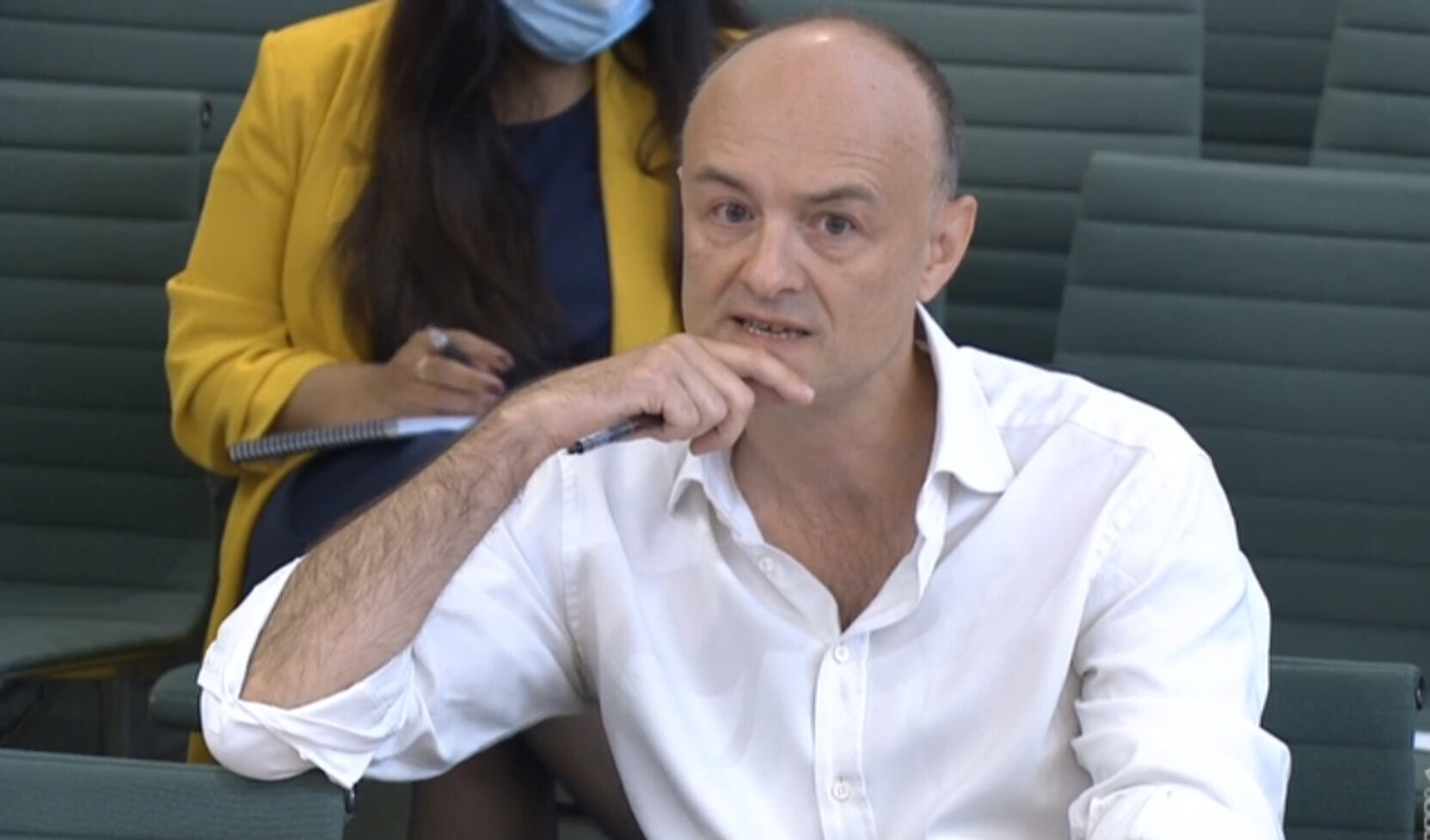
“Brevity is the soul of wit/And tediousness the limbs and outward flourishes.” Thanks to his latest long, long blogpost, Dominic Cummings has perhaps proved one thing beyond doubt: he’s no student of Shakespeare.

With his 7,286 words, wonky screenshots and phone snaps, Boris Johnson’s former chief adviser displayed once more a literary incontinence that only the internet can allow. It was not so much a stream of consciousness as a scream of bumptiousness, laced with venom.

Cummings’ new opus was seen as both tedious and treacherous by many Tory MPs, who share a mutual loathing with the ex-Vote Leave chief. The public too appear to have long ago concluded that he is far from a credible witness in any prosecution case against Johnson’s failings on Covid.

The mastermind of the £350m-a-week-for-the-NHS on that bus, the genius behind the ‘76 million Turks are joining the EU’ poster, is hardly the man to lead the charge against lying in politics.

And there’s no question that Cummings is in many ways his own worst enemy. His renewed character assassination attempt on Matt Hancock was so relentless that it undermined some of the more sensible points he tried to make about the failures of governance at the start of the pandemic. Talk about blogging a dead horse, we get that he hates Hancock already.

Yet if you got beyond the word-blizzard, the repeated use of italics for emphasis, the ACRONYMS and bolded out jargon, the obsessive lists of lettered (A to E) and numbered (1 to 4) paragraphs, there were some nuggets that ought to concern everyone well before the public inquiry begins.

Hancock’s claim in March to have got PPE supplies “all sorted” was undermined by an official telling Cummings that procurement rules and cost concerns meant masks, gloves and gowns being shipped rather than flown from China. Most damning of all was Johnson’s WhatsApp message, “On PPE it’s a disaster. I can’t think of anything except taking Hancock off and putting Gove on.”

Similarly, on delays in getting more ventilators, the PM’s verdict was just as withering: “It’s Hancock. He has been hopeless.” And on the health secretary’s failure to get more Covid testing, Johnson upped the disdain with that eye-catching expletive: “Totally fucking hopless.”

It’s worth saying that on the central charge that Hancock “lied”, the jury remains out because there is no recording of what he actually promised in the Cabinet room. Cummings again claimed cabinet secretary Mark Sedwill said that he and other ministers and officials lacked confidence in Hancock’s “honesty”.

But while saying this conversation was “reinforced in written exchanges”, he failed to publish them. We now await for the Commons select committees to get Sedwill’s own version. I recall No.10 admitting it hadn’t contacted the former cabinet secretary (who, let’s not forget, Cummings helped to oust from his job). Surely the MPs have asked him about such a serious charge?

Given that Cummings’ blog dropped shortly before PMQs, some have accused Keir Starmer of missing an open goal by failing to quote the “fucking hopeless” claim. Yet I can see why the Labour leader opted not to focus on Hancock, partly because blaming him may end up being Johnson’s alibi come any public inquiry. “Hopeless Hancock” could be reshuffled soon, too.

Starmer did quote Cummings, but only on his previous claim that Johnson had a chaotic border policy. He realised that while the personality politics of last year’s sweary WhatsApps may make good newspaper copy, the public are more focused on the here and now of why the Indian variant has been allowed to let rip.

Raising again the issue of proper payments for self-isolation (on the day it seems the Cabinet Office has its own internal document urging just that), plus the ending of business rate relief and full furlough, showed he was talking to immediate concerns not historic ones. Hospitality and small businesses groups contacted Starmer after PMQs thanking him for raising their lack of support and clarity, I’m told.

And Starmer’s strategic target is of course the PM himself. That’s why Labour talks about ‘the Johnson variant’ of the virus and it’s why it will keep hammering its message that lax border controls may have undermined all the hard work of both the public and the NHS’s vaccine programme.

Yet there was material in the Cummings blog that will come in useful in attacking Johnson. We learned for the first time that the PM had texted to his advisers “how do we win the herd immunity argument?” The full text of that was frustratingly not reproduced (and Johnson is bound to argue he didn’t go ahead with that argument anyway).

The account of how Johnson runs meetings, avoiding conflict, failing to ask proper questions to officials, “doing a thumbs-up and pegging it out of the room before anybody can disagree”, sounded all too realistic. This at least proved the PM is as blithe in private as he is in public, but it’s a worrying lack of leadership nevertheless. Starmer, in the G7 statement later, had a wounding line that Johnson was a “host, not a leader, a tour guide, not a statesman”.

For his part, Johnson in PMQs showed again why he’s a formidably cynical politician. Every question was batted away with “Brexit, vaccines, flip-flop Starmer, Brexit, vaccines, flip-flop Starmer”. His jibe that “Captain Hindsight needs to adjust his retrospectoscope” was actually pretty funny.

Faced with such spin and sleight of hand, Starmer can only hope that the public will one day tire of the jokes and the failures of governance. He needs to combine the air of being a grown-up in the room with his own message of optimism, just as Joe Biden persuaded Americans that the crazy years had to be followed by calm good government.

If Labour can at the next election persuade the voters that it is Boris Johnson who was “fucking hopeless” in keeping Covid under control, that’s a much bigger prize than giving Dominic Cummings the scalp of the health secretary. The party needs big answers on big issues like childcare, social care and life chances too. But Starmer at least has his eyes on the real target.


Share Button

Having a strong life purpose eases loneliness of COVID-19 isolation, study finds

Why can some people weather the stress of social isolation better than others, and what implications does this have for their health? New research from the Communication Neuroscience Lab at the Annenberg School for Communication at the University of Pennsylvania found that people who felt a strong sense of purpose in life were less lonely during the COVID-19 pandemic. Did they achieve less loneliness by flouting public health guidance? No. Although lonelier people were less likely to want to follow public health guidance, people with a stronger sense of purpose also expressed more willingness to engage in social distancing, hand washing, and other COVID-19 protective behaviors.

Purpose in life, or a sense that your life is guided by personally meaningful values and goals — which could involve family ties, religion, activism, parenthood, career or artistic ambitions, or many other things — has been associated in prior research with a wide range of positive health outcomes, both physical and psychological.

“In the face of adversity, people with a stronger sense of purpose in life tend to be more resilient because they have a clear sense of goals that motivate actions that are aligned with personal values,” says Yoona Kang, Ph.D., lead author and a Research Director of the Communication Neuroscience Lab. “People with strong purpose may also experience less conflict when making health decisions. We felt that the COVID-19 pandemic was an important context to test whether purpose in life relates to individuals’ willingness to engage in behaviors to protect themselves and others.”

Based on their prior research, Kang and her collaborators expected that people with higher sense of purpose would be more likely to engage in COVID-19 prevention behaviors than individuals with a lower sense of purpose. In order to test their theory, the researchers surveyed more than 500 adult participants to capture their levels of purpose in life, their current and pre-pandemic levels of loneliness, and the degrees to which they intended to engage in behaviors known to prevent the spread of COVID-19.

They found that higher levels of loneliness made people be less focused on protecting themselves from COVID-19, and more skeptical that behaviors to prevent COVID-19 would be effective. However, having a stronger sense of purpose was associated with lower levels of loneliness and a greater desire to take action to protect themselves from COVID-19. Those with a higher sense of purpose also expressed a stronger belief that COVID-19 prevention behaviors would work. Even when people who had a strong sense of purpose did report being lonely, they still felt strongly about taking precautions to prevent COVID-19.

“When faced with extreme loneliness and social isolation, like during the COVID-19 pandemic, wanting to connect with other people, despite the health risks, is a natural response,” Kang says. “And yet, amidst this drastic shift in social life, we found that people with a higher sense of purpose were more likely to engage in prevention behaviors. This is striking because it shows that purpose in life can empower people to make life-saving health decisions that protect their own health and those around them.”

Additionally, the researchers found that older people expressed less loneliness during the COVID-19 pandemic than younger people. Kang sees this as a sign of the resilience of older adults, and she hopes to further study how to enhance purpose in life and resilience in aging populations.

“Having a stronger sense of purpose was associated with really important, positive outcomes across the lifespan,” says Emily Falk, senior author, Director of the Communication Neuroscience Lab, and Professor of Communication, Psychology, and Marketing. “Our upcoming work will test interventions to increase their sense of purpose, in hopes of bringing these benefits to more people.”

The study, published this month in The Gerontologist, is entitled “Purpose in Life, Loneliness, and Protective Health Behaviors during the COVID-19 Pandemic.” In addition to Kang and Falk, authors include Danielle Cosme, Ph.D.; Rui Pei, Ph.D.; Prateekshit Pandey; and José Carreras-Tartak.

Story Source:

Materials provided by University of Pennsylvania. Original written by Ashton Yount. Note: Content may be edited for style and length.

Share Button