The new measures aim to stop private care home providers benefiting excessively from a stretched system.


The new measures aim to stop private care home providers benefiting excessively from a stretched system.
Around 630,000 women are waiting for gynaecology appointments as waiting lists double in four years.

German chancellor Olaf Scholz has defended his recent phone call to Vladimir Putin, but admitted what the Russian president had to say was not “good news”.
The two leaders spoke for an hour for the first time in almost two years on Friday, where Scholz tried to encourage the Russian president to end the war in Ukraine.
Advertisement
Speaking to reporters on Sunday, Scholz said: “It was important to tell [Putin] that he cannot count on support from Germany, Europe and many others in the world waning.
“The conversation was very detailed but continued to a recognition that little has changed in the Russian president’s views – and that is not good news.”
His defence came after Ukrainian president Volodymyr Zelenskyy slammed their conversation.
He said it had opened a “Pandora’s box”, adding: “Now there may be other conversations, other calls. Just a lot of words,
“And this is exactly what Putin has long wanted: It is extremely important for him to weaken his isolation.”
Advertisement
According to the Russian state news agency TASS, Scholz also said: “I don’t think that it will be a good idea to organise talks between the American and Russian president soon while the head of government of one of European’s leading countries doesn’t engage in talks.
“Some people in Germany think it right but I am not among them.”
The chancellor has to contend with pressure from both the left and right within Germany right now, all of whom are pushing for more diplomatic talks to end the European war ahead of snap elections in three months’ time.
However, Scholz claimed to reporters that he had requested to speak to Putin “many times” in the past.
The Kremlin’s spokesperson Dmitry Peskov offered far less information on their exchange than Scholz.
He only told reporters: “As far as I know it was quite a businesslike conversation, detailed and quite frank, as the sides laid out their positions mutually.”
The leaders’ conversation comes as the war approaches its three-year mark.
Less than 48 hours after the leaders’ conversation, Russia launched a huge missile attack on Ukraine and its energy infrastructure, with missiles reaching to the country’s most western points.
Advertisement
Moscow also alleged Putin had told the German chancellor that any agreement to end the war needed to reflect “new territorial realities” and acknowledge Russia’s security demands such as making sure Ukraine does not join Nato.
In a statement after the call, the German government said: “The federal chancellor urged Russia’s willingness to negotiate with Ukraine with the aim of achieving a just and lasting peace and emphasised Germany’s unwavering determination to keep Ukraine in the peace process.”
The call, the first between the two since December 2022, reportedly lasted around an hour.
The leaders supposedly agreed communication would continue between their aides.
He added that there will be “no new Minsk Agreement”, referring to the ceasefire deals between Ukraine and Russia struck in 2014 and 2015.
Scholz and Putin’s conversation came shortly after Donald Trump won a second term in the White House.
The Republican has repeatedly said he would end the war in Ukraine within 24 hours of being inaugurated in January, but has not specified how he intends to do so.
Advertisement
It has sparked fears that Trump would push Kyiv to cede occupied land to Russia.


Chris Philp tried to tear into Labour for their deportations of illegal migrants, only to end up praising it and taking credit for their success instead.
The government has removed hundreds of people who entered the country illegally since getting into power and organised three of the biggest returns flights in UK history.
Advertisement
In fact, Labour have returned significantly more illegal migrants than the Tories did when they were in power.
But, the Conservative shadow home secretary tried to claim the government had just done the “easy returns” during an interview with Times Radio this morning.
Presenter Kate McCann said to Philp: “So Labour has returned 19% more illegal migrants in the time they’ve been in office, compared to the same period in the year before than you did.
“Why are they managing to do something that you couldn’t do over 14 years?”
Philp claimed the Tories “returned huge numbers of people”, but McCann hit back: “Yes, but they’re returning more, aren’t they?”
Advertisement
He replied: “They are mostly, as far as I can see, they are returning many people to actually European countries rather than… and very few of the people they’re returning, as far as I can tell.
“I’ve actually got some formal questions on this, but very few of the people they’re returning, very few, actually cross the English Channel by small boats.”
McCann said: “So is not worth doing then?”
Philp said it is worth it, but claimed “they are going after the easy returns” rather than the people who come via the Channel.
“Isn’t that actually a much bigger question? You’re calling these easy returns and yet you didn’t do it,” she said.
“Well, I mean, we did. We returned, I think it was 23,000 people last year. That is a very, very large number. It had been on an increasing trajectory,” the former minister said. “And in fact, the work that’s happened in the last four months would have been…
Advertisement
“You can imagine it takes quite a long time to organise these returns in terms of the policy, the operations, the legal stuff.
“So the returns that have happened since July, the work to prepare for that would actually have been done by the last government.”
McCann replied: “So you’re claiming credit for it.”
“Well, a bit,” he replied. “As you can imagine, it takes time to organise the legalities of it, the logistics of the flights, the policy framework.
“All of that work that has led to this increase would have been done under the last government.
“So they are being a little bit cheeky.”
According to the Sunday Mirror, Labour have organised more than 25 bespoke returns flights have taken place since July 5.
That includes returning people to Albania, Poland, Romania and Vietnam, as well as the first ever chartered flight to Timor-Leste, and the largest ever returns flight to Nigeria and Ghana.
Advertisement

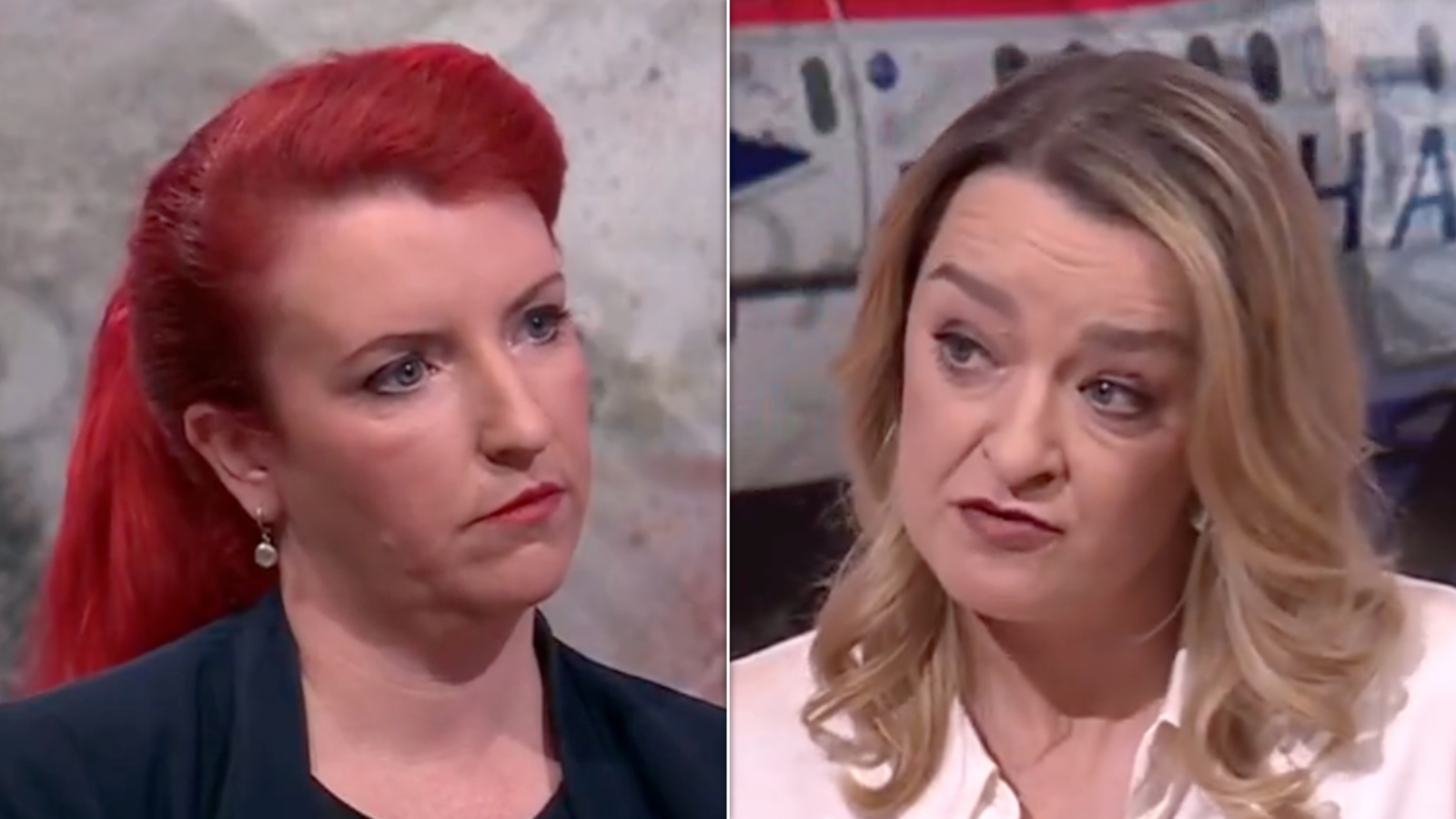
Laura Kuenssberg put the transport secretary on the spot this morning over Labour’s decision to increase the bus fare cap to £3 by reading out the real-life impact of the move.
The government decided in last month’s Budget that, to help fill the “black hole” the Tories supposedly left in the public finances, they would increase the cap from £2.
Advertisement
The department for transport has now announced £1bn of funding will go on delivering London-style buses nationwide, with an extra £151m going on funding the £3 cap outside of the capital until 2025.
But, as the presenter told Louise Haigh, this still means some people will be worse off.
On Sunday with Laura Kuenssberg, the BBC host began by asking: “Do you admit just it’s logical that will make it more expensive for people to get around?”
“The £2 fare cap was due to finish on 31 December, that was the funding settlement I inherited,” Haigh replied.
She said that Labour then “stepped in” to protect the cap at £3, adding: “That means for rural routes in particular where bus fares could have leapt back up to £13 or £14 in some instances, we are keeping it much lower at £3.”
Advertisement
Haigh also said the government has made sure some operators cannot raise fares more than in line with inflation, so that they would not expect all fares to raise to £3, that is just a maximum amount.
But Kuenssberg pushed: “Protecting the cap, as you put it, means increasing fares for lots of people.”
She then read out of an example from a viewer’s relative, who may now have to pay an extra £15 per week just to get to work as she has to get three buses in her commute.
“Where’s she meant to get the money from?” Kuenssberg asked.
Haigh said it would be more economical to buy a weekly card, but the presenter cut in: “OK, this is a real-life example.
“One of our viewers says in their family they’re going to have to find an extra £15 a week, and that’s money they don’t have. What are they meant to do?”
Advertisement
Haigh just said the government stepped in with £150m to protect the fare at £3, and said the fare should not go up to that full amount in urban areas.
The exchange comes a few weeks after health secretary Wes Streeting claimed the bus cap would have risen to £10 if Labour had not acted.
Haigh also refused to commit to extending the £3 cap beyond 2025, telling Times Radio this morning: “So the fare cap is funded until the 31st of December 2025 and over the next year.
“We’ll work to evaluate how that is having an impact and where the cap should land and what the best intervention is.
“We made the choice to step in and fund the cap at £3 after the 31st of December this year.
“But we’re also making the choice to fund £1 billion worth of local bus services today in this announcement because the major thing that keeps people off the buses is the total lack of reliability.”
Advertisement

Kathleen Alexandra Warmington is struck off for making “inappropriate comments”.

Fish stocks along the West African coast have declined significantly over the past five decades, threatening food security and the livelihoods of the fishing communities that depend on them, according to a study by the Institute of Environmental Science and Technology of the Universitat Autònoma de Barcelona (ICTA-UAB) in collaboration with Fundação Maio Biodiversidade (FMB).
Small-scale fisheries play a vital role in providing food and livelihoods for millions of people around the world, particularly in low-income countries in Africa. However, there is limited statistical data on the composition, abundance, and distribution of the fisheries’ resources, which is crucial for effective management.
New research, recently published in the journal Marine Policy, documents changes in the catches of small-scale fisheries, highlighting a significant decline not only in volume of catches, but also in the size of fish for key local species.
Scientists compiled official catch landing data and combined it with local ecological knowledge from local fishermen and fishmongers on Maio island, in Cabo Verde, designated a UNESCO Biosphere Reserve since 2020.
“Monitoring of fish landings in West African countries is limited and under-represents catches at the local level, especially from artisanal fisheries, creating data gaps that hinder effective management,” says Thais Peixoto Macedo, ICTA-UAB researcher and lead author of the study, who explains that traditional fishers’ accounts revealed trends that are poorly captured in official records. “The findings in this area show us trends that are likely to occur on other islands of the archipelago or other West African coastal areas and should be taken into account in marine resource management plans.”
Local communities believe that certain fishing practices, such as spearfishing with scuba gear and semi-industrial fishing with purse seines and night lights, are major contributors to the decline of fish stocks. In the case of semi-industrial fishing, they report that vessels fish within the three-nautical-mile zone and in marine protected areas reserved for artisanal fishing.
The most reported depleted species include groupers (dusky grouper, island grouper and the African hind) and small pelagic fish such as mackerel and bigeye scad. “According to local fishermen, the decline of small pelagic fish due to semi-industrial coastal fishing is negatively affecting artisanal catches of large pelagic species, such as yellowfin tuna and albacore, an important commercial species for local and international markets,” says Benalsy Varela, FMB staff who contributed to the study. Spiny and slipper lobsters, particularly targeted to supply more tourist-intensive islands, were also considered depleted.
The research highlights a phenomenon known as “Shifting Baseline Syndrome,” where people gradually adjust their perception of what is healthy or natural to a new reality, forgetting past conditions and accepting it as the ‘new normal’. Younger fishermen reported smaller catches and fish sizes than older generations, but a larger proportion of the younger group believe that fish stocks are not in decline.

Clinical visits by patients suffering ocular surface eye conditions more than doubled during times when ambient particulate matter from air pollution was in the atmosphere, signaling a possible association between climate change and ocular health, according to a new study from the University of Colorado Anschutz Medical Campus.
The study, published Wednesday in the journal Clinical Ophthalmology, is among the first to look into how climate change may affect the eyes.
“The World Health Organization has declared climate change to be “the single biggest health threat facing humanity,” said the study’s lead author Jennifer Patnaik, PhD, MHS, assistant professor of epidemiology and ophthalmology at the University of Colorado School of Medicine. “Yet there are limited studies on the impact of climate change-related air pollution on ocular health.”
The researchers, including Associate Professor Katherine James, PhD, who directs the Climate & Human Health program at the Colorado School of Public Health, examined the associations between ocular surface irritation and allergy-related daily outpatient office visits with daily ambient particular matter (PM) levels in the Denver Metropolitan area.
They obtained data of PM concentrations that were 10 micrometers or less and 2.5 micrometers or less in diameter. The researchers found 144,313 ocular surface irritation and allergy visits to ophthalmic clinics during the study period. The daily visit counts were 2.2 times higher than average when PM10 concentrations were 110. The clinic visit rate ratio increased as daily concentrations increased.
The study reported that conjunctivitis was the second most common eye disease among the clinic visits in the study, representing exactly one-third of all the visits. The prevalence of ocular allergic conjunctivitis has increased worldwide and varies across regions. Socioeconomic and environmental factors such as temperature, humidity and air pollution have been proposed as reasons for the increase.
Patnaik said the health risks of air pollution and climate change span a wide range of outcomes including infectious disease, weather-related morbidity and a variety of lung, kidney and cardiovascular maladies.
“Less studied chronic diseases such as dementia have also been shown to be associated with temperature and air pollutants,” she said. “Research on the topic of ocular conditions and climate is still in its early stages; therefore, more studies are needed to better understand how climate and air pollutants impact eye health.”
James agreed.
“This study highlights the systemic health impacts of climate stressors including air quality, wildfires, temperature, and drought conditions and the continued need to for transdisciplinary research,” she said.
The researchers hope to build and expand on these initial discoveries, said the study’s senior author Malik Kahook, MD, professor of ophthalmology at the CU School of Medicine.
“These findings open the door to a deeper understanding of how environmental factors affect eye health. From a clinical standpoint, we’re now seeing more evidence suggesting that particulate matter in the air isn’t just affecting respiratory or cardiovascular health but also directly impacting ocular surface health,” Kahook said. “Our next steps are to investigate how other air pollutants might influence eye health and to expand our focus to areas outside of Colorado. By doing so, we aim to identify preventive strategies and consider new treatment protocols tailored to address these environmental influences, ultimately protecting the most vulnerable patients in areas heavily affected by pollution.”
Amy Dye-Robinson, from the Department of Biostatistics & Informatics at CU Anschutz, is a study co-author.

An international team of scientists using observations from NASA-German satellites found evidence that Earth’s total amount of freshwater dropped abruptly starting in May 2014 and has remained low ever since. Reporting in Surveys in Geophysics, the researchers suggested the shift could indicate Earth’s continents have entered a persistently drier phase.
From 2015 through 2023, satellite measurements showed that the average amount of freshwater stored on land — that includes liquid surface water like lakes and rivers, plus water in aquifers underground — was 290 cubic miles (1,200 cubic km) lower than the average levels from 2002 through 2014, said Matthew Rodell, one of the study authors and a hydrologist at NASA’s Goddard Space Flight Center in Greenbelt, Maryland. “That’s two and a half times the volume of Lake Erie lost.”
During times of drought, along with the modern expansion of irrigated agriculture, farms and cities must rely more heavily on groundwater, which can lead to a cycle of declining underground water supplies: freshwater supplies become depleted, rain and snow fail to replenish them, and more groundwater is pumped. The reduction in available water puts a strain on farmers and communities, potentially leading to famine, conflicts, poverty, and an increased risk of disease when people turn to contaminated water sources, according to a UN report on water stress published in 2024.
The team of researchers identified this abrupt, global decrease in freshwater using observations from the Gravity Recovery and Climate Experiment (GRACE) satellites, operated by the German Aerospace Center, German Research Centre for Geosciences, and NASA. GRACE satellites measure fluctuations in Earth’s gravity on monthly scales that reveal changes in the mass of water on and under the ground. The original GRACE satellites flew from March 2002 to October 2017. The successor GRACE-Follow On (GRACE-FO) satellites launched in May 2018.
The decline in global freshwater reported in the study began with a massive drought in northern and central Brazil, and was followed shortly by a series of major droughts in Australasia, South America, North America, Europe, and Africa. Warmer ocean temperatures in the tropical Pacific from late 2014 into 2016, culminating in one of the most significant El Niño events since 1950, led to shifts in atmospheric jet streams that altered weather and rainfall patterns around the world. However, even after El Niño subsided, global freshwater failed to rebound. In fact, Rodell and team report that 13 of the world’s 30 most intense droughts observed by GRACE occurred since January 2015. Rodell and colleagues suspect that global warming might be contributing to the enduring freshwater depletion.
Global warming leads the atmosphere to hold more water vapor, which results in more extreme precipitation, said NASA Goddard meteorologist Michael Bosilovich. While total annual rain and snowfall levels may not change dramatically, long periods between intense precipitation events allow the soil to dry and become more compact. That decreases the amount of water the ground can absorb when it does rain.
“The problem when you have extreme precipitation,” Bosilovich said, “is the water ends up running off,” instead of soaking in and replenishing groundwater stores. Globally, freshwater levels have stayed consistently low since the 2014-2016 El Niño, while more water remains trapped in the atmosphere as water vapor. “Warming temperatures increase both the evaporation of water from the surface to the atmosphere, and the water-holding capacity of the atmosphere, increasing the frequency and intensity of drought conditions,” he noted.
While there are reasons to suspect that the abrupt drop in freshwater is largely due to global warming, it can be difficult to definitively link the two, said Susanna Werth, a hydrologist and remote sensing scientist at Virginia Tech, who was not affiliated with the study. “There are uncertainties in climate predictions,” Werth said. “Measurements and models always come with errors.”
It remains to be seen whether global freshwater will rebound to pre-2015 values, hold steady, or resume its decline. Considering that the nine warmest years in the modern temperature record coincided with the abrupt freshwater decline, Rodell said, “We don’t think this is a coincidence, and it could be a harbinger of what’s to come.”
A person in California has tested positive for the emerging strain, which can cause a more serious illness.
