Putin Employs Forceful Carrot And Stick Approach To Get People Voting In Russia’s Election

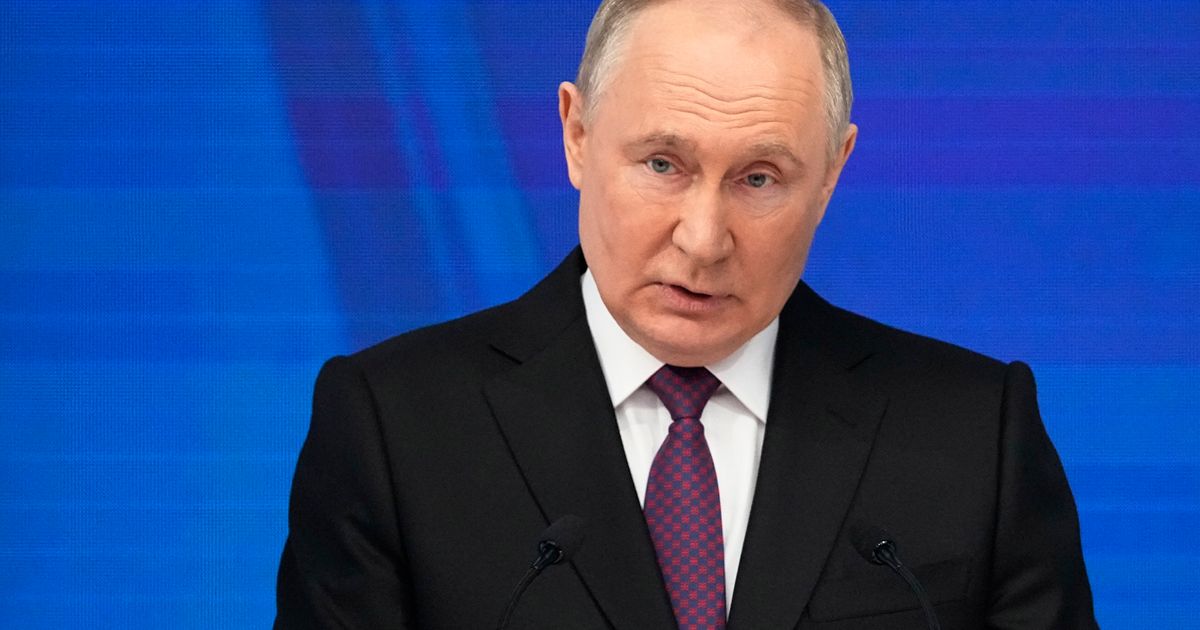
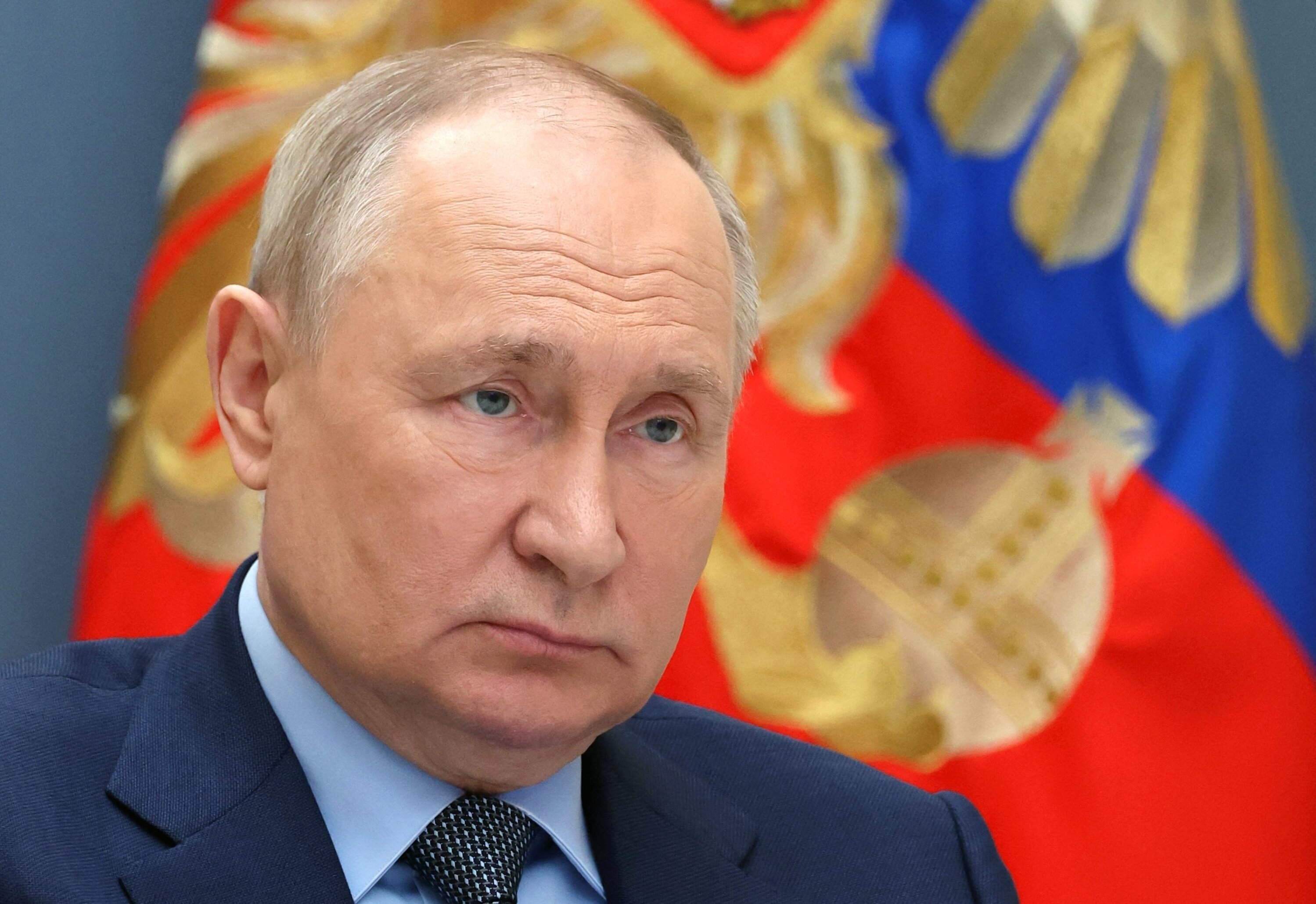
People in Russia and occupied Ukraine are heading to the polls over the coming days to vote in the presidential election – and it appears Vladimir Putin has employed some extraordinary measures to encourage a good turnout.

Even though the current president is a shoo-in to get re-elected for his fifth term – having suppressed all of the main opposition – it appears he’s very keen for there to be a large, visible turnout to legitimise his time in office.

The national vote is taking place over three days, running from 15 to 17 March, but early voting was introduced for the occupied parts of Ukraine “for security reasons”.

And while there have been reports of people trying to disrupt the voting system in some way – like starting fires – these are minor shows of disruption unlikely to impact the overall result.

Here’s how Putin has used both the carrot and the stick to force people to vote in Russia and in occupied parts of Ukraine.

1. Putin’s direct appeal to his ‘dear friends’

Earlier this week, Putin urged people to vote, saying: “Dear friends!

:All of us, the multiethnic people of Russia, are a big family.

“We are worried about our country, take care of it, we want it to be wealthy, strong, free and prosperous, we want living standards and the quality of life to improve. So be it.”

This is part of his illusion that democracy is going strong in Russia.

According to state media TASS, the authoritarian leader claimed, “we will do everything the way we want”, and claimed: “The only source of power in our country is the people. This is the key legal provision enshrined in the Russian constitution.”

Putin has been in power consistently since before 2000.

He also addressed Ukraine’s flurry of attacks on Friday, saying: “These attacks, pointless from the military point of view and criminal from the humanitarian point of view, as has been said, are geared to hinder presidential election in Russia.

“I am convinced that our people will respond to this by being more consolidated.”

The Kremlin even posted a bizarre video of Putin walking into his office, tapping on his large computer, and then acknowledging the camera after several long seconds and waving.

The screen then cut to the computer to suggest he just voted online.

2. Entertainment at polling stations

According to the BBC’s Francis Scarr, voters can watch traditional dancing and eat a few free pancakes at the ballot box, or pose with cardboard cutout of US commentator Tucker Carlson, after voting.

Other characters showed up at polling stations around the country, too, including Grandfather Frost, Barbie and people dressed in historical outfits.

Scarr claimed on X (formerly Twitter) that the Kremlin has been holding raffles in polling stations, too.

He added: “For residents of this district in Siberia, domestic appliances, bags of sugar, and even vans of firewood are up for grabs.”

3. Armed Russian troops go house-to-house

If neither of these attempts work, it seems Putin had a third, much more menacing option up his sleeve – armed threats.

It’s particularly difficult for people living in one of the four partially-occupied Ukrainian territories, like Zaporizhzhia, which Putin illegally annexed in September 2022 .

An investigation from The Guardian earlier this month found Russian troops threatened any Ukrainians in occupied areas with deportation if they chose not to vote.

Other residents also told the BBC that they were coerced into voting by pro-Russia collaborators going from house to house with armed soldiers.

Having the Ukrainian vote supposedly on side would also help to justify his brutal invasion, especially as Putin maintains the country is meant to be part of Russia.

The official emblem of the presidential election this year is the V symbol associated with Putin’s “special military operation”.

Meanwhile, Ukraine has dismissed the vote as illegitimate, saying they would be null and void.

Share Button

Putin Makes Bizarre Dictatorship Claim Day After Navalny’s Funeral

Vladimir Putin has just claimed the world has no place for “dictatorship, double standards or lies” – more than two years after he invaded Ukraine and a day after his most prominent critic was laid to rest.

The Russian president was speaking the day after the funeral of Alexei Navalny, who died under mysterious circumstances in a Russian penal colony in the Arctic circle last month.

The Russian prison service claimed Navalny felt unwell and then fell unconscious while on a walk, and medics were not able to revive him.

He was serving a lengthy sentence on charges widely seen as politically motivated at the time.

Putin has not directly addressed Navalny’s passing even though it has become an international news story.

Leaders across the West have also blamed Russian president for his critic’s death – US president Joe Biden said he has “no doubt” it was the “consequence of something that Putin and his thugs did”.

But speaking on Saturday to the participants of the World Youth Festival, Putin bizarrely praised equality and justice, according to a report from the Russian state news agency TASS.

Putin claimed: “I know that these values are shared by the vast majority of the Earth’s inhabitants.

“This is why we must take care of them and defend them together, fulfil our dreams together, and help each other to make the lives of billions of people – let me stress this – billions of people better.

“This world has no place for racism, dictatorship, double standards or lies, and people are free to speak their language and follow the beliefs and traditions of their ancestors.”

It’s worth remembering Putin has been called a “dictator” by Biden in the past and the Russian president’s brutal actions in Ukraine have left the country pretty isolated on the world stage.

Having suppressed his most vocal political opponents over the years, Putin is also a shoo-in to win the upcoming presidential election in Russia. He has already spent more than two decades in power.

The Kremlin has been cracking down on any kind of public dissent in Russia in recent years, too.

Independent media and human rights defence group, OVD-Info reported that more than 400 people were detained at events across 32 Russian cities in the first few days after Navalny’s death – including journalists.

Mourning supporters of the outspoken Kremlin critic were even prohibited from laying flowers in his memory.

Navalny’s family also claimed they struggled to find a venue to host his funeral in Russia, with many refusing once they found out who the funeral was for.

However, thousands still turned out to show their support for Navalny on Friday, chanting “no to the war” and “Putin is a murderer”.

According to the US-based think tank, the Institute for the Study of War, the Kremlin likely allowed this unusual show of rebellion to happen to “avoid prompting wider outrage”.

The experts suggested: “The Kremlin likely did not order large crackdowns against displays of anti-war sentiment in order to avoid prompting wider outrage while also projecting confidence in public support for Russian President Vladimir Putin and his war effort in Ukraine ahead of presidential elections on March 17.”

Share Button

‘Kiss My Ass’: David Cameron Gets Short Shrift From Marjorie Taylor Greene After Ukraine Funding Plea

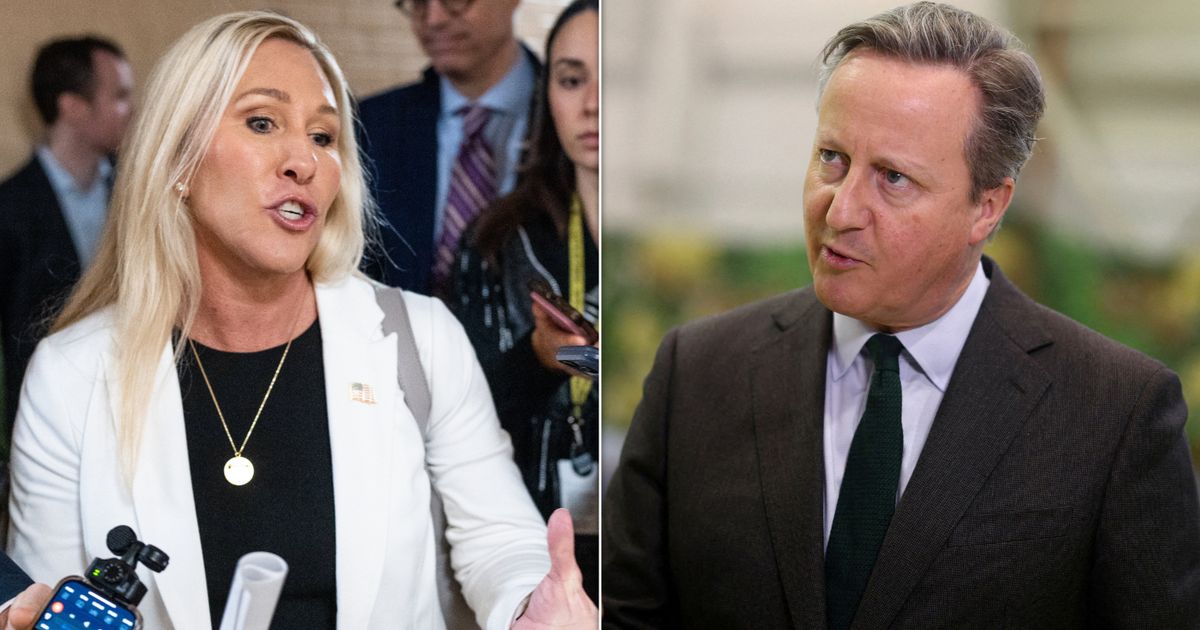
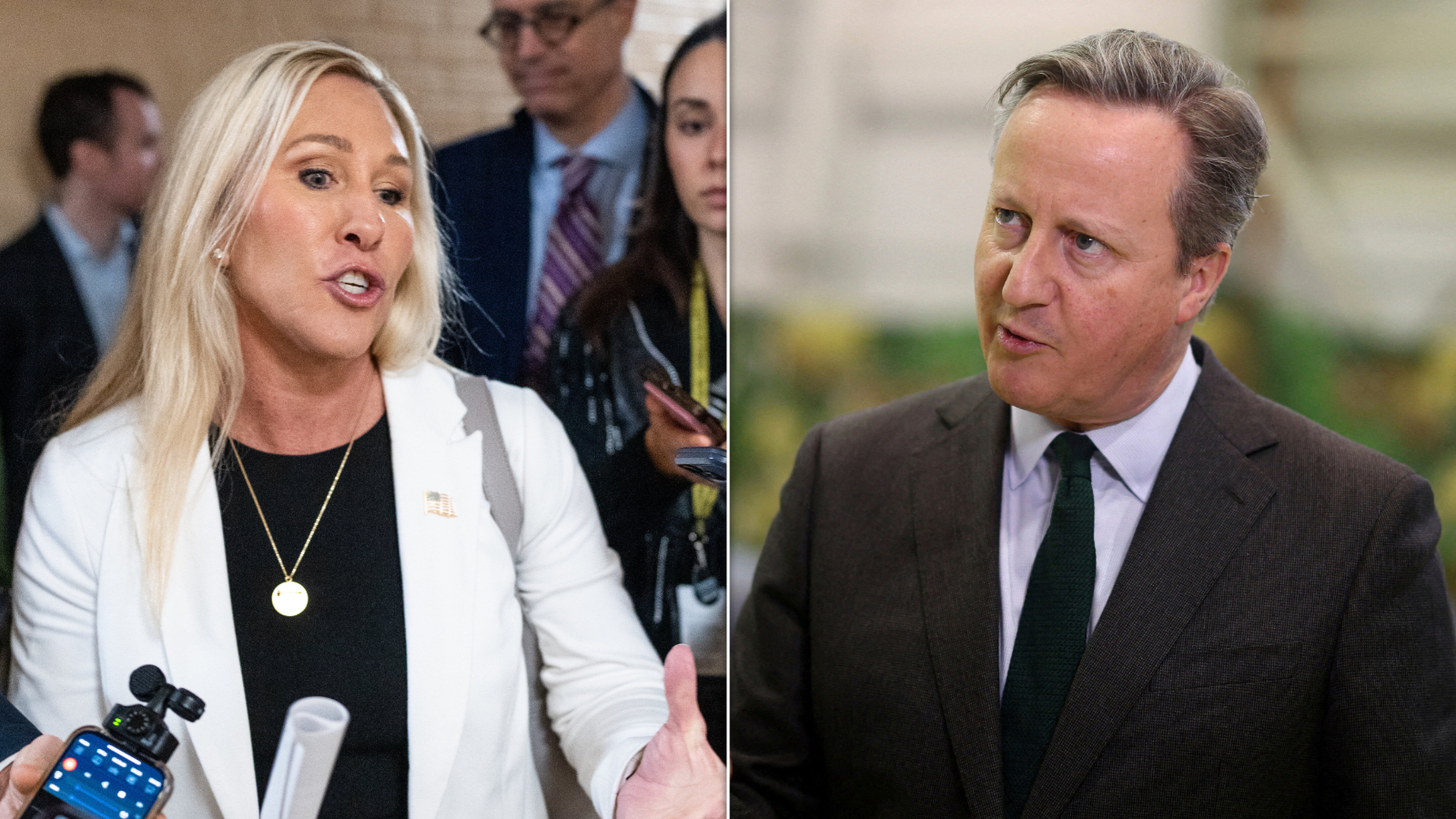
David Cameron has prompted an angry reaction from US Republican politician Marjorie Taylor Greene after drawing comparisons to the appeasement of Adolf Hitler when urging Congress to approve a multi-billion dollar funding package to Ukraine.

The British foreign secretary on Tuesday made a direct plea to American politicians amid the stalemate over $95.3 billion (£75 billion) of support to Ukraine to help it continue its war against Russia.

But the former prime minister’s lobbying drew a fierce response from Taylor Greene, the controversial member of the House of Representatives from the Donald Trump-supporting MAGA wing of the GOP.

Taylor Greene was confronted by James Matthews of Sky News, who characterised Cameron’s comments as likening her “to an appeaser to Hitler in not voting for funding to Ukraine ”.

“Are you an appeaser for Putin?” the correspondent asked.

“I really don’t care what David Cameron has to say,” she replied. “I think that’s rude name-calling and I don’t appreciate that type of language. David Cameron needs to worry about his own country and frankly he can kiss my ass.”

In an unusual move, Cameron used an article on the Washington DC website The Hill to urge Congress to support Ukraine with more funding.

He said: “I believe our joint history shows the folly of giving in to tyrants in Europe who believe in redrawing boundaries by force.

“I do not want us to show the weakness displayed against Hitler in the 1930s. He came back for more, costing us far more lives to stop his aggression.”

Share Button

Putin And Xi Say They Need To Oppose International Interference – From Other Countries

China’s president Xi Jiinping and Russia’s Vladimir Putin have agreed their countries should both try to oppose international interference – something both nations have been actually been accused of.

According to a Kremlin press briefing, they both lashed out at the US in particular, denouncing the “US policy of interfering in the internal affairs of other states”.

The two leaders spoke during an hour-long phone call on Thursday and discussed establishing a “multipolar, fairer world order”.

The Moscow Times reported that the Kremlin aide Yuri Ushakov told journalists: “The leaders of the two countries realise that the US is practically implementing a policy of double containment [toward] both Russia and China.”

The US has sanctions against both Beijing and Moscow right now.

A readout from the Chinese state broadcaster CCTV also reported that Xi suggested the two “should closely collaborate strategically, defend the sovereignty, security and development interests of their respective countries, and resolutely oppose interference in internal affairs by external forces.”

The UK and its allies actually called out Russia for its own sustained attempts to interfere in UK politics and democratic processes only in December 2023.

Meanwhile, China was criticised by Taiwan for “repeated interference” in its elections only in January.

Xi and Putin’s relationship has strengthened significantly since Russia invaded Ukraine, and, according to the Kremlin, the leaders agreed today to continue having “close personal interaction”.

Weeks before the war began, Xi signed up to a “no-limits” friendship with Putin, with a series of long-term energy deals.

Xi went to Moscow last March, and Putin visited Beijing in October – a particularly surprising move from the Russian president, because of the international arrest warrant out against him.

Although the Kremlin’s press service said the bond between their two countries was at “an unprecedentedly high level” right now, they do not have any more visits scheduled.

According to CCTV, Xi said the two countries have “weathered many storms together” and they are “facing new opportunities for development”.

The two also spoke about “the development of Sino-Russian comprehensive partnership and strategic cooperation over the recent period.”

China-Russia trade reached the new high of $218.2 billion (£173.12 billon) during January-November, according to Chinese customs data.

Russia has been able to rely on China as a key economic lifeline since the West imposed unprecedented sanctions on Moscow over its ongoing invasion of Ukraine.

In exchange, China has access to Russia’s cheap energy exports and natural resources.

Xi also wished Putin success in the upcoming elections. Russia recently banned a popular antiwar opponent from standing in the election, and Putin is expected to win comfortably.

Share Button

King Charles Calls For ‘Universal’ Values To Be Protected Amid Wars In Gaza And Ukraine

King Charles has used his Christmas message to call on people to imagine themselves in the “shoes of our neighbours” at a time of “increasingly tragic conflict around the world”.

In the speech delivered on Monday afternoon, amid the bloody wars in Gaza and Ukraine, the King said people should “love our neighbour as ourselves”.

The King – a committed environmentalist – also said it was the duty of people “all faiths” to protect the planet.

In his second Christmas message since ascending to the throne, the King said: “At a time of increasingly tragic conflict around the world, I pray that we can also do all in our power to protect each other.

“The words of Jesus seem more than ever relevant: ‘Do to others as you would have them do to you.’

“Such values are universal, drawing together our Abrahamic family of religions, and other belief systems, across the Commonwealth and wider world.

“They remind us to imagine ourselves in the shoes of our neighbours, and to seek their good as we would our own.”

It came following reports Egypt has put forward a plan to end the Israel-Hamas war with a cease-fire, a phased hostage release and the creation of a Palestinian government.

Israeli airstrikes have been heavily pounding central and southern Gaza, crushing buildings on families sheltering inside.

In the Maghazi refugee camp, rescue workers pulled dozens more bodies from the wreckage hours after a strike levelled a three-story building and shattered others nearby.

On the environment, the King said: “Service to others is but one way of honouring the whole of creation which, after all, is a manifestation of the divine. This is a belief shared by all religions.

“To care for this creation is a responsibility owned by people of all faiths and of none. We care for the Earth for the sake of our children’s children.

“During my lifetime I have been so pleased to see a growing awareness of how we must protect the Earth and our natural world as the one home which we all share.”

Share Button

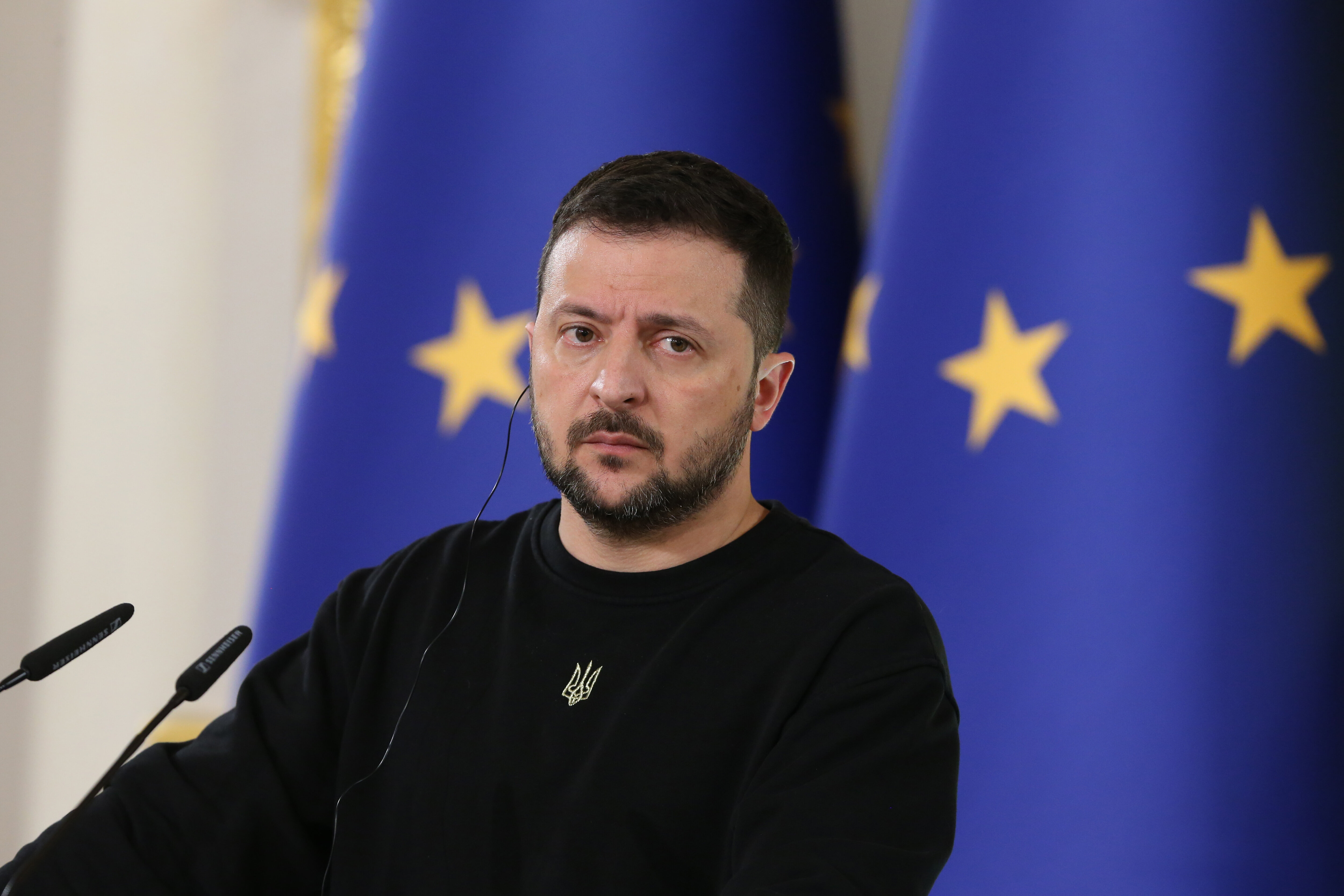
‘A Victory’: Volodymyr Zelenskyy Hails EU’s Decision To Start Ukraine Accession Talks

Volodymyr Zelenskyy has hailed the decision by the European Union for Ukraine to begin accession talks to become a member of the bloc.

Charles Michel, president of the European Council, announced the move on X (formerly Twitter).

Responding on the same platform, the Ukrainian president said: “This is a victory for Ukraine. A victory for all of Europe. A victory that motivates, inspires, and strengthens.”

Share Button

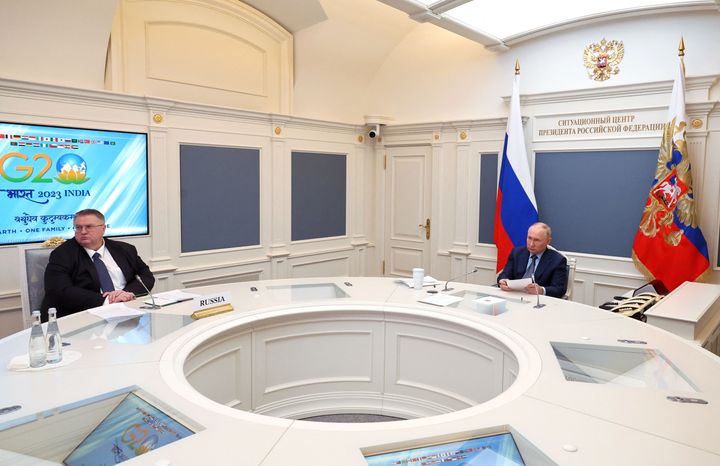
Putin Appears To Forget He Started The ‘Tragedy’ Of War In Ukraine In Bizarre G20 Appearance

Vladimir Putin seemed to forget he initiated the war in Ukraine during his surprise appearance at a virtual G20 summit on Wednesday.

In his first address to the leaders of the world’s largest economies since the Ukraine-Russia conflict began in 2022, the Russian president called for leaders to “stop the tragedy” occurring in the neighbouring country.

After some leaders said they were shocked by the Russian “aggression” in Ukraine, Putin replied: “Yes, of course, military actions are always a tragedy.

“And of course, we should think about how to stop this tragedy. By the way, Russia has never refused peace talks with Ukraine.”

Why was this comment so surprising?

Putin’s remarks omit his own role in starting the conflict.

Back in February 2022, after weeks of growing aggression and building up troops near the Ukrainian border, the Russian president ordered his forces into Ukraine.

He claimed it was important to “demilitarise” the country, and made baseless neo-Nazi allegations about the Ukrainian government to justify the invasion.

It was part of what he dubbed the “special military operation” – he has only referred to the 21-month long fight as a “war” sparingly.

So it was also pretty surprising when Putin used the word “war” to describe the conflict in Ukraine during his G20 meeting.

He said: “I understand that this war, and the death of people, cannot but shock.”

Who did Putin blame for the war, then?

Putin pivoted the G20′s attention to pre-war tensions, by claiming Ukraine had been persecuting people in the east of its country.

This is a reference to the separatist movement which started to gain traction in eastern Ukraine after Ukraine’s 2013 Maidan Revolution and Putin annexed Crimea in 2014.

According to the UN, approximately 14,000 people were killed in the subsequent conflict as Russian-backed separatists fought Ukrainian forces.

Putin also pivoted the conversation towards the ongoing Israel-Hamas war, saying: “And the extermination of the civilian population in Palestine, in the Gaza Strip today, is not shocking?”

The Russian president has positioned himself as a potential mediator in the Middle East conflict since it broke out last month.

This pool photograph distributed by Russian state agency Sputnik shows Russia's President Vladimir Putin taking part in a virtual G20 leaders' summit in Moscow on November 22, 2023.
This pool photograph distributed by Russian state agency Sputnik shows Russia’s President Vladimir Putin taking part in a virtual G20 leaders’ summit in Moscow on November 22, 2023.

MIKHAIL KLIMENTYEV via Getty Images

What else did Putin’s comments reveal?

Putin’s remarks were correct in that there really is a tragedy still unfolding in Ukraine – it’s Europe’s deadliest conflict since World War 2.

The UN Human Rights Office said on Tuesday that more than 10,000 civilians have been killed in Ukraine since Russia invaded, although the real toll is expected to be “significantly higher”.

According to Reuters, Danielle Bell from the head of the UN monitoring mission, said the “severe human cost” in Ukraine right now is “painful to fathom.”

Russia has been accused of targeting civilian structures in Ukraine too, although Moscow has denied this.

Ukraine has also only agreed to peace negotiations if Russia agrees to hand back all of the Ukrainian land (one fifth of its total land mass) it has illegally annexed since 2014 – which includes the peninsula of Crimea.

But Putin claims this area now belongs to Russia.

He also broke international law by illegally annexing four other regions in eastern Ukraine in September 2022.

Putin’s words also come after a senior Russian official said Moscow could not co-exist with the current government in Ukraine.

Why was Putin’s appearance at the virtual summit a surprise?

The Russian leader has barely left Russia since the the International Criminal Court issued an arrest warrant for him over the illegal deportation of Ukrainian children.

He did visit Iran back in July and ventured to Belarus last December, but has steered clear of any NATO country since February 2022 – so his virtual appearance at the summit was a big deal.

He sent his foreign minister Sergey Lavrov to the last two G20 meetings in India and Indonesia, and has not attended a summit meeting in person since 2019.

Share Button

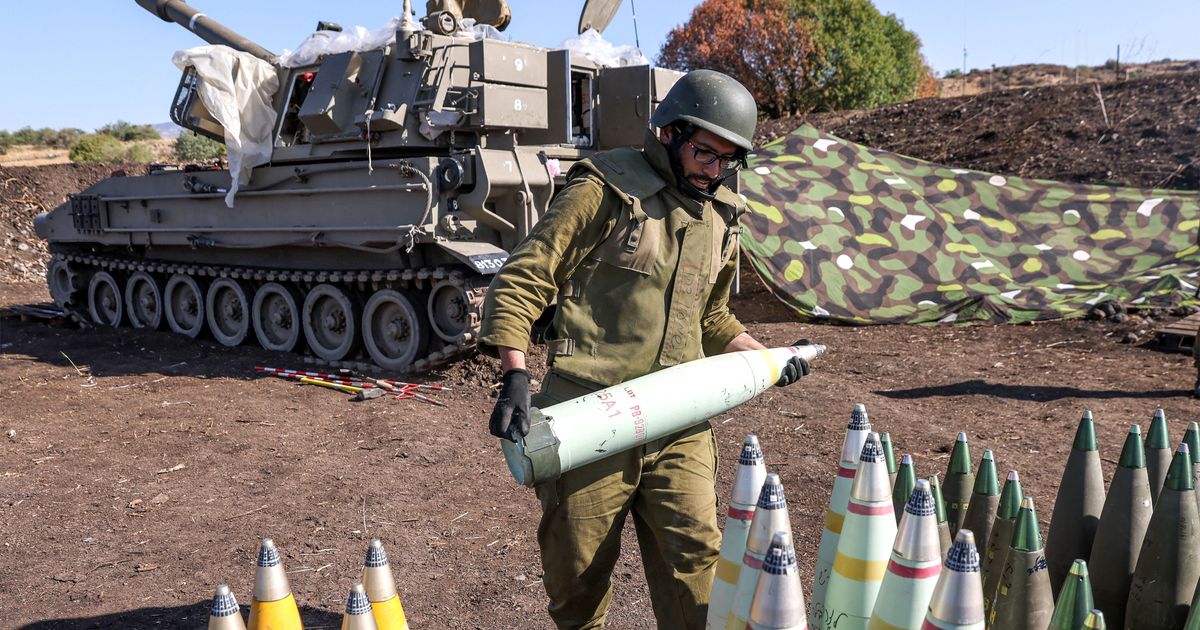
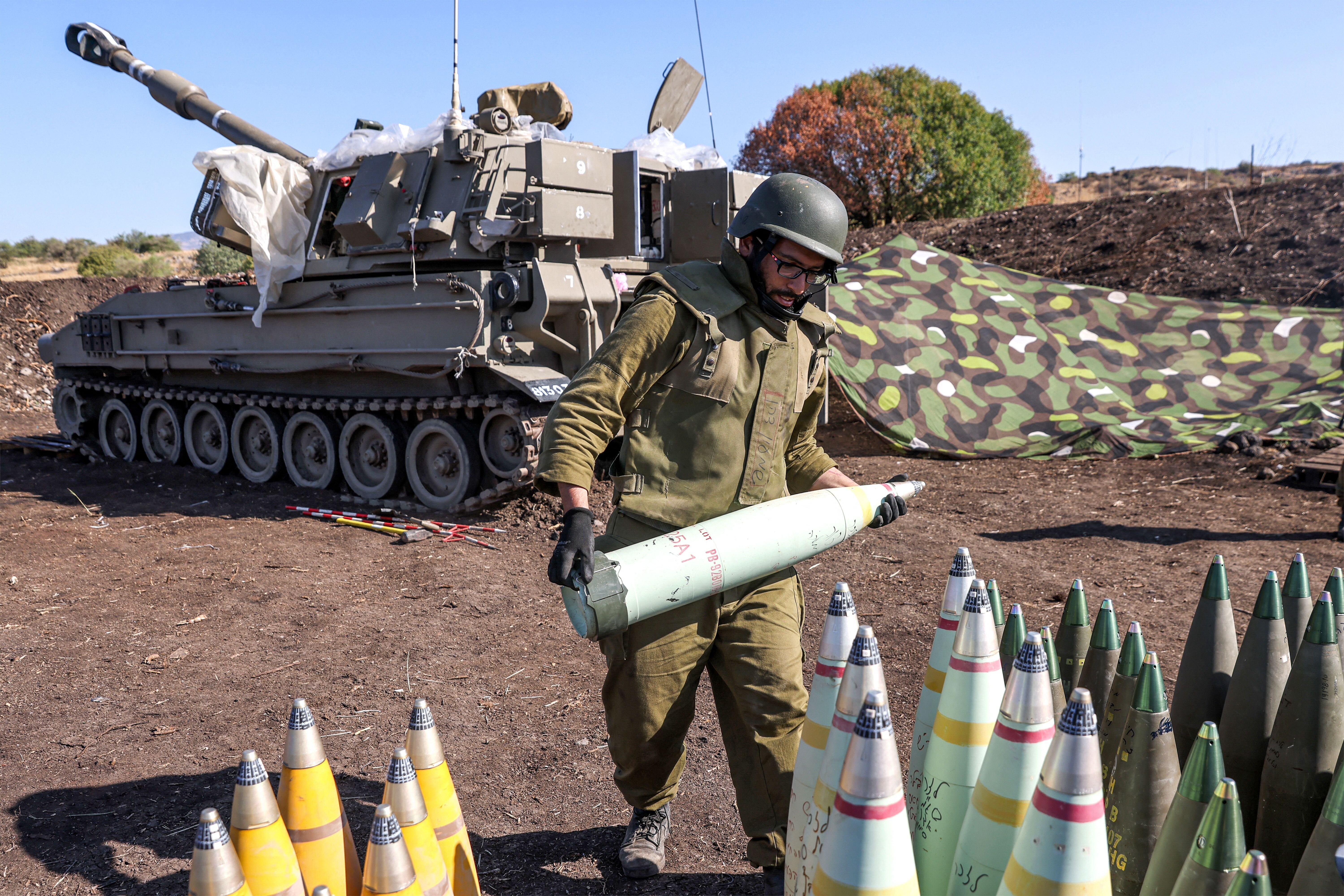
US Confirms It Has Sent Artillery Previously Meant For Ukraine To Israel

The US has confirmed that shells originally intended to aid Ukraine in its war against Russia have now been sent to Israel amid its conflict with the Palestinian militants, Hamas.

Reports that tens of thousands of artillery shells – specifically 155mm projectiles – previously earmarked for Ukraine, were being redirected to Israel started circulating last week.

And on Monday, a US senior defence official confirmed some had indeed been re-routed.

The unnamed official told journalists that “prior to the October 7 Hamas terrorist attack, some 155[mm shells] had been withdrawn from the war reserve stockpile in Israel, to replenish US stocks in Europe”.

The New York Times has previously reported that the US had been moving munitions, potentially up to 300,000 shells, from Israeli storage to Ukraine since 2022.

But, as the official noted, there’s now been a U-turn in the Pentagon, following the outbreak of war in the Middle East.

They said: “Much of that has been redirected and provided to the Israel Defence Forces for their use.”

The Pentagon had been keeping munitions in Israel as an emergency in case of war in the region or as a resource for other US allies.

The US does not formally need Israel’s consent to move such items, but local officials confirmed they had it anyway – from then-prime minister Yair Lapid’s –when looking to transport the munitions to Ukraine.

As Reuters noted in January, if such transfers had happened under current PM Benjamin Netanyahu’s watch, it may have stretched his budding relationship with Russia.

Now, munitions have been redirected back to Israel – even though Ukraine still has more than 1,000km of active frontline to fight.

Ukraine’s minister for strategic industries, Oleksandr Kamyshin, told POLITICO on Monday that the Israel-Hamas war showed the West needs to increase its arms production.

“The free world should be producing enough to protect itself. That’s why we have to produce more and better weapons to stay safe,” Kamyshin said.

Back in the US media briefing on Monday, journalists asked the Pentagon representative why weapons were going to Israel, even though the White House has regularly emphasised how much munition Ukraine needs.

The official said the US is “assessing US stocks globally and what can be made readily available to the needs of Israel as well as Ukraine”, before adding: “Also the United States can walk and chew gum at the same time.

“So we’re going to continue to ensure that Ukraine has what it needs to defend its territory. And at the same time we’re ensuring that Israel has what it needs. Two very different operational environments with different levels of need and consultation. And we’re continuing to prioritise both.”

The change follows a domestic split in US politics about just how much funding and weaponry Washington DC should continue to send to Kyiv more than 18 months after Russia first invaded.

As Nikolay Kozhanov, a consulting fellow at the Russia and Eurasia Programme of think tank Chatham House told HuffPost UK, the conflict in the Middle East works to Russia’s advantage as a means to distract the West from the Ukraine war.

The Kremlin spokesperson Dmitry Peskov claimed in his own press briefing on Tuesday that the West’s ability to keep supplying Ukraine was limited, according to Sky News.

It’s worth remembering that are some complicated international politics at play between the two wars, too.

Since the Hamas massacre on October 7 and the following war between Gaza and Israel, Ukraine has sided with Tel Aviv.

Meanwhile, Russia has reiterated its support for a Palestinian state, after years of trying to build a friendship with Israel. Moscow is openly calling for a ceasefire, too.

The Israel-Hamas war is threatening to spill into a regional conflict – a fight which began in the Gaza Strip, has already led to many deaths in West Bank – and the war in Ukraine is expected to continue for some time yet.

Share Button

Ukraine’s Activity In 1 Occupied Territory Has Russian Sources ‘Concerned’

Russian sources are “concerned” over Ukraine’s activity in the occupied region of Kherson, according to a US think-tank.

The Ukrainian oblast of Kherson was illegally annexed by Moscow in September 2022 – but a flurry of military activity in the region is causing a stir as Kyiv fights to retrieve the land.

Last weekend, Russia shelled Kherson alone more than 200 times, according to the regional governor Oleksandr Prokudin.

Ukrainian president Volodymyr Zelenskyy also confirmed that these attacks had disrupted the region’s electricity and water supply.

But Ukrainian forces are now said to be crossing the region’s part of the Dnipro river – where one bank is controlled by Ukraine, the other by Russia – according to a prominent Russian military blogger named as “Rybar” by Sky News.

In its most recent update, the think tank Institute for the Study of War (ISW) explained that these worries are becoming more widespread.

It said: “Russian sources expressed pronounced concern about ongoing Ukrainian activity on the east bank of Kherson Oblast and framed these activities as part of a potential larger Ukrainian operation.”

Ukraine has previously struggled to reclaim any of this area.

Rybar claimed on Tuesday night that Ukrainian formations near the destroyed Antonisky bridge had moved forwards, and occupied a village.

Increasing its presence on the other side of the river would enable Kyiv to send troops, tanks and artillery across, and apply more pressure to the Russian forces on that long frontline.

The Russian ministry of defence has acknowledged Ukrainian operations too, according to ISW, claiming they stopped four Ukrainian sabotage and reconnaissance groups near Kherson City.

ISW also reported: “The milblogger reacted to the reported [Ukrainian] assault on the night of October 17 to 18 by accusing the Russian MoD of not taking the threat of a Ukrainian crossing seriously.”

In another indication that Ukraine’s progress in Kherson is troubling Moscow, the Russian president Vladimir Putin recently described Ukrainian activity in Kherson as the “next counteroffensive”.

But, as ISW noted, the Russian president has also “continued his typical rhetorical line by painting all Ukrainian offensive operations as a failure”.

The think tank has a policy of not forecasting Ukrainian actions though, so it did not speculate over the possibility that Kyiv will launch an offensive over the Dnipro river any time soon.

Still, ISW added: “It is noteworthy that prominent and generally reliable Russian sources are discussing Ukrainian activities on the east bank as occurring at a larger scale than previously documented.”

Share Button

Russian Defence Spending To Surge As Kremlin Prepares For ‘Multiple Years’ Of War In Ukraine

Russia is set to dramatically increase the amount of money it spends on defence as the country prepares for “multiple years” of war in Ukraine, according UK intelligence.

The Ministry of Defence’s latest intelligence update on the war said documents apparently leaked from the Russian finance ministry shows its military spending will reach 30% of all public expenditure in 2024.

“The ministry proposes a defence budget of 10.8 trillion roubles (£91.7 billion), equivalent to approximately 6 per cent of GDP and a 68 per cent increase over 2023,” the MoD said.

To put that in context, the UK spends around 2% of its GDP on defence. In 2021/22, that worked out at around £45bn.

The MoD said Russia’s military spending splurge will come “at the expense of the wider economy”.

“Full details on Russian defence spending are always classified, but these figures suggests that Russia is preparing for multiple further years of fighting in Ukraine,” they said.

“This follows public comments by Defence Minister Sergei Shoigu on 27 September 2023, suggesting he was prepared for the conflict to continue into 2025.”

Russia invaded Ukraine in February 2022 in a “special military operation” that Vladimir Putin believed would be over in days.

Share Button