Defence Chief Urges Brits Not To Fight In Ukraine Despite Liz Truss Giving Her Support

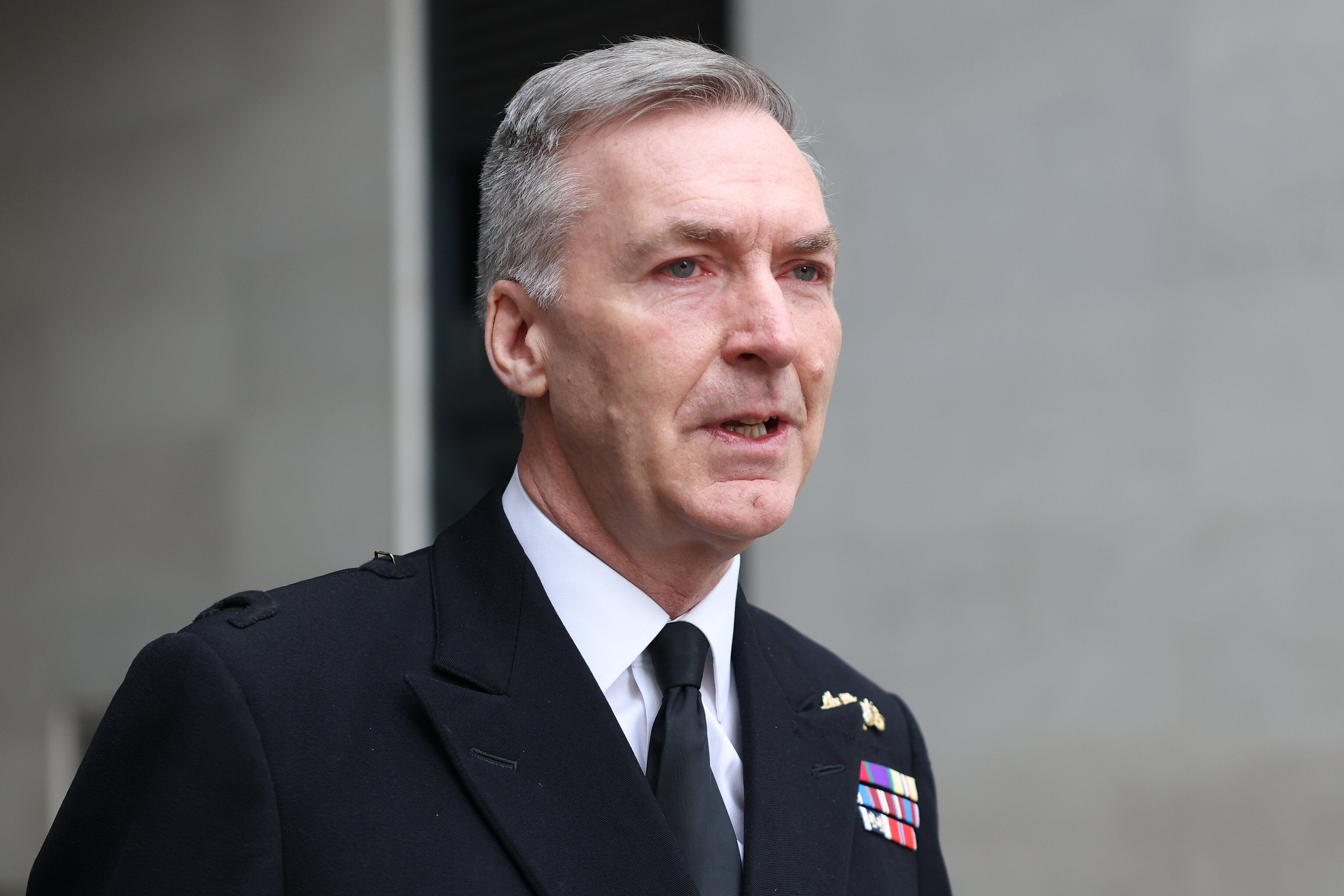
The head of the armed forces has urged British people not to travel to Ukraine to take part in the war with Russia.

Admiral Sir Tony Radakin’s said it was “unlawful as well as unhelpful” for anyone from the UK to get involved in the conflict.

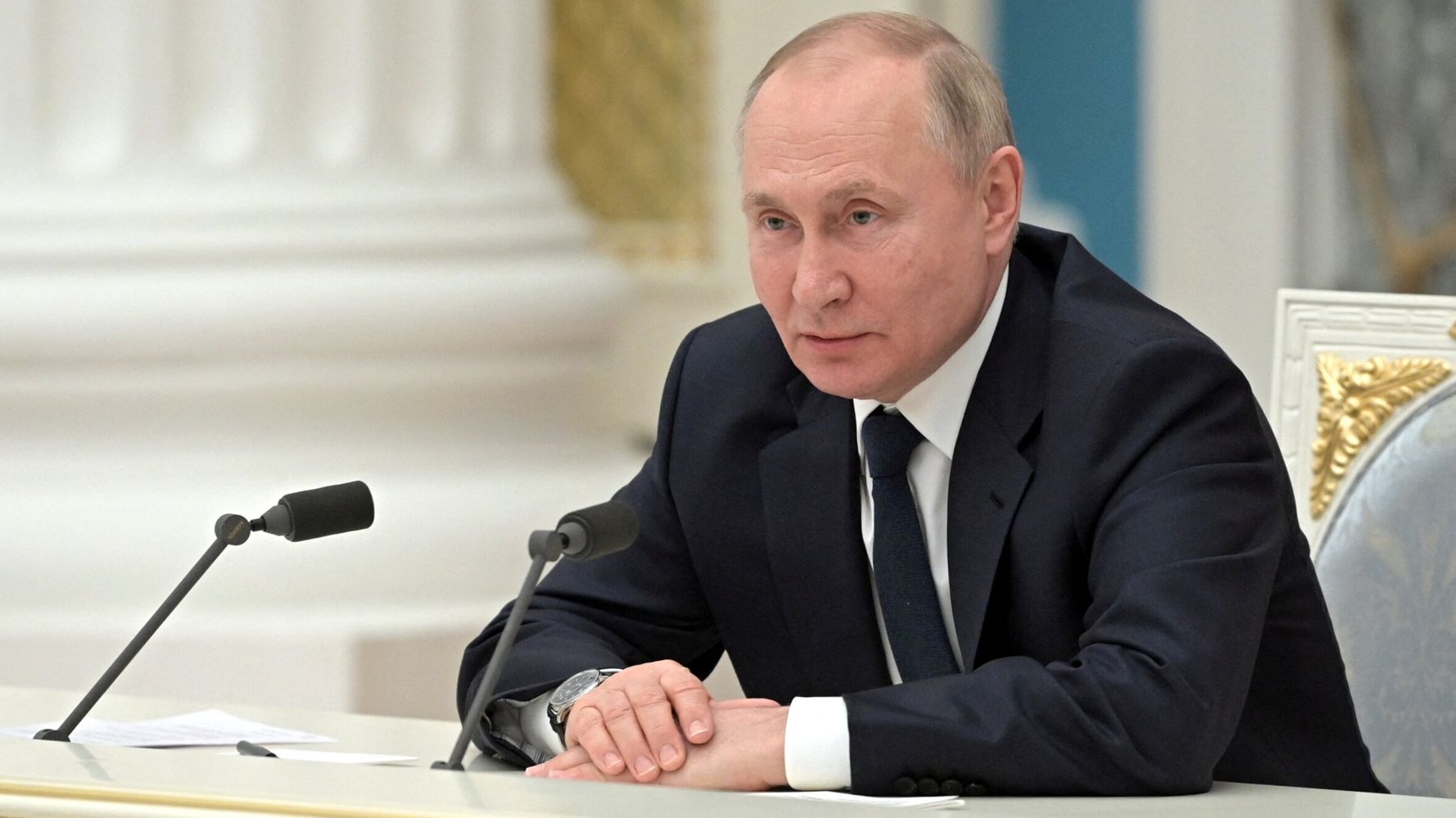
His comments put him at odds with foreign secretary Liz Truss, who last week said she would support anyone from Britain who wanted to fight Vladimir Putin’s forces.

She said: “The people of Ukraine are fighting for freedom and democracy, not just for Ukraine, but for the whole of Europe. Because that is what president Putin is challenging.

“And absolutely, if people want to support that struggle, I would support them in doing that.”

But appearing on the BBC’s Sunday Morning programme, Radakin said: “Support from the UK, support in whatever way you can. But this isn’t really something that you want to rush to in terms of the sound of gunfire. This is about sensible support based in the UK.”

Asked if Liz Truss should not have said she would support anyone who wanted to fight, he added: “I think she was reflecting (that) she could and that we can all understand that sentiment, and that sentiment needs to be channelled into support for Ukraine.

“But we’re saying as professional military people, that actually that is not necessarily the sensible thing to be doing.”

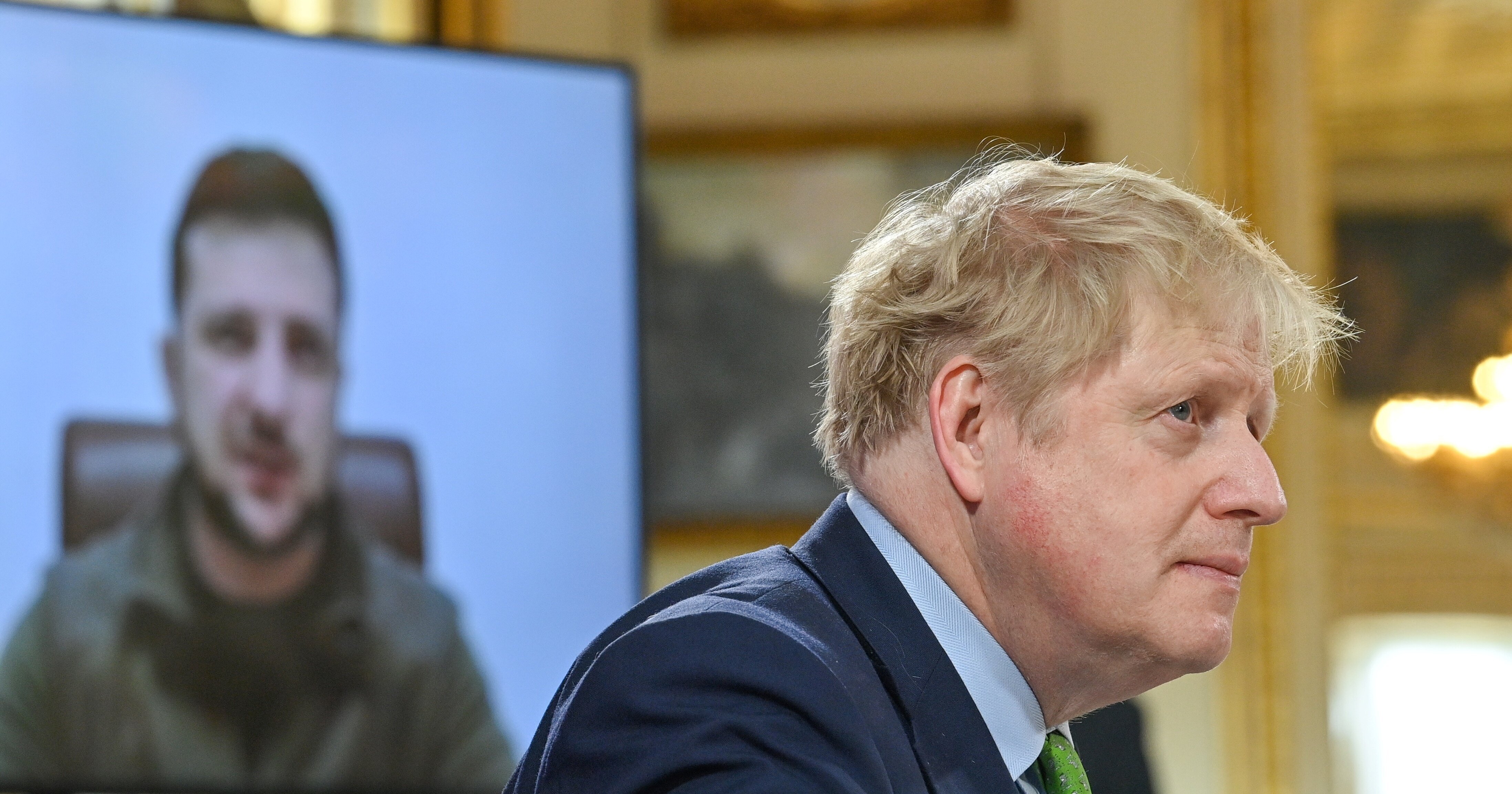
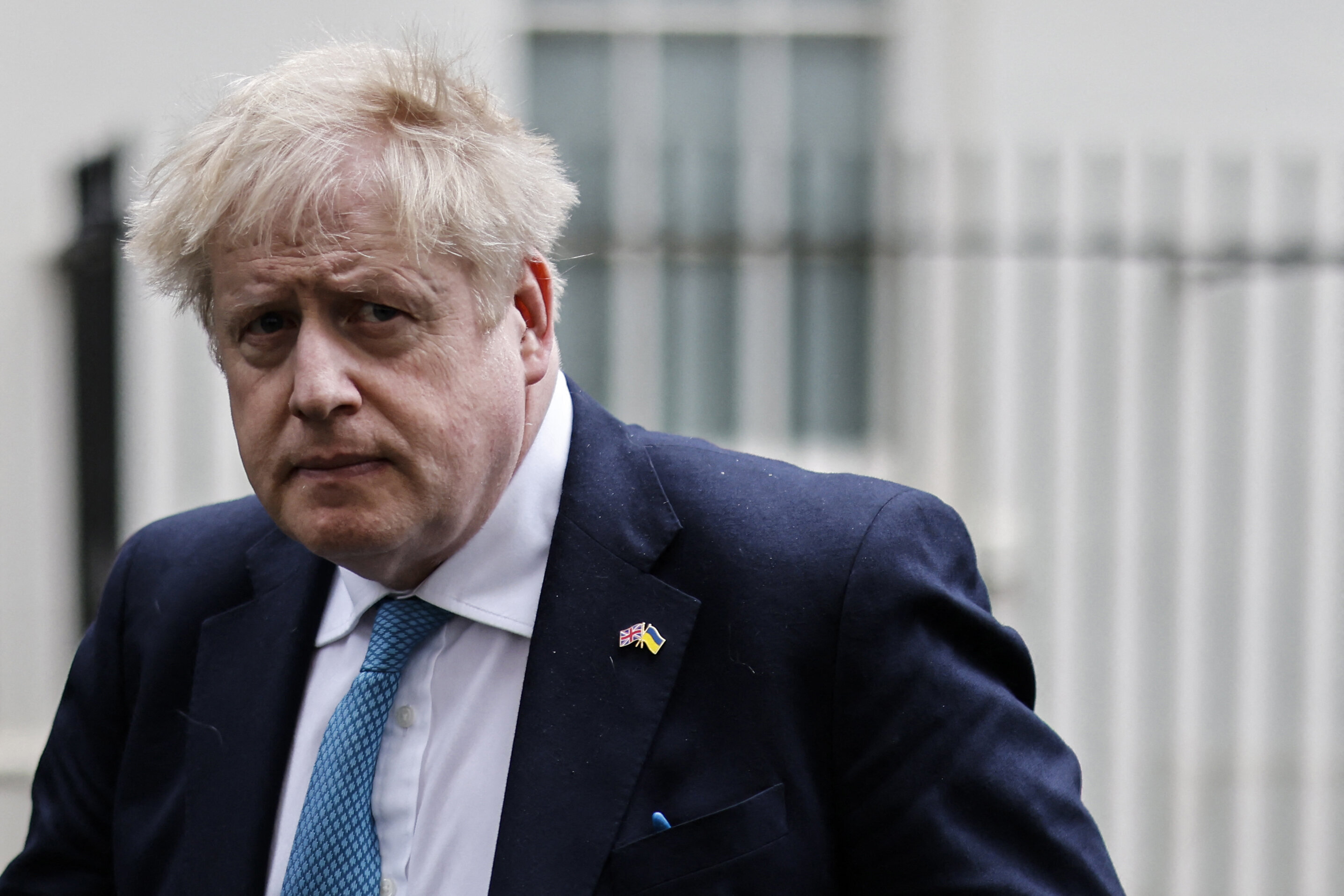
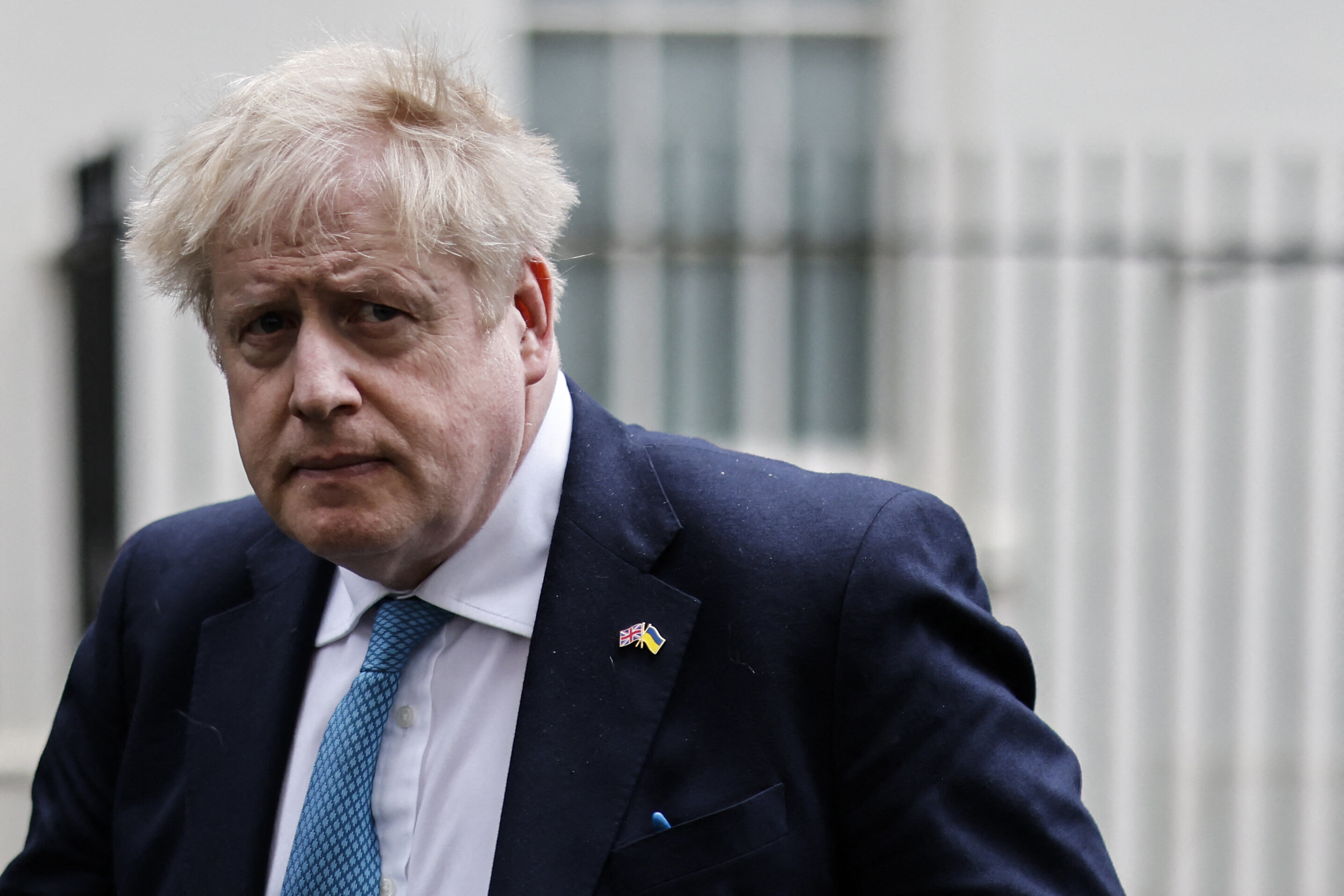
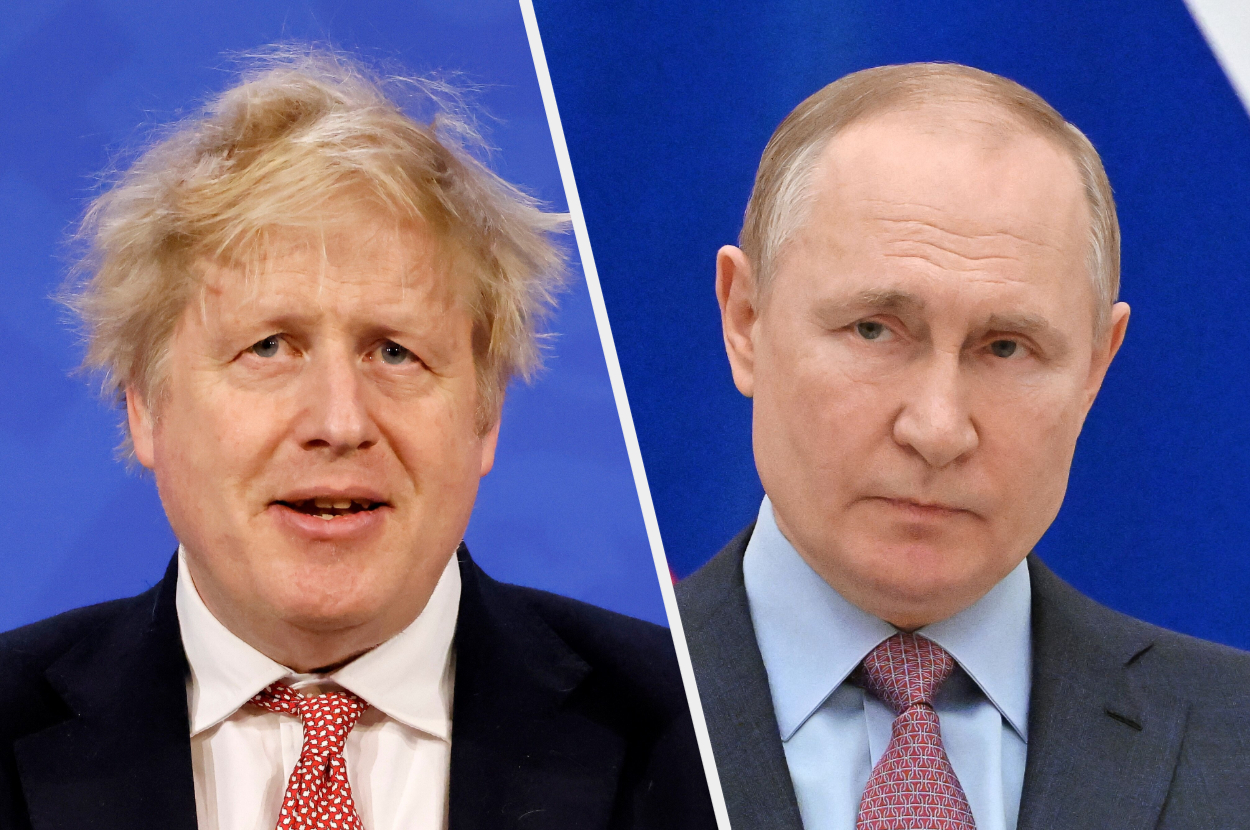
Boris Johnson, meanwhile, has unveiled a six-point plan aimed at defeating Putin.

He is calling for an international humanitarian coalition to help Ukraine and for the maximum economic pressure to be placed on Putin’s regime.

Johnson will meet with leaders from Canada, the Netherlands and central Europe on Monday as he seeks to bolster the global anti-Putin coalition.

He will tell them that Ukraine must receive more military and humanitarian support if Russia is to be beaten.

“Putin must fail and must be seen to fail in this act of aggression,” the PM will say.

“It is not enough to express our support for the rules-based international order – we must defend it against a sustained attempt to rewrite the rules by military force.

“The world is watching. It is not future historians but the people of Ukraine who will be our judge.”

Share Button

Boris Johnson Says ‘The People Of Ukraine Will Be Our Judge’ If Putin Is Not Defeated

Boris Johnson will tell fellow leaders that “the people of Ukraine will be our judge” if the west fails to defeat Vladimir Putin.

The Prime Minister will say “the world is watching” as he unveils a six-point plan of action to help preserve Ukraine’s independence in the face of mounting Russian aggression.

Johnson will this week meet with leaders from Canada, the Netherlands and central Europe as he seeks to bolster the global anti-Putin coalition.

He will tell them that Ukraine must receive more military and humanitarian support if Russia is to be beaten.

“Putin must fail and must be seen to fail in this act of aggression,” the PM will say.

“It is not enough to express our support for the rules-based international order – we must defend it against a sustained attempt to rewrite the rules by military force.

“The world is watching. It is not future historians but the people of Ukraine who will be our judge.”

Johnson will unveil his his six-point plan in a New York Times article on Sunday.

He is calling for an international humanitarian coalition to help Ukraine and for the maximum economic pressure to be placed on Putin’s regime.

The ”creeping normalisation of what Russia is doing in Ukraine” must be prevented, according to the PM, while diplomacy aimed at the de-escalation of Russian aggression must be stepped up and fully involve the Ukrainian government.

Finally, Downing Street said Johnson wants to see “a rapid campaign to strengthen security and resilience across the Euro-Atlantic area.

Canadian prime minister Justine Trudeau and Dutch prime minister Mark Rutte will meet with the PM in Downing Street on Monday to discuss the Ukraine crisis.

It follows talks on Friday with French president Emmanuel Macron and the leaders of Turkey and Serbia.

On Tuesday, Johnson he will host leaders of the ‘V4’ group of central European nations – the Czech Republic, Hungary, Poland and Slovakia – which are already experiencing first-hand the humanitarian crisis caused by Russia’s invasion of Ukraine.

The government has said that Ukrainian refugees with family members in the UK will be able to live here for up to three years, a move which ministers claim could potentially benefit 200,000 people fleeing the war.

Share Button

Gavin Williamson’s Biggest Gaffes As Ex-Tory Minister Awarded A Knighthood

There was disbelief on social media as Gavin Williamson – the twice-sacked minister who oversaw an exams fiasco – was handed a knighthood by Boris Johnson.

Downing Street said on Thursday the Tory MP, who was widely criticised for his handling of schools as education secretary during the coronavirus pandemic, would be conferred the honour by the Queen.

It is understood the 45-year-old has been ennobled on the basis of his political and public service.

The former fireplace manufacturing firm managing director – who, as a Tory party enforcer, kept a pet tarantula named Cronus in a glass box on his desk – has a dubious track record in the upper echelons of politics.

His handling of disruption to schools during the height of the pandemic and the grading of GCSEs and A-levels after exams were cancelled was widely seen as disastrous.

Williamson was rewarded with the role as education secretary by Johnson despite being sacked as defence secretary by Theresa May. It is worth noting he helped run Johnson’s successful 2019 campaign to become Tory leader.

The firing from defence came following an inquiry into the leak of information from a security council meeting about Chinese telecoms firm Huawei’s involvement in the UK’s 5G mobile network. Williamson denied being the source of the leak, despite having an 11-minute conversation with a journalist that broke the story.

Away from policy errors, Williamson is perhaps best-known in British politics for his habit of making a gaffe. Here are some of his biggest:

Humiliating Marcus Rashford Mix-Up

The education secretary told the Evening Standard that he had met Rashford, a prominent campaigner for free school meals, while it was later revealed he had actually met rugby union player, Maro Itoje. Both men are Black.

Referencing his Mancunian origins and Itoje’s London upbringing, Rashford later tweeted: “Accent could have been a giveaway [emoji].”

‘Forgets’ His A-Level Results

In an interview on LBC, the education secretary said his results allowed him to go to Bradford University.

“For a lad growing up in Scarborough, Bradford was the most exotic and exciting place in the whole world,” he said.

“I remember walking up to those college doors, going into my college at sixth form, getting the envelope, opening up that envelope, seeing the grades on there and feeling absolute delight.”

But pressed on what his results were, Williamson said: “I’ve forgotten, it was so long ago.”

Williamson was only able to reveal he did not get three A*s.

‘Russia Should Go Away And Shut Up’

In the wake of the poisoning of Sergei Skripal in 2018, Williamson gave his assessment of UK-Russian relations after the Sailsbury nerve agent attack.

Blaming Russia for the incident, he said: “It is absolutely atrocious and outrageous what Russia did in Salisbury. We have responded to that.

The tenor of his warning clearly had little effect.

‘Do As I Say, Not As I Do’ Warning To Teachers

The Times’ Nicola Woolcock tweeted: “Gavin Williamson doesn’t turn up in person to Universities UK conference in Newcastle – but uses his videolink speech to warn universities to get back to in person teaching…”

Taking To The ’Gram In Parliament

Williamson was told off by parliamentary authorities after using Instagram in the House of Commons.

Then defence secretary, he posted a photo from the government frontbench of the prime minister delivering a statement on Brexit.

It was captioned: “The @theresamay making her statement to the House of Commons.”

Admittedly, it was more drab than his usual content, which has a distinct weekend warrior energy.

A Commons spokesperson said: “Where [photography] is seen or reported to be happening the individual in question will be asked to stop and reminded of the rules.”

Heckled By His Phone

In 2018, Williamson was attempting to deliver a speech on Isis in the Middle East when a voice coming from his jacket pocket interrupted proceedings.

In what the Mirror suggested was probably the first speech to parliament by an artificial intelligence assistant, Siri could be heard saying: “Hi Gavin, I found something on the web for: ‘In Syria, democratic forces supported by…’”

Williamson told MPs: “I’m not sure what caused that intervention, but I do apologise for that.

“It is very rare that you’re heckled by your own mobile phone, but on this occasion it is a new parliamentary convention, without a doubt.”

Share Button

UK To Personally Sanction Vladimir Putin After Ukraine Invasion

The UK will personally sanction Russian president Vladimir Putin, Boris Johnson has told a virtual meeting of Nato leaders.

Putin and his foreign minister Sergei Lavrov are being targeted over their “revanchist mission” to overturn the post-Cold War order, the prime minister said.

He told alliance leaders on Friday that the UK would echo measures announced by the EU to target the Russian leader.

Referring to Putin’s wish to recover territory which previously fell under the USSR, he said Russia was “engaging in a revanchist mission to overturn post-Cold War order”.

Johnson told allies “the UK would introduce sanctions against president Putin and foreign minister Sergei Lavrov imminently, on top of the sanctions package the UK announced yesterday”, according to a No 10 spokesman.

“He warned the group that the Russian president’s ambitions might not stop there and that this was a Euro-Atlantic crisis with global consequences,” he said.

Johnson also used the meeting to urge “immediate action” over the banning of Russia from the Swift payment system to “inflict maximum pain” on the Kremlin.

It comes as frustrated Russian forces are prepared to “indiscriminately” use thermobaric bombs to seize control of Ukraine, Western officials believe.

One western official said it was “likely” that Russia failed to achieve its main objectives on day one of its invasion of Ukraine.

The official added: “And my fear with those objectives, that timescale not being met, is if that continues to be a theme where they are delayed and then my concern is that that Russia uses indiscriminate use of indirect fire, particularly artillery systems, thermobaric weapons – which we know Russia has both in its armoury and has used in previous conflicts.

“At the moment we’re not seeing the use of those particular weapons. But my fear would be that if they don’t meet the timescales and objectives that they would be indiscriminate in the use of violence and they don’t adhere to the same principles of necessity and proportionality and rule of law that Western forces do.

Meanwhile, Ukraine’s president issued a sombre warning to leaders of the EU as Russian forces continue to violently invade the country.

“This might be the last time you see me alive,” Ukrainian President Volodymyr Zelenskyy reportedly told EU leaders on a conference call on Thursday night.

Zelenskyy is currently hiding in Ukraine’s capital city of Kyiv as more than 100,000 Russian troops continue to attack the country on Putin’s orders.

“We were supposed to talk on the phone this morning, but he was no longer available,” Italian prime minister Mario Draghi told his parliament on Friday morning of Zelenskyy.

Share Button

What Are The New ‘Severe’ Sanctions Boris Johnson Has Slapped On Russia?

Russia launched a full-scale invasion of Ukraine this morning, sending troops, missiles and bombs across the border.

There has been reports of civilian casualties and families have been trying to flee Kyiv amid the chaos.

President Vladimir Putin’s invasion has been condemned by western allies, with Boris Johnson accusing him of being a “blood-stained aggressor who believes in imperial conquest”.

Johnson has now unveiled ten further punitive measures after he was initially criticised for not going far enough with his first set of sanctions.

In a Commons statement, he vowed the UK would implement “the largest and most severe package of economic sanctions that Russia has ever seen”.

Here, HuffPost UK takes you through what has been announced today and assesses what impact they will have.

What Did Boris Johnson Announce Today?

Here are the 10 new sanctions:

1) An asset freeze on all major Russian banks, including VTB, the country’s second largest bank with assets totalling £154 billion.

2) Legislation to stop Russian companies to raise finance in this country and to ban the Russian state from raising sovereign debt on the UK markets.

3) Sanctions against more than 100 Russian individuals, entities and subsidiaries. They include five wealthy oligarchs with links to the Putin regime.

4) Immediately banning Russian airline Aeroflot from landing planes in the UK.

5) Suspend and prohibit all dual use export licences to Russia on items such as electrical components that could be used in military or civilian computers.

6) Legislation prohibiting a wide range of high-tech exports to Russia.

7) A new law limiting the amount of money Russian nationals can deposit in UK bank accounts.

8) Work with allies to limit Russian access to the Swift international payment system.

9) Extend the full range of sanctions against Russia to Belarus, given its close links with Moscow and the part it played in the invasion of Ukraine.

10) Bring forward measures intended for the Economic Crime Bill to strengthen unexplained wealth orders and take action against kleptocrats that launder funds in the UK.

What Sanctions Were Already In Place?

Johnson announced the UK’s first set of measures against Putin on Tuesday which included sanctioning three wealthy allies of Putin and five Russian banks.

Alongside this, members of Russia’s lower parliamentary chamber, the Duma, and the Federation Council, who voted to recognise the independence of Donetsk and Luhansk, also face sanctions.

In addition, the territorial sanctions that were imposed on Crimea in the aftermath of the 2014 war will be extended to Donetsk and Luhansk, so no trade can be undertaken with UK individuals or businesses until they are returned to Ukrainian control.

How Will The New Sanctions Hurt Russia?

The sanctions announced today will hit the pockets of oligarchs, big banks and companies with direct links to the Kremlin.

On the five super-rich oligarchs being targeted, a diplomatic source said: “These are people who have international lifestyles.

“They come to Harrods to shop, they stay in our best hotels when they like, they send their children to our best public schools, and that is what’s being stopped.

“So that these people are essentially persona non grata in every major Western European capital in the world. That really bites.”

In Johnson’s words, the aim is to “hobble” the Russian economy and increase the pressure on Putin to end his military action in Ukraine.

Even before the sanctions take effect, Russia’s economy is already feeling the impact of the global condemnation of its invasion.

Some $250 billion has already been wiped from the value of Russia’s top companies – the biggest one day decline on record – while the rouble has plummeted to record lows against dollar.

What Has Been The Political Reaction To The Sanctions?

Unlike the response to the previous sanctions announcement, opposition parties have responded positively to the latest measures, while urging the prime minister to go further if necessary.

Labour leader Keir Starmer said: “I welcome the set of sanctions outlined by the prime minister today and pledge opposition support for further measures.

“And there are changes we must make here in the UK. For too long our country has been a safe-haven, for the money that Putin and his fellow bandits stole from the Russian people. It must change now.

“Cracking open the shell companies in which the stolen money is hidden will require legislation. Bring it forward immediately prime minister and Labour will support it.”

SNP leader Ian Blackford called for the “complete economic isolation” of Russia.

He said: “Let’s not fall for the Kremlin propaganda that they are prepared to soak up any sanctions. If we act now, if the sanctions are targeted enough, swift enough, severe enough, if we impose nothing less than economic isolation, Putin and his cronies will suffer the consequences of their actions.”

What Might Happen Next?

Western officials believe Putin is determined to capture the Ukrainian capital, Kyiv, and replace the pro-western president Volodymr Zelensky with a puppet regime.

They fear such an assault would lead to large numbers of civilian casualties and the conflict could lead to clashes with neighbouring countries such as Poland, a Nato member.

Under Article 5 of the Nato constitution, which decrees that an attack on one member is an attack on them all, this would lead to full-scale war between Russia and the west.

Share Button

‘Low Taxation’ Rishi Sunak Derided As Tories And Labour Square Off Over The Economy

Labour has questioned Rishi Sunak’s attempt to portray himself as a low taxation Conservative as both parties stake their claims to being the most trusted on the economy.

The chancellor and Labour leader Keir Starmer will on Tuesday both deliver speeches that make their cases to be the next prime minister.

Sunak, seen as the most likely Tory to succeed Boris Johnson if the PM is brought down by the partygate scandal, will insist he wants to create a “lower tax economy” in an appeal to traditional Conservatives.

Meanwhile, Starmer will evoke the spirit of former Labour prime minister Harold Wilson by promising the “white heat” of a new technological revolution will deliver prosperity for all.

But in an attempt to thwart Sunak’s ambitions, Labour will claim the chancellor has slapped 15 tax rises on households and businesses in the last two years – and that he has raised the most tax on average per budget than any chancellor in the last 50 years.

Amid the cost of living crisis, the chancellor and the prime minister have been refusing to back down on the 1.25 percentage point hike to National Insurance for April despite pressure from numerous Tory MPs.

Delivering a lecture to the Bayes Business School in London, Sunak is to insist he will make “difficult and often unpopular arguments” on spending, hinting at his determination to resist calls from cabinet colleagues for fresh money.

He will argue that cutting taxation in the future needs to be done in a “responsible way”, following a row with health secretary Sajid Javid over funding the “living with Covid” plan.

Sunak is expected to say: “I firmly believe in lower taxes.

“The marginal pound our country produces is far better spent by individuals and businesses than government.

“I am going to deliver a lower tax economy but I am going to do so in a responsible way, and in a way that tackles our long term challenges,” he is due to add.

But in comments that will be seen as a challenge to ministers demanding increased spending, he is expected to say: “Cutting tax sustainably requires hard work, prioritisation, and the willingness to make difficult and often unpopular arguments elsewhere.”

He will also say that he is “disheartened” when he hears the “flippant claim” that tax cuts always pay for themselves, adding: “They do not.”

In response, shadow chancellor Rachel Reeves used the speech to brand the Conservatives the party of “high tax” as a result of being “the party of low growth”.

“Over a decade of Tory government, the economy has grown far slower than when Labour was in power, and it is set to go even slower in the coming years,” she said, citing research suggesting the £27.3bn raised by Sunak per year is higher than that brought in by 12 Tory and Labour predecessors at the Treasury since 1970.

Elsewhere, Starmer will promise to build a “new economy of security” as he borrows from Wilson’s 1963 pledge to harness “the white heat of technological change”. At the time, Wilson was seeking to become the first Labour prime minister for more than a decade.

Speaking in Wilson’s home town of Huddersfield in West Yorkshire, Starmer will say that after 12 years of a Conservative government, it will fall to Labour to deal with the next generation of change.

“Our country and our economy are entirely different now, but we too are going through the white heat,” he is expected to say.

“We face our own revolutions in technology and industry, and it will fall to the next Labour government to shape that change so it works for all.”

It marks the latest stage of his effort to restore the party’s economic credibility in the eyes of voters following the controversy over Jeremy Corbyn’s plans.

Starmer will declare his determination to end the “economic fatalism” of the Tories, who he will accuse of lacking a clear plan for business.

“Britain cannot rise to the great challenges of the day without the innovation of business,” he will say.

“A political party without a clear plan for making sure businesses are successful and growing … which doesn’t want them to do well and make a profit … has no hope of being a successful government.”

He will argue that if the Tories had matched Labour’s record on growth, people would have enjoyed higher incomes while an additional £30 billion a year would have been available for public services without raising taxes.

“We will build a new economy of security, where stable employment will be the bedrock of a better future for the next generation,” he will say.

“We will build an economy of prosperity, in which the places that once powered Britain flourish again. We will build a new economy of respect, where the contribution of every worker and employee is given its due.”

Share Button

Johnson: Putin’s Decision To Recognise Separatist Ukraine States ‘A Very Dark Sign’

Boris Johnson has hinted Russia could face fresh sanctions as Vladimir Putin said he would recognise two breakaway republics in Ukraine.

The UK prime minister said the Russian president’s decision to acknowledge Donetsk and Luhansk’s claims to independence was a “very dark sign” that is “plainly in breach of international law”.

On Monday, the Ukraine crisis intensified as Putin used a long speech to recognise the two rebel-controlled regions in eastern Ukraine, which breaches the 2015 protocol that ended the conflict in Donbas.

The comments come amid mounting Western fears that Russia, which has massed an estimated 150,000 troops near Ukraine’s border, is poised to invade.

The move appears to have dashed hopes for a diplomatic breakthrough which had been raised with the possibility of talks between Putin and US president Joe Biden.

Johnson said he was considering whether the actions could trigger the imposition of fresh sanctions on Russia, as foreign secretary Liz Truss said Putin’s actions could not be allowed to go “unpunished”.

At a Downing Street press conference, the PM said: “This is plainly in breach of international law, it’s a flagrant violation of the sovereignty and integrity of Ukraine.

“It is a repudiation of the Minsk process and the Minsk Agreements.

“I think it’s a very ill omen and a very dark sign.”

It was “yet another indication that things are moving in the wrong direction in Ukraine”.

The prime minister had previously said sanctions would be triggered if Russia invaded Ukraine.

But he said: “Plainly what has happened is extremely bad news and we will be urgently talking to our friends and allies around the world, all of whom are jointly signed up with us in this package of sanctions.”

Johnson said it was “becoming clear that we are going to need to start applying as much pressure as we possibly can”.

“It is hard to see how this situation improves,” he acknowledged.

But he added: “I think there’s a sort of chance that (Putin) could row back from this, and we’ve got to pray that that’s the case.”

The prime minister said he would speak to Ukraine’s president Volodymyr Zelensky to “offer him the support of the United Kingdom”.

Meanwhile, the foreign secretary said the recognition of the Donetsk People’s Republic and the Luhansk People’s Republic as independent states “demonstrates Russia’s decision to choose a path of confrontation over dialogue”.

“We will co-ordinate our response with allies,” she said.

“We will not allow Russia’s violation of its international commitments to go unpunished.”

The government has already promised a tougher sanctions regime to deal with any Russian transgression, with MPs expected to approve the new framework on Tuesday.

Shadow foreign secretary David Lammy said: “This blatant breach of international law must be met with consequences from the international community.”

The European Union announced it would impose sanctions in response to Russia’s recognition of the two states.

In a joint statement, European Commission president Ursula von der Leyen and European Council president Charles Michel said it was an “illegal act”.

Nato secretary general Jens Stoltenberg said: “This further undermines Ukraine’s sovereignty and territorial integrity, erodes efforts towards a resolution of the conflict, and violates the Minsk Agreements, to which Russia is a party.”

Earlier defence secretary Ben Wallace has said there was still “strong cause for concern” that Putin remained committed to an invasion of Ukraine, despite diplomatic moves to end the crisis.

In a Commons statement, he said Russian forces were continuing to move towards the border zone contrary to repeated assurances given by Moscow.

There were now more than 110 battalion tactical groups massed along the border while the Black Sea fleet included two amphibious groups and nine cruise missile-equipped ships with a further four cruise missile-capable vessels in the Caspian.

At the same time, he said there had been “a proliferation of false flag operations and propaganda stunts and Russian news outlets carrying fictitious allegations”.

Downing Street said intelligence reports suggested the Russian plan “has in effect already begun” and that it was “starting to play out in real time”.

Nevertheless Johnson’s official spokesman said there was still a “window for diplomacy” after it appeared that a tentative agreement had been reached on a crisis summit between Putin and Biden.

Following a series of lengthy calls involving French president Emmanuel Macron, the White House said talks could go ahead provided there had been no invasion.

However Kremlin spokesman Dmitry Peskov said later that while the two leaders could meet if they considered it necessary, no plans for a summit had been agreed.

“It’s premature to talk about specific plans for a summit. The meeting is possible if the leaders consider it feasible,” he said.

Share Button

Chris Whitty And Patrick Vallance Urge Caution Despite Removal Of Covid Restrictions

The UK government’s leading scientific advisors on the Covid pandemic have sounded notes of caution as Boris Johnson released his plan for living with the virus.

England’s chief medical officer professor Sir Chris Whitty and Sir Patrick Vallance, the government’s chief scientific adviser, both used markedly different language to the PM as he announced a rolling back of all legal Covid restrictions within weeks.

In addition, from this Thursday people will no longer have to self-isolate if they test positive for Covid. Currently, the rules state that anyone who has tested positive or has symptoms must isolate for up to 10 days.

At a Downing Street press conference, the scientists were at pains to stress the lifting of restrictions “needs to be a gradual, steady change”, and warned new Covid variants will cause “significant problems”. Whitty even said people should still isolate if they have Covid-19.

But despite the differences in tone, Johnson insisted there was no divide between the “gung-ho politicians and the cautious, anxious scientists”.

Earlier in the Commons, the PM admitted that the “pandemic is not over”, but said he wanted people to take personal responsibility for dealing with the pandemic, rather than relying on government intervention.

At the press conference, Whitty warned high rates of Omicron remain and “I would urge people in terms of public health advice, and this is very much the government’s position, that people should still if they have Covid try to prevent other people getting it and that means self-isolating”.

“So, that is the public health advice. It would have been the public health advice, and will be the public health advice, for multiple other diseases,” he said, describing it as “standard public health advice for a significant and highly transmissible infection”.

Vallance added that “the one thing this virus has taught you, is not to be cocky”, and said Covid will continue to evolve over the next couple of years.

He told the Downing Street news conference that there was no guarantee that future variants would be less severe.

“This pandemic is not over. The virus is continuing to evolve. It will continue to do so quite fast probably for the next couple of years,” he said.

“There is no guarantee that the next variant is as reduced severity as Omicron. As is it evolves what it is trying to do is to transmit more readily.

“The change in severity is a random by-product. We expect there to be further variants and they could be more severe.”

Johnson said there will likely be another variant that will “cause us trouble”.

Speaking at the press conference, he said: “I don’t want you to think that there’s some division between the gung-ho politicians and the cautious, anxious scientists, much as it may suit everybody to say so.

“We have a very clear view of this. This has not gone away. We’re able to make these changes now because of the vaccines and the high level of immunity and all the other considerations about Omicron that you’ve seen.

“But we have to face the fact that there could be, likely will be, another variant that will cause us trouble.

“But I believe that thanks to a lot of the stuff that we’ve done, particularly investment in vaccines and vaccine technology and therapeutics, we’ll be in a far better position to tackle that new variant when it comes.”

Routine contact tracing will also end on Thursday, as will the £500 self-isolation payments and the legal obligation for individuals to tell their employers about their requirement to isolate.

Changes to statutory sick pay and employment support allowance designed to help people through the coronavirus pandemic will end on March 24.

People aged 75 and over, the immunosuppressed and those living in care homes will be offered another Covid-19 booster vaccine this spring under the plans.

But free universal testing will be massively scaled back from April 1 and will instead be focused on the most vulnerable, with the UK Health Security Agency set to determine the details, while asymptomatic testing will continue for social care staff.

But the Department of Health and Social Care will receive no extra money to deliver the testing.

Share Button

Labour MP Pinpoints Exactly What’s Wrong With No.10’s Levelling Up Agenda In Scathing Video

Zarah Sultana took aim at No.10′s heavily-criticised “levelling up agenda” in a scathing new video circulating on Twitter.

Alluding to the cost of living crisis facing Britons at the moment – as inflation has just hit a 30-year high – the Labour MP claimed the government was doing little to alleviate the problem.

With soaring gas and electricity bills, rising interest rates and an upcoming national insurance hike, the treasury promised it would act to help lower-income households.

Chancellor Rishi Sunak then unrolled a support package earlier this month which supposedly enabled 28 million households to get their council tax bills slashed by £150 along with £200 reduction in energy bills.

However, according to Sultana during a clip shared on news outlet Double Down News, Sunak is “taking the piss” by offering only £200 loans even though energy bills are increasing by £700 due to the global squeeze on wholesale gas prices.

Sunak also ignored Labour’s bid to cut the VAT on fuel bills – even though it was marketed as one of the main benefits of leaving the EU.

Moving onto the startling rise in food prices – as outlined by anti-poverty campaigner Jack Monroe – Sultana continued: “This government likes to talk about levelling up when in truth, we currently have over five million children in poverty.

“Last month, over a million adults went a day without eating because they couldn’t afford to put food on the table.

“Don’t believe their lies on levelling up – they’re busy punching down.

“If we think things are bad, they are going to get a whole lot worse.”

Inflation is rising but salaries are not increasing at the same rate, while the head of the bank of England, Andrew Bailey, has even encouraged people not to ask for a pay rise during this cost of living crisis.

Sultana claimed, “things can be done differently, they just take political will,” adding: “The cost of living crisis isn’t inevitable, it isn’t a natural crisis.”

She also proposed taxing wealth over £100 million instead of increasing the national insurance contributions.

Share Button

Boris Johnson ‘Fears For The Security Of Europe’ As Tensions Grow Over Potential Russian Invasion Of Ukraine

Boris Johnson “fears for the security of Europe” as tensions mount over a potential Russian invasion of Ukraine and British people were urged to leave the country.

The UK prime minister voiced his concern during a call with Western leaders – including US president Joe Biden – as the Foreign Office updated its advice on Friday evening to urge UK nationals to “leave now while commercial means are still available”.

At the same time, Biden’s national security adviser Jake Sullivan said there is the “credible prospect” of an invasion of some sort taking place before the end of the Winter Olympics on February 20.

He said the Russians are in a position to “mount a major military operation in Ukraine any day now”, which could include a “rapid assault on the city of Kyiv” or on other parts of the country.

The warning was echoed by UK defence secretary Ben Wallace, who said warned an invasion could come “at any time”.

Tensions have heightened in the last 24 hours as Russian president Vladimir Putin has now amassed an estimated 130,000 troops on the border with Ukraine.

<img class="img-sized__img landscape" loading="lazy" alt="US national security advisor Jake Sullivan speaks during the daily White House press briefing.” width=”720″ height=”480″ src=”https://www.wellnessmaster.com/wp-content/uploads/2022/02/boris-johnson-fears-for-the-security-of-europe-as-tensions-grow-over-potential-russian-invasion-of-ukraine-2.jpg”>
US national security advisor Jake Sullivan speaks during the daily White House press briefing.

Anna Moneymaker via Getty Images

The Foreign Office followed the US in advising against all travel to Ukraine, with a spokesman saying: “The safety and security of British nationals is our top priority, which is why we have updated our travel advice.

“We urge British nationals in Ukraine to leave now via commercial means while they remain available.”

After Johnson and world leaders held the virtual call, a No 10 spokesperson said: “The prime minister told the group that he feared for the security of Europe in the current circumstances.

“He impressed the need for Nato allies to make it absolutely clear that there will be a heavy package of economic sanctions ready to go, should Russia make the devastating and destructive decision to invade Ukraine.

“The prime minister added that president Putin had to understand that there would be severe penalties that would be extremely damaging to Russia’s economy, and that Allies needed to continue with efforts to reinforce and support the Eastern frontiers of Nato.

“He urged the leaders to work together to deliver economic and defensive support to Ukraine.

“The leaders agreed that if president Putin deescalated, there was another way forward, and they pledged to redouble diplomatic efforts in the coming days.”

Speaking from the White House, Sullivan said Russia could choose “in very short order to commence a major military action against Ukraine” but stressed the US does not know whether Putin has made a final decision.

Moscow denies it is planning an invasion and called the Western military actions provocations meant to bait Russia into war.

But diplomatic efforts to resolve the crisis have yet to yield results.

The two countries share a border, and between 1919 and 1991 Ukraine was part of the Soviet Union. Ukraine declared independence from the Soviet Union in the early-1990s but maintained close economic and cultural links with Russia.

Russia has been trying to reunite with its neighbour even since, with Putin calling the break-up of the Soviet bloc the “greatest geopolitical tragedy of the 20th century”.

It’s not entirely clear why Putin is acting now. There’s speculation he may be moving because the US looks weak following the messy evacuation from Afghanistan.

Share Button