Remote sensing research improves hurricane response

Safe and uninterrupted road travel is crucial in the aftermath of storms so that people can access medical treatment, downed power lines can be removed and communities can begin a return to normalcy.

Researchers with the FAMU-FSU College of Engineering’s Resilient Infrastructure and Disaster Response (RIDER) Center are investigating better ways to predict where road-clogging debris will be most severe after tropical cyclones. Their latest paper was published in the International Journal of Disaster Risk Reduction.

“This research is especially relevant as hurricane season approaches because it reminds us that we need a variety of tools to properly respond to these storms,” said Eren Ozguven, RIDER Center director and the paper’s senior author. “This paper describes an important tool and applies it to disasters in the Florida Panhandle.”

Researchers used satellite images to measure the amount of vegetation in Bay County, Florida, before and after two tropical storms and three hurricanes, including Hurricane Michael, a Category 5 storm that devastated the county in 2018. That gave them an estimate of how much vegetative debris those storms caused and where debris was heaviest. They were able to correlate debris measurements with factors such as wind speed, initial amount of vegetation and roadway density.

The researchers found debris was heavier in suburban and urban areas, which have a high density of people and roads, compared with rural areas. Although vegetation is not the only type of debris caused by a hurricane, it is an important predictor of where roads will be blocked.

Researchers aim to develop a tool that gives emergency management planners an estimate of the debris storms are likely to generate — allowing officials to plan, for example, where to position trucks and collection zones ahead of storms.

“The faster you can get debris off the roadway, the better you will be in terms of getting back to normal after a hurricane hits,” said paper co-author Tarek Abichou, a professor of civil and environmental engineering at the FAMU-FSU College of Engineering.

Along with understanding where to position resources before a storm, officials can use satellite imagery after a hurricane to quickly and inexpensively get an idea of post-storm damage before deploying first responders.

The work is part of RIDER’s efforts to use remote-sensing technology to solve civil engineering problems.

“Engineering is all about finding solutions despite obstacles, and hurricanes throw up all sorts of obstacles,” Abichou said. “Improving our ability to use remote sensing to prepare for and recover from storms will help us overcome those challenges.”

Former FAMU-FSU College of Engineering doctoral student Alican Karaer served as the paper’s lead author. Co-authors were Mingyang Chen of Harbin Institute of Technology; former FAMU-FSU College of Engineering doctoral student Mahyar Ghorbanzadeh; and Michele Gazzea and Reza Arghandeh of the Western Norway University of Applied Sciences.

This paper was supported by the National Science Foundation Coastlines and People (CoPe) Award 1940319.

Story Source:

Materials provided by Florida State University. Original written by Bill Wellock. Note: Content may be edited for style and length.

Share Button

UK Covid infections lowest since mid-December

Just over two people in every hundred are infected with the virus in the UK, according to the ONS.

Share Button

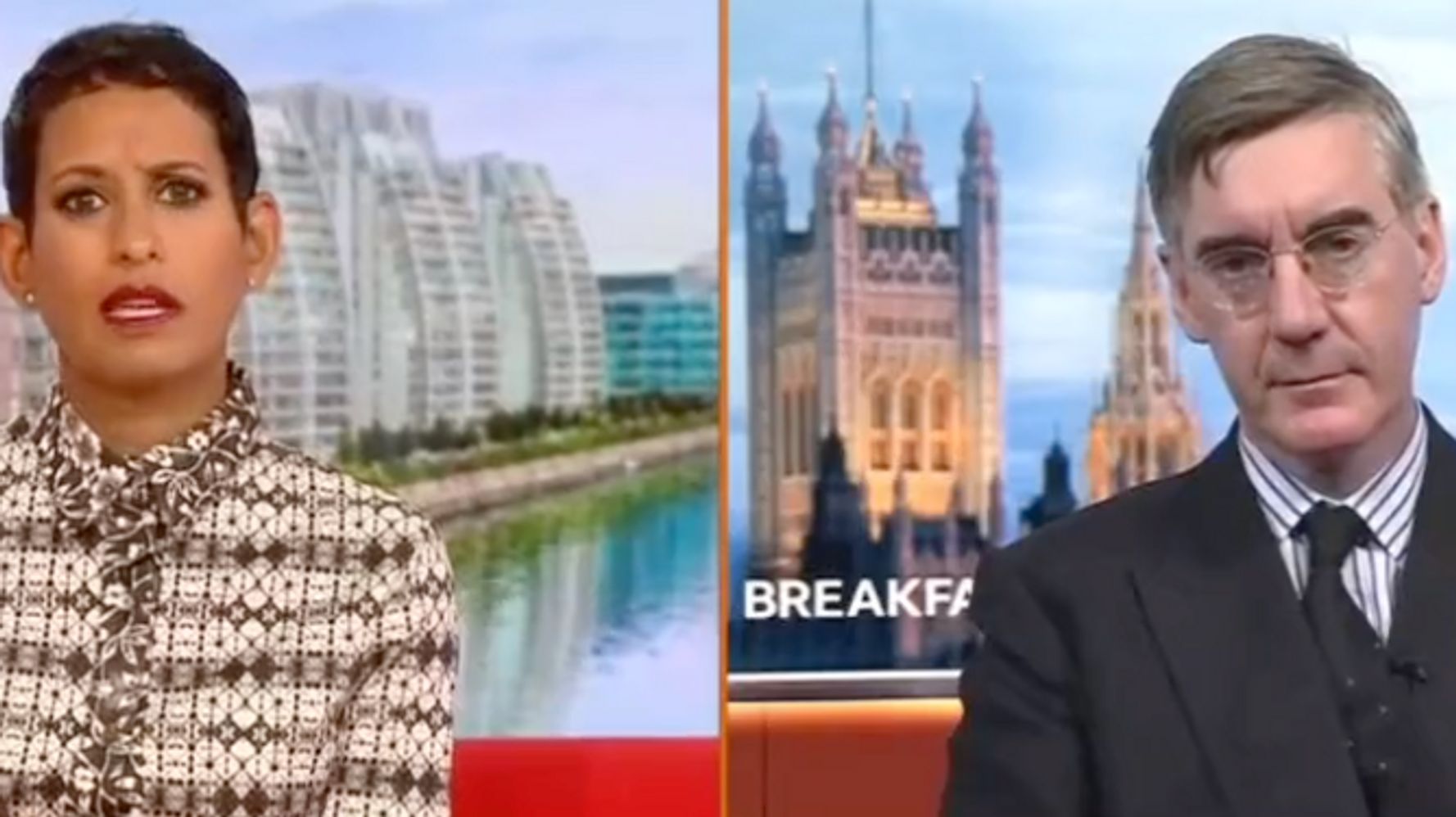
Jacob Rees-Mogg Clashes With Naga Munchetty Over Partygate ‘Non-Story’

Jacob Rees-Mogg clashed with the BBC’s Naga Munchetty after she asked him about more than 100 fines being issued to Downing Street staff over partygate.

The cabinet minister insisted it was a “non-story” and that the public had now moved on from the scandal of lockdown-breaking parties in Number 10 and Whitehall.

He also took aim at the BBC, who he said had “loved” covering the story.

The Metropolitan Police announced yesterday that the number of fixed penalty notices they had issued over the affair had doubled to more than 100, with the investigation continuing.

Munchetty asked Rees-Mogg for his reaction to the news when he appeared on BBC Breakfast.

The BBC presenter asked Rees-Mogg whether the news that more than 100 Downing Street staff have now been fined for breaking lockdown rules “reflected well on this Conservative government”.

Rees-Mogg said: “I’m afraid I think this is a non-story. The BBC has absolutely loved it, but what is important is we get on with the business of government.”

Munchetty then interjected to ask: “Why do you think this is a non-story? Have you not heard people upset, genuinely devastated, that people in Downing Street thought it was OK to break the rules that they set while other people didn’t break the rules and missed out on meeting dying family members?”

Rees-Mogg replied: “I think people were upset. I think this was an important story in February when it first became known, and that there was great concern and there was a feeling of people who were bereaved particularly about it.

“I also think we need to look in the inquiry at the rules to see if they were proportionate.”

The minister said the rules were “too restrictive” because they prevented people from “giving comfort to the dying”.

Munchetty then asked: “Can I just understand your interpretation of where we are with the rules and why you think this is a non-story? So, the fact that more than 100 fines have been issued in a non-story because the rules that were set in the first place were too rigorous?”

The minister said: “What I’m saying is the fines are a consequence of things we knew in February and it was a story in February and people now know about it and have made their judgment on it and there are other things going on that are more important.”

Share Button

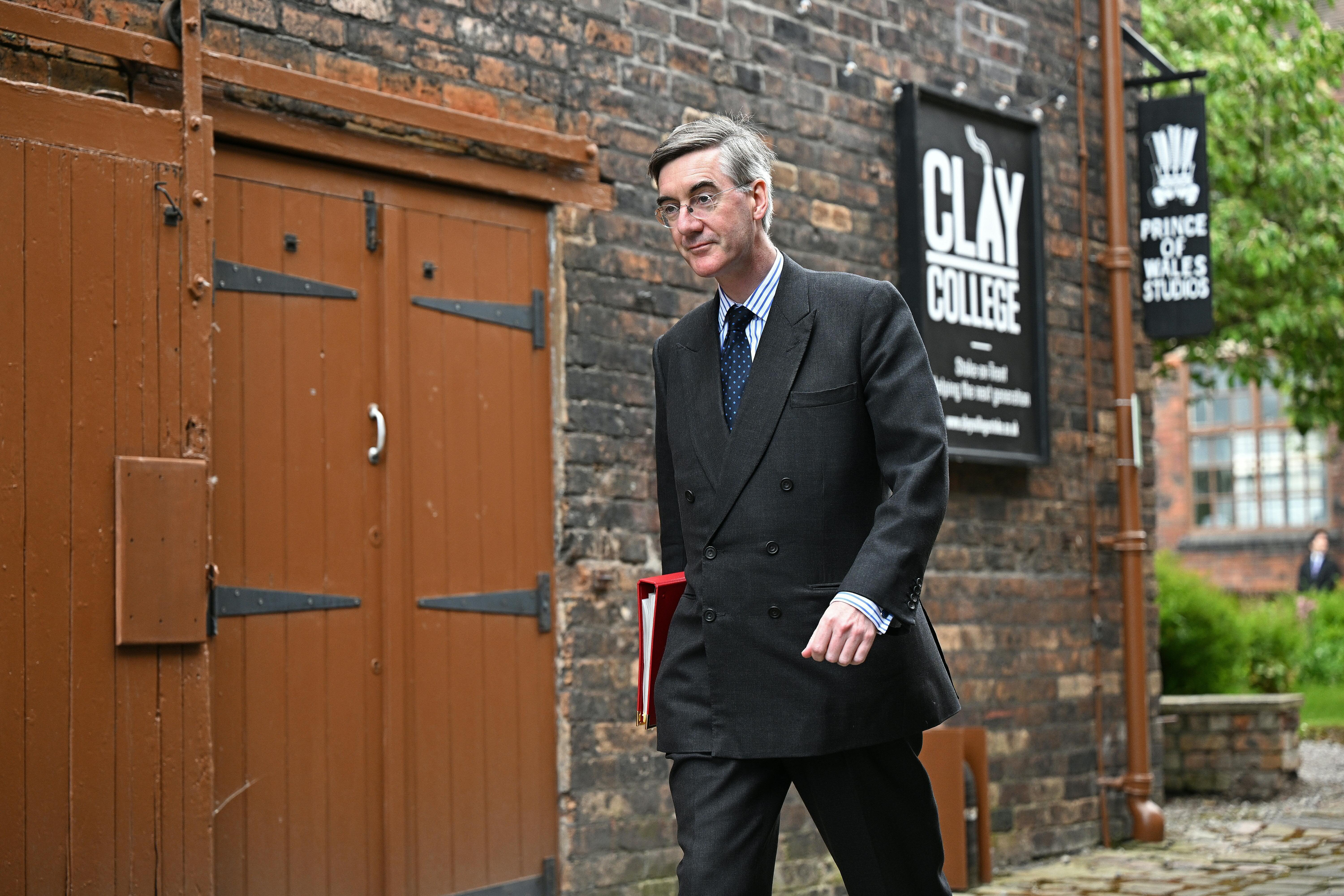
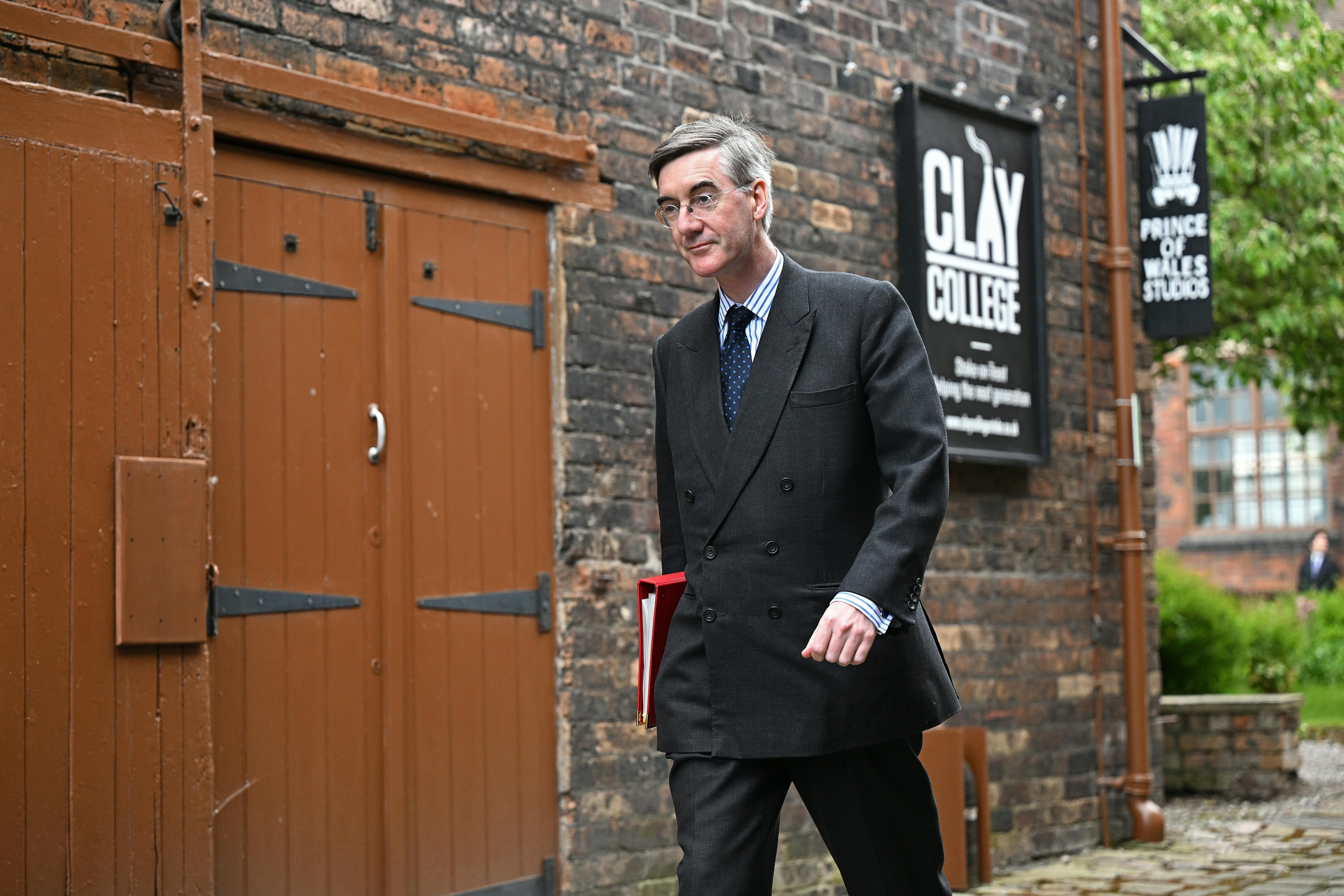
Jacob Rees-Mogg Defends Boris Johnson’s Plan To Cull 91,000 Civil Service Jobs

Jacob Rees-Mogg has defended Boris Johnson’s plans to slash the number of civil servants by 91,000.

The government efficiency minister said the government wanted to bring the Whitehall headcount back to where it was in 2016.

He said the extra staff were brought in to help deal with the pandemic and the “aftermath of Brexit”.

Rees-Mogg told Sky News: “I know it sounds eye-catching but it’s just getting back to the civil service we had in 2016… since then we’ve had to take on people for specific tasks.

“So dealing with the aftermath of Brexit and dealing with Covid, so there’s been a reason for that increase, but we’re now trying to get back to normal.”

The minister said there was currently too much “duplication” in Whitehall, and insisted most of the jobs could be lost by not replacing the 38,000 civil servants who leave the government every year.

He said: “What I’ve seen within the Cabinet Office, which is where I work and bear in mind each secretary of state will be responsible for is or her own department, is that there’s duplication within government, so you have a communications department and then you have within another department some people doing communications.

“So it’s trying to ensure that you use the resources that you’ve got rather than duplicating it bit by bit.”

Asked why the cuts were not being described as a return to austerity, he said: “I don’t think it is because what is being done is getting back to the efficiency levels we had in 2016.”

Rees-Mogg has previously angered civil servants by leaving notes on the desks of those not in the office in an attempt to discourage working from home.

They read: “Sorry you were out when I visited. I look forward to seeing you in the office very soon. Wish every good wish.”

The drive has been branded “vindictive” by Dave Penman, the general secretary of the FDA representing senior civil servants, who said ministers were out of step with practice in the private sector.

Share Button

Cost of living crisis: ‘Our lives are at risk because of energy costs’

A terminally ill mum is worried about energy costs for people like her on life support machines.

Share Button

Women’s Mistrust In The Met Runs Deep: Here’s What The New Commissioner Has To Do to Fix It

Applications have now closed for the role of Met Police commissioner, and whoever takes the role will need to work hard to win back the trust women lost during Cressida Dick’s reign.

The outgoing commissioner acknowledged this, prior to her departure saying: “We know a precious bond has been broken and I am committed to rebuilding the trust and confidence of all Londoners.”

Winning back this trust won’t be easy, but it is vital. Victims of crime need to have absolute trust and faith in those to whom they will tell their story. Already fewer than one in six women report rape, as they fear the police won’t do anything about it.

But the lack of trust goes much deeper than a fear that interaction with police will result in lack of action: The horrific case of Sarah Everard, raped and murdered by serving Met police officer Wayne Couzens, has left women afraid.

While it has always been the approach of police forces to label criminality by police officers as the work of “bad apples”, the litany of ignored incidents by a man nicknamed ‘the rapist’ by colleagues speaks of an organisation with little regard for women’s safety.

Couzens had joined the Met from the Civil Nuclear Constabulary before being assigned to the Parliamentary and Diplomatic Protection (PaDP) branch, but had not undergone enhanced vetting nor gone through the mandatory two-year probation period with the Met before joining the PaDP.

There were at least three allegations of indecent exposure filed against him. Radio presenter Emma B also came forward to say that she had attempted to report Couzens in 2008, after he flashed her in an alley in Greenwich, but that the Police had laughed at her.

We now need to know that police vetting will be stepped up and that behaviour such as that displayed by Couzens will not be tolerated. Indeed, it would not be in most work places.

Even within Sarah’s case there are more examples of deeply disturbing police behaviour.

An officer who had been a part of the search was suspended from duties after sharing an inappropriate graphic on social media, five officers were placed under investigation for sharing grossly offensive material with Couzens before he killed Sarah and several officers gave character references supportive of Couzens during his sentencing hearing.

Several female officers told the press that they did not feel as if they could report concerning behaviour by male colleagues. So another question that needs answering from all applicants for the commissioner job is how they will root out this behaviour, rid the Met of this hugely offensive culture and make sure anyone reporting concerning actions – including other police staff — is protected.

If female police officers feel unsafe making reports to colleagues, it is hard to see how other women could possibly feel able to.

The sharing of offensive material appears epidemic by Met police officers. Last December two Met police constables who took photos of the bodies of murdered sisters of Nicole Smallman and Bibaa Henry and shared the images on WhatsApp groups were jailed for 33 months.

Meanwhile, officers at Charing Cross police station were found to have joked about rape and exchanged offensive social media messages.

In April, responding to the IOCP investigation into the Charing Cross police station, the police said they would have a zero-tolerance approach to misogyny. Yet, of the 14 officers investigated, nine are still serving, while another is working as a contractor in a staff role. I am not sure this sounds like “zero tolerance”.

Talk about organisational cultural change is easy – finding ways and implementing them is much harder. But women and girls simply cannot be safe whilst misogyny is allowed to be part of the Met’s culture.

Like women across the capital, I look forward to hearing the new commissioner’s plans for fundamental change.

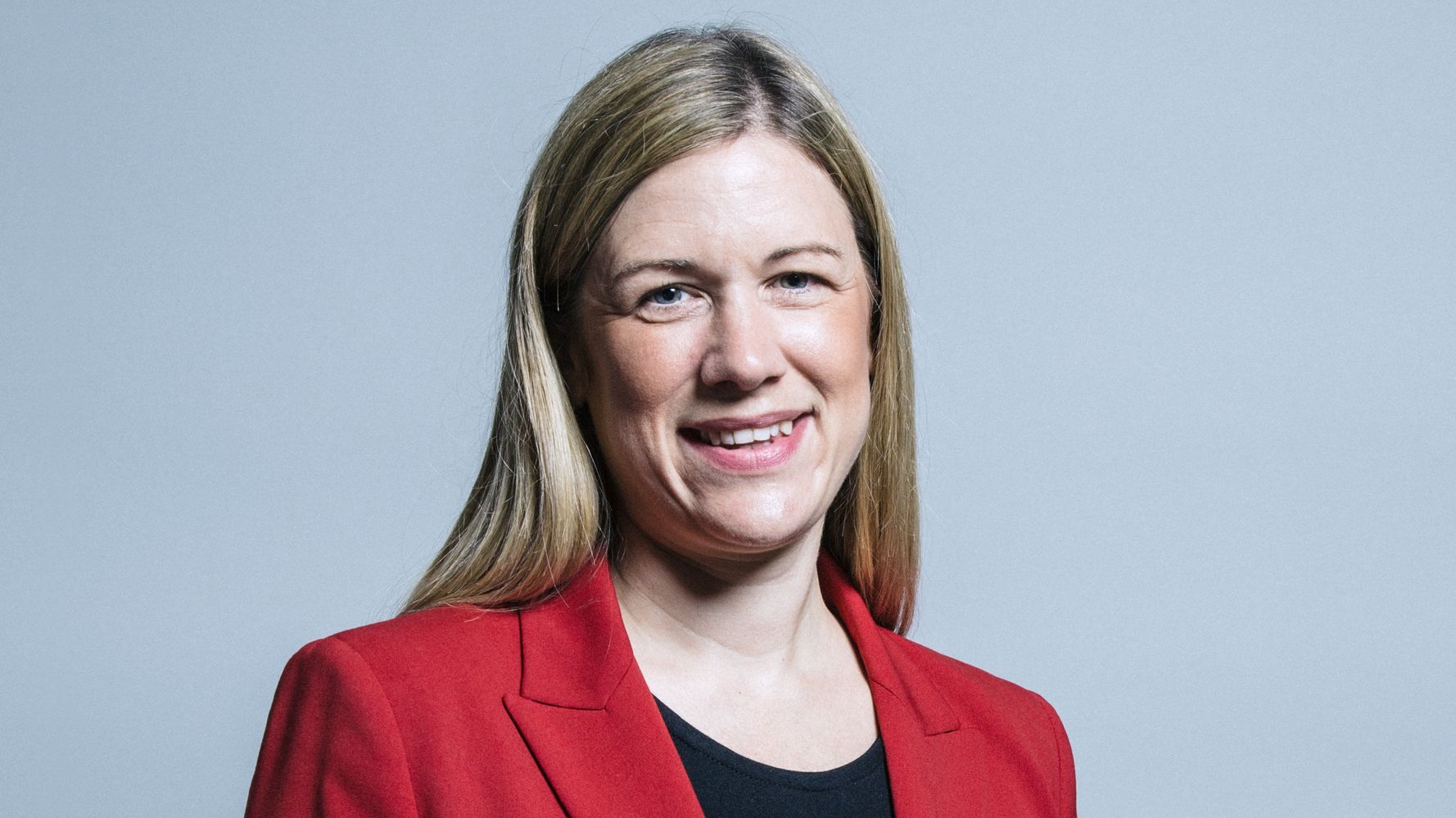
Ellie Reeves is Labour’s shadow minister for justice and the MP for Lewisham West and Penge.

Share Button

Discovered: 150-year-old platypus and echidna specimens that proved some mammals lay eggs

Jars of tiny platypus and echidna specimens, collected in the late 1800s by the scientist William Caldwell, have been discovered in the stores of Cambridge’s University Museum of Zoology.

At the time of their collection, these specimens were key to proving that some mammals lay eggs — a fact that changed the course of scientific thinking and supported the theory of evolution.

This unique collection had not been catalogued by the Museum, so until recently staff had been unaware of its existence. The exciting find was made when Jack Ashby, Assistant Director at the Museum, was doing research for a new book on Australian mammals.

“It’s one thing to read the 19th century announcements that platypuses and echidnas actually lay eggs. But to have the physical specimens here, tying us back to that discovery almost 150 years ago, is pretty amazing,” said Ashby.

He added: “I knew from experience that there isn’t a natural history collection on Earth that actually has a comprehensive catalogue of everything in it, and I suspected that Caldwell’s specimens really ought to be here.” He was right: three months after Ashby asked Collections Manager Mathew Lowe to keep an eye out, a small box of specimens was found in the Museum with a note suggesting they were Caldwell’s. Ashby’s investigations confirmed this was indeed the case.

Until Europeans first encountered platypuses and echidnas in the 1790s, it had been assumed that all mammals give birth to live young. The question of whether some mammals lay eggs then became one of the biggest questions of 19th century zoology, and hotly debated in scientific circles. The newly discovered collection of little jars represents the huge scientific endeavour that went into solving this mystery.

“In the nineteenth century, many conservative scientists didn’t want to believe that an egg-laying mammal could exist, because this would support the theory of evolution — the idea that one animal group was capable of changing into another,” said Ashby.

He added: “Lizards and frogs lay eggs, so the idea of a mammal laying eggs was dismissed by many people — I think they felt it was degrading to be related to animals that they considered ‘lower life forms.'”

The newly discovered collection includes echidnas, platypuses and marsupials at varying life stages from fertilised egg to adolescence. Caldwell was the first to make complete collections of every life stage of these species — although not all of the specimens have been found in the Museum.

For 85 years, European naturalists had been attempting to find proof that platypuses and echidnas lay eggs — including by asking Aboriginal Australians — but any results they sent home were ignored or dismissed.

William Caldwell was sent to Australia in 1883 — with substantial financial backing from the University of Cambridge, the Royal Society and the British Government — to resolve the long-standing mystery.

In an extensive search Caldwell collected around 1,400 specimens with the help of a large group of Aboriginal Australians. In 1884 the team eventually found an echidna with an egg in her pouch, and a platypus with one egg in her nest and another just about to be laid.

This was the definitive proof Caldwell had been looking for, and the news was sent around the world. The colonial scientific establishment was apparently only willing to accept this result now that it had been confirmed by ‘one of their own’.

Ashby says that over the last two centuries, scientists have consistently belittled Australian mammals by describing them as strange and inferior. He believes that this language continues to affect how we describe them today, and undermines efforts to conserve them.

“Platypuses and echidnas are not weird, primitive animals — as many historic accounts depict them — they are as evolved as anything else. It’s just that they’ve never stopped laying eggs,” he said, adding, “I think they’re absolutely amazing and definitely worth valuing.”

The quill-covered echidnas are the most widespread mammal in Australia. They cover the whole continent and have adapted to live in all climates — from snow-covered mountains through to the driest deserts.

Platypuses are one of the only mammals that can detect electricity, and one of the only mammals to produce venom. With a tail like a beaver, a flat bill, and webbed feet like a duck, when the first specimens were brought to Europe people thought they were fakes that had been sewn together.

Both platypuses and echidnas have a unique combination of traits that 19th century scientists thought should only exist individually in either mammals, reptiles or birds. This made them central to debates around evolution.

Ashby’s new book, Platypus Matters: The Extraordinary Story of Australian Mammals, is published in the UK on 12 May, 2022 by Harper Collins.

Share Button

Solid tumors use a type of T cell as a shield against immune attack

An unexpected trick in cancer’s playbook may fool an important component of our immune systems into knocking down our natural defenses against solid tumors.

Scientists at Fred Hutchinson Cancer Center say this newfound vulnerability involves a misuse of a type of T cell, part of a large family of blood cells that are essential to a functioning immune system.

A team led by Hutch immunologist Dr. Martin Prlic, staff scientist Dr. Florian Mair and postdoctoral fellow Dr. Jami Erickson published the findings in Nature. They identified a subset of T cells that show up in great numbers in head and neck tumors, but not in similar tissues of the mouth inflamed by common ailments such as gum disease.

It seems that this odd group of T cells have mixed up their highly specialized assignments within our immune systems and are now working to protect tumor cells.

The evidence Prlic, Mair, and Erickson uncovered might help explain why cutting-edge immunotherapies that work against blood cancers are less effective against solid tumors (such as breast, prostate, kidney and colorectal cancers), which are responsible for most cancer deaths. Researchers say it points the way for future drugs that might strip away that protection, making current therapies work better for more people.

“Ironically, this is not what we tried to do,” Prlic said. “We were just interested in general about what makes the tumor environment different from ordinary inflammation. It was as if you were not looking for treasure, but then you stumble upon something many others have been looking for.”

New methods reveal unnoticed T cell trait

The discovery came after the Hutch team developed new methods to analyze cells in inflamed tissues and applied complex computer analyses to their studies. They compared the kinds of immune cells found in and around patients’ head and neck tumors with those that appeared in tissue samples from patients treated for gum diseases.

As they suspected, the immune cells responding to the tumor were very similar to those in the inflamed gum tissues — until they took a closer look at their data and uncovered a surprising difference in one type of T cell drawn to the cancer samples.

T cells carry out a variety of tasks in the immune system. One of the most important is to stir up an inflammatory response, a coordinated assault to destroy cells damaged by infectious agents or cancer. Mobs of T cells do much of this killing themselves.

Other types of T cells work to calm their over-active brethren. Known as regulatory T cells, or T-regs, they typically tamp down inflammation, quieting that mob and thereby protecting nearby healthy tissues. Without enough T-regs, people can be vulnerable to unchecked abuses of their own immune system, suffering autoimmune diseases such as lupus or rheumatoid arthritis.

What Prlic and his colleagues found was a different flavor of T-regs. These immune-suppressing cells, swarming in the tumor-environment specimens, were different from T-regs found elsewhere in the body. Their cell surfaces are marked by two distinct protein receptors. These specially marked T-regs were particularly good at tamping down inflammation, expanding in number and protecting the tumor cells from attack by other types of T cells.

“A very large fraction of these critical, immunosuppressive cells in the tumor have this trait,” said Mair, who began work on the study with Erickson five years ago. “You don’t see it in T-regs that circulate in the blood, while in the tumor we see that up to 75% of the T-regs make these receptors.”

To a casual observer, the T-regs from the tumor samples would look no different from those found elsewhere in the body. But the team used new techniques that allow scientists to identify characteristics of tens of thousands of individual cells in a sample, and advanced computing methods to sift through data. It allowed them to spot two types of receptor proteins on the surfaces of T-regs collected from the tumor. The telltale proteins have names only a scientist could love: IL-1R1 and ICOS.

“What makes these cells unique is that they express [display] both those proteins,” Prlic said. “You just don’t see that co-expression on other T-reg cells.”

As soon as this duo of molecular-scale markers was discovered, the researchers knew that T-regs bearing them would be easy to spot with a simple test — an antibody that binds to the markers and carries a fluorescent tag.

Once revealed, a cancer trick could be undone

One reason this pair of proteins may have been overlooked by researchers previously is that they occur in human T-regs, not in those of mice. Much of laboratory work in immunology relies on mouse “models” of the immune response, but this study focused on human tissues, taken from patients who either had cancer or non-cancerous lesions.

“This doesn’t take anything away from the importance of mouse models. It just highlights that we also need to study human tumor tissues, so we don’t miss out on things like this,” Prlic said.

These human tumor-related T-regs were clustered in the thicket of blood cells and connective tissues in and around the malignant mass — a site of biological territory known as the tumor microenvironment. And because these cells are easy to spot, in theory they also can be easily targeted by anticancer drugs.

“All of a sudden, we now have a way of specifically targeting T-regs that only appear in tumors, and that is something that wasn’t possible before,” Prlic said.

Prlic and his team hypothesize that these tumor-resident T-regs have been tricked by cancer into working for the wrong team. Surrounded by T cells searching for cancer cells to destroy, the tumors acquired an ability to either attract or generate a blanket of these ICOS/IL-1R1-bearing T-regs. Exactly how they did so is not clear, but their impact is to build up an “immunosuppressive” environment, protecting the tumor from ordinary T cells doing their jobs.

While the research focused on head and neck tumors, Mair, Erickson and Prlic believe that their discovery may be important for many more types of cancer. Once they learned that presence of these markers was important, the Hutch researchers scanned a database of genes activated in specimens representing 21 different cancer types. Looking only for the gene encoding the rarer IL-1R1 protein, they saw it pop up, at varying levels, among all 19 solid-tumor cancer types, but not in the remaining two, which were blood cancers.

If a drug can be designed to knock out only T-regs in tumors, but not harm these immune-suppressing cells elsewhere, it might be an effective way to disable solid-tumor defenses. If the rogue immune cells can be rooted out, cancer-fighting T cells would be able to attack the tumor, while ordinary T-regs could do their job — keeping inflammation from damaging healthy tissues.

Prlic and his colleagues are hoping to develop a “bispecific” antibody — one that can grab two different molecular targets at the same time. In this case, one arm of the Y-shaped antibody protein would bind to the ICOS receptor; the other arm would lock on the IL-1R1 receptor.

The purpose of the bispecific antibody would be to disable or mark for destruction all the tumor-resident T-regs, while not harming these inflammation-calming cells elsewhere in the body. Previous efforts by drug developers to target T-regs failed because they lacked the precision to destroy only the T-regs protecting the tumor.

Now, scientists may have a path to only targeting T-regs that have been tricked into protecting tumors, perhaps freeing the rest of the immune system to do its job.


Share Button

Offer women oral tablet to treat fibroids, NHS advised

It could help thousands of women avoid invasive surgery, experts advising the NHS say.

Share Button

Large-scale ocean sanctuaries could protect coral reefs from climate change

Earth’s oceans are home to some of the most diverse ecosystems on the planet, but warming temperatures are causing many marine animals, including coral, to die out. A new study into managing the effect climate change has on these organisms says that more international collaboration is needed to ensure the future of the more than 6,000 coral species.

“Coral reefs are an essential ecosystem on our planet,” said Andrea Grottoli, co-author of the study and a professor in earth sciences at the Ohio State University. “Coral reefs are really important for humans in that they provide protection to coastlines from erosion and storms, and they’re essential for certain services like tourism and other parts of the economy.”

The study, published in the journal Global Change Biology, advocates for the use of mesoscale sanctuaries, or areas that can stretch thousands of miles, often across national boundaries, to protect these ocean environments.

“Global warming is the No. 1 threat to coral reefs right now,” Grottoli said. “So when we think about coral reef conservation, we can’t limit ourselves to arbitrary geographic boundaries.”

Providing a “continuum of conservation” would benefit reefs immensely, Grottoli said. But because conservation policies differ between various governments and politicians, that can make it hard to protect the environment.

Although coral reefs occupy less than 0.1% of the surface area in Earth’s oceans, about 30% of all marine species are in some way associated with them, Grottoli said. But due to the stress of rising sea temperatures, coral reefs all over the world have experienced higher rates of coral bleaching, or the visible paling of the coral surface.

Under coral bleaching, the animal’s skeleton, once obscured, becomes visible, and effectively turns the creature a faded, ghostly white. Although bleached coral is not immediately dead, it can lead to mass mortality. Researchers say mass bleaching events are an indicator of an ecosystem’s declining health.

Many people may be most familiar with coral via the Great Barrier Reef, a complex coral system so large that the living structure can be spotted from space. Located just off the coast of Australia, upwards of 2 million tourists visit the region each year. The attraction brings in an annual estimated economic value of about $36 billion.

Yet despite being the world’s most protected marine area, the GBR was recently hit by another mass bleaching event, the fourth time in only six years.

While climate change has undoubtedly contributed to the increases in frequency and intensity of these events, warming seas are also changing the composition and architectural complexity of coral reefs. “Under this reality, the future of coral reefs may appear grim,” the paper said.

But there is some good news. Even as the global population of coral dwindles, the genetic diversity of coral species helps ensure that some corals may be able to adapt and recover. And while there is an urgent need to reduce global greenhouse gas emissions, the study also suggests that in the meantime, we need to take broad transdisciplinary approaches to creating both local and large-scale ocean sanctuaries.

Grottoli believes much of the heavy lifting of saving coral will happen through education.

“People who understand coral reefs, and who understand the value of coral reefs, are much more likely to do something to help protect them,” she said. “If you don’t know anything about coral, and you’ve never seen one, how can you have any empathy or feel any connection to that ecosystem?”

In her role as president of the International Coral Reef Society, Grottoli and her colleagues even put together a series of actions individuals can take at home to help scientists’ conservation efforts.

This research was supported by the National Science Foundation.

Story Source:

Materials provided by Ohio State University. Original written by Tatyana Woodall. Note: Content may be edited for style and length.

Share Button