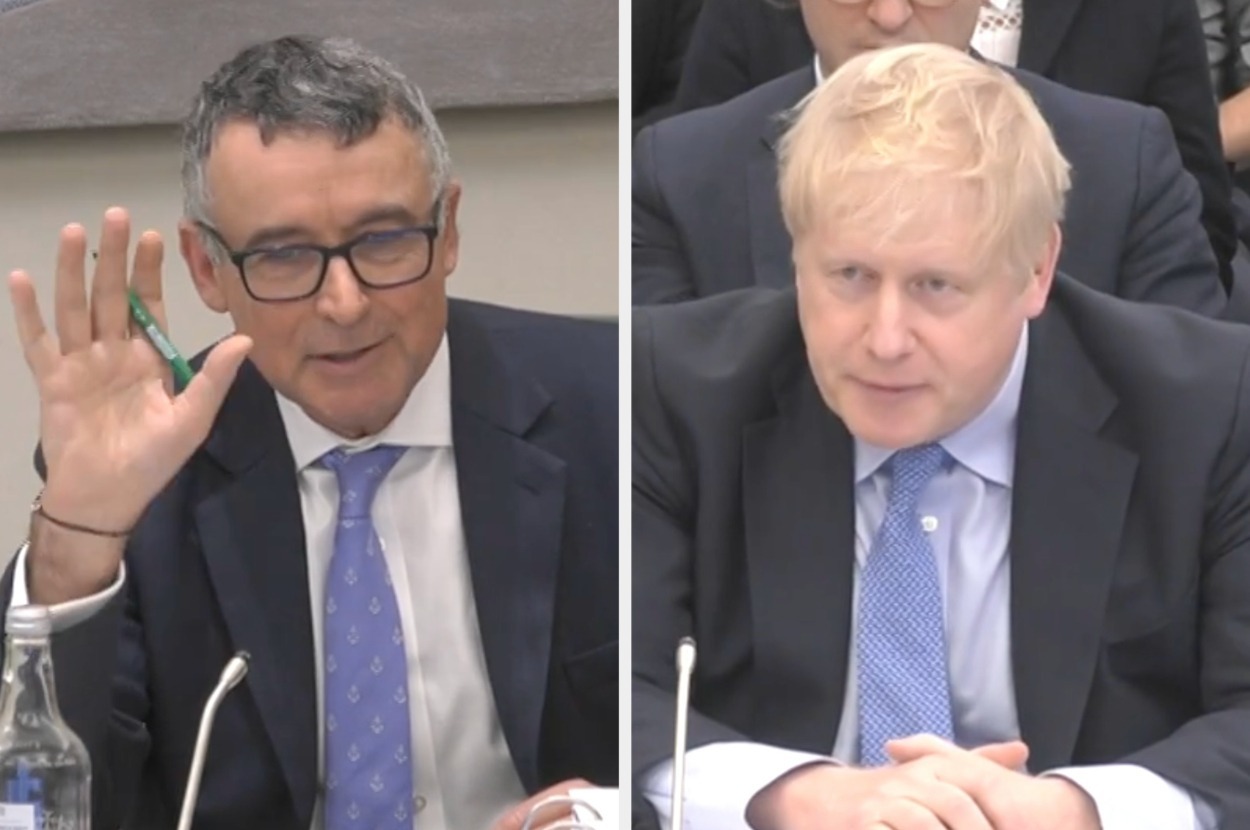
Johnson swore on the King James Bible to tell the truth before issuing an apology and adding “hand on heart, I did not lie to the House”.
He went on: “When those statements were made, they were made in good faith and on the basis on what I honestly knew and believed at the time.”
If the committee decides Johnson did mislead MPs – and the Commons backs suspending him for 10 days or more – he could face a by-election in his Uxbridge and South Ruislip constituency.
Advertisement
However, there is a long process to get through before the saga potentially reaches that stage.
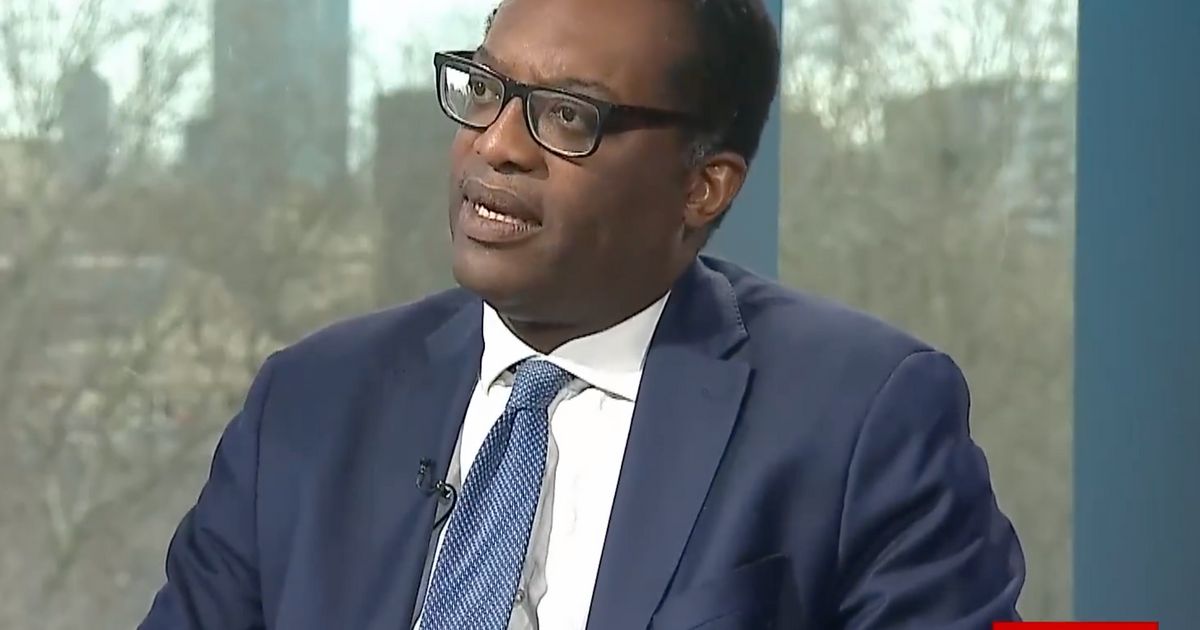
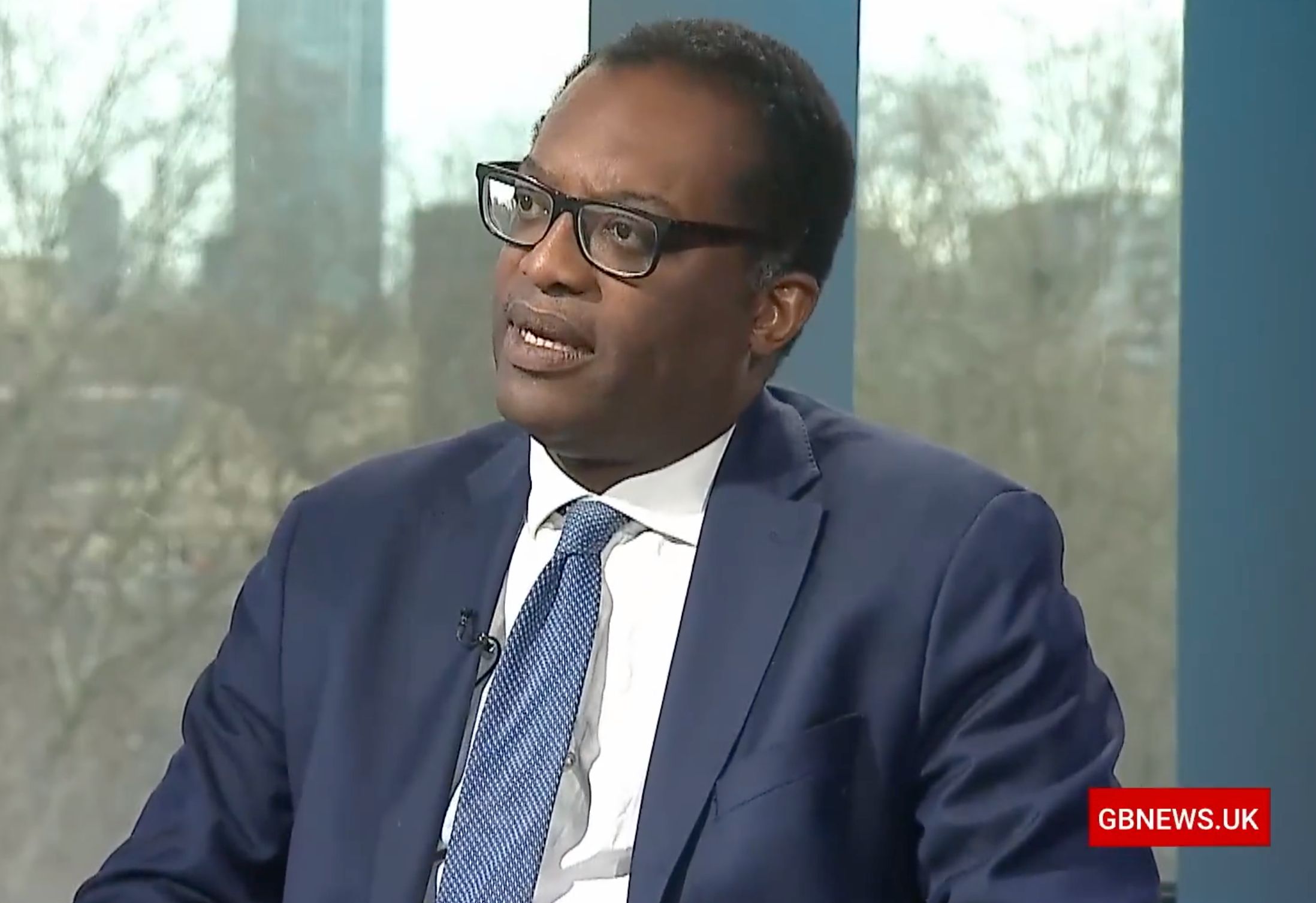
Kwasi Kwarteng has said what he got “wrong” in his mini-Budget that triggered market chaos and led to the downfall of Liz Truss’ government was not being “methodical” enough.
The former chancellor said his successor Jeremy Hunt had delivered a “good Budget” last week.
Hunt was appointed chancellor by Truss after she fired Kwarteng, her closest political ally, in a last ditch attempt to save her failing premiership.
Advertisement
Speaking to GB News on Sunday morning, Kwarteng said Hunt had “rightly perhaps” adopted a more “cautious” approach than he had.
“What we can’t do is pretend that last October didn’t happen, last September didn’t happen,” he said.
“I don’t understand what it means to be a Conservative if you don’t believe, ultimately, in lower taxes, broadly. That’s a strategic goal.
Advertisement
“There is a question about how you get there and there are different approaches.
“Now, I’d like to see things maybe done more quickly. But you do have to be methodical, you have to carry institutions with you, and I think that’s what they’re trying to do.”
He added: “That’s where I think I and Liz got it wrong. I think we should have had a more methodical and more process-driven way of getting to that strategic goal, which is lower taxes and incentivising economic activity.”
Kwarteng also acknowledged there was “too much” in his mini-Budget and it was “very bold” not to have Office for Budget Responsibility (OBR) forecasts or measures on spending restraint at the same time.
He also said that suggesting more tax cuts could come in the aftermath of his statement “probably was a mistake”.
Kwarteng’s decision to tell BBC One’s Sunday with Laura Kuenssberg programme that even more taxes could be cut, shortly after he axed the 45p top rate, was widely seen to have been a big factor in spooking the markets.
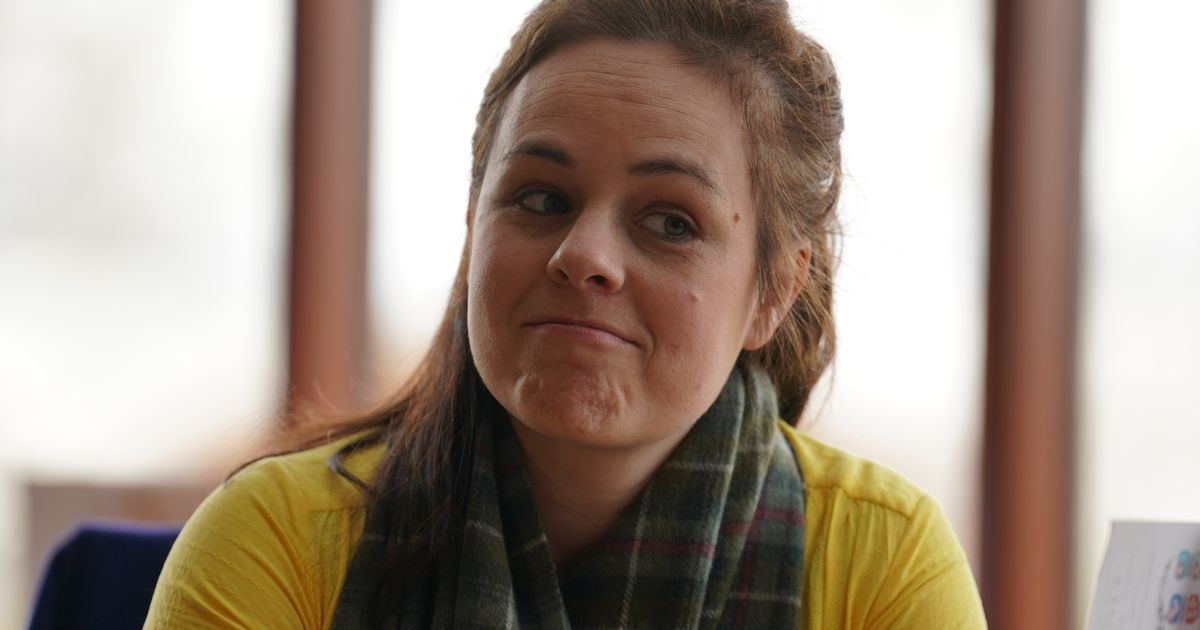
SNP leadership candidate Kate Forbes has said she has “full confidence” in the integrity of the bitter campaign to succeed Nicola Sturgeon as first minister.
It came after Peter Murrell, who is Sturgeon’s husband, quit as the party’s chief executive, having served in the role for 20 years.
Advertisement
Murrell said he took responsibility after misleading information was briefed to the media over SNP’s membership numbers.
Earlier this week it emerged that the party had lost 30,000 members in just over a year.
On Thursday the party said membership as of February 15 this year was 72,186, having fallen from 103,884 in 2021.
This corroborated a story in the Sunday Mail in February about the party losing 30,000 members, something it had strongly denied at the time.
Earlier this week two of the candidates seeking to replace Sturgeon, Forbes and Ash Regan, raised concerns about the integrity of the election.
Advertisement
Forbes had called for an independent auditor to asses the leadership contest.
Health Secretary Humza Yousaf, widely viewed as the favourite for the top job among the party hierarchy, dismissed these as “baseless smears”.
Speaking to the BBC’s Sunday with Laura Kuenssberg, Forbes said she now did “have full confidence and trust in the process”.
The point I made around an independent auditor was to try and give as much trust and confidence to those that were voting.
“It’s fairly standard common practice when it comes to election contests for there to be that third party independent auditing.
“And I would hope that we can get to the end of this contest knowing that the decisions that SNP members are taking when they vote is the decision that they truly want when it comes to leadership of the party.”
Advertisement
The leadership contest is due to conclude on March 27.
Oliver Dowden, the Chancellor of the Duchy of Lancaster, announced that the app would be removed from all government devices amid cybersecurity fears.
But Shapps, who is energy secretary, made it clear on his own TikTok account that he would not be closing down his own account.
Advertisement
He posted a 45-second clip on TikTok from the hit moving The Wolf of Wall Street, in which Leonardo DiCaprio tells a cheering crowd “I’m not fucking leaving.”
DiCaprio’s character, Jordan Belfort, adds: “The show goes on. This is my home. They’re gonna need a wrecking ball to take me out of here.”
Shapps added: “This morning the government announced a TikTok ban on government devices. That’s sensible.
Advertisement
“I’ve never used TikTok on government devices and can hereby confirm I will NOT be leaving TikTok any time soon.”
His post is a stinging rebuke to Dowden, who had earlier said: “Restricting the use of TikTok on Government devices is a prudent and proportionate step following advice from our cyber security experts.”
TikTok requires users to give permission for the app to access data stored on the device, which is then collected and stored by the company.
That gives TikTok access to a range of data on the device, including contacts, user content, and geolocation data.
Ministers are believed to be concerned about the way in which this data may be used by TikTok’s owners, the Chinese company ByteDance.
Advertisement
Parliament’s TikTok account was shut down last year after MPs raised concerns over the firm’s links to China.
The US government banned TikTok last year on federal government-issued devices due to national security concerns.
Meanwhile, staff working at the European Commission have been ordered to remove the TikTok app from their phones and corporate devices.
A TikTok spokesperson said: “We are disappointed with this decision. We believe these bans have been based on fundamental misconceptions and driven by wider geopolitics, in which TikTok, and our millions of users in the UK, play no part.
“We remain committed to working with the government to address any concerns but should be judged on facts and treated equally to our competitors.
Advertisement
“We have begun implementing a comprehensive plan to further protect our European user data, which includes storing UK user data in our European data centres and tightening data access controls, including third-party independent oversight of our approach.”
Jeremy Hunt has been accused of handing a huge tax cut to the rich by shaking up pension rules.
The chancellor used his first Budget to announce that high-earners will be able to plough more money into their retirement pots without having to pay more money to the taxman.
He said he was increasing the so-called annual tax free allowance from £40,000 to £60,000.
And in a major surprise, he also announced that he was going to abolish the lifetime allowance, which is currently £1 million.
Advertisement
The changes are aimed at encouraging more over-50s to stay in work rather than retiring to avoid higher tax bills.
Hunt said: “These changes will stop over 80% of NHS doctors from receiving a tax charge, incentivise our most experienced and productive workers to stay in work for longer and simplify our tax system, taking thousands of people out of the complexity of pension tax.”
But Labour pointed out that the tax cut would only benefit the very wealthiest in society.
Responding to the Budget in the Commons, Keir Starmer said: “We needed a fix for doctors, but the announcement today is a huge giveaway to some of the very wealthiest.
“The only permanent tax cut in the budget is for the richest 1%. How can that possibly be a priority for this government?”
Advertisement
A Labour source told HuffPost UK: “It’s a bad look for your only budget surprise to be a very very big tax break for the very very richest.”
Sharon Graham, general secretary of Unite, said: “Today the Chancellor claimed that this was a budget for growth to benefit Britain. In real terms, it’s tax cuts for the rich and powerful and little reward for workers.
“This economic system is not only broken, it’s rigged and once again workers are paying the price.”
Andrew Harrop, general secretary of the Fabian Society, said: “The chancellor did nothing to put extra money into the pockets of low and middle income households.
“Instead of acting to address the country’s unprecedented cost of living crisis, Mr Hunt instead chose a pension tax giveaway for the wealthy. That will be a bitter pill to swallow for people struggling to feed their families.”
Treasury sources insisted the tax cut was about keeping the “most experienced workers” in the labour market for longer.
Advertisement
They cited figures from the Royal College of Surgeons that found 70% of respondents reduced their hours due to the government’s current pension tax rules.
Sources said the chancellor did not want the current rules to lead to “fewer doctors” in the labour market and that this was the “quickest and most effective way” of keeping them in the NHS.
Rishi Sunak’s Brexit deal needs “re-working and change” before the DUP can support it, the party’s leader Jeffrey Donaldson has declared.
In a major blow for the prime minister, Donaldson said the Windsor Framework did not go far enough to address unionists’ concerns.
Advertisement
The agreement, which Sunak struck with European Commission president Ursula von der Leyen earlier this month, aims to solve the problems caused by the Northern Ireland Protocol signed by Boris Johnson three years ago.
He said it would remove the current customs border in Irish Sea while also giving the UK government an effective veto on new EU laws being imposed on Northern Ireland.
MPs are to be given a Commons vote on the deal, with the DUP’s support being seen as crucial to prevent a major rebellion by Brexiteer Tories.
The DUP’s support for the Framework is also seen as essential for the party to agree to enter a power-sharing government at Stormont with Sinn Fein.
Advertisement
But speaking during a visit to Washington, Donaldson said as it currently stands, his party cannot back it.
In a statement, he said: “It is my current assessment that there remains key areas of concern which require further clarification, reworking and change, as well as seeing further legal text.”
He added: “What is in this Windsor Framework is insufficient. It does not meet all of our requirements, it does not go as far as we need, in terms of our tests and in terms of restoring fully Northern Ireland’s place within the internal market of the United Kingdom.
“So, we need to see the legislative safeguards, we need to see the legislation that is going to ensure the Government honours the commitments it has made.”
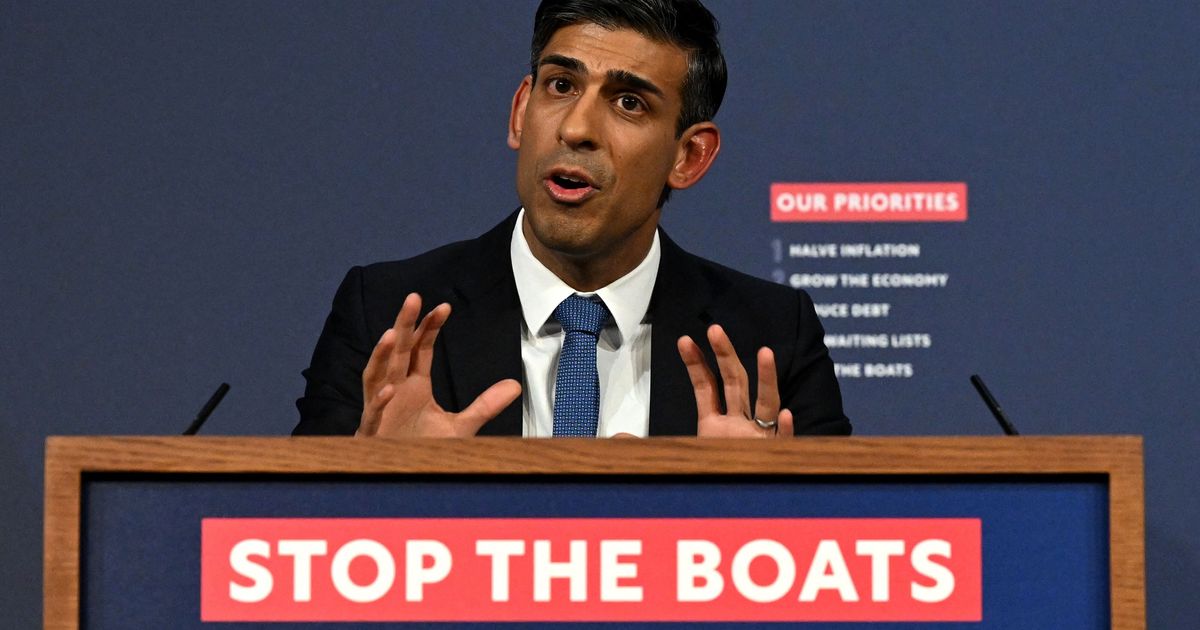
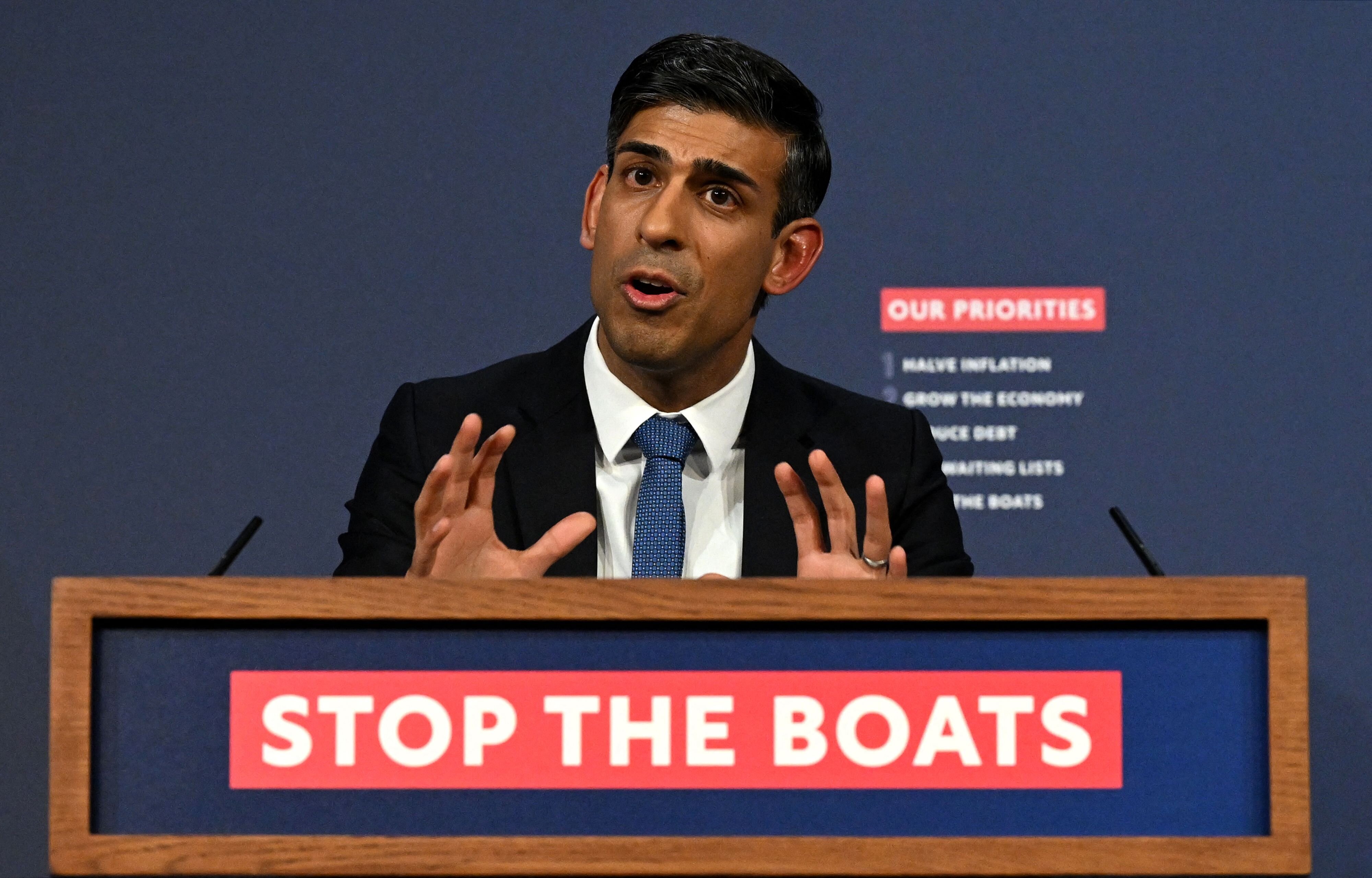
Rishi Sunak is facing a growing Tory revolt over his plans to crack down on asylum seekers arriving in small boats after another senior MP announced that they will not vote for it.
Chris Skidmore – who also currently serves as the PM’s net zero tsar – said he was “not prepared to break international law or the human rights conventions” by backing the Illegal Migration Bill, which MPs will vote on tonight.
Advertisement
He follows former immigration minister Caroline Nokes, the Tory chair of the equalities committee, who yesterday branded the Bill an “absolute horror”.
“I can’t vote for this,” she told Times Radio on Sunday. “I think we have an absolute duty to treat people humanely to keep people safe.”
Nokes warned the bill was “removing protections for pregnant women, removing protections for families”.
Skidmore, who is standing down at the next election, announced his position in a tweet.
I am not prepared to break international law or the human rights conventions that the UK has had a proud history of playing a leading role in establishing.
The Match of the Day presenter accused home secretary Suella Braverman of using language used was “not dissimilar to that used by Germany in the ’30s”.
The government’s plans would see migrants who arrive through unauthorised means deported and given a lifetime ban from returning.
Anyone who crosses the Channel in a small boat would only be eligible for asylum in a “safe” third country, such as Rwanda.
Advertisement
Braverman has admitted her legislation might not even be legal as it could breach existing human rights laws.
Yvette Cooper, Labour’ shadow home secretary, has said the Bill is a “con which will make our broken asylum system worse”.
“Not only will it fail to tackle dangerous boat crossings, but it shows the repeated false claims and promises that both the Prime Minister and Home Secretary have made,” she said.
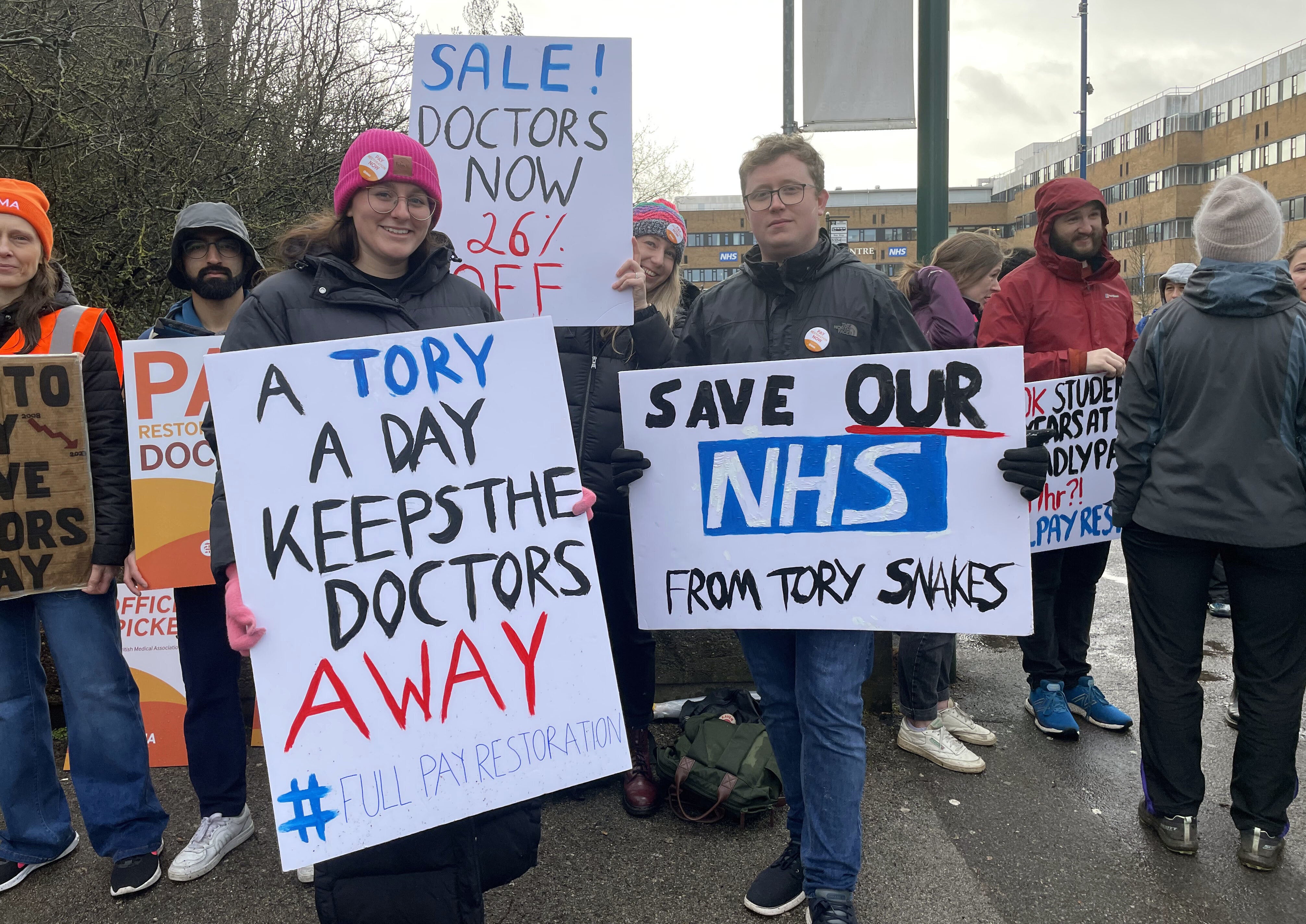
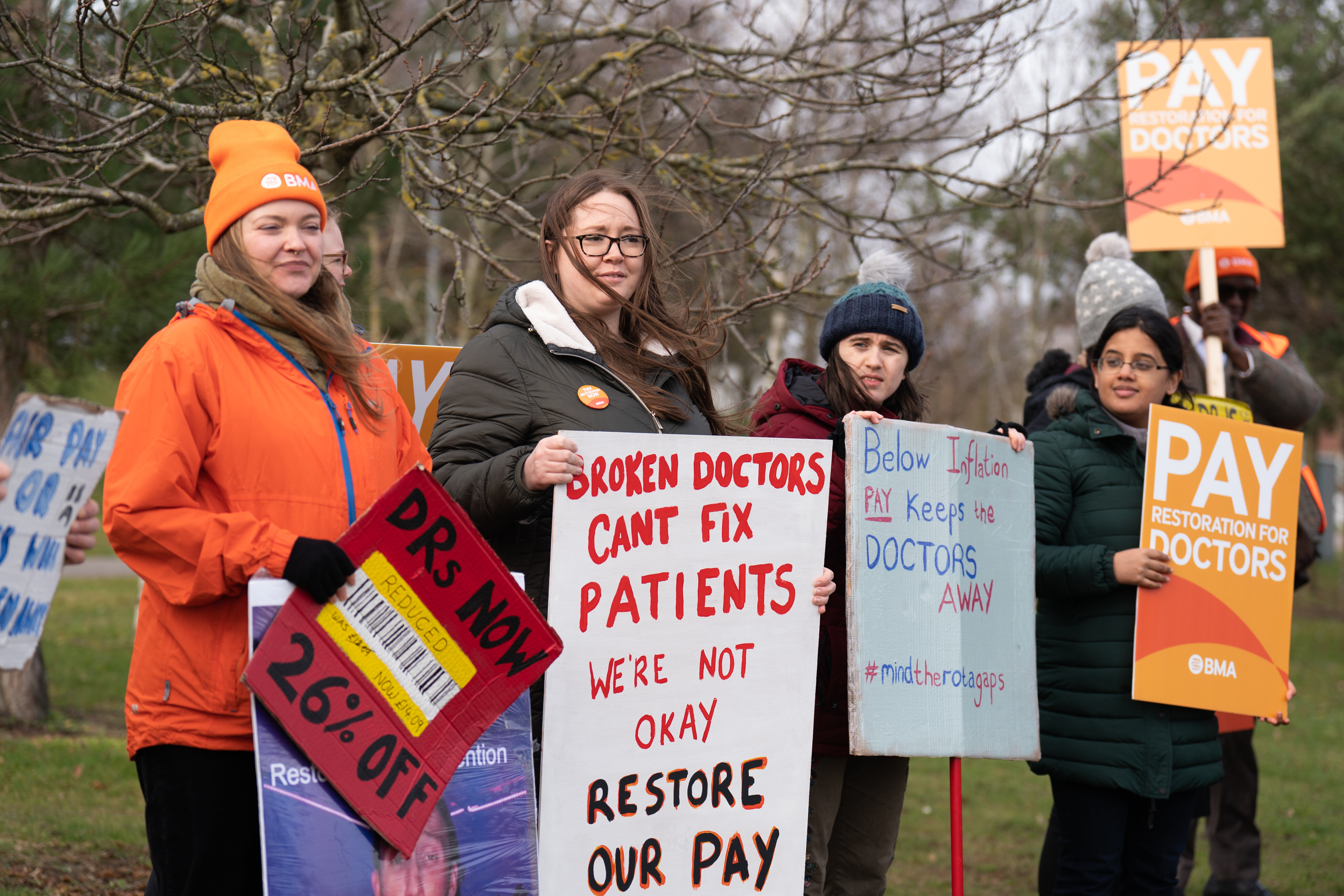
Junior doctors took to picket lines across the UK today as they began a three-day strike in their long-running pay dispute with the government.
The British Medical Association rejected a last-ditch appeal by health secretary Steve Barclay for them to enter into fresh negotiations in an attempt to avert the walkout.
Advertisement
The unions says junior doctors’ pay has fallen in real terms by 26% since 2008/09 and are demanding “full pay restoration”.
Professor Stephen Powis, medical director of NHS England, said it would be “the most disruptive set of industrial action days that we’ve seen all winter”.
But the striking medics say their action is necessary to force the government’s hand.
Here is what some of those striking have been saying from the picket line.
Speaking outside the Queen Elizabeth Hospital in Birmingham, junior doctor Shivam Sharma told the Press Association: “Junior doctors have faced a massive 26% real-terms pay cut over the last 15 years.
“We are not worth 26% less, we don’t do 26% less work, we don’t see 26% less patients. In fact, the work has only gotten harder.
Advertisement
“Currently, 50% of junior doctors are struggling to pay rent, mortgage and bills, and 50% are having to borrow money from friends and family just to make ends meet.
“If you or I were going into hospital critically unwell, we couldn’t want our junior doctor to be worrying about how they’re going to pay their bills.
“So something has to be done – we have to value doctors here if we are going to keep them.”
Paul Smith, a first-year surgical trainee at the Nottingham University Hospitals NHS Trust, said: “I started in my training post in August last year and I’ve spent £3,000 on course fees, professional fees and exams. We can claim some tax back but I’ve still got to pay that upfront.
“Me and my partner managed to save up enough money to buy a house locally and we found a hole in the roof last week.
“We’re genuinely struggling to find the money to fix that at the moment.”
Speaking from the picket line at University College Hospital in London, Rebecca Lissman, 29, a trainee in obstetrics and gynaecology, said: “I still want to work for a service that’s free at the point of use when I’m a fully qualified consultant. We want a health service that works for everyone and that’s why I’m here today.
Advertisement
“We can’t give people the service they deserve and see them as quickly as they need because we are so stretched.
“I want to be in work, looking after people, getting trained. I don’t want to be out here striking but I feel that I have to.”
“Junior doctors have faced a massive 26% real-terms pay cut over the last 15 years. We are not worth 26% less, we don’t do 26% less work, we don’t see 26% less patients.”
Edward Finn, an anaesthetist registrar at the Nottingham University Hospitals NHS Trust, said: “If you look at the overall cost of living, wages that haven’t kept up with that, and we don’t go out for meals, we don’t do anything.
“My wife and I are both part-time – we couldn’t afford to be full-time with the cost of childcare – but we still have to do the occasional extra shift on top of our contracted hours to keep up with things like the electricity bill.
Advertisement
“When you’re talking about somebody who’s been a doctor for 12 years, it’s quite sad really, isn’t it?”
Striking junior doctor Martin Whyte, on the picket line in Newcastle, said the public understood the need for the industrial action.
“We used to say anything above four hours was a breach but we have missed that target so overwhelmingly now, it’s almost not worth counting.
“These systems are failing chronically and I think the public understand that.
“They know steps have to be taken to address that, and that starts with better retention of staff and for that you need better pay. We are seeing a lot of attrition from the workforce.”
The 36-year-old said newly qualified doctors used to talk about the specialism they hoped to work in, adding: “Now when I talk to them they say ‘I’m going to go to Australia’, ‘I’m going to go to Canada’, or ‘I’m going to quit medicine all together’, because the pay relative to the work and the intensity and the hours just doesn’t add up.”
Advertisement
Striking NHS junior doctors on the picket line outside Norfolk & Norwich University Hospital in Norwich, as the British Medical Association is holding a 72-hour walkout in a dispute over pay. Picture date: Monday March 13, 2023.
Joe Giddens via PA Wire/PA Images
Speaking on a picket line at Leeds General Infirmary, Dr Chris Morris, doctor and British Medical Association rep, said: “It’s really reassuring when members of the public do go past honking their horns, giving us messages of support. It reemphasises why we’re doing this.”
“I don’t think anyone has taken this decision lightly. It’s the last thing we want to do as doctors but we feel that we’ve pushed into this decision by the government.”
Steve Barclay said he wanted to “engage” with the junior doctors to reach an agreement to end the strikes.
He said other health unions had agreed to hold pay talks with him and he called on the BMA to do so “as a matter of urgency”.
Advertisement
It marks a change of tone from December, when Barclay said he could not offer NHS staff more money.
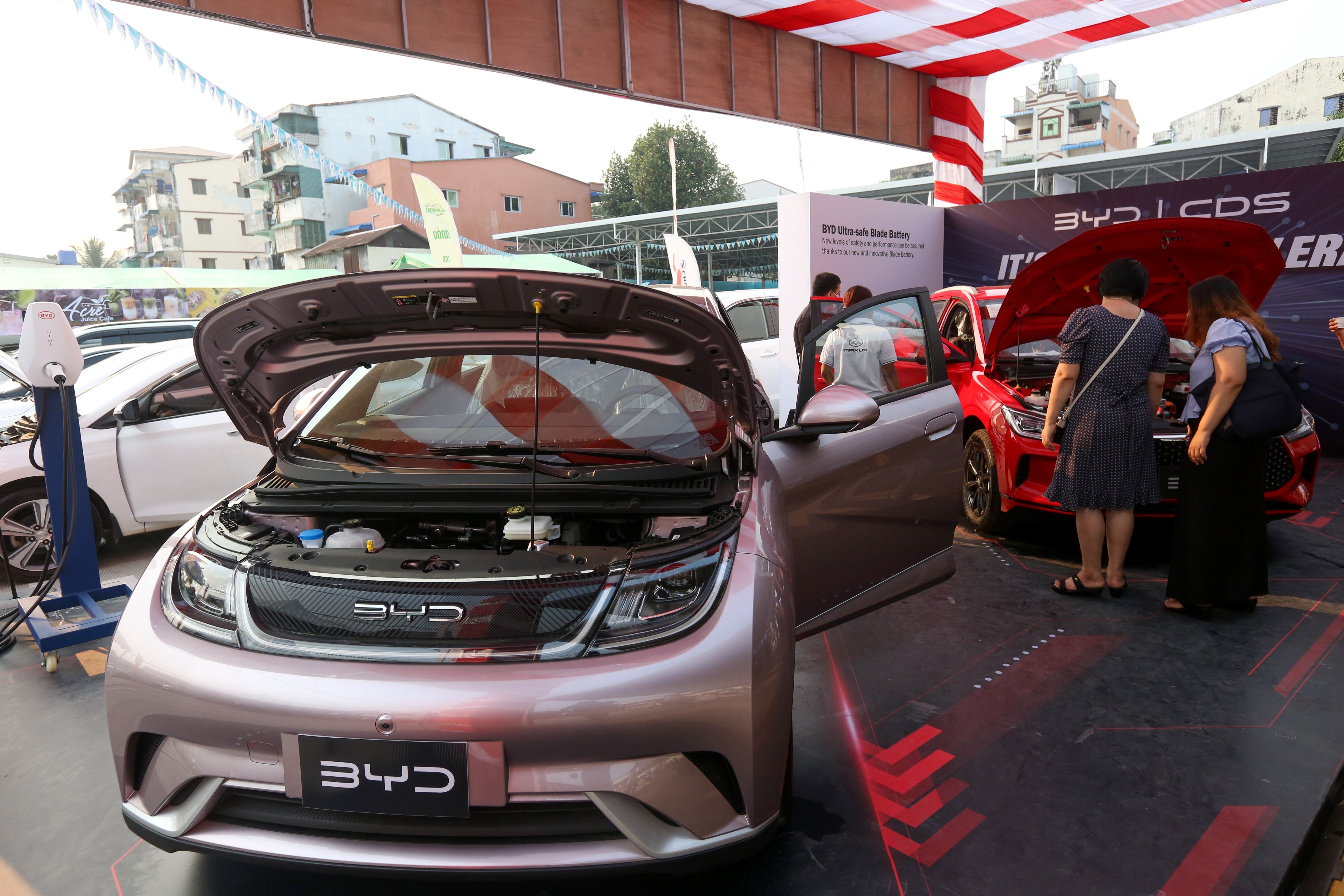
The world’s biggest seller of electric and hybrid cars has ruled out building its first European factory in the UK because of the uncertainty caused by Brexit.
Michael Shu, the European president of Chinese firm BYD, said Britain hadn’t even made it onto the long list of potential sites.
Advertisement
He told the Financial Times: “As an investor we want a country to be stable. To open a factory . . . is a decision for decades.
“Without Brexit, maybe. But after Brexit, we don’t understand what happened.
“The UK doesn’t have a very good solution. Even on the long list we didn’t have the UK.”
Instead, BYD are looking to build a factory in Germany, France, Spain, Poland or Hungary.
Ministers to plug huge gaps in the job market by starting with looser rules for the building industry, according to the Financial Times.
Advertisement
A number of occupations will be added to the “shortage occupation list” which eases recruitment from abroad.
The list allows companies to obtain visas for staff paid on a lower threshold of £20,480 a year because the salary currently needed to obtain a “skilled worker” visa is £25,600.
Labour MP Stella Creasy told HuffPost UK: “British workers are losing jobs and opportunities hand over fist not being able to work in the EU or for companies that want to work with the EU because of the post Brexit visa situation, whilst the UK’s inability to build a functioning immigration and asylum system is holding back our economy at a time when vacancies are at over a million.
“We need urgent reform of the whole visa system to ensure we tackle not just shortages in the UK labour market but also opportunities for all as part of kickstarting growth in our economy.”