Boris Johnson Is ‘Generally An Honest Man’, Says Close Ally

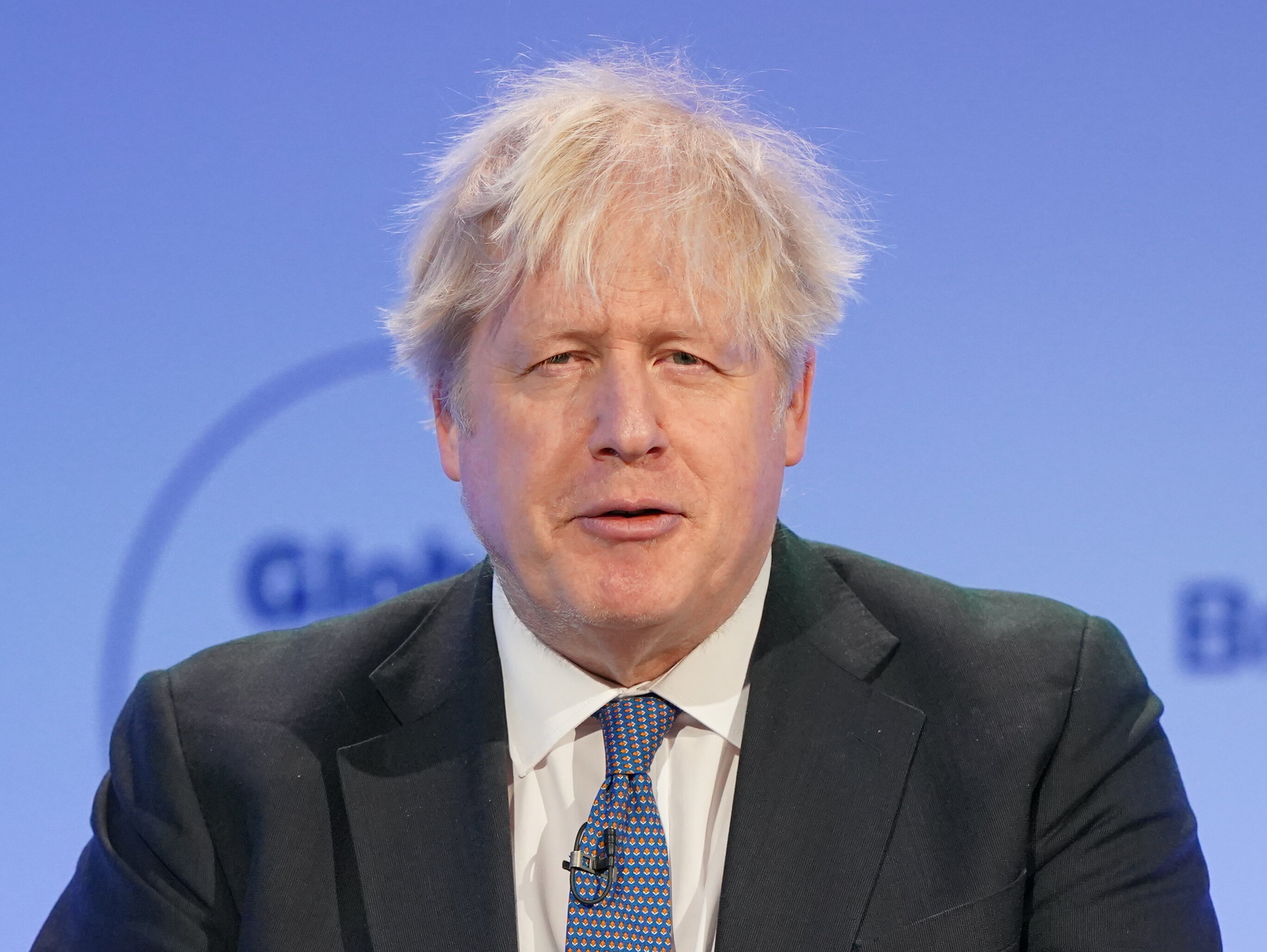
Boris Johnson is “generally an honest man”, one of his close allies has insisted.

Chris Heaton-Harris, the Northern Ireland secretary, tried to mount a defence of the former prime minister as the partygate scandal returned to haunt the Tories.

The cross-party privileges committee published a report on Friday saying Johnson may have repeatedly misled parliament over what he knew about lockdown-busting parties in Downing Street during the pandemic.

But despite its damning findings, the ex-PM insisted that he has been “vindicated” by the report.

On the BBC’s Sunday with Laura Kuenssberg show this morning, Heaton-Harris – who was chief whip when Johnson was in Number 10 – said he believed the former Tory leader had now “knowingly” misled MPs.

He said: “There are four occasions where Boris may have done that.

“I wouldn’t have become Boris’s chief whip if I didn’t believe him that he did not knowingly mislead parliament and I believe him to be an honest man – he did not knowingly mislead parliament.”

Heaton-Harris added: “He gave me chapter and verse that demonstrated to me that he did not knowingly mislead parliament.

“Generally he is an honest man and I truly believe that.”

The cabinet minister had earlier told Sky News that he was “absolutely convinced” Johnson had not misled MPs.

The former prime minister is set to give evidence to the privileges committee later this month.

If he is found guilty of misleading parliament, he could be suspended from the Commons and potentially lose his seat.

Share Button

New Law Just One Part Of Action To ‘Stop The Boats’, Says Minister

New legislation pledged by Rishi Sunak to tackle illegal migration will form only one part of the government’s response to the issue, a senior minister has said.

It comes as Home Secretary Suella Braverman is set to publish long-promised legislation as soon as Tuesday that would make asylum claims inadmissible from those who travel to the UK on small boats.

Sunak on Sunday vowed to put an end to “immoral” illegal migration, while Braverman said “enough is enough”.

But while details are still scarce on the legislation, critics have already questioned whether the government’s solution will make any difference to small boat arrivals on Britain’s shores.

The legislation would see a duty placed on the Home Secretary to remove “as soon as reasonably practicable” anyone who arrives on a small boat, either to Rwanda or a “safe third country”.

Arrivals will also be prevented from claiming asylum while in the UK, with plans also to ban them from returning once removed.

During an appearance on BBC One’s Sunday With Laura Kuenssberg, Northern Ireland Secretary Chris Heaton-Harris was shown a graph displaying a fall in asylum seeker returns since 2010 as he insisted that legislation is just one aspect of the Government’s “arsenal” on the issue.

“We need a full range of things in our arsenal to try and stop both people trafficking and illegal migration across the Channel,” he said.

“That involves proper conversations, that are ongoing, with our French counterparts, and indeed other European counterparts, to try and ensure that people are held in the first safe country that they come to. That also includes international development aid.”

He insisted a tightening of the law is required “because the law has been challenged on pretty much all those occasions and equally when we announced the Rwanda scheme, it was challenged immediately”.

The Prime Minister, who has made “stopping the boats” one of his five priorities, told the Mail on Sunday that he is “determined to deliver” on his promise.

But the Government’s plans have been criticised by campaigners, with concerns too about whether some of the policies are compatible with the European Convention on Human Rights.

The Rwanda scheme has been mired in legal challenges, and so far no flights carrying migrants to the Rwandan capital Kigali have departed.

The latest Home Office figures show 2,950 migrants have crossed the Channel already this year.

Heaton-Harris, speaking to Sophy Ridge On Sunday on Sky News, signalled that the Government may look at opening more “safe and legal routes” for asylum seekers in the future.

“I’m quite sure there’ll be more safe and legal routes and that’s why we have them,” he said. “They’ve been proven to work.”

Labour’s Jonathan Ashworth, speaking on Sky News, said his party would “study” the legislation carefully to see if it addresses the current issues, including processing backlogs.

Pressed on whether his party supports the “broad principle” behind the legislation, the shadow work and pensions secretary said: “The broad principle is that refugees who arrive in this country, we have always welcomed them.

“People whose asylum applications have been turned down, then of course they should be returned, that is a principle that we have always accepted.

“The problem is, of course, that the Conservatives will come out here and they will get headlines and they will say they are going to do this, that and the other, but they never deliver, do they?”

The Liberal Democrats called it “another half-baked plan”. The party’s home affairs spokesman Alistair Carmichael said it is “immoral, ineffective and incredibly costly for taxpayers”.

Share Button

Boris Johnson May Have Repeatedly Misled Parliament Over Partygate, MPs Say

Boris Johnson may have misled parliament on multiple occasions over whether lockdown rules were broken in Downing Street, MPs have found.

If found guiltily, the former prime minister could be suspended or expelled from the Commons and even trigger a by-election in his seat.

In a damning report published on Friday, the Commons privileges committee said the breaches by No.10 staff “would have been obvious” to Johnson.

“There is evidence that the House of Commons may have been misled.” the MPs said, listing a series of incidents.

Johnson is due to defend himself in front of the committee in person later this month.

Parliament

The committee is not investigating whether rules were broken or not, the police have already concluded they were, but specifically whether Johnson lied to parliament about it.

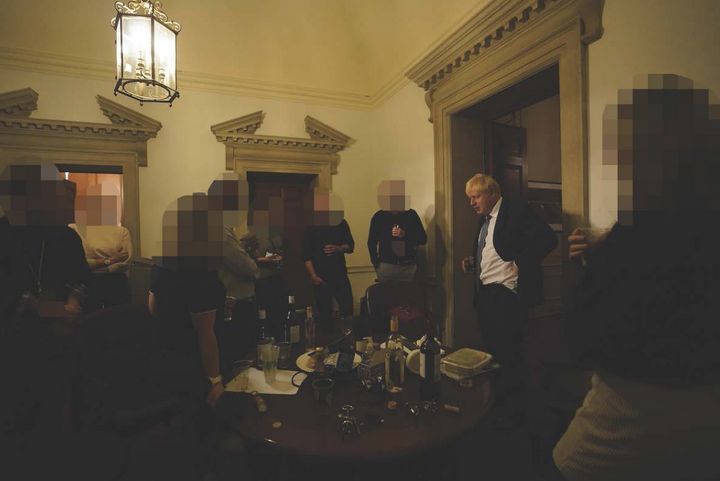
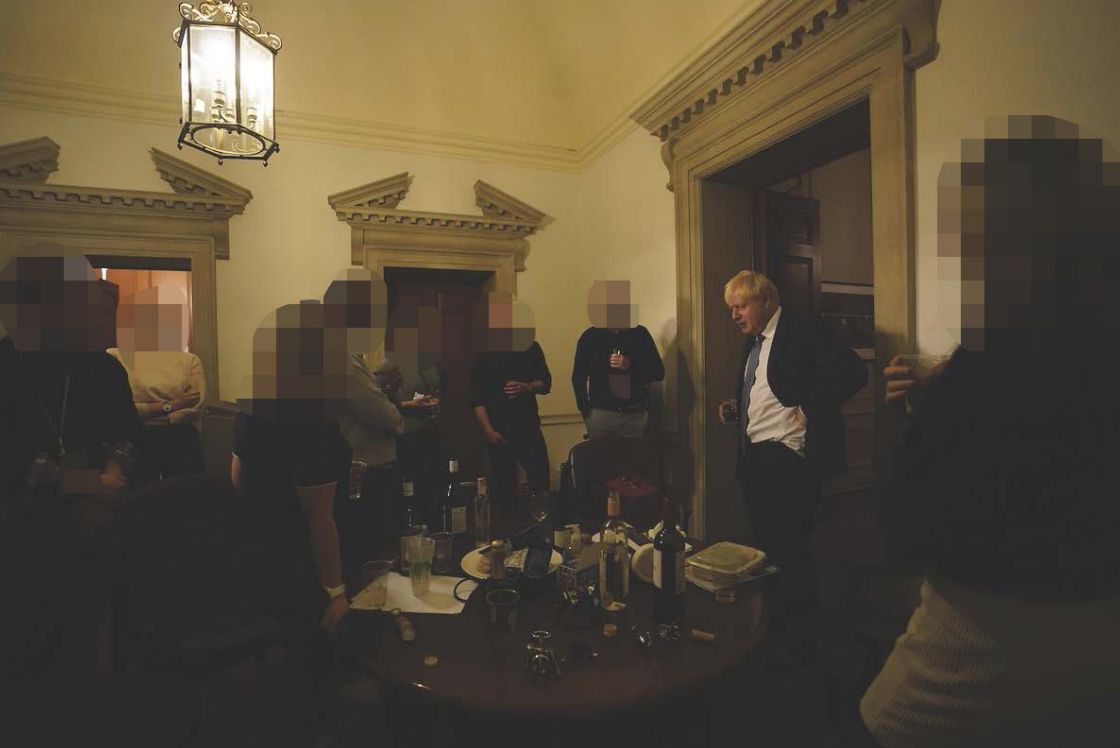
As prime minister, Johnson repeatedly told the Commons that no Covid rules had been breached in No.10. But he was later fined by police for attending an event.

The MPs said: “The evidence strongly suggests that breaches of guidance would have been obvious to Johnson at the time he was at the gatherings.

“There is evidence that those who were advising Johnson about what to say to the press and in the House were themselves struggling to contend that some gatherings were within the rules.”

The committee said there was evidence “a culture of drinking in the workplace in some parts of No.10” continued “after Covid restrictions began”.

Parliament

Today’s report is not the committee’s final conclusion, but if it decides Johnson did mislead parliament it can recommend punishments such as suspension or expulsion from the Commons. MPs would need to vote for this.

In response, Johnson said the report showed he had been “vindicated” and maintained it had been his “honest belief” that no rules were broken.

Angela Rayner, Labour’s deputy leader, said the report was “absolutely damning” of Johnson.

She said if Johnson is found to have misled parliament, Rishi Sunak must make clear “his career is over”.

It comes one day after it was announced Sue Gray, the senior civil servant who authored the partygate report, has quit government to become Keir Starmer’s chief of staff.

Johnson suggested her decision to take a job with Labour calls into question the impartiality of her report, which contributed to his downfall.

But MPs on the privileges committee said it own report is “not based on the Sue Gray report” but on evidence provided directly to it by witnesses.

The committee is chaired by former Labour deputy leader Harriet Harman, but it has a Tory majority.

Share Button

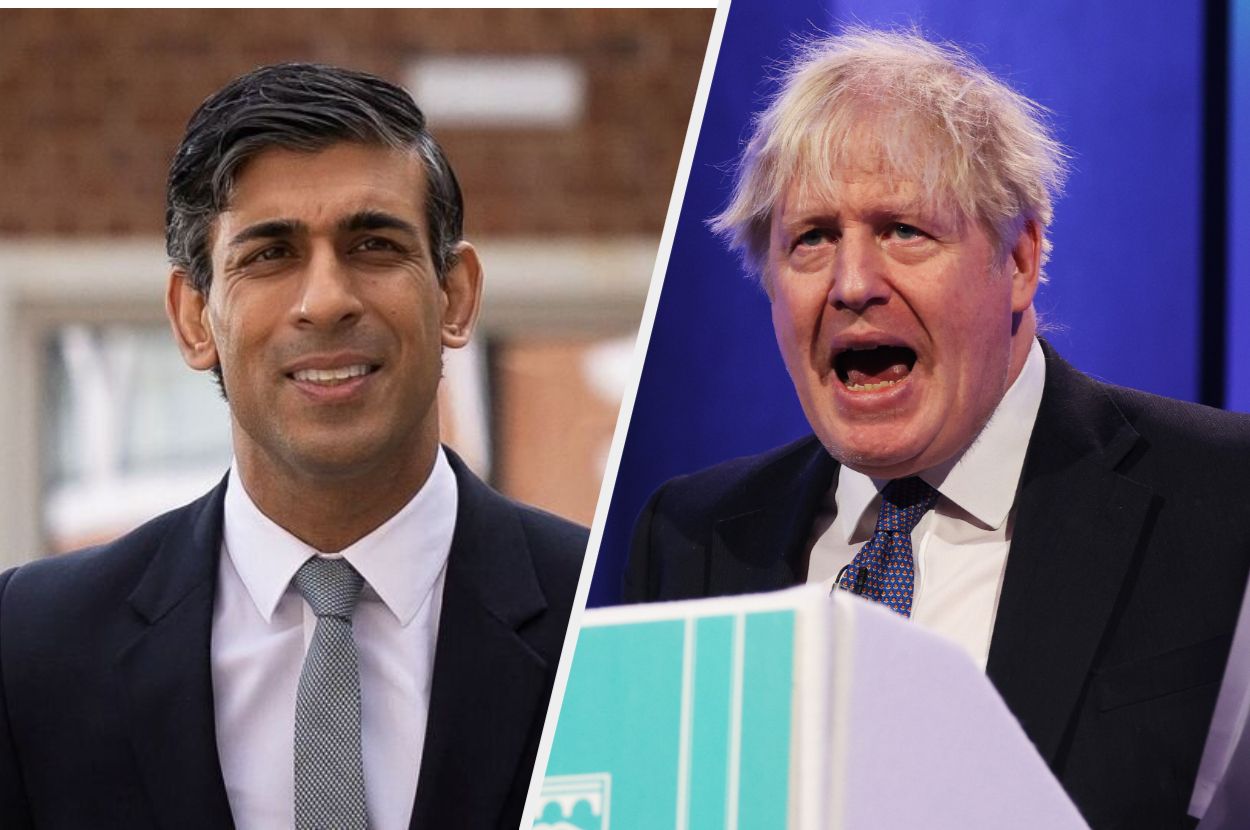
Boris Johnson Goads Rishi Sunak Over Poor Tory Poll Ratings

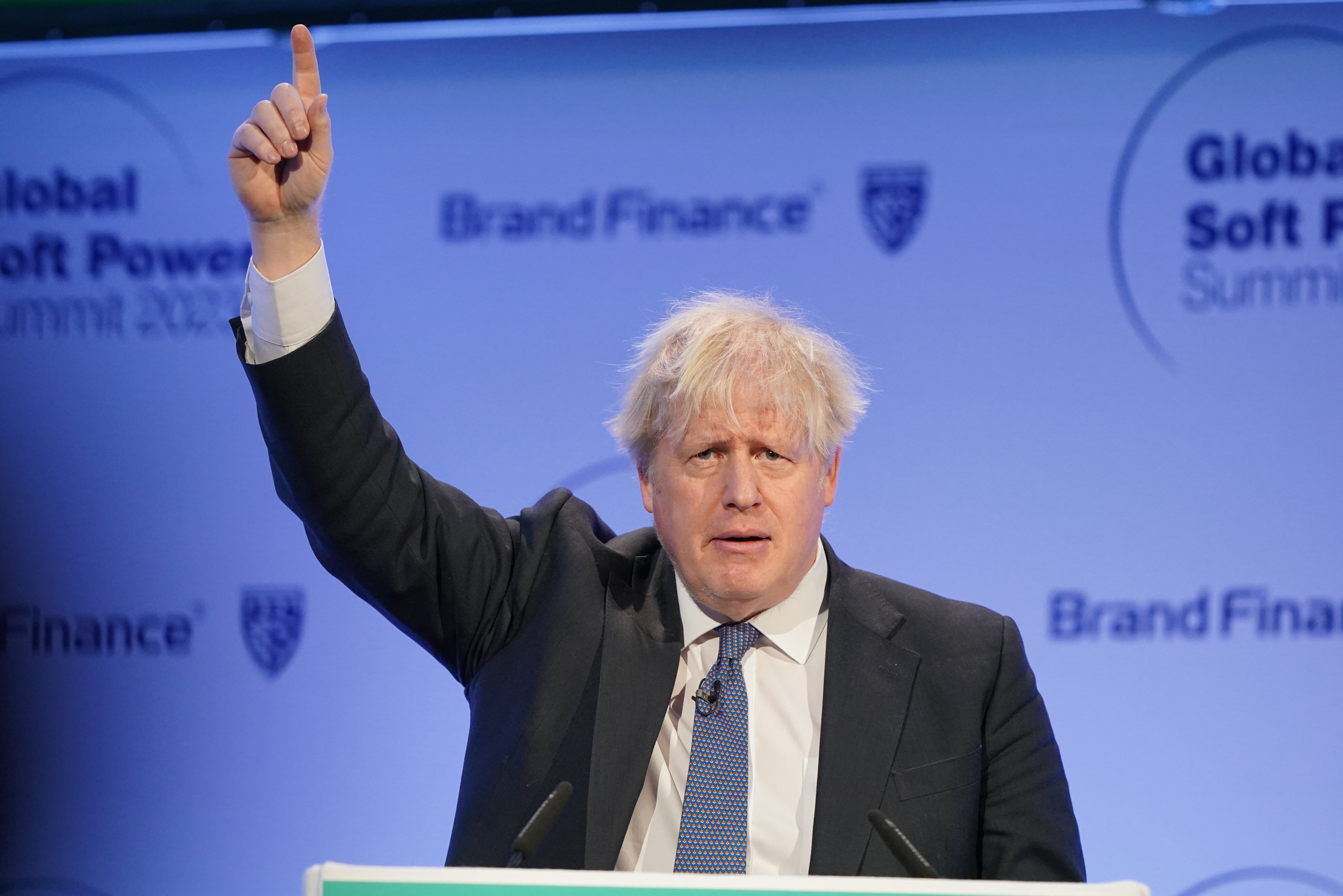
Boris Johnson has goaded Rishi Sunak over the prime minister’s poll ratings, as he delivered his first public speech in the UK after being forced out of No.10.

Speaking in Westminster on Thursday afternoon, Johnson said it was “very unlikely” he would “need to do anything big in politics again”.

But he indicated he would continue to speak out on issues including Brexit, the need to level up the north of England and to help Ukraine.

And the former PM said: “When I stepped down we were only a handful of points behind the Labour Party.”

When Johnson announced his resignation on July 7, 2022, YouGov polling showed Labour on 40% and the Tories on 29% — an 11 point lead.

The latest survey from YouGov has put Labour on 46% and the Tories on 23% — 23 points ahead.

On September 29, 2022, YouGov released a shock poll that showed Labour had surged to a 33-point lead over the Conservatives amid the market turmoil caused by Liz Truss’ mini-Budget.

When Truss quit as prime minister, Johnson mounted a dramatic challenge to Sunak in a bid to return to No.10.

In the end he pulled out of the contest after deciding he did not have enough support from Tory MPs to lead a stable government.

But rumours in Westminster that Johnson still hopes to make a comeback have not gone away, stoked by allies who want him to return.

Asked today about his future plans, Johnson said: “I think it very, very unlikely that I will need to do anything big in politics again.”

He also devoted a large section of his speech to trashing Sunak’s new Brexit deal, which he said would be “very difficult” for him to vote for.

Share Button

Boris Johnson Says Rishi Sunak’s Brexit Deal Doesn’t ‘Take Back Control’

Boris Johnson has said Rishi Sunak’s new Brexit deal does not “take back control” from the EU and will be unlikely to vote for it.

Speaking in Westminster on Thursday afternoon, the former prime minister was highly critical of the so-called Windsor Framework.

“I am going to find it very difficult to vote for something like this myself,” he said in his first public comments since the deal was agreed.

“I believe we should have done something different.”

Sunak has struck a new agreement with the the EU which seeks to remove post-Brexit trade barriers by creating a new system for the flow of goods into Northern Ireland.

Johnson said he had “mixed feelings” about the deal, adding “this is not about the UK taking back control” as Brexit “won’t be” done with it.

“Although there are easements this is really a version of the solution that was being offered last year to Liz Truss when she was foreign secretary,” he said.

“This is the EU graciously unbending to allow us to do what we want to do in our own country, not by our laws but by theirs.

“Who votes for the people who decide these rules… no one in England or Scotland or Wales and no one in Northern Ireland.”

Sunak has said MPs in the Commons will be given a vote on his new deal.

Keir Starmer has pledged Labour support, which means here is little chance of the prime minister losing the vote even if some eurosceptic Tory MPs vote against him.

The DUP, which is currently boycotting the Stormont powersharing institutions in Northern Ireland, has said it will study the deal before giving its verdict.

Share Button

Why Is The DUP Hesitant About Rishi Sunak’s Brexit Deal?

Rishi Sunak has won praise after chasing the hard yards to get the EU to redraw the controversial Northern Ireland protocol. Now, he has to convince his party to fall behind it.

It may well be an opportunity he relishes, given that so far, the noises coming from Tory MPs about the “Windsor Framework” agreed with European Commission president Ursula von der Leyen seem to be broadly positive.

However, the road ahead is not entirely hurdle-free.

The prime minister will be looking to secure the approval of arguably one of the most important voices in the Brexit debate — Northern Ireland’s Democratic Unionist Party (DUP), which remains concerned about aspects of the deal.

The DUP has close ties with the Brexiteers of the Tory backbench European Research Group (ERG), some of whom are waiting for their judgment before casting their own verdict.

Here, HuffPost UK explains what the DUP’s position on the deal is and why it matters.

What Is The Windsor Framework?

It is a new deal struck by Rishi Sunak and the EU that will replace the Northern Ireland protocol.

At the heart of the arrangement is the idea of green lanes and red lanes. British goods staying in NI will use the green lane at ports, meaning they face minimal paperwork.

Goods travelling into Ireland will use the red lane, meaning they face customs processes and other checks at Northern Ireland ports.

A key part of the deal is an emergency “Stormont brake” on changes to EU goods rules that can be pulled by the NI Assembly.

Time and Space

The DUP has repeatedly said it will take time to consider the substance of the deal before deciding whether to back it.

That process could take weeks, or even months, the party has warned.

However, there is an incentive to come to a conclusion quickly.

The DUP is a joint partner with Sinn Fein in Stormont’s power-sharing execruive that is crucial to the functioning of the Northern Ireland Assembly.

Since February last year, the DUP has boycotted the assembly in protest at the previous Northern Ireland protocol, which Sunak has now replaced to address concerns around sovereignty, disrupted trade and the application of EU law.

Without the DUP’s participation, Stormont cannot function and people in Northern Ireland have effectively been left without a government.

While Sunak has said the DUP should be given “time and space” to consider the agreement, he made it clear that restoring Stormont was of vital importance.

Sunak told an audience in Northern Ireland earlier this week: “The framework is a fantastic agreement that delivers on all the things people care about. So now I hope that they do see it and see that and they can find a way to come back together.”

“It’s what you deserve.”

What are the DUP’s concerns?

The so-called “Stormont brake” has been hailed as the “rabbit in the hat” in the Windsor Framework.

With it, the UK says the Northern Ireland Assembly will effectively be allowed to “block” new EU laws from applying in the country without cross-community support — a key demand of unionists.

Sunak lauded the brake as an “incredibly powerful” mechanism that would allow the people of Northern Ireland to have “control of their own destiny”.

If Assembly members, called MLAs, dislike changes to EU goods laws then 30 of them can sign a petition to trigger a vote to stop the rules from taking effect.

If the vote passes with a majority of nationalist and unionists, the brake will be pulled and the UK government will have the power to veto any new or amended EU law.

But there are some concerns about potential discrepancies in how the UK and EU interpret the brake, after the EU described it as an “emergency mechanism” that could be used “in the most exceptional circumstances, as a last resort”.

Sammy Wilson, the DUP’s chief whip, told Times Radio that the Stormont brake “is not really a brake at all” and that it was just a “delaying mechanism”.

He said the UK government would have the final say over whether to veto a law, which he said it would be reluctant to do due to being “fearful of the consequences of trade for the rest of the United Kingdom”.

“The price of that would be that the EU would take retaliatory action,” he said, adding that he suspects the Stormont brake would therefore be “fairly ineffective”.

Splits in the DUP

According to the Times, division is emerging between the DUPs’ members in Stormont — who are keen to get the assembly back up and running — and the party’s MPs in Westminster, who are taking a harder and more sceptical line against the deal.

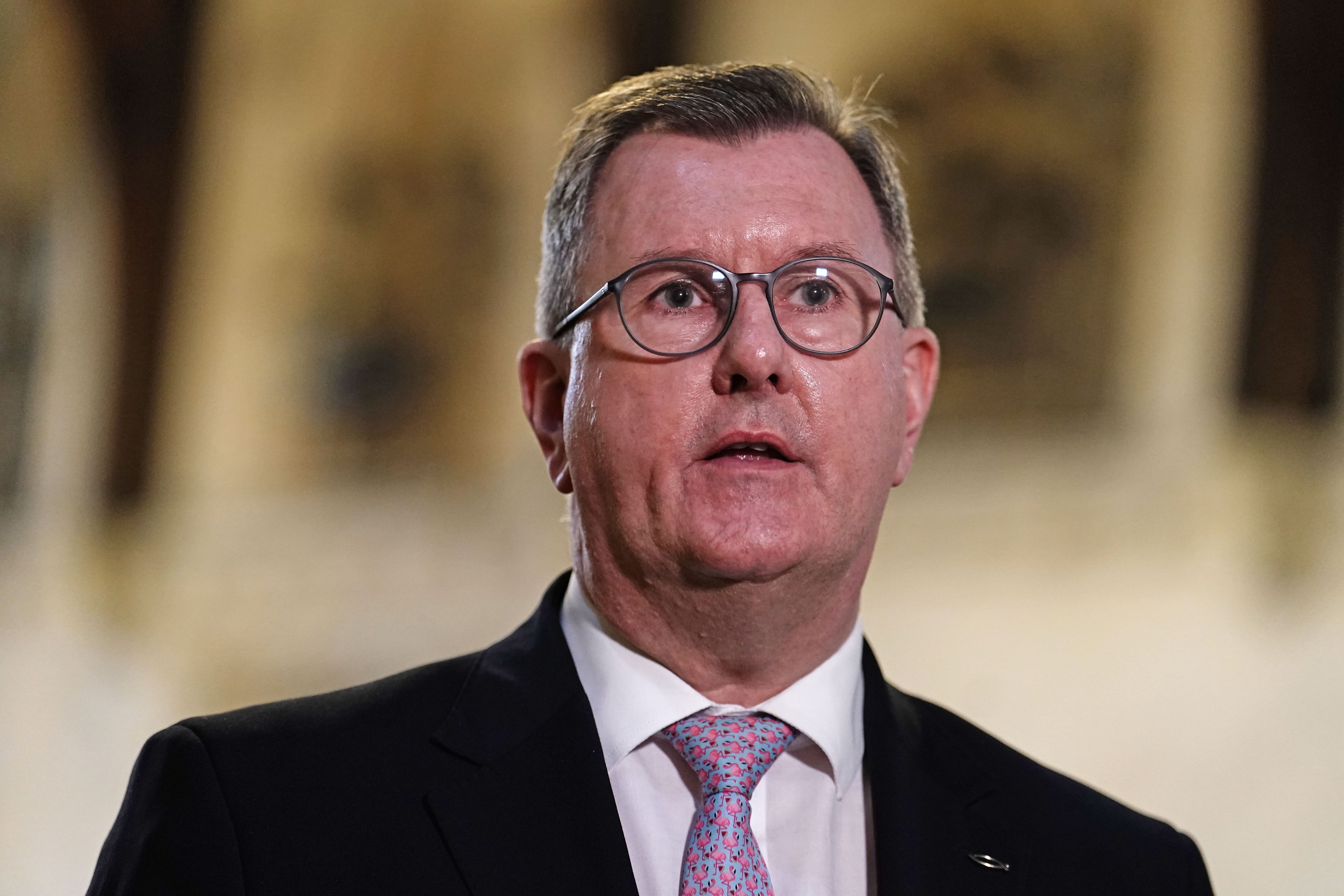
Although he said that changes may need to be made to the deal and that “key issues of concern remain”, the DUP’s leader, Jeffrey Donaldson did also hail the “significant progress” that Sunak had achieved.

But other key players have spoken out against the deal, with Ian Paisley Junior saying it did not “cut the mustard” and was likely to be rejected.

The DUP will also be conscious of the threat it faces from Jim Allister, the founder and leader of Traditional Unionist Voice in the lead up to the local elections in May.

Allister, a former member of the DUP, will be looking to brand any talk of compromise as a sell out and a betrayal.

What has the ERG said?

Mark Francois, the chairman of ERG, said the group’s “star chamber” of lawyers were now poring over the deal and that it would aim to come to a conclusion “within a fortnight”.

He said he had sought assurances that he “won’t find any nasty surprises” when analysing the deal.

Does Sunak need the DUP to get the deal through parliament?

Technically Sunak does not need the support of the DUP, or even the ERG, to get the deal through the Commons after Labour confirmed it would vote with the government.

However, the prime minister will want to get the DUP on board as that will reduce any potential Tory rebellion. If he does not, the party could use its powerful voice to undermine the deal at every opportunity — something he will want to avoid at all costs.

Share Button

Here Are All The Strikes That Are Happening Across The UK In March

Another month, another set of public sector strikes.

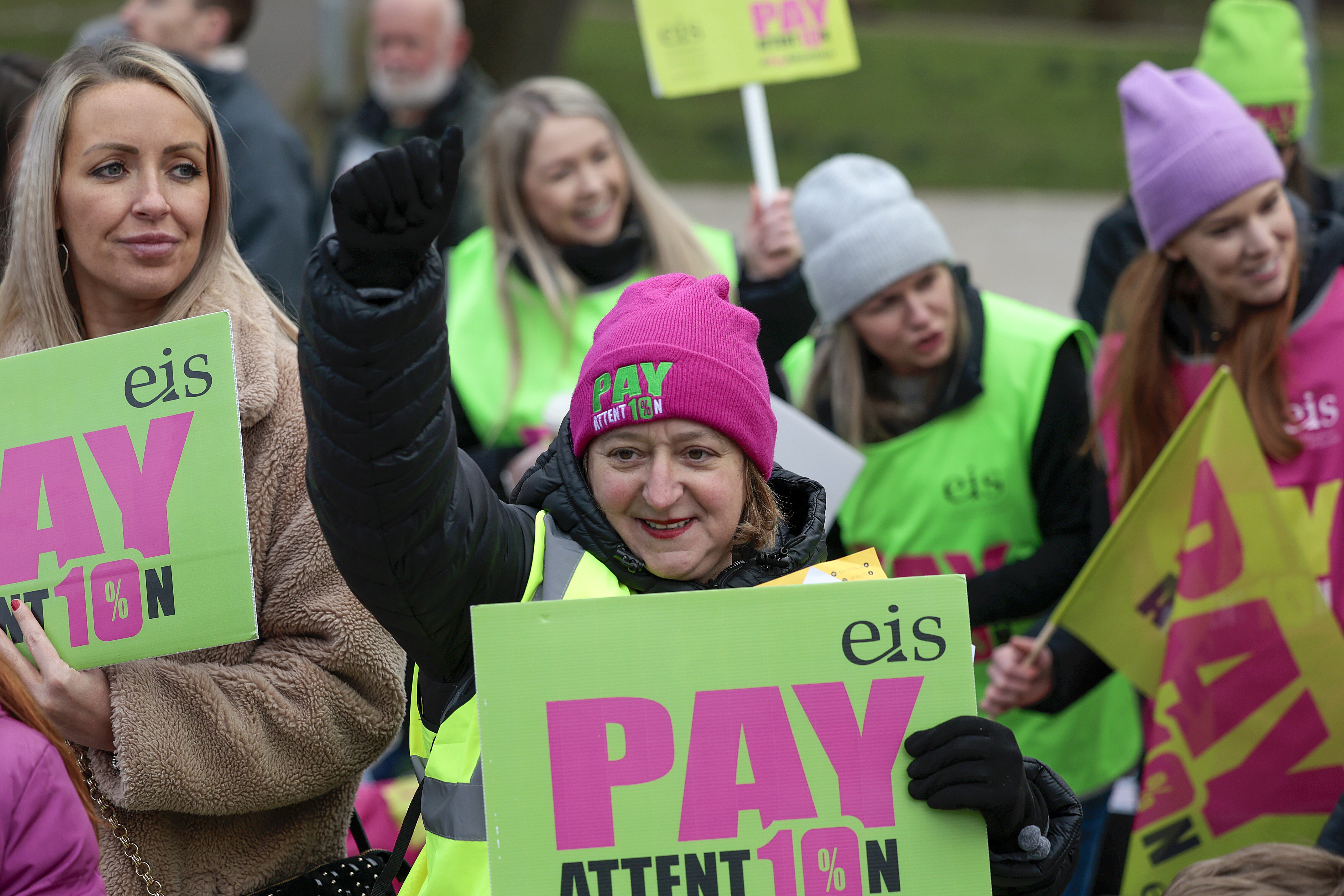
This week, tens of thousands of teachers across England and Wales will walk out over three days in the long-running dispute with the government over pay and working conditions.

The strike action kicks off today as teachers across the north of England walk out, meaning the majority of schools will either close or offer restricted access to pupils.

It will be followed by further industrial action by teachers in the Midlands and eastern regions in Wednesday and in Wales and the south of England on Thursday.

On March 15, teachers across England and Wales will strike again.

Education Secretary Gillian Keegan has branded the strike action “unforgivable”, arguing that children deserved to be in class following the shock of the coronavirus pandemic.

But Kevin Courtney, the joint general secretary of the National Education Union (NEU), which is representing striking teachers, said staff taking industrial action for a “high moral purpose” and to “get the government to invest in this generation of children”.

But over the month ahead, it is not just teachers who are walking out over pay.

HuffPost UK takes you through all the strikes that will hit the public in March.

Health and ambulance workers (most of England)

The GMB union said 10,000 of its members, including paramedics, emergency care assistants, call handlers and other staff, will walk out on March 6.

Unite members employed by different ambulance trusts will be striking on the same day in the West Midlands, the North East, the East Midlands, the North West and Wales.

Meanwhile, around 32,000 ambulance and other health staff represented by Unison will walk out across England on March 8 after the union accused the government of failing to hold “proper talks” to resolve the row.

Nurses, blood collection workers, healthcare assistants, cleaners, porters and ambulance staff will be involved in the strike.

Health workers at NHS Blood and Transplant, Great Ormond Street Hospital, the Tavistock and Portman NHS Foundation Trust, Liverpool Women’s Hospital and the Bridgewater Community Trust will be among those walking out for the first time.

They will be joined by ambulance staff at four services in England – South Central, East of England, West Midlands and East Midlands, also now able to take action following a strike vote last week.

GMB and Unite ambulance workers will strike again on March 20.

Junior doctors (England)

Junior doctors recently announced that they will strike for 72 hours from March 13 to March 15 over pay.

The British Medical Association (BMA) said that junior doctors had seen a real terms pay decline of more than 26% over the past 15 years.

Dentists who work in hospitals employed under the junior contract will also join the 72-hour walkout.

Civil Servants (England)

Approximately 100,000 civil servants across 123 government departments and agencies are expected to strike on March 15 — the day of Jeremy Hunt’s Budget.

More than 1,600 members of the Public and Commercial Services union (PCS) employed by the Driver and Vehicle Standards Agency are also set to take rolling days of industrial action from March 6 to 28.

Rail workers (England, Wales and Scotland)

RMT members will strike across the railways on March 16, 18, 30.

London Underground drivers

Commuters will endure chaos on Budget day, March 15, when London Underground drivers at Aslef go on strike.

University lecturers (UK)

Strikes by lecturers will hit 150 UK universities throughout March after the University and College Unions demanded “substantially improved offers” in the disputes over pay, working conditions and pension cuts.

In total, 70,000 UCU members will walk out on March 16, 17, 20, 21 and 22.

Share Button

What Will Be In Rishi Sunak’s Brexit Deal And Will MPs Back It?

After months of impasse over the Northern Ireland protocol, Rishi Sunak is finally preparing to present a new deal to parliament that could be the defining moment of his premiership.

The prime minister holding talks with European Commission president Ursula von der Leyen to put the final touches to the new arrangements.

While it is not yet known what is in the deal, there are a number of key issues that Sunak has sought to address — including ticking his “three boxes” of sovereignty for Northern Ireland, safeguarding its place in the Union and easing disruption for people and businesses.

However, while Sunak and the EU may now be on the same page, it is not guaranteed that everyone in the Tory Party, and the Democratic Unionist Party, will be on board.

Here HuffPost UK takes you through what could be in Sunak’s deal and what the key sticking points are.

The protocol is a trading arrangement, negotiated during Brexit talks, that allows goods to be transported across the border between Northern Ireland and Ireland without the need for customs checks.

The deal was aimed at protecting the delicate Good Friday Agreement by avoiding putting up a hard border between NI and the Republic.

However, unionist parties argue that the protocol instead places an effective border in the Irish Sea, undermining Northern Ireland’s place within the UK.

Goods moving from GB to NI currently have to undergo vigorous checks because they may end up in the Republic of Ireland, which remains in the EU’s single market. That has created friction and disruption for businesses which the UK and EU both want to solve.

The protocol is so disliked by the DUP, Northern Ireland’s largest unionist party, that it has refused to take part in the power-sharing government with Sinn Fein at Stormont unless its concerns are resolved.

What are the main the problems with the protocol?

Unionists are concerned about the disruption to trade that has resulted from checks at Northern Ireland’s ports, as well as the fact that the country is being treated differently from the rest of the UK — something they regard as unacceptable.

Alongside that, unionists do not like that Northern Ireland has to follow some EU rules, without having a say on how those rules work. They call this the “democratic deficit”.

A particular gripe for Brexiteers and unionists is the role that the European Court of Justice (ECJ) plays in solving potential disputes in Northern Ireland.

While the protocol has created an economic advantage for Northern Ireland in that it can sell both within the UK internal market and into the EU single market, because it has to follow some EU laws, it also falls under the jurisdiction of the ECJ.

Put simply, the DUP want the ECJ’s influence in Northern Ireland removed entirely.

What changes could there be?

Sunak is understood to have negotiated a new arrangement to avoid customs checks on the vast majority of goods travelling between Britain and Northern Ireland.

The new deal is expected to see the creation of “green” and “red” lanes.

Goods that are only destined for Northern Ireland will enter ports via the green lane and be subject to minimal checks. Those that are due to end up in the Republic of Ireland will go through the red lane and will have to undergo full EU checks.

While Brexiteers and unionists want Northern Ireland to be free from the ECJ, for the EU its role is a red line — if the region is to enjoy the perks of being in the single market then it must abide by the rules like other EU member states.

The compromise that could be achieved is a reduced and minimal role for the ECJ.

Deputy prime minister Dominic Raab said the reduction in trade red tape would lead to a “substantial scaling back” of the role of the ECJ — but he did refuse to rule out the court having a say on future legal cases, which could prove unpalatable to the DUP.

According to the Times, the deal could ensure that Brussels would have to notify Britain if it intends to apply any future regulations to Northern Ireland, which it could raise objections to.

The Speaker of the Northern Ireland Assembly may also be able to delay any potential regulation by having the power to put it to a vote.

The newspaper reports that if there are any disputes over the application of EU law in Northern Ireland, the region’s courts would consider it first and then decide whether to refer the issue to the ECJ.

Will MPs back the deal?

The groups that Sunak needs to woo the hardest include the Brexiteers in the European Research Group (ERG) and the DUP — who want the complete eradication of EU law from Northern Ireland.

ERG chairman Mark Francois yesterday warned that the agreement must mean an end to EU laws being imposed on Northern Ireland and that there simply being “less of a role” for the ECJ was “not good enough”.

The Conservative former minister told Sky News’ Sophy Ridge: “What we want is a situation where EU law is expunged from Northern Ireland, so it is treated on the same basis as England, Scotland and Wales.”

Asked whether he would therefore not back any deal if the ECJ has any role in it, he said: “We have left the European Union. It doesn’t have that role now in England or in Scotland or in Wales.

“So, if we’re going to treat Northern Ireland as an integral part of the United Kingdom, then we have to get rid of the EU law in Northern Ireland. We’ve been absolutely consistent on this.”

The DUP has issued seven tests Sunak must meet if it is to back the deal, including that the people of Northern Ireland are given a say on the laws that affect them, that there are no checks moving between GB and NI and vice versa, and that there must be no border in the Irish Sea.

The DUP has also made it clear that it wants to see the text of the new legal framework — something the prime minister has not yet agreed to.

While Sunak promised that parliament would be allowed to “express its view” on the deal, it is not yet clear whether that will translate into a parliamentary vote.

However, if there is one, Sunak will want to avoid the scenes we saw under Theresa May — where there was deadlock in the Commons Chamber.

Opinion is divided over how important the DUP’s approval is — former Cabinet minister Jacob Rees-Mogg said the scale of any potential revolt against Sunak would “depend on the DUP”.

“If the DUP are against it, I think there will be quite a significant number of Conservatives who are unhappy,” he told GB News.

However, while Sunak will hope to the get the ERG and DUP on board, because Labour has said it will vote with the government in favour of the deal, he may be able to do it without them.

Share Button

Rishi Sunak Sparks Anger By ‘Advising’ King Charles To Meet Ursula Von Der Leyen

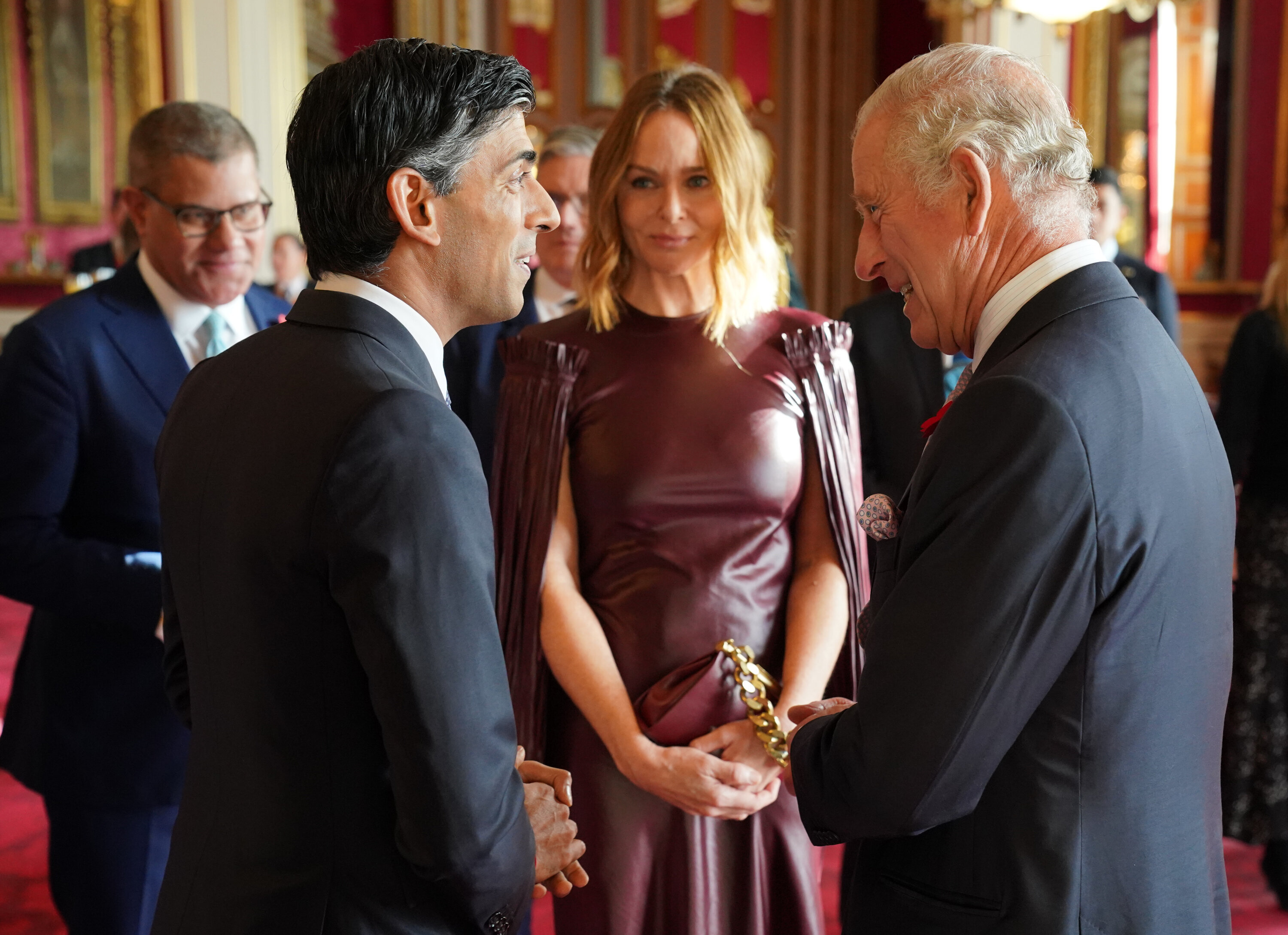
A furious political row has erupted after Rishi Sunak urged King Charles to meet the president of the European Commission in the middle of crunch Brexit talks.

Buckingham Palace confirmed this morning that the monarch will have an audience with Ursula von der Leyen in Windsor.

The EU chief will be in the Berkshire town for negotiations with the prime minister to put the finishing touches to a new deal on the Northern Ireland Protocol.

In a statement, the palace said: “The king is pleased to meet any world leader if they are visiting Britain and it is the government’s advice that he should do so.”

But the PM’s official spokesperson insisted: “Fundamentally it is a decision for the palace.”

The spokesperson also pointed out that the king had met with other world leaders who have visited the UK recently, including Ukrainian president Volodymyr Zelenskyy.

He added: “His view is that it is a matter for the palace to decide and ultimately for the kind to decide if he wants to meet individuals.”

However, former DUP leader Arlene Foster said it was “tone deaf” for for the government to advise the king to meet von der Leyen at such a politically sensitive moment.

Reports first emerged over the weekend that the king and European Commission president could meet up.

At the time, Tory MP Jacob Rees-Mogg said: “If there were a plan to bring the King in before there is domestic political agreement, it would border on constitutional impropriety.”

Shadow Northern Ireland secretary Peter Kyle said: “I do not know how a thought of involving the king could pass somebody’s mind and reach it to their mouth before they realise that this is a very very unwise policy to choose because it has constitutional implications.”

The row comes as Sunak prepares to finally unveil the agreement he has reached with the EU on trade between Britain and Northern Ireland.

He and von der Leyen will hold a press conference this afternoon, before the PM makes a statement to MPs in the House of Commons.

However, it could potentially spark a major Tory split if the DUP say they cannot support the deal.

Share Button

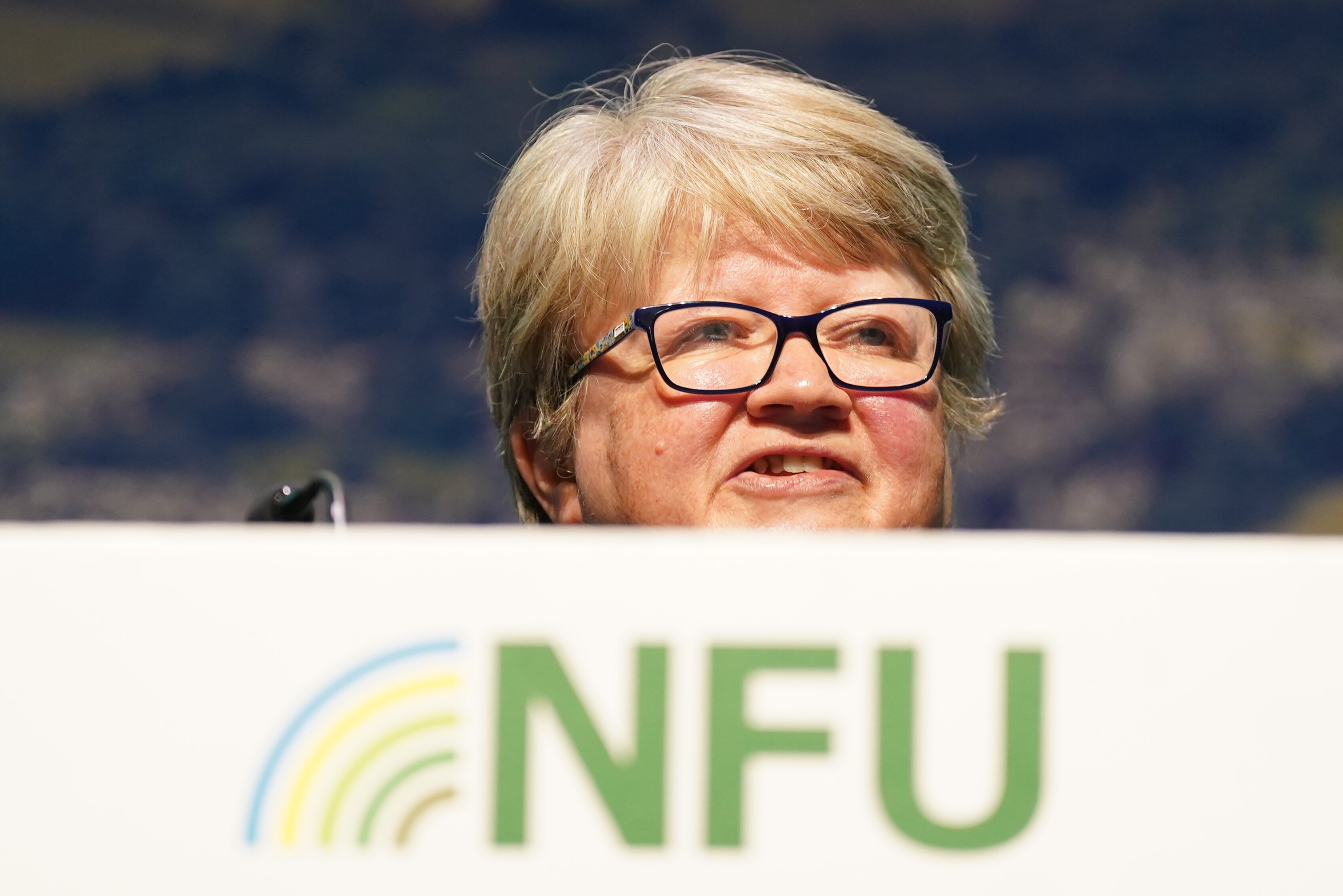
Farmers’ Union Swipes At Therese Coffey Over ‘Flippant’ Turnip Comments

David Exwood called on the government to take the food shortages “seriously” after the environment secretary raised eyebrows with her comments.

The cabinet minister told MPs on Thursday it is important to “cherish the specialisms” that we have in this country.

“A lot of people would be eating turnips right now rather than thinking necessarily about aspects of lettuce and tomatoes and similar,” she added.

Exwood said: “We can’t rely on other countries to keep feeding us. So we need a plan that involves producing at home here as well as imports.

“Otherwise the situation we see will carry on. We had a billion less eggs produced in this country last year compared to 2019.

“Apple orchards are being grubbed up as we speak. This is a serious situation.

“We need the government to take it seriously rather than make flippant comments about turnips.”

Some supermarkets introduced customer limits on certain fresh produce, with photographs emerging of empty shelves.

Share Button