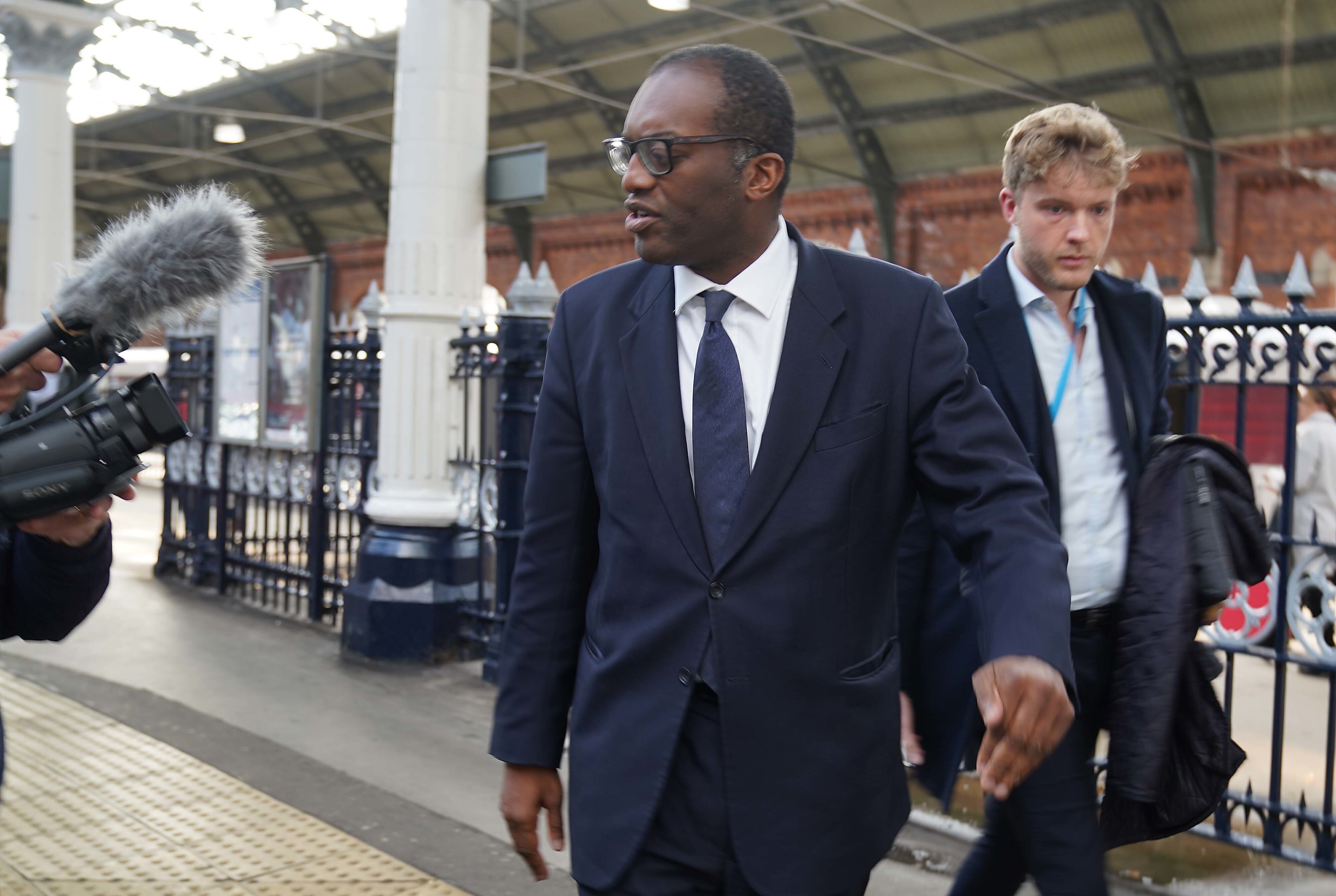
A photographer who was ejected from the Conservative Party conference despite having a press pass has criticised security for “manhandling” him.
Staff photojournalist at European Pressphoto Agency (EPA), Tolga Akmen, said he had taken photos of Liz Truss crossing the bridge to get to the International Convention Centre in Birmingham, before moving towards the hall where the Prime Minister was set to give her speech.
Advertisement
But video on social media shows Akmen, 31, then being forcibly moved by two men while he states “I’m not being aggressive” and “I’m a member of the media”.
The photographer told the PA news agency afterwards: “There was no need for manhandling. We could have talked about it. I didn’t try to get in where I wasn’t allowed to.
“I don’t see anyone else being told off and I do not know why they picked on me.
“I happen to be someone who argued back, and they don’t (take) kindly to that. We should have access and are accredited media. I showed them my press card.
Advertisement
“I have never had anything like this happen in my life. Weird behaviour, really strange.”
Akmen said he showed his press pass to security and tried to enter via the closest entrance, but was refused access and was given no alternative points from which to enter.
Akmen said he and colleagues then walked towards another entrance before he heard a security guard radioing his description, saying he had been acting “aggressively and needed to be stopped”.
That same guard, he claims, followed him then “singled him out” from the other journalists and “started pushing and dragging” him away with other security.
The award-winning photographer said he had been briefed by Conservative Party press officers regarding where media were allowed access during the conference in Birmingham.
A video showing him being taken away was posted on social media by podcast producer Dino Sofos.
In it, a man tells Akmen he was being “aggressive”.
Akmen responds: “I’m a member of the media. Can you stop this please? What are you doing? I didn’t do anything … I promise you, I didn’t do anything.”
Advertisement
A man can be heard saying: “I’d go with him now, otherwise the police will get involved, but go now and we’ll try and sort it out.”
Akmen said after the footage was taken he was “thrown out” in the rain without his equipment and jacket, which was later recovered by security.
He said EPA had raised the matter with the Conservative Party.
A Conservative Party spokesman said: “We are aware there was an incident earlier today where a photographer was removed by venue security staff.
“We believe there may have been a misunderstanding and have been in contact with the photographer.”
Akmen confirmed Conservative Campaign Headquarters had been in touch to apologise, adding that he was waiting for a formal apology to be sent.
PA has contacted the International Convention Centre for comment.
In her keynote conference speech, the prime minister railed against those she accused of trying to hold back her pro-growth agenda, including Labour, “militant” unions, “Brexit deniers”, Extinction Rebellion and “some of the people we had in the hall earlier” – a reference to the protesters who disrupted her address.
It’s clearly an attack line her senior team are rallying around, as Cabinet minister Nadhim Zahawi was among those to tweet out the slogan.
It’s worth printing the diatribe in full to get a better idea of who she thinks they are and what they do:
“I will not allow the anti-growth coalition to hold us back.
“Labour, the Lib Dems, the SNP, the militant unions, the vested interests dressed up as think tanks, the talking heads, the Brexit deniers, Extinction Rebellion and some of the people we had in the hall earlier.
“The fact is they prefer protesting to doing. They prefer talking on Twitter to taking tough decisions.
“They taxi from north London townhouses to the BBC studio to dismiss anyone challenging the status quo.
“From broadcast to podcast, they peddle the same old answers.
“It’s always more taxes, more regulation and more meddling.
“Wrong, wrong, wrong.”
It seems to be a wide-ranging term that could anyone you would file under “the establishment” or anything vaguely “woke”.
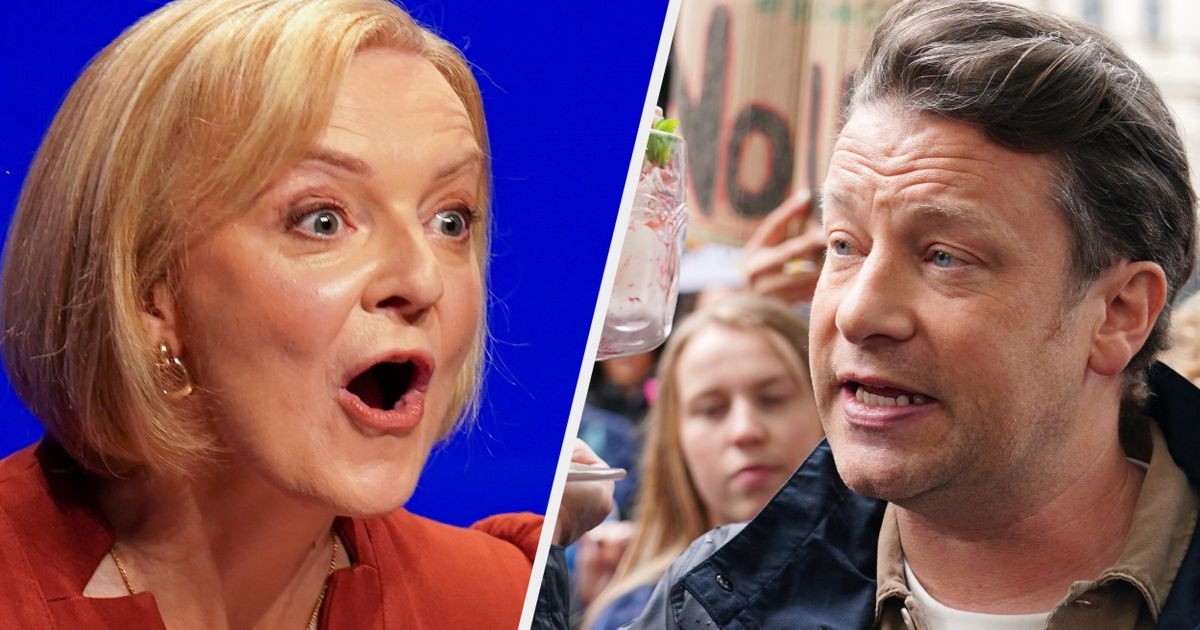
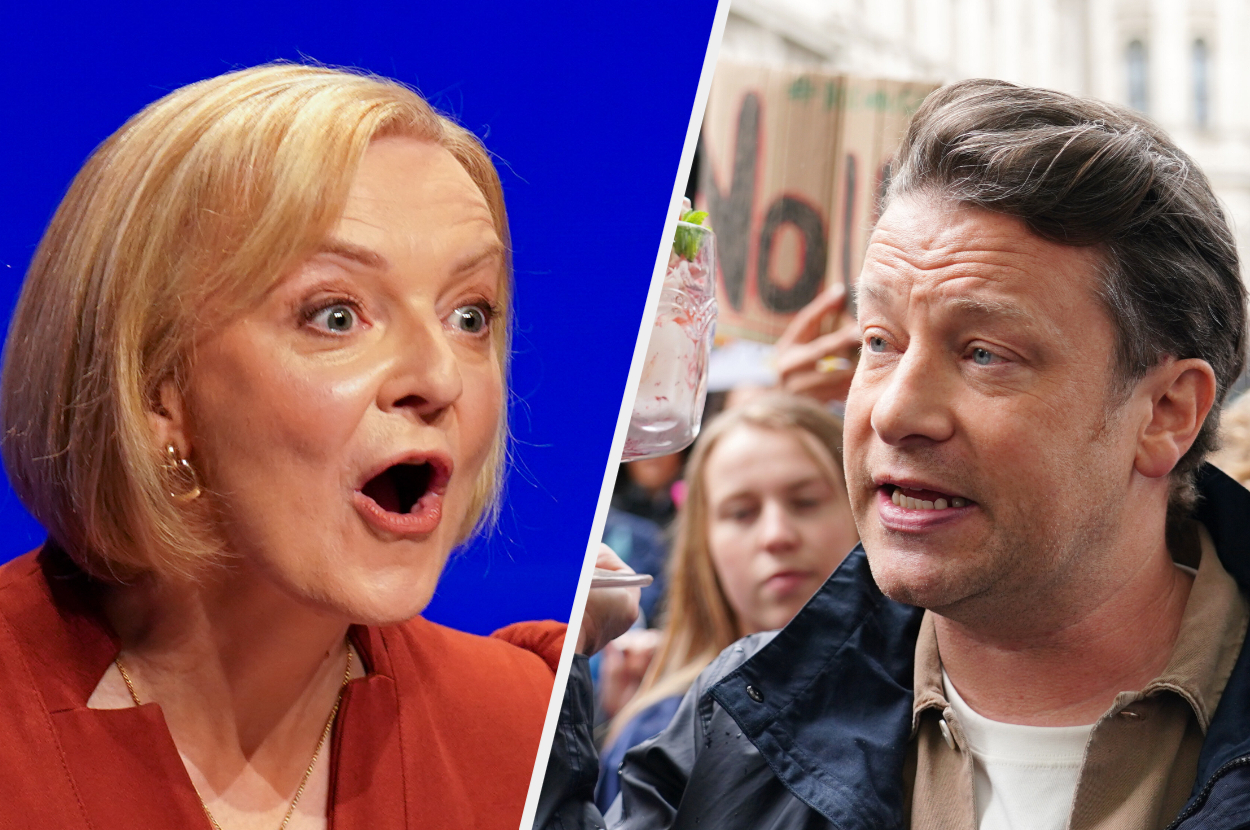
Given the elasticity of the phrase, questions were asked about whether healthy food campaigner Jamie Oliver was also part of the rabble putting the brakes on Truss and her policies.
In her speech, the PM signalled the scrapping of the planned ban on junk food multi-buy deals as she declared she is “not interested in how many two-for-one offers you buy at the supermarket”.
Downing Street later did not rule out that the anti-growth coalition included the celebrity chef, who supports the ban.
The prime minister’s press secretary suggested there could be a scrapping of the planned ban of buy one, get one free offers, saying: “You’ll have to wait for announcements on that.”
When asked if Oliver is part of the anti-growth coalition, he responded: “I’m not going to name individuals.”
The speech has prompted people on Twitter to suggest a whole range of members of the coalition, including bats, David Attenborough and Conservative councils.
He first hit out at the “gutter press” for its negative portrayal of the event, which was marred by a u-turn on scrapping the 45p top rate of tax and civil war within the Tory party.
He then praised Truss for a “pretty good” address, and how she “gets better and better every time I see her”.
Anderson added: “I think we’ve made the right decision in the end to vote for her.”
Asked whether Truss did enough to win over any floating voters in his constituency, Anderson said he “would hope so” but acknowledged that “the red wall is a red wall for a reason”.
He went on: “We had Brexit, we had Boris, we had Corbyn three years ago and now we’ve got Theresa May it’s a different ball game altogether.”
Ashfield MP Lee Anderson tells the ‘gutter press’: “We had Brexit, we had Boris, we had Corbyn. Now we’ve got Theresa May it’s a different ball game altogether…” pic.twitter.com/69fv28UHIh
When interviewer Harry Horton of ITV remind him that the prime minister was in fact now Truss, Anderson conceded: “My mistake, it’s been a long few days.”
Earlier in the week, Anderson insisted the government’s “change of direction” on scrapping the 45p tax rate wasn’t a “u-turn”.
A Conservative MP has hit out at the “comedic figures masquerading as government ministers” as Tory anger over Kwasi Kwarteng’s mini-budget continued despite an astonishing U-turn on income tax cuts for the highest earners.
Johnny Mercer, who was last month removed as veterans affairs minister by new prime minister Liz Truss, said “they can do whatever they like with the whip” as he warned he would be speaking out in the Commons about the controversial package.
Advertisement
Tory MPs who vote against the prime minister’s tax measures have been warned they will be kicked out of the parliamentary party – known as losing the whip.
In a Facebook post, the Plymouth MP wrote: “You know I will not accept budgets like the ones we saw last week. It is hard watching these rather comedic figures masquerading as government ministers sprawling around in the media.
“Last week my friend had to close his coffee shop. Another had his mortgage pulled. It is deeply unfunny for normal people, and I will waste no time in letting them know in the Commons at the first opportunity.
“I will not support anything that doesn’t help the brilliant people of Plymouth through intensely difficult times – they can do whatever they like with the whip.”
Advertisement
When Mercer was fired, his wife, Felicity Cornelius-Mercer, took to Twitter to call Truss an “imbecile” as she said the Cabinet system “stinks” and “treats people appallingly”.
The MP’s comments came on the same day as Kwarteng abandoned plans to scrap the 45% rate for earnings over £150,000 to stave off a Tory revolt.
Former Cabinet minister Michael Gove suggested he could now support the package and fellow potential rebel Grant Shapps welcoming the U-turn.
But HuffPost UK has reported that many angry Conservative MPs now want the government to stick by Boris Johnson’s promise to raise benefits by the rate of inflation — something Truss and Kwarteng have so far failed to do as they draw up plans to slash public spending.
Advertisement
One MP said: “Thank the lord for the 45p U-turn, but that’s after billions lost from shares, £65 billion spent by the Bank of England to prop up pension funds, asking MPs to defend the indefensible and threatening MPs with losing the party whip if they vote against.
“What they have to do now is maintain the real term increases in benefits and spending for essential public services. If not, that’s when people will speak out again.”
At the Tory party conference in Birmingham, the chancellor joked about his humiliating 45p tax rate U-turn.
“What a day,” he told the Tory conference as he admitted there had been “a little turbulence” since his mini-budget, a reference to the economic chaos caused by his unfunded tax cuts.
Unease is mounting among Tory backbenchers as the Labour Party has mounted a 30-point poll lead in at least two surveys in the last week, enough for a landslide election victory.
Advertisement
Johnson loyalist Nadine Dorries has called for an early election as she accused Truss of trashing the former PM’s legacy.
The former culture secretary said there is “widespread dismay at the fact that three years of work has effectively been put on hold”.
The home secretary has revealed she plans to “look at” pre-charge anonymity for suspects.
Suella Braverman told a meeting at the Tory conference in Birmingham that the “media circus” can be “devastating” for those wrongly accused.
She made the comments in response to a question about innocent high profile people who had been named in the media pre-charge such as Cliff Richard.
Advertisement
Braverman told a panel held by the Young Conservatives: “On the issue of anonymity pre-charge, I am interested in looking at that.
“I think that we’ve had some high profile instances where the media circus around a suspect – who has not been charged – can be and has been devastating.
“The decision to arrest is a very important decision. The decision to bring charges has to be reached only after certain legal tests have been satisfied.
“Looking at the evidence and looking at the public interest – those are really important decisions in the criminal justice process.
Advertisement
“I think coverage of people prior to charge can be very, very damaging, particularly if the charges are not pursued or they’re dropped later on.
“I think we do have to look at this issue because I think that the police need to be allowed to carry out their investigations.
“The CPS need to be allowed to carry out their decision making without pressure from the media, but individuals and suspects do have a right to a fair trial and trial by media will only undermine our justice system.”
Sir Cliff has joined forces with DJ Paul Gambaccini as part of a campaign to “redress the balance” in the legal system by seeing those accused of sexual offences remain anonymous unless they are charged.
Both men were falsely accused of historical sex offences and joined forces with pressure group Falsely Accused Individuals for Reform (Fair) to campaign for changes to legislation.
Advertisement
Critics of granting anonymity pre-charge argue that identifying suspects early on can encourage more alleged victims to come forward and potentially help a conviction.
Kwasi Kwarteng joked about his humiliating 45p tax rate U-turn as he told the Tory conference: “What a day.”
The chancellor tried to lighten the gloomy mood among the Conservative rank-and-file just hours after being forced into the embarrassing climbdown by rebel MPs.
Advertisement
Kwarteng admitted there had been “a little turbulence” since his mini-budget, a reference to the economic chaos caused by his unfunded tax cuts.
But he failed to mention the soaring mortgage costs which have hammered home owners, or the high rate of inflation causing the cost of living crisis.
The chancellor endured a miserable broadcast media round this morning after he was forced to abandon his plans to cut the taxes of the 660,000 people in the UK who earn more than £150,000 a year.
Kicking off his 20-minute speech, Kwarteng said: “What a day. It has been tough, but we need to focus on the job in hand.
Advertisement
“We need to move forward. No more distractions. We have a plan, and we need to get on and deliver it.”
Referring to his mini-budget, he added: “I know the plan put forward only ten days ago has caused a little turbulence.
“I get it. We are listening and have listened and now want to focus on delivering the major parts of our growth package.”
Incredibly, Kwarteng also devoted a section of his speech to attacking Labour’s economic record the last time they were in power.
“When this party came into government – we were met with the full force of Labour’s economic incompetence,” the chancellor said. ”‘No money left’, taxes raised, record unemployment.
Advertisement
“We reversed that story of national decline.”
Despite announcing £45 billion of unfunded tax cuts, Kwarteng insisted the Tories were the party of “fiscal discipline”.
But with Tory MPs threatening to rebel once again over plans to cut benefits in real terms and slash public spending, Kwarteng stopped short of making any new announcements on how he plans to balance the books.
Shadow chancellor Rachel Reeves said: “This speech showed us a chancellor and a Tory government completely out of touch, with no understanding on its own appalling record on growth.
“What the chancellor called a little financial disturbance is a huge economic body-blow to working people that will mean higher prices and soaring mortgages. That’s the Tory economic premium.
“This is an economic crisis made in Downing Street, paid for by working people.”
Vladimir Putin finally admitted there have been “mistakes” over the partial mobilisation of Russian reserves, according to the Ministry of Defence.
His admission also came shortly before Russia lost another Ukrainian territory over the weekend, Lyman on Saturday. It was twice as humiliating for the Kremlin, as Moscow had actually just attempted to consolidate its power over land in the east by illegally annexing it on Friday and claiming it as a Russian soil.
Advertisement
Here’s what you need to know about the latest development in the ongoing war.
Why is Putin’s admission important?
The Ministry of Defence, which revealed the Russian president made the confession while addressing his National Security Council last Thursday, explained that this is a rare acknowledgment the war is not going well for Russia.
According to the UK officials, Putin said: “A lot of questions are being raised during this mobilisation campaign, and we must promptly correct our mistakes and not repeat them.”
The MoD explained: “Putin’s unusually rapid acknowledgement of problems highlights the dysfunction of the mobilisation over its first week.
Advertisement
“Local officials are likely unclear on the exact scope and legal rationale of the campaign.
“They have almost certainly drafted some personnel who are outside the definitions claimed by Putin and the Ministry of Defence.
“As drafted reservists continue to assembly at tented transit camps, Russian officials are likely struggling to provide training and in finding officers to lead new units.”
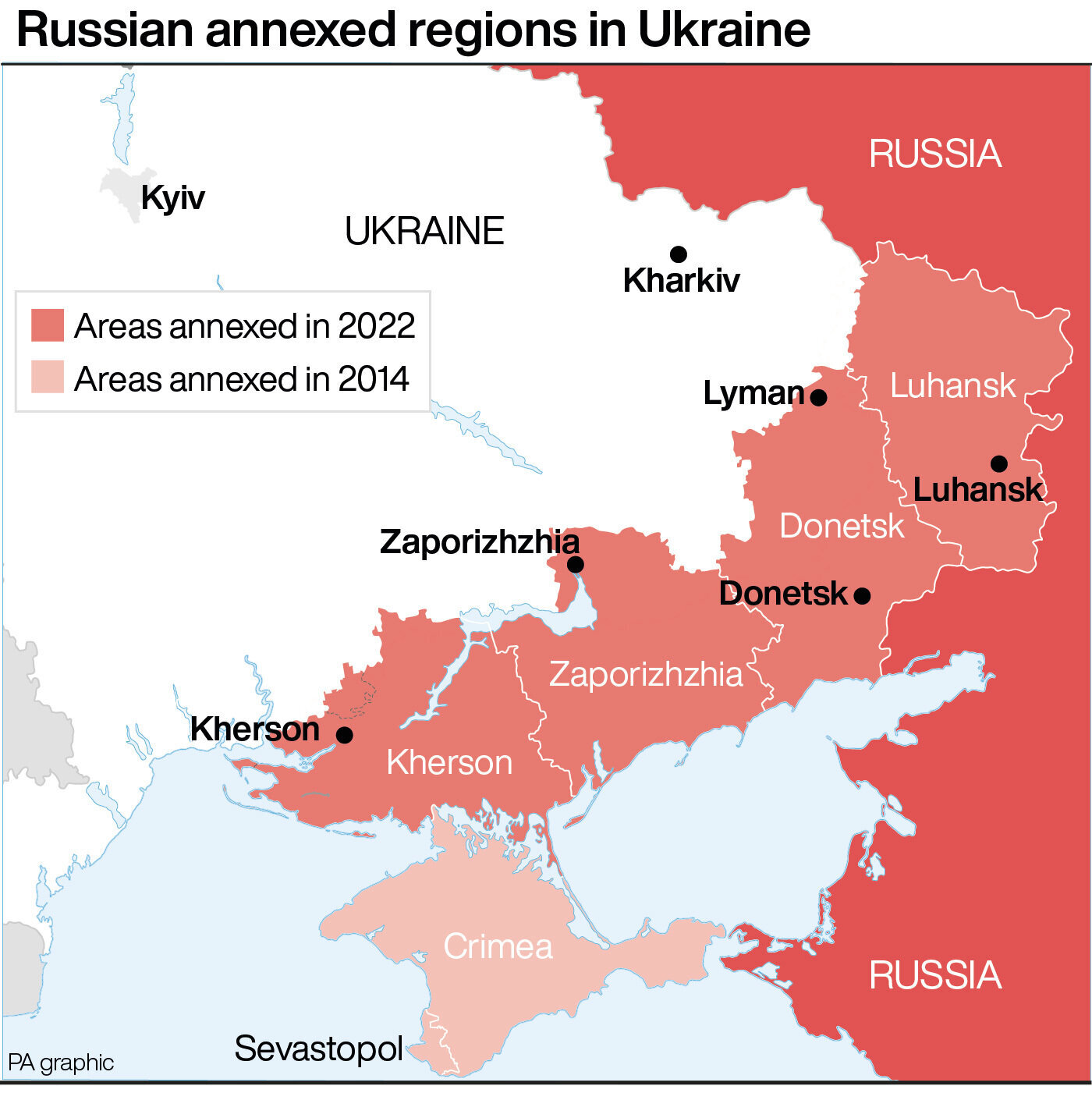
What is particularly surprising is this admission happened the day before Putin officially declared four regions of Ukraine part of Russia, after holding sham referendums.
Putin also confidently threatened to come down hard on Ukraine if it tried to reclaim any of the territory he had claimed as new Russian land only last week.
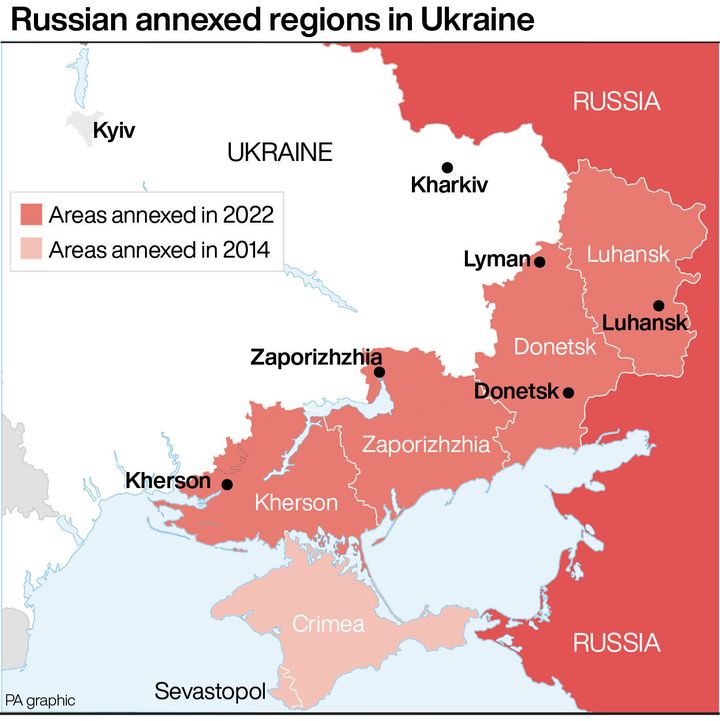
Russian annexed regions in Ukraine.
via PA Graphics/Press Association Images
Advertisement
What’s the latest from the frontline?
While the MoD only revealed Putin’s claims on Monday, he had actually said them last week – before the Russian Defence Ministry admitted it had withdrawn its troops from the strategic eastern town of Lyman, in the Donetsk region.
To recap, the Donetsk region is one of the four areas Russia annexed on Friday. In fact, Kyiv reclaimed the town just a day after Moscow “annexed” it.
Russia’s Defence Ministry tried to explain its retreat on Saturday, claiming: “In connection with the creation of a threat of encirclement, allied troops were withdrawn from the settlement of [Lyman] to more advantageous lines.”
“The enemy, having a significant superiority in forces and means, introduced reserves and continued the offensive in this direction,” it added.
It also alleged that it had inflicted heavy losses on the Ukrainian frontline but there is no evidence for this yet.
Advertisement
Lyman was a strategic and logistical hub for Russia, and without it, Moscow’s supply lines will take yet another hit.
As US Defence secretary Lloyd Austin told Reuters: “And without those, [supply] routes it will be more difficult. So it presents a sort of dilemma for the Russians going forward.
“And we think the Ukrainians have done great work to get there and to begin to occupy the city.”
What does this mean for Ukraine?
Reclaiming Lyman is not just a boost for Ukrainian morale, but a strategic bonus.
Now they can move into the Luhansk region – which would cause particularly embarrassment to the Kremlin considering it announced this region fully occupied in early July, and also annexed it last Friday.
A spokesperson for Ukraine’s eastern forces, Serhii Cherevatyi, told Reuters: “Lyman is important because it is the next step towards the liberation of the Ukrainian Donbas. It is an opportunity to go further to Kreminna and Sievierodonetsk and it is psychologically very important.”
Ukrainian president Volodymyr Zelenskyy also vowed to take more areas after pushing Russia out of Lyman. On Saturday, he said: “During this week, there were more Ukrainian flags in Donbas. It will be even more in a week.”
Advertisement
The Ukrainian president continued: “Ukraine will return its own. Both in the east and in the south. And what they tried to annex now, and Crimea, which has been called annexed since 2014.
“Our flag will be everywhere.”
The chances are high. The war in Ukraine is like a Jenga game — the Ukrainian military is gradually setting conditions, slowly and painfully, and then collapse happens momentarily. https://t.co/ClkQTwirdW
Amid continued reports of low morale among Russian troops, and a lack of training for new recruits, videos of Ukrainian soldiers dancing even before Lyman was successfully reclaimed have been widely shared online.
What does Russia think?
According to journalists who watch Russian state TV, commentators are struggling to spin Russia’s losses in Lyman.
Advertisement
Julia Davis said the former deputy commander of Russia’s southern military district couldn’t explain the defeat, while the BBC’s Francis Scarr noticed how some TV channels just didn’t mention the battle at all.
Scarr claimed only Rossiya 1 was close to the truth when the host admitted there was a “difficult” situation emerging in the Donbas, but even the anchor still insisted that Russia was still “beating off the desperate onslaught of Ukrainian army troops”.
Meanwhile, Russians are said to be trying to flee the country in droves to avoid being called up to fight.
More than 2,000 anti-war protesters have also been arrested since Putin’s partial mobilisation announcement, according to the human rights group OVD-Info.
Stunned reactions keep coming in with respect to Ukraine reclaiming Lyman. Andrey Gurulyov, former deputy commander of Russia’s southern military district, said he couldn’t explain the defeat. He blamed in on a system of lies, “top to bottom” and was suddenly disconnected. pic.twitter.com/O4aoRqVx96
Kwasi Kwarteng will double down on his plan for unfunded tax cuts despite the economic chaos and a mounting Tory rebellion.
The chancellor will tell the Conservative conference in Birmingham the government must “stay the course”.
Advertisement
And he will say: “I am confident our plan is the right one.”
Kwarteng’s comments risk further inflaming the Tory civil war, with Michael Gove among the big-hitters urging the government to change course.
The former cabinet minister said he was “profoundly” concerned by the mini-budget, which saw the chancellor unveil plans to slash taxes for the highest earners and end the cap on bankers’ bonuses.
Gove also suggested that he would join other Tory rebels in voting against the plans when they come before parliament – despite party chairman Jake Berry warning that any MP who does so will lose the whip.
In a sign of the mounting anger, 13 Tory MPs have now gone public to voice their opposition to the decision to axe the 45p tax rate paid by those earning more than £150,000.
Advertisement
They include former chief whip Julian Smith, who said: “We cannot clap for carers one month and cut tax for millionaires months later.”
The first job of an MP is to act in the interest of their constituents & in the national interest. We cannot clap for carers one month & cut tax for millionaires months later. https://t.co/iKtnOxm1jB
But in his keynote address to the party faithful in Birmingham today, Kwarteng will insist he had no choice but to take radical action to grow the UK economy, and will not back down.
He will say: “We must face up to the facts that for too long our economy has not grown enough.
“The path ahead of us was one of slow, managed decline, and I refuse to accept that it is somehow Britain’s destiny to fall into middle income status, or that the tax burden reaching a 70-year-high is somehow inevitable – it isn’t, and shouldn’t be.
Advertisement
“We needed a new approach, focused on raising economic growth.That is the only real way to deliver higher wages, more jobs, and crucially, revenue to fund our precious public servicee and it is the only way to achieve long-term fiscal sustainability.
“We must stay the course. I am confident our plan is the right one.”
The chancellor will add: “With energy bills skyrocketing.A 70 year high tax burden.Slowing long-term growth rates. Painfully slow infrastructure delivery.
“Should we really have just accepted that fate? Think about the cost to livelihoods and the impact on our communities.
“What Britain needs is economic growth.And a government wholly committed to economic growth.
“That is why we will forge a new economic deal for Britain backed by an iron-clad commitment to fiscal discipline.”
The chancellor’s speech will be closely watched by the money markets for details on precisely how the government plans to balance the books.
A Conservative MP has said that children are too “coddled” nowadays, during a panel on free speech.
Miriam Cates said that young people are sheltered from emotional distress which means they find it hard to hear opposing or offensive ideas.
The MP for Penistone and Stocksbridge said that her young children needed to have a risk as assessment before visiting the park with school.
Advertisement
Free speech is a hot topic at Tory party conference in Birmingham and at a separate panel a professor claimed the country was facing a cultural “Cold War”.
Cates told a debate hosted by the Young Conservatives that young people did not have a “good reputation” in terms of welcoming free speech.
She added: “I want to say it’s not your fault and I blame the parents.
“I think one of the things that your generation has been subjected to is this kind of coddling.
“I’m getting most of my ideas from a fantastic book called The Coddling of the American Mind, which I very much recommend to you. But the premise is that from a very young age, young people have been coddled physically.
“My grandfather, who’s 90 next week, when he was four he and his twin brother would be kicked out of the house every day from breakfast time, told to have some fun and come home for tea.
Advertisement
“So that was in the 1930s. When I grew up in the 1980s, we didn’t have anywhere near that amount of freedom.
“But, for example, I went on a school trip to France when I was 11, we got kicked out on the coach at 8 o’clock in the morning and none of us spoke a word of French and we were told to come back to 6 o’clock and our teachers went down the pub. That was just a normal school trip.
“Now my children – who are in primary school – have to have a risk assessment and I have to sign permission for them to go to the local park.
“That involves crossing one road on a zebra crossing with the teacher.
“So you’ve been coddled physically and not exposed to physical risk. And that has hampered your ability to face challenge, to make decisions and to face defeat or failure and to rise back from that.”
Cates said there had been a “mission creep” from physical safety into emotional safety. She said we protected children from emotional distress, which meant young people find it difficult to hear opposing or offensive ideas, adding: “So I think the future of free speech is not necessarily strong.”
Advertisement
In another debate on the first day of Tory conference, panellists were asked: “Is the UK a safe space for free speech?”
Eric Kaufmann, professor of politics at Birkbeck College, claimed that the country was in a cultural “Cold War”.
He told a panel, organised by the Institute of Economic Affairs and TaxPayers’ Alliance, that “wokeness” and “cultural socialism” was becoming a dominant theme among young people, especially younger women.
“We are in a fight for the future of Western civilisation, for British civilisation,” he claimed.
Marshall told the panel: “It seems to me in the arts industry, where I am, there is a serious problem which is completely paradoxical because it’s an industry of people who rely on being able to express themselves and they are censoring themselves and it’s almost every week.”
The language of economics and the financial system can be confusing for those not steeped in the world of pensions, gilts and bear markets.
But there’s been a lot of around, as the Conservative Party’s mini-budget spooked the markets, causing a collapse in the pound and a surge in the UK’s borrowing costs. Here’s an explanation to some of the phrases and ideas being bandied around.
Advertisement
Why is ‘supply-side economics’ being mentioned?
The economic theory is highly fashionable having been fully embraced by the UK’s new prime minister, Liz Truss and her chancellor, Kwasi Kwarteng, in their controversial “fiscal event”.
The theory holds that the supply of goods and services within the economy is the main driver of growth. Put bluntly, the idea is to give wealthy individuals or large corporations tax cuts, which in turn creates jobs and later increases the number of people paying taxes and boosts the amount of money collected by the Treasury. The prime minister’s approach has been dubbed “Trussonomics”, and supporters talk a lot about baking a bigger economic “pie” that everyone can share.
The theory was particularly popular in right-wing circles in the 1980s. In common with US president Ronald Reagan, UK prime minister Margaret Thatcher experimented in this kind of low-tax economics, the results of which have been disputed ever since.
<img class="img-sized__img landscape" loading="lazy" alt="Chancellor Kwasi Kwarteng arrives at Darlington station for a visit to see local business.” width=”720″ height=”482″ src=”https://www.wellnessmaster.com/wp-content/uploads/2022/09/a-guide-to-the-confusing-language-describing-the-uks-financial-markets-meltdown-3.jpg”>
Chancellor Kwasi Kwarteng arrives at Darlington station for a visit to see local business.
Owen Humphreys via PA Wire/PA Images
Advertisement
The phrase “trickle-down” economics – the benefits generated at the top trickling down to everyone – has become synonymous with the idea.
When talking about supply-side economics, commentators will invariably refer to the Laffer Curve – a graph showing the relationship between tax rates and the amount of tax revenue collected by governments. It’s named after Arthur Laffer, a member of Reagan’s economic policy advisory board, who also advised Thatcher, earning him the nickname the “father” of supply-side economics.
When do we know we’re in a recession?
A technical recession is defined by two successive quarters of falling economic output – measured by gross domestic product (GDP), which attempts to summarise all the activity of companies, governments and individuals in an economy in a single figure.
Some people argue the term “recession” is an unreliable indicator because people could be suffering all the effects of an economic downturn, such as long-term unemployment, but the data might not officially say as much.
Kwarteng has admitted the UK is “technically” in a recession, even if the official figures are yet to confirm it.
Advertisement
In 2020, the Office for National Statistics (ONS) officially declared the UK in recession – the steepest on record – after the economy plunged by 19.6% between April and June due to the coronavirus lockdown.
It followed a 2.2% contraction in the previous three months – marking the first recession since the 2008 global financial crisis, when the UK fell into a year-long recession.
What is inflation?
At its heart, inflation is the measure of how quickly the cost of goods and services is growing. It is an average across many categories, so if food prices rise, that could still be offset by drops in, say, the price of petrol.
In the UK, the ONS is tasked with estimating the inflation rate.
It has a basket of goods and services that it tracks. It might be helpful to think of this as a massive shopping basket with what the ONS thinks that people in the UK buy. It includes around 730 items, anything from dating agency fees to condoms, wild bird seed to petrol, and crumpets to pet food.
What is in the basket changes every year – with some additions and some removals – because what people buy changes. For 2022 antibacterial surface wipes were added, along with meat-free sausages and other items.
Advertisement
What’s the Bank of England’s role?
Owned by but independent from the UK government, the Bank of England is tasked with keeping inflation under control, targeting 2% a year.
But in recent months inflation has started to run away. It hit 9.9% in August and, despite government action to freeze energy bills, is still expected to strike a new 40-year-high “just below 11%”, the central bank has said.
The Bank of England also has a wider remit to ensure the health of the economy. Many will remember the economy-boosting stimulus in the form of quantitative easing – often referred to as printing money – being deployed during the 2008 financial crisis.
How do interest rates fit in?
An interest rate is a measure that tells you how high the cost of borrowing money is, or how high the rewards are for saving.
Advertisement
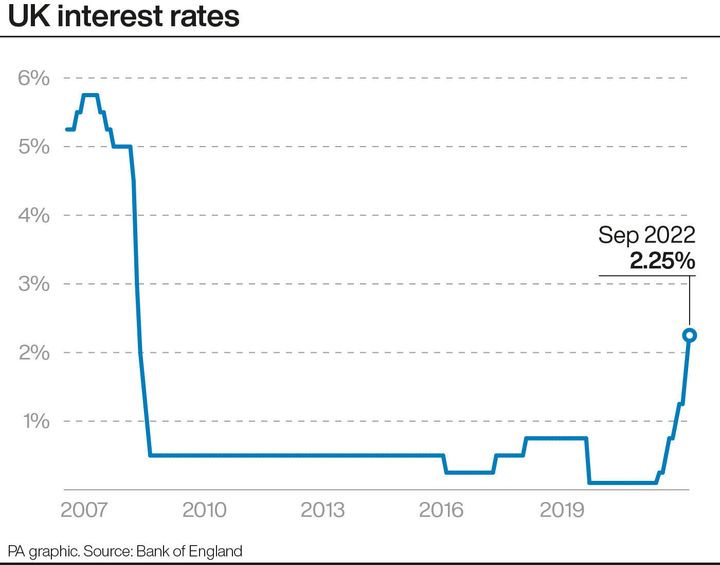
The Bank of England’s “base rate” – the interest rate at which banks borrow from the central bank, which has billions of pounds in assets at its disposal – has a knock-on effect on the interest rates offered on the high-street for mortgages and savings.
Raising and lowering interest rates is the blunt instrument at the Bank’s disposal to control the economy. Hiking the base rate increases the cost of borrowing, making both credit and investment more expensive. The idea is to put the brakes on the economy and curb soaring inflation. Bringing rates down is an attempt to have the opposite effect – stimulate growth by making borrowing cheaper, and in turn, encourage investment.
UK interest rates. See story ECONOMY Rates. Infographic PA Graphics. An editable version of this graphic is available if required. Please contact graphics@pamediagroup.com.
PA Graphics via PA Graphics/Press Association Images
Before the mini-budget, the Bank raised the base rate by 0.5 percentage points – the seventh hike since December – in a bid to keep inflation under control. Now some analysts are predicting the base rate, currently standing at 2.25%, will have to rise to as high as 6% next year.
What about bonds and yields?
The Bank of England has also intervened to try to bring surging yields in government bonds – known as gilts – under control as they spiralled higher, sending UK public borrowing costs soaring.
Advertisement
It said it would buy bonds “on whatever scale is necessary”. The Bank stepped in to calm markets after some types of pension funds were at risk of collapse.
Bonds are loans that investors make to a bond issuer and can be issued by companies or governments to raise money.
The yield on a bond is the amount of money an investor receives for owning the debt and is represented as a percentage of its price. When a bond price falls, its yield rises.
Yields fall when investors are less willing to own the debt, meaning they will pay a lower price for the bonds.
Alarm bells were ringing when yields on 10-year UK government bonds rose above 4%, the highest since the 2008 financial crisis, and more than triple the 1.3% rate at the start of the year.
Advertisement
The higher yield reflected fears investors had in the state of the UK economy, and again impacts how much interest banks charge for various types of loans, most notably mortgages.