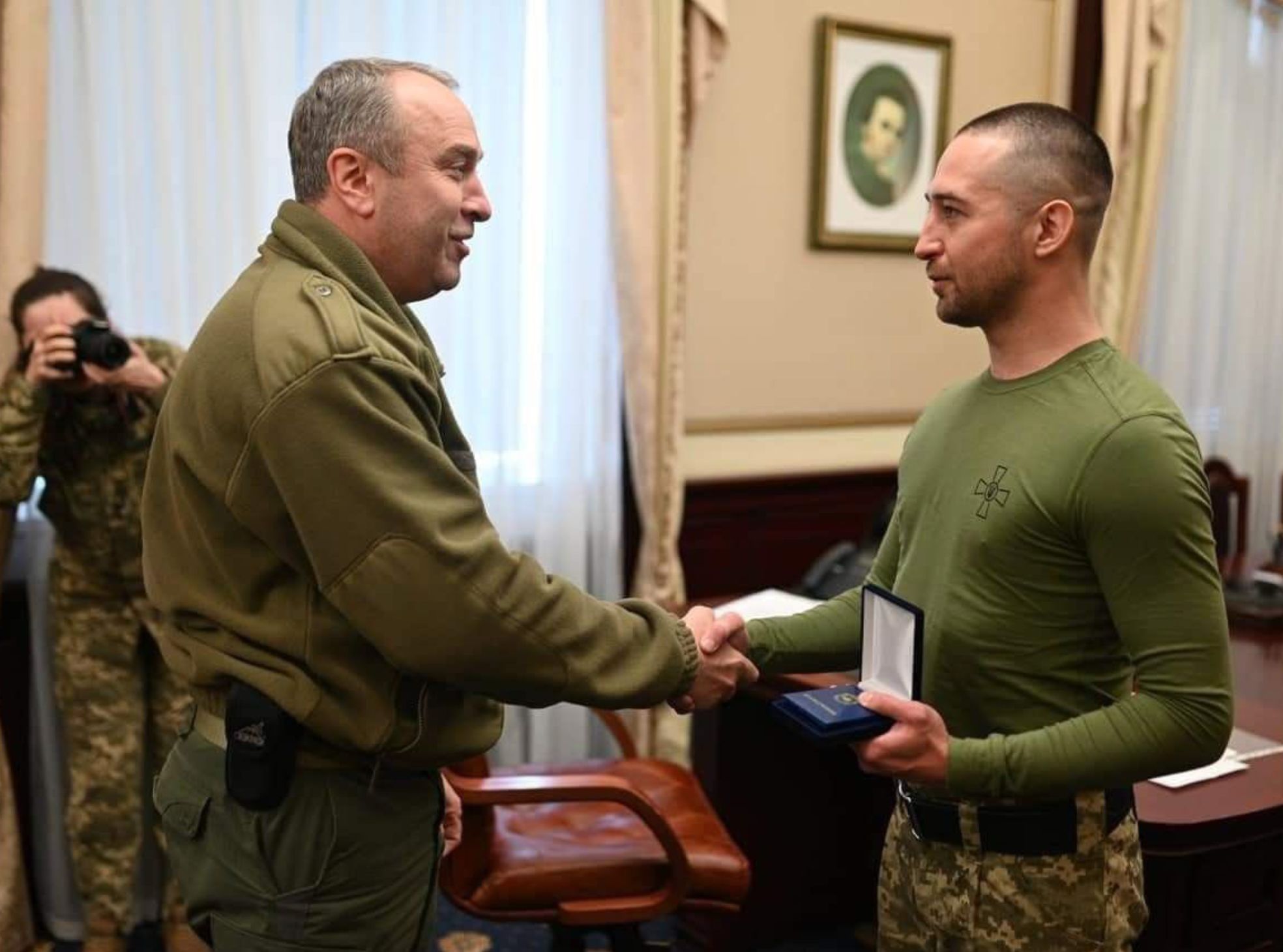
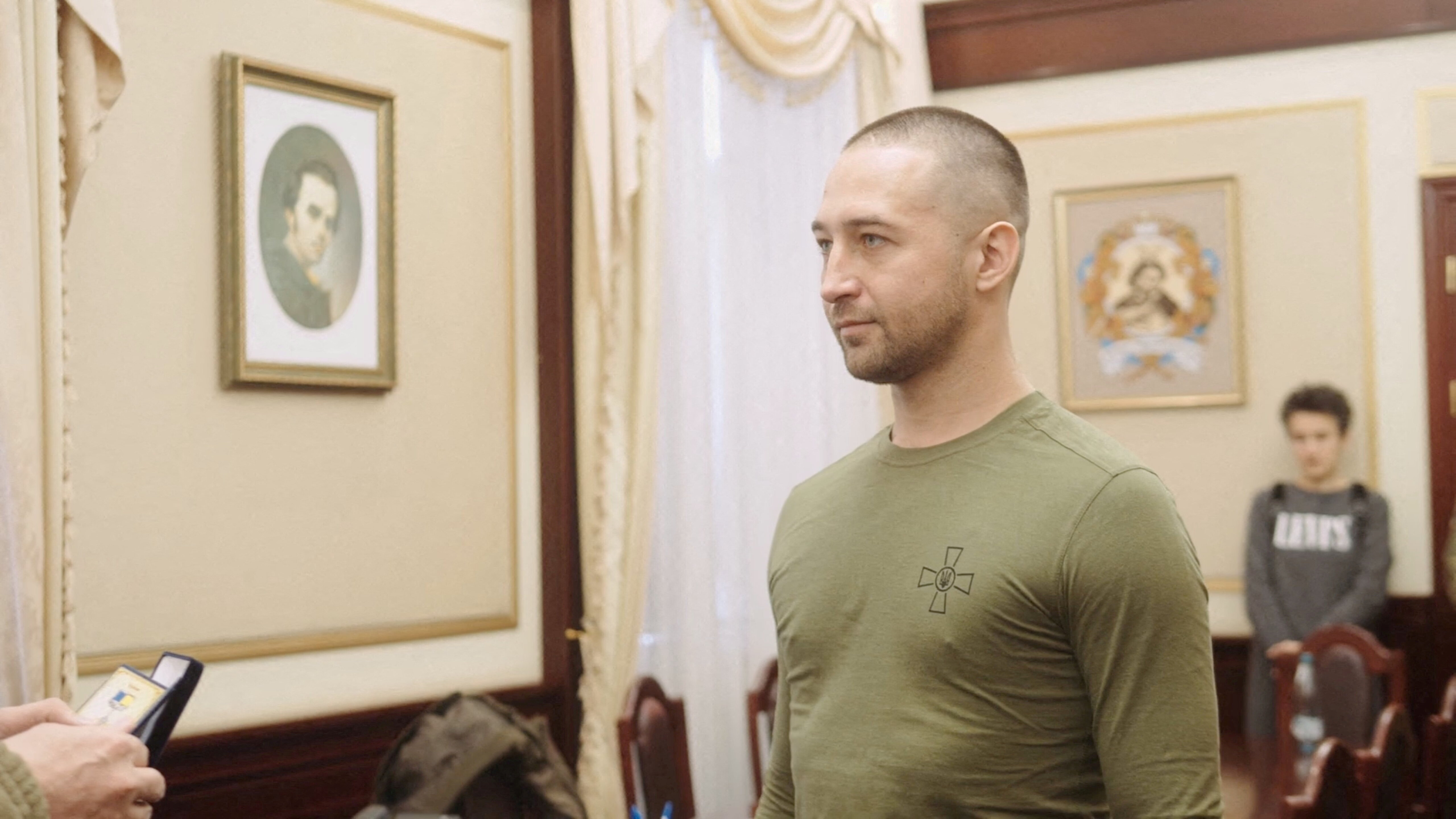
A Ukrainian soldier who defiantly told a Russian warship to “go fuck yourself” before being captured has been awarded a civic medal, his country’s ministry of defence said on Tuesday.
Roman Gribov, a Ukrainian border guard, was told to surrender while defending the tiny Snake Island in the Black Sea on the first day of Russia’s invasion into Ukraine in February.
A Ukrainian official at the time said 13 of the border guards had been killed defending the island south of the port of Odessa, on February 24, after losing contact with the garrison, which was targeted by the Russian military in an artillery attack.
In fact, the soldiers did surrender to the Russians and a few weeks later they were returned to Ukraine in a prisoner swap.
In footage published on Tuesday, Gribov was called a “hero” as he received the award from the head of Cherkasy regional administration, Reuters reported.
“I want to say a big thank you to the Ukrainian people for such support,” Gribov said. “We strongly feel this support, it inspires us.”
For weeks there had been warnings, but many serious people could not believe it: Russia would never invade neighbouring Ukraine. Would they?
Then, on February 24, it happened. Tanks and soldiers streamed across the border, scenes more reminiscent of the Second World War than the remote cyber warfare that modern conflict was supposed to be dominated by.
Advertisement
The capital, Kyiv, was targetted. But Vladamir Putin appears to have under-estimated heavily-armed Ukrainian soldiers and volunteers, and Russia’s lightning strike appears to be nothing of the sort. A month on, here’s where the war stands.
What has happened in Ukraine?
Advertisement
As Putin’s frustration has grown, so has the brutality of Russian forces – killing civilians as well as soldiers and repeatedly accused of war crimes. But in the month since Moscow launched its invasion of Ukraine, Russian troops have met stiff resistance and failed to capture any major city.
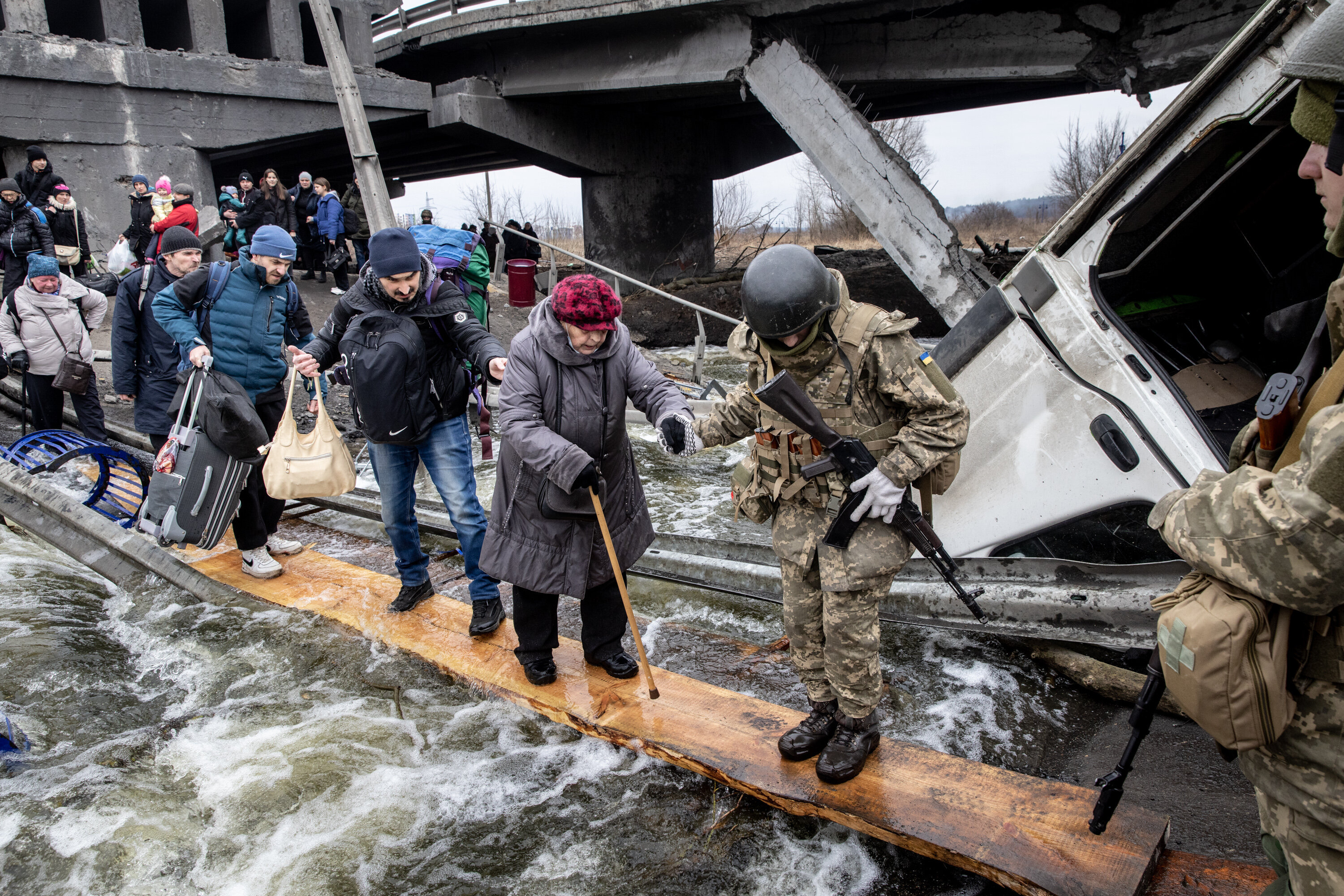
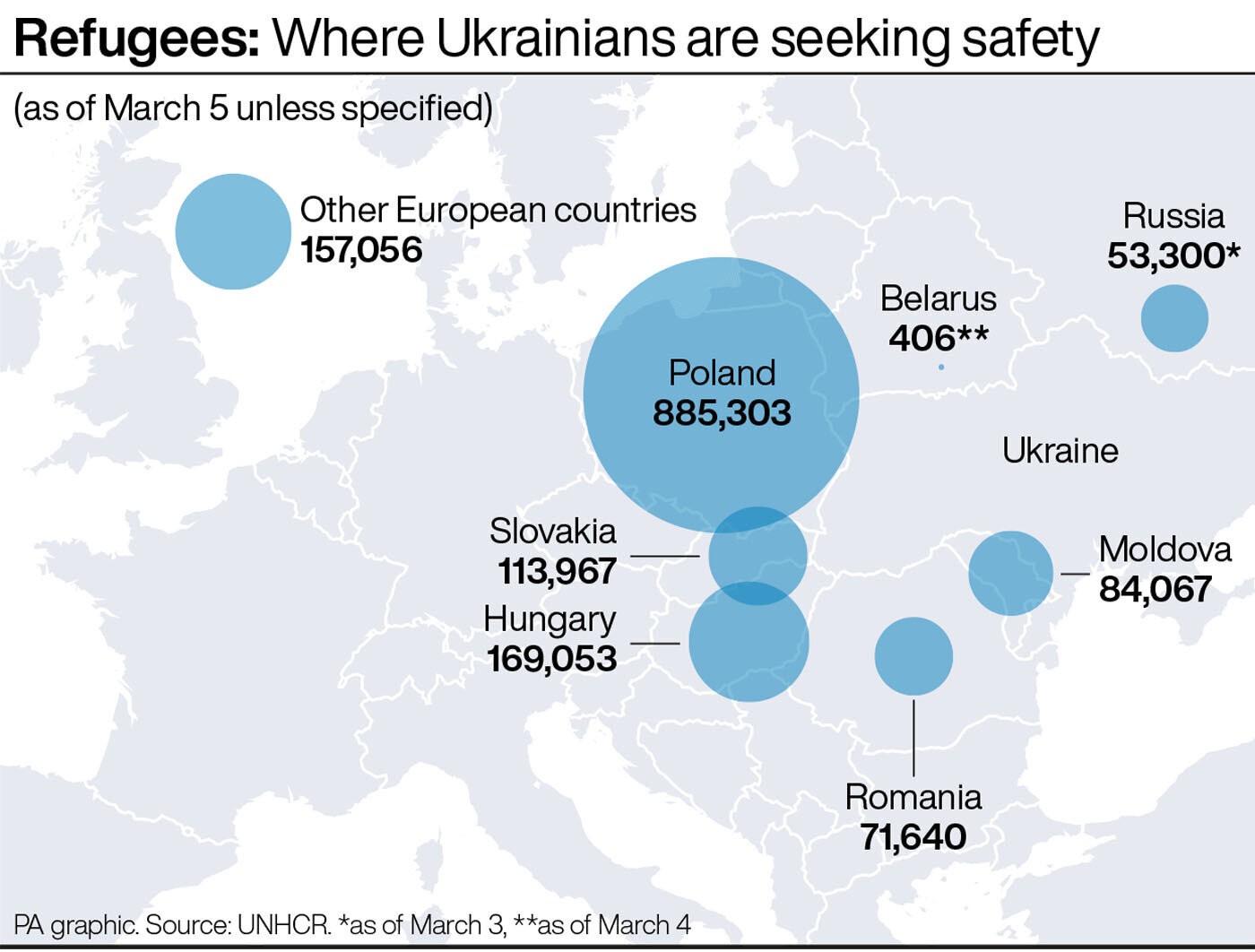
They have instead been bombarding and encircling cities, laying waste to residential areas and driving around a quarter of Ukraine’s 44 million people from their homes. More than 3.7 million of them have fled abroad, half to neighbouring Poland.
Advertisement
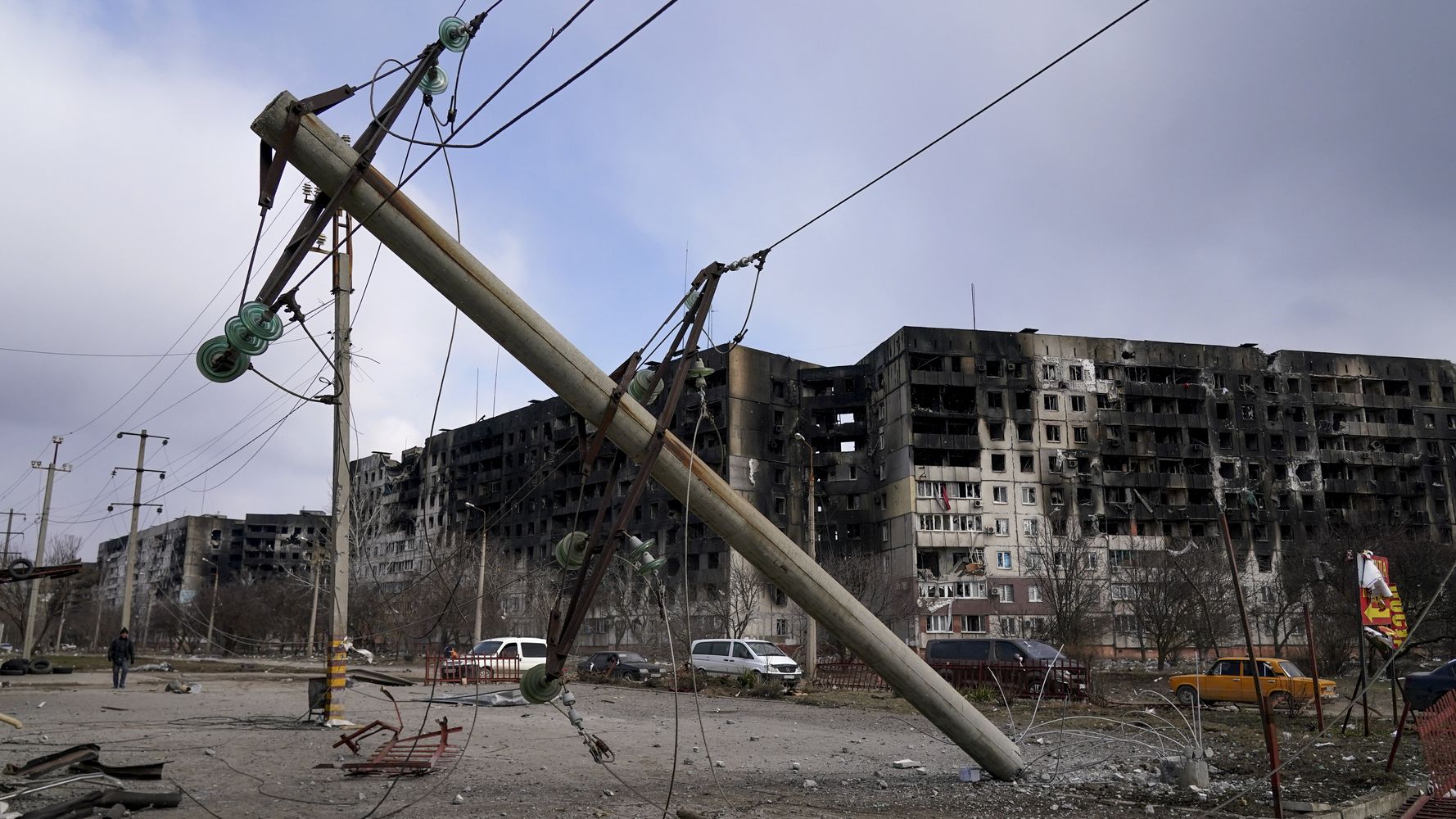
Ukraine cities have been flattened by Putin in a manner similar to the way he destroyed the Chechen capital Grozny at the turn of the century. Among them is the besieged city of Mariupol, where authorities on Friday said about 300 people died in a Russian airstrike earlier this month on a theatre where hundreds of people were sheltering.
Mariupol, a city of 400,000 before the war, has been among the worst hit by the Russian bombardment. Tens of thousands of people are still believed to be trapped with little access to food, power or heat.
The cities of Chernihiv, Kharkiv and Sumy in the east have also endured devastating bombardment. The United Nations said it had confirmed 1,081 civilian deaths and 1,707 injuries in Ukraine since the February 24 invasion, adding that the real toll was likely higher.
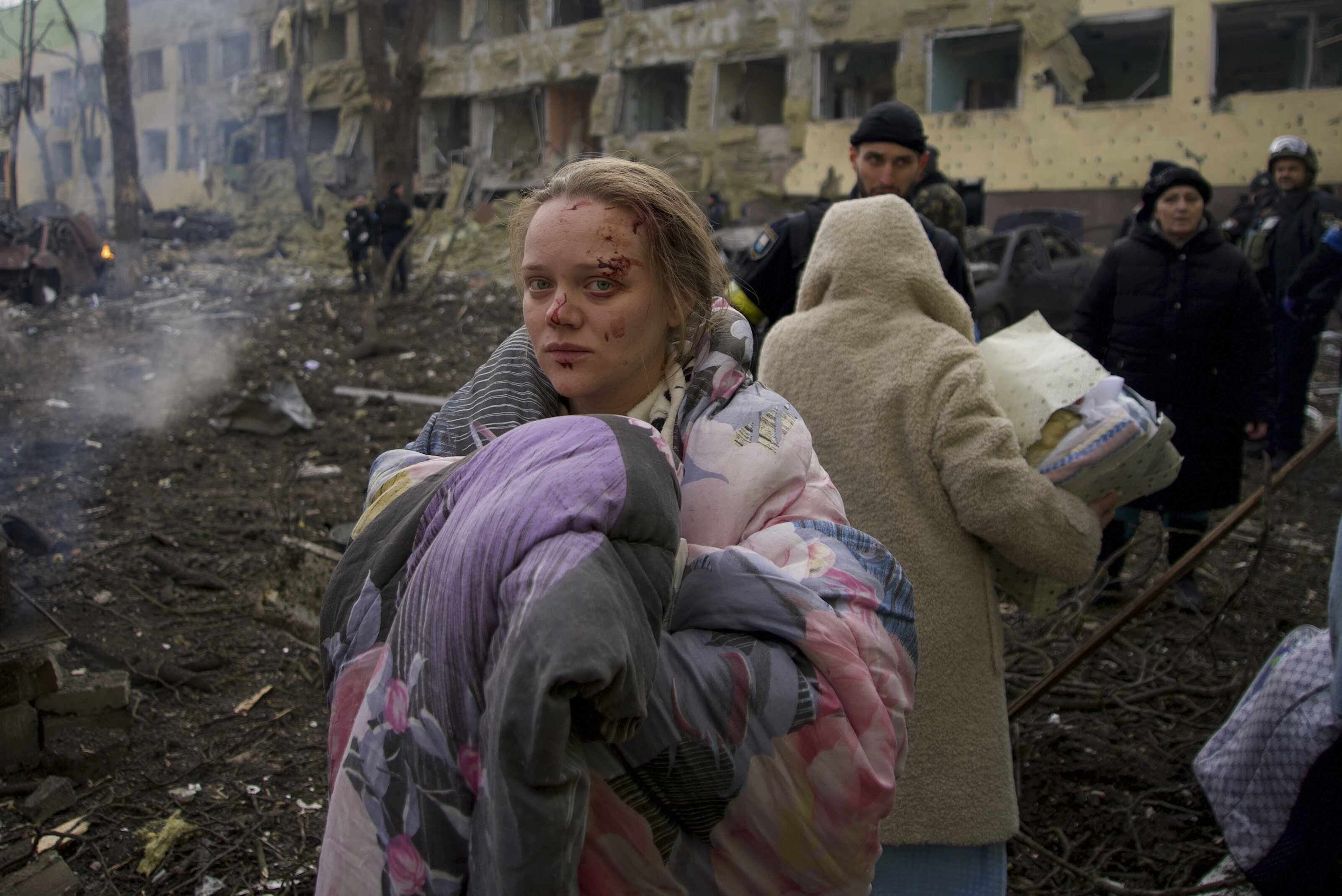
<img class="img-sized__img landscape" loading="lazy" alt="Mariana Vishegirskaya stands outside a maternity hospital that was damaged by shelling in Mariupol, Ukraine.” width=”720″ height=”480″ src=”https://www.wellnessmaster.com/wp-content/uploads/2022/03/one-month-on-from-russias-invasion-of-ukraine-heres-where-the-war-stands-4.jpg”>
Mariana Vishegirskaya stands outside a maternity hospital that was damaged by shelling in Mariupol, Ukraine.
Mstyslav Chernov via AP
The rise of Volodymyr Zelenskyy
Advertisement
Now cutting a familiar figure the world over – rallying his people from fortified bunkers, unshaven in olive-coloured T-shirt – little was known about Volodymyr Zelenskyy outside his homeland a month ago.
The former TV comic and actor has become the symbol of Ukraine’s resistance, deploying his oratory and presentational skills on social media and in defiant speeches.
The 44-year-old’s wartime leadership has even been compared to Winston Churchill by British politicians. Boris Johnson, who has written a book on Churchill, said: “I think that president Zelenskyy has proved to be a quite remarkable leader of his people – he’s rallied them and he’s been their voice. He knows, as Churchill said of himself, he may not have been the lion but he’s been privileged to give the roar.”
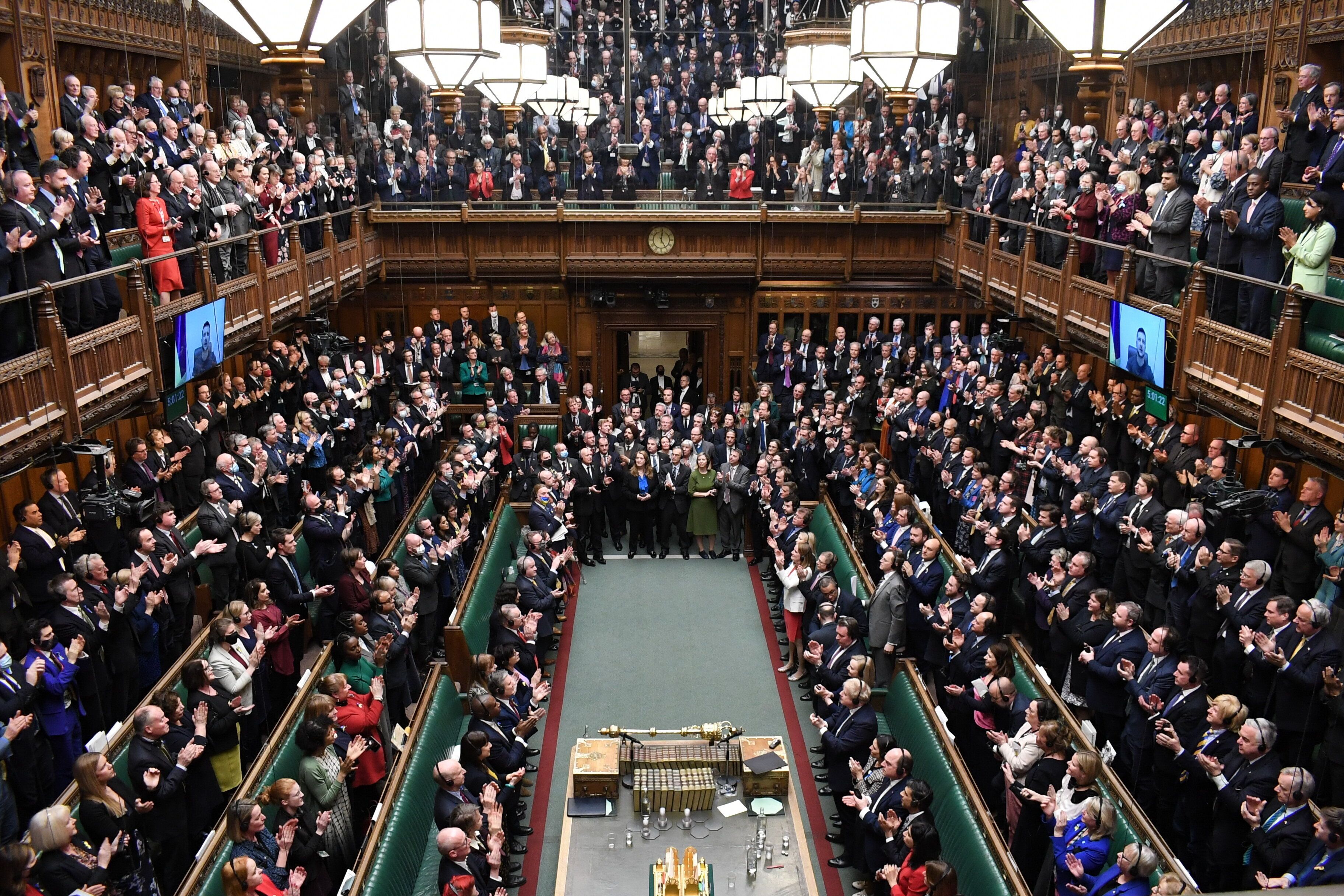
The UK parliament giving a standing ovation after to Volodymyr Zelenskyy.
UK Parliament/Jessica Taylor via PA Media
Zelenskyy’s leadership help explain the massive support from Western allies by way of “defensive” artillery. But he has been frustrated. His biggest request since the outbreak of war – a so-called no-fly zone to prevent bombings from Putin’s planes – has been rejected time and again, with the US and its allies fearing the move would trigger a wider world war with Russia.
Russia struggling
Russia’s invasion remains largely frustrated by the dogged resistance of Ukrainians, and there are signs Putin could be scaling back his ambitions.
On Friday, the defence ministry said that having accomplished the “first phase” of their military operations, Russian forces would concentrate on “liberating” the Donbas region which is part-held by Moscow-backed separatist rebels.
Western officials said it was a recognition that Russian forces were overstretched and may have to “pause” operations around Kyiv and other cities while they focus on the east of the country.
Russia’s defence ministry said 1,351 Russian soldiers had been killed 3,825 wounded, the Interfax news agency reported. Ukraine says 15,000 Russian soldiers have died.
PA Graphics via PA Graphics/Press Association Images
What is the West doing?
Advertisement
Western powers have been urged to step up military support for the Ukrainian forces. But, since Ukraine is not a member of Nato, the US, the UK and its allies are limited in what they can do.
The military alliance called the North Atlantic Treaty Organisation – or Nato – and its 30 member nations are bound by Article 5 of its constitution. They agree to mutual defence – military action – in response to an enemy attack. The principle goes: “An attack against one ally is considered as an attack against all allies.”
Nato is anxious about further escalating tensions between the world’s two biggest nuclear powers – the US and Russia – and edging everyone closer to the “World War III” scenario many fear.

But the region is on edge. On Friday, US president Joe Biden visited Poland – which is a Nato member and shares a border with Ukraine – to underscore his commitment to the country. The US has said that it will defend “every inch” of Nato territory, and Warsaw is keen to see even more US troops stationed on the alliance’s eastern flank.
<img class="img-sized__img landscape" loading="lazy" alt="Joe Biden meets service members from the 82nd Airborne Division in the city of Rzeszow in southeastern Poland, around 62 miles from the border with Ukraine.” width=”720″ height=”518″ src=”https://www.wellnessmaster.com/wp-content/uploads/2022/03/one-month-on-from-russias-invasion-of-ukraine-heres-where-the-war-stands-7.jpg”>
Joe Biden meets service members from the 82nd Airborne Division in the city of Rzeszow in southeastern Poland, around 62 miles from the border with Ukraine.
BRENDAN SMIALOWSKI via Getty Images
How does it end?
Four rounds of peace talks between Russia and Ukraine have yet to result in anything close to a diplomatic resolution.
Russia wants legal assurances that Ukraine will never join Nato, and for Ukraine to take a so-called neutral status and change its constitution to guarantee this.
The Kremlin has also demanded that Ukraine acknowledges Crimea, which Putin annexed in 2014, as Russian territory. It also wants recognition of the independence of pro-Russian separatists in Donetsk and Luhansk in Ukraine’s eastern industrial heartland of Donbas. The conflict in the region, which has claimed at least 14,000 lives, was Russia’s fabricated pretext to invade Ukraine last month.
I fear that an indefinite prolongation of the war in Ukraine is the most likely scenario. The major obstacle to a peace agreement is the Crimea and the Donbass where Putin can’t make any concession without losing face and where I don’t expect Ukraine to cave in.
Ukraine is seeking a ceasefire and a troop withdrawal. It has said it is willing to negotiate, but not to surrender or accept any ultimatums.
Ukraine has said it is prepared to accept security guarantees that stop short of joining Nato – a compromise on its part. But giving up the Crimea and the Donbas could be a bridge too far, and gaining that territory now seems to be Putin’s over-riding objective. Stalemate could beckon.
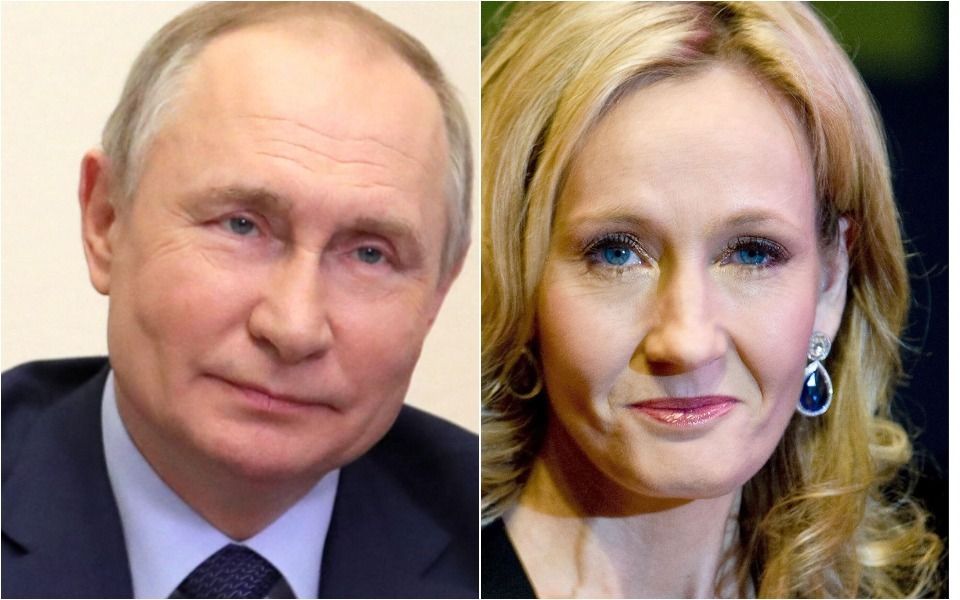
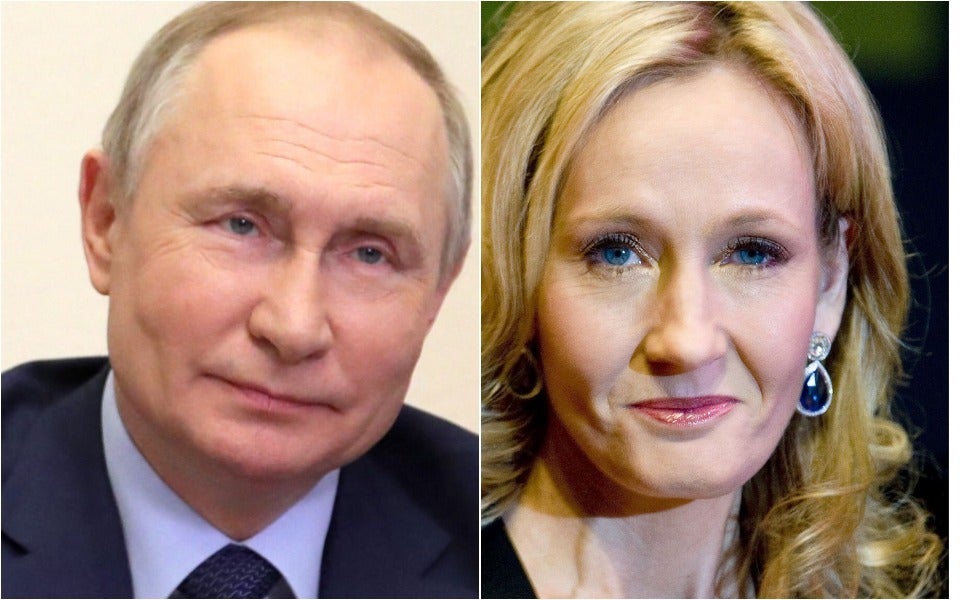
Russian president Vladimir Putin has been accused of a thinly-veiled attempt to divide the West by claiming his country was being victimised by “cancel culture” after its invasion of Ukraine.
Putin likened the world’s condemnation of Russia to the backlash that Harry Potter author JK Rowling received for controversial comments about the transgender community. Rowling was “cancelled”, Putin said, “just because she didn’t satisfy the demands of gender rights”, according to an interpreter’s translation.
Advertisement
He also claimed Western countries were trying to cancel the works of composers Tchaikovsky, Shostakovich and Rachmaninoff.
On Twitter, Rowling responded to Putin’s suggestion, and shared an article about incarcerated Kremlin critic Alexei Navalny.
Advertisement
She wrote: “Critiques of Western cancel culture are possibly not best made by those currently slaughtering civilians for the crime of resistance, or who jail and poison their critics.”
The writer also shared the hashtag #IStandWithUkraine.
Advertisement
Liberal Deocrat MP and ex-leader Tim Farron led the chorus urging people to avoid “amplifying (Russian) propaganda just because they affirm things that you already think”.
When the Kremlin briefs that Putin’s biggest enemy is our PM… or that Putin’s in the same boat as JKRowling… don’t go amplifying their propaganda just because they affirm things that you already think. That’s what they want you to do!!!
In a subsequent tweet, Rowling detailed the work her Lumos charity is doing in Ukraine.
“Children trapped in orphanages and other institutions are exceptionally vulnerable right now,” she said.
“Thank you so, so much to everyone who has already donated to Lumos’s Ukraine appeal.”
Advertisement
Rowling said she was personally matching all donations to the Lumos emergency appeal up to £1 million.
Putin is reported as saying: “They cancelled Joanne Rowling recently, the children’s author.
“Her books are published all over the world. Just because she did not satisfy the demands of gender rights.
“They are trying to cancel our country. I am talking about the progressive discrimination of everything to do with Russia – this trend that is unfolding in a number of Western states.”
Rowling in June 2020 wrote an essay explaining how she was partly motivated to speak about transgender issues because of her experience of domestic abuse and sexual assault.
Critics have accused the writer of being transphobic, an allegation she strongly denies.
Her critics have included Harry Potter stars Daniel Radcliffe, Emma Watson and Rupert Grint.
Hmmmm I could remember that JK Rowling is donating millions to Ukrainian orphans – or I could let myself be successfully trolled by Putin and denounce JK Rowling as a witch. What to choose? https://t.co/x4V15RL4kG
If a man currently invading Ukraine took time out from bombing civilians and hospitals to endorse my views then that, for me, would be a moment to reflect a bit but to each their own
The UK is to send 6,000 more missiles to Ukraine to bolster Kyiv’s fight against Russia’s invasion as Boris Johnson urged Western allies to help “keep the flame of freedom alive”.
The British prime minister will use as summit of Nato and G7 leaders to detail a new support package for the Ukrainian military, including thousands of missiles comprising anti-tank and high-explosive weaponry.
Advertisement
In addition, the UK is providing £25 million from the Foreign Office’s conflict security and stabilisation fund to help pay the salaries of Ukrainian soldiers and pilots battling the Russians.
Ahead of his visit to Brussels on Thursday for talks, a month on from the Russian invasion, Johnson called on other Western leaders to step up the supply of military hardware to Kyiv as well as doubling down on sanctions against Russia.
Advertisement
“Vladimir Putin is already failing in Ukraine. The Ukrainian people have shown themselves to be extraordinarily brave and tenacious in defending their homeland, in the face of an unprovoked onslaught,” he said.
“But we cannot and will not stand by while Russia grinds Ukraine’s towns and cities into dust. The United Kingdom will work with our allies to step up military and economic support to Ukraine, strengthening their defences as they turn the tide in this fight.
Advertisement
“One month into this crisis, the international community faces a choice. We can keep the flame of freedom alive in Ukraine, or risk it being snuffed out across Europe and the world.”
Britain has already sent more than 4,000 anti-tank weapons to Ukraine, including next-generation light anti-tank weapons systems (Nlaws) and Javelin missiles.
The UK is also supplying and training Ukrainian troops in the use of Starstreak high-velocity anti-air missiles as well as providing body armour, helmets and combat boots.
In a further move, the government is to provide an additional £4.1 million to the BBC World Service to counter disinformation in Russia and Ukraine as well as new support for the International Criminal Court (ICC).
Advertisement
Justice secretary Dominic Raab will chair a meeting of justice and foreign ministers in The Hague to coordinate support for the ICC’s war crimes investigations.
He is expected to announce an additional £1 million in funding for the court, as well as new support from UK soldiers with expertise in intelligence gathering and Scotland Yard’s War Crimes Team.
“How many citizens of the United Kingdom died because of Brexit? Zero,” he said, pointing to “only today” 150 Ukrainian children were killed by the Russian military and that whole cities have been completely destroyed.
Johnson also faced a backlash on Wednesday for pulling faces in the Commons as chancellor Rishi Sunak described Ukrainians huddled in basements.
The latest UK military intelligence suggests Russia is failing to break the spirit of the Ukrainian population as its invasion continues to stall.
In an intelligence briefing on Tuesday night, the ministry of defence said attempts to use media manipulation, propaganda and install pro-Kremlin local leaders have so far been unsuccessful.
Vladimir Putin’s forces in Ukraine are increasingly relying on the “indiscriminate shelling” of urban areas as they fail to capture key cities, the UK government has warned.
In its latest update on the crisis situation in Ukraine, the Ministry of Defence (MoD) said Russia had suffered “considerable losses” since launching its invasion more than three weeks ago.
Advertisement
As a result, Russia has “increased its indiscriminate shelling of urban areas resulting in widespread destruction and a large number of civilian casualties”, the MoD said.
“It is likely Russia will continue to use its heavy firepower to support assaults on urban areas as it look to limit its own already considerable losses, at the cost of further civilian casualties.”
Advertisement
The UK assessment comes as Ukraine accused Russia of further atrocities in the besieged city of Mariupol, where the city council says an art school that was sheltering around 400 people has been attacked.
The latest assault follows Russia’s bombing of a theatre earlier this week that was thought to be sheltering more than 1,000 people.
Advertisement
Ukrainian president Volodymyr Zelensky has condemned Russia’s relentless targeting of Mariupol, calling the bombardment a “terror that will be remembered for centuries to come”.
Pope Francis also used his Sunday address in Vatican City to call on world leaders to “stop this repugnant war”.
“The violent aggression against Ukraine is unfortunately not slowing down,” he said.
“It is a senseless massacre where every day slaughters and atrocities are being repeated.”
Advertisement
The MoD also warned that it was likely that Russia would continue to use heavy firepower to attack urban areas as a means to limit its own “already considerable losses”.
There were reports on Sunday that a senior Russian Navy officer had been killed.
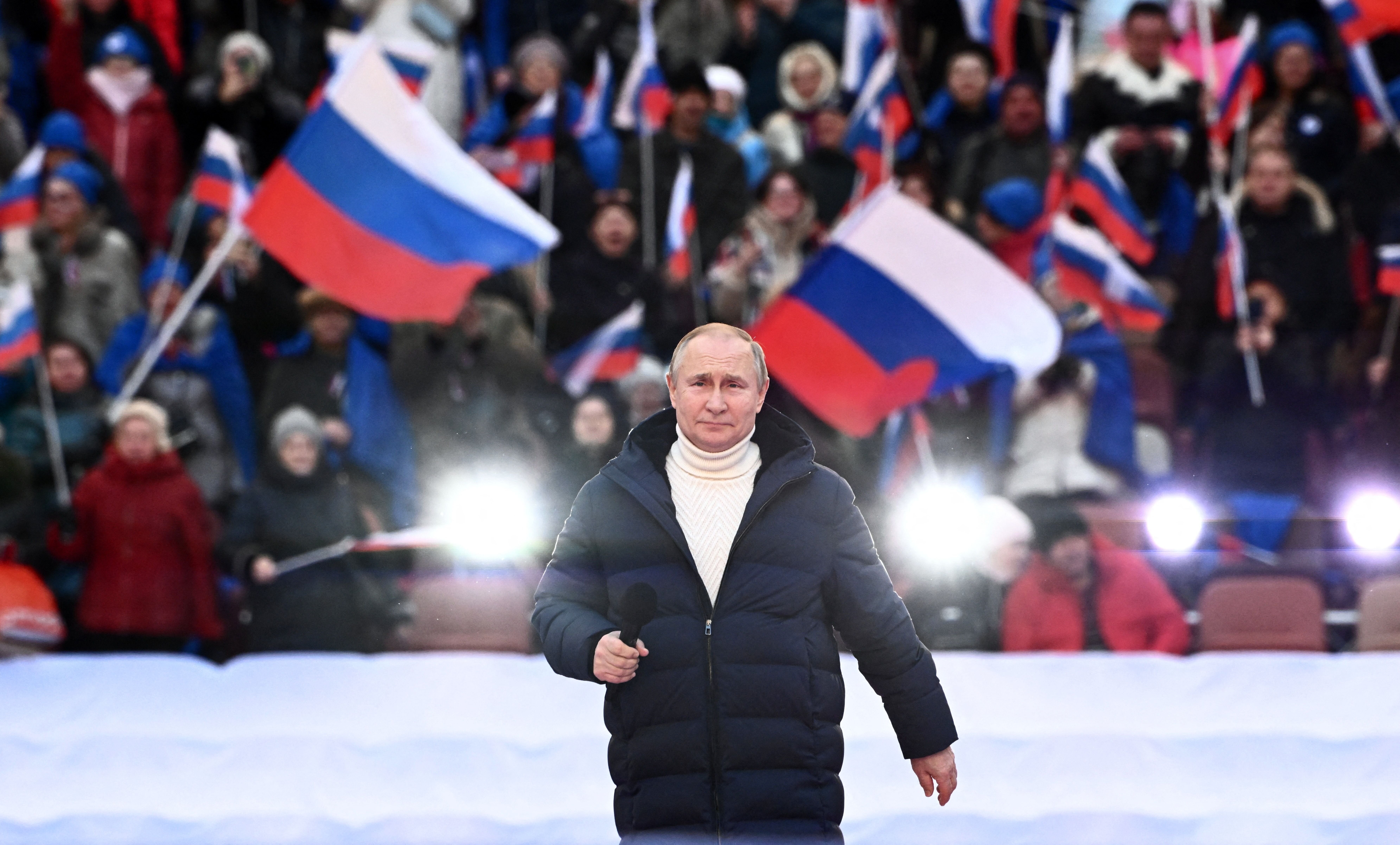
The Russian president Vladimir Putin celebrated the eight years since his troops seized the Ukrainian region of Crimea with a bizarre rally on Friday.
He spoke in front of a huge crowd in Moscow’s Luzhniki stadium and praised the war effort in Ukraine which has seen hundreds on both sides die.
Advertisement
Despite being accused of of committing war crimes through his attacks on civilians, the widespread Ukrainian resistance and the repeated suppression of any forms of free speech in Russia, the president told the audience: “We have not had unity like this for a long time.”
Putin also honoured those in Crimea who stood up to “neo-Nazis and radical nationals” and joined Russia, even though world leaders have rejected any claim that there is Nazism in Ukraine’s government.
Advertisement
In an ominous nod to the future, Putin also promised the crowd: “We know what we have to do next…we’ll definitely carry out all the plans we have made.”
The stadium speech is comparable to the kind of rallies former US president Donald Trump became famous for. The two leaders were said to have a certain kind of rapport, and the former US president has even called Putin’s Ukraine strategy a work of “genius”.
Advertisement
The rally speaks to the West’s concerns about Putin’s increasingly unhinged behaviour, and comes a day after current US president Joe Biden labelled him a “murderous dictator” and a “pure thug”.
For someone who rails against western culture so much, the setup at Putin’s speech is very Wrestlemania. You half expect to hear glass breaking and see Stone Cold come out with a steel chair pic.twitter.com/KNhUtsWEVF
“We see how heroically our guys are acting, and fighting, in the course of this operation.” (the Kremlin has prohibited Russians from using the word ‘war’ or ‘invasion’ to describe Russia’s invasion of Ukraine) pic.twitter.com/IkcBglWkAH
March 18, 2014, does mark Russia’s complete annexation of Crimea, although the peninsula is still not legally recognised as part of the country by the international community.
It followed an internationally discredited public vote held two days before where the people living in the peninsula were asked whether they wanted to be part of Russia or part of Ukraine.
Advertisement
While 97% of votes backed joining Russia, Ukraine said the referendum was illegal as it had taken place while Russian forces were in Crimea.
Russian representatives claimed more than 200,000 people attended Friday’s celebrations. The official capacity of the stadium is 81,000, although there were crowds outside the stadium too.
But many attendees told the BBC they had been pressured by their employers in the public sector to attend.
Some students were allowed not to attend lectures as long as they went to the “concert”, while others told the BBC they had not been aware that the event was aimed at consolidating support for the Ukrainian war.
lol, Putin says “we haven’t seen unity like this in a long time,” referring to Russia’s soldiers in Ukraine, claiming that the local civilians have welcomed Moscow’s invading troops. This message is sponsored by @koolaid, folks.
There is thought to be some support for the Russian attack on its European neighbour, but the full extent of the general public’s backing is hard to calculate.
The Kremlin has quashed any efforts to speak out against the invasion, including attempts to call it a war – Russia prefers to call it a “special military operation” – shutting down any protests or independent media outlets.
Children in their last six years of school have to now attend “My Country” lessons where they watch a video of Putin sharing his take on Ukraine’s history.
Children have been seen lining up to create the letter Z – the pro-invasion symbol which was first seen on the side of Russian tanks – and will have lessons dedicated to March 18 which aim to “form an understanding” of patriotism.
Teachers also shared a video showing people in the military are more likely to become heroes, all in honour of the “Crimean spring”.
Is the war really going well?
The Russian offensive is thought to have slowed significantly since it first began more than three weeks ago.
Russian forces are becoming increasingly violent and attacks on the west Ukraine city of Lviv shows the offensive is now spreading out.
Officials in the Ukrainian capital Kyiv say almost 90% of buildings in the city of Mariupol have now been damaged or destroyed by Russian forces, including a bomb shelter within a theatre where hundreds were sheltering.
The word “children” had been writing by Ukrainians in Russian outside for those dropping the bombs, although Kremlin representatives claim the attack was nothing to do with them.
Ukrainian president Volodymyr Zelenskyy said that Russia is actually not doing as well as it expected to in its invasion because Putin expected the country to be the same as it was in 2014, during the Crimea annexation.
He said Russia “didn’t know what we had for defence or how we prepared to meet the blow”.
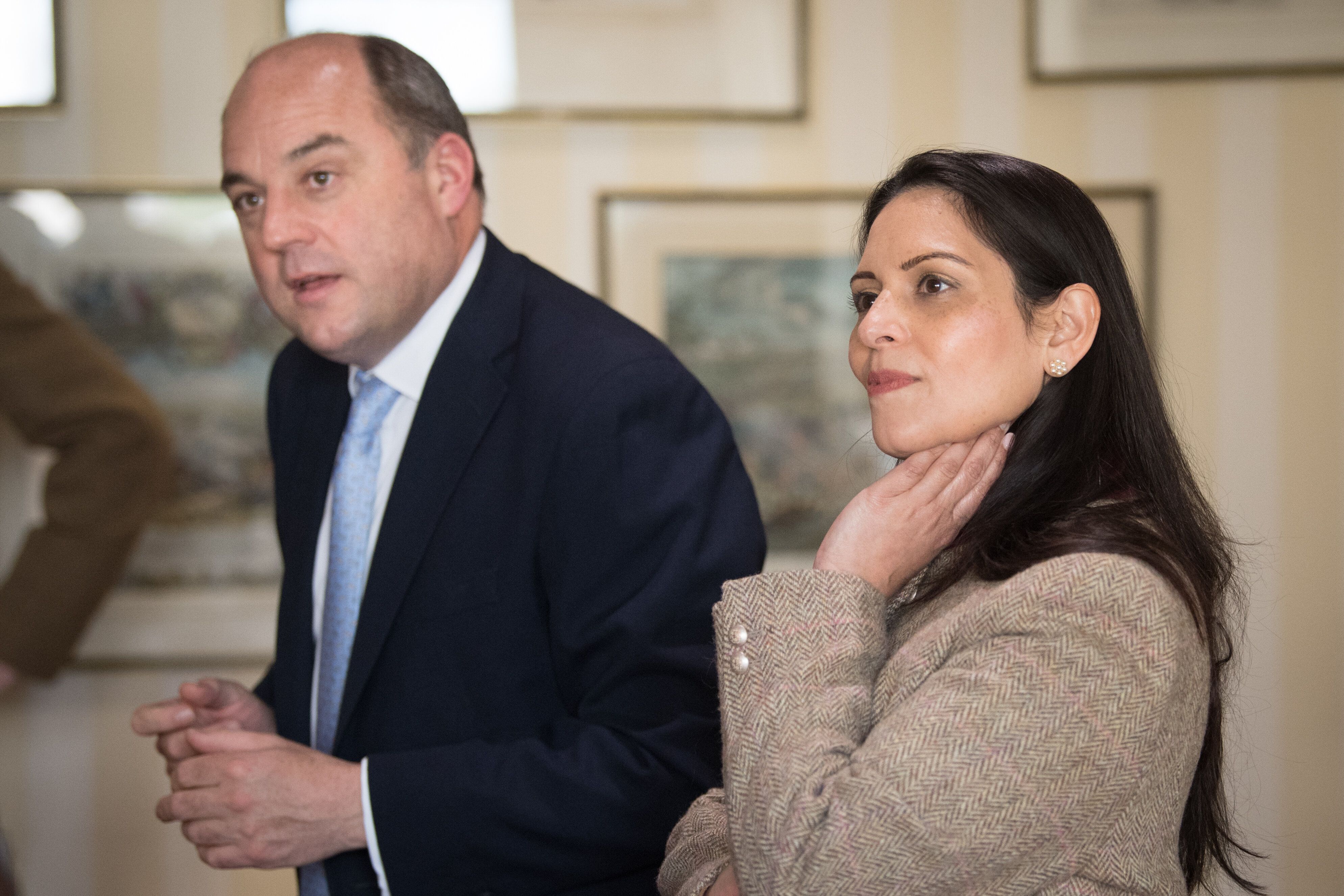
Ben Wallace has blamed Russian “dirty tricks” after being pranked by someone claiming to be the Ukrainian prime minister.
In an apparent security breach, the hoax caller managed to get through to the defence secretary’s personal phone this afternoon.
Advertisement
They pretended to be Ukrainian PM Denys Shmyhal and began asking Wallace a series of questions.
After realising they were not who they claimed to be, the minister ended the call and revealed the “desperate” prank attempt on Twitter.
Advertisement
He said: “Today an attempt was made by an imposter claiming to be Ukrainian PM to speak with me. He posed several misleading questions and after becoming suspicious I terminated the call.
“No amount of Russian disinformation, distortion and dirty tricks can distract from Russia’s human rights abuses and illegal invasion of Ukraine. A desperate attempt.”
Advertisement
Later on Thursday, home secretary Priti Patel said she had also been targeted.
No amount of Russian disinformation, distortion and dirty tricks can distract from Russia’s human rights abuses and illegal invasion of Ukriane. A desperate attempt.
Wallace has been an outspoken critic of Vladimir Putin, claiming he had “gone full tonto” by invading Ukraine.
He also predicted that the war would be “Putin’s end” because it was going so badly for Russia.
The alarm was raised by Wallace after he became suspicious during a 10-minute video call on Thursday.
Advertisement
He ordered an investigation into the security breach but there are serious questions about Whitehall security after Patel said the same thing happened to her earlier this week.
“This also happened to me earlier this week,” Patel said.
“Pathetic attempt at such difficult times to divide us. We stand with Ukraine.”
The Home Office declined to give further details about Patel’s call.
The main evening news programme on Russia’s state-run television was interrupted by a protester holding a poster against the war in Ukraine.
“NO WAR,” the sign read in English. Then, in Russian below: “Stop the war. Don’t believe the propaganda. They are lying to you.”
The rare rare anti-war protest on Channel One – behind the show’s anchor – was brief as the feed abruptly changed cameras.
The OVD-Info website, which monitors political arrests, posted a video in which Ovsyannikova identified herself as an employee of Channel One and spoke against the war.
“What is going on now is a crime,” she said. “Russia is an aggressor country and Vladimir Putin is solely responsible for that aggression.”
“Unfortunately, I’ve spent many of the last few years working for Channel One, doing Kremlin propaganda, and I’m deeply ashamed of this,” she said, according to a translation. “Ashamed that I allowed lies to come from the TV screen. Ashamed that I allowed the zombification of the Russian people.”
“We Russians are thinking and intelligent people,” she added. “It’s in our power alone to stop all this madness. Go protest. Don’t be afraid of anything. They can’t lock us all away.”
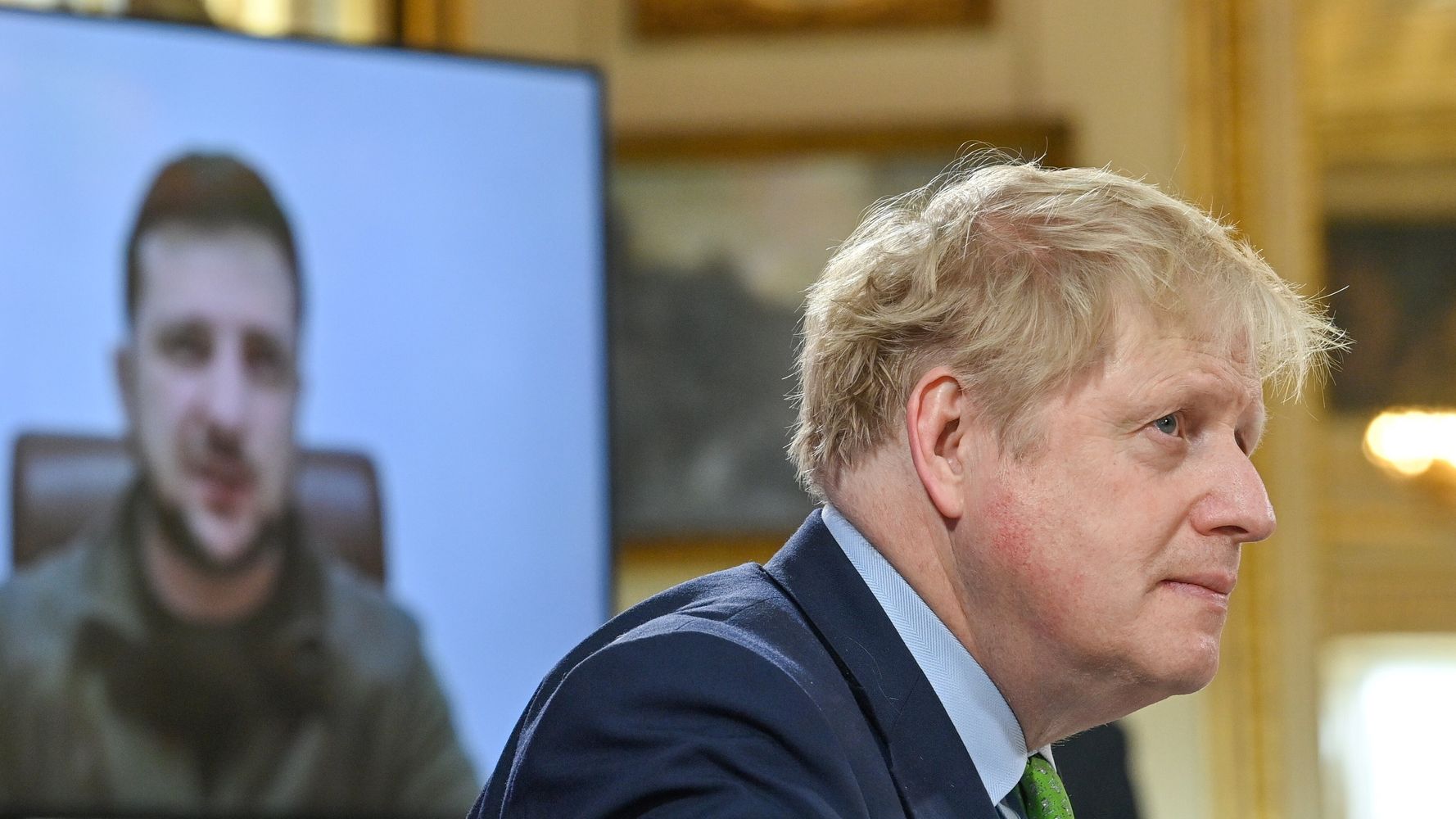
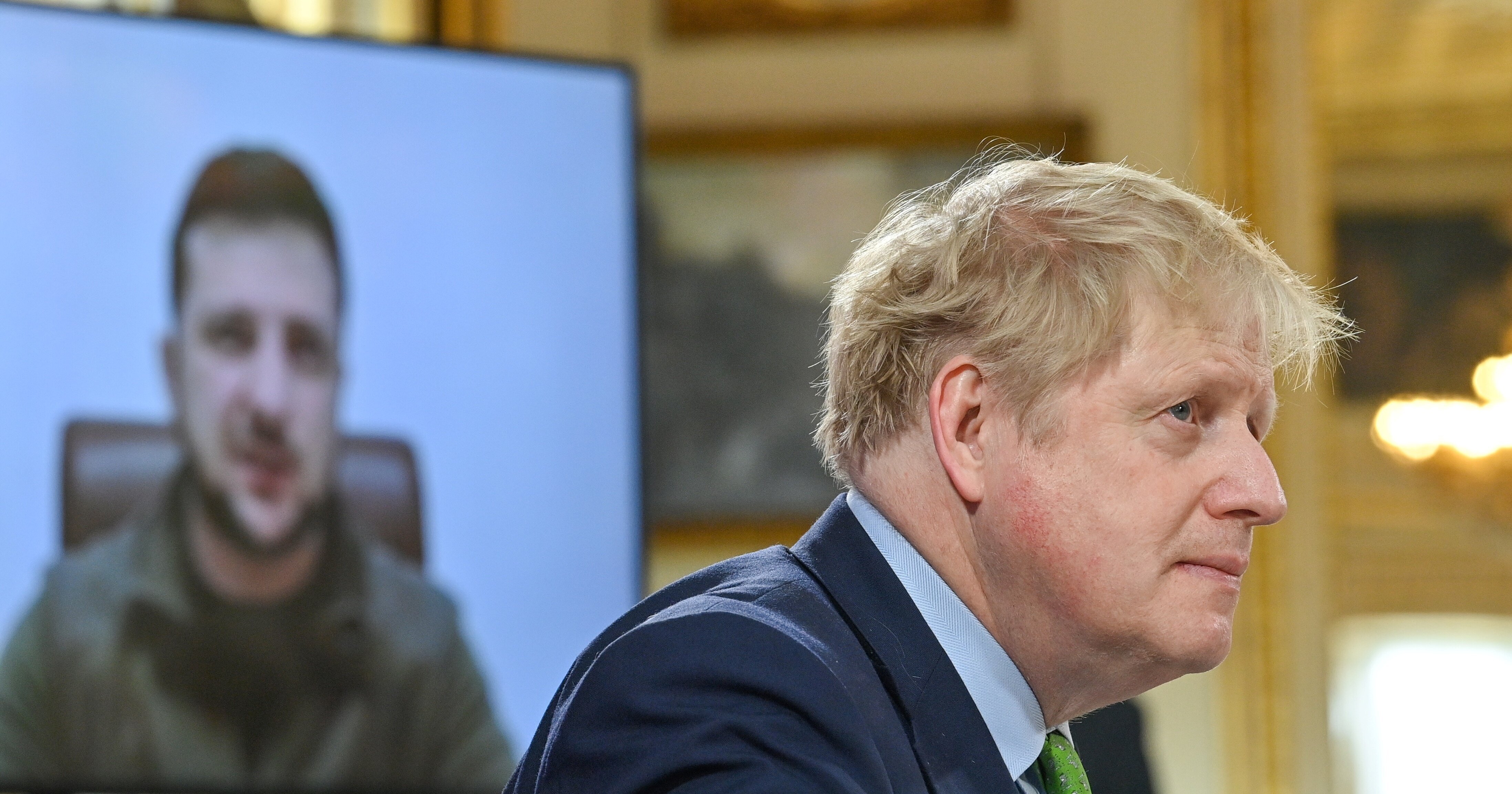
British MPs have given a standing ovation to Ukrainian president Volodymyr Zelenskyy as he gave an historic address to the House of Commons.
MPs took to their feet even before Zelenskyy, who appeared via a live video link from Ukraine, had said a word.
Echoing Winston Churchill, a defiant Zelenskyy said: “We will continue fighting for our land, whatever the cost. We will fight in the forests, the fields, the shores and in the streets.”
Concluding his speech, he thanked Boris Johnson by name and called on the UK for more support.
Speaking through a translator provided by Parliament TV, he said: “We are looking for your help, for the help of Western counties.
“We are thankful for this help and I am grateful to you Boris.
“Please increase the pressure of sanctions against this country (Russia) and please recognise this country as a terrorist country.
“Please make sure sure that our Ukrainian skies are safe.
“Please make sure that you do what needs to be done and what is stipulated by the greatness of your country.
“Glory to Ukraine and glory to the United Kingdom.”
Russia has announced new “humanitarian corridors” to provide safe passage for Ukrainian civilians fleeing the invasion instigated by Vladimir Putin.
But the limited ceasefire was dismissed by Ukraine and Western allies as an immoral stunt, as the escape routes would only take displaced people to Russia and its ally Belarus.
Advertisement
What are humanitarian corridors?
A humanitarian corridor is a temporary pause of armed conflict, agreed by both sides, to allow food and medical aid to be brought to a warzone, or for civilians to evacuate.
Advertisement
These demilitarised zones are in most cases negotiated by the United Nations, and are seen as vital to avoiding a humanitarian catastrophe, especially when international law is breached by the shelling of civilians.
Humanitarian corridors have been used since the mid-20th century. During the so-called Kindertransport from 1938 to 1939, Jewish children were evacuated to the UK from areas under Nazi control. They were also created during the siege of Sarajevo, Bosnia, in the 1990s and the 2018 evacuation of Ghouta, Syria.
Advertisement
Access is typically limited to neutral parties, such as the UN or aid organisations including the Red Cross.
What has been proposed?
The Russian invasion has pushed 1.5 million people to flee the country, creating what the head of the UN refugee agency called “the fastest-growing refugee crisis in Europe since World War II”.
Two planned evacuation operations from Mariupol and the nearby city of Volnovakha have failed over the last two days as the sides accused each other of failing to stop shooting and shelling.
Advertisement
In Mariupol alone, Ukrainian authorities have said they planned to evacuate over 200,000 civilians, or half of the city’s population.
Ahead of a third round of talks between Russia and Ukraine planned for Monday, Moscow said it would open six humanitarian corridors – passages would open for civilians from the capital of Kyiv, the southern port city of Mariupol, and the cities of Kharkiv and Sumy.
But Ukraine rejected the plan given the proposed routes led into Russian or Belarusian territory. These are unlikely destinations for many Ukrainians who would prefer to head towards countries on the western and southern borders. Belarus is a key ally of Putin and served as a launching ground for the invasion.
Where Ukrainians are seeking safety.
PA Graphics via PA Graphics/Press Association Images
According to maps published by the RIA news agency, the corridor from Kyiv will lead to Belarus, and civilians from Kharkiv will only have a corridor leading to Russia. Corridors from Mariupol and Sumy will lead both to other Ukrainian cities and to Russia.
What has Russia said?
The Russian taskforce said the new pledge for humanitarian corridors was announced at the request of French president Emmanuel Macron, who spoke to Putin on Sunday. Macron’s office said he asked for a broader end to military operations in Ukraine and protections for civilians.
“Attempts by the Ukrainian side to deceive Russia and the whole civilised world…are useless this time,” the Russian defence ministry said after announcing the corridors.
What has Ukraine said?
Ukrainian deputy prime minister Irina Vereshchuk called the proposed evacuation routes to Russia and Belarus “unacceptable”. “Our people won’t go to Belarus and to Russia,” she told a news briefing, claiming that Russia was seeking to manipulate Macron’s sincere desire to help.
Macron criticised the proposal as a case of “cynicism”. “I don’t know many Ukrainians who want to seek refuge in Russia. That’s hypocrisy,” he said.
Advertisement
A spokesperson for Ukrainian president Volodymyr Zelenskyy said the Russian proposal was “completely immoral”. “They are citizens of Ukraine, they should have the right to evacuate to the territory of Ukraine,” the spokesperson said.
The International Red Cross has confirmed that the “humanitarian corridor” prepared by Russia for civilians from #Mariupol was full of mines. This is terrible!#Russia was preparing a massacre. This is the genocide of #Ukrainians! It is good that we managed to avoid it this time.
The Ukrainian government is proposing eight humanitarian corridors, including from Mariupol, that would allow civilians to travel to the western regions of Ukraine where there is no Russian shelling.
The Russian proposal was reminiscent of similar ones in Syria. In 2016, a joint Russian and Syrian proposal to set up humanitarian corridors out of besieged opposition-held eastern Aleppo was criticised on humanitarian grounds.
Human rights activists said the tactic, coupled by brutal sieges, effectively gave residents a choice between fleeing into the arms of their attackers or dying under bombardment.