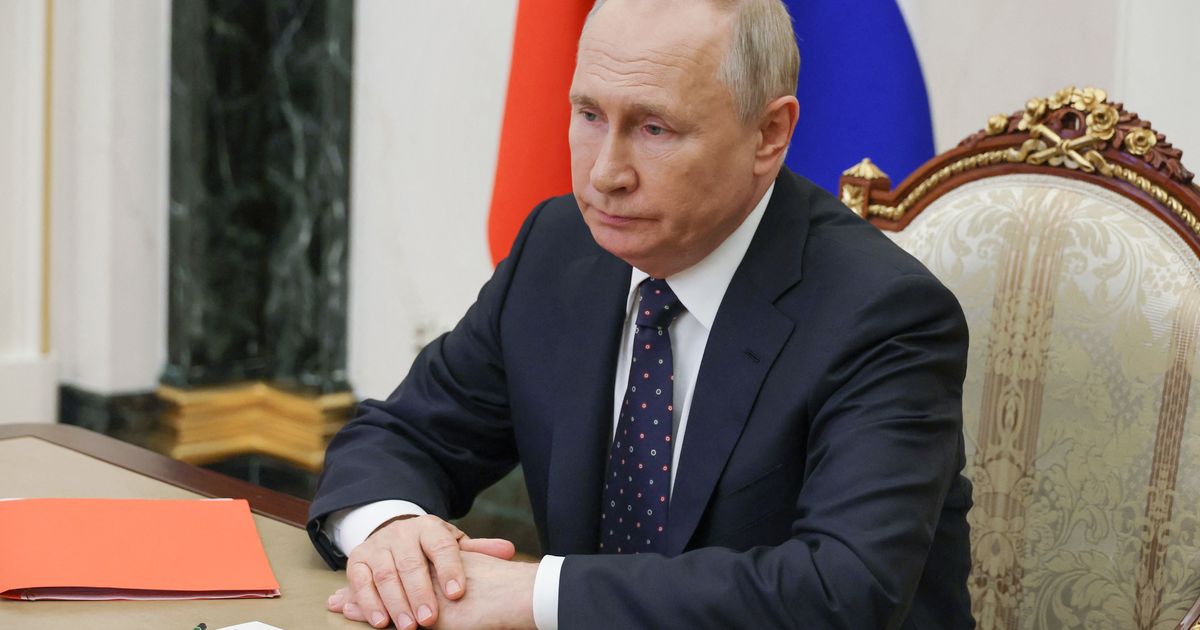
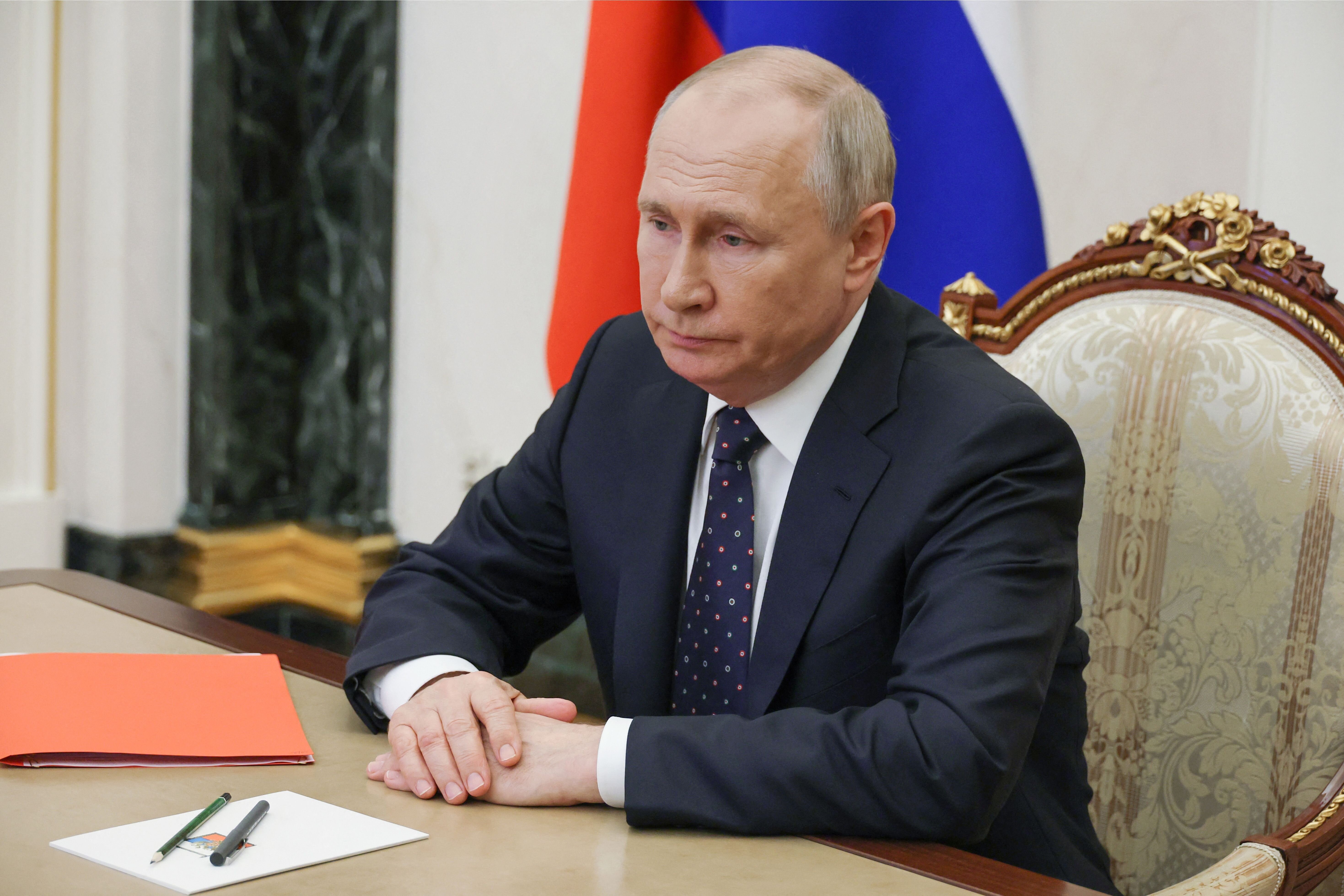
Vladimir Putin is unlikely to hit his target for recruiting volunteers to the Russian army despite massively increasing their wages, according to UK intelligence.
On the eve of the invasion of Ukraine in February last year, a Russian lieutenant earned 81,200 rubles – around £672 – per month.
Advertisement
According to the UK’s Ministry of Defence (MoD), by October last year, even those ranked as privates were being paid 195,000 rubles – around £1,615 – a month as Putin tried to boost the numbers signing up to serve.
In their latest intelligence update on X, formerly Twitter, the MoD said some in the junior ranks of the Russian army are now on more than 200,000 rubles – £1,650 – a month
“This is over 2.7 times the Russian national average salary of 72,851 rubles,” they said. “By way of comparison, 2.7 times the average UK salary would equate to over £90,000 a year.
“It is highly likely that the salary and additional benefits are a strong incentive for personnel to join up, especially to those from the poorer areas of Russia.”
Advertisement
However, the MoD said Russia was still “unlikely to meet its targets for recruiting volunteers to the ranks” despite the massive boost in soldiers’ pay.
The MoD revealed last month that up to half of Russian fatalities in the war could also have been prevented “with proper first aid”, while crude battlefield medical treatment is causing a huge number of preventable fatalities and amputations.
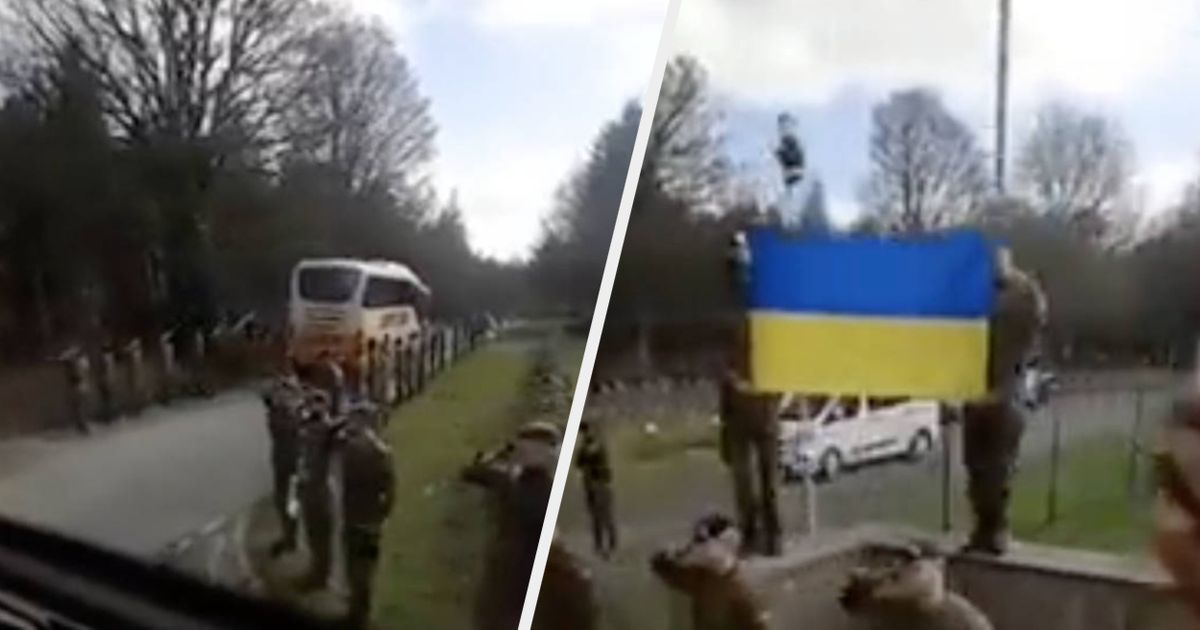
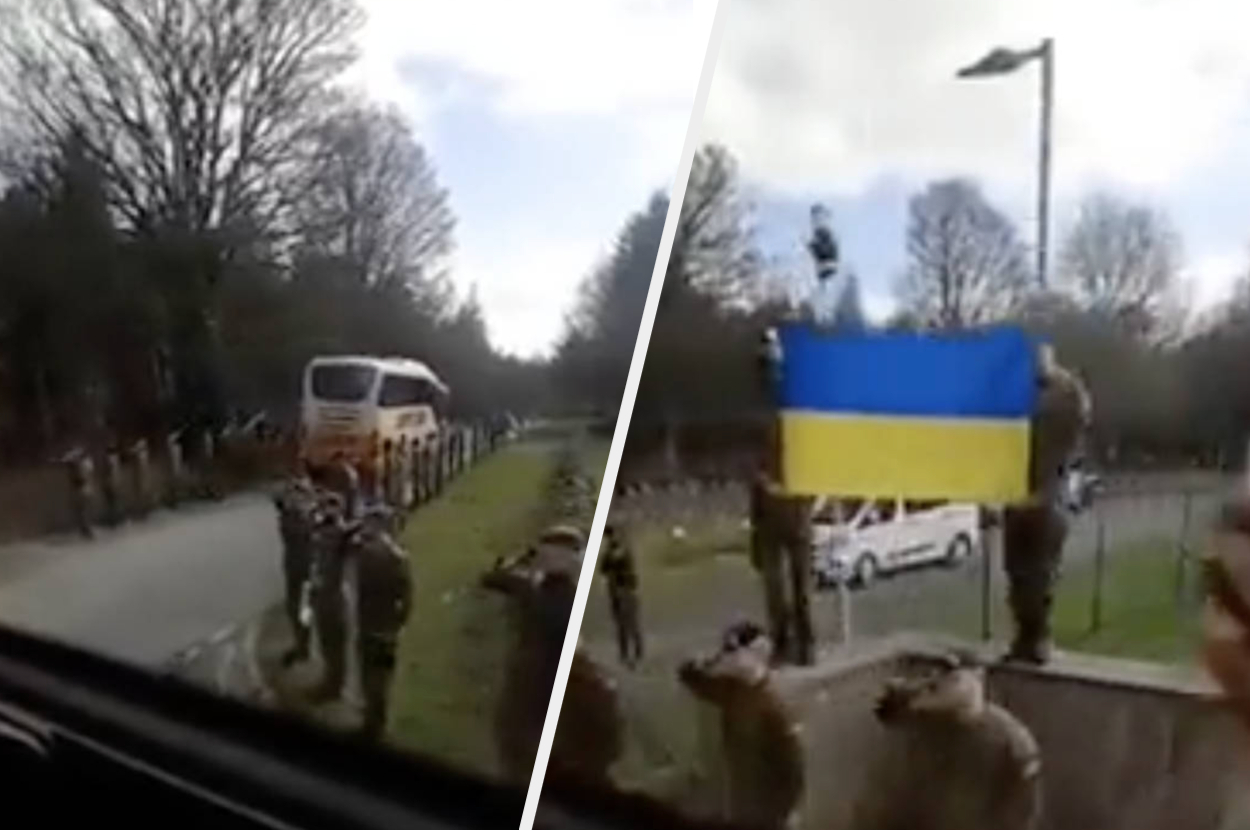
A video of British troops forming a guard of honour for Ukrainian soldiers trained in the UK as they return to the frontline is being shared widely on social media.
Under Operation Interflex, new Ukrainian recruits are given basic British Army training before heading back to defend their homeland.
Advertisement
Footage tweeted by Ukraine’s Ministry of Defence – and then shared by its UK equivalent – shows military personnel lining both sides of a road and saluting the departing Ukrainian soldiers.
The clip also shows some troops holding Ukrainian flags as the buses go by.
The UK MoD tweeted: “We salute our Ukrainian friends as they return home after completing training to defend their freedom, loved ones and independence.”
Ukrainians have been trained in the UK since last summer, and by the first anniversary of the Russian invasion around 10,000 troops left the country combat ready. A further 20,000 are expected to go through the five-week course in 2023.
Advertisement
The basic training involves surviving in a hostile environment. Troops are taught skills such as basic fieldcraft and medical care, as well as marksmanship and weapon handling.
The training has been adapted to reflect what is needed on the ground, namely trench warfare.
In March, Ukrainian crews completed training on Challenger 2 tanks in the UK and returned home to continue their fight against Russia’s invasion.
Members of Kyiv’s armed forces travelled to Britain shortly after prime minister Rishi Sunak announced in January that the UK would send 14 Challenger 2 tanks to help oust the Kremlin’s invaders from Ukraine.
Vladimir Putin finally admitted there have been “mistakes” over the partial mobilisation of Russian reserves, according to the Ministry of Defence.
His admission also came shortly before Russia lost another Ukrainian territory over the weekend, Lyman on Saturday. It was twice as humiliating for the Kremlin, as Moscow had actually just attempted to consolidate its power over land in the east by illegally annexing it on Friday and claiming it as a Russian soil.
Advertisement
Here’s what you need to know about the latest development in the ongoing war.
Why is Putin’s admission important?
The Ministry of Defence, which revealed the Russian president made the confession while addressing his National Security Council last Thursday, explained that this is a rare acknowledgment the war is not going well for Russia.
According to the UK officials, Putin said: “A lot of questions are being raised during this mobilisation campaign, and we must promptly correct our mistakes and not repeat them.”
The MoD explained: “Putin’s unusually rapid acknowledgement of problems highlights the dysfunction of the mobilisation over its first week.
Advertisement
“Local officials are likely unclear on the exact scope and legal rationale of the campaign.
“They have almost certainly drafted some personnel who are outside the definitions claimed by Putin and the Ministry of Defence.
“As drafted reservists continue to assembly at tented transit camps, Russian officials are likely struggling to provide training and in finding officers to lead new units.”
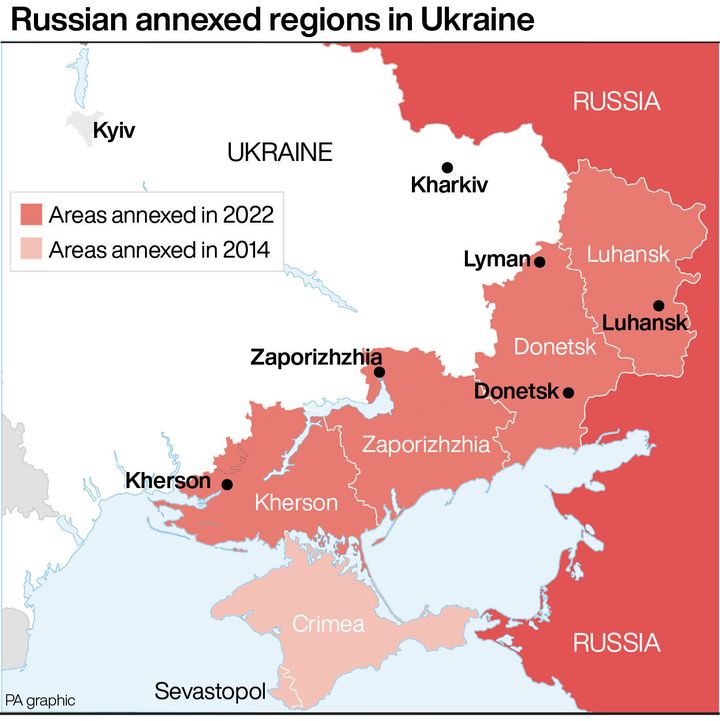
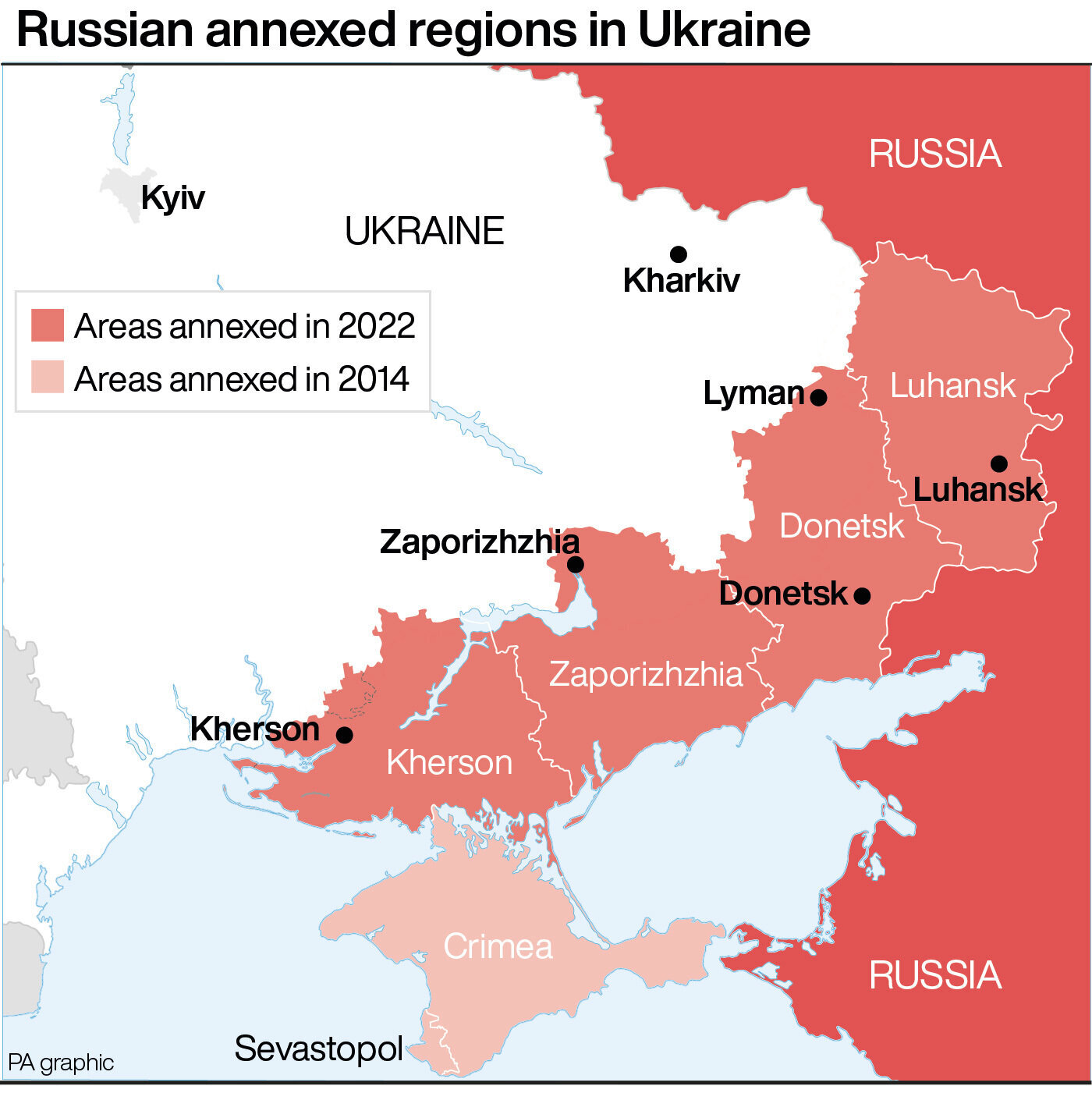
What is particularly surprising is this admission happened the day before Putin officially declared four regions of Ukraine part of Russia, after holding sham referendums.
Putin also confidently threatened to come down hard on Ukraine if it tried to reclaim any of the territory he had claimed as new Russian land only last week.
Russian annexed regions in Ukraine.
via PA Graphics/Press Association Images
Advertisement
What’s the latest from the frontline?
While the MoD only revealed Putin’s claims on Monday, he had actually said them last week – before the Russian Defence Ministry admitted it had withdrawn its troops from the strategic eastern town of Lyman, in the Donetsk region.
To recap, the Donetsk region is one of the four areas Russia annexed on Friday. In fact, Kyiv reclaimed the town just a day after Moscow “annexed” it.
Russia’s Defence Ministry tried to explain its retreat on Saturday, claiming: “In connection with the creation of a threat of encirclement, allied troops were withdrawn from the settlement of [Lyman] to more advantageous lines.”
“The enemy, having a significant superiority in forces and means, introduced reserves and continued the offensive in this direction,” it added.
It also alleged that it had inflicted heavy losses on the Ukrainian frontline but there is no evidence for this yet.
Advertisement
Lyman was a strategic and logistical hub for Russia, and without it, Moscow’s supply lines will take yet another hit.
As US Defence secretary Lloyd Austin told Reuters: “And without those, [supply] routes it will be more difficult. So it presents a sort of dilemma for the Russians going forward.
“And we think the Ukrainians have done great work to get there and to begin to occupy the city.”
What does this mean for Ukraine?
Reclaiming Lyman is not just a boost for Ukrainian morale, but a strategic bonus.
Now they can move into the Luhansk region – which would cause particularly embarrassment to the Kremlin considering it announced this region fully occupied in early July, and also annexed it last Friday.
A spokesperson for Ukraine’s eastern forces, Serhii Cherevatyi, told Reuters: “Lyman is important because it is the next step towards the liberation of the Ukrainian Donbas. It is an opportunity to go further to Kreminna and Sievierodonetsk and it is psychologically very important.”
Ukrainian president Volodymyr Zelenskyy also vowed to take more areas after pushing Russia out of Lyman. On Saturday, he said: “During this week, there were more Ukrainian flags in Donbas. It will be even more in a week.”
Advertisement
The Ukrainian president continued: “Ukraine will return its own. Both in the east and in the south. And what they tried to annex now, and Crimea, which has been called annexed since 2014.
“Our flag will be everywhere.”
The chances are high. The war in Ukraine is like a Jenga game — the Ukrainian military is gradually setting conditions, slowly and painfully, and then collapse happens momentarily. https://t.co/ClkQTwirdW
Amid continued reports of low morale among Russian troops, and a lack of training for new recruits, videos of Ukrainian soldiers dancing even before Lyman was successfully reclaimed have been widely shared online.
What does Russia think?
According to journalists who watch Russian state TV, commentators are struggling to spin Russia’s losses in Lyman.
Advertisement
Julia Davis said the former deputy commander of Russia’s southern military district couldn’t explain the defeat, while the BBC’s Francis Scarr noticed how some TV channels just didn’t mention the battle at all.
Scarr claimed only Rossiya 1 was close to the truth when the host admitted there was a “difficult” situation emerging in the Donbas, but even the anchor still insisted that Russia was still “beating off the desperate onslaught of Ukrainian army troops”.
Meanwhile, Russians are said to be trying to flee the country in droves to avoid being called up to fight.
More than 2,000 anti-war protesters have also been arrested since Putin’s partial mobilisation announcement, according to the human rights group OVD-Info.
Stunned reactions keep coming in with respect to Ukraine reclaiming Lyman. Andrey Gurulyov, former deputy commander of Russia’s southern military district, said he couldn’t explain the defeat. He blamed in on a system of lies, “top to bottom” and was suddenly disconnected. pic.twitter.com/O4aoRqVx96
HuffPost is part of Verizon Media. We and our partners will store and/or access information on your device through the use of cookies and similar technologies, to display personalised ads and content, for ad and content measurement, audience insights and product development.
Your personal data that may be used
Information about your device and internet connection, including your IP address
Browsing and search activity while using Verizon Media websites and apps
To enable Verizon Media and our partners to process your personal data select ‘I agree‘, or select ‘Manage settings‘ for more information and to manage your choices. You can change your choices at any time by visiting Your Privacy Controls.