Scientists create smart synthetic skin that can hide images and change shape

Synthetic materials are widely used across science, engineering, and industry, but most are designed to perform only a narrow range of tasks. A research team at Penn State set out to change that. Led by Hongtao Sun, assistant professor of industrial and manufacturing engineering (IME), the group developed a new fabrication technique that can produce multifunctional “smart synthetic skin.” These adaptable materials can be programmed to perform a wide variety of tasks, including hiding or revealing information, enabling adaptive camouflage, and supporting soft robotic systems.

Using this new approach, the researchers created a programmable smart skin made from hydrogel, a soft, water-rich material. Unlike conventional synthetic materials with fixed behaviors, this smart skin can be tuned to respond in multiple ways. Its appearance, mechanical behavior, surface texture, and ability to change shape can all be adjusted when the material is exposed to external triggers such as heat, solvents, or physical stress.

The findings were published in Nature Communications, where the study was also selected for Editors’ Highlights.

Inspired by Octopus Skin and Living Systems

Sun, the project’s principal investigator, said the concept was inspired by cephalopods such as octopuses, which can rapidly alter the look and texture of their skin. These animals use such changes to blend into their surroundings or communicate with one another.

“Cephalopods use a complex system of muscles and nerves to exhibit dynamic control over the appearance and texture of their skin,” Sun said. “Inspired by these soft organisms, we developed a 4D-printing system to capture that idea in a synthetic, soft material.”

Sun also holds affiliations in biomedical engineering, material science and engineering, and the Materials Research Institute at Penn State. He described the process as 4D printing because the printed objects are not static. Instead, they can actively change in response to environmental conditions.

Printing Digital Instructions Into Material

To achieve this adaptability, the team used a method called halftone-encoded printing. This technique converts image or texture data into binary ones and zeros and embeds that information directly into the material. The approach is similar to how dot patterns are used in newspapers or photographs to create images.

By encoding these digital patterns within the hydrogel, the researchers can program how the smart skin reacts to different stimuli. The printed patterns determine how various regions of the material respond. Some areas may swell, shrink, or soften more than others when exposed to temperature changes, liquids, or mechanical forces. By carefully designing these patterns, the team can control the material’s overall behavior.

“In simple terms, we’re printing instructions into the material,” Sun explained. “Those instructions tell the skin how to react when something changes around it.”

Hiding and Revealing Images on Demand

One of the most eye-catching demonstrations involved the material’s ability to conceal and reveal visual information. Haoqing Yang, a doctoral candidate in IME and the paper’s first author, said this capability highlights the potential of the smart skin.

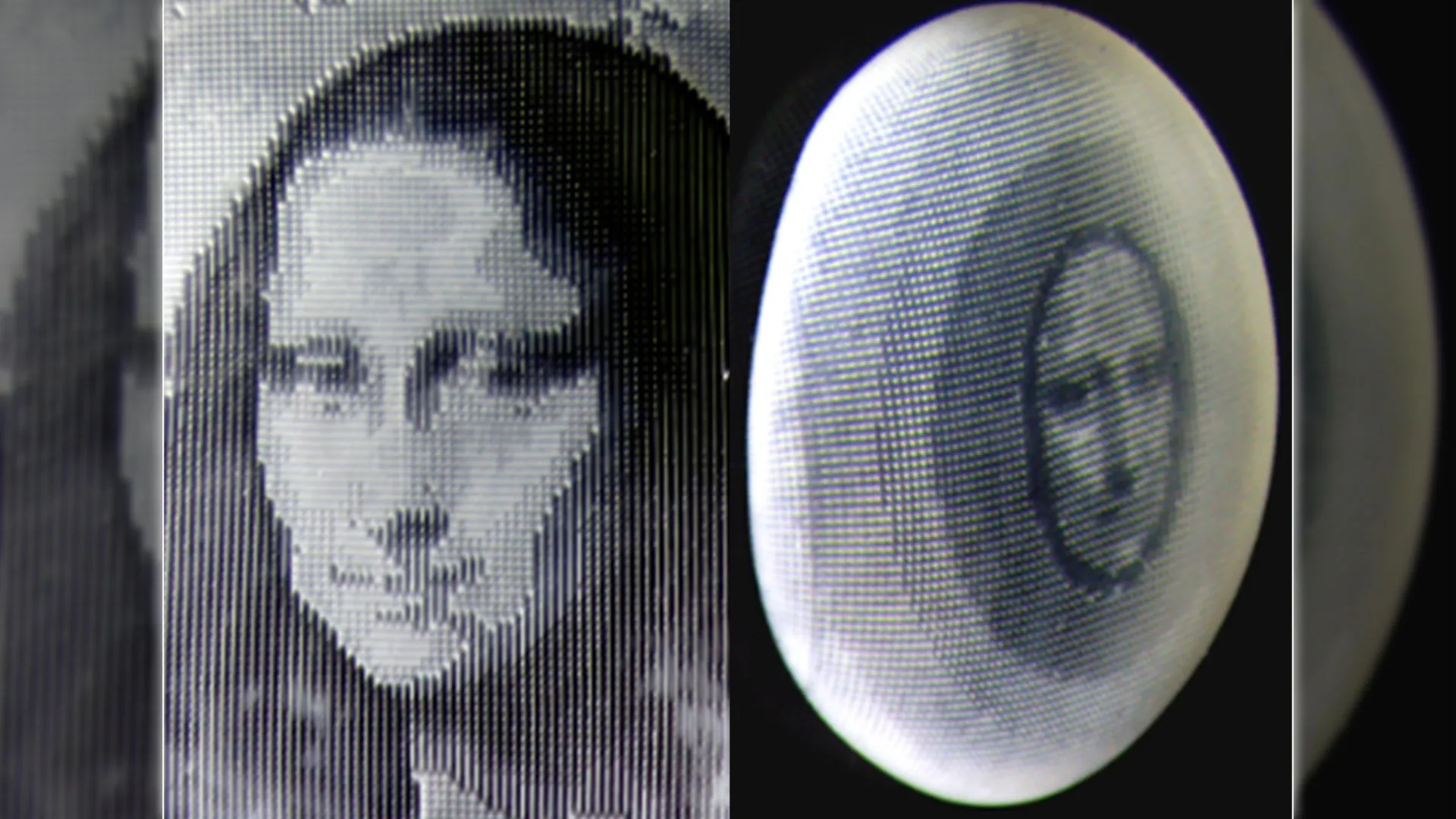
To demonstrate the effect, the team encoded an image of the Mona Lisa into the hydrogel film. When the material was washed with ethanol, it appeared transparent and showed no visible image. The hidden image became clear only after the film was placed in ice water or gradually heated.

Yang noted that the Mona Lisa was used only as an example. The printing technique allows virtually any image to be encoded into the hydrogel.

“This behavior could be used for camouflage, where a surface blends into its environment, or for information encryption, where messages are hidden and only revealed under specific conditions,” Yang said.

The researchers also showed that concealed patterns could be detected by gently stretching the material and analyzing how it deforms using digital image correlation analysis. This means information can be revealed not only visually, but also through mechanical interaction, adding an extra level of security.

Shape Shifting Without Multiple Layers

The smart skin also demonstrated remarkable flexibility. According to Sun, the material can easily shift from a flat sheet into complex, bio-inspired shapes with detailed surface textures. Unlike many other shape-changing materials, this transformation does not require multiple layers or different substances.

Instead, the changes in shape and texture are controlled entirely by the digitally printed halftone patterns within a single sheet. This allows the material to replicate effects similar to those seen in cephalopod skin.

Building on this capability, the team showed that multiple functions can be programmed to work together. By carefully designing the halftone patterns, they encoded the Mona Lisa image into flat films that later transformed into three-dimensional forms. As the sheets curved into dome-like shapes, the hidden image slowly appeared, showing that changes in shape and visual appearance can be coordinated within one material.

“Similar to how cephalopods coordinate body shape and skin patterning, the synthetic smart skin can simultaneously control what it looks like and how it deforms, all within a single, soft material,” Sun said.

Expanding the Potential of 4D-Printed Hydrogels

Sun said the new work builds on earlier research by the team on 4D-printed smart hydrogels, which was also published in Nature Communications. That earlier study focused on combining mechanical properties with programmable transitions from flat to three-dimensional forms. In the current research, the team expanded the approach by using halftone-encoded 4D printing to integrate even more functions into a single hydrogel film.

Looking ahead, the researchers aim to create a scalable and versatile platform that allows precise digital encoding of multiple functions within one adaptive material.

“This interdisciplinary research at the intersection of advanced manufacturing, intelligent materials and mechanics opens new opportunities with broad implications for stimulus-responsive systems, biomimetic engineering, advanced encryption technologies, biomedical devices and more,” Sun said.

The study also included Penn State co-authors Haotian Li and Juchen Zhang, both doctoral candidates in IME, and Tengxiao Liu, a lecturer in biomedical engineering. H. Jerry Qi, professor of mechanical engineering at Georgia Institute of Technology, also collaborated on the project.

Share Button

Court upholds return of surgeon who harassed staff

James Gilbert, who was based in Oxford, was previously suspended for sexual harassment.

Share Button

More baby formula products recalled over toxin fears

Danone has recalled 15 more batches of Aptamil and Cow&Gate first infant milk because a toxin called cereulide may be present.

Share Button

Olive oil and bone broth: Do viral gut health foods actually work?

Many trending foods contain a “small seed of truth” but are often oversold as miracle products.

Share Button

A hidden brain effect of prenatal alcohol exposure

A new study published in JNeurosci reports how experiences before birth may shape the brain and behavior later in life. Led by Mary Schneider and Alexander Converse at the University of Wisconsin-Madison, the interdisciplinary research examined how exposure to alcohol and stress during pregnancy affects rhesus monkey offspring once they reach adulthood.

How Alcohol and Stress Were Studied Before Birth

In the study, pregnant rhesus monkeys were placed into different conditions. Some consumed moderate amounts of alcohol, some were exposed to mild stress, and others experienced both. When the offspring became adults, researchers examined changes in the brain’s dopamine system and measured how the animals consumed alcohol.

Both prenatal alcohol exposure and prenatal stress altered the dopamine system in the adult offspring. Monkeys exposed to alcohol before birth also drank alcohol more quickly as adults. Notably, measurements of the dopamine system taken before the animals had any alcohol were able to predict their later drinking behavior. These findings align with evidence from human studies of alcohol use disorder and suggest that certain brain differences may be present even before problematic drinking begins.

Brain Changes That Continue With Drinking

As the adult offspring consumed alcohol, researchers observed additional changes in the dopamine system. These changes influenced how much alcohol each individual drank and differed from one animal to another. The research team suggests that these individualized brain responses to alcohol may help drive the shift from typical drinking patterns to alcohol use disorder in some individuals.

Implications for Pregnancy and Human Health

According to the researchers, the findings reinforce the message that drinking during pregnancy is not advisable, linking prenatal alcohol exposure to unhealthy drinking patterns later in life. While the study did not find a direct association between prenatal stress and adult drinking behavior, the authors note that prenatal stress may still affect other behaviors not examined in this work.

The researchers also emphasize that their experimental design closely reflects how prenatal alcohol exposure and stress occur in humans. This strengthens the clinical relevance of the findings and helps bridge the gap between animal research and human health outcomes

Share Button

Scientists found a sugar that could defeat deadly superbugs

Researchers in Australia have developed a promising new strategy to combat deadly bacteria that no longer respond to antibiotics. The team engineered antibodies that lock onto a sugar found only on bacterial cells, an approach that could support a new generation of immunotherapies for multidrug resistant infections acquired in hospitals.

The study, published in Nature Chemical Biology, shows that an antibody created in the laboratory was able to eliminate a normally fatal bacterial infection in mice. It works by binding to a distinctive bacterial sugar and alerting the immune system to destroy the invading pathogen.

The project was co led by Professor Richard Payne of the University of Sydney, working with Professor Ethan Goddard Borger at WEHI and Associate Professor Nichollas Scott from the University of Melbourne and the Peter Doherty Institute for Infection and Immunity.

Professor Payne is also set to lead the newly announced Australian Research Council Centre of Excellence for Advanced Peptide and Protein Engineering. This center will build on discoveries like this one to speed the transition from basic research to applications in biotechnology, agriculture, and conservation.

“This study shows what’s possible when we combine chemical synthesis with biochemistry, immunology, microbiology and infection biology,” Professor Payne said. “By precisely building these bacterial sugars in the lab with synthetic chemistry, we were able to understand their shape at the molecular level and develop antibodies that bind them with high specificity. That opens the door to new ways of treating some devastating drug-resistant bacterial infections.”

Why a Bacterial Sugar Is a Unique Target

The antibody developed by the team targets a sugar molecule called pseudaminic acid. Although it resembles sugars found on human cells, this molecule is made only by bacteria. Many dangerous pathogens use it as a key part of their outer surface, helping them survive and evade immune defenses.

Because the human body does not produce this sugar, it offers a highly specific target for developing immunotherapies that avoid harming healthy cells.

Designing a Broad Acting Antibody

To take advantage of this weakness, the researchers first synthesized the bacterial sugar and sugar decorated peptides entirely from scratch. This work allowed them to determine the molecule’s exact three dimensional structure and how it appears on bacterial surfaces.

Using this detailed information, the team created what they describe as a “pan-specific” antibody. It can recognize the same sugar across many different bacterial species and strains.

In mouse infection studies, the antibody successfully cleared multidrug resistant Acinetobacter baumannii. This bacterium is a well known cause of hospital acquired pneumonia and bloodstream infections and is especially difficult to treat.

“Multidrug resistant Acinetobacter baumannii is a critical threat faced in modern healthcare facilities across the globe,” Professor Goddard-Borger said. “It is not uncommon for infections to resist even last-line antibiotics. Our work serves as a powerful proof-of-concept experiment that opens the door to the development of new life-saving passive immunotherapies.”

How Passive Immunotherapy Could Protect Patients

Passive immunotherapy involves giving patients ready made antibodies to quickly control an infection, rather than waiting for the body’s adaptive immune system to respond. This approach can be used both to treat active infections and to prevent them.

In hospital settings, it could be used to protect vulnerable patients in intensive care units who are at high risk from drug resistant bacteria.

Associate Professor Scott noted that the antibodies also offer an important new way to study how bacteria cause disease.

“These sugars are central to bacterial virulence, but they’ve been very hard to study,” he said. “Having antibodies that can selectively recognise them lets us map where they appear and how they change across different pathogens. That knowledge feeds directly into better diagnostics and therapies.”

Moving Toward Clinical Use

Over the next five years, the team plans to turn these findings into antibody treatments ready for use in the clinic, with a focus on multidrug resistant A. baumannii. Achieving this goal would remove one of the most dangerous members of the ESKAPE pathogens and mark a significant step forward in the global effort to fight antimicrobial resistance.

“This is exactly the kind of breakthrough the new ARC Centre of Excellence is designed to enable,” Professor Payne said. “Our goal is to turn fundamental molecular insight into real-world solutions that protect the most vulnerable people in our healthcare system.”

The authors declare no competing interests. Funding was received from the National Health and Medical Research Council; Australian Research Council; National Institutes of Health; the Walter and Eliza Hall Institute of Medical Research; Victorian State Government. Researchers acknowledge support of the Melbourne Mass Spectrometry and Proteomics Facility at the Bio21 Molecular Science and Biotechnology Institute.

All animal handling and procedures were conducted in compliance with the University of Melbourne guidelines and approved by the University of Melbourne Animal Ethics Committee (application ID 29017).

Share Button

Dad who nearly lost tongue to cancer urges men’s virus awareness

A father-of-two reveals how a tumour in his tongue was caused by human papillomavirus (HPV).

Share Button

Increase school funding to meet need for special education, MPs urge

A cross-party group calls on the government to “align funding to need”, as ministers consider SEND reforms.

Share Button

Statin pills much safer than advertised, major review finds

The results, in The Lancet journal, come from trials involving more than 120,000 people comparing statins with a dummy drug or placebo.

Share Button

Donald Trump Rows Back Criticism On Keir Starmer’s Chagos Deal

Donald Trump has now backed Keir Starmer’s Chagos deal once again just weeks after attacking it.

The UK government announced last year that it was going to pay Mauritius £9 billion over the next 99 years so the UK-US military base at Diego Garcia will continue to operate as it does at the moment.

At the height of his row with Europe over control of Greenland last month, the US president accused the UK of giving away the site of “vital US military base” for “NO REASON WHATSOEVER” – despite appearing to be content with the deal at the end of 2025.

But, after a phone call with the prime minister on Thursday, Trump U-turned again, and now seems much more at ease with the plan.

In a post on TruthSocial, he wrote: “I understand that the deal prime minister Starmer has made, according to many, the best he could make.

“However, if the lease deal, sometime in the future, ever falls apart of anyone threatens or endangers US operations and forces at our base, I retain the right to militarily secure and reinforce the American presence in Diego Garcia.

“Let it be known that I will never allow our presence on a base as important as this to ever be undermined or threatened by fake claims or environmental nonsense.

“Thank you for your attention to this matter!”

The prime minister reportedly spoke to Trump about the “importance of the deal to secure the joint UK-US base on Diego Garcia, which remains vital to shared security interests”.

The two leaders agreed that the UK and US “will continue to work closely on the implementation of the deal”, according to Downing Street’s readout of the call.

No.10 will be breathing a huge sigh of relief at the president’s latest change of heart, considering Trump had condemned Starmer’s decision to give up the islands as “an act of great stupidity” in January.

The president said: “There is no doubt that China and Russia have noticed this act of total weakness.”

He added: “The UK giving away extremely important land is an act of GREAT STUPIDITY, and is another in a very long line of National Security reasons why Greenland has to be acquired. Denmark and its European Allies have to DO THE RIGHT THING.”

The outburst stunned the Westminster at the time and there were concerns about the future of the so-called “special relationship” between the US and UK.

But, unlike the European Union, Starmer ruled out imposing retaliatory tariffs on America, even if Trump went ahead with his threat to slap 10% import charges on British goods from February 1.

And, once Trump had supposedly worked up a “framework of a future deal” with Nato over Greenland, he dropped the tariff threat.

Share Button