If you’ve ever had your hair dyed, your stylist likely recommended a particular shampoo and conditioner to keep your locks looking lush long after you leave their chair. If you’ve recently stopped dyeing your hair, are in the process of going gray or have been rocking the all-gray look for years, rest assured, there are special products for you, too.
In fact, there’s a shampoo and conditioner system designed to address the unique needs of natural gray and blonde hair: Luseta’s “Color Brightening” purple shampoo and conditioner. Coming in two 16.9-ounce bottles with an easy-pump top, users say it’s a salon-quality set for a budget price, which is even better today, as it’s currently 37% off, according to our price trackers.
Advertisement
Wherever you are on your “gray journey,” reviewers seem confident that this set will upgrade your hair in the best way. “I did not expect all of the compliments about my graying hair,” says one user.
Per the rave reviews from folks who’ve gone gray or are blonde, this set is the best on the market for keeping their un-colored strands feeling silky and looking “luminescent.” The pair is designed to balance out the naturally gray and blond hues while nourishing the strands for long-term hair health. Some call it their “hair savior,” saying it’s a “must-have for anyone who wants their silver hair to sparkle.” Others say that after using it, it looks “like there’s a spotlight shining on my hair.”
Advertisement
The shampoo formula addresses brassy and yellow hues, split ends and deep cleaning needs. Meanwhile, the conditioner works to restore moisture, protect and repair heat damage and environmental stress while topping the hair off with a glossy finish. Both products are also paraben-, sulfate- and gluten-free!
People with gray hair are especially reporting in droves that they’re seeing the big turnarounds in color and softness.
One reviewer who recently stopped coloring their hair after 30 years of dying wrote, “My hair has never felt so clean, soft, shiny” while a reviewer in their mid-sixties who’s been dye-free for 12 years said this duo made their hair “brighter and healthier in appearance.”
Advertisement
It seems nearly everyone who uses it agrees on the product’s brightening and de-brassing ability, noting their gray hair almost looks like shiny silver. Even a reviewer with self-described “stark white” hair gave the set 5 stars.
“I am completely amazed at how much it has toned down my bright white color,” they wrote. “Friends are even asking if I am again ‘coloring’ my hair. I am so pleased with the outcome. And it holds the “toning down” in between shampoos.”
Many say they came to this set after not wanting to keep shelling out for more expensive options, and have been positively surprised by the results. “The best affordable gray hair product I’ve used yet!” one wrote. “My hair is shiny, and feels very healthy,” nothing the conditioner doesn’t make their hair greasy.
Advertisement
Whether you’ve long been gray all the way or are just starting your journey, check out some of these 5-star reviews of the Luseta brightening purple shampoo and conditioner before grabbing yours on sale.
“I think my hair is beautiful . It’s still a solid brown with lots of silver grey around my face . My hair grows with wild abandon , reminding me of wild ocean waves with waves of brown and silver mixed together . Lately my hair was looking dry lifeless and dull . I have used a purple shampoo before but ran out and never replaced it . I went to Amazon expecting to buy the same product . Instead I found a bunch of purple shampoo . When I read the reviews this product seemed like it would be good for me . I bought the shampoo and conditioner as a set . The review’s said the product is runney , mine isn’t . Everything else was accurate , my hair is curlier , shiny , soft , and smells good . The silver shines and sparkles like there’s a spotlight shining on my hair. . I am very happy with this product . I mostly bought my shampoo and conditioner from the dollar store . The price was a bit of a shocker for me but the other purple shampoo wasn’t cheap either . This is a case of you get what you pay for . If I want to look good , and I do , then I will continue to buy this product .” — Les Claus
“I wanted to wait to use this product for awhile to see how it worked with my hair. I have to say I love it! I received the glossy pearl ( the white set) as a gift. I purchased the thickening set ( the purple set) as I am on medication which effects my hair. I now. have waist length hair. Was this shampoo responsible for the growth of my hair? Not entirely, but it helped. I also purchased the mint and rosemary set ( the light green set) for strengthening. I have to say I am incredibly satisfied with all of them. As I said I have waist length hair. It is blonde and it is fine in texture. It can be a beast to work with. This line of products has been a great help! I have found them to be a great value for the money. Alitle goes a long way. Keep in mind when you wash your hair you only need to apply shampoo to your scalp. The remainder of your hair will be washed as the soap rinses from your hair. Then when applying conditioner you squeeze the water from your hair then apply conditioner half way up your hair shaft. Applying more than this is a waste. If you apply conditioner to your entire hair shaft and scalp you simply over condition as well as risk your hair becoming greasy. You hair closest to your scalp is conditioned by the natural oils your body produces via your scalp. Anyway back to the review. The scent of the three sets I have tried were lovely and not over powering. My hair feels wonderful afterwards. The sets do exactly what they say they are going to do. The glossy pearl controls frizz and makes my hair incredibly shiny. It looks and feels amazing..The rosemary shampoo is lovely as well. My hair is stronger and I have much less breakage. The biotin shampoo helped my hair look and feel thicker. Most people don’t know normal growth, fall, replacement for a person is typically 50 hairs a day. Some people have more, some people less. It is when you have bald spots and you can clearly see scalp it is time to worry. I truly have not been unhappy with any of the sets I have tried!” — Kindle Customer
“Shampoo and conditioner arrived in a cute box intact. Added bonus of stickers. I bought this because I’m letting my grays grow in and have tried various products to blend my grays. This is the one that works for me. Smells wonderful and leaves my hair soft with body and my grays appear more platinum. Love it.” — jennie bezick
Looking for products for thicker hair? Check out this collection of highly-rated prodcuts by Senior Shopping Writer, Tessa Flores.
Amazon
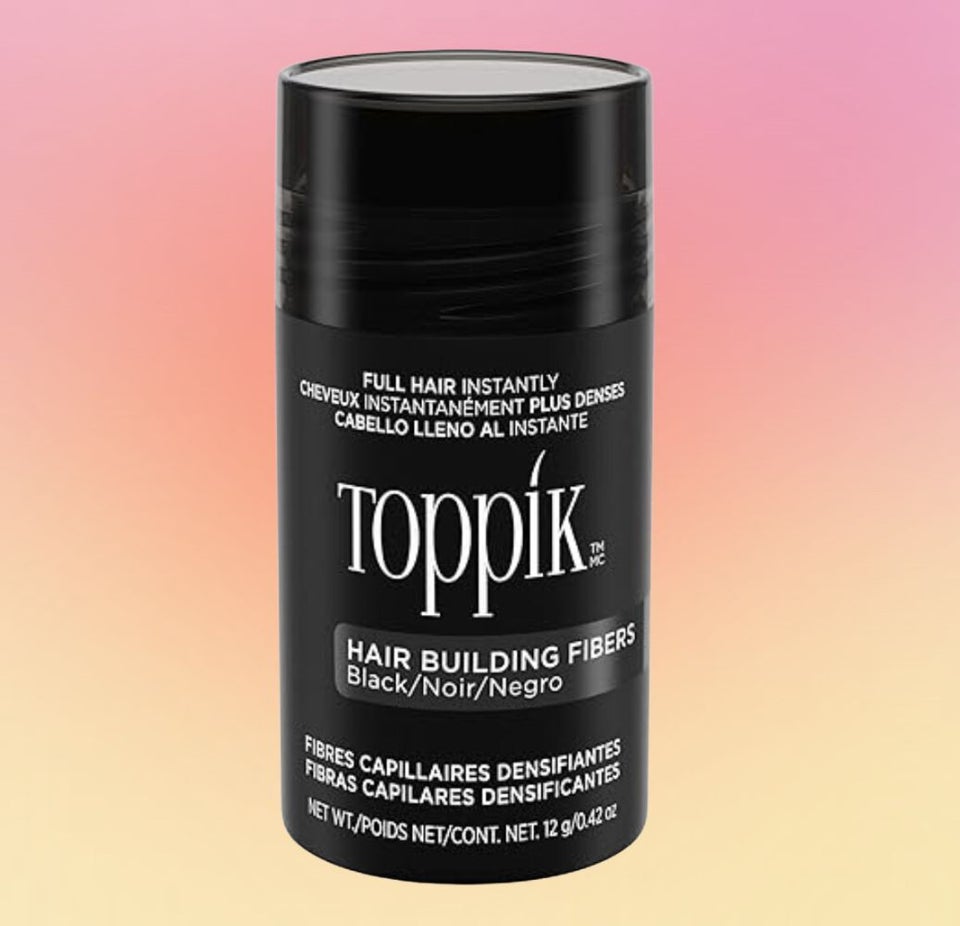
Hair-building fibers
Reviewers call this bottle of hair-building fibers “a best kept secret” for making hair appear instantly thicker while also concealing bald spots and grays. The fibers, which are made of a keratin protein, work by clinging to existing hair strands for a seamless look and a performance that’s resistant to rain, wind or sweat. It’s available in nine hair colors.
Promising Amazon reviews: “Amazing best kept secret! Most folks have never heard of these hair fibers but they really work! When I pull my hair back into a pony tail, the baby hair along the front of my face is thin and a few gray hairs popping in. All you see is my scalp and looks bad so I ordered these hair fibers and with a little sprinkle, you can not see the obvious part that looks like a bald spot!
My husband uses the gray fiber because he has some thinning on the top of his scalp. The hair fibers makes his hair look so much fuller and can’t see through to his scalp! We both do not use it on a daily basis. Just when we know we will be taking pictures and/or social events. No gimmicks here…works like a charm! A little sprinkle goes a long way! Highly recommend!” — Penny T.
“My hair has thinned around my temples and this product was recommended to me by my hair stylist. I love it! It allows me to wear my hair up it a pony tail without looking thin around the hairline. It’s also great for when my gray roots start coming in and I have a couple days until my next hair appointment. Life saver!” — Jackie Gringle
Sephora
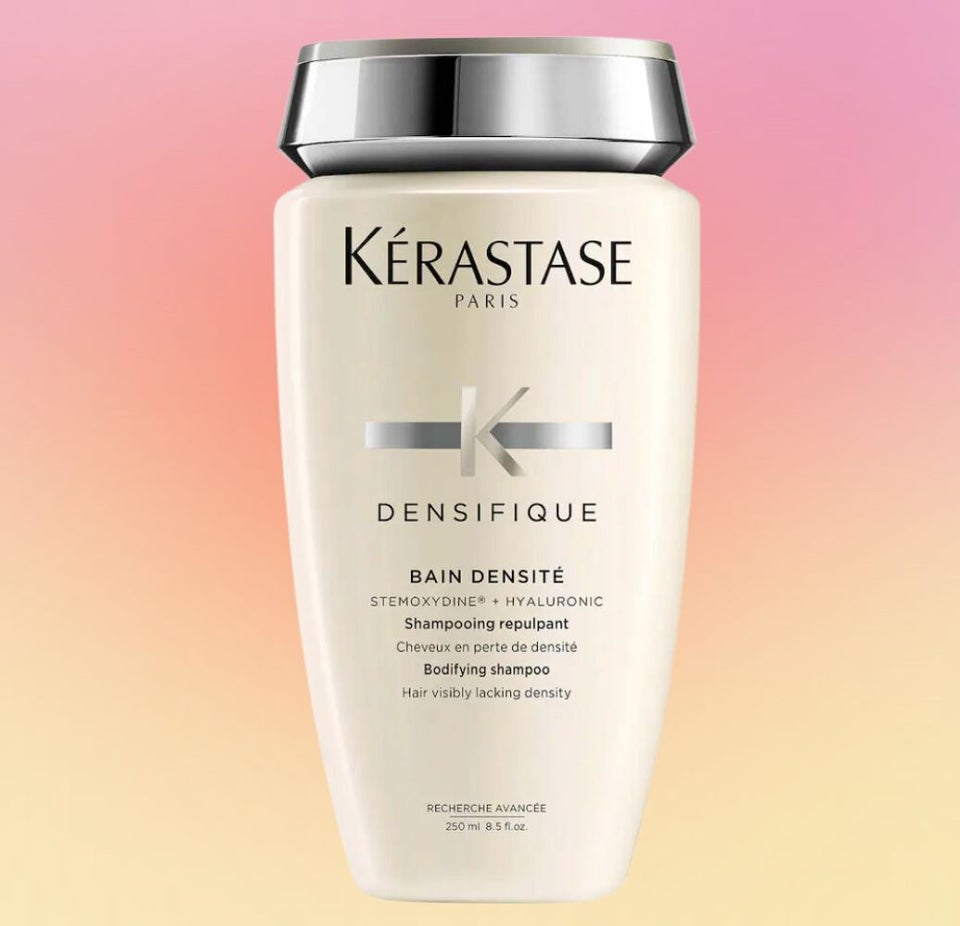
A peptide-infused shampoo for thinning hair
Promising Sephora review: “”Definitely stuck on this one now! This makes my hair look and feel thicker and it makes it feel soft too. There’s no gross smell or feel when you use it and I think it’s worth the price.” — kilianm
Amazon
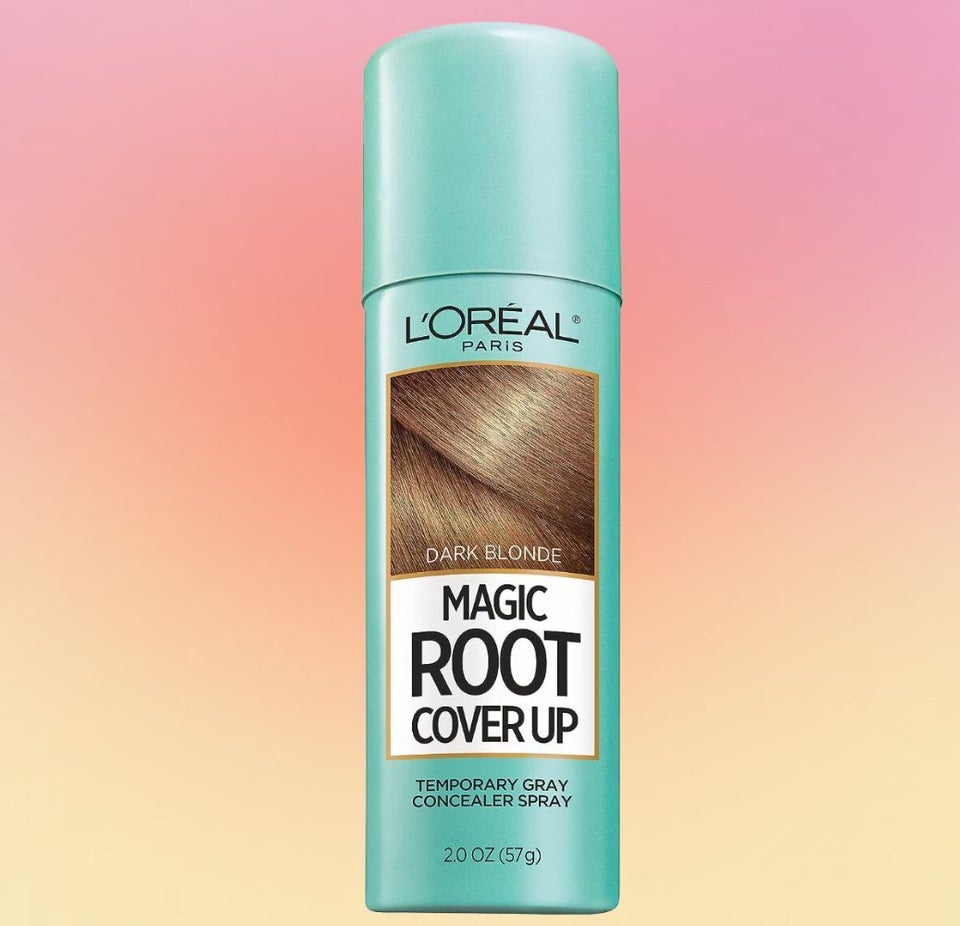
A root cover spray
This popular hair spray is marketed as a solution to temporarily cover grays in between dye jobs, but reviewers also claim that it can help make hair appear thicker by concealing areas where hair is thinner and the scalp is more noticeable. The lightweight formula claims to be water- and smudge-resistant, residue-free and quick-drying. It comes in up to 11 shades that wash out easily on your next shampoo.
Promising Amazon review: “I’m a senior with thinning hair and this spray works great. Just be sure to hold it only 4″ approx from your scalp and spray for2-3 seconds and move to a new spot on your head where your scalp is showing thru or your roots are showing. Don’t hold too far away from your scalp and don’t hold it in one spot. It will feel cold, but that stops almost as soon as you are done spraying that spot. It dries in min. It also thickens your hair so your hair will look fuller. Your fingers may get a little spray on them, but it washes right off with a bit of soap. Also this does wash out if you don’t like it. It washes out easily.” — Jan S-dell
Advertisement
The Real Deal: We use deal trackers and commerce experience to sift through “fake” hike-and-drop deals and other deceptive sales tactics. Products will usually be rated at least 4 stars with a minimum 15% discount. (And when there’s an exception, we’ll tell you why.)
Advertisement