Nancy Pelosi Announces Retirement From Congress

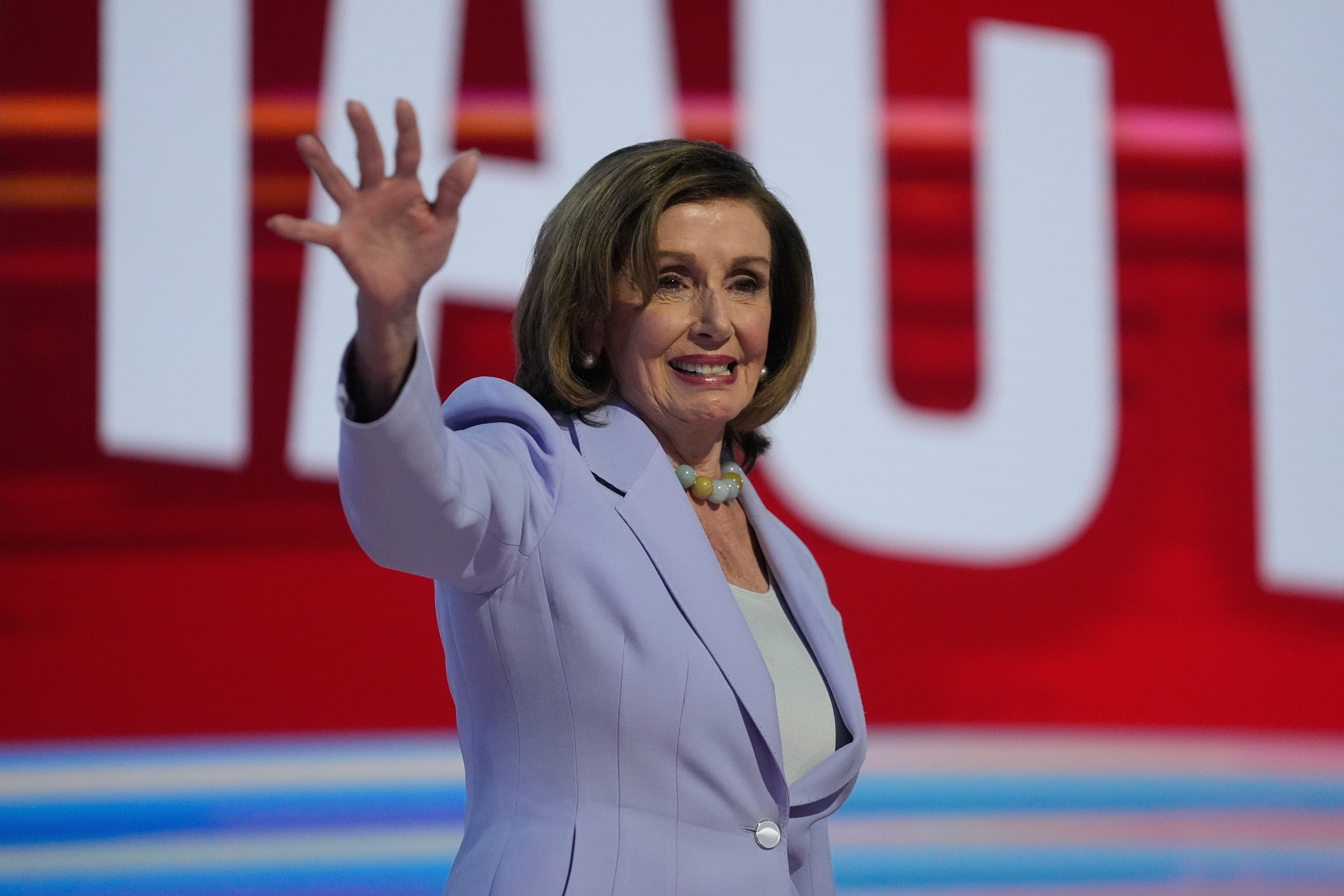
WASHINGTON — Representative Nancy Pelosi (Democrat, California) announced on Thursday that she won’t run for reelection in 2026, marking the end of her decades-long run in the House and capping off her legacy as one of the Democratic Party’s most powerful and effective leaders.

“I have truly loved serving as your voice in Congress,” Pelosi said in a six-minute video that showcases her tenure and her city’s history.

“That is why I want you, my fellow San Franciscans, to be the first to know. I will not be seeking reelection to Congress,” she says. “With a grateful heart, I look forward to my final year of service as your proud representative.”

Pelosi, 85, has represented her progressive San Francisco district since 1987. First coming to the Congress to tackle the AIDS crisis devastating her community, she rose through the ranks of her party to make history, again and again. She was the first woman elected House minority whip in 2001, the first woman elected House minority leader in 2002, and, most notably, the first woman to become House speaker in 2007, and again in 2019.

As party leader, Pelosi kept a tight grip on her colleagues for decades. She was known for her mastery of vote-counting and legislative strategy, and her ability to bring wavering Democrats on board with her plans by hauling them into private meetings, plying them with pieces of dark chocolate and cutting a deal before they walked out the door.

Pelosi has been a boon to Democratic fundraising for decades. In 2014, for example, one news outlet suggested she was single-handedly keeping House Democrats afloat that year.

Her legacy as speaker includes her strong opposition to the Iraq War during President George W. Bush’s tenure and her pivotal role in passing landmark legislation under President Barack Obama. She was key to some of his greatest successes, including the Affordable Care Act, the Dodd-Frank Wall Street reform bill, the repeal of the military’s “don’t ask, don’t tell” policy, and the American Recovery and Reinvestment Act, which infused $841 billion into the economy to stave off pain from the 2007-09 recession.

During President Donald Trump’s first term, Pelosi was his most formidable adversary. She routinely called him out for his lies and recklessness, and threw up barriers to his many efforts that Democrats opposed. Trump was no fan of hers, often calling “sick” or “crazy,” but even he praised her political savvy when Democrats retook the House in 2018, saying she deserved “a lot of credit.”

Pelosi weathered numerous intra-party scuffles as leader. She angered progressives in 2019 by refusing to support impeachment proceedings against Trump, though she later agreed to hold hearings and Trump went on to be impeached later that year. She also upset some Democrats last year by not-so-subtly signalling that then-President Joe Biden should drop his bid for reelection after his disastrous debate performance against Trump in June.

The California Democrat had been fueling speculation about her future for weeks. She said last month that she’d be making an announcement on whether she was running again, but only after the November 4 elections. She was waiting to see the outcome of a California ballot initiative she strongly supported: Proposition 50, a statewide redistricting measure that Democrats are pushing as a counter to gerrymandering in Republican-led states. It passed.

There’s not an obvious successor for Pelosi’s House seat. Democrats currently running for this seat include California state Senator Scott Wiener and Saikat Chakrabarti, a former tech executive who was also former chief of staff to Rep. Alexandria Ocasio-Cortez (Democrat, New York).

Share Button

Senate Clears Bill To Prevent Government Shutdown

With hours left to go on the eve of a government shutdown, Congress passed a stopgap bill to keep federal agencies funded and workers at their desks through mid-November.

The price? About $6 billion in aid to help Ukraine defend itself against Russian invaders and new worries Russian dictator Vladimir Putin will be encouraged to continue the full-scale invasion he started in February 2022.

On Saturday afternoon, the House voted 335 to 91 for a temporary funding bill to keep the government operating through Nov. 16 and also fund disaster assistance. Two hundred and nine Democrats joined 126 Republicans in voting for the package.

Later that night, the Senate passed it 88 to 9, though only after some last-minute public misgivings by a few Democratic senators, including a brief hold on floor action by Democratic Senator Michael Bennet over the Ukraine aid.

The bill will now go to the White House for President Joe Biden’s signature.

The deal will avoid the worst case politically that both parties feared ― being blamed for the first government shutdown since 2019 ― but leaves several issues unaddressed, like the future of House Speaker Kevin McCarthy.

Putting the bill on the floor was a stark turnaround for McCarthy, who has spent all year trying to placate far-right members of his conference — something that has proved almost impossible. On Friday, he moved a bill that would have kept the government open with severe spending cuts and 21 hard-line Republicans still voted no, dooming it.

Republicans such as Representative Matt Gaetz have said they would force a no-confidence vote in McCarthy if the House passed a funding bill with Democratic support.

But pulling his party back from the brink of a shutdown may have boosted his stock with the more moderate wing of his party. “If we have folks in the conference that don’t like his leadership, that want to put a motion to vacate forward, that’s on them to do that and explain to the American people why,” said Republican Representative Mike Lawler.

And McCarthy remained defiant.

“If somebody wants to make a motion against me, bring it. There has to be an adult in the room,” he said.

Another open question is what happens when the stopgap bill expires. While lawmakers have a few more weeks to work on spending bills, it’s unclear that they will get them finished by then. And the near-shutdown this time could merely be a dress rehearsal for an actual one later in the year.

Democrats initially balked at the bill, saying they had not been given enough time to read its 71 pages. But faced with the political reality that they could be blamed for a shutdown by insisting on aid to war-torn Ukraine, many decided to embrace the bill.

Representative Rosa DeLauro, the top Democrat on the Appropriations Committee, however, read a letter from Mike McCord, the Pentagon’s undersecretary for defense, who warned that European allies would be unlikely to keep up their support for Ukraine without U.S. leadership.

“From the very beginning of the war, Putin has bet that America is weak, unreliable, and that his desire to rebuild the Soviet Empire was greater than our will to oppose him,” said Scott Cullinane, director of government affairs at Razom for Ukraine, a pro-Ukraine advocacy group. “Our unwillingness to give Ukraine the weapons it needs to win and Congress’ delay in funding threaten to prove Putin right.”

McCarthy has said there is enough Ukraine aid still in the pipeline for another 45 days. Aid could be attached to another bill later on, but would probably have to be more than the $6 billion that was at issue here and it’s unclear what bill it would have to be attached to in order to pass.

Representative Jim McGovern said the stopgap was a win for Democrats, especially compared with what House Republicans had been proposing earlier in the week. He also said he thought Ukraine aid would eventually be passed.

“Talk to me in a few weeks,” he said.

“We have to deal with these issues again in 45 days but, for today, I’ve got a little bounce in my step.”

CORRECTION: An earlier version of this story incorrectly included the word “all” when referring to the 126 Republicans who voted for the House bill. There are currently 221 Republicans in the House.

Share Button