Modern sea-level rise linked to human activities

New research by Rutgers scientists reaffirms that modern sea-level rise is linked to human activities and not to changes in Earth’s orbit.

Surprisingly, the Earth had nearly ice-free conditions with carbon dioxide levels not much higher than today and had glacial periods in times previously believed to be ice-free over the last 66 million years, according to a paper published in the journal Science Advances.

“Our team showed that the Earth’s history of glaciation was more complex than previously thought,” said lead author Kenneth G. Miller, a Distinguished Professor in the Department of Earth and Planetary Sciences in the School of Arts and Sciences at Rutgers University-New Brunswick. “Although carbon dioxide levels had an important influence on ice-free periods, minor variations in the Earth’s orbit were the dominant factor in terms of ice volume and sea-level changes — until modern times.”

Sea-level rise, which has accelerated in recent decades, threatens to permanently inundate densely populated coastal cities and communities, other low-lying lands and costly infrastructure by 2100. It also poses a grave threat to many ecosystems and economies.

The paper reconstructed the history of sea levels and glaciation since the age of the dinosaurs ended. Scientists compared estimates of the global average sea level, based on deep-sea geochemistry data, with continental margin records. Continental margins, which include the relatively shallow ocean waters over a continental shelf, can extend hundreds of miles from the coast.

The study showed that periods of nearly ice-free conditions, such as 17 million to 13 million years ago, occurred when the concentration of atmospheric carbon dioxide — a key greenhouse gas driving climate change — was not much higher than today. However, glacial periods occurred when the Earth was previously thought to be ice-free, such as from 48 million to 34 million years ago.

“We demonstrate that although atmospheric carbon dioxide had an important influence on ice-free periods on Earth, ice volume and sea-level changes prior to human influences were linked primarily to minor variations in the Earth’s orbit and distance from the sun,” Miller said.

The largest sea-level decline took place during the last glacial period about 20,000 years ago, when the water level dropped by about 400 feet. That was followed by a foot per decade rise in sea level — a rapid pace that slowed from 10,000 to 2,000 years ago. Sea-level rise was then at a standstill until around 1900, when rates began rising as human activities began influencing the climate.

Future work reconstructing the history of sea-level changes before 48 million years ago is needed to determine the times when the Earth was entirely ice-free, the role of atmospheric carbon dioxide in glaciation and the cause of the natural fall in atmospheric carbon dioxide before humans.

Story Source:

Materials provided by Rutgers University. Note: Content may be edited for style and length.

Share Button

Key to preserving The Scream

Moisture is the main environmental factor that triggers the degradation of the masterpiece The Scream (1910?) by Edvard Munch, according to the finding of an international team of scientists led by the CNR (Italy), using a combination of in situ non-invasive spectroscopic methods and synchrotron X-ray techniques. After exploiting the capability of the European mobile platform MOLAB in situ and non-invasively at the Munch Museum in Oslo, the researchers came to the ESRF, the European Synchrotron (Grenoble, France), the world’s brightest X-ray source, to carry out non-destructive experiments on micro-flakes originating from one of the most well-known versions of The Scream. The findings could help better preserve this masterpiece, which is seldom exhibited due to its degradation. The study is published in Science Advances.

The Scream is among the most famous paintings of the modern era. The now familiar image is interpreted as the ultimate representation of anxiety and mental anguish. There are a number of versions of The Scream, namely two paintings, two pastels, several lithographic prints and a few drawings and sketches. The two most well-known versions are the paintings that Edvard Munch created in 1893 and 1910. Each version of The Scream is unique. Munch clearly experimented to find the exact colours to represent his personal experience, mixing diverse binding media (tempera, oil and pastel) with brilliant and bold synthetic pigments to make ‘screaming colours’. Unfortunately, the extensive use of these new coloured materials poses a challenge for the long-term preservation of Munch’s artworks.

The version of the Scream (1910?) that belongs to the Munch Museum (Oslo, Norway) clearly exhibits signs of degradation in different areas where cadmium-sulfide-based pigments have been used: cadmium yellow brushstrokes have turned to an off-white colour in the sunset cloudy sky and in the neck area of the central figure. In the lake, a thickly applied opaque cadmium yellow paint is flaking. Throughout its existence, several elements have played a role in the deterioration of the masterpiece: the yellow pigments used, the environmental conditions and a theft in 2004, when the painting disappeared for two years.

Since the recovery of the painting after the theft, the masterpiece has rarely been shown to the public. Instead, it is preserved in a protected storage area in the Munch Museum, in Norway, under controlled conditions of lighting, temperature (about 18°C) and relative humidity (about 50%).

An international collaboration, led by the CNR (Italy), with the University of Perugia (Italy), the University of Antwerp (Belgium), the Bard Graduate Center in New York City (USA), the European Synchrotron (ESRF, France), the German Electron Synchrotron (DESY, Hamburg) and the Munch Museum, has studied in detail the nature of the various cadmium-sulfide pigments used by Munch, and how these have degraded over the years.

The findings provide relevant hints about the deterioration mechanism of cadmium-sulfide-based paints, with significant implication for the preventive conservation of The Scream.

“The synchrotron micro-analyses allowed us to pinpoint the main reason that made the painting decline, which is moisture. We also found that the impact of light in the paint is minor. I am very pleased that our study could contribute to preserve this famous masterpiece,” explains Letizia Monico, one of the corresponding authors of the study.

Hitting the right formula for preservation

Monico and her colleagues studied selected cadmium-sulfide-based areas of The Scream (1910?), as well as a corresponding micro-sample, using a series of non-invasive in-situ spectroscopic analyses with portable equipment of the European MOLAB platform in combination with the techniques of micro X-ray diffraction, X-ray micro fluorescence and micro X-ray absorption near edge structure spectroscopy mainly at the ESRF, the European Synchrotron, in France, the world’s most powerful synchrotron. The study of the painting was integrated with investigations of artificially aged mock-ups. The latter were prepared using a historical cadmium yellow pigment powder and a cadmium yellow oil paint tube that belonged to Munch. Both mock-ups had a similar composition to the lake in the painting. “Our goal was to compare the data from all these different pigments, in order to extrapolate the causes that can lead to deterioration,” says Monico.

The study shows that the original cadmium sulfide turns into cadmium sulfate in the presence of chloride-compounds in high-moisture conditions (relative humidity, or RH ?95%). This happens even if there is no light.

“The right formula to preserve and display the main version of The Scream on a permanent basis should include the mitigation of the degradation of the cadmium yellow pigment by minimising the exposure of the painting to excessively high moisture levels (trying to reach 45% RH or lower), while keeping the lighting at standard values foreseen for lightfast painting materials. The results of this study provide new knowledge, which may lead to practical adjustments to the Museum’s conservation strategy,” explains Irina C. A. Sandu, conservation scientist at the Munch Museum.

“Today the Munch Museum stores and exhibits Edvard Munch’s artworks at a relative humidity of about 50% and at a temperature of around 20 °C. These environmental conditions will also apply to the new Munch Museum to be opened in Spring 2020. That said, the Museum will now look into how this study may affect the current regime. Part of such a review will be to consider how other materials in the collection will respond to possible adjustments,” adds Eva Storevik Tveit, paintings conservator at the Munch Museum.

Cadmium-sulfide-based yellows are not only present in Munch’s artwork but also in the work of other artists contemporary to him, such as Henri Matisse, Vincent van Gogh and James Ensor.

“The integration of non-invasive in-situ investigations at the macro-scale level with synchrotron micro-analyses proved its worth in helping us to understand complex alteration processes. It can be profitably exploited for interrogating masterpieces that could suffer from the same weakness,” reports Costanza Miliani, coordinator of the mobile platform MOLAB (operating in Europe under the IPERION CH project) and second corresponding author of this study.

Monico and colleagues, especially Koen Janssens (University of Antwerp), have a long-standing collaboration with the ESRF, the European Synchrotron, and in particular with the scientist Marine Cotte, to investigate these pigments and the best way to preserve the original masterpieces.

“At the ESRF, ID21 is one of the very few beamlines in the world where we can perform imaging X-ray absorption and fluorescence spectroscopy analysis of the entire sample, at low energy and with sub-micrometer spatial resolution,” explains Janssens.

“EBS, the new Extremely Brilliant Source, the first-of-a-kind high-energy synchrotron, which is under commissioning at the moment at the ESRF, will further improve the capabilities of our instruments for the benefit of world heritage science. We will be able to perform microanalyses with increased sensitivity, and a greater level of detail. Considering the complexity of these artistic materials, such instrumental developments will highly benefit the analysis of our cultural heritage,” adds Cotte, ESRF scientist and CNRS researcher director.

“This kind of work shows that art and science are intrinsically linked and that science can help preserve pieces of art so that the world can continue admiring them for years to come,” concludes Miliani, coordinator of MOLAB.

Share Button

COVID-19 infection control, radiographer protection in CT exam areas

In an open-access article published ahead-of-print by the American Journal of Roentgenology (AJR), a team of Chinese radiologists discussed modifications to the CT examination process and strict disinfection of examination rooms, while outlining personal protection measures for radiographers during the coronavirus disease (COVID-19) outbreak.

As Jieming Qu, Wenjie Yang, and colleagues at Shanghai Jiao Tong University Medical School Affiliated Ruijin Hospital noted, to undergo CT, patients must exit the fever clinic and proceed to an examination room elsewhere at the institution. Moreover, CT examination rooms are not designed according to the rule of three zones and two aisles — clean zone, semicontaminated zone, contaminated zone; patient aisle and health care worker aisle.

“We were able to urgently install a CT scanner in the fever clinic at the beginning of the outbreak, which allowed rapid screening and early diagnosis,” Qu et al. wrote. A safe infection control strategy for examination of patients with suspected SARS-CoV-2 was also implemented, including reconstructing the area and planning the path a patient would take. Additionally, Qu, Yang, and team rerouted the walking pathway to be one-way, limiting ingress and egress while separating contaminated zones from clean zones.

Qu, Yang, and colleagues’ extensive routine for examination room disinfection included using an air disinfector (maximum volume of 4000 m3/h) and a movable ultraviolet light (intensity higher than 70 ?W/cm2 per meter); cleaning nonplastic equipment surfaces, radiation protection items, and doorknobs with a solution at least 75% alcohol; washing plastic surfaces with soapy solution; and mopping the floor with a disinfectant containing 2000 mg Cl per liter of water. Similarly, all patient waste was considered infectious medical waste and managed accordingly.

Typically, CT scanning is performed by two radiographers. As Qu et al. explained: “The operating radiographer works in the locked control room and controls the scanner (contaminated area). The positioning radiographer works inside and outside the scanning room (contaminated area) and is responsible for communicating with and positioning the patient. The positioning radiographer is not allowed to enter into the control room until the shift ends.”

Once a shift is finished, the authors of this AJR article noted that the positioning radiographer is allowed to enter the clean zone only after protective equipment has been properly discarded in the buffer zone.

Story Source:

Materials provided by American Roentgen Ray Society. Note: Content may be edited for style and length.

Share Button

Early humans thrived in this drowned South African landscape

Early humans lived in South African river valleys with deep, fertile soils filled with grasslands, floodplains, woodlands, and wetlands that abounded with hippos, zebras, antelopes, and many other animals, some extinct for millennia.

In contrast to ice age environments elsewhere on Earth, it was a lush environment with a mild climate that disappeared under rising sea levels around 11,500 years ago.

An interdisciplinary, international team of scientists has now brought this pleasant cradle of humankind back to life in a special collection of articles that reconstruct the paleoecology of the Paleo-Agulhas Plain, a now-drowned landscape on the southern tip of Africa that was high and dry during glacial phases of the last 2 million years.

“These Pleistocene glacial periods would have presented a very different resource landscape for early modern human hunter-gatherers than the landscape found in modern Cape coastal lowlands, and may have been instrumental in shaping the evolution of early modern humans,” said Janet Franklin, a distinguished professor of biogeography in the department of Botany and Plant Sciences at UC Riverside, an associate member of the African Centre for Coastal Palaeoscience at Nelson Mandela University in South Africa, and co-author of several of the papers.

Some of the oldest anatomically modern human bones and artifacts have been found in cliff caves along the coast of South Africa. For many years, the lack of shellfish in some layers at these sites puzzled archaeologists. In spite of apparently living near the ocean, the inhabitants hunted mostly big game — the sort of animals that typically live farther inland.

Scientists knew a submerged landscape existed on the continental shelf just offshore, but it wasn’t until recently, perhaps inspired by rising sea levels of our current human-caused global warming, they realized these caves might have made up the westernmost edge of a long-lost plain.

During most of the Pleistocene, the geological era before the one we live in now, these caves were not located on the coast. With so much of the Earth’s water locked up in continent-sized glaciers, sea level was much lower, and humans could have thrived between the cliffs and a gentler coastline miles and miles to the east.

A special issue of Quaternary Science Reviews presents papers using a wide range of techniques to reconstruct the environment and ecology of the Paleo-Agulhas Plain. They reveal a verdant world rich with game, plant, and coastal resources, periodically cut off from the mainland during warm spells between glacial periods when sea level rose to levels similar to those of today, which would have played an important role in human evolution.

Franklin and her colleagues used modern vegetation patterns along the Cape south coast to develop models of the expected vegetation for the various soil types, as well as the climate (especially rainfall) and fire regimes of the past glacial periods that framed most of the timeframe in which modern humans emerged.

Joining her in the research were Richard M. Cowling and Alastair J. Potts of Nelson Mandela University; Guy F. Midgley at Stellenbosch University; Francois Engelbrecht of the University of Witwatersrand; and Curtis W. Marean of Arizona State University.

Vegetation was reconstructed based on a model of the ancient climate and fire patterns of these glacial phases that define human evolution. The group developed the vegetation model based on present-day patterns and environmental conditions, compared their model to an independently derived vegetation map to validate it, then applied it to the climate, landforms, and soils reconstructed for the peak of the last ice age on the Palaeo-Agulhas Plain.

Reconstruction, mapping, and modeling of the paleo-climate, geology, and soils by their collaborators are featured in other articles in the special issue.

The model found the paleo-landscape exposed during glacial low-sea levels added a land area the size of Ireland to the southern tip of Africa. Near the coast, it was dominated by “limestone fynbos,” a low-stature, but species-rich shrubland typical of contemporary South Africa’s Cape Floristic Province, a global plant diversity hotspot. The northern plains were mostly grasslands in shallow floodplains and on shale bedrock.

This savanna-like vegetation is rare in the modern landscape and would have supported the megafauna typical of glacial periods. These game animals, found in the archaeological record, include a great diversity of grazing animals, including the now-extinct giant Cape Buffalo, and others of which no longer occur naturally in this part of Africa, such as giraffes.

The Paleo-Agulhas plain had extremely high plant species diversity, as well as a greater variety of ecosystems and plant communities than currently found in this region, including shale grassland with dune fynbos-thicket mosaic on uplands and broad and shallow floodplains supporting a mosaic of woodland and grassland on fertile, alluvial soils.

Share Button

The dreaming brain tunes out the outside world

Scientists from the CNRS and the ENS-PSL in France and Monash University in Australia have shown that the brain suppresses information from the outside world, such as the sound of a conversation, during the sleep phase linked to dreaming. This ability could be one of the protective mechanisms of dreams. The study, carried out in collaboration with the Centre du Sommeil et de la Vigilance, Hôtel-Dieu, AP-HP — Université de Paris, is published in Current Biology on 14 May 2020.

While we dream, we invent worlds that bear no relation to the quietness of our bedroom. In fact, it is rather unusual for elements of our immediate environment to be incorporated into our dreams. To better understand how the brain protects itself from outside influences, researchers invited 18 participants to a morning nap in the lab. Morning sleep is rich in dreams. Dreams mostly occur during what is known as REM sleep, since the brain is somehow in a waking state during this phase of sleep, showing brain activity similar to that when a person is awake. The body, on the other hand, is paralysed, although not entirely. During certain phases of REM sleep, the eyes continue to move. Research has shown that such movements are related to dreaming.

To study how the dreaming brain interacts with external sounds, the scientists got volunteer sleepers to listen to stories in French mixed with meaningless language. By combining the electroencephalogram with a machine learning technique, they confirmed that, even when the brain is asleep, it continues to record everything that goes on around it. They also showed that, during light sleep, the brain prioritises meaningful speech, just as it does when in the waking state. However, such speech is actively filtered out during eye movement phases in REM sleep. In other words, our sleeping brain can select information from the outside world and flexibly amplify or suppress it, depending on whether or not it is immersed in a dream!

The team believe that this mechanism enables the brain to protect the dreaming phase, which is necessary for emotional balance and consolidation of the day’s learning. Although dreams are predominant during periods of eye movement, they can also occur during other phases of sleep. Are they then accompanied by a similar suppression of sensations from the outside world?

Story Source:

Materials provided by CNRS. Note: Content may be edited for style and length.

Share Button

Discipline Ripples

A nice side effect of my daily blogging challenge is that it’s helping me become more disciplined in other areas of life. This in turn increases my capacity to get more done because I can trust that I’ll have abundant discipline to flow through more tasks and projects.

I expected that there would be some discipline ripples, but I’m pleased that they’re better than I anticipated.

Staying caffeine free feels easier than ever. I’m also easily avoiding other stimulants like any forms of chocolate, caffeinated tea, etc. It feels like the part of my brain that recognizes and wants to avoid addictive patterns has been strengthened.

Maintaining my early riser habit feels easier than ever, and I’m often getting up earlier than my usual 5am alarm. This morning I got up at 4:30, which is happening more often. I’ve noticed that I feel less inclined to linger in bed even if I could justify that it’s not time to get up yet. When my body feels awake, it wants to get up and move, not stay in bed longer than it needs to.

On average I’m running for about an hour each morning. This morning’s run was 70 minutes. That used to feel like a long run; now it feels like a normal everyday type of run. The minimum I run is 45 minutes since anything less feels like it’s too little.

With the increased running, I’m flowing through many more nonfiction audiobooks, finishing 2-3 per week, so that will add up to 100-150 audiobooks per year at this rate. I just finished League of Denial yesterday, and this morning I started Big Magic. I’ll finish Big Magic tomorrow and start another audiobook on Sunday.

Work projects are flowing very nicely. I’m doing a better job of staying organized and completing projects in an intelligent order. I’m not perfect at this, but I notice that instead of feeling driven to choose the work for each day based on intuition or emotional impulses, I’m more easily flowing into the most rational project to work on next. And when I sit down to work on it, the discipline is there to stick with it for hours.

I’ve already written more blog articles this year than I did in 2019, 2018, and 2017 combined. By the end of June, you’ll be able to add 2016 to that as well. So that will be like doing four years of blogging in six months.

The interesting thing about 365-day challenges is that initially they’re hard, but eventually they become easy. I’d say that happens somewhere around day 45 to 75. After 6-9 weeks into such a challenge, the resistance crumbles, and the training effect begins to take hold. By enduring that long and not missing a single day, you’ve grown stronger. And it’s easier to keep going because now you get to do the rest of the challenge with a stronger, more aligned, less resistant mind.

It’s hard to stretch ourselves to tackle discipline-building challenges, but note that it does get easier as your mind grows stronger.

The mind that whines about getting up early isn’t the same as the mind that’s already gotten up before dawn for many weeks in a row. The new mind thinks the old mind is a wimp for whining about such an easily maintainable and personally beneficial habit.

The mind that whines about giving up chocolate isn’t the same as the mind that’s free of that addiction and recognizes it as an unnecessary weakness.

The mind that would whine about running for an hour each day isn’t the same as the mind that’s been doing it for weeks, thinks it’s normal, and suspects that 75-minute daily runs would probably be no big deal either.

You’ve gotten used to your current level of self-discipline, but you could train yourself to go beyond that and create a new normal for yourself. Your new normal may yield much better results than your old normal. The transition may be difficult, but once you’ve locked in your new normal, it’s really no more difficult than your old normal. Raising your standards is hard. Keeping them raised is much easier.

When you train up your discipline and then apply it to your life, you don’t suffer every day because the rewards of discipline are greater than the temporary pleasures of an undisciplined life. Life without chocolate isn’t a sad life. It’s a more focused and mentally stable life since the body no longer has to deal with the ups and downs of the stimulant effect.

The sad life is that of the stimulant addict who’s in denial about their addiction. The sad life is a life without daily exercise and its many neurological benefits. The sad life is that of the person who has to suffer with the results of undisciplined habits taking their toll year after year.

Training up your discipline is hard – yes. But not training up your discipline is way, way, way harder.

Imagine what more you could experience and enjoy with more discipline – the ability to get yourself to take rational actions that create desirable results again and again. That’s worth some challenging training, so you can access those long-term benefits.

Share Button

Coronavirus infection ‘R’ rate in UK creeps up

The figure is now much closer to one – the point at which the virus starts spreading rapidly.

Share Button

Coronavirus vaccine: Macaque monkey trial offers hope

Six rhesus macaque monkeys were vaccinated and then exposed to the virus.

Share Button

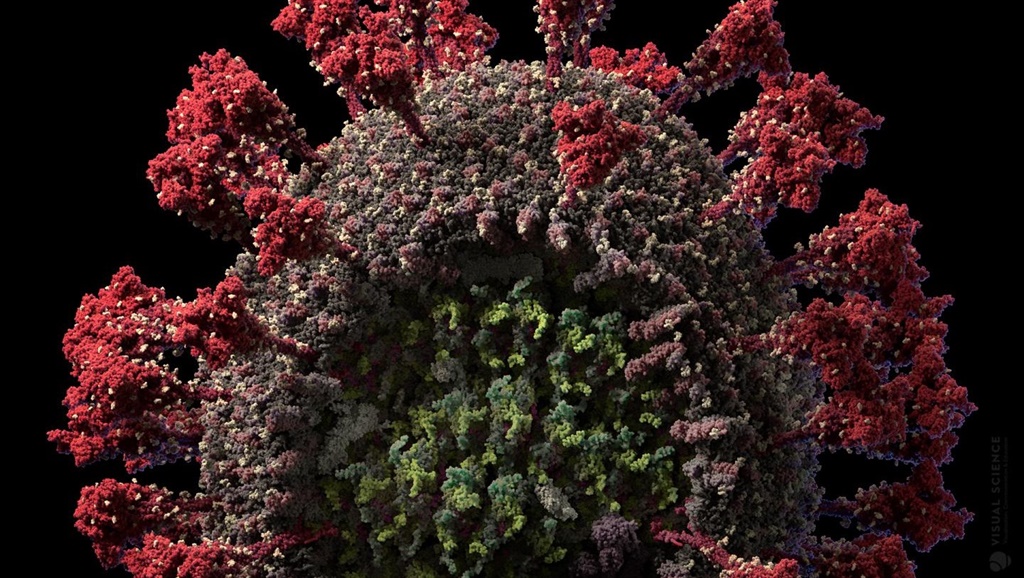
Health24.com | SEE: This is what the coronavirus looks like at an atomic level – according to a 3D model

The new coronavirus, named SARS-CoV-2, received its name for its crown-like spikes on its surface which can be seen under a microscope. However, according to a news release by EurekAlert, scientists from the biomedical visualisation studio, Visual Science, have recently created a three-dimensional (3D) model of the virus at atomic resolution, which allows for the incredible ability to view individual atoms. 

To create an accurate model, the team of scientists and CGI specialists used the latest scientific research that looks at the structure of coronaviruses, and communicated with virologists currently working with SARS-CoV-2. Apart from their recent model, they also previously created models of Ebola, HIV, Zika and flu viruses. Their HIV virion model was awarded first place at the 2010 Science and Engineering Visualization Challenge (SEVC), according to EurekAlert.

“It [the model] shows, in great detail, the intact particle with its spike glycoproteins embedded in the membrane. A cutaway view reveals the viral nucleocapsid inside the particle. 

“These gorgeous images will enhance our understanding of the virus particle, and for the non-scientist will make even more palpable the virus that is infecting millions of people,” Professor Vincent Racaniello at the Department of Microbiology & Immunology of Columbia University, New York, said.

SARS-CoV-2

SARS-CoV-2 main model look. Image credit: Visual Science

READ | Coronavirus in SA: All the confirmed cases

READ | Coronavirus morning update: Level 3 by end-May – but not for all, and symptoms to look out for in kids

READ | Why can two young and healthy individuals be affected so differently by coronavirus?

Image credit: Visual Science

Share Button

Health24.com | WATCH | Why does video chatting drain you so much?

The information on Health24 is for educational purposes only, and is not intended as medical advice, diagnosis or treatment. If you are experiencing symptoms or need health advice, please consult a healthcare professional. See additional information.

Share Button