Gwyneth Paltrow On What Happens To Your Identity When You’re Not ‘F**kable’

Gwyneth Paltrow opened up about her looks, the aging process and struggling with her identity as she gets older on a recent episode of Goop’s new podcast, “The Beauty Closet.” 

“I’ve always felt so funny about my looks,” the “Iron Man” actress told Goop editors Jean Godfrey-June and Megan O’Neill. “I think that it’s very rare to think that you’re a beautiful person, and so, I feel like every other woman — like, I don’t see that when I look in the mirror.”

The Goop founder added that though she doesn’t always see herself as beautiful, other people have “considered” her that ― which she says is a “weird thing to be” as she gets older. 

“I think when you come to age, if you have this broad identity as that, what does it mean to get wrinkles and, like, get closer to menopause, and all these things?” she pondered. “What happens to your identity as a woman if you’re not fuckable and beautiful?”

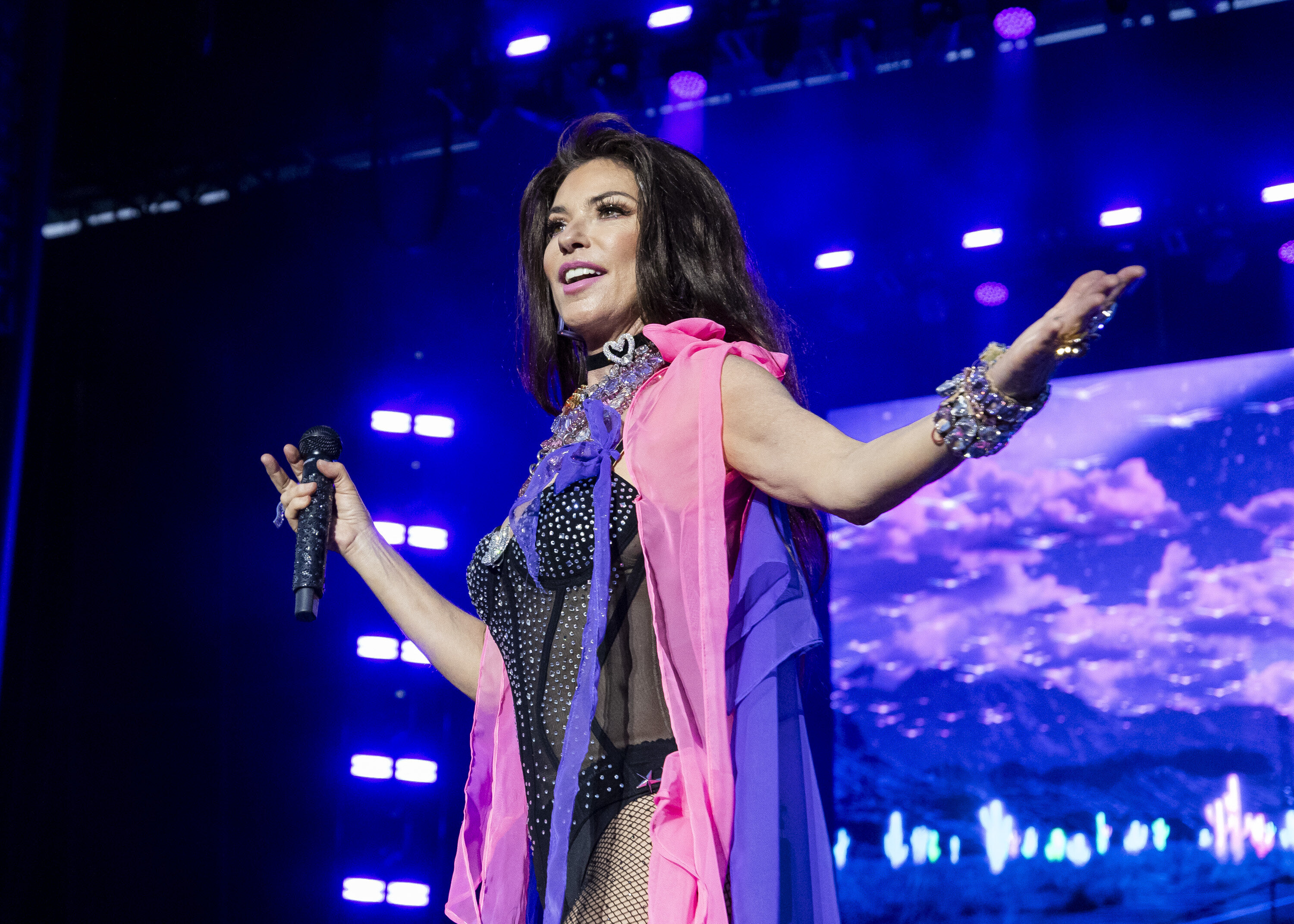
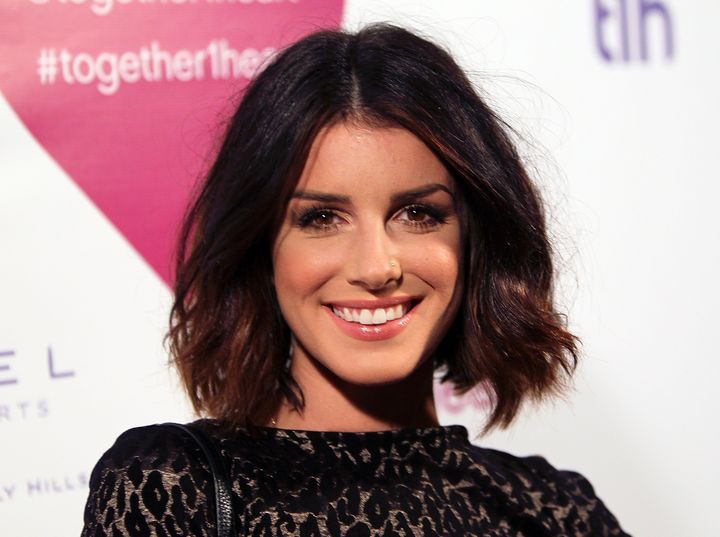
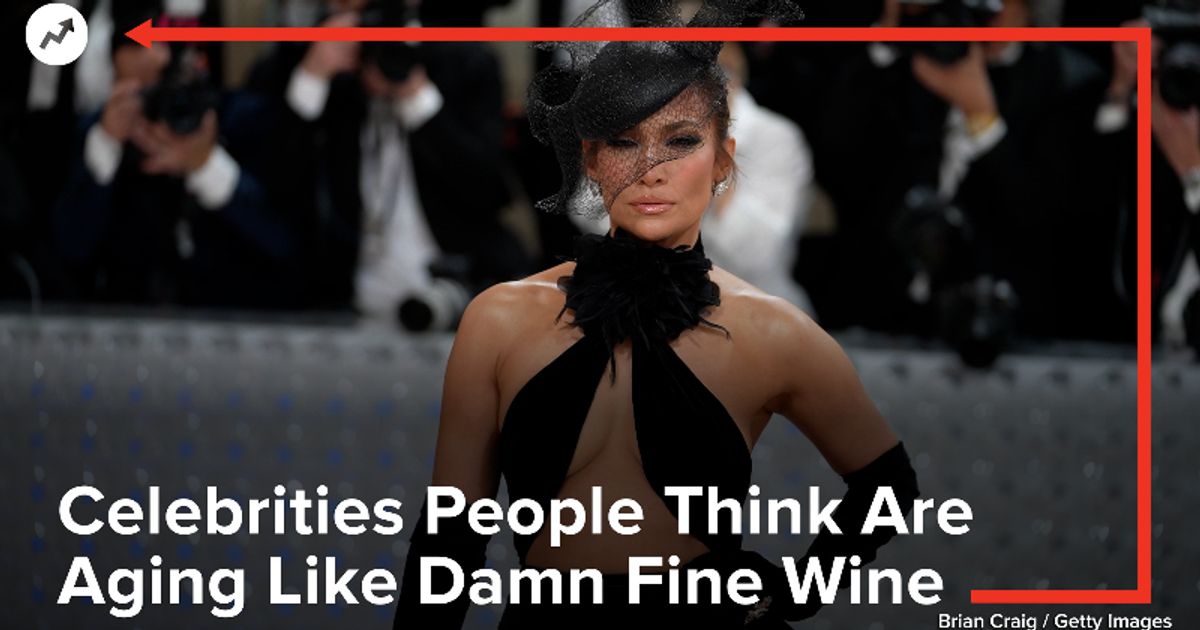
Gwyneth Paltrow hosts a Goop morning in celebration of first international campaign with Flow Alkaline Spring Water on June 6

Gwyneth Paltrow hosts a Goop morning in celebration of first international campaign with Flow Alkaline Spring Water on June 6 in Los Angeles. 

There are upsides to getting older though, as Paltrow said she feels “less judgmental” about herself, as opposed to when she was younger and “trying to please” people all the time. But that doesn’t mean she doesn’t still struggle with losing parts of her identity. 

“It’s like ― you feel so good, you know who you are, hopefully, you value the relationships in your life and your work and your contribution to the world,” Paltrow said.

“But then you’re like, ‘Wow, I have crow’s feet. Damn!’” she quipped. 

And as she gets older, Paltrow is experiencing lots of new things ― like being in  her first “adult relationship” with now-husband Brad Falchuk, a TV producer.

The Goop founder spoke about the difference in her new love with couples counselor Esther Perel in an interview with The Sunday Times last year. 

“Now, for the first time, I feel I’m in an adult relationship that is sometimes uncomfortable, because he sort of demands a certain level of intimacy and communication that I haven’t been held to before,” she said. “What came up in the first couple of years of our relationship was how incapable I was in this realm, how I feared intimacy and communication.”

Share Button

Gwyneth Paow On What Happens To Your Identity When You’re Not ‘F**kable’

Gwyneth Paltrow opened up about her looks, the aging process and struggling with her identity as she gets older on a recent episode of Goop’s new podcast, “The Beauty Closet.” 

“I’ve always felt so funny about my looks,” the “Iron Man” actress told Goop editors Jean Godfrey-June and Megan O’Neill. “I think that it’s very rare to think that you’re a beautiful person, and so, I feel like every other woman — like, I don’t see that when I look in the mirror.”

The Goop founder added that though she doesn’t always see herself as beautiful, other people have “considered” her that ― which she says is a “weird thing to be” as she gets older. 

“I think when you come to age, if you have this broad identity as that, what does it mean to get wrinkles and, like, get closer to menopause, and all these things?” she pondered. “What happens to your identity as a woman if you’re not fuckable and beautiful?”

Gwyneth Paltrow hosts a Goop morning in celebration of first international campaign with Flow Alkaline Spring Water on June 6


Gwyneth Paltrow hosts a Goop morning in celebration of first international campaign with Flow Alkaline Spring Water on June 6 in Los Angeles. 

There are upsides to getting older though, as Paltrow said she feels “less judgmental” about herself, as opposed to when she was younger and “trying to please” people all the time. But that doesn’t mean she doesn’t still struggle with losing parts of her identity. 

“It’s like ― you feel so good, you know who you are, hopefully, you value the relationships in your life and your work and your contribution to the world,” Paltrow said.

“But then you’re like, ‘Wow, I have crow’s feet. Damn!’” she quipped. 

And as she gets older, Paltrow is experiencing lots of new things ― like being in  her first “adult relationship” with now-husband Brad Falchuk, a TV producer.

The Goop founder spoke about the difference in her new love with couples counselor Esther Perel in an interview with The Sunday Times last year. 

“Now, for the first time, I feel I’m in an adult relationship that is sometimes uncomfortable, because he sort of demands a certain level of intimacy and communication that I haven’t been held to before,” she said. “What came up in the first couple of years of our relationship was how incapable I was in this realm, how I feared intimacy and communication.”

Share Button

I’m 53 And Completely Alone For The First Time In My Life

A thud from downstairs wakes me. I lie in bed for a moment, trying to place the sound. It was just the cat jumping down from the kitchen counter, I realize, stretching my body and climbing out of bed reluctantly.

It isn’t even light yet. I hear Charlie stirring and then her fox-like face pokes out from under my bed, still half asleep and blinking her corgi eyeliner eyes. She follows me to the bathroom and waits for me to reach down and pet her.

“Good morning, girl,” I say, stroking the top of her head and feeling grateful for her company in my room every night.

I never thought I would be living alone at 53 years old. I never even imagined the possibility. I grew up in a house filled with three older brothers, some extended family members, and friends who lived with us periodically. That didn’t even count the constant stream of guests who came to stay, my parents collecting people like art over the years. When I left home for college, I lived with roommates in dorms or houses filled with other fellow students. After graduation, I lived with my boyfriend, who then became my husband, and the three children who followed, in a burgeoning family of my own. But one by one these children have grown and gone, the husband has become an ex-husband and I have found myself truly alone for the first time in my life ― save for the pets they left behind, the last breathing vestiges of an ecosystem I created.

As Charlie and I head for the stairs, Sugar comes stalking out of my daughter Maude’s empty room, her meow like a complaint. “She’ll be back in a few weeks,” I say to the cat reassuringly, but we both know that room, a room I had re-created for my youngest daughter in this rental house, is only a landing pad for her now that she’s away at college. Charlie and Sugar follow me down to the kitchen and I let them outside, calling for Hank, our aging black Labrador. Cocoa has his front feet propped up on the open door of his rabbit cage as we pass, his version of good morning. 

I turn on the coffee machine and pull my favorite cup from the dish towel where I left it to dry. I am still evolving in this foreign habitat, where there aren’t enough dirty dishes to run the dishwasher anymore and I feel environmentally guilty doing such small loads of laundry. As I open the door of the fridge to grab the milk, the sight of the few items sitting almost sheepishly on the shelves hits me in the face. I close the door quickly. 

The only shoes and coats to pick up by the back door now are mine. The backpacks that used to spill books and papers all over the kitchen table have disappeared, and nobody steals my phone charger anymore. I am cowed by the quiet. There is no music blaring when I walk into the house, no raised voices or peals of laughter, no cursing the dogs for farting. It was disorienting enough to be made redundant in a job I had done for 20 years, to have to reinvent my very reason for being. But each time one of my kids left home they took a piece of me with them, and it feels like my body hasn’t grown enough scar tissue to fill in the empty spaces.  

It was disorienting enough to be made redundant in a job I had done for 20 years, to have to reinvent my very reason for being. But each time one of my kids left home they took a piece of me with them, and it feels like my body hasn’t grown enough scar tissue to fill in the empty spaces.

Gibson, my eldest, took his music. The sound of him practicing the piano used to soothe my jangled nerves. He also took his poetry, pages of it that he left littered around the house so I could know what was in his mind ― to see the passion and complexity of his thoughts.

Wendy, my middle child, took her extreme weather ― fierce storms that tested my strength and challenged me to hold her. She also took the brightest and sunniest days ― days she filled with such crackling energy that everything seems a bit duller without her around.

Maude took her old soul and wise spirit, the compassion the rest of us lacked. She took away the dry humor and cautious demeanor she developed watching her two older siblings crash through adolescence. I closed my eyes and pictured her, like a little blond Buddha, reclining with the cat in her lap. 

Outside, Charlie barks, startling me from my thoughts. I let the animals back in and take my coffee into the dining room. As I sit down at the big farm table, I glance at the marks made by children no longer at their places ― drink rings and scratches, words imprinted from pencils pressed too hard on soft wood. I sip my coffee slowly, waiting for the caffeine to help dispel my feelings of loss. 

Charlie licks my ankle and I reach down to pet her where she lies under my chair, patiently waiting for our daily walk through the woods. I don’t have a day job ― I had been a stay-at-home mom since Gibson was born ― but now that my brood has flown I am more actively pursuing a writing career. I spend a great deal of time outdoors, with Charlie, but also riding my horse, a passion of mine from childhood that I reignited in my 40s. The connection I share with my mare is not only that of a successful athletic partnership and joyful outlet for our competitive spirits, but also a healing one for me. Horses are like therapists, and her calming presence has soothed many of the heartaches and tumultuous emotions I have suffered over the past several years. 

Although my days are active and I’m around enough people, I still don’t like living alone. The evenings are the hardest to face, without family dinners and the smell of cooking to bring everyone to the kitchen, my kids stepping over dogs to tell me about their days. Hank still lies down on the kitchen floor at dinnertime, waiting for me to chop vegetables so I can toss him the ends. The sorrowful look he seems to get in his eyes when he realizes there is no one to cook for makes me so sad that I reach into the fridge for a handful of Cocoa’s baby carrots to feed him. 

Being alone at bedtime isn’t any easier. Despite the problems in my marriage, I miss the presence of another body ― one without fur ― in my bed at night. “No offense,” I say to Sugar, who has leaped up to the table as if on cue. She sidles into my arm, purring softly. It isn’t just physical intimacy that I crave, I think to myself, running my hand down Sugar’s back. I still can’t picture a future in which I am not part of someone else’s world. This unmoors me. I feel adrift, like I’m floating out to sea, and it frightens me to realize that nobody knows where I am.

I had been separated for almost a year and was midway through my divorce when I started dating, searching for what I knew: the familiarity of attachment. I had just turned 50 and had no idea how to date, or anything about casual liaisons, having married my high school sweetheart. So I became involved in several serious relationships, one after the other. I told myself I was searching for love, for comfort in my grief, but now I think it was the fear of being alone that had me running scared into other people’s lives. 

I couldn’t recognize the truth during those relationships, however, because I had been grieving terribly for my empty nest and the loss of my marriage ― that fairy-tale happy ending. I was also grieving for the death of my father in the middle of it all, my safety net having disappeared like his body with cancer. I was lonely too. The slow death of my marriage had literally starved me of affection. We are herd animals after all, biologically programmed to mate, to live in groups for connection and safety. 

I can’t help feeling responsible for the hurt and pain my children have endured, but I’m angry too ― angry at myself for not valuing my own worth enough in our family dynamics. I fought harder for everyone else ― for our family unit ― for two and a half decades, but now here I am alone anyway.

I want to feel protected and loved by another human being but in some ways I feel in conflict with modern culture, which values independence over emotional need. I am almost ashamed to admit that I don’t want to be alone, that I’m somehow lacking because I want to share my life with someone. It’s like my body has not evolved in time to current social mores and I’m lost in the gap between, like a Darwinian statistic. 

Hank walks over and puts his chin on my thigh, gently reminding me that it is well past breakfast time. I fondle his ears and ruminate on how fear has actually sabotaged my ability to be with myself, how I don’t really know how to live without the context of another person. I am so used to sharing, to compromising and negotiating everything from physical space to emotions and dreams that I end up attaching too quickly in new relationships.

My warning system isn’t yet calibrated properly for dating, and I find myself trying to make things work even when I can’t picture the future that I want. I convinced myself that intimacy was the same thing as a promising long-term relationship, and it has taken me some time to realize that I don’t owe my whole self to those with whom I don’t have a history or children. It has taken me even longer to realize that I never owed my whole self to anyone

Now I want to wipe off the cultural shame I feel around my divorce, the sense of failure and broken family that as a mother has me tangled up in the center of it all. I can’t help feeling responsible for the hurt and pain my children have endured, but I’m angry too ― angry at myself for not valuing my own worth enough in our family dynamics. I fought harder for everyone else ― for our family unit ― for two and a half decades, but now here I am alone anyway. 

As I look around at the empty chairs, this house echoing with what I have lost, I realize it is time to create my own context. I have been paralyzed at times by fear and anxiety, even culture shock, at my new solitary status, but I have in fact survived. And perhaps there are advantages to being alone I hadn’t fully considered. I can choose where to live, how to live, who and what to love. I don’t need permission from anyone anymore, and I don’t have to sacrifice my dreams for someone else’s. I want to buy my own house with a garden for the animals. I want to keep riding and writing. I don’t want to be alone forever. I would like an intimate long-term relationship ― I think I’m hardwired for it ― but I won’t give all of me away ever again just for the sake of companionship.

A flood of hope surges through me at the possibilities of new dreams, of reviving old ones that never got realized and the freedom of my independence. As if punctuating that thought, Cocoa thumps loudly in his cage. “I’m coming!” I call to the rabbit. The dogs’ heads rise hopefully at the sound of my voice, and Sugar leaps down from the table. “OK, let’s go,” I say to them, pushing back my chair and heading into the kitchen, two dogs and a cat hot on my heels, the sound of their toenails clacking on the wood floor like music to my ears.

Ashley Collins is mother to three grown children and currently lives in Connecticut. She graduated from Stanford University in 1987 with a bachelor’s in anthropology. Her work has appeared online at Grown and Flown, Horse Network, the Roar Sessions, and Mothers Always Write, and has been published in the anthologies “Nothing but the Truth so Help Me God: 73 Women on Transitions” and “Here in the Middle: Stories of Love, Loss, and Connection From the Ones Sandwiched Between.” She currently writes a blog about her family and animals, and is working on a memoir about mothers, daughters and horses. You can read more about her at ashleycollinswriter.com and on social media on Facebook and Instagram.  

Do you have a compelling personal story you’d like to see published on HuffPost? Find out what we’re looking for here and send us a pitch!

Share Button

Trump Calls Buttigieg ‘Alfred E. Neuman,’ Buttigeig Calls Trump Old

President Donald Trump came up with a nickname Friday for Democratic presidential candidate Pete Buttigieg: Alfred E. Neuman — the freckle-faced, gap-toothed nerdy cover boy of Mad Magazine.

But Buttigieg came back with his own zinger, slying dinging the 72-year-old president’s age, saying the outdated reference was a “generational thing.”

Trump told Politico Friday that “Alfred E. Neuman cannot become president of the United States,” when he was asked in a phone interview what he thought of the mayor of South Bend, Indiana.

Asked later about his new moniker, Buttigieg, 37, said he had “to Google” the reference to the mascot of a humor magazine launched in 1952.

“I guess it’s just a generational thing. I didn’t get the reference. It’s kind of funny, I guess,” said Buttigieg. 

He added that he was “surprised” Trump wasn’t “spending more time trying to salvage this China deal.”

Others also piled on Trump. New York Times political reporter Maggie Haberman tweeted that the Neuman reference would have worked better 20 years ago.

Mad got a bit of dig in at Buttigieg:

Trump appeared to imply in the Politico interview that Buttigieg, who is gay, isn’t tough enough to take on America’s international rivals. “He’ll be great representing us against President Xi of China,” Trump said sarcastically. “That’ll be great. I want to be in that room, I wanna watch that one.” 

Buttigieg, a former Rhodes scholar and Navy Reserve intelligence officer,  served in Afghanistan. Trump dodged the draft decades earlier because of “bone spurs.” He told shock jock Howard Stern that he suffered his own “personal Vietnam” during that time dodging sexually transmitted diseases sleeping with women. “I feel like a great and very brave soldier,” he said (video below).

Share Button

I’ve Decided To Let My Gray Hair Grow Out At 32, And I’ve Never Felt More Confident

I remember being little and sitting in the doorway of the bathroom watching as chunks of my mom’s hair fell into the sink, clumping in puddles of her tears. I was 7. She’d just gotten another haircut from another hairdresser and, like the last one she’d gone to, this one was awful at her job. The cut wasn’t what she wanted at all. The color was faded at the roots because of her grays.

She hated her grays. Mom moved closer to the mirror, craning her neck to see the back of her head. She pinched a section of hair between her index and middle fingers. “There’s no way I can go in public like this.”

I don’t remember my first haircut, but I remember the first time I dyed my hair. I was 14 and in high school. No longer were our bodies acceptable just the way they were. They needed to be manipulated ― made more beautiful. Makeup. High heels. Expensive clothing. Hair dye. I begged mom to color my hair; it was so boring, a stupid brown. She agreed to highlights with some hesitation, admitting they would be cute framing my face. We couldn’t afford a salon, so I bought a highlighting kit at Walmart. Mom helped me pull my hair through a plastic cap and gently coated each strand in bleach. When we were done, my hair was no longer boring. It sparkled in the sun like tinsel. I thought of all the friends I would make. All the boys who would ask me out.

The reality was that no matter how many highlights I put in my hair, no matter how thin I got, no matter how perfect my makeup was, someone didn’t approve. The more disapproval I got, the more I tried to fix my flaws. I got a tan. I adjusted my weight. I got braces. I bleached my hair totally blonde. I watched TV shows like ”What Not to Wear” and ”Extreme Makeover” and fantasized about all the expensive clothes I would be able to afford one day, all the plastic surgery I’d finally be able to get.

The reality I found was no matter how many highlights I put in my hair, no matter how thin I got, no matter how perfect my makeup was, someone didn’t approve.

I was 18 when I discovered my first gray hair, and I was mortified. I hadn’t even made it to 20, and there it was ― a symbol of death growing right out of the top of my head. When I told my mom what I’d found, she told me she had a gray streak in college. “Sorry, honey. Looks like you got the bad genes.” I decided I would never let my natural hair grow out. No one but my mom could know my secret. I dyed dark. I dyed it more and more until, eventually, it was black. People said it made my eyes pop. I was exotic and sexy and looked so young for my age.

By the time I was in my twenties, my looks had become my identity. They had become my worth. In my mind, if people did not approve of my appearance, I was not approved of as a human being. When I try to pinpoint the moment I started believing my looks were so important, it mostly feels like I was born knowing it. But I don’t believe that. Maybe it began with my mother, or her mother, or her mother. Seeing my mom in that mirror stuck to me. If beauty was that important to her, then it should be to me.

Maybe it was the makeover shows we watched as a family. Or maybe it was all the boys who paid more attention to my body than to my thoughts. Maybe it was commercials. Maybe it was the girls who “discovered” me in high school, who took me on as a “project,” over-plucking my eyebrows, straightening my dyed hair and painting my mouth with thick, brown lipstick. I can’t say where it began, but by the time I was 32, I was exhausted. I had been dying my hair religiously to hide my grays, and I was generally sick of being in battle with my own body.

I decided to fight back. I knew that the intense emotions I attached to my looks were irrational even if they were very real, and I was determined to beat them into submission. I knew it would be difficult for me, so I started by making small changes. I wore less makeup and let myself gain some weight. I stopped using anti-aging cream and stopped wearing heels. Each time I made a change to my appearance that felt like a big deal, I realized it really wasn’t. In retrospect, it all seemed so silly.

I knew that the intense emotions I attached to my looks were irrational even if they were very real, and I was determined to beat them into submission.

But I was still dying my hair. Hair was the one thing on my body I had some control over. No cream would ever prevent me from getting wrinkles, and no amount of exercise would make my body look like it did when I was 18. But if I dyed and styled my hair, it looked just as good as it ever did. If I let it go, people might think I let myself go. Worse, they would find me less attractive because I would look older. They would know that I’d gotten the bad genes. But why did I care what everyone else thought? It was my last battle, and I was ready to fight it.

When I decided to make the hair appointment, part of me was apprehensive and unsure. Another part was ready to get it over with, ready to prove that my fear was irrational. My hairdresser was beautiful with long, blonde hair and contoured cheeks. When I told her I wanted to shave the sides of my head and cut the rest of my hair to my cheekbones, she raised an eyebrow. “You sure?”

I looked at myself in the mirror. My dark hair fell in waves at my shoulders, as it had for so many years. So shiny. So feminine. “Cut it off,” I said. I wanted it gone. As long chunks of hair fell to my lap, I was afraid, but also felt powerful because I wasn’t letting that irrational fear rule me anymore. When she was finished, I got out of the chair and examined myself in the mirror. I craned my neck to see the back of my head. The top would take a while before all the color grew out because I wasn’t interested in shaving my entire head. The bottom half, however, had no dye for the first time in 18 years. The gray was more like silver, like highlights, like tinsel. I loved it.

It seems silly, maybe, that hair can be so important to someone. But it was never about the hair itself for me. It was about being accepted and valued. We live in a society that tells women they are only valuable ― are only acceptable― if they are youthful. We live in a society that spends hundreds of billions of dollars a year on anti-aging products. We live in a society that not only has a large gender divide in media representation but an even larger age divide.

Hair is one of the most obvious visual signs of aging, and I hid mine because I wanted to remain visible.

And it’s not just media. We tuck the elderly away in nursing homes, we are too uncomfortable to openly talk about death and I’ve seen an alarming number of obituaries in the local newspaper with pictures of the deceased that were taken 50-plus years ago. We don’t want to see aging bodies and are actively trying to hide them. Hair is one of the most obvious visual signs of aging, and I hid mine because I wanted to remain visible.

It’s been a year since I first cut my hair off, and I am finally totally gray. The biggest surprise? I’ve never gotten more compliments. People think it’s cool, their reactions much stronger than it ever was when it was black or brown. The bigger surprise? I’ve never felt more confident. In fact, I love what I see in the mirror. It isn’t that I feel more beautiful, necessarily. I feel just as pretty as I did before. It’s that beauty isn’t the source of my confidence anymore.

Rather, I’m finding it in the bravery it took for me to give such a ridiculous beauty standard the middle finger, even though I suspected I might be judged or rejected. As someone who has fought so long to fit in, it was so freeing to decide to end it. In a way, my gray hair is a reclamation. It is me owning my aging body and giving it space to exist in the world without shame. That makes me feel really powerful.  

I’m also happy to report that mom has embraced her gray hair, too. She was part of my inspiration. She went gray a few years before me, and she looks gorgeous. She is too cool with her buzzed head, white hair and thick-rimmed, colorful glasses, and she knows it.

I figured if my mom can do it, I can, too. The best part: People say we look alike all the time now. Both of us take it as a huge compliment.

Have a compelling first-person story you want to share? Send your story description to pitch@huffpost.com.

Share Button

Sandra Oh On Why She’s Giving ‘Less F**ks’ And Feeling More Secure

Sandra Oh is not necessarily missing her 20s. 

In an interview with InStyle, the “Killing Eve” star explained that as a 47-year-old, she’s feeling much more secure, professionally, and giving “less fucks.” 

Modeling a “crazy dress with mirrors” for her photo shoot with the outlet, she said she is completely equipped to own whatever she’s doing. 

“You need me to put on a crazy dress with mirrors? Yeah, sure. I’m going to work the shit out of this!” is her reaction now, she said.

“I don’t know what I’m doing. It’s, like, you give less fucks,” she added.

Sandra Oh said "aging is the greatest."

Sandra Oh said “aging is the greatest.”

The actress told InStyle that “aging is the greatest” as “it really gives you more space to be that person in the mirrored dress who has always been inside.”

But Oh also agrees her early days in the industry were valuable. She told the outlet that it’s “really such a powerful time when you’re 23, 24 [years old].”

“There is a certain energy and boldness, but I’ve always been driven. This industry can be crushing, but I fucking love it,” she said. “I love it, and I think I would be acting and doing something creative no matter what.”

The actress has certainly been having a year of “less fucks” and a lot of success. Oh not only co-hosted the Golden Globes, but she also took home the award for Best Performance by an Actress in a Television Series ― Drama.

And later this month, she’s slated to host “Saturday Night Live,” becoming the third Asian woman in the program’s history to do so. Lucy Liu and Awkwafina have both hosted in the past.  

The second season of “Killing Eve” is set to begin April 7.

Read the full interview at InStyle.

Share Button

This Is What No One Tells Women About What Happens To Your Body In Your 40s

The symptoms were subtle at first: insomnia, a racing heart, a lost word, sometimes a wrong word. But within months there was no denying it. Soon enough there were panic attacks, sobbing fits and that verboten emotion of middle-aged women ― rage. Just after my 40th birthday, I bled for 10 days straight.

Trying to make sense of these changes, I kept coming back to a childhood memory. Sitting on the orange shag carpet in my Midwood, Brooklyn, living room, at the age of 8, my family was gathered around our color television watching an episode of “All in the Family. Archie Bunker was yelling at his wife, Edith, to hurry up and go through her “change.” My parents chuckled knowingly as I tried to keep up with the plotline. That was the totality of my education on menopause. But Edith looked to be in her 50s and, as far as I could tell, I still had a whole decade before I needed to “change.”

I dialed my OB-GYN, gearing up to explain this anomaly, to convince her that I was a freak of nature. But the nurse cut me off, introducing a new word to my lexicon: perimenopause.

That was the moment I learned that before menopause, there is a completely separate, though somehow related hell called perimenopause. According to the nurse, this marked the beginning of a gradual decline in estrogen in my body ― and, “by the way,” she added, “it can last for years.” She said that last bit like she was indoctrinating me into a special invitation-only club. I half expected to get an ID card.

But I could read between the lines, and what she was really saying was, This is when both your body and your mind begin to betray you. I called up my girlfriends to discuss and, in doing so, became the bearer of bad news.

“Did you know about this?” I demanded, wondering if everyone else had been in on this secret. I was met with silence. We had all been duped. No one had told us.

When I was pregnant, other women bombarded me with advice, perhaps because that was supposed to be a “joyous” time and people wanted to share in it, but this was different. This was the darker side of womanhood.

I started researching phrases like “sex in your 40s,” “pissed at my family all the time,” and “left boob pain; am I dying?” When that didn’t garner satisfactory answers, I began making regular appointments with a naturopathic doctor, studying the benefits of essential oils, throwing back vitamins and herbs like an addict, and becoming obsessed with “female” tea ― hibiscus, primrose, milk thistle, anything reminiscent of a beautiful blossoming flower.

Fast-forward five years, at the age of 44, with my son in his tweens, both of us now full-tilt with yoyo-ing hormonal surges, and my husband deep into his own midlife crisis, contemplating giving up his power equipment business and moving us to Central America. I began locking my bedroom door, an apparently seismic shift that offended the rest of the family, but in doing so, I created a small space for myself to think and breathe and read for a few precious hours each evening and further adjust to the increasing changes in my body: the longing for complete silence, the new sensitivity to smell, coping with what felt like sensory overload.

And then, just as I began embracing that long-craved autonomy, a hitch.  

With my first missed period, I denied the possibility, but by the time the estimated date of the second one came and went, I had begun cupping my breasts in the shower to see if they were sore and feeling my belly for the telltale firmness. And afterward, I’d catch my naked profile in the mirror looking for visible differences in my body. Was I glowing? I definitely wasn’t glowing.

Google was no help. As if God, the universe or some other holy power were in on the conspiracy to drive all middle-aged women mad, it turns out the symptoms of pregnancy are almost identical to the symptoms of perimenopause: weight gain, breast tenderness, spotting. I had them all.

Friends and I had begun whispering about our ‘changes’ at book club meetings and writing groups and those all too rare ‘moms’ nights out,’ and soon I found that this is a dirty secret we keep, walking through life, all of us pretending to hold it together, while inside we are unrecognizable to our own selves.

My husband was painting the deck when I approached him with the news early one morning. I had waited weeks but my anxiety, always stalking beneath the surface, was now becoming an unmanageable beast. “I might be pregnant,” I blurted out. His brush paused mid-stroke. I could see his unspoken thoughts floating like specks of pollen through the warm spring air.

“Well, we’ll figure it out,” he said, before dipping his brush again.

My first pregnancy had put me in bed for five months, with the label “high risk” slapped on my tender uterus. Aside from the life-threatening complications for me and my baby, I had suffered from both prenatal and postpartum depression that lasted years. Now faced with the prospect of having an offensively termed “geriatric pregnancy” at the age of 45, the odds were stacked against me. Not to mention the logistics. Where would we even put a baby?

Two days later, when I can no longer delay the inevitable ― the blood pressure medication I am on too detrimental to a fetus for me to continue without speaking to my doctor ― I sit on the bathroom floor early in the morning, squinting at the directions on a pregnancy test while the rest of the house lies in quiet slumber. My hands tremble as I peel off the wrapper. I brace myself and wait the three required minutes.

As the clock ticks, I question whether I could muster even the smallest desire to care for a newborn. I have middle-of-the-night hot flashes where I blindly stomp around my bedroom ripping off clothes and cursing the air conditioner because subarctic is not a temperature setting. The very thought of being prematurely awoken from hard-won sleep gives me palpitations. I’m on not one but two medications that say something along the lines of, if you’re even thinking about getting pregnant, don’t be in the same room as these pills.

Friends and I began whispering about our “changes” at book club meetings and writing groups and those all too rare “moms’ nights out,” and soon I found that this is a dirty secret we keep, walking through life, all of us pretending to hold it together, while inside we are unrecognizable to our own selves.

With it out in the open, my girlfriends had been speaking more freely, lauding Botox, fillers, vibrators and therapy as ways to empower ourselves and confront these years. I am in no way prepared to cast off this tribe of unabashedly honest women to form new relationships with young, lithe mothers who have an endless supply of their own collagen.

Four bars on the stick appear. The results are in.

Not Pregnant.

I wipe away my tears, wishing someone would have mentioned I’d spend much of my midlife on the bathroom floor, crying ― I would have opted for nicer tiles.

I sit there for a few moments and then crawl over to the garbage pail, burying the test, but the heaviness in my heart surprises me. I could wake up my husband, but he could never understand what it means to be on the cusp of 45 taking a pregnancy test. He could never intrinsically comprehend the implications of what it would mean to be pregnant at this age, and alternately, how devastating it is to know that I will likely never be pregnant again. That chance for the elusive second child I had never been sure I wanted vanishes into the bottom of a wastepaper basket buried beneath snotty, tear-stained tissues. Before the complications of my first pregnancy, I had planned on so many children.

I dig the test out of the trash can and hold it to my heart as if it is an actual embryo, thinking about how I, like so many other women in their 40s, am in between ― taking care of both kids and parents ― the sandwich generation. But who is taking care of us while we navigate this new territory? Who is telling us that it is perfectly normal to drive halfway to work before realizing that we forgot to pop in our contacts? Who is consoling us as we sit in our cars at the school pickup line crying to songs like “Shut Up and Dance with Me” because we haven’t really danced in years? Who peels us off the bathroom floor when we are frightened?

I grab hold of the tub, noting that it could use a good scrubbing, and pull myself up. Walking to the mirror, I take stock of my body, my rounded belly, my sun-weathered décolletage, the triceps that are not as firm as they used to be. I have changed so much. I have stopped caring what anyone else thinks, have started claiming my time, growing my tribe, and trying so hard to hold onto the shits I have because I have so few left to give. I am more beautiful and confident than I have ever been in my life, while simultaneously becoming invisible to much of the world.

Perimenopause is like preparing to graduate college. There are so many choices to make, so many options, only now I don’t have the cushion of youth to bounce back from my mistakes.

I hear a soccer ball being thwacked against a wall. Casting my thoughts aside, I throw the test in the pail once again and tie up the bag so my tween doesn’t accidentally discover it. And then I open the medicine cabinet and take out a vial of lavender scented oil. I dab dots on pressure points; I’m told it will keep me calm.

Do you have a compelling personal story you’d like to see published on HuffPost? Find out what we’re looking for here and send us a pitch!

Share Button

Young Blood Scam: FDA Warns Against Unproven Anti-Aging Transfusions

The Food and Drug Administration issued a forceful warning Tuesday that transfusions of young donor plasma, which have been marketed to fight aging and a variety of diseases, are not only unproven ― they could be harmful.

You’ve probably seen the headlines about the alleged young blood” miracle treatments where for-profit medical startups charge thousands of dollars to inject older patients with infusions of blood plasma from young donors. If the reported claims about those treatments sound too good to be true, that’s because they are, according to the FDA.

Injecting young donor plasma to treat or prevent aging, as well as conditions such as Alzheimer’s and Parkinson’s disease, has “no proven clinical benefits” like those advertised and is “potentially harmful,” FDA Commissioner Scott Gottlieb said in a statement. Peter Marks, director of the agency’s Center for Biologics Evaluation and Research, joined him in issuing the warning.  

“It’s just a matter of time before there are going to be people harmed by this — and harmed by it, with no opportunity for therapeutic benefit,” Gottlieb told HuffPost in a phone interview.

He and Marks lambasted for-profit young plasma companies peddling an unproven therapy for financial gain: “Simply put, we’re concerned that some patients are being preyed upon by unscrupulous actors touting treatments of plasma from young donors as cures and remedies.”

“The promotion of plasma for these unproven purposes could also discourage patients suffering from serious or intractable illnesses from receiving safe and effective treatments,” they added.

We’re concerned that some patients are being preyed upon by unscrupulous actors touting treatments of plasma from young donors as cures and remedies. The Food and Drug Administration

In late December, HuffPost published an investigation into Ambrosia, a startup that sells young plasma treatments that offer numerous alleged potential benefits. Ambrosia’s founder, 34-year-old Jesse Karmazin, earned extensive, unskeptical media coverage, despite never showing any proof his transfusions actually helped people in the ways he claimed.

Karmazin — who cannot legally practice medicine in any state, and is explicitly prohibited from practicing in Massachusetts by authorities — announced recently he was soliciting customers in multiple states, charging $12,000 for two liters of young plasma. Other medical establishments, such as the Maharaj Institute in Florida, have also announced plans to charge patients for young plasma transfusions, and various studies of the treatments are ongoing.

Plasma transfusions have long been recognized as a treatment for particular health issues, such as for trauma patients. But the FDA urges people to be cautious and consult with their doctors before considering such treatments to combat aging or other conditions.

The agency also strongly discourages people from pursuing young plasma therapy outside of clinical trials conducted under “appropriate institutional review board and regulatory oversight.”

Companies generally need to get approval from the FDA before they can claim that a drug or medical product treats, cures or prevents a disease. Young plasma treatments have not gone through the “rigorous testing” that the FDA normally requires in order to confirm a therapeutic benefit and to ensure safety, the agency said.

Karmazin, Ambrosia’s founder, saw no need to go through the FDA’s drug approval process for his study, in which participants paid to receive plasma from young donors. He also never released the study’s findings, though he touted impressive results in the media, claiming young plasma could help everything from Alzheimer’s to blood cholesterol levels.

“I’m not really in the camp of saying this will provide immortality,” he told one reporter, “but I think it comes pretty close.”

Such claims are not only premature, according to the FDA, but risks surround plasma transfusions. In rare cases, the complications can be fatal.

For patients receiving plasma for a recognized use, such as managing clotting abnormalities, the FDA has determined that the benefits outweigh the risks.

I’m not really in the camp of saying this will provide immortality, but I think it comes pretty close. Ambrosia founder Jesse Karmazin, speaking to a reporter

Gottlieb and Marks also raised concern about the dosing of young plasma transfusions. They noted that they had seen reports of large volumes of young plasma being administered to patients, which can create “significant risks,” such as respiratory and cardiovascular issues.

This backs up what medical professionals told HuffPost last year: “In general, somebody who does not need a blood transfusion would be at great risk for all sorts of things, short term and long term,” by undergoing such treatments, said Phuoc Le, a physician and global health specialist who teaches at the University of California, San Francisco. Le was alarmed that Ambrosia claimed to give patients about 2 liters of plasma over just one to two days.

In wake of the FDA statement, the Ambrosia story can be seen in some ways as a media failure: Reporters ran with vampire headlines without answering basic questions about the procedure, effectively serving as free advertising for an unproven treatment. (A report that Peter Thiel, the tech entrepreneur billionaire, was interested in young blood, and the “blood boy” parody in HBO’s “Silicon Valley,” contributed to the media frenzy.) Meanwhile, Karmazin wouldn’t even tell reporters where he got his plasma.

HuffPost found that at least some of it came from a nonprofit blood bank in South Texas that recruited teenage donors for “saving lives,” but noted on a consent form that blood components could be used for “any other medical purpose.” The bank decided to stop selling young plasma after HuffPost reached out.

Generally, the FDA will consider taking regulatory and enforcement actions against companies that “abuse the trust of patients and endanger their health … by promoting so-called ‘treatments’ that haven’t been proven safe or effective for any use,” the statement noted.

The FDA is going to look at what enforcement activities it can take given “the scope of our concern,” Gottlieb told HuffPost.

“The first step was to put out a public health advisory alerting consumers and providers,” he said. “We’ll take it from here.”

This story has been updated with additional comments from Gottlieb.

Share Button

A Harvard Geneticist Wants To Sell A Magical Molecule To Reverse Aging. It Works. In Mice.

[unable to retrieve full-text content]

Share Button

Stop Doing The 10-Year Challenge Because Mariah Carey Already Won

Mariah Carey has a lot to worry about these days (messy legal drama with a former assistant, cashing checks from “All I Want for Christmas” residuals, an upcoming Las Vegas residency, etc.), but she remains unbothered by a little thing called aging, dahling

The legendary diva tried her hand at the 10-year challenge dominating social media timelines that has users sharing a photo of themselves from 2009 next to one from 2019 to boast about glow-ups, regret bad fashion choices and praise the powers that be for Instagram filters. 

But Carey, who’s historically demanded that people refer to her birthday as an anniversary, rewrote the rules of the entire challenge with a post on Instagram Wednesday. 

Instead of sharing a photo of herself from 2009 ― our choice would be a screen grab from her very-much-underrated performance in “Precious,” for the record ― the singer posted two identical photos taken recently. 

“I don’t get this 10 year challenge, time is not something I acknowledge,” she wrote. “*Picture taken at some point prior to today.” 

Fans of the singer, of course, had a field day with her peak Mariah response.

Other celebs, however, couldn’t resist the challenge. Famous types like Busy PhilippsKevin Hart and Snooki participated, but no one came close to Carey’s levels of extra. 

The elusive chanteuse FTW.

Share Button