Tory Deputy Chairman Lee Anderson Gets Schooled On The Law By Top Police Officer

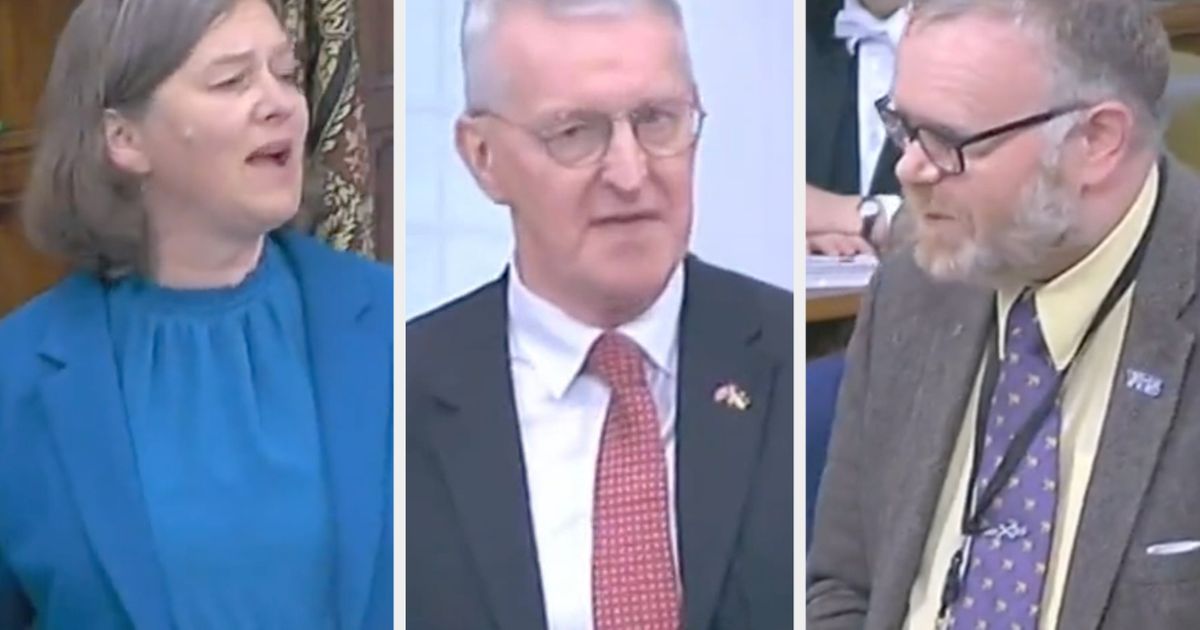
Lee Anderson was left embarrassed after his attempt to criticise a top police officer spectacularly backfired.

The Tory deputy chairman accused Metropolitan Police Commissioner Mark Rowley of failing to crack down on protesters outside parliament.

“We have seen protesters once again in Parliament Square setting up some sort of Glastonbury-on-Thames gazebo,” Anderson said.

“Don’t you think it’s time you left your ivory tower, got out there on Whitehall and sorted the people out? You’re just letting it happen. You’ve got the powers now to do this.”

But Rowley told him this was wrong, as the controversial Public Order Bill – which gives police greater powers to stop demonstrations – is not yet law.

“Those powers haven’t come in yet,” Rowley explained. “You’re making selective comments based on a partial understanding of the law.”

Rowley, the UK’s most senior police officer, added: “The law is very clear that protest is disruptive and to a certain extent that is allowed.

“That is why the law says at the moment you might not like that but I have to work to the law rather than whim.”

He told Anderson: “You might want to believe the law says that no disruption is allowed whatsoever through protest, but that is not case.”

Anderson told Rowley: “You might want to believe you are doing your job correctly, I don’t think you are. I feel like I’m wasting my time with you.

“Do you think you’ve got confidence of the public?” he asked.

But Rowley hit back: “If people want to be personally offensive, then write it in newspapers, I’m not going to answer those questions.”

Rowley took over as Met commissioner in September 2022, replacing Cressida Dick.

Share Button

‘Political Vandals’: George Osborne’s Brutal Verdict On Liz Truss’s Government

Former chancellor George Osborne has labelled the Liz Truss government “political vandals” who caused a “self-induced financial crisis”.

Osborne, chancellor from 2010 until 2016, was speaking to a House of Lords committee investigating the independence of the Bank of England.

He referenced last autumn’s chaotic mini-budget from former prime minister Truss and ex-chancellor Kwasi Kwarteng – and the resultant plunge in the value of the pound – to justify the Bank’s status.

Truss, who resigned as prime minister in October, said she would review the independence of the central bank and question its decision-making on interest rates during her leadership campaign.

Her government’s mini-budget on September 23 then led to a loss of confidence in the currency and bond markets, leading to the pound dropping to an all-time low against the dollar and a crisis in the pensions market.

As a result, the Bank of England intervened with a plan to buy £65 billion of government bonds five days later in a short-term intervention.

<img class="img-sized__img landscape" loading="lazy" alt="Liz Truss and George Osborne during the 2016 Brexit referendum campaign.” width=”720″ height=”481″ src=”https://www.wellnessmaster.com/wp-content/uploads/2023/04/political-vandals-george-osbornes-brutal-verdict-on-liz-trusss-government-1.jpg”>
Liz Truss and George Osborne during the 2016 Brexit referendum campaign.

Matt Cardy via Getty Images

The former chancellor said the short-lived government “heavily” depended on the Bank after its spending and cost-cutting plan shook the markets.

“There is a real responsibility for the governor of the Bank, the chancellor of the Exchequer, the prime minister, in particular, to make these arrangements work,” Osborne said.

“You can prescribe in legislation all sorts of frameworks but if the individuals concerned don’t want to make it work then you are going to start grinding through the gears of the British constitution.

“I think you saw that last autumn in Britain when you had a Conservative government which did not particularly value the then governor of the Bank of England and made no secret of it, and then ended up heavily depending on the Bank of England in a crisis they had created.”

He hailed how the Bank and governor Andrew Bailey dealt with the “exceptionally difficult situation” last autumn.

Osborne added: “You had an elected government in this country challenging essentially the legitimacy of the Bank governor and the Bank of England.

“You had a self-induced financial crisis within this country alone at the time. And the Bank managed to navigate through that and it was the Bank’s credibility that managed to restore confidence to the market which was followed by the change of government.”

The former Chancellor also called for increased independence at the Office for Budget Responsibility (OBR), the official forecaster his previous government set up in 2010, adding last autumn’s events bolstered the argument to give it a similar standing to that of the Bank.

He said: “I would learn from that experience and learn from the Bank of England’s independence and find ways to make the OBR more independent and more robust in the face of, you know, political vandals.”

The former chancellor and ex-former Labour shadow chancellor Ed Balls were facing questions from the House of Lords’ economic affairs committee.

Share Button

‘The Benefits Are Pure Fantasy’: MPs Debate Brexit Impact For First Time

The benefits of Brexit have been written off as “pure fantasy” as MPs debated the consequences of leaving the European Union amid growing concern over the decision.

On Monday, a three-hour debate took place in Westminster Hall triggered by 183,000 people signing a petition calling for a public inquiry into the impact of Brexit.

Brexit and its consequences have been discussed periodically in parliament, but it is thought this is the first time a full debate has examined what leaving the bloc has led to.

Brexit has been cited repeatedly as the UK’s economy is expected to perform the worst out of any G20 economies apart from Russia this year and next, an IMF analysis has suggested.

On the same day as the debate, Gerry Murphy, the chairman of Burberry, said leaving the EU had been a “drag on growth” as he hit out at the “spectacular own goal” of a post-Brexit VAT change during a Q&A with Rishi Sunak.

Ministers have previously rejected a call for an official probe into the effects of leaving the EU.

The debate was opened by SNP MP Martyn Day, speaking in favour of the petition.

He told parliamentarians: “Nearly seven years on from the Brexit referendum, the UK public are still waiting for the elusive ‘Brexit benefits’ that were promised.

“It seems to me, having raised just some of the areas where leaving the EU has impacted on the UK, that the benefits of Brexit are pure fantasy.

“The economic fallout from Brexit is stark and it has been made starker by the current cost of living crisis that is being inflicted on households up and down the country.

“From my perspective, Brexit has been an unmitigated disaster—politically, economically and socially, for Scotland and the rest of the UK.

“The UK government, of course, have a means to refute this.

“When major events occur, public inquiries can be held into matters of public concern to establish facts, to learn lessons so that mistakes are not repeated, to restore public confidence and to determine accountability.”

Speaking against the petition, Conservative MP Adam Holloway said the biggest benefit was that “our sovereignty has been repatriated”.

“It is easy to disdain patriotism if you’re economically and socially mobile and derive your self-worth from a well-paid job, or if you life is made easier by cheap labour brought by free movement,” the MP said.

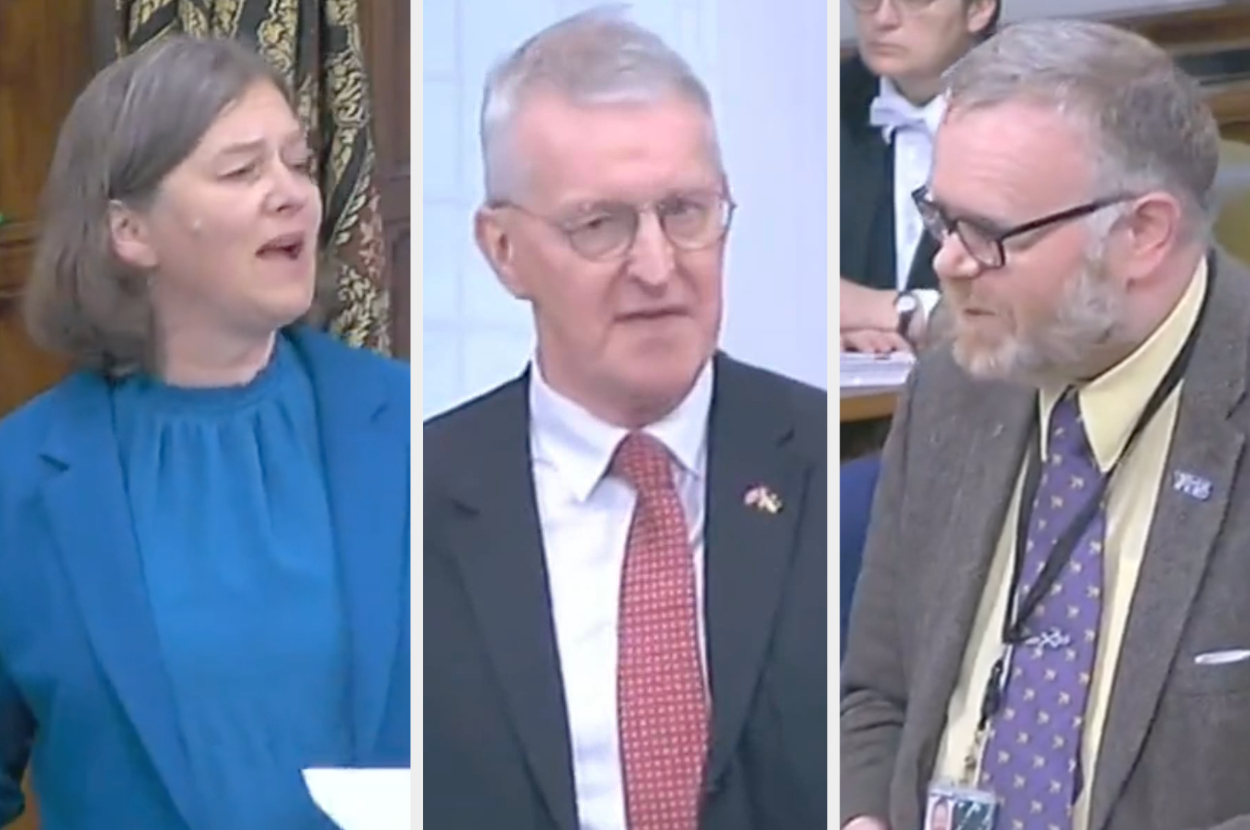
Labour MP Hilary Benn picked up on sovereignty issue as he argued proponents of Brexit were “in a state of confusion and denial”.

He said: “I met many people during the campaign who made that argument. Indeed, they said, ‘I don’t care about the economic impact. My sovereignty is more important.’ I respect people’s right to hold that view; I fundamentally disagree with it.

“But what was unforgiveable was to claim that we could have all our sovereignty, keep all the benefits of being a member of the European Union and get further benefits on top of that. It simply was not true, and we now know it was not true. Therefore, those who argued for us to leave the European Union are now in a state of confusion and denial.

“That is what is going on, particularly around the economic consequences. If we do not understand what those are, how on earth are we going to build a different relationship with our European colleagues over the months and years ahead?”

Labour’s Fleur Anderson hit out at “delusion” ministers.

She said: “In December 2021, I called for a debate on the impact of Brexit and a region-by-region report. The then leader of the House (Jacob Rees-Mogg) gave me this response: ’We can start prayers every morning…with a celebration of Brexit. We should have the Brexit prayer and perhaps even the Brexit song…because it has been a triumph for this nation in reasserting its freedom.′

“He said that we now have ‘happy fish’ and that across the country ‘there is general celebrating and rejoicing’.

“That level of delusion, flippancy and not taking the issue seriously is very frustrating for people across the country, and it is why they signed the petition in such large numbers. This cannot be the last word—just writing it off and saying that Brexit has been a success without giving evidence.”

The UK government has said: “The UK’s departure from the EU was a democratic choice, and the UK-EU institutions are functioning as intended. The Government does not believe this to be an appropriate subject for a public inquiry,”

Share Button

Sunak Grins And Bears It As Boss Hits Out At Brexit’s ‘Drag On Growth’

Rishi Sunak has had to face up to criticism of Brexit from a business leader as the PM attempted to patch up the government’s relationship with industry.

Gerry Murphy, the chairman of Burberry, hit out at the “spectacular own goal” of a post-Brexit VAT change as the prime minister had an audience with around 200 high-profile chief executives.

Murphy added scrapping the VAT refund for tourists has made Britain the “least attractive” shopping destination in Europe as he said leaving the EU had been a “drag on growth”.

Sunak insisted at the Business Connect conference he convened in London that the government has “got your back” after the leaderships of Boris Johnson and Liz Truss.

Murphy welcomed Sunak as being “obviously more business friendly than some predecessor administrations”.

But the chairman of the luxury retailer added: “It is somewhat perverse that on the day that we left the single market, a decision by, I think it was by you as chancellor, to remove the VAT refund for tourists made the UK the least attractive shopping destination in Europe.

“Leaving the EU has had a significant friction effect on trade, hopefully not forever … but it is the case it was a drag on growth.

“So we ask you to look at this specific one (VAT), this is a spectacular own goal, one that can be reversed by a decision from you or from the chancellor.”

Sunak insisted there “were good reasons for it” but said he would look at the data to “see if things are panning out as we expected to, or not”.

Labour seized on the conference to accuse the Tories of having mismanaged the UK economy.

Shadow chief secretary to the Treasury Pat McFadden said: “After 13 years, the pattern of Tory economic failure is grinding on.

“Families in Britain are being harder hit by price rises than many comparable economies.

“Other countries have had to cope with Covid and the consequences of the war in Ukraine, yet it is Tory Britain which sits at the top of the inflation growth league of major industrial economies.”

Earlier this month, IMF economists stated that they expected the UK economy to grow slower than other developed G7 nations, with a contraction of 0.3% this year before rebounding to grow by 1% next year.

Share Button

‘Shockingly Cruel’: Fury As Rishi Sunak Gives In To Tory Right On Migrant Deportations

Rishi Sunak’s move to ignore human rights judges on migrant deportations has been slammed as “shockingly cruel”.

The prime minister has reportedly caved to Tory rebels and agreed to amend his controversial Illegal Migration Bill so ministers can ignore European judges.

Conservative backbenchers said they reached a deal with Sunak to change new rules to remove migrants arriving on small boats after threatening to revolt over the legislation.

However, the move has sparked a fierce backlash from experts who say it will undermine the rule of law.

Human rights group Liberty described the move as “pathetic political chess playing”, adding: “This shockingly cruel and shameful move will allow the government to knowingly commit human rights abuses and put people in harm’s way.

“A new low, even by the standards of this government for whom lows come thick and fast.

“Reported edits to the government’s Migration Bill will allow ministers to ignore ‘interim measures’ from the European Court of Human Rights that ground deportation flight.

“The court only makes these measures to urgently protect people from irreversible harm – like torture or death.

“Protecting people isn’t controversial. This is the government knowingly putting people’s lives at risk for cheap political points.”

Among the measures reportedly agreed is a plan to give the home secretary powers to disregard injunctions from the European Court of Human Rights – so-called Rule 39 orders.

A former Lord Chief Justice and the Law Society of England and Wales have also expressed concern.

Lord Thomas, a cross-bench peer who headed the judiciary between 2013 and 2017, warned that the proposals could face defeat in the Lords, and that such a move would set “an extraordinarily bad example”.

“I think it is a very serious step for the government to be contemplating putting into force,” he told BBC Radio 4’s Today programme.

Defending the principle of the European Court of Human Rights, he said the fact of interim decisions in some cases “does not in any way detract from the importance of a judgment being made by a court”.

“Many people would say having the power to ignore a court order is something – unless the circumstances were quite extraordinary – this is a step a government should never take because it is symbolic of a breach of the rule of law.”

Richard Atkinson, the deputy vice-president of the Law Society of England and Wales, said he was concerned that the UK was heading towards a “clear and serious breach of international law”.

The bill has proved hugely controversial with critics warning it leaves the UK foul of its international obligations and right-wing Tories arguing it does not go far enough.

More moderate Tory MPs want the prime minister to commit to establishing safe routes via which asylum seekers can come to Britain.

The bill is aimed at changing the law to make it clear people arriving in the UK illegally will not be able to remain in the country.

A government spokesperson said: “The prime minister and home secretary are focused on delivering the five priorities for 2023 – halving inflation, growing the economy, reducing debt, cutting waiting lists and stopping the boats.

“While we have been clear there is no silver bullet, our Stop the Boats Bill will ensure anyone arriving illegally will be detained and swiftly removed, ending the unfair practice of people skipping the queue.”

Share Button

Why Critics Say Photo ID Law Amounts To ‘Voter Suppression’ To Benefit The Tories

The government has introduced new compulsory ID rules for those voting in person during England’s local elections next month – but the move has sparked criticism that more marginalised communities will face fresh challenges to vote.

The government has said the move will prevent voter fraud and protect democracy. But opposition parties and campaigners claim the plan is based on a false premise that actually amounts to “voter suppression” – locking out millions of voters without ID out of the democratic process.

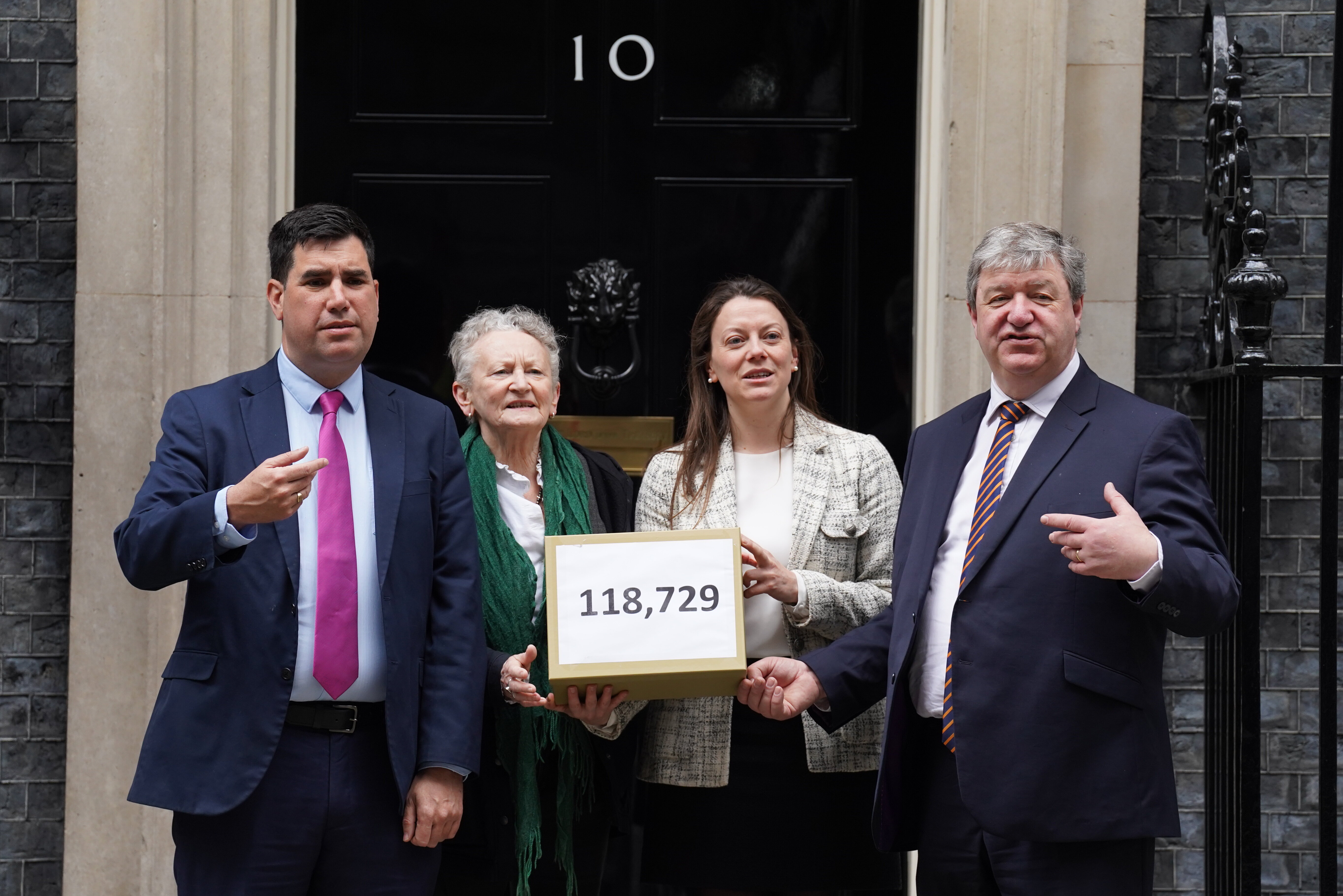
As campaigners delivered a petition to Downing Street calling on the government to “urgently scrap” the new rules, here’s what we know about the controversial move.

What is happening?

Those turning up at polling stations will be required to show a form of photo identification, such as a passport, driving licence or blue badge.

The voter ID rules apply to England as of the May 4 local elections and will come into force for UK general elections from October.

The government predicts the policy will add £180 million to the cost of running elections over the course of a decade.

More than 8,000 council seats in England are up for grabs across 230 local authorities, ranging from small rural areas to some of the largest towns and cities. Polls are also taking place to choose mayors in Bedford, Leicester, Mansfield and Middlesbrough.

Is there any evidence of voter fraud?

The UK has very low levels of proven electoral fraud – during last year’s local and mayoral elections, there was not a single proven case of in-person voter fraud.

Labour’s deputy leader Angela Rayner has pointed out voter personation, the form of fraud the regulations are aimed at stopping, is “vanishingly rare”.

She said: adding: “Over the last 10 years there have been about 243 million votes cast in elections, and how many people have been convicted of voter fraud? Four. That is 0.0000005%.”

“You are more likely to be hit by lightning 54 times than fall victim to voter personation fraud,” she added.

Why are people claiming this is ‘voter suppression’?

Members of marginalised groups are less likely to have ID, according to campaigners, with women, those living in urban areas, and people under 20 and over 65 are less likely to hold a driving licence. A recent Department for Transport survey found that only 53% of the Black population hold a driving licence, compared with 76% of the white population.

But there’s another element that critics argue shows a deliberate attempt to disenfranchise young people. Bus and travel passes for older and disabled people are being accepted as photo IDs – but the young people’s travel cards is not being permitted.

Long established polling suggests these groups are less likely to vote Conservative.

The Bafta Award-winning creator of The Thick Of It, Armando Ianucci, has also thrown his weight behind the campaign opposing voter ID laws.

He recently tweeted a picture of the back of a polling card which set out the list of acceptable forms of voter ID, and wrote: “Card gives many options for elderly or those with disability. None, NONE, for younger or student voters. The policy is simply biased against younger voters, designed to suppress their vote.”

The organisers of the petition, which has over 100,000 signatures, include campaign groups Unlock Democracy, the Electoral Reform Society, Open Britain and Fair Vote UK.

Representatives of the campaign groups were joined by Labour Party MP Richard Burgon, Liberal Democrat MPs Alistair Carmichael and Sarah Green, and the Green Party peer Jenny Jones.

Jones said: “The government has actually perpetrated voter fraud.

“They have pushed through a bill that is going to prevent certain groups, particularly younger people, from voting.”

Burgon described the voter ID programme as a “draconian, authoritarian attack” on voting rights.

Carmichael dismissed the suggestion that requiring photo ID at the polls is necessary to prevent voter fraud, stating: “It is a solution in search of a problem. We have no historic problem with voter impersonation in this country.”

Do people know about the changes?

A study commissioned by the Local Government Information Unit (LGIU) found that there is confusion over what forms of identification will be accepted under the new voting rules.

A poll by Ipsos found that more than a third of English adults incorrectly thought a student card would be accepted, while 30% wrongly thought their poll card would be valid.

Those thinking a polling card would suffice rose to 42% among those aged 18-34 and half of ethnic minorities.

Jonathan Carr-West, chief executive of the LGIU, said: “In spite of a public awareness campaign, 41% of people have heard little or nothing about new voter ID requirements being introduced for the upcoming local elections in England.”

What could the impact be?

Experts have suggested that given the low level of personation offences, and the limited impact on election results of such offences thus far, mean the main impact will be to prevent a large number of people from voting.

At two trials of voter ID in the 2018 and 2019 local elections, more than 1,000 would-be voters were turned away from polling stations and did not return.

What are the authorities doing?

The Electoral Commission, which oversees elections, has been running a campaign urging voters to prepare for the changes, with adverts on TV, radio, billboards and online. The televised advert says people must take ID to ballot boxes in the future, and those without can apply for a free certificate to vote.

But take-up of the so-called Voter Authority Certificate has been limited. As of Wednesday, the number of people who have applied for a certificate is 69,852. This falls far short of the government’s estimate of around 4% of the population, equating to 2.1 million people, who do not have a valid form of photo ID.

Defending its decision to push ahead with voter ID, a government spokesperson said: “We cannot be complacent when it comes to ensuring our democracy remains secure.

“Everyone eligible to vote will have the opportunity to do so and 98% of electors already have an accepted form of identification.

“Photo identification has been used in Northern Ireland elections since 2003 and we’re working closely with the sector to support the rollout and funding the necessary equipment and staffing.”

Share Button

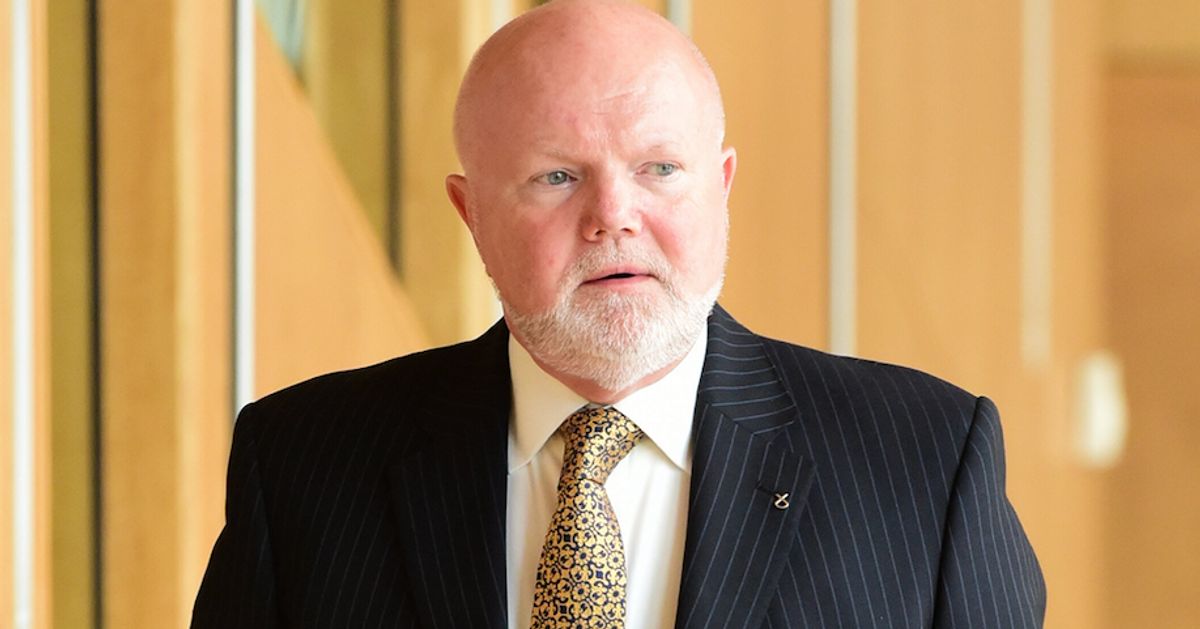
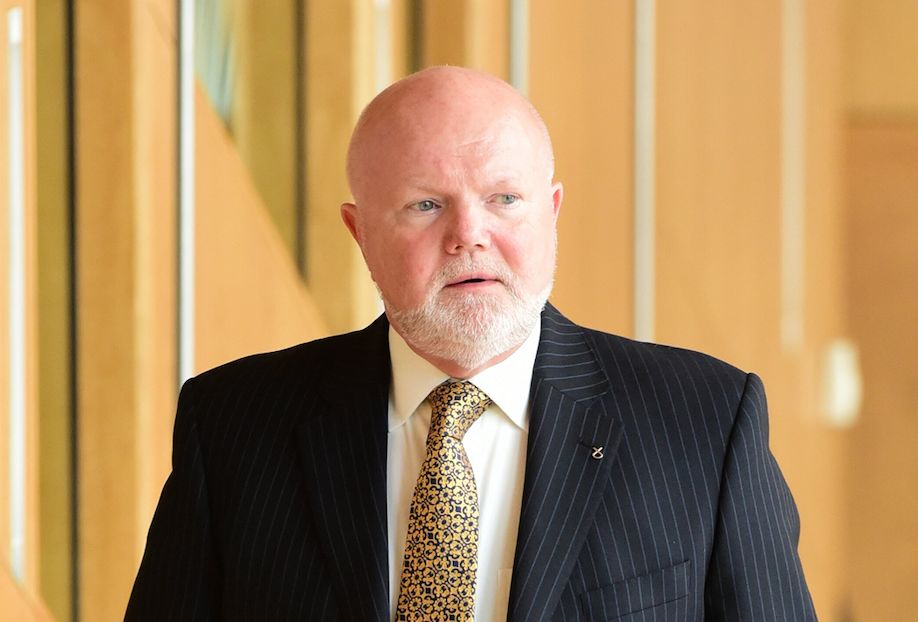
Colin Beattie Quits As SNP Treasurer Following Police Arrest

The SNP’s treasurer has quit after being arrested by police investigating the party’s finances.

Colin Beattie, who is also a member of the Scottish Parliament, said it was “the right decision to avoid further distraction” to the work of party leader Humza Yousaf.

The 71-year-old was questioned by detectives yesterday as part of their probe into claims that £660,000 raised by the SNP to fight another independence referendum has been mis-spent.

He was released last night without charge, pending further investigations.

Beattie’s arrest came just two weeks after Peter Murrell, the SNP’ former chief executive and the husband of Nicola Sturgeon, was also taken into custody by Police Scotland.

He was also released without charge after being questioned for 11 hours.

In a statement, Beattie said: “This afternoon, I informed the party leader that I will be stepping back from my role as SNP national treasurer with immediate effect.

“I have also informed the SNP chief whip at Holyrood that I will be stepping back from my role on the Public Audit Committee until the police investigation has concluded.

“On a personal level, this decision has not been easy, but it is the right decision to avoid further distraction to the important work being led by Humza Yousaf to improve the SNP’s governance and transparency.

“I will continue to co-operate fully with Police Scotland’s inquiries and it would be inappropriate for me to comment any further on a live case.”

Beattie was originally SNP treasurer between 2004 and 2020 before being replaced by Douglas Chapman MP.

He returned to the role in 2021 after Chapman resigned, claiming he “had not received the support or financial information required” to carry out his duties.

As well as being leader, Yousaf is now the SNP’s interim treasurer until a full-time replacement can be found.

It was reported at the weekend that Beattie had told a meeting of the SNP’s national executive council that he was “having difficulty balancing the books” after the party lost 30,000 members and several big-money donors.

However, the party has insisted that it is not running out of cash.

The police investigation, called Operation Branchform, was launched following allegations that the £660,000, which was meant to be in a ring-fenced fund, had been misappropriated. The party has denied any wrongdoing.

It emerged in December that Murrell – who was chief executive for more than 20 years – had loaned the SNP £107,620 to help with “cash flow”.

The party has been engulfed in turmoil ever since Sturgeon’s surprise resignation in February.

Share Button

Dominion Settles Defamation Suit With Fox News

Dominion Voting Systems reached a settlement with Fox News on Tuesday in its massive defamation suit against the media giant, the same day the blockbuster trial was expected to begin.

“Without you, the parties would not have been able to resolve their situation,” Delaware Supreme Court Judge Eric M Davis told the jury of 12 people, who were sworn in earlier in the day.

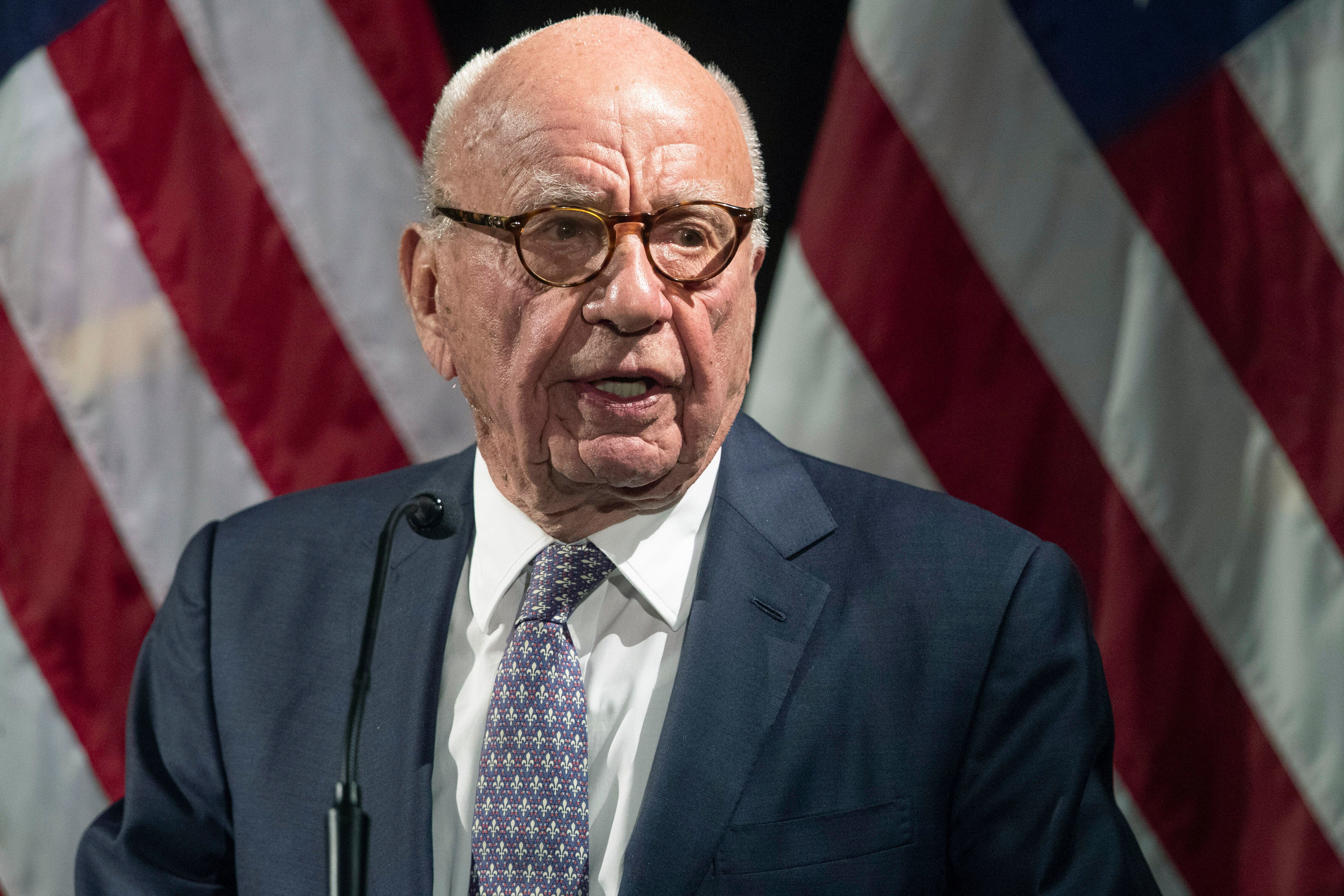
Terms of the settlement were not immediately available, but the decision means Fox will avoid a potentially embarrassing trial and protect Fox Corporation Chair Rupert Murdoch and top Fox News hosts from testifying. The deal will also inoculate the network from legal repercussions linked to the spread of misinformation during and after the 2020 presidential election – at least for now.

The defamation trial had been set to begin Monday but was suddenly delayed on Sunday night, prompting reports Fox News had sought a last-minute settlement. Dominion had previously insisted the company would settle only if Fox issued an apology and admitted to spreading lies on the air.

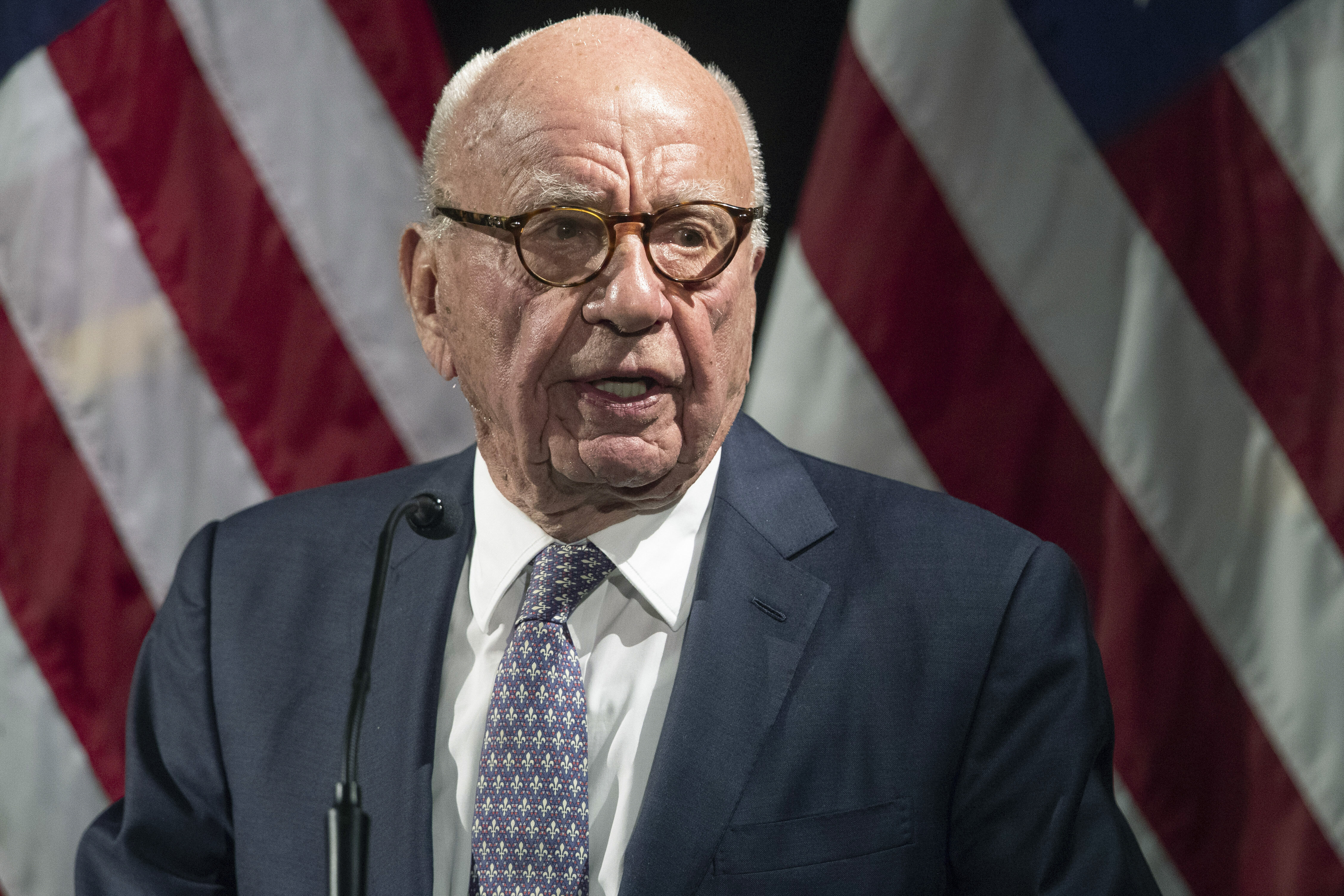
The settlement protects Fox Corp chair Rupert Murdoch (above) and others at the network from having to testify.

Mary Altaffer/File via Associated Press

Dominion sued the network for $1.6 billion in damages, claiming Fox News intentionally peddled lies about the 2020 race, including that the company’s voting machines were rigged. Media advocates had expected the landmark case to delve into the spread of misinformation and the intricacies of American libel law, questions that have grown exponentially in recent years.

Fox had argued its actions were protected under the First Amendment and that its hosts had an “absolute right to cover the news”. But a deluge of bombshells appeared in court filings in recent months, demonstrating how senior executives at the network expressed doubt about Donald Trump’s claims of election fraud. In one deposition, Murdoch himself said under oath that several hosts “endorsed” false conspiracy theories, but he moved to distance their comments from the network itself.

Fox faces a separate defamation suit from Smartmatic USA Corp. The voting machine company has sued for $2.7 billion over similar claims to those of Dominion.

Share Button

Fox News On Trial: The $1.6bn Defamation Lawsuit Explained

A major defamation lawsuit against Fox News has begun – and much is at stake.

Dominion Voting Systems, a voting machine company, has brought a $1.6 billion (£1.29 billion) defamation case against the right-wing network in a trial over the broadcaster’s alleged role in spreading the lie of a stolen 2020 presidential election.

As well as the threat to Fox of eye-watering damages, the six-week trial has potential to pull back the curtain on former US president Donald Trump’s flse claims and how the right-wing TV network operates.

Sworn testimony is expected from Fox’s billionaire founder, Rupert Murdoch, and on-air talent, including Tucker Carlson and Sean Hannity.

What is the case?

Denver-based Dominion claims New York-based Fox News and its parent company, Fox Corp, essentially destroyed the voting company’s business and subjected employees to threats by falsely implicating it in a bogus conspiracy to rig the election against Trump.

Dominion says its lawyers sent Fox employees more than 3,600 emails attempting to correct Fox’s reporting on the issue. The company identified 20 specific statements from Fox broadcasts between November 8, 2020, and January 26, 2021, that it says were legally defamatory.

Fox contends that it was reporting newsworthy charges made by supporters of the Republican then-president and is supported legally by libel standards. After a one-day delay that raised the possibility of a last-minute settlement between the litigants, seating of the jury in Delaware took place on Tuesday, with opening statements expected to follow.

What do we know already?

Court documents have already been unsealed by Delaware superior court judge Eric M Davis, and the cache has illuminated the inner workings of the conservative network like never before.

It shows prominent figures at Fox didn’t believe the fraud allegations. Yet in public, Dominion argues, Fox News amplified the conspiracy theories and invited guests such as Trump ally Sydney Powell on air to allege Dominion’s voting systems had switched votes from Trump to Joe Biden, the Democrat who beat Trump to the White House.

Multiple staffers texted and emailed in disbelief as Trump latched onto increasingly tenuous claims of being robbed by voter fraud.

Hannity said in a deposition that he did not believe the fraud claims “for one second” but wanted to give accusers the chance to produce evidence. Hosts Carlson, Hannity and Laura Ingraham mocked Powell for spreading the claims. “This Dominion shit is going to give me a fucking aneurysm,” one Fox producer wrote in a message. “MIND BLOWINGLY NUTS,” wrote Fox Corporation SVP Raj Shah, per court documents.

Murdoch, questioned under oath, agreed the 2020 election was free and fair: “The election was not stolen,” he said.

In one email, Murdoch called Trump’s rhetoric “bullshit and damaging”. After Trump aide Rudy Giuliani gave a disastrous press conference on the conspiracy claims, Murdoch commented: “Really crazy stuff”.

Why did Fox adopt its position?

The court papers have laid out a profound concern at Fox over the impact of its election night call that Biden had beaten Trump in the battleground state of Arizona.

Calling Arizona for Biden was an unpleasant shock to supporters of Trump, including many Fox viewers. Not only were they facing losing the White House, but the news had been delivered to them by a source they could usually expect to advocate for their cause.

<img class="img-sized__img landscape" loading="lazy" alt="Tucker Carlson, left, and former US president Donald Trump in 2022.” width=”720″ height=”480″ src=”https://www.wellnessmaster.com/wp-content/uploads/2023/04/fox-news-on-trial-the-1-6bn-defamation-lawsuit-explained-3.jpg”>
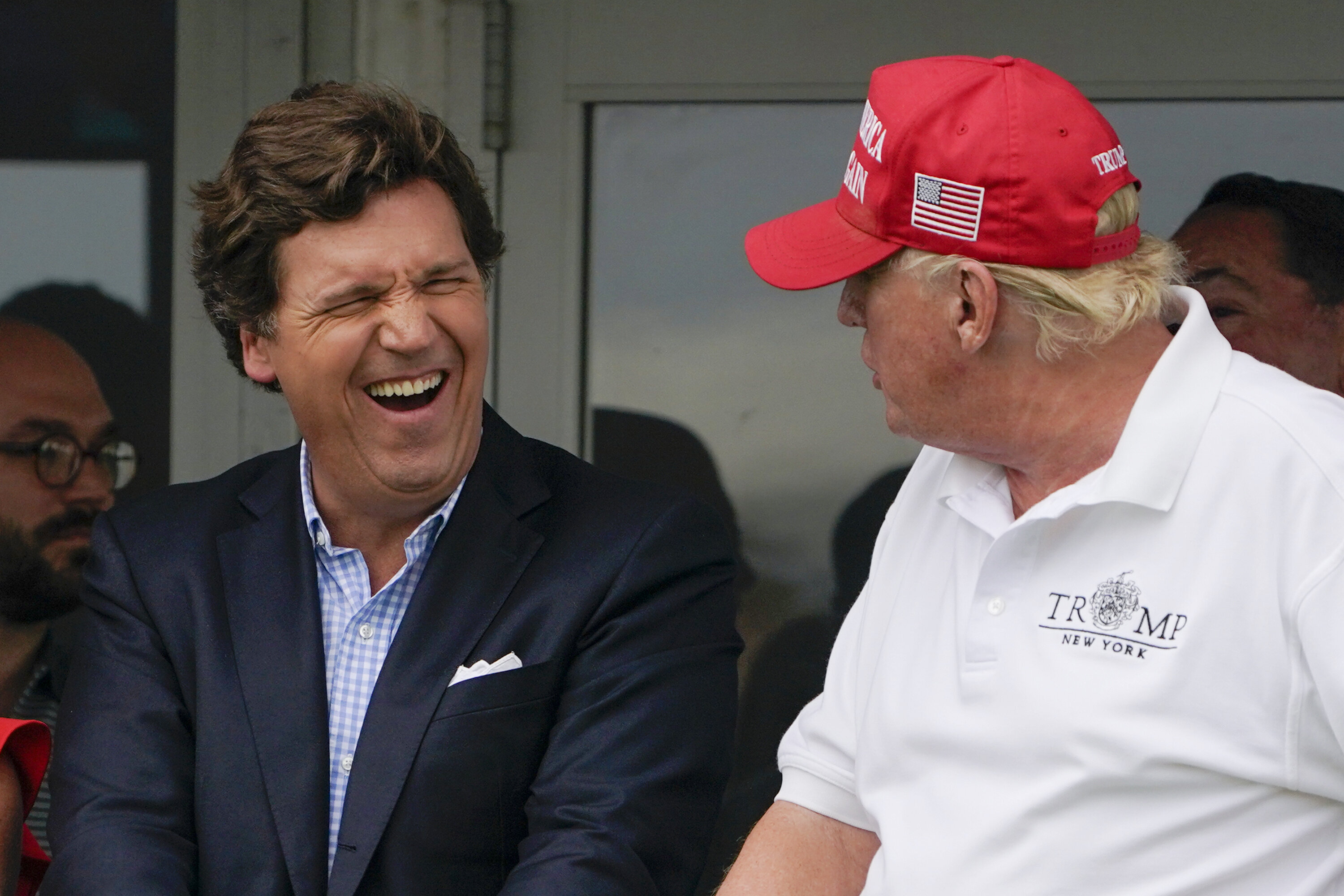
Tucker Carlson, left, and former US president Donald Trump in 2022.

via Associated Press

Fox got the scoop on the call, but Trump and many Fox viewers began tuning in to rival conservative media outlets such as Newsmax.

Emails and memos released in the case show Fox executives were highly aware of a drop-off in their network’s viewership at the same time that Newsmax was gaining viewers, and the executives viewed that dynamic as a potential threat.

Carlson noted with irritation that the company’s stock price was down. Fox News Network CEO Suzanne Scott wrote in an email to Murdoch about the need to “keep the audience who loves and trusts us”.

What is Fox’s defence?

While Dominion’s case may seem strong, the US Constitution and Supreme Court precedent makes it difficult to prove defamation by a news outlet. Dominion will need to prove “actual malice”, meaning that Fox either knew what it was airing was wrong or acted in reckless disregard for the truth.

Fox says Dominion can’t prove its case, but some First Amendment advocates suggest the voting machine company has a strong argument. Their worry is that a prolonged legal battle would give the Supreme Court a chance to change libel laws that would weaken protection for all the media.

<img class="img-sized__img landscape" loading="lazy" alt="Rupert Murdoch in 2019.” width=”720″ height=”480″ src=”https://www.wellnessmaster.com/wp-content/uploads/2023/04/fox-news-on-trial-the-1-6bn-defamation-lawsuit-explained-4.jpg”>
Rupert Murdoch in 2019.

via Associated Press

“Dominion’s lawsuit is a political crusade in search of a financial windfall, but the real cost would be cherished First Amendment rights,” Fox said in a statement to HuffPost. “While Dominion has pushed irrelevant and misleading information to generate headlines, Fox News remains steadfast in protecting the rights of a free press, given a verdict for Dominion and its private equity owners would have grave consequences for the entire journalism profession.”

Was there any evidence of election fraud?

Federal and state election officials, exhaustive reviews in multiple battleground states where Trump challenged his loss, and Trump’s attorney general found no widespread fraud that could have changed the outcome of the 2020 election. Nor did they uncover any credible evidence that the vote was tainted. Trump’s allegations of fraud also have been roundly rejected by dozens of courts, including by judges he appointed.

Share Button

Why Has Vladimir Kara-Murza Been Jailed?

Russia has imposed a 25-year-sentence on a prominent political activist, underlining intensifying intolerance for criticism of the war in Ukraine and other dissenting opinions.

Under president Vladimir Putin, Russia for years has been cracking down on those who challenge the Kremlin. On Monday, Vladimir Kara-Murza was convicted of treason by a Moscow court and sentenced to 25 years in prison.

Who is he?

Kara-Murza, 41, is a historian, journalist and opposition politician who holds Russian and British passports and studied in the UK at Cambridge University. He was a close associate of Boris Nemtsov, a leading opposition figure who was assassinated near the Kremlin in 2015, and continued to speak out against Putin despite the mounting risks.

Twice, in 2015 and 2017, Kara-Murza suddenly fell ill in what he said were poisonings by the Russian security services, on both occasions falling into a coma before eventually recovering. Russian authorities denied involvement in the incidents. Kara-Murza’s lawyers say that as a result, he suffers from a serious nerve disorder called polyneuropathy.

Kara-Murza was one of a small number of opposition politicians who remained active in Russia after it invaded Ukraine in February 2022 and publicly condemned the war in defiance of new censorship laws.

What was he accused of?

Kara-Murza was arrested in April 2022, hours after CNN broadcast an interview in which he said Russia was being run by a “regime of murderers”.

He was declared a “foreign agent” and accused of spreading false information about the actions of the Russian military in Ukraine in connection with a speech he had given the previous month in the Arizona house of representatives, where he said Putin was “dropping cluster bombs on residential areas, mothers’ homes, hospitals, and schools”.

In July, he was additionally charged over his involvement with two foreign-based opposition forums that are labelled by the Russian state as “undesirable”. Finally, on October 6, he was charged with treason over public speeches he had made in Lisbon, Helsinki and Washington.

Prosecutors requested a 25-year jail term.

How did he respond to the charges?

Kara-Murza said he had done nothing wrong and compared the proceedings to Josef Stalin’s show trials of the 1930s.

In a statement at the end of his trial, Kara-Murza said he was jailed for “many years of struggle against Putin’s dictatorship”, his criticism of the war in Ukraine and his long efforts to champion Western sanctions against Russian officials involved in human rights abuses.

“I know that the day will come when the darkness engulfing our country will dissipate,” the father of three told the court in remarks that were posted on his Twitter account. “This day will come as inevitably as spring comes to replace even the frostiest winter.”

Kara-Murza reacted calmly as the judge read the verdict and sentence. His lawyer, Maria Eismont, later quoted him as telling her: “My self-esteem has risen: I realised that I have done everything right. Twenty-five years is the highest appraisal that I could get for doing what I did and what I believed in, as a citizen, a patriot and a politician.”

“A quarter of a century is an ‘A+’ for your courage, consistency and honesty in your years-long work. I am infinitely proud of you, my love, and I’m always by your side,” Kara-Murza’s wife, Evgenia, who lives in the US with their children, tweeted after the verdict.

What have others said?

Human rights organisations and Western governments denounced the verdict and demanded his release. Amnesty International declared the 41-year-old to be a prisoner of conscience as it denounced “yet another chilling example of the systematic repression of civil society, which has broadened and accelerated under the Kremlin since Russia’s invasion of Ukraine last year.”

“The so-called ‘crimes’ Vladimir Kara-Murza was tried for – speaking out against the invasion and advocacy on behalf of victims of human rights violations – are in fact acts of outstanding bravery,” Amnesty’s Russia director, Natalia Zviagina, said in a statement. “This verdict wrongly conflates human rights activism with ‘high treason’ and is reminiscent of Stalin-era repression.”

What else has Russia done?

Days after the invasion, Russia adopted a law criminalising spreading “false information” about its military. Authorities have used the law to stifle criticism of what the Kremlin calls its “special military operation.”

The sweeping campaign of repression is unprecedented since the Soviet era, effectively criminalising independent reporting on the conflict and any public criticism of the war.

Last month, a Russian court convicted a father over social media posts critical of the war and sentenced him to two years in prison. His 13-year-old daughter, who drew an anti-war sketch at school, was sent to an orphanage. Days later, Russia’s security service arrested Evan Gershkovich, an American reporter for The Wall Street Journal, on espionage charges.

With reporting from Reuters and AP.

Share Button