Keir Starmer Pledges Labour Will Recruit 13,000 More ‘Bobbies On The Beat’ In Crime Crackdown

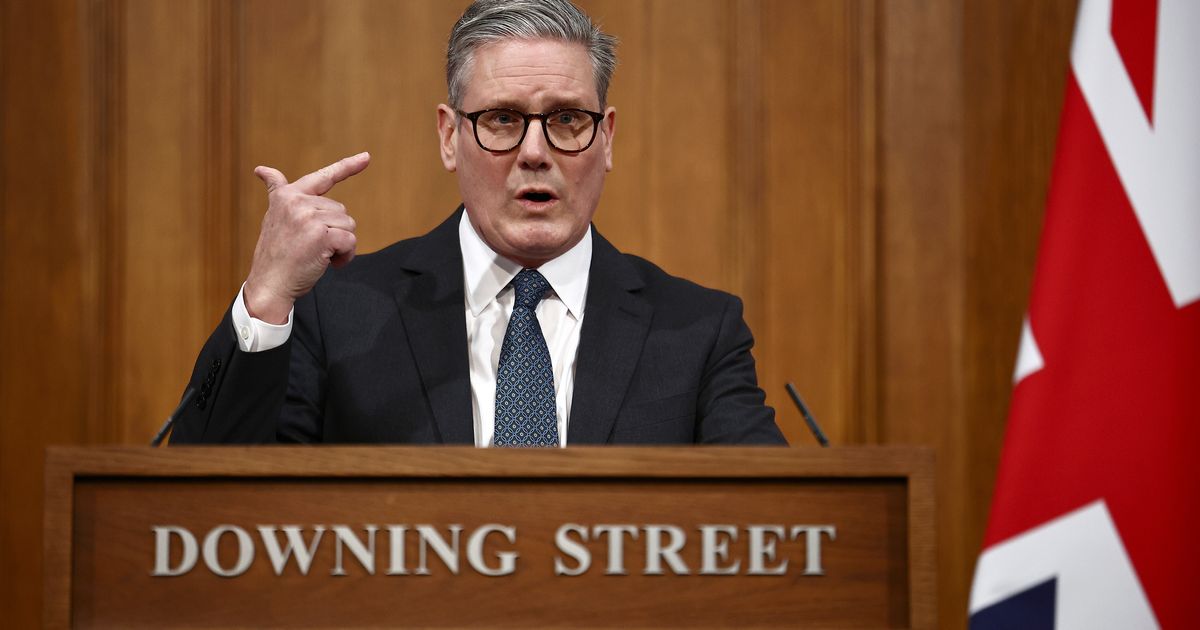
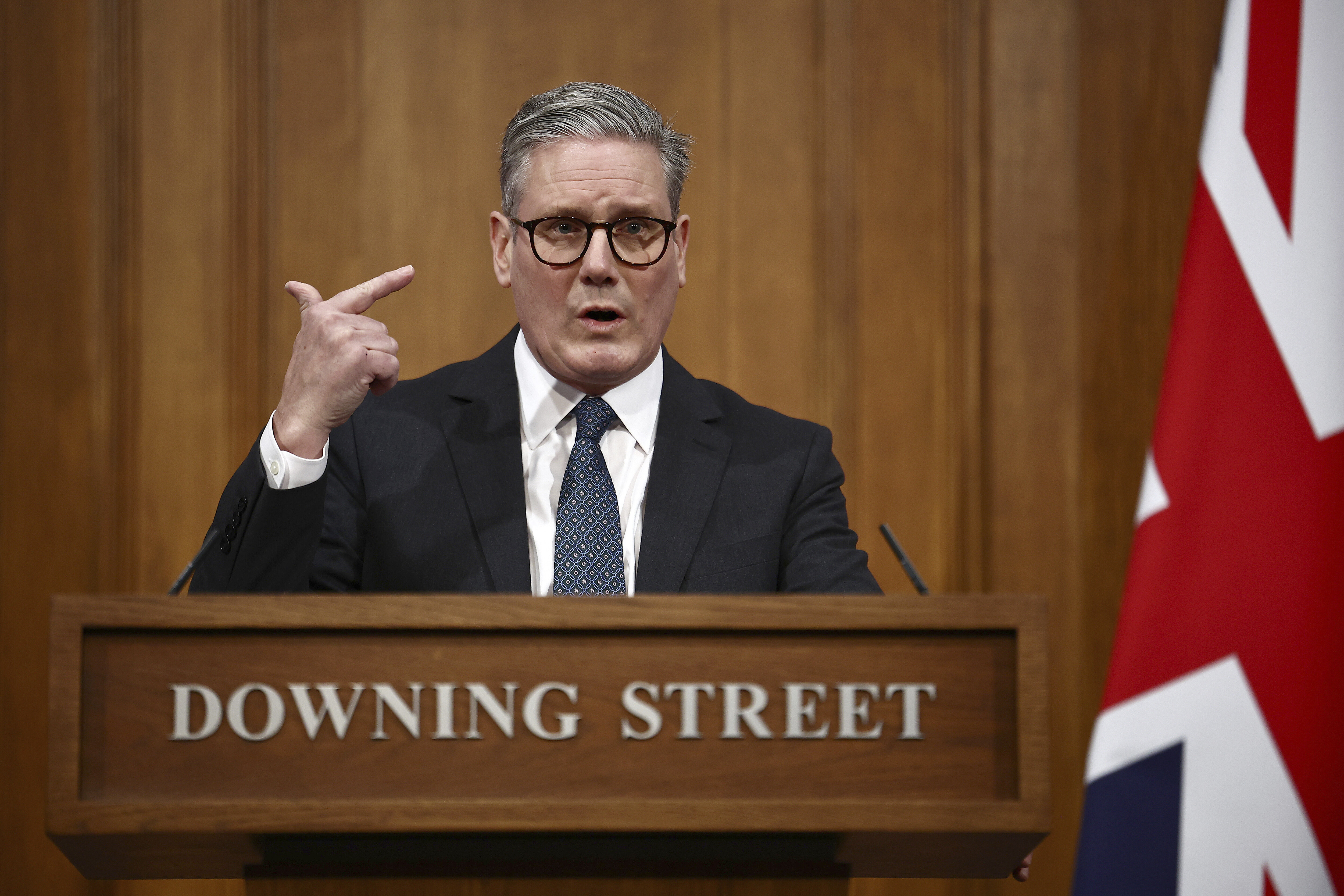
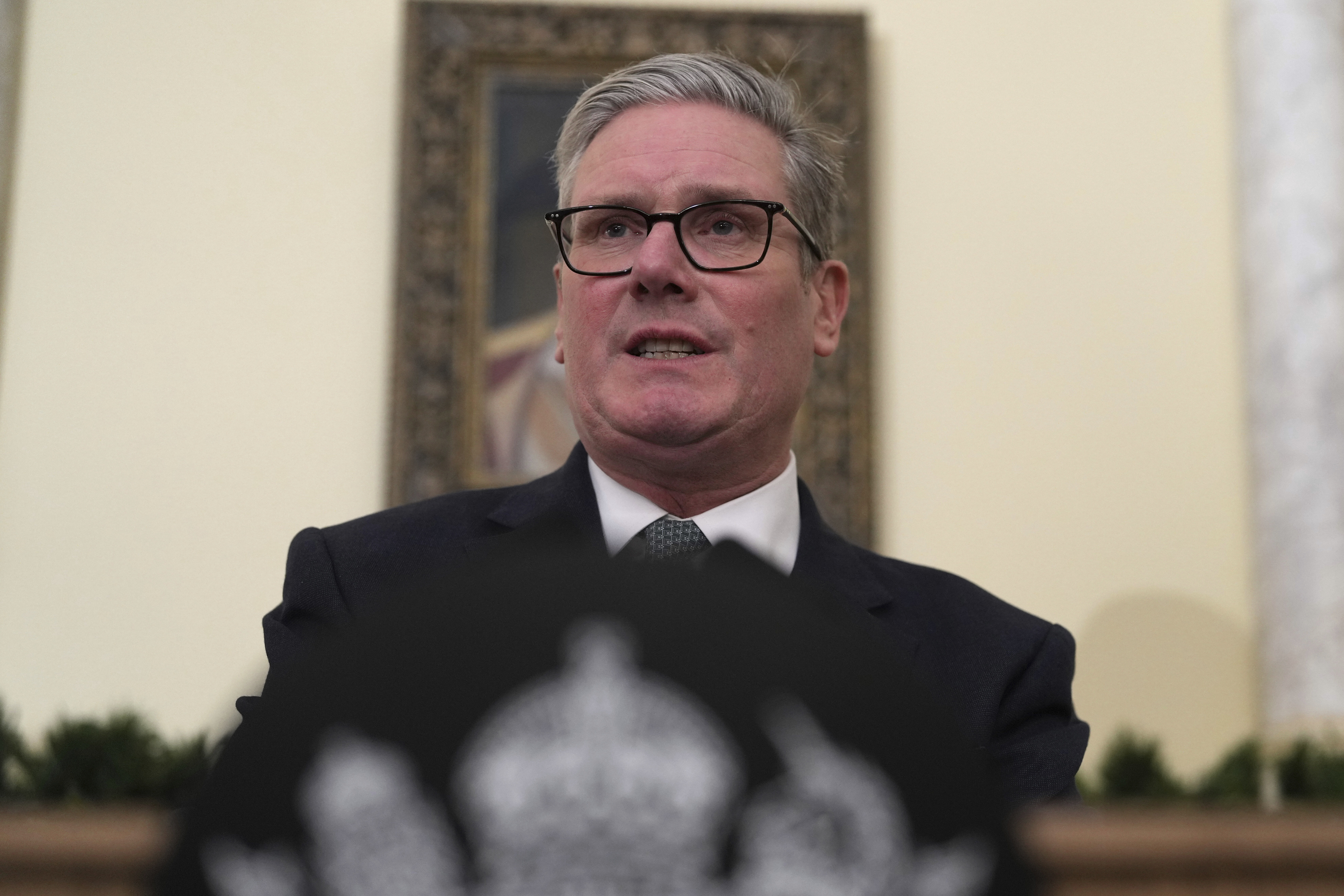
Labour will recruit an extra 13,000 neighbourhood police to tackle anti-social behaviour between now and the general election, Keir Starmer will pledge on Thursday.

The prime minister will unveil the plan in a major speech as he attempts to relaunch his government after a turbulent first five months in office.

Every community will have a “named, contactable officer” tasked with patrolling their neighbourhood and who cannot be used to plug policing shortages in other areas, the PM will say.

The new “neighbourhood policing guarantee” is part of a “plan for change” setting out how Labour intends to achieve its five missions for government and will include separate pledges on clearing hospital backlogs, improving education, tackling the cost of living and bringing down energy bills.

But No.10 has denied that the PM has been forced into the reset by the controversies and scandals which have dogged the government since Labour’s landslide election victory in July.

They have included a row over Labour donor Lord Alli buying clothes and glasses for the prime minister, the sacking of Starmer’s chief of staff Sue Gray, and last week’s resignation by transport secretary Louise Haigh.

In his speech, Starmer will say: “The neighbourhood policing guarantee will deliver 13,000 extra neighbourhood police, visible on your streets, cracking down on anti-social behaviour.

“A named, contactable officer in every community. A relief to millions of people scared to walk their streets they call home.”

The extra numbers will be made up of police, community support officers and special constables.

Home secretary Yvette Cooper said the move was “about rebuilding the vital connection between the public and the police”.

“This marks a return to the founding principles of British policing – where officers are part of the communities they serve,” she said.

“Through this visible, responsive police presence in every neighbourhood, we will restore the trust and partnership that lies at the heart of keeping our communities safe.”

Starmer is also expected to address public concerns about high immigration in his speech, as well as announce a major programme of public sector reform.

He will say: “My government was elected to deliver change, and today marks the next step. People are tired of being promised the world, but short-term sticking plaster politics letting them down.

“Hardworking Brits are going out grafting every day but are getting short shrift from a politics that should serve them.

“They reasonably want a stable economy, their country to be safe, their borders secure, more cash in their pocket, safer streets in their town, opportunities for their children, secure British energy in their home, and an NHS that is there when they need it. My mission-led government will deliver.”

Share Button

Is Elon Musk Planning To Make A ‘F*** You Starmer’ $100 Million Donation To Reform UK?

Elon Musk is reportedly planning to make a $100 million donation to Reform UK as a “fuck you” to Keir Starmer.

According to the Sunday Times, the tech billionaire could funnel the cash through the British arm of his social media platform X to get round rules banning foreigners from giving money to British parties.

The huge sum – worth around £78 million – would give Nigel Farage’s party a major financial advantage over both Labour and the Tories.

The paper says leading businessmen and Conservative Party officials believe Musk could hand over the cash as a “fuck you Starmer payment” in his ongoing feud with the prime minister.

The war of words began during last summer’s far-right riots, when Musk posted on X that “civil war in inevitable” in the UK.

That prompted the PM’s official spokesman to hit back: “There’s no justification for comments like that and what we’ve seen in this country is organised illegal thuggery which has no place on our streets or online.”

Musk has also criticised the introduction of inheritance tax for agricultural land by Rachel Reeves in the Budget, and last month accused Labour of turning Britain into a “tyrannical police state”.

He has also taken a swipe at Starmer’s approval ratings, which have slumped since Labour’s landslide election victory.

Musk – a close ally of Donald Trump – made clear his support for Reform UK last week after it emerged that former Tory minister Andrea Jenkyns had defected to the party.

When one X user claimed “Reform will win the next election”, Musk replied to the post with just one word: “Yes.”

Asked about the potential Musk donation to Reform UK, Nigel Farage told the Sunday Times: “All I can say is that I’m in touch with him and he is very supportive of my policy positions.

“We both share a friendship with Donald Trump and Trump has said good things about me in front of Musk. We’ve got a good relationship with him.”

Share Button

Victoria Derbyshire Suggests Keir Starmer Was ‘A Hypocrite’ For Giving Louise Haigh Cabinet Job

Victoria Derbyshire asked a senior minister if Keir Starmer was “a hypocrite” for putting Louise Haigh in Cabinet despite her fraud conviction.

The former transport secretary – who resigned on Thursday night – made the PM aware of her past when he made her shadow Northern Ireland secretary in 2020.

Two years later, at the height of the partygate scandal which saw Boris Johnson fined for breaking lockdown rules, Starmer told MPs that “a lawmaker and a lawbreaker”.

On BBC1 this morning, Pat McFadden, the chancellor of the Duchy of Lancaster, was shown a clip of his leader making those comments.

Presenter Victoria Derbyshire told him: “He said that when he had someone sitting on his shadow frontbench, ie Louise Haigh, with a conviction.”

McFadden said: “What he’s saying is if you’re sitting in Cabinet, you can’t be breaking the law.”

But Derbyshire pointed out: “He gave her a job in Cabinet when he knew she had a past conviction.”

McFadden replied: “It’s not the case that anyone who’s ever broken the law can’t sit in parliament. I’m sure if you looked around parliament you’d find more than one, I don’t know everybody’s background.”

The presenter asked: “If it’s fine, why did she have to go?”

McFadden said: “I don’t know the details of every conversation that took place at the end of last week, but clearly between them they came to the view that Louise had to resign.”

But Derbyshire asked him: “Is Keir Starmer a hypocrite because he gave a lawbreaker a job in his Cabinet having said that two years ago.”

The minister said: “No he’s not. I think he’s appointed a good Cabinet, it’s a more united Cabinet than I’ve seen in many years and we’re working together.”

Share Button

Drink Spiking Will Be Made A Criminal Offence Under Labour Bid To Protect Women And Girls

Drink spiking is to be made a criminal offence under Labour plans to halve violence against women and girls.

Keir Starmer will confirm the move as part of efforts to “reclaim our streets” from criminals.

The prime minister will meet with police chiefs, hospitality industry executives and transport bosses on Monday to discuss how best to crack down on the practice of putting drugs in drinks.

Thousands of staff working in the nighttime economy will be trained up on how to spot it happening.

A pilot scheme will be launched in December and then rolled out to 10,000 bars across the country by spring next year.

Starmer said: “My government was elected on a pledge to take back our streets, and we will never achieve this if women and girls do not feel safe at night.

“Today, I will bring together police chiefs, heads of industry and transport bosses to demand coordinated action to stop women being targeted, whether they are out with friends or simply travelling home.

“Cracking down on spiking is central to that mission.

“We know it can be incredibly difficult for victims to come forward to report this awful crime, and these cases can be very hard to prosecute. We must do more to bring the vile perpetrators who carry out this cowardly act, usually against young women and often to commit a sexual offence, to justice.

“That is why I made a promise that, if elected, I would make spiking a new criminal offence. Today, I am proud to have come good on that pledge.”

Home secretary Yvette Cooper said: “Spiking is a disturbing and serious crime which can have a damaging and long-lasting impact on victims.

“People shouldn’t have to worry about the safety of their drinks on a night out. These changes are about giving victims greater confidence to come forward, and ensuring that there is a robust response from the police whenever this appalling crimes take place”.

Kate Nicholls, chief executive of UK Hospitality, said: “Our pubs, bars, clubs and restaurants are where Brits go to enjoy themselves and our priority is to ensure everyone can do that safely.

“I’m pleased that we’re able to support the Home Office in its plans to roll out a nationwide training programme as part of these efforts, to help ensure all staff know how to prevent spiking and have the skills to act if they suspect someone has been spiked.”

Share Button

Elon Musk Says Britain Is A ‘Tyrannical Police State’ In Latest Swipe At Keir Starmer

Keir Starmer has turned the UK into a “tyrranical police state”, according to Elon Musk.

The tech billionaire launched his latest attack on the prime minister on X, the social media platform he owns.

He was responding to a post about an online petition calling for an immediate general election receiving one million signatures.

Musk said: “The people of Britain have had enough of a tyrannical police state.”

Musk’s comments come just a day after he took a swipe at Starmer’s plummeting approval ratings.

He re-posted a graph showing how the PM’s popularity peaked just after the general election in July.

Since then, Starmer’s net approval rating has slumped from plus 11 to minus 38 as his government has been hit by a series of controversies.

Responding to the findings, Musk wrote: “The voice of the people is a great antidote.”

His feud with the PM has been going on since the riots which hit the UK in the summer in the wake of the killing of three young girls in Southport.

Downing Street slapped down the billionaire tech boss for claiming “civil war is inevitable” in the UK.

The PM’s official spokesman said: “There’s no justification for comments like that and what we’ve seen in this country is organised illegal thuggery which has no place on our streets or online.”

But responding to a video posted on X by Starmer in which he said the government “will not tolerate attacks on mosques or on Muslim communities”, Musk replied: “Shouldn’t you be concerned about attacks on all communities?”

Earlier this month, Musk re-ignited the war of words by criticising the introduction of inheritance tax for agricultural land by Rachel Reeves in the Budget.

Musk’s ongoing criticism of Starmer is a problem for the PM as he tries to strike up a good relationship with president-elect Trump.

The X owner was one of the Republican’s biggest supporters during the US election campaign and has been appointed to head up a new Department of Government Efficiency aimed at tackling waste and saving trillions of dollars.

Share Button

The Iron Chancellor? Can Rachel Reeves Ride Out The Storm As Budget Criticism Grows?

According to friends, Rachel Reeves is maintaining her sense of humour as she endures growing criticism of the decisions she has taken since becoming chancellor in July. She is certainly going to need it in the years ahead.

In barely four months, Reeves has managed to anger millions of pensioners, Britain’s farmers and some of the country’s biggest employers as she seeks to repair the public finances.

It seems that voters have noticed. Polling by Savanta seen by HuffPost UK found that the chancellor’s approval ratings have plummeted since the election, while Labour’s lead over the Tories on who is most trusted to run the economy has fallen dramatically.

However, Reeves seems determined not to row back on any of the controversial decisions she has taken in the past four months.

She had hardly got her feet under her desk at the Treasury before she announced that the winter fuel payment, previously a universal benefit for every OAP in the country, would instead be means tested.

At a stroke, 10 million pensioners were told they would no longer receive it – a move which the Department for Work and Pensions admitted this week will push 100,000 of them into relative poverty.

Reeves justified the decision by saying Labour had to make a start on filling a £22 billion black hole left by the last Tory government, but that did not shield her from the political backlash which followed.

Undeterred, she doubled down in the Budget last month, closing a loophole which saw farmers exempted from inheritance tax, while hiking the employers’ rate of National Insurance.

The unpopularity of those decisions was shown in the past week, with thousands of farmers protesting on Whitehall, while some of the UK’s biggest companies putting their names to a letter warning that the NI changes will cost jobs and push up prices.

But despite the criticism, there is no indication from the top of government that any U-turns are on the cards.

A Labour source: “Rachel promised at the election she would be an iron chancellor that would put the economy back on track – and that’s exactly what she is doing.

“We have always said that there would be tough decisions to clean up the mess we inherited, including the £22 billion black hole in the nation’s finances. If we duck those tough decisions we will be doing precisely what the Conservatives did: party first, country second.

“But Rachel is equally clear about the prize on offer: a Britain that is better off. That’s why the Budget was all about delivering for working people: fixing the NHS, rebuilding Britain and protecting people’s payslips from higher taxes.”

Farmers protest during a demonstration against inheritance tax changes on Tuesday.

Bloomberg via Bloomberg via Getty Images

Another senior insider told HuffPost UK: “Rachel is patient, shrewd and has confidence in herself and the people around her.

“People shouldn’t mistake her calmness and that rational approach for a lack of ambition for the government and the country, or an unwillingness to be bold.

“She had a shaky start with the winter fuel payment announcement but she’s learned from it that presentation and follow-up is key, which is why the Budget was so well-managed at every stage.

“Undoubtedly there will be choppy waters ahead, but I couldn’t think of anyone better to be at the helm to steer the government and the country through.”

Nevertheless, there are some in government who despair at Reeves’ determination not to plot a difference course, regardless of the political headwinds she is facing.

They point out that previous chancellor, such as Gordon Brown, Nigel Lawson and Philip Hammond, all showed a willingness to change their minds when the situation demanded it.

Reeves’ decision to put Darren Jones, the chief secretary to the Treasury, in charge of the “phase one” spending review outlining departmental budgets for the next 12 months, has also drawn criticism.

HuffPost UK has been told that Jones’ “high-handed” manner in one-to-one meetings when outlining where the axe would need to fall angered virtually all of his cabinet colleagues.

“You will not find a single minister, with the possible exception of Wes [Streeting], who has a good word to say about him,” said one senior figure.

It is essential, government sources say, that Reeves herself is at the helm of the three-year spending review which is still to come, rather than her deputy.

Some in cabinet are also worried at the apparent lack of an overarching strategy for achieving the economic growth which is meant to be the government’s number one mission.

At a recent cabinet meeting where it was discussed, there was surprise that science innovation and technology secretary Peter Kyle, and business secretary Jonathan Reynolds, were given star billing.

“It seemed very thin,” said one minister. “There wasn’t a lot that seemed different from what the Tories have been doing for the last 10 years.”

Support for Reeves in government remains strong, however, and there is no doubt that she has the full confidence of her next door neighbour, the prime minister.

One ally said making so many unpopular decisions in her first few months in government was smart politically and economically.

This is year one and people need to be reminded of that,” he said. “This is the first year of what will be a long parliament and it will undoubtedly be the most difficult year.

“They’re having to make difficult decisions and they’re determined that that is the right thing to do for the economy, but also politically it is the right strategy because you’ve got to do the difficult stuff now, right at the beginning, if you want to see an economic and political recovery in four years’ time.”

Former Labour MP Michael Dugher, one of Reeves’ closest friends in politics, said: “She gets called the iron chancellor because she is seen as someone who is very tough and firm to deal with, and determined to get the public finances back in shape and create economic stability.

“But what she really needs is an iron skin because she is very much on the front line of the receiving end of a lot of the attacks on the government – whether it’s from Conservatives who still haven’t got over losing the election, or from the Left, who think Labour leaders as there to betray them.”

It is undoubtedly the case, however, that many more unpopular decisions will need to be taken by Reeves between now and the next election in four years’ time.

Having already burned through so much political capital, the pressure on her to bend will only increase if growth remains anaemic and the opinion polls do not improve.

How she responds will determine whether the iron chancellor tag is a deserved one or not.

Share Button

Putin Threatens To Bomb UK After Ukraine Uses British Long-Range Missiles To Attack Russia

Vladimir Putin has threatened to bomb the UK after Ukraine used British-made missiles to attack targets in Russia.

The Russian president said he was willing to “respond resolutely in a mirror way” is there is further escalation in the ongoing war.

His comments, in an address to the Russian people, came a day after Ukraine fired British Storm Shadow missiles at Russia.

Putin said: “We believe that we have the right to use our weapons against military facilities of the countries that allow to use their weapons against our facilities,” he said.

“And in case of escalation of aggressive actions, we will respond resolutely in a mirror way.”

Putin said he was willing to use a new ballistic missile to target the UK after using the weapon to attack Ukraine.

He said: “In response to the use of American and British long-range weapons on November 21 of this year, the Russian armed forces launched a combined strike on one of the facilities of the Ukrainian defence industry.

“One of the newest Russian medium-range missile systems was tested in combat conditions, in this case, with a ballistic missile in a non-nuclear hypersonic warhead.”

The US said the weapon was a new, experimental intermediate-range missile based on Russia’s existing RS-26 Rubezh intercontinental ballistic missile.

Putin’s comments once again threaten to raise the temperature on a conflict which passed the 1,000 day mark earlier this week.

Commenting on Russia’s ballistic missile attack on Ukraine, Keir Starmer’s official spokesman said: “The reports coming out of Ukraine overnight are deeply concerning.

“If true clearly this would be Another example of depraved, reckless and escalatory behaviour from Russia and only strengthens our resolve.”

Defence secretary John Healey said: “Since the illegal invasion of Ukraine began, Russia has consistently and irresponsibly escalated the conflict while Ukraine continues to fight in self-defence for a democratic future.

“Today’s ballistic missile attack is yet another example of Putin’s recklessness.”

The distance from Moscow to London is around 2,500km, suggesting the range of the new missile could threaten the UK.

Share Button

Sue Gray Is Not Coming Back To Work For Starmer As Ex-Chief Of Staff ‘Rejects New Role’

Keir Starmer’s former chief of staff Sue Gray is not coming back to work with the PM, HuffPost UK understands.

No.10 announced on October 6 that she was being made the prime minister’s envoy for nations and regions as part of a major Downing Street shake-up.

At the time, Starmer said he was “delighted” that she had accepted the newly-created role.

But it has now been confirmed that she will not be starting the job after all.

The prime minister’s spokesperson told reporters on Tuesday: “I can confirm she has now decided to not take up the role.

“Subsequent to that, we confirmed she was taking a break and I can now update she has decided not to take up the role following her break.”

They said she had already “played a vital role strengthening relations with nations and regions”, for which she had the PM’s thanks.

They did not say if she had been paid during her break between jobs.

No.10 said the envoy role will now be kept “under review”, adding: “Beyond that, respectfully, we won’t comment further on individual staffing matters.”

The comments come hours after a source close to the former chief of staff told the Financial Times: “Sue has taken a decision not to take the role. She’s going to focus on other things.

“She’s taken time to think about it properly, talking to stakeholders, but ultimately she’s decided she doesn’t want to do it.”

However, a cabinet minister told HuffPost UK that it had been No.10′s decision for her not to do the job.

Gray, who attracted national attention after leading the civil service’s partygate probe during Boris Johnson’s premiership, was appointed Starmer’s chief of staff when Labour was still in opposition.

She continued in the role after the election, but clashed with Morgan McSweeney, Starmer’s director of strategy.

After weeks of No.10 turmoil, Gray was sacked and replaced by McSweeney.

She immediately went on what the PM’s official spokesman described as a “short” break and never returned to take up her new job.

In a statement in October, Gray said she was “pleased to accept the new envoy role.”

The PM also issued a statement saying he was “delighted she would continue to support our work”.

But the job change was seen by many as a demotion, especially as it was not clear exactly what the new role would entail – or if it would even be paid.

After weeks of silence from Gray, No.10 confirmed to HuffPost UK that she would not be coming back to work for the PM.

A Downing Street source then told the BBC: “We think she has made the right decision.”

Gray went on a “short break” after quitting as Starmer’s chief of staff, where she had been paid more than the prime minister with an annual salary of £170,000.

She did not attend a regional investment summit in mid-October, as she was taking “a bit of downtime” following an intense period in the spotlight, according to cabinet office minister Pat McFadden.

The Guardian reported on Tuesday that Starmer was planning to withdraw the job offer to Gray allegedly due to concerns about the media attention which could stop her from working effectively.

A government source told the newspaper: “Sue hasn’t been told for sure that the job is no longer on offer, but she has been warned that this is the direction of travel. The way some people are behaving towards her is really horrible.”

Share Button

What Labour Must Learn From Trump’s Victory To Avoid The Democrats’ Fate

Donald Trump’s stunning US election victory has thrown up serious questions for Keir Starmer – and not just because of the disobliging comments he and other senior Labour figures made in the past about the president-elect.

The splintering of the Democrats’ traditional coalition of voters has sent a shiver down the spine of Labour strategists, who are already nervously eyeing the next UK general election in four years’ time.

Minority groups and the white working class, angered by what they saw as a collapse in their living standards under the Biden administration, flocked to Trump’s promise to “Make America Great Again”.

Throw in the fact that incumbent parties are being turfed out by disgruntled electorates across the western world – a trend Starmer benefited from on July 4 – and you can see why Labour bosses are anxious.

HuffPost UK spoke to a range of Labour insiders and polling experts to find out what lessons the party needs to learn from what happened across the Atlantic in order to avoid the same fate that befell their sister party.

First of all, it is important to stress that Trump’s victory was no fluke. He became the first Republican candidate in 20 years to win both the popular vote and the electoral college as a swathe of previously blue states turned red.

Despite receiving the endorsement of countless celebrities, Kamala Harris’ hopes of becoming her country’s first female president were scuppered by millions of ordinary voters who no longer believed the Democrats understood their concerns.

A senior Labour source told HuffPost UK: “The lessons for our party are obvious and unavoidable. It really is the economy, stupid.

“If people don’t feel better off, then incumbents don’t win elections. Democrats preached growth and a strong economy with stagnating wages and price inflation.

“The follow-through from that is the realignment, or more accurately the dealignment, of sectional interests. That is something that Labour needs to address. The Democrats’ coalition of Latinos, African-Americans and the white working class evaporated like snow off a ditch.”

One insider pointed out that the party had already experienced something similar in 2019, when traditional Labour seats in the Midlands and north of England – the fabled Red Wall – switched en masse to Boris Johnson’s Tories.

But he added: “There’s still an assumption by the left that black and Asian communities in Britain somehow are instinctively left-inclined and don’t want tough action on things like immigration.

“In the US, they voted in the same way as the wider population and that myth was well and truly shattered.”

In its analysis of Labour’s landslide election victory in July, the Labour Together think-tank warned that the party “has been cautiously hired, on a trial basis, liable to prompt dismissal if it deviates even slightly from its focus on voters’ priorities”.

The group’s chief executive, former Labour frontbencher Jon Ashworth, said the party forgets that message at its peril.

He told HuffPost UK: “If working people see their pay checks squeezed, they need to be convinced that you’ve got a plan to make them better off. What was pretty clear in America was that a lot of families felt worse off and blamed the Democrats.

“The challenge for Labour, as our report found, was that they need to remain completely focused of the cost of living, strengthening the economy and building a stronger NHS.

“Labour’s support at the election, while obviously broad, is potentially shallow. People certainly wanted change, but voters are very unforgiving if you don’t focus on those priorities.”

That was echoed by Emma Levin, associate director at pollsters Savanta.

She said: “One of the key lessons from the US appears to be one that Starmer’s Labour already know well; voters kick out incumbent governments if they don’t feel better off.

“Governments across the developed world are getting booted out of office, and in no small part because their citizens feel poorer. I think that’s as true in the US as it was here.”

Keir Starmer has a lot of work to do to convince voters that Labour gets their concerns.

via Associated Press

A senior No.10 source said that by the time of the next election, Labour needs to show voters that it has delivered on four things – ending the cost of living crisis, improving the NHS, bringing down immigration and improving the UK’s infrastructure by building more homes and upgrading crumbling hospitals and schools.

We have to get to the end of five years with a very clear sense of who we’re on the side of and what we’re trying to do,” he said.

“The Democrats started off with a message aimed at middle America but along the way they got too squeamish about immigration, and they only got to that late on. They sounded far too much like the party of east coast liberals and academia.

“For all the theorising people will do, what it does boil down to is that in big swathes of America and across the western world, people have been hit incredibly hard by the cost of living and think that their governments haven’t responded to it properly

You not only need to deliver but you need to have a strong story about how you’re delivering and how you’re making life better for people.

“If you’re a government in the western world at the moment, your focus needs to be on what people really care about. It sounds obvious but it doesn’t always happen.”

To that end, former political journalist James Lyons has now started his role as Downing Street’s director of strategic communications.

His job will be to look to the long term and come up with ways for the government to convince voters that it is on their side.

According to Conleth Burns, associate director at the More in Common think-tank, the Democrats “took a lot of their voters for granted”, so it was hardly surprising that they turned to Donald Trump.

Another challenge for Labour is the fact that disaffected voters in the UK are not just turning to Reform UK, but also to the Greens and Gaza independents.

“You’ve got this insurgency both on the left and the right and being able to navigate that is key,” he said.

The most important thing, Burns said, is for Labour to make good on the promises they made in the election – most notably bringing down people’s gas and electricity bills.

He said: “If Labour can’t deliver that, they are likely to be turfed out.”

Trump’s remarkable comeback as president will have huge political and economic repercussions for the next four years and beyond.

Keir Starmer must learn the lessons of how he did it if Labour is not to go the same way as the Democrats when voters in the UK next go to the polls.

Share Button

5 Reasons Why Donald Trump’s Victory Is A Massive Headache For Keir Starmer

Keir Starmer wasted no time in congratulating Donald Trump on his “historic” victory in the US presidential election.

The former and soon-to-be-again president had not even reached the magic number of 270 electoral college votes before the Downing Street statement arrived.

“As the closest of allies, we stand shoulder to shoulder in defence of our shared values of freedom, democracy and enterprise,” the prime minister declared.

Nevertheless, Starmer and his aides will be well aware of the political jeopardy posed by another Trump presidency.

Here, HuffPost UK looks at the potential problems for the UK government emanating the maverick Republican’s return to the White House.

Economy

For a government which has made growing the economy its number one mission, Trump’s re-election could have serious repercussions.

Goldman Sachs immediately downgraded their forecast for UK economic growth for 2025 from 1.6% to 1.4% on the back of the US result, pointing to Trump’s vow to impose tariffs on goods entering America from abroad.

Such a move would also be extremely damaging for high-value British exports like Scotch whisky.

A spokesperson for the Scotch Whisky Association said: “As prime minister Keir Starmer has said, the UK and US stand shoulder to shoulder and are partners in enterprise.

“To deepen this partnership, the US and UK administrations should agree to maintain the zero-tariff trade of whiskies across the Atlantic.”

While the Biden administration has ruled out as US-UK comprehensive trade agreement, Trump has spoken in the past of his desire to get one done – although he conspicuously failed to do so the last time he was in office.

The price Trump would try to extract in return for a deal – such as allowing hormone-pumped American beef onto British supermarket shelves – may turn out being too high for Starmer to pay.

The PM’s official spokesman would only say: “We already enjoy a thriving economic relationship with the US. There are millions of jobs supported by this relationship, which is worth $1 trillion, and clearly we will be seeking to build on that.”

That may well prove to be easier said than done.

Defence

Trump has made no secret in the past of his desire for America’s Nato allies to spend more money on defence.

On this, at least, it appears that the new US administration could well make common cause with Starmer’s government.

The PM’s spokesman said: “The prime minister agrees that other Nato member states must pull their weight when it comes to defence spending.”

Labour said during the election campaign that they would return defence spending to 2.5% of gross domestic product (GDP) when the financial circumstances allow.

But defence analyst Francis Tusa warned that may not be enough to satisfy Trump, who could call on Nato members to spend 3% of GDP on defence.

Writing on X, he said: “Equivocation/hesitation won’t be an option. If the UK is to retain any influence in Europe and Nato, holding back over defence is an epic fail – no-one will accept the UK holding back.

“This is likely a complete nightmare for Keir Starmer and Rachel Reeves. They have their plans that they wish to pursue, but they face the likelihood that these plans will have to take 2nd/3rd place to defence/foreign relations, and that means that the budget follows.”

Ukraine

Unlike the UK, Trump’s commitment to Ukraine in its war with Russia is less than certain.

He has spoken in the past of being able to end the conflict on day one of his presidency, but that would entail Kyiv having to give up on territory seized by Russia.

Asked whether America’s future stance on Ukraine would affect the UK’s, the PM’s spokesman said: “We have been clear that the UK’s support for UK is, and always will remain, iron-clad.”

However, any weakening of America’s support for Ukraine would have severe implications for its ability to continue defending itself – and pose serious questions as to whether the UK and Kyiv’s other allies remain willing and able to provide it with the military and financial support it needs.

Climate

Trump has made no secret of his disdain for climate change, describing it as a “hoax” and “one of the great scams of all time”.

During his first term in office, he withdrew the US from the Paris climate agreement, while he has also vowed to “drill baby drill” for more oil.

It’s fair to say, therefore, that his views on our warming planet are pretty far apart from those of Starmer and Ed Miliband, the energy and net zero secretary.

Downing Street today tried to put a brave face on things, pointing out that Starmer will travel to the Cop 29 summit in Baku next week to make clear that the UK is ready to assume “global leadership” on tackling climate change.

But without the support of America over the next four years, that fight will become even harder to win.

The Trumps Don’t Like Labour

Despite both Starmer and foreign secretary David Lammy’s attempts to curry favour with the president-elect – the pair held a two-hour dinner with Trump in New York in September – there remains a lot of bad blood.

During the campaign, Donald Trump Jr succinctly explained his family’s views on the UK government when he told ITV: “It’s absolute lunacy what I see going on in the UK right now.

“They’re jailing people for misgendering someone. Honestly it’s disgusting and they should be ashamed of themselves.”

The Trump campaign also accused Labour of “interference” in the election because party activists crossed the Atlantic to campaign for Kamala Harris.

In his statement welcoming Trump’s victory, Starmer said the “UK-US special relationship will continue to prosper on both sides of the Atlantic for years to come”.

But the next four could well turn out to be very rocky indeed.

Share Button