How A Recession And By-Election Misery Sent Rishi Sunak Back To Square One

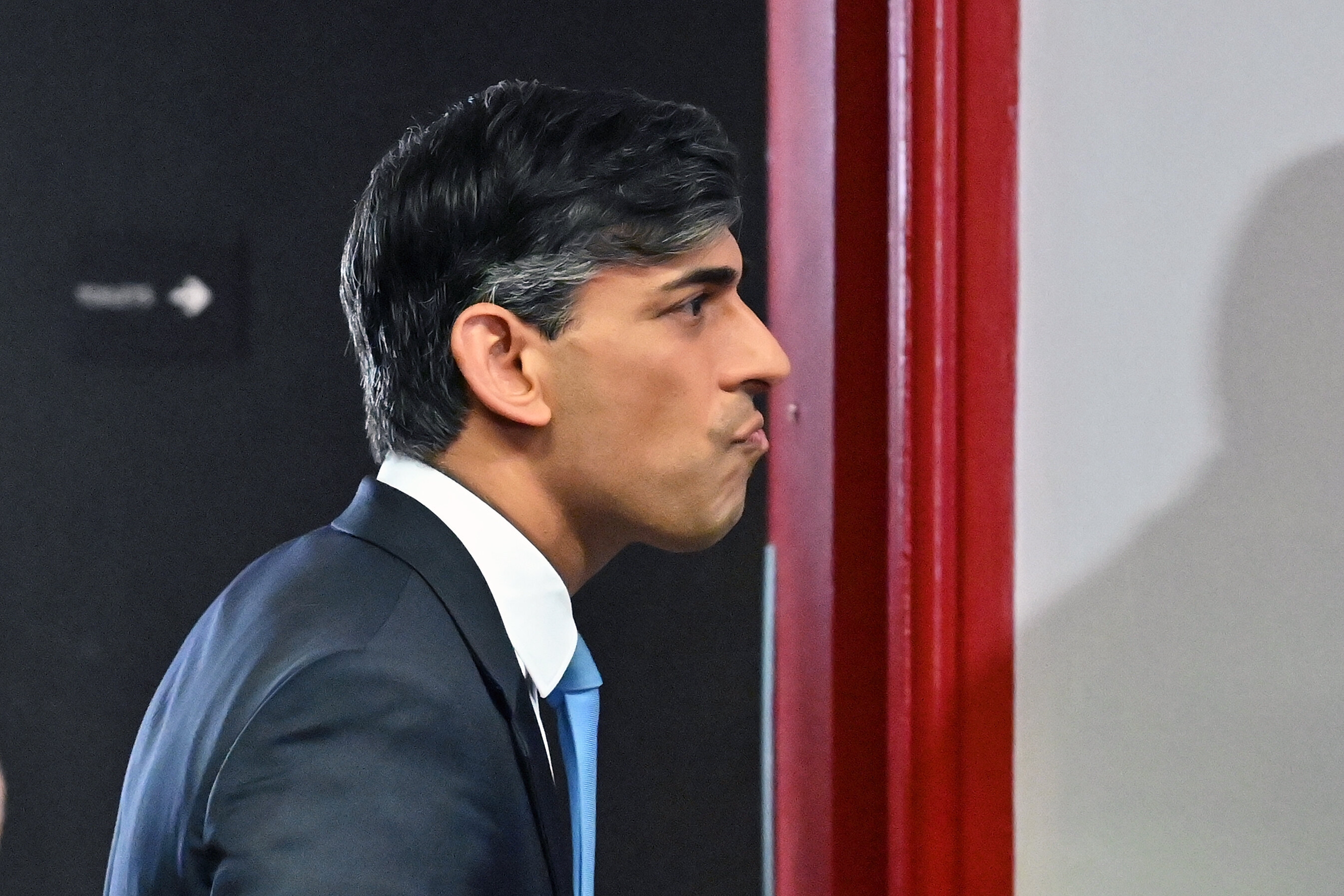
For three days, it looked as though Rishi Sunak was having the rarest of things for him – a good week.

Keir Starmer was under the cosh over Labour’s woes in Rochdale and, despite predictions to the contrary by economists, inflation did not go up again when the latest figures were published on Wednesday.

But all that changed at 7am the next day.

That was when the Office for National Statistics (ONS) confirmed that the UK economy had shrunk by 0.3% in the final quarter of last year.

Added to the 0.1% contraction in the three months before, it means the country was officially in recession – the very thing the prime minister had promised would not happen.

Then, in the early hours of Friday morning, the Tories lost two by-elections to Labour in previously-safe seats.

And while that was not wholly unexpected, the scale of the defeats – especially in Wellingborough – confirmed the party’s worst fears.

“This has been the position for 18 months and it’s showing no sign of changing,” one former Tory cabinet member told HuffPost UK then.

“The by-election results have just confirmed how bad things are, but maybe more people will now realise it.”

Election expert Sir John Curtice said the Tories were “staring defeat in the face at the general election”, not least because the party is leaking voters to both Labour and Reform UK.

The right-wing party secured 10% of the vote in Kingswood and 13% in Wellingborough – numbers to send a chill down the spine of many Conservative MPs nervously eyeing their own majorities.

Reform UK now have begun to put votes in the ballot box,” Curtice said.

“The problem that means for the Conservatives is that for every one voter who is switching to Labour, there’s now another one who’s switching to Reform.

“It means that that coalition of pro-Brexit voters that took Boris Johnson to victory in 2019 is just fragmenting further as Reform threatens to take more votes away from the Conservatives.”

The end result, Curtice said, is that “Sir Keir Starmer looks as likely to be the next prime minister as he did 24 hours ago, if not more so”.

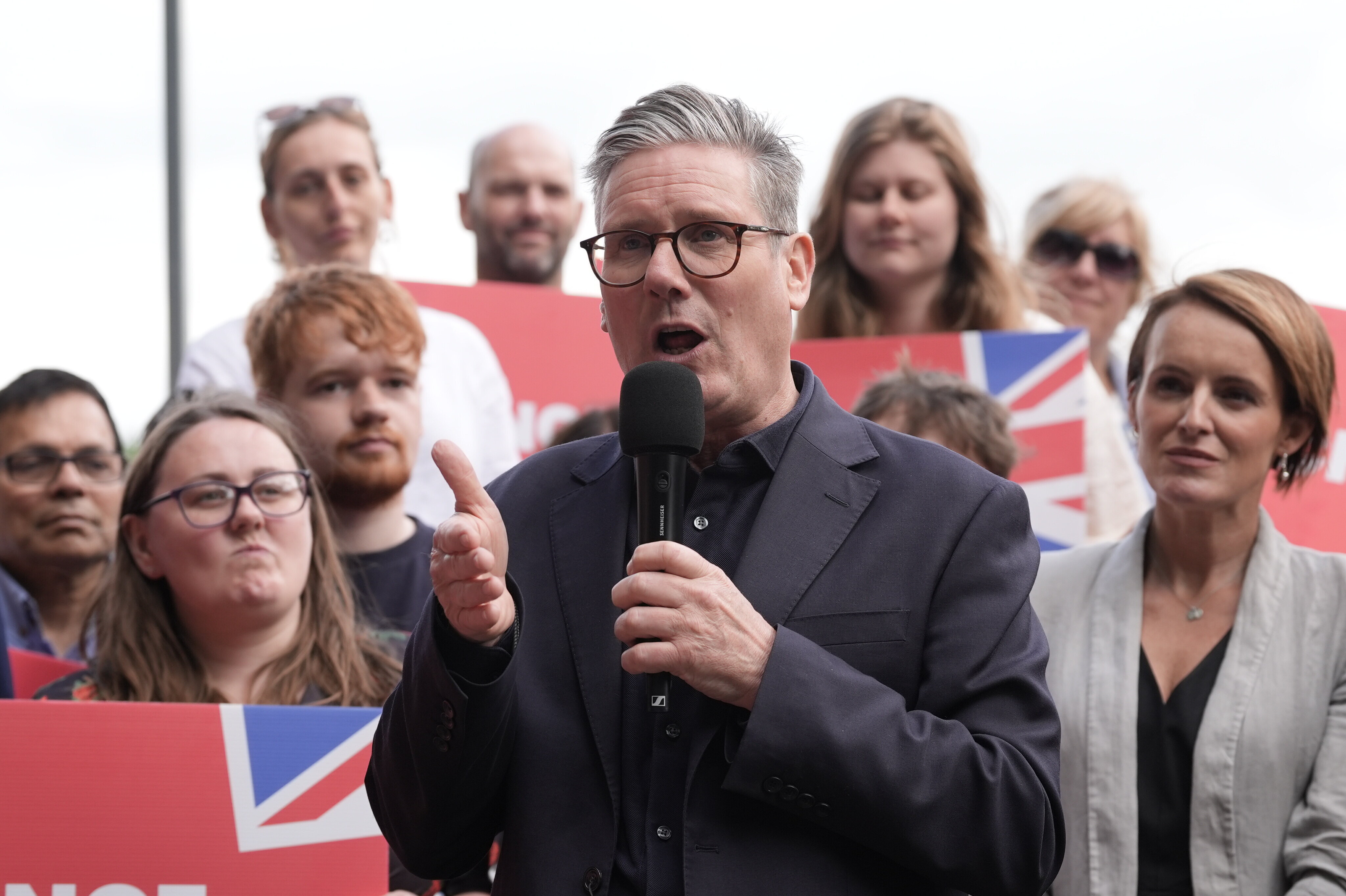
That is despite the Labour leader enduring one of his worst weeks since taking on the job nearly four years ago.

With the U-turn on the party’s pledge to spend £28 billion a year on green energy projects still fresh in the memory, its campaign in the upcoming Rochdale by-election went up in smoke.

A recording of Labour candidate Azhar Ali accusing Israel of allowing the October 7 attack by Hamas to take place as a pretext to invading Gaza was leaked to the Mail on Sunday.

Ali issued a full apology and, initially, the party opted to stand by him.

But as Starmer swithered over what to do, more audio from the same event emerged in which Ali referred to Jewish people working in the media. Within hours, Labour had withdrawn their support for him, although it is too late to remove him from the ballot paper.

HuffPost UK has been told that the party was initially urged not to axe Ali by Jewish groups, who feared it would hand an open goal to George Galloway, who is also standing in Rochdale for his British Workers Party.

“They don’t want Galloway in the Commons spreading his poison,” said one source.

The Labour leadership considered announcing that their candidate would not take the party whip if he won, and would also not stand at the general election. However, the emergence of the second recording made his position untenable.

If George Galloway was not a candidate then it would have been a much easier decision,” said one senior Labour insider.

“But showing that we’re serious about tackling anti-Semitism and prioritising that above a by-election victory is a good message for us to get out there.”

One senior Tory MP said there was no chance of his party benefiting from the controversy.

“Rochdale is a bubble issue – it just doesn’t resonate outside Westminster,” he said.

The last 48 hours also appear to have put paid to any lingering chance that Sunak might opt for a May election, the reasoning being that by going long there is always the chance of something coming up to get the Tories back in the race.

But one veteran backbencher said: “I’ve always been in favour of a May election as it’s our best chance of getting a decent number of Tory MPs back.”

The Conservatives have now been reduced to warning their former supporters that a vote for Reform simply increases the chances of a Labour government by splitting the right-wing vote.

That has led to Labour attacking Reform by insisting the party failed to meet expectations in the by-elections.

One insider said: “13% in Wellingborough is an under-performance for them. Ukip came second there in 2015 with 19.6%.”

But a Reform source told HuffPost UK: “We doubled our best ever result twice in one night, did better than our national polling average from a standing start, and without the clout, people, money, national recognition or local knowledge that Labour have.

“If that’s underperformed, they better watch out for when we get into our stride.”

For Sunak, however, the prospect of the Tories getting into their stride this side of the general election seems like a distant one.

The PM is fond of warning that a Labour government would take the country “back to square one”.

Ironically, at the end of a week which initially seemed to be going well, that is precisely where he has ended up.

Share Button

Done Deal: Despite Labour’s Latest U-Turn, Is The Election Result Already Decided?

Rishi Sunak has apparently decided that the general election will be in October, rather than November.

If so, it will surely be the first recorded example of a man breaking into a jog on his way to the gallows.

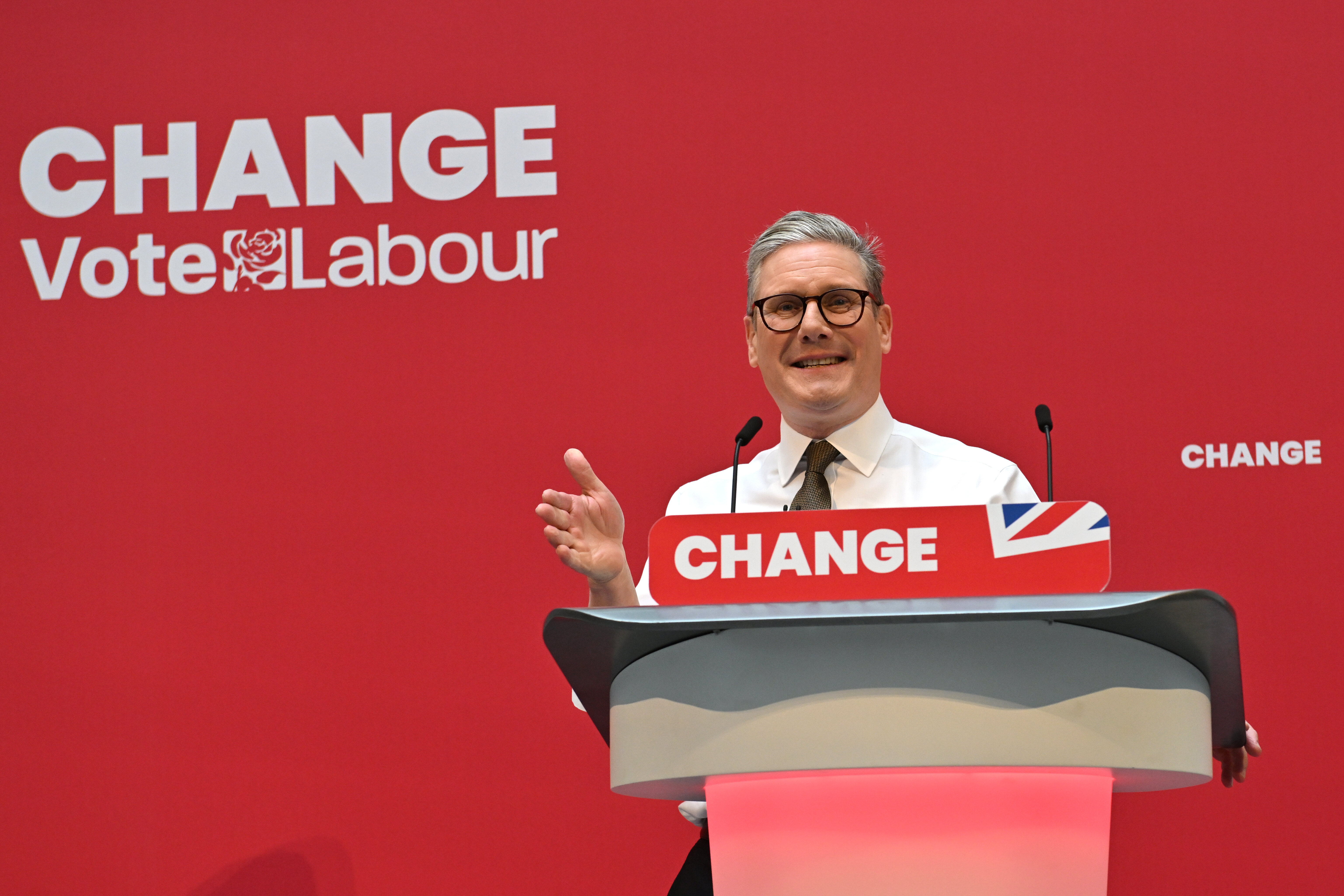
After another tumultuous week in Westminster, the fundamentals remain the same – Keir Starmer is heading for Downing Street.

The Labour leader has endured an uncomfortable few days, culminating in yet another U-turn, this time on the party’s previously-flagship policy of spending £28 billion a year on green energy projects.

And yet, all the available evidence suggests that the British public are determined to boot the Tories out and install Starmer as the next prime minister.

Two more polls published yesterday confirmed Labour remains at least 20 points ahead of the Conservatives, while numerous have emphasised voters’ desire for a change of government.

This is thanks in no small part to Sunak’s own troubles, which were once again on full display over the past week.

From cackhandedly agreeing to a £1,000 bet on Rwanda flights with Piers Morgan to making a joke about trans people in the presence of Brianna Ghey’s mother, the PM has merely confirmed what many in his party have already concluded – the guy is a loser.

“It’s like he’s a reverse King Midas – everything he touches turns to shit,” said one colleague.

Another Tory aide told HuffPost UK: “It’s just the dying days now.”

Keiran Pedley of pollsters Ipsos UK said the Tories are “running out of time” to turn things around.

There’s clearly been no sign of a shift in the polls since the New Year, which the Conservatives would have hoped for,” he said.

“Around 7 in 10 voters tell us it’s time for a change at the next election. What they’ve got to do is change people’s minds about it being time for a change, which is not an easy thing to do.”

Pedley added: “The Conservatives will hope that next month’s Budget will be a setpiece moment that can turn things around, but they’ve also got by-elections and the local elections coming up which could make the situation even worse.”

If Labour really is heading inexorably towards victory in the general election, the party’s agonies over dumping the £28 billion green pledge have been instructive on how it might act when it’s in power.

Starmer and shadow chancellor Rachel Reeves put on a united front in parliament on Thursday afternoon as they briefed political journalists on what was, by any measure, a particularly embarrassing and messy climbdown.

It has been obvious for weeks that the policy was heading for the knackers’ yard, and yet Labour’s top two seemed to be at odds over it. While Reeves would not even repeat the figure, Starmer was still mentioning it on Tuesday.

The Labour leader attempted to laugh off any suggestions that the pair were split, insisting Reeves’ only quibble with him was that he talked about football too much.

But his notorious thin skin was in evidence when he was asked by HuffPost UK if the Tories were right to call him “Mr Flip-Flop”.

He said: “This is ridiculous. I came into this place pretty late in life. In the real world, where I worked until I got here, everybody I worked with adjusted their positions when the circumstances changed and that was thought to be plain common sense. In fact, it would be pretty daft if you didn’t.

“This is the only place I’ve ever known where not adjusting your position to circumstances is supposed to be a great virtue. I don’t work in that way.”

One usually-loyal MP observed: “What does he mean by ‘in the real world’? He has no respect for politics or politicians.”

The behind-the-scenes wrangling over the green policy appears to be a symptom of a power struggle involving Morgan McSweeney, Labour’s national campaign director, and Sue Gray, Starmer’s chief of staff.

Matthew Doyle, Labour’s amiable director of communications, has even been caught in the crossfire, with some blaming him for the U-turn.

One frontbencher described it as the “a big boy did it and ran away” school of political accountability.

“There’s some crazy briefing and counter-briefing going around,” said a senior insider. “They’re at war and they’re not even in government yet.

“Keir and Rachel and their people being at odds, and all the sub-plots and dramas, is a massive moment.

“Once you do it the first time, it’s easier to do it again and again. It will have consequences in government.”

At the end of a difficult week, Starmer can console himself with the fact that it appears nothing can be done to knock his journey to No.10 off course.

But he’ll also know that things will only get harder for him once he gets there.

Share Button

Labour Has Slashed Its Green Spending Pledge By More Than £100 Billion

Labour has slashed more than £100 billion from its flagship plan to boost spending on green energy projects.

Keir Starmer and Rachel Reeves blamed Tory plans to “max out” the government credit card for the embarrassing U-turn.

A ‘Warm Homes Plan’ to insulate 19 million homes in 10 years has been scaled back to 5 million in 5 years as part of the climbdown.

The shadow chancellor announced in 2021 that a Labour government would spend £28 billion a year over the course of the next five-year parliament – a total of £140bn – on projects to tackle climate change.

Reeves watered that down last summer by announcing that the spending target would not be reached until the second half of the parliament.

It has now been confirmed that the £28bn figure has been dropped entirely, and that the party plans to spend £23.7bn over five years instead – which is just £4.7bn a year and a reduction of £116bn from what was originally announced.

Nearly £11bn of that will come from an extension of the windfall tax on oil and gas company profits, with the rest of it being borrowed.

The climbdown follows months of speculation that the £28 billion figure was being ditched, and comes in the face of Tory claims the spending spree would lead to tax rises and send interest rates soaring.

Starmer said the £28bn commitment was being “stood down” because Liz Truss had “crashed the economy”, while Jeremy Hunt plans to spend any spare Treasury cash on tax cuts ahead of the election.

He said: “If the government says ‘we’re going to max out the credit card’, that’s a real problem.

“We’re going to inherit an economy that’s very broken and we have to adjust to the circumstances.”

Despite the scaling back of Labour’s original plans, Starmer insisted the party was still committed to delivering a zero-carbon electricity system by 2030.

A publicly-owned Great British Energy company will also be set up with a start-up fund of £8.3bn.

Meanwhile, a £7.3bn National Wealth Fund – with the private sector providing £3 for every £1 of public cash – will invest in electric vehicle production, clean steel and carbon capture and storage.

However, the scaling back of the party’s original plans have been condemned by some Labour MPs, other political parties and green campaigners.

Mike Childs, head of policy at Friends of the Earth, said: “By seriously watering down its warm homes plan, the Labour Party has turned its back on the people who most urgently need these essential upgrades – the many millions of low-income households suffering from living in poorly insulated homes.”

Share Button

Not Easy Being Green: Labour Party Tensions Grow As Election Looms

Rachel Reeves could not have been clearer.

“I can announce today Labour’s climate investment pledge, an additional £28 billion of capital investment in our country’s green transition for each and every year of this decade,” the shadow chancellor told Labour’s annual conference in September 2021.

“I will be a responsible chancellor. I will be Britain’s first green chancellor.”

But that “pledge” has now been watered down and, if the repeated off-the-record briefings are to believed, is on the verge of being ditched altogether.

Throw in Reeves’ surprise announcement this week that an incoming Labour government would not bring back the cap on bankers’ bonuses and it’s understandable why some voters are asking what do Labour stand for.

Not least because it is barely three months since Reeves herself said that the scrapping of the cap “tells you everything you need to know” about the Tories.

Luke Tryl of the More in Common think tank, which regularly tests public opinion through polling and focus groups, told HuffPost UK: “What has cut through with the public is the vacillation on the £28bn policy.

“People say Labour can’t seem to make their minds up – we heard it multiple times last week. No one is worried about the cost of it or the policy itself, they just want Labour to make their minds up about it.”

Labour’s crisis of confidence about one of its flagship policies has coincided with the Tories’ decision to go on the attack, claiming that the opposition’s plan to borrow billions would push up taxes and interest rates.

That in turn has fed into a belief that Labour is afraid to announce anything controversial, just in case it damages the party’s enormous poll lead.

“You can get away with making a thin offer to the electorate, but you can’t get away with offering nothing at all,” said one senior Labour source who said the green investment policy’s £28bn price tag has become “an albatross” around the party’s neck.

Luke Tryl said Labour’s approach is all the more baffling because opinion polls show the country is ready for a change of government.

He said: “The country doesn’t want the status quo. The risk for Labour is that, by being very cautious, voters don’t see them as presenting the change they want.

“Labour will say ‘why blow the lead we’ve got’, but if things do start to pick up for the government, the polls could narrow because voters end up deciding to stick with what they’ve got.

Now is the time for Labour carve out an alternative offer so they can win a mandate to change things in government.”

One former Labour shadow minister said: “The gap between winning an election and governing is growing increasingly wider. Sometimes it seems like our only motive is winning, and the danger is that the public think we’ll say anything because we believe in nothing – on bankers’ bonuses, on making Brexit work, on the £28bn flip-flop.

“The closer we get to an election, the more the voters will look at what we are actually proposing to do in government and how that will impact on them.”

The way the £28bn climbdown has been communicated has also revealed the tensions that remain at the top of the Labour Party.

“Some of our senior politicians and advisers are swanning around town holding court at every corporate cocktail party, when we’ve won nothing yet and are in for a brutally punishing general election campaign.”

HuffPost UK understands that Morgan McSweeney – Keir Starmer’s chief of staff – and veteran MP Pat McFadden, the party’s national campaign chief, are unhappy they are being blamed for killing off the policy, with allies pointing out that the final decision rests with the leader and his shadow chancellor.

And while Reeves repeatedly refused to even say ”£28bn” during an interview with Sky News on Thursday, Starmer was happy to declare: “We will ramp up to that £28bn during the second half of the parliament – subject to our fiscal rules.”

One MP said: “The key question still is: who is in charge? The debacle over the £28bn figure has managed to simultaneously show indecisiveness and inflexibility.”

Others believe that having such a commanding – and widening – poll lead for such a long time has led many in the Labour Party to believe that victory at the general election is inevitable.

A senior Labour insider told HuffPost UK: “There is a difference between confidence and complacency. We came back after Christmas thinking it would be a matter of weeks until an election and all we had to do was show up and prepare for the ticker-tape parade up Downing Street. That has led to a lack of focus and unnecessary mistakes.

“Some of our senior politicians and advisers are swanning around town holding court at every corporate cocktail party, when we’ve won nothing yet and are in for a brutally punishing general election campaign.”

One Starmer ally admitted the party had managed to make its green investment policy “confusing when it’s not actually confusing”.

“What we should have been saying is investing in the economy is the right thing to do, but fiscal responsibility comes first,” he said. ”But the problem is we put a figure on it and we haven’t been quick enough to squash that figure.

“We’ll eventually get to the right position on it, but the process of getting there has been a pain in the arse.”

Left-wing MP Clive Lewis, a member of the Green New Deal Group, called on the party leadership to stand by its pledge.

“Instead of backing down, it is time for Labour to face down the Tories and win the case for public investment in the climate transition – of £28bn and beyond,” he said.

A veteran backbencher said Labour’s recent policy agonies have been a useful reminder that the next election is not in the bag.

He said: “We have to be prepared for one final big plot twist between now and the election.

“The Tories are beaten up and dead on their feet, but if they get a couple of planes to Rwanda, if some of the economic figures point to recovery, if they corner us on tax and spending in March and if they keep landing attacks on Keir, then they still might have a bit of fight left in them as we enter the last round.”

Share Button

Only The Over-70s Would Vote Tory, Poll Finds

The Conservative traditional grip on older voters appears to be slipping as research found only people aged over 70 back the Tories.

Pollster YouGov revealed that the age group most likely to vote Labour in the next election is 25 to 29-year-olds – at 59 per cent. And Keir Starmer’s party had an advantage over the Tories in five other age categories, with a lead among 18 to 24-year-olds up to the 60-69-year-old age bracket.

The only age category most likely to opt for the Conservatives are the over-70s, at 43 per cent.

Ahead of the last general election in 2019, the Conservative party was ahead of Labour in the four age categories from 40 years old and over.

YouGov’s Matthew Smith said: “Age will continue to be the key dividing line at the general election.

“The Tories are now the most popular party only among the over-70s, 43% of whom back the party. This is down from 67% in 2019, however, with Labour being the main beneficiaries, having increased their vote share among the oldest Britons from 14% to 23%.

“Britons in their 60s are split, with 33% backing Labour and 31% the Conservatives. The majority of Britons under-50 now say they will vote Labour.”

The poll also looked at voting intention by gender, education and class. “The coalition that won the Conservatives the 2019 general election has crumbled,” it summarised.

Polls have repeatedly give Labour a double-digit lead over Rishi Sunak’s party. Last week, the prime minister’s own pollster quit No.10 having concluded the country is on course for a “decade of Labour rule”.

Share Button

Keir Starmer Accuses Tories Of ‘Salting The Ground’ By Spending Billions On Tax Cuts

Keir Starmer has accused the Tories of planning to spend billions of pounds on tax cuts so there is no money left for an incoming Labour government.

He said Jeremy Hunt and Rishi Sunak want to “salt the ground” in the upcoming Budget, where the chancellor is expected to dramatically slash the tax burden.

The Labour leader said that showed the Conservatives were “not acting in the national interest, they’re acting in party interest”.

His comments come amid mounting speculation the Treasury could have up to £20 billion more than expected available for pre-election giveaways.

Hunt cut 2% off the rate of National Insurance at last year’s autumn statement, and is considering further reductions in the Budget on March 6.

However, several opinion polls have suggested that voters would rather see the money spent on improving public services than tax cuts.

Starmer said: “It’s very obvious that they are trying to salt the ground. So they’re not acting in the national interest, they’re acting in party interest.

“They briefed the autumn financial statement out as a series of traps for Keir Starmer and the Labour Party. That means they have totally neglected the national interest, they’re not even pretending that they’re making decisions in the best interests of the country.

“They’re making decisions in the best interests, as they see it, of the Tory Party and their best chance of creating divides into the election. That’s why we’re in this mess.”

Starmer said public service were “in a much worse position” than they were when the Tories came to power in 2014.

He said: “There’s a basic rule in politics as far as I’m concerned, which is whichever party you are, if you leave your country worse than when you found it, that is unforgivable and that’s the position we’re in at the moment.”

Share Button

Tories Mocked For ‘Better Call Keir’ Attack On Starmer

The Conservative Party has faced ridicule after likening Keir Starmer to Bob Odenkirk’s character in the hit US TV show Better Call Saul.

Highlighting the Labour leader’s time as a criminal defence barrister is gearing up to be one of the Tory election attack lines in the run-up to this year’s vote.

At prime minister’s questions on Wednesday, Rishi Sunak raised Starmer’s decision to advise the soon-to-be-banned Islamist group Hizb ut-Tahrir during his legal career.

Labour has said Starmer had been asked to give advice to Hizb ut-Tahri in a legal dispute between the group and the German government.

He did not formally represent them, moving on to become director of public prosecutions shortly after, they said.

But the Conservative party later doubled down on the messaging, putting out a message on social media that brought Saul Goodman – the notorious fictional criminal lawyer played by Odenkirk – into play.

It read: “Are you a terrorist in need of legal advice? Better call Keir.”

The post from the Tories on X, formerly Twitter, also said: “When Rishi Sunak sees a group chanting jihad on our streets, he bans them. Keir Starmer invoices them.”

But the attempt to undermine Starmer was soon disparaged – with many pointing out that lawyers may not withhold their services based on a client’s conduct, opinions or beliefs, and that somehow the Tories have even managed to boost Starmer’s image.

And a community note attached to the post added that Starmer “went on to prosecute terrorists with links to Hizb ut-Tahrir as director of public prosecutions”, and continued: “There’s is no evidence he invoiced them. Barristers may not withhold services based on a client’s conduct.”

Share Button

Rishi Sunak’s Poll Guru Tells Tory MPs To Unite Or Lose Election

Rishi Sunak’s election guru has warned Tory MPs they need to “get serious” or face being kicked out of government.

Isaac Levido warned that voters would punish the warring party after a new poll showed Labour are on course for a landslide victory later this year.

The YouGov survey, commissioned by Tory donors calling themselves the Conservative British Alliance said Keir Starmer would enter No.10 with a 120-seat majority.

At a special meeting of the 1922 Committee of Tory backbenchers this evening, Levido accused those behind the poll of “throwing in the towel”.

He said: “Let me be clear. Divided parties fail. It’s time to get serious – I am fighting to win this election, and I wouldn’t be here if I didn’t believe it was possible. We all need to be be fighting to win this election.

“People do not want Starmer. They are looking for reasons to vote for us. We must not give them any more reasons not to.”

His comments came as the prime minister faces a growing Tory rebellion over his flagship Rwanda bill.

Two deputy party chairmen, Lee Anderson and Brendan Clarke-Smith, risked the sack by announcing they will support rebel amendments aimed at making the legislation tougher.

Up to 70 Tory MPs are set to back the proposed changes, which would allow ministers to ignore rulings by the European Court of Human Rights.

Earlier, former cabinet minister Simon Clarke said the bill was currently “riddled with holes” and he would vote against it unless it is changed.

The bill returns to the Commons on Tuesday and Wednesday for MPs to debate and vote on it.

Clarke, who served under Boris Johnson and Liz Truss, said: “I have been clear with the whips that if the bill goes forward unamended, I will be unable to offer it my support.

Sunak today insisted he was willing to talk to the rebels, but stopped short of saying he would accept any of their amendments.

He told GB News: “I’ve always said that I’m happy to have a dialogue with anyone who thinks they might have an idea that will improve the effectiveness of the bill whilst making sure that it’s still legally compliant and maintains Rwanda’s participation in the scheme.

Share Button

Keir Starmer Waters Down Pledge To End Arms Sales To Saudi Arabia

Keir Starmer has watered down his previous pledge to end arms sales to Saudi Arabia if he becomes prime minister.

The Labour leader would only commit to a “review” of the policy if he becomes prime minister.

Starmer also appeared to row back on his previous commitment to bring in a new law forcing the government to seek parliamentary approval for any military action.

When he was running to succeed Jeremy Corbyn in 2020, Starmer said the UK “should stop the sales of arms to Saudi Arabia”.

But on Sunday with Laura Kuenssberg this morning, he said: “We will do a review to look at the sales, look at the countries and the relationships that we have. Obviously, that follows a review.”

Kuenssberg told him: “But you said in February 2020 ‘we should stop the sale of arms to Saudi Arabia’. Is that still your position?”

Starmer replied: “We will review the situation and the review will give us the answer to those questions.”

Kuenssberg said: “So you may not any more promise to stop the sale of arms to Saudi Arabia, which is what you used to say in 2020.”

Starmer said: “We will review the situation and the review will make clear what the position is.”

During his leadership campaign, Starmer pledged to “end illegal wars” by introducing a Prevention of Military Intervention Act.

That would ensure that any military action had to be legal and backed by a Commons vote.

However, Starmer backed last week’s air strikes on Houthi rebels in Yemen despite there being no vote in parliament beforehand.

Asked about the apparent change of heart, the Labour leader insisted there was “no inconsistency” in his position.

He said: “There is a huge distinction between an operation the like of which we’ve seen in the last few days and a sustained campaign – military action usually involving troops on the ground.

“National security must come first. There will always be urgent situations where parliament can’t be consulted beforehand. But the principle that if there’s to be a sustained campaign, if we’re going to deploy our troops on the ground, that parliament should be informed, there should be a debate, the case should be made and there should be a vote, I do stand by that in principle, absolutely.”

However, Starmer refused to commit to introducing a new law, saying it could be “done by some other means”.

Share Button

Luciana Berger Given Labour Role Five Years After Quitting Party

Luciana Berger has been given a key role by Labour leader Keir Starmer five years after quitting the party.

The former MP will lead a mental health strategic review ahead of the general election later this year.

Berger left Labour over its “culture of bullying, bigotry and harassment” in 2019 and ended up fighting the election that year for the Liberal Demcrats.

She rejoined last year after Starmer personally apologised for the “intimidation, thuggery and racism” she endured when Jeremy Corbyn was leader.

Speaking at the Jewish Labour Movement conference today, Starmer said she will work with shadow health secretary Wes Streeting and shadow mental health minister Abena Oppong-Asare to deliver a long-term cross-government strategy for mental health.

He said: “I am proud to welcome Luciana back. The Labour Party has changed beyond recognition since she was forced out, and we will be a richer party for having her working with us again.

“It will be the mission of my Labour government to make sure fewer lives are lost to suicide, with timely support available to all who need it.

“Luciana is a fierce advocate for mental health and her work will contribute to achieving that mission in government.”

Berger, who was Labour MP for Liverpool Wavertree between 2010 and 2019, said: “With Keir Starmer’s leadership, Labour has turned a significant corner. I am delighted to be back working with my party and helping Labour deliver the change our country really needs.”

was one of seven Labour MPs who quit the party in 2019 to form Change UK in protest at Corbyn’s leadership.

She said at the time: “I cannot remain in a party which I have come to the sickening conclusion is institutionally anti-Semitic.”

She eventually switched to the Lib Dems and stood for the party in Finchley and Golders Green at the 2019 election, but was defeated by the Conservatives’ Mike Freer.

Share Button