A study has identified a mutation that its authors say could make the coronavirus more infectious.


A study has identified a mutation that its authors say could make the coronavirus more infectious.
I love the morning magical time. It’s my favorite time of day – before dawn when most of the city is still snug in bed.
This morning I hopped out of bed at 4:45am, feeling happy to start another adventurous day. By 7am this morning, I had done the following:
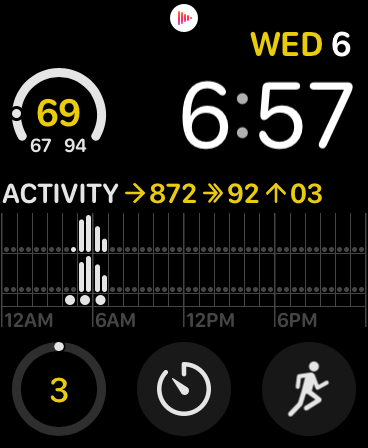
Afterwards I reviewed my goals, and now I’m sipping the smoothie and writing this blog post while the oatmeal is cooking and the robot is diligently cleaning the kitchen floor.
Caffeine isn’t part of my day by the way, nor is chocolate, caffeinated teas, or other stimulants. That would just slow me down.
When I was 20 years old, this is what my morning would have looked like this (sometimes all the way to noon and beyond):
Then I’d drag myself out of bed and start my day very sluggishly. It would take me at least an hour or two just to feel awake enough to function much at all. Then the rest of the day would be a blur, with the main decisions being figuring out what to eat. My biggest accomplishment of the day would be going for a long walk. At least I liked to walk.
What made the difference? Really it came down to a decision. I decided I didn’t want to live like that first person anymore. I didn’t want his life or his results – because they sucked! It was a boring, low energy, depressing way to live. And I decided that I could change that.
When I would read about highly productive people and their morning routines, I was envious at first, but their routines also seemed unreachable for me. Still, I felt attracted to having an empowering morning routine and starting my day with high energy. It took a long time to figure out what works best for me. I experimented a lot.
A solid cardio workout is such an essential part of my routine because of the benefits it produces. What many people don’t realize is that cardio exercises the brain, not just the body. It makes your brain and your mind stronger. See the Mental Benefits of Cardio video for more details on that. A good minimum is 45 minutes per day.
Running 5 miles (8K) to start my day is a stretch for me. I’m used to running closer to 3 miles (5K) on a normal basis. But it feels so much better to stretch myself. The feeling isn’t 60-70% better, relative to the mileage increase. It’s more like 3x better. Running farther than usual creates a disproportionate boost in mood and energy above the baseline.
Nailing an empowering morning routine sets you up for a strong day. It’s wonderful to know that you’ve accomplished something meaningful during those first couple of hours.
I’m not in competition with anyone here. I compare my results to where I’ve been. My past self is the baseline, and as I generate new past selves, I develop new baselines. Presently I’m pushing myself to surpass my old baseline from earlier this year.
I especially like the combo of audiobooks and running. It’s nice to go through an audiobook every few days without having to take any extra time. Maybe you won’t retain every idea as well this way, but it still helps.
That app in the lower left of my Apple Watch screen (with the number 3 in the middle of a circle) is Nozbe. If I get a cool idea while running, I can tap that app and record a quick voice message that will go into my capture system as text. So if I do catch a cool idea from an audiobook while running, I send it into my system while on the road, and then I can decide if I want to turn it into something actionable later that day.
What’s the best morning routine you’ve ever had in your life? Are you at least using that as your baseline today? Now what are you doing to surpass it? Just because it’s good doesn’t mean you should settle. How could you make it even more kickass?
My morning routine works well for me. It’s energizing and mood-boosting. But it could be better, so I’ll keep tinkering with it and improving it over time. There is no reason to settle for good enough.

The virus that causes Covid-19 typically strikes the lungs with full force, but new research shows it can also cause frostbite-like patches on the hands and toes, and rashes on the body.
The condition has recently been dubbed “Covid toes”. Fortunately, it isn’t serious and the lesions usually disappear on their own, said Dr Esther Freeman, director of Global Health Dermatology at Massachusetts General Hospital in Boston.
“One of the more surprising findings in this epidemic has been the lesions that we’re seeing on people’s toes and hands,” she said.
Freeman noted that Covid toes aren’t caused by exposure to cold, as is frostbite or chilblains. Rather it seems to be an inflammation of the circulatory system that shows up as a skin rash.
“It’s really important to reassure the public that most of our patients who are developing Covid toes are doing very well, so they’re often patients who have a benign clinical course. They either are having mild disease or often their only symptom might be their toes,” she said.
Freeman said that Covid toes don’t just happen to children, as some have believed – adults also get them.
Should you develop Covid toes, you’re not likely to end up in an intensive care unit. “That’s not what we’re seeing in the data,” said Freeman.
Skin rashes aren’t always associated with viruses, but measles, herpes and chickenpox are conditions where skin eruptions are the main symptoms, so it’s not unheard of, Freeman noted.
She can’t say how common Covid toes are because the data that would include the number of cases of Covid-19 and Covid toes doesn’t exist. Freeman is compiling a registry of known Covid toe cases.
Anecdotally, she’s seeing a lot more cases than usual. “In addition to running the registry, I see patients myself through tele-dermatology at Massachusetts General Hospital, and I have seen more toes in the past two weeks than I have in the rest of my career,” Freeman said.
If you have what you think might be Covid toes, don’t panic, Freeman said. Don’t rush off to the emergency room, but don’t ignore it either. The best thing to do is contact your doctor or dermatologist, she added.
Also, don’t try to get a Covid-19 test. “You should talk to your healthcare provider and decide the risks and benefits for your particular case. It’s important to go by local testing guidelines. It’s not as simple as a yes-no, but I think that it should be considered a Covid-19 infection,” Freeman said.
Dr Raman Madan is a dermatologist at Northwell Health Huntington Hospital in Huntington, New York. He said, “Covid toes is the most common finding I have seen in patients via tele-dermatology. It is a fairly new symptom that we usually do not see with a lot of viruses.”
Traditionally, the condition would result from being out in the cold for a long time or having a rheumatologic problem, he said.
“With Covid-19, I have been seeing it in a lot of young, healthy people. There is still a lot to be learned,” Madan said.
A lot of patients have been asymptomatic aside from the toes and have been testing negative on their viral culture, but positive on their antibody test, Madan said.
“This has led me to believe that this may occur at the convalescent stage of illness, meaning after the body has cleared the virus. We are still working on the best guidance to give patients,” he said.
Two recent reports detail cases of Covid-19 and show that hands and toes aren’t the only places rashes appear.
In one, researchers described a patient in Wuhan, China, with Covid-19 who developed a rash on the torso. The researchers believe the rash was caused by an immune response to the virus and the patient tested positive for the Epstein-Barr virus, which has been tied to Covid-19. The rash disappeared within a week, but the patient died from Covid-19.
In the second case, a Spanish man suffering from Covid-19 developed a rash on his thighs and buttocks. The rash went away after five days and the patient left the hospital after 12 days. The researchers assume that the rash was a reaction to the virus.
“Dermatologists should be aware that patients presenting with this kind of rash, in addition to coughing and fever, could benefit from [Covid-19] testing,” said lead researcher Dr Borja Diaz-Guimaraens, from the dermatology department, Ramon y Cajal University Hospital in Madrid, Spain.
“We are starting to notice more extra-respiratory manifestations in patients with confirmed Covid-19, and increased awareness for those signs can help diagnosis,” he said.
The two case reports were published online in JAMA Dermatology.
READ | Coronavirus 101 – here’s what you need to know
READ | Is Covid-19 now linked with strokes in young patients?
READ | Coronavirus hangs around even after symptoms subside

Most patients recover from Covid-19 quickly – but for some, symptoms linger for weeks.

The latest number of confirmed cases is 7 572.
According to the latest update, 148 deaths have been recorded in the country.
So far, 268 064 tests have been conducted – with more than 10 500 new tests.
READ MORE | All the confirmed cases of coronavirus in SA
President Cyril Ramaphosa has rubbished claims there is an agenda from the government in banning of tobacco products during the Level 4 lockdown.
“No one is trying to pursue any interests. The only interests we are pursuing is the health of our people, finish and klaar,” the president said on Tuesday.
Ramaphosa was addressing journalists at the Royal Show Grounds in KwaZulu-Natal, where he inspected a quarantine facility. He was in the province to examine the state of its response to the pandemic.
He said in taking the decision for the tobacco ban, the government was consultative.
On Monday, News24 reported the Fair Trade Independent Tobacco Association (FITA) had launched a legal challenge to South Africa’s ban on the manufacture, export and sale of cigarettes.
The association launched the legal action after Cogta Minister Nkosazana Dlamini-Zuma’s announcement the National Coronavirus Command Council (NCCC) had decided not to lift the cigarette ban after Ramaphosa earlier stated it would end on 30 April.
Commenting on the court challenge, Ramaphosa said: “We live in a free country. The content of our democracy is such that if you feel aggrieved you are entitled to take your grievance to the court of the country and that’s what they’ve elected to do.”
He added he had faith in the judicial system.
READ MORE | Tobacco ban: Our only interest is our people’s health, says Ramaphosa
More clarity on when schools will be reopened, as the country deals with the Covid-19 pandemic, may be available in two weeks.
Minister of Basic Education Angie Motshekga said she can only say for sure when schools will reopen when the plan has been approved by the National Coronavirus Command Council (NCCC) and the Cabinet.
She told a joint meeting of the Portfolio Committee on Basic Education and the Select Committee on Education and Technology, Sports, Arts and Culture on Tuesday that her department will present the detailed plan for the reopening of schools on 18 May.
Last Wednesday, the department made a presentation to the committees and, according to their presentation, the initial plan was for schools to reopen in phases from 6 May, with Grade 12s and Grade 7s returning to schools.
However, later in the briefing, after MPs questioned the feasibility of 6 May for schools to reopen, the department’s deputy minister, Reginah Mhaule, said the plan was presented to the social cluster of ministers on Tuesday, who said 6 May was not achievable.
READ MORE | Dept of Basic Education to present reopening plan to NCCC on 18 May
While the South African Revenue Service has already been counting its losses as a result of the coronavirus’ economic impact, impending joblessness and business closures would hammer revenues even harder, commissioner Edward Kieswetter said on Tuesday.
Kieswetter was speaking during a media briefing which took place on the same day he told a joint sitting in Parliament that the combined impact of SA’s struggling economy and the lockdown could mean a loss of up to R285 billion in tax revenues this year.
Kieswetter told Parliament the combined impact of Covid-19 and sovereign credit rating downgrades was expected to lead to a potential reduction in revenue collections of between 5% and 15%.
The commissioner added that while April is not a significant month for corporate tax collections, indications were that there would be a significant slowdown in collections and that the downward spiral in various sectors was set to continue.
Many jobs, businesses won’t come back
“The early indication is that this downward spiral will continue and will be reflected throughout the economy, except in places like electricity, gas and water, and areas that have continued to be active during this period. We expect the number of companies who will apply for business rescue will continue to grow in this country,” said Kieswetter.
Kieswetter said the full impact of the novel coronavirus and the subsequent lockdown would bear out over the next few months, but that this would also depend on how South Africa manages the lockdown and phases in economic activities.
READ MORE | Business closures, job losses will hammer revenue in the months ahead, Kieswetter warns
There is fear, anxiety and panic from South Africans stuck in the United States as they scramble to get on the first SAA repatriation flight they can be confirmed on.
News24 has spoken to at least three citizens among a group of over 20, waiting to board a flight to bring them home.
The group had been unsuccessful in getting on previous flights, which departed Washington DC on Saturday and Sunday night.
Catherine Berlein, 23, from Nelspruit, who had travelled to the United States in January for business purposes, told News24 she had booked and paid R15 150 for the repatriation flight which left the country on Saturday.
This after she had received emails from the South African Embassy asking her to confirm her details, she said.
After receiving her flight confirmation, she then went to Dulles International Airport on Saturday, 2 May, with the hope of being on the flight. On arrival, though, she was informed her booking was cancelled and her ticket not issued, without any clear explanation as to why.
Berlein’s efforts to get on the flight were unsuccessful and she had to return to her accommodation.
“The women behind the counter were only commissioned by SAA; they were not SAA staff, so unfortunately they couldn’t do much. If we weren’t on the system, they couldn’t issue tickets. The most they could do was check if you were on the system,” she said.
South Africa’s tourism industry must not be allowed to regress during the coronavirus pandemic to the point that it looks like “pre-1994”, Tourism Minister Mmamoloko Kubayi-Ngubane told Parliament’s portfolio committee on tourism on Monday.
She also remained steadfast in her conviction that empowerment criteria for small businesses seeking relief were a matter of law.
The committee is concerned that tourism is one of the industries hit hardest by the coronavirus pandemic, resultant travel bans and lockdown restrictions.
While Level 4 of lockdown has allowed a partial return to economic activity, several sectors related to tourism remain impacted. Restaurants may only open for takeaways and deliveries, during certain hours, while accommodation establishments will remain closed.
Some industry experts, including the minister herself, have predicted that the sector may only start up again by December this year, starting with domestic tourism.
READ MORE | Coronavirus: Stop SA tourism industry regressing to ‘pre-1994’ disaster, minister warns
WHAT’S HAPPENING IN THE REST OF THE WORLD
For the latest global data, follow this interactive map from Johns Hopkins University & Medicine.
Late on Tueday night, positive cases worldwide were more than 3.64 million, while deaths were more than 255 000.
The United States had the most cases in the world – more than 1.19 million, as well as the most deaths – more than 70 000.
A new report has warned that loosening lockdown travel restrictions in Italy could lead to a huge second wave of as many as 18,000 new coronavirus deaths.
The report from Imperial College London, published Monday, came on the same day Italy entered its “Phase 2” lockdown plan, which eases restrictions that had been in place since March 10.
The country is one of the world’s worst-hit by the virus, and has reported more than 29,000 deaths.
In the report, researchers said that even a partial increase in mobility in Italy could cause a second wave of deaths within eight weeks. It’s worth noting, however, that this does not factor in measures like social distancing or isolating of infected people.
The researchers modeled scenarios where mobility was increased by 20%, 40%, or not at all. They quantified these percentages by increasing the rate of visits to places like public transport stations, shops, workplaces, and recreation facilities.
Using mobility as “a proxy for changes in behavior,” the researchers compared an estimated number of new deaths prevented by Italy’s lockdown with the potential impact of relaxing it.
READ MORE | Easing Italy lockdown could cause new wave of deaths, research shows
Canada’s attempts to combat the coronavirus are far from perfect – it trails behind the low death rates of South Korea and Germany – but it’s doing a lot better than the US.
According to Vox, the US has nearly twice as many confirmed cases of the coronavirus as Canada, and it has 30% more deaths per capita.
As of May 5, according to data from Johns Hopkins University, Canada has 61,954 confirmed cases with 4,003 deaths, out of a population of about 37 million. The US has 1,178, 906 cases with 68,689 deaths, out of a population 328 million.
Both nations watched coronavirus spike at about the same time in mid-March. But Canada’s caseload trajectory took a far gentler curve than that in the US.
These divergent trajectories are down to a number of factors. Canada’s response was mostly quick and coordinated – it closed down schools and promptly told people to stay home, according to The Guardian. Its borders were shut off to every country but the US on March 16. (The US-Canada land border was also closed on March 20.)
READ MORE | Canada is dealing with the coronavirus far better than the US – here’s why.
As we know by now, those with underlying conditions and chronic health issues are more likely to suffer serious consequences should they become infected with the new coronavirus.
According to a study reported in the journal Cell Metabolism, there is evidence that those with type 2 diabetes are more likely to suffer serious complications, should they be infected with the new coronavirus.
Luckily, if blood sugar is well-controlled, this might not be the case, according to experts.
“We were surprised to see such favourable outcomes in well-controlled blood glucose groups among patients with Covid-19 and pre-existing type 2 diabetes,” says senior author Hongliang Li of Renmin Hospital of Wuhan University in a news report.
“Considering that people with diabetes had a much higher risk for death and various complications, and there are no specific drugs for Covid-19, our findings indicate that controlling blood glucose well may act as an effective auxiliary approach to improve the prognosis of patients with Covid-19 and pre-existing diabetes.”
READ MORE | Blood sugar control for diabetics more vital than ever during coronavirus pandemic
As the new coronavirus continues to spread around the world, staying at home as much as possible in order to limit exposure cannot be stressed enough, especially for those with immunocompromised conditions, such as cancer, as they have a unique vulnerability to infectious diseases such as Covid-19.
According to a new study by physician-researchers at Montefiore Health System and Albert Einstein College of Medicine, cancer patients who develop Covid-19 are much more likely to die from the disease than those without cancer.
The study involved 218 cancer patients who tested positive for Covid-19, the disease caused by the new coronavirus and is, therefore, the largest of its kind, to date. It was published in the online edition of Cancer Discovery.
The study involved 218 cancer patients who tested positive for Covid-19 from 18 March to 8 April at Montefiore Medical Center in the Bronx, New York City. The results reveal that 61 of these cancer patients died from Covid-19.
Covid-19 patients with haematologic (blood) cancers, such as leukaemia and lymphoma, were also found to have the highest mortality rate, while those with breast cancer and prostate cancer had the lowest mortality rates.
READ MORE | Cancer patients may face higher risk of death from Covid-19
The World Health Organization (WHO) on Wednesday said it would back traditional or alternative medicines as potential treatments for Covid-19, as long as the efficacy and safety of these treatments were established through rigorous clinical trials.
In a statement, it said it welcomes innovations around the world including repurposing drugs, traditional medicines and developing new therapies in the search for potential treatments for Covid-19.
“WHO recognises that traditional, complementary and alternative medicine has many benefits and Africa has a long history of traditional medicine and practitioners that play an important role in providing care to populations.”
But, it said, medicinal plants such as Artemisia annua, which are being considered as possible treatments for Covid-19, should be tested for efficacy and adverse side effects.
The statement, while not specifically making reference to it, appears to be in response to the situation in Madagascar as the country continues to ship what it claims to be a remedy for Covid-19.
The drink is derived from Artemisia – and other indigenous herbs, and has been baptised Covid-Organics, according to an AFP report.
One need not be an expert in public health or an epidemiologist to quickly conclude that prisons present particular challenges regarding Covid-19. Some basic but noteworthy issues about South Africa’s prisons are set out below and a few conclusions are drawn.
South Africa has a prison population of some 163 000 – of which roughly 48 000 are awaiting trial and the rest (approximately 115 000) are sentenced prisoners. The overwhelming majority of prisoners are sentenced adult males (112 000). There are almost 3 000 adult sentenced females.
Children comprise fewer than 100 individuals. For the past 12 years, our prison population has been remarkably stable due to two major competing drivers. The first driver is that we are sending fewer and fewer people to prison due to a poorly performing criminal justice system. The second driver is that we are imposing longer sentences.
The introduction of minimum sentences in the late 1990s saw a rapid increase in sentence tariffs, but most importantly in the use of life imprisonment. In 1994/5 there were some 400 people serving life sentences, and it is estimated that this has now increased to 20 000, or roughly one in every six sentenced prisoners. Nowhere else in the world has the use of life imprisonment increased at such a rate.
READ MORE | Prisons, overcrowding and preventing transmission
HEALTH TIPS (as recommended by the NICD and WHO)
• Maintain physical distancing – stay at least one metre away from somebody who is coughing or sneezing
• Practise frequent hand-washing, especially after direct contact with ill people or their environment
• Avoid touching your eyes, nose and mouth, as your hands touch many surfaces and could potentially transfer the virus
• Practise respiratory hygiene – cover your mouth with your bent elbow or tissue when you cough or sneeze. Remember to dispose the tissue immediately after use.


Children don’t typically fall seriously ill from the new coronavirus, but doctors are raising the alarm that some kids with Covid-19 infections in Europe have developed Kawasaki disease, a condition that can trigger serious heart problems.
Children in the United States aren’t immune to this complication, experts say.
Dr Michael Portman is director of the Kawasaki Disease Patient Program at Seattle Children’s Hospital. He said, “The problem is that the symptoms of Covid-19 and Kawasaki disease overlap, and we’re worried that parents of kids who have a fever may not want to bring them into the hospital for fear of Covid, but it could be Kawasaki disease and it won’t get treated.”
In addition, he explained that parents of children diagnosed with Covid-19 may not worry much about a fever if other symptoms aren’t obvious, but “in children, Covid may be triggering an inflammatory response that doctors would call Kawasaki disease,” Portman explained.
He said he’s heard scattered reports of Kawasaki disease in children in the United States, as well as more cases in Europe.
The Paediatric Intensive Care Society (PICS) in the United Kingdom issued an urgent alert this week to warn doctors who care for critically ill patients with Covid-19 that National Health Service (NHS) England reported a small increase in the number of patients who also seem to have Kawasaki disease. Patients with both conditions might have heart inflammation and other serious heart issues.
However, the advisory also tried to reassure parents. “If you are a parent, please be assured that serious illness as a result of Covid-19 still appears to be a very rare event in children,” the PICS statement said.
So, what symptoms should parents keep an eye out for?
The most telling symptom is a very high fever for five days. The fever is typically at least 101 ºF (38.33 ºC) , but can be 104 ºF (40 ºC) or higher, according to the American Heart Association. Portman said the fever might come and go during that time, but if your child has a high fever for four or five days, they should be evaluated by a doctor.
“Always call a paediatrician for a lasting fever,” Portman said.
Other common symptoms of Kawasaki disease, according to the American Heart Association, include:
Portman said Kawasaki disease typically affects kids aged five and under, though it can occur in children of all ages. Portman said it affects about 20 children per every 100 000 in the United States each year.
The exact cause of Kawasaki disease is unknown, Portman said. But doctors believe that a virus or bacteria triggers inflammation and an immune system overreaction. A similar process, triggering massive inflammation, can also occur in some patients with Covid-19, he explained.
If identified in time, Kawasaki disease can often be effectively (though expensively) treated, Portman said. Left untreated, Kawasaki disease can lead to a coronary artery aneurysm – that means there is a weak, bulging spot in the major blood vessel that delivers blood to your heart.
Paediatric infectious disease specialist Dr Tina Tan, from Northwestern University’s Feinberg School of Medicine, told CNN that the NHS England alert was information the United States needed to know.
“I think it’s really important that an alert like that goes out, not to alarm anybody but to have people be aware of the fact that this can happen. There have been an increased number of cases like this reported in Italy as well as Spain. Here in the US, I think we’re just starting to see it,” Tan said.
Only some of the affected youngsters tested positive for Covid-19, so it’s not clear yet how – or even if – the two conditions are connected.
In addition to the United Kingdom, Italy and Spain, the Associated Press noted that possible cases of Covid-19 and Kawasaki disease may have occurred in Belgium and France.
READ | How one very ill infant survived Covid-19
READ | Coronavirus hitting younger children harder than we thought
READ | US study finds Covid-19 seldom severe in kids

Men with advanced prostate cancer can now take highly targeted hormone therapies at home.
The role that atmospheric water vapor plays in weather is complex and not clearly understood. However, University of Arizona researchers have started to tease out the relationship between morning soil moisture and afternoon rainfall under different atmospheric conditions in a new study in the journal Geophysical Research Letters.
“The prevailing wisdom on the relationship between soil moisture and rainfall is that if you have wetter soil in the morning, you’ll have a greater occurrence of rainfall in afternoon, but it’s more complicated than that,” said lead author Josh Welty, a UArizona doctoral student in the Department of Hydrology and Atmospheric Sciences. “On a global scale, we see evidence that you can have greater chances of afternoon rainfall over both wet and dry soil conditions, depending on atmospheric moisture.”
The team, which also included researchers from the Desert Research Institute in Nevada and NASA’s Goddard Space Flight Center, used satellite-based observations of soil moisture and afternoon rainfall in the northern hemisphere from the last five years. The work was supported by NASA and is based on NASA satellite data from the Global Precipitation Measurement mission and the Soil Moisture Active Passive satellite, as well as atmospheric moisture and movement data from the Modern-Era Retrospective analysis for Research and Applications Version 2, or MERRA-2, model, which incorporates satellite observations.
The researchers found that on days when wind blows in little atmospheric moisture, afternoon rainfall is more likely to occur over wetter soils or higher relative humidity. On days when wind introduces lots of atmospheric moisture, afternoon rainfall is more likely over drier soils or lower relative humidity. The team also found that for both conditions, afternoon rainfall occurrence is more likely with warmer morning soil or air temperature.
The researchers focused on days in which afternoon rainfall occurred and noted the difference between the number of rainfall days that occurred over wetter-than-average soil and the number of rainfall days that occurred over drier-than-average soil. They then grouped their results into three categories: high, mid and low atmospheric moisture transport by wind.
This research builds on a 2018 study that identified soil moisture’s role in afternoon rainfall amount in the Southern Great Plains of Oklahoma. The new findings show that the relationship between soil moisture, afternoon rainfall and atmospheric moisture in Oklahoma doesn’t apply across the entire northern hemisphere.
“Over the Southern Great Plains, we found that when the wind brings less moisture, dry soils are associated with increases in rainfall amount; and when the wind brings greater moisture, wet soils are associated with increases in rainfall amount. In the current study, we find that, actually, in many regions, the opposite is true for the likelihood of afternoon rainfall,” Welty said.
Understanding the role of water vapor in weather is important because its effects are felt everywhere, according to Welty’s thesis adviser and paper co-author Xubin Zeng, Agnese N. Haury Endowed Chair in Environment and director of the Climate Dynamics and Hydrometeorology Center and Land-Atmosphere-Ocean Interaction Group.
“For example, for the Southern Great Plains there are many tornado activities because there is water vapor moving in from the Gulf of Mexico. Also, on the California coast you talk about severe flooding from atmospheric rivers,” which are corridors of concentrated water vapor that can quickly precipitate once hitting a mountain range, causing mass flooding,” Zeng said.
“Water vapor brought in by the winds is an important source to understand. In the past, people didn’t pay enough attention to it in studying how land conditions affect rainfall, potentially making their results misleading. Once we consider the wind’s movement of water vapor, the results become more robust,” Zeng said.
Understanding this relationship is even more important as global warming changes patterns of atmospheric moisture, soil moisture and more. Such changes will not only have effects on weather and natural disasters, but also on agriculture, Zeng said.
“The results really show the complexity of the land’s influence on weather and climate,” said physical scientist and paper co-author Joe Santanello from NASA’s Goddard Space Flight Center, who chairs the NASA-supported Local Land-Atmosphere Coupling working group to improve weather and climate models. “When you add in the human factor of irrigation or land use that changes the dryness or wetness of the soils, which we currently don’t represent well in the models, we potentially have additional downstream effects on weather and climate that we haven’t foreseen.”
The next step is to assess how these relationships play out in global climate and weather forecasting models.
“Our findings are observational, but now, we want to use computer modeling to help us understand why drier or wetter soil could enhance rainfall likelihood,” Zeng said. “We know it’s true, but we don’t quantitatively know why.”
A molecular biologist at the University of Massachusetts Amherst who has for decades studied the nightmarish group of fatal diseases caused by prions — chronic wasting disease in deer, mad cow in cattle and its human analog — credits a middle-of-the-night dream for a crucial insight, a breakthrough she hopes could lead to a cure.
In a new paper in Nature Structural and Molecular Biology by Tricia Serio, dean of the College of Natural Sciences and professor of biochemistry and molecular biology at UMass Amherst, and others, report an unanticipated role for prion nucleation seeds that enhances their ability to appear and resist curing. Nucleation seeds are molecule clusters that form when prions attach to one another and change shape. “Once that change occurs, it creates a very stable aggregate known as amyloid that was thought to be impossible to inactivate by normal means,” Serio notes.
The infectious prion is an unusual pathogen, a protein without nucleic acid, she explains. Prion diseases were first described in the 1800s, and include scrapie in sheep and other neurodegenerative diseases such as mad cow disease and in humans, Creutzfeldt-Jakob disease, fatal familial insomnia and kuru from ritual cannibalism in Papua, New Guinea.
Serio says, “These diseases are always fatal,” but she and colleagues including first author Janice Villali work with natural yeast prions that can’t be transmitted to humans or cause disease. “It’s a good model system that is not infectious, and it grows really fast.”
It has been known for decades that prion protein (PrP) misfolding is a key part of the disease process, she adds. In these diseases, proteins fold into 3D shapes that cause disease. In mammals, the protein quality control system responds to folding mistakes with “chaperone” molecules that seek out misfolds and try to refold and correct mistakes.
But prions misfold so quickly that chaperones can’t keep up, Serio says. “That part was known,” she adds, but scientists still could not figure out what was limiting the chaperone system, allowing prions to persist. “One key factor controlling the transition from harmless protein to invincible disease menace was so hidden and obscure that it had not been previously proposed,” she says.
Then, after a conference where she had talked intensely all day about prions, Serio had the crucial dream. “It came to me that the size of the aggregate nucleation seed mattered,” she recalls. “So we went back and designed experiments to test the minimum size idea by mathematical modeling with co-first author Jason Dark, and it worked. That led to this investigation and why we’re really excited about this paper.”
The first revelation was a surprise, Serio recalls — prion aggregates come in different sizes. “Everybody knew of the nucleation seed, but no one knew they could be different sizes for the same protein.” As prion proteins physically attach and the complex switches from one state to another, this minimum size is really important — but why?
It turns out, Serio says, that the seed complex must double in size for the disease to persist. It it starts with four molecules, it must reach eight. “This minimum size determines whether the chaperone can win. Four has to get to eight, but if you catch it early enough, if you pull out one side of the square, the amyloid structure can’t double. Chaperones prevent the disease by preventing it from doubling in that first round.”
Another discovery is that if the minimum nucleation seed starting size is 10 and it must reach 20 to create two amyloids, that complex is an easier problem for chaperones to nip, Serio points out. “In yeast, the bigger the initial seed, the more difficult it is for the disease to resist chaperones and take hold because these protein quality controls have more time to act; the smaller seed is harder to cure because it doubles more quickly.”
She adds, “We realized that if we could control this transformation, we could stop the disease from arising, but we also realized that the same barrier would control going backwards and unfolding an established amyloid. The literature says that’s a silly idea because prions survive and resist killing so well. But once we figured out this minimum size, we showed that it could also predict the frequency of prion curing under different growth conditions. Looking back, we can’t figure out how we missed it.”
Serio says she and her team now know there are at least three nucleation sizes possible, and, “I suspect that it will turn out to be an infinite number,” she adds. “In fact, we have shown that we can shift the nucleation size by changing the shape of the prion or by expressing a mutant form of the protein, opening the door to therapeutic intervention to reverse this process.”
Pu Zhang likes to compare his team’s research on liquid metals to the Terminator — specifically 1991’s Terminator 2: Judgment Day, in which a killer robot sent from a grim future can transform into anyone and anything in pursuit of its human prey.
When told maybe that’s not the best comparison, Zhang laughed and made a confession: “To be honest, I’ve never watched that movie!”
Zhang — an assistant professor of mechanical engineering at Binghamton University, State University of New York — has much more benign plans for his latest study, which will be published in the May issue of the journal Additive Manufacturing.
Working with PhD students Fanghang Deng and Quang-Kha Nguyen, Zhang developed what he calls “the first liquid metal lattice in the world,” which is made from Field’s alloy. The mix of bismuth, indium and tin — named after its inventor, Simon Quellen Field — becomes liquid at the relatively low melting point of 62°C (144°F).
Field’s alloy is currently used as a liquid-metal coolant in nuclear engineering, among other applications, but the Watson team demonstrates other potential applications. They combined the metal lattice material with a rubber shell through a hybrid manufacturing process. This novel process integrates 3D printing, vacuum casting and conformal coating (which is used on electronic circuitry to protect against moisture, dust, chemicals and temperature extremes).
“Without the shell, it won’t work, because the liquid metal will flow away,” Zhang said. “The shell skeleton controls the overall shape and integrity, so the liquid metal itself can be confined in the channels. We spent over half a year developing this manufacturing process, because this new lattice material is very hard to process. You need to find the best materials and processing parameters.”
The Watson team made a series of prototypes that regain their shapes after being heated to the melting point, including “spider web”-like mesh antennas, honeycombs and soccer balls, as well as the letters BUME (for Binghamton University mechanical engineering, of course). Perhaps the most Terminator-like one, though, is a hand that slowly opens as the metal lattice melts.
These prototypes offer remarkable visuals, but the properties behind them could inspire myriad uses. When the liquid metal is in a solid state, it is very safe and strong. It absorbs a lot of energy when crushed; then, after some heating and cooling, it returns to its original shape and can be reused.
Zhang has studied lattice materials since his PhD work at the University of Pittsburgh in 2012, and he sees in this new liquid metal research many possibilities for NASA or private space-faring companies. For instance, satellite designers could pack the “spider web” into a small package and then unfold it as an antenna when in orbit. Perhaps structures for future settlements on the moon or Mars could take up less room onboard an exploration vessel and then be expanded when astronauts reach their destination.
It might even make sense to build an interplanetary ship using a metal lattice material, he said: “A spacecraft may crash if it lands on the moon or Mars with some kind of impact. Normally, engineers use aluminum or steel to produce the cushion structures, but after you land on the moon, the metal absorbs the energy and deforms. It’s over — you can use it only once.”
“Using this Field’s alloy, you can crash into it like other metals, but then heat it up later to recover its shape. You can use it over and over again.”
The Watson team is already exploring how to build on this metal lattice research, including different structure types and improved coating materials. Zhang still has a final goal in mind: “Our dream is to build a liquid metal lattice robot, and now we have a hand, so we’re one step further.”
Just as long as it’s a friendly robot.
