Health24.com | Coronavirus morning update: Increase in public lab testing – SA cases at 2 173, and UK PM out of hospital

WHAT’S HAPPENING IN SA

Cases update: 

The latest number of confirmed cases is 2 173.

No new deaths were reported – but there have been 25 in the country so far.

There have been 80 085 tests conducted so far. Health Minister Zweli Mkhize said that public laboratory tests are increasing, with 3 192 of 5 032 tests conducted in the past day being done in public labs.

READ MORE |All the confirmed cases of coronavirus in SA

Latest news:

Covid-19 has hit the East London Correctional Centre, where 23 correctional services officials and three inmates tested positive for the virus.

Justice Minister Ronald Lamola confirmed on Sunday 26 cases have been detected in the female section.

Lamola, who visited the prison on Sunday, said more people have been tested, adding the department was still waiting on the results.

“The positive cases follow mass screenings that the Eastern Cape region embarked upon at the Medium C Female Centre after the first positive case was recorded on 6 April.

“The official, who tested positive, attended a funeral, where she interacted with people from overseas.”

READ MORE | 23 officials, 3 prisoners test positive for Covid-19 at East London prison

A police officer in the Western Cape has tested positive for Covid-19, says national police spokesperson Brigadier Vishnu Naidoo.

“I can confirm that a warrant officer at the Athlone police station in the Western Cape has tested positive for Covid-19. This is the first police officer in the province to test positive,” Naidoo said on Sunday.

As a result, the station was immediately evacuated on Saturday and all officers who were on the same shift were placed in self-isolation.

“There are about 20 of them who have been placed in self-isolation pending their tests results,” Naidoo added.

READ MORE | Cape Town cop tests positive for Covid-19, Athlone police station closed until Monday

As government health officials apply pressure on the Netcare St Augustine’s Hospital in Durban, chronically ill patients continue to receive care in some parts of the facility.

Doctors and surgeons have, meanwhile, told City Press that they were being ostracised by other private hospitals in the province.

Health Minister Zweli Mkhize told a media briefing in Pietermaritzburg on Friday that KwaZulu-Natal Health MEC Nomagugu Simelane-Zulu had been instructed to initiate investigations on protocols in place at other private hospitals in the province after several complaints were lodged with the department.

The main hospital building at St Augustine’s was closed for deep cleaning last week after 66 people were found to have contracted the Covid-19 coronavirus, 44 of them nurses.

READ MORE | Inside the hospital of death: St Augustine’s battles Covid-19 stigma

South African restaurants and fast food outlets are preparing for a second phase of the national lockdown in which they are allowed to reopen, on a strictly takeaway-only basis.

Big players in the industry believe a decision on what President Cyril Ramaphosa referred to as a phased reopening of the economy will include them, one way or the other.

Acting on that belief, both independent operators and large chains have started to make preparations. These include figuring out how to safely get staff to and from restaurants, with no or minimal use of public transport, and enhanced hygiene measures. 

Restaurants, and industry bodies that represent them, are also considering regular monitoring of staff temperatures (fever is one of the early signs of Covid-19), and refusing to take payment by cash, which may carry the SARS-CoV-2 virus.

Restaurant groups appear to have accepted that there will be no sit-down service, and a major focus area is on exactly how to operate with the minimum number of customers in their restaurants at any point.

At least one chain is considering selling food only via third-party delivery services such as Uber Eats and Mr D, which are delivering essential supplies. Others are believed to be considering open drive-through windows while doors remain locked.

READ MORE | Restaurants are planning takeaway-only in phase 2 of lockdown; taverns demand the right to open

The extension of the countrywide lockdown to the end of April because of the coronavirus pandemic will only serve to add more pressure to a South African economy that has been creaking over for most of the past decade. At the centre of its struggles has been the record low confidence levels of consumers, whose spend is the largest contributor to an economy already in the grip of a recession.

Some of the large banks, such as Standard Bank, have already announced measures to alleviate pressure on clients in good standing as incomes get squeezed. And questions are being asked whether education companies, such as Curro Holdings for instance – the country’s largest private school business with more than 120 schools – will face pressures to lighten the load.

The sudden and unforeseen financial implications of the pandemic, as well as the fact that all schools have been closed for weeks, raise questions about whether private schools will offer payment holidays or other special arrangements.

“While schools remain closed during the Covid-19 pandemic, we are equipped for learning to continue via a remote and online learning strategy. Further, the time that learners have lost not being able to attend school, will be made up throughout the remainder of the year,” Mari Lategan, Curro spokesperson, said.

READ MORE| Coronavirus and private schools: Any chance of a payment holiday?

The number of incidents of liquor looting during the lockdown continues to increase following the arrest of three men who broke into a bottle store in Stellenbosch on Sunday morning.

According to police, three male suspects allegedly broke into the store after breaking a window and stole an undisclosed amount of alcohol before fleeing in a vehicle.

“A local security company vehicle on patrol in the area was flagged by a passer-by who alerted the guards to the burglary,” police spokesperson Brigadier Novela Potelwa said in a statement.

“They circulated the information and drove in the direction the vehicle was alleged to have sped. Meanwhile, traffic officials manning a roadblock nearby saw the vehicle approaching and stopped it.”

READ MORE | Lockdown: More liquor looting as 3 arrested in Stellenbosch

WHAT’S HAPPENING IN THE REST OF THE WORLD 

Cases update:

For the latest global data, follow this interactive map from Johns Hopkins University & Medicine.

Early on Monday morning, positive cases worldwide were more than 1.84 million, while deaths were more than 113 500.

Deaths in the United States were more than 21 700, as cases went past the 550 000-mark.

Spain and Italy both have more than 150 000 cases, and more than 17 000 deaths.

READ MORE | All the confirmed cases worldwide

Latest news:

Boris Johnson left hospital on Sunday to convalesce from coronavirus at Chequers, the country estate of British prime ministers, officials said, a week after he was admitted and then spent three days in intensive care.

The 55-year-old leader will not be immediately returning to work, on the advice of his medical staff, a Downing Street spokesperson said.

“The PM has been discharged from hospital to continue his recovery at Chequers,” he said.

“He wishes to thank everybody at St Thomas’ (Hospital) for the brilliant care he has received.

“All of his thoughts are with those affected by this illness.”

READ MORE | Boris Johnson leaves hospital as UK braces for grim milestone of passing 10 000 Covid-19 deaths

The United States may be ready to start gradually reopening next month, the government’s top infectious diseases expert said on Sunday, as signs grew that the coronavirus pandemic is peaking.

President Donald Trump had earlier wanted the world’s largest economy to be “raring to go” by Sunday, but most of the country remained at a standstill and churches took Easter celebrations online to halt the spread of the virus that has killed more than 20 000 people in the US.

Trump has cast the decision on when to ease the lockdown as the biggest of his presidency as he faces competing pressures from public health experts and businesses along with some conservative allies who want a swift return to business as usual.

Anthony Fauci, the veteran pandemic expert who has quietly sought action to stem infections, said in a televised interview that parts of the country could begin easing restrictions next month – but was cautious.

READ MORE | US could start reopening in May, top virus advisor says

The United States on Saturday accused Chinese authorities of “xenophobia” toward Africans, after coronavirus cases among Nigerians unleashed a wave of evictions in the city of Guangzhou.

Africans in southern China’s largest metropolis told AFP they had been kicked out of lodgings and then turned away from hotels over suspicions aroused by the Nigerian cases.

“The abuse and mistreatment of Africans living and working in China is a sad reminder of how hollow the PRC-Africa partnership really is,” a State Department spokesperson said, using the acronym for the Peoples Republic of China.

“At a time when we should be supporting one another to recover from a pandemic PRC officials recklessly hid from the world, Chinese officials are busy evicting African students into the streets without food or shelter.”

READ MORE | US accuses China of ‘xenophobia’ in treatment of Africans

Ten foreigners who broke a coronavirus lockdown in an Indian town made famous by the Beatles, were forced to repent by writing “I am so sorry” – 500 times, officials said on Sunday.

The nationwide lockdown was imposed near the end of March, with residents permitted to leave their homes only for essential services such as buying groceries and medicine.

The travellers – from Israel, Mexico, Australia and Austria – were caught taking a walk in Rishikesh, where the Beatles sought spirituality at an Ashram in 1968.

Local police officer Vinod Sharma said they were each made to write “I did not follow the rules of lockdown so I am so sorry” 500 times.

READ MORE | Tourists forced to write ‘sorry’ 500 times over India lockdown breach

LATEST RESEARCH

HEALTH TIPS (as recommended by the NICD and WHO)

• Maintain physical distancing – stay at least one metre away from somebody who is coughing or sneezing

• Practise frequent hand-washing, especially after direct contact with ill people or their environment

• Avoid touching your eyes, nose and mouth, as your hands touch many surfaces and could potentially transfer the virus

• Practise respiratory hygiene – cover your mouth with your bent elbow or tissue when you cough or sneeze. Remember to dispose the tissue immediately after use.

READ MORE: Coronavirus 101 

Image credit: Getty Images

Share Button

Coronavirus: Body-bag stocks ‘in danger of running out’

Health workers have had to wrap bodies in sheets and polythene bags, according to reports.

Share Button

Health24.com | ‘Necrotising pneumonia’ may be new vaping hazard

E-cigarettes were initially thought to be a safer alternative to traditional cigarettes, but a recent outbreak of serious lung illnesses and deaths linked to the nicotine delivery devices called that belief into question.

Now, a new case report details another type of lung illness in a 15-year-old girl who regularly used e-cigarettes: necrotising pneumonia.

Necrotising pneumonia is an uncommon complication of pneumonia. It destroys areas of lung tissue, and can occur even if someone has been treated with antibiotics, according to a previous review in Biomed Central.

“It’s pretty unusual for a generally healthy person to get an invasive pneumonia like this, but not impossible,” said Dr Ravi Kalhan, a professor of medicine and preventive medicine in the division of pulmonary and critical care medicine at Northwestern Feinberg School of Medicine in Chicago. Kalhan was not involved in the current case, but is familiar with the new report.

A setup for severe pneumonia

He said experts can’t know for sure if vaping caused this particular illness, but animal studies have suggested impaired immune defences in the lungs.

“The idea that in this case vaping created a setup for severe pneumonia in an individual is a reasonable hypothesis, but a single case does not prove it,” Kalhan said.

What is already known, however, is that more than 2 800 people across all 50 states have been hospitalised with life-threatening respiratory dysfunction tied to recent e-cigarette use, according to the US Centers for Disease Control and Prevention. Sixty-eight of those patients died.

Research strongly suggests that an additive called vitamin E acetate, sometimes used in pot-laced vapes, may be triggering these illnesses.

But health experts have also raised a more general alarm about soaring rates of e-cigarette use among teens. A CDC report from November reported that about one in every five high school students had used e-cigarettes within the past month.

Lung tissue damage

The new case report, written by Dr Joseph Domachowske and colleagues from Upstate Medical University, State University of New York in Syracuse, revealed that the teen patient had a habit of daily nicotine vaping. She used e-cigarettes several times each hour, and had done so for the past nine months. Like many people who use e-cigarettes, the girl used flavoured nicotine, including apple, mango, cotton candy and birthday cake flavours.

She said she used both disposable and refillable pen-like vape devices. She said she hadn’t altered the devices in any way. The girl admitted to occasionally smoking marijuana, but not with an e-cigarette.

In September 2019, she went to the hospital complaining of difficulty breathing. She had been sick for about a week prior.

Imaging of her lungs showed that lung tissue damage had occurred.

Luckily, she responded well to treatment and was released after more than a week in the hospital, including six days in the ICU.

But she has yet to fully recover. Before this report, the doctors had seen the teen one month after she completed a three-week course of antibiotics. She still couldn’t climb more than a flight of stairs without getting out of breath. She also couldn’t walk quickly from one class to another without getting winded.

A risky behaviour

Dr Len Horovitz, a pulmonary specialist at Lenox Hill Hospital in New York City, was not part of the study, but said this appeared to be “yet another horror story of vaping.”

He added that this unusual case seems to represent a previously undescribed cause of vaping-related pneumonia.

Kalhan said that this report, published in the journal Pediatrics, and the many previous lung injury cases, suggest one thing.

“I think it’s clear that vaping is definitely not good for you,” he said.

“Inhaling anything but air is a risky behaviour. We don’t know at all what the true short- and long-term effects are of vaping, and speculation that it’s safe [or safer than cigarettes] is just that – speculation. The effects have not been carefully studied and need to be. In the meantime, I’d just remind people that the lungs were designed to inhale AIR, and that’s it. Not anything else,” Kalhan advised.

Image credit: iStock

Share Button

Coronavirus: ‘Sombre day’ as UK deaths hit 10,000

The health secretary stresses the danger of the “invisible killer” and welcomes the public’s effort to stay home.

Share Button

Coronavirus: UK could be ‘worst affected’ country in Europe

The warning – from a government scientific adviser – comes as UK coronavirus deaths are set to pass 10,000.

Share Button

Facing Personal Weaknesses

Years before I started blogging about personal development, I would often feel frustrated with my character. I struggled for many years trying to get myself to do what I felt I should be doing.

One thing I did back then (which I recently found in some old files), was to create a list of what I perceived to be my personal weaknesses.

This is what I came up with at the time:

  • lack of self-discipline
  • procrastination
  • avoiding difficult or tedious work
  • poor scheduling habits
  • excessive socializing
  • poor time management
  • poor task prioritization (working on the most important task to completion)
  • lack of single-handling (sticking with a task until it is 100% complete)
  • lack of integrity
  • lack of courage (avoiding actions that cause fear or unease)
  • lack of initiative (not taking advantage of new opportunities immediately)
  • lack of clarity
    • fuzzy or uncertain goals
    • lack of a plan for achieving goals
    • lack of a clear deadline for goals
    • lack of specialization (need to master a particular field)
    • lack of directed attention to a single most important goal
    • lack of exactitude in defining my desired outcome
    • unclear thinking (trying to find a short cut to success)
  • poor emotional context to work
    • feeling uninspired
    • lack of clear rewards for completing each task
    • lack of purpose
    • lack of passion for work
    • lack of certainty
    • lack of creative freedom in the work itself (feeling trapped)
    • not feeling that I am the best at anything important
    • lack of desire
    • not enjoying the process
  • poor conditioning
    • no improvement / continuous growth plan
    • no reinforcement of short-term and long-term goals
    • no directed meditation habits
    • poor mind-body connection
    • lack of habitude (conditioning positive new habits until they become automatic)
  • lack of orderly routine
    • poor fundamental work habits
    • unclear rules
    • irregular meals
    • no clear rewards (when to see movies, socialize, take time off, take vacations, etc)
    • not knowing when to pay attention to work, finances, household duties, etc.
    • starting work too late in the day
    • lack of clear routine for physical exercise
  • poor mental endurance
  • lack of focus and concentration
    • being easily distracted
    • mental tiredness
    • no immersion in the task
  • poor financial situation
  • lack of direct income-generating activities
  • lack of money
  • small circle of influence
    • lack of competitive spirit (no competitive goals)
    • lack of peer support
    • lack of mastermind group
    • lack of new friends
  • poor distinction
    • not properly expressing my own creativity and uniqueness through my work
    • not leveraging my greatest strengths

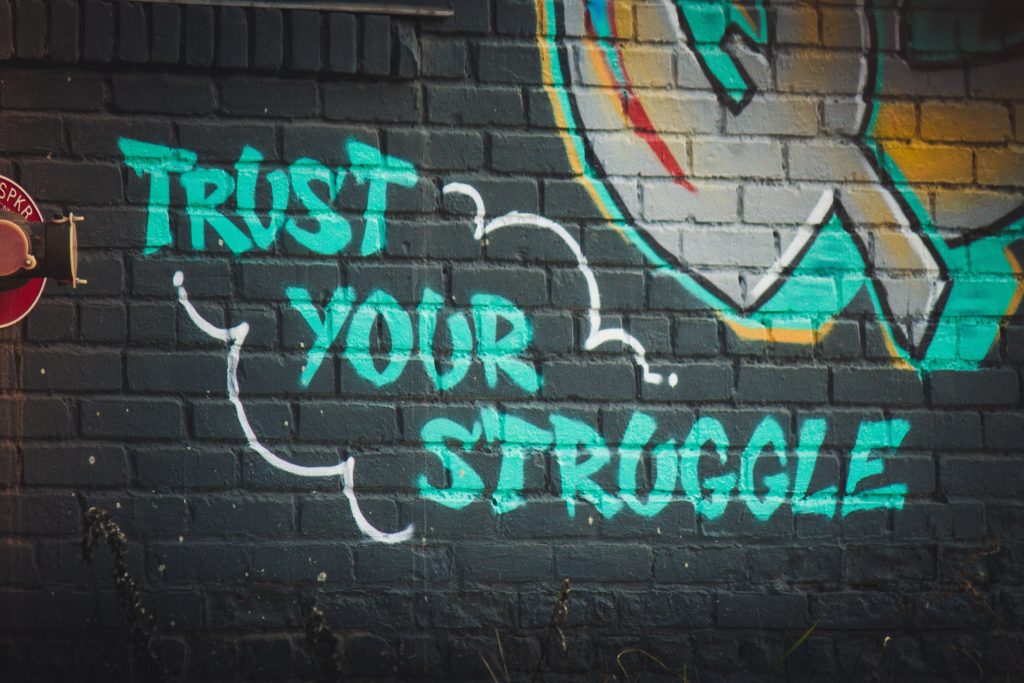
This wasn’t a pleasant task as I recall. I had a lot of grievances about myself, and facing them collectively was daunting. There were so many interwoven problems to unravel.

In reviewing this list today, it actually makes me smile a bit while also feeling some compassion for my past self. My life is way more focused, disciplined, happy, abundant, and fulfilling today than it was back then.

This makes me wonder about the key leverage points that created major shifts along the way. And while there may have been a few, the long path forward wasn’t really about major shifts doing the heavy lifting. Results came gradually from a long-term commitment to personal growth. So the most important factors would include persistence, tenacity, resilience, and determination.

This required a long time perspective. The benefit of making a big list of character flaws was that it compelled me to face and surrender to the obvious truth: I wasn’t going to fix them all in a year no matter how hard I worked. This was going to take a lot of work and a long time to unravel over many years and probably decades. And that turned out to be accurate.

When I made that list, I was already dedicated to personal growth. I knew it wasn’t going to be easy to work on my character. I also felt that if I just kept investing year after year, I’d continue to see some gains, just as I had in years past.

About a decade before I made that list, my problems were even worse. So having to deal with the many issues on that list was actually an improvement from where I started.

If there was a single key leverage point, it was the commitment to keep investing in personal growth for life – to keep learning, exploring, experimenting, seeking improvement, and to never give up no matter what.

When there was a significant advancement in a relatively short period of time though, the cause was usually social. I typically made the biggest gains when I invested in a more growth-oriented social circle. That also helped me get out of my head by seeing that my problems weren’t unique. Lots of people struggle with similar issues, and struggling together was easier – and often more fun and rewarding – than struggling alone.

Share Button

Health24.com | Could a test given at 8 years old determine brain health in old age?

If you were good with words and puzzles at age eight, you’re likely to fare well on tests of mental acuity at age 70, too.

That’s among the findings of a new study that followed the thinking abilities of a group of Britons born in the 1940s. Researchers found that their performance on standard cognitive tests at age eight predicted their performance around age 70. People who scored in the top quarter as kids were likely to remain in that bracket later in life.

Education also matters

“Cognition” refers to our ability to pay attention, process information, commit things to memory, to reason and to solve problems.

And it’s no surprise, experts said, that there is a correlation between childhood and adulthood skills.

However, no one is saying that your brain-health destiny is set in childhood, according to senior researcher Dr Jonathan Schott, a professor of neurology at University College London.

In this study, for example, education also mattered. Older adults who’d gone further in their formal education tended to score higher, regardless of their test performance as children.

A number of past studies have linked higher education levels to a lower risk of dementia. And the new findings bolster that evidence, said Rebecca Edelmayer, director of scientific engagement at the Alzheimer’s Association.

“It’s really unique to have data like this, from a cohort that was followed for 60 years,” said Edelmayer, who was not involved in the study.

Learn something completely new

Why would education matter in dementia risk? It’s not certain, but Dr Glen Finney, a fellow of the American Academy of Neurology, explained the “cognitive reserve” theory: Dementia is marked by the build-up of abnormal proteins known as “plaques” and “tangles”. In people with more education, the brain might be better equipped to compensate for such damage, allowing it to function normally for a longer period.

It’s also thought that mental engagement later in life might hold similar benefits. That could mean “challenging yourself to learn something completely new” – like studying an instrument or a foreign language, said Finney, who directs the Geisinger Health System’s Memory and Cognition Program in Wilkes-Barre, Pennsylvania. He was also not part of the study.

Beyond education, Finney noted, there is a body of evidence that other lifestyle factors are important in healthy brain aging. Blood pressure control is one, he said.

Finney pointed to a recent clinical trial finding that intensive treatment of high blood pressure lowered older adults’ risk of developing mild cognitive impairment.

That refers to subtler problems with memory and thinking that may precede dementia.

In general, the same things that protect the heart – exercise, controlling cholesterol and blood sugar, and a healthy diet – are also believed to be good for the brain, Edelmayer said.

Memory and information processing

“We just don’t know yet what the best recipe is for [dementia] risk reduction,” she said.

The current findings were published online in Neurology. They’re based on more than 500 UK adults born in 1946. When they were eight years old, they took tests of reading comprehension and other skills. When they were around age 70, they were tested for skills like memory and information processing.

They also underwent PET scans to detect any build-up of plaques in the brain.

It turned out that among participants who tested “cognitively normal”, about 18% did have signs of plaques in their brains. And on average, their test scores were lower, versus participants with no evidence of plaques.

That does not mean those people are destined to develop dementia, Edelmayer pointed out.

However, the findings do support a growing belief among researchers, according to Schott.

Certain biological ‘markers’

The fact that plaques exert subtle influences on mental performance even in people without symptoms is noteworthy. This “provides more evidence for the growing view that when disease-modifying therapies become available, they may have maximum benefits when given very early – and ideally prior to symptom onset,” Schott said.

How would that be done? In the future, Edelmayer said, it might be possible to use certain biological “markers” – such as plaques seen in brain scans – to identify people who are on a trajectory toward dementia.

“But we’re not there yet,” she stressed. “There’s a lot of work to be done.”

According to the Alzheimer’s Association, 5.8 million Americans are living with Alzheimer’s disease – a number that is expected to balloon to nearly 14 million by 2050.

Image credit: iStock

Share Button

Health24.com | Coronavirus morning update: Cele vows booze crackdown, school talks ‘ongoing’, US deaths pass 20 000

WHAT’S HAPPENING IN SA

Cases update: 

The latest number of confirmed cases is 2 028.

Another death has been recorded in the Western Cape – there are now 25 deaths in the country.

So far, 75 053 tests have been conducted.

READ MORE |All the confirmed cases of coronavirus in SA

Latest news:

Police Minister Bheki Cele has vowed to crack down on illegal alcohol sales and looters who have struck several times since the lockdown began.

Cele visited Paarl and Cape Town’s northern suburbs on Saturday to inspect shopping precincts. 

In Mbekweni, Paarl, he was shown a liquor store which had been looted. 

He later reported this was one of 17 stores robbed since the lockdown kicked in, including the ban on the sale and transport of alcohol.

WATCH | ‘Sober up, there are serious matters here’: Cele cracks down on looters, illegal liquor sales

Suggestions that school holidays may be scrapped for the remainder of the year to make up for lost time are not concrete, says Sadtu general-secretary Mugwena Maluleke.

“There are many ideas floating around and we will be engaging with the education department on those ideas as well as sharing our own ideas,” Maluleke told News24.

On Friday, Basic Education Minister Angie Motshekga said one proposal under consideration by the department was cancelling school holidays to regain time lost in the 2020 academic year.

Even before the lockdown started last month, President Cyril Ramaphosa announced schools would be closed to deal with the coronavirus outbreak. With the lockdown extended to 30 April, schools will have been closed for more than six weeks.

READ MORE | School holiday cancellation ‘not concrete’, says Sadtu

Two Cape Town police officers have been arrested for allegedly buying alcohol during the national lockdown. A supermarket manager and cashier were also arrested.

The incident took place in Delft on Thursday at around 11:00 when the two officers allegedly attempted to buy liquor to the value of R4 000.  

“Two police officers, a supermarket manager and a cashier were arrested following the purchase and sale of alcohol in Delft,” said national police spokesperson Brigadier Vishnu Naidoo.

The two officers are stationed at Strand police station and have been charged under the Disaster Management Act.

READ MORE | Lockdown: Two Cape Town cops busted for buying booze worth R4 000

WHAT’S HAPPENING IN THE REST OF THE WORLD 

Cases update:

For the latest global data, follow this interactive map from Johns Hopkins University & Medicine.

Early on Sunday morning, cases worldwide were more than 1.76 million, while deaths were more than 108 000.

Deaths in the United States were more than 20 000, with nearly 525 000 cases.

READ MORE | All the confirmed cases worldwide

Latest news:

We watched the case counts rise in China. Healthcare workers shared harrowing accounts from the frontlines as China built hospitals in a matter of days.

Doctors weren’t sure how to treat this new coronavirus, and the Chinese government eventually locked down an estimated 50 million people to contain the disease.

But it took some world leaders months to take the threat seriously.

As death toll creeps higher every day, over one-third of the world has now been placed under lockdown, and countries are scrambling to halt the spread of Covid-19.

READ MORE | 8 times world leaders downplayed the coronavirus and put their countries at greater risk

Cheered by her doctors, 93-year-old Alye Gunduz was discharged from an Istanbul hospital after recovering from the novel coronavirus following 10 days of treatment.

Her recovery from the disease that is killing chiefly the old offered some hope to health workers at Istanbul’s Cerrahpasa Medical Faculty hospital as they battle the outbreak, which risks hitting Turkey hard.

“It is promising because patients at this age and with chronic diseases are most of the time unable to recover because they are at highest risk from Covid-19,” chief physician Zekayi Kutlubay told AFP.

“A 93-year-old woman walking out of intensive care sound and safe is inspiring for us as well as for other coronavirus patients at her age.”

READ MORE | Turkey hospital sees hope as 93-year-old coronavirus patient discharged

For weeks, nursing homes and other senior facilities have struggled to stop the rapid spread of coronavirus among their elderly residents. 

Now, two separate reports show the contagion among nursing homes is far worse than the federal government’s latest estimate.

The novel coronavirus has taken the lives of over 2,300 United States (US) nursing home residents and spread to over 2,100 senior facilities, according to a new tally reported by The Wall Street Journal. A separate NBC News report Friday found coronavirus outbreaks at nearly 2,500 senior facilities.

Those reports place the number of deaths linked to senior facilities far above the latest federal estimate. The federal government last estimated on March 30 that more than 400 nursing homes had been hit with Covid-19, meaning the new reports reflect a 500% increase since then.

READ MORE | Thousands of US nursing home patients have died of Covid-19 – far higher than federal reports

LATEST RESEARCH

A team of local scientists have successfully put together the first genetic fingerprint – or genome sequence – of SARS-CoV-2 (the virus that causes COVID-19) found in South Africa.

Together with the National Institute of Communicable Diseases (NICD), the University of the Western Cape’s South African National Bioinformatics Institute (SANBI) cracked the code that could unlock the origins of the country’s outbreak, and help healthcare workers and government better track and trace the spread of the virus.

Spotlight spoke to Peter van Heusden, SANBI researcher and co-author of the new report on the sequence, and Dr Mushal Allam, a medical scientist with the NICD’s Centre for Respiratory Diseases and Meningitis, who worked on the sequencing, about what this accomplishment means for the future of South Africa’s fight against the Covid-19 virus. 

“It’s been very fulfilling to be able to use these skills and to try and proactively assist with the outbreak,” van Heusden said.

“This is a whole society problem that we have to face with every set of skills that we’ve got. It did feel really fulfilling that this training I’ve put myself through for several years was able to be used for something more than making a research paper.”

“I’ve been very actively networking with my colleagues around the continent and around the world to make sure information flows as quickly as possible, in fact as soon as this hit the radar screens in January, I was already talking to [Allam] asking when we are going to be able to sequence this thing,” he said. 

READ MORE | How scientists found the fingerprint behind South Africa’s Covid-19 virus

HEALTH TIPS (as recommended by the NICD and WHO)

• Maintain physical distancing – stay at least one metre away from somebody who is coughing or sneezing

• Practise frequent hand-washing, especially after direct contact with ill people or their environment

• Avoid touching your eyes, nose and mouth, as your hands touch many surfaces and could potentially transfer the virus

• Practise respiratory hygiene – cover your mouth with your bent elbow or tissue when you cough or sneeze. Remember to dispose the tissue immediately after use.

READ MORE: Coronavirus 101 

Image credit: Getty Images

Share Button

Coronavirus: Boris Johnson ‘owes his life to NHS staff’

The prime minister thanks those who treated him for coronavirus, and is now expected to rest and recover.

Share Button

Coronavirus: Front-line NHS staff ‘at risk of PTSD’

There is a risk of a “future mental health crisis”, the British Psychological Society says.

Share Button