One pregnancy shot slashes baby RSV hospitalizations by 72% — and shields for months

Vaccination of pregnant women has been linked to a drop in newborns being admitted to hospital with a serious lung infection, research suggests.

Researchers found the respiratory syncytial virus (RSV) vaccine, introduced across the UK in late summer 2024, led to a 72 percent reduction in babies hospitalized with the virus if mothers were vaccinated.

The findings are the first to show the real-world effectiveness of the vaccine in pregnant women in the UK.

Uptake of the jab among pregnant women could help to limit the number of sick babies each winter, reducing hospital pressures, experts say.

RSV is a common virus that causes coughs and colds but can lead to a severe lung infection called bronchiolitis, which can be dangerous in babies, with some requiring admission to intensive care. The virus is the main infectious cause of hospitalization for babies in the UK and globally.

Receiving the vaccine during pregnancy helps to protect both mother and baby. Antibodies – proteins which help to prevent the virus causing severe infection – produced by the mother in response to the vaccine are passed to the fetus, providing protection from severe RSV for the first six months after birth.

The research team, led by the Universities of Edinburgh and Leicester, recruited 537 babies across England and Scotland who had been admitted to hospital with severe respiratory disease in the winter of 2024-2025, the first season of vaccine implementation. 391 of the babies tested positive for RSV.

Mothers of babies who did not have RSV were two times more likely to have received the vaccine before delivery than the mothers of RSV-positive babies – 41 percent compared with 19 percent.

Receiving the vaccine more than 14 days before delivery offered a higher protective effect, with a 72 percent reduction in hospital admissions compared with 58 percent for infants whose mothers were vaccinated at any time before delivery.

Experts recommend getting vaccinated as soon as possible from 28 weeks of pregnancy to provide the best protection, as this allows more time for the mother to generate and pass on protective antibodies to the baby, but the jab can be given up to birth.

Previous research has found that only half of expectant mothers in England and Scotland are currently receiving the RSV vaccine, despite its high success at preventing serious illness.

The findings highlight the importance of raising awareness of the availability and effectiveness of the new vaccine to help protect babies, experts say.

The study is published in the journal The Lancet Child and Adolescent Health. The research collaboration also included the Universities of Bristol, Oxford, Queen’s University Belfast, UCL and Imperial College London and 30 hospitals across England and Scotland.

The study was funded by the Innovative Medicines Initiative (IMI) Respiratory Syncytial Virus Consortium in Europe (RESCEU), the Wellcome Trust and National Institute for Health and Care Research (NIHR) Health Protection Research Unit in Respiratory Infections, Imperial College London.

Dr Thomas Williams, study lead from the University of Edinburgh’s Institute for Regeneration and Repair, and Paediatric Consultant at the Royal Hospital for Children and Young People in Edinburgh, said: “With the availability of an effective RSV vaccine shown to significantly reduce the risk of hospitalization in young infants in the UK, there is an excellent opportunity for pregnant women to get vaccinated and protect themselves and their infants from RSV bronchiolitis this coming winter.”

Professor Damian Roland from the Leicester Hospitals and University and Consultant in Paediatric Emergency Medicine, said: “Our work highlights the value of vaccination and in keeping with the treatment to prevention principle of the NHS 10 Year plan we would ask all health care systems to consider how they will optimize the roll out of RSV vaccination for mothers.”


Share Button

100 Days of Sex: Day 108

Here’s an update on our ongoing 100 days of sex experiment, which is now up to 108 days and still going. At this point I’ve figured out that if Rachelle and I spend time in the same room together during the course of a day, it’s going to be a sex day.

Sex has become such a breezy experience for us now that it feels like we’ve made a long-term change to this aspect of our lives. It’s hard to imagine returning to our pre-experiment reality. It feels like we’ve left that old reality pretty far behind.

I can feel the difference in my body. Just being close to her now makes my cells buzz with electricity in anticipation. We don’t really have to try to make anything happen deliberately. Our bodies, minds, feelings, and energy will just naturally flow in that direction at least once a day. It would take more effort to prevent ourselves from going there.

I remember that’s how I’d feel during the early years of our long-distance relationship when we’d reconnect after being apart for 2-3 months. Now that feeling of intense attraction is our daily reality. It’s like this experiment invited and encouraged our bodies to love each other even more, so the feelings of love and intimacy are more embodied now. They’re not just in the mind and heart – it’s like these feelings are in the cells too now. So the physical chemistry that was already good is now way higher. This benefit has been a pleasant surprise.

By doing this for so many days in a row, we’ve chipped away at any forms of friction or deflection. Whatever reasons we might have previously had for skipping a day have been replaced by patterns of engagement. All the nos and maybes have been replaced by yeses. The yeses are pretty powerful now and easily breeze past any previous deflection points. It’s like we’ve recoded our minds to keep reminding us of the good reasons for saying yes to sex and giving us a more awareness of the long-term benefits.

I don’t feel this mental recoding is unique to sex. Imagine a writer writing for 100+ days in a row and also committing to making the writing experience smoother each time. Pretty much any form of resistance or procrastination will surface during that time, and the writer will have a chance to meet and resolve each instance. After 100+ days, you might figure that just about all resistance would have been addressed. At that point it may be harder not to write, especially if the writing is enjoyable or rewarding.

We’ve also created a greater variety of pathways into sex. So if we just go through our normal days together, they include multiple easy transition points that our bodies now predict could lead to sex. This is becoming a bit silly for us actually. Now if we just cuddle each other, our bodies can start getting riled up sexually, and pretty soon we’re kissing and more.

This is a pretty interesting place to be in our relationship. It’s different, yet we aren’t finding anything problematic about it. It makes us feel super close and connected with each other, and I feel it’s up-leveled our kindness and communication as well. It’s been a major deep dive into increased intimacy together. We’ve both been immensely loving towards each other all throughout this shared adventure. Having sex feels like an expression of kindness and caring for each other. We’re both generously going way beyond meeting each other’s needs here.

We keep checking in with each other to ask ourselves if it’s too much. And we keep concluding that it’s definitely not too much. It’s actually very nice to connect like this every day.

This is a puzzling experience to integrate. I’ve never done anything like this before, and I feel that I’ve crossed in a different kind of reality somewhere along the way. It feels like it’s still evolving and shifting too, although not as much as during the first three months.

It feels like my reality has been wrapped in a blanket of love, and now the blanket is there to stay. It feels easy to maintain, and I don’t see any reason to remove the blanket. It’s a really nice blanket, and I appreciate its presence.

One impact this is having is that it’s making me question where else in my life I might explore something similar. Like what other area of life is already good, and I could wrap that area in an extra blanket of love as well? I feel I’ve already chipped away at some of this in my relationship with my home, especially by resolving some areas of friction with it and figuring out how to enjoy maintenance and upgrade projects. I’m also advancing with a more yin, relaxed, casual style of blogging, which will soon open up into making more videos. Another interesting candidate would be my relationship with money, which has been healthy and supportive for 26 years now. I might even do something more expansive and weave multiple areas together since it’s all vibrational work at the core anyway. Even better would be to take this to a social level and engage with people who want to explore similar upgrades in their lives.

I feel that this sex experiment has been a gateway into a different vibrational reality. My inner senses have been buzzing with a lot of energy lately. I really can’t see this energy that we’ve stirred up remaining solely within our relationship. It’s a lot of energy, and I feel that it’s still increasing. Channeling it into physical sex is very yummy, yet I feel there’s more than enough to flow into other directions too, like writing, videos, social connections, and more. I have this sense that I’m entering a phase of opening in all directions at once. Actually I’d say that I’m well into it now. That feels really good to me at this time. I feel very ready and very energetically resourced for this.

One reflection that came through in the past few days was that I gained an even stronger appreciation for the role that exploration plays in my life and work. This sex experiment was one of many explorations I’ve done where the purpose was discovery, not to obtain some specific result. My intentions were rooted in curiosity and wonder… also to explore connection, love, and intimacy.

Exploring has paid off so very well for me in so many areas of life. The more I explore, the better my life becomes. Exploration is the key that unlocks so many doors, especially when I explore in directions where part of me is hesitant to commit myself. Many explorations have led to permanent changes that I’ve integrated very well into my life. I sense that if I really want to wrap more areas of life in an even bigger blanket of love, I’ll want to open myself to even more exploring. And the real key to exploring, at least for me, has been to make specific exploration-based commitments, such as a 30-day challenge (or in this case a 100-day challenge).

Share Button

A strange fossil at the edge of the solar system just shook up Planet Nine theories

Subaru Telescope has made an exciting discovery: a small body beyond Pluto, with implications for the formation, evolution, and current structure of the outer Solar System.

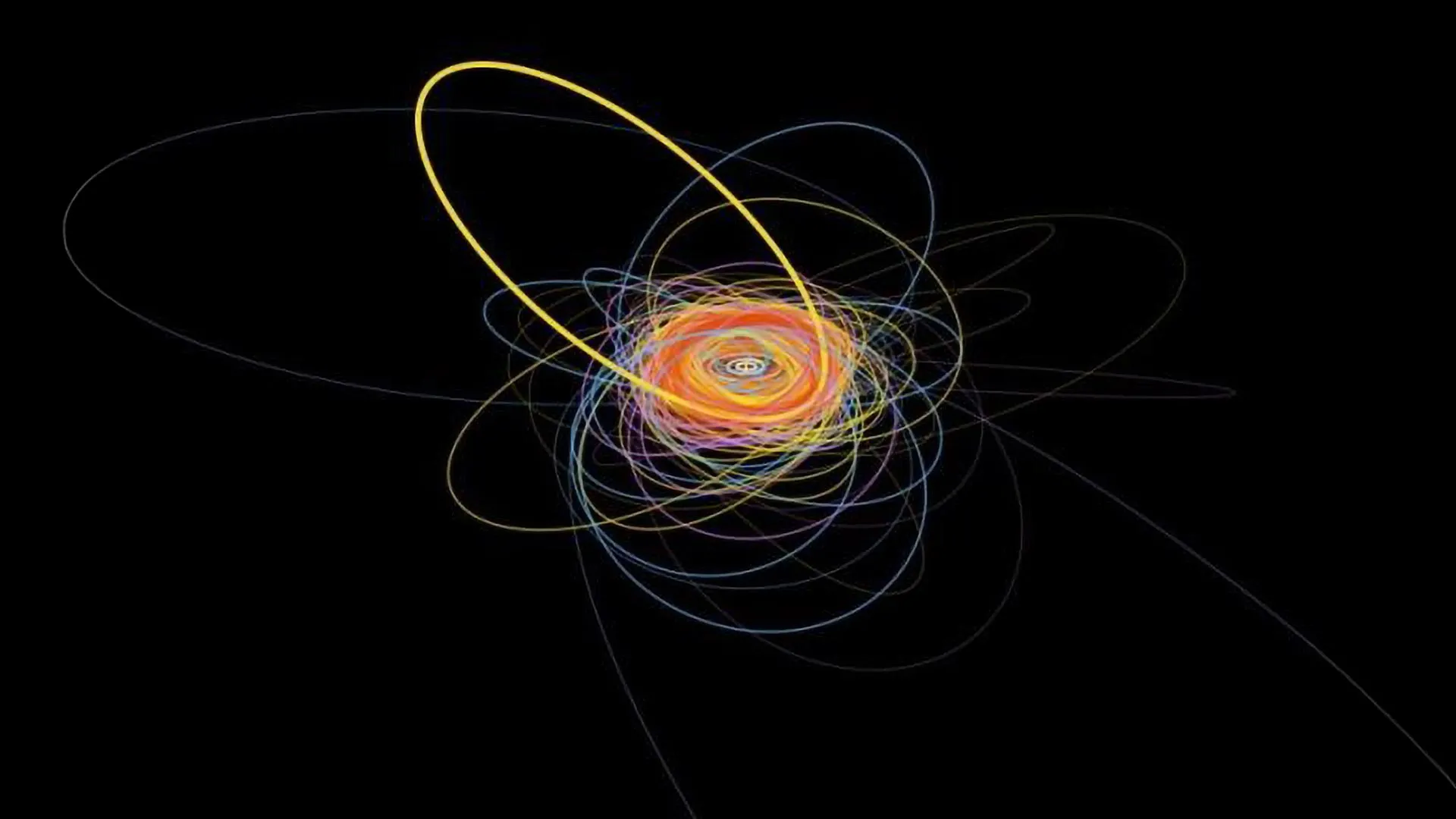
The object was found as part of the survey project FOSSIL (Formation of the Outer Solar System: An Icy Legacy), which takes advantage of the Subaru Telescope’s wide field of view. The object was discovered through observations taken in March, May, and August 2023 using the Subaru Telescope. The object is currently designated 2023 KQ14; a more classical name will be assigned later by the International Astronomical Union. After that, follow-up observations in July 2024 with the Canada-France-Hawaii Telescope and a search for unrecognized sightings of the object in old data from other observatories allowed astronomers to track the object’s orbit over 19 years. Due to its peculiar distant orbit, 2023 KQ14 has been classified as a “sednoid,” making it only the fourth known example of this rare type of object.

Numerical simulations conducted by the FOSSIL team, some of which used the PC cluster operated by the National Astronomical Observatory of Japan, indicate that 2023 KQ14 has maintained a stable orbit for at least 4.5 billion years. Although its current orbit differs from those of the other sednoids, the simulations suggest that their orbits were remarkably similar around 4.2 billion years ago.

The fact that 2023 KQ14 now follows an orbit different from the other sednoids indicates that the outer Solar System is more diverse and complex than previously thought. This discovery also places new constraints on the hypothetical Planet Nine. If Planet Nine exists, its orbit must lie farther out than typically predicted.

Dr. Yukun Huang of the National Astronomical Observatory of Japan who conducted simulations of the orbit comments, “The fact that 2023 KQ14‘s current orbit does not align with those of the other three sednoids lowers the likelihood of the Planet Nine hypothesis. It is possible that a planet once existed in the Solar System but was later ejected, causing the unusual orbits we see today.”

Regarding the significance of this discovery, Dr. Fumi Yoshida states, “2023 KQ14 was found in a region far away where Neptune’s gravity has little influence. The presence of objects with elongated orbits and large perihelion distances in this area implies that something extraordinary occurred during the ancient era when 2023 KQ14 formed. Understanding the orbital evolution and physical properties of these unique, distant objects is crucial for comprehending the full history of the Solar System. At present, the Subaru Telescope is among the few telescopes on Earth capable of making such discoveries. I would be happy if the FOSSIL team could make many more discoveries like this one and help draw a complete picture of the history of the Solar System.”

Share Button

Mysterious object found dancing with Neptune

A team of astronomers led by the Center for Astrophysics | Harvard & Smithsonian has discovered a rare object far beyond Neptune, from a class known as trans-Neptunian objects, that is moving in rhythm with the giant planet. This object, called 2020 VN40, is the first confirmed body that orbits the sun once for every ten orbits Neptune completes.

This discovery helps scientists understand how objects in the outer solar system behave and how they got there. It supports the idea that many distant objects are temporarily “caught” in Neptune’s gravity as they drift through space.

“This is a big step in understanding the outer solar system,” said Rosemary Pike, lead researcher from the Center for Astrophysics | Harvard & Smithsonian. “It shows that even very distant regions influenced by Neptune can contain objects, and it gives us new clues about how the solar system evolved.”

The finding was published this month in The Planetary Science Journal, a publication of the American Astronomical Society.

The discovery was made by the Large inclination Distant Objects (LiDO) survey, which searched for unusual objects in the outer solar system. This survey used the Canada-France-Hawaii Telescope for the main survey operations, and Gemini Observatory and Magellan Baade for additional observations.

The survey was designed to search for bodies with orbits that extend far above and below the plane of the Earth’s orbit around the sun, part of the outer solar system that hasn’t been well-studied.

“It has been fascinating to learn how many small bodies in the solar system exist on these very large, very tilted orbits,” said Dr. Samantha Lawler (University of Regina), a core member of the LiDO team. The object’s average distance is about 140 times farther from the sun than Earth and follows a very tilted path around the solar system.

What makes 2020 VN40 even more interesting is how it moves compared to Neptune. Most objects with a simple ratio of the duration of their orbit compared to the duration of Neptune’s orbit always come closest to the sun when Neptune is far away. In contrast, 2020 VN40 comes closest to the sun when Neptune is very close by, if you look at their positions from above the solar system. The tilt of 2020 VN40’s orbit means that the objects are not actually close, because 2020 VN40 is actually far below the solar system- they only appear close when flattened onto a map. All other known resonant trans-Neptunian objects orbit such that they avoid this alignment at their closest approach to the sun, even in the flattened view.

“This new motion is like finding a hidden rhythm in a song we thought we knew,” said Ruth Murray-Clay (University of California Santa Cruz), co-author of the study. “It could change how we think about the way distant objects move.”

These findings suggest that highly tilted orbits can lead to new and unexpected types of motion. The LiDO survey has already found over 140 distant objects, and more discoveries are expected from future surveys. With telescopes like the Vera C. Rubin Observatory, scientists hope to find many more objects like 2020 VN40.

“This is just the beginning,” said Kathryn Volk of the Planetary Science Institute. “We’re opening a new window into the solar system’s past.”

Share Button

Astronomers just witnessed planets being born around a baby star 1300 light-years away

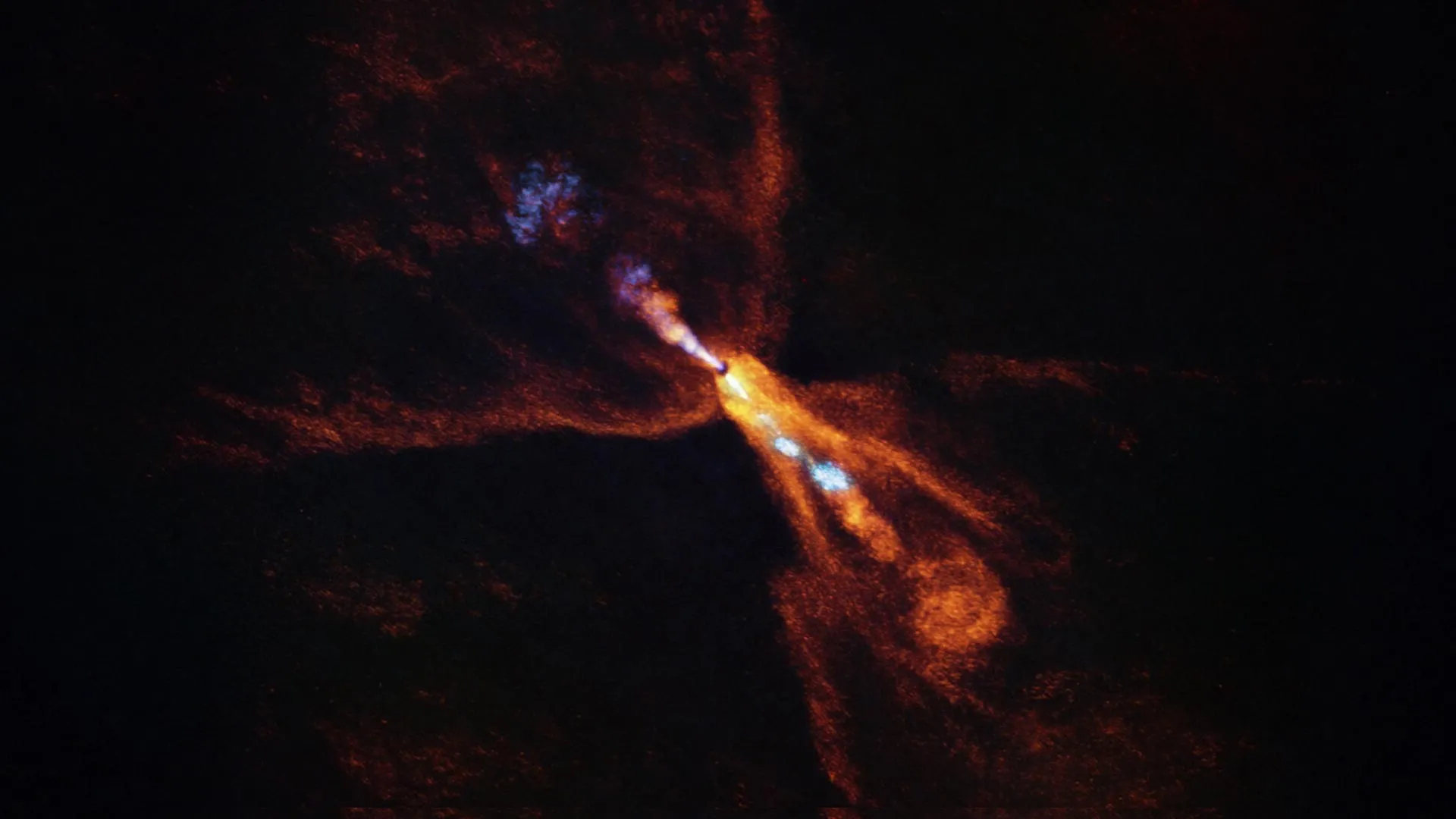
International researchers have, for the first time, pinpointed the moment when planets began to form around a star beyond the Sun. Using the ALMA telescope, in which the European Southern Observatory (ESO) is a partner, and the James Webb Space Telescope, they have observed the creation of the first specks of planet-forming material — hot minerals just beginning to solidify. This finding marks the first time a planetary system has been identified at such an early stage in its formation and opens a window to the past of our own Solar System.

“For the first time, we have identified the earliest moment when planet formation is initiated around a star other than our Sun,” says Melissa McClure, a professor at Leiden University in the Netherlands and lead author of the new study, published on July 16 in Nature.

Co-author Merel van ‘t Hoff, a professor at Purdue University, USA, compares their findings to “a picture of the baby Solar System,” saying that “we’re seeing a system that looks like what our Solar System looked like when it was just beginning to form.”

This newborn planetary system is emerging around HOPS-315, a ‘proto’ or baby star that sits some 1300 light-years away from us and is an analogue of the nascent Sun. Around such baby stars, astronomers often see discs of gas and dust known as ‘protoplanetary discs’, which are the birthplaces of new planets. While astronomers have previously seen young discs that contain newborn, massive, Jupiter-like planets, McClure says, “we’ve always known that the first solid parts of planets, or ‘planetesimals’, must form further back in time, at earlier stages.”

In our Solar System, the very first solid material to condense near Earth’s present location around the Sun is found trapped within ancient meteorites. Astronomers age-date these primordial rocks to determine when the clock started on our Solar System’s formation. Such meteorites are packed full of crystalline minerals that contain silicon monoxide (SiO) and can condense at the extremely high temperatures present in young planetary discs. Over time, these newly condensed solids bind together, sowing the seeds for planet formation as they gain both size and mass. The first kilometer-sized planetesimals in the Solar System, which grew to become planets such as Earth or Jupiter’s core, formed just after the condensation of these crystalline minerals.

With their new discovery, astronomers have found evidence of these hot minerals beginning to condense in the disc around HOPS-315. Their results show that SiO is present around the baby star in its gaseous state, as well as within these crystalline minerals, suggesting it is only just beginning to solidify. “This process has never been seen before in a protoplanetary disc — or anywhere outside our Solar System,” says co-author Edwin Bergin, a professor at the University of Michigan, USA.

These minerals were first identified using the James Webb Space Telescope, a joint project of the US, European and Canadian space agencies. To find out where exactly the signals were coming from, the team observed the system with ALMA, the Atacama Large Millimeter/submillimeter Array, which is operated by ESO together with international partners in Chile’s Atacama Desert.

With these data, the team determined that the chemical signals were coming from a small region of the disc around the star equivalent to the orbit of the asteroid belt around the Sun. “We’re really seeing these minerals at the same location in this extrasolar system as where we see them in asteroids in the Solar System,” says co-author Logan Francis, a postdoctoral researcher at Leiden University.

Because of this, the disc of HOPS-315 provides a wonderful analogue for studying our own cosmic history. As van ‘t Hoff says, “this system is one of the best that we know to actually probe some of the processes that happened in our Solar System.” It also provides astronomers with a new opportunity to study early planet formation, by standing in as a substitute for newborn solar systems across the galaxy.

ESO astronomer and European ALMA Program Manager Elizabeth Humphreys, who did not take part in the study, says: “I was really impressed by this study, which reveals a very early stage of planet formation. It suggests that HOPS-315 can be used to understand how our own Solar System formed. This result highlights the combined strength of JWST and ALMA for exploring protoplanetary discs.”

The team is composed of M. K. McClure (Leiden Observatory, Leiden University, The Netherlands [Leiden]), M. van ‘t Hoff (Department of Astronomy, The University of Michigan, Michigan, USA [Michigan] and Purdue University, Department of Physics and Astronomy, Indiana, USA), L. Francis (Leiden), Edwin Bergin (Michigan), W.R. M. Rocha (Leiden), J. A. Sturm (Leiden), D. Harsono (Institute of Astronomy, Department of Physics, National Tsing Hua University, Taiwan), E. F. van Dishoeck (Leiden), J. H. Black (Chalmers University of Technology, Department of Space, Earth and Environment, Onsala Space Observatory, Sweden), J. A. Noble (Physique des Interactions Ioniques et Moléculaires, CNRS, Aix Marseille Université, France), D. Qasim (Southwest Research Institute, Texas, USA), E. Dartois (Institut des Sciences Moléculaires d’Orsay, CNRS, Université Paris-Saclay, France.)

Share Button

NASA’s IXPE tracked a rare pulsar—and found an unexpected power source

An international team of astronomers has uncovered new evidence to explain how pulsing remnants of exploded stars interact with surrounding matter deep in the cosmos, using observations from NASA’s IXPE (Imaging X-ray Polarimetry Explorer) and other telescopes.

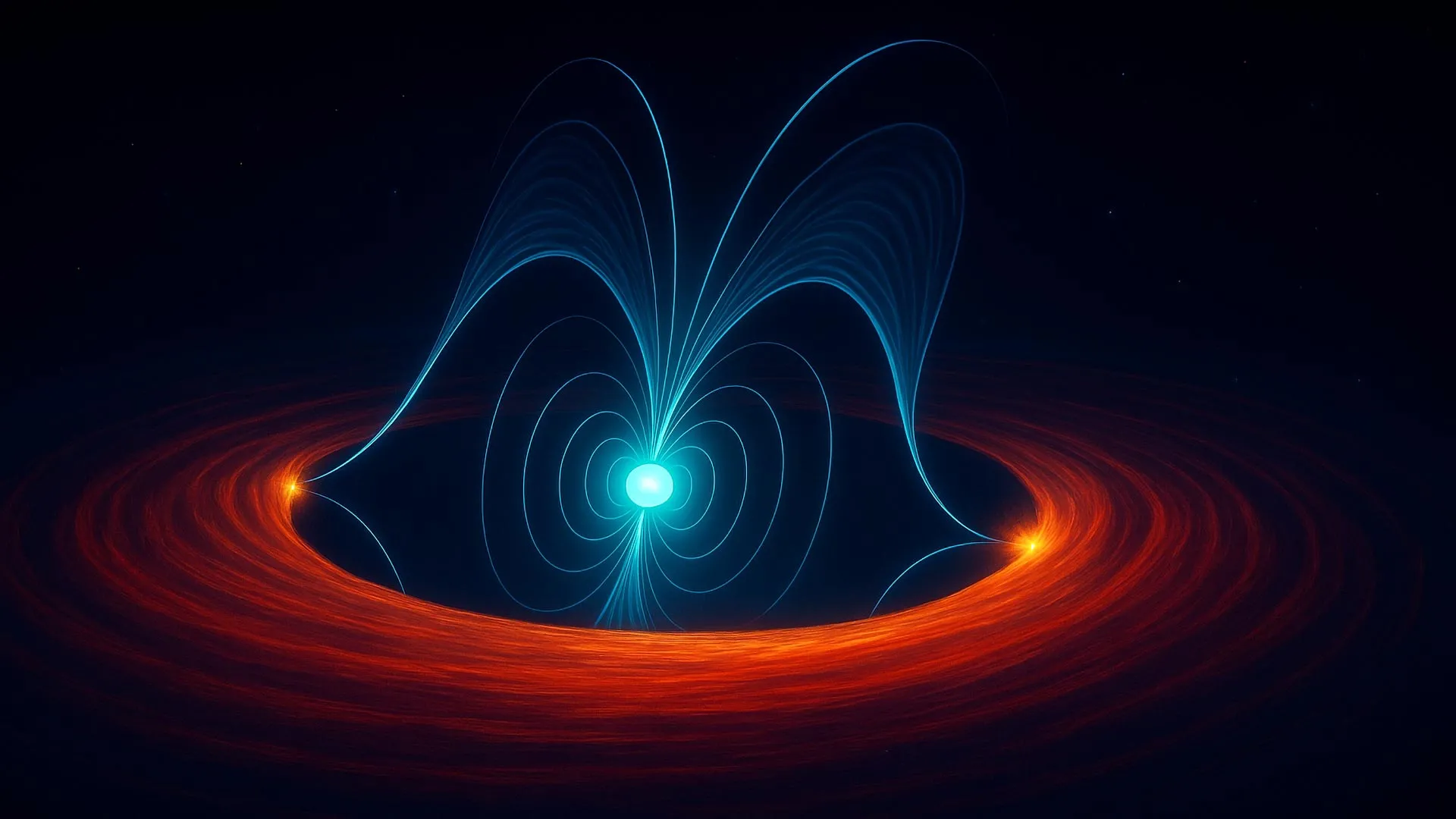
Scientists based in the U.S., Italy, and Spain, set their sights on a mysterious cosmic duo called PSR J1023+0038, or J1023 for short. The J1023 system is comprised of a rapidly rotating neutron star feeding off of its low-mass companion star, which has created an accretion disk around the neutron star. This neutron star is also a pulsar, emitting powerful twin beams of light from its opposing magnetic poles as it rotates, spinning like a lighthouse beacon.

The J1023 system is rare and valuable to study because the pulsar transitions clearly between its active state, in which it feeds off its companion star, and a more dormant state, when it emits detectable pulsations as radio waves. This makes it a “transitional millisecond pulsar.”

“Transitional millisecond pulsars are cosmic laboratories, helping us understand how neutron stars evolve in binary systems,” said researcher Maria Cristina Baglio of the Italian National Institute of Astrophysics (INAF) Brera Observatory in Merate, Italy, and lead author of a paper in The Astrophysical Journal Letters illustrating the new findings.

The big question for scientists about this pulsar system was: Where do the X-rays originate? The answer would inform broader theories about particle acceleration, accretion physics, and the environments surrounding neutron stars across the universe.

The source surprised them: The X-rays came from the pulsar wind, a chaotic stew of gases, shock waves, magnetic fields, and particles accelerated near the speed of light, that hits the accretion disk.

To determine this, astronomers needed to measure the angle of polarization in both X-ray and optical light. Polarization is a measure of how organized light waves are. They looked at X-ray polarization with IXPE, the only telescope capable of making this measurement in space, and comparing it with optical polarization from the European Southern Observatory’s Very Large Telescope in Chile. IXPE launched in Dec. 2021 and has made many observations of pulsars, but J1023 was the first system of its kind that it explored.

NASA’s NICER (Neutron star Interior Composition Explorer) and Neil Gehrels Swift Observatory provided valuable observations of the system in high-energy light. Other telescopes contributing data included the Karl G. Jansky Very Large Array in Magdalena, New Mexico.

The result: scientists found the same angle of polarization across the different wavelengths.

“That finding is compelling evidence that a single, coherent physical mechanism underpins the light we observe,” said Francesco Coti Zelati of the Institute of Space Sciences in Barcelona, Spain, co-lead author of the findings.

This interpretation challenges the conventional wisdom about neutron star emissions of radiation in binary systems, the researchers said. Previous models had indicated that the X-rays come from the accretion disk, but this new study shows they originate with the pulsar wind.

“IXPE has observed many isolated pulsars and found that the pulsar wind powers the X-rays,” said NASA Marshall astrophysicist Philip Kaaret, principal investigator for IXPE at NASA’s Marshall Space Flight Center in Huntsville, Alabama. “These new observations show that the pulsar wind powers most of the energy output of the system.”

Astronomers continue to study transitional millisecond pulsars, assessing how observed physical mechanisms compare with those of other pulsars and pulsar wind nebulae. Insights from these observations could help refine theoretical models describing how pulsar winds generate radiation – and bring researchers one step closer, Baglio and Coti Zelati agreed, to fully understanding the physical mechanisms at work in these extraordinary cosmic systems.

More about IXPE

IXPE, which continues to provide unprecedented data enabling groundbreaking discoveries about celestial objects across the universe, is a joint NASA and Italian Space Agency mission with partners and science collaborators in 12 countries. IXPE is led by NASA’s Marshall Space Flight Center in Huntsville, Alabama. BAE Systems, Inc., headquartered in Falls Church, Virginia, manages spacecraft operations together with the University of Colorado’s Laboratory for Atmospheric and Space Physics in Boulder.

Share Button

Living kidney donor ‘will give our son a new life’

Amrit has been waiting for nearly five years for a kidney and needs a living donor.

Share Button

Popular sugar substitute linked to brain cell damage and stroke risk

From low-carb ice cream to keto protein bars to “sugar-free” soda, the decades-old sweetener erythritol is everywhere.

But new University of Colorado Boulder research shows the popular sugar substitute and specialty food additive comes with serious downsides, impacting brain cells in numerous ways that can boost risk of stroke.

The study was published in the Journal of Applied Physiology.

“Our study adds to the evidence suggesting that non-nutritive sweeteners that have generally been purported to be safe, may not come without negative health consequences,” said senior author Christopher DeSouza, professor of integrative physiology and director of the Integrative Vascular Biology Lab.

First approved by the Food and Drug Administration in 2001, erythritol is a sugar alcohol, often produced by fermenting corn and found in hundreds of products. It has almost no calories, is about 80% as sweet as table sugar, and has negligible impact on insulin levels, making it a favorite for people trying to lose weight, keep their blood sugar in check or avoid carbohydrates.

But recent research has begun to shed light on its risks.

One recent study involving 4,000 people in the U.S. and Europe found that men and women with higher circulating levels of erythritol were significantly more likely to have a heart attack or stroke within the next three years.

DeSouza and first author Auburn Berry, a graduate student in his lab, set out to understand what might be driving that increased risk.

Researchers in the lab treated human cells that line blood vessels in the brain for three hours with about the same amount of erythritol contained in a typical sugar-free beverage.

They observed that the treated cells were altered in numerous ways: They expressed significantly less nitric oxide, a molecule that relaxes and widens blood vessels, and more endothelin-1, a protein that constricts blood vessels. Meanwhile, when challenged with a clot-forming compound called thrombin, cellular production of the natural clot-busting compound t-PA was “markedly blunted.” The erythritol-treated cells also produced more reactive oxygen species (ROS), a.k.a. “free radicals,” metabolic byproducts which can age and damage cells and inflame tissue.

“Big picture, if your vessels are more constricted and your ability to break down blood clots is lowered, your risk of stroke goes up,” said Berry. “Our research demonstrates not only that, but how erythritol has the potential to increase stroke risk.”

DeSouza notes that their study used only a serving-size worth of the sugar substitute. For those who consume multiple servings per day, the impact, presumably, could be worse.

The authors caution that their study was a laboratory study, conducted on cells, and larger studies in people are needed.

That said, De Souza encourages consumers to read labels, looking for erythritol or “sugar alcohol” on the label.

“Given the epidemiological study that inspired our work, and now our cellular findings, we believe it would be prudent for people to monitor their consumption of non-nutrient-sweeteners such as this one,” he said.

Share Button

Lasers just unlocked a hidden side of gold, copper, and aluminum

A team of scientists has developed a powerful new way to detect subtle magnetic signals in common metals like copper, gold, and aluminum—using nothing more than light and a clever technique. Their research, recently published in the prestigious journal Nature Communications, could pave the way for advances in everything from smartphones to quantum computing.

The Longstanding Puzzle: Why Can’t We See the Optical Hall Effect?

For over a century, scientists have known that electric currents bend in a magnetic field—a phenomenon known as the Hall effect. In magnetic materials like iron, this effect is strong and well understood. But in ordinary, non-magnetic metals like copper or gold, the effect is much weaker.

In theory, a related phenomenon—the optical Hall effect—should help scientists visualize how electrons behave when light and magnetic fields interact. But at visible wavelengths, this effect has remained far too subtle to detect. The scientific world has known it was there, but lacked the tools to measure it.

“It was like trying to hear a whisper in a noisy room for decades,” said Prof. Amir Capua. “Everyone knew the whisper was there, but we didn’t have a microphone sensitive enough to hear it.”

Cracking the Code: A Closer Look at the Invisible

Led by Ph.D. candidate Nadav Am Shalom and Prof. Amir Capua from the Institute of Electrical Engineering and Applied Physics at Hebrew University, in collaboration with Prof. Binghai Yan from the Weizmann Institute of Science, Pennsylvania State University, and Prof. Igor Rozhansky from the University of Manchester, the study focuses on a tricky challenge in physics: how to detect tiny magnetic effects in materials that aren’t magnetic.

“You might think of metals like copper and gold as magnetically ‘quiet’—they don’t stick to your fridge like iron does,” explained Prof. Capua. “But in reality, under the right conditions, they do respond to magnetic fields—just in extremely subtle ways.”

The challenge has always been how to detect these tiny effects—especially using light in the visible spectrum where laser sources are readily available. Until now, the signal was simply too faint to observe.

Turning Up the Volume on Magnetic Whispers

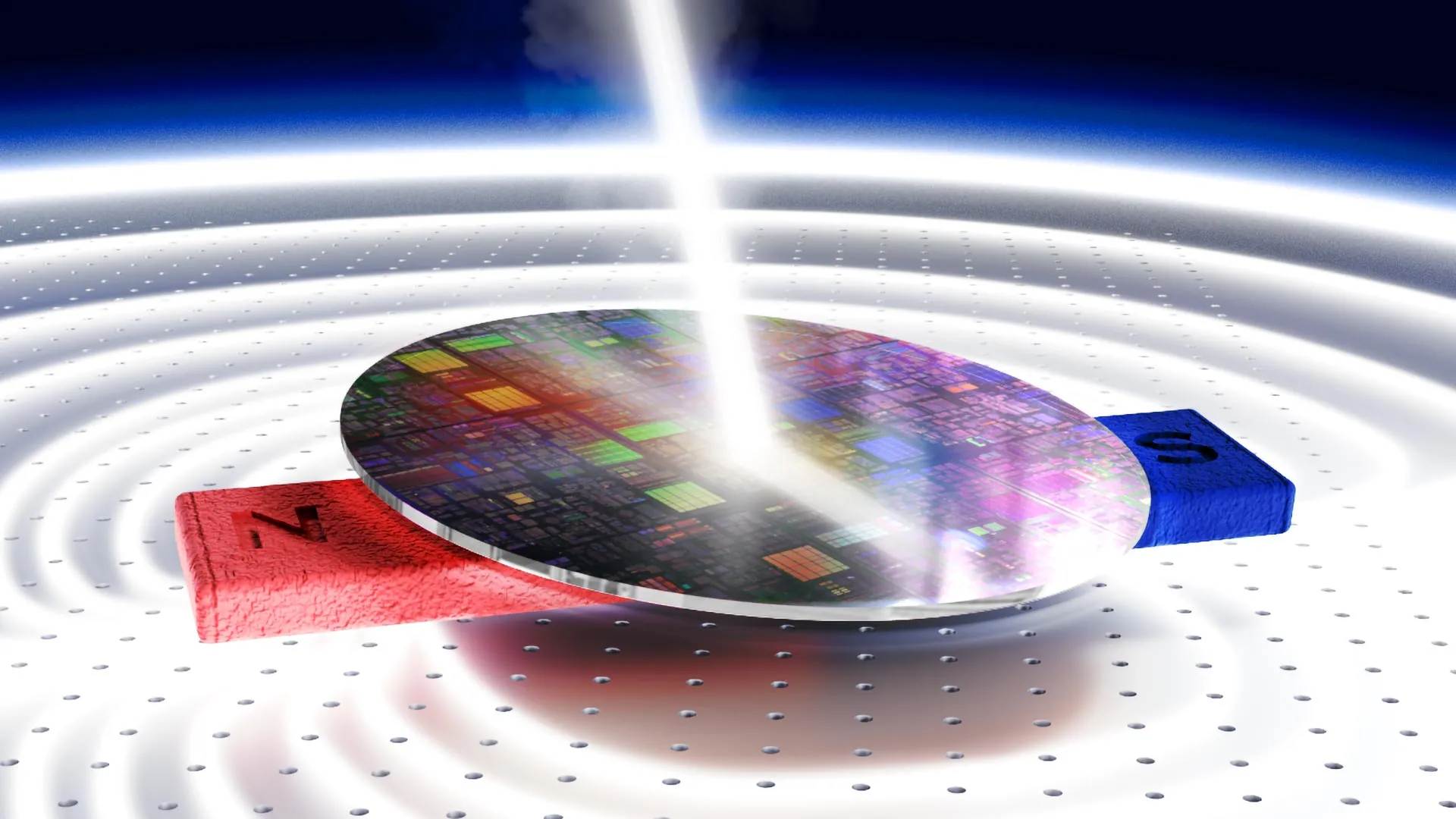
To solve this, the researchers upgraded a method called the magneto-optical Kerr effect (MOKE), which uses a laser to measure how magnetism alters light’s reflection. Think of it like using a high-powered flashlight to catch the faintest glint off a surface in the dark.

By combining a 440-nanometer blue laser with large-amplitude modulation of the external magnetic field, they dramatically boosted the technique’s sensitivity. The result: they were able to pick up magnetic “echoes” in non-magnetic metals like copper, gold, aluminum, tantalum, and platinum—a feat previously considered near-impossible.

Why It Matters: When Noise Becomes a Signal

The Hall effect is a pivotal tool in the semiconductor industry and in studying materials at the atomic scale: it helps scientists figure out how many electrons are in a metal. But traditionally, measuring the Hall effect means physically attaching tiny wires to the device, a process that is time-consuming and tricky, especially when dealing with nanometer-sized components. The new approach, however, is much simpler: it merely requires to shine a laser on the electrical device, no wires needed.

Digging deeper, the team found that what appeared to be random “noise” in their signal wasn’t random at all. Instead, it followed a clear pattern tied to a quantum property called spin-orbit coupling, which links how electrons move to how they spin—a key behavior in modern physics.

This connection also affects how magnetic energy dissipates in materials. These insights have direct implications for the design of magnetic memory, spintronic devices, and even quantum systems.

“It’s like discovering that static on a radio isn’t just interference—it’s someone whispering valuable information,” said Ph.D. candidate Am Shalom. “We’re now using light to ‘listen’ to these hidden messages from electrons.”

Looking Ahead: A New Window into Spin and Magnetism

The technique offers a non-invasive, highly sensitive tool for exploring magnetism in metals—without the need for massive magnets or cryogenic conditions. Its simplicity and precision could help engineers build faster processors, more energy-efficient systems, and sensors with unprecedented accuracy.

“This research turns a nearly 150-year-old scientific problem into a new opportunity,” said Prof. Capua.

“Interestingly, even Edwin Hall, the greatest scientists of all, who discovered the Hall effect, attempted to measure his effect using a beam of light with no success. He summarizes in the closing sentence of his notable paper from 1881: “I think that, if the action of silver had been one tenth as strong as that of iron, the effect would have been detected. No such effect was observed.” (E. Hall, 1881).”

“By tuning in to the right frequency—and knowing where to look—we’ve found a way to measure what was once thought invisible.”

Share Button

Dirty water, warm trucks, and the real reason romaine keeps making us sick

E. coli outbreaks in romaine lettuce have long been a public health concern. and now a new Cornell University paper suggests that a combination of efforts in the field, and even postharvest techniques, can minimize risk to human health.

Co-authored by Renata Ivanek, a professor in the department of population medicine and diagnostic sciences, and Martin Wiedmann, professor in food safety, the paper outlines interventions likely to make a concrete difference in the safety of the nation’s romaine.

“This study supports that interventions should focus on reducing produce contamination via contaminated irrigation water, on assuring that produce washes applied during processing consistently deliver reasonably high reductions of bacterial numbers, and on improving temperature control during distribution,” Wiedmann said.

“We tried to describe the system as holistically as possible to account for different risk factors and how they could have interactions,” Ivanek said. “There’s not just one intervention that will save us all. We spent a lot of time trying to understand the preharvest component, especially the irrigation water piece and how much risk can be explained by that.”

Study results suggested that much contamination originates from irrigation with untreated surface water applied through overhead spray irrigation systems. They found that risk from irrigation was reduced either through water treatments or by switching to furrow or drip irrigation.

“While not the most common system, spray irrigation is used in a number of fields for its benefits during germination, its cooling effect on plants and other reasons. But drip or furrow irrigation reduces the probability that water directly touches the leaves,” Ivanek said, acknowledging that switching to these other irrigation systems introduces significant potential additional costs to grower.

Ivanek and her co-authors also explored the importance of maintaining proper cold storage temperatures along the entire supply chain to romaine’s final destination.

“Time and temperature play a role in food safety, and also in food quality and shelf life,” she said, describing a “perfect storm” if contamination happens at the farm or processing level and then improper transportation temperatures allow bacteria to grow.

The comprehensive practices and interventions explored in this study intend to aid decision-makers in establishing and enhancing food safety best management practices, Ivanek said.

“The big message is the American food supply chain is extremely safe compared to other countries,” she said. “We’re exploring how can we make it even safer and where we should put additional effort.”

Share Button