For five decades, psychologists Dr John Gottman and Dr Julie Schwartz Gottman of the Gottman Institute (GI) have studied couples and the issues that affect them.
This experience led them to develop their “four horsemen” theory of divorce, which found evidence to suggest that criticism, contempt, defensiveness, and stonewalling usually precede separation.
Advertisement
Their research also showed that couples’ problems tended to split into three groups: solvable problems and perpetual problems.
Working out which one you and your partner are arguing about, the GI says, can help you identify the kinds of resolution you need.
What are solvable problems?
Solvable problems come about due to situational issues that don’t feel integral to a person’s character. That might mean one person is taking on the lion’s share of the housework, or you might disagree on a specific issue with your child.
Advertisement
GI notes that solvable problems in one couple might be perpetual problems (more on those later) for another. But the difference is in how the pair feels about it: “The conflict is simply about that topic, and there may not be a deeper meaning behind each partner’s position”.
Happily, solvable problems can usually be, well, solved through conversation and careful planning.
Maybe you can assign certain household domains to one another, for instance, or agree to compromise on where to spend Christmas.
Advertisement
What are perpetual problems?
These make up most (69%) of the arguments, the psychologists found.
Perpetual problems are ongoing differences or misalignments that are fundamental to you or your partner’s needs or lifestyles. For instance, maybe your beau values the financial benefits that can come with working hard over a fulfilling work-life balance.
So, you two might keep having what seems like the same argument about late nights and missed dinners.
Because they reflect core parts of each member in the relationship, perpetual problems will recur. If you like to see your family twice a week and they need more “me” time, compromise might leave both parties feeling like they’re denying a big part of themselves pretty regularly.
Advertisement
In this case, the goal should be to “establish a dialogue about the perpetual problem that communicates acceptance of your partner with humour, affection, and even amusement”.
Identify the drive, identity, belief, or “dream” behind each of your behaviours: this can make discussing the problem easier. Ask your partner to do the same, and try to get curious about their feelings instead of trying to “solve” the issue: this can create a healthier dialogue.
This will be an ongoing conversation, so try to get good at – and respectful in – having it.
We’re at a dimly lit restaurant, the kind 30-somethings swap for the clubs of their 20. Across from me and my husband, Greg, sit potential new friends we met in the hallway at our son’s daycare.
After enough stop-and-chats at pickup, we figured it was time – dinner on a balmy Saturday night in the thick of a hot Chicago summer.
We’re halfway through appetisers when the other wife asks, “So, how did you two meet?”
It’s a classic first-date-with-potential-friends question. Poor thing, she has no idea what she’s stepped into.
Advertisement
For most people, the “how we met” story is a gift, one of a couple’s greatest hits, perfect fodder for an evening with new friends. But Greg and I have a different kind of story. That’s why he nudges me under the table, our code to tell the simple version. To be fair, he thinks he looks worse in the story than I do. I disagree. But I’ll let you be the judge.
“Oh, we met through a mutual friend,” I say.
It’s true. Technically.
Adam was our mutual friend. It’s just not the whole truth.
The wife isn’t buying it. She tilts her head, eyes narrowing as she glances at her husband.
“Really?” she says. “You look like you have a story.”
Those looks are anxiety and hesitation. She’s not wrong. We do have a story.
Greg shoots me a tight, uneasy smile.
Here’s the thing: I don’t think either of us comes off looking bad. It’s just that telling it feels a lot like getting naked in front of someone you just met. And while I’m weirdly used to that feeling – metaphorically, I mean – Greg is not.
I’ve lost a lot of people for someone my age. After a while, vulnerability becomes muscle memory. I’m basically an emotional nudist at this point.
Advertisement
More than anything, I feel like we owe the story to Adam – like his legacy demands it. Otherwise, the parts of him that remain – his stories and the love he left behind – they evaporate. And he’s already so gone. The least we can do is keep his thread alive in how we met. Greg knows that, which is why he lets me begin.
“I knew it,” the wife says, excited now. “Come on, tell us the real story. We can handle it.”
“
Adam was our mutual friend. It’s just not the whole truth.
Here’s another thing: the more someone insists they can handle something, the less they actually can. That’s not confidence. It’s anxiety pretending to be confidence. I know this because my anxiety does this all the time.
Advertisement
“Can you?” Greg asks, half-joking. Even her insistence tells me she probably can’t. But I’m already halfway in, so I begin.
“I used to date Greg’s best friend, Adam.”
Her smile falters.
“Oh my God, what a scandal,” she says, trying to play it light.
And this is the part where she’s absolutely going to feel like an asshole.
“Well… not exactly. Adam died. He had an undetected heart condition,” I say. “We started dating after he passed.”
The wife looks like she might throw up.
The husband mutters, “Oh my God.”
I don’t blame them. It’s a lot. Most people aren’t prepared for this plot twist with their burrata.
“It’s OK,” I say, gently.
Greg adds, “It’d be a normal story if we were in a nursing home.”
“Yeah,” I say. “Very on-brand for your 70s. Less so at 26.”
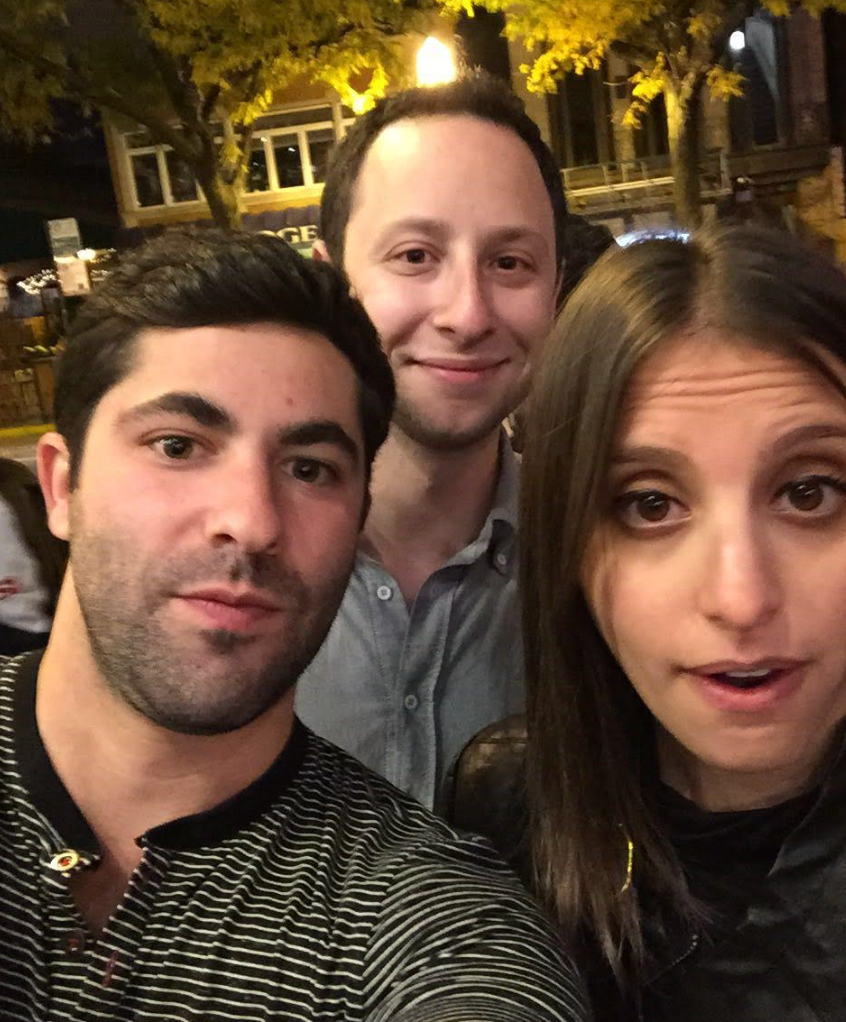
Courtesy of Nicole Garelick
The author, Greg (left) and Adam out to dinner in 2015.
Advertisement
The full backstory is that I first met Greg on Halloween 2013, though I wasn’t looking for him. I was on a street corner in Chicago dressed as Aziz Ansari, already tipsy, already confused. I’d been Instagram-stalking Greg’s best friend, Adam, who had piqued my interest. We had mutual friends from college, and he was always photographed with a cup of coffee and a far-off look, like he knew something the rest of us didn’t.
Greg showed up in a lot of Adam’s posts, so when I ran into him that night, the first thing I said was, “Hey, where’s Adam?” Greg, having never met me, let alone me dressed as Aziz Ansari, responded with something like, “Who and what are you?” I introduced myself. He drunkenly wandered away.
I didn’t end up finding Adam that night, but we connected not long after. We started texting, then emailing, and eventually we started dating about three months later. We were together for three and a half years.
Advertisement
Greg was a fixture in our world – wild, entrepreneurial, energy abounding. Adam loved him, so I did too. Over the years, we double-dated plenty, and I watched Greg move in and out of relationships.
A few months before Adam died, Greg moved abroad to start a travel company. He had flown back for a friend’s wedding, which we were all attending together. That same week, Adam had a health scare, something like a seizure, but the doctors couldn’t explain it. That’s the thing about being young and seemingly healthy. No one checks your heart.
The afternoon before the ceremony, Greg and I had some alone time while Adam was visiting a friend. I told him how worried I was about Adam. He reassured me that Adam was probably fine, because most 27-year-olds are.
Advertisement
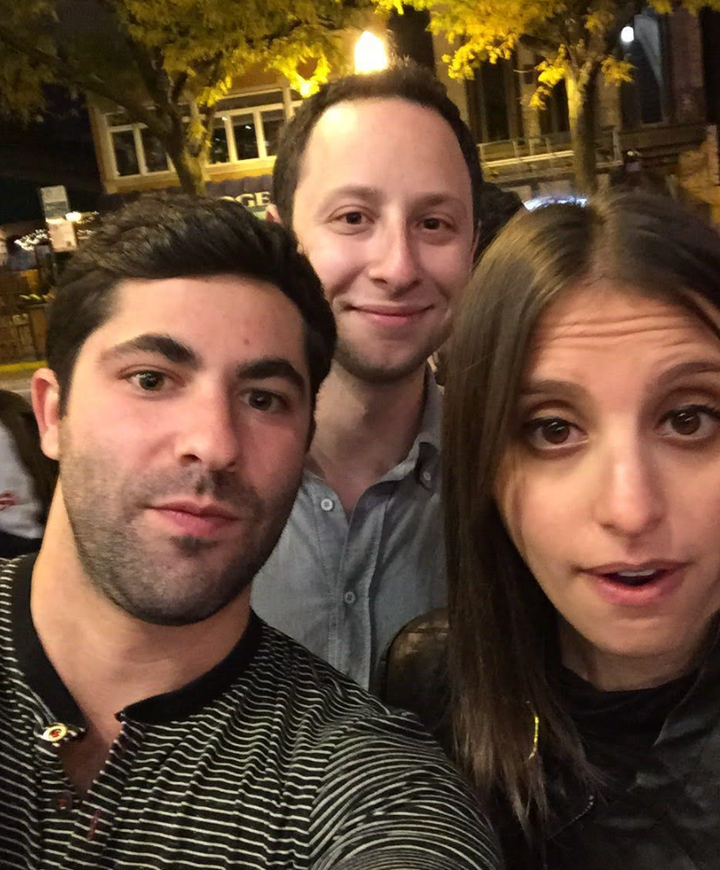
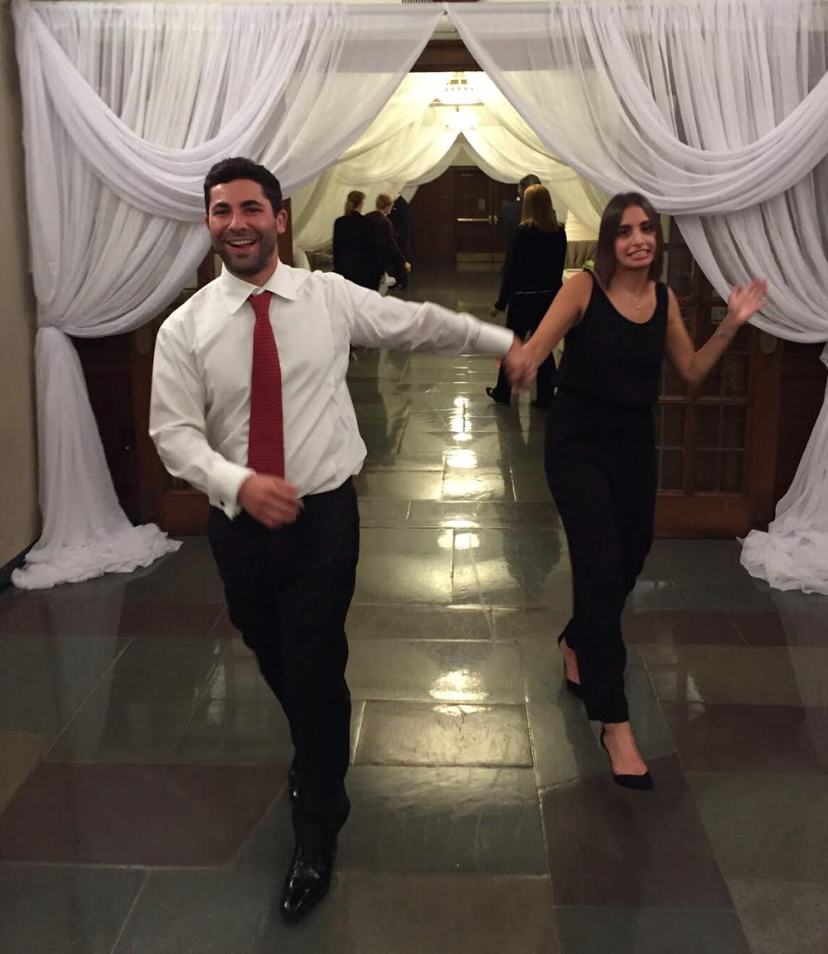
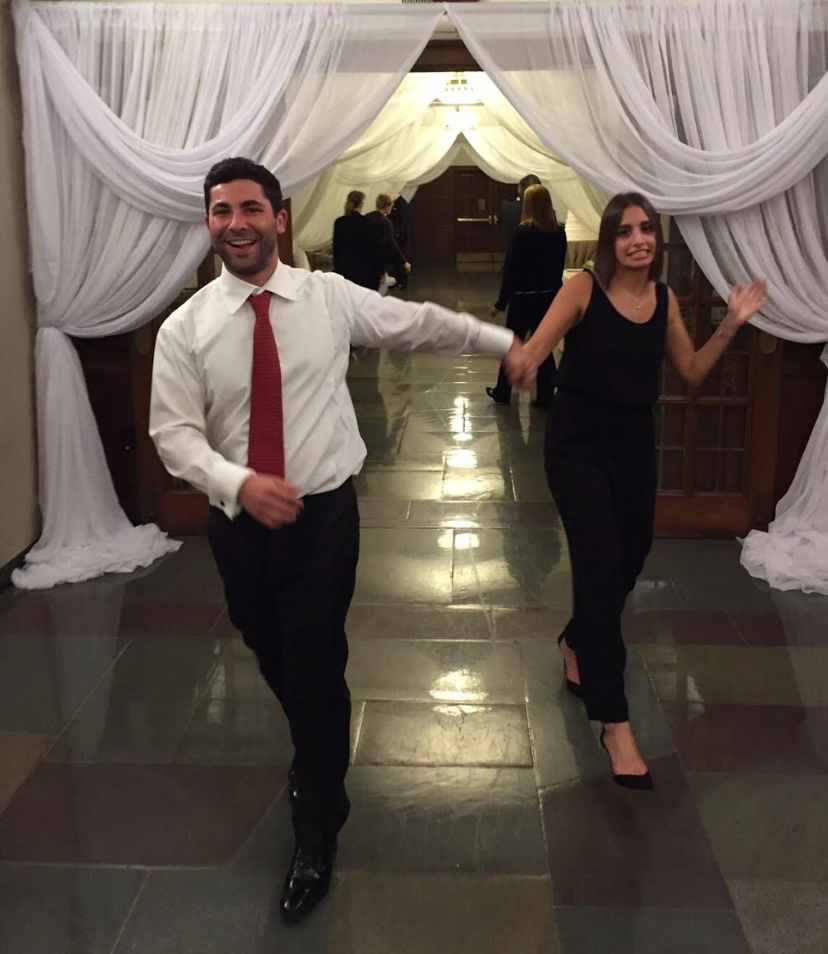
I have only two photos from that weekend. One is a picture Adam took of me on the phone. The other is one he took of Greg and me holding hands. Adam had made us pose together. It made him laugh to think of us as a couple.
Courtesy of Nicole Garelick
The author and Greg at a friend’s wedding in 2015.
Two months later, Adam died.
Greg flew in for the funeral, along with every other person who had ever known or even brushed past Adam. Greg stood by my side the entire time. I think this is probably the part where Greg thinks he looks bad, like it was his plan all along, or he was trying to be, as Bette Midler sang, The Wind Beneath My Wings. But it wasn’t like that. Nothing felt premeditated; it was natural.
Advertisement
He was there when my knees gave way at the burial, putting a hand on my shoulder. At the shiva, as well-meaning mourners swarmed, Greg graciously offered me a Xanax (which I desperately needed). Later, once the dust had somewhat settled, he suggested I might need to get away.
I was in grad school at the time, training to become a therapist, arguably the worst possible setting for a loss. Greg invited me to visit him and another friend in Buenos Aires over spring break. With nothing tethering me to the present, I said yes. That trip became the only thing I looked forward to. In the months before I left, I grieved, unravelling a life I’d built with Adam and still reeling from losing my mom a few years earlier. I was drowning.
Greg called me every day. He made sure I was eating, drinking water and going to class. His voice kept me afloat. But if you’d asked me then, I’d have said, “He’s like a brother to me.” (Side note: If you ever describe someone as “like a brother,” there’s a good chance you’re going to sleep with them. That’s the plot of every romantic movie, but I was too far gone to recognise it.)
Advertisement
When spring break finally came, I found out our other friend couldn’t make it right away. It would just be Greg and me for a few days. That’s when I got nervous. But I got on the plane anyway.
I landed in Buenos Aires around 10pm, barely breathing. When I got to Greg’s apartment, I found him waiting on the corner of his quiet street in the darkness of the Argentine fall. After a quick shower, he took me to a loud bar. We were both awkward, so to quell the awkwardness, we each ordered two drinks. We talked about Adam. About travelling. About everything. My grief loosened its grip just a little.
Later, back at his apartment, we both cried. At some point, I started eating rice cakes, and then I remember getting my computer to put on some music.
Advertisement
Neither of us remembers who made the first move, but I’m pretty sure it was Greg. And that’s how we started dating.
The couple across from us sits in stunned silence. Greg clears his throat and asks, “So… how did you two meet?” They answer, in unison, “Hinge.”
I smile faintly. There’s something I feel in that moment that isn’t exactly jealousy, but it’s close – an awareness of the simplicity of their story. A clean beginning, uncomplicated by loss. A simple story for a party that doesn’t cause any eyebrows to raise or mouths to go agape or leave you feeling like you’re in the emotional nude.
Advertisement
Greg and I don’t have that story. We crashed into each other in the wreckage of something devastating and built something out of the rubble. Our path wasn’t perfect. People were hurt. There were complicated feelings about us being together, and it was absolutely not love at first sight. It took grief, time, Buenos Aires, and a man who called me every day just to make sure I was still getting out of bed every morning.
In the 10 years since, I’ve come to understand that the messiness is what makes our relationship work. There’s a rare honesty between us – an authenticity that comes from having met each other at our most undone.
When you fall in love in the rubble, you don’t get to perform the beginning; you just have to be yourself. There was never any doubt that Greg could support me at my worst; after all, we started there. And the willingness to tell the real version of how we fell for each other is its own kind of love story for Adam, and I want us to tell it because we’ll always be indebted to our dear mutual friend.
Advertisement
Nicole Garelick is a San Francisco-based writer and creator of The Performance Plan, a Substack newsletter about the comedy of getting life wrong. Her writing has appeared in Hey Alma, Spread the Jelly, and Katie Couric Media. She lives with her husband and two young kids, who give her a lot of material. She is represented by Jennifer Simpson at CAA.
During my senior year of college, I dated a boy who was tall, dark-haired, and smoked a lot of weed. (If I’d had a checklist, those would have been the boxes on it at the time.)
We talked easily, about everything from medieval art to music, and I found his lanky limbs and soulful eyes very appealing. But despite how much we enjoyed each other’s company, both in bed and out of it, I didn’t, fundamentally, feel anything. If he’d told me he never wanted to speak to me again, I wouldn’t have cared, except that I’d have needed to get my weed from someone else.
That’s when I came up with the theory of the third thing.
The premise is that there are three things that make you fall for someone. The first is a physical connection. The second is an intellectual connection. And then there’s the third thing… whatever mysterious ingredient makes you imagine a future together. My friends and I spent hours sitting on the floor of my dorm room, listening to Matchbox 20 and drinking diet Snapple with vodka, trying to unravel what the third thing could be.
Advertisement
I was a good student. I was naturally shy and awkward, but I was also used to thinking things through and figuring them out. In middle school, I’d analysed my classmates’ social interactions, realising that when someone told a story about themselves, you were supposed to respond with a story on a similar topic.
In high school, I’d made a checklist of all the things I needed to do to be cool (start reading Seventeen magazine, stop walking around with a book in front of my face, keep gum in my backpack and offer it to my classmates after lunch).
In college, I’d turned my attention to boys. It was easy to kiss them on sticky bar dance floors and meet them for coffee dates at the student centre. But I wanted to fall in love, and I wasn’t sure how to do it. If I could figure out the third thing, then I’d know the formula. I’d know how to find someone who I was really excited about.
Advertisement
I dated regularly throughout my 20s, but nothing lasted. Then, following another breakup, I found myself spending a lot of time on the phone with my friend Dan. We’d dated briefly when we first met years before on study abroad. He was awkwardly, gawkily handsome, and was one of the smartest people I’d ever met, dropping references to Byzantine emperors into casual conversation. However, at that time, there just wasn’t that third thing.
Then, suddenly, eight years later, there was. I wasn’t sure what had changed. I still didn’t know what the third thing was, but something was different, even if I couldn’t identify it. For years we’d just been friends – albeit friends who drunkenly made out occasionally when we ended up in his car together late at night. And now we were spending all our time thinking about each other. How had this happened? And what were we going to do about it?
As it turned out, we were going to get married. Three years later, we found ourselves holding hands and saying vows in a historic library in Providence. We ate cupcakes, drank prosecco, and spent the night dancing with our friends and family among the stacks. It was the happiest day of my life; I’d found a smart, handsome man whom I loved, and who loved me. We had chemistry; we could spend hours talking, and most importantly, we had the third thing. I felt like I’d gotten exactly what I wanted.
Advertisement
Except that after 10 years of marriage, it wasn’t what I wanted anymore. Dan’s brooding moroseness, which I’d found appealing, had begun to seem whiny. My quest for self-improvement, which he’d found admirable, had begun to seem exhausting. It had started to drive me crazy that he sang to himself. It had started to drive him crazy that I left the cupboard doors open. These were things that we’d lived with for years. They hadn’t been a problem. And now, suddenly, they were, and I wasn’t sure why.
There were other, bigger issues. We were politically divided. We wanted to spend our time in very different ways. My marriage didn’t end just because we no longer had the third thing. But that was part of it. We were still attracted to each other. We still talked about everything as easily as we always had. But we no longer had that ineffable thing that made us feel romantic about each other.
We tried. We left our son with his grandparents over the 4th of July weekend, went to a local brewery for IPAs and pepperoni pizza, shared a joint and had sex in front of a mirror. We sat side by side, feeling miles away from each other, and watched fireworks explode into distant sparks of light. We went to two different couples’ therapists. They gave us worksheets. We did the worksheets. We still didn’t love each other anymore.
Advertisement
The hardest thing about the end of the marriage wasn’t the loss of the present. At the time, we were sleeping on separate floors of our old suburban house, trying not to touch when we passed each other in the stairway. But in my imagined future, we were going to be one of those elderly couples who travelled around the country in an RV, who went to see independent films and had season tickets to the local symphony. We were going to sit side by side at our son’s graduation, and when he crossed the stage, unimaginably tall but still wild-haired and bright-eyed, we were going to squeeze each other’s hands.
Courtesy of Lia Romeo
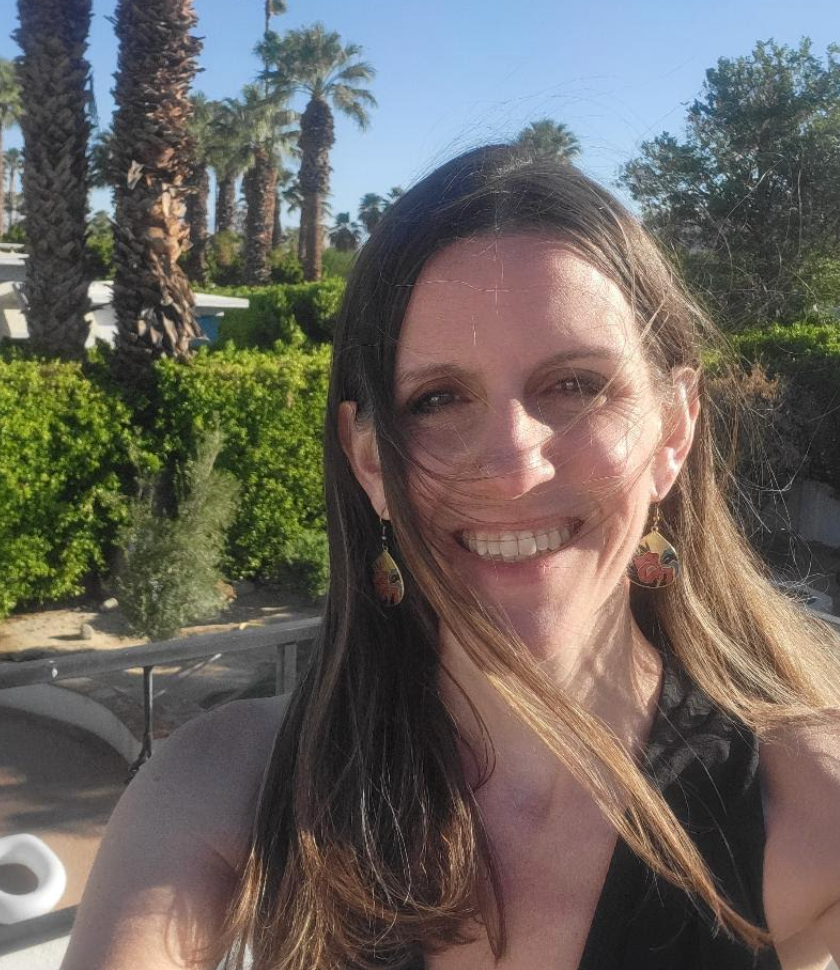
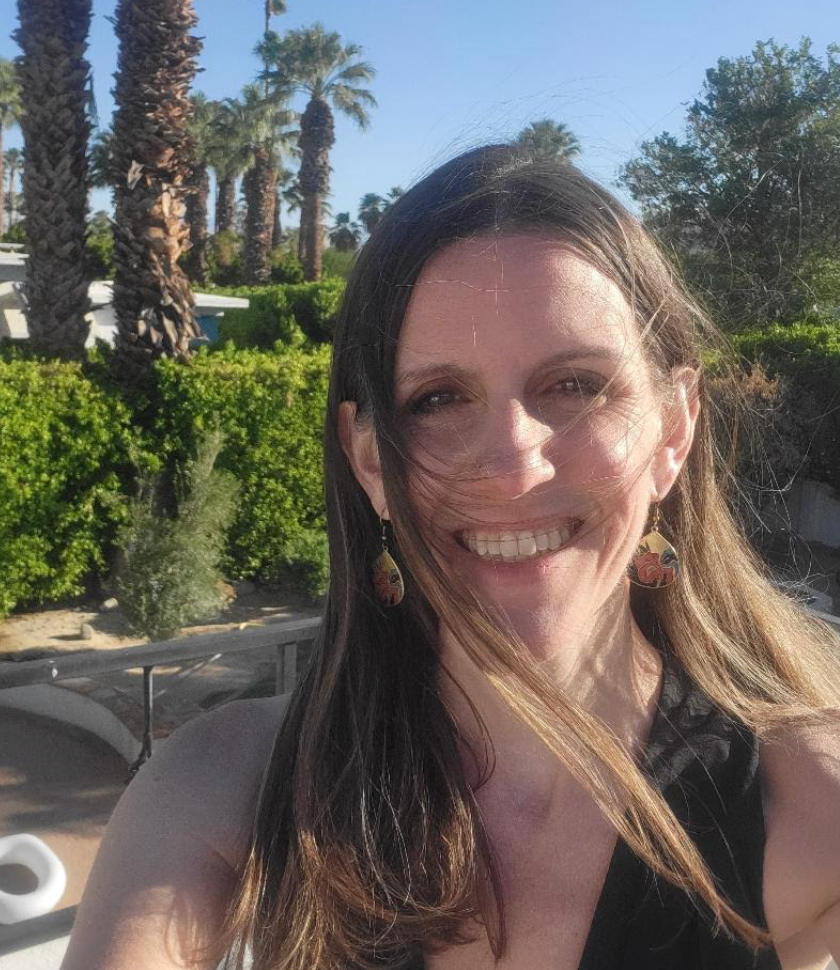
The author on vacation in Palm Springs.
Instead, I was single and dating again in my 40s. From everything I knew about ageing while female, I figured that dating at that age would be some kind of barren wasteland. Instead, I discovered that the apps had come along and made it easy. I could go on a date with someone new every night if I wanted, and for a while I did. I was doing things I thought I’d never do again, like kissing strangers at the entrance to the subway. And for the first time, I was dating women, which was something I’d always wondered about. When I was younger, I’d gone from one man to another, and suddenly I wondered if maybe the reason I’d had trouble figuring out the third thing was that I didn’t want to be with a man. Maybe my newfound queerness held the answer I’d been seeking.
Advertisement
I started dating a beautiful woman with long blonde hair, tattoos and a sweet smile. We sent each other passages from books, we talked about theatre, we spent hours making out. Still, despite how much we enjoyed each other’s company, both in bed and out of it, there was no third thing. We were mutually unserious, and after a few months things came to an end.
I think someday I’d like to fall in love again, but I’m also terrified because I’m finally coming to understand that there isn’t a formula. I’m realising that the third thing is different at different times, or for different people. That it’s something that can appear out of nowhere… and can disappear, too. That sometimes love just goes away, and if I find it again, it might go away again, no matter how hard I try not to let that happen.
I’ve finally figured out that I might never figure it out. If the third thing comes my way again, it’s just going to be because I’m lucky. I can’t control whether I find it; I can only control whether I’m brave enough to say yes to it. I don’t know whether I will be.
Advertisement
For now, I write, I teach and I worry about the world, and I watch my son use Magna-Tiles to build rainbow castles reaching up towards the sky. Sometimes I swipe right on strangers, and meet them for hikes or cups of coffee. I walk my dog around the neighbourhood in the spring and watch the crabapples bursting into improbable, extravagant bloom. The flowers drift down from the trees as I walk underneath them. I reach out my hands to catch them, and I end up empty-handed, but later, when I get home, I find myself picking delicate pink petals out of my hair.
Lia Romeo is a playwright, essayist, novelist, and screenwriter. Her plays have been produced off-Broadway, as well as regionally and internationally, and her essays have appeared in the Washington Post, the New York Times, and other national publications. She is currently at work on a screenplay.
When I was 41, my therapist handed me photos of every boy in my fourth grade class and instructed me to condemn each one to the paper shredder. It was my first experience of truly being in the driver’s seat, and I felt giddy with control.
From an early age, I’ve carried an acute fear of rejection and abandonment. This has made dating challenging, to say the least. My typical dating pattern used to be the following: I’d meet someone I liked, become enamoured, only to find myself spiralling into persistent anxiety, worried about when and how the relationship would end.
Advertisement
That sense of unease began in middle school.
The night my friend revealed she had a boyfriend, we were bundled in sleeping bags on chalet bunks, up past curfew during our eighth grade ski trip. She was the first in our group to date.
As the girls clamoured for details (“What does he look like? What school does he go to?”), I should have known something was off when the only question I thought to ask was, “Aren’t you terrified that he’s going to break up with you?”
Although it would be years before I experienced romantic heartbreak firsthand, I now realise that even then, I was already bracing for the worst.
Advertisement
By the time I was older, like anyone who frequents pop psychology circles, I was aware of attachment styles and how early childhood experiences can shape adult relationships. Yet, I grew up in a safe, stable home with parents who didn’t always get along but loved and supported me unconditionally, so I never really understood where this anxiety came from.
This confusion persisted until 2021, when a session with my therapist changed everything.
At that time, I’d booked an appointment because I had just started seeing someone new. It was the first person I’d liked since the beginning of the Covid-19 pandemic, and I’d noticed my usual pattern taking hold again. I was overcome with anxiety over whether things would work out, and it was keeping me up at night and distracting me at work. This time, though, I felt exhausted. I was ready for a change.
“I don’t want to feel this way anymore,” I told my therapist.
Her first question was to think back to my childhood and pinpoint when this fear of rejection might have started. One incident immediately stood out.
Advertisement
In fourth grade, we had our first sex education class. Not long after, the boys in my class lined all the girls up against the exterior wall of our school and took turns rating each of our bodies – hot, not or disgusting. Some of the boys took it a step further and pointed out who was “flat as a board.” It was most of us; we were barely 10 years old.
It was such a humiliating and disorienting experience. I don’t remember how each of the boys rated me – not that it mattered – but I felt disgusting.
At that age, I was still very much a kid and hadn’t even started liking boys. My favourite book was Harriet the Spy, and I loved taking ballet classes, reading books and playing with Barbies with my three best friends. I also thought I was pretty cool, being the proud owner of sparkly jelly shoes and an impressive sticker collection.
Advertisement
Suddenly, it was like none of that mattered, and I was now hyperaware of my body and how it was perceived by boys.
Part of my childhood died that day. The message was clear: it doesn’t matter how you feel about yourself; what matters is being chosen and that boys choose you, not the other way around.
For years, I dismissed this firing squad of tween-age rejection as just another weird story from adolescence. But when my therapist prompted me to recall the memory, I finally understood how deeply it fuelled both my fear of rejection and the perfectionism I carried into my romantic relationships.
Advertisement
When I started dating in my late teens and early 20s, I was focused on making myself as likeable as possible, and I became really good at it. I shape-shifted myself into the ultimate “cool girl”. I never asked for too much from my partners out of fear they’d reject me. Instead, I swallowed my feelings and discomfort, shrugging off subpar treatment from the people I dated.
You don’t want to commit, but still want me to act like your girlfriend? That’s OK. I’m the cool girl! I’ll bring you homemade soup when you’re feeling sick, even though I’m not sure you even know my last name.
I felt like I was always proving myself, and being chosen was the reward. It’s only now that I can see I spent years so focused on being what my partners wanted that I rarely stopped to ask whether they were enough for me.
Advertisement
Even in the relationships where I felt safe to show up authentically, I struggled to express my needs. There was always a little voice warning that if I revealed too much of myself, I would be deemed “disgusting” all over again.
Sharing this with my therapist, she helped me realise that my fear of rejection was only part of it. What I struggled with was people-pleasing. In pursuit of being liked by other people, I abandoned myself.
It was time to stop the cycle. My therapist decided on an unconventional approach: reject the boys once and for all.
Advertisement
Photo Courtesy Of Simone Paget
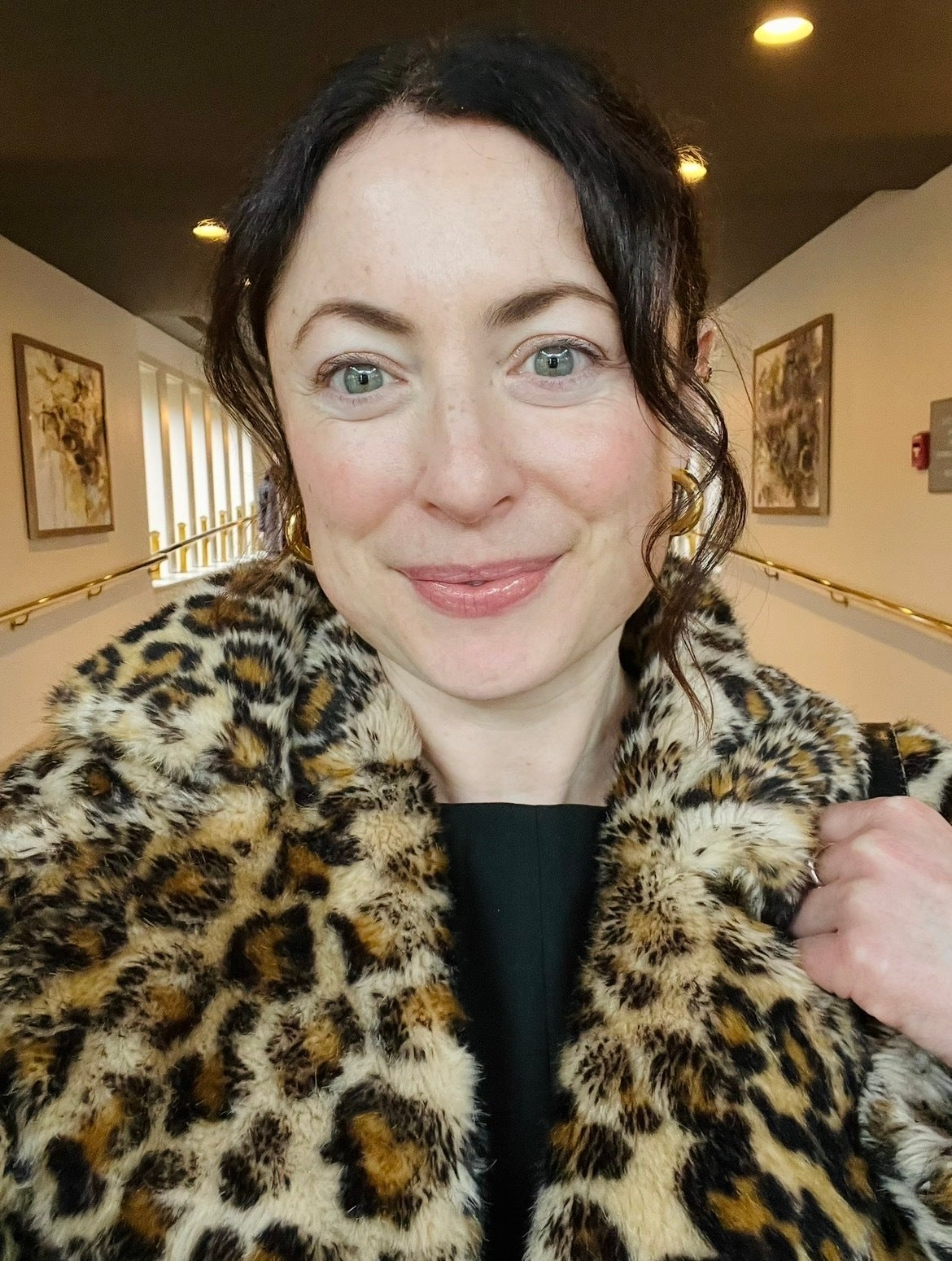
The author is now working to show up authentically in relationships of all kinds.
As homework, she had me print photos of each of the boys who’d participated in the “lineup” in middle school – an easy task since I grew up in a close-knit community, and I’m still in touch with many of the people I went to school with on Facebook.
When I arrived at her office the following week, photos in hand, we spread them on the floor.
Seeing all of the boys’ photos – now middle-aged men with grey hair and receding hairlines – and rejecting them, out loud, was unexpectedly powerful.
Advertisement
I was finally able to see my tormentors for who they are: a bunch of guys I wouldn’t want to date anyway. In fact, most of them are married, and I’m queer and currently much more interested in dating women.
My therapist had me face each man and reject them one by one.
“Are you ready for the fun part?” my therapist asked.
She led me over to her desk, and together we eviscerated the photos in the paper shredder.
My therapist’s exercise might seem out of the box, maybe even a little mean to some, but it did exactly what she had hoped: it set me free.
It made me realise that I no longer have to play by a middle school rulebook that never served me. I don’t have to wait to be chosen; I can practice discernment and actively choose myself instead.
Advertisement
Unlearning a lifetime of people-pleasing is an ongoing, tricky process. At our core, I think most of us want to be liked and loved by others. It’s why rejection stings.
While I still fear rejection sometimes – I get anxious when I see those three blinking dots after I’ve sent a text to someone I like – I’ve stopped basing my self-worth on what other people think of me.
Photo Courtesy Of Simone Paget
The author today.
Advertisement
Instead, I’ve made it a habit to boldly show up as myself in my friendships and the communities I frequent. I’m learning that by sharing and being honest about the parts of me that I used to worry were “disgusting” (for example, that I am not cool and detached, but rather sensitive and have very big feelings), the right people are actually drawn to me rather than repelled.
I’ve also gained clarity about what I actually need from a relationship, such as steadiness, consistency and emotional safety, which has made it easier for me to spot when a connection isn’t aligned. As a result, it takes me much longer to get into relationships than it did in the past – and I’m OK with that.
Rejecting people who aren’t a good fit still feels uncomfortable sometimes, but I see it as a form of self-care, like I’m sticking up for that little girl version of me who felt so disempowered.
Advertisement
Now, when I meet someone new, I don’t wonder if they’ll choose me. I ask a different question: Do I even like them? And I let the answer guide me.
Simone is a writer and host of the podcast “We’re Never Doing This Again.” She is a nationally syndicated relationship columnist for the Toronto Sun, and her words and photographs have appeared in Apartment Therapy, Business Insider, The New York Times, The Washington Post and more. You can follow her on X and Instagram at @simone_paget.
I recorded a new video invitation for Conscious Growth Club Year 10.
Instead of walking through every feature or detail, I wanted to share more of the heart of CGC – what kind of space it is, why I continue tending it with so much care, and what I especially want to emphasize for this next year.
CGC is a high-trust, participatory self-development community for growth-oriented people who want more than ideas, insights, or solo reflection. It’s a place for turning inner growth into lived experience – with real support, honest connection, exploration, creativity, pleasure, belonging, and meaningful shifts in your actual life.
In the video, I talk about CGC as a collection of permission containers – spaces where people can open up more honestly, explore deeper layers of themselves, and receive caring human intelligence from others who genuinely want to help.
This year’s pulse is about landing more of that growth into life.
Less circling. More improvement.
Less forcing. More harmony and flow.
Less doing everything alone. More support, connection, and real human warmth.
I also share more about the heartspace of CGC – the intimacy, trust, friendship, encouragement, exploration, pleasure, creative flow, and identity expansion that can happen when growth is supported inside a caring community instead of being processed only in private.
If you’ve been considering CGC, this video should give you a clearer feel for the kind of space you’d be entering.
The deadline to join CGC Year 10 is tomorrow: Thursday, May 7 at 11:59 PM Pacific.
Your membership begins as soon as you join and continues through April 30, 2027.
Synchronize is our monthly orienting call where we check in with the current pulse of the group. What are people moving through? What kind of support would help this month?
Today’s call also gave me a clearer sense of what wants to happen in CGC this year – not as a rigid plan, but as an evolving direction.
Some of the words and themes that came up were:
connection belonging intimacy action momentum relationship ease rest integration calm openness experimentation wonder surprise courage trust devotion creative flow sharing the half-baked stuff sharing more of our real journeys
That provides some nice clarity about how the CGC Year 10 energy is opening for us.
It also helped clarify the kinds of people we’d love to invite into CGC this year.
Not everyone. CGC has never been meant for everyone.
But if this kind of space would genuinely support you, I’d love for you to recognize yourself more clearly in the invitation.
A Year of Connection and Belonging
One of the strongest intentions for CGC Year 10 is to help the group become an even stronger space for real connection and belonging.
A lot of people are doing plenty of inner work these days.
They’re reading. Journaling. Watching videos. Listening to podcasts. Thinking about their patterns. Trying to improve their habits. Trying to understand themselves.
That can all be useful.
But there’s a certain kind of growth that doesn’t really activate until you bring your actual self into relationship with other self-aware, growth-oriented, action-taking people.
Not your polished self. Not your “here’s my impressive update” self. Not your “I’ve already figured this out” self.
Your real self – the part of you that is still experimenting. Still sensing what wants to change. Still learning how to trust your own deeper signals.
That’s one of the things we want CGC to support more strongly this year: people being able to show up in a real way, while they’re still in motion.
You don’t have to arrive fully formed – it’s actually better if you don’t.
Fully formed people are usually either done growing or pretending.
More Action, Less Solo Circling
Another strong theme from today’s Synchronize call was action.
Not frantic action. Not grinding. Not chasing. Not hustling harder until your heart feels like it’s trapped in a cage.
More like: let’s stop circling the same things alone.
Let’s bring the stuck points into the room.
The decision you keep postponing. The relationship pattern that needs attention. The creative project that keeps almost becoming real. The part of life that feels cluttered, heavy, vague, or unfinished. The invitation you keep not sending. The body signal you keep ignoring. The truth you keep nibbling instead of claiming.
CGC works best when people bring what’s actually happening.
A decision. A desire. A transition. A stuck place. A longing. A half-baked idea. A request for support.
Then we can work with it together.
One intention for Year 10 is to help the club become a better bridge from insight to lived movement.
Not just more self-awareness.
More like:
I had the conversation. I made the request. I cleared the old thing. I rested to replenish my energy. I reached out. I started the project. I stopped pretending that old path still fits. I let myself be seen. I let life help me more. I completed. I cleared. I released.
That’s the kind of progress I love seeing in CGC.
Sometimes it’s big and dramatic. Sometimes it’s beautifully simple. Both count.
Creative, Open-Hearted, Relational People
We’d especially love to welcome more people this year who are creative, open-hearted, socially warm, and willing to experiment with life.
By creative, I don’t necessarily mean professional artists, although we always have some of those in CGC each year.
I mean people who relate to life as something they’re actively shaping.
Writers, artists, entrepreneurs, coaches, weirdly brilliant nerds, intuitive explorers, relationship builders, community-minded people, project starters, experience designers, sensitive humans with unusual inner worlds – yes, please… more of these people.
People who have ideas they haven’t fully landed yet.
People who want to publish something, build something, host something, heal something, explore something, simplify something, or open a new doorway in life.
People who are willing to say:
“This isn’t finished yet, but here’s where I am.”
That kind of honesty is powerful in our group, and the group energy is especially good at helping such people move into meaningful next steps.
This gives other people permission to be real too. One person’s progress often inspires others to move into action.
I’d rather be in a room with sincere half-baked liveliness than polished pretense. CGC is a club where energy loves to move into action, not just circulate in possibility space. And given the recent Spirit Airlines news, there’s a timely reminder here: spirit is wonderful, but the quality of the journey matters too – and eventually, the plane needs to land.
A Healthier Relationship With Support
A lot of thoughtful people are oddly bad at receiving support.
They can be very good at helping others. Very good at thinking. Very good at coping. Very good at being self-sufficient.
But self-sufficiency can quietly become isolation.
One of my intentions for CGC Year 10 is to normalize receiving more support.
Bring the thing you need help with.
Bring the part that feels unclear.
Bring the place where you’d love perspective, encouragement, mirroring, truth, warmth, or a nudge.
This doesn’t mean we turn CGC into a therapy space. It isn’t that.
It’s a growth club. A live, relational, participatory space. A place for adults who are willing to engage with honesty, responsibility, curiosity, and care.
But it does mean you don’t have to keep pretending that your life is a solo engineering project.
Humans need supportive rooms.
Humans need honest mirrors.
Humans need other humans who can say, “Yes, I get that,” or “Have you considered this?” or “That sounds like the old pattern talking,” or “I think you already know what you want here.”
That kind of support can change the direction of a whole month – and sometimes a whole life. People often become bolder and braver when they have a rock-solid base of social support. They take more action. They hesitate less. They trust themselves more.
Stretch, But Don’t Strain
Another intention for this year is to keep CGC stretchy but humane.
I want people to grow. I want people to experiment. I want people to become braver, warmer, more expressive, more honest, and more alive.
But I don’t want the group field to feel like pressure.
A good growth space should help people breathe.
This year I want CGC to hold a healthy range:
Support when life feels messy and you don’t want to sort through it alone.
Flow when your energy is scattered and you want to turn insight into forward motion.
Release when something is complete, stale, heavy, or ready to leave your life.
Embody when you’ve been too much in your head and your body wants a vote.
Touch when relationships, friendship, trust, or real human contact need more care.
Wonder when the world feels too narrow and possibility wants to open again.
Play when life has become too serious and delight needs a place to land.
Connect when you want warmth, belonging, laughter, and deeper connection with your fellow CGCers.
Synchronize when we want to sense the month together and choose a shared direction.
That’s the new rhythm of CGC Year 10.
It’s not a rigid curriculum. It’s a living structure.
We’ll keep listening to what people are actually moving through, and we’ll shape the flow accordingly.
Who Will Probably Feel at Home Here
You may be a strong match for CGC Year 10 if you want more connection, support, honesty, and aliveness in your life.
You’ll probably feel at home if you’re willing to show up live, be on camera, and participate in good faith.
You’ll probably fit well if you like thoughtful people, warm conversation, personal growth, experimentation, emotional honesty, practical movement, curiosity, and a bit of wonder.
You don’t have to be extroverted.
You don’t have to be perfectly confident.
You don’t have to have your life neatly arranged and color-coded.
But you do need to be willing to bring your real self into the room.
CGC is probably not a fit if you mainly want private content to consume in the background, if you prefer hiding, if you don’t want live interaction, or if you want a rigid step-by-step formula where someone else tells you exactly what to do with your life.
It’s also not a good match for cynical, contemptuous, cruel, or dehumanizing energy.
We’re creating a warm room together.
That means the quality of the people matters.
My Deeper Intention
My deeper intention for CGC Year 10 is simple:
I want CGC to help people stop growing alone and start living more fully – in motion, in connection, and in real life.
More honest conversations. More invitations. More warmth. More courage. More grounded action. More creative experiments. More relational aliveness. More support that actually fits what people are moving through now.
I want CGC to be a place where people can bring their lives into the room and feel something shift because they did.
Not every call needs to be profound.
Some calls may be playful. Some may be practical. Some may be tender. Some may be surprising. Some may be clarifying in a way that seems small at the time but creates powerful ripples.
That’s real growth.
Not always fireworks. Sometimes it’s a door finally opening because someone had the courage to touch the handle and ponder, “What if?”
Join Us for CGC Year 10
Enrollment for Conscious Growth Club Year 10 is open now, and it closes Thursday, May 7 at 11:59 PM Pacific.
This is our only opening for new members this year, so if CGC feels aligned, this is the window to join us. After enrollment closes, the next planned opening won’t be until April 2027.
This new CGC year runs from May 1, 2026 through April 30, 2027, and your membership begins as soon as you join.
If this feels like the kind of space you’ve been wanting – more honest, more alive, more connected, more supportive, and more worth showing up for – you’re warmly invited to join us.
If you’ve been craving a place where growth feels more relational, honest, and alive, this may be your year to join us inside.
The last thing that most of us want to deal with is an angry person in our face. But chances are, sooner or later, it’s going to happen.
So what do we do? And, maybe more importantly, what shouldn’t we do?
Those are some of the questions that Raj Punjabi and Noah Michelson, the co-hosts of HuffPost’s “Am I Doing It Wrong?” podcast, recently posed to Ryan Martin, better know as the Anger Professor, to find out how to “do anger better.”
Advertisement
“You had a great tweet,” Michelson said during the conversation. “You said something like, ‘Never in the history of “calm downs’ has ‘calm down’ calmed down someone.’ So I’m guessing ‘calm down’ is not the thing you want to say.”
“I think ‘relax’ is even worse,” Punjabi added.
“No, ‘relax’ has never relaxed anyone,” agreed Martin, a psychology professor and an associate dean for the College of Arts, Humanities and Social Sciences at the University of Wisconsin-Green Bay.
“This is a case where … people are elevated and they’re not necessarily thinking as rationally, and they’re a little defensive. You’re not going to make as much progress with those sort of direct statements that you want to make,” he added. “Telling people to do things like ‘just breathe’ aren’t going to have much of an impact.”
Advertisement
Instead, modelling those actions yourself is going to be more effective.
“But if you actually back up a little bit and you start speaking softer than normal, you start to communicate in a little more gentle tone, people will sort of inherently match that. This also is rooted in our evolutionary history, that we tend to match the people around us in tone.”
This can help take the edge off the situation without using those triggering phrases, which tend to make us even more irritated.
Advertisement
“It’s, frankly, manipulative. … You’re actually decreasing that elevation,” Martin said. “So speaking in that more gentle voice, staying calm yourself, finding ways to ultimately, if they’re venting, [offer] some minimal encouragers to let them get through that.”
Once there’s less intensity, you’re more likely to have an opportunity to respond.
“I don’t think you want to agree with someone if you don’t agree with them,” said Martin. “But if you can frame a response that seems validating, to let them know ‘you’re obviously really upset about this, let’s talk through some solutions together’ — ways that you can validate their feelings without necessarily validating the cause of their feelings.”
We also discussed the three questions that you should ask yourself before you get angry, what you should do before you send an angry email, and much more.
Need some help with something you’ve been doing wrong? Email us at AmIDoingItWrong@HuffPost.com, and we might investigate the topic in an upcoming episode.
CGC is our private, growth-oriented community for people who want more honesty, courage, support, connection, and meaningful forward movement in their lives – not as some kind of self-improvement grind, but as a richer way to live.
We’re beginning our 10th CGC year on May 1st, and you’re warmly invited to join us.
If you’ve been craving a more grounded and supportive space for your personal growth journey, this may be a very good year to come in.
CGC is especially for people who want to keep growing, but who don’t want to do it alone or only through passive learning. It’s a live, interactive, human space where members bring real life into the room – goals, transitions, stuck points, creative projects, relationship challenges, lifestyle shifts, health intentions, business questions, emotional patterns, and those strange “I know something needs to change, but I don’t know what yet” moments.
That kind of growth is much easier when you have a room of thoughtful, caring, self-aware people to explore with.
A lot of people try to navigate their growth with too much isolation. They read books, watch videos, journal, think, plan, and chat with AI now and then. Those can all be useful, but at some point the inner work often needs a real human relational space to deepen and advance.
It helps to be seen and acknowledged by like-hearted people.
It helps to hear how other people are navigating similar challenges.
It helps to share what’s really going on without having to polish it first.
It helps to be welcomed and received as a vibrant member of a rich social community.
It helps to be in a space where growth is normal – where people aren’t shocked that you’re rethinking your work, your relationships, your habits, your identity, your emotional patterns, your lifestyle, or your whole relationship with life.
That’s a big part of what CGC provides. What’s unusual in the outside world – conscious growth – is totally normal in our space.
CGC is not a therapy group. It’s not a social media group. It’s not a pile of static content. It’s a live community and growth environment with a strong emphasis on participation, connection, honesty, and practical support.
During Year 10, we’ll have several dozen live Zoom calls together, mostly around 90 minutes each. These calls are designed to help members reflect, connect, get unstuck, clarify intentions, share progress, explore meaningful questions, and keep translating insight into real-life movement.
We’ll also continue using our private member forums and CGC portal, so you can stay connected between calls, access courses and resources, and participate at your own pace.
What I especially love about CGC is the range of what members bring into the space. One person may be navigating a career transition. Another may be working on health or fitness. Someone else may be deepening their relationship life, exploring a creative project, or trying to bring more courage and truth into their daily decisions.
The common thread is not that everyone has the same goals.
The common thread is willingness.
Willingness to tell the truth.
Willingness to keep growing.
Willingness to participate.
Willingness to be seen.
Willingness to support others while also receiving support.
That makes a big difference.
CGC tends to work best for people who already have some self-development experience and who are ready for a more interactive, higher-trust environment. You don’t need to be perfect, polished, or constantly productive. You don’t need to have your whole life figured out. But you do need to be willing to show up honestly and engage with the room.
This year we’re making CGC feel even more practical, relational, and alive – with more emphasis on translating meaningful intentions into daily life. More real support. More personalized engagement. More warmth. More meaningful connection. More growth that actually impacts daily life and results.
If that sounds good to you, please take a look at the invitation page here:
Enrollment is open now and closes May 7th at 11:59 PM Pacific time.
CGC Year 10 officially begins May 1st and runs through April 30, 2027. When you join, you’ll get access right away, so you can begin exploring the member portal and community space before the new CGC year begins.
The price is $3333 for new members and for returning past members.
If you’re a renewing member, your renewal price is $1111.
If you feel a clear yes, I’d love to welcome you into the room for Year 10.
And if you read the invitation page and sense that it’s not your space, that’s perfectly okay too. CGC is intentionally not for everyone. It works best when people self-select honestly. That honest self-selection has worked really well for us, helping to create a community of members who want the full, rich, consciously engaged experience.
If some part of you has been wanting a more alive, honest, supportive growth environment – a place where you can keep evolving with thoughtful people who actually care – then I encourage you to listen to that signal.
I recorded this new video today from the heart – one take, no cuts. If your life looks okay on the outside but feels off, hollow, uncertain, or disharmonious on the inside, this might speak to you.
If it resonates, you can learn more about Open here:
I invite you to ponder some inner reflective questions to help you sense how much harmony there is in your life. You can listen within for your answers. Another option is to use these as journaling prompts and write your answers.
Reflective Questions
Do you feel free? Do you enjoy enough freedom in your life?
Would you say that your life feels delightful? Do you have a lot pleasure and happiness in your life? Do you love and appreciate the life you get to live each day?
Do you feel supported by Life? Do you feel that Life takes really good care of you – like it meets all your needs and then some?
Do you feel at peace within yourself? Do you feel at peace with the world you inhabit?
Do you feel that your life fits your heart?
Are you in love?
Do you feel that you’re really good at receiving many different kinds of gifts from Life? Like there’s always something wonderful coming up.
Do you enjoy one or more close friendships – with people who see you, know you, and love you as you are?
Do you feel seen, loved, held, and cared for by Life?
Do you feel like you’re on a really devoted path through life? Do you feel positively engaged with how you’re living? Do you have the right level of stimulation and motivation to enjoy a nice sense of flow?
And… Do you trust Life? Do you trust this Reality? How strong is that trust?
So what came through as you reflected? Are you enjoying a delightfully harmonious flow in your relationship with life? Is there some room for improvement here? Or does it seem unrealistic to feel loved, delighted, happy, positively stimulated, and beautifully supported by Life?
What’s your current truth here?
Cooperating with Life’s Intelligence
To create a really harmonious life, you need Life’s cooperation, don’t you? It’s not really meant to be something you figure out and do all by yourself. Harmony is something you’re invited into – by Life – when Life signals that you’re ready for it.
To cooperate with Life in this way requires that you trust Life. It’s pretty hard to harmonize with something you don’t trust. What you’re really choosing to trust here is the intelligence that flows through Life and Reality.
So what you’re actually seeking to harmonize with is intelligence – more specifically the currents of intelligence that flow through the Reality around you. Creating a harmonious life is a matter of aligning your own best intelligence with the intelligence of the Reality that you inhabit. And this requires being sensitive to those currents of intelligence and paying careful attention to them.
Now when we reach a certain point in life, Life reaches out to invite us into a new level of harmony. Often this involves letting go of an old path that no longer feels harmonious. We feel a disconnect rising up, such as feelings of agitation to want to change something, even if we don’t know exactly what to change.
The Key Skill of Orienting
What actually wants to change here is our orientation towards Life.
Life is an evolving intelligence, and so are we as individuals, and now and then we may fall out of sync, much like two people can fall out of sync during a conversation. This is when an invitation can emerge to reorient ourselves and get back in sync. This kind of orienting is a skill set, and it can be learned, developed, and practiced. It’s a wickedly important skill set for a world that doesn’t sit still and keeps shifting. People who don’t consciously develop and practice these skills are likely to be in for a very rough ride, if they aren’t already succumbing to that now.
How can you assess your current Life orienting skills? Review the reflective questions above. These questions serve to reveal the quality of your orienting skills and how well you’re currently applying them. They help you get a more honest picture of how well you’re cooperating with Life… or if you’ve fallen out of sync. And if you have fallen out of sync, don’t panic. It happens.
Receiving Life’s Gifts
What I can tell you is that this is shift into greater harmony is very connected with a willingness and an openness to receive more from Life without feeling like we have to earn it with effort.
A telltale sign that we’re in harmony and in sync with Life is that Life is very generous with us. In this place of beingness, it feels like Life keeps showering us with gifts. It’s a place of feeling deliciously loved by Life.
Sometimes that shift comes from exhaustion or exasperation with over-stressing and over-working ourselves – like doing hustle culture for a while – until we finally conclude there’s a gotta be a better way to live.
Where this often starts is with a sense of Wonder, so that’s something I want to invite you into right now. I invite you to Wonder: Could it be possible that Life could take much better care of you and make your life feel a whole lot lighter, a whole lot freer, even a whole lot luckier, if you were able to let yourself receive more?
Will you let Life help you create more harmony? Could it be that simple?
Yeah, in a way…
But sometimes it’s hard to let go of old limits in our thinking and allow that help to flow through. That’s our challenge – to say yes when Life offers us a harmony upgrade. That’s a big part of the skill set of orienting – recognizing that yes there is a better way and letting that flow through without blocking, declining, or deflecting it.
Life checks in now and then to see if harmony is really important enough to us to receive it, and if Life sees that we’d rather prioritize something else, it just holds off till we’re ready. And Life is immensely patient with us, waiting and waiting till we’re ready to get back in sync.
Help Is Offered
My own Life has felt really harmonious lately, especially in the past few years. I just turned 55 on April 14, and I feel so light, lively, and energetic. I wouldn’t say that my relationship with Life is easy per se, but it is harmonious – in the sense that one can enjoy the thrill of riding a galloping Fire Horse. 😉
This year I sensed a really interesting invitation from Life flowing through, which was to host a space where I help people improve in this area together – where everyone arrives with the intention to make their lives more harmonious. So we’re on the same page because we all want more harmony. I knew this would be an awesome group energy to engage with, so I said yes to the assignment.
By taking this on, I’m learning a great deal more about harmony and how to sync with Life more consciously too. This has helped me significantly upgrade my own orientation skills and discover more nuances and subtleties within them.
We’re doing this in the form of a live, in person event. It’s called Open. Just that one word. Open.
We’re opening to receiving more. More flow. More freedom. More flexibility. More ease. More lightness. More friendship. More love. More cooperation.
We’re hosting this for three days in Las Vegas on April 28th through 30th, so it’s this month.
Open is an invitation to increase the level of harmony in your life, and to work with like-minded and like-hearted people who want the same. It’s a deep inner journey into a very personal reorientation process.
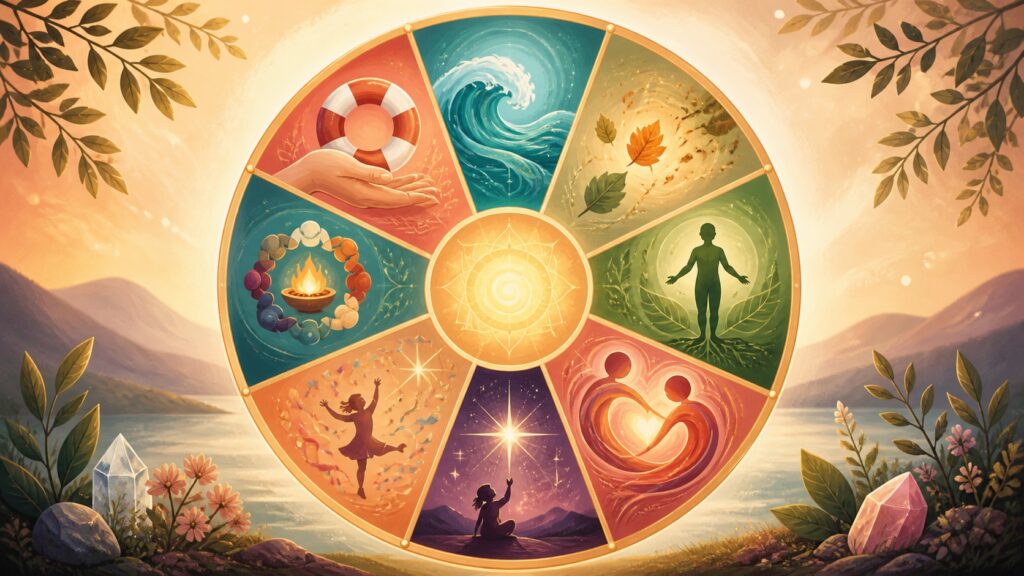
At Open I’ll guide you through a series of orientation containers, each with a different theme and different skills to practice within. These containers are very thoughtfully and lovingly crafted to help reorient to Wonder. To Intelligence. To Trust. To Freedom. To Embodiment. To Magnetism. To Love. To Friendship. To Pleasure. And more… I want to keep some of these delights a surprise.
So this is intended as an offer of help from Reality. It’s a chance to orient yourself to Life differently.
Not recorded. Not streamed. In-person. This month.
You’ve got to be in the room really feeling it. Your body has to come along. Note that Embodiment is one of our core containers. Open is an experience for your body too, not just your mind and heart.
A Preview – Come Inside the Room
Open is very experiential. It’s not content-based. NOT 3 days of lecture.
As the name suggests, Open is a space of opening into greater harmony – both within yourself and with Life. These arise as a package deal.
Open is a very deep inner journey. And this journey invites you to reorient yourself to Life, specifically to create a lighter and more harmonious relationship with Life where you get to receive a lot more. Think of it like Life offering you its hand and asking if you’d like to be best friends from now on.
You can expect a very warm and welcoming atmosphere. Very compassionate. Very human. Very intimate. Very accepting. We’re not using social pressure. Every exercise is by consent.
I hope you like handpan music because we’ll have some live music with a handpan while you’re doing some reflective exercises.
So we’re creating a very gentle, very yin space that encourages emergence – especially the emergence of new perspectives and new possibilities.
The energy of Open is very warm – but not tame. Open invites you to take a deep and honest look into yourself and your orientation towards Life – and to then translate that into new understanding and new decisions. So Open is also very grounded and practical because harmony is something you live within day to day. In the final segment we’ll spend a good bit of time on integration, so you can start putting into practice what you’ve discovered.
Hence, Open is designed to be a very supportive space to reexamine and then rebuild your overall orientation towards Life. That’s a big deal. It’s meant to be life-changing.
If you’re seeing this invitation, then as a representative of Life – some people have referred to me as the Emissary of the Simulation – I’m personally inviting you to come to Vegas. Let me guide you through this inner journey experience for 3 days at the end of this month.
Join Us in Las Vegas
Open is happening at the New York-New York Hotel in Las Vegas. That’s right on the Las Vegas Strip. It’s a 10-minute ride from the airport. It’s literally on the same street as the airport, right on Tropicana Avenue.
The price is $888. You can think of it as three vertical infinity signs.
I can’t predict how many people will go to Open, but based on our room size, we can accommodate up to about 150 people, so it ought to be a fairly intimate event.
And I want you to know that I’m really pouring my heart into this one – because getting to a place of better harmony with Life has so much to do with dropping into our hearts and getting our mental decisions to really respect our feelings.
If this sounds appealing to you, you can read the full invitation and sign up to join us in Las Vegas at StevePavlina.com/Open.
I hope to see you there. It’s this month, so it’s nearly here already. The close proximity is part of the invitation, so that the people who show up are the ones who feel the most ready to have this kind of experience together. The invitation and the actual experience are meant to be very close in time.
I can tell you it’s going to be a lot of fun too!
Do you want to get to a place of receiving more from life? Life is offering that. Tune in to yourself and see if you’re ready for more harmony and more receiving. I encourage you to trust whatever decision comes up for you.